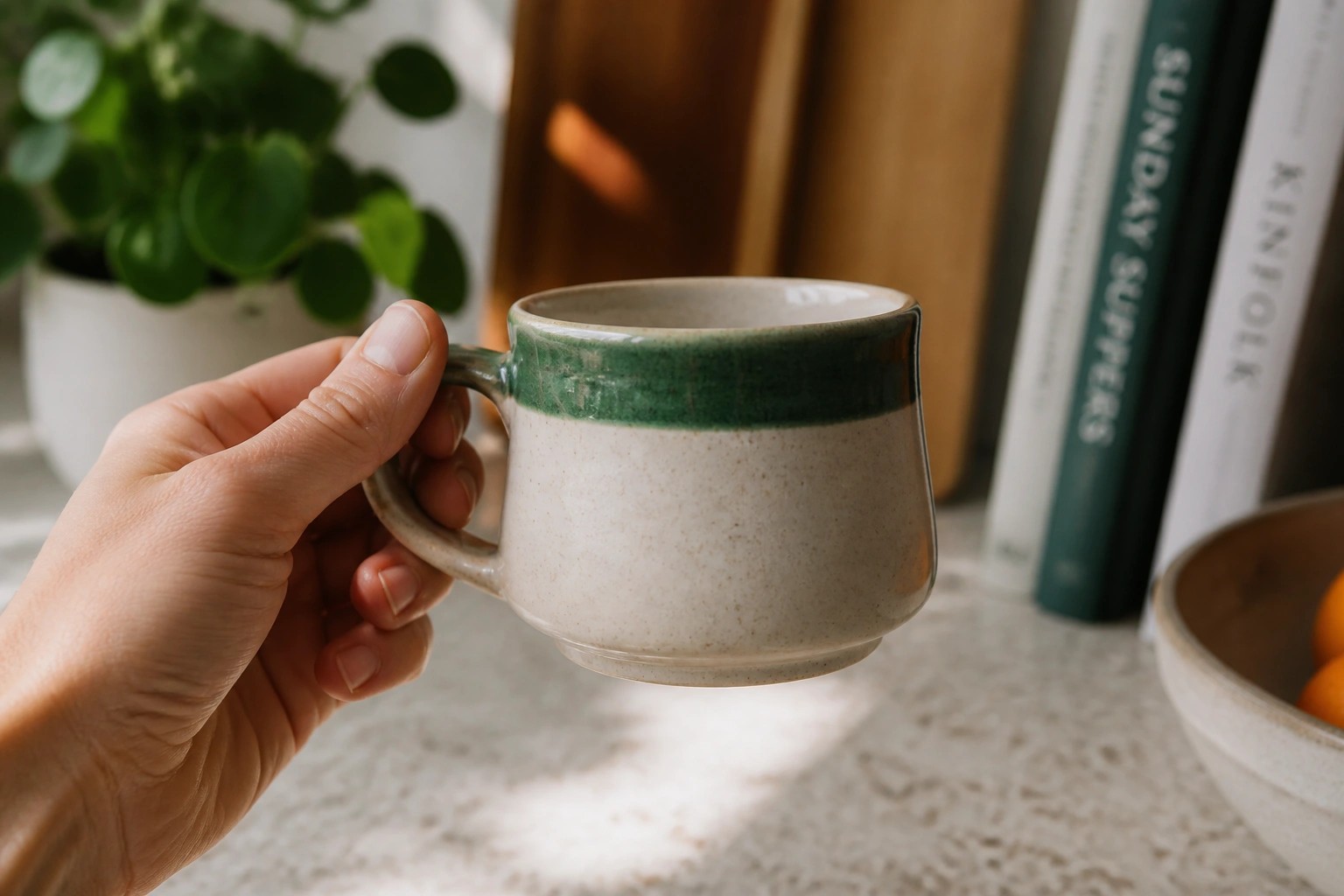
I’ve been working with pottery at home for a few years now and I like finding ways to make pieces without spending too much.
Some of the ideas here came from things I tried when I had limited supplies on hand.
They focus on basic techniques and materials that still give a clean finished look.
I have used most of them in my own space and they hold up fine for everyday use.
Maybe one or two will fit what you are looking to try next.
Two-Tone Rim Mug
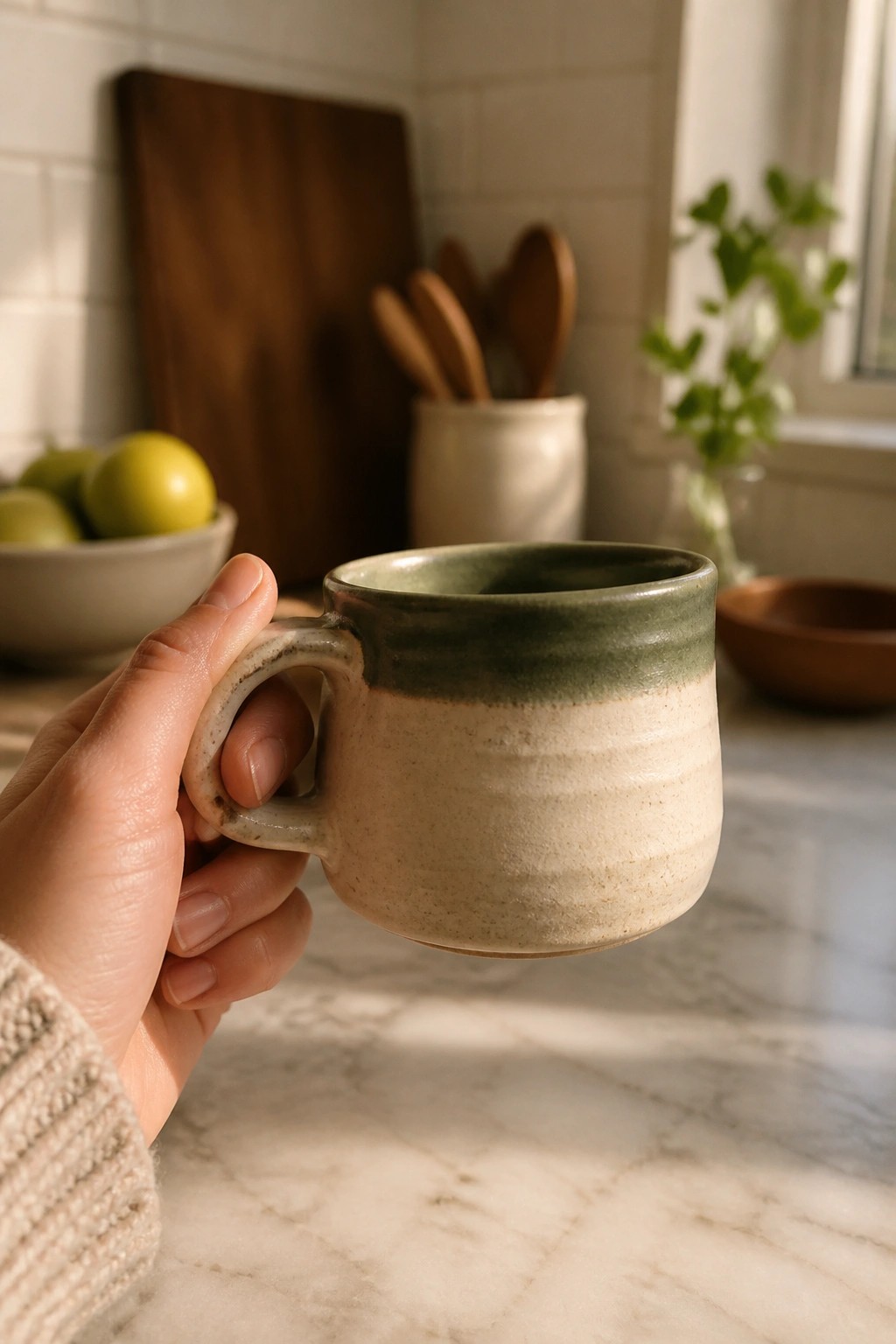
A thrown ceramic mug offers a straightforward kitchen project with its wide body, thick walls, and attached handle. The visual impact comes from a green glaze applied to the upper section that meets a speckled off-white clay body, creating a clean horizontal division. Wheel ridges remain visible on the lower half, giving the surface a subtle texture that needs no additional carving or painting. This approach fits the everyday mug category while keeping the form simple enough for repeat production.
What makes this idea useful is how easily the rim color can be changed to match different dishware or kitchen palettes. The proportions work well for both coffee and tea, and the same two-tone glaze method can be applied to small bowls or pourers without altering the basic shape. You could simplify further by using a single brush-on glaze layer instead of dipping. In a set of four, these mugs photograph cleanly for sharing and adapt quickly if you want to test new clay bodies.
Cat Face Ceramic Planter
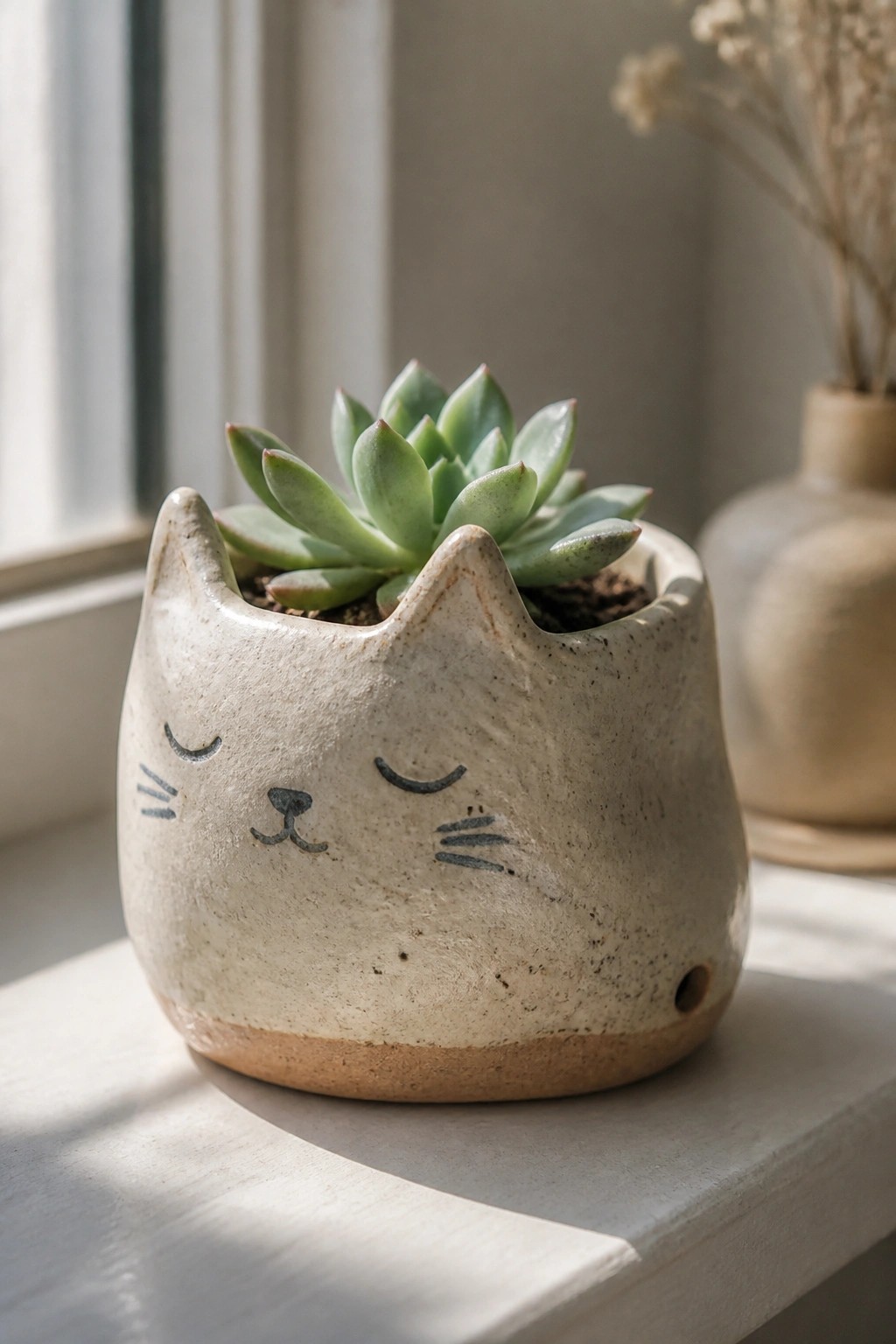
A small clay planter shaped like a cat head gives a simple way to display succulents or small houseplants. The form includes upright ears along the rim and a painted face using basic line work for eyes, nose, and whiskers. The textured clay body and unglazed earthy base keep the piece grounded while the motif adds clear visual interest. This approach fits the planter category and works with any small plant that stays compact.
The small scale makes it easy to place on a windowsill or shelf without taking much room. You can repeat the same pinched-ear shape and swap the face for other simple drawings or leave it plain for a different look. For gifts this style works because it pairs a functional pot with a quick painted detail that still reads as intentional. The idea also adapts well to other small animals if you change the ear placement or facial lines.
Leaf-Shaped Ceramic Ring Dish
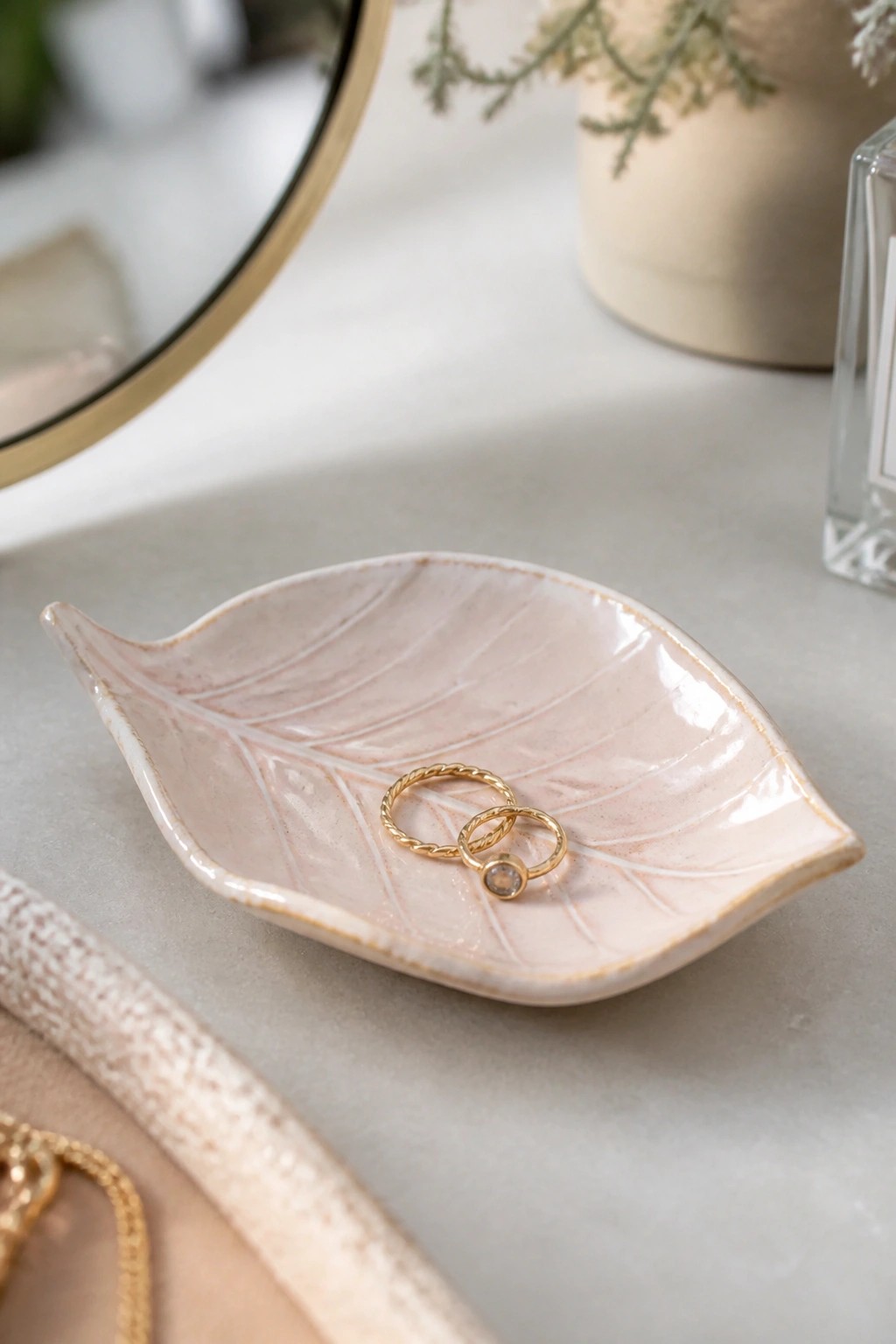
A leaf-shaped ceramic dish works well as a small ring holder for a vanity or bedside table. The form includes sculpted veins that give the surface texture while the soft glaze and thin gold rim along the edges create a finished look. This type of project falls into the ring dish category and stays compact enough to hold just a few pieces of jewelry without taking up much space.
The small scale makes it simple to try on a budget since it uses less clay and fits easily in a kiln. You could adapt the idea by using a different leaf variety or switching the rim color to match other pieces you already have. In a bathroom, the same shape works as a spot for earrings or a small bar of soap. The natural outline helps the dish photograph cleanly for Pinterest without needing extra styling.
Speckled Bottle Vase for Single Stems
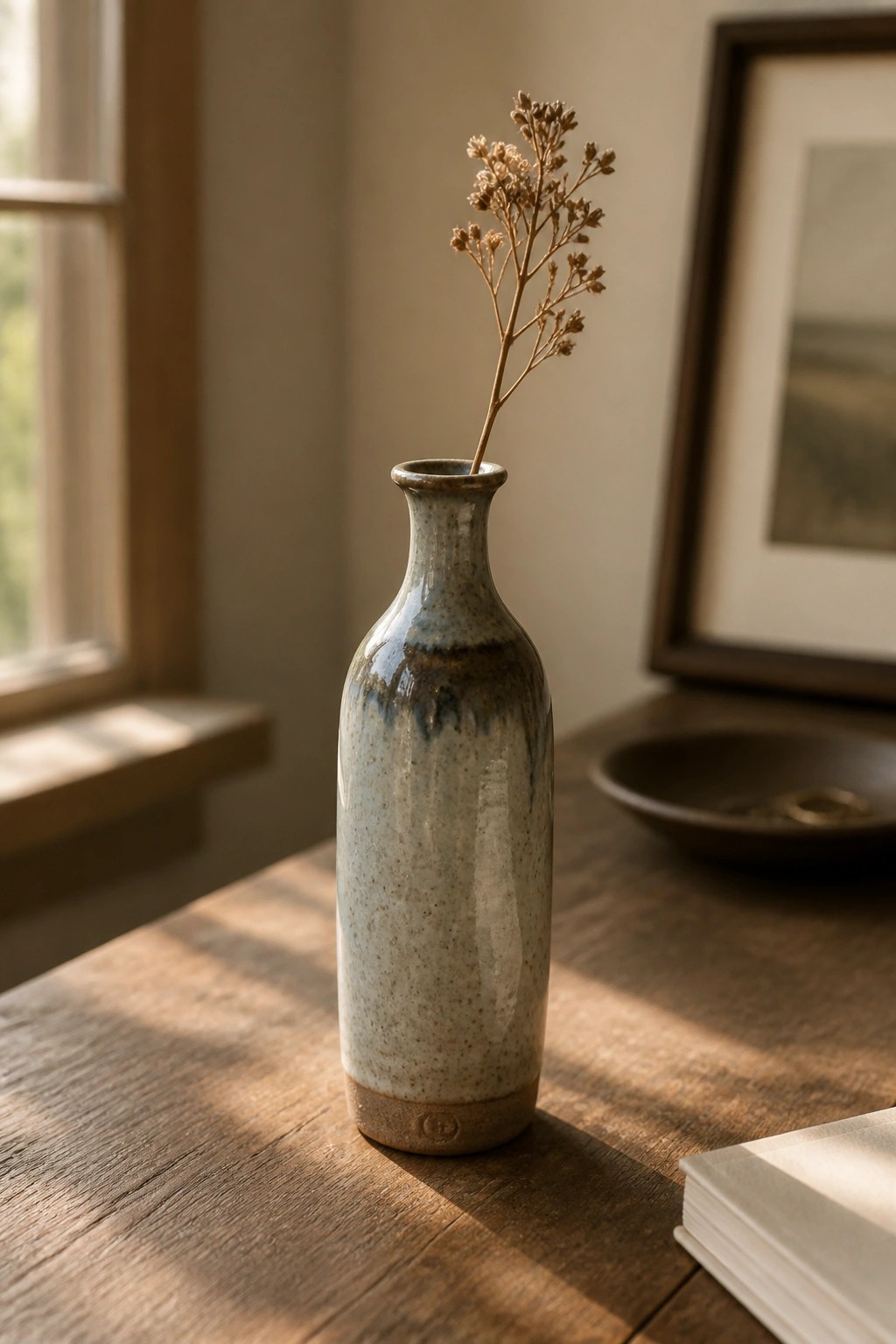
A handmade ceramic bottle vase with a narrow neck and rounded body gives you a clean, functional shape for displaying one or two stems. The light speckled glaze with a darker blue-gray band near the top adds subtle depth while keeping the surface simple. This style works as a standalone decor piece rather than something that needs flowers to look complete.
What makes this idea useful is how the tall, slim profile fits on narrow shelves or beside books without taking up much room. You could scale the same shape down for a shorter version or change the glaze to a single solid color if you want less variation. For a gift, something like this pairs easily with dried stems from the garden and still reads as intentional rather than basic. The speckled finish also photographs well, which helps if you want to share the finished piece online.
Faceted Ceramic Tea Light Holder
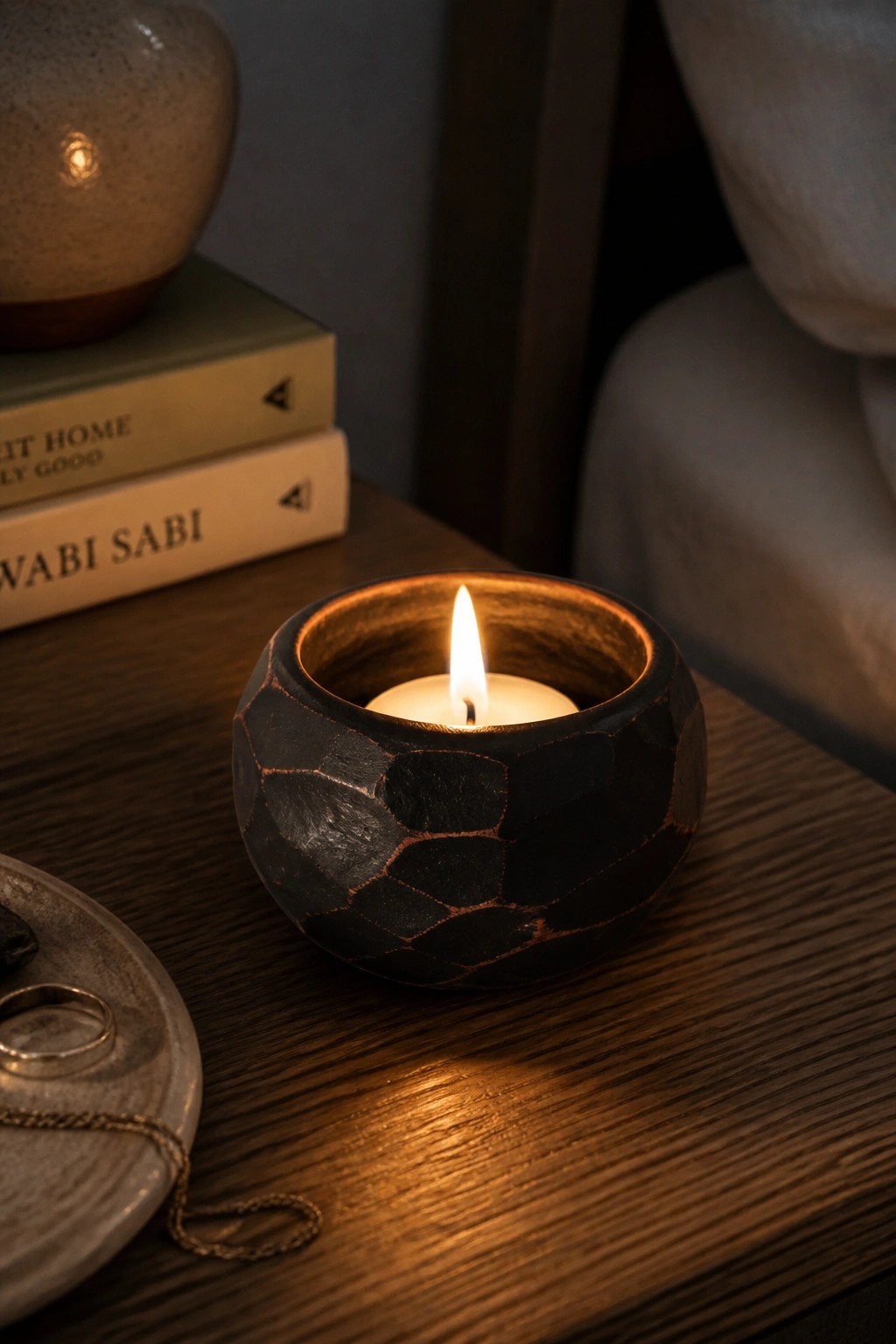
A small handbuilt ceramic candle holder with a faceted surface gives a simple way to contain a tea light or small votive. The angled planes create shadows and highlights that make the dark finish more interesting without extra decoration. This project fits the candle piece category and relies on a matte black surface with faint metallic edges to keep the look clean and understated.
The compact size works well on a bedside table or desk where larger pieces would feel bulky. You could repeat the faceted texture on a matching tray or small dish using the same slab construction. What makes this idea useful is how the shape stays basic while the surface treatment adds enough detail to stand out in a neutral room.
Marbled Ceramic Spoon Rest
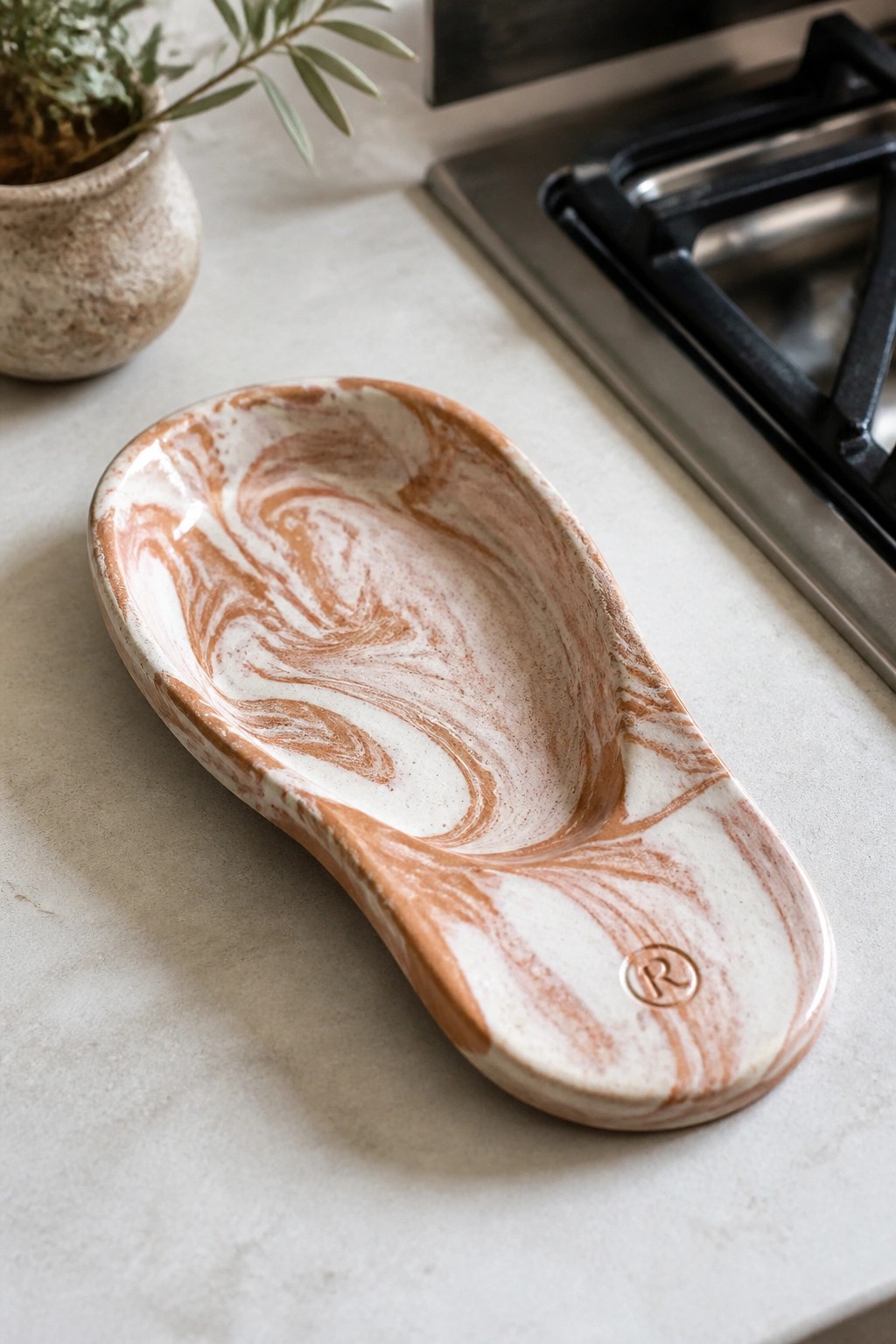
A spoon rest formed from clay gives you a long, shallow shape with one slightly deeper well to hold cooking utensils. The marbled glaze mixes warm brown and off-white tones in loose swirls across the surface, creating movement without added carving or painting. This kitchen item stays compact enough to sit beside the stove while the glossy finish makes the simple form look more finished.
The shape does a lot of the work here because the narrow end tapers naturally to fit in tight counter spaces. You can adapt the same marbling method to a soap dish or a small jewelry tray by changing the proportions slightly. In a kitchen this piece keeps counters clean during daily cooking and still reads as intentional rather than basic. The technique stays budget friendly since it relies on two glazes blended on the wheel or with a brush instead of multiple layers or specialty tools.
Joined Salt Cellars for the Table
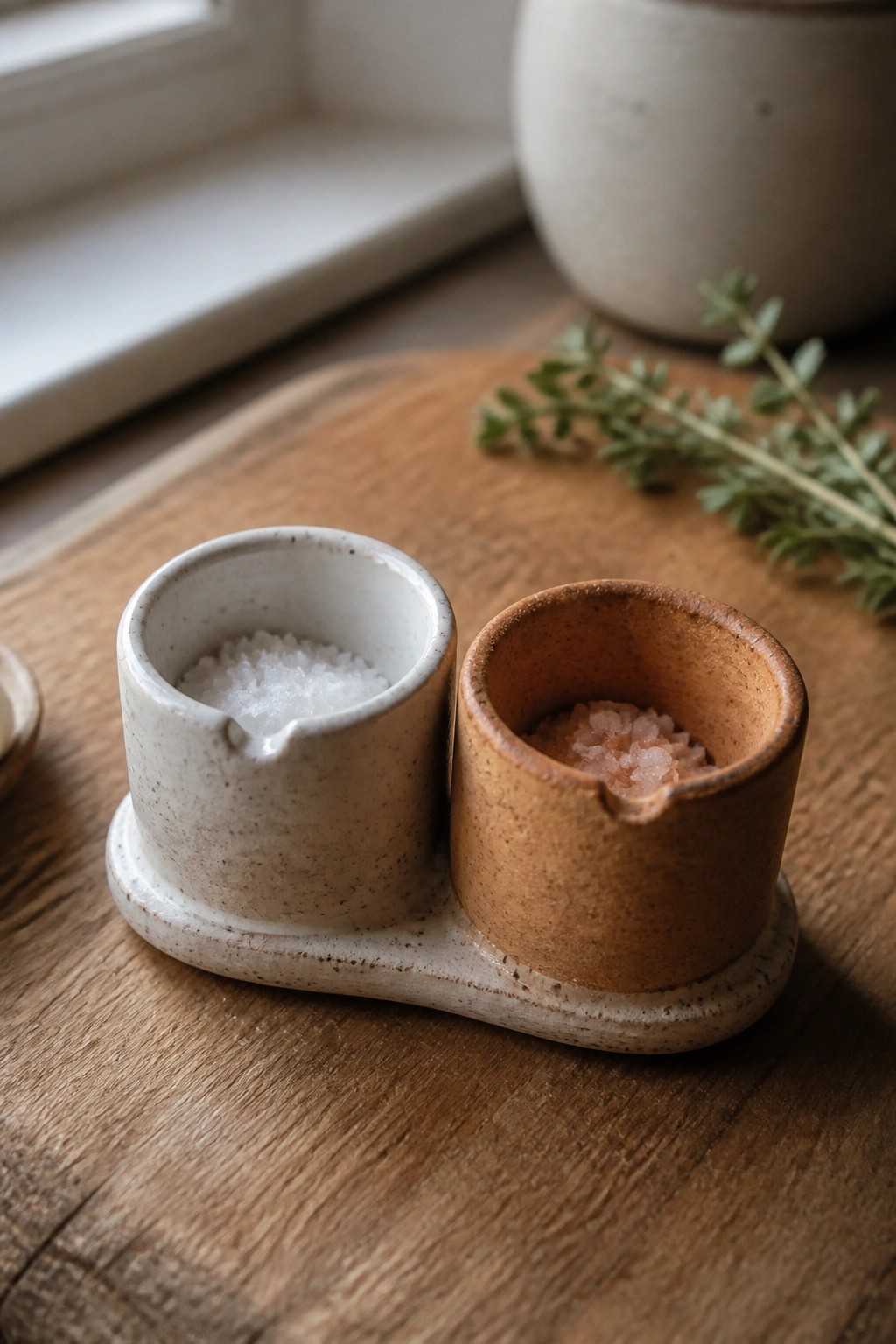
A double salt cellar made from two small ceramic cylinders joined on a single oval base gives you two separate compartments for different salts or seasonings. Each cylinder has a simple pouring lip and sits low enough to keep the contents easy to pinch or scoop. The contrast between a light speckled glaze on one side and a warmer brown on the other keeps the piece visually balanced without extra decoration. This shape fits the kitchen item category and works as a compact alternative to separate bowls or shakers.
What makes this idea useful is the shared base, which stops the two pieces from sliding apart while taking up little counter space. You could adapt it by making one side larger for coarse salt and the other smaller for finishing salt, or fire both in the same glaze for a more uniform look. In a kitchen, the low profile and lips make it practical for everyday use rather than just display. For a gift, the joined format already feels complete without needing extra wrapping or packaging.
Rectangular Ceramic Soap Dish with Drainage Ridges
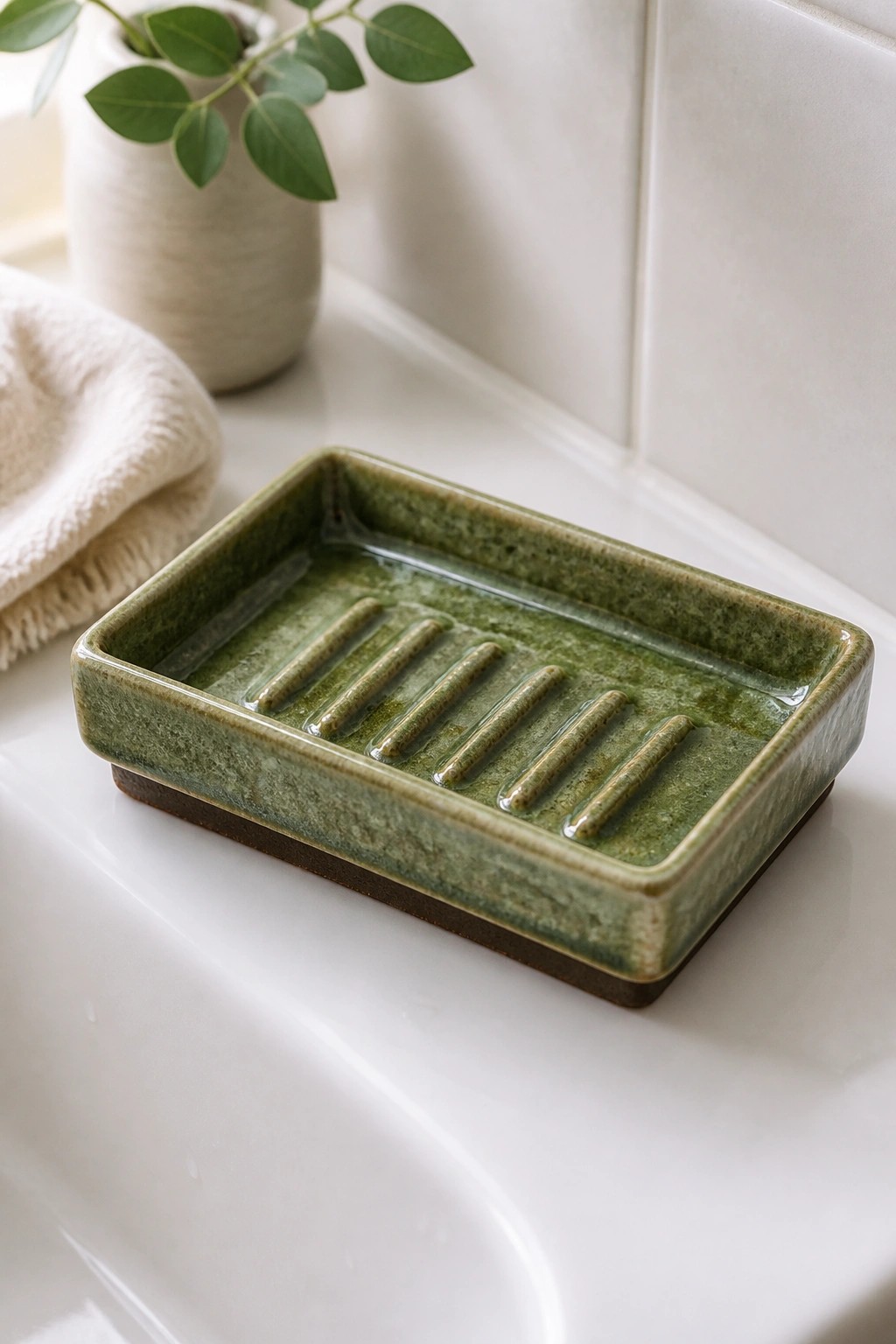
A handmade rectangular soap dish uses a series of raised ridges across the base to keep a bar elevated so water can drain. The green glaze covers the entire form, including the low sides, and creates a smooth surface that resists moisture. This project falls into the bathroom item category and stays small enough to fit on most sink edges without crowding the space.
What makes this idea useful is the ridges that handle drainage directly in the clay instead of relying on a separate insert. You can repeat the same rectangular shape and ridge layout in other glaze colors or shorten the length to match a narrow ledge. In a bathroom, this kind of piece keeps soap from sitting in water while adding a finished detail that looks more considered than a basic dish. The small scale also makes it straightforward to produce in batches if you want matching sets for gifts.
Speckled Dot Ceramic Bowl
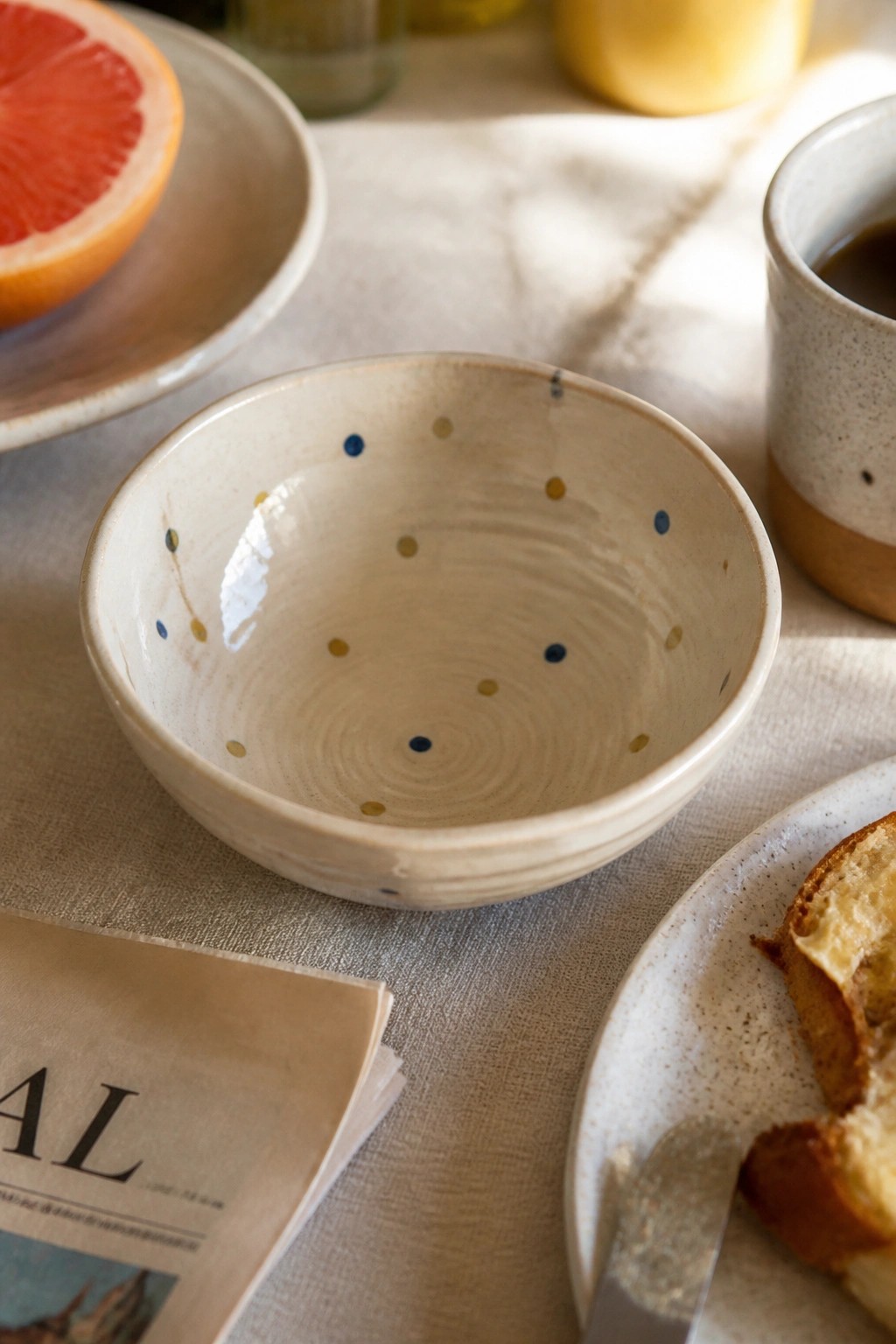
A small handmade ceramic bowl with a light speckled glaze and loose blue and brown dots scattered inside forms a practical kitchen piece. The dots follow the wheel-thrown ridges rather than a strict grid, which keeps the surface interesting while staying simple to paint. This kind of bowl works as a breakfast dish, nut bowl, or small prep container.
The small scale makes this easy to adapt into a set of four or five matching bowls without much extra clay. You could shift the dot colors to match other dinnerware or extend the same pattern onto a matching plate. In a kitchen, this style stands out on Pinterest because the motif reads clearly even in flat lays and overhead shots.
Speckled Ceramic Toothbrush Holder with Ear Handles
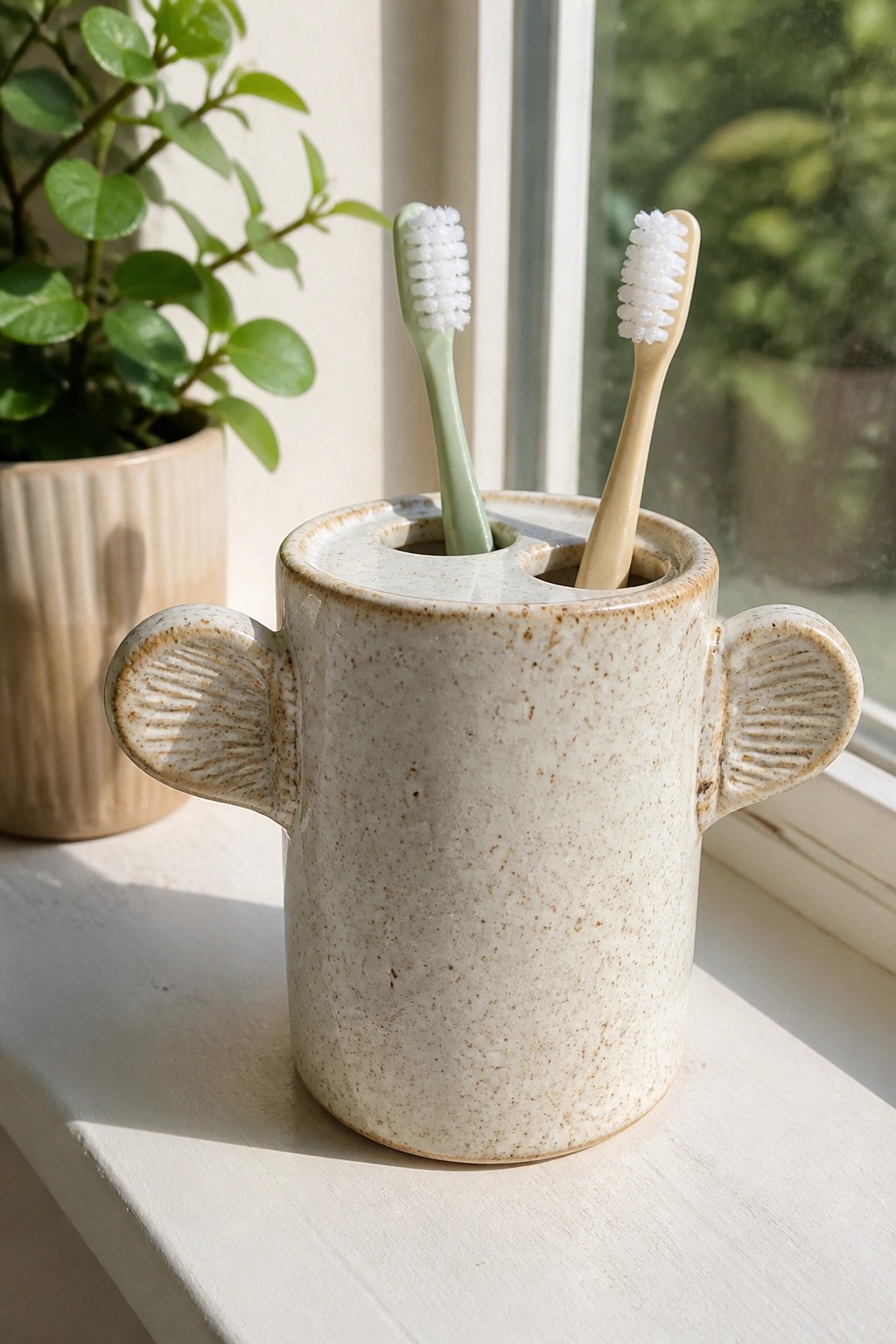
A handmade ceramic toothbrush holder takes the form of a short, wide cylinder with two sculpted ear shapes on opposite sides. The top surface includes two separate openings so brushes stay upright and spaced apart. A light speckled glaze covers the surface and gives the piece a subtle texture without extra decoration.
What makes this idea useful is how the ear handles double as both grip points and visual detail while keeping the overall shape simple to throw or hand-build. The divided top works for shared bathrooms or couples who want separate spots for their brushes. You could rework the same base into a shorter version for cotton swabs or swap the ears for plain tabs if you want a cleaner look. The compact size fits easily on a windowsill or narrow shelf and still reads as intentional rather than basic.
Oval Ceramic Ring Dish With Gold Rim
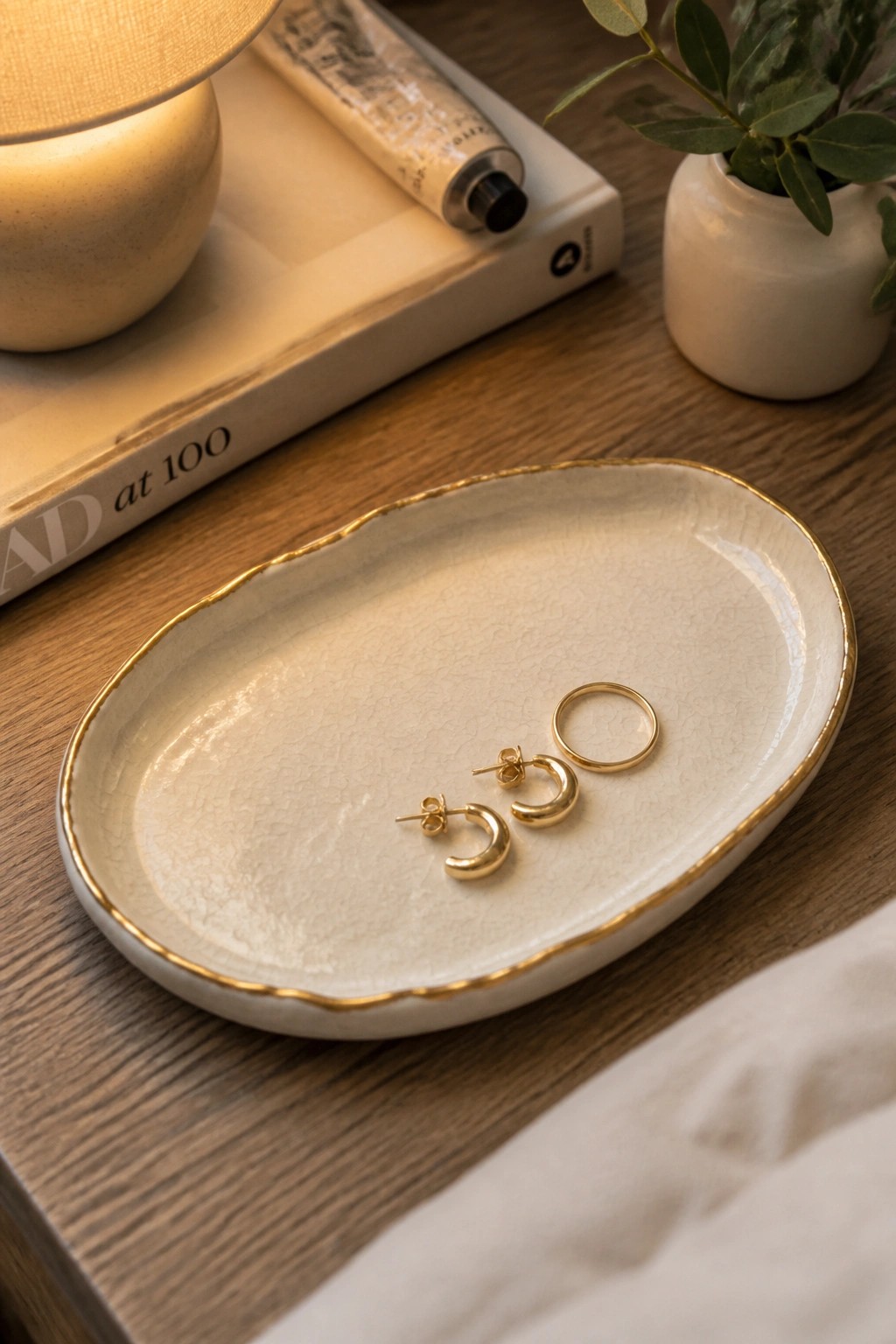
A small oval ceramic tray works well as a ring dish or jewelry holder. The white crackle surface and thin gold rim create contrast that keeps the piece simple yet distinct. This shape stays flat and shallow so it holds earrings and rings without tipping or crowding them.
What makes this idea useful is how little clay and glaze it requires while still giving a finished result. The oval form can be scaled up for a desk tray or shortened into a soap rest with the same rim treatment. A piece like this fits easily on a bathroom shelf or bedside table for everyday small items. The gold edge also photographs cleanly, which helps it gain traction when shared as a low-cost project.
Leaf Imprint Ceramic Plate
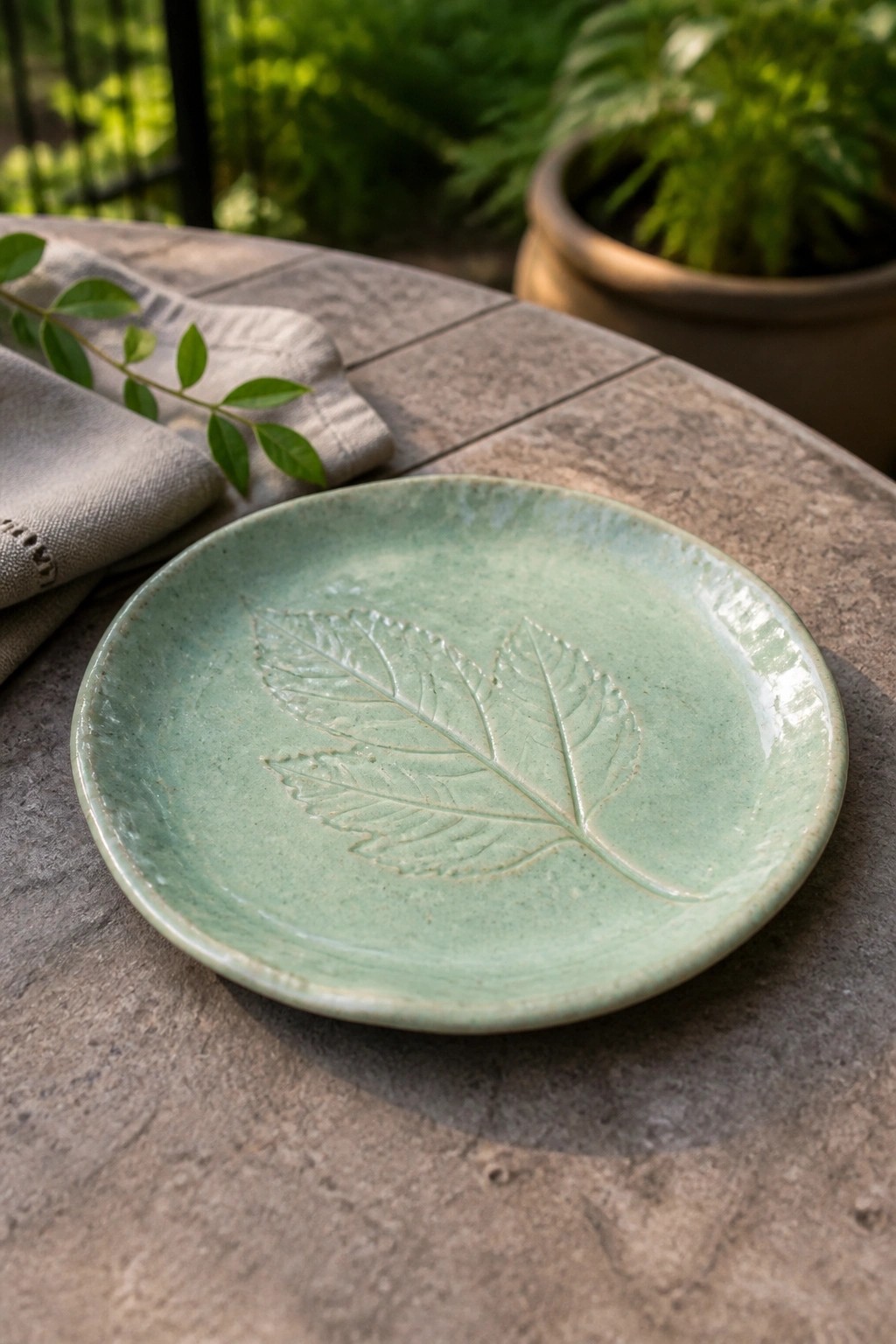
A shallow ceramic plate formed from a simple round slab with a real leaf pressed into the surface to create raised veins and edges. A soft green glaze covers the piece and settles into the textured areas to make the leaf stand out without extra paint or carving. This method keeps the project to basic slab work and one glaze while producing a finished dish that reads as intentional rather than plain.
What makes this idea useful is how little extra material or skill it requires beyond a standard plate shape. The same leaf press works on a smaller ring dish or a larger serving platter, and you can swap in different leaves or change the glaze color for variety. In a kitchen it doubles as a small prep or butter plate, while on a dresser it holds jewelry without looking cluttered. The natural motif also saves well on Pinterest because it reads clearly in flat lays.
Mini Ceramic Hedgehog Figurine
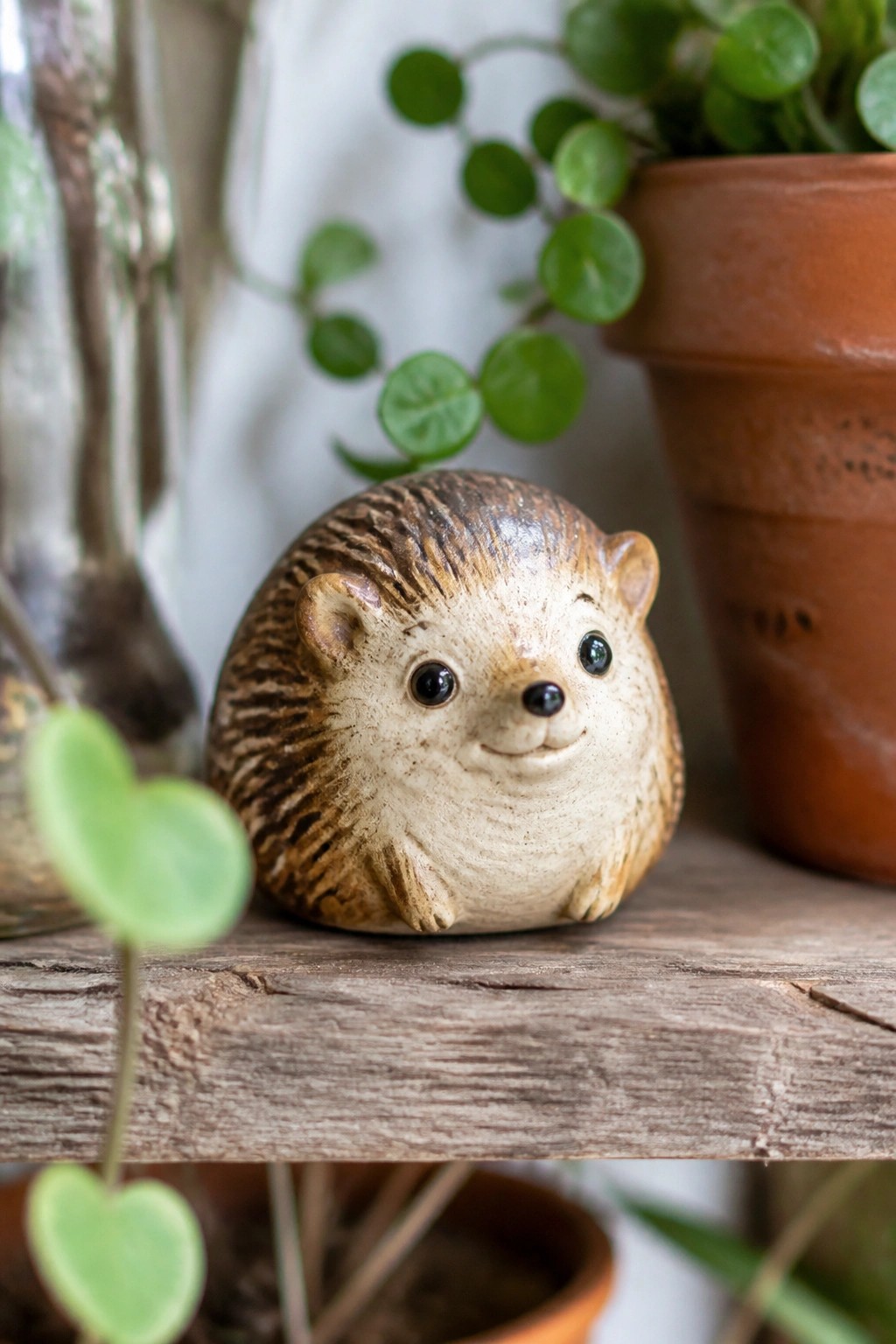
A small ceramic hedgehog makes a straightforward decor project where you sculpt a compact rounded body, add simple spine lines on the back, and finish the face smooth. Earthy brown glaze on the spines contrasts with a lighter base color to define the shape without extra paintwork. The black eyes and nose stay minimal so the form stays the focus.
What makes this idea useful is how the small scale fits on shelves next to plants or books without crowding the space. You can rework the same rounded body and texture into other animals like a mouse or bird using the same amount of clay. For gifts the piece stays low cost and quick to repeat in different glaze colors.
Hanging Ceramic Wall Pocket
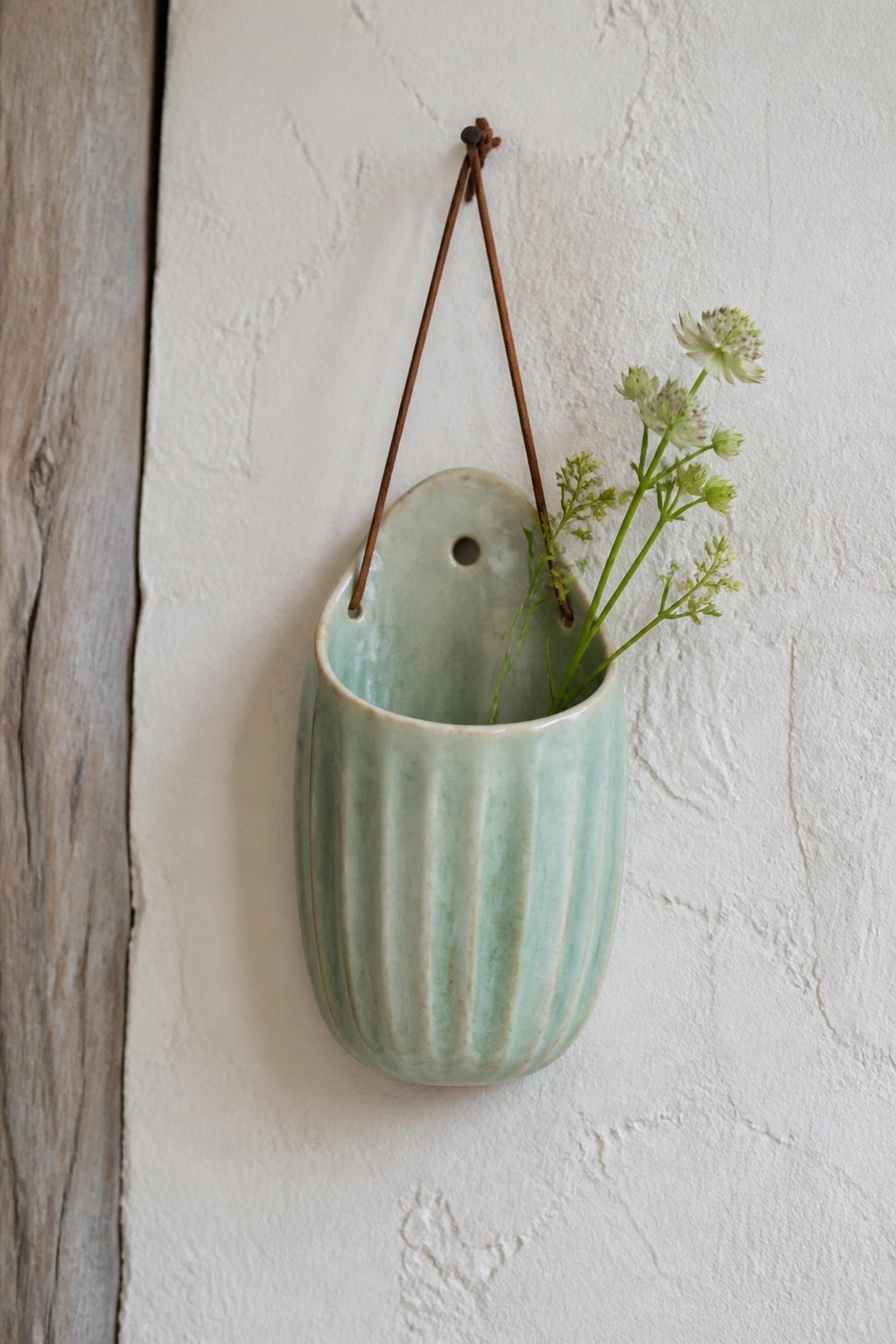
A wall pocket vase is a flat-backed ceramic form with a deep open cavity that hangs from two holes threaded with leather cord. The vertical ribbing on the front creates subtle shadow lines that catch light, while the soft celadon glaze keeps the surface simple and clean. This style works as a minimal wall-mounted holder rather than a freestanding vase, letting stems sit at different heights inside the pocket.
What makes this idea useful is the small footprint and built-in hanging method, so it fits narrow hallways or bathroom walls where a table vase would not. The ribbed texture can be recreated with a simple tool on any soft clay slab, and the same shape scales easily to a shorter version for dried stems or a taller one for single branches. For a gift, swap the leather for twine or a metal chain and change the glaze to a matte white or deep gray to match different rooms.
Matte Black Ceramic Creamer
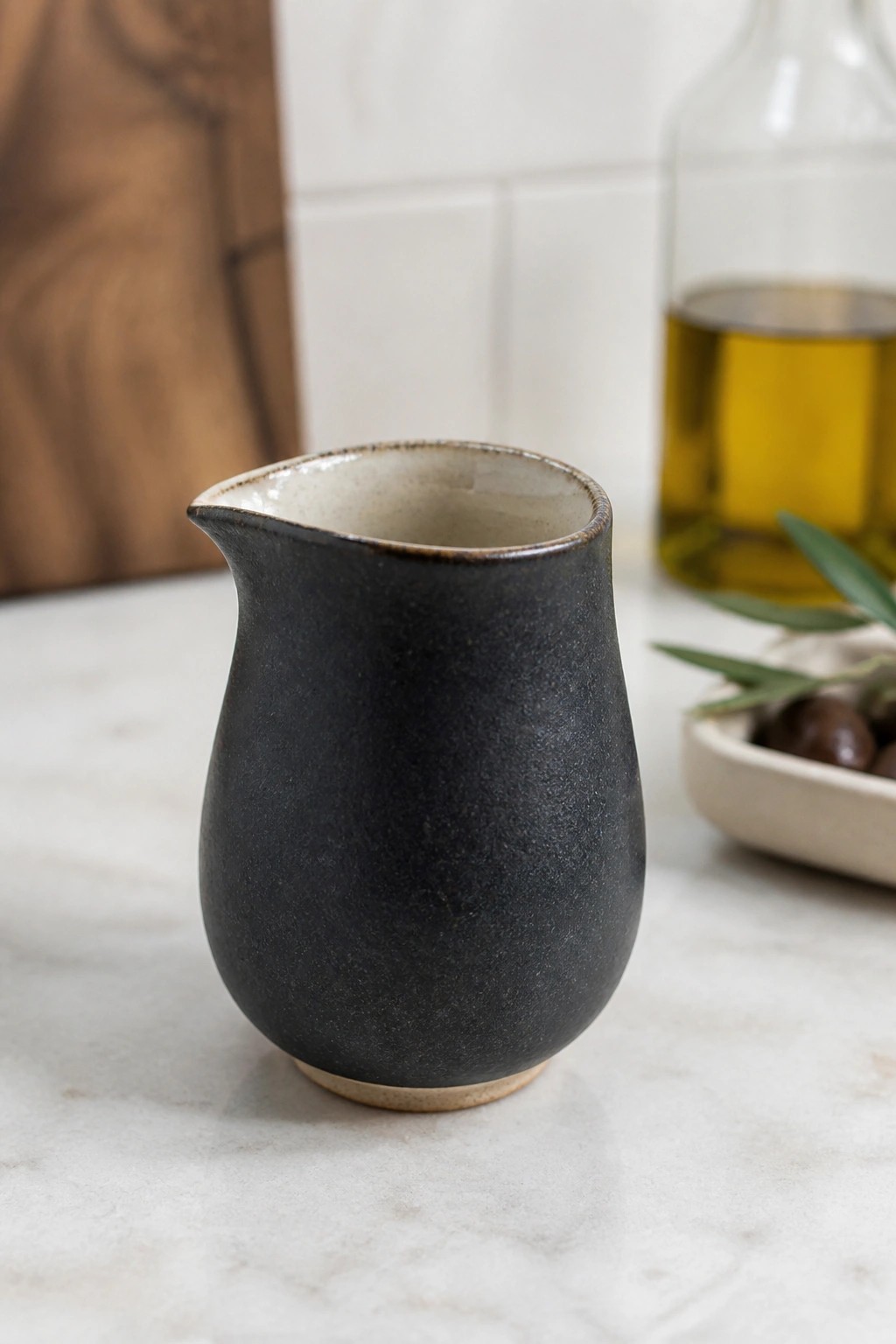
A small spouted creamer made from clay gives you a simple kitchen piece that handles pouring tasks without taking up much space. The rounded body tapers toward the base while a matte dark glaze covers the outside and a lighter tone lines the inside and rim. This contrast keeps the form easy to read and makes the spout stand out for practical use.
What makes this idea useful is how the same shape works for oil, cream, or small dressings on the table. You can adapt the size down for a single-serve version or change the exterior to a different matte color while keeping the light interior. The spout detail turns a basic cup form into something more functional without adding handles or extra parts. In a kitchen this kind of piece stays handy for daily use and photographs cleanly for recipe posts.
Two-Tone Ceramic Egg Cups
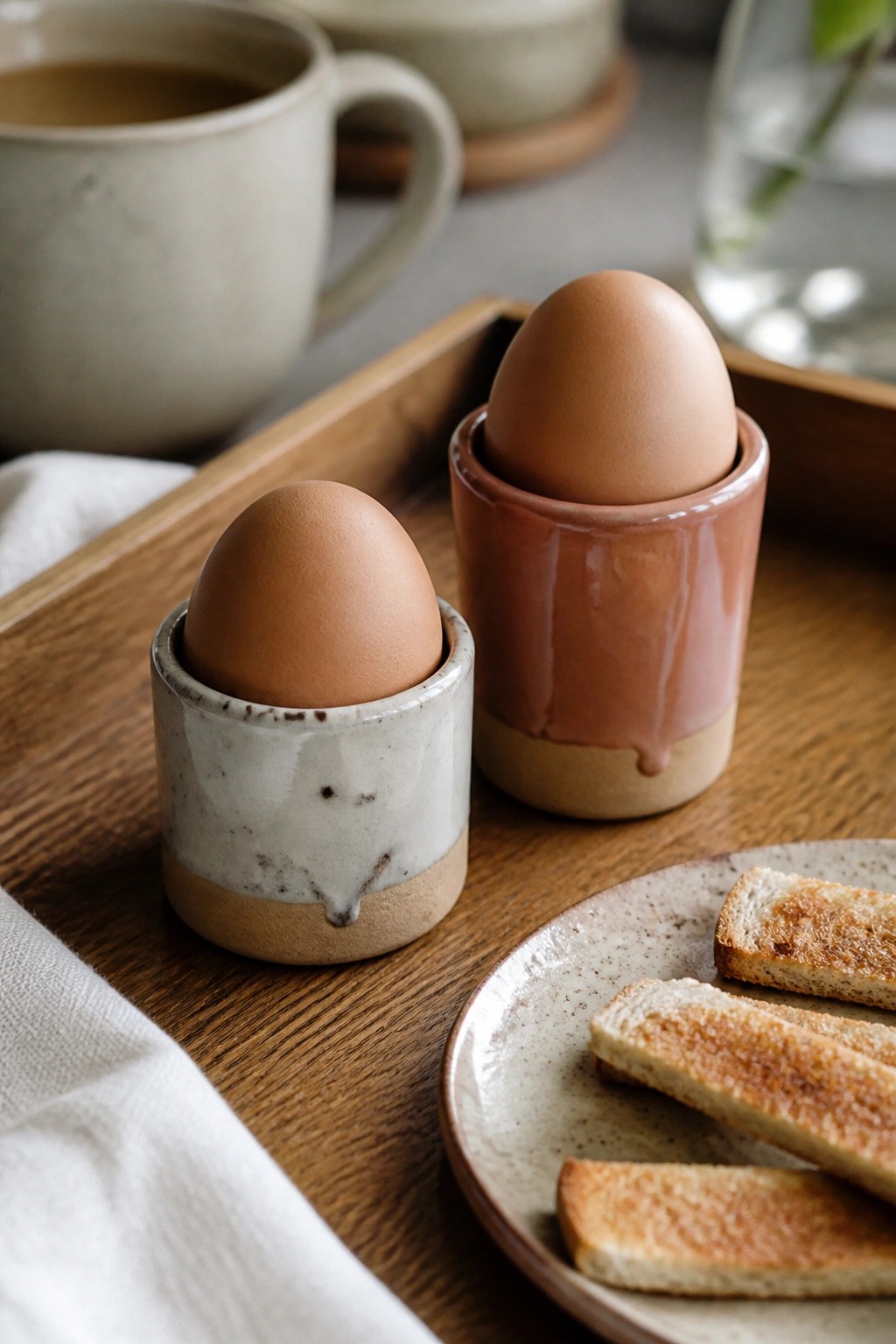
Egg cups are small, sturdy ceramic cylinders made to hold soft-boiled eggs upright for breakfast. The form stays simple with a slightly tapered shape and a flat base, while the interest comes from the two-tone glaze treatment. One version pairs a speckled off-white glaze over a raw clay base, and the other uses a glossy terracotta that drips naturally down the side. Both stay functional as kitchen pieces while keeping the handmade quality visible in the glaze edges.
What makes this idea useful is that the same cylinder can be repeated quickly to make a matching set for daily use or gifts. The small size fits easily on a tray with toast or beside a mug, and the two-tone glaze can be changed to whatever colors already sit in your kitchen. If you want to adapt it, shorten the height to create pinch pots for salt or spices instead. The straightforward shape also photographs cleanly for sharing the finished project.
Ceramic Yarn Bowl
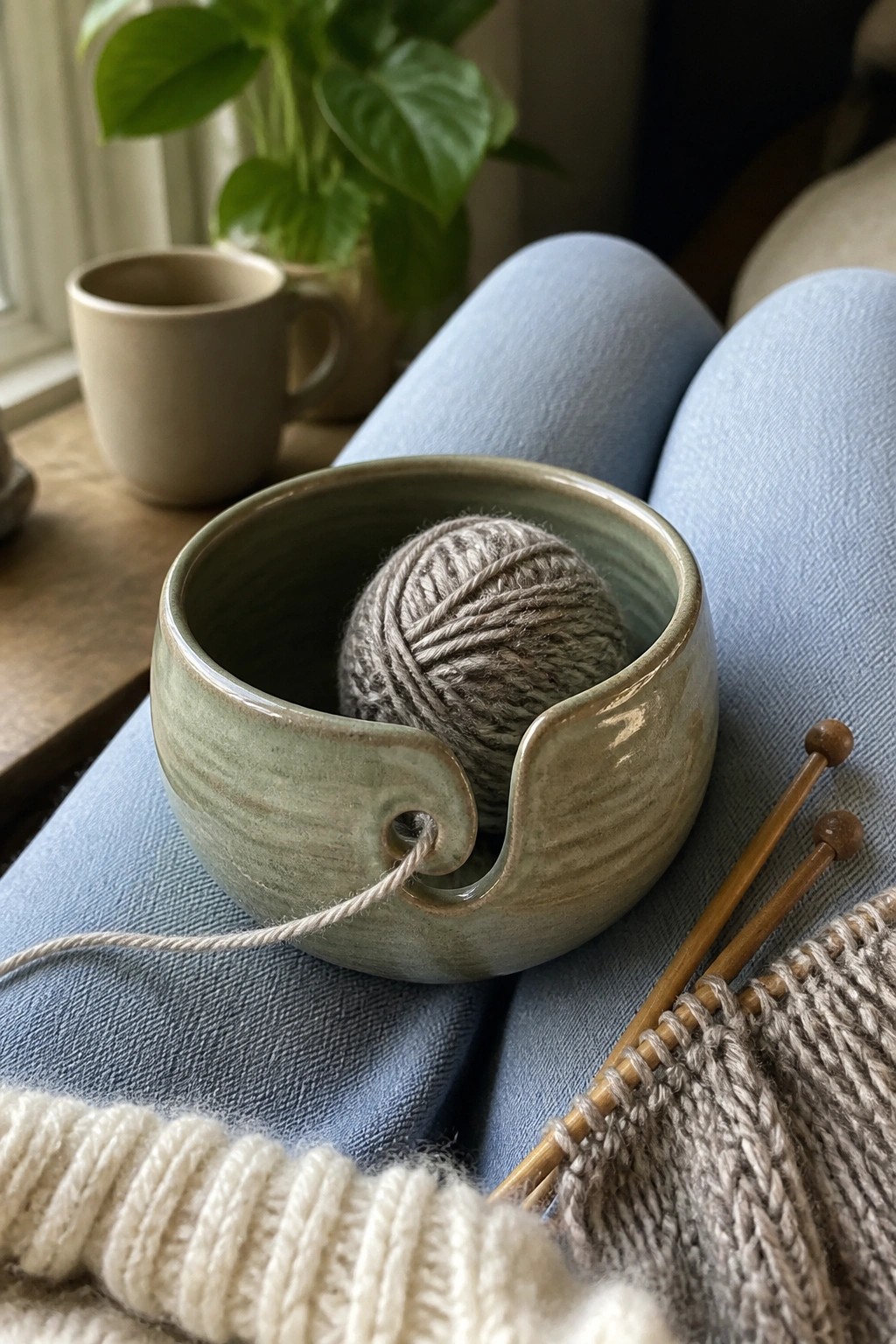
A yarn bowl is a round ceramic vessel made to hold a ball of yarn during knitting or crocheting. It features a notched opening on one side that guides the strand outward while keeping the rest of the ball contained. The smooth interior and low rim help the yarn unwind evenly without catching or rolling away. This version uses a simple rounded form and a muted glaze that fits easily into everyday craft setups.
What makes this idea useful is that it solves a common problem of yarn tangling on tables or laps. You can scale the bowl larger for bulky yarns or add a second notch if you often work with two strands at once. A piece like this works especially well as a gift for knitters or as a compact item to keep near a favorite chair. The shape translates well to other small holders if you want to try the same form for cord storage or desk supplies.
Rectangular Ceramic Butter Dish
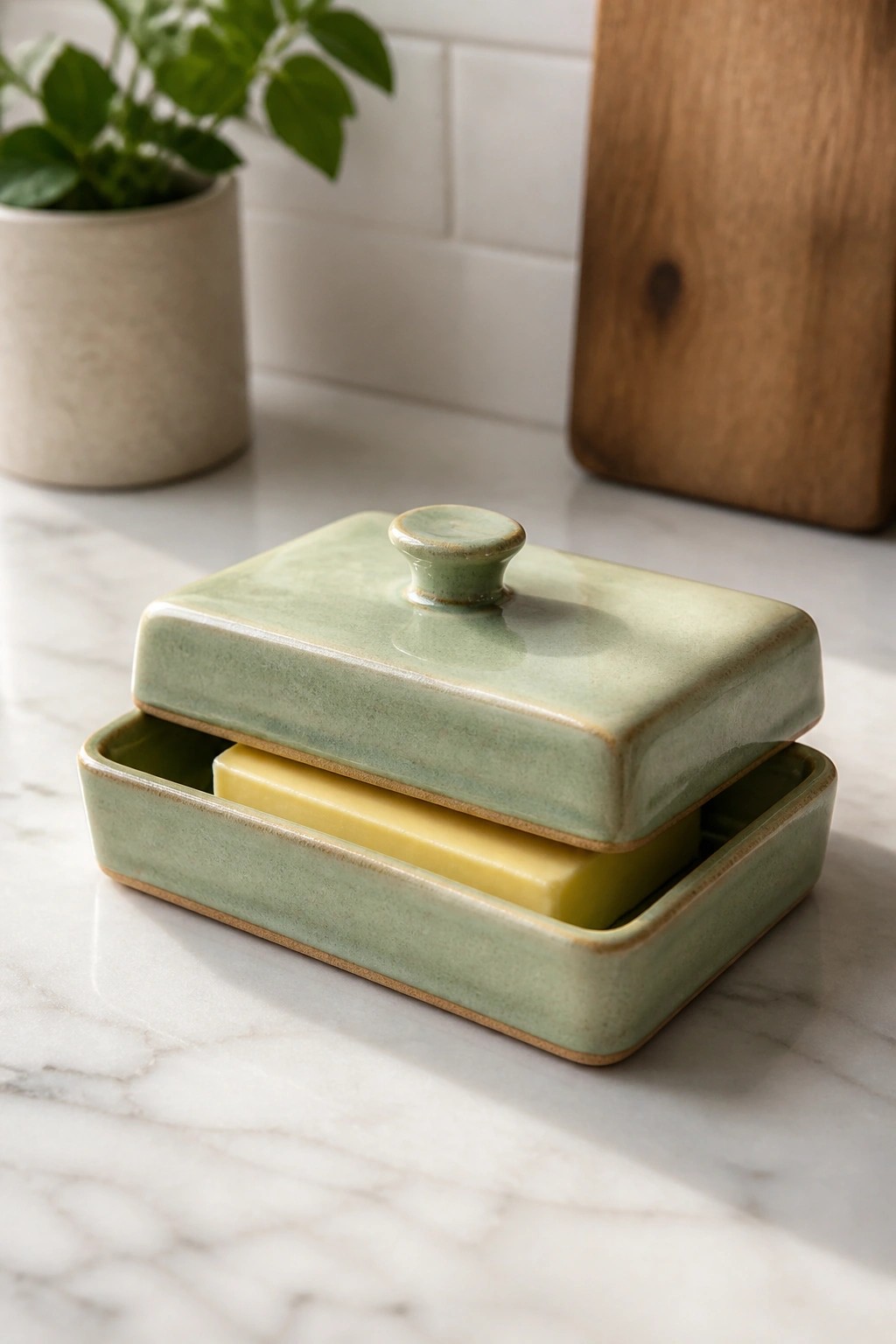
A rectangular butter dish with a fitted lid serves as a simple kitchen item for storing butter on the counter. The base is sized to hold one stick while the low-profile lid sits flush with a small knob on top for lifting. A soft green glaze covers the clay with a matte finish and visible brown rim where the glaze thins. This shape falls into the category of functional kitchen pottery that stays useful without extra decoration.
The shape does a lot of the work here because the straight sides and flat lid are straightforward to form on the wheel or with slabs. You can scale the length to fit European butter blocks or shorten it for half sticks. Swap the green for a matte white or speckled brown to match existing dishes, or add a small tray underneath if you want a two-piece set. This kind of piece shows up well on Pinterest because it solves a daily kitchen task rather than sitting as pure decor.
Marbled Ceramic Coasters
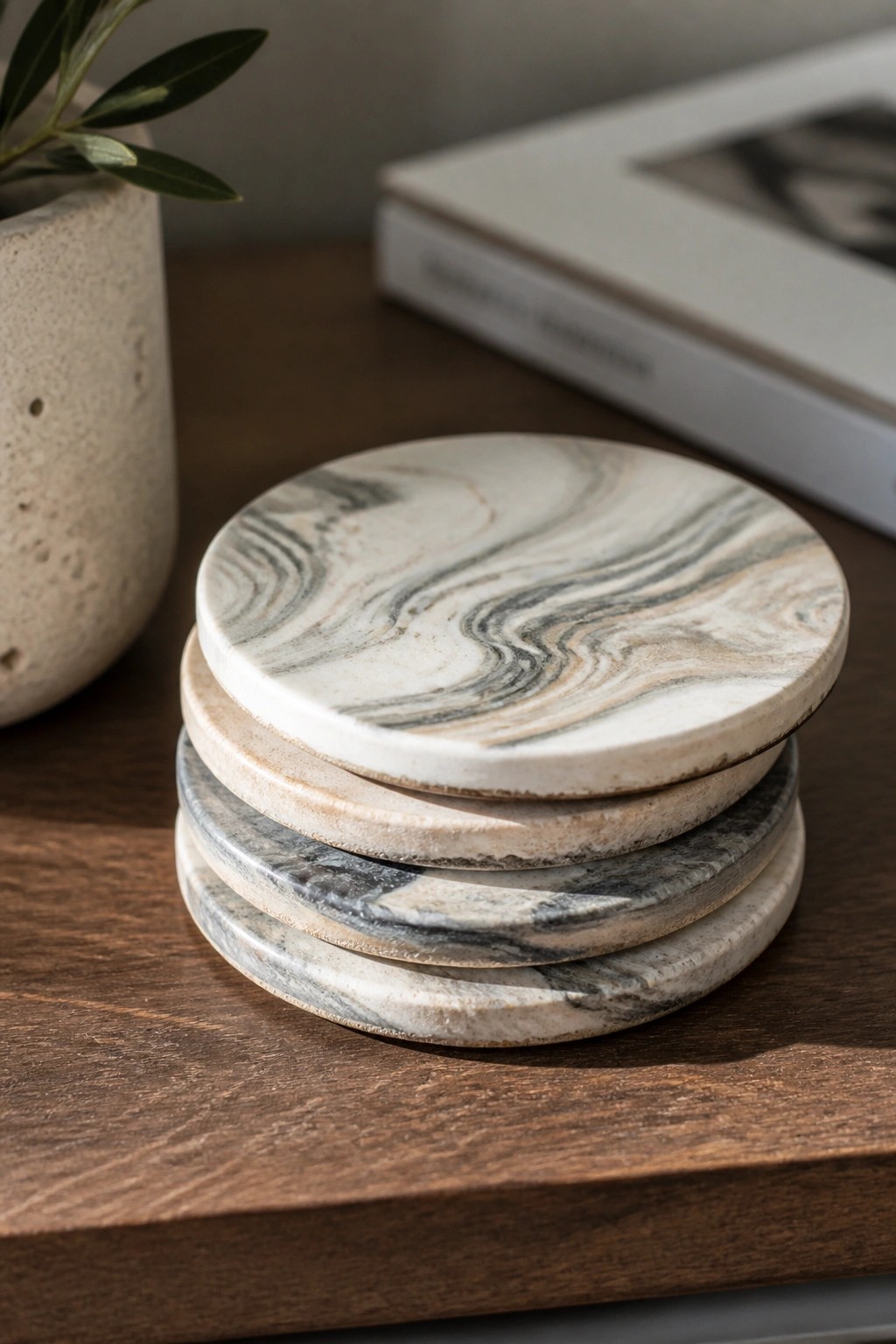
Coasters made from clay offer a straightforward project that focuses on flat, circular forms finished with a swirled glaze. The pattern comes from mixing light and dark clay bodies or glazes to create flowing gray and beige streaks across each surface. Slight variations in the swirl on every piece keep the set consistent while avoiding a uniform factory look. This type of project falls into the kitchen and tabletop category and stays functional without requiring complex shaping.
What makes this idea useful is how the simple round shape lets you test glaze combinations on a small scale before trying larger pieces. You can adapt the same marbling approach to square coasters or add a shallow rim for better spill control. These work well on wooden tables or desks and double as a low-cost gift option that still reads as intentional. The same technique translates easily to small ring dishes or soap rests if you want to reuse the color mix on different objects.
Small Textured Ceramic Creamer
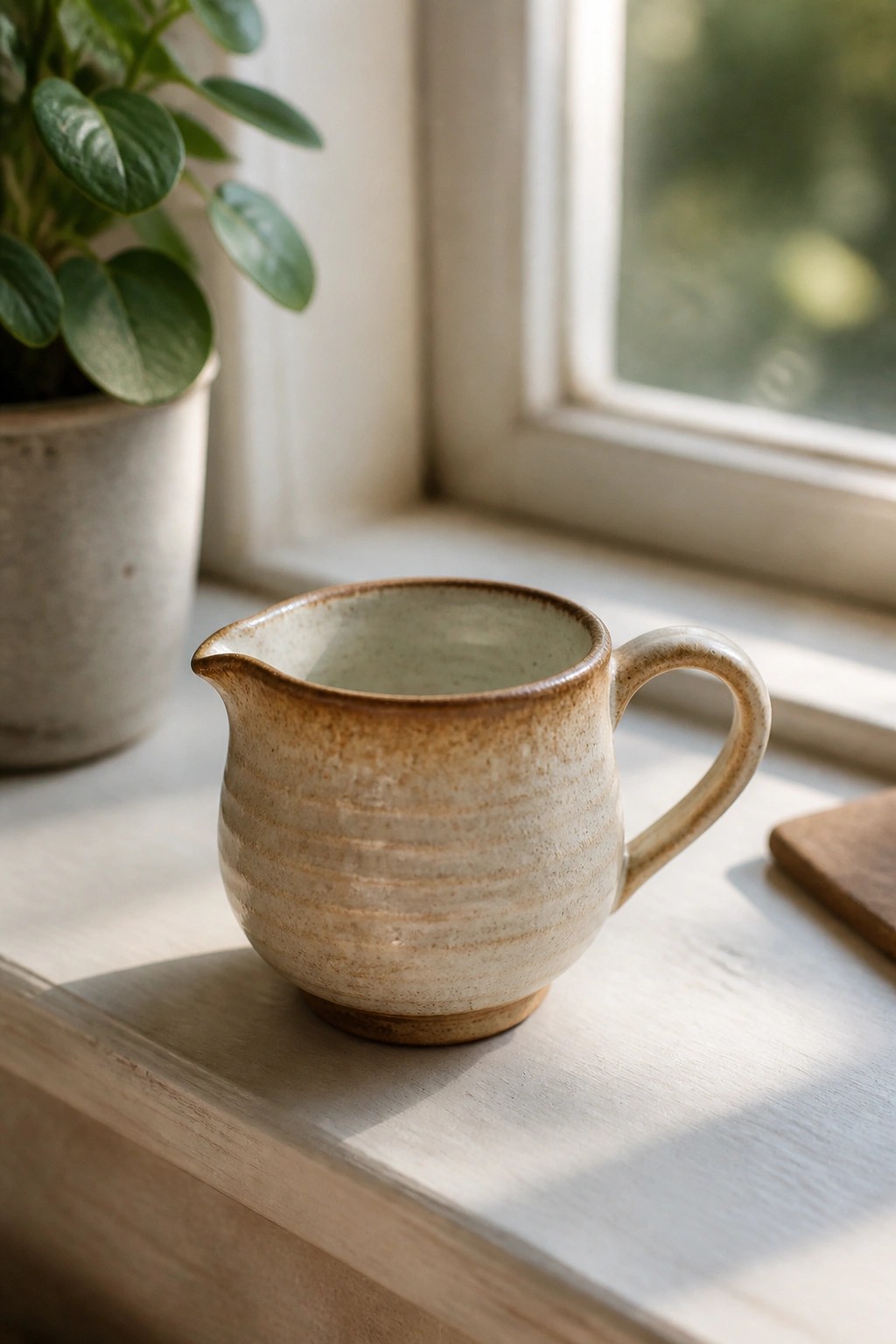
A small ceramic creamer with a spout and handle gives you a compact kitchen piece that pours easily. Horizontal ridges add light texture across the surface while the mottled beige and brown glaze keeps the overall look simple and neutral. This form fits the category of functional serving pottery and works for cream, milk, or syrup at the table.
What makes this idea useful is how the compact size lets it fit into a breakfast setup without crowding other dishes. You could simplify the ridges into a smooth surface or swap the glaze for a single solid color to match existing dinnerware. For a gift, something like this pairs well with a bag of coffee beans. The same shape could be adjusted into a small syrup pitcher or a narrow vase for a few stems.
Citrus Slice Ring Dishes
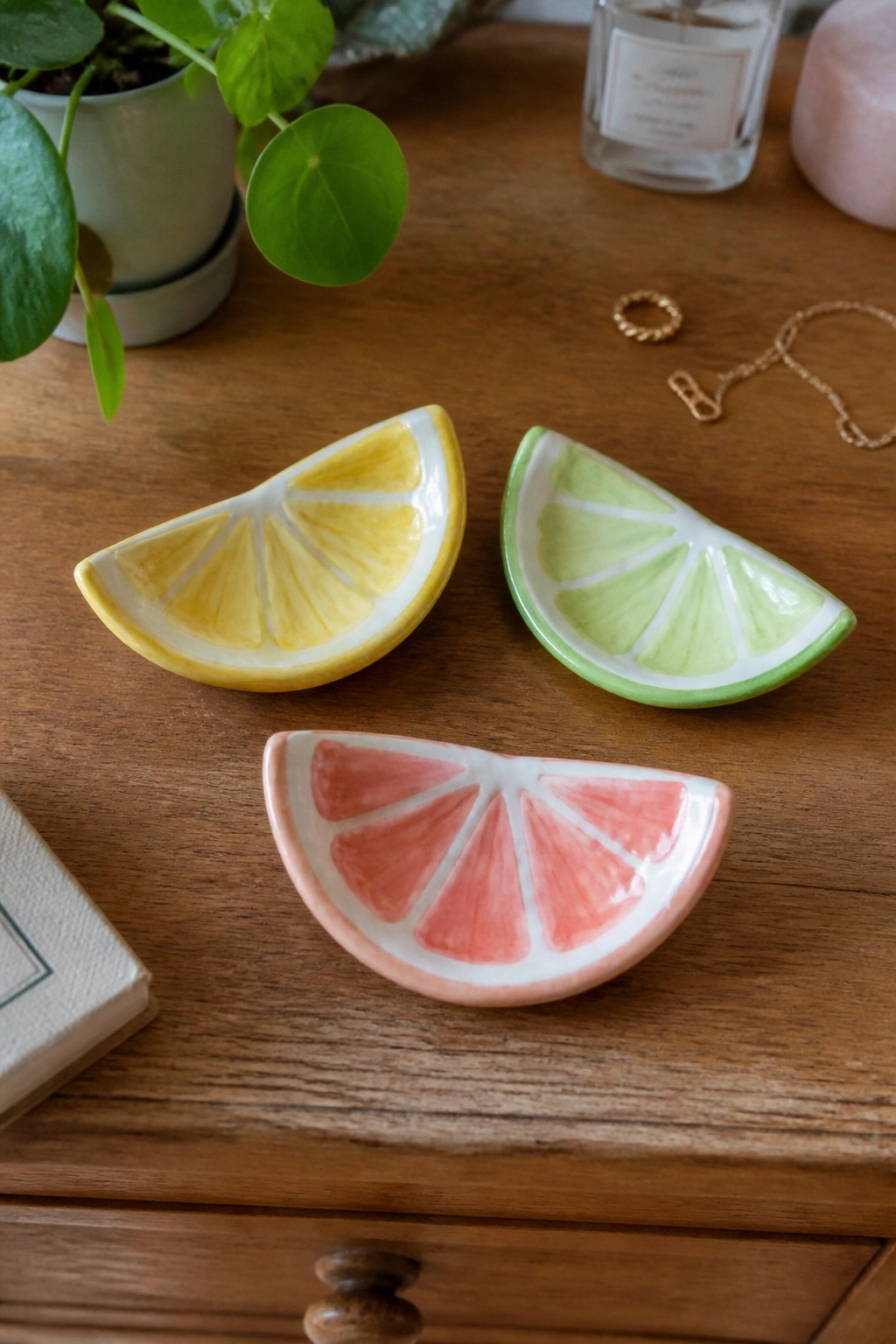
Small ceramic dishes shaped like halved citrus fruits make practical holders for rings and other small items. Each piece uses a simple curved form with painted segments that show the fruit’s interior, separated by white lines and finished with a colored rim glaze. The lemon, lime, and grapefruit versions rely on bright underglaze colors to create the effect without needing complex sculpting. This turns an ordinary pinch pot or slab dish into a themed storage piece that stays functional on a countertop or nightstand.
The shape does a lot of the work here since the natural curve already creates a shallow bowl that holds jewelry without extra carving. You can adapt the same idea by switching to other fruit colors or even trying berry or melon slices for variety. These stay budget friendly because they require only a small amount of clay and can be made in sets during one firing. In a bathroom or entryway they keep everyday items visible and contained while the painted detail helps them read as intentional decor rather than basic trays.
Frequently Asked Questions
What are the best places to find cheap bases for pottery projects? Thrift stores, garage sales, and dollar stores often have plain ceramic vases, bowls, and plates that cost just a few dollars each. Online marketplaces like Facebook Marketplace or Craigslist also list bulk lots of plain pottery for low prices. Start with simple shapes that have smooth surfaces so paint and finishes adhere evenly.
How can I make budget pottery look like expensive designer pieces? Focus on high-contrast colors, metallic accents, and clean lines. Use affordable chalk paint or spray paint in matte black, deep navy, or cream, then add thin gold or copper leaf details only on edges or handles. Apply two thin coats of a clear sealer to create a smooth, professional sheen that catches light like high-end glazes.
Do I need a kiln or pottery wheel to create these looks? No special equipment is required for most of the ideas. You can transform ready-made items with paint, decoupage, or simple carving tools. For a handmade feel, air-dry clay from craft stores works well for small sculptures or handles that you attach to existing pieces before painting.
What finishes hold up best for everyday use on low-cost pottery? Choose multi-surface acrylic paints labeled as durable or outdoor-rated, then seal with two coats of a water-based polyurethane. This combination resists chips and moisture far better than basic craft paint. Avoid using pieces treated this way for food unless you confirm the products are food-safe.
How should I arrange these pieces to enhance their high-end appearance? Group items in odd numbers on shelves or mantels, mixing heights and textures for visual interest. Place a few pieces against a neutral wall or on a wooden tray to create a collected, intentional display. Good lighting from above or the side highlights the finishes and makes the budget materials look more luxurious.

Pottery Path is my cozy corner of the internet where I share clay ideas, pottery inspiration, and simple projects you can recreate at home. I love exploring everything from air dry clay to handbuilt pottery to cute minis that brighten your day. My goal is to make clay crafting feel easy, fun, and welcoming for anyone who wants to try it.
You will find beginner friendly tutorials, creative pottery painting ideas, and lots of warm inspiration for slow and happy crafting. If you enjoy hands on creativity, this space will feel like home.