
I’ve been messing around with hand building pottery for a while now and I like how you can create things without a wheel.
Some of the pieces I’ve seen have this relaxed style that fits right into everyday spaces.
I put together a list of ideas that keep things simple but still feel current.
These projects don’t need much in the way of tools or experience.
You might find one or two that work for what you’re looking for.
Hand Built Textured Mug

A hand-built ceramic mug uses simple slab or coil construction to create a straight-walled drinking vessel with visible horizontal ridges from the forming process. The matte speckled glaze in neutral tones covers the surface evenly while allowing the texture to remain prominent. This approach fits the kitchen item category and produces a functional mug suited for daily use.
What makes this idea useful is how the basic cylinder shape keeps construction easy while the surface ridges supply visual interest without added carving or painting. You can adapt the same form by varying the wall height for different capacities or by smoothing select areas to create contrast. In a kitchen this kind of piece pairs well with other neutral dishware and photographs clearly for sharing because the handmade texture reads well from a distance.
Cat Face Plant Pot
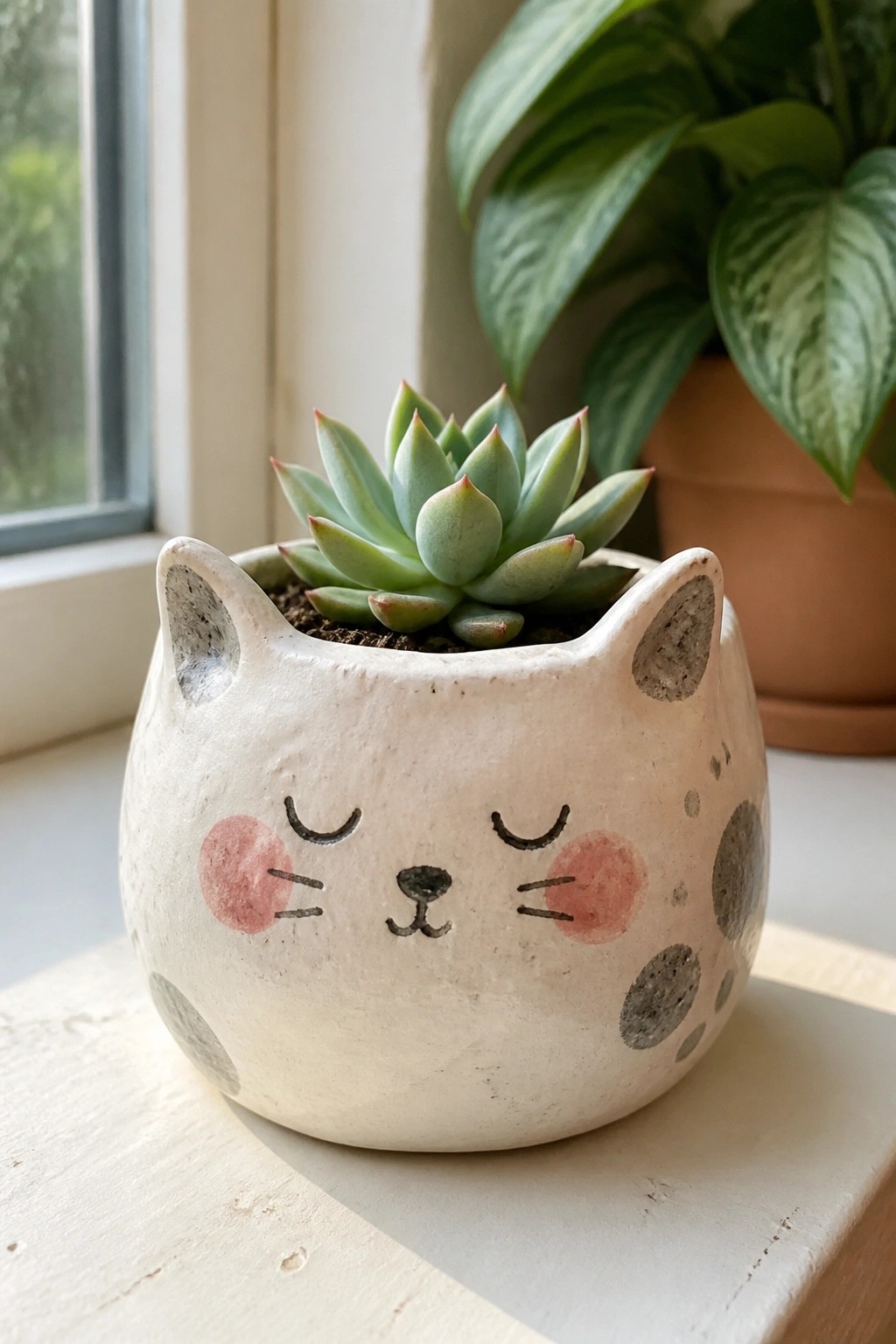
A handbuilt clay planter formed as a simple cat head works well for holding small succulents or starter plants. The project uses pinched or slab-built ears along the rim and basic painted details like closed eyes, whiskers, nose, and scattered spots on a light matte surface. This keeps the focus on the plant while the animal shape adds a clear motif without needing complex carving or glazing.
What makes this idea useful is the compact size that fits narrow windowsills or desks without taking much space. You could change the face to another animal or drop the spots for faster painting sessions. For a gift, the same shape works in different sizes and can be adapted into a pencil holder or small trinket dish by adjusting the opening width.
Speckled Rim Bowl With Soft Green Glaze
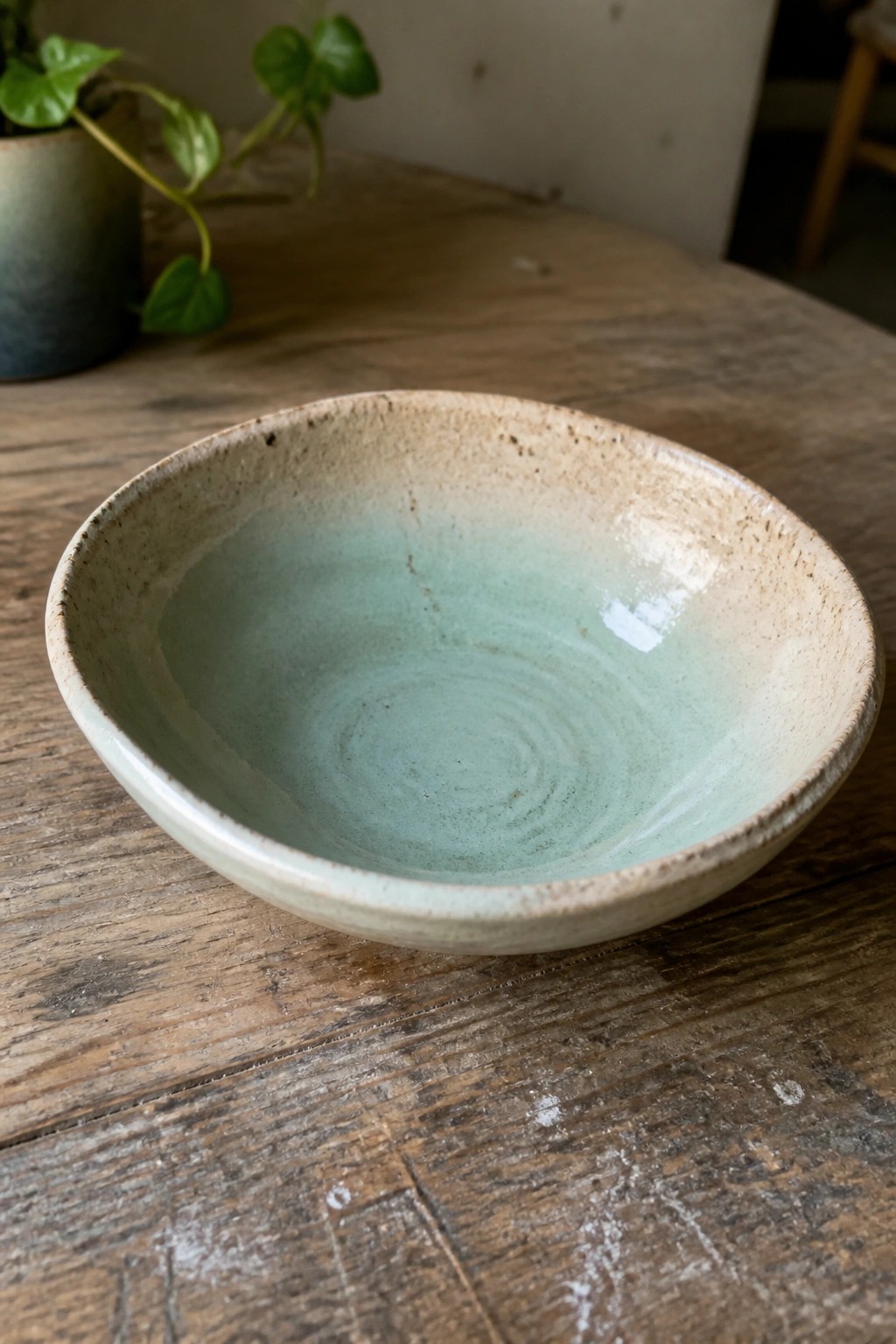
A shallow wheel-thrown bowl uses a wide, open form with an unglazed speckled rim that contrasts against a light mint green glaze covering the interior. The glaze pools slightly along the spiral marks left from throwing, creating gentle variation in tone without added decoration. This style keeps the focus on simple shape and basic glaze contrast rather than complex surface work.
The shape does a lot of the work here because the wide rim and shallow depth make it easy to use for snacks, sides, or small servings. You could repeat the same rim-and-interior glaze pairing on smaller dishes or try a deeper version for soup bowls. The speckled edge helps the piece stand out on a table while still looking understated enough for daily use.
Leaf Form Ring Dish

A leaf-shaped ring dish starts with a simple slab of clay cut into a pointed oval and impressed with leaf veins for texture. The edges are lifted slightly to form a shallow tray, then finished with a matte green glaze and a warm brown rim. This approach turns a basic hand-building step into a functional holder for rings or small items without needing a wheel.
What makes this idea useful is how the shallow leaf shape keeps jewelry visible and contained on a dresser or nightstand. You can adapt it by choosing different leaves for the vein pattern or changing the glaze color to match existing decor. The small size also makes it easy to turn the same form into a soap rest or a tiny catch-all for keys.
Polka Dot Oval Spoon Rest
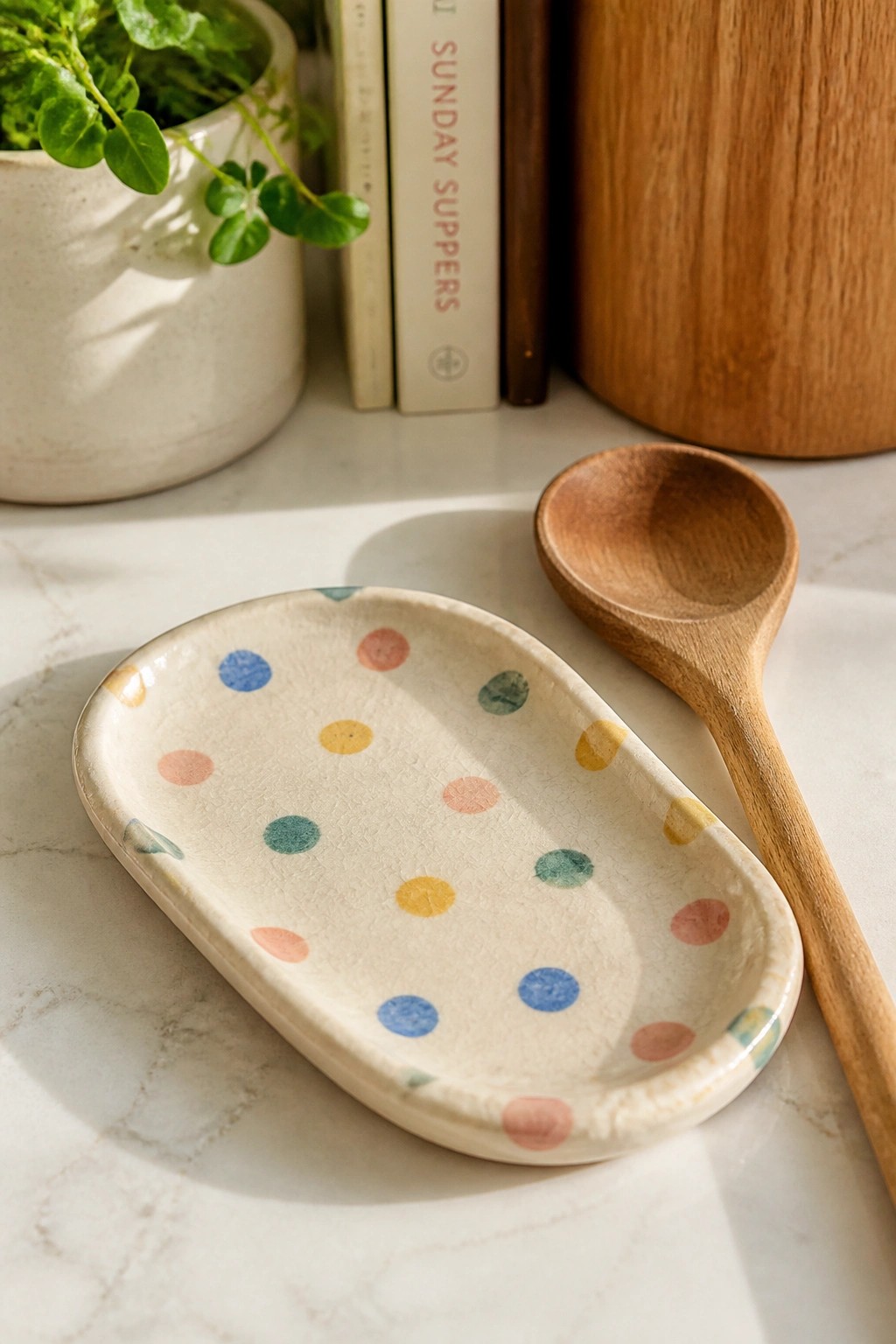
A hand-built oval ceramic dish with a crackle glaze and scattered dots in blue, coral, yellow, teal, and pink works well as a spoon rest or small kitchen tray. The shape stays simple while the mix of colors on the light base keeps the surface lively without looking crowded. This kind of project falls into the hand-built tray category and gives beginners an easy slab form to practice even glaze application and basic underglaze painting.
What makes this idea useful is how the oval shape adapts to different kitchen tasks without extra effort. You could stretch the same form into a longer butter dish or shorten it into a tea bag holder. The dots can be spaced out or clustered depending on how much pattern you want, and the neutral background makes the colors easy to swap for whatever fits your dishes. A piece like this also photographs cleanly for Pinterest because the shape and dots read clearly even in a small thumbnail.
Scalloped Edge Tea Light Holder
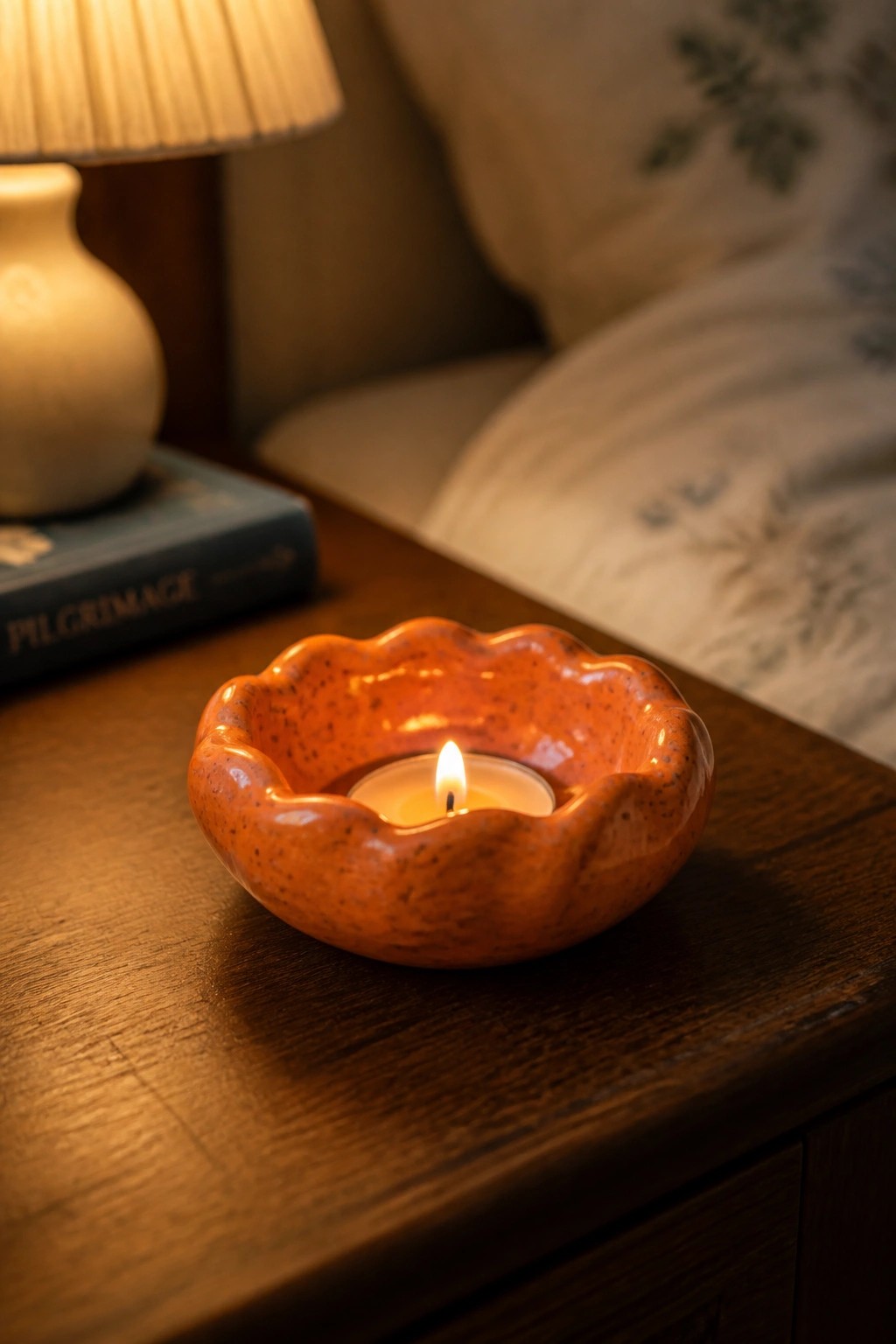
A small ceramic dish with a pinched scalloped rim works well as a tea light holder. The wavy edge is formed by hand before firing and gives the piece an organic outline that frames the flame. The speckled orange glaze creates subtle variation across the surface while keeping the overall form simple and compact. This type of project falls into the category of quick decor objects that combine a basic bowl shape with a functional candle recess.
What makes this idea useful is how the scalloped rim can be made by pressing or cutting the clay edge while it is still soft. The small scale fits easily on a bedside table or shelf without needing much workspace or clay. You could repeat the same rim style on a flatter dish to hold jewelry or change the glaze color to match different room palettes. The shape also translates directly to a simple ring dish if you skip the candle well.
Tall Rectangular Vase With Impressed Circles

A rectangular slab vase gives you straight sides and a flat base that stays stable without needing a wheel. The light green glaze keeps the surface matte and soft, while a single row of circular impressions runs down one edge to create a simple repeated detail. This approach fits the decor object category and works as a holder for dried stems or a few fresh flowers.
What makes this idea useful is how the flat construction lets you cut and join slabs quickly. You can change the height or width to fit different shelf spaces or shorten it into a smaller version for a desk. The impressed circles can be swapped for other shapes or left off if you want a plain surface. In a kitchen or entryway, the narrow profile takes up little room while still functioning as a vase.
Fern Impressed Clay Wall Tile

A hand-built clay slab can be rolled out, cut into an irregular shape, and impressed with a real fern frond to capture the leaf veins in relief. The finished piece is left in a light speckled surface that keeps the texture visible rather than covering it with heavy glaze. A simple hole at the top lets it hang from twine on a wall peg or hook. This creates a straightforward decor object that relies on the natural form of the plant instead of added painting or carving.
What makes this idea useful is how the same impression method works with many different leaves or grasses for quick variations. The small scale makes it easy to produce several pieces at once for a grouped display or to give as gifts. You could adapt the shape into a longer rectangle for a different hanging style or keep the organic edges for a more casual look. The neutral finish helps it fit into a workspace or entry without needing much color coordination.
Chubby Ceramic Bird Figurine

A handbuilt clay bird figurine makes a straightforward decor object with its rounded body and compact size. The simple sculpted feet and beak add just enough detail without complicating the form. Painting the top half in a soft blue and leaving the lower section lighter creates clear contrast that emphasizes the shape.
What makes this idea useful is the small scale that lets it sit on a shelf, desk, or windowsill without crowding the space. You can swap the blue for other muted colors or make a group of birds with slight variations in the head tilt. This shape also works as a starting point for other small animals if you adjust the beak and feet.
Striped Multi-Hole Toothbrush Holder

A hand-built ceramic holder with three separate compartments keeps toothbrushes upright and separated. Vertical stripes in soft pink, blue, yellow, and green run down the sides of a speckled clay body, giving the piece a simple patterned surface without extra sculpting. The rounded, slightly irregular form comes from basic hand-building methods and works as a dedicated bathroom item.
What makes this idea useful is how the stripe layout can be changed to any color set to match towels or tiles. The compact size fits narrow windowsills or shelves where larger containers would not work. The same shape can be reworked into a smaller two-hole version or a wider tray for other small bathroom items like razors or cotton swabs. For a gift, this kind of holder pairs easily with a matching soap dish made from leftover clay.
Slotted Sponge Holder for the Sink

A hand-built sponge holder like this gives the sponge a dedicated spot right by the sink. The low curved walls and vertical slits along the sides let water drain through while keeping the sponge from sitting in a puddle. The soft green glaze covers the piece evenly and leaves the clay edges visible for a simple finish. This kitchen item stays small enough to fit on the counter without taking over the workspace.
What makes this idea useful is how the slits handle drainage without any extra parts. You could rework the same shape into a soap dish by spacing the cuts farther apart or shortening the overall length. The compact size also makes it easy to try in different glaze colors to match your existing dishes or tiles. For daily use, the holder keeps the sponge off the counter and within reach during dishes.
Speckled Salt Cellar with Matching Spoon

A small ceramic salt cellar with a short-handled spoon creates a practical kitchen set for holding and serving salt. The rounded bowl shape keeps the salt contained while the spoon fits neatly beside it for scooping. The speckled blue-green glaze on both pieces gives a simple, consistent surface that highlights the handmade form without extra decoration.
What makes this idea useful is how the compact size fits on a countertop or table without taking up much space. You can rework the same shapes into a spice holder or small pinch bowl by changing the depth slightly. The set also works as a quick gift project since the pieces pair naturally and require only basic handbuilding skills.
Rectangular Terracotta Soap Dish with Drainage Ridges

A handbuilt soap dish shaped as a shallow rectangle gives bar soap a dedicated spot in the bathroom. Several raised clay ridges run across the base to lift the soap and let water drain off instead of pooling underneath. The warm reddish clay and simple form keep the piece looking straightforward while still serving a clear purpose.
What makes this idea useful is how the drainage ridges solve a common problem without adding extra steps. The same rectangular base could be scaled down for a small ring dish or lengthened into a tray for cotton swabs. Because the shape stays basic, it works on any countertop and pairs easily with other earthy or neutral bathroom items. You could swap the clay color or skip the ridges entirely if you want a flatter version for display use only.
Ceramic Yarn Bowl With Rim Notch

A yarn bowl is a round ceramic vessel made to hold a ball of yarn while you knit or crochet. The notch cut into the rim guides the strand so it unwinds evenly without rolling away or tangling. This example uses a deep blue speckled glaze on a sturdy, low-profile form that sits flat on a work surface.
What makes this idea useful is the notch detail that turns an ordinary bowl into a practical tool for fiber projects. You could repeat the same rim cut on a taller shape to hold larger skeins or scale it down for embroidery thread. The form works well on a side table or in a craft basket and photographs clearly for project boards because the function is obvious at a glance.
Swirled Glaze Oval Serving Tray

A hand-built oval ceramic platter uses broad brushstrokes of coral and yellow glaze over a light base to create an abstract, flowing pattern. The shape stays simple and elongated, which lets the glaze movement become the main visual element without added texture or carving. This approach works well for trays meant for serving or display rather than smaller items like mugs or ring dishes.
What makes this idea useful is how the oval form handles food spreads or small gatherings without extra compartments or handles. You could repeat the same glaze layering on a round or rectangular base to match different table sizes. In a kitchen setting the piece serves as both a functional board and a display item on open shelves. The color pairing can be swapped for other combinations like blue and green if you want to test new glaze tests on the same simple shape.
Speckled Round Planters

Small hand-built planters in simple rounded shapes pair well with succulents when finished in soft speckled glazes. The clay forms stay low and wide with slightly uneven rims that come naturally from pinching or coiling. Glazes in pink, yellow, and pale green add subtle variation while keeping the surface matte and textured rather than perfectly smooth. This style works as a basic planter idea that needs no added carving or handles.
What makes this idea useful is how the same basic shape can be repeated quickly in a few glaze colors to build a set. The small scale fits tight spaces like windowsills or bathroom ledges where larger pots would feel crowded. You could rework the form into a slightly deeper version for herbs or skip the drainage hole and use it as a holder for candles or small tools instead. Grouping several together creates a balanced display that still reads as casual rather than overly styled.
Painted Face Egg Cups

These egg cups are built from clay into a simple flared base with a rounded top that holds a standard egg. A smooth off-white glaze covers the surface, and each cup gets a minimal face drawn on the front using black lines for eyes, nose, and mouth. The design keeps the decoration sparse so the shape and the functional form stay the main focus. This turns an everyday kitchen holder into a quick hand-building project that needs only basic forming and light painting.
The small scale lets you make several in one session without much clay or space. You can change the face details to dots, lines, or small shapes if you want a less literal look. They work well on a breakfast table or as small gift items that are easy to wrap and ship. The same base shape could be stretched taller for a small vase or shortened for a ring dish by adjusting the height during building.
Spiral Coiled Incense Holder

A hand-built ceramic incense holder uses rolled coils of clay to form a tight spiral on one side and a shallow dish on the other. The spiral creates a stable resting point while the dish catches ash from the stick. A neutral speckled glaze keeps the surface matte and shows the clay texture without added decoration. This fits into simple decor pieces that combine function with a single strong form.
What makes this idea useful is that the coil spiral does the visual work while the dish keeps things practical. You can rework the same layout into a longer tray for two sticks or shrink the spiral for a smaller desk version. The shape adapts well to jewelry storage if you skip the incense hole. In a bathroom or entryway, the compact size and low profile make it easy to place without crowding other items.
Two-Tone Lidded Trinket Jar

A small hand-built ceramic jar with a fitted lid works well as a simple storage piece. The base uses a soft green glaze while the lid stays in a lighter neutral tone, and a rounded knob gives an easy grip. The low, wide shape keeps the focus on the contrast between the two surfaces without added decoration. This kind of project fits the small storage or jewelry holder category and stays functional because the lid sits securely.
The shape does a lot of the work here since the wide opening makes it easy to reach inside while the lid keeps dust out. Try the same form for cotton swabs in a bathroom, loose tea in a kitchen, or spare buttons on a desk. You can swap the color pairing or make the jar slightly taller to hold longer items like pens. A piece like this stands out on Pinterest because the clean lines and limited palette photograph cleanly against wood or linen backgrounds.
Frequently Asked Questions
What tools and materials do I need to try these hand building pottery ideas at home?
Basic supplies include a few pounds of clay such as earthenware or stoneware, a rolling pin or slab roller for flattening clay, wooden ribs for smoothing, a needle tool for cutting, and sponges for moisture control. You can start with an old table covered in canvas to prevent sticking and keep a bucket of water nearby for slip. Many of the effortless projects rely on simple pinching or coiling so you do not need expensive equipment right away.
How can beginners achieve that effortless look in their pottery creations?
Focus on leaving subtle irregularities like uneven rims or soft dents instead of perfect symmetry. Use your fingers to shape pieces quickly without over-smoothing and add light textures with items like lace or leaves pressed gently into the surface. Avoid heavy sanding or precise measurements so the final form feels relaxed and handmade rather than manufactured.
Are there any specific techniques recommended for creating organic shapes without a pottery wheel?
Pinching works well for small bowls and vases by starting with a ball of clay and gradually thinning the walls while keeping the form slightly asymmetrical. Coiling lets you build taller pieces by stacking and blending ropes of clay in loose spirals. Slab building creates flat sided trays or wall pockets when you drape soft sheets over rounded objects like bowls for natural curves.
What kind of clay works best for these trendy effortless pottery projects?
Low fire earthenware gives a warm matte finish that pairs nicely with casual glazing and fires at lower temperatures suitable for home studios. Stoneware offers more durability for functional items like mugs and holds up well to the organic textures described in the ideas. Both types accept the simple surface treatments that keep the overall aesthetic relaxed.
How should I finish and fire my hand built pieces to maintain their casual appearance?
Apply matte or satin glazes in thin uneven layers so drips and variations remain visible after firing. Bisque fire first to strengthen the clay then glaze fire at the recommended temperature for your clay body. If you lack a kiln many community studios offer firing services that preserve the hand built character without adding polished details.

Pottery Path is my cozy corner of the internet where I share clay ideas, pottery inspiration, and simple projects you can recreate at home. I love exploring everything from air dry clay to handbuilt pottery to cute minis that brighten your day. My goal is to make clay crafting feel easy, fun, and welcoming for anyone who wants to try it.
You will find beginner friendly tutorials, creative pottery painting ideas, and lots of warm inspiration for slow and happy crafting. If you enjoy hands on creativity, this space will feel like home.