
I like to keep a list of pottery ideas on hand for when I have some free time in the studio.
Sometimes I get stuck on what to make next and it helps to look through different options.
I have tried quite a few of these myself and they have been fun to experiment with.
A few came from other potters I follow online and I adapted them to my own style.
Here are the ones that stood out to me recently.
Hand-Painted Daisy Mug

A small ceramic mug with a rounded body and thick handle works well as a simple drinkware project. The light base glaze provides a neutral surface for repeating yellow daisy motifs painted around the exterior, each with a small brown center. The flowers sit at different heights and angles, which keeps the pattern from looking too rigid while still covering the form evenly. This approach fits into the painted mug category and relies on basic brushwork rather than carving or added clay details.
The painted detail helps this stand out because the bright flowers contrast directly with the pale background without needing extra texture or layers. A piece like this works especially well as a daily coffee cup or a quick gift that can be made in batches. The same daisy motif could be simplified to just three or four flowers on a smaller bud vase or reworked onto the inside rim of a cereal bowl. The small overall size also makes it easy to test different paint colors or spacing without committing to a large form.
Cat Face Clay Planter
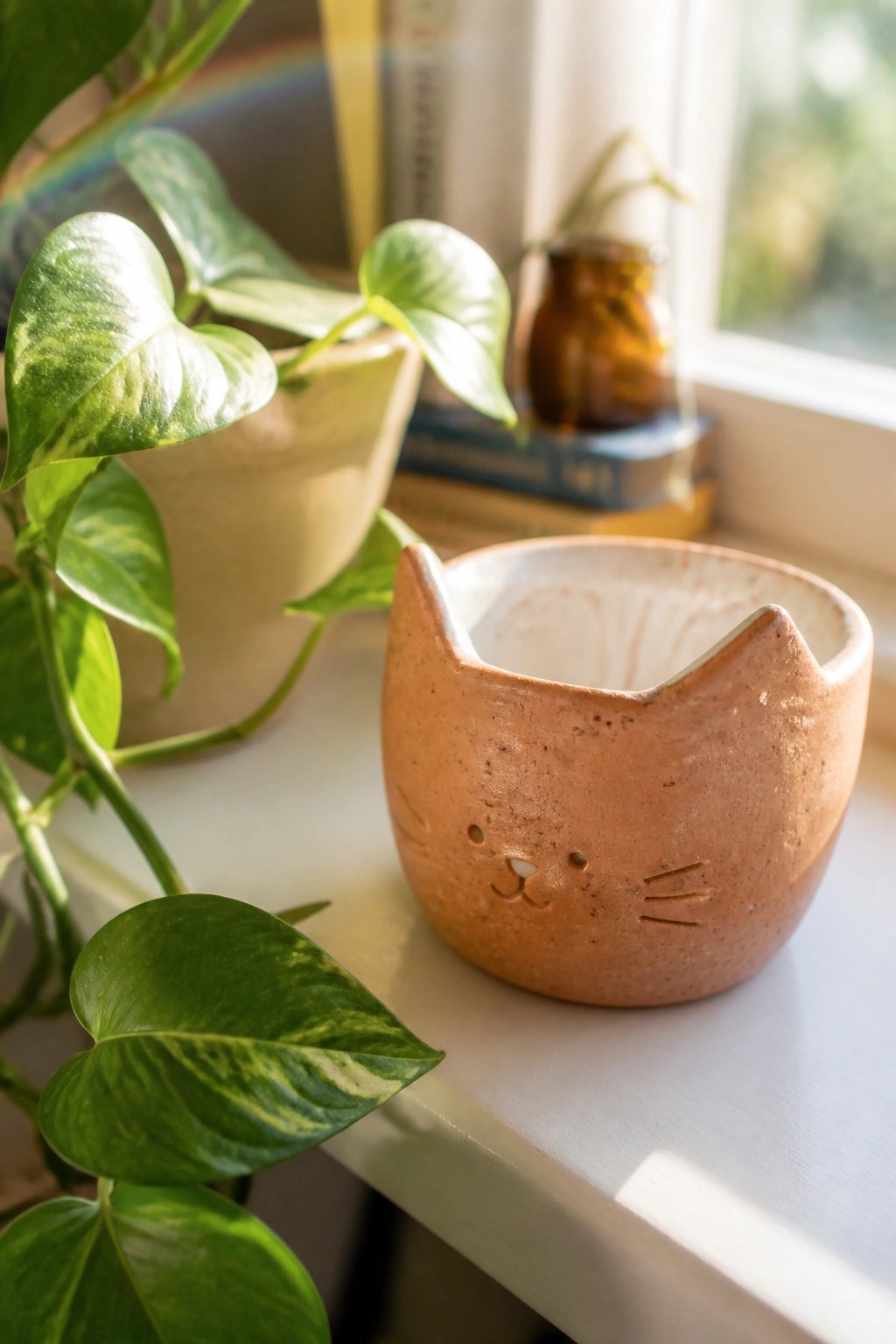
A small clay bowl with a notched rim that forms cat ears and an incised face on the front makes a compact planter. The design uses simple carved lines for the eyes, nose, and whiskers against the natural terracotta surface, which keeps the focus on the shape rather than added color or glaze. This project falls into the small planter or holder category and works best when the bowl stays modest in scale so the face detail stays visible once a plant is added.
What makes this idea useful is how the same basic form can be adapted for different animals by changing only the carved features. The small size fits on a shelf or windowsill without crowding other plants, and the open top accepts succulents or cuttings directly. You could scale the same rim notches and face carving up to a larger pot or simplify it to just the ears for a quicker version. For a gift this shape stands out because it is clearly handmade yet still practical for everyday plant display.
Speckled Glaze Ceramic Noodle Bowl

A wheel-thrown ceramic bowl finished with a reactive glaze that blends turquoise at the rim into deeper blue toward the foot. The glaze pools and breaks across the surface to create subtle variation without added decoration. This style of bowl suits noodle dishes, soups, or grain bowls where the food sits low and the rim stays clear for chopsticks or spoons.
The wide, low profile keeps broth and toppings visible while the thick walls hold heat. You can scale the same glaze approach down to side bowls or up to a larger serving vessel. In a kitchen this shape works well stacked on open shelves because the color shift makes each piece slightly different from the next.
Hand-Painted Citrus Tray

A flat rectangular ceramic tray covered in painted citrus slices gives you a simple way to add color to a table or counter. The design shows cross-sections of grapefruit, lemon, lime, and orange done with black outlines and loose watercolor fills in bright tones. This keeps the surface mostly light while the fruit pattern creates the main visual interest. The shape works as a serving piece or a place to drop keys and small items.
What makes this idea useful is how the same fruit slices can be repeated on smaller plates or coasters without losing impact. The painted detail helps the tray stand out even when it is empty. In a kitchen this shape holds snacks or fruit easily, while the motif could be swapped for other produce like berries if you want a different color scheme. For a gift, the tray is quick to personalize by changing which fruits you include.
Hedgehog Figurine from Clay

A hedgehog figurine makes a simple decor object that sits on a shelf or desk. Form the body from clay into a rounded sitting shape with a stable base, then add short spikes along the back by scoring or attaching small clay pieces. Leave the face smooth and add minimal details like eyes and a nose after firing with a matte gray finish.
The small scale makes this easy to adapt into other animals by swapping the spikes for ears or fur texture. This kind of piece works especially well as a low-maintenance accent that does not need watering or special care like a plant. You could make a few in different sizes for a grouped display or skip the spikes entirely to create a basic animal body for quicker versions.
Ring-Shaped Tea Light Holder

A ring-shaped ceramic tea light holder places three candles in recessed spots spaced evenly around its form. The large central opening and rounded outer edge create an open, balanced silhouette while the mottled brown glaze and textured surface give it a simple, grounded appearance. This project falls into the candle piece category and functions as both a practical holder and a standalone tabletop object.
What makes this idea useful is how the ring layout keeps multiple tea lights compact yet visible from different angles. You could adapt the same shape by widening the ring for four candles or switching to a matte glaze for a different finish. On a nightstand or coffee table the form stays low and stable, and the design is easy to scale down into a smaller version for a desk or shelf. For a gift, the holder works well because it needs only basic forming and glazing steps.
Leaf-Shaped Ceramic Spoon Rest
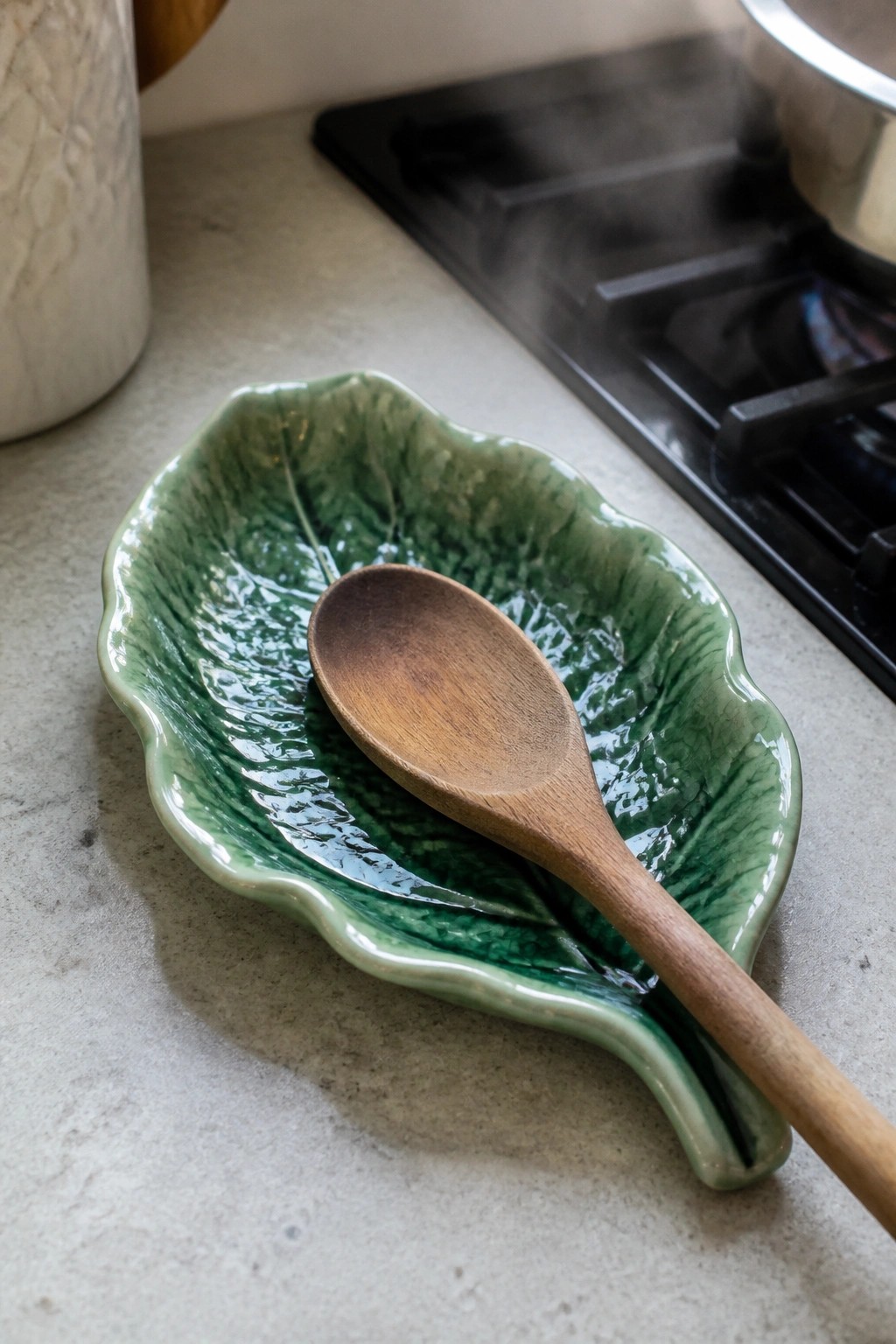
A leaf-shaped ceramic spoon rest offers a practical kitchen piece that keeps cooking spoons off the counter. The project uses a shallow, curved dish form with sculpted veins and a glossy green glaze to create a natural leaf look. The pointed tip holds the spoon handle while the wider area supports the bowl. This fits into simple functional pottery ideas that combine a useful shape with a nature-inspired surface.
What makes this idea useful is how the shallow curve and pointed end naturally cradle a spoon without extra parts. You could scale it down for a smaller stove or switch the glaze to match your kitchen colors. The same leaf form works as a soap dish or small trinket holder if you adjust the depth. In a kitchen, this kind of piece stays out of the way yet keeps surfaces cleaner during cooking.
Speckled Pink Ring Dish
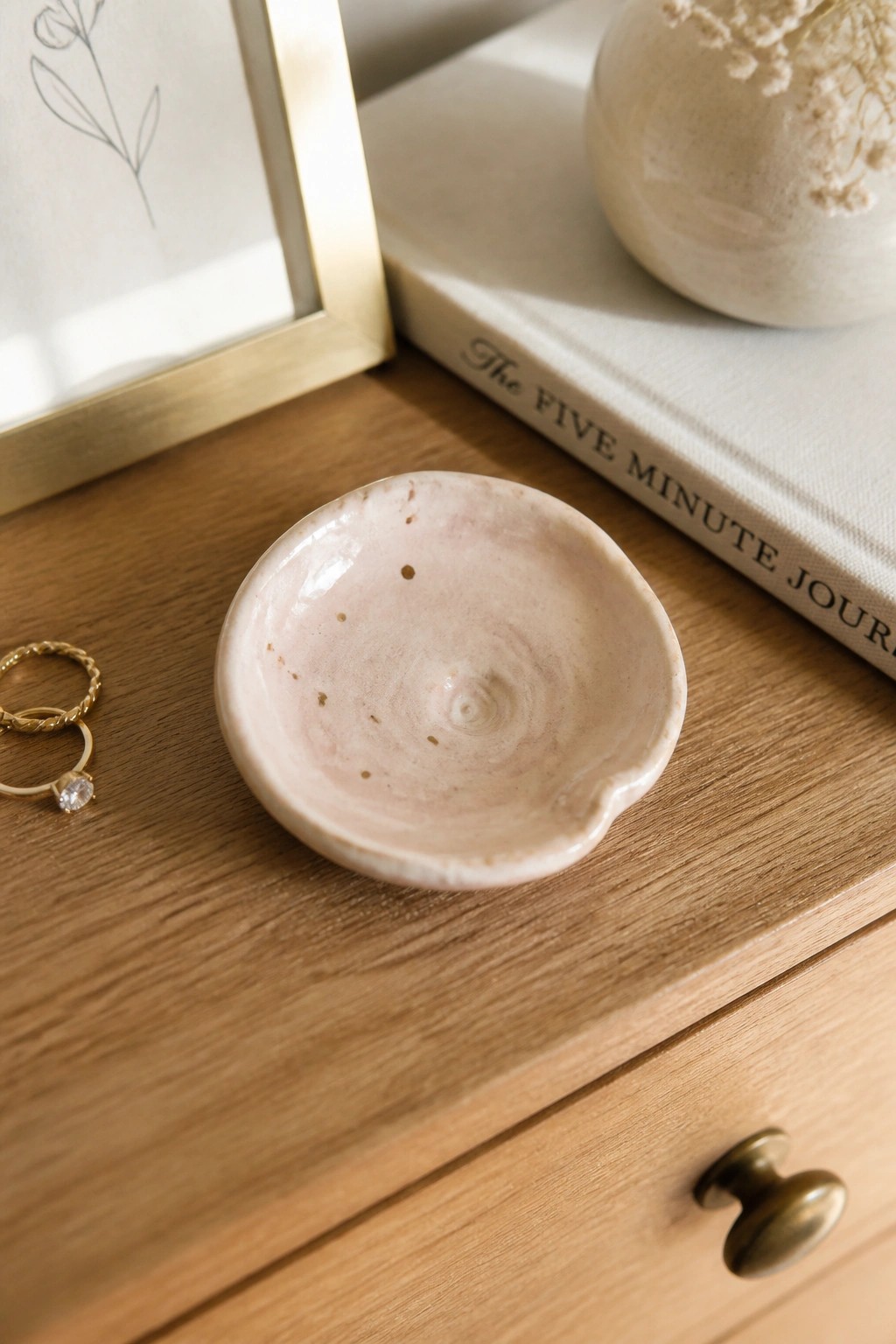
A small ceramic ring dish made from a shallow, hand-formed bowl shape works well for holding rings or small jewelry pieces. The soft pink glaze covers the surface with scattered gold speckles that catch light without dominating the look. The slightly irregular rim and compact size keep the focus on function while still looking finished.
What makes this idea useful is how it solves daily jewelry storage on a nightstand or dresser without taking much space. You can adapt the same form by using a different base glaze or adding more concentrated speckles in one area for variety. This shape also works as a tiny soap holder in a bathroom or a place to drop keys and coins by the door. For Pinterest, the combination of muted color and metallic flecks photographs cleanly and gives people a clear template to copy or tweak.
Fern Imprint Wall Tile

A rectangular clay tile with a single fern frond pressed into the surface makes a clean botanical wall hanging. The leaf creates a raised relief that catches light across the flat clay, giving the design depth without added color or carving. This project falls into the decor object category and relies on direct plant imprints rather than painting or sculpting. The drilled hole and simple cord let the tile hang flat against the wall while keeping the focus on the natural texture.
What makes this idea useful is how the same imprint method transfers to other flat forms like coasters, soap dishes, or small trays. The tall rectangle works well in narrow spots or when grouped with two or three similar tiles. You can swap the fern for any sturdy leaf or flower from your yard to change the look without new tools. For gifts, the finished tile needs only a cord and stays lightweight for mailing.
Rustic Salt Cellar with Pinched Rim

A small ceramic salt cellar in an irregular pinched shape gives you a practical kitchen item for holding salt or spices on the counter. The uneven rim and speckled matte glaze create a simple surface that feels natural rather than polished. This style works as a functional holder rather than a decorative accent, keeping the focus on daily use. The compact scale keeps it from crowding the workspace next to a cutting board or stove.
What makes this idea useful is how the folded rim creates a stable pour point without any extra trimming. You could rework the same form into a small holder for loose tea or baking soda by adjusting the depth slightly. The speckled finish also masks fingerprints and minor marks, so it stays looking clean with regular kitchen handling. For a gift, something like this pairs easily with a small wooden spoon and a jar of finishing salt.
Ceramic Yarn Bowl with Side Feed Opening

A yarn bowl is a functional clay project made to hold a ball of yarn while keeping it from rolling across the floor. The design includes a curved opening cut into the rim that lets the strand feed out smoothly as you knit or crochet. The glossy turquoise glaze covers the entire surface and creates a simple contrast against the yarn inside. This type of piece belongs in the category of craft accessories rather than general kitchenware.
The shape does a lot of the work here by containing the yarn while the opening prevents snags or knots. You can adapt the same idea by making the bowl wider for bigger skeins or adding a second cutout for multiple colors. In a living room or craft space, this kind of holder keeps supplies tidy without taking up much room. For a gift, something like this appeals directly to knitters who already have the basic tools.
Cloud-Shaped Toothbrush Holder

A ceramic toothbrush holder formed as a rounded cloud gives you a compact bathroom item that keeps brushes upright and organized. The piece uses a light blue glaze across the entire surface and features a simple painted face with small dark eyes, a curved mouth, and two pink cheek dots. A row of impressed dots along the lower edge adds subtle texture without extra parts. This approach turns a standard holder into a single-piece project that still fits three or four brushes.
The small overall size lets it sit on a narrow ledge or windowsill without crowding other items. You can rework the same cloud form with a different glaze color or change the face details to match another theme like stars or waves. For a quick variation, skip the face entirely and just use the sculpted shape with a solid glaze. This kind of holder also works as a desk caddy for pens or small tools if you want to adapt it outside the bathroom.
Ceramic Flower Ring Dish

A small ceramic dish formed with five rounded petals creates a compact ring holder that keeps jewelry in one spot. The inside uses a soft pink glaze with subtle white streaks while the rim stays unglazed to show the clay body. This shape belongs to the ring dish category and stays shallow enough for everyday use on a flat surface.
What makes this idea useful is how the petal outline gives natural compartments without extra carving. You could scale the same form down for a necklace pendant tray or widen it slightly into a soap rest for a bathroom. The small footprint also makes it easy to batch out several at once for gifts. In a bedroom setting the curved edges stop rings from sliding off while still leaving room for a few small items.
Speckled Bud Vase with Blue Dots

A small handmade ceramic vase gives you an easy way to show off single stems or tiny cuttings. The form has a rounded body that narrows at the neck, finished with a muted speckled glaze and a row of blue dots applied around the lower half. The simple painted pattern stands out against the gray surface and keeps the overall look clean.
The small scale makes this shape useful on a windowsill, nightstand, or desk where larger pieces would crowd the space. You can repeat the dot motif on a matching tray or switch the color to match different rooms. For gifts, the same vase works with dried flowers or a single stem and still feels finished without extra decoration.
Ceramic Sponge Holder with Drainage Slots

A rectangular ceramic tray works as a sponge holder by using parallel slots cut into the base to let water drain away from the sponge. The piece has low sides and a soft green glaze that covers the entire surface, giving it a simple, functional shape suited to sitting on a countertop next to a sink. This kind of project fits into the kitchen item category and solves the common problem of a soggy sponge by keeping it raised and aired out.
What makes this idea useful is the built-in drainage that keeps the sponge from sitting in water. The same tray shape can be scaled down for bar soap in a bathroom or lengthened slightly to hold two sponges. A piece like this works especially well as a quick weekend project since the form is straightforward and the slots can be cut with a basic template. For a gift, something like this stands out on Pinterest because it shows a clear solution to a daily kitchen task rather than just decoration.
Lidded Ceramic Jar with Triangle Band

A small lidded ceramic jar makes a practical kitchen storage piece for salt, spices, or loose tea. The white surface stays simple while a single band of repeating blue triangles adds pattern around the middle. The loop handle on the lid stays easy to lift and keeps the overall shape compact. This approach fits the kitchen item category and shows how a narrow decorative strip can give detail without covering the whole form.
What makes this idea useful is the size that sits neatly on a counter or open shelf. You could repeat the same jar shape with a different motif like dots or lines, or scale it up slightly for sugar or coffee. In a kitchen, the clean white body pairs with other pottery while the blue band keeps it from looking plain. For a gift, the form works just as well with a single color or as a small holder for cotton swabs in a bathroom.
Textured Ceramic Utensil Crock

A handmade ceramic crock shaped as a tall cylinder works well as a kitchen utensil holder. The form keeps wooden spoons and spatulas upright and within reach during cooking. Horizontal ridges and rows of small stamped dots add surface texture to the earthy brown glaze, helping the piece catch light without extra decoration.
What makes this idea useful is how the size and open top turn it into everyday storage on a counter. The same cylinder shape could be shortened into a small herb planter or widened slightly for a paper towel holder. Changing the dot pattern or glaze color lets you match it to different kitchen styles while keeping the functional core intact. Projects like this often perform well on Pinterest because they show clear kitchen use alongside simple handmade details.
Small Speckled Cups with Painted Motifs

Small ceramic cups work well as a project when you keep the form simple and add painted designs on the exterior. These pieces use a speckled clay body finished with soft glazes in pastel tones, then decorated with basic motifs like dots, a lemon slice, a star, and smiley faces. The approach relies on the contrast between the textured surface and the flat painted shapes to create interest without extra sculpting.
What makes this idea useful is how the compact size lets the cups double as pen holders, small plant pots, or juice tumblers. You can change the painted elements to match different themes or color schemes while keeping the same cup shape. The design also translates easily to other objects like small bowls or ring dishes if you want to expand the set.
Textured Ceramic Incense Holder Tray
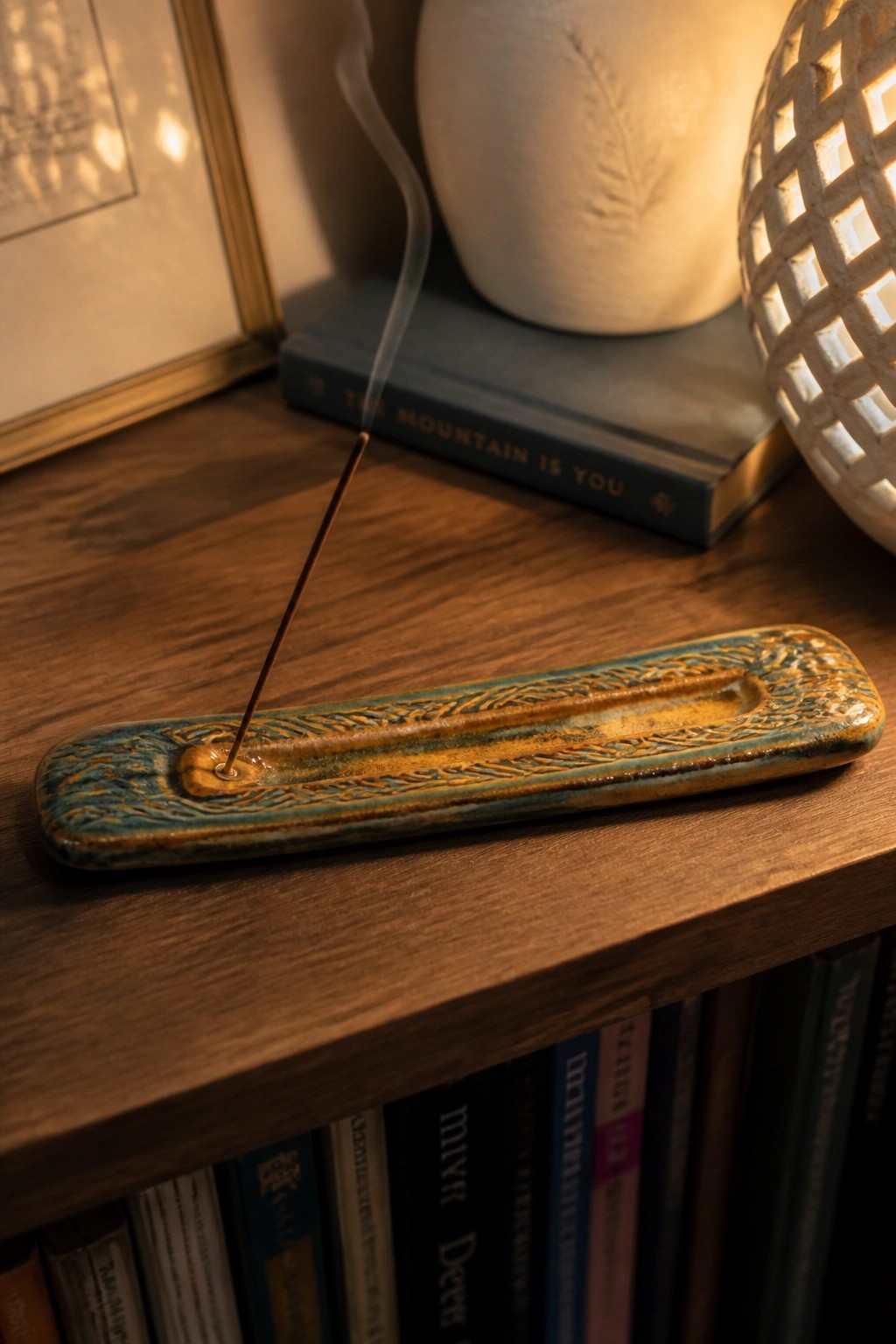
A narrow rectangular tray made from clay becomes an incense holder once a small hole is added near one end to keep the stick upright. The example uses a glossy glaze that shifts between teal and amber, with raised repeating patterns pressed along the rim to catch light and add texture. This shape contains the ash while the patterned edges keep the piece from looking flat.
The small scale makes this easy to adapt for a desk or bookshelf where space is tight. You could shorten the tray for a single-stick version or swap the border pattern for simple lines if you want a faster build. For a gift, something like this stands out on Pinterest because it combines a clear function with visible surface detail that reads well in photos.
Frequently Asked Questions
What basic supplies do I need to try the pottery ideas in the article?
Start with a good quality clay suited to your firing method, such as stoneware or earthenware, along with basic tools like a wire cutter, ribs, sponges, and a needle tool. If the projects involve glazing, gather brushes and underglazes in colors that match your vision. Many of the 19 ideas work with minimal equipment at first, so focus on a sturdy work surface and access to a kiln or air-dry options to test your first few pieces without a big investment.
Which of the creative ideas are best for complete beginners?
Look for projects that emphasize hand-building techniques like pinch pots or simple slab constructions rather than wheel throwing. These allow you to practice shaping and texture without advanced skills. The article highlights several low-pressure options that build confidence quickly, such as creating textured bowls or decorative tiles. Begin with smaller scales to avoid frustration and gradually add details like handles or patterns as your control improves.
How can I adapt the ideas if I lack access to a traditional kiln?
Many of the suggested projects translate well to air-dry clay or oven-bake varieties that harden without firing. Apply acrylic paints or sealers for color and protection instead of glazes. For ideas involving functional items, test durability with a waterproof sealant. This approach lets you explore the creative concepts right away while planning for kiln access later through local studios or community workshops.
What common pitfalls should I watch for when following these pottery suggestions?
Avoid overworking the clay, which can lead to cracking during drying. Always score and slip joints properly when attaching pieces. Keep walls even in thickness to prevent warping in the kiln. The article’s ideas often rely on thoughtful drying times, so cover pieces loosely with plastic to control moisture. If glazing, apply thin layers and test combinations on sample tiles first to achieve the desired finish without surprises.
How do I expand on these 19 ideas to develop my own unique pottery style?
Combine elements from multiple projects, such as adding carved textures from one idea to the form of another. Experiment with mixed media like embedding found objects or using unconventional stamps for patterns. Document your process with photos to track what works, then tweak colors, scales, or functions. Over time this builds a personal collection that reflects your preferences while staying rooted in the foundational creativity the article provides.

Pottery Path is my cozy corner of the internet where I share clay ideas, pottery inspiration, and simple projects you can recreate at home. I love exploring everything from air dry clay to handbuilt pottery to cute minis that brighten your day. My goal is to make clay crafting feel easy, fun, and welcoming for anyone who wants to try it.
You will find beginner friendly tutorials, creative pottery painting ideas, and lots of warm inspiration for slow and happy crafting. If you enjoy hands on creativity, this space will feel like home.