I’ve been working with slab pottery on and off for a few years and geometric shapes keep coming up in my projects.
They provide a straightforward way to build forms while leaving room for interesting surface work.
This post gathers seventeen ideas that use bold decoration on those geometric slabs.
Most of them are things I have tested myself or seen in workshops.
You can start with simple tools and build from there.
Hexagonal Slab Mug With Triangular Color Blocks
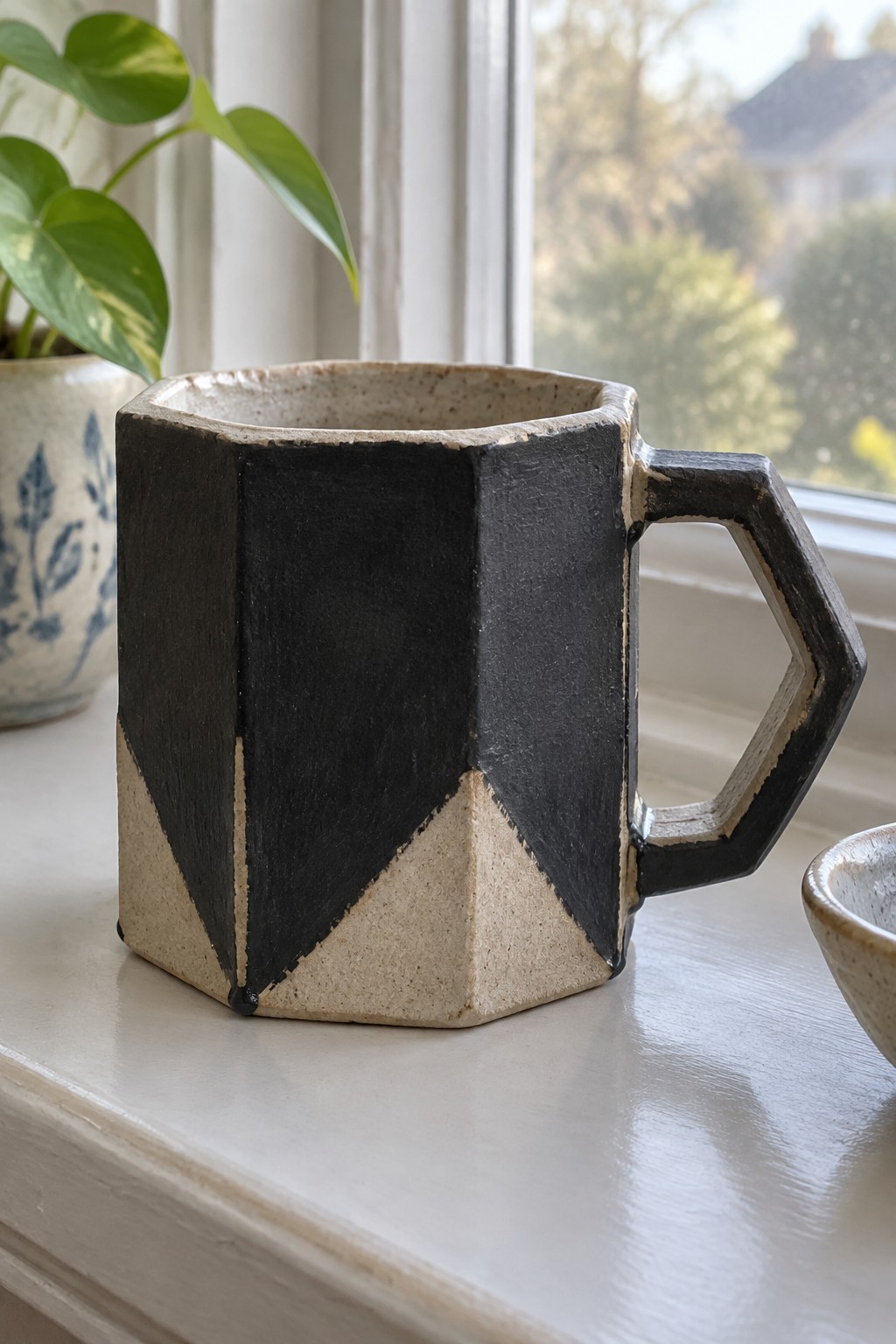
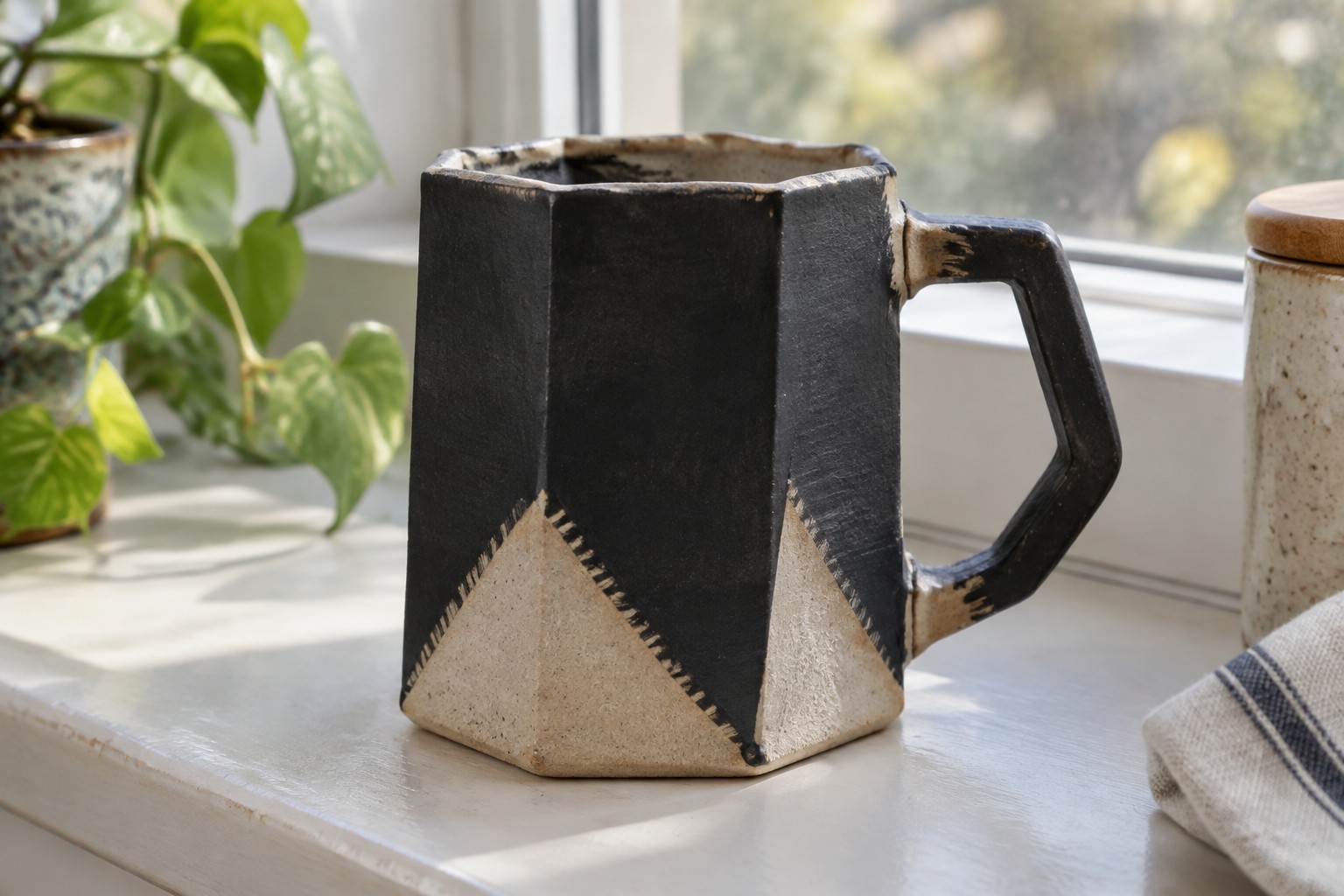
A slab-built mug formed into a hexagon uses flat panels joined at sharp angles to create a faceted shape. Large sections of black slip or underglaze cover the upper sides while the natural clay color remains exposed in downward triangles near the base. The same angular lines carry through to the handle. This approach keeps the surface decoration bold and graphic while the facets give the color blocks clean edges to follow.
The shape does a lot of the work here because the flat sides make it easy to tape off or paint sharp triangles without fighting curves. You could scale the same pattern down for a small desk planter or repeat it across a set of tumblers. The strong contrast also helps the piece read well in photos, which makes it useful for anyone building a Pinterest board of geometric slab ideas.
Angular Slab Bowl With Bold Brushstroke Blocks
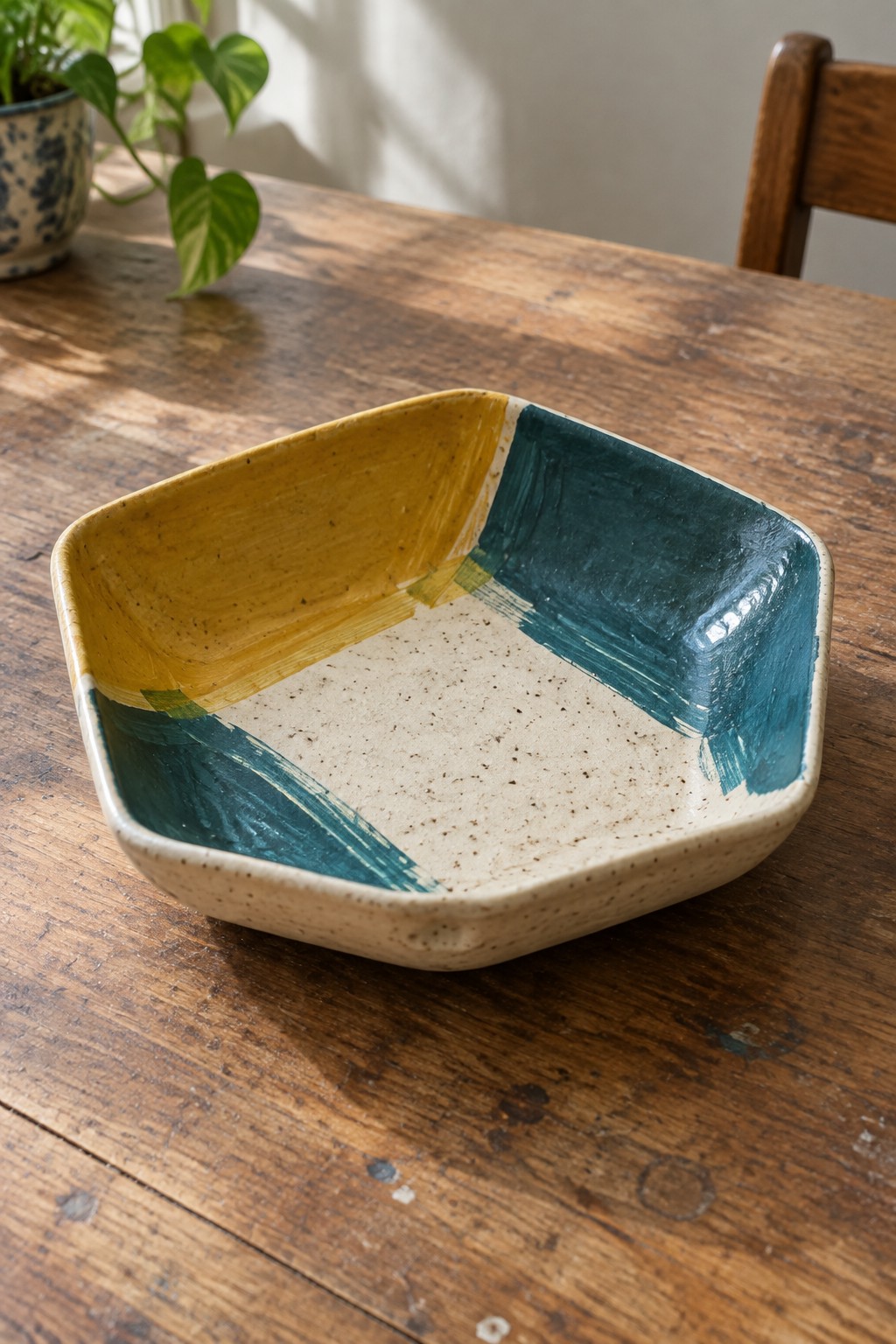
A slab-built bowl with flat angled sides gives you large planes that work well for bold surface decoration. Sections of yellow and teal are applied with visible brushstrokes over the speckled clay, leaving the natural surface exposed in the center. This creates a simple geometric pattern that relies on shape and color placement rather than detailed carving or intricate glazing.
The flat sides make it straightforward to build from templates and give you clear areas to test color blocking without worrying about curves. You can scale the same shape down for a small catch-all tray or use the layout on a square plate by keeping the walls lower. The strong contrast between the two colors helps the design stay readable even when the bowl is filled with food or used as a fruit bowl on a table.
Chevron Inlay Tray
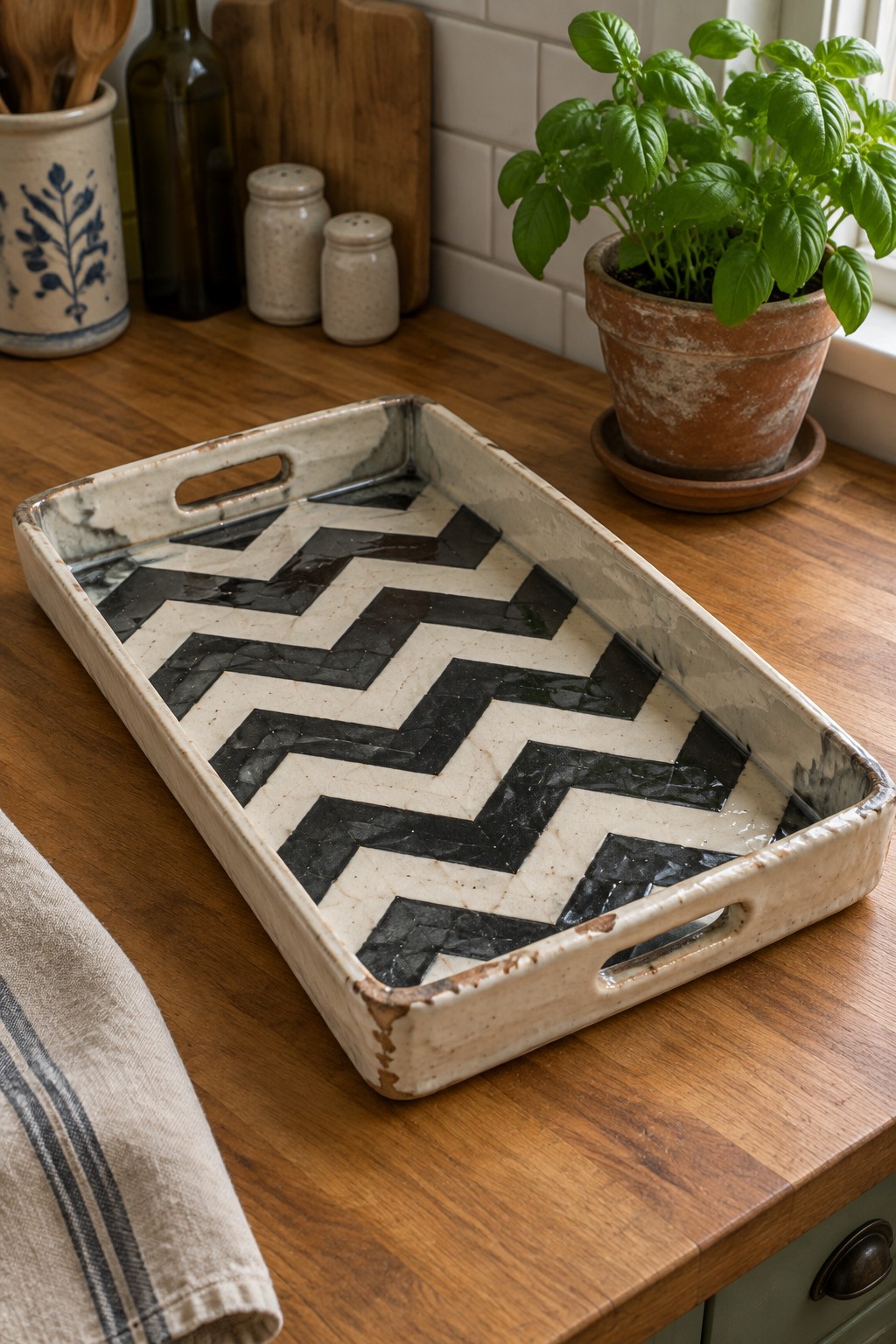
A rectangular slab tray built with a repeating chevron pattern made from alternating black and off-white clay sections. The design is formed by cutting and fitting geometric strips into a flat base, then framing the pattern with a raised rim and cut-out handles finished in a crackled white glaze. This approach fits the slab pottery category because the flat surface supports clean, precise inlay work without the warping that can happen on curved forms.
What makes this idea useful is the high-contrast pattern that reads clearly from a distance on a countertop or table. You could scale the same chevron repeat down for coasters or a smaller catch-all tray, or swap the black sections for a different color to match existing kitchenware. In a kitchen, this shape works well for carrying items or as a landing spot for bottles and jars while keeping the surface decoration as the main feature.
Diamond Slab Hanging with Four Bold Glaze Squares

A diamond-shaped slab serves as the base for this wall piece, with four square sections carved or divided into the surface. Each square receives a single bold glaze color, creating a simple grid that plays with contrast between the matte border and the shiny glazed areas. The hanging cord and wooden peg turn the finished slab into a ready-to-display decor object. This category of project works as a straightforward way to explore color blocking on one flat form without building multiple separate pieces.
The shape does a lot of the work here by letting you test four different glazes in one firing while keeping the overall size compact. You could adapt the same division layout into a square or rectangular slab for a trivet or turn the squares into a repeating pattern across a larger tile for a backsplash accent. In a kitchen or hallway, the hanging format keeps it off surfaces and makes it easy to swap out seasonally. For a gift, this kind of piece works well because the color choices can be matched to the recipient’s space without needing extra construction steps.
Striped Square Slab Planter
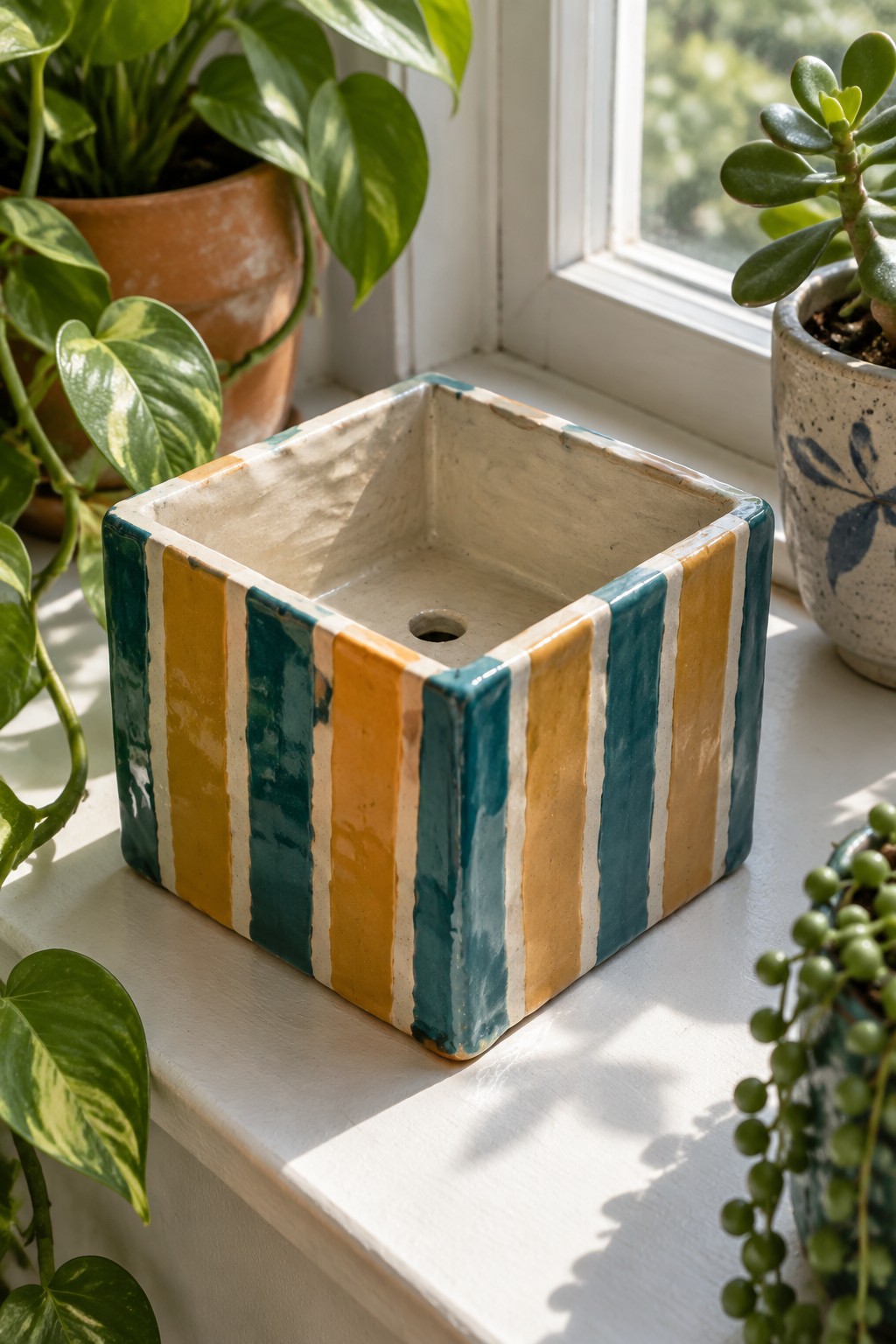
A square slab planter uses vertical stripes in teal, mustard yellow, and cream to emphasize its flat sides and sharp corners. The stripes run edge to edge, creating clear color blocks that make the geometric form stand out without extra carving or texture. A small drainage hole in the base keeps the piece functional for plants. This fits the category of small slab-built planters finished with bold painted surface decoration.
What makes this idea useful is how the stripe layout works on any square you cut from a slab. You can change the color order, widen some stripes, or flip them to horizontal bands for a fresh version. The compact size fits a windowsill, shelf, or desk, and the same pattern could move to a tray, ring dish, or low catch bowl. The strong contrast between the colors helps the piece photograph clearly for Pinterest.
Stacked Geometric Vase With Diagonal Glaze Blocks
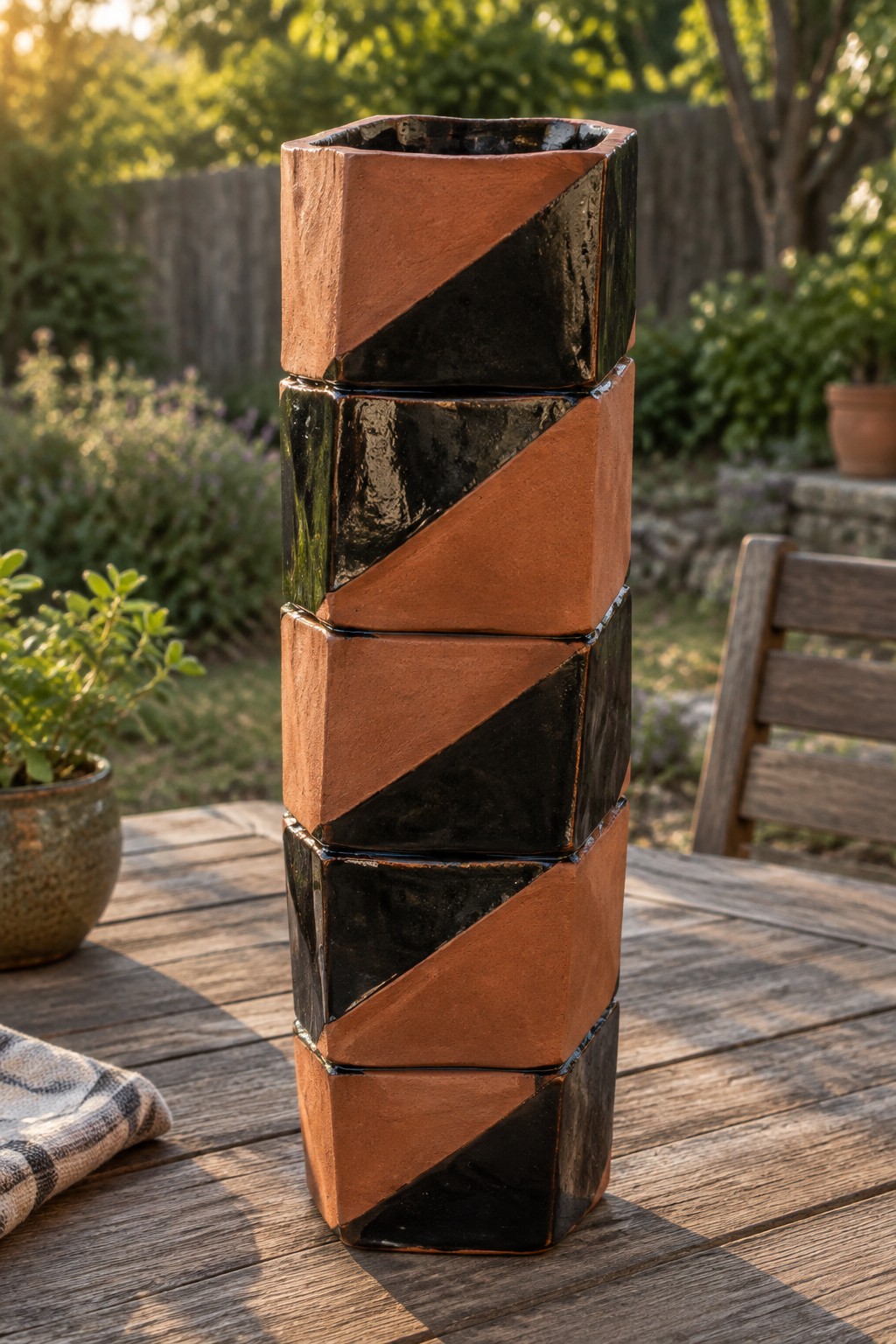
This project builds a tall vase from six separate slab sections that are joined and then glazed in alternating terracotta and black diagonal bands. The clean edges of each slab create flat planes that catch light differently, while the diagonal color split produces a continuous zigzag line running up the full height. The result is a narrow, faceted vessel whose visual impact comes from the repeating color blocks rather than surface texture or added detail. It belongs to the category of decorative vases that use simple two-color division to emphasize form.
What makes this idea useful is how the stacked sections let you control height and proportion without changing the basic template. You can shorten it to three or four units for a desk vase or repeat the same diagonal split on a wider cylinder to make a matching planter. The strong color contrast also photographs clearly, which helps the finished piece stand out in a Pinterest feed. For a different look, swap the black for cobalt or matte white and keep the same slab layout.
Geometric Tea Light Tray with Hexagon Motif

A round slab-built tray with three recessed wells holds tea lights while featuring a bold geometric pattern made from contrasting colored clay sections. The design centers on a large hexagon in deep blue, surrounded by angular pink and navy bands that create a repeating star-like shape across the surface. This approach keeps the decoration flat and integrated into the form rather than added on top, which suits slab construction where pieces of different clays are joined before firing. The object works as a tabletop candle holder that stays low and stable.
The three-well layout makes this easy to place on a coffee table or shelf without needing extra candle stands. You could repeat just the central hexagon on smaller square tiles or simplify the bands into stripes for a quicker version on a rectangular tray. The color blocking helps the piece remain visible as decor even without lit candles, and the same slab method could be adapted for a matching set of coasters or a single larger platter.
Plaid Slab Spoon Rest
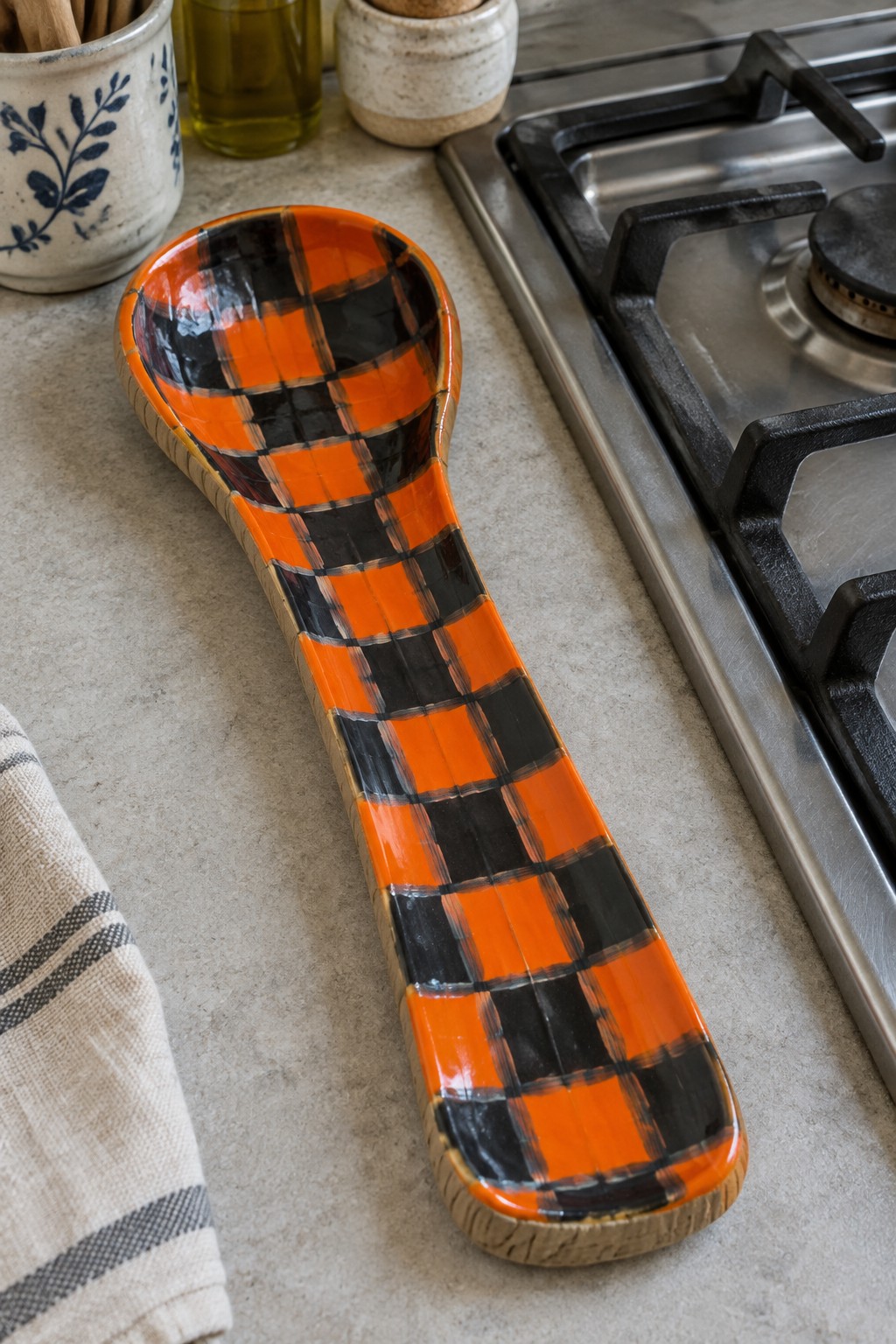
A slab-built spoon rest gives you a simple kitchen piece that keeps utensils off the counter during cooking. The long, curved form starts wide at the shallow bowl end and tapers toward the handle, making it stable when resting across a stovetop or counter edge. The bold orange and black checkered pattern applied across the entire surface turns the geometric decoration into the main feature rather than an accent.
What makes this idea useful is how the flat slab shape supports strong surface patterns without extra carving or texture work. You could swap the plaid for stripes, blocks, or another repeating motif and still keep the same form. In a kitchen this kind of piece works well as both a functional rest and a small decor item that can be made in different sizes or color schemes. The same slab approach would translate easily to a longer tray or a shorter version for a single spoon.
Hexagonal Slab Dish With Alternating Triangle Glaze Pattern

A small hexagonal dish formed from slabs gives this geometric idea a clean framework. The surface is split into repeating triangles that alternate between a teal glaze and a metallic gold finish, creating sharp contrast through color and texture. The low profile and flat interior make it function as a ring dish or compact tray for small items. This approach keeps the decoration bold while the shape itself stays simple to construct.
The shape does a lot of the work here by naturally containing the triangle layout without extra borders. You could adapt the same pattern to a square or rectangular tray by adjusting the triangle sizes to fit the new edges. The small scale makes it quick to try as a jewelry holder on a nightstand or desk, and the glaze contrast stands out in photos for sharing. For a variation, mask the triangles and test a matte black against the gold instead.
Two-Tone Asymmetric Ring Dish
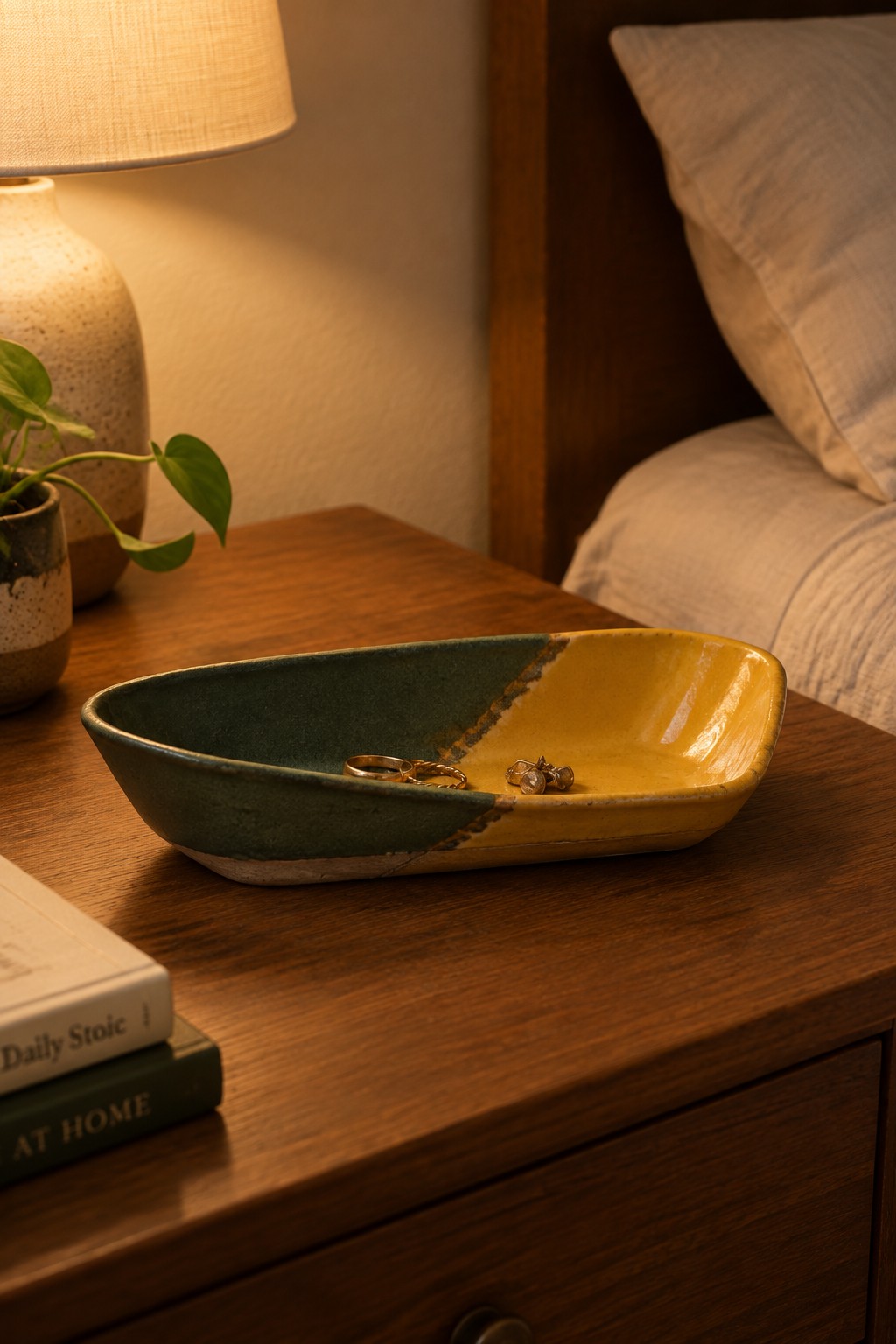
A slab-built oval dish makes a practical ring holder when you split the surface with two strong glaze colors. The dark green and mustard yellow sections meet along a rough, hand-cut line that creates a simple geometric division without extra carving. This keeps the form low and wide while the color split does the visual work.
What makes this idea useful is how well the shallow oval shape sits on a bedside table or dresser without taking up much space. You can change the color pairing or straighten the division line for a different look, and the same slab method works for a rectangular version that holds soap or keys. The small scale makes it quick to repeat in different color combinations for gifts or matching sets.
Slab-Built Soap Dish with Geometric Stripe Pattern
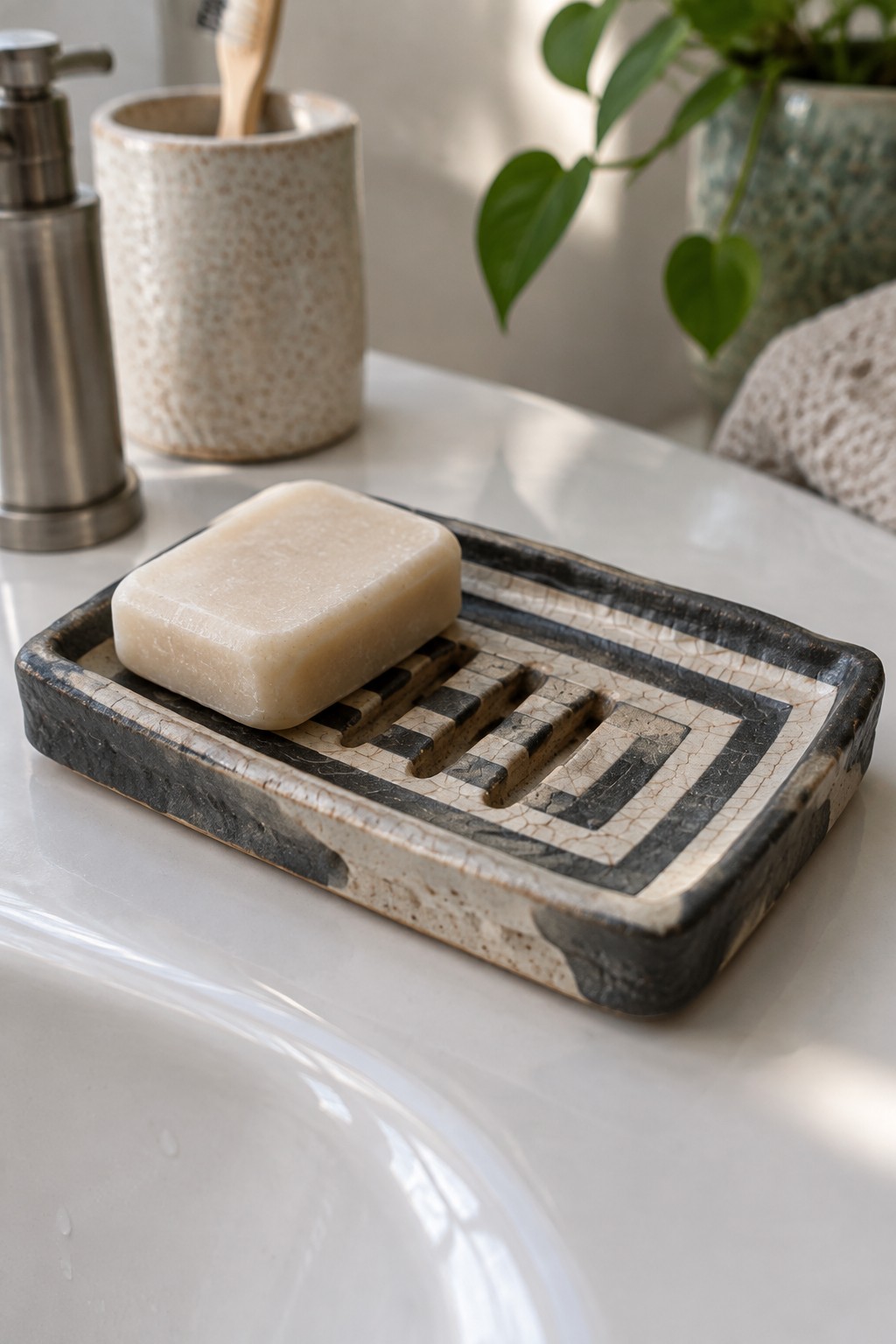
A slab-built rectangular soap dish uses a bold arrangement of black and white stripes to create a strong geometric surface on a flat tray form. Raised ridges run through the center to hold a bar of soap above any pooled water while the crackled glaze highlights the contrast between the patterned sections. This approach keeps the focus on the surface decoration rather than complex shaping, making the tray a straightforward bathroom item.
The small scale makes this easy to adapt into other sink-side pieces like a small sponge holder or jewelry tray. You can adjust the stripe width or swap the black and white for colors that match existing tile or towels. For a gift, something like this gives a usable object that still lets the geometric pattern stand out on a countertop.
Slab-Built Pitcher With Oversized Triangle Pattern
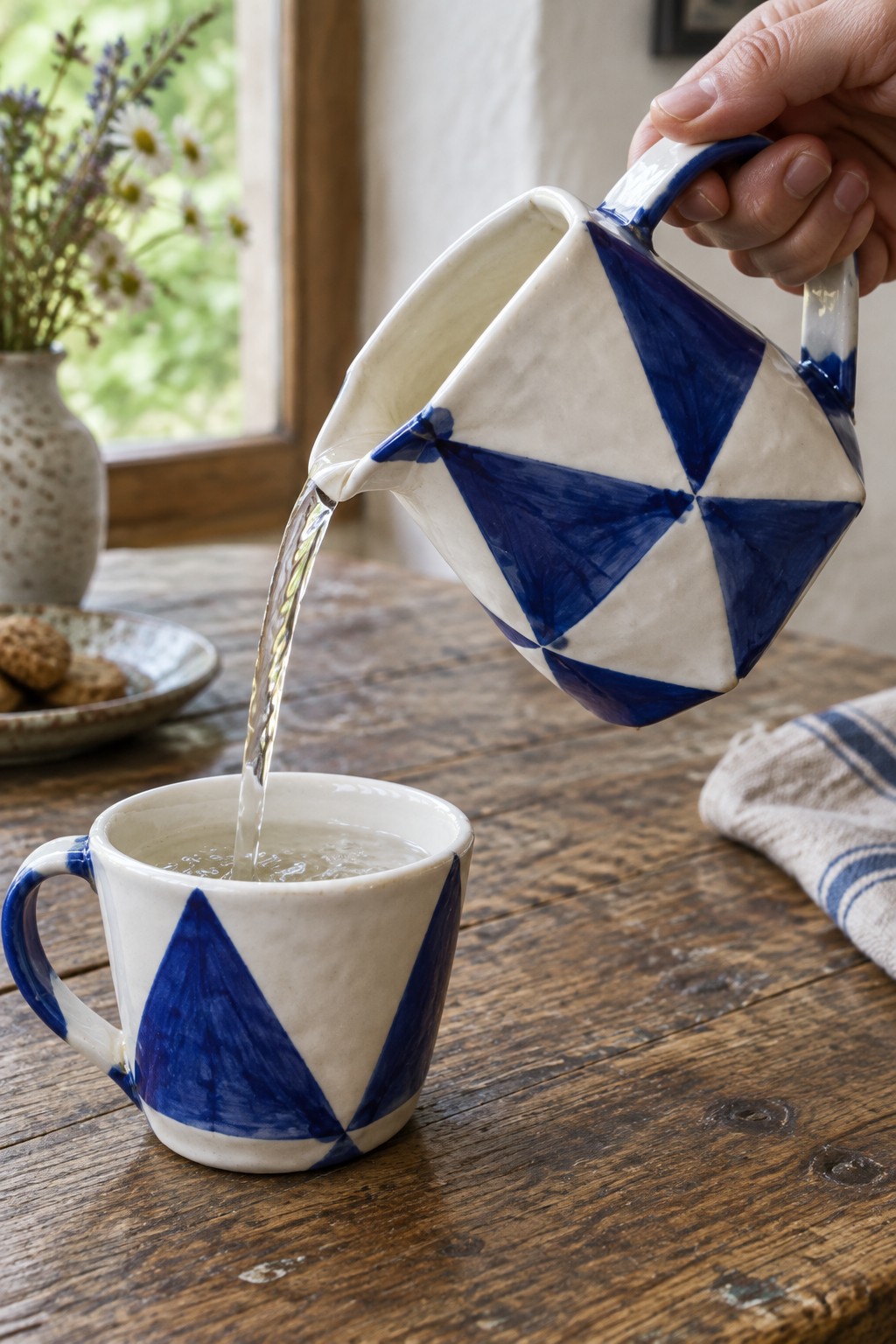
A slab-built pitcher pairs well with a matching mug when both carry the same bold triangle design. The form stays simple and angular because the clay is cut and joined rather than thrown, and the surface decoration uses flat blue triangles that cover most of the white ground. This approach keeps the pattern strong even after the piece is fired, so the geometric shapes read clearly from a distance.
The shape does a lot of the work here because the pitcher’s flat planes give the triangles clean edges to sit on. You can repeat the same motif on mugs, small bowls, or a butter dish without changing the color palette. For a gift, something like this works especially well because the set feels complete yet stays easy to pack. The pattern can be simplified by using fewer triangles or reworked into a taller vase if you want a different function.
Slab Built Napkin Holder with Polka Dot Pattern

A napkin holder built from three flat slabs forms two angled triangles joined by a rectangular base. The gray clay surface carries large orange dots painted across all sides for high contrast against the neutral background. This approach uses simple slab construction and bold surface decoration to create a functional kitchen piece that stays upright and holds a stack of napkins securely.
The compact footprint fits easily on a countertop beside a sink or coffee station. You can scale the triangles larger for bigger napkins or swap the dot colors to match existing dishware. Painting after the bisque stage keeps the pattern crisp and lets you test different dot sizes without glaze variables. The same triangle-and-base shape also works for holding mail or recipe cards if you adjust the width slightly.
Faceted Slab Salt Cellar with Bold Triangle Pattern
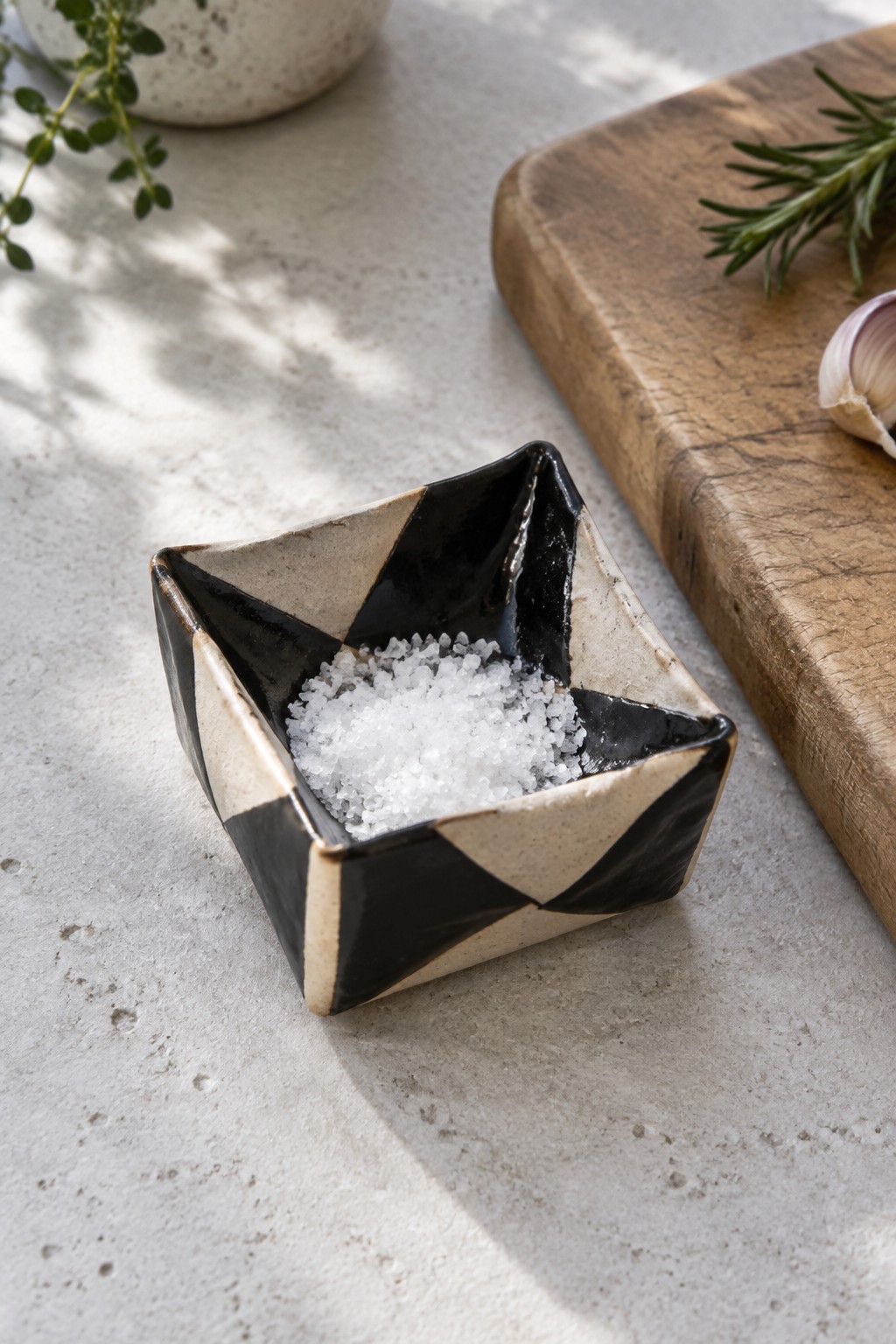
A small slab-built salt cellar takes shape when flat clay pieces are joined into an angular, star-like form that creates multiple flat surfaces for decoration. Alternating black and beige triangles cover the sides in a high-contrast pattern that emphasizes the faceted edges. This kitchen piece keeps coarse salt within reach during cooking while serving as a compact counter accent.
The small scale lets it sit beside a cutting board or stove without crowding the workspace. You can repeat the same slab-and-triangle method to make matching dishes for pepper or spices, or scale it down further into a ring dish. The sharp geometric layout photographs cleanly for Pinterest and gives you an easy template to swap colors or adjust the number of sides.
Geometric Slab Utensil Holder With Cutout Panels
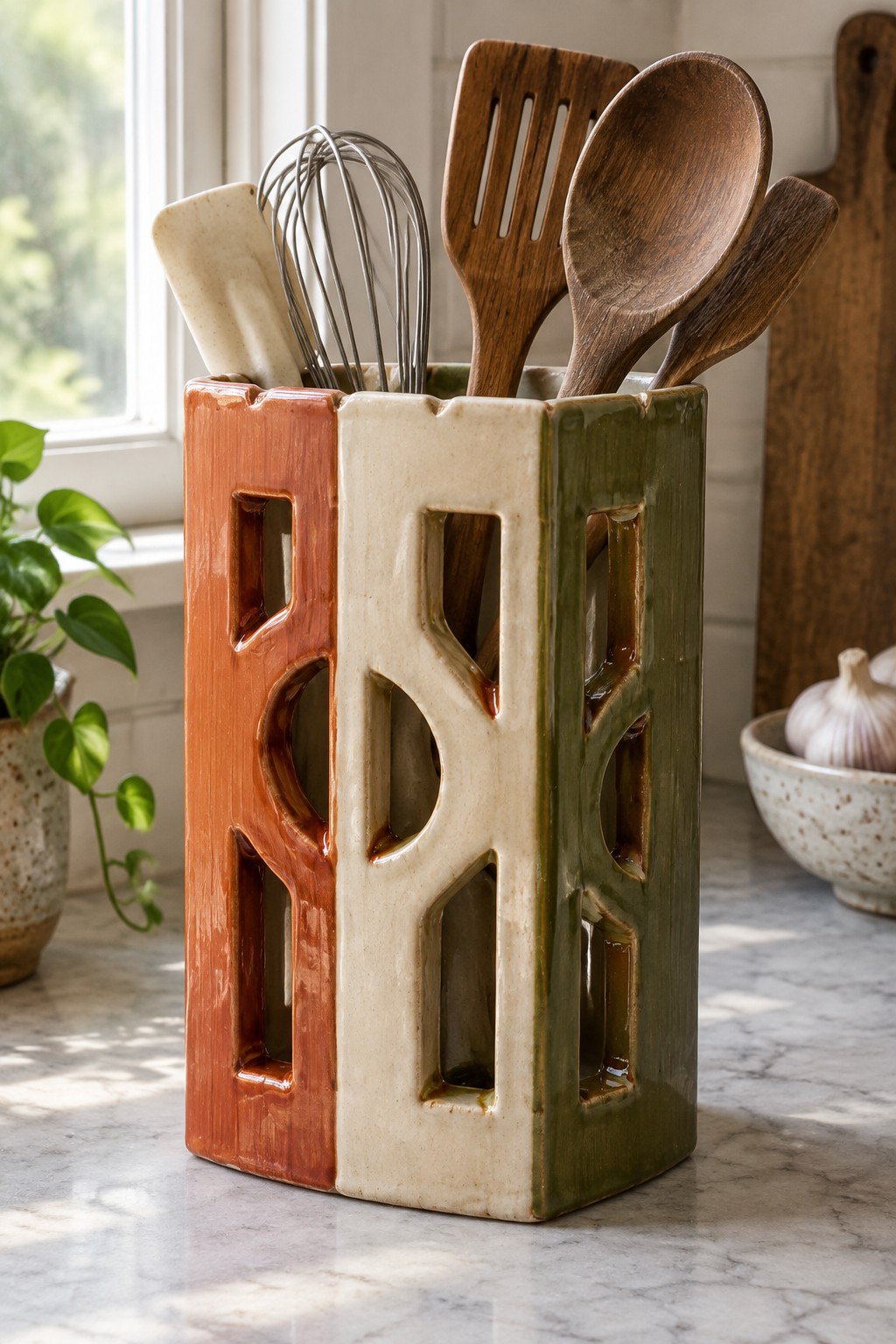
A slab-built utensil holder joins three flat sections into a multi-sided caddy with an angular footprint. Each slab carries large geometric cutouts that create open areas across the surface while still supporting the structure. Bold color blocking comes from applying different glazes to each section before assembly, so the orange, cream, and green areas stay distinct along the vertical seams. This method uses simple slab work to produce a functional kitchen piece that doubles as surface decoration.
The shape does a lot of the work here because the cutouts reduce bulk and let the holder sit neatly beside a stove or prep area without taking up much counter space. You can scale the same pattern down for a smaller desk version or swap the glaze colors to match existing kitchenware. The vertical slab layout also makes it straightforward to add or remove sections if you want a two-tone or four-tone version instead. For Pinterest, the strong color contrast and negative space cutouts give the piece clear visual impact in a single photo.
Triangular Slab Key Tray With Split Glaze
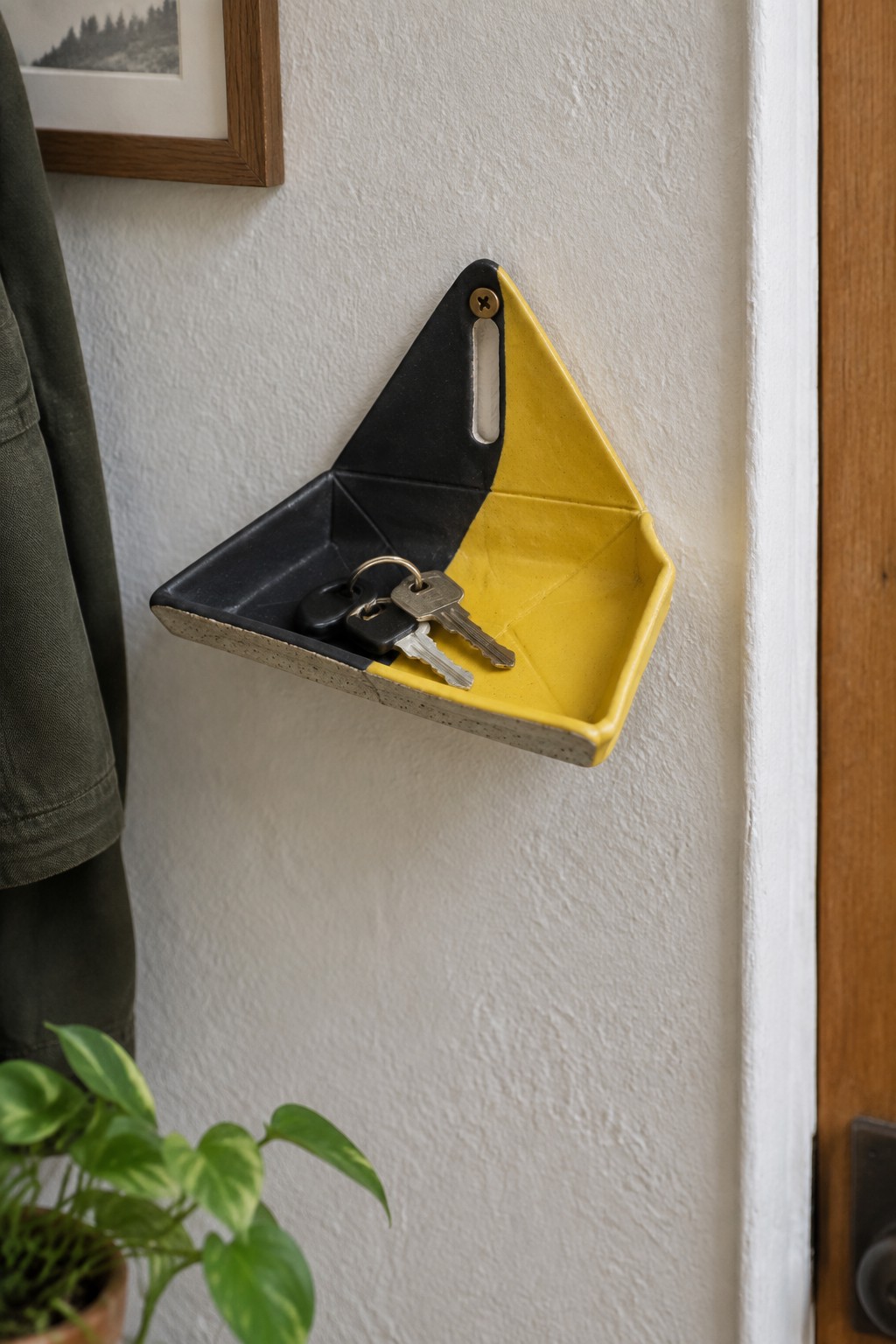
A slab-built triangular tray forms a simple wall-mounted key holder. The clay is folded into a shallow dish with sharp angles and a flat back that sits flush against the wall. One half is glazed black and the other yellow, creating a bold split that emphasizes the geometry without added patterns. This approach works as a small storage piece for keys or other pocket items.
The small scale makes it easy to place near a door or coat hook. You could rework the same triangle into a bathroom soap dish or a narrow plant saucer by adjusting the depth and mounting hardware. The two-tone glaze treatment photographs clearly, which helps the finished piece stand out if you share it. Enlarging the form slightly turns the idea into a compact mail or accessory tray.
Frequently Asked Questions
What clay body works best for creating stable geometric slab forms with bold decorations? A low to mid fire stoneware or porcelain body offers good strength and minimal warping during drying and firing. Choose one with fine grog to maintain sharp edges on your geometric cuts while allowing easy application of slips or underglazes for surface details.
How do I keep bold surface patterns from blurring or fading after the bisque fire? Apply underglazes or engobes in multiple thin layers and let each dry fully before adding the next. Seal the surface with a clear glaze that matures at your clay’s firing temperature to lock in contrast and prevent color migration in the kiln.
What tools help achieve precise geometric lines on leather hard slabs? A sharp fettling knife, ruler, and set of templates or stencils allow clean cuts and repeatable shapes. Work on a canvas covered board to prevent sticking and rotate the slab as needed so your hand stays steady for straight edges and angles.
Can these slab ideas be scaled for functional items like plates or vases? Yes, start with a larger base slab and build walls upward using score and slip joints. Keep wall thickness consistent around one quarter inch to avoid cracking, and add foot rings or handles after the form firms up to maintain balance and usability.
How should I dry geometric slab pieces to avoid cracking around decorated areas? Place finished work on a wire rack or newspaper covered board in a draft free spot and cover loosely with plastic for the first day or two. Gradually expose the piece over several days so moisture escapes evenly from both thick and thin sections.

Pottery Path is my cozy corner of the internet where I share clay ideas, pottery inspiration, and simple projects you can recreate at home. I love exploring everything from air dry clay to handbuilt pottery to cute minis that brighten your day. My goal is to make clay crafting feel easy, fun, and welcoming for anyone who wants to try it.
You will find beginner friendly tutorials, creative pottery painting ideas, and lots of warm inspiration for slow and happy crafting. If you enjoy hands on creativity, this space will feel like home.