I’ve been making coil pottery for a while now and these projects are the ones that actually end up in my home rather than sitting on a shelf.
I stick to simple shapes because they fit into my routine without needing hours at a time.
Most of the time I use clay I already have on hand and basic tools from my kitchen drawer.
These ideas have helped me replace a few store bought items with things I made myself.
I think they work well because they are practical and not too fussy.
Coil-Built Planter with Horizontal Ridges

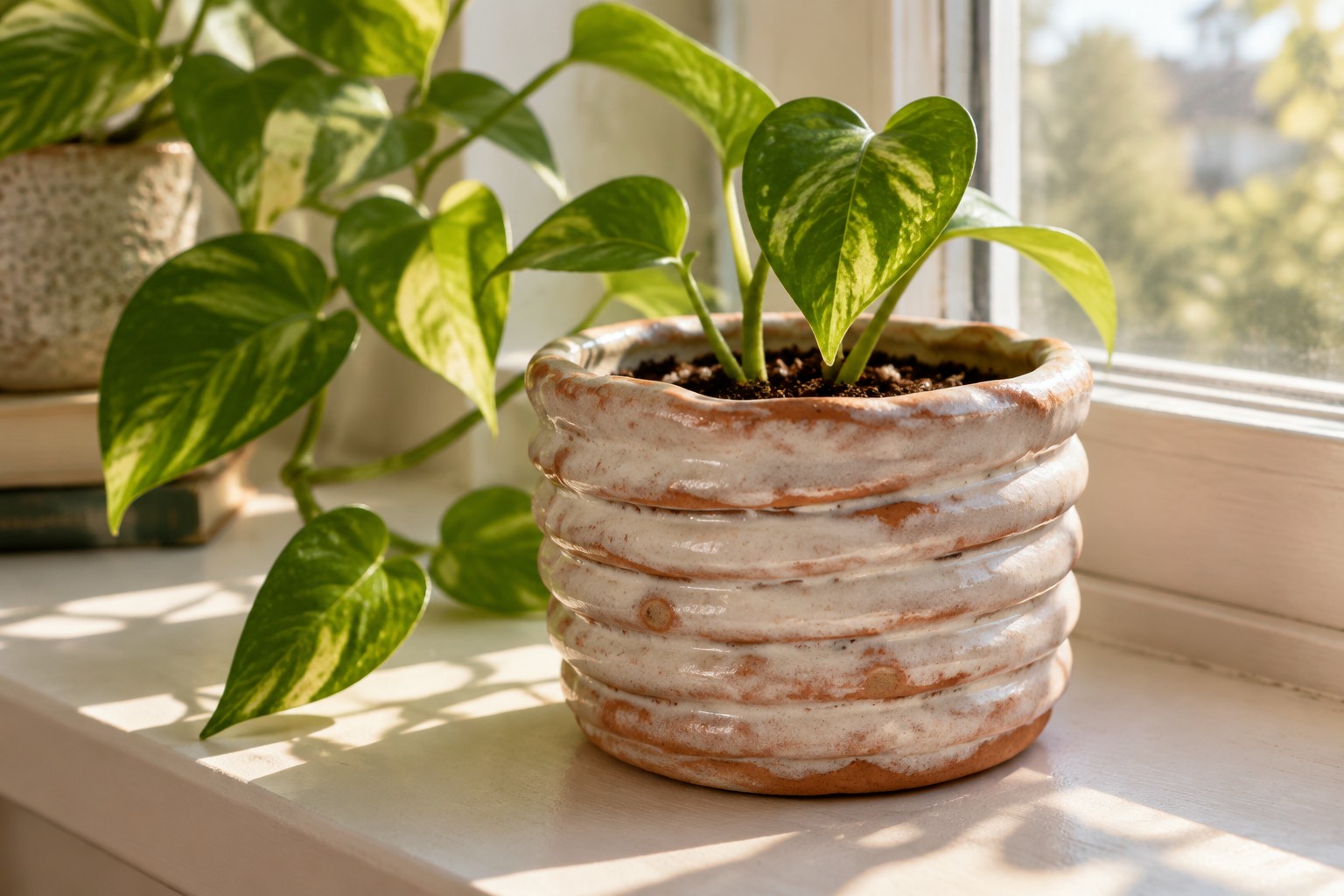
A coil-built planter formed from stacked clay ropes creates a simple cylinder that works well for small to medium houseplants. The white slip covers most of the surface but leaves the clay body exposed along each coil edge, producing a clean horizontal pattern without added carving or stamps. This shape stays stable on a flat surface and gives the roots room while keeping the overall footprint compact for windowsills or shelves.
What makes this idea useful is how the coil ridges provide built-in texture that reads clearly even in a single glaze color. You can change the look by switching to a darker clay body or leaving more of the base exposed for contrast. The same coil method scales easily to a shorter tray shape or a taller vase by adjusting the number of rows and the starting diameter. For plant styling, the neutral finish pairs with most foliage without competing for attention.
Handbuilt Mug with Painted Yellow Dots
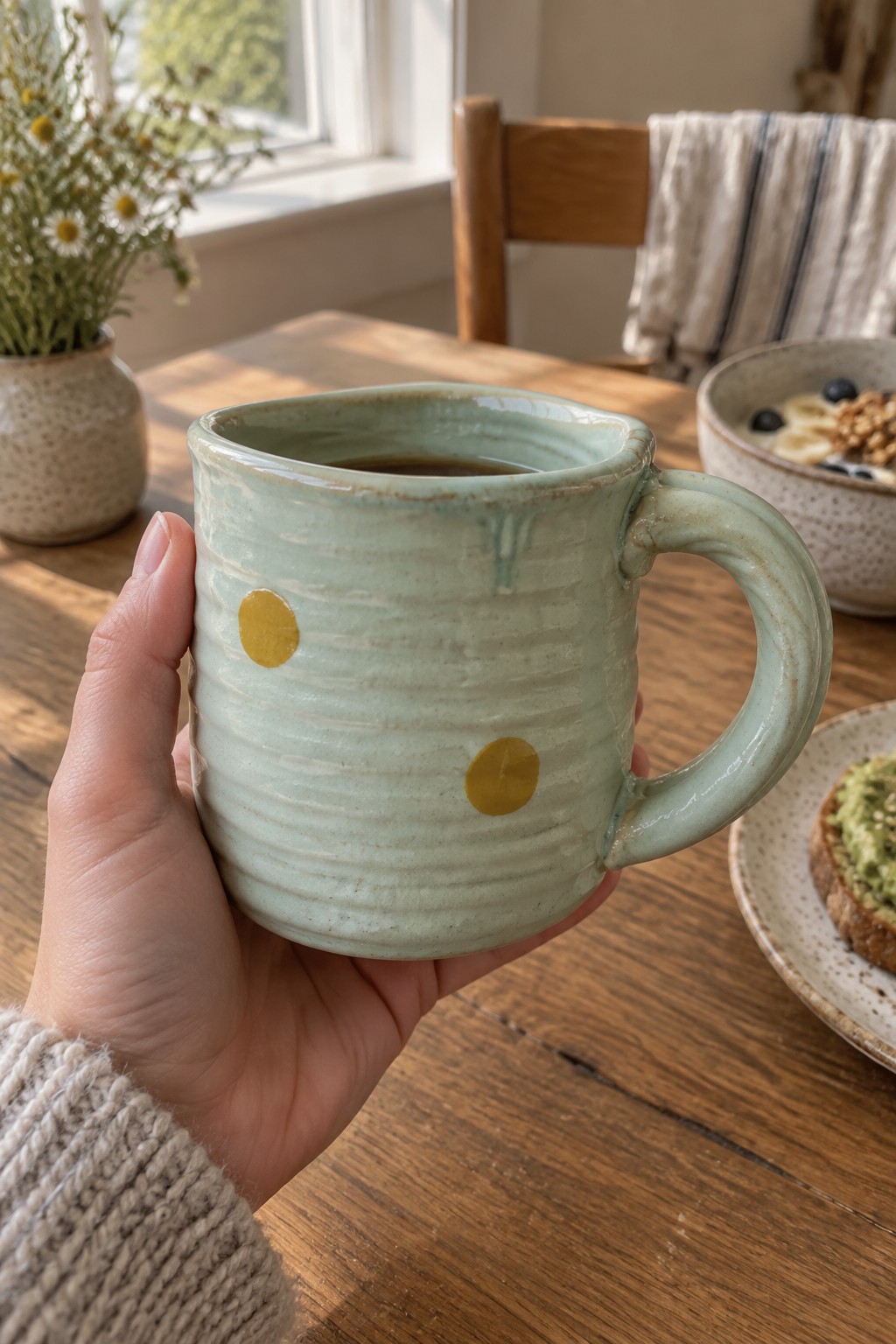
A handbuilt ceramic mug makes a practical daily cup when the surface carries a soft green glaze and just a few yellow dots for decoration. The horizontal ridges left from coiling add subtle texture that breaks up the solid color without complicating the form. Keeping the dots small and spaced apart lets the mug read as a functional kitchen piece rather than a decorative object.
What makes this idea useful is how little extra work the dots require once the mug is built and glazed. You can repeat the same two-dot placement on a set of four or six mugs for matching kitchenware, or swap the dot color to match different glaze bases. The compact size also means it uses less clay and shelf space than larger forms, so it works well as a first coil project or as a quick gift. This would be easy to turn into a small bowl or tumbler by changing only the height and handle.
Blue Glazed Ceramic Serving Bowl
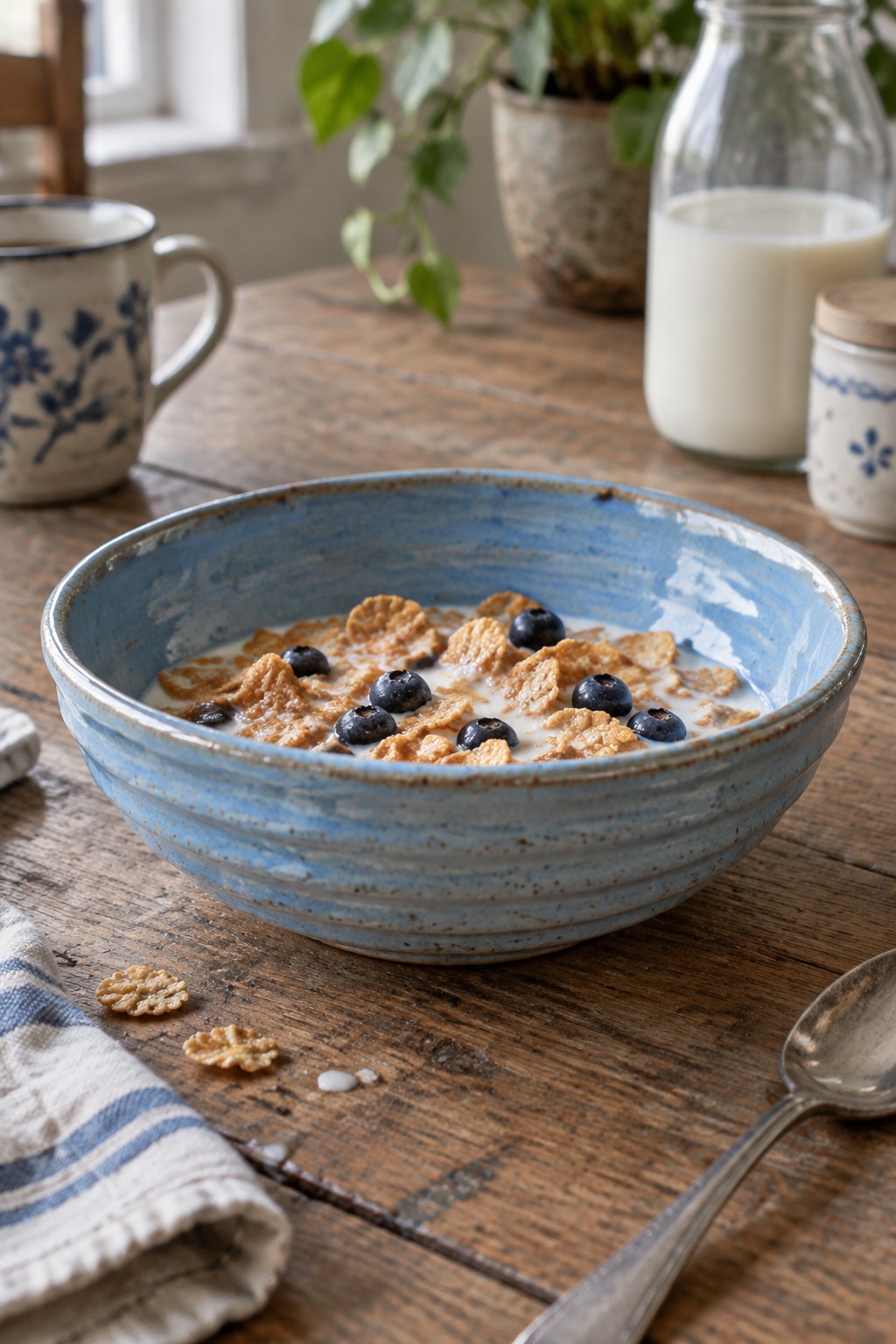
A wide ceramic bowl with a thick, uneven blue glaze that pools and breaks over a textured surface. The form has a generous rim and enough depth to hold cereal, soup, or salad portions without crowding the food. This type of kitchen bowl works because the glaze color stays practical while the handmade texture keeps it from looking plain.
What makes this idea useful is the size that handles both single servings and small shared dishes. You could repeat the same glaze on a set of smaller bowls or scale the shape up for a larger salad bowl. In a kitchen, the durable glaze and simple form make it easy to keep on open shelves or stack with other everyday dishes. The speckled clay showing through also gives you a starting point for testing other glaze colors on the same shape.
Oval Ceramic Catch-All Tray
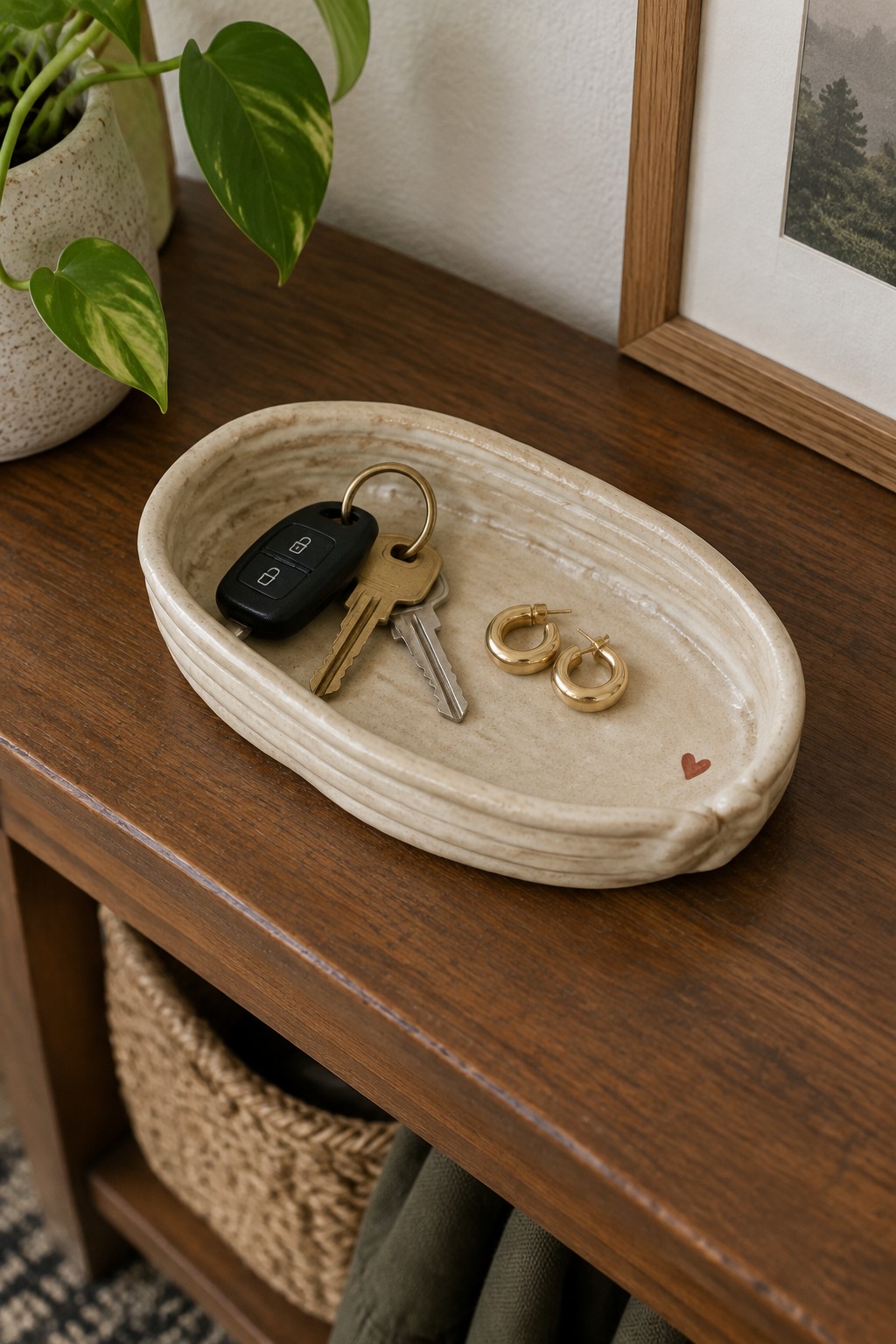
A small oval tray built from clay serves as a practical catch-all for keys, earrings, and other pocket items. The horizontal ridges along the outer wall give the form a clear handmade texture while keeping the interior smooth for easy cleaning. A single small painted heart adds a quiet accent without crowding the surface. This shape works as a basic tray that fits on consoles, nightstands, or entry tables.
The compact oval footprint takes up little space yet holds several everyday items in one spot. You can repeat the same form in a slightly deeper version to hold soap or small bathroom items. Keeping the decoration to one tiny motif makes the piece faster to finish and easier to match with different room styles. A neutral tray like this often performs well in searches for simple desk organizers because the shape and finish stay versatile.
Coiled Flower Tea Light Holder

A handbuilt coil pottery tea light holder shaped like an open flower gives you a compact candle piece that works on a nightstand or small shelf. The maker built up the walls into rounded lobes with vertical ridges that create a petal effect, then applied a glossy red-orange glaze that picks up the light from the flame. This turns a simple coil construction into a dedicated candle holder instead of a plain bowl.
The small size makes it simple to adapt by changing the glaze color or adjusting how many lobes you add around the rim. You could use the same shape for a shallow ring dish or scale it up slightly for a small succulent planter. In a bedroom or living room, the lobed edge gives the piece enough detail to look finished even without a candle inside.
Handbuilt Oval Spoon Rest
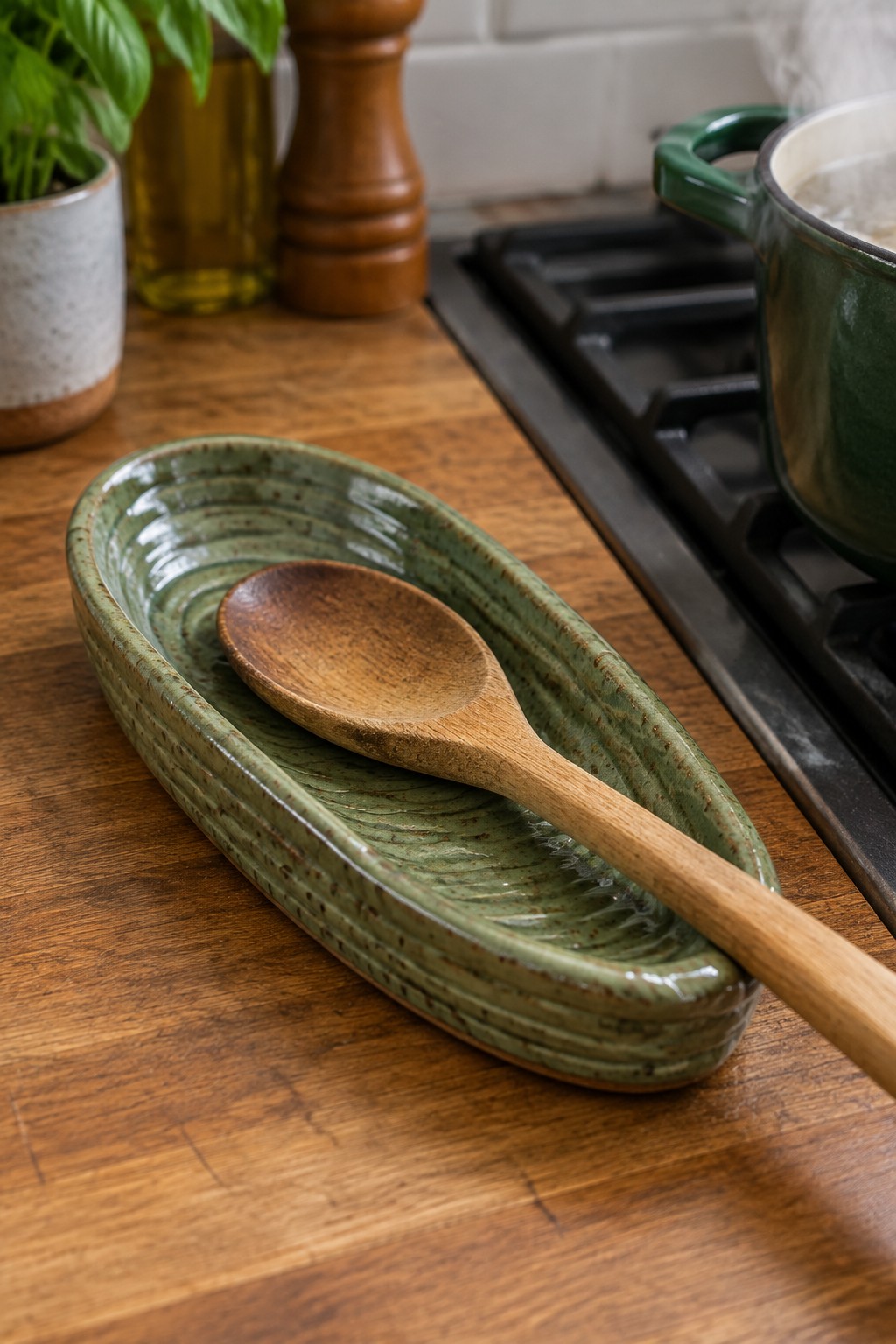
A long oval ceramic tray makes a practical spoon rest for busy kitchen counters. The ribbed interior texture stops utensils from sliding while the shallow walls keep drips contained. This shape works especially well for full-size wooden spoons or spatulas without taking up much space next to the stove.
What makes this idea useful is how simply it solves a common cooking problem. You could shorten the form for a single spoon or add a small lip at one end to catch more drips. In a kitchen this kind of piece stays within reach during meal prep and can also hold small tasting spoons or herbs. The same coil-built shape adapts easily into a narrow tray for desk supplies or bathroom items.
Wavy Rim Ring Dish
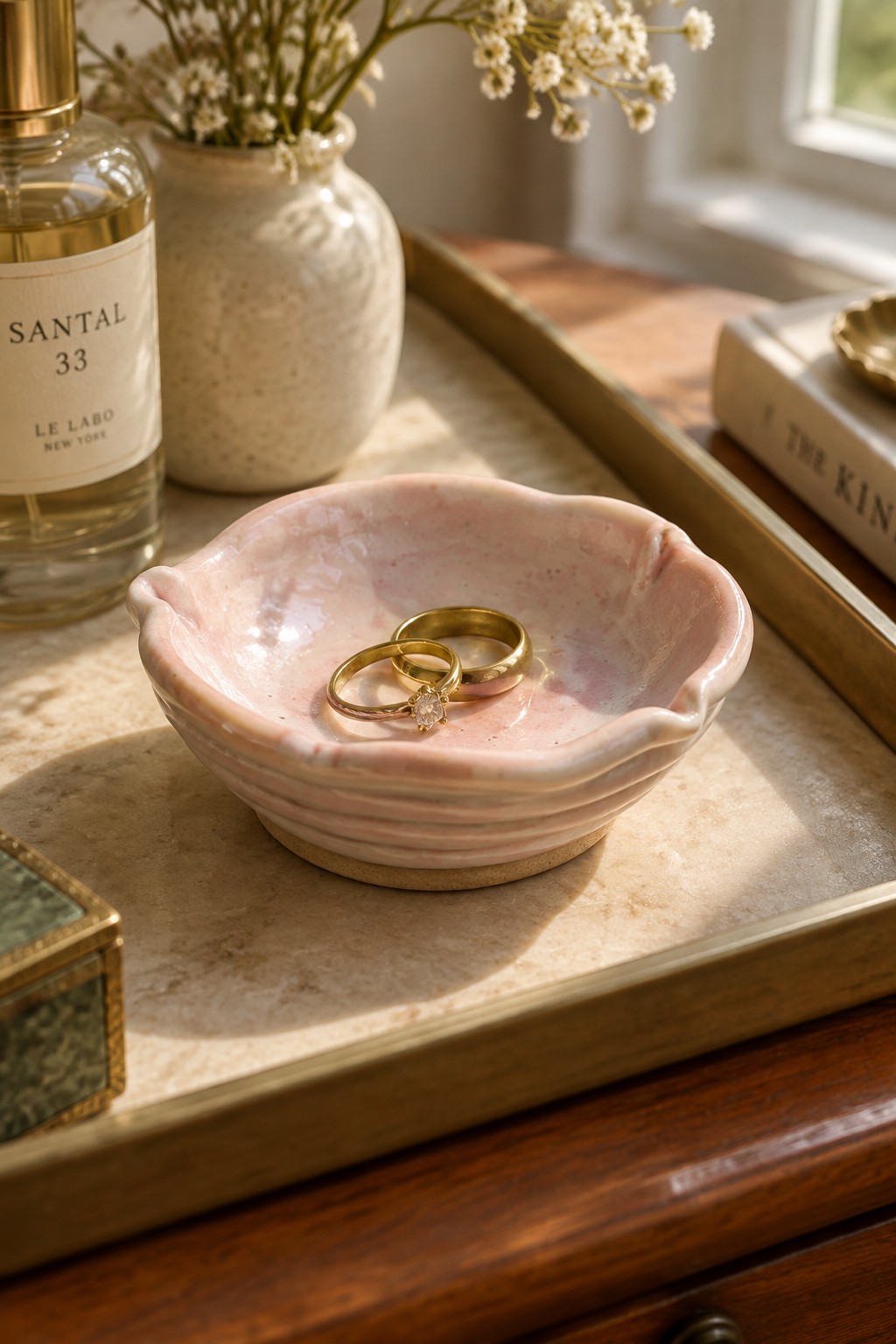
A small handbuilt ring dish gives you a simple place to drop jewelry on a dresser or bedside table. The wavy rim comes from shaping the edge while the clay is soft, creating an uneven outline that avoids a stiff look. A pale pink glaze with light streaks keeps the surface interesting without needing extra decoration, and the shallow form stays compact enough for everyday use.
What makes this idea useful is how the same wavy shape can be scaled up slightly for a soap dish or kept tiny for earrings and coins. The rim detail is easy to adjust by hand, so you can make several versions that still look related. This kind of piece works especially well as a catchall near the door for keys or in a bathroom for small items, and the low sides make it simple to form even if you are new to handbuilding.
Coil-Built Sun Spiral Wall Plaque

This project is a flat round wall plaque built from coils and finished with a two-tone glaze. The center features a raised spiral that sits inside a ring of short radiating lines, creating a simple sunburst pattern across the surface. The warm brown glaze sits in the recessed areas while the white highlights the raised details, and a small hole at the top allows it to hang on a nail or hook. It works as a standalone decor object rather than a functional dish or container.
What makes this idea useful is how the flat shape and bold pattern translate easily to different wall spaces. You can adapt the same coil layout to a larger size for a bigger statement piece or shrink it down for a set of smaller tiles. The radiating lines help the design read clearly from a distance, which makes it a good option for hallways or living rooms where you need something that catches the eye without cluttering a shelf. For a variation, swap the spiral center for a solid raised circle or try a single color glaze to change the look while keeping the same construction.
Bathroom Soap Dish with Drainage Ridges
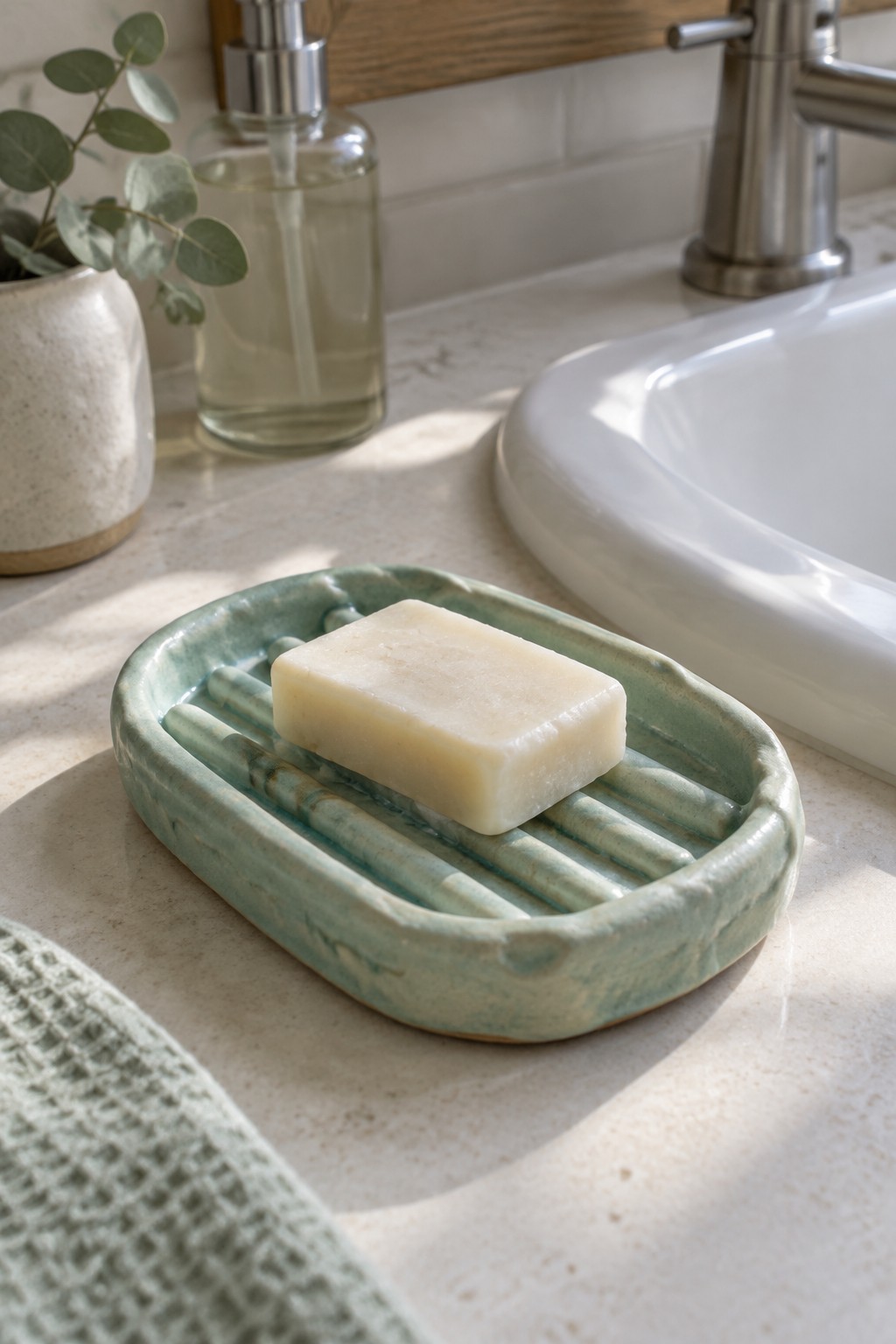
A handbuilt coil soap dish takes the form of a low rectangular tray with a series of raised parallel ridges running across the base. The ridges keep the soap bar elevated so water can drain off instead of pooling underneath. The piece is finished in a soft green glaze that suits a bathroom setting without competing with other fixtures.
What makes this idea useful is how the ridged surface solves a common problem with bar soap on counters. The same basic tray shape could be scaled down for a smaller sink or made longer to hold two bars. Changing the glaze to a matte white or speckled brown would let it match different color schemes while keeping the drainage function intact. For a gift, this kind of piece works well because it stays practical and takes up little space.
Two-Section Coil-Built Spice Cellar

A double-compartment ceramic container makes a practical salt and pepper cellar or dual spice holder. The form is built from coils that create horizontal ridges around both sections, with one half left in its natural terracotta color and the other finished in a glossy blue glaze. Each chamber has its own fitted lid, and the overall shape keeps the two sides clearly divided while staying compact enough for regular table use.
What makes this idea useful is how the separate chambers let you keep two different seasonings within reach without mixing them. The color split between sections helps you tell them apart quickly when cooking. You could rework the same shape with matching glazes on both sides or add a third compartment if you want more options. In a kitchen, this kind of piece sits neatly on a counter or near the stove where small storage gets used daily.
Coil Built Incense Holder Tray

A handbuilt coil pottery incense holder takes the shape of a long narrow tray with a small opening at one end to hold a stick upright. The coils create even horizontal ridges along the exterior while a light crackled glaze covers most of the surface. This design lets ash drop straight into the tray instead of scattering across a table.
What makes this idea useful is the extended tray that solves the usual ash mess problem. You can shorten the same coil form to make a desk version or widen it slightly for thicker incense sticks. In a living room or workspace the simple shape fits on shelves without taking much room and pairs easily with plain or colored glazes.
Coil Built Utensil Holder with Striped Glaze

A handbuilt coil pottery utensil holder uses stacked coils to form a tall, slightly tapered cylinder with visible horizontal ridges. The yellow glaze and simple blue stripes create contrast while the ribbed surface adds texture that helps grip wooden tools. This project works as a kitchen item for storing spoons, spatulas, and whisks on the counter.
What makes this idea useful is the straightforward coil construction that lets you build height quickly without a wheel. You could scale the same shape down for a smaller brush holder or widen it slightly for a planter. The striped pattern is easy to adapt with different glaze colors or skip entirely for a plain matte finish. In a kitchen this kind of piece keeps tools within reach and works just as well on a desk or craft table for holding supplies.
Multi-Slot Coiled Toothbrush Holder
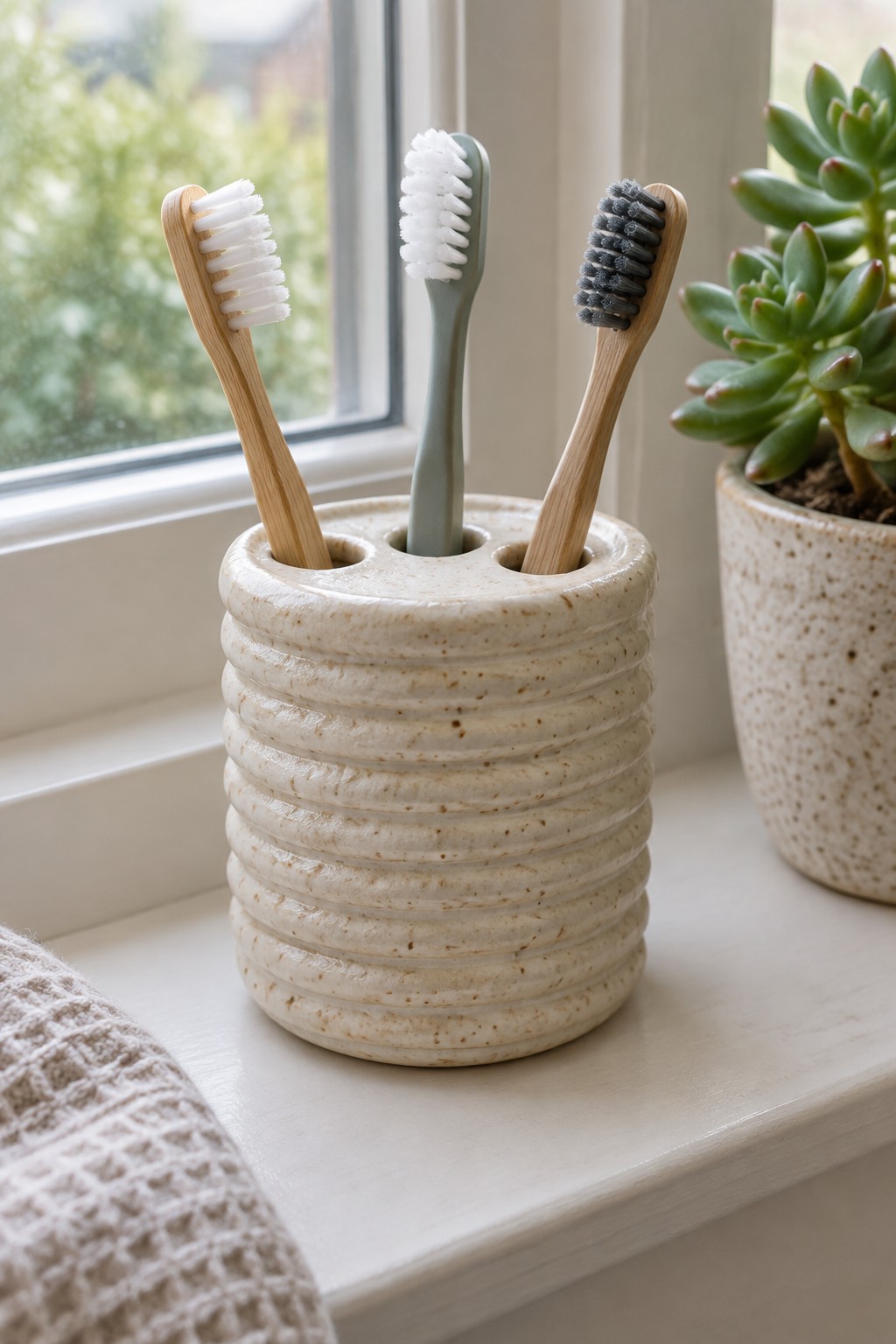
A handbuilt coil pottery toothbrush holder serves as a practical bathroom organizer. The cylindrical shape uses stacked coils to create horizontal ridges around the outside, with three separate openings that keep toothbrushes upright and spaced apart. The speckled clay surface and matte finish give the piece a simple, neutral appearance that fits basic home decor.
What makes this idea useful is how the multiple holes prevent brushes from touching while taking up minimal counter space. You could easily adjust the coil height to change the overall size or add more openings for a larger household. The same form works well adapted into a makeup brush holder or small desk organizer for pens and tools. A neutral speckled finish like this pairs with most color schemes without needing extra decoration.
Leaf-Shaped Ceramic Ring Dish
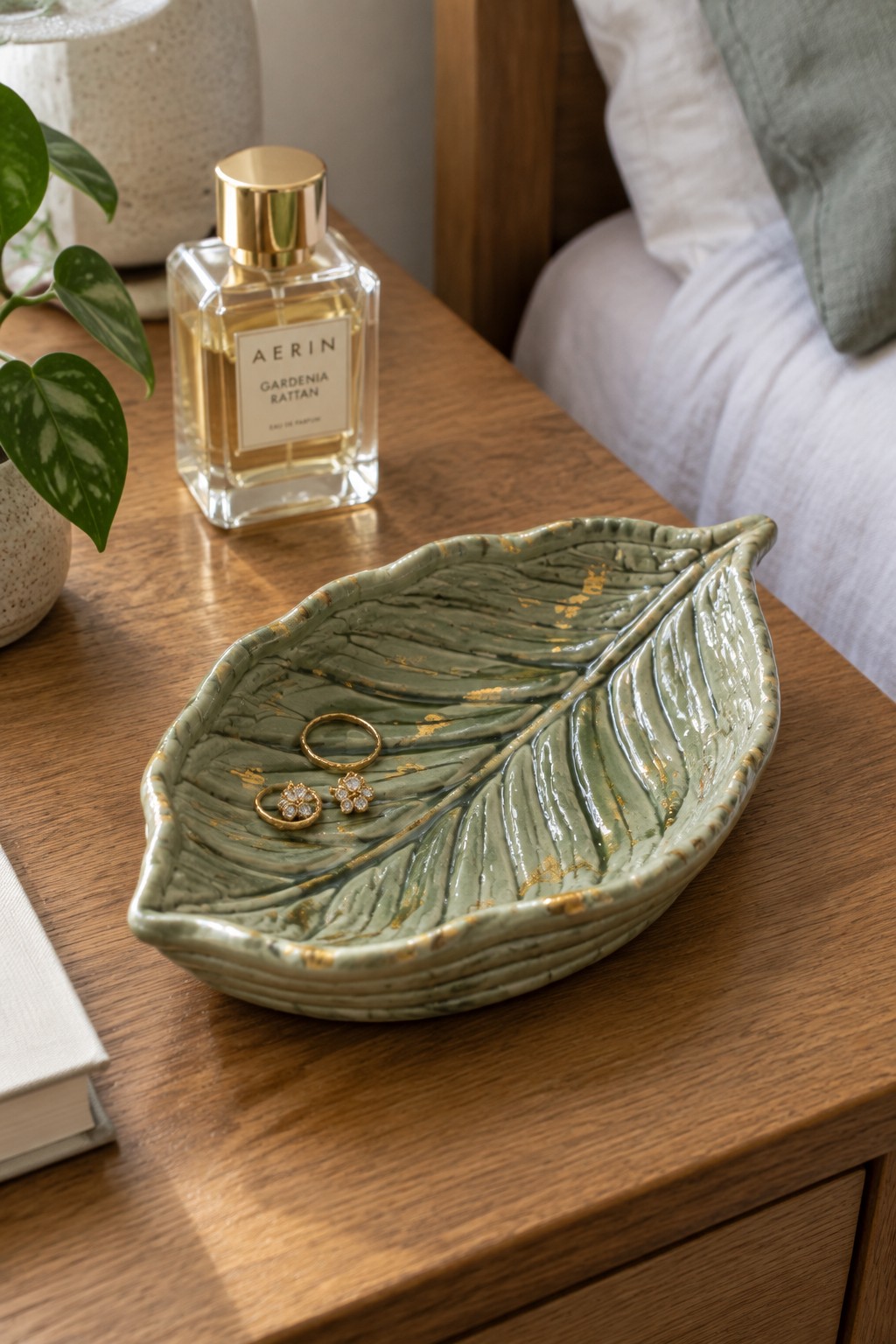
A shallow oval tray formed like a single leaf works well as a ring dish for holding small jewelry pieces on a nightstand or dresser. The handmade clay piece features raised veins that follow the leaf shape, finished in a muted green glaze with light gold accents brushed along the texture. This keeps rings and earrings visible and contained in one spot while the form stays compact enough for tight surfaces.
What makes this idea useful is how the leaf outline naturally guides items toward the center without extra walls or dividers. You could scale the same shape down for a bathroom soap rest or stretch it slightly longer to hold keys near the door. The textured surface catches light on the gold details, which helps the piece photograph clearly for project shares. A single-color version without the gold would simplify the build if you want to try it as a first coil project.
Coiled Clay Hedgehog Figurine

A hedgehog figurine built from hand-rolled clay coils forms the main idea here. The coils are stacked and shaped to cover the back and sides, creating a raised, patterned surface that contrasts with the smoother face and legs. Simple painted accents on the nose, eyes, and cheeks finish the piece. This approach fits the decor figurine category for small shelf or tabletop use.
What makes this idea useful is that the coil method adds texture without extra tools or carving. A piece like this works especially well as a low-profile accent on bookshelves or plant stands where space is tight. You could rework the same coil texture onto other compact animal shapes or add a shallow hollow in the back to hold small items like rings or matches. The compact size also makes it simple to batch out a few at once for gifts or to test different coil patterns.
Stacked Coil Napkin Rings

These napkin rings are formed from short stacks of clay coils that create a simple ridged cylinder. A layer of glaze is applied to the rim so it runs down the outside during firing, highlighting the coil lines and giving each ring a slightly different drip pattern. One ring shows an impressed fingerprint for a quick personal mark. The small size and straightforward shape fit the napkin ring category while staying easy to adapt for other table or desk uses.
The compact scale means you can throw a batch on the wheel or handbuild several in one session without much clay. Change the glaze colors to match different table settings or press other small stamps into the coils before the final firing. They store flat when not in use and can hold rolled napkins, small candles, or even tiny plant cuttings on a windowsill.
Coiled Yarn Bowl with Feeding Notch
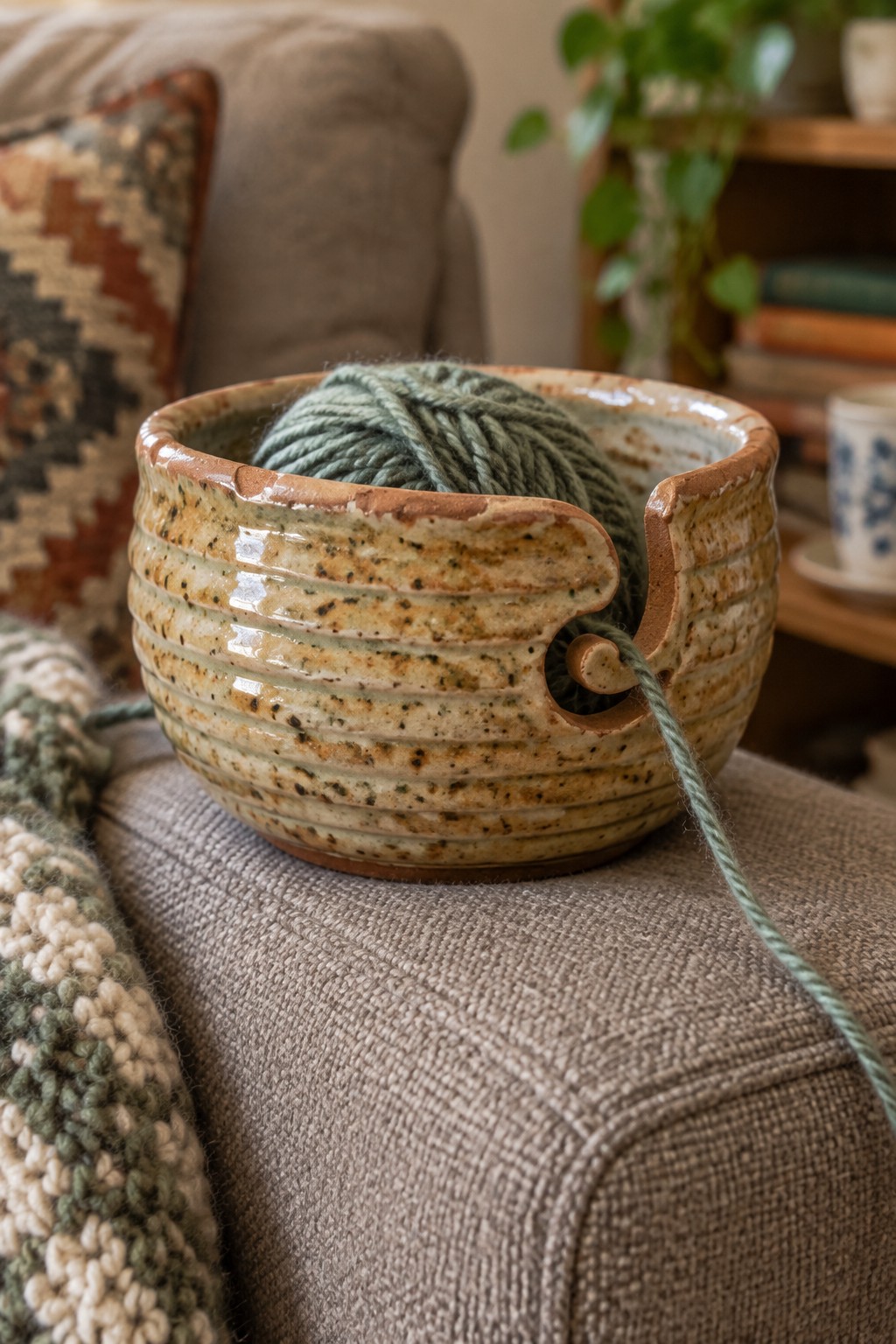
A yarn bowl formed from stacked coils creates a stable holder that keeps skeins from rolling away during knitting or crochet. Horizontal ridges built into the walls give the surface extra grip while the rim notch guides the yarn strand outward without snags. The speckled glaze settles into the coil lines and emphasizes the handmade texture. This project fits the holder category and works at a size that sits comfortably on a lap or side table.
What makes this idea useful is the notch, which turns an ordinary bowl into a functional tool for fiber work. You can repeat the same coil ridges on a shorter, wider form to make a small plant saucer or desk catch-all. The compact scale means it takes less clay and kiln space than a full vase, so it is easy to batch out a few at once. For a different look, skip the speckles and try a single matte glaze that lets the ridges stand out more clearly.
Coiled Kitchen Sponge Holder

A handbuilt coil sponge holder uses stacked and pinched coils to form an open, wavy container that holds a dish sponge upright by the sink. The coils create vertical supports and a stable base while leaving plenty of gaps for airflow and drainage. This approach keeps the sponge from sitting in pooled water and gives the piece a textured surface that feels secure under wet hands. The earthy glaze over the terracotta clay helps the holder blend with typical kitchen finishes.
What makes this idea useful is how the open coil design solves a common sink clutter problem without needing a solid wall of clay. You can easily adjust the coil height or width to fit different sponge sizes or even repurpose the same shape for a scrub brush or small bottle brush. In a kitchen this kind of piece stays practical because it sits right on the counter edge and drains quickly. The coiling method also lets you change the curve or add an extra layer if you want a version for larger cleaning tools.
Frequently Asked Questions
What basic tools and materials are required for handbuilding coil pottery at home?
You will need a supply of pottery clay suitable for handbuilding, a rolling pin or slab roller for flattening coils, a scoring tool or fork for joining pieces, water for smoothing seams, and basic household items like a plastic sheet to cover your work while it dries. For the 18 easy ideas, start with simple items such as bowls or vases that use even coils rolled to about the thickness of a pencil. Many projects can be completed with just these supplies, and you can source clay from craft stores or online retailers that offer beginner kits.
How can I prevent my coil pots from cracking while they dry?
To avoid cracks, build your coils evenly and score and slip each layer thoroughly before adding the next one. Keep your piece covered with a plastic bag for the first day or two to slow the drying process, then uncover it gradually over several days. For the everyday home decor ideas, work in thin layers and avoid making pieces too thick, as uneven drying is a common cause of issues. Store your work in a draft-free area and check it daily to ensure seams stay moist until fully joined.
Are there any safety tips I should follow when working with clay and glazes?
Always work in a well-ventilated space to avoid inhaling clay dust, and wash your hands thoroughly after handling materials. Wear gloves when applying glazes that contain chemicals, and never put pottery items in a microwave or dishwasher unless they are specifically labeled as safe for those uses. For projects like the coil-based planters or candle holders in the list, test your finished pieces for stability before placing them near heat sources or on surfaces where they might tip.
Can these pottery ideas be adapted for use with air-dry clay instead of kiln-fired clay?
Yes, many of the 18 easy handbuilt coil ideas work well with air-dry clay for a no-kiln option, especially decorative items such as trays, coasters, or wall hangings. Air-dry clay allows you to complete projects in a shorter time frame without firing, though the finished pieces will be less durable and should not hold water. Seal them with a waterproof varnish after drying if you plan to use them for light home decor purposes like holding dry flowers or keys.
How do I decorate or glaze my finished pieces to match my home decor style?
After your coil pottery has dried or been fired, apply underglazes or paints in colors that complement your room, such as soft neutrals for a minimalist look or bold patterns for a modern vibe. Use stencils or simple carving techniques on the coils before firing to add texture that fits your style. For the everyday ideas, experiment with matte finishes on vases or glossy ones on bowls to create a cohesive set that blends with existing furniture and textiles.

Pottery Path is my cozy corner of the internet where I share clay ideas, pottery inspiration, and simple projects you can recreate at home. I love exploring everything from air dry clay to handbuilt pottery to cute minis that brighten your day. My goal is to make clay crafting feel easy, fun, and welcoming for anyone who wants to try it.
You will find beginner friendly tutorials, creative pottery painting ideas, and lots of warm inspiration for slow and happy crafting. If you enjoy hands on creativity, this space will feel like home.