
Raku firing has been one of my favorite techniques to experiment with over the past year.
The unpredictable patterns on the clay always make each piece unique.
I put together a list of twenty ideas based on raku firing that focus on those kinds of surfaces.
They range from small bowls to larger forms.
Most of them are things I have tried myself or plan to try next.
Metallic Crackle Mug with Luster Handle
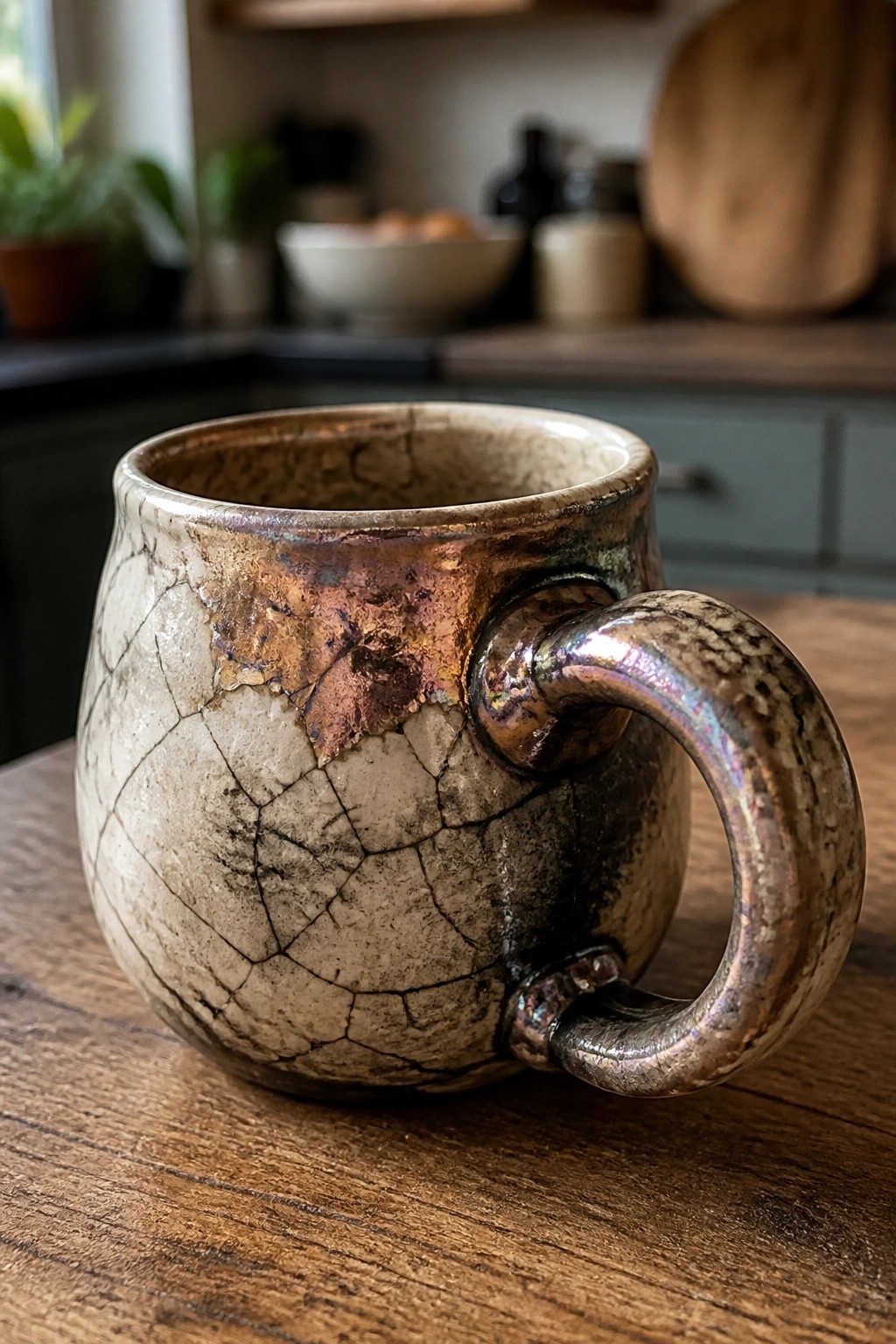
A raku-inspired mug uses a rounded body to let crackle patterns spread across the surface while metallic areas catch light in copper and bronze tones. The handle is treated with a separate iridescent finish that contrasts with the matte, textured body. This keeps the focus on surface variation rather than added sculptural details. The result is a straightforward drinking vessel that gains interest mainly through the glaze effects.
What makes this idea useful is how easily the crackle and metallic pairing can be adapted to other functional forms like small bowls or pourers. The rounded shape sits comfortably in the hand and works on a kitchen shelf or desk without taking much space. You could repeat the handle treatment on a set of four mugs for a cohesive look or swap the metallic accents to a single color for quicker production. Pieces with this kind of surface variation tend to perform well in searches for handmade mugs.
Raku-Inspired Wide Bowl with Mottled Dark Interior

A shallow, wide bowl formed from clay shows a warm terracotta exterior that meets a heavily textured dark interior. The surface carries irregular marks and scattered lighter flecks that come from the firing rather than added decoration. This bowl idea keeps the shape simple so the expressive surface does the main work.
What makes this idea useful is its low profile that fits easily on a dining table or kitchen counter for holding fruit or bread. You could rework the same form into a smaller version for a desk tray or keep the wide shape but change the interior color to suit a bathroom for soap and accessories. The contrast between the earthy rim and the dark center helps the piece photograph clearly for Pinterest without needing extra patterns.
Crackled Rectangular Slab Pendant

A small rectangular ceramic slab makes an effective hanging decor object when the surface stays mostly flat. The white crackle glaze covers the whole piece while turquoise pools and gold metallic lines run through the cracks to create an abstract pattern. The single hole at the top turns the slab into a simple pendant that can hang on a wall or from a hook. This approach works because the flat shape lets the glaze effects show clearly without competing with curves or added forms.
What makes this idea useful is how the slab shape adapts to different sizes or groupings. You could repeat the same crackle and metallic treatment on a set of three or four pieces to hang together. The same surface treatment would also work on a small tray or a set of square coasters if you change the edges slightly. For a gift, the compact size and strong color contrast make it easy to photograph and share.
Raku-Inspired Succulent Planter in Dark Metallic Glaze

A small rounded ceramic planter works well here because the low, wide shape keeps the focus on the plant while giving the glaze plenty of surface area to show variation. The dark glaze has a smoky, slightly metallic finish with uneven patches that catch light, which is typical of raku surface effects. The simple thrown or hand-built form stays out of the way so the expressive finish becomes the main detail. This kind of piece fits the category of small plant holders that can sit on a sill or shelf without taking much space.
The shape does a lot of the work here because the compact size makes it easy to produce in batches or adjust the rim slightly for different plants. You could swap the dark glaze for other raku colors like copper or turquoise to change the look while keeping the same form. It works especially well as a desk accent or windowsill grouping where a few similar pots can hold different succulents. For a gift, something like this is quick to make and needs only basic trimming and glazing steps.
Crackled Raku Tea Light Holder
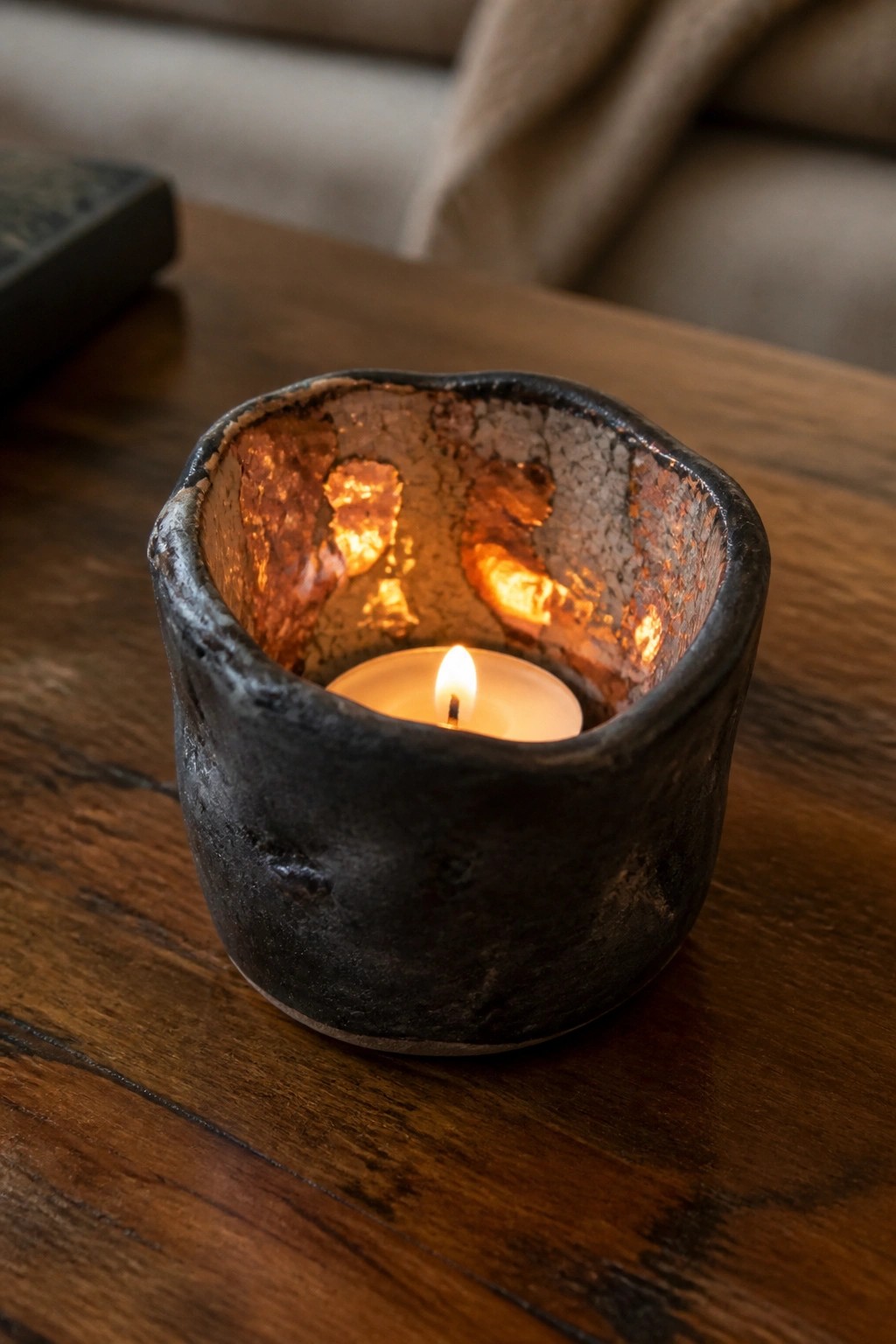
A small ceramic tea light holder with an irregular, pinched rim gives the flame room to cast light upward. The dark, heavily textured exterior keeps the focus on the bright crackled interior that reflects the flame and creates shifting highlights. This approach works as a simple candle piece where the surface contrast does most of the visual work.
What makes this idea useful is the compact size that fits on a shelf, desk, or windowsill without crowding the space. You could repeat the same form in different sizes to make a grouped set or adapt the crackled interior treatment to a small bowl or ring dish. The dark outside and luminous inside combination photographs clearly, which helps the design stand out in a feed or board.
Rectangular Tray with Web-Like Crackle and Gold Accents

A rectangular ceramic tray works well here because the flat surface lets a dark crackle pattern spread across the entire piece without competing with curves or handles. The white lines form an irregular network that breaks up the dark glaze, while small patches of gold catch light and emphasize the texture. This approach fits the category of a serving or display tray that can hold food or small objects while the surface remains the main focus.
What makes this idea useful is how the rectangular format gives plenty of room for the pattern to develop without needing extra sculpting. You could scale the same crackle and gold treatment down to make coasters or up for a larger cheese board. In a kitchen or on a coffee table the tray keeps crumbs and spills contained while the metallic spots help it read as more than a plain slab. The idea adapts easily if you swap the gold for another luster color or limit the crackle to just the center area.
Organic Ring Dish with Copper Crackle Surface
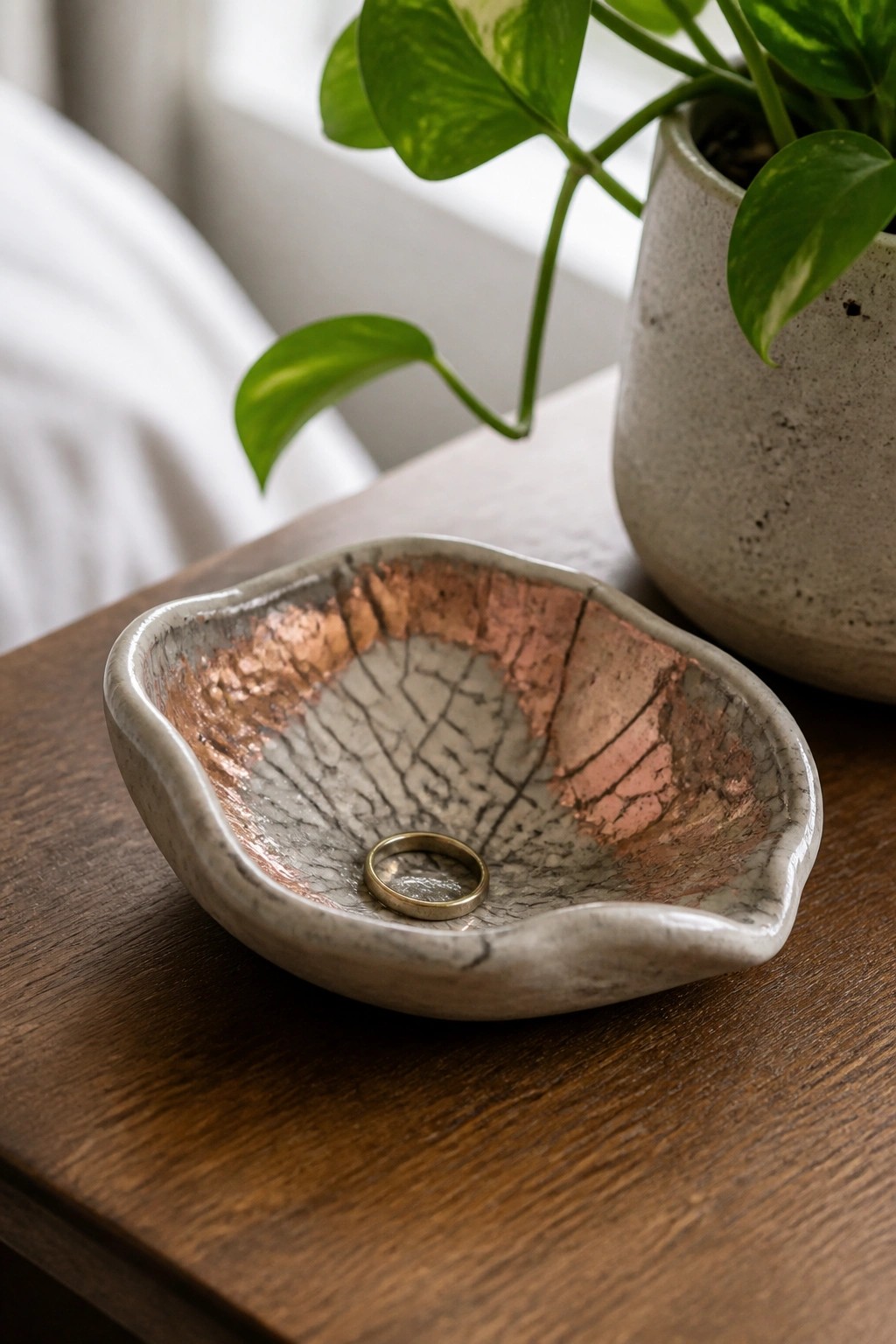
A small ring dish formed from clay into an irregular, pinched shape with a wavy rim works well as a dedicated spot for jewelry. The surface combines a network of dark crackle lines with coppery metallic patches over a gray base, creating contrast that draws attention without extra decoration. This approach fits the ring dish category and keeps the focus on the expressive finish rather than complex sculpting.
The compact scale lets it sit on a nightstand or entry table without taking up much room. You can adapt the same idea by stretching the form into a longer tray shape or swapping the copper areas for silver tones to match different metal jewelry. A piece like this stands out on Pinterest because the crackle pattern gives it visual interest while remaining simple to make and easy to style with plants or other tabletop items.
Crackle Glaze Incense Holder with Central Post

A shallow, irregular ceramic tray with a built-in cone post creates a simple incense holder that keeps ash contained. The surface uses a white crackle glaze dotted with small turquoise spots to add visual interest without extra decoration. This form works as a compact decor piece that holds a single stick upright while the faceted edges give it a handmade look.
What makes this idea useful is the small scale that lets it sit on a desk, windowsill, or nightstand without crowding the space. You could rework the same tray shape into a ring dish or small catch-all by leaving off the post and adjusting the glaze colors. The crackle pattern shows up clearly on a light base, so swapping the turquoise for other accent colors gives quick variations for different rooms or gift sets.
Pear-Shaped Vase with Raku-Inspired Two-Tone Glaze

A narrow-neck ceramic vase with a rounded pear body gives a stable base while keeping the focus on a single stem or small bunch of dried material. The glaze moves from a dark, glossy upper section into a coppery lower band, letting the form show through the color shift without extra decoration. The slightly textured surface catches light on the curves and helps the transition read as intentional rather than random. This approach suits a simple decor vase that can sit on a shelf or ledge without competing with other objects.
What makes this idea useful is the way the shape holds stems upright on its own. You could rework the same gradient on a straighter cylinder for a desk or try a shorter, wider version as a small planter. The copper base gives visual weight that keeps the piece grounded even when empty, so it stays useful between arrangements. Scaling the form down makes an easy bud vase for a gift, while keeping the proportions similar lets you test the glaze on a larger mantel piece.
Freeform Spoon Rest with Crackled Glaze

A small ceramic tray shaped with an irregular oval outline makes a practical spoon rest for kitchen counters. The shallow well and slightly raised rim keep a wooden spoon from rolling away during cooking. Its surface uses a heavily crackled glaze that blends gray, brown, and blue-green patches to create contrast without added patterns or carving.
What makes this idea useful is how the freeform shape can be pinched or slab-built quickly from a small amount of clay. You can adapt the same size and glaze approach for a butter dish or a narrow tray that holds chopsticks. In a kitchen, this piece sits right next to the stove and handles daily use without looking too precious. The crackle texture also photographs clearly for sharing project ideas online.
Compact Bird Figurine with Crackled Metallic Surface
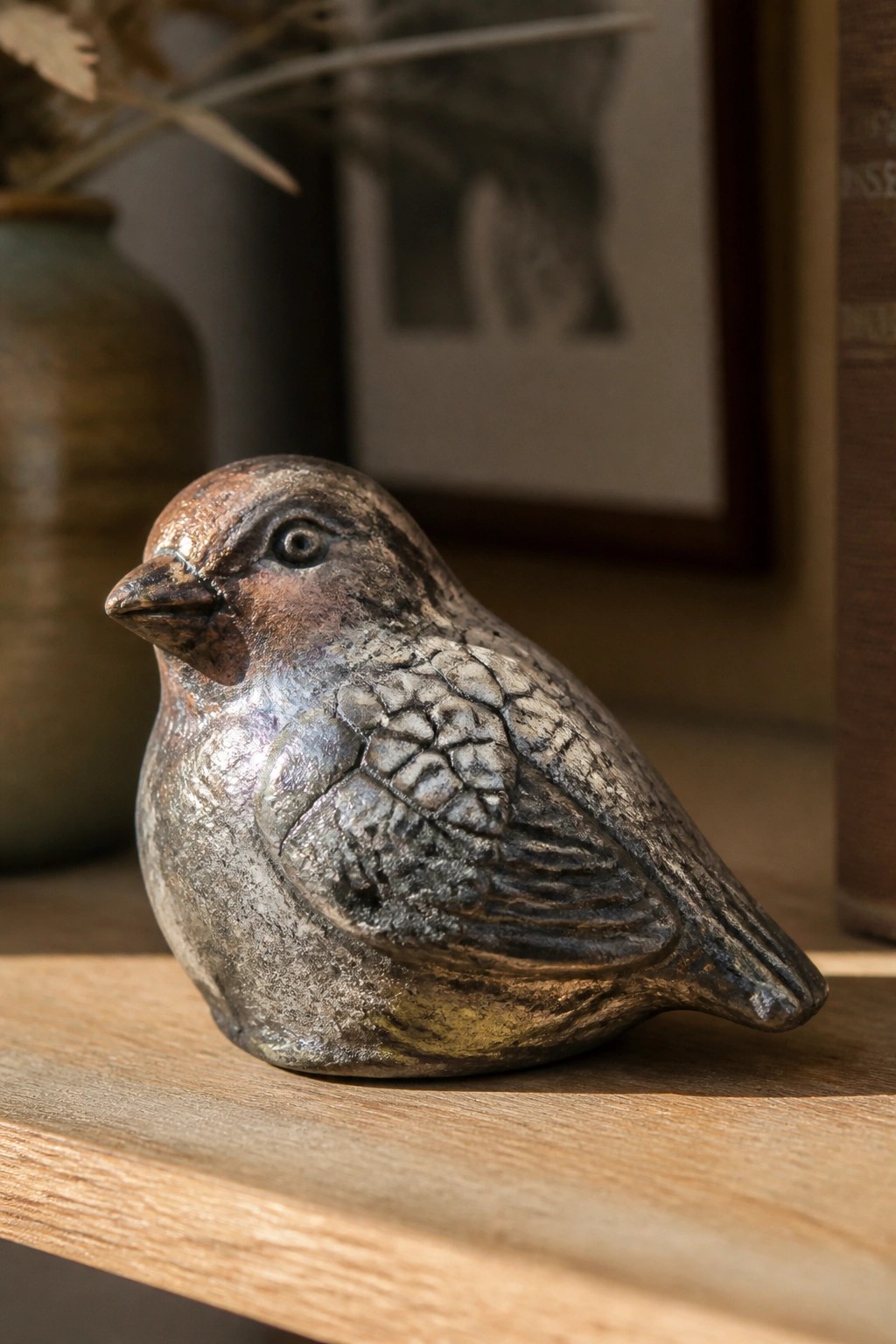
A small bird figurine makes a strong raku-inspired project because its rounded body and basic wing lines give the glaze plenty of room to show varied texture and color shifts. The sculpted feather details on the wings and back catch the metallic finish in a way that emphasizes the crackle pattern without needing extra surface work. This type of decor object belongs in the expressive surfaces category since the compact size keeps the focus on how the finish interacts with the handmade form.
What makes this idea useful is how the same bird shape can be scaled up or down and paired with different metallic glaze combinations to change the look. The small size works well as a shelf accent next to books or plants and takes up minimal space in the kiln. You could reduce the wing carving for faster versions or add more texture around the head to let the crackle stand out even more. This kind of piece shows up well on Pinterest because the reflective surface photographs with natural contrast.
Raku-Style Crackle Serving Bowl
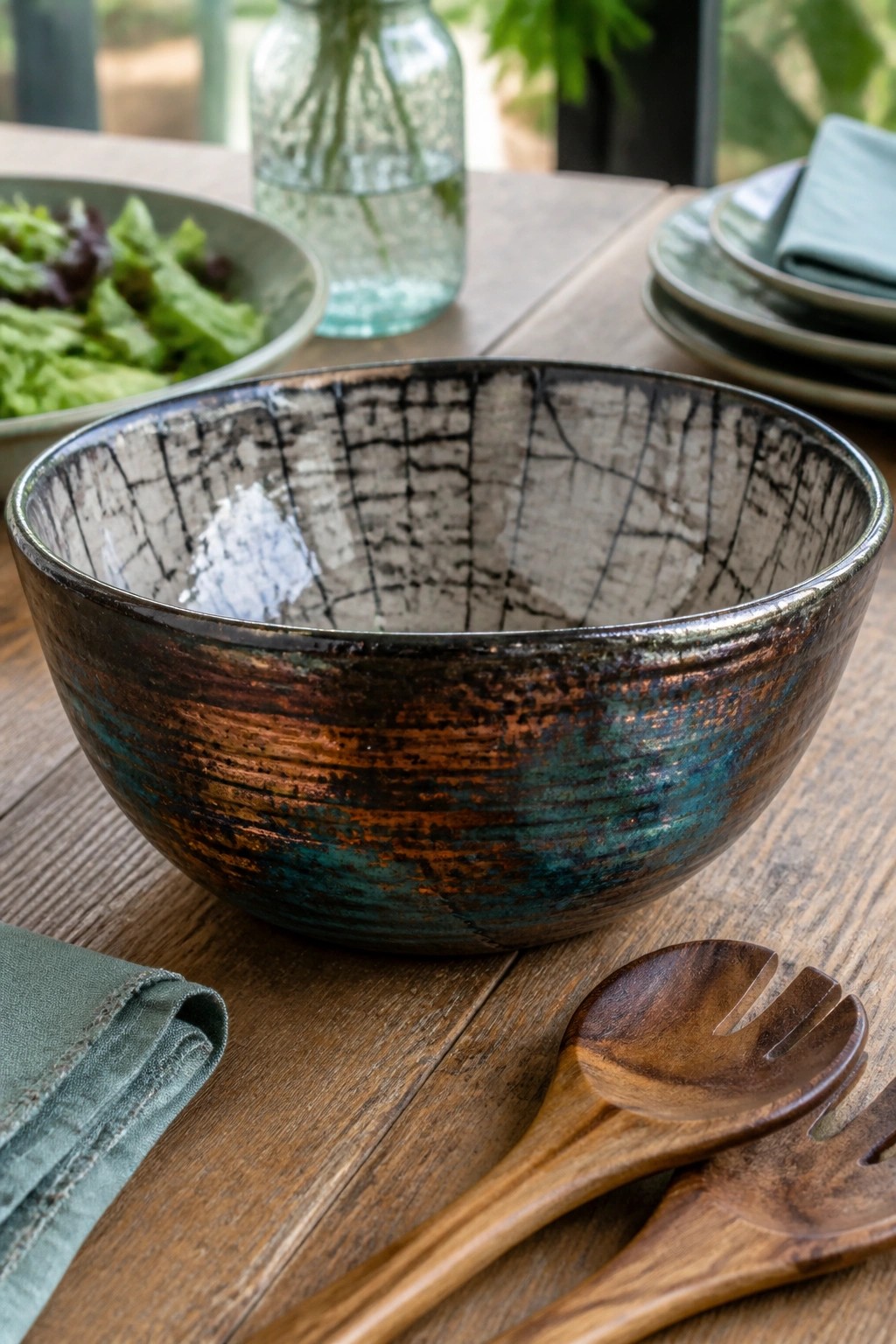
A wide, low ceramic bowl works well as a serving piece when finished with a heavily crackled glaze that mixes copper flashes, teal streaks, and dark metallic areas. The surface treatment creates strong visual contrast through the irregular crack pattern and the way light catches the metallic sections. This approach fits the expressive surface category because the glaze does most of the design work without needing added carving or painting.
What makes this idea useful is how the simple round form lets the glaze take center stage while still functioning as a practical table bowl. You can adapt the same glaze layering on smaller bowls for side dishes or scale it up for a larger fruit bowl. The copper and teal combination stands out in photos, which helps if you want to share the finished piece online. For a different look, swap the teal for more copper or add a matte black rim to change the balance.
Perforated Raku Tea Light Holder

A small rounded ceramic form works as a tea light holder when the sides are cut with a repeating pattern of holes. The dark crackled surface lets the flame cast light outward while the top opening stays wide enough to hold a standard tealight or small oil cup. This setup turns a basic candle piece into a functional decor object that can sit on a table or shelf without taking much space.
What makes this idea useful is how the holes double as both decoration and light vents so the piece stays interesting even when the candle is out. You could rework the same shape into a taller version for essential oils or make a set with different hole patterns for a group display. The compact size also makes it easy to try in a single firing without using much clay or kiln space.
Sectioned Ceramic Holder for Bathroom Essentials

A divided ceramic cup serves as a practical bathroom organizer with four internal compartments. The round, slightly tapered shape holds multiple toothbrushes upright while leaving space for small tubes or other items. Its dark, heavily textured surface with metallic flecks creates strong visual contrast and hides minor wear from daily use. This approach fits the bathroom item category where function and surface interest matter equally.
What makes this idea useful is the built-in dividers that prevent items from tipping or touching. The compact size works on narrow counters without crowding the sink area. You could scale the same divided form down for a desk pen cup or up for kitchen utensil storage. A lighter or matte version of the glaze would shift the look toward softer bathroom palettes while keeping the same layout.
Raku-Inspired Creamers With Contrasting Metallic and Crackle Surfaces

These small ceramic pitchers use a rounded, tapered body and simple spout to show off two different raku-inspired surface treatments on the same form. One pitcher carries a dark metallic finish with coppery flashes from reduction, while the other features a pale crackled glaze with soft turquoise pooling. The approach works because the expressive surfaces do the visual work without added carving or pattern. The pieces fit the category of small functional vessels that can serve as creamers, small vases, or table accents.
What makes this idea useful is how easily the contrast between the two finishes can be adapted to a set. You could repeat the same pitcher shape in three or four different surface combinations to create a coordinated group for a shelf or table. The compact size keeps the project manageable for firing and makes the finished pieces practical for holding cream, small stems, or kitchen tools. For Pinterest, the side-by-side pairing of metallic and crackled results gives a clear before-and-after effect that highlights the range of raku surfaces.
Crackled Disc with Metallic Center
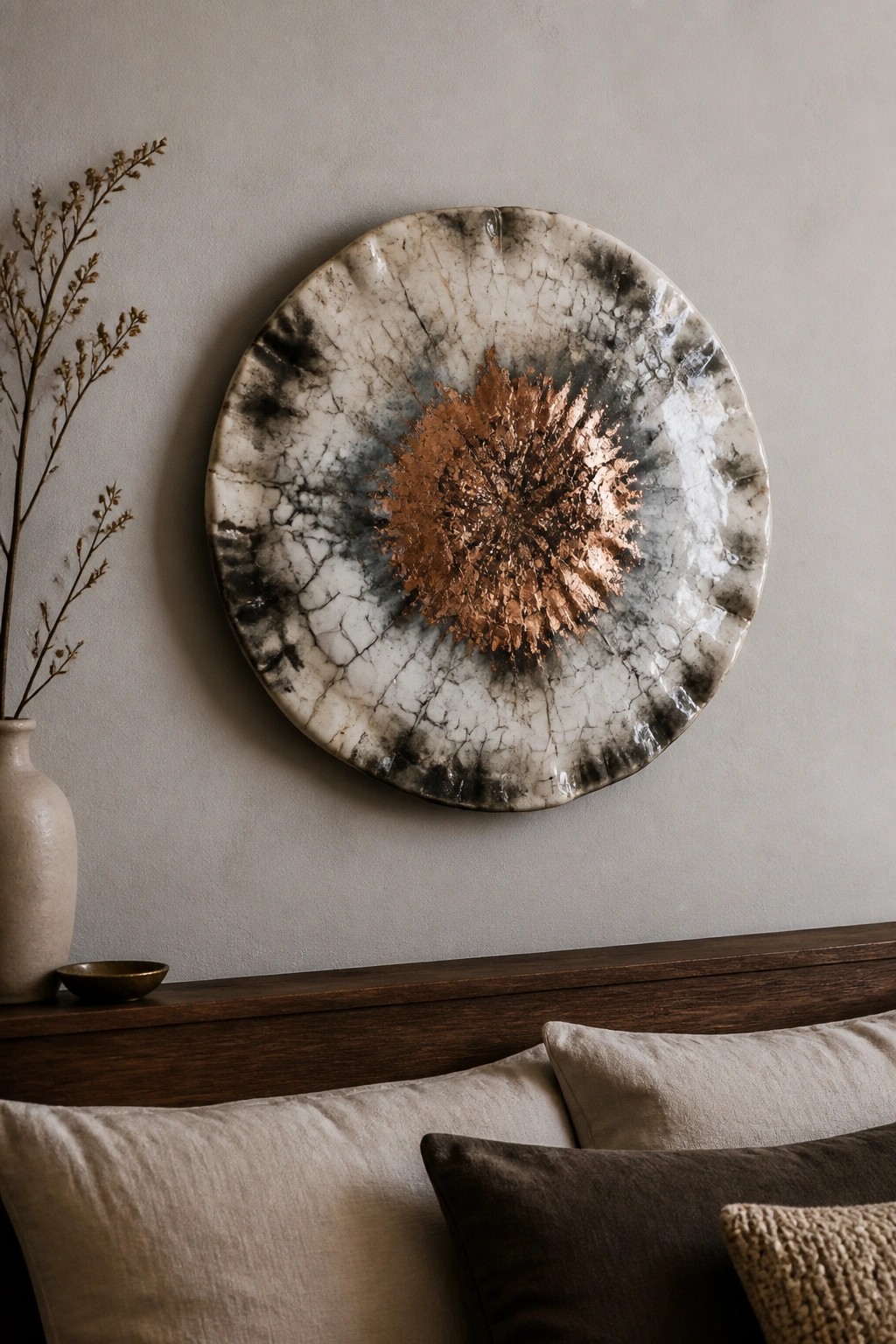
A large round ceramic disc works as wall art when covered in a heavily crackled white and gray surface that surrounds a central burst of metallic copper. The radiating pattern from the middle creates a clear focal point while the crackle adds texture across the rest of the form. This type of decor object suits spaces where a single bold piece can hang above furniture or fill empty wall area.
What makes this idea useful is the way the round shape and central motif scale to different sizes for different rooms. You could adapt the same crackle and metallic contrast to smaller discs for a grouped arrangement or rework it into a shallow tray. The strong light-to-dark contrast helps the piece read clearly from a distance, which is why similar designs perform well on Pinterest boards focused on statement wall decor.
Raku-Style Lidded Box for Small Storage

A small lidded clay container makes a practical holder for rings or other tiny items. The body keeps a plain terracotta surface with one carved wavy line running down the side, while the lid carries a crackled metallic finish in copper with purple and blue shifts. The round, low shape stays simple so the lid surface does most of the visual work.
The compact size fits easily on a nightstand or desk without taking up space. You could repeat the same form in a slightly taller version for cotton balls or loose tea. Keeping the body unglazed and adding the carved line gives you a fast way to vary the look if you want to test different lid finishes on future pieces.
Raku-Inspired Egg Cups with Contrasting Glaze Surfaces

Egg cups offer a simple way to practice expressive raku-style surfaces on a small, repeatable form. The two cups here share the same rounded, footed shape but use very different glaze treatments, one dark and metallic with rough patches and the other light with heavy crackling and brown spotting. This contrast highlights how surface variation can carry the whole piece without needing added decoration or complex carving. The compact size keeps the focus on the glaze results while still producing a functional kitchen item.
The shape does a lot of the work here because it requires only basic throwing or hand-building skills yet shows off glaze movement clearly. You could adapt the same cup form for salt cellars or small dipping bowls by adjusting the rim slightly wider. A set of four or six with mixed dark and light surfaces would make a quick breakfast table update or a practical gift that still feels distinctive. The small scale also lets you test new raku combinations without using much clay or kiln space.
Hanging Raku Planter for Trailing Plants

A compact hanging planter shaped from clay gives trailing plants room to spill over the sides without taking up shelf space. The form includes a built-in loop at the top so it can be suspended from cord or wire, and the walls stay thick enough to support soil and roots. A raku-style glaze covers the surface in dark streaks with shifting purple and copper tones that catch light as the planter moves slightly. This keeps the whole piece simple while letting the glaze and the plant create the main visual interest.
What makes this idea useful is how the small scale works in narrow windows or tight corners where a regular pot would not fit. You can adapt the same loop-and-form shape for other trailing varieties or make a second one with a matte finish for contrast. The expressive glaze does most of the decorative work, so the project stays quick once the form is made. For gifts, a finished version with plain twine already attached is ready to hang right away.
Match Holder with Integrated Striker Panel

A compact match holder pairs a shallow bowl section for storing matches with a taller cylindrical striker attached to one side. The cylinder carries a raised honeycomb texture across its front face that serves as the striking surface. The dark, matte glaze emphasizes the rough texture while keeping the overall form simple and sturdy. This type of project falls into the category of small functional holders meant for everyday tabletop or hearth use.
What makes this idea useful is the way the striker and storage area are combined into one piece so matches and a striking surface stay together. You could swap the honeycomb pattern for a grid or crosshatch texture if you want a different strike feel. The small scale makes this easy to adapt into a larger version for fireplace tools or a shorter one for a kitchen drawer. In a living space this shape keeps things practical without taking up much room.
Frequently Asked Questions
What safety precautions should I follow when creating Raku inspired pottery with expressive surfaces? Work in a well ventilated outdoor area to manage smoke and fumes from reduction processes. Wear heat resistant gloves, a face shield, and long clothing when handling hot pieces. Keep a fire extinguisher nearby and never leave the kiln unattended during firing. Start with small test pieces to build experience before scaling up to larger forms.
How can I replicate crackle and metallic luster effects using a standard electric kiln instead of traditional Raku methods? Apply high silica slips or commercial crackle glazes before bisque firing, then fire to cone 06. Remove pieces while hot and place them in a metal container with combustible materials like sawdust or newspaper for reduction. Experiment with copper based washes or horsehair techniques on hot surfaces to create carbon traps and iridescent marks without specialized equipment.
Which clay bodies work best for the textured and expressive surfaces shown in these ideas? Choose groggy stoneware or porcelain bodies that withstand thermal shock. Add sand or grog to the clay for added texture that enhances crackle patterns. Test small batches first, as some clays develop richer metallic flashes during reduction while others remain matte and earthy.
What low cost materials can I use to add unique surface details inspired by the 20 pottery ideas? Incorporate found objects like leaves, wire, or stamps for impressions before firing. Use underglazes, oxides, and homemade slips mixed with ash or salt for organic marks. Layer these with wax resist to control where expressive colors and textures appear during the final reduction stage.
How do I seal or finish Raku inspired pieces to make them suitable for functional use? Apply a food safe clear glaze over non metallic areas if the piece will hold liquids, though many Raku surfaces remain decorative only. For purely sculptural work, buff the surface with wax or oil after cooling to deepen colors. Always test finished pieces for durability since reduction firing can leave them porous.

Pottery Path is my cozy corner of the internet where I share clay ideas, pottery inspiration, and simple projects you can recreate at home. I love exploring everything from air dry clay to handbuilt pottery to cute minis that brighten your day. My goal is to make clay crafting feel easy, fun, and welcoming for anyone who wants to try it.
You will find beginner friendly tutorials, creative pottery painting ideas, and lots of warm inspiration for slow and happy crafting. If you enjoy hands on creativity, this space will feel like home.