
I have always been drawn to the way handmade pottery can look a bit uneven and still feel right.
In my own studio I like to experiment with shapes that are not perfectly round or smooth.
These days I find myself thinking about organic forms that highlight the natural texture of the clay.
I put together some ideas here for pieces that embrace those small flaws instead of hiding them.
Maybe trying a few of these will give you some starting points for your own work.
Earthy Drip Glaze Mug

A handmade ceramic mug uses a rounded, low-profile body paired with a thick pulled handle. The main surface is a speckled beige clay that shows the wheel marks, while a green glaze is applied only to the upper half so it runs downward in uneven drips. This leaves the lower section mostly exposed and creates a clear contrast between the two finishes. The result is a straightforward kitchen mug that relies on glaze movement rather than added decoration.
What makes this idea useful is how the drip glaze covers a large area quickly and hides minor surface flaws. A piece like this works especially well as a daily coffee or tea mug kept on open kitchen shelves. You could adapt the same drip method to taller tumblers or small bowls by changing how far down the glaze is allowed to run. The simple two-tone approach also makes it easy to repeat across a small set without needing perfect consistency.
Wavy-Rimmed Bowl with Pooling Glaze

A shallow ceramic bowl formed with an irregular, wavy rim gives a clear example of an organic wabi-sabi shape. The clay is left slightly textured and speckled, and a single glaze application creates a soft shift from warm beige at the edges to a deeper teal where it pools in the center. This approach relies on the natural movement of the clay and glaze rather than added carving or patterns.
The shape does a lot of the work here because the uneven rim makes the bowl look finished without extra steps. It works well as a small catch-all on a table or a dish for snacks and small produce. You can adapt the same rim treatment to plates or low trays by using the same pinching motion while the clay is still soft. The glaze effect is easy to repeat on other forms since it only needs one color applied unevenly.
Rounded Vase With Crackled Glaze and Raw Base

A vase with a full rounded body that tapers into a short neck makes a strong starting point when the rim is kept slightly uneven. The light gray crackle glaze covers the upper two-thirds while the bottom section is left unglazed to reveal the natural clay. This simple division between the textured glazed surface and the matte foot creates visual balance without added decoration.
What makes this idea useful is how the shape holds up at different heights, so you can make a taller version for branches or a shorter one for single stems. The raw base detail is easy to repeat by waxing off the bottom before glazing and works especially well in neutral interiors. You could adapt the same form into a small pitcher by adding a spout or into a set of three vases with slight variations in the neck width.
Low Rounded Planter With Uneven Glaze

A small, low-profile ceramic planter with a wide mouth and softly flattened sides makes a good match for trailing plants. The form stays compact while the glaze mixes warm orange-brown with cooler gray-green patches that run and pool during firing. This creates a natural surface variation without added decoration or precise patterning.
What makes this idea useful is how the shallow shape keeps the focus on the plant while still holding enough soil for a small root system. You could scale the same form up slightly for a larger tabletop piece or simplify the glaze to one color if you want faster results. In a kitchen or on a shelf, this size works for succulents or herbs without crowding the space, and the irregular edge helps it photograph well for plant styling ideas.
Imperfect Oval Tray with Exposed Clay Rim
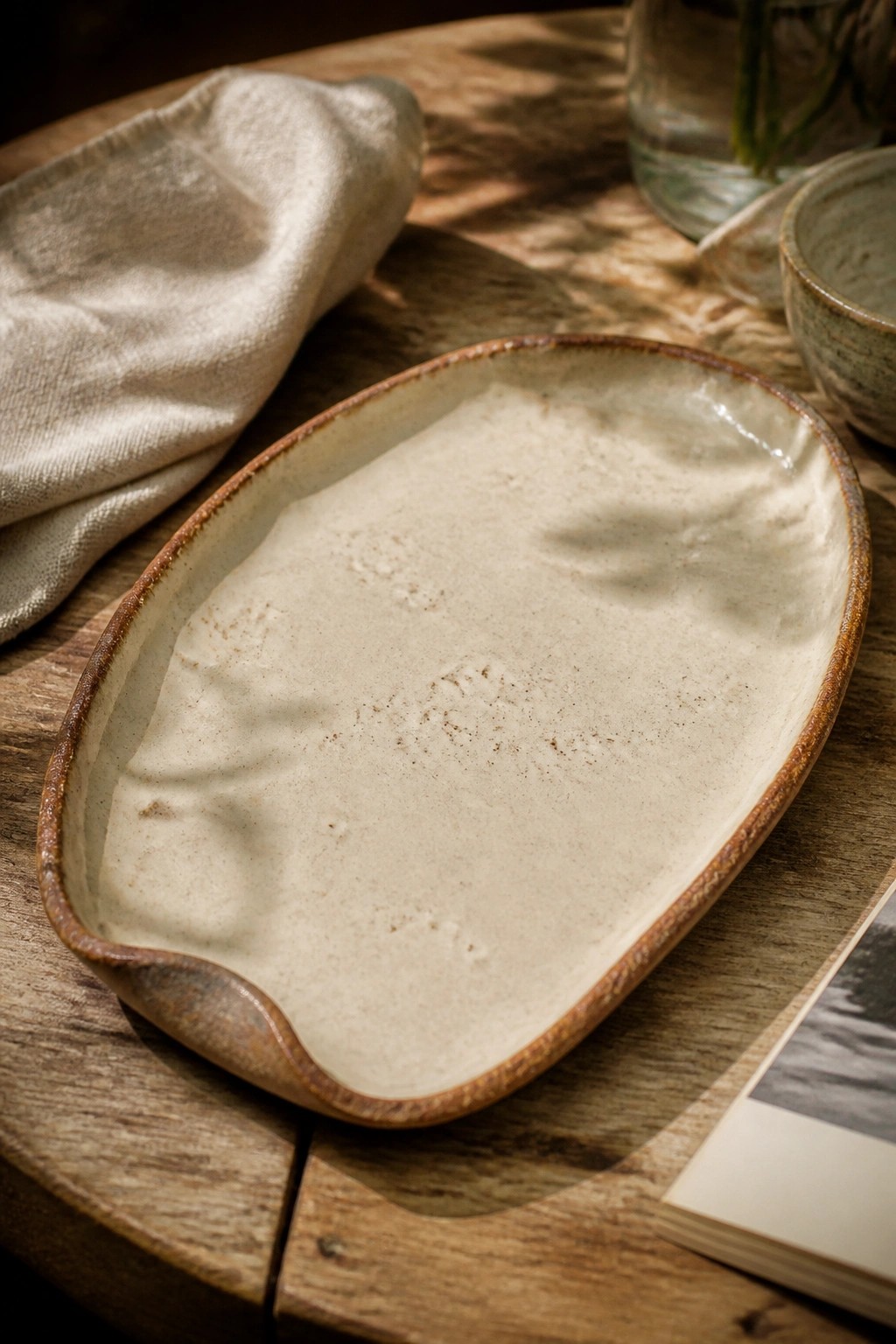
A shallow oval tray built from clay with an uneven, slightly pinched edge creates a low-profile surface for small items. The matte cream glaze covers most of the interior while the rim stays unglazed to show the natural clay color and texture. This approach fits the tray category because the wide, flat shape handles keys, small dishes, or a few plants without needing precise symmetry.
What makes this idea useful is the elongated form that sits easily on a narrow shelf or beside a sink. You can scale the same shape down for a ring dish or stretch it longer for a sushi plate. The contrast between the smooth glaze and rough rim gives enough visual weight to photograph well for simple home decor boards.
Speckled Footed Tealight Holder

This is a small footed ceramic bowl made to hold a tealight. The wide uneven rim sits above a narrower base that lifts the form slightly off the surface. The soft pink speckled glaze covers the entire piece and lets the clay texture show through in places. The shape works well as a candle piece because the foot keeps the rim stable while the organic edges keep the look casual.
The small scale makes this easy to adapt into a ring dish or pinch pot for loose change. You could repeat the footed base on a taller cylinder to turn it into a bud vase or match holder. The speckled glaze treatment works on most mid-range clays so it does not require special materials. Pieces with this lifted base photograph cleanly on flat surfaces which helps them perform well in simple decor roundups.
Leaf Shaped Ceramic Soap Dish

A small leaf-shaped ceramic dish makes a practical soap rest or ring holder for a bathroom or kitchen counter. The form copies a single leaf with the veins pressed in to create low ridges that help water drain and keep items from sliding. An uneven speckled glaze in soft gray and brown tones lets the clay show through at the edges and along the veins. This approach sits in the simple tray or holder category where the shape itself does most of the work.
What makes this idea useful is that the leaf outline can be cut from a slab in any size to fit a soap bar or a few rings. The pressed veins add grip and texture without extra tools or colors so the project stays quick to repeat. Scale the same shape down for a desk version to hold paper clips or change the glaze to a matte finish if you want a drier surface for jewelry. In a bathroom the dish keeps soap from sitting in water and can be made in sets with slight differences in edge shape.
Wavy Rim Ring Dish With Exposed Clay Edge

A small ceramic dish formed with an irregular scalloped rim serves as a simple ring holder. The soft green glaze covers most of the surface but thins toward the edge to reveal the clay body, giving the piece an organic, low-key finish. This style of holder stays compact enough to sit on a dresser or shelf while still keeping rings visible and contained.
What makes this idea useful is the small footprint that works on a bedside table or bathroom ledge without crowding other items. You can repeat the wavy rim on a slightly wider base to create a catch-all for earrings or keys, or keep the same scale and change the glaze to a matte off-white for a different room. The exposed clay edge keeps the focus on the shape, so the same form translates easily if you want to try a matching soap rest or tiny tray.
Speckled Ceramic Bird Figurine

A small ceramic bird figurine works as a simple decor object when the form stays rounded and compact. The body shape includes a short beak, tapered tail, and a raised wing detail that adds just enough definition. A speckled neutral glaze covers the surface and lets the clay texture show through without extra decoration.
What makes this idea useful is the small scale that fits on shelves, windowsills, or desks without taking much space. You could rework the same basic shape into other small birds or animals by changing only the head angle or tail length. The speckled glaze approach also translates easily to other figurines if you want a consistent finish across a group of pieces.
Irregular Shallow Bowl with Brushed Green Glaze

A shallow ceramic bowl with an uneven oval form keeps the focus on the raw clay surface while a green glaze gets applied in wide, directional strokes across one side. The glaze thins in places and leaves visible brush marks, letting the speckled clay body show through on the rest of the piece. This style works as a simple serving dish or catch-all because the shape stays low and open.
The shape does a lot of the work here since the soft edges and shallow depth make it easy to adapt for different uses. You could shrink the same form for a jewelry dish or stretch it slightly wider for a small platter. The brushed glaze approach is straightforward to repeat on other pieces like trays or plates without needing extra tools.
Speckled Ceramic Multi-Hole Holder
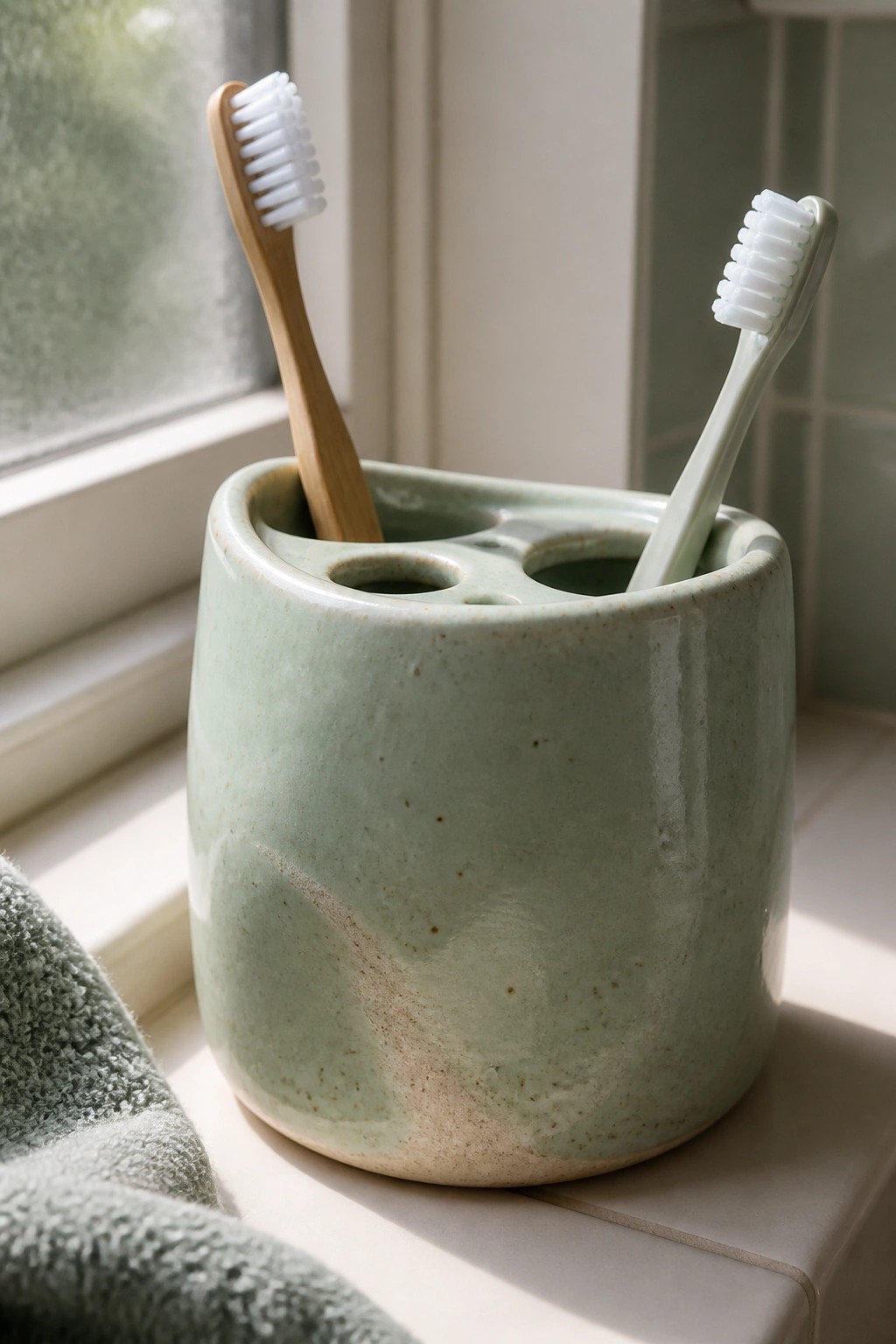
A handmade ceramic holder with an irregular rounded body and several cut openings serves as a practical bathroom item for storing toothbrushes or small tools. The soft green glaze shows natural speckling and subtle surface texture that comes from the clay itself rather than added decoration. This design keeps the form simple while letting the uneven rim and varied hole placement create visual interest without extra details.
What makes this idea useful is how the multiple openings let one piece handle several items without extra dividers or trays. The compact scale works on a windowsill or counter where space stays tight. You could adapt the same shape for a desk pen holder by changing the hole sizes or make a wider version for kitchen utensils. The muted glaze and organic outline give it a quiet presence that still reads clearly in photos.
Spiral-Sided Yarn Bowl for Craft Use

A ceramic yarn bowl shaped with an irregular wavy rim includes a large spiral cutout on the side that feeds yarn from the ball inside. The opening keeps the yarn contained while allowing smooth pulling during knitting or crocheting. Earthy blue and brown glazes with visible texture give the form an organic surface that fits wabi-sabi style without looking finished or symmetrical.
What makes this idea useful is how the spiral cutout solves a practical problem while staying simple to form. You could adapt the same opening on a smaller bowl for embroidery thread or scale it up for larger skeins. In a craft space the piece keeps yarn tidy on a table or lap without needing extra tools. The same shape also works as a small catch-all for cords or beads if you skip the yarn use.
Speckled Lidded Jar for Kitchen Staples
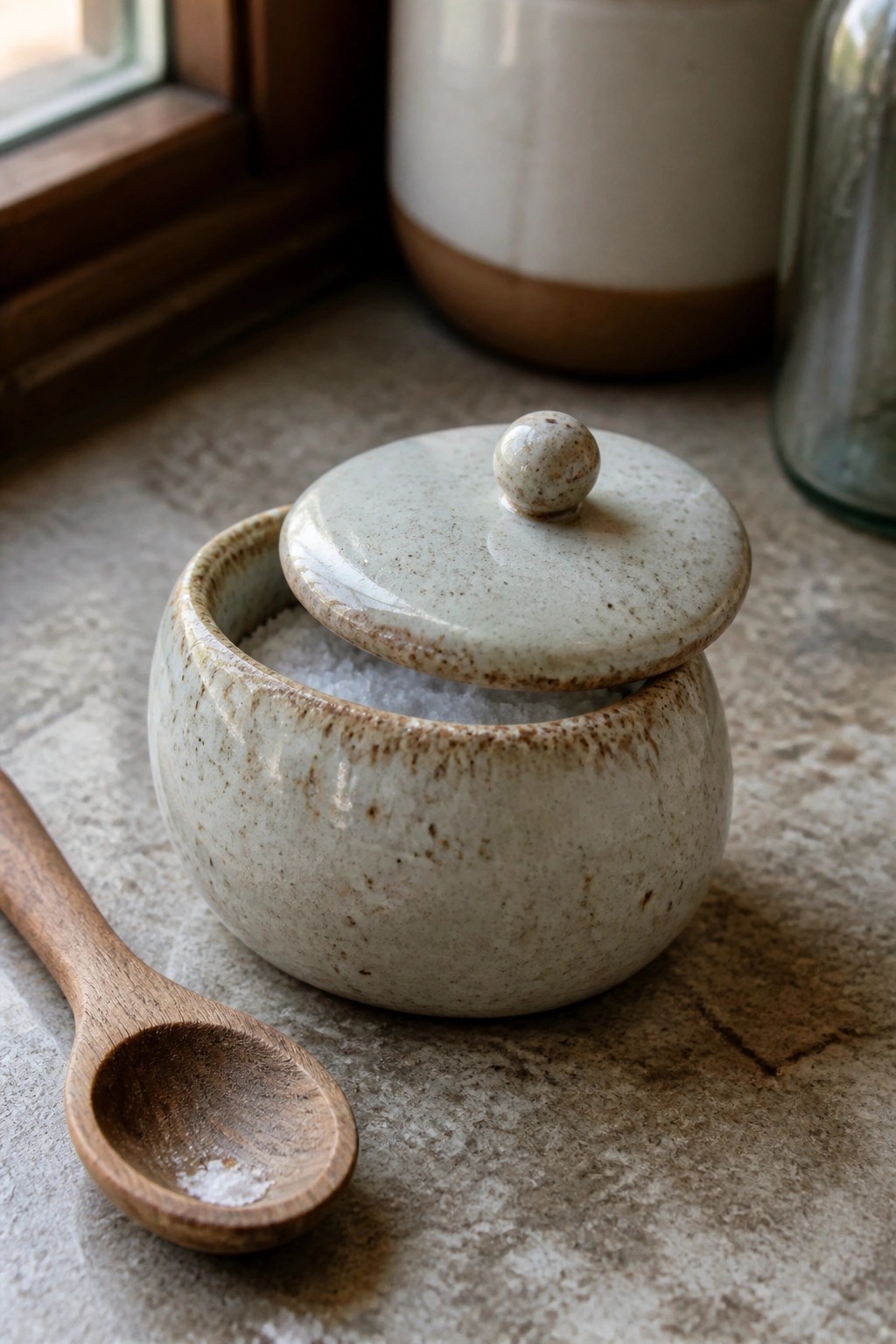
A small lidded ceramic jar makes a practical kitchen container for salt, sugar, or spices. The rounded body sits low with an uneven rim that supports a fitted lid finished with a simple knob on top. The speckled glaze in muted beige and brown tones covers the surface in an uneven layer that emphasizes the organic shape. This approach keeps the focus on the form and texture rather than added patterns or handles.
What makes this idea useful is the compact size that sits easily on a counter without taking much space. You can scale the same shape larger for coffee or tea storage or shrink it for a single spice. The loose speckled glaze covers small surface marks during firing, which reduces pressure on getting a perfect finish. Pairing it with a wooden spoon next to the stove gives a ready styling option that translates well in photos for sharing.
Leaf-Shaped Ring Dish
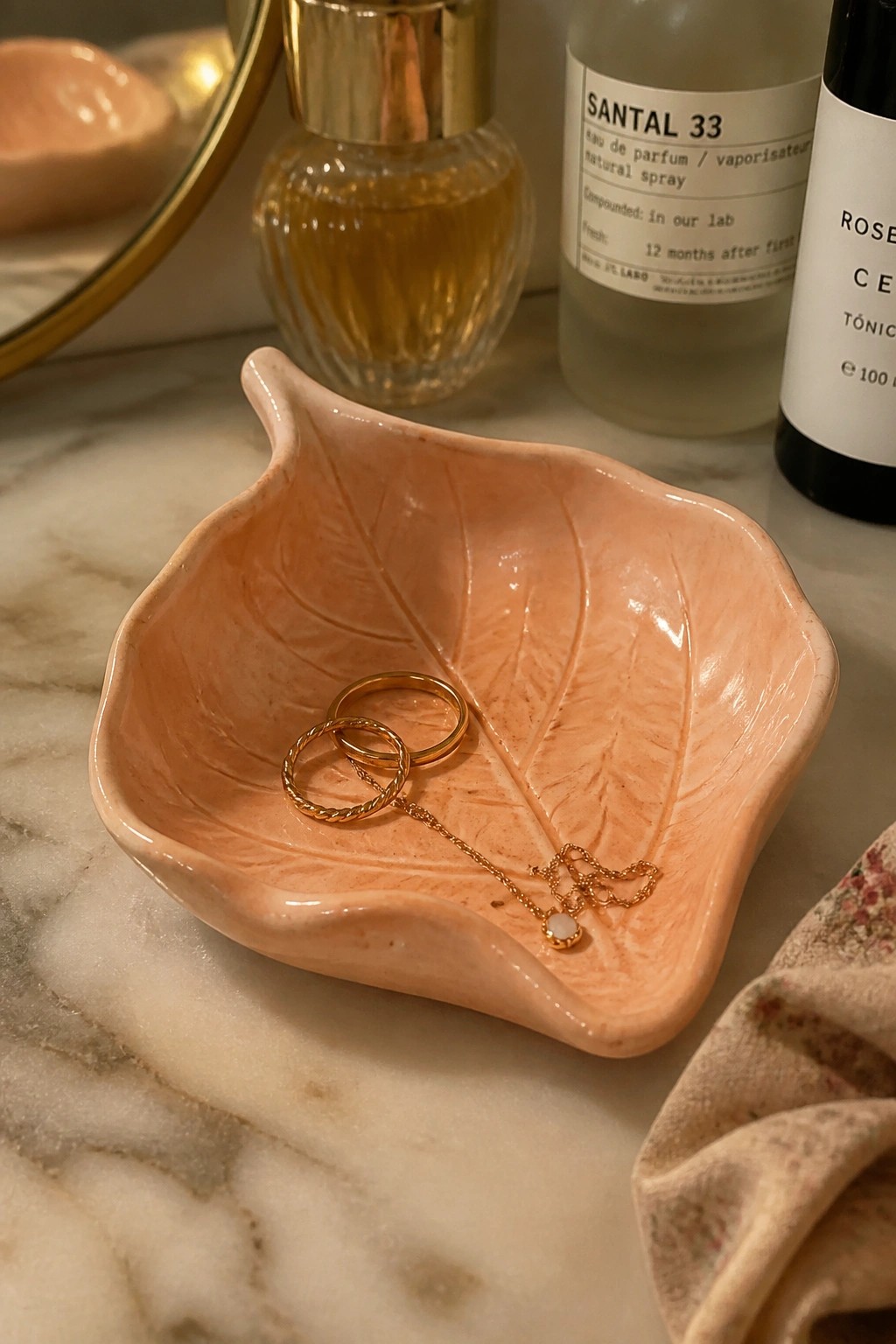
A leaf-shaped ceramic dish works well as a small ring dish or jewelry tray. The form follows the outline and vein structure of a leaf, with the clay shaped into a shallow basin and finished in a glossy warm glaze. This keeps the piece simple while giving it enough surface texture and curve to hold rings and chains without them sliding off.
What makes this idea useful is how the leaf shape can be scaled up or down depending on whether you want a bedside tray or a bathroom counter dish. You can press a real leaf into the clay for the vein detail or carve it by hand, then switch the glaze color to match other items in the room. The small size means it uses little material and works as a fast project that still reads as intentional rather than mass-produced.
Small Ceramic Pitcher with Running Glaze

A small ceramic pitcher serves as a practical kitchen pouring vessel for cream, milk, or sauces. The compact rounded body, short spout, and simple pulled handle keep the form easy to grip and store. Multiple earth-tone glazes applied over the surface run and merge during firing, producing irregular streaks and pooled areas that emphasize the handmade process rather than a uniform finish. This fits the category of functional kitchen ceramics where the glaze variation becomes the main design element.
What makes this idea useful is the modest scale, which lets the pitcher sit comfortably on a table or counter without taking much space. You could rework the same shape into a taller jug for water or shorten the spout for a small sauce boat. The running glaze effect works especially well on pieces meant for everyday use because it disguises minor surface marks over time. In a kitchen setting, pairing it with wooden boards and basic ingredients creates a straightforward, repeatable styling option for photos.
Tree Ring Wall Plaque
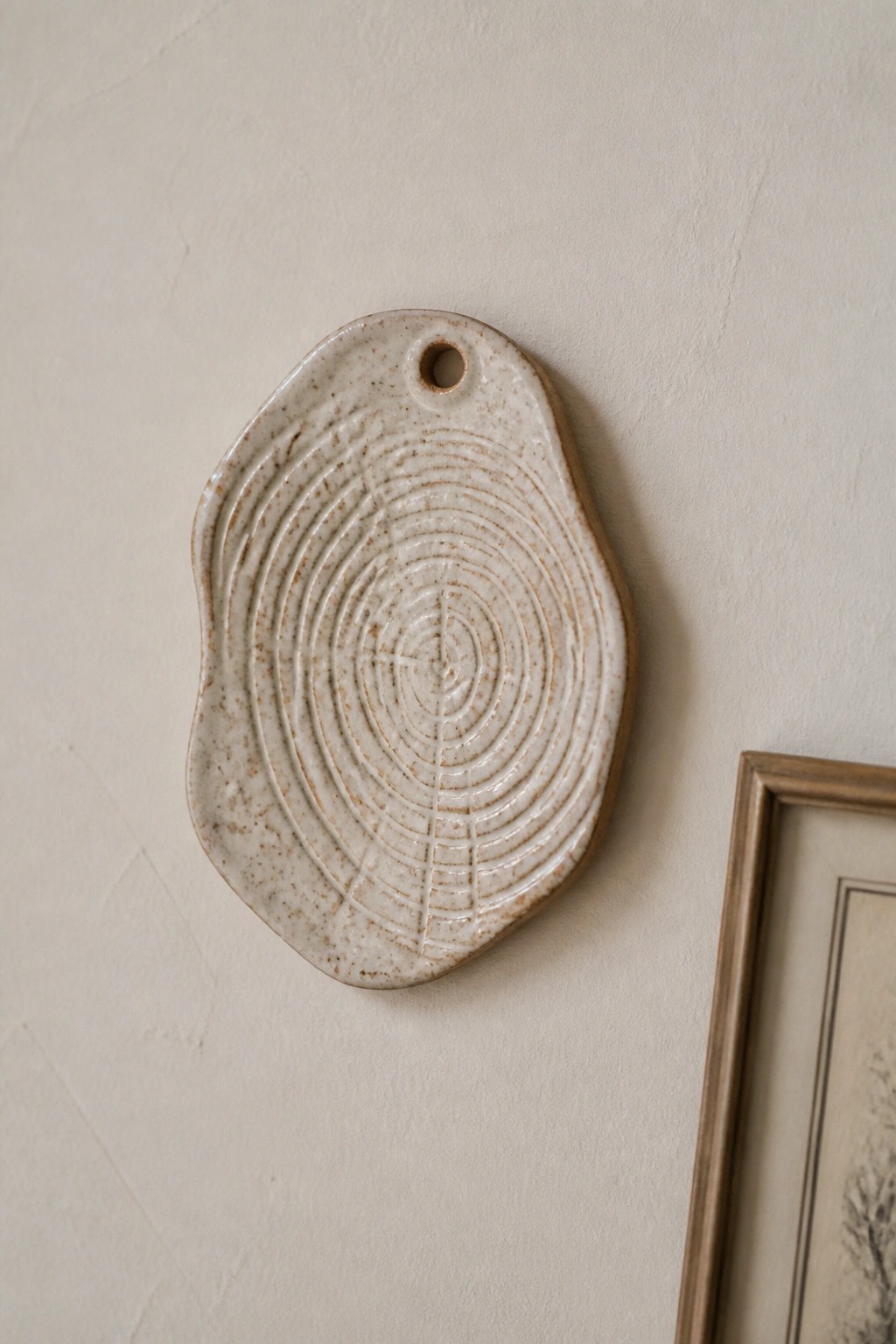
A flat ceramic plaque with an irregular oval outline makes a straightforward wall decor piece. Concentric grooves pressed into the surface create a radial pattern that echoes tree growth rings, and a single hole near the top allows simple hanging. The light speckled glaze sits in the grooves and across the raised areas to emphasize the texture without covering it completely. This approach keeps the focus on the carved motif and the uneven handmade edges rather than on symmetry or color.
What makes this idea useful is how the carved rings give the piece direction and scale without extra elements. You can repeat the same groove pattern on a smaller scale for a set of coasters or stretch it into a longer rectangle for a narrow shelf accent. The motif works on any flat form, so the same carving step applies to a tray or a larger hanging panel if you want more presence on a wall. The speckled glaze keeps the surface practical for dusting while letting the clay texture stay visible.
Compact Ceramic Pitcher with Textured Matte Finish

A small ceramic pitcher serves as a practical kitchen item for pouring cream, milk, or sauces. The rounded body tapers to an uneven spout with a thick looped handle attached on one side. The matte glaze varies slightly in tone across the surface and shows minor drips that highlight the handmade construction.
What makes this idea useful is how the simple shape doubles as a vase or small utensil holder with only minor changes to the rim. The compact size fits on crowded tables or open shelves without taking much space. You can rework the same proportions in different neutral glazes to match other dishes you already own. In a kitchen, this kind of piece keeps things functional while adding an organic form that feels less uniform than standard store-bought options.
Sponge Holder with Drainage Slots

A shallow rectangular ceramic tray serves as a sponge holder for the kitchen sink. The form includes several narrow slots cut into one long side so water can drain away from the sponge. An uneven rim and a mottled green-brown glaze give the piece an organic surface that shows the clay and firing marks clearly.
What makes this idea useful is how the drainage slots keep the sponge from sitting in water. The compact size fits on a narrow counter ledge or beside the sink without crowding the workspace. You could rework the same shape into a soap dish by changing the slot pattern or scale it up slightly for a scrub brush. The speckled glaze also pairs easily with other kitchen ceramics that share the same earthy palette.
Frequently Asked Questions
What is the best clay for creating organic Wabi-Sabi ceramics with imperfect forms?
Stoneware or earthenware clays with high grog content work well because they allow for natural warping and texture during drying and firing. Start with a medium plasticity clay that you can hand build or throw loosely on the wheel without forcing symmetry. Avoid porcelain as it tends to be too refined and cracks unpredictably. Experiment by adding sand or paper pulp to the clay body to encourage organic cracks and uneven shrinkage that enhance the Wabi-Sabi feel.
How do I prevent my imperfect ceramic pieces from looking unfinished or sloppy?
Focus on intentional asymmetry by planning where you want variations in wall thickness or rim shape before you begin forming the piece. Use simple hand building methods like pinching or coiling and stop refining once the form feels alive rather than perfect. After bisque firing apply matte or ash glazes unevenly so some areas remain unglazed to highlight the raw clay. This approach keeps the work looking thoughtfully imperfect instead of careless.
What glazing techniques suit organic Wabi-Sabi ceramics best?
Choose low sheen or matte glazes such as shino or celadon that break and pool naturally over textured surfaces. Apply them with a brush in loose strokes or dip only part of the piece to leave areas of exposed clay. Fire in a wood or soda kiln if possible since these methods create unpredictable flashing and drips that complement imperfect forms. Test small batches first to see how the glaze interacts with your specific clay and firing temperature.
How can I use these imperfect ceramic pieces in everyday home settings?
Place them where their organic shapes can interact with light and surroundings such as on a windowsill with plants or as vessels for simple flower arrangements. Use larger bowls for fruit or keys and smaller cups for tea to make them functional. Group several pieces together in odd numbers so their varying heights and textures create a balanced yet natural display. This keeps the focus on their quiet beauty without needing to hide any irregularities.
What maintenance do Wabi-Sabi ceramics require to last over time?
Hand wash these pieces with mild soap and avoid dishwashers or microwaves if the clay is porous or the glaze is matte. Dry them thoroughly after washing to prevent moisture from settling into any natural cracks. Store them away from direct heat sources that could cause further warping. Over time small chips or stains can add to their character so embrace gentle use rather than trying to restore them to like new condition.

Pottery Path is my cozy corner of the internet where I share clay ideas, pottery inspiration, and simple projects you can recreate at home. I love exploring everything from air dry clay to handbuilt pottery to cute minis that brighten your day. My goal is to make clay crafting feel easy, fun, and welcoming for anyone who wants to try it.
You will find beginner friendly tutorials, creative pottery painting ideas, and lots of warm inspiration for slow and happy crafting. If you enjoy hands on creativity, this space will feel like home.