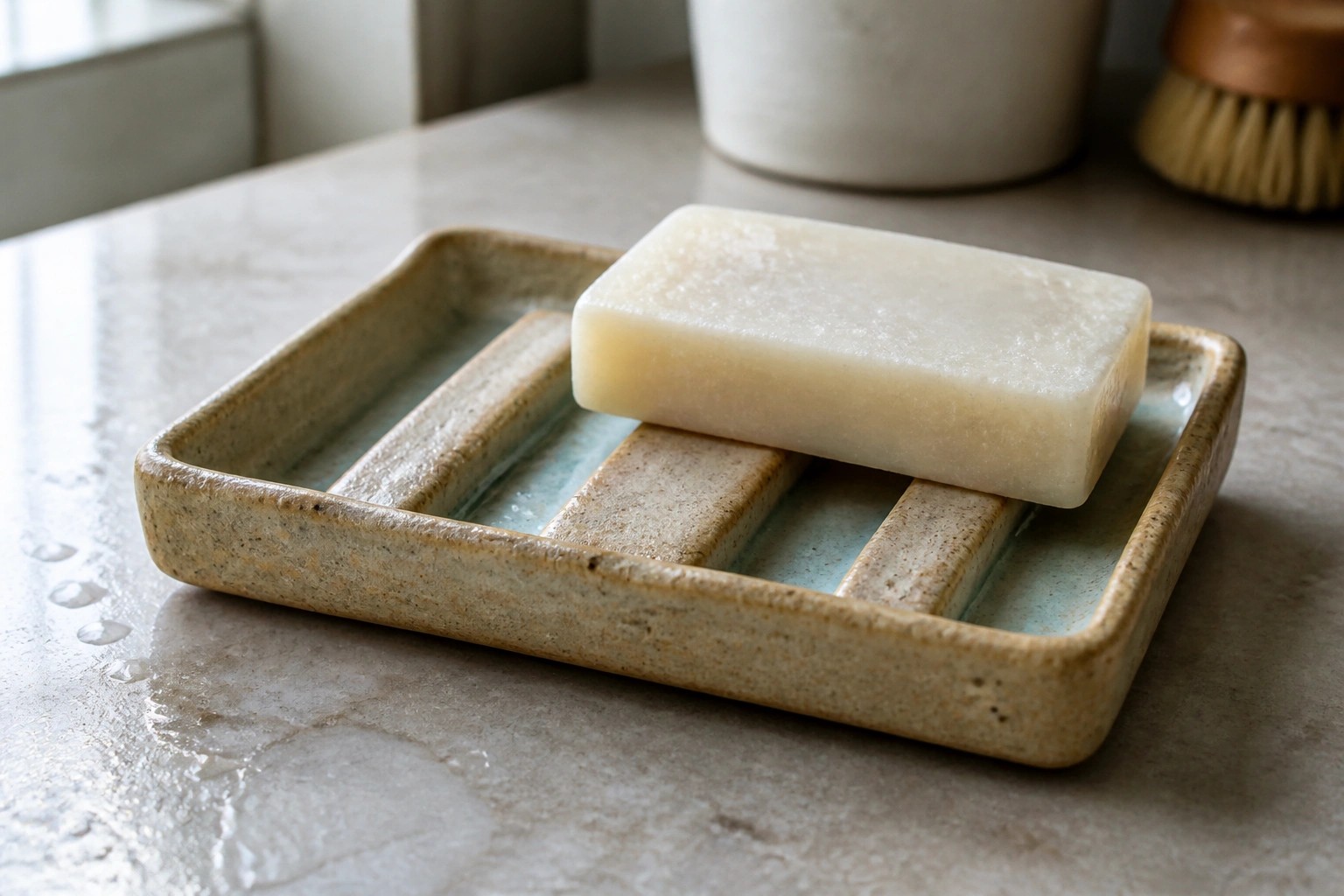
I’ve been making pottery for a while and often find myself needing small practical pieces around the kitchen and bathroom.
It seemed useful to figure out some simple shapes that could work as soap dishes or spoon rests without taking too much time on the wheel.
Over the past few months I tested a handful of designs that hold up well in daily use.
Most of them are basic forms that don’t require special tools or glazes.
Here are the ones that turned out to be the most reliable.
Slotted Rectangular Soap Dish
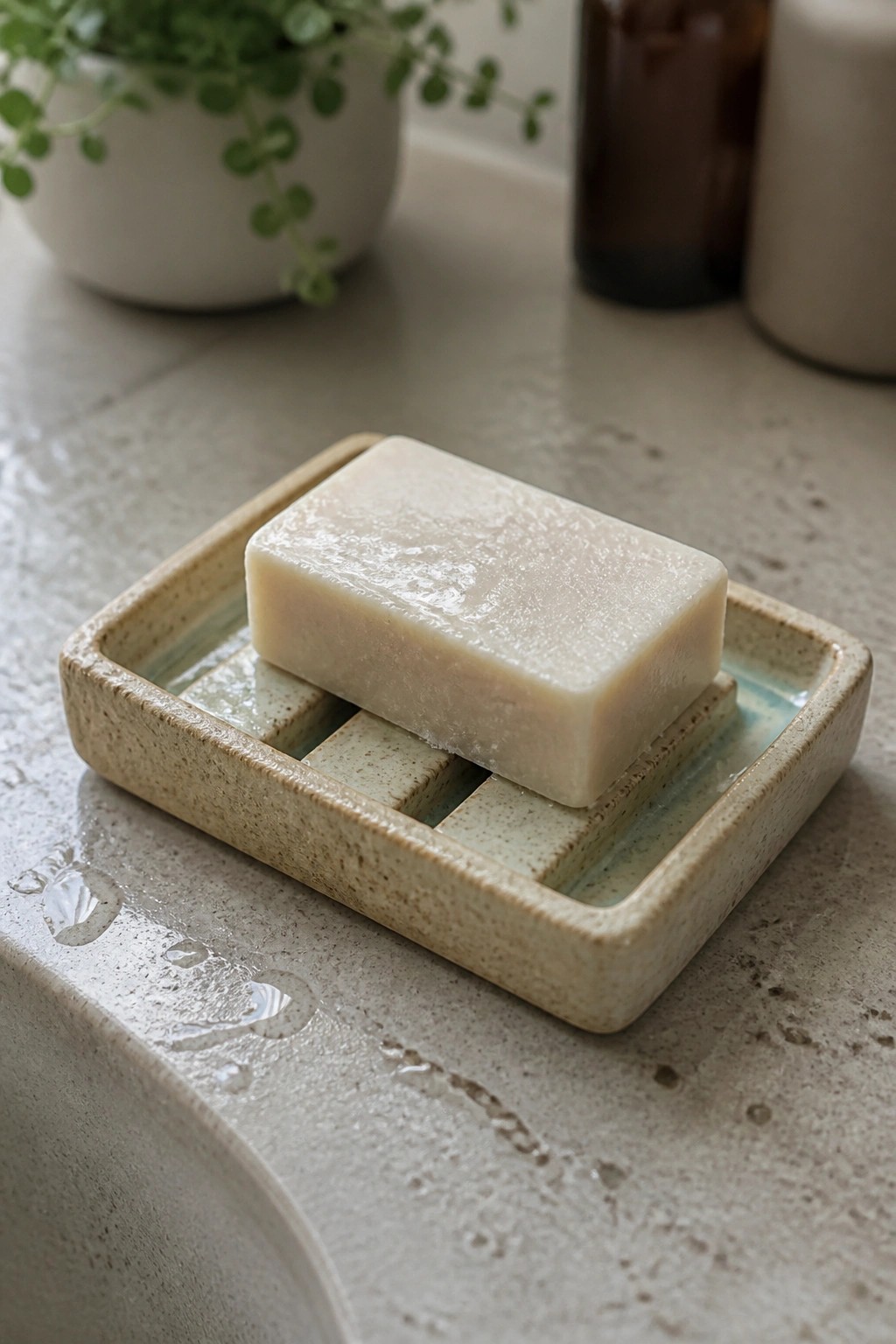
A rectangular ceramic soap dish with raised bars and open drainage slots holds a bar of soap above standing water. The speckled beige clay body and soft turquoise interior glaze give it a clean, neutral finish that works in most bathrooms. This project fits the bathroom item category and solves the practical issue of soap staying wet on flat surfaces.
What makes this idea useful is the built-in drainage that keeps counters drier without extra accessories. You could adapt the same slotted base to a longer tray for multiple soaps or shorten the walls to make a simpler spoon rest. In a bathroom, this shape fits easily on sinks or shower ledges and pairs well with plain or lightly textured bars. For a gift, the design works with minimal glaze changes to match different color schemes.
Lemon Painted Spoon Rest
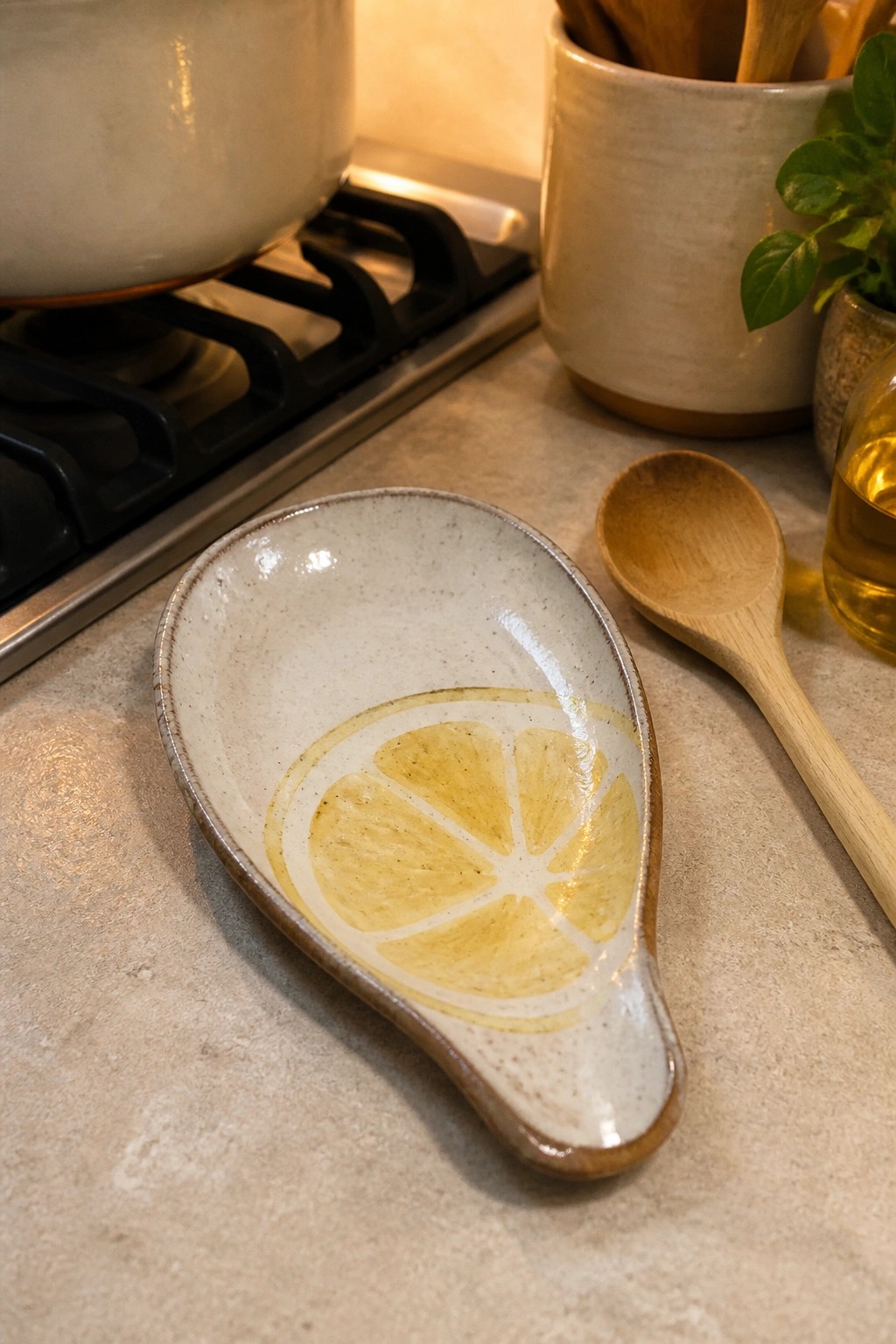
A teardrop-shaped ceramic spoon rest uses a simple hand-painted lemon slice in soft yellows and whites over a speckled glaze. The oval form gives the piece a slight dip that holds a spoon steady without rolling, while the citrus motif keeps the design tied to kitchen use. This approach turns a basic slab or pinched form into a practical holder that sits flat on a countertop.
The shape does a lot of the work here because the narrow end tapers naturally to fit beside a stove or cutting board. You could swap the lemon for other fruits or just a single color band and still keep the same function. In a kitchen this size works well for everyday spoons without taking up much space, and the same teardrop outline could be scaled down into a small soap dish or lengthened into a narrow tray for utensils.
Divided Ceramic Tray With Three Glazed Sections
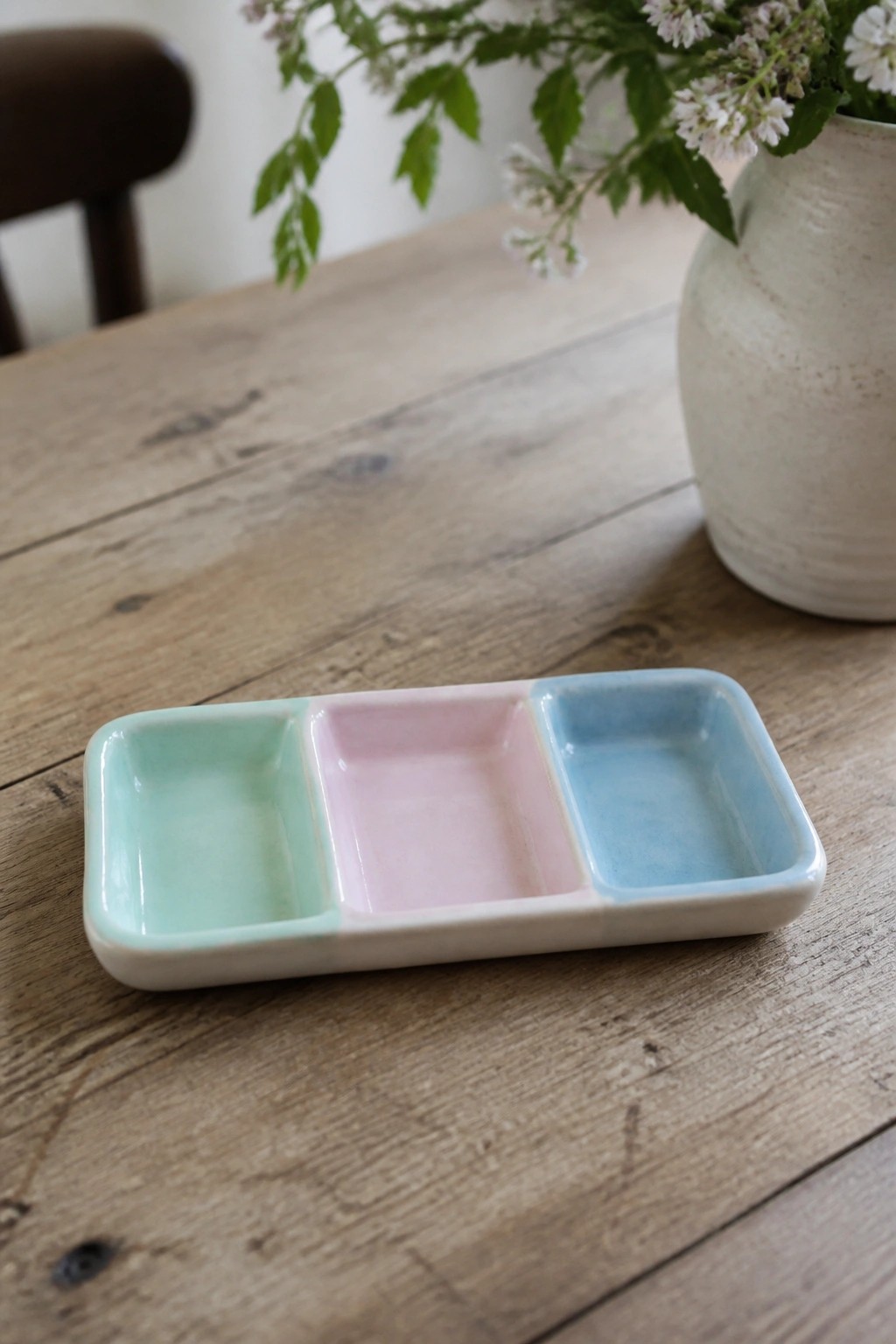
A rectangular clay tray divided into three equal sections creates separate spaces for small items. Each compartment receives its own soft glaze in mint green, pink, or light blue, while the outer edges remain white. The simple rectangular form and color blocks keep the piece functional and easy to place on a flat surface.
What makes this idea useful is the divided layout that holds multiple small objects without mixing them together. The same shape works well on a bathroom counter for jewelry or on a kitchen table for loose tea bags and spoons. You could lengthen the tray for more sections or drop one divider to make a two-part version for soap and a sponge. Changing the glaze colors lets you match it to different rooms or gift sets.
Scalloped Shell Soap Dish

A scalloped shell soap dish formed from clay keeps a bar of soap raised and dry while catching drips in the center well. The wavy rim and ridged texture inside come from shaping the clay to mimic a shell before applying glaze. A streaky blue glaze over a lighter base gives the surface a watery look that suits bathroom use. This project falls into the bathroom item category for functional soap dishes.
What makes this idea useful is how the shell shape works as both a holder and a subtle decor piece without extra parts. You could adapt the same form in a shallower version for a spoon rest or change the glaze to match tile colors in the room. For a gift, something like this pairs well with a bar of soap and takes little shelf space. The small overall size makes it easy to try on a wheel or with hand-building methods.
Elongated Ceramic Spoon Rest with Bowl End

This spoon rest is a long, narrow ceramic tray with one end widened and deepened into a shallow bowl shape. The form lets the spoon head sit securely while the handle rests along the tapered trough. A mottled green glaze with brown speckles covers the surface and gives the piece a simple kitchen look. It fits the spoon rest category and works as a dedicated spot for cooking utensils.
The shape does a lot of the work here by keeping the spoon stable without needing extra supports. Make the trough a bit shorter to fit smaller spoons or stretch it longer for ladles. In a kitchen this kind of piece sits right on the stovetop or counter and catches drips during cooking. You could repeat the same idea in different glaze colors to match existing dishware or turn the bowl end into a small soap dish for a bathroom version.
Oval Ceramic Catch-All Tray

An oval ceramic tray with a marbled white and gray glaze gives you a simple way to keep small items together on a surface. The low sides and elongated shape make it easy to drop in glasses, coins, or keys without them sliding off. The smooth, non-porous surface handles daily use and wipes clean quickly. This kind of tray fits the catch-all category and works as a practical alternative to buying a mass-produced version.
The shape does a lot of the work here because the length accommodates items like reading glasses that do not fit well in round dishes. You could scale the same form down for a nightstand version or widen it slightly for a bathroom counter to hold soap and a razor. The marbled glaze effect also translates easily to other colors if you want it to match different rooms. For a gift, something like this stays useful without taking up much space.
Ridge Soap Dish for Bathroom Counters

A handmade ceramic soap dish formed as a shallow oval tray with five raised bars running across the center. The bars lift the soap off the base so water drains through the gaps and the bar of soap stays drier between uses. Small feet underneath add extra height and keep the tray from sitting directly on wet surfaces. The earthy green glaze and simple shape make it a straightforward bathroom item that pairs with basic sinks and counters.
What makes this idea useful is the built-in drainage that solves a common soap problem without extra hardware. You can adapt the same oval form and bar layout for a longer spoon rest in the kitchen or shorten it into a small holder for scrub brushes. The feet and open ridges keep the design practical while still working as a compact tray. For a gift, repeat the shape in a different glaze color to match towels or tile in someone else’s bathroom.
Ceramic Spoon Rest with Painted Carrots

A rectangular ceramic tray works as a spoon rest when it has a flat, stable surface and slightly raised edges to keep utensils from sliding off. The cream glaze provides a clean base for simple orange carrot shapes with green tops that are painted directly onto the clay. This approach keeps the project in the kitchen item category while using basic painted details to make the piece feel intentional rather than plain.
What makes this idea useful is how the same rectangular form can be repeated with different painted motifs like herbs, radishes, or abstract lines to match other kitchen styles. The compact size lets it sit beside a stove or on a prep counter without crowding the workspace. You could scale the shape up slightly for a larger tray or shorten it into individual spoon rests if you want multiple pieces for gifting.
Slotted Tray for Multiple Spoons

A long rectangular ceramic tray with three parallel grooves works as a spoon rest that holds several utensils at once. The raised dividers keep the spoons from touching each other, while the small oval well at one end can catch drips. The speckled off-white glaze and simple form make it read as a practical kitchen piece rather than a decorative accent.
What makes this idea useful is how the slots organize spoons by size or material without needing extra space on the counter. You could shorten the tray to hold just two spoons or widen the grooves slightly for larger serving pieces. In a kitchen this shape keeps things clean during cooking, and the same layout adapts easily to holding paintbrushes, makeup brushes, or tasting spoons.
Hanging Ceramic Soap Dish
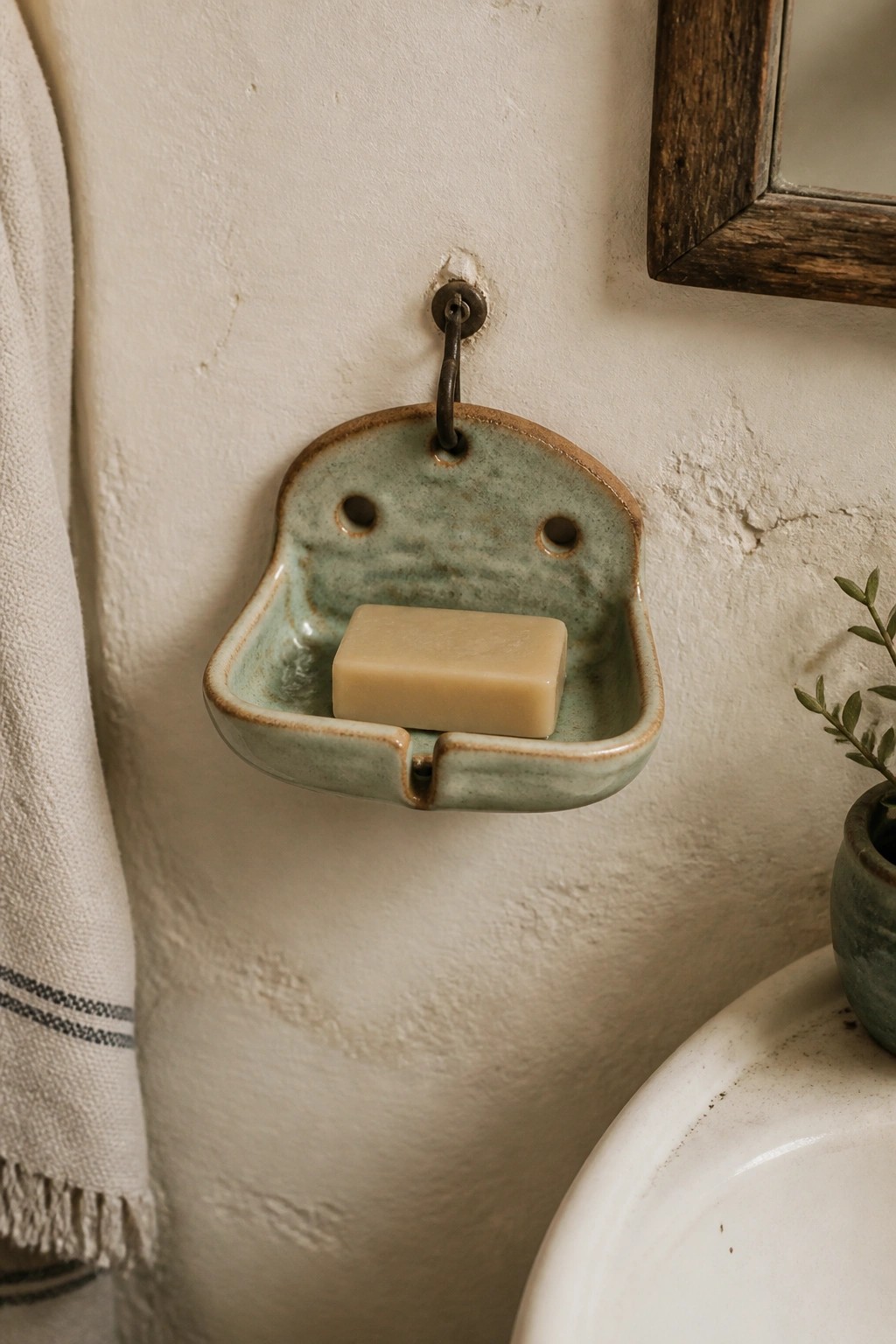
A wall-mounted soap dish formed from clay offers a practical bathroom item when built with a loop at the top for hanging on a hook. The shallow curved basin holds a standard bar of soap while the lower notch and back holes allow water to drain away from the surface. A speckled green glaze with brown rim accents gives the piece a finished look that still reads as handmade pottery rather than a store-bought plastic holder.
What makes this idea useful is how cleanly it solves the problem of soap sitting in water on a counter. The same hanging shape could be scaled down for a small sponge holder or widened into a shallow tray for bathroom accessories. Changing the glaze to a solid matte white or adding a second hanging point would let the design adapt to different wall surfaces or tile colors. For a kitchen version, the basic form could be reworked into a spoon rest by flattening the front edge slightly.
Leaf-Shaped Ceramic Spoon Rest
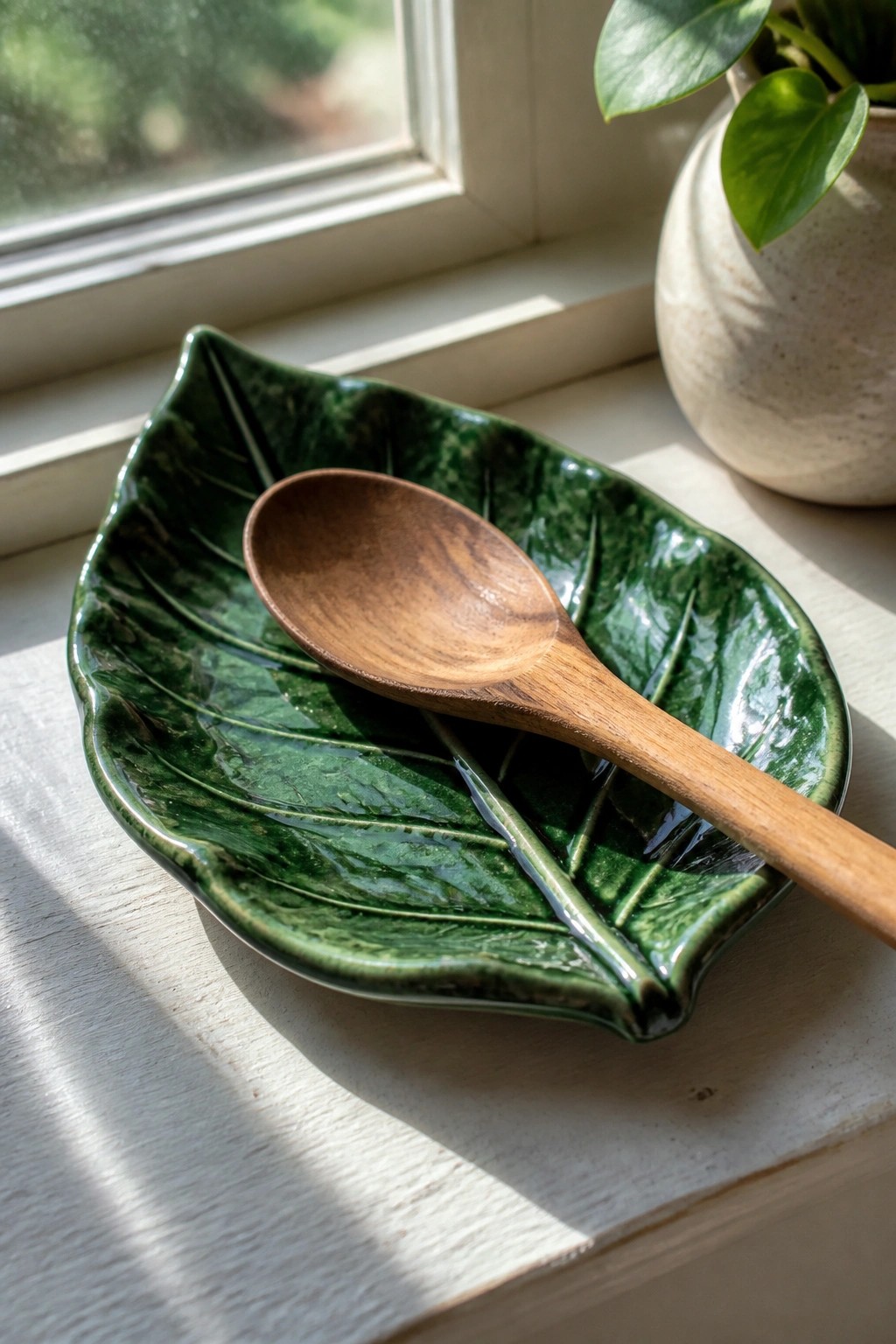
A leaf-shaped ceramic spoon rest gives you a dedicated spot to set cooking utensils without marking the counter. The molded veins and glossy green glaze create a simple natural form that doubles as a small tray. This project fits the spoon rest category and keeps the piece compact enough for daily kitchen use.
What makes this idea useful is how the tapered leaf shape guides the spoon handle outward for quick access. You could adapt the same form into a soap dish by adding a shallow rim or swap the glaze color to match other kitchen pieces. In a kitchen this kind of tray stays practical near the stove and takes up little space on the counter.
Oval Ceramic Tray for Breakfast Serving
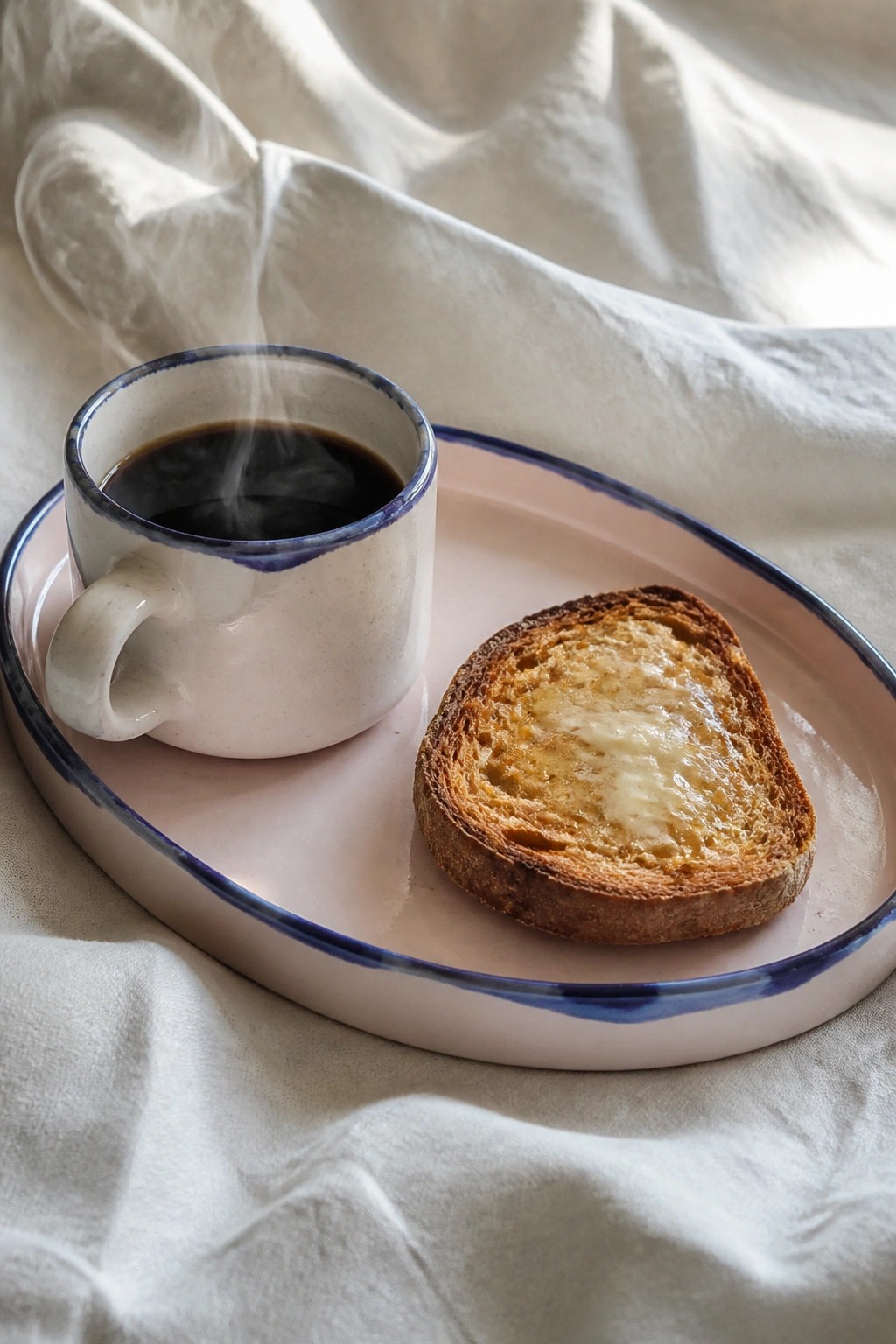
A small oval tray formed from clay creates a simple surface for keeping a mug and slice of toast together. The design pairs a matte pink base with a darker blue rim that repeats on the matching cup, giving the set a coordinated but understated look. This project falls into the tray category and works as a kitchen or table item rather than a decorative accent alone.
What makes this idea useful is the oval shape that holds two or three items without taking much table space. You can adapt the rim color to match plates or mugs you already own, or scale the same form into a longer version for spoons and small utensils. In a kitchen this kind of piece keeps morning items from spreading across the counter, and the same tray shape could be reworked without the rim for a plainer spoon rest.
Speckled Soap Dish with Drainage Holes

A basic oval soap dish formed from speckled clay with blue flecks gives bar soap a place to rest while water drains through small holes in the base. The dish sits slightly raised so air can move underneath and keep the soap from staying wet. Stacking a second identical dish underneath catches drips and adds a bit of height on the counter or ledge.
What makes this idea useful is how the holes directly address the problem of mushy soap without adding extra parts. The speckled surface hides water spots and works in most bathroom color schemes. You could simplify the shape to a rectangle or scale it down for a small ring dish. This same drainage approach also translates to a spoon rest or a tray for small tools on a workbench.
Donut-Shaped Spoon Rest
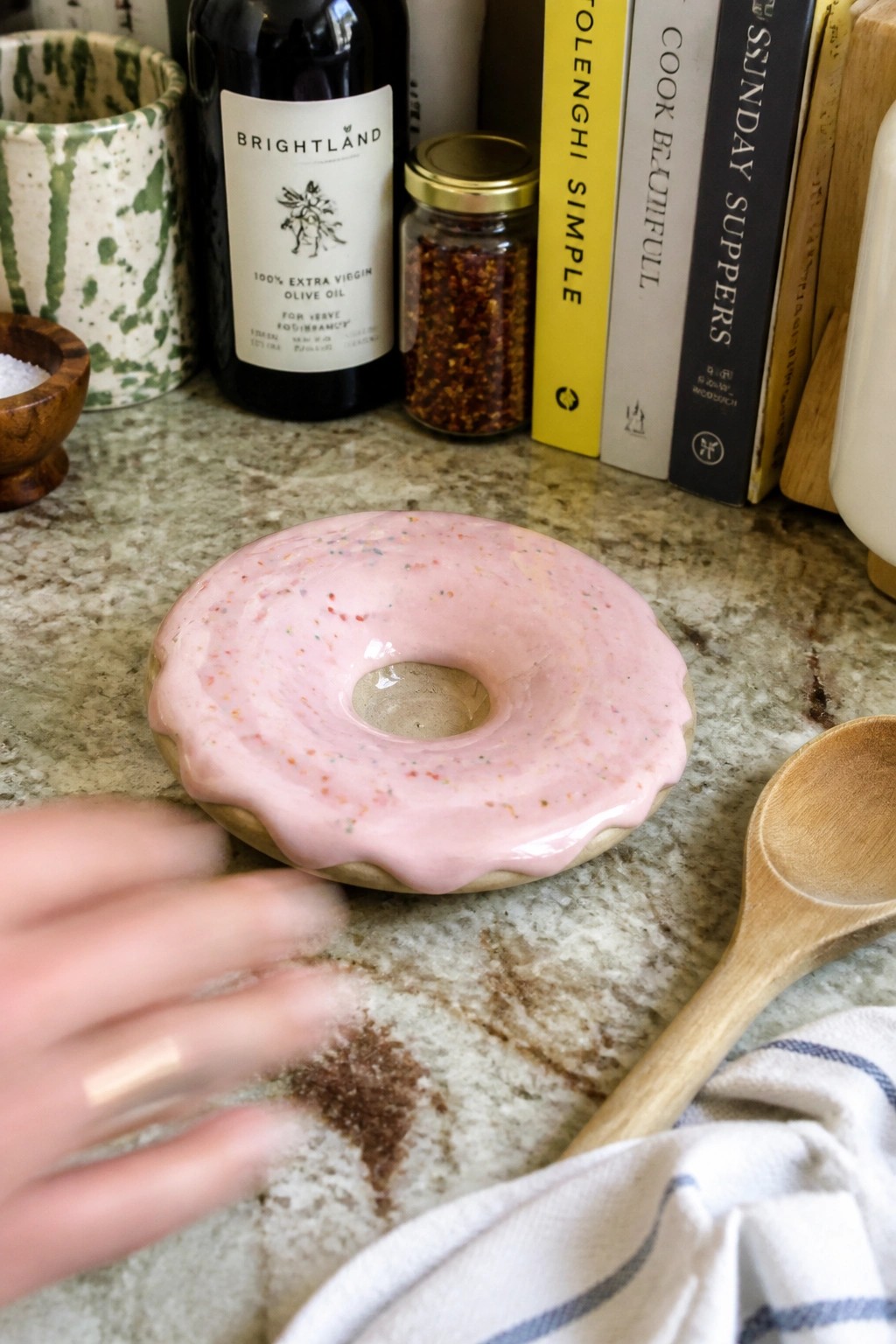
A donut-shaped clay piece works as a spoon rest by using the central hole to hold the spoon handle while the wide rim catches drips. The pink glaze and scattered speckles create a simple visual reference to a frosted donut without adding extra sculpted details. The low, flat profile keeps it stable on a countertop and easy to wipe clean after use.
What makes this idea useful is the built-in hole that stops spoons from rolling away, something a standard round dish lacks. You could switch the glaze color to match your kitchen or skip the speckles for a cleaner look that still reads as a donut. Scale the same form down for a smaller rest or widen the rim slightly if you want it to double as a tiny tray for tea bags. In a kitchen, the shape stands out on Pinterest because it turns a basic functional object into something recognizable at a glance.
Ceramic Tray with Pressed Flower Border

A rectangular ceramic tray with raised sides and a repeating flower motif sculpted along the rim works well as a vanity organizer. The design includes a small round matching dish that sits inside the tray to hold rings or other small items. The off-white glaze and low-relief flower details give the surface enough texture to look intentional while staying neutral enough to fit most bathroom or dresser setups. This approach falls into the tray category for keeping bottles and jewelry contained in one spot.
What makes this idea useful is the way the border pattern adds interest using only a simple press or stamp instead of painting or carving. You could adapt the same rim detail to a longer soap dish or a shallow spoon rest by stretching the shape. On a bathroom counter the tray stops bottles from shifting around on smooth surfaces. For a gift version, keep the tray the same size and nest the ring dish inside so the recipient gets a ready-to-use set.
Footed Soap Dish in Speckled Clay

A low oval soap dish formed from clay works well as a bathroom item because the three small feet lift the base and let water drain away from the bar. The irregular rim and speckled brown glaze create a simple textured surface that hides minor imperfections while still looking intentional. This shape stays compact enough to sit beside a sink without taking up extra counter space.
What makes this idea useful is the built-in lift from the feet, which keeps the soap from sitting in a puddle. You could scale the same form down for a smaller ring dish or stretch it into a longer tray for toothbrushes. The earthy glaze also pairs easily with wood counters or stone sinks, so the piece blends in without extra decoration.
Wavy Glaze Rectangular Tray
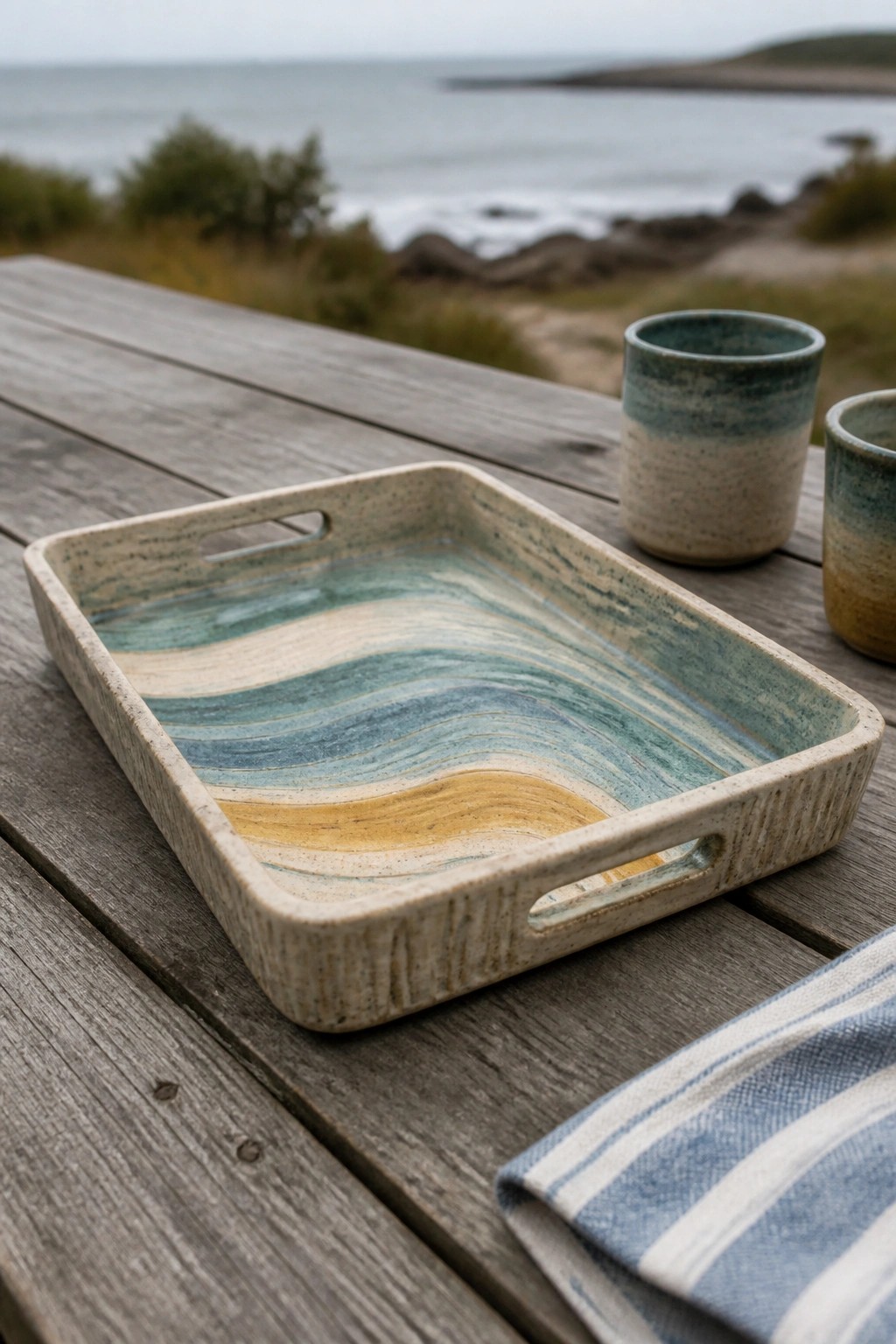
A rectangular ceramic tray with cutout handles offers a simple shape that works for serving, organizing, or display. The surface uses flowing horizontal bands of blue, teal, and ochre glaze to create a wave-like pattern across the base. This keeps the form functional while the glaze movement adds the main visual detail. It belongs in the tray category for kitchen or tabletop use.
What makes this idea useful is how the striped glaze pattern can be scaled down for a soap dish or spoon rest by shortening the rectangle and repeating fewer lines. The cutout handles make it easy to carry without adding separate parts, and the neutral clay rim helps the colors stay contained. You could rework the same wave motif on a round tray or a longer version for a plant stand base.
Frequently Asked Questions
What type of clay works best for soap dishes that will be exposed to water daily?
Stoneware clay is an excellent choice because it becomes dense and nonporous after firing at high temperatures. This helps prevent water absorption and reduces the chance of cracking. Beginners can start with a mid-range stoneware that fires to cone 6 for good durability without needing specialized equipment.
How can I make sure my pottery spoon rests stay in place on the counter?
Add a textured pattern or small feet to the bottom of the spoon rest before the final firing. You can press a stamp or fabric into the clay while it is leather hard to create grip. Avoid glazing the underside so the natural clay surface provides friction against smooth counters.
What glaze should I use if the tray might hold food items or utensils?
Choose a food-safe glaze that has been tested and labeled as such by the manufacturer. Apply it only to the interior surfaces and fire according to the recommended cone. Always run a lemon juice test on a sample piece after firing to confirm it does not leach.
How do I choose the right size for a soap dish that fits standard bar soaps?
Measure a typical bar of soap at about three by two inches and add at least half an inch of clearance on all sides. Create a shallow well or raised edges so the soap does not slide off. Test the size with a real bar before the final drying stage to avoid adjustments later.
What is the easiest way to care for handmade pottery trays to keep them looking new?
Wash them by hand with mild soap and a soft sponge rather than using a dishwasher. Dry them completely after each use to prevent water spots. Store them away from extreme temperature changes and avoid stacking heavy items on top to reduce the risk of chips.

Pottery Path is my cozy corner of the internet where I share clay ideas, pottery inspiration, and simple projects you can recreate at home. I love exploring everything from air dry clay to handbuilt pottery to cute minis that brighten your day. My goal is to make clay crafting feel easy, fun, and welcoming for anyone who wants to try it.
You will find beginner friendly tutorials, creative pottery painting ideas, and lots of warm inspiration for slow and happy crafting. If you enjoy hands on creativity, this space will feel like home.