
I always feel like refreshing my pottery pieces when spring comes around.
The flowers starting to bloom and the new leaves on the trees give me ideas for simple designs to paint.
I put together some of my favorite ones here that focus on those natural elements.
They are mostly easy patterns that don’t require a lot of skill.
I hope you find one that works for your own projects.
Green Glazed Mug with Daisy Interior
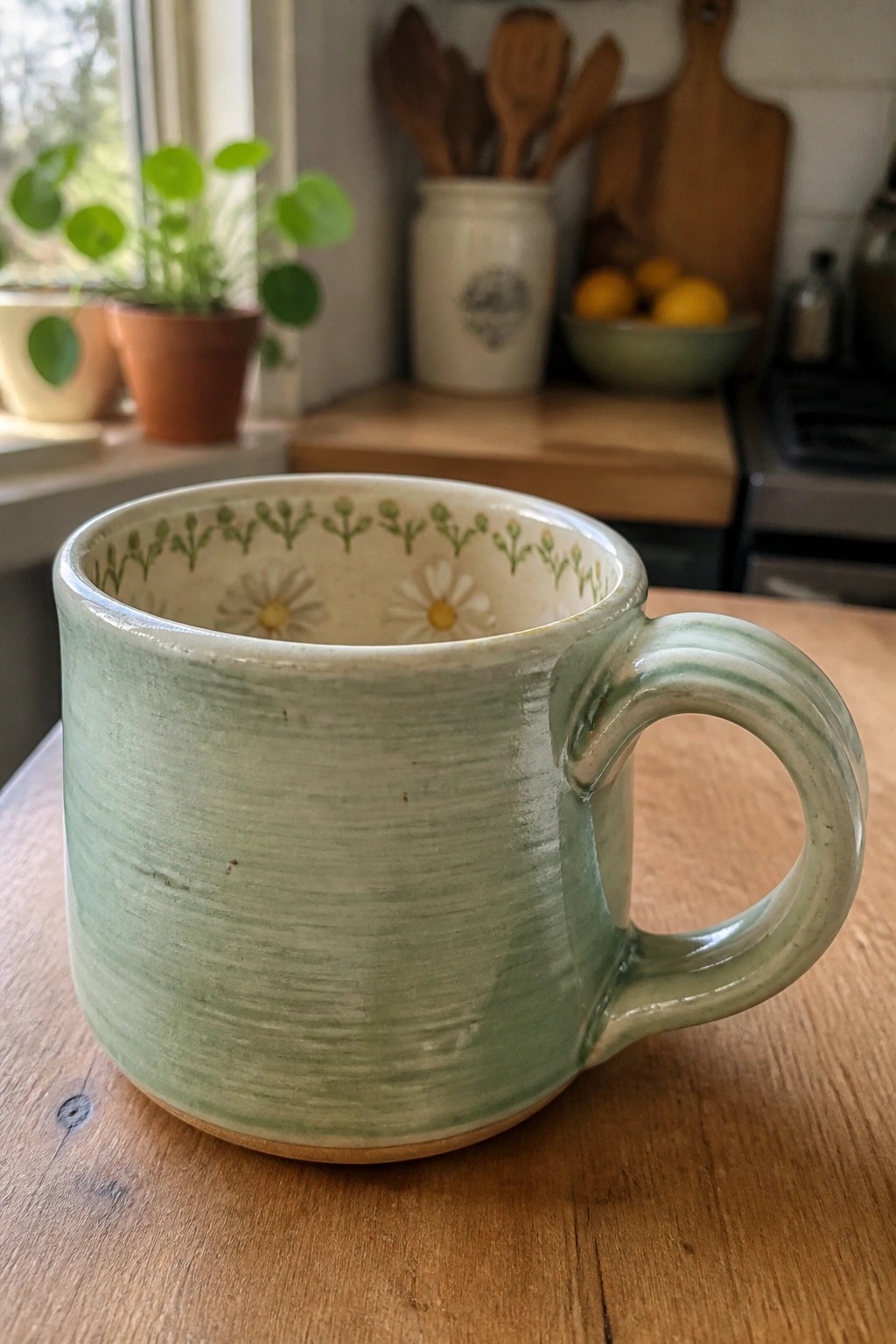
A ceramic mug with a soft green exterior glaze uses a white interior to hold two painted daisies and a narrow border of repeating green flowers and leaves around the rim. The design stays limited to the upper half so the flowers remain visible without covering the whole surface. This keeps the mug simple to use while adding a clear flower motif that fits spring themes.
The shape does a lot of the work here because the standard mug size makes the piece practical for daily coffee or tea without extra bulk. You could adapt the same border pattern to a smaller espresso cup or a cereal bowl by tightening the spacing between the leaves. In a kitchen this kind of piece works well stacked on open shelves where the green exterior shows while the interior detail only appears during use. For a gift the design stays easy to personalize by swapping the daisies for another simple flower like violets or clover.
Boot Vase with Painted Plant Sprigs
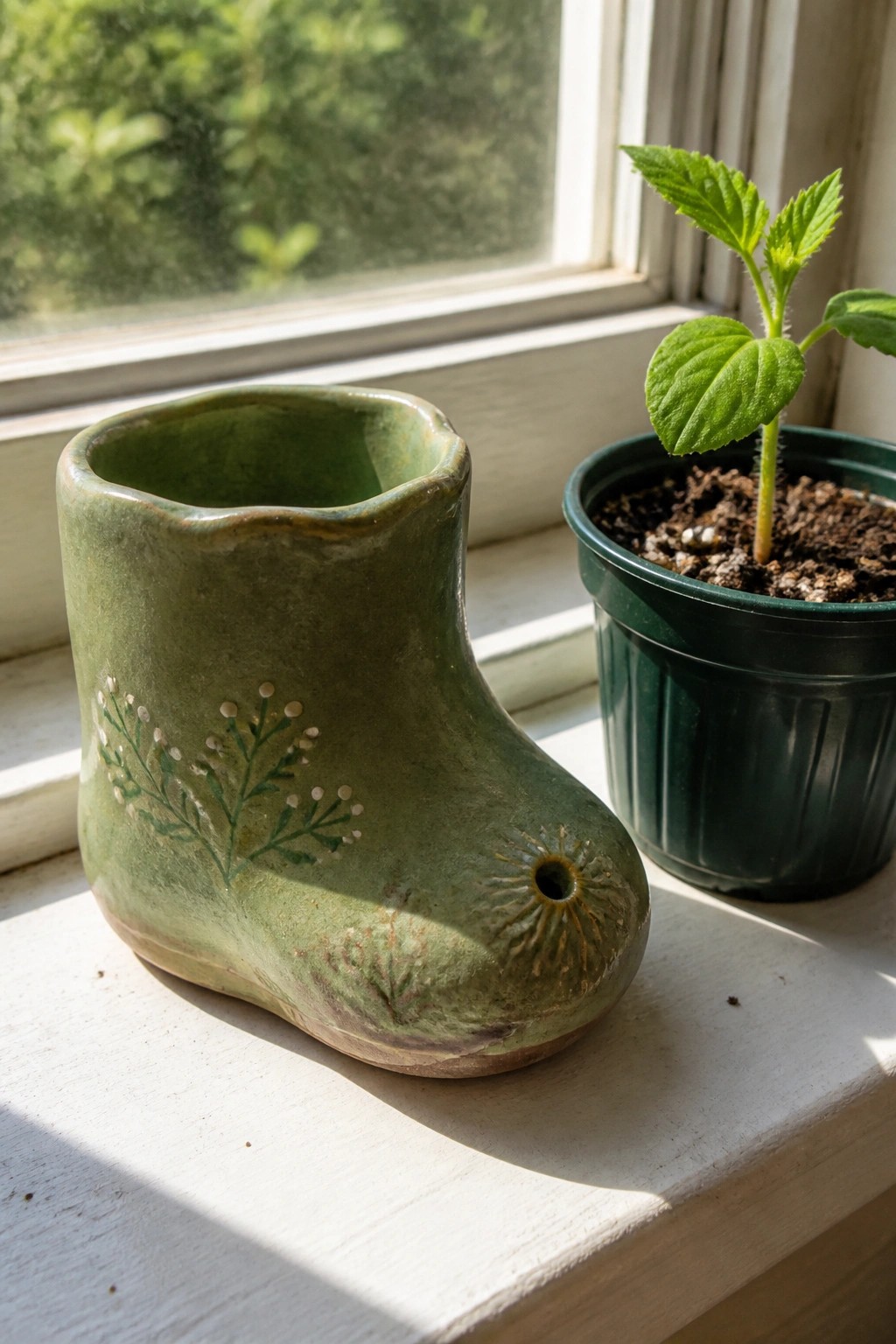
A small ceramic boot works as a compact vase or holder for a single stem or small bouquet. The green glaze covers the form while simple botanical motifs in lighter green and white are painted along the side and front. A small opening near the toe adds a detail that echoes the growth theme. This approach fits the vase category and keeps the focus on spring plant illustrations rather than complex surface carving.
The shape does a lot of the work here by giving a clear surface for repeating plant motifs without needing a large piece. You could paint the same sprigs on a mug or small pitcher and keep the same color palette. The size makes it easy to place on a shelf or windowsill where it can sit beside real seedlings. For a gift this idea translates well because the painted details can be adjusted to match whatever plants are currently growing in your space.
Yellow Vase with Incised Vine Pattern
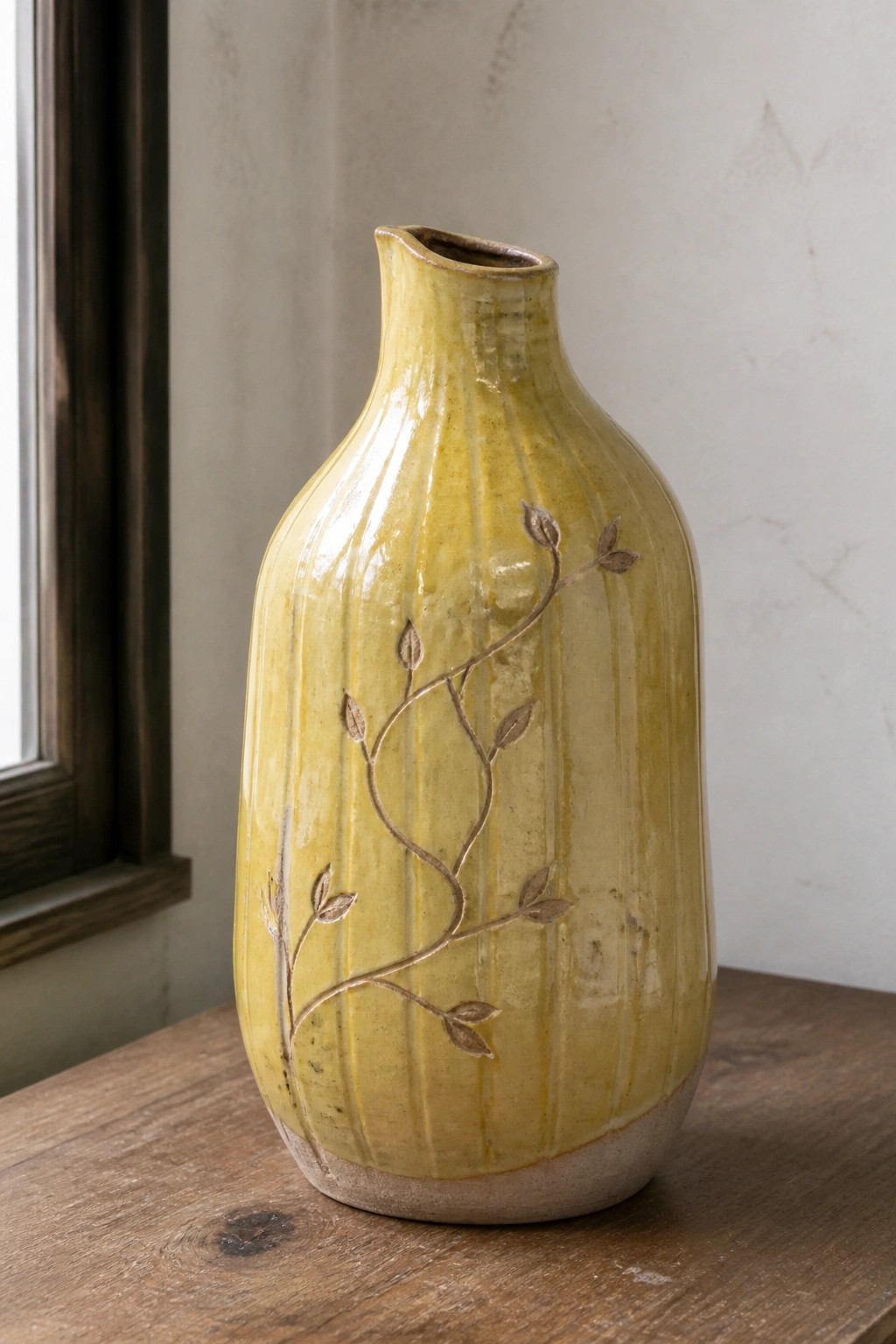
A ceramic vase with vertical ridges gives this spring project a built-in guide for placing the design. The idea centers on a curving vine with small leaves that runs across the body in a lighter tone against the yellow-green glaze. The narrow neck and wider lower section create a simple shape that keeps the vine visible without crowding. This approach works as a straightforward way to add a growth motif using basic carving or painting on a ready-made or hand-built form.
What makes this idea useful is how the vine can be shortened or lengthened to fit other vase heights or even a pitcher shape. The ridges make it easier to keep the line steady when you are working around the curve. You could swap the yellow glaze for a lighter base if you want the vine to show more contrast or keep the same color family for a subtler look. A piece like this stands out on a mantel or side table because the color and pattern read clearly from a distance.
Scalloped Floral Ring Dish
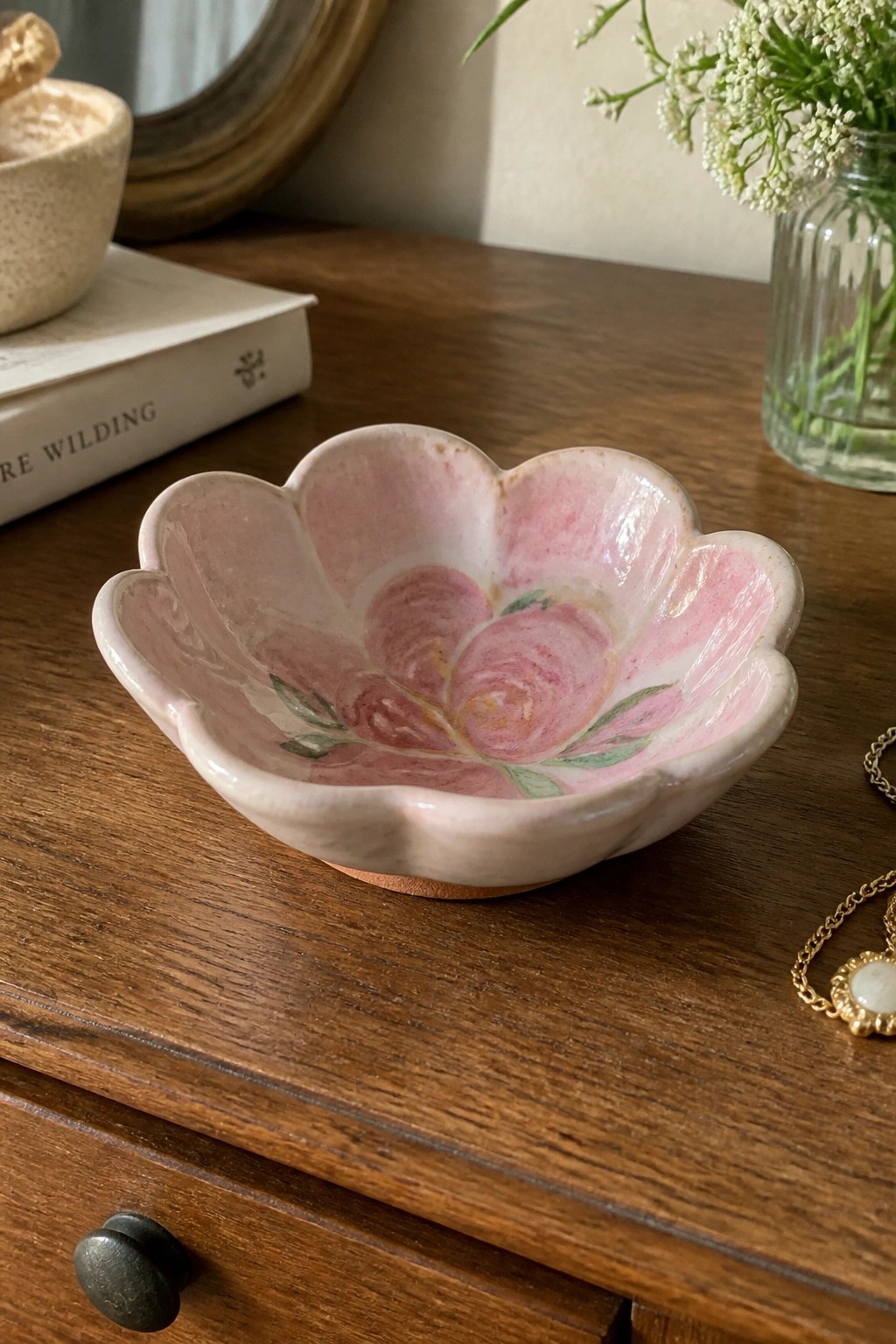
A small ceramic dish with a scalloped rim makes an effective ring holder when the interior is painted with a single large flower. The soft pink brushwork and simple green leaves fill the curved surface without crowding it, while the petal-shaped edge echoes the painted bloom. This approach turns a basic bowl form into a focused decorative piece that stays compact enough for daily use.
What makes this idea useful is how the shape itself supports the painted motif, so you can keep the design to just one flower and still have it read clearly. The small scale works well on a dresser or bathroom counter for holding jewelry or small items. You could rework the same flower painting onto a flat tray or the base of a mug if you want a different function, or swap the pink for other seasonal colors to match different rooms.
Relief Floral Plaque Built Around a Seed Base
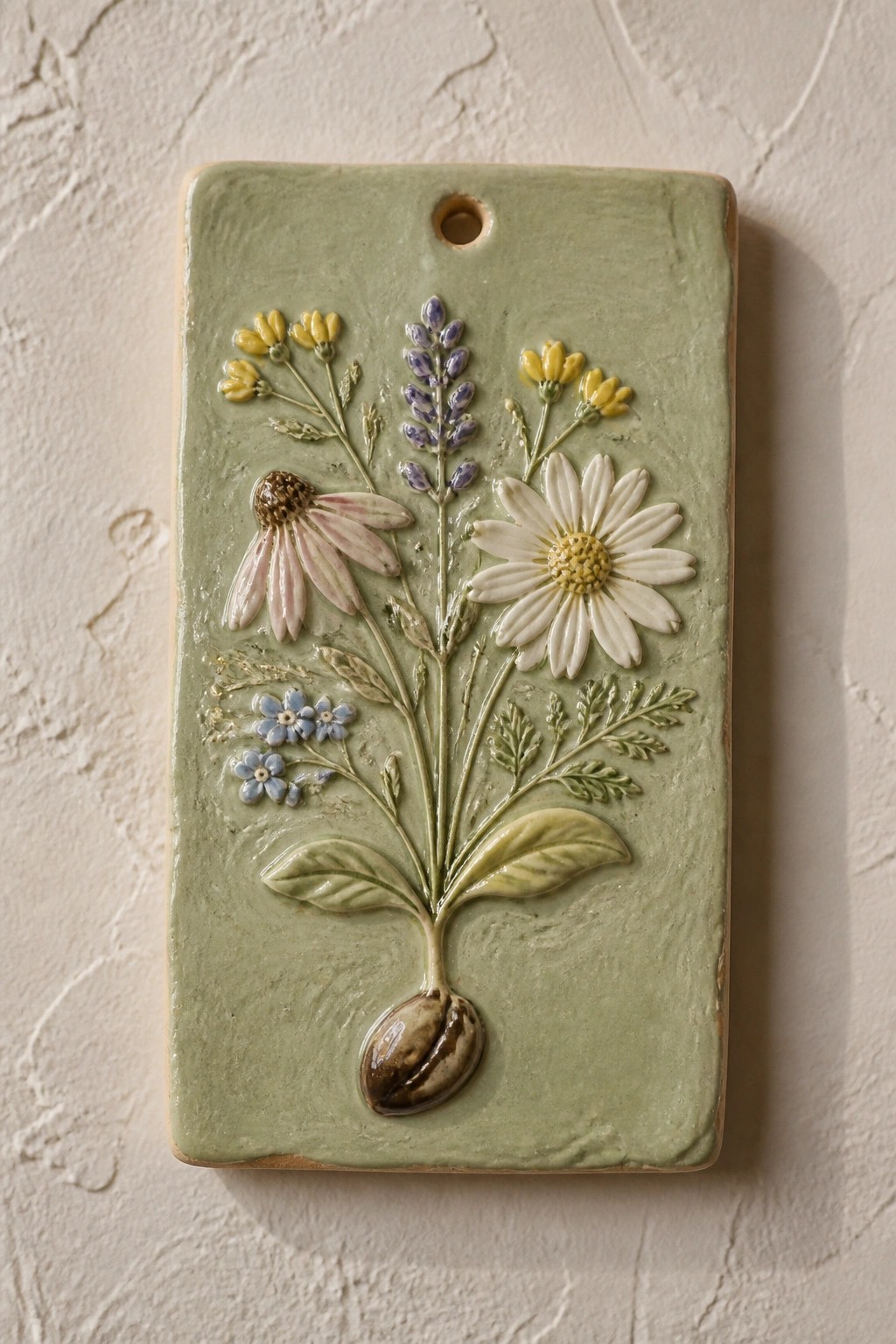
A rectangular ceramic plaque makes a solid base for this project. The design uses raised clay elements to create a full bouquet of different flowers, each shaped and colored separately before the background receives a single muted green glaze. A large seed or bulb form sits at the bottom with simple leaves branching upward, which keeps the composition grounded and easy to read from a distance. The hole at the top turns the finished piece into a ready-to-hang wall object.
What makes this idea useful is how the seed shape gives you a clear starting point for arranging stems without needing extra planning. You could shrink the same layout onto square tiles for a small set of wall accents or swap the bulb for a cluster of roots if you want a different focal point. The single background color leaves room to change the flower palette later without the piece looking cluttered. For a gift version, repeat just three of the blooms on a narrower slab and add a name or date stamp near the top.
Tulip Painted Ceramic Spoon Rest
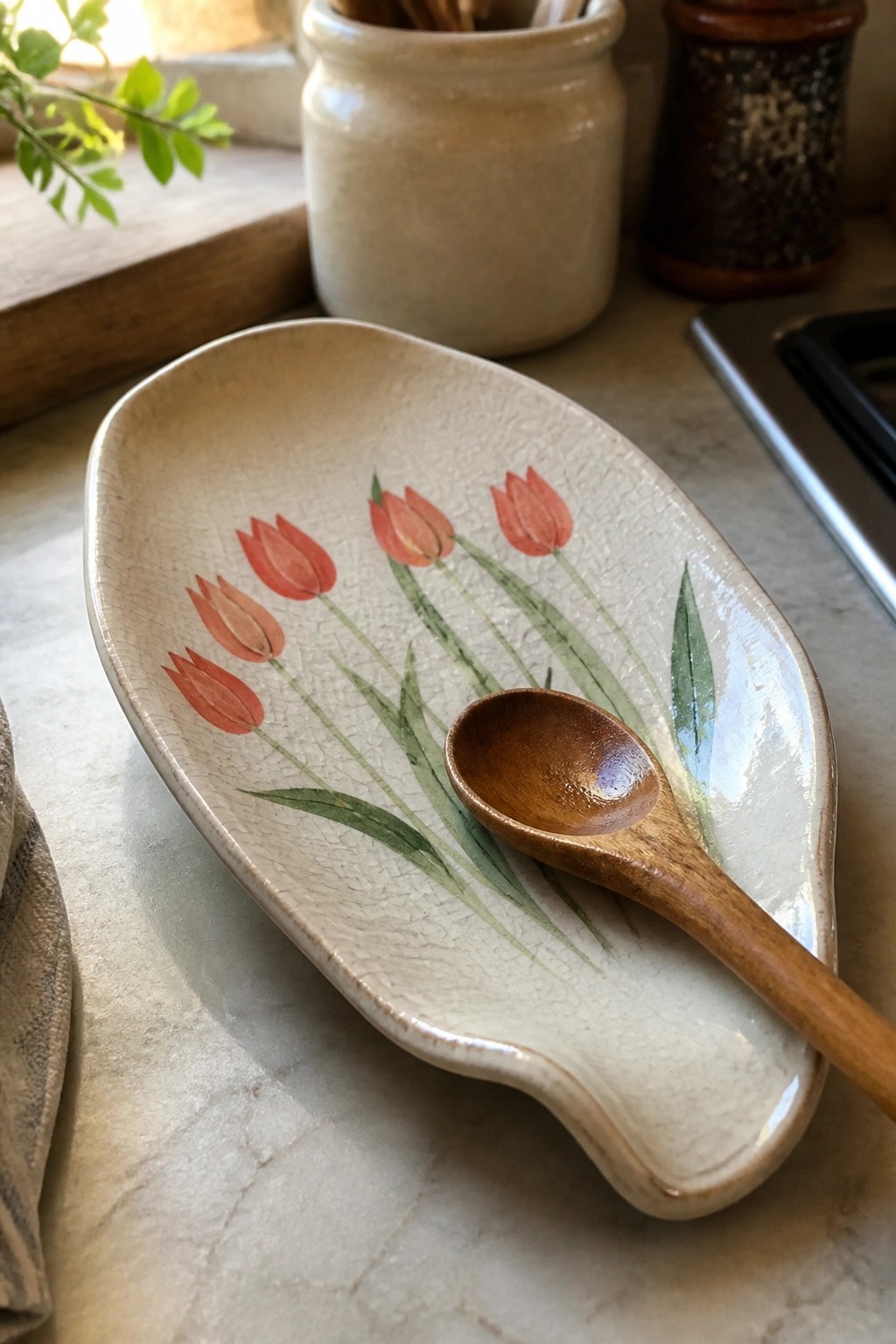
A handmade ceramic spoon rest with an elongated oval shape gives you a stable spot for utensils during cooking. The design uses rows of simple red tulips with green stems and leaves painted across the crackle-glazed surface, leaving enough blank space so the motif stays clear and uncluttered. The slight dip at one end keeps the spoon bowl from sliding off while the irregular rim reinforces the handmade look.
The shape does a lot of the work here because the length fits both the spoon head and handle without taking up much counter space. You could repeat the same tulip rows on a rectangular butter dish or shorten the stems for a round ring holder. In a kitchen this piece stays practical for daily use and works just as well as a small tray for serving olives or nuts. The painted motif is easy to scale down if you want to try the idea on a set of matching coasters.
Lotus Flower Tealight Holder
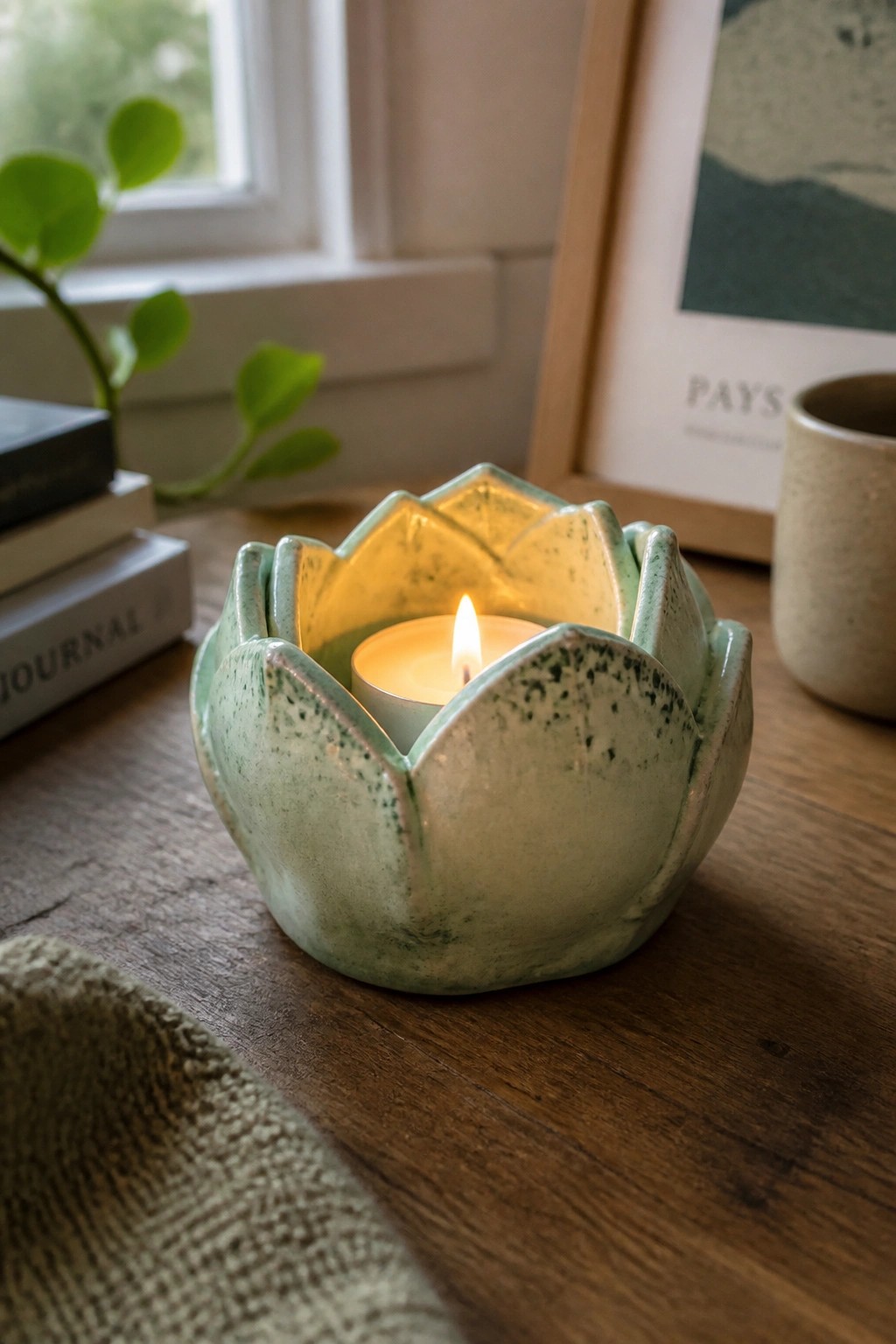
A ceramic tealight holder formed as an open lotus flower gives a simple way to bring a flower motif into spring pottery. The piece is built by shaping individual petals around a central well that holds a standard tea light. A light green glaze with darker speckles covers the surface and turns more translucent where the clay thins at the petal edges.
The shape does a lot of the work here because the petals already create the decorative element without extra painting. You could scale the same form down for a ring dish or widen the base slightly to turn it into a small succulent planter. This kind of holder works especially well on a shelf or desk where the lit candle shows the glaze variation. For a different look, the same petal construction could be done in a matte white or soft blue glaze instead.
Gold-Veined Leaf Ring Dish
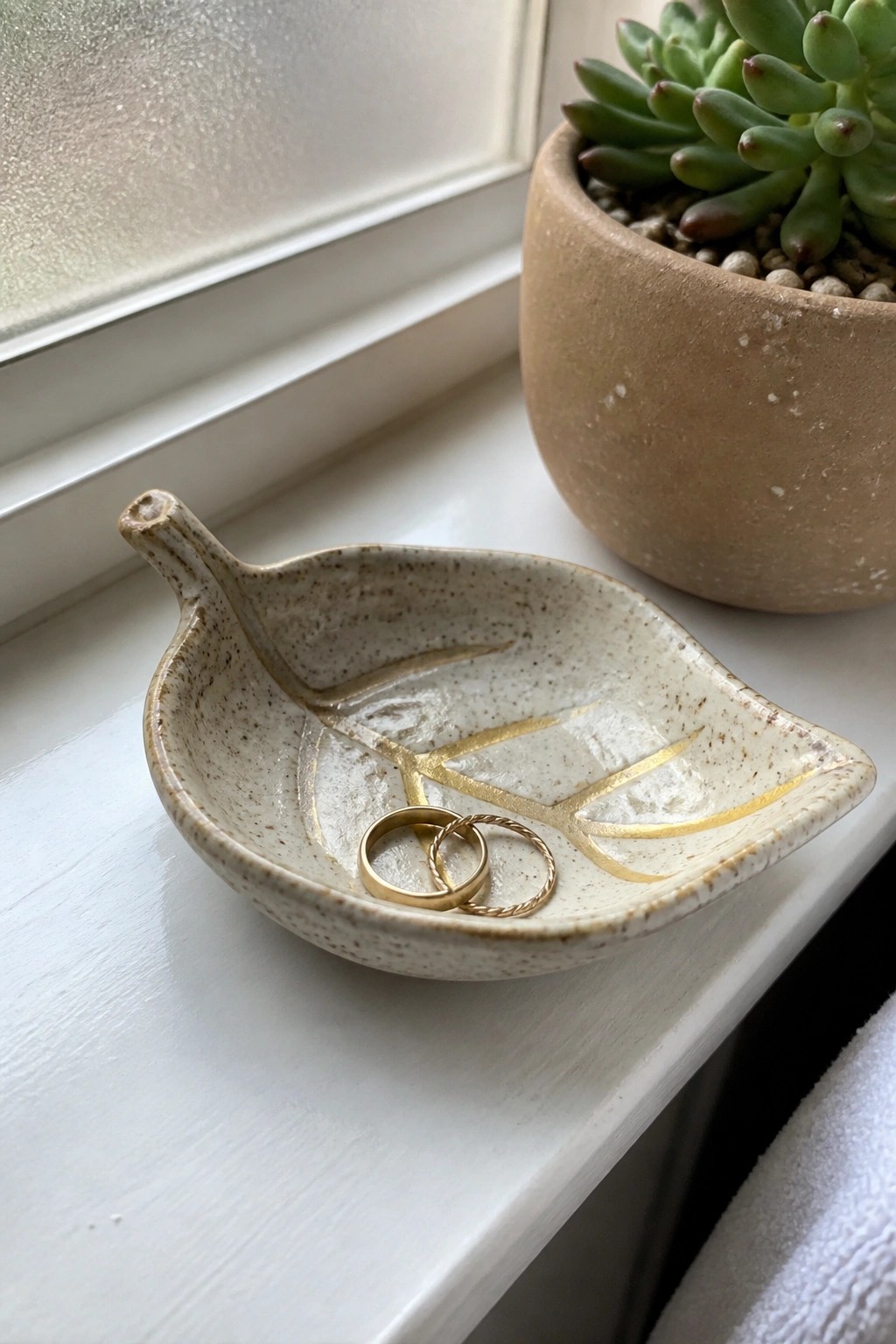
A leaf-shaped ceramic dish makes a practical ring holder when the veins are outlined in gold against a light speckled glaze. The sculpted stem and tapered leaf edges create a clear plant form without extra detail. This approach uses the natural leaf structure as the main design element and lets the metallic paint highlight the veins for contrast.
The small scale works well on a nightstand or windowsill where rings are removed at the end of the day. You could repeat the same vein painting on a square tray or a shallow soap dish if you want a matching set. Keeping the gold lines thin and following the existing ridges makes the idea easy to adapt to other leaf molds or even a simple slab-built shape.
Meadow Flower Tray
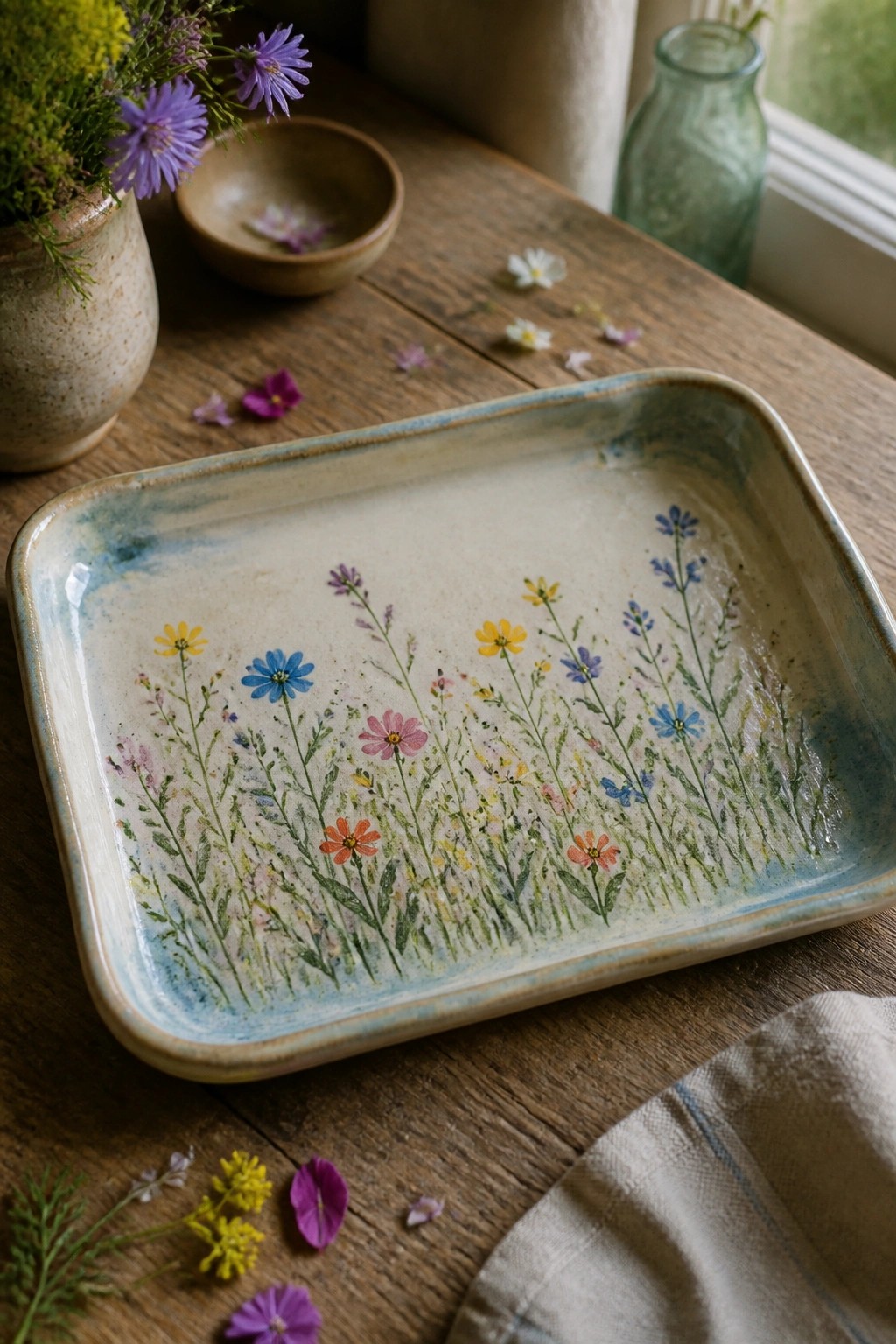
A rectangular ceramic tray with a hand-painted meadow of wildflowers gives you a flat surface ideal for display or light serving. The design spreads stems and blooms in yellow, blue, pink, orange, and purple across the cream center, with a soft blue rim containing the scene. The scattered layout keeps the pattern from feeling too rigid while still covering the base evenly. This approach works as a tray project because the open rectangle lets the full meadow composition show without crowding.
What makes this idea useful is how the same meadow painting can be scaled down to smaller trays or repeated on a matching set of plates. The shape does a lot of the work here by giving you a wide, stable area that highlights the loose flower arrangement. For a gift, something like this fits easily on a coffee table or desk and pairs with simple linens or fresh blooms. You could rework the motif onto a round platter or shorten the stems if you want a faster version that still keeps the field-of-flowers feel.
Leaf Impressed Double Salt Cellar
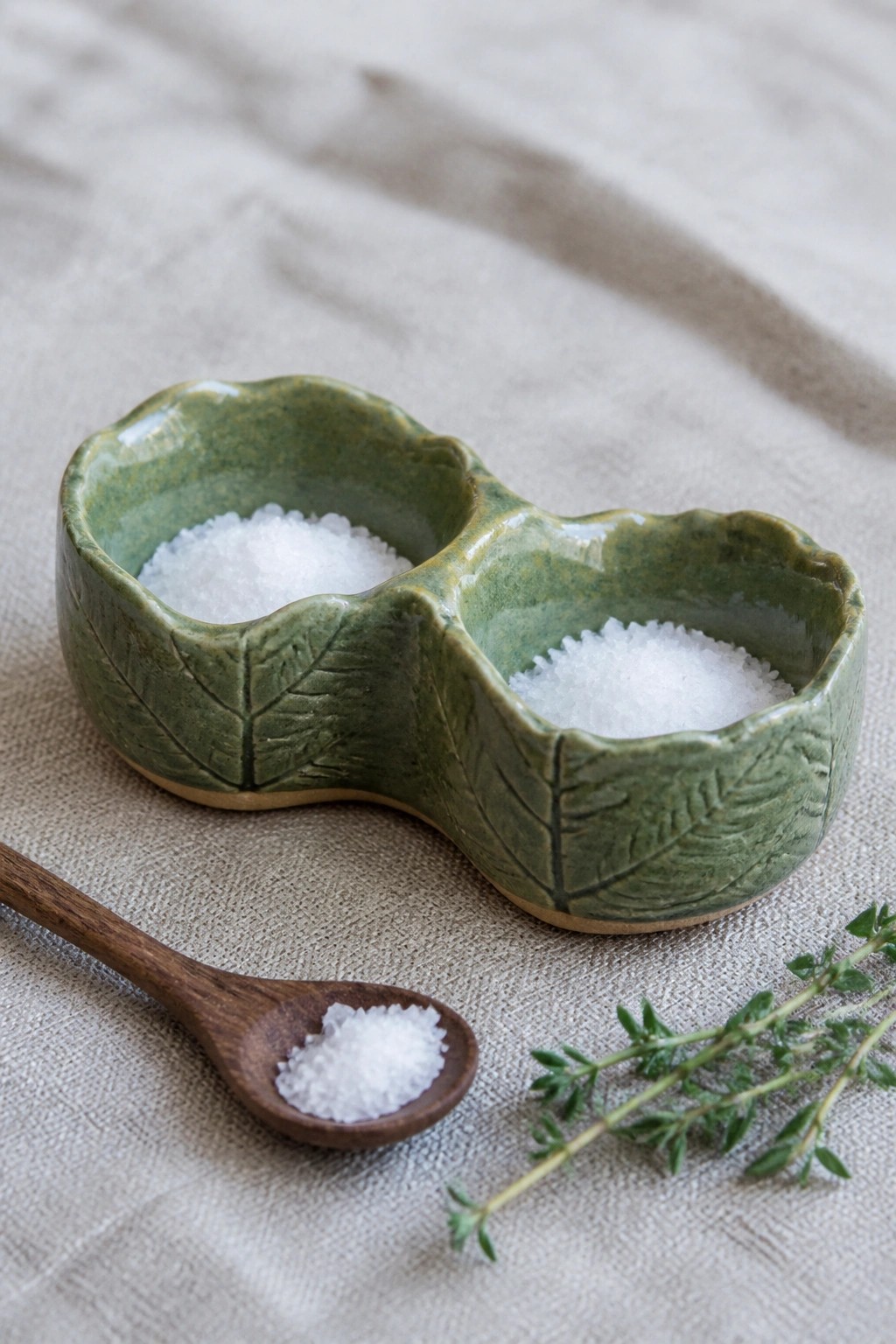
A divided ceramic dish with two connected bowls serves as a salt cellar or seasoning holder for the table. The leaf veins and edges are impressed directly into the clay before glazing, creating raised texture that catches light on the green surface. This kitchen item keeps two different salts or herbs in separate sections while staying compact enough for daily use.
The shape does a lot of the work here because the divided form lets you serve salt and another seasoning without extra small bowls. You could adapt the leaf impression method to a single round dish or a longer tray for spices. In a kitchen this kind of piece works especially well next to a pepper grinder or on a windowsill with fresh herbs. The same idea scales down easily to a ring dish or up to a larger serving platter if you want to repeat the motif.
Speckled Bowl with Painted Blossom Branches
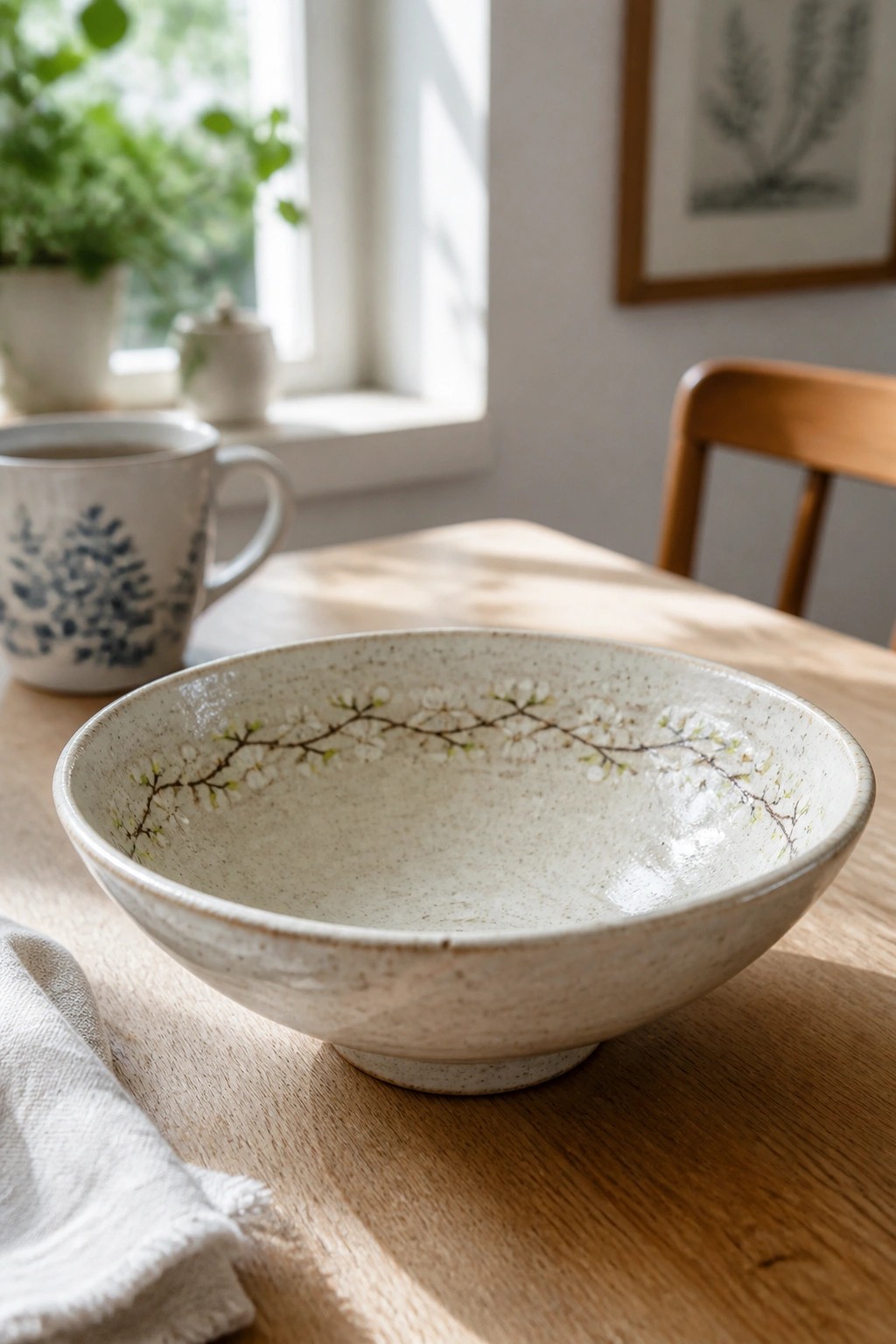
A wide, shallow ceramic bowl with a light speckled glaze works well for a simple branch and blossom motif painted along the inside rim. Thin brown lines form the branches while small white dots with touches of green suggest flowers, creating a repeating pattern that follows the curve without covering the whole surface. The design stays contained near the top edge so the plain center remains easy to keep clean for food use. This approach fits any round bowl shape and uses minimal colors for a clean result.
What makes this idea useful is how the same branch motif can be scaled down for a smaller bowl or stretched to fit a wider rim on a serving dish. The neutral glaze keeps the focus on the painted detail, so it works with most kitchen colors and needs only a few brushes to complete. In a kitchen this kind of bowl suits salads or snacks, and the pattern could be adapted to a plate set or a lidded jar by repeating just the branch line.
Embossed Botanical Toothbrush Holder
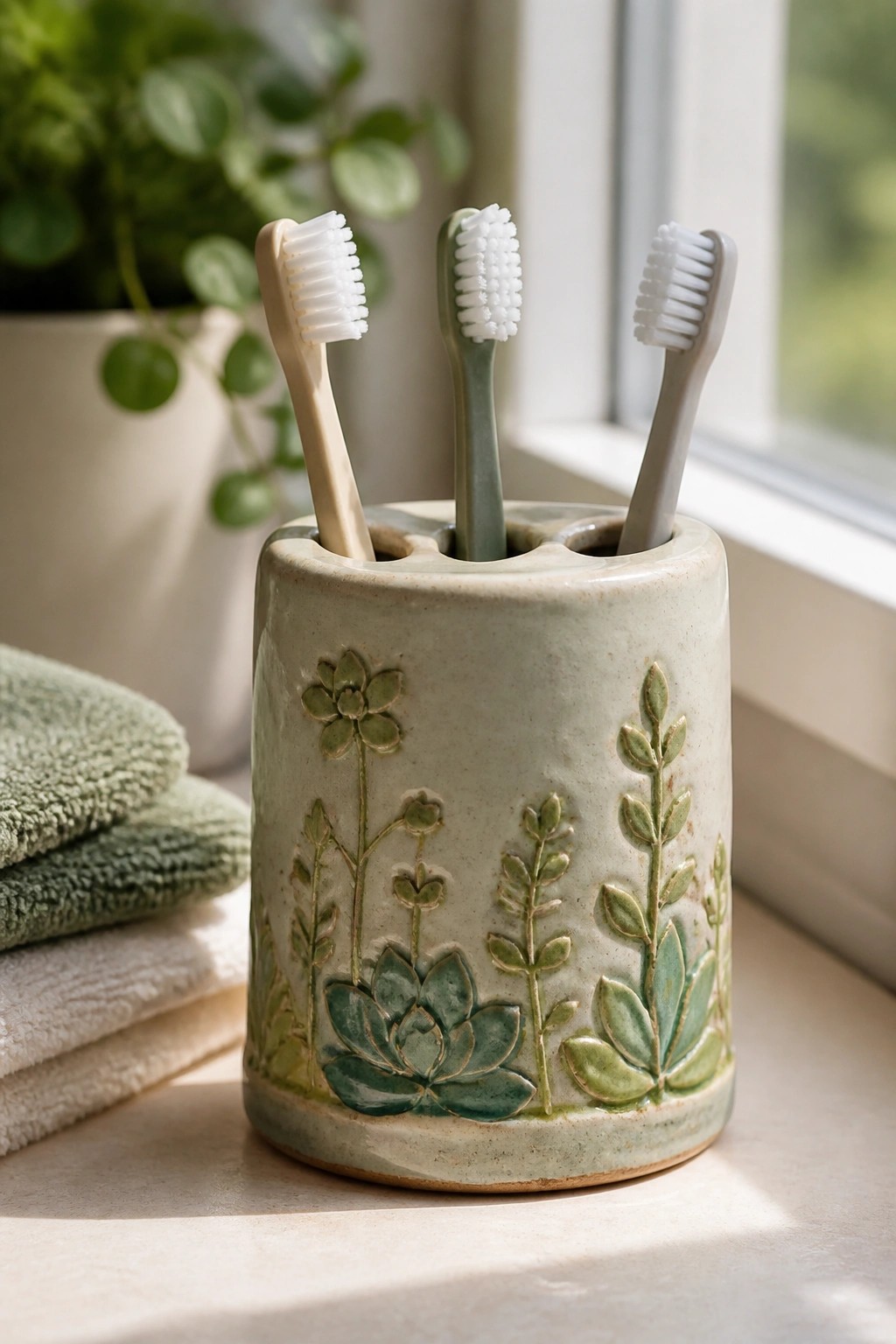
A ceramic toothbrush holder with raised plant designs gives a simple bathroom item a spring update. The cylindrical shape carries sculpted succulents along the lower edge and tall stems with leaves and flowers that climb upward, all rendered in layered green glazes over a pale base. The relief details catch light and shadow so the pattern reads clearly without extra surface painting. This approach turns a basic holder into a small piece of functional bathroom pottery.
What makes this idea useful is how the same embossed plant layout can be repeated on a soap dish or small cup without changing the color scheme. The compact cylinder shape fits narrow sink ledges where larger planters would not work. You could simplify the design by pressing only a few leaf stamps into a plain slab and wrapping it around a form if you want to skip the full arrangement. The visible texture also photographs well for project boards, which helps the idea get noticed when shared.
Ceramic Bunny Figurine Holding a Sprout
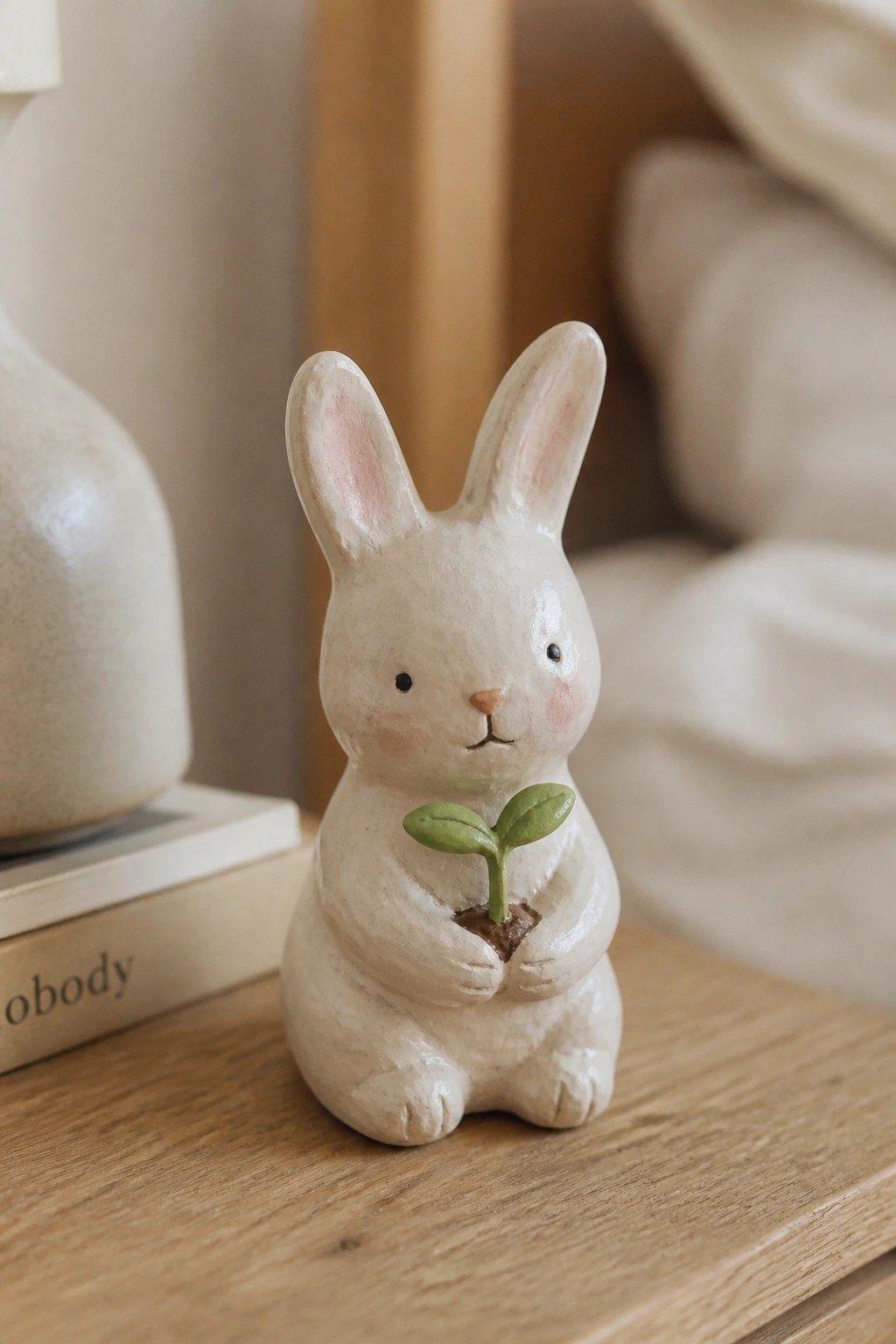
A small ceramic rabbit figurine works as a spring project when painted in an off-white base with soft pink on the inner ears and cheeks, then finished with a tiny green sprout held in its paws. The design keeps the body simple and rounded so the green plant element stands out clearly against the pale surface. This fits the figurine category of decor objects, where the sculpted paws create a natural spot to attach or paint the sprouting detail.
What makes this idea useful is how the compact size lets it sit on a desk, windowsill, or bookshelf without taking much space. You can swap the bunny for other animal shapes or change the sprout to different leaf styles or small flowers for variety. The same approach works on a plain egg shape or a small dome if you want to skip the full animal form. For Pinterest, the clean contrast between the pale body and the single green element helps it read quickly in a grid.
Leaf-Bordered Yarn Bowl with Flower Yarn Guide
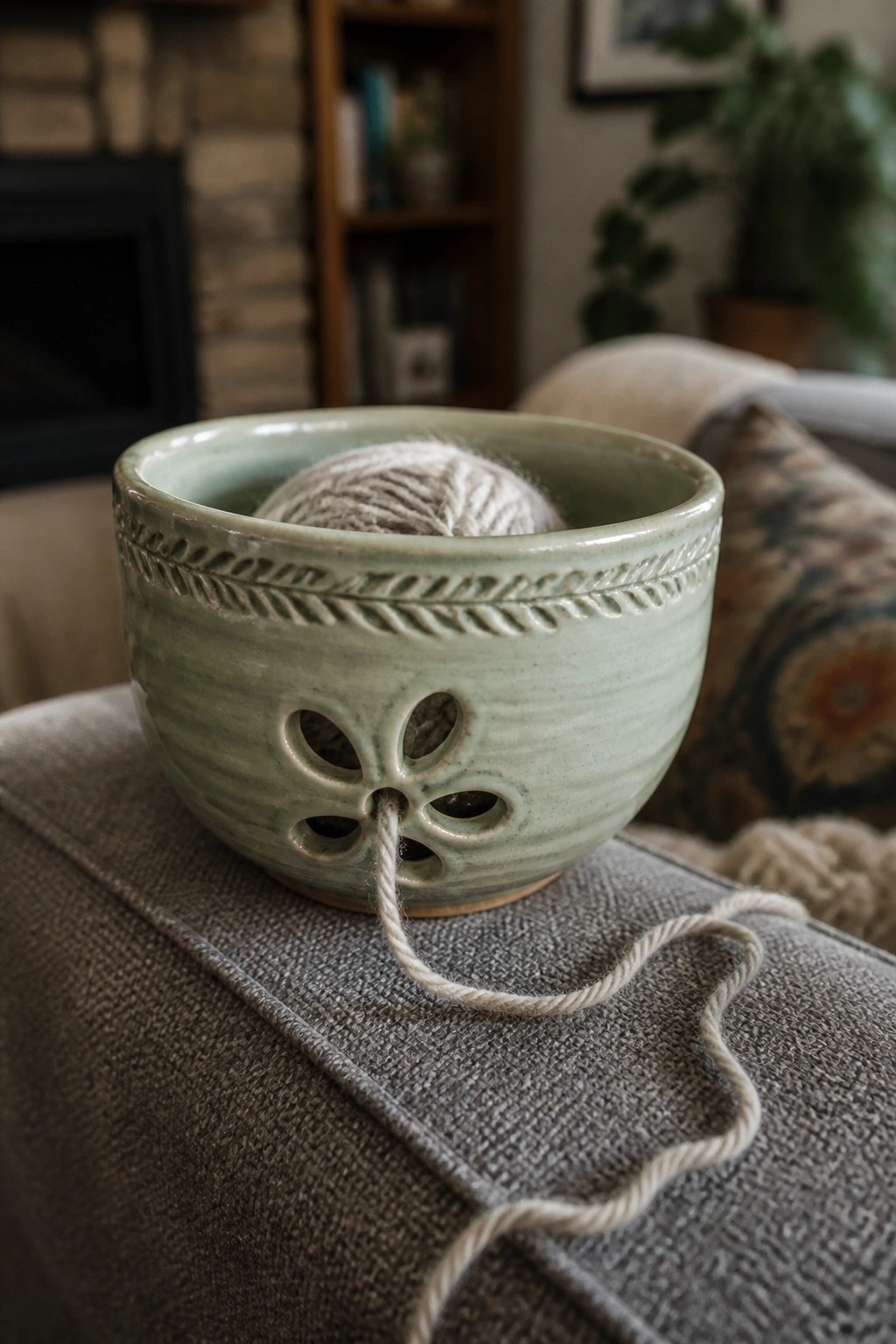
A ceramic yarn bowl keeps skeins from rolling while you knit or crochet. This version uses an embossed leaf border around the rim and a four-petal flower cutout at the base so the yarn feeds out cleanly. The matte green glaze and subtle ridges let the sculpted details stand out without extra paint. The shape stays simple enough to make on a wheel or with slabs while still showing clear spring-inspired motifs.
What makes this idea useful is how the flower opening serves both decoration and function at once. You could shrink the same form for embroidery floss or scale the leaf band onto a larger planter. The cutout pattern would also work as a painted design on a plain bowl if carving feels like too much. In a craft room or on a side table, this piece keeps supplies organized without looking purely practical.
Wall Pocket Planter with Painted Seedling Motifs
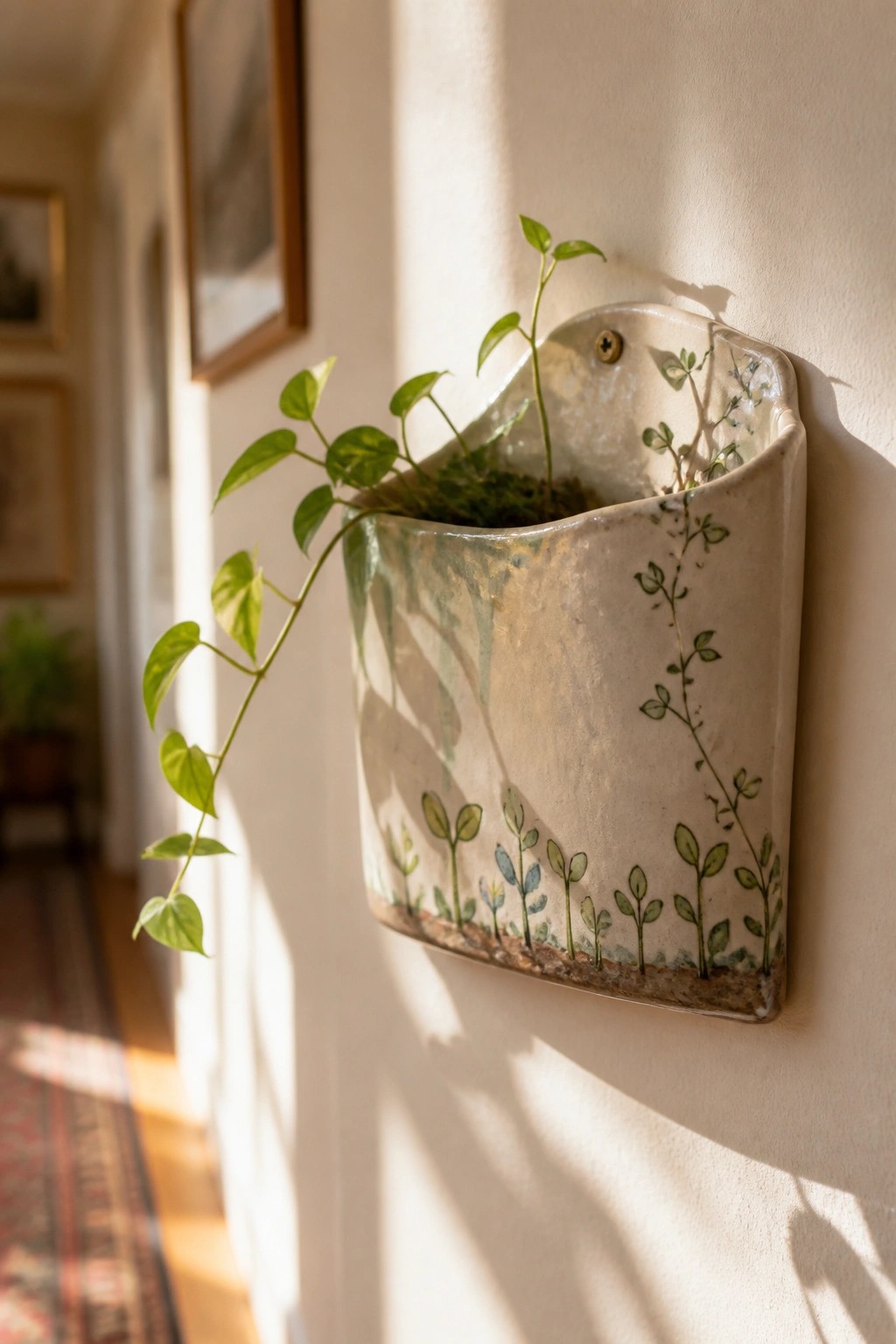
A wall-mounted ceramic pocket serves as a compact vertical planter that holds a small amount of soil and a single plant. The form is a shallow pouch shape with a rounded top edge and a flat back for hanging. Painted rows of simple seedlings and leafy stems run across the bottom front and up one side in muted greens and earth tones, leaving most of the clay surface plain. This approach keeps the decoration focused on the spring growth theme while letting the actual plant become the main visual element.
What makes this idea useful is how the pocket shape creates plant space on any empty wall without needing shelf room. You could scale the same seedling border down for a set of smaller pockets or transfer the motif to a flat rectangular tile for a different hanging option. The painted detail stands out on Pinterest because it stays minimal and pairs easily with real trailing plants. In a narrow hallway or stairwell this kind of piece fits where larger pots would not.
Scalloped Rim Candle Holder
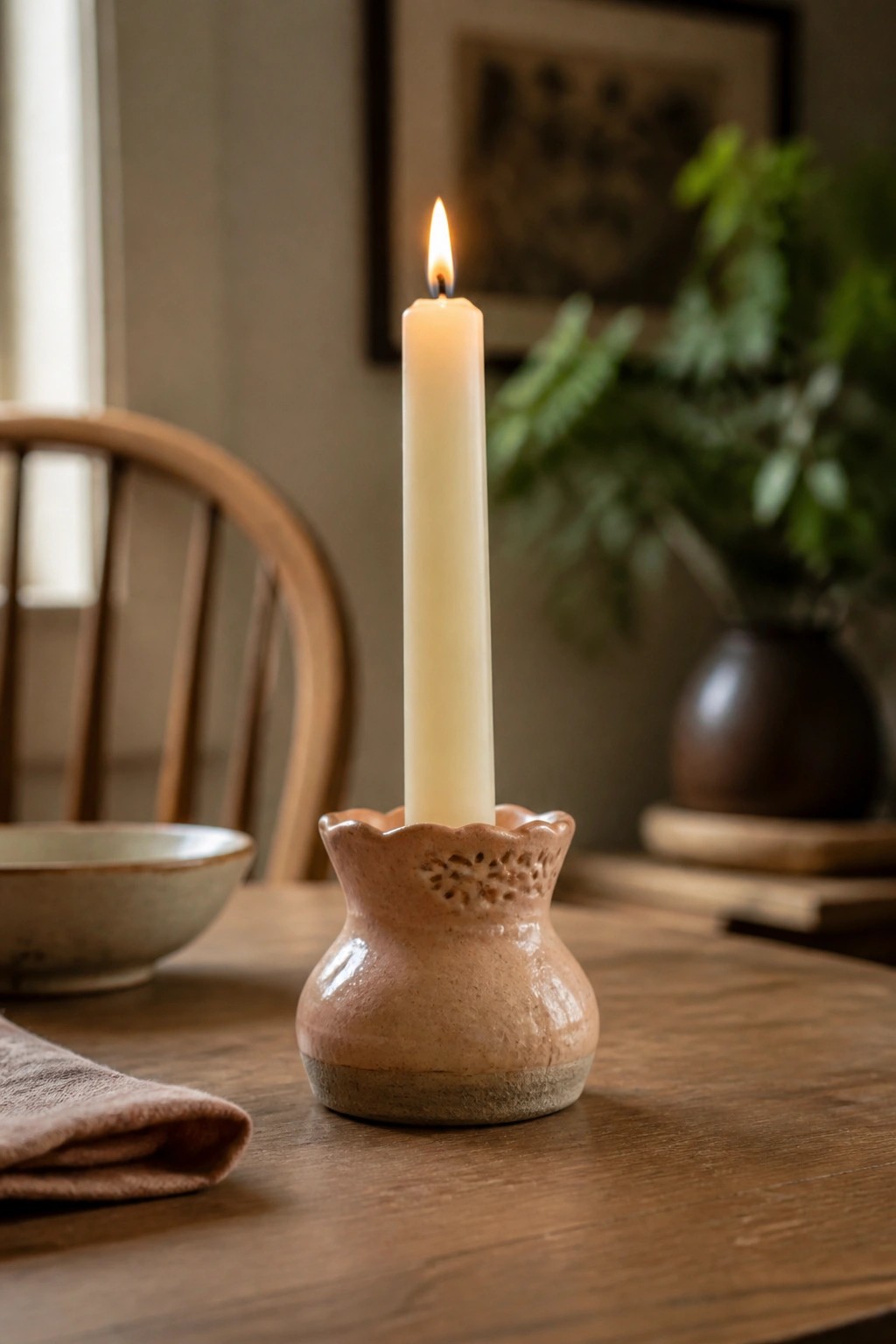
A small ceramic candle holder with a flared, scalloped top gives the piece a soft, open shape that works well for spring table styling. The rim is pinched into irregular curves while a narrow band of cutouts circles the neck, adding light texture without paint. A matte pinkish glaze covers the upper half and stops short of the raw clay base, letting the form carry the design. This type of holder fits the candle piece category because the shape and surface details stand out on their own.
The compact size makes it simple to move between a mantel, windowsill, or dining table. You can repeat the scalloped edge on a small vase or tray by pinching the clay while it is still soft. The cutout band can be left off or replaced with a single row of dots if you want a faster version. A piece like this stands out on Pinterest because the flame highlights the rim shape against the warm glaze.
Cherry Blossom Branch Painted on a Shallow Bowl
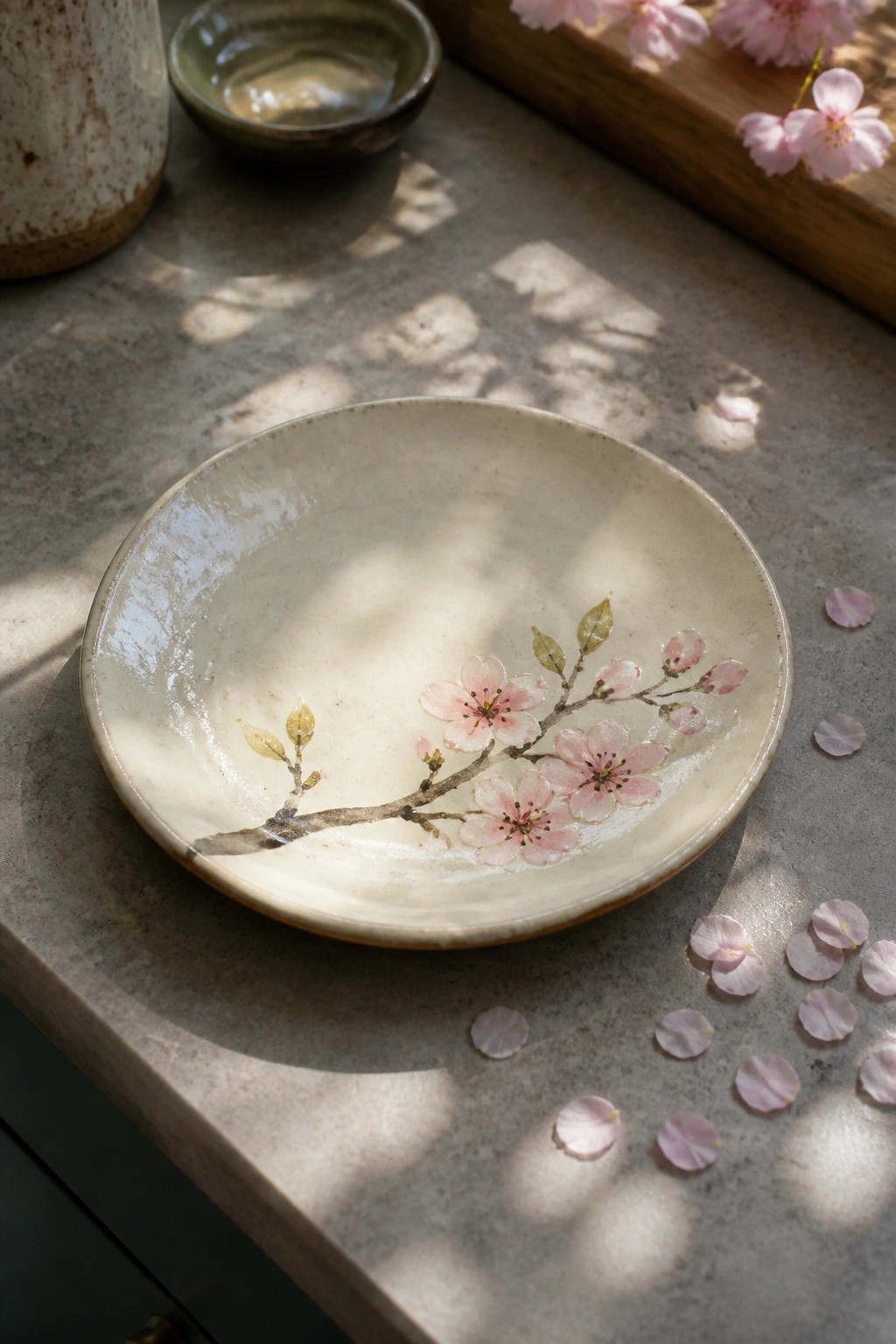
A shallow ceramic bowl with a light speckled glaze works well for a single curving branch of cherry blossoms. The painter placed the branch off-center so the pink flowers and small green leaves spread across the interior without crowding the space. Soft pink washes on the petals and a simple brown line for the stem keep the design light and seasonal. This approach fits any bowl shape you already have and turns it into a spring piece without covering the whole surface.
What makes this idea useful is how the open center of the bowl leaves room for food or small items while the painted branch still shows. You could repeat the same loose branch on a set of plates or a larger tray if you want matching pieces. The small number of flowers also makes it easy to finish quickly or change the colors to match other spring blooms. For everyday use, this kind of bowl works as a fruit dish or a place to drop keys and jewelry.
Leaf-Shaped Soap Dish
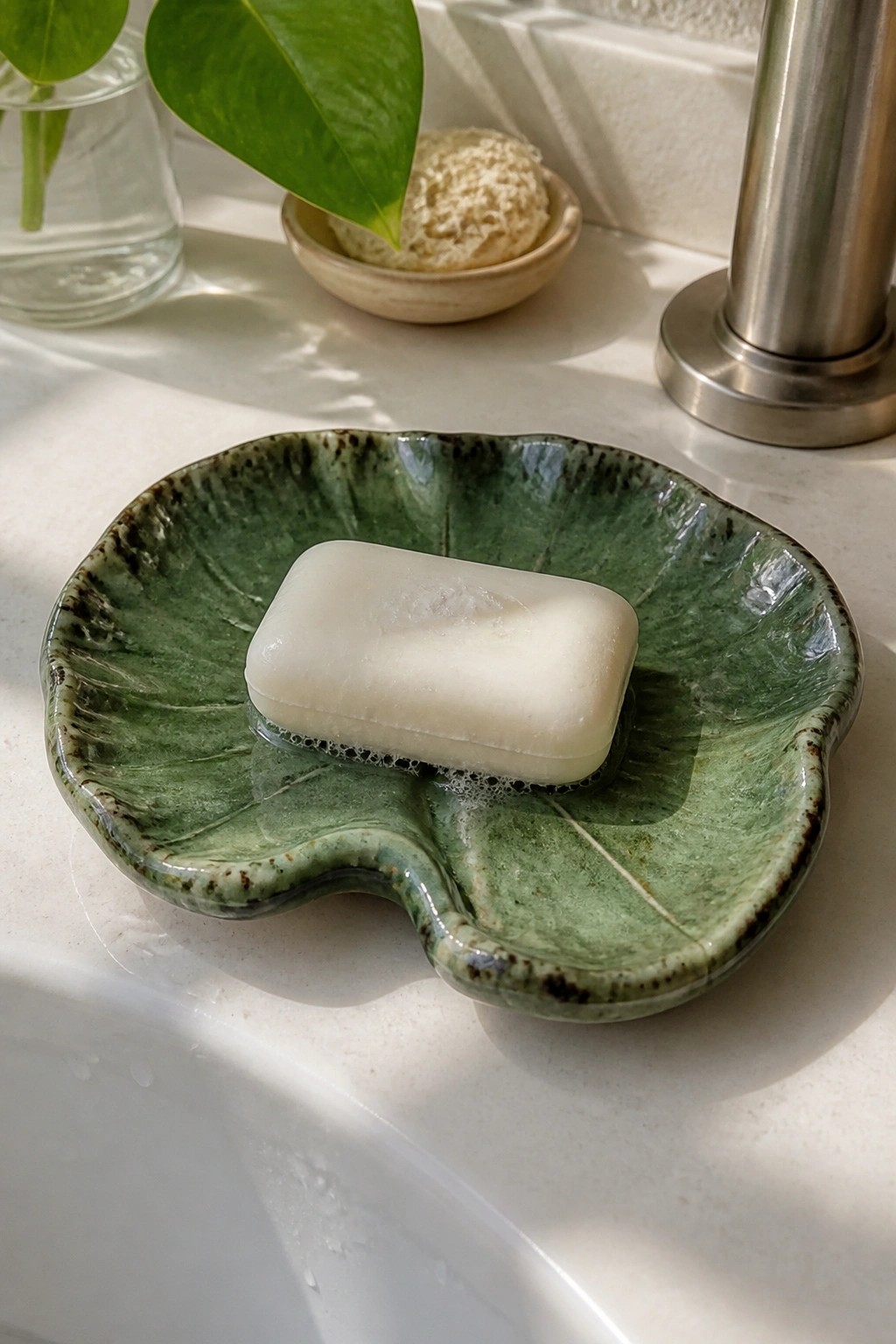
A leaf-shaped soap dish is a straightforward clay project that turns a basic bathroom item into something tied to spring growth. The form is pinched or molded into an irregular leaf outline with visible vein lines pressed into the surface, then covered in a green glaze that pools darker along the edges and texture. This keeps the focus on the natural shape rather than added painting, and the shallow well holds a bar of soap while letting water drain.
What makes this idea useful is how the leaf outline handles both function and the seasonal theme in one step. You could scale the same shape down for a ring dish or stretch it into a longer tray for a windowsill, swapping the green glaze for a lighter tone if you want more contrast with the veins. In a bathroom it stays practical without taking up much space, and the design works just as well in a set of two or three leaves with slightly different edges.
Frequently Asked Questions
What supplies are essential for trying these spring pottery painting ideas at home?
Start with unglazed ceramic pieces like mugs or vases, acrylic paints in soft pastels and greens, fine detail brushes, a palette for mixing, and a sealant spray. Gather reference images of flowers and buds for guidance. Work in a well ventilated area and allow each layer to dry fully before adding details. This setup keeps projects affordable and lets you experiment with multiple ideas from the list without needing a kiln.
How can beginners simplify the flower and new growth designs described in the article?
Focus on basic shapes first such as simple circles for flower centers and curved lines for stems and leaves. Use stencils for petals if freehand feels tricky and practice on paper before moving to pottery. Choose two or three colors per piece to avoid overwhelm and build layers gradually. Many of the 18 ideas adapt well to this approach by starting with outlines and filling in with light washes for a fresh spring feel.
What color palettes work best to capture the essence of new growth in these projects?
Soft greens like sage and mint pair nicely with blush pinks, buttery yellows, and crisp whites to evoke sprouting plants and blooms. Add subtle earth tones for stems and soil elements. Test mixes on scrap tiles first to see how they dry. These combinations highlight the fresh and vibrant themes across the ideas while keeping the overall look light and seasonal.
How do you seal painted pottery so the designs hold up after multiple uses?
Apply a clear acrylic sealant in thin coats once the paint is completely dry, allowing each coat to cure for the recommended time. For items that will hold food or water, consider food safe glazes if you have access to a kiln or opt for decorative pieces only. Avoid submerging sealed items in water for long periods. This step protects the flower and growth motifs and extends the life of your finished work.
Which of the 18 ideas translate well to small items like coasters or ornaments?
Designs featuring single blooms, delicate leaf clusters, or minimalist sprouting vines work especially well on compact surfaces. Scale down details by using smaller brushes and focus on negative space to keep the spring theme clear. These adaptations maintain the fresh aesthetic without crowding the limited area and make great gifts or quick practice pieces.

Pottery Path is my cozy corner of the internet where I share clay ideas, pottery inspiration, and simple projects you can recreate at home. I love exploring everything from air dry clay to handbuilt pottery to cute minis that brighten your day. My goal is to make clay crafting feel easy, fun, and welcoming for anyone who wants to try it.
You will find beginner friendly tutorials, creative pottery painting ideas, and lots of warm inspiration for slow and happy crafting. If you enjoy hands on creativity, this space will feel like home.