
I like to make handbuilt ceramics in my spare time and display them around my home.
Finding good spots for them on the walls has helped me keep my rooms from feeling too crowded.
I have tried out various methods over the past few months and noted what looks nice.
Some ideas involve simple hooks while others use shelves or frames.
These are some of the approaches that turned out well for my own collection.
Wall Pocket Vase for Single Stems
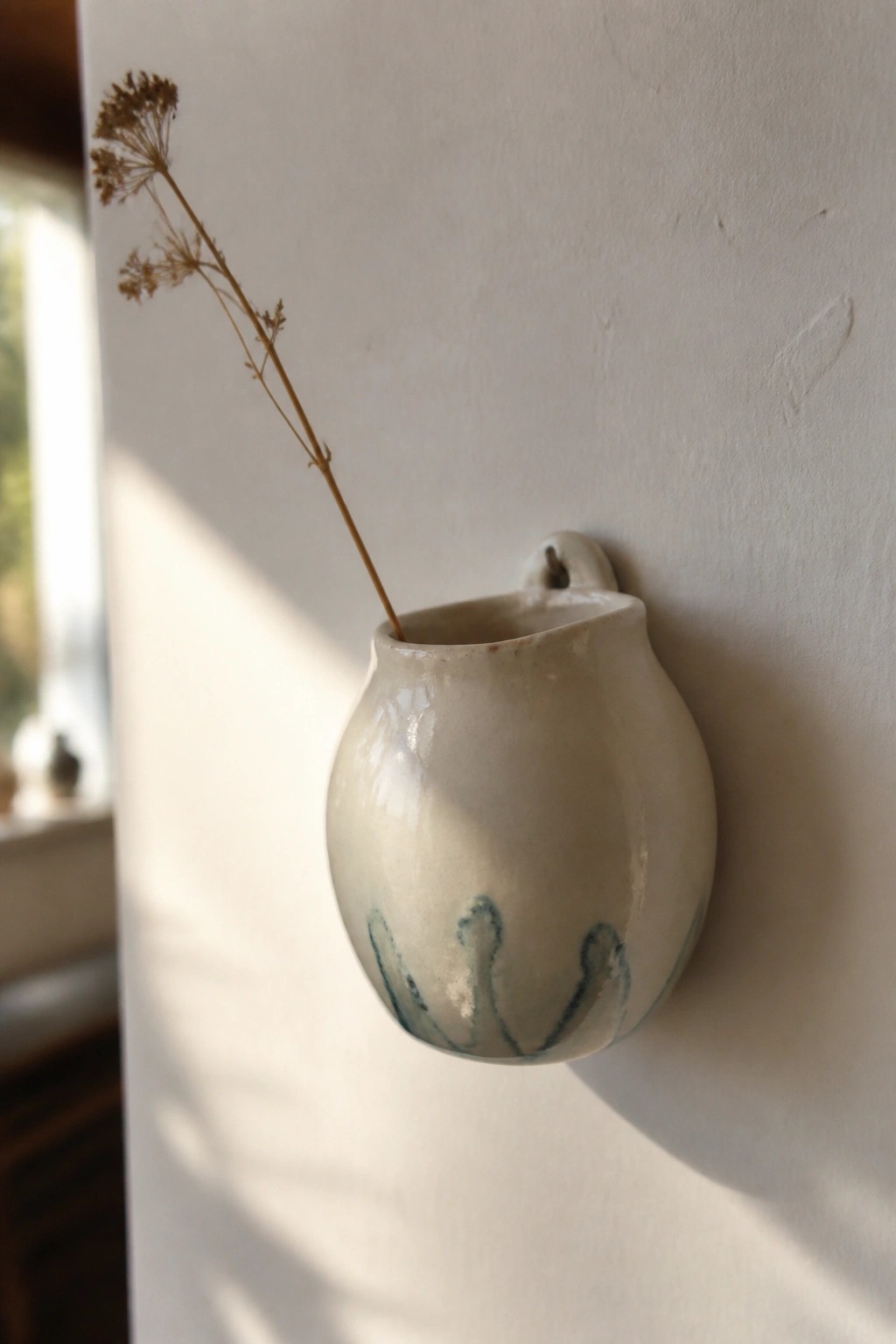
A wall pocket vase is a compact ceramic form made to hang directly on a wall using a small loop or tab at the top. This one has a rounded bulb shape that tapers slightly at the opening, with loose blue glaze marks applied along the lower half before firing. The design keeps the piece lightweight and shallow enough to sit close to the wall without protruding much. It functions as a simple holder for one or two stems rather than a full arrangement.
What makes this idea useful is that it turns any empty wall into a spot for a single stem or cutting without needing shelf space. The rounded form could be adapted into a taller or narrower version, or the blue marks could be swapped for a different color or left plain. In a bathroom, entryway, or above a desk, a piece like this stays out of the way while still giving you a place to rotate in fresh or dried material. You could also make the same hanging loop on a flatter slab shape if you want something even lower profile.
Modular Ceramic Tiles with Carved Wave Patterns
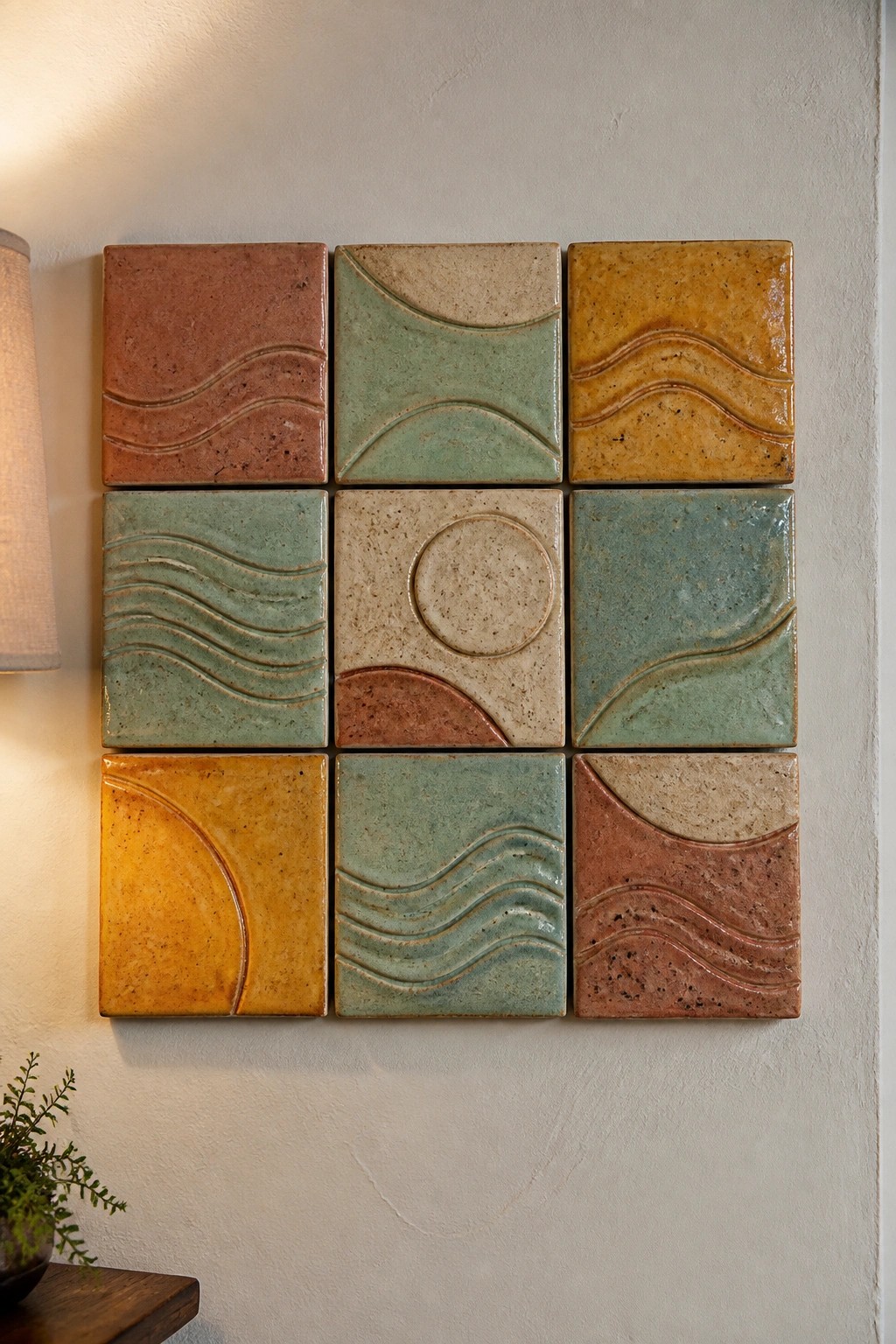
Nine square ceramic tiles form a larger wall panel through coordinated abstract designs. Each tile carries hand-sculpted wave lines, a single circle, or curved shapes that align when placed in a grid. The glazes shift across terracotta, mustard, sage green, and speckled beige, with the raised surfaces creating clear shadows that define the patterns. This method turns basic slab tiles into a single sculptural decor object.
What makes this idea useful is how the grid layout lets you expand or shrink the arrangement to match available wall space. You could repeat just the wave motif on four tiles for a narrow hallway strip or isolate the circle tile as a standalone accent above a shelf. The carved details hold their own without extra framing, so the piece works in kitchens, entryways, or above furniture where flat art feels too plain. Scaling the same patterns down to smaller squares makes quick coasters or a compact version for gifting.
Handbuilt Ceramic Mask with Leather Strap Hanger
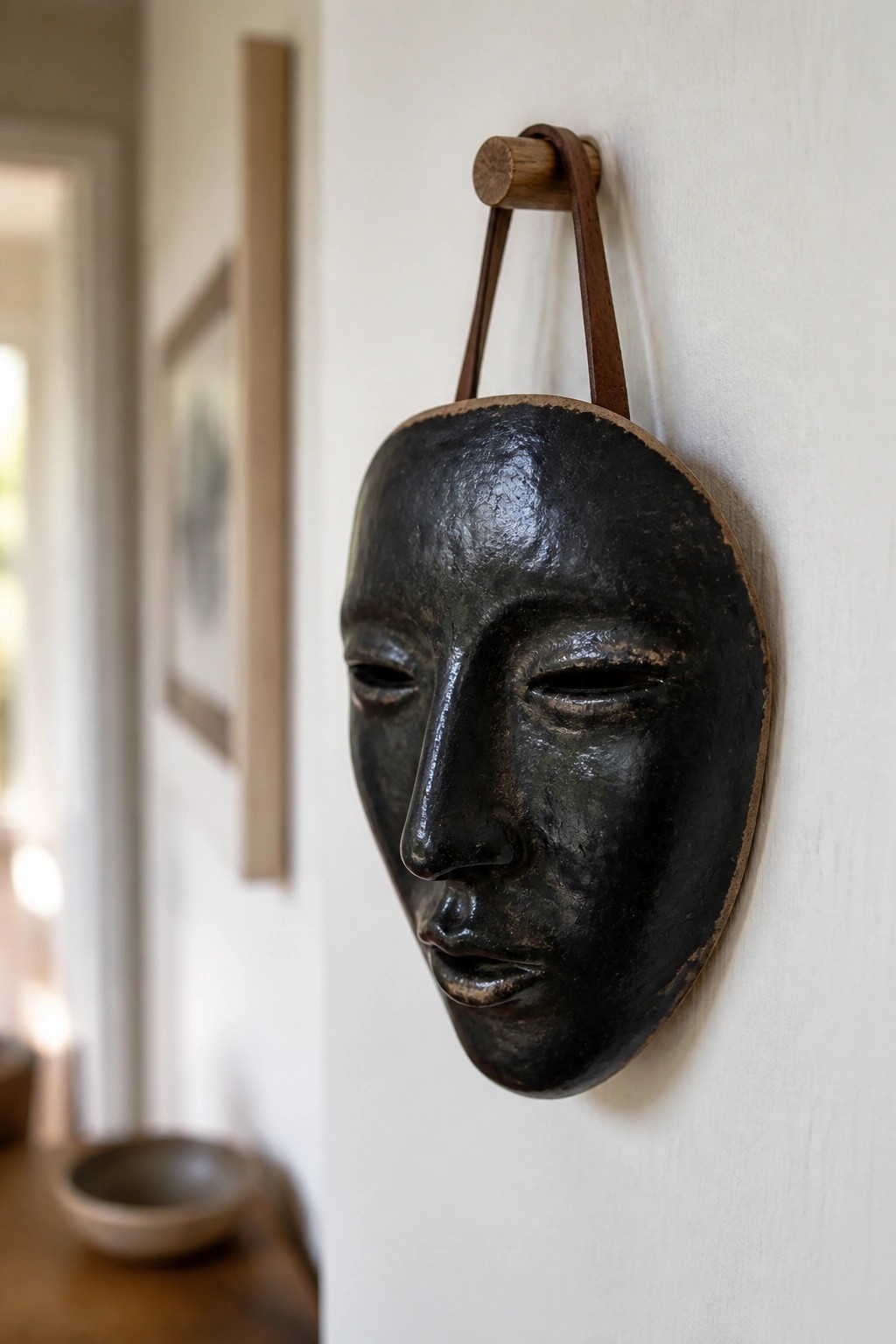
A handbuilt ceramic mask works as a sculptural wall decor object. The dark glaze brings out the modeled nose, lips, and eye sockets while the slightly irregular rim keeps the form from looking too perfect. Suspending it from a simple leather strap on a wooden peg lets the piece hang at eye level without needing a frame or shelf. This approach suits anyone looking for a non-functional ceramic piece that still reads as pottery rather than mass-produced art.
What makes this idea useful is how the hanging method keeps the mask from competing with other wall items. You could swap the dark glaze for a matte earth tone or shorten the strap to change the height and mood. The same basic shape scales down easily for a smaller version or can be repeated in a row for a larger wall. It fits narrow hallways or above a console where a flat piece would disappear.
Asymmetrical Dish with Vertical Stripes and Flowers
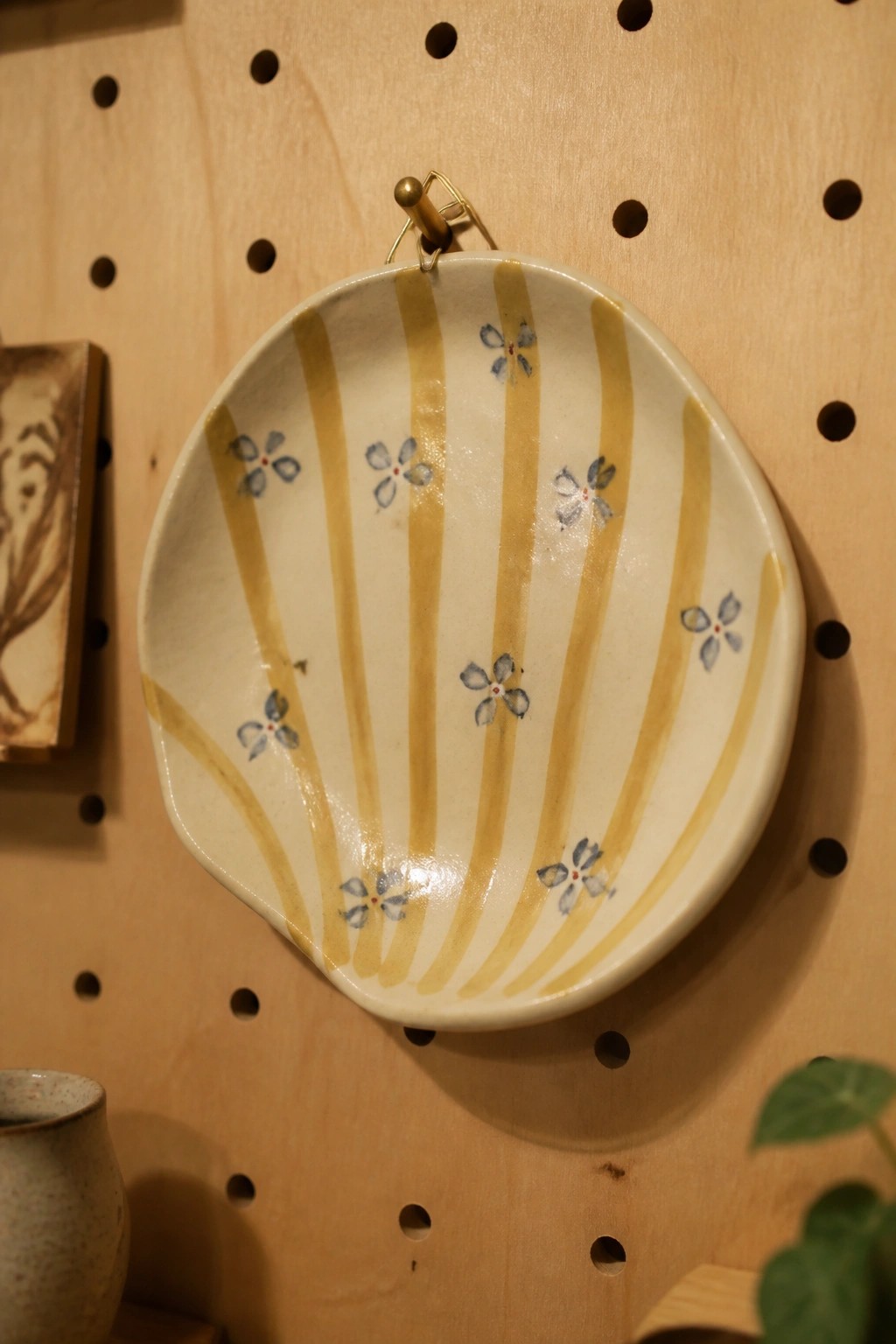
A handbuilt ceramic dish with an uneven rim works well as wall decor when the surface is divided by wide vertical stripes in a warm yellow tone. Small blue flowers with red centers are scattered across the white areas between the stripes, creating a simple repeating pattern. The shallow form is hung with a basic metal clip so it sits flat against the wall rather than sitting on a shelf. This turns a basic plate shape into a decorative object that relies on color and motif instead of complex sculpting.
The small scale makes it easy to produce several versions in different color combinations for a grouped display. You can adapt the stripe layout to a round plate or a rectangular tray without changing the overall idea. In a kitchen or workspace, these pieces add surface color while staying out of the way on a pegboard or hook. The same stripe and flower approach also works on a smaller ring dish or soap rest if you want to shift it toward a functional item.
Handbuilt Ceramic Whale Planter for Wall Mounting
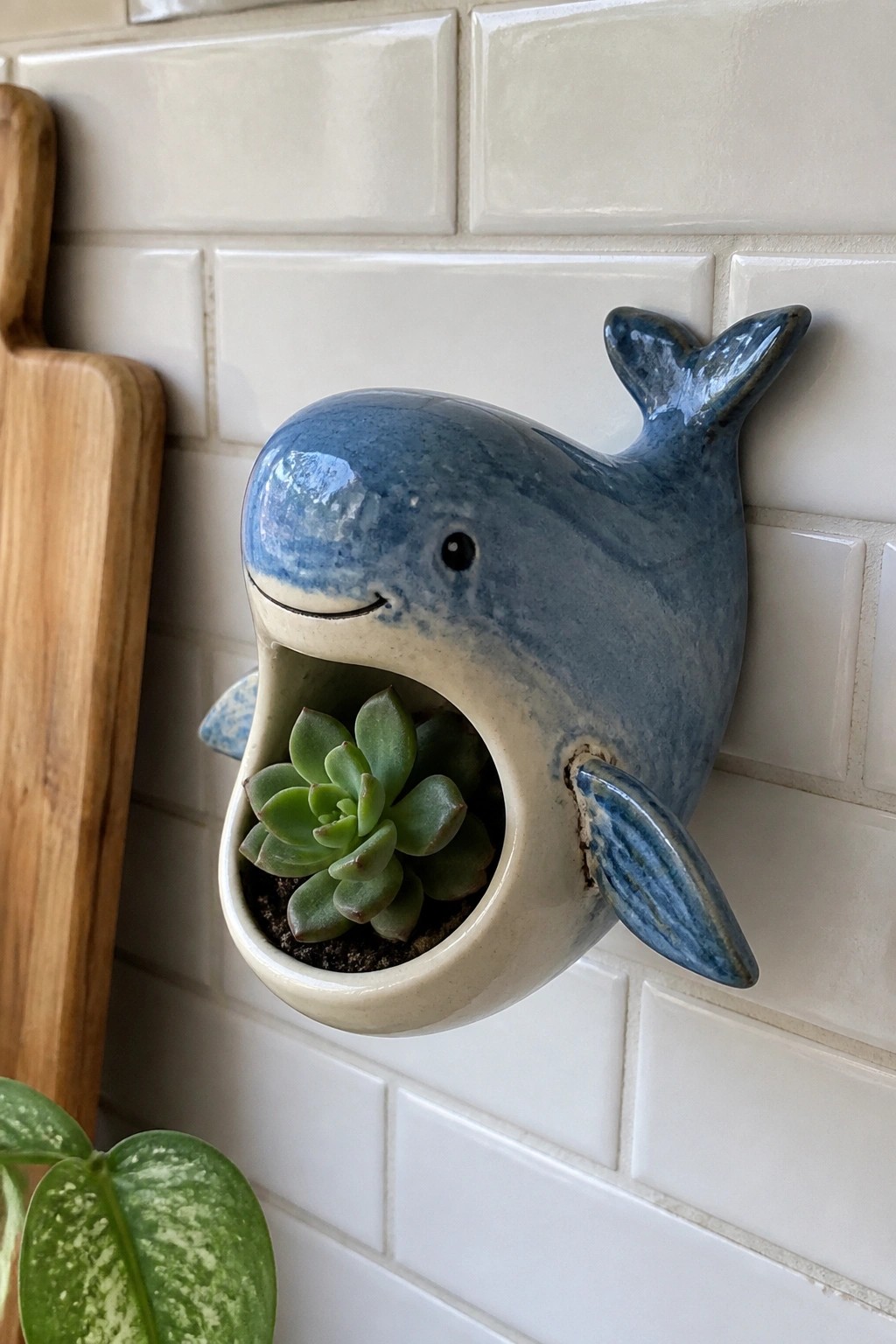
A whale-shaped ceramic planter works by forming the pot from the animal’s body, with the open mouth serving as the planting area and the tail and fins providing the wall-mount details. The piece uses a blue glaze on the exterior that fades to a lighter tone inside the mouth, keeping the focus on the simple sculpted form rather than surface decoration. This approach turns a standard small planter into a wall-hung decor object that holds one or two succulents without needing shelf space.
What makes this idea useful is the way the curved body creates both the container and the hanging point in one piece. You could adapt the same shape for other sea creatures or simplify it to a basic fish form if you want fewer details to sculpt. It works especially well in a bathroom or kitchen where you can mount it directly on tile and water plants without worrying about drips on furniture. For a gift, scaling it down to a smaller size would make it quicker to build and easier to ship.
Stacked Ceramic Bowls on a Vertical Wood Bracket
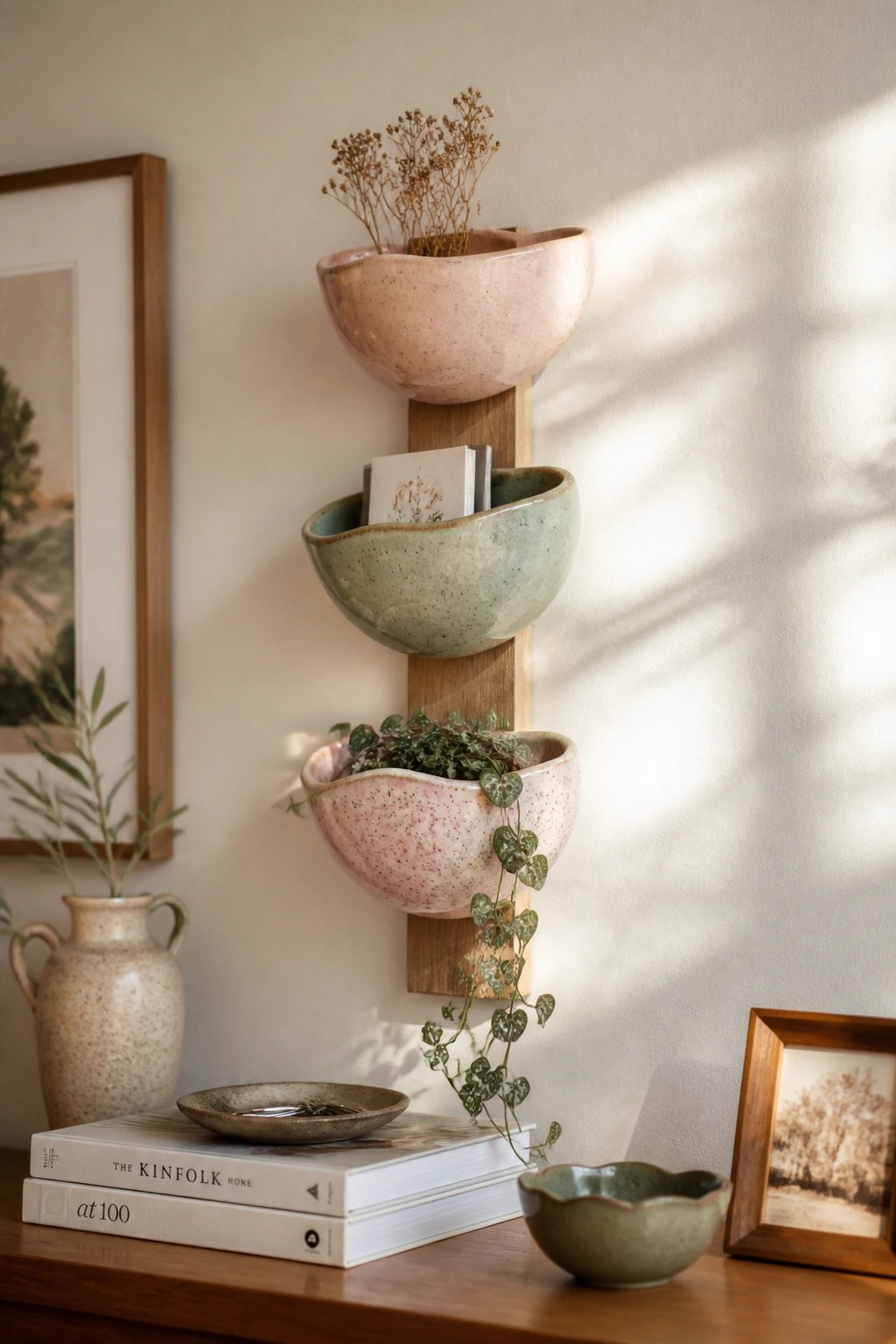
Ceramic bowls with speckled glazes can be arranged in a vertical line on a simple wooden plank to create a tiered wall display. Each bowl rests in a cutout or ledge so it stays secure while still looking like it floats. The setup works for holding small plants, dried stems, or flat items like cards without taking up shelf space. The mix of pink and green tones against the wood keeps the focus on the bowl shapes rather than any added decoration.
What makes this idea useful is how it turns standard bowl forms into a space-saving vertical planter or holder system. You could adapt it by using just two bowls or switching to a single glaze color for a cleaner look. In a hallway or above a desk, this style keeps plants or small objects visible without crowding surfaces. The same bracket could be reworked with deeper bowls if you want more soil room for trailing plants.
Wall-Mounted Candle Holder with Built-In Bowl
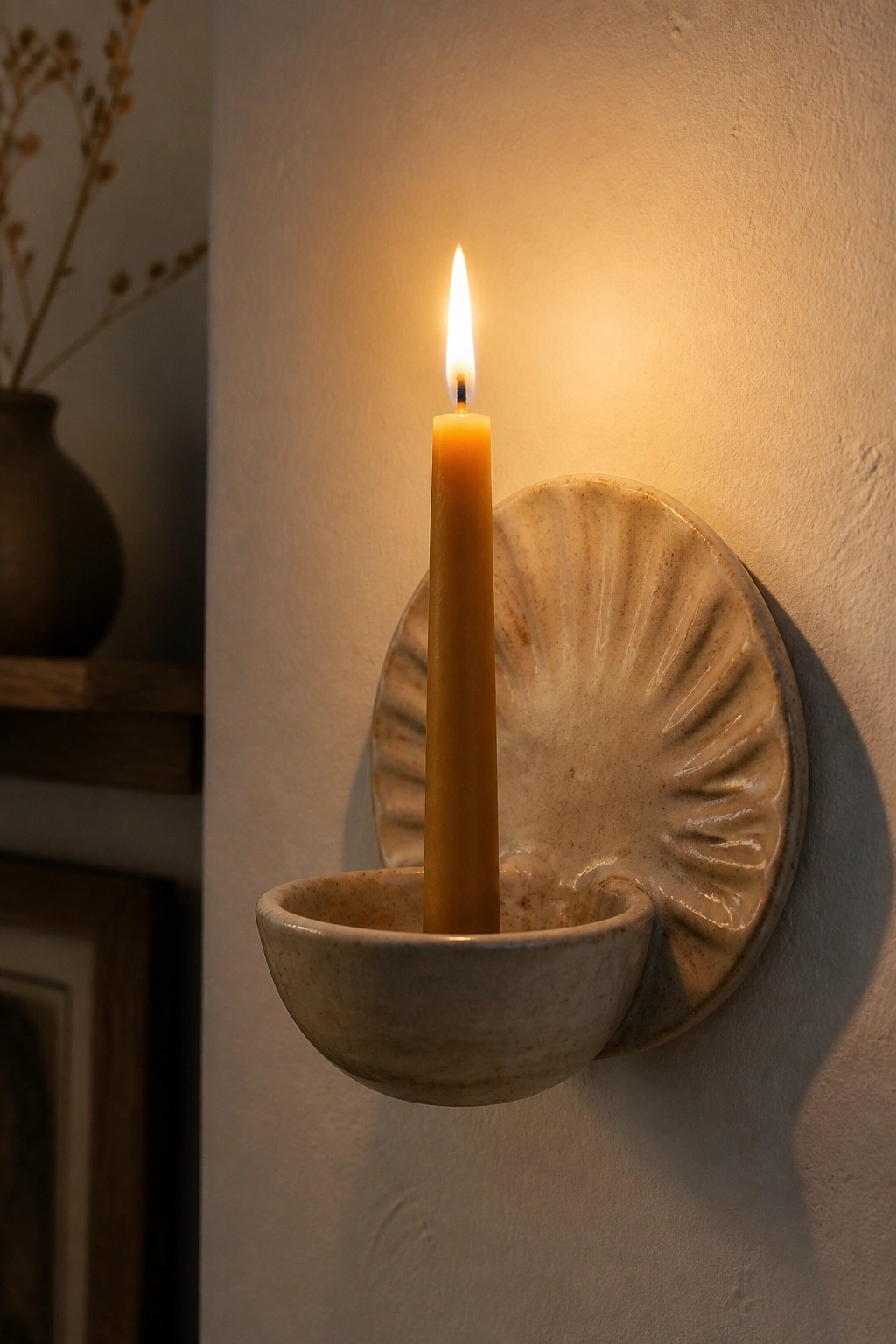
A handbuilt ceramic candle holder mounts flat against the wall and uses a small forward bowl to support a taper candle. The circular back plate carries a simple radiating pattern that gives the piece visual weight without extra parts. This format keeps the candle secure while the bowl shape contains any drips during use.
What makes this idea useful is the single-piece form that needs only one wall anchor. You could rework the same shape into a shorter version for tealights or widen the bowl slightly for a small succulent. The radiating lines are easy to press in with a tool while the clay is soft, so the design stays quick to repeat if you want a matching pair for a hallway or bathroom.
Ceramic Knob Rack for Jewelry Storage
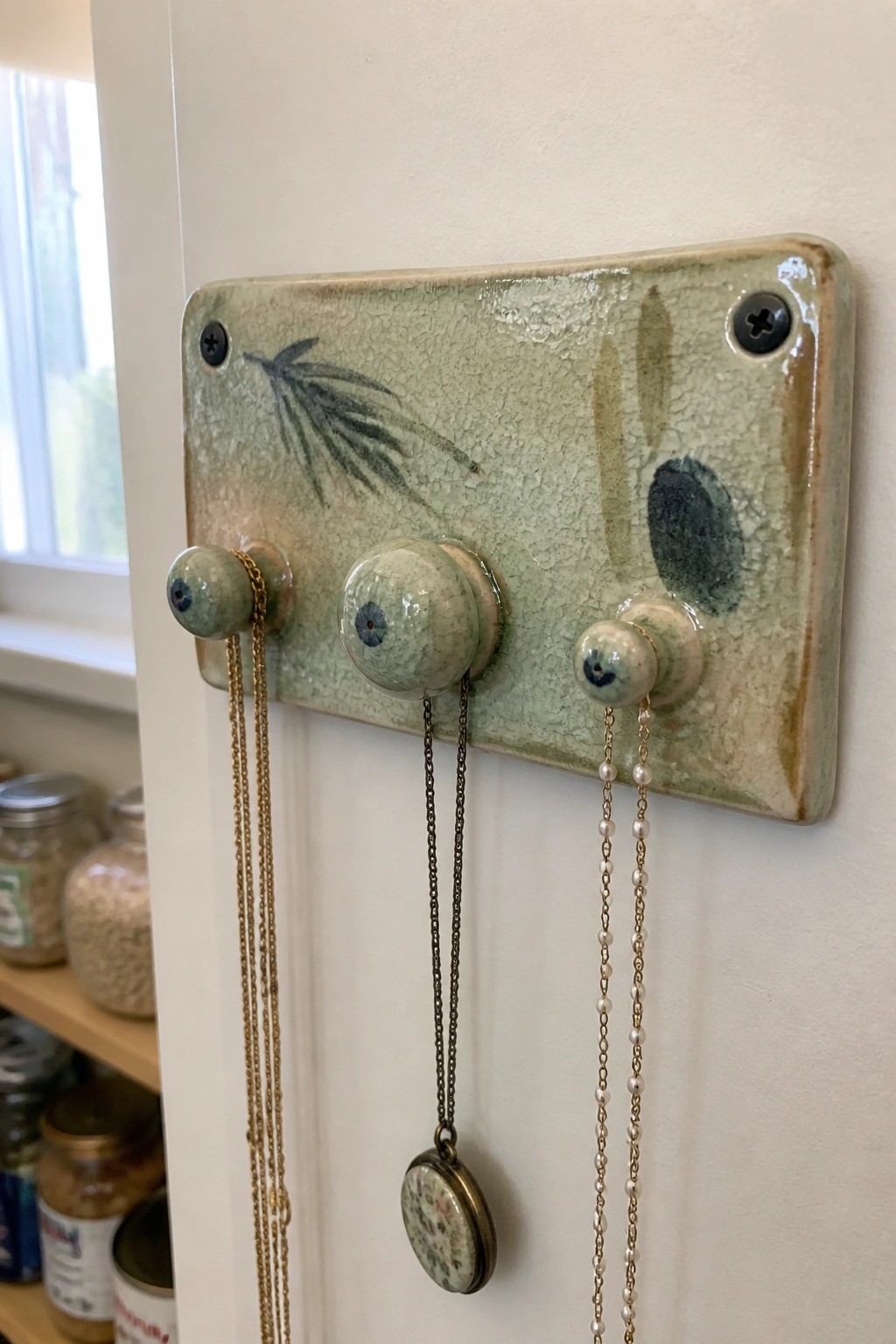
A handbuilt ceramic wall rack made from a flat rectangular plaque fitted with three rounded knobs works well as a jewelry holder. The knobs are formed separately and attached before glazing, then finished with a crackled green glaze and simple painted motifs like a branch or dot. This setup turns a basic wall-mounted piece into functional decor that keeps necklaces untangled and visible. The idea fits into the category of wall holders or small storage objects rather than purely sculptural forms.
What makes this idea useful is how the protruding knobs create clear hanging points without needing extra hardware. You can adapt the shape by making a longer board with more knobs or scaling it down to two for a smaller bathroom wall. Try swapping the painted branch for a different motif that matches your room colors, or use a matte glaze instead of crackled to change the texture. In a bedroom this kind of rack keeps daily jewelry organized while adding a handmade ceramic element that stands out from plain metal hooks.
Hanging Painted Mugs on Peg Rails
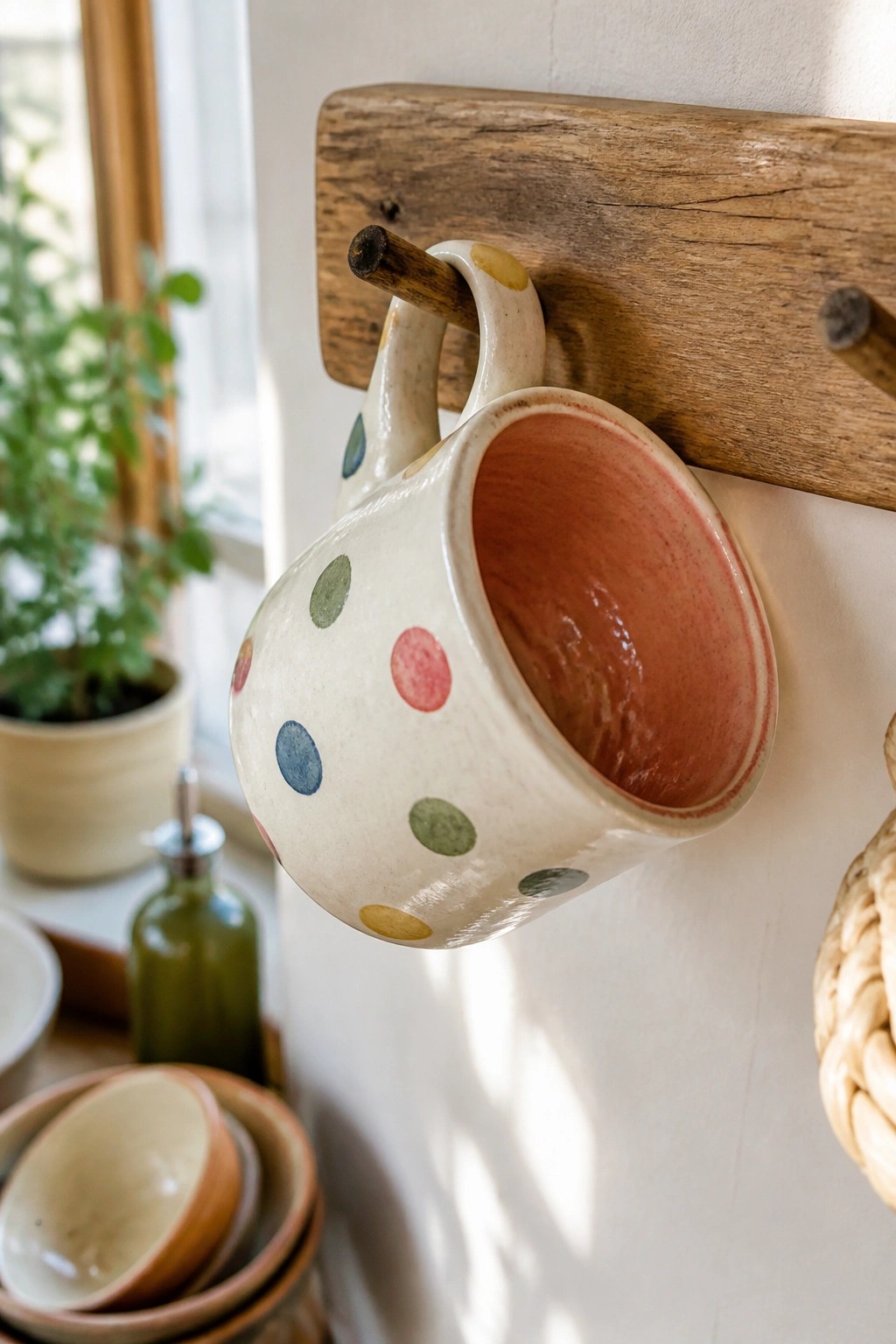
A ceramic mug works as wall decor when its handle is placed over a wooden peg on a simple rail. The white surface carries scattered dots in several colors, while the pink interior glaze shows when the piece hangs at an angle. This keeps the mug accessible and turns a standard kitchen form into a repeating wall element. The painted dots stay basic enough to repeat across multiple pieces without much extra work.
What makes this idea useful is how the handle does the hanging work with no added hardware. You can vary the dot colors or sizes across a set to create a loose pattern on the rail. In a kitchen or small dining area the display stays practical since the mugs come down easily for use. The same approach works with small bowls or cups if you want to shift the scale or shape.
Organic Shaped Ceramic Wall Planters
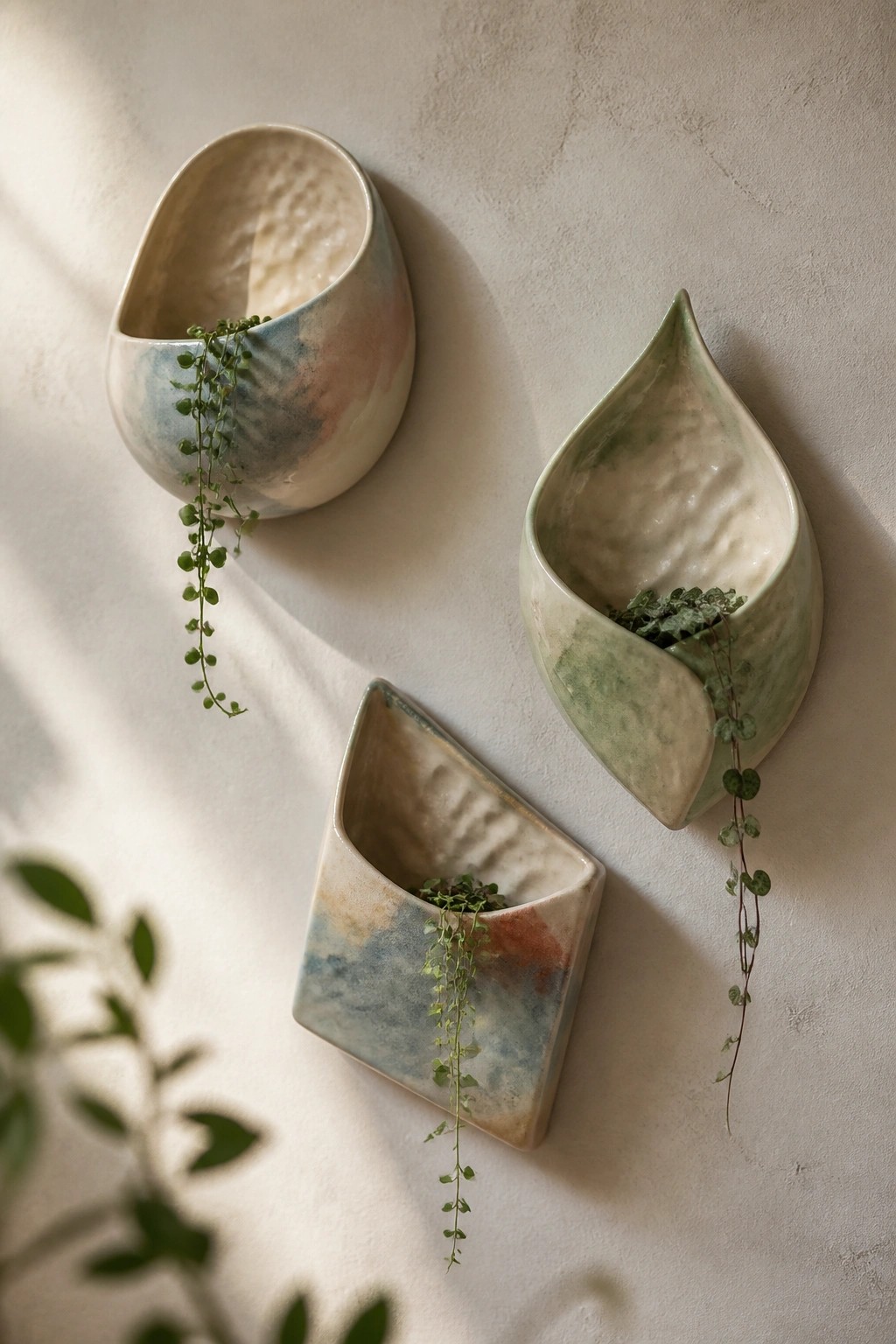
Handbuilt ceramic wall planters give you a way to grow small trailing plants directly on a wall. These pieces use irregular forms such as rounded lobes, pointed tips, and angled edges that create pockets deep enough for soil and roots. Soft washes of green, blue, and earth-toned glaze accent the textured surfaces while letting the plants stand out. The result is a simple planter style that works as both functional holder and wall decor.
What makes this idea useful is how the varied shapes let you cluster several pieces together without crowding a surface. You could adapt the same forms into smaller versions for a single plant or stretch the idea into longer horizontal pockets for multiple stems. In a kitchen or entryway, the wall mount keeps plants off counters while still showing off the greenery. The approach stands out on Pinterest because the clean shapes and trailing vines photograph clearly and translate easily to other color palettes.
Clustered Ceramic Tiles with Impressed Motifs
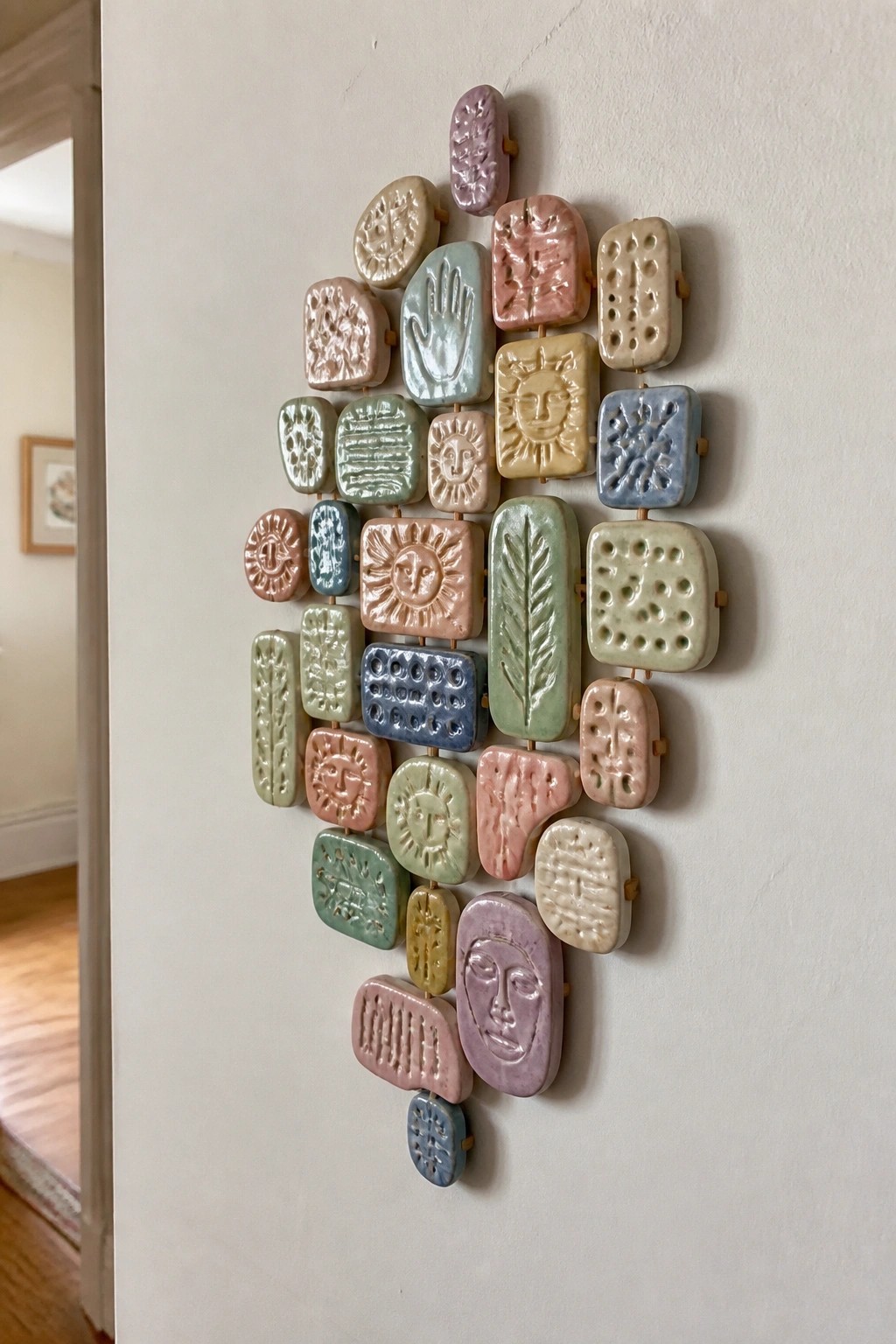
A collection of small handbuilt ceramic tiles can be arranged into a larger wall piece when each tile carries its own impressed or carved design. The tiles here show repeated suns, leaves, faces, and simple patterns, all formed in low relief and finished with matte pastel glazes. Grouping them on the wall without a rigid grid creates an irregular overall shape that reads as one sculptural object rather than separate squares.
What makes this idea useful is that you can build and glaze the tiles individually, which keeps the work manageable and lets you test layouts before committing to a final arrangement. The small size also means you can add or swap tiles later if you want to change the shape or add new motifs. For a simpler version, limit yourself to three repeating designs and keep the color palette tight so the cluster still reads as a single unit. This format works especially well above a desk or in a hallway where a single large piece might feel too heavy.
Hanging Ceramic Fish from a Branch
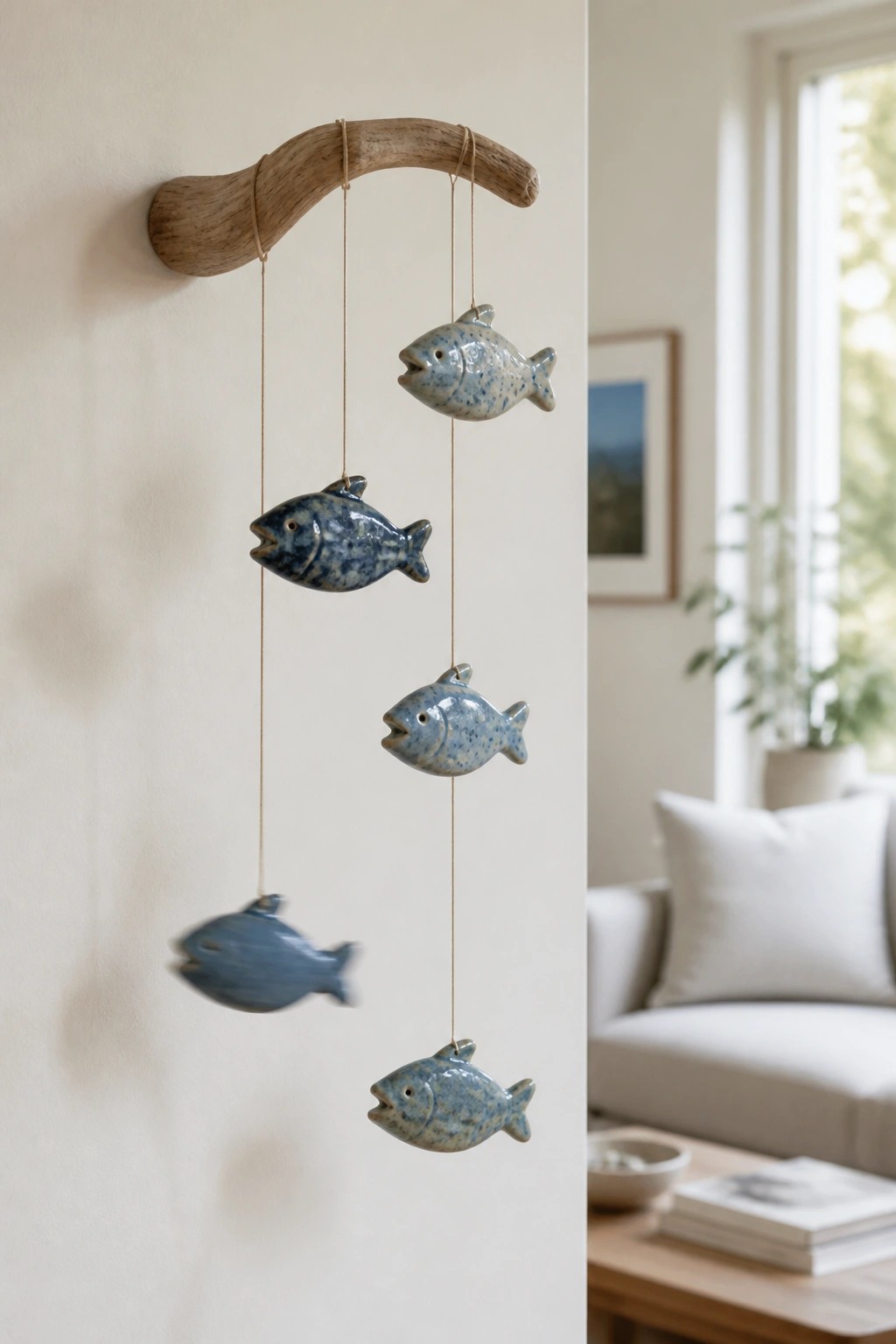
Small handbuilt fish can be turned into a wall hanging by threading them onto strings from a single curved branch. Each fish is formed as a simple solid shape with a loop at the top for hanging and an open mouth detail. Different blue speckled glazes on the same form keep the group cohesive while adding subtle variety. The staggered string lengths let the pieces move slightly and fill vertical space without needing a large frame.
What makes this idea useful is that the branch already provides the hanger so no extra mounting board is required. You can change the fish size or swap the glaze colors to match any room without altering the basic construction. The same method works for other small shapes like birds or leaves if you want to repeat the project. Because each piece stays compact it is also straightforward to pack and give as a gift.
Relief Botanical Wall Tile
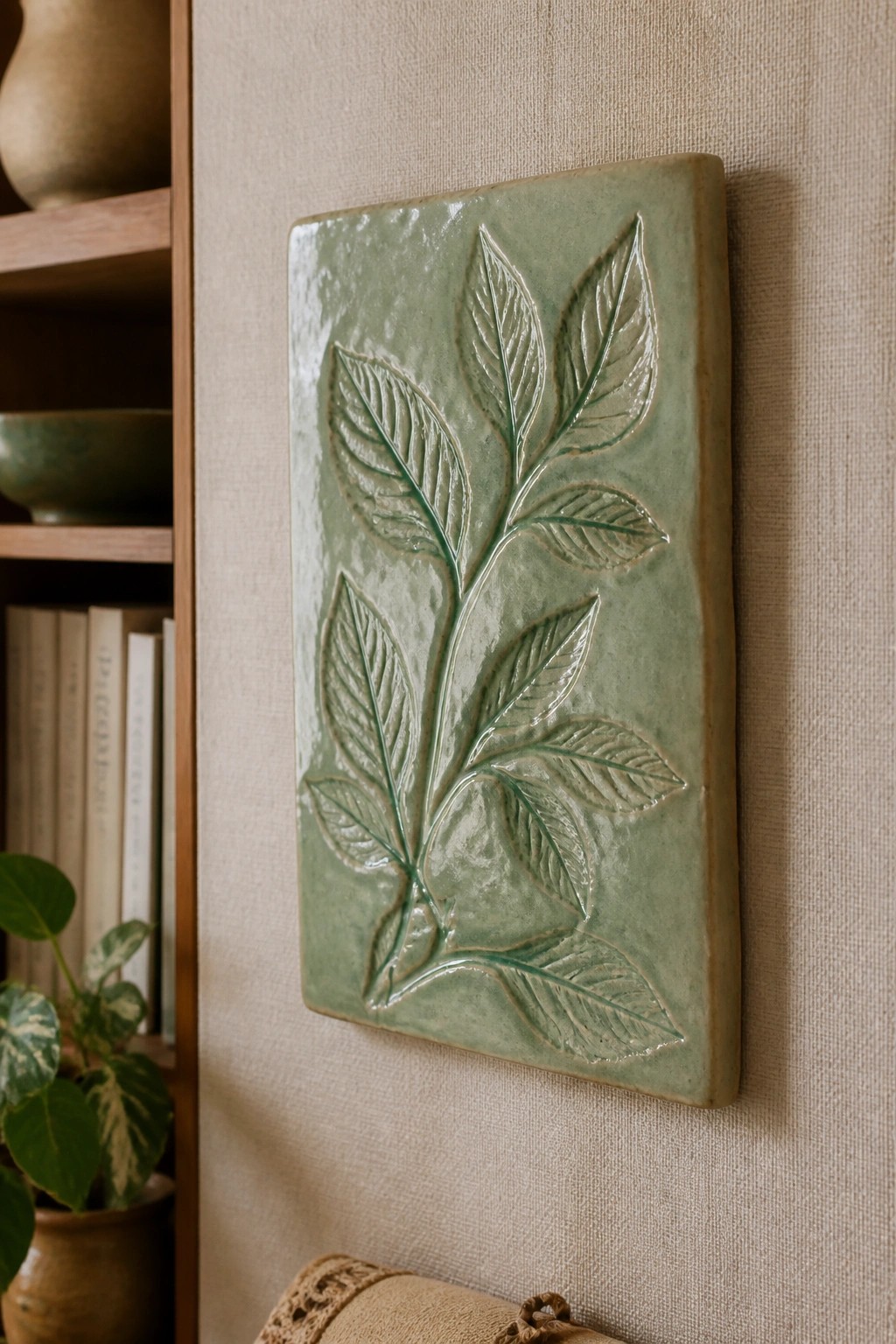
A rectangular ceramic tile built from a flat slab and carved with a raised branch and overlapping leaves creates a dimensional wall piece. The glossy green glaze settles into the recessed veins and edges of the leaves, making the relief stand out clearly against the smoother background. This turns a simple handbuilt form into a focused decor object that emphasizes natural plant shapes without added color or pattern.
What makes this idea useful is how the relief carving works on any size slab, so the same leaf layout can be scaled down for smaller accents or repeated across several tiles for a larger grouping. The design adapts by swapping in different leaf shapes or using a matte glaze instead to change the look for kitchens or entryways. For a gift, something like this stays practical because it needs only basic slab work and one firing, and the finished piece hangs easily with a simple wire or ledge.
Wall-Mounted Ceramic Key Dish
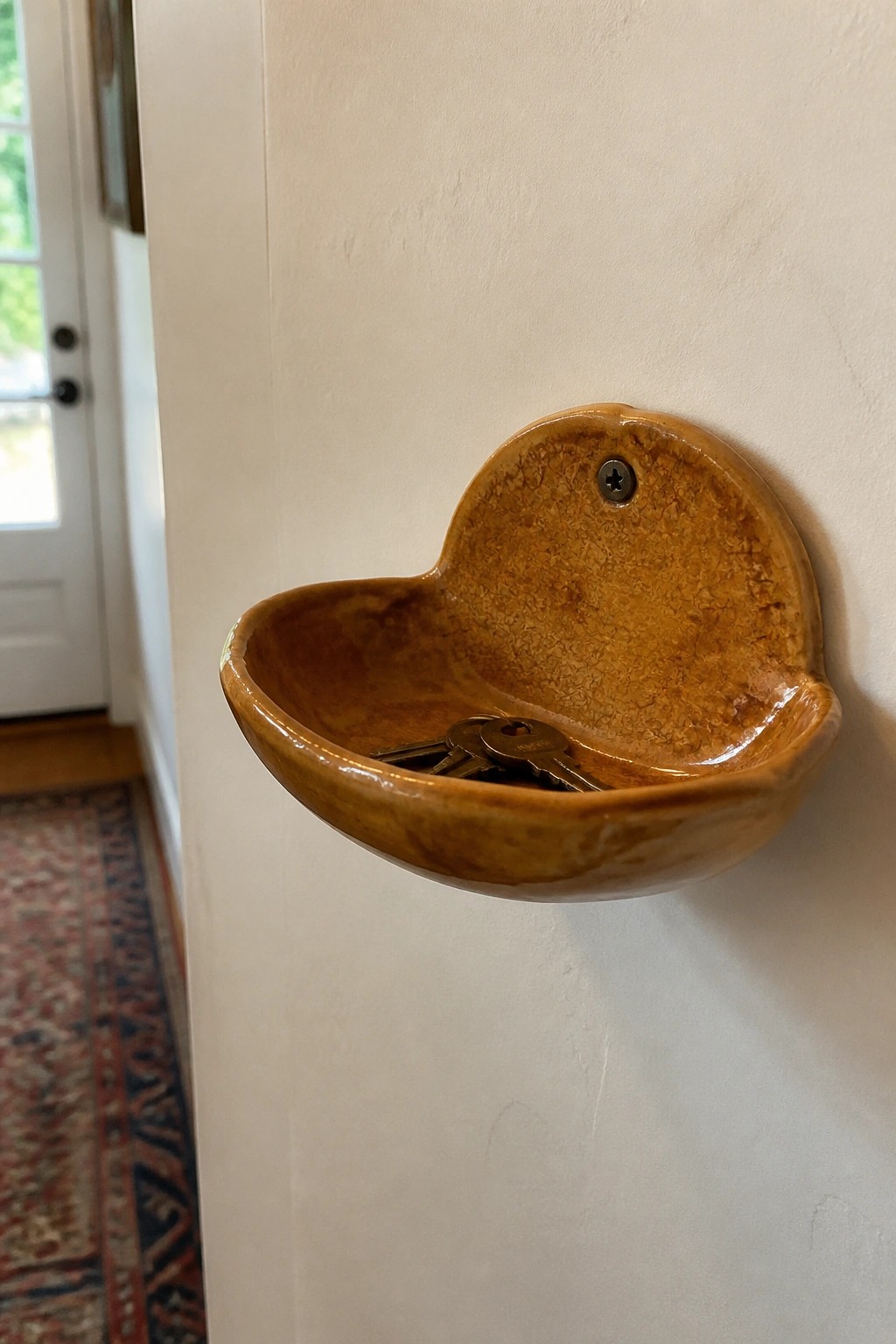
A handbuilt ceramic dish formed into a shallow, open scoop makes an effective wall key holder. The shape is pinched or slab-built with one side raised higher for mounting, then finished with a glossy, mottled brown glaze that highlights the handmade surface. A single screw through the upper section keeps it fixed in place while the curved bowl catches keys and prevents them from falling. This approach turns a basic holder into a small sculptural object that fits the wall decor category.
What makes this idea useful is how the simple curve handles daily items without extra hardware. You could adapt the same shape for a bathroom to hold rings or a hallway spot for mail by widening the base slightly. The wall mount keeps surfaces clear and works in tight entryways where a table is not practical. For a version that feels more custom, try varying the glaze to a matte finish or adjusting the depth so it holds bulkier keychains.
Ceramic Hand Gesture Hooks
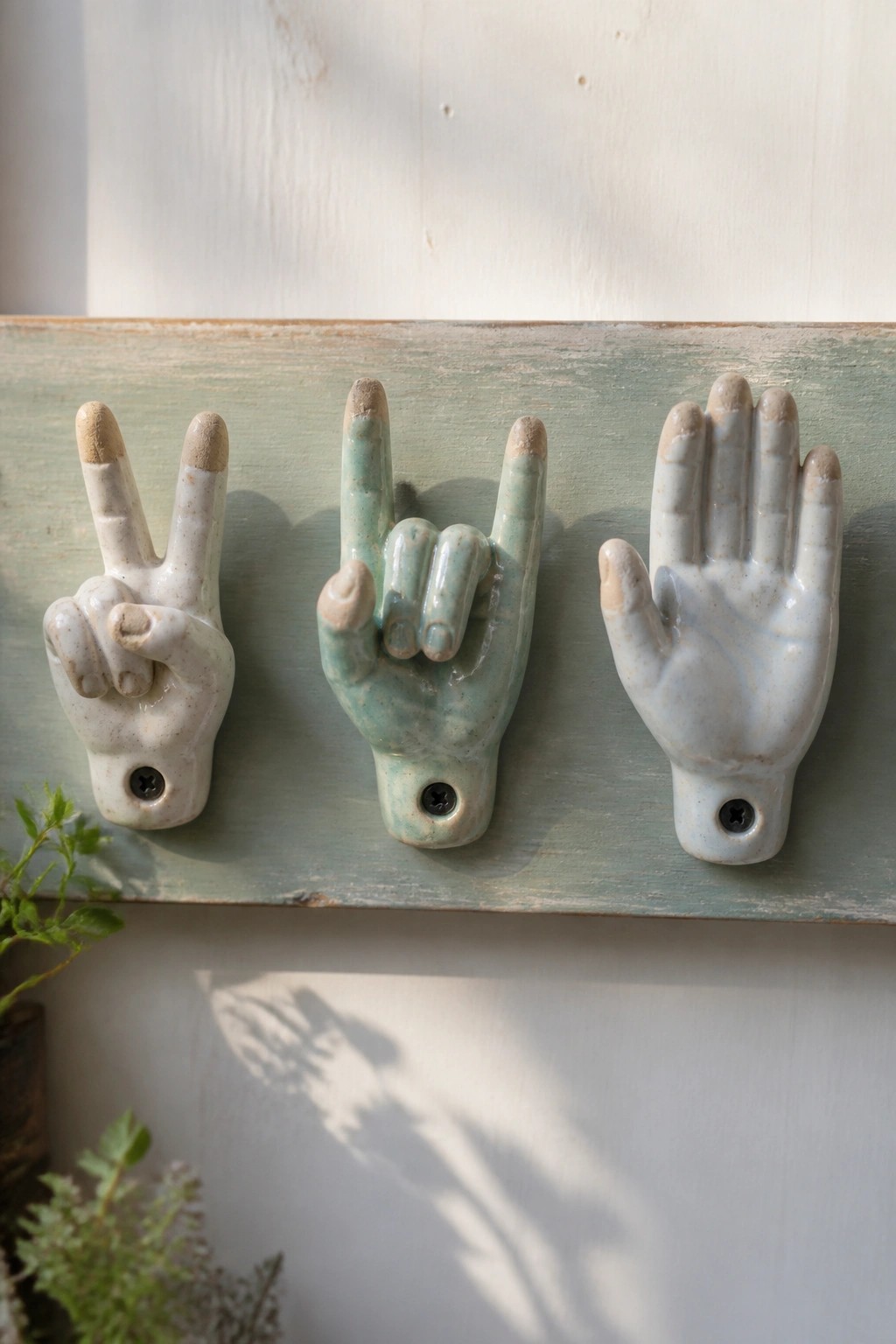
Hand-shaped ceramic hooks give a simple wall board extra function while staying sculptural. Each piece is built as a life-sized hand making a clear gesture, such as a peace sign, rock-on sign, or open palm, then mounted with a screw through the wrist area. The speckled glaze and rounded finger forms keep the details visible without extra decoration, turning an ordinary hook into a small wall object.
What makes this idea useful is how the same hand shape can be changed to other gestures or simplified to a closed fist for quicker building. The compact size works well on a narrow entryway board, above a desk, or along a plant shelf where larger pieces would crowd the space. You could rework the form into towel hooks for a bathroom or small coat hooks in a mudroom by adjusting the wrist angle and adding a deeper curve. The strong outlines also show up clearly in photos, which helps the idea spread on Pinterest.
Oval Ceramic Tray Recessed Into a Floating Shelf
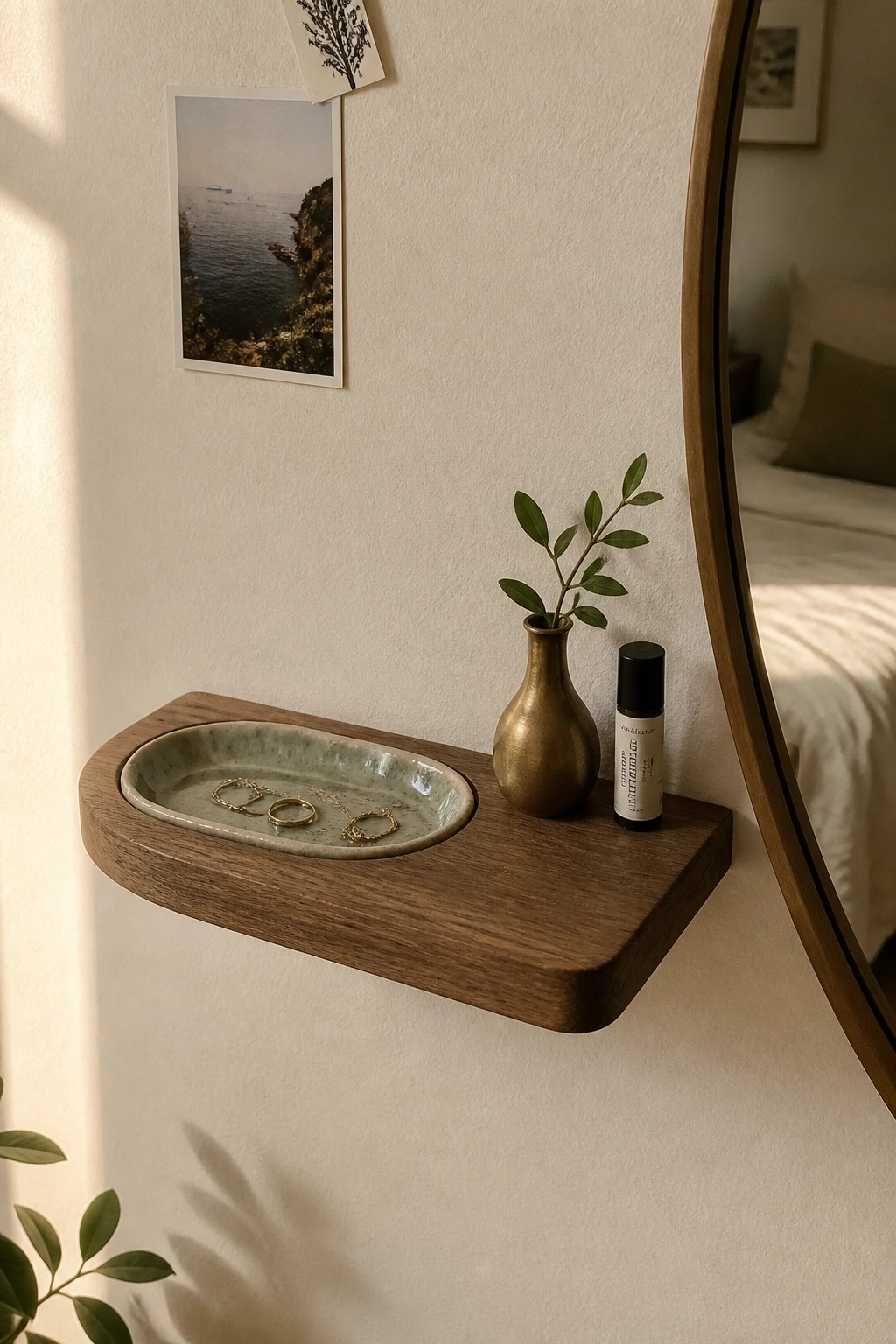
A handbuilt oval ceramic tray with a soft speckled glaze sits inside a recessed section of a wooden wall shelf. The low, wide shape and matte surface keep small items like rings and chains contained without adding visual bulk. This approach turns a simple tray into a built-in wall display that works as both storage and decor.
The shape does a lot of the work here because the oval fits neatly into the shelf cutout and stays put without hardware. You could scale the same tray down for a bathroom ledge or make a longer version for keys and mail near an entryway. The speckled glaze pairs easily with wood, so swapping in a matte white or earthy brown version would change the look without altering the form. This idea shows up well on Pinterest because it combines a useful object with clean wall mounting in one compact piece.
Ceramic Wall Hooks with Relief Shelves and Tiny Figures
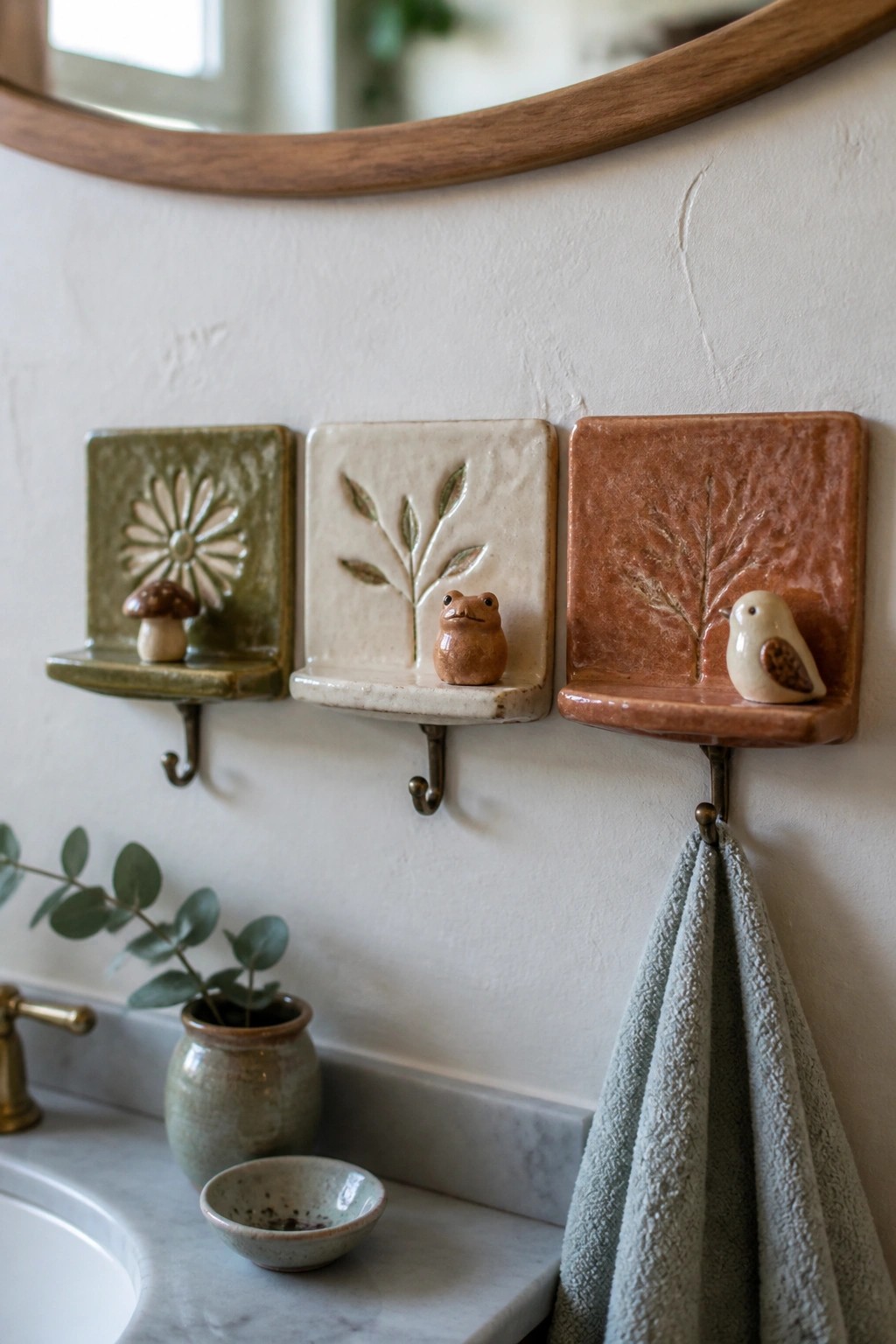
These handbuilt ceramic pieces start as square tiles pressed with plant or flower reliefs, then formed into shallow wall shelves that sit above a simple metal hook. Each one carries a small sculpted figure on the ledge, such as a mushroom, frog, or bird, while the glazes stay in matte earth tones that highlight the raised details. The combination turns a basic hook into a small decorative object that still holds towels or lightweight items.
What makes this idea useful is the repeatable square format that lets you make a set without much extra effort. You can change the relief motif or swap the figure for something else while keeping the same shelf-and-hook structure. The small scale fits narrow bathroom walls or entryways where larger pieces would crowd the space. For quick versions, skip the figure and just use the relief texture with a single glaze color.
Ceramic Animal Face Masks
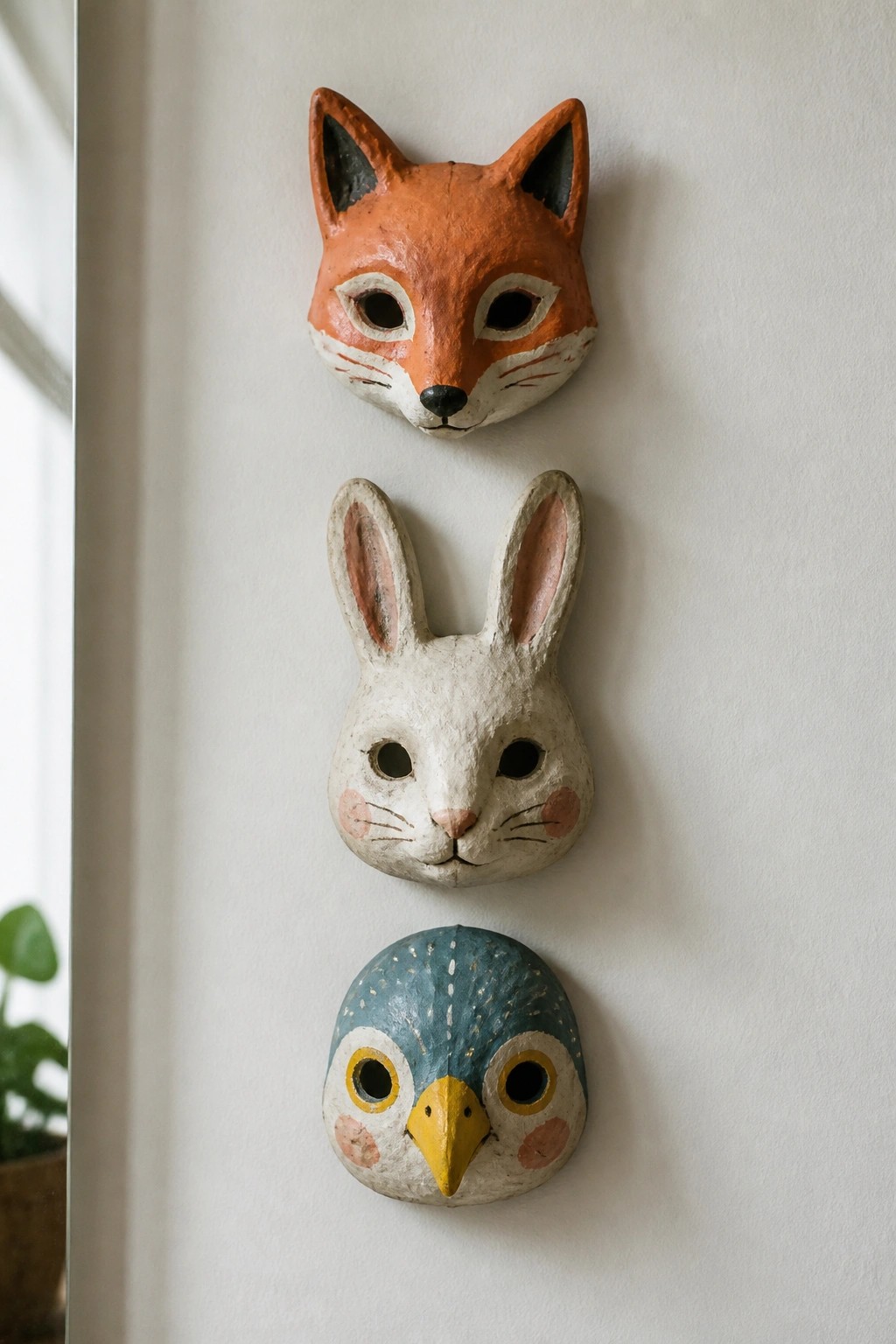
Handbuilt clay masks shaped as animal heads offer a straightforward way to create sculptural wall decor. Each piece is formed with basic protruding ears, snouts, or beaks, then finished with painted details like eye rings, whiskers, and color blocks on the cheeks and forehead. The fox, rabbit, and owl versions here use matte painted surfaces that highlight the modeled forms without needing complex glazing. This approach falls into the category of decorative wall objects that can be grouped or hung singly.
The flat backs on these masks make them simple to hang with a single nail or hook. You could rework the same basic oval or round slab into other animals by changing only the ear placement and painted markings. They suit narrow wall spaces like hallways or above a desk where a full sculpture would feel too large. For variety, try scaling the size up slightly or leaving the surface more textured instead of painted for a different look.
Handbuilt Clay Mosaic Mirror Frame
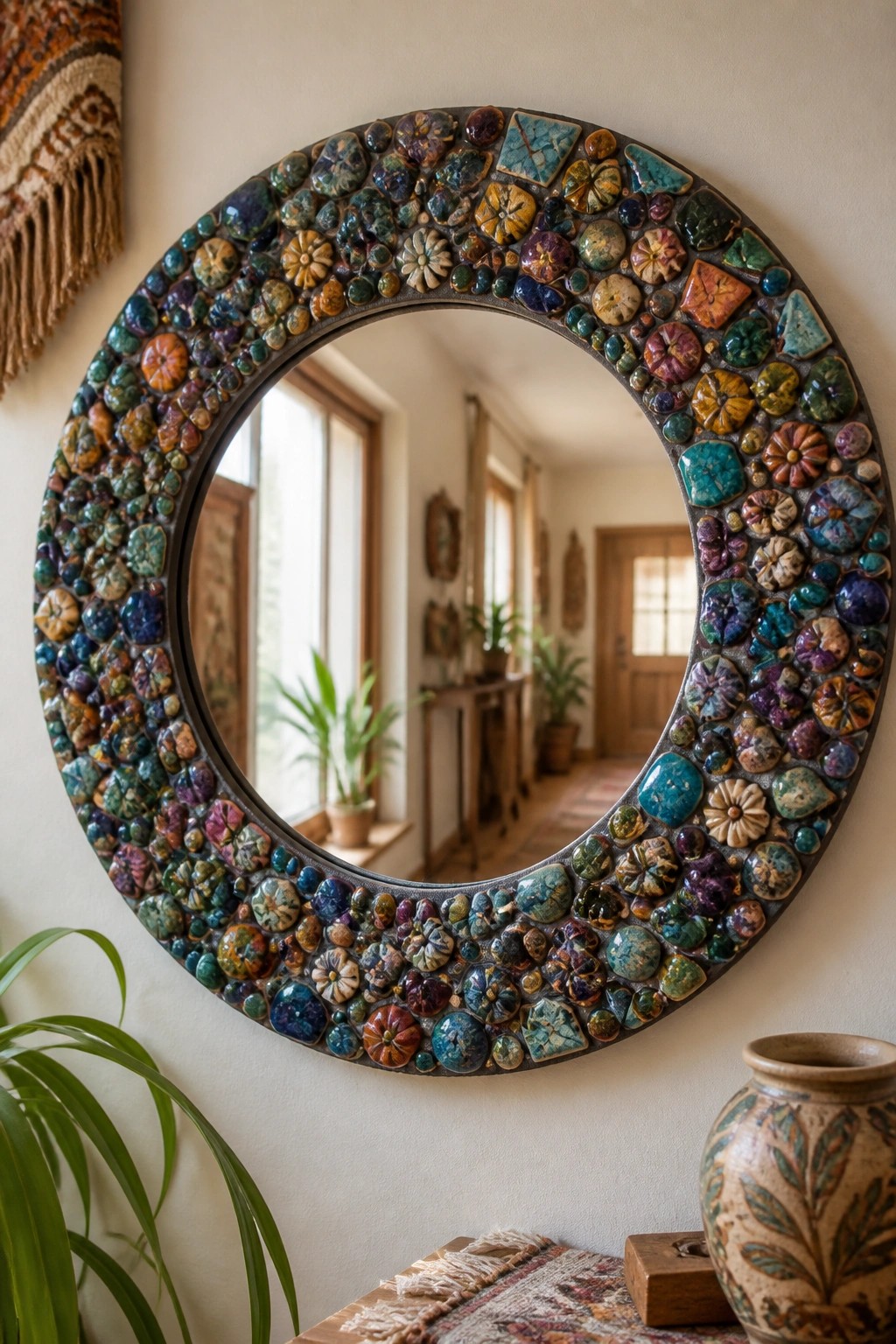
A round mirror sits inside a wide border built from dozens of small ceramic pieces formed by hand. Makers press slabs or pinch simple shapes like rounds, flowers, and geometric tiles, then arrange them in a dense ring around the glass. The mix of matte and glossy glazes in blues, greens, oranges, and purples creates contrast while the irregular edges and varied sizes add texture. This turns an ordinary mirror into a sculptural decor object that works as a focal point on any wall.
What makes this idea useful is how the loose arrangement of shapes covers small gaps or uneven cuts, so the frame stays approachable for most skill levels. The same method adapts to a smaller bathroom mirror by using fewer tiles or to a larger entryway piece by adding more layers around the edge. Group colors by tone for a calmer result or scatter bright accents for more energy. In a hallway or above a shelf, the mirror bounces light while the clay border supplies color and depth without extra hardware.
Scalloped Rim Bowl as a Shelf Planter
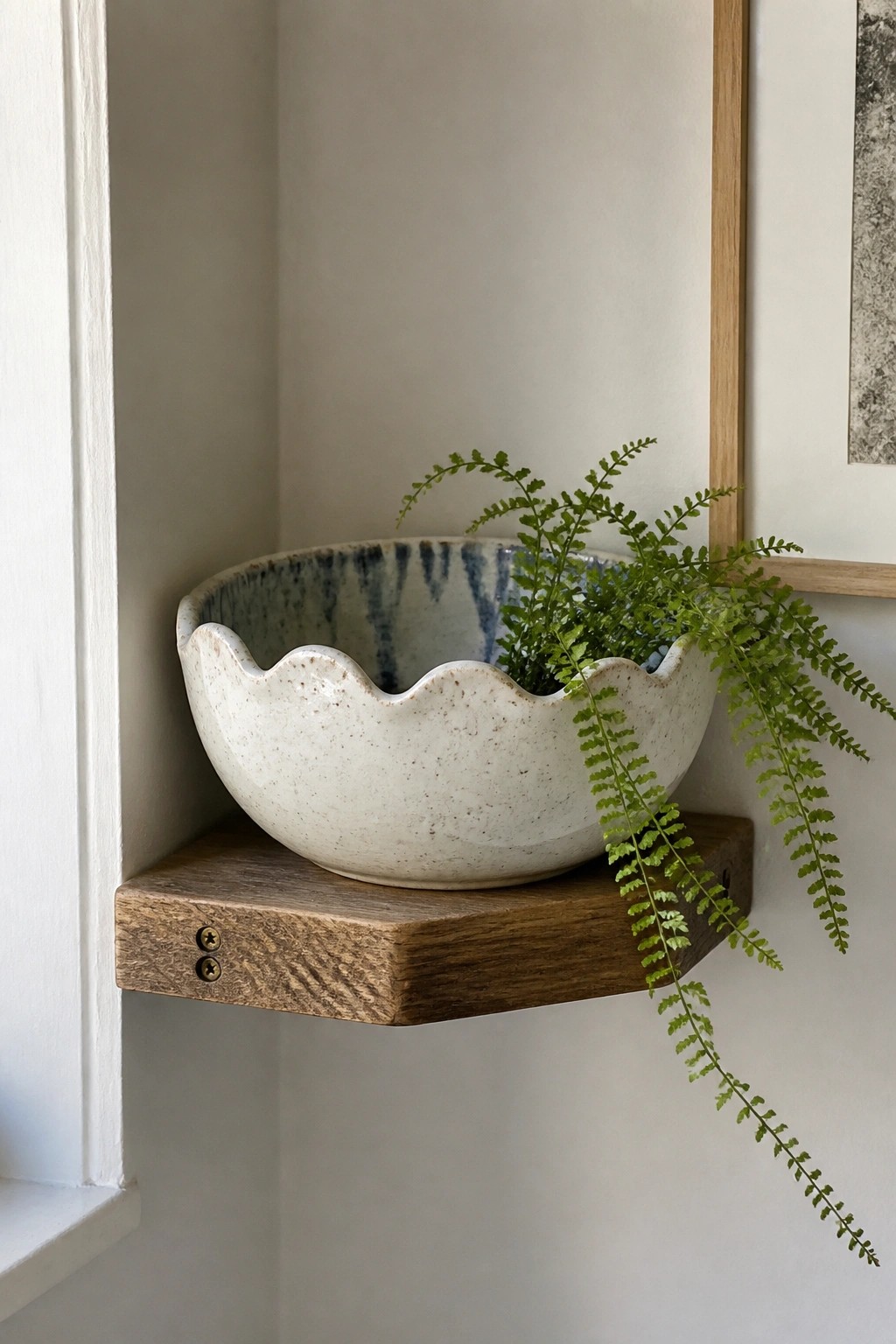
A handbuilt ceramic bowl with a wavy scalloped rim makes a strong choice for wall shelf displays. The irregular edge and speckled matte exterior contrast with the streaked blue interior glaze, giving the form more presence than a plain round bowl. This shape works as a simple planter that can hold a small plant while the trailing leaves spill over the side.
The scalloped detail helps the bowl read as a deliberate piece rather than just a container. You could repeat the same rim treatment on a set of smaller dishes for bathroom shelves or desk trays. For a gift, the same bowl form can be scaled down and left unglazed on the outside to show more of the clay texture.
Frequently Asked Questions
1. How can I ensure heavy sculptural ceramics stay securely mounted on the wall? Use heavy duty picture hooks or French cleats rated for at least twice the weight of each piece. Locate wall studs with a stud finder and drive screws directly into them for maximum support. For lighter handbuilt ceramics, adhesive strips designed for artwork work well if you clean the wall surface thoroughly first. Always test the mount by gently tugging after installation.
2. What tools and materials do I need to start these handbuilt wall decor projects myself? Gather air dry or kiln fired clay, basic sculpting tools like wire cutters and ribs, and mounting hardware such as D rings or sawtooth hangers. You will also want sandpaper for smoothing edges, acrylic paints or glazes for finishing touches, and a level to ensure straight placement. Start with small practice pieces to build confidence before tackling larger wall installations.
3. How do I choose which ceramic pieces work best together in one display area? Group items by similar color tones or textures first, then vary their sizes and shapes for visual interest. Place taller pieces at the center or edges to create balance and keep spacing even, about four to six inches apart. Consider the room’s overall style so the handbuilt elements enhance rather than clash with existing furniture and paint colors.
4. Can I display these sculptural ceramics without making permanent holes in my walls? Yes, try leaning larger pieces on sturdy floating shelves or using removable adhesive hooks rated for the weight. Tension rods across a nook or over the door frame can also hold lightweight ceramics in place with added wire or twine. These methods let you rearrange displays easily while protecting rental walls from damage.
5. How should I maintain and clean wall mounted handbuilt ceramics over time? Dust pieces monthly with a soft microfiber cloth or a gentle brush to avoid scratching surfaces. For deeper cleaning, use a slightly damp cloth with mild soap and dry immediately. Check mounting hardware every six months for loosening and avoid placing displays near direct heat sources or high humidity areas that could affect the clay over time.

Pottery Path is my cozy corner of the internet where I share clay ideas, pottery inspiration, and simple projects you can recreate at home. I love exploring everything from air dry clay to handbuilt pottery to cute minis that brighten your day. My goal is to make clay crafting feel easy, fun, and welcoming for anyone who wants to try it.
You will find beginner friendly tutorials, creative pottery painting ideas, and lots of warm inspiration for slow and happy crafting. If you enjoy hands on creativity, this space will feel like home.