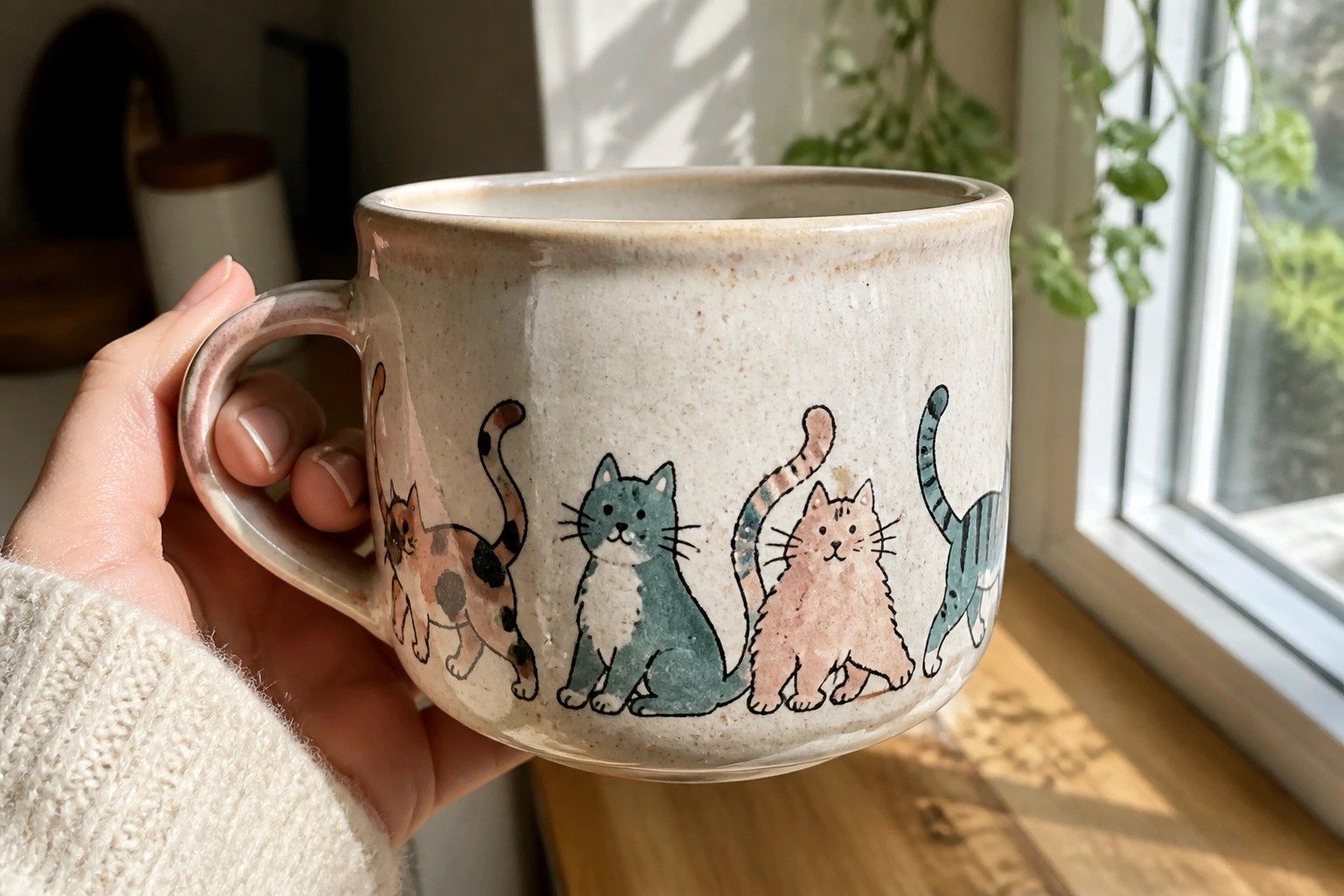
I often find myself reaching for my brushes when I have some plain pottery pieces around.
Patterns with illustrations can turn them into something more interesting to look at.
I’ve tried drawing flowers or animals in a loose style and it usually works out fine.
These ideas are simple enough that anyone can give them a try at home.
I put together some examples that focus on playful patterns to get started.
Cat Illustrations Wrapped Around a Ceramic Mug
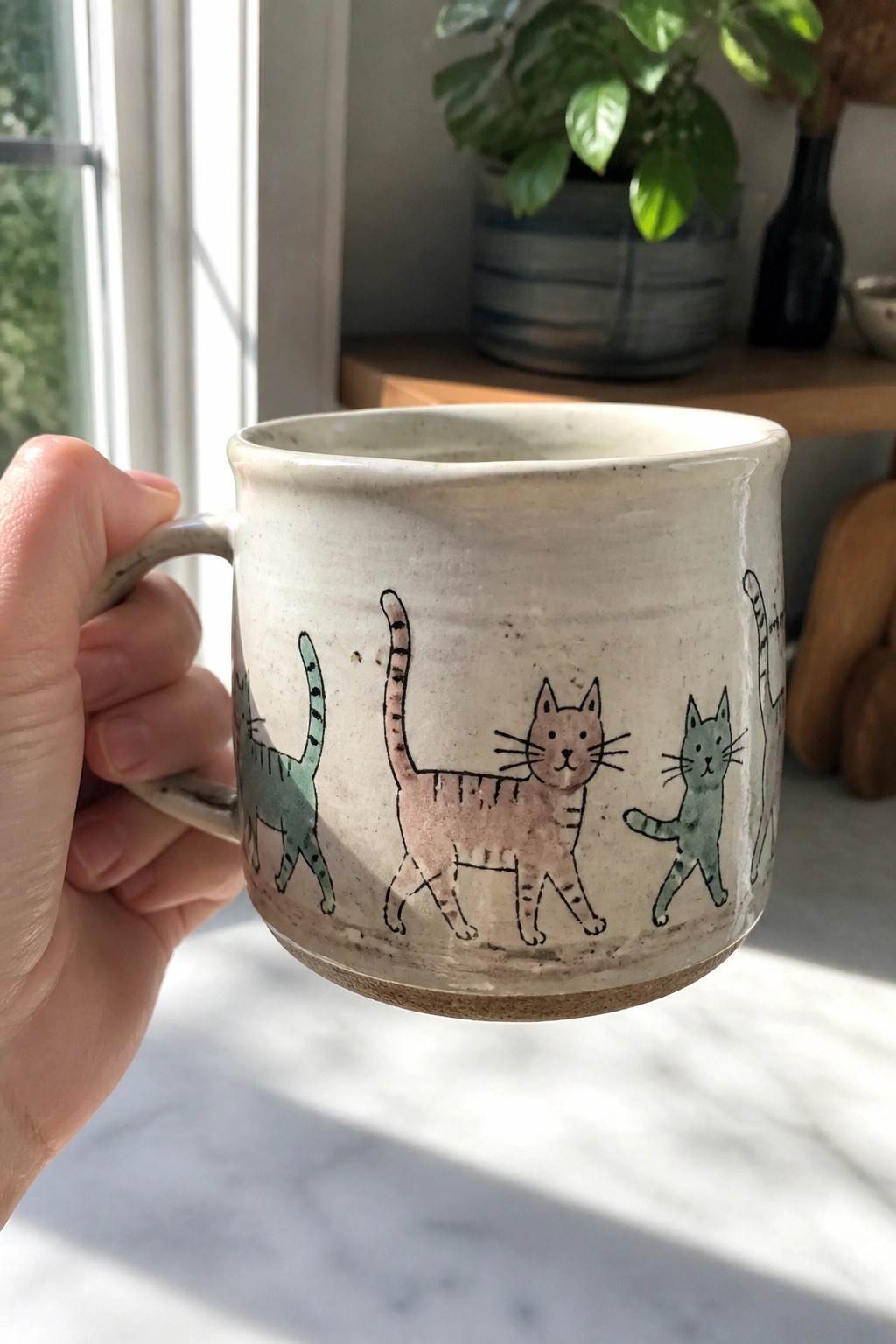
A ceramic mug painted with a line of walking cats offers a simple way to add an illustrated pattern to a functional piece. The design places several cats side by side around the body, using thin black lines and a few muted colors to keep the shapes clear on the curved surface. This approach works because the repeating figures stay readable from every side without crowding the space. The idea belongs in the illustrated pattern category where basic animal outlines repeat on everyday pottery.
What makes this idea useful is how the walking pose lets you fit more or fewer cats depending on the mug diameter. You can change the colors or swap one cat for a different animal while keeping the same line format. In a kitchen this kind of mug stands out on a shelf or at a desk because the painted band draws attention without covering the whole surface. The same walking motif could move to a small bowl or a planter by adjusting the scale of the figures.
Lemon Slice Ceramic Bowl
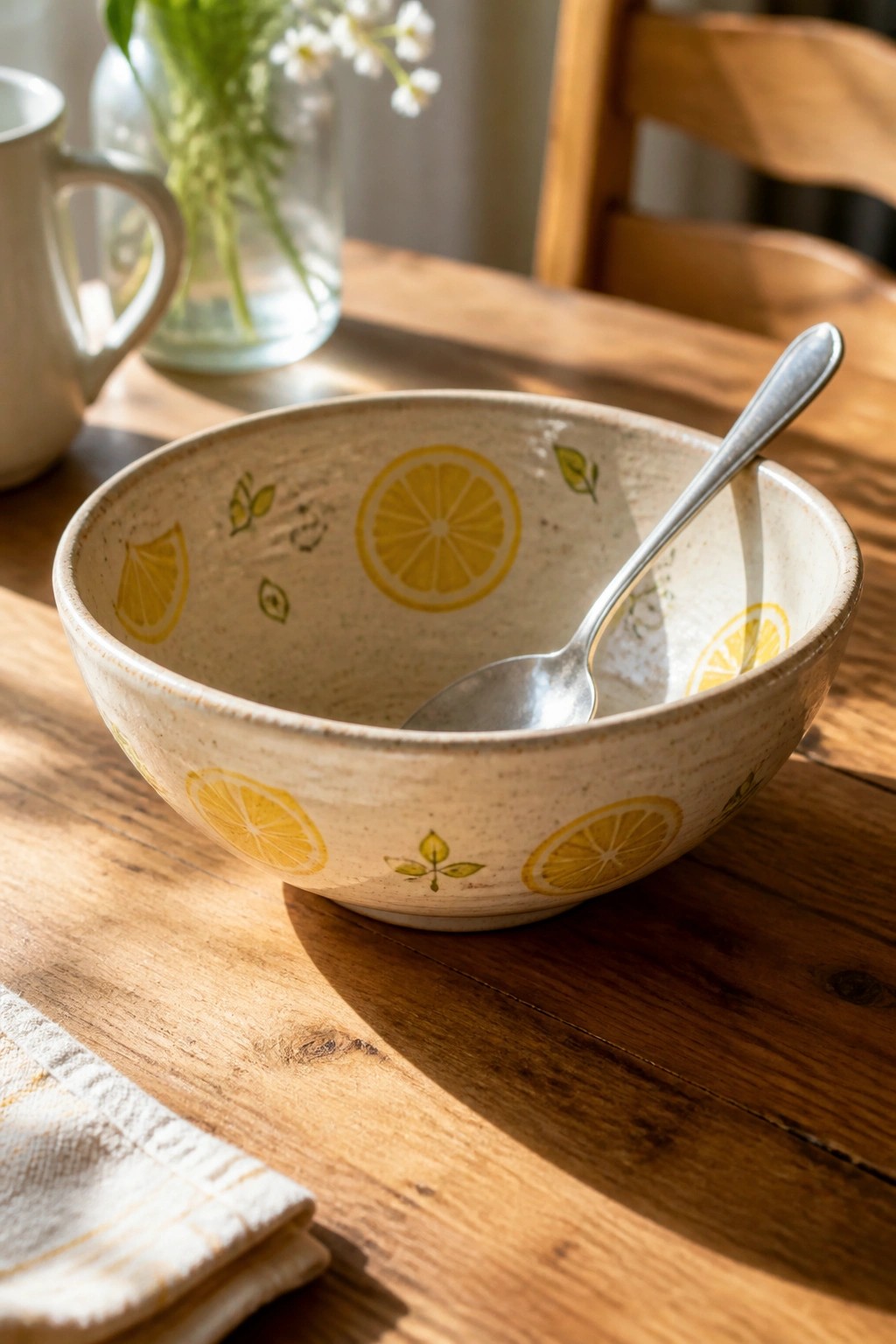
A handmade ceramic bowl decorated with repeated yellow lemon slices and small green leaf motifs offers a simple kitchen project. The light speckled surface provides contrast that keeps the illustrations clear while the rounded form allows the pattern to wrap naturally around the sides. This style fits well for bowls because the open shape gives space to repeat the fruit and leaf elements without crowding.
What makes this idea useful is how the citrus motif adapts easily to other kitchen pieces like plates or mugs using the same colors. In a kitchen this kind of bowl works for cereal, salads, or fruit while staying practical for everyday meals. The same pattern could be reduced to just leaves on a smaller dish or extended across a tray set for a matching collection.
Smiling Suns with Pastel Dots on a Rimmed Plate
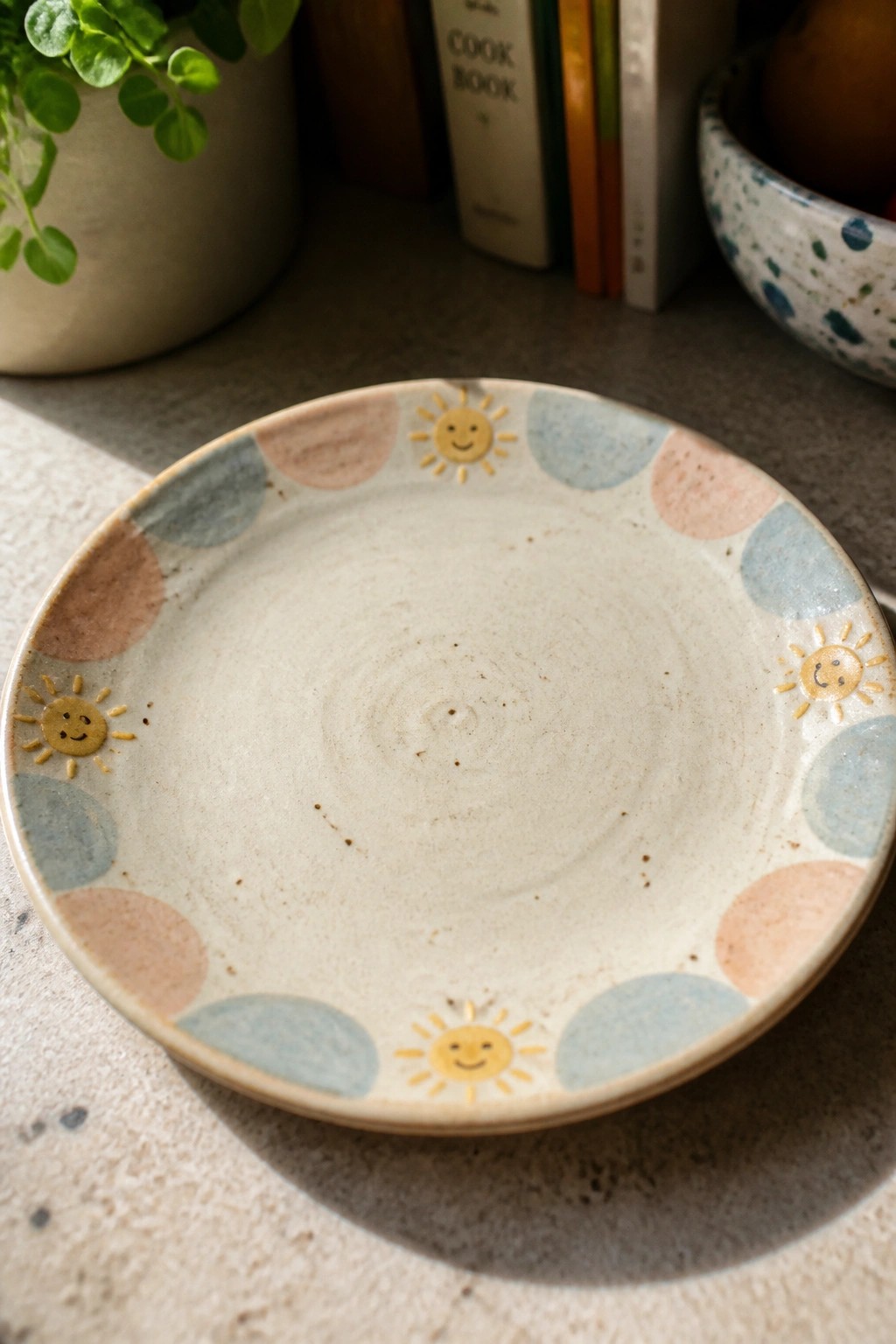
A shallow ceramic plate works as the base for this idea, with a wide rim painted in repeating pastel semicircles and small yellow sun faces spaced evenly around the edge. The suns use simple line details for eyes and smiles while the center stays plain under a light speckled glaze. This layout keeps the focus on the border pattern without crowding the usable surface. The approach fits the category of a decorative kitchen plate or small tray that can still hold food or small objects.
The painted border makes the plate easy to adapt to other round forms like a larger serving platter or a set of dessert plates. You can scale the suns down for a mug or stretch the same semicircle colors around a ring dish. In a kitchen this shape works well as a spoon rest or butter dish because the rim stays visible when the center is in use. The idea also translates quickly to bisque pieces if you want to skip throwing your own form.
Pattern Grid Tray with Mixed Illustrated Motifs

A rectangular ceramic tray with integrated handles uses a grid layout to display many small illustrated patterns side by side. Each square holds a separate motif such as stars, flowers, checkers, or leaf clusters, painted in terracotta, blue, and green on an off-white clay surface. This turns a basic tray shape into a surface for testing lots of different patterns at once without committing to one large design.
What makes this idea useful is that the tray works well on a dresser for jewelry or on a kitchen counter for small items. You could repeat just three or four of the motifs on a set of tiles or a larger platter to create a matching collection. The divided layout also makes it easy to practice brush control on a single piece before moving to bigger projects.
Ocean Scene Bowl with Painted Waves and Fish

A small ceramic bowl gets its main impact from a continuous band of hand-painted waves that circle the upper half of the exterior. Below the waves, simple fish, starfish, and seaweed are added in the same blue palette against the cream clay surface, while the inside is finished in a solid turquoise glaze. The design uses the bowl’s rounded shape to let the wave line flow naturally around the form without extra sculpting.
The compact size works well for holding keys, jewelry, or small desk items. You could repeat the same wave-and-fish layout on a larger planter or a set of smaller ring dishes by adjusting the spacing of the motifs. Keeping the pattern to one clear horizontal band makes it straightforward to paint and easy to match with other coastal pieces.
Mushroom Illustrations on a Leaf-Shaped Tray

A leaf-shaped ceramic tray gives you a wide, flat surface that works well for painting small repeating motifs like mushrooms. The design uses simple red-capped mushrooms with white spots placed at different angles across the leaf, along with thin green foliage lines to fill the spaces between them. The raised edges keep the form functional as a small tray while the painted details stay contained within the natural leaf outline. This style fits the category of illustrated pattern trays that combine a recognizable shape with scattered nature motifs.
What makes this idea useful is that the leaf form already suggests the subject, so the mushrooms read as part of the same scene rather than random decoration. The small scale means you can finish the painting in one session and still have room for several motifs without crowding. A piece like this works especially well as a catch-all for keys or rings near a sink or on a nightstand. You could adapt the same shape and layout by swapping the mushrooms for other simple icons such as berries, acorns, or ferns.
Crescent Moon Ring Dish
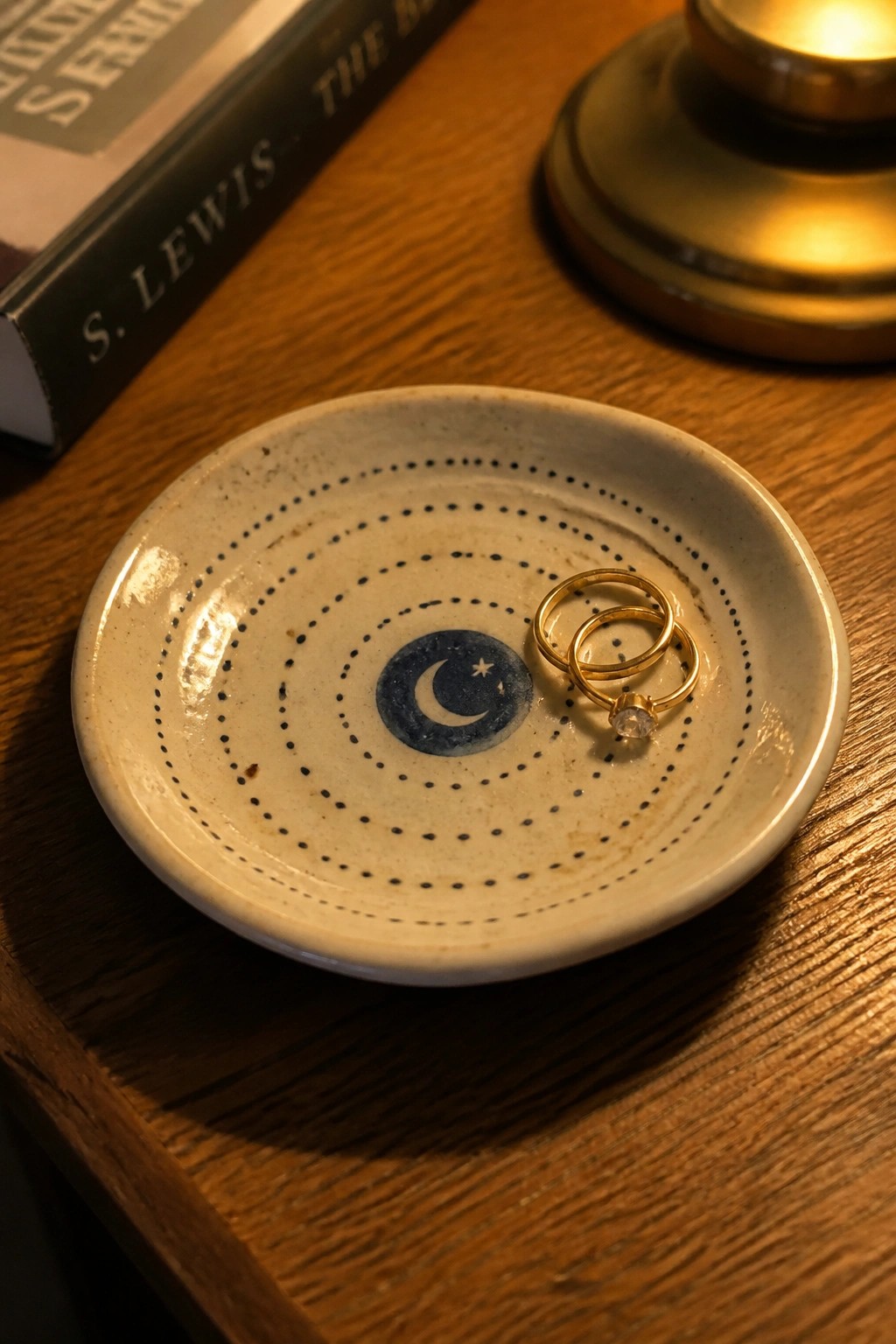
A small ceramic ring dish painted with a central blue crescent moon and star makes a simple but effective jewelry holder. Concentric rings of small dots create a clean frame around the motif while leaving plenty of open space on the white glazed surface. The round, shallow form keeps the piece compact and easy to place on a flat surface without taking up much room.
What makes this idea useful is how the painted center draws the eye so the dish functions as both storage and decor. You can adapt the same dotted border style to other small motifs or repeat the design across a set of dishes in different sizes. The compact scale works especially well on a nightstand or dresser where rings need a consistent spot, and the motif can be swapped for initials or a different symbol if you want to personalize it for a gift.
Celestial Constellation Tealight Holder
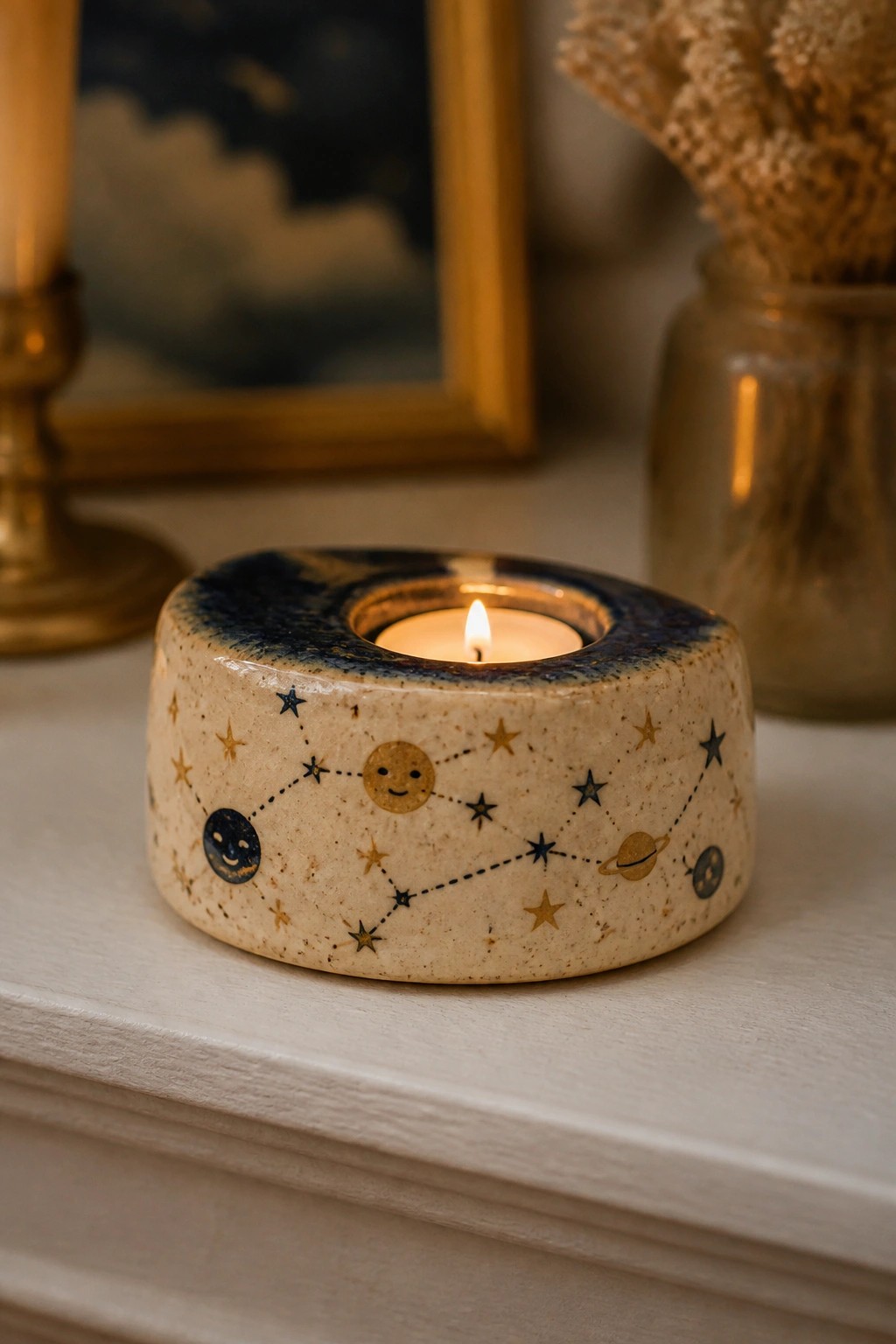
A low round ceramic tealight holder uses a speckled beige clay body as the base for a hand-painted constellation pattern. Simple dotted lines connect stars, a ringed planet, a small moon with a face, and a sun with a face to form the design. The dark blue rim around the candle opening provides contrast and keeps the focus on the central flame. This approach turns a basic candle piece into a decorative object through illustrated motifs rather than complex shaping.
The compact shape fits easily on a windowsill, shelf, or bedside table where larger pieces would crowd the space. You could repeat the same dotted-line pattern on a matching set of small dishes or expand it across a larger tray by adding more stars. Painting the motifs in gold and black on a light speckled surface helps the design photograph clearly for sharing. The idea adapts well to other small holders or ring dishes if you keep the scale of the illustrations consistent with the object size.
Wildflower Bouquet on a Hanging Ceramic Plaque

A rectangular ceramic plaque with a hole at the top creates a straightforward hanging decor piece that needs no additional hardware beyond a simple hook or nail. The idea centers on painting a loose vertical bouquet of mixed wildflowers across the flat surface using yellow, pink, blue, and purple tones on a cream base. Stems and leaves stay visible while the flower shapes vary in size and placement to fill the space without crowding. This approach works well for any flat slab project where the goal is an illustrated pattern rather than a functional vessel.
What makes this idea useful is how the flat shape lets you focus on the painting without worrying about curves or rims. You could scale the same bouquet layout down for small tiles used as plant labels or up for a larger wall piece above a desk. Swapping the flower colors or adding a single extra bloom gives an easy way to personalize it for different rooms. In a kitchen or entryway, this kind of plaque stands out on Pinterest because the vertical arrangement reads clearly even in a small thumbnail.
Illustrated Ceramic Bird Figurine
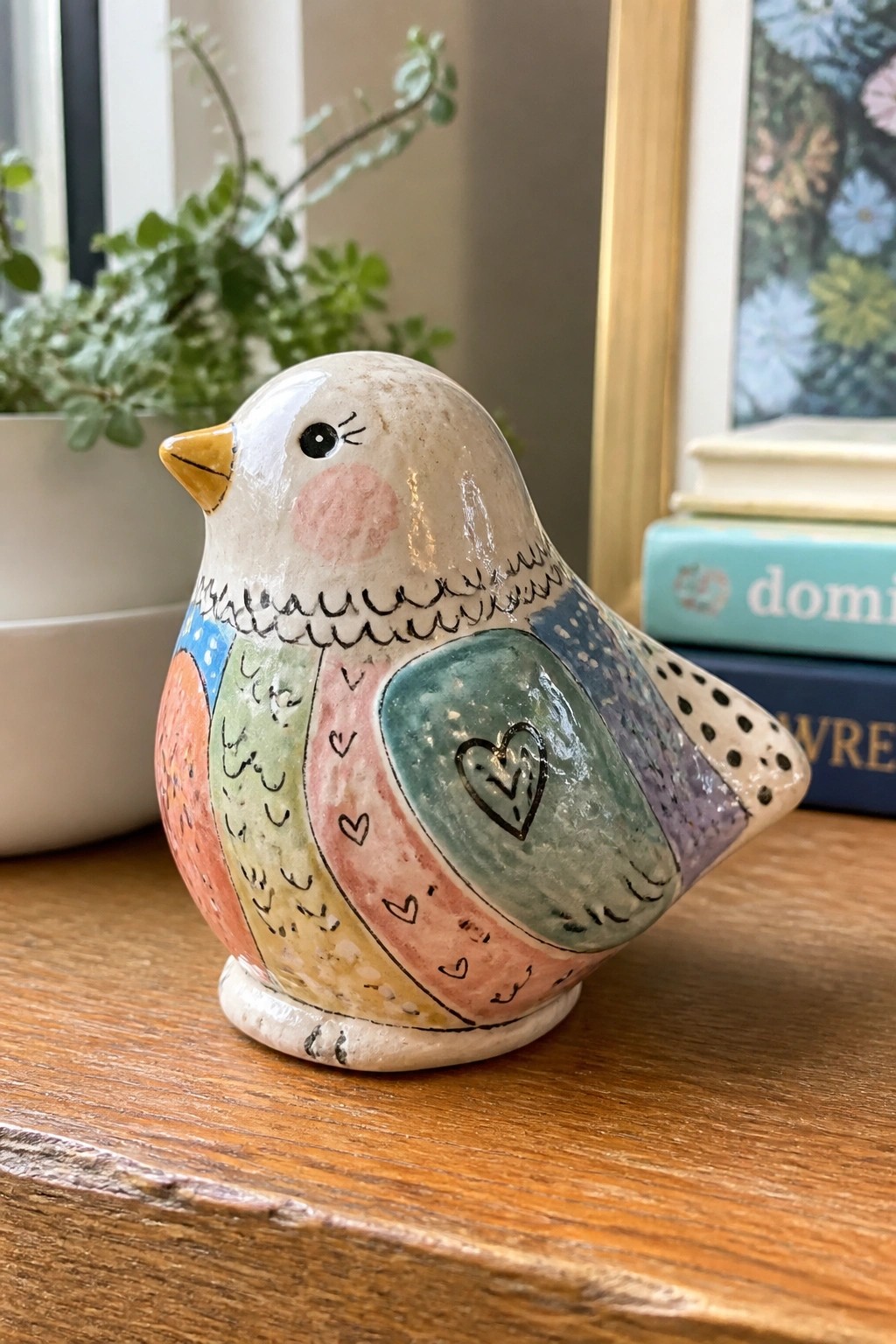
A small ceramic bird figurine becomes a complete decor object once you divide its body into sections of color and fill them with simple line patterns. The design uses horizontal bands in different hues, wavy black lines to suggest feathers, scattered hearts, and a solid heart motif on one wing, all set against a light base with black dotted accents on the tail. This layout works because the patterns stay contained within the bird’s natural curves, letting the shape guide where each element goes without needing extra sculpting. The result is a compact handmade piece that reads as intentional rather than busy.
What makes this idea useful is how the same sectioning and line work can be applied to other small animal forms or even simple egg shapes. You could swap the hearts for stars or leaves to match a different theme or reduce the number of colors for faster painting sessions. A piece like this fits on a shelf, desk, or plant stand where larger items would crowd the space. For a gift, the pattern style adapts easily to a set of two or three birds in matching but not identical colors.
Lemon Illustrated Salt Cellar

A small, low ceramic bowl decorated with whole and halved lemons plus green leaves works well as a salt cellar or seasoning dish. The round shape keeps contents easy to pinch or scoop while the painted citrus sits under a clear glaze for protection. This kind of kitchen item stays simple to make on a wheel or with a basic mold and leaves room for the motif to wrap around the exterior.
What makes this idea useful is how the compact size fits on a counter without taking much space. You could repeat the lemon design on matching ramekins or a butter dish to build a set. For a gift, scaling the same pattern up onto a larger serving bowl keeps the look consistent but changes the function. The painted detail stands out on Pinterest because it reads clearly even in small photos.
Illustrated Cactus Toothbrush Holder

A cylindrical ceramic cup painted with evenly spaced green cacti creates a simple toothbrush holder for a bathroom counter. Each cactus uses basic rounded shapes with small black faces and a single red flower on top, keeping the pattern light while filling the surface without crowding it. The neutral speckled glaze underneath lets the painted motifs stand out clearly on a functional everyday object.
What makes this idea useful is how the same cup shape works for toothbrushes, makeup brushes, or desk pens. You could paint just three or four cacti instead of a full repeat if you want a quicker version on a smaller piece. The neutral background keeps the focus on the motifs so the design reads well from a distance and adapts easily to other containers like a small planter or pencil cup.
Cloud-Shaped Rainbow Ring Dish
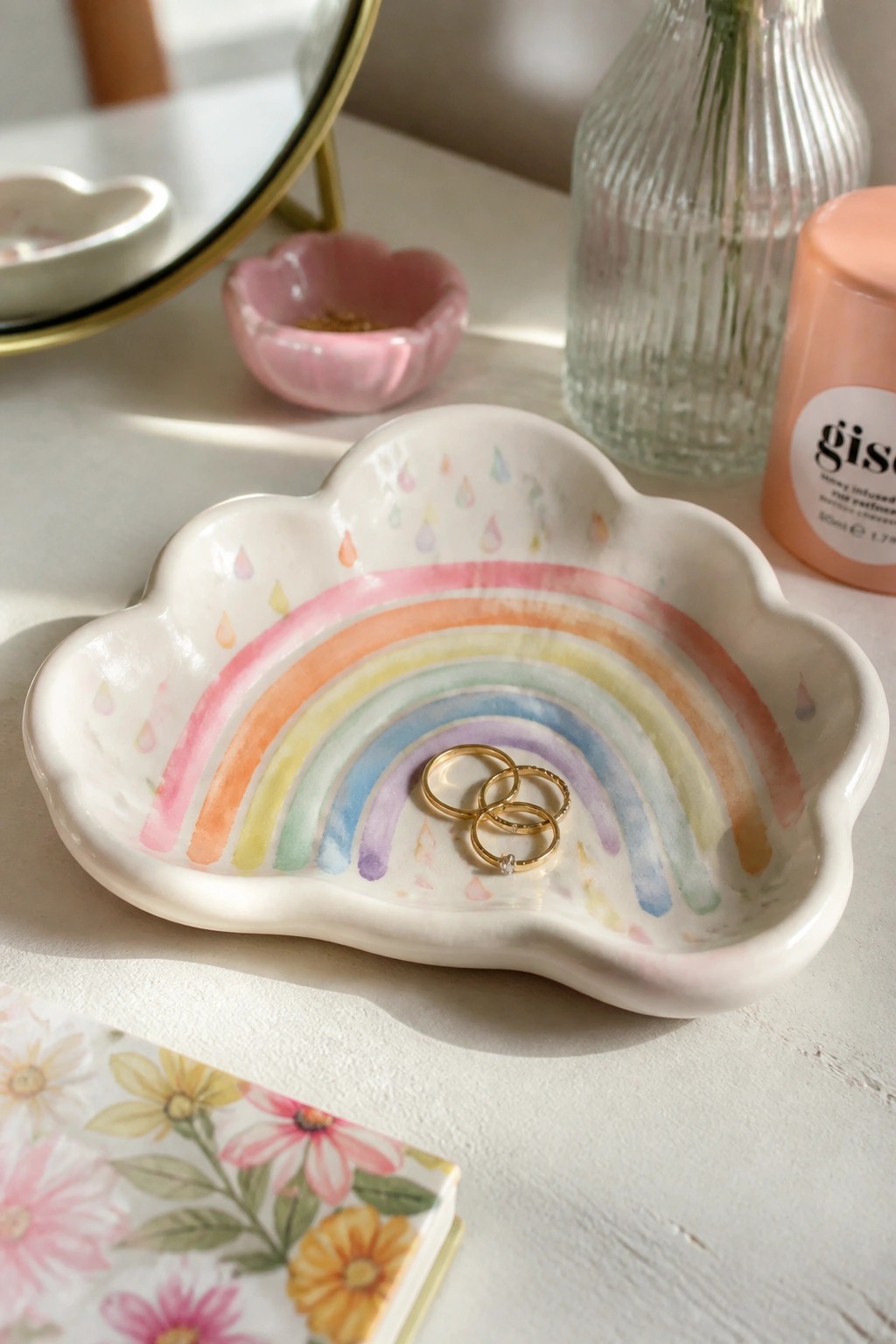
A cloud-shaped ceramic dish makes a simple ring holder when the surface is painted with a wide rainbow arc and small scattered raindrops. The white glaze provides a clean background that lets the soft bands of color stand out, while the curved edges keep the design contained and balanced. This approach works because the motif follows the natural shape of the piece instead of fighting it.
The shape does a lot of the work here since the cloud outline already sets the theme before paint is added. You could repeat the same rainbow on a small oval tray or a shallow bowl if you need more surface area for daily jewelry. The small size also makes it easy to finish in one sitting and still produce something that photographs well for sharing.
Owl Yarn Bowl with Spiral Feed Slot
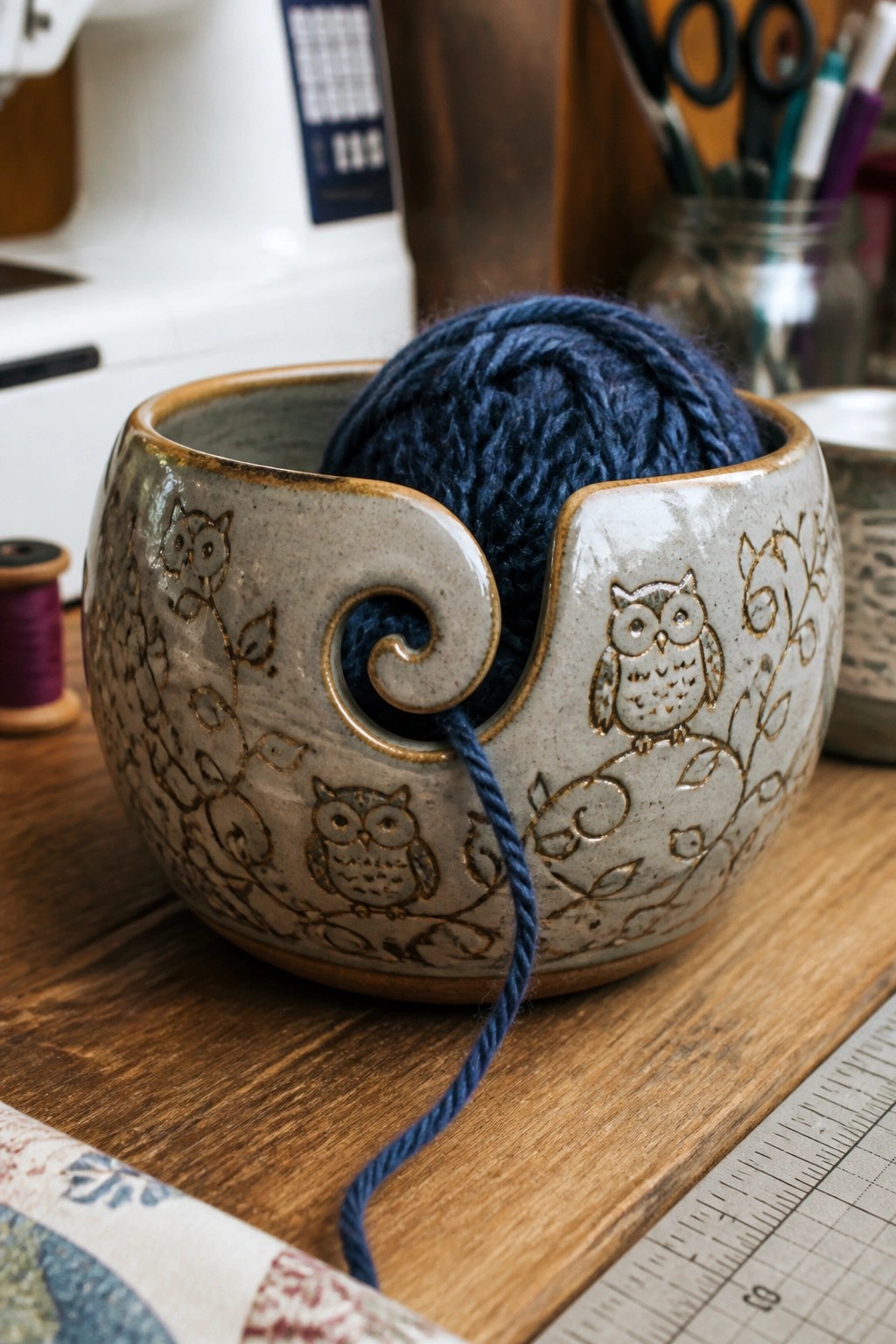
A handmade ceramic yarn bowl gives knitters and crocheters a stable place to hold a ball of yarn while working. This version features a light gray glaze with brown line drawings of owls and vines covering the outside. The spiral slot cut into the rim lets the yarn feed out smoothly without the ball escaping. The repeated owl pattern wraps around the rounded form and stays visible from multiple angles.
What makes this idea useful is how the cutout solves a practical problem while the surface pattern adds visual interest without extra pieces. You could shrink the same design down for a smaller bowl or swap the owls for another simple motif like leaves or birds. In a craft space the shape keeps yarn contained on a table and works just as well for display when not in use. The line-drawn style adapts easily to other clay forms such as mugs or small trays if you want matching pieces.
Citrus Slice Sponge Holder
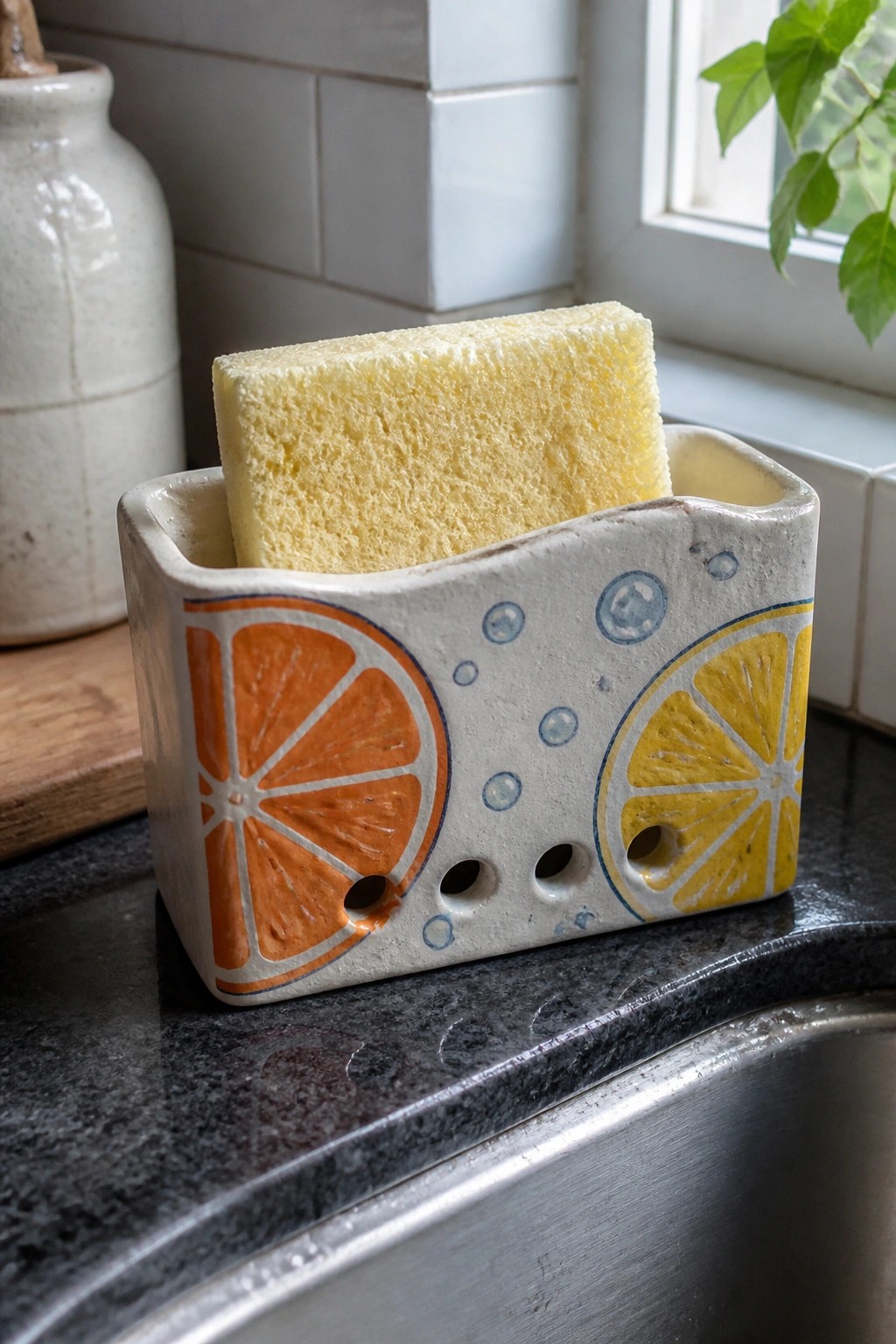
A rectangular ceramic sponge holder makes a practical kitchen item when decorated with bold citrus slices. The design places an orange half on one side and a lemon half on the other, both rendered in flat color with simple line details, while small blue circles suggest bubbles across the remaining surface. Drainage holes sit along the lower edge and become part of the overall pattern instead of standing out as separate features. The white clay base keeps the fruit colors bright and easy to read.
What makes this idea useful is how the holder keeps a sponge raised and draining right beside the sink without taking up much counter space. The same citrus slices could be reduced to a single fruit motif and repeated on soap dishes or small trays for a matching set. The compact shape works well as a first project because it requires only a basic slab form and a few glaze colors. For gifts, the pattern adapts easily to mugs or a small utensil caddy.
Cherry and Bee Motifs on Small Speckled Cups

Small ceramic cups painted with simple repeating motifs like cherries or bees give you a quick way to add pattern to a rounded surface. The speckled clay body stays visible between the painted elements so the design reads as light rather than busy. One cup carries clusters of red cherries with green leaves while the other uses three yellow-and-black bees spaced evenly around the form. Both shapes stay compact with a slightly tapered base that keeps them stable on a shelf or table.
The small size makes this idea easy to test on leftover clay or purchased bisque without committing to a full set. You could swap the cherries for strawberries or the bees for butterflies and still keep the same spacing and color approach. These cups fit well as desk pencil holders, small herb planters, or bathroom containers for cotton swabs. The same painted layout works on slightly taller cylinders if you want to turn the idea into a set of matching tumblers.
Botanical Line Drawings on a Small Ceramic Vase

A compact ceramic vase with a narrow neck and rounded body gives a simple surface for hand-painted botanical illustrations. Black line drawings of stems, seed heads, and leaves wrap around the form, with light green washes added to some leaves for subtle contrast. The off-white speckled glaze shows through the design and keeps the pattern from feeling heavy. This style works as a straightforward way to add plant motifs without needing advanced painting skills.
What makes this idea useful is how the vertical stems follow the vase shape and make the piece easy to repeat on other forms. The same outlines could be scaled down for small cups or stretched across a wider planter. A single stem flower fits the narrow opening, so the vase works well on a desk or narrow shelf where space is limited. You can change the plant types or swap the green wash for another color to match different rooms.
Farm Animals Painted on a Ceramic Butter Dish

A covered butter dish made from ceramic gives you a wide curved lid that works well for a row of simple line-drawn animals. The design uses a pig, duck, chicken, and cow spaced evenly around the surface in a light color palette that sits on a matte off-white glaze. The base stays plain so the focus stays on the lid illustrations. This keeps the project in the kitchen item category and makes the pattern easy to repeat without needing advanced painting skills.
What makes this idea useful is how the oval shape gives you enough room for four animals without crowding. You could adapt the same layout to a larger cheese dome or shorten it to two animals on a small jam pot. The soft neutral background also makes it simple to match with existing dishes or try the pattern on a tray instead. In a kitchen this kind of piece stays functional while giving you a clear theme to build on for other matching items.
Ceramic Spool Needle Holder with Painted Florals
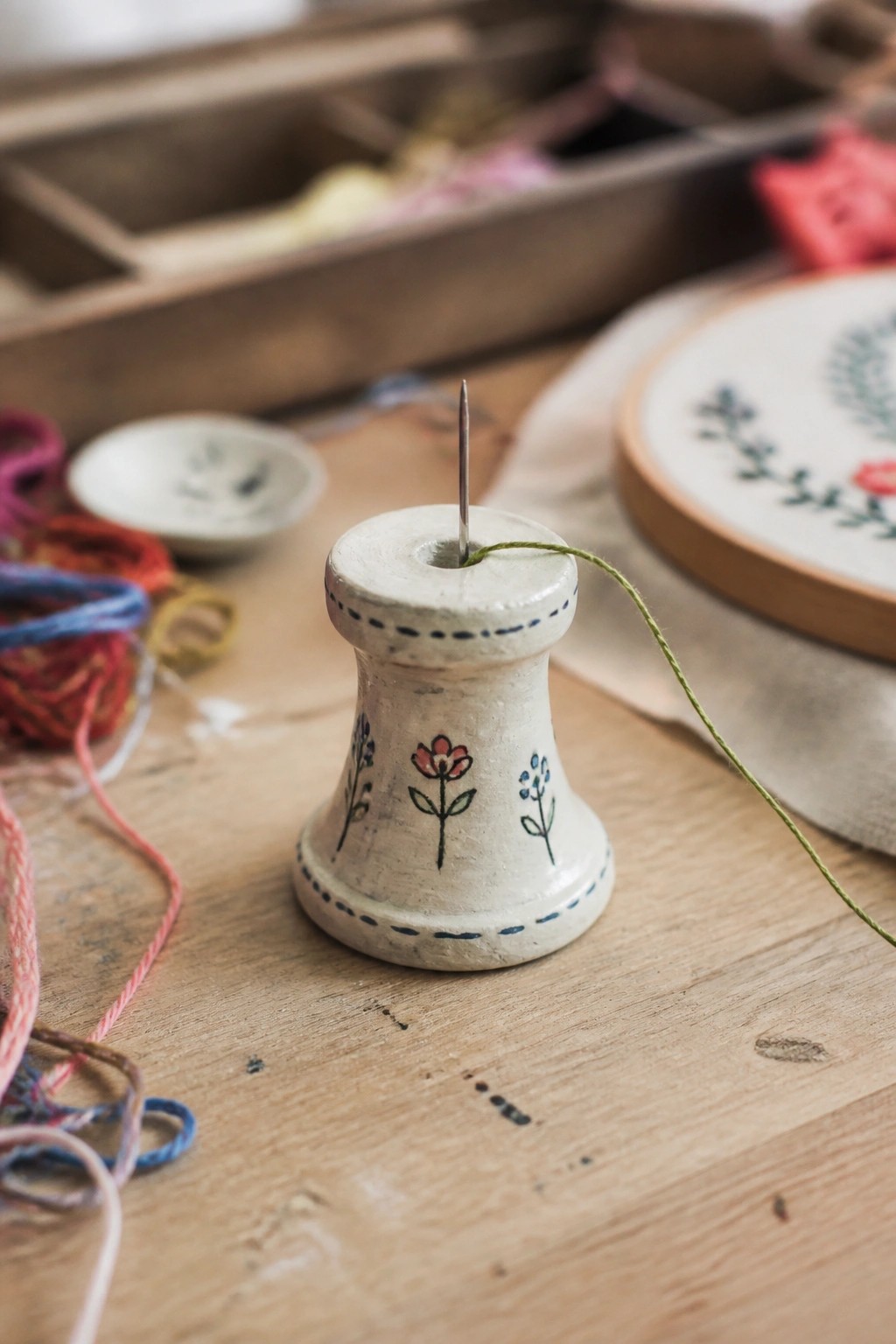
A small ceramic spool serves as a needle and thread holder for hand sewing or embroidery work. The form has a tapered body with a central hole that keeps a needle upright while allowing thread to pass through or wrap around the middle section. Simple flower and stem motifs in a few colors cover the surface, giving the piece clear visual interest without crowding the shape. This approach fits the category of a small functional holder that doubles as desk or craft table storage.
The compact size lets it sit beside an embroidery hoop without taking over the workspace. You could repeat the same spool form with different motifs or make a set in varying heights for different thread weights. The painted details help the holder stand out from plain tools, and the idea adapts easily to other small cylinders like tiny vases or ring dishes if you want to vary the project.
Strawberry Border on a Fluted Dish
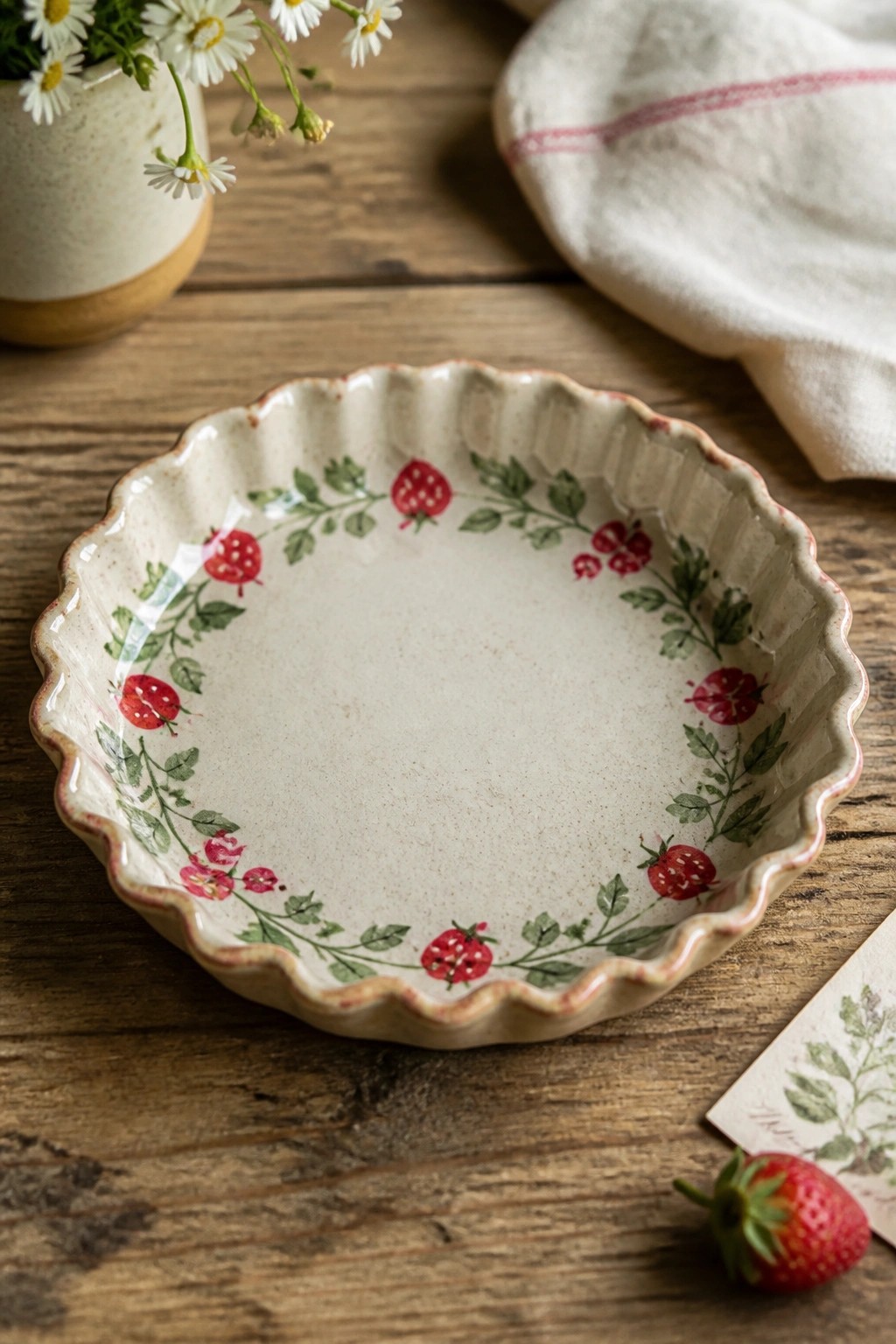
A small fluted ceramic dish uses a painted border of strawberries and leafy vines to create a simple circular pattern along the inner rim. The red berries with seed dots sit among green foliage, leaving the center plain so the design frames whatever sits inside. The scalloped edge gives the piece a gentle shape that pairs with the fruit motif without competing with it.
This kind of border works well on a small serving dish for fruit or desserts in the kitchen. You could scale the same strawberry pattern down to the rim of a mug or spread it across a larger platter if you want more surface area. The idea adapts easily because it relies on a repeating motif rather than covering the whole piece.
Frequently Asked Questions
What supplies are best for creating illustrated patterns on pottery? Start with ceramic paints or underglazes designed for pottery, along with fine detail brushes in various sizes, a palette for mixing colors, and plain bisque or glazed pieces like mugs or plates. Many of the 20 ideas use simple line drawings of animals, flowers, or geometric shapes, so pick paints that allow layering for depth. Always test colors on a spare piece first since they can change after firing.
How can beginners adapt the playful pattern ideas without feeling overwhelmed? Pick one simple illustration from the list, such as basic doodle faces or swirling vines, and practice sketching it on paper before transferring to the pottery with a pencil. Break the design into steps like outlining first then adding color fills. The ideas often include variations for different skill levels, so start with larger shapes and build up details gradually to build confidence.
What techniques help illustrated patterns stand out and look polished? Use contrasting colors for outlines and fills, like black lines around bright motifs, and apply thin layers to avoid smudging. Many of the 20 ideas suggest adding highlights with white paint or dots for a playful effect. Work in good lighting and rotate the piece as you go to keep lines consistent. If the pottery will be functional, plan the design away from areas that get heavy use.
How do I make sure the painted patterns last through washing and daily use? Choose food-safe, dishwasher-safe paints and follow the manufacturer’s instructions for curing, which often involves air drying then baking in a home oven or kiln. Seal with a clear glaze if recommended for extra protection. The ideas emphasize durable results by suggesting multiple thin coats rather than thick ones that might crack.
Can these pottery painting ideas work for groups like kids or family activities? Yes, scale down complex illustrations into simpler versions such as cartoon animals or basic patterns that everyone can customize. Provide stencils or traceable templates based on the 20 ideas to help younger participants. Set up stations with shared paints and encourage collaborative designs on larger pieces like bowls for a fun shared project.

Pottery Path is my cozy corner of the internet where I share clay ideas, pottery inspiration, and simple projects you can recreate at home. I love exploring everything from air dry clay to handbuilt pottery to cute minis that brighten your day. My goal is to make clay crafting feel easy, fun, and welcoming for anyone who wants to try it.
You will find beginner friendly tutorials, creative pottery painting ideas, and lots of warm inspiration for slow and happy crafting. If you enjoy hands on creativity, this space will feel like home.