
I enjoy making pottery mugs that feel simple and natural.
Earthy textures from the clay add a nice touch without extra work.
I have collected some ideas using basic glazes that highlight the material.
These mugs fit into everyday routines quite easily.
They are the sort of pieces I make again and again.
Mug with Thrown Ridges and Mottled Green Glaze
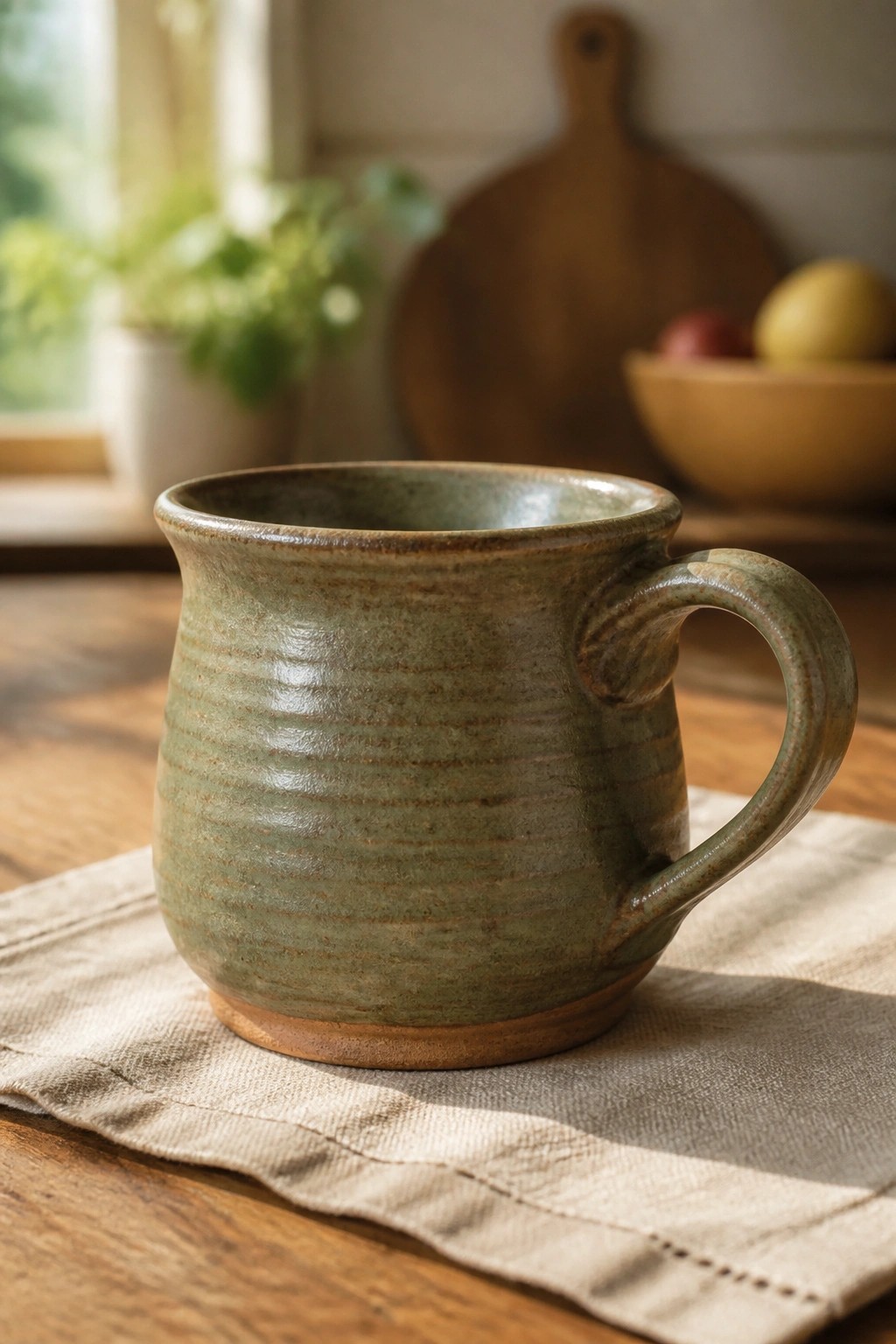
A wheel-thrown mug works well when the maker leaves the horizontal ridges from the throwing process visible instead of smoothing them away. The body tapers slightly toward the base and carries a matte green glaze that shifts to brown at the rim and foot, letting the clay show through in places. A simple pulled handle attaches at the side without added decoration, keeping the form balanced for everyday use. This type of project belongs in the rustic mug category, where texture and glaze variation replace painted designs.
The shape does a lot of the work here because the ridges catch light and create depth without extra tools or stamps. A piece like this fits easily into a kitchen setting next to wooden boards or linen cloths and holds up to daily washing. You could repeat the same glaze and ridge pattern on a shorter tumbler or a wider breakfast bowl if you want to make a small set. The muted color also shows up clearly in photos, which helps when pinning similar mugs for reference.
Mug with Horizontal Ridges and Earthy Drip Glaze
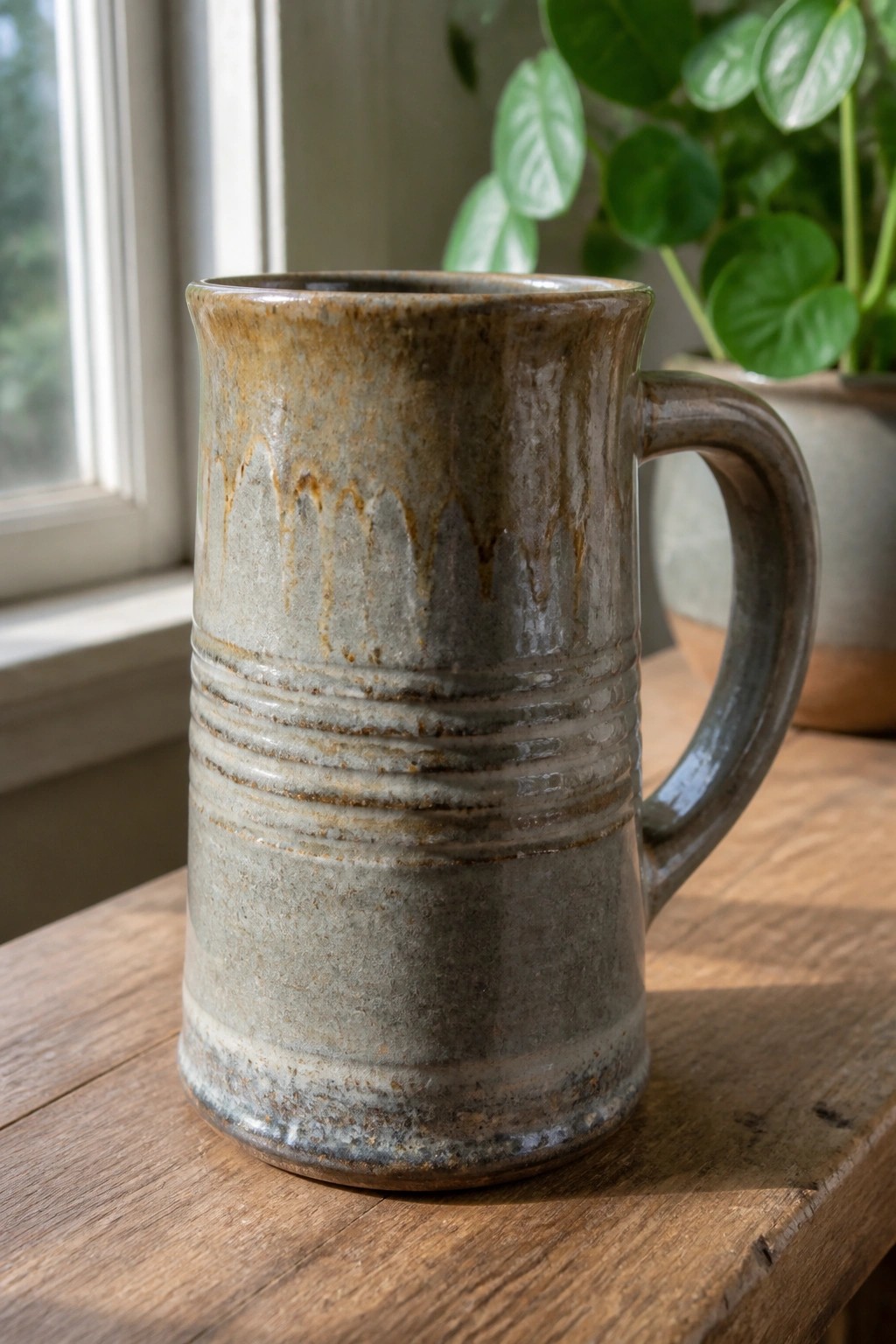
A tall ceramic mug gains visual interest when horizontal ridges are added around the body before glazing. The ridges hold the glaze in place long enough to create short drip lines that run down the upper half. A muted gray base with brown and ochre variation keeps the surface active while staying within a single glaze family. This approach belongs in the rustic mug category where texture and glaze movement replace added patterns or stamps.
What makes this idea useful is the way the ridges serve two purposes at once by adding grip and directing the glaze. You could repeat the same form in a shorter version for everyday coffee cups or stretch the height slightly for a small pitcher. The neutral palette works on open shelving without clashing with other dishes. In a kitchen the shape stays practical for daily use while the glaze variation keeps each firing batch distinct.
Mottled Glaze Mug with Earthy Red Tones

A handmade ceramic mug finished with a mottled red and off-white glaze gives a simple way to achieve an earthy surface without added decoration. The rounded body and thick handle keep the form sturdy for daily use while the uneven glaze application creates natural variation in color and texture. This approach fits the category of rustic mugs where the glaze does most of the visual work.
What makes this idea useful is how easily the mottled effect can be recreated by layering two glazes or using a slip that breaks during firing. The shape works especially well on a kitchen counter or breakfast table because the warm tones blend with wood and stone surfaces. The same glaze combination could be applied to smaller cups or a matching creamer to build a set.
Speckled Mug with Raw Clay Base
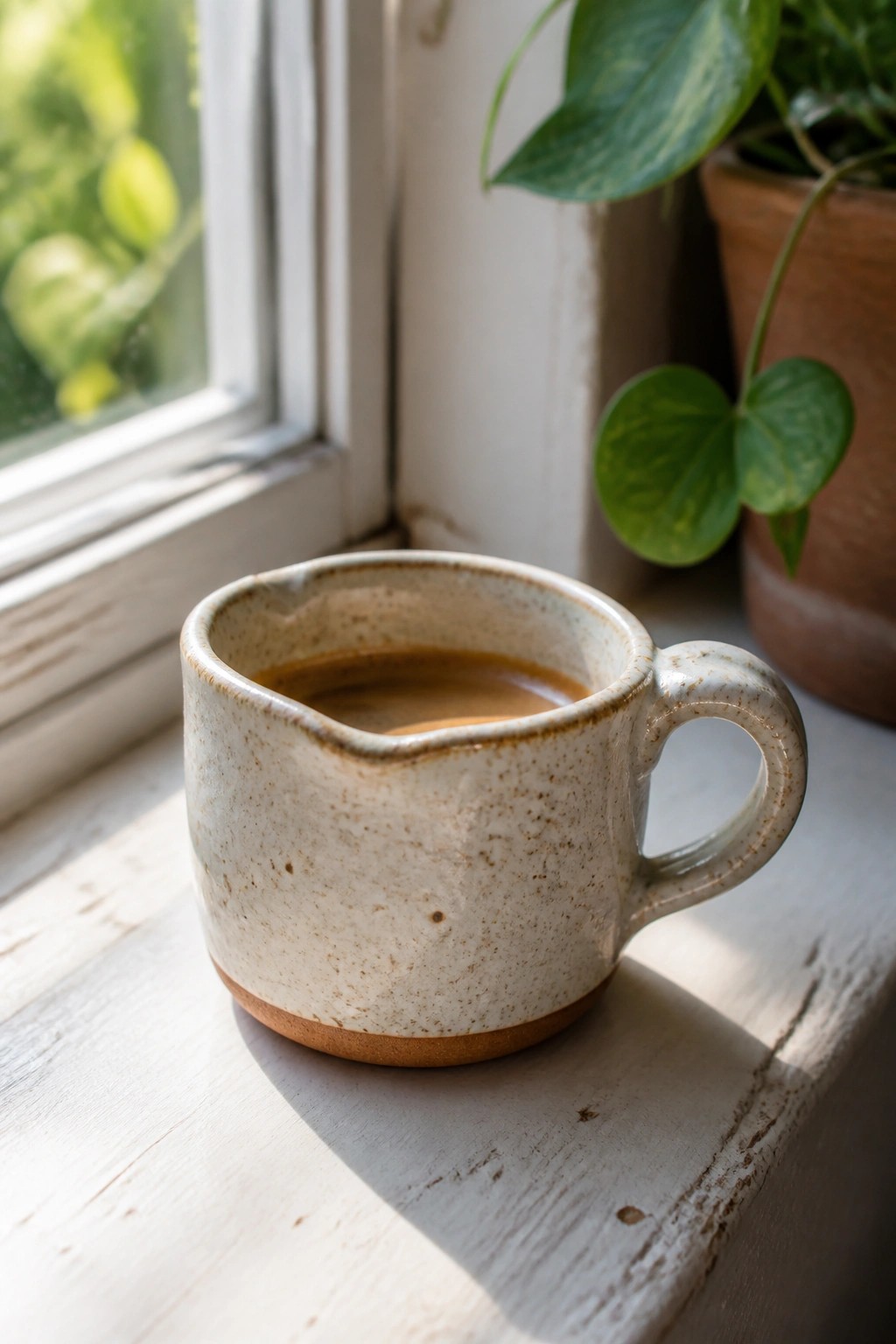
A speckled ceramic mug combines a light matte glaze over a textured clay body with an unglazed foot that reveals the natural clay color. The slightly irregular rim and simple pulled handle give the form an easy, functional shape without extra details. This style works as a straightforward mug project that highlights surface texture through minimal glazing rather than added decoration.
What makes this idea useful is how the speckled finish hides minor imperfections during throwing or trimming. The compact size and sturdy handle make it practical for daily coffee or tea use and simple to repeat in small batches. You could scale the same glaze and exposed base treatment down for espresso cups or apply it to a wider bowl form by keeping the foot unglazed.
Leaf-Pressed Green Mug with Cork Lid
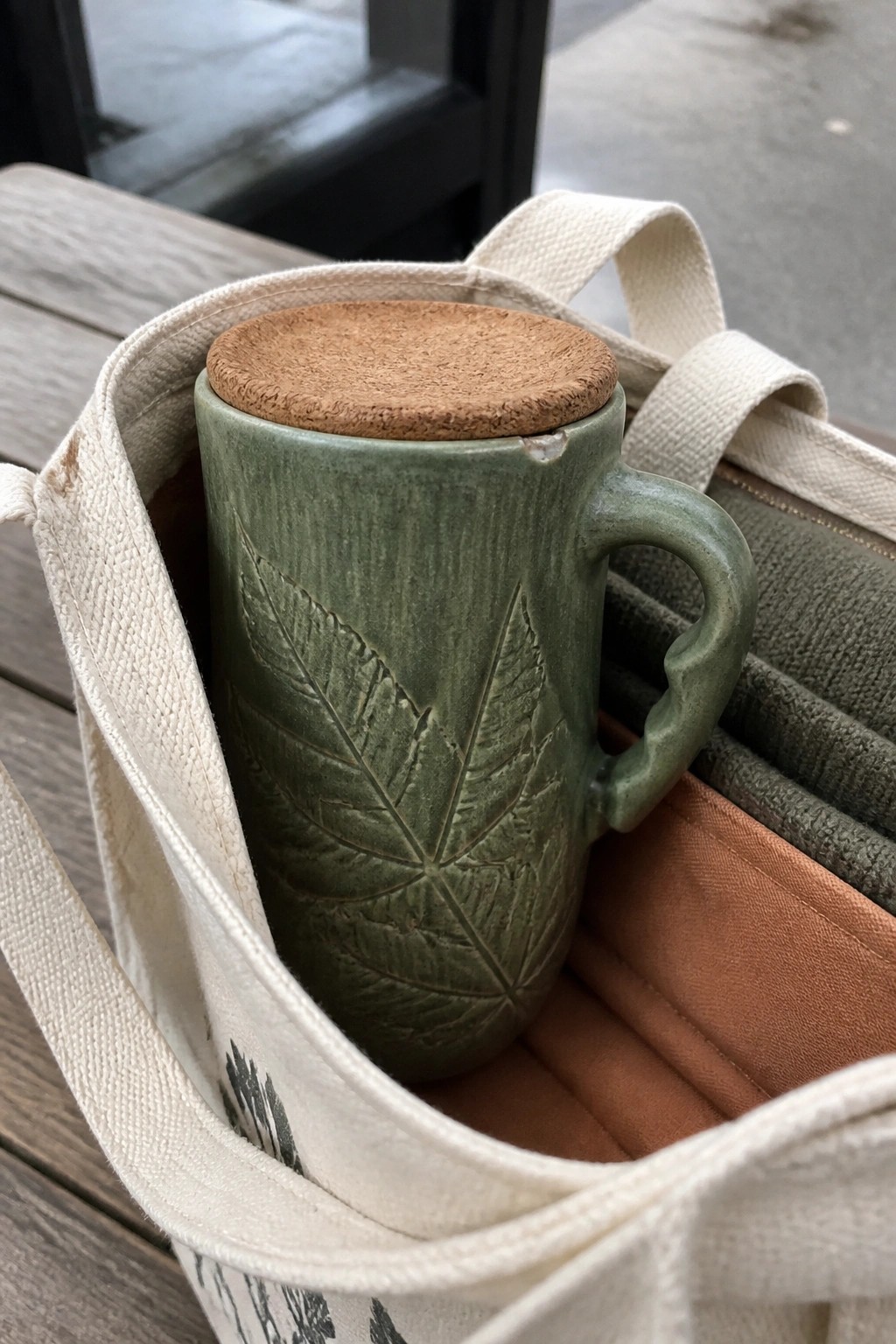
A tapered ceramic mug can be decorated by pressing a real leaf into the clay to create a raised relief pattern before glazing. The earthy green glaze pools in the leaf veins while leaving the surrounding surface with a matte finish and faint vertical ridges from the forming process. Fitting a simple cork lid on top turns the mug into a small lidded container suitable for tea, herbs, or ground coffee.
What makes this idea useful is how the leaf imprint can be swapped for other leaves or ferns to match different seasons or personal collections. The shape and size fit easily inside a tote or backpack for daily use. You could adapt the same mug form without the lid for regular drinking or scale it down slightly to make matching sets for gifts.
Mug with Raised Spiral Patterns in Earthy Glaze
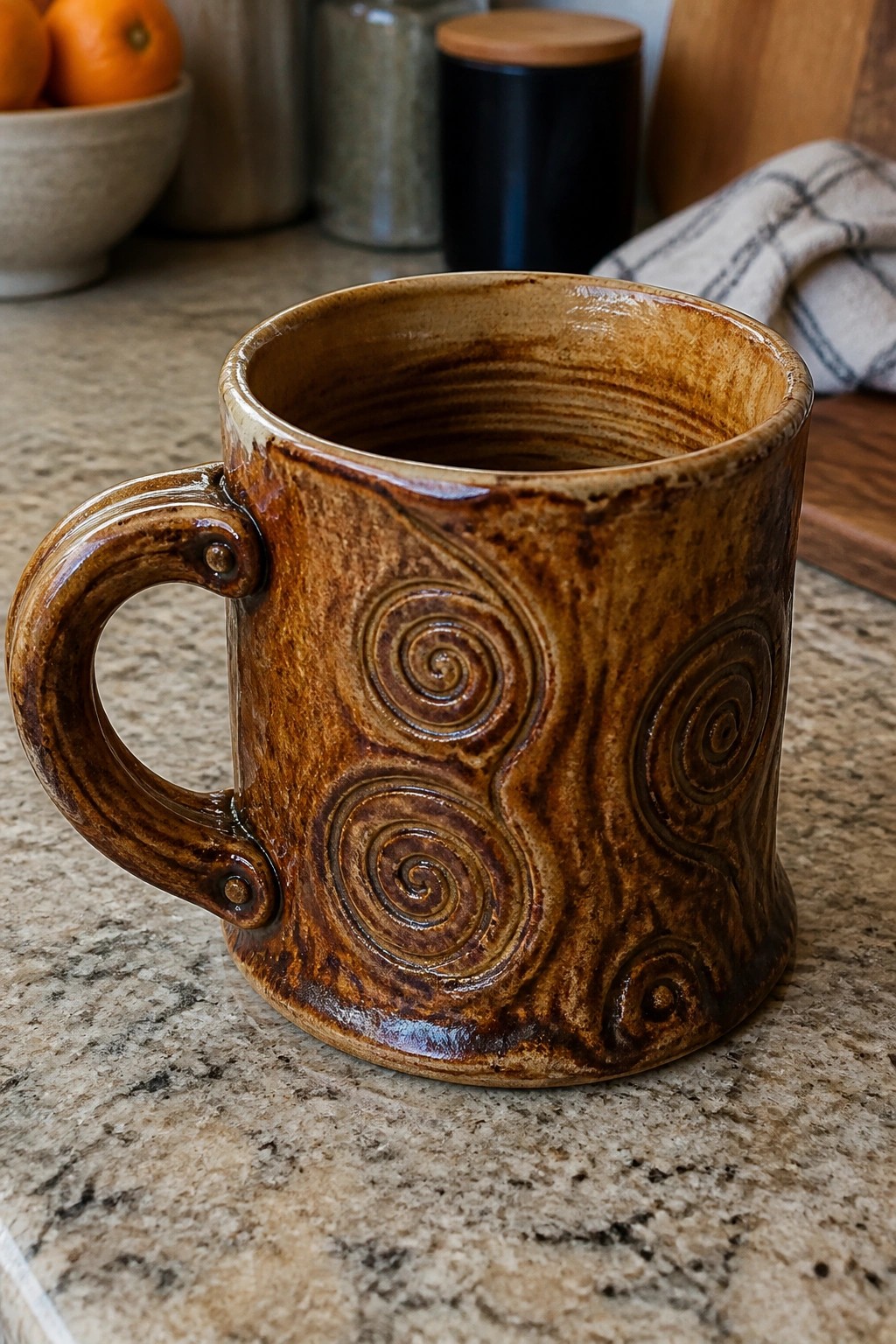
A ceramic mug gains strong visual texture when spirals are pressed or carved into the clay walls before firing. The design uses repeated circular motifs that wrap around the form without crowding the surface. A mottled brown glaze settles into the recessed lines and leaves raised areas slightly lighter, which makes the pattern stand out once the piece is fired. This style stays within rustic mug projects that focus on surface texture rather than added color or handles with complex shapes.
The shape does a lot of the work here because the wide body gives enough room for several spirals without looking busy. You can adapt the idea by using fewer motifs on a shorter mug or switching to a single large spiral on one side for a simpler version. The same pattern translates easily to a small pitcher or a set of espresso cups if you want matching pieces. For everyday kitchen use, this mug keeps its grip comfortable while the texture makes it easy to spot on a shelf among smoother mugs.
Mug with Fern Leaf Transfer
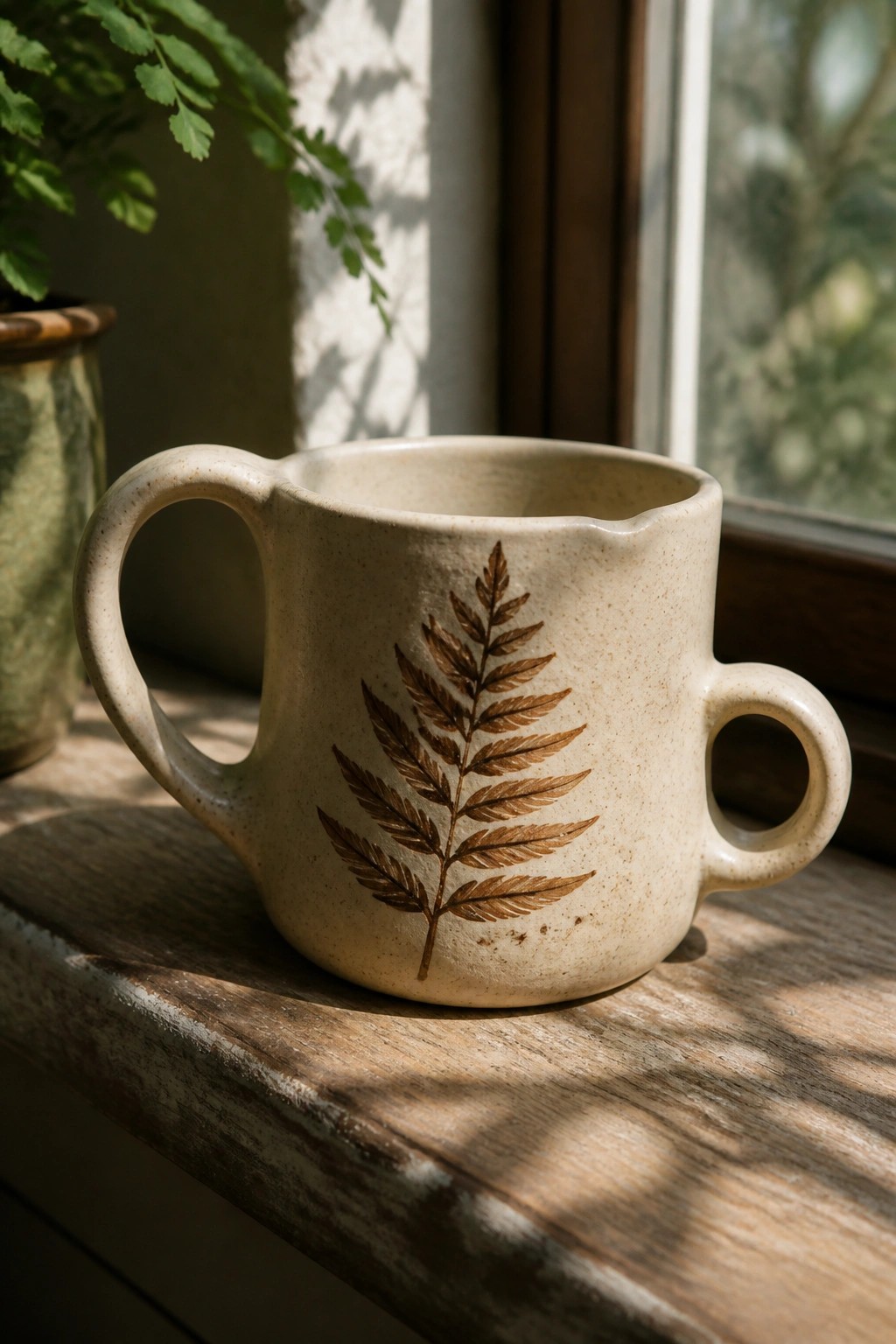
A handmade ceramic mug uses a single fern frond in brown tones applied directly to a speckled clay surface. The motif follows the natural branching of the leaf to add interest while keeping the overall look simple. An uneven rim and a second small loop handle give the form extra grip options without complicating the shape.
This kind of mug fits well on a kitchen shelf or desk because the neutral tones blend with most existing dishes. You can adapt the fern transfer to smaller cups or even a matching pitcher by changing leaf size and placement. The design stands out on Pinterest when shown next to other plain mugs since the botanical detail reads clearly in photos. For a gift, swap the fern for a different pressed leaf to match the recipient’s favorite plants.
Rounded Ceramic Mug with Mottled Glaze
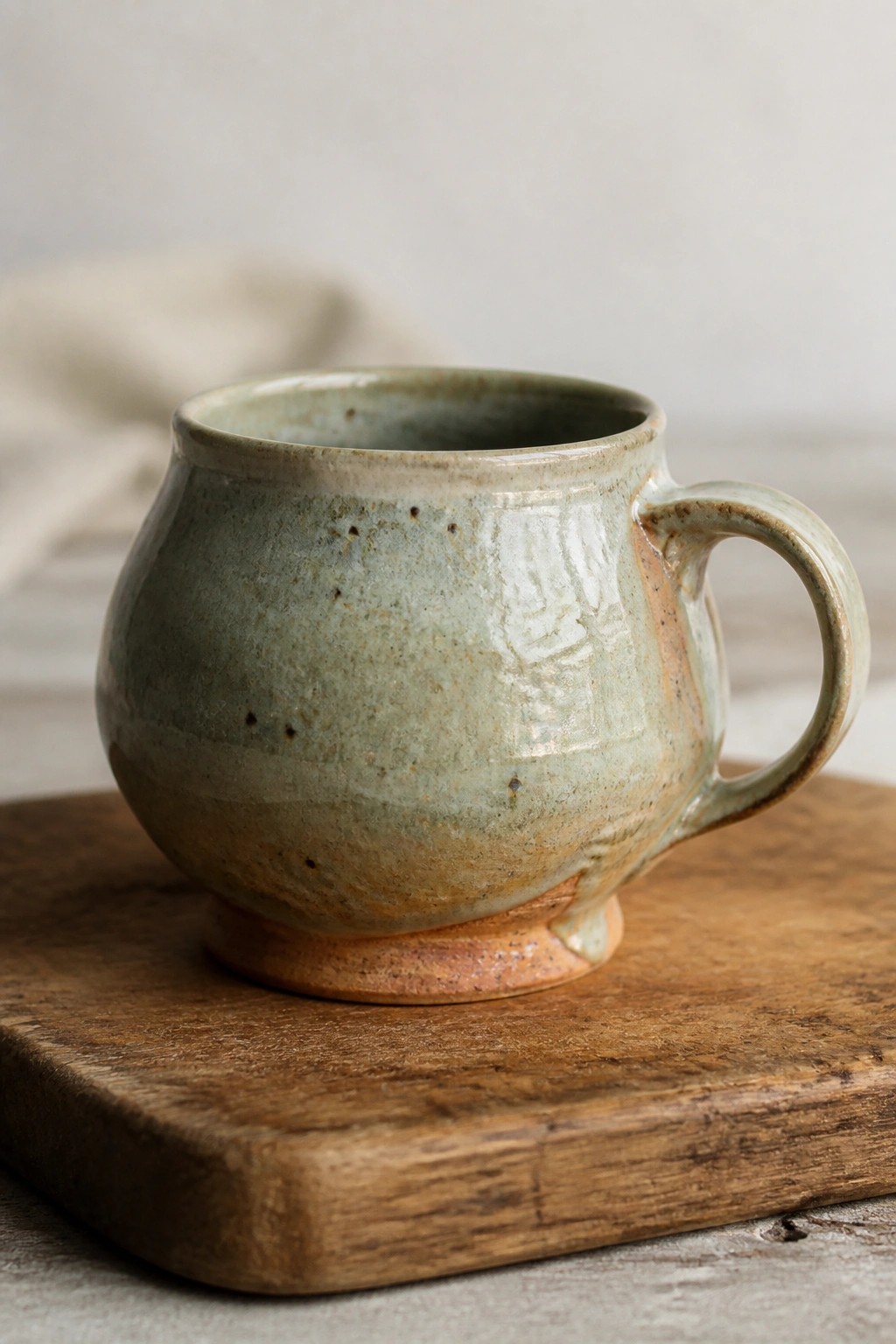
A rounded ceramic mug gives a stable, low center of gravity that feels balanced in the hand while holding a standard serving of coffee or tea. The form widens through the middle then narrows toward a small foot, which keeps the piece compact on a shelf or tray. A single layer of green glaze that breaks to warmer tones at the base and rim creates a simple two-tone effect without extra decoration. This style fits the everyday mug category where the shape and glaze do the visual work.
What makes this idea useful is how the wide belly can be scaled up or down without changing the overall silhouette. The same glaze layering works on matching small bowls or a creamer if you want a quick set. For daily use the rounded profile is easy to stack or store, and the foot keeps the bottom clean on wooden surfaces. You could swap the handle for a pulled one or leave it off entirely to turn the same form into a small bowl.
Ribbed Mug with Earthy Green Glaze
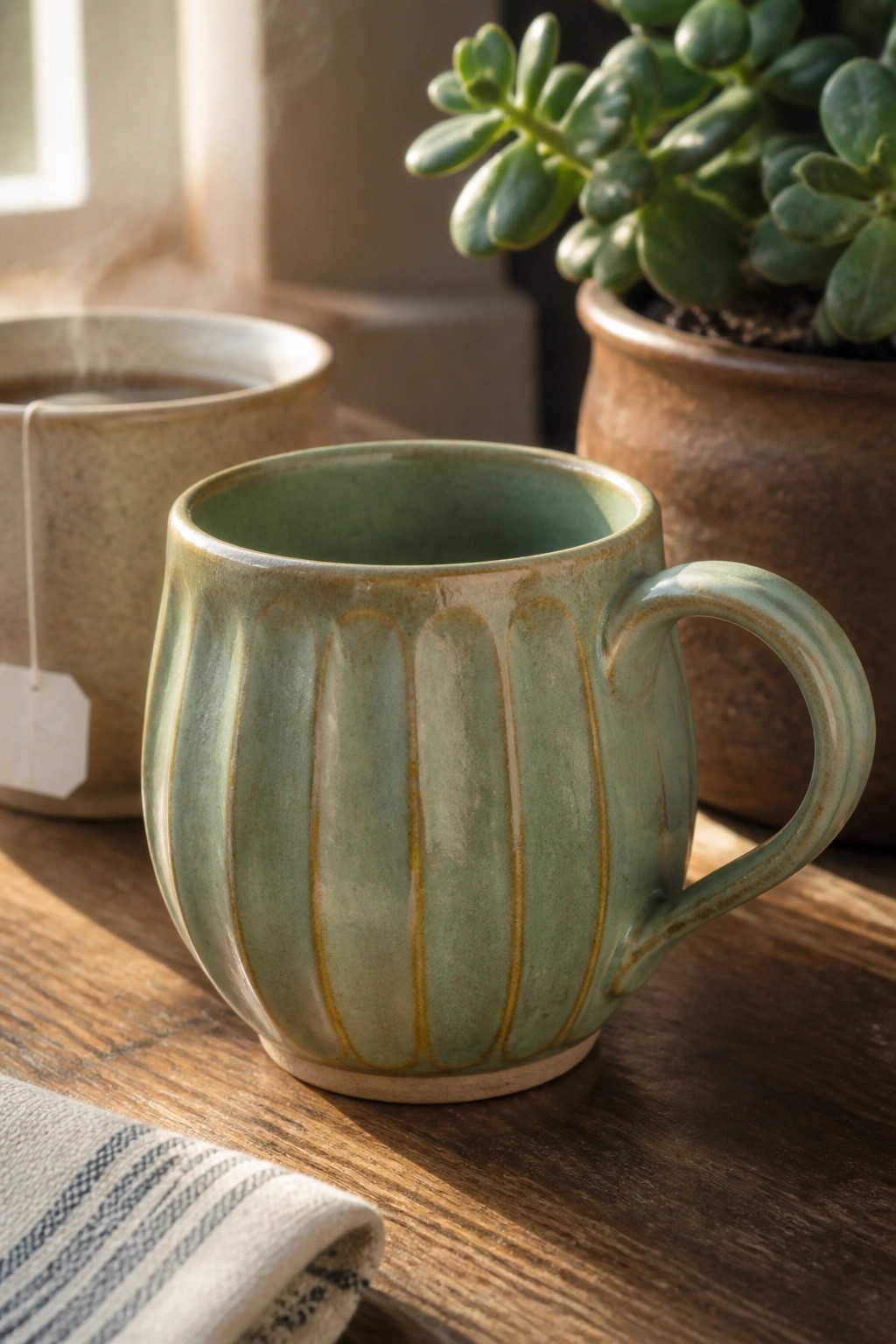
A ceramic mug shaped with vertical ridges running down the sides gives the surface a simple textured pattern that catches light and glaze differently on each curve. The soft green glaze pools slightly in the grooves while leaving warmer clay tones exposed along the edges and rim, creating a natural variation without extra decoration. This approach works well for a standard drinking mug since the fluting adds grip and visual interest while keeping the form easy to throw and trim by hand.
What makes this idea useful is how the ridged shape can be adapted by changing the spacing or depth of the grooves to suit different hand sizes. The same mug form works in a kitchen for daily tea or coffee and scales down easily into a smaller espresso cup if you want a matching set. For a gift, pair it with a simple linen cloth or a small plant like the one in the background to keep the focus on the natural tones. The glaze effect stands out on Pinterest because it shows variation from the firing rather than painted details, so a few test tiles with different thicknesses will help you recreate it.
Mug with Dimpled Texture and Scattered Dots
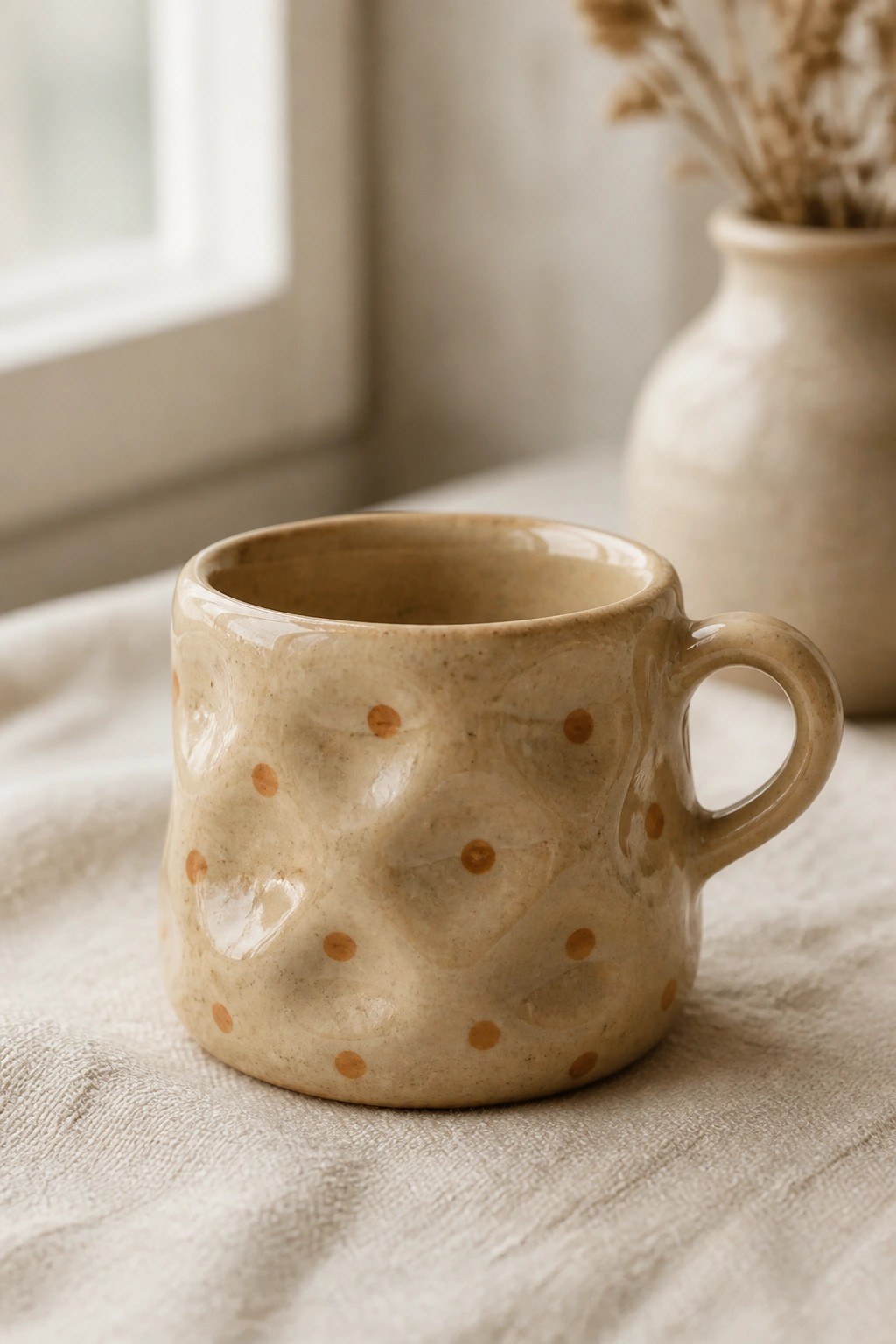
A small ceramic mug built with a thick handle and an all-over dimpled surface. The natural beige glaze sits unevenly across the clay and gets broken up by simple brown dots applied in a loose pattern. This combination gives the mug a clear handmade look while keeping the shape compact enough for regular use as a coffee or tea cup.
The raised texture does most of the visual work here, so you can keep the dot pattern minimal and still get a strong result. This shape works well on an open shelf or next to a kettle because the size stays practical without taking up much space. You could repeat the same dimpling on a slightly wider bowl or shorten the height for an espresso cup if you want to test the idea on different forms.
Stacked Mugs with Earthy Speckled Glazes
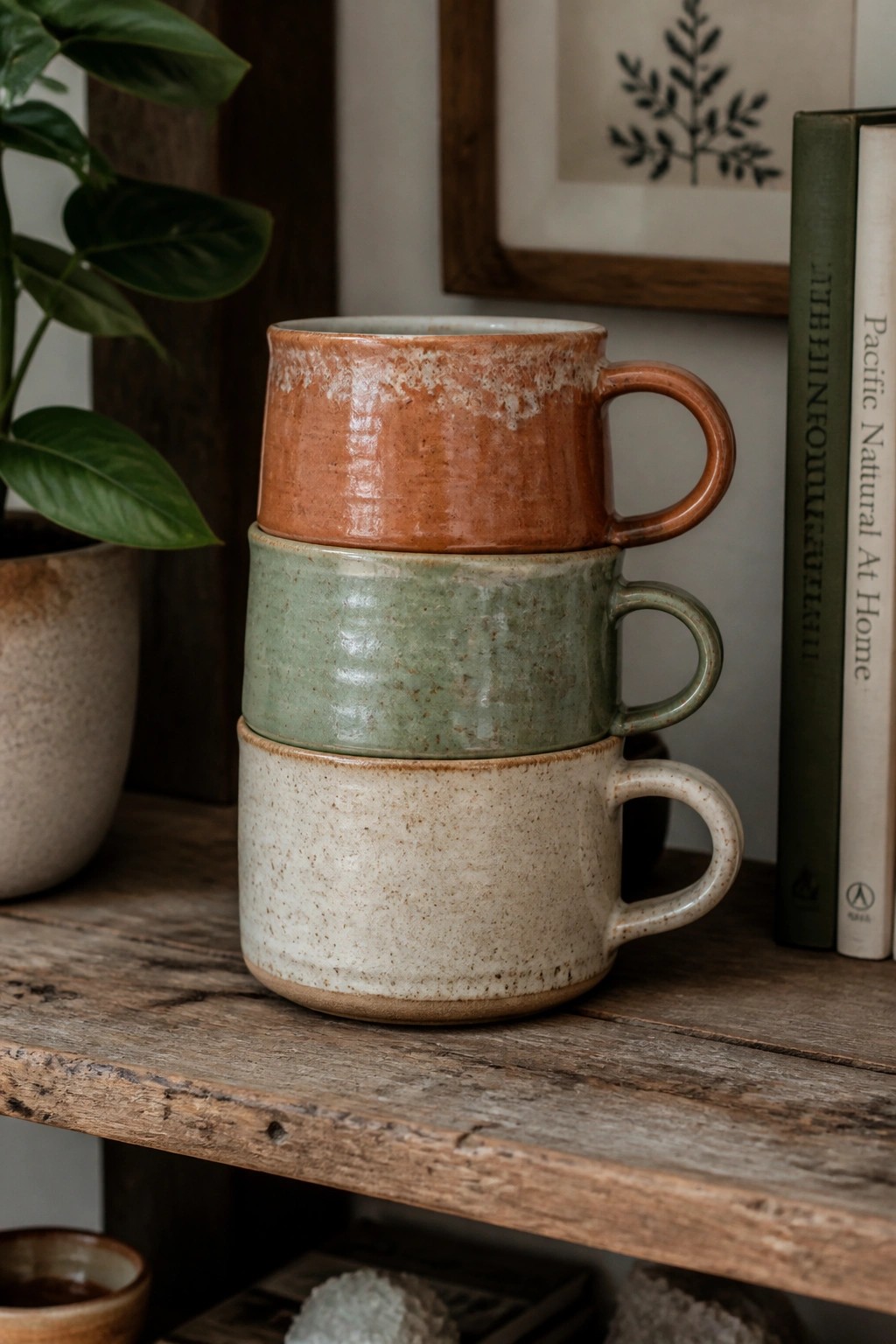
Three ceramic mugs stacked on a shelf use three different matte glazes in terracotta, sage green, and cream. Each mug shares the same simple cylindrical shape and handle but gets its own speckled surface from the natural glaze mix. The slight variations in tone and texture keep the set coordinated while still looking varied. This works as a straightforward way to build a small collection of mugs without forcing them to match exactly.
What makes this idea useful is how the stacking turns the mugs into a compact display piece on a counter or open shelf. You can adapt the same approach by swapping in two glazes instead of three or by making the bottom mug slightly larger for better stability. In a kitchen these pieces stay handy for daily use while still showing off the color range when not in use. For a gift a short stack like this gives someone a ready set they can actually pull apart and use.
Incised Mountain Landscape Mug
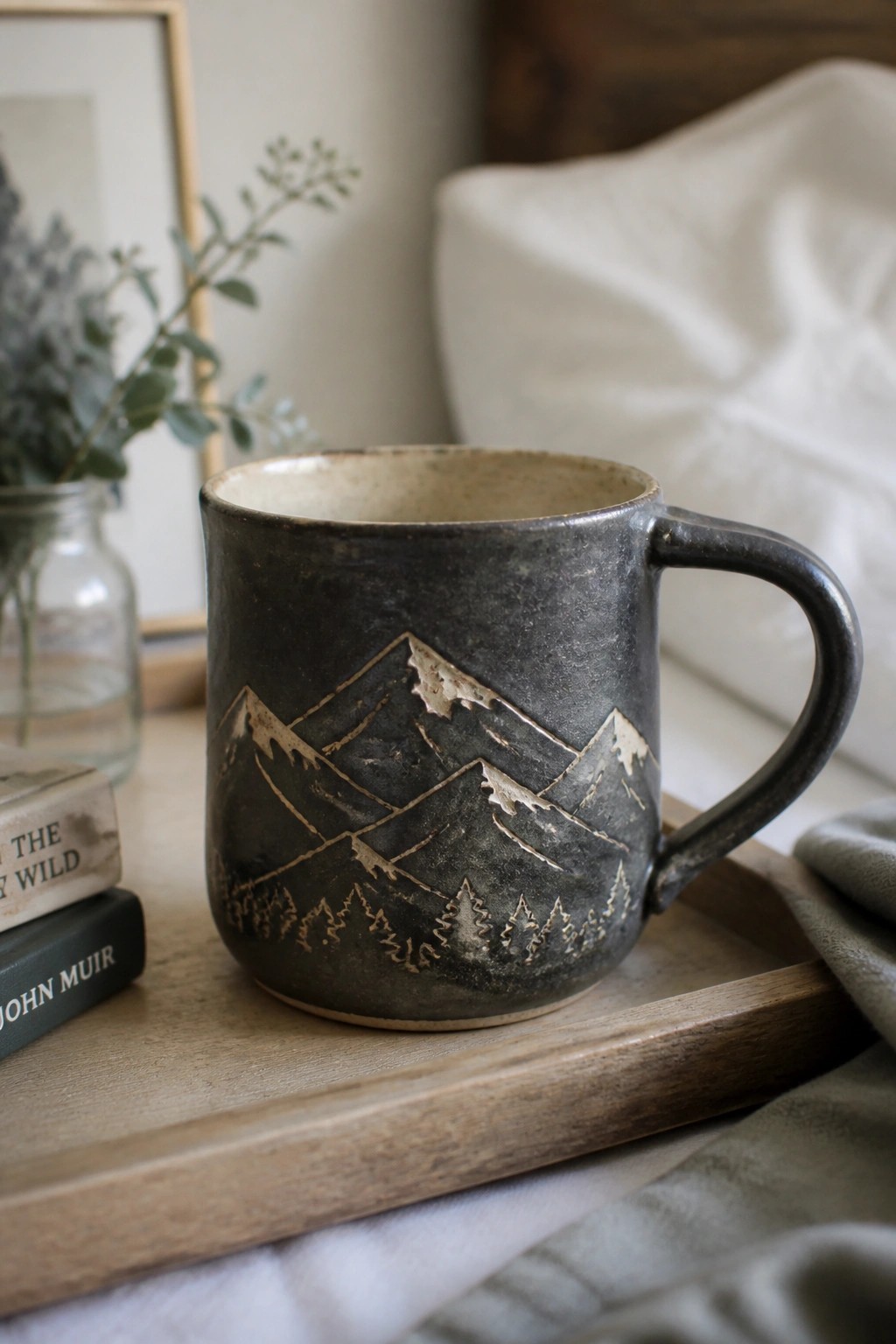
A dark-glazed ceramic mug serves as the base for an incised mountain design that wraps around the exterior. The motif includes layered peaks with lighter clay showing through the carved lines and a band of pine trees along the bottom edge. This creates clear contrast between the raised surface and the recessed details without relying on added color. The idea fits the rustic mug category by combining a functional drinking vessel with a simple landscape carving.
The shape does a lot of the work here since the tapered body gives the design room to show without crowding. You can adapt the same incising method to other scenes like forests or desert ridges on mugs of similar size. In a kitchen or on a desk this style pairs with wooden trays and neutral linens without competing for attention. For a gift the mountains can be swapped for a specific range to make the piece more personal.
Cylinder Mug with Mottled Blue-Green Glaze
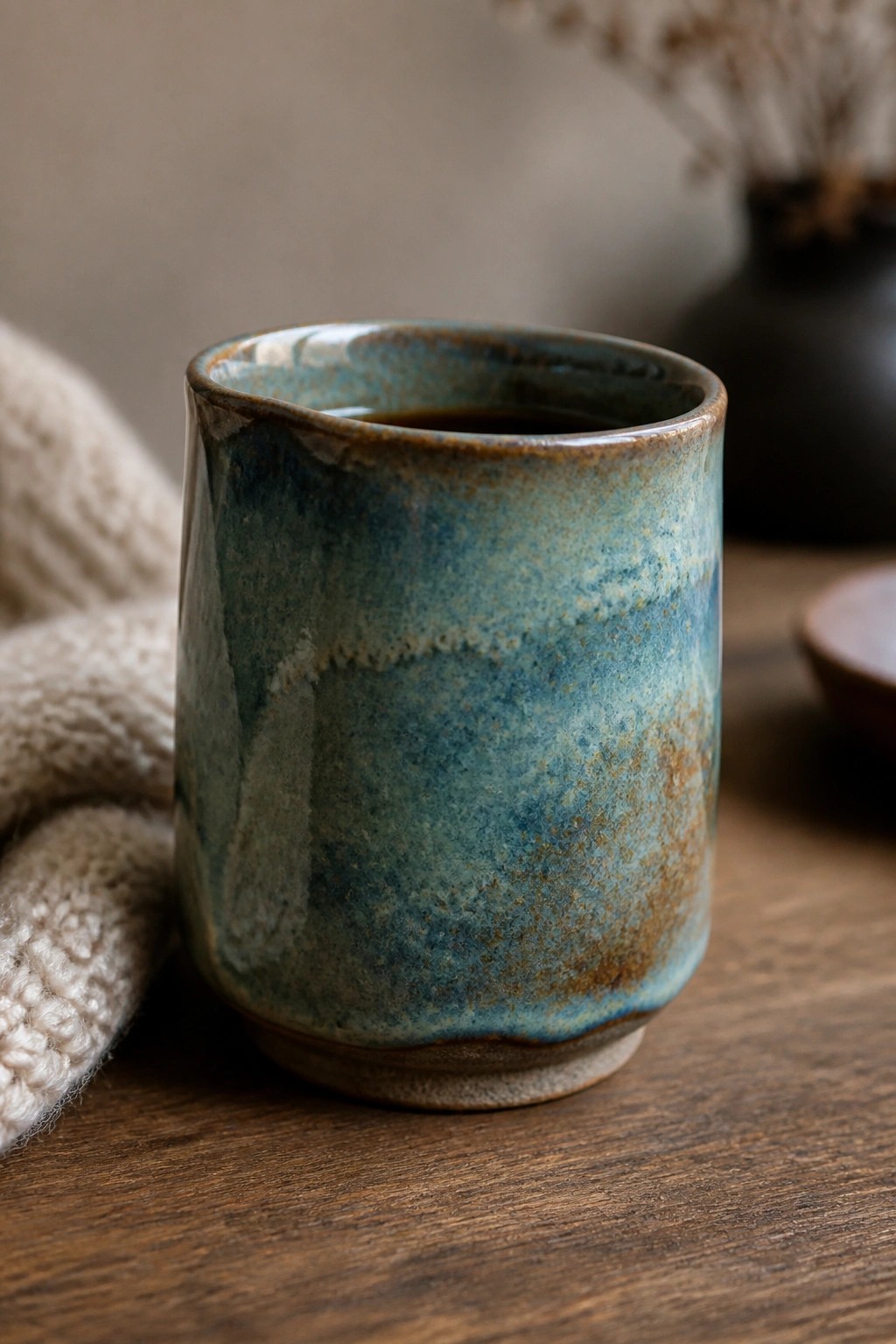
A straight-sided mug formed from clay uses a single glaze layer that settles into blue, teal, and brown patches as it melts. The surface shows slight variations in thickness that create a natural speckled finish without extra carving or painting. This style fits the mug category where the glaze does the main work of making each piece look distinct.
What makes this idea useful is how the same glaze can be applied thicker or thinner to shift the color balance across a set. The simple cylinder shape works for daily coffee or tea and stacks easily in a cupboard. You could repeat the glaze on a shorter tumbler or a wider soup bowl to match a full collection while keeping the earthy tones consistent.
Mug with a Pour Notch and Split Earthy Glaze
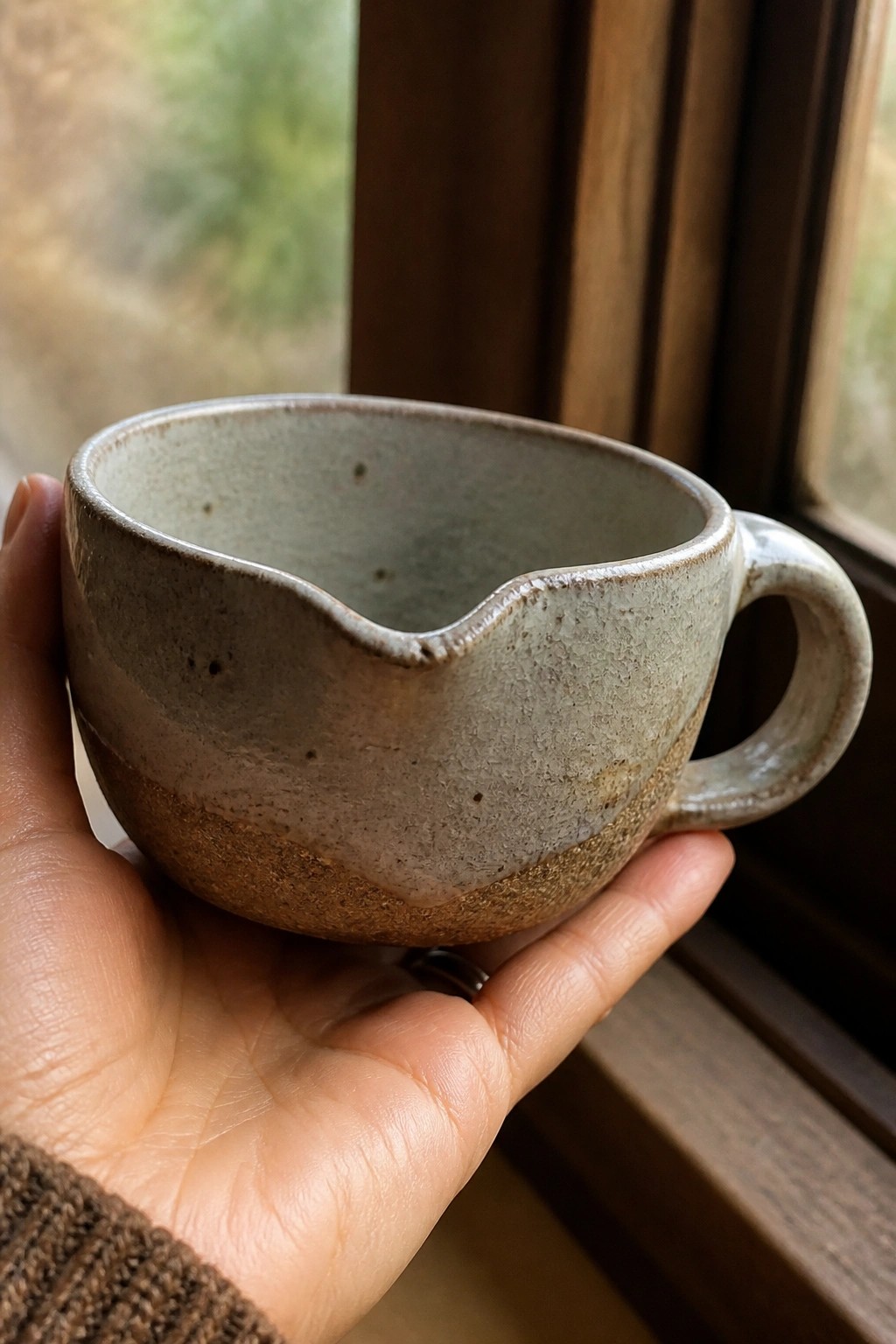
A small ceramic mug shaped with a deliberate notch in the rim creates a simple pour spout for controlled serving. The surface uses a two-tone glaze application where the lower half stays a warm brown while the upper section settles into a cooler gray-green, letting the clay texture show through in both areas. This approach keeps the project focused on form and natural glaze behavior rather than added patterns or carving. It belongs in the category of functional mugs that gain interest from their built-in details instead of surface decoration.
What makes this idea useful is the pour notch, which lets the same piece move easily from drinking to small serving tasks like cream or sauce. The compact scale works well for single servings at a desk or breakfast table without needing extra space. You could rework the split glaze by dipping only the bottom half on a taller mug or switching the colors to match different clay bodies. In a kitchen, this shape stands out on a shelf because the notch gives it a clear purpose that plain mugs lack.
Textured Mug with Braided Clay Handle
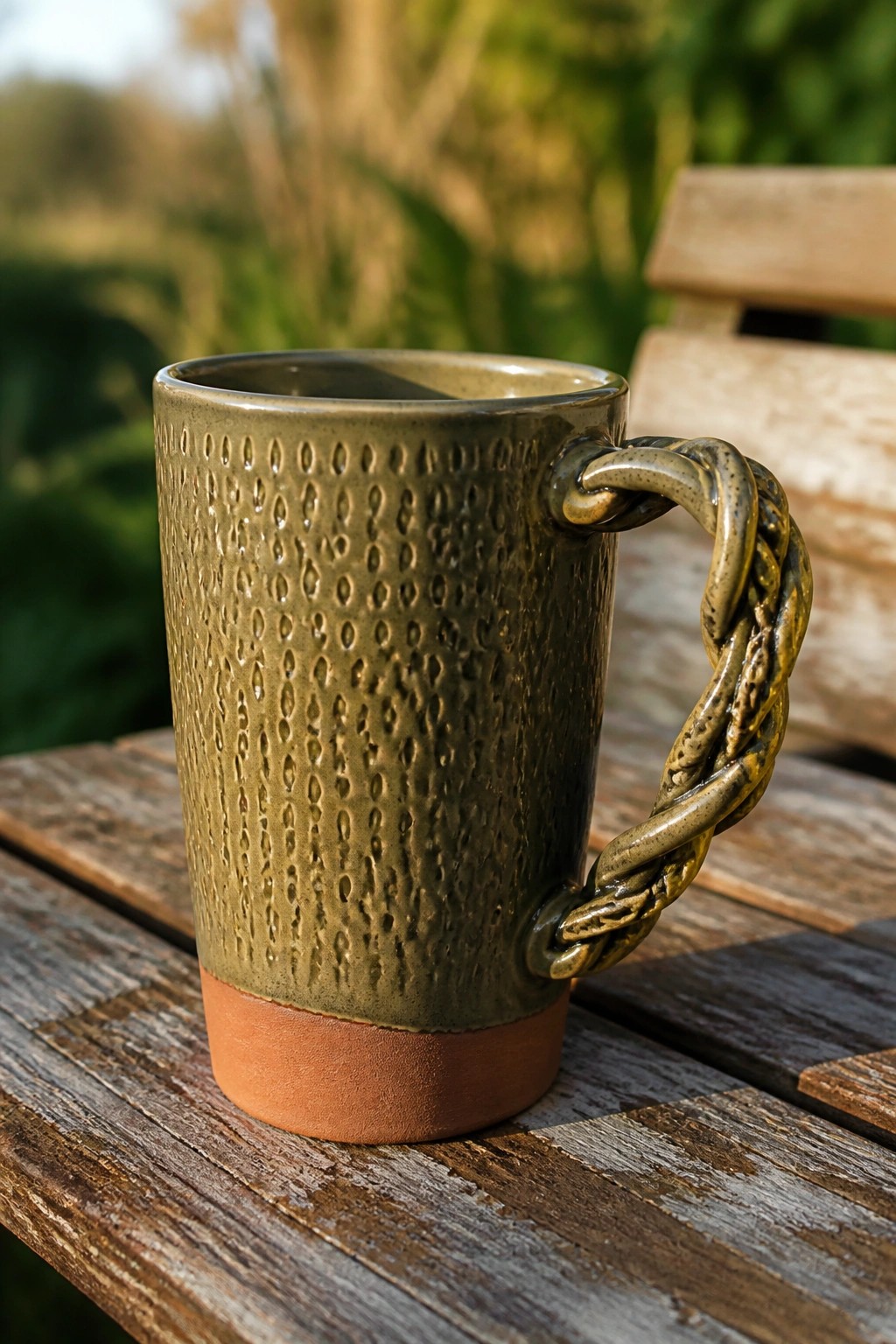
A tall ceramic mug uses a dense pattern of impressed marks across the body to create a consistent tactile surface. The handle is built from multiple strands of clay twisted together to form a thick braid that attaches at the top and bottom. The lower portion stays unglazed to show the natural clay color while the rest receives a muted green glaze that highlights the texture.
What makes this idea useful is the way the braid adds grip without extra carving. You can adapt the same handle style to a smaller cup or a lidded jar by shortening the twists. In a kitchen this shape holds up well for daily coffee or tea because the texture hides minor wear. Scale the impressed pattern down for quicker drying if you want to try the form in one session.
Speckled Glaze Mug with Matching Saucer
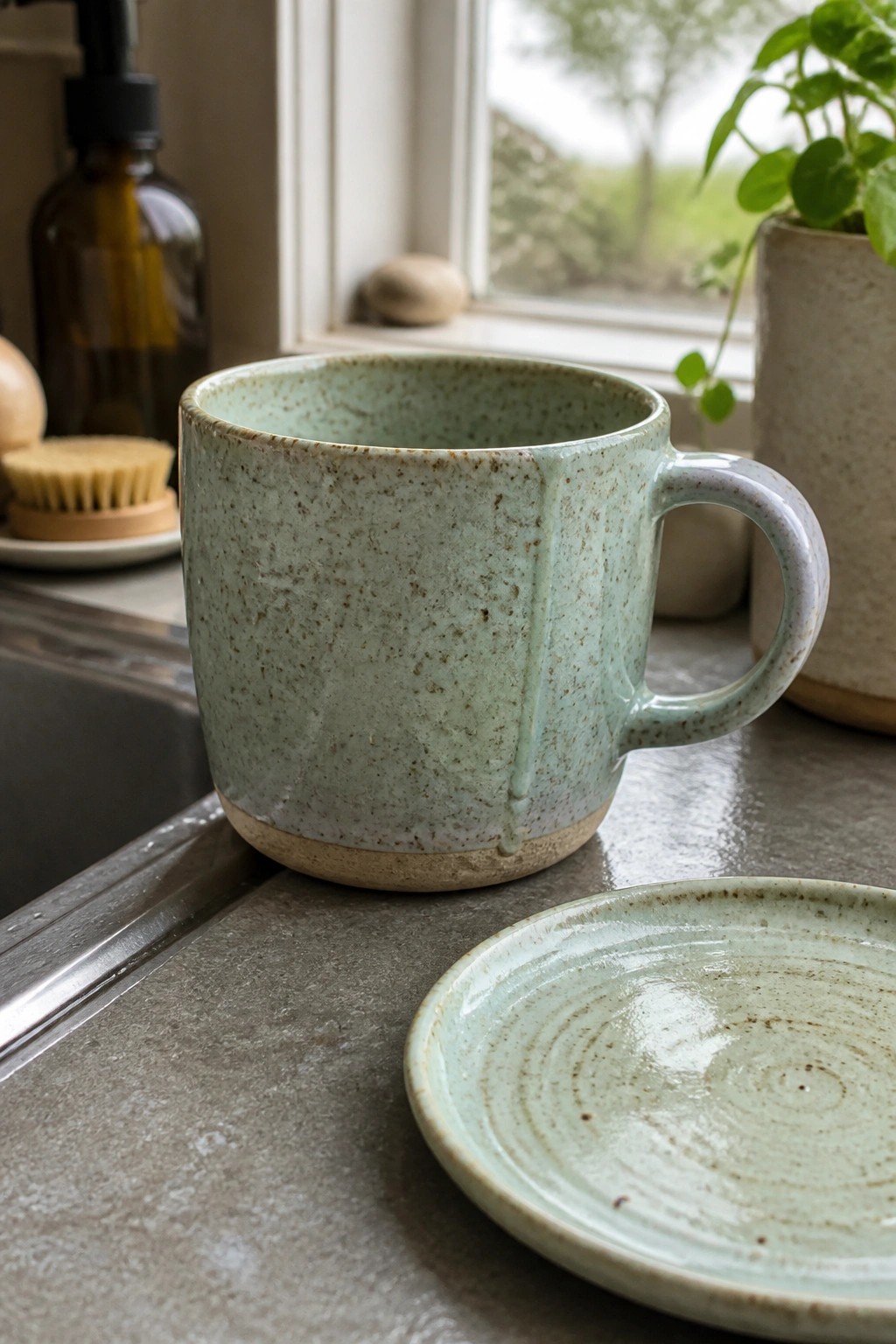
A handmade ceramic mug with a light green speckled glaze gives a simple way to create an everyday drinking vessel that still feels distinct. The glaze allows the clay texture to show through in places, creating subtle variation across the surface without added patterns or carvings. The rounded form and sturdy handle make it comfortable for regular use, while the shallow matching plate underneath extends the set into a small tray or coaster.
What makes this idea useful is how the muted glaze color sits well against wood or stone surfaces in a kitchen. You could rework the same speckled finish on a taller travel mug shape or a smaller cup for espresso by keeping the glaze application light and uneven. In a kitchen, this kind of piece works especially well on open shelves because the natural tones do not clash with other dishware. For a gift, something like this combines easily with a bag of coffee or a small jar of honey.
Two-Tone Mug with Dripping Glaze Line
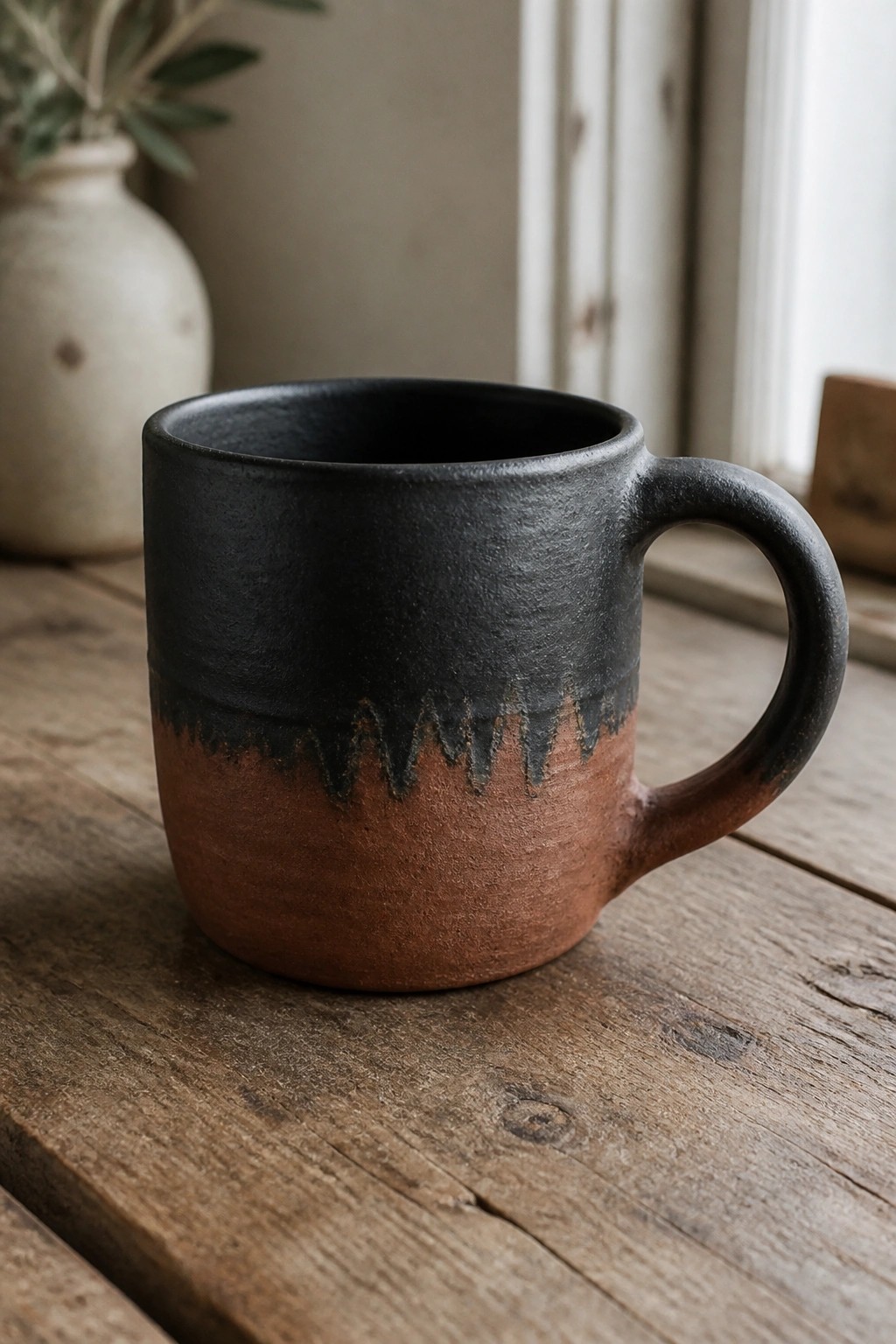
A handmade ceramic mug uses a matte black glaze over the upper half and leaves the lower half in its natural reddish-brown clay. The irregular, downward drip where the two meet creates a clear division without extra carving or painting. This keeps the mug straightforward while the glaze contrast supplies the main detail. It belongs in the group of simple drinking mugs that rely on surface treatment rather than added form.
What makes this idea useful is the easy control over where the color changes and how far the drips run. The same split works on taller or shorter mugs by shifting the glaze line up or down. You could try the approach on a set of smaller cups or switch the bottom section to a different clay color for variety. In a kitchen or on a desk, the sturdy handle and balanced shape keep it functional for daily use.
Textured Mug with Sculpted Handle
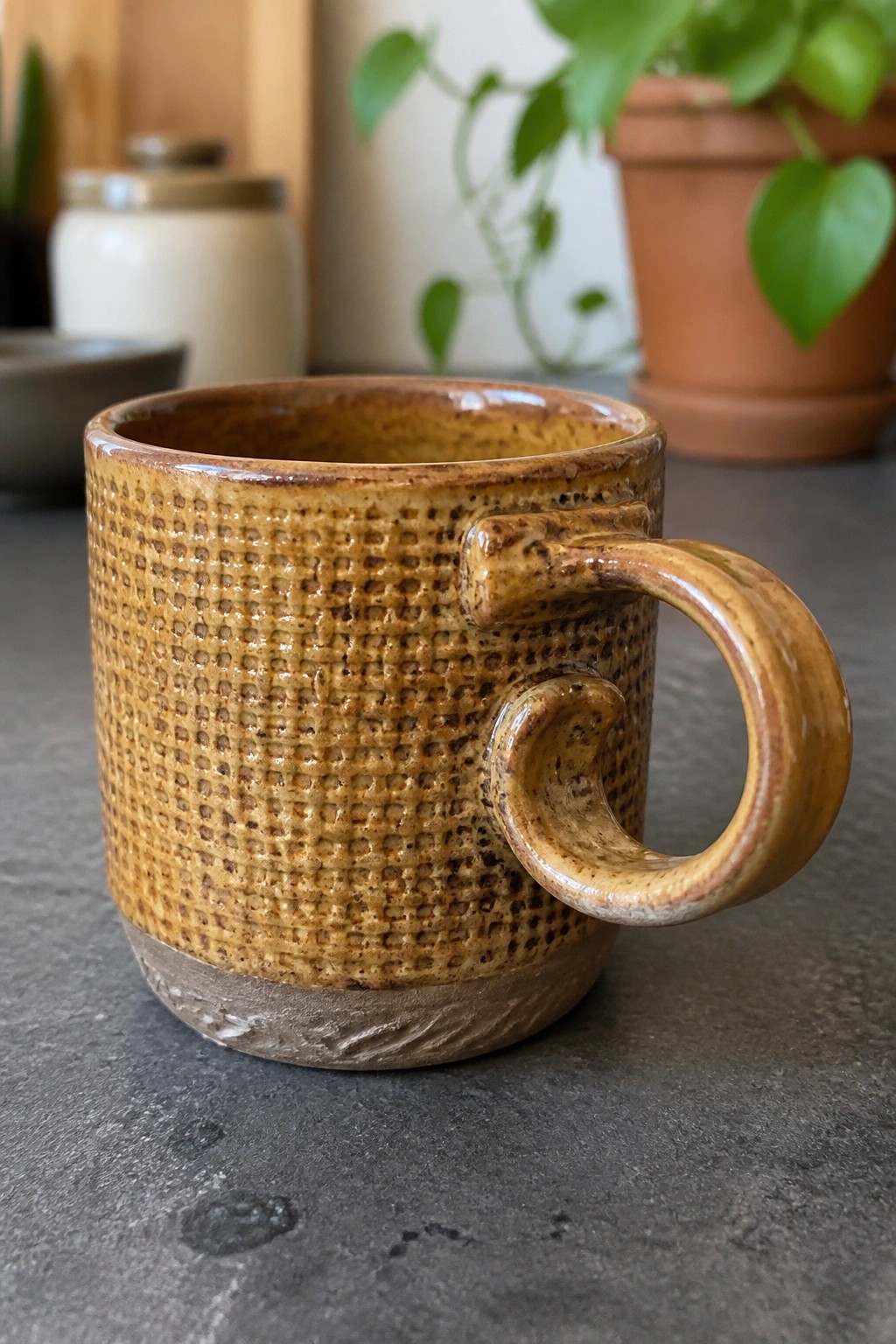
A stoneware mug built with an impressed grid texture across the body and finished in a flowing amber-brown glaze. The glaze sits thicker in the recessed areas to create natural variation while leaving the base mostly unglazed for contrast. The handle is formed as a thick loop with an added clay accent that gives it extra visual weight without complicating the overall shape.
What makes this idea useful is how the texture does most of the work while the form stays simple enough to use daily. The same impressed pattern could be scaled down for an espresso cup or carried over to a small pitcher. In a kitchen setting the earthy glaze hides minor wear well, and the sturdy handle shape would translate easily to a larger serving mug if you want to rework the proportions.
Mug with a Braided Rope Band
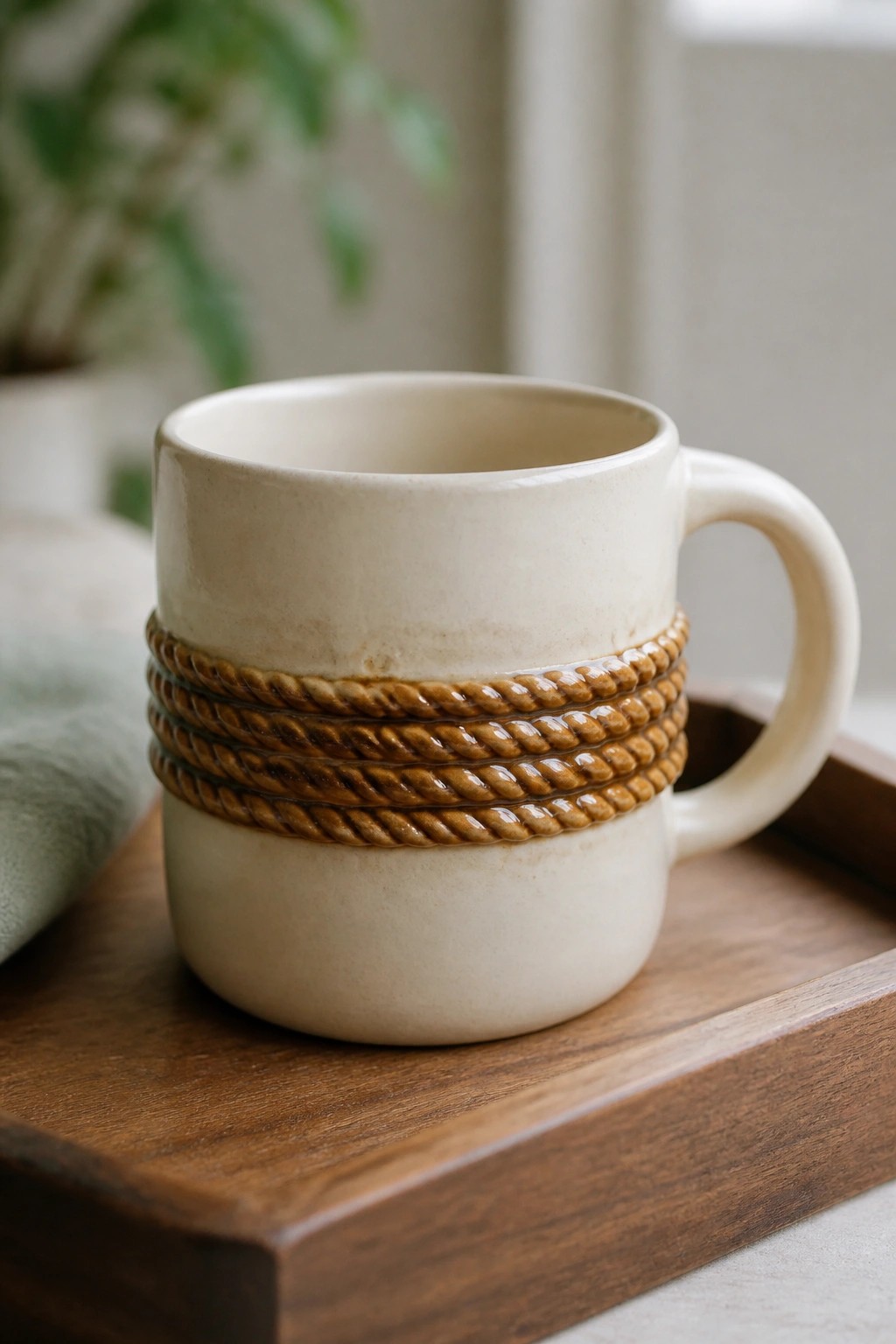
A standard ceramic mug gains its main detail from a wide band of twisted clay coils applied around the middle section. The coils are glazed in a glossy brown that stands out against the matte off-white body, creating a clear horizontal accent. This keeps the overall form simple while adding a sculpted texture that highlights the handmade construction. It works as a functional mug with a focused surface treatment rather than an all-over pattern.
What makes this idea useful is how the band can be adjusted in width or repeated in thinner lines on taller mugs. The same rope texture could be applied to small bowls or jars without changing the base form much. For a gift, pairing this mug with plain ones in the same glaze family keeps the set cohesive but varied. The horizontal detail also photographs clearly for sharing project variations.
Moon Phase Impressed Mug
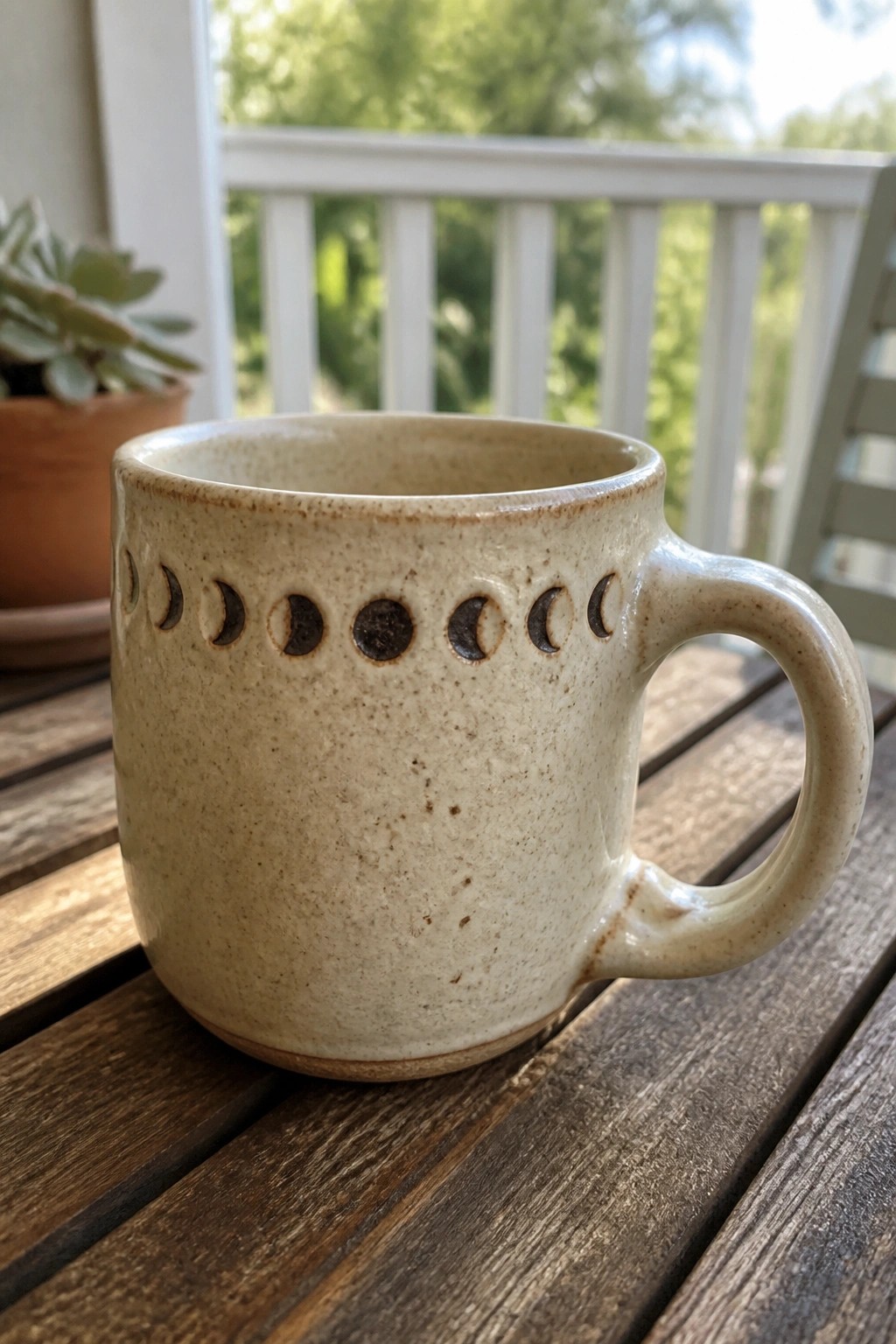
A handmade ceramic mug with a repeating row of moon phase impressions around the upper section. The shapes are carved or stamped directly into the clay before glazing, creating a clear sequence from crescent through full moon. The speckled matte glaze in earthy tones leaves the pattern visible while adding subtle surface texture. This approach works well for any standard drinking mug where the design sits above the main body.
What makes this idea useful is how the moon phases can be made with basic stamps or a small loop tool on a thrown or hand-built cylinder. The same border adapts easily to a shorter tumbler or a taller coffee cup without changing the overall form. In a kitchen or on a desk the pattern stays visible even when the mug is in use. You could rework it with fewer phases or different spacing if you want a quicker version on your next batch.
Earthy Drip Glaze Mug
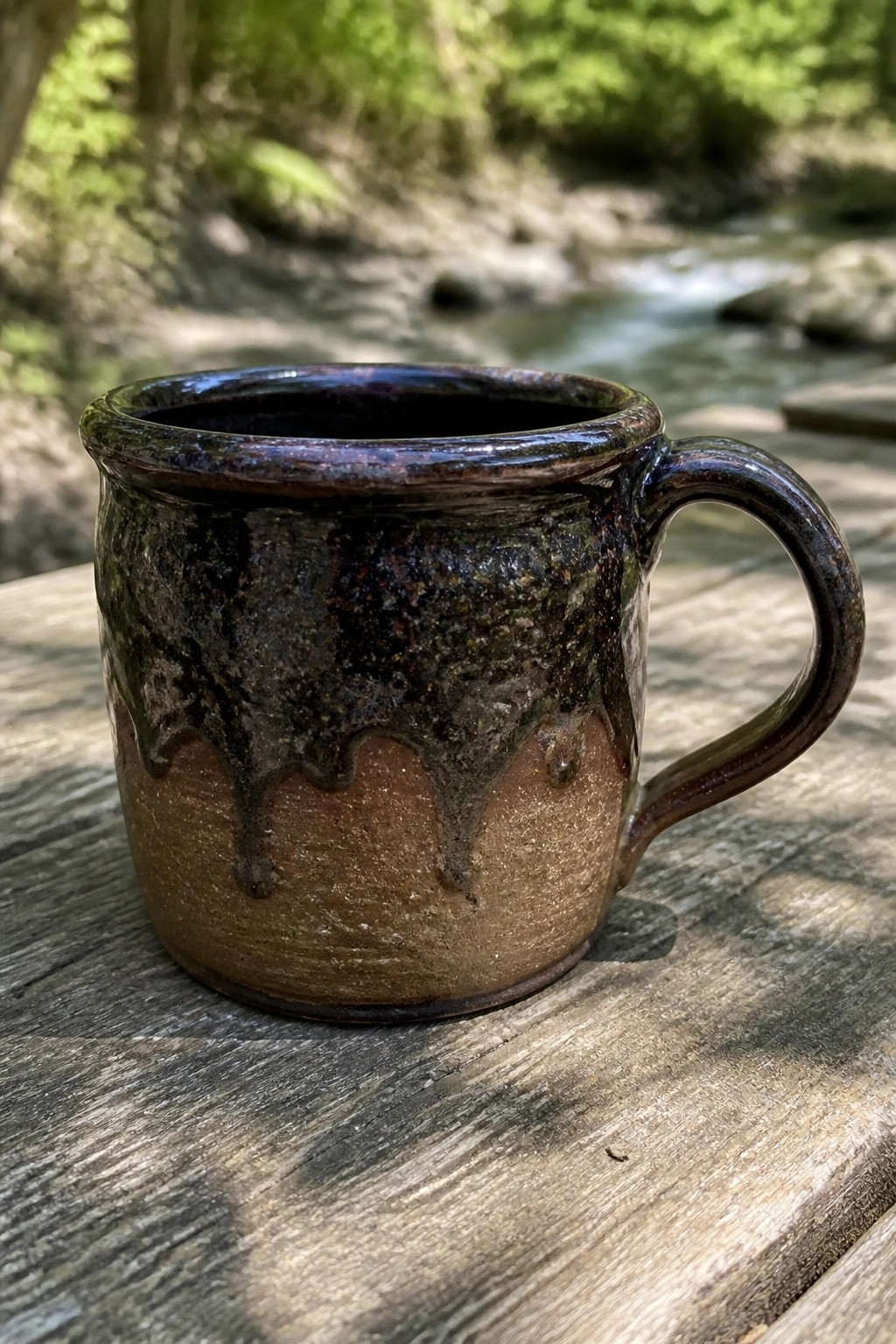
A straightforward pottery mug uses a dark glossy glaze poured over a lighter brown clay body so it drips partway down the sides. The rough surface texture and the uneven drip line give the piece a simple, natural finish without added carving or patterns. This approach fits the rustic mug category well because the glaze itself supplies the main visual detail while keeping the form easy to throw and use daily.
What makes this idea useful is how the drip effect works on almost any standard mug shape or size. You can swap the dark top glaze for another color or let it run farther down to change the look without new tools. The same technique adapts quickly to small espresso cups or slightly wider breakfast mugs. In a kitchen or on a desk it stays practical for drinks while the contrast between the two tones keeps it from looking plain.
Frequently Asked Questions
1. What types of clay work best for achieving earthy textures in rustic pottery mugs? Stoneware or earthenware clays with grog or sand additives create the most authentic rough, organic surfaces. These materials allow for natural imperfections during throwing or hand-building that enhance the rustic charm without needing extra tools.
2. How can I apply natural glazes to get that charming varied finish on my mugs? Start with ash-based or wood-fired glazes made from simple ingredients like wood ash, clay, and feldspar. Apply them unevenly by dipping or brushing to let the underlying texture show through, then fire at cone 6 to produce the mottled, earthy tones typical of natural results.
3. Are rustic pottery mugs with natural glazes safe for daily hot drink use? Yes, when fired to maturity and made from food-safe clays and glazes they handle heat well and resist leaching. Always confirm the maker used non-toxic materials and avoid pieces with obvious cracks that could harbor bacteria.
4. What are practical ways to style a set of 21 different rustic mugs in a kitchen? Group them on open wooden shelves by glaze color families for visual flow, or hang them from sturdy pegs above a coffee station. Rotate a few into daily use while displaying the rest to highlight their unique textures and avoid overcrowding the space.
5. Where can I source supplies or classes to create my own earthy textured mugs at home? Local pottery studios often offer beginner workshops with access to clay and kilns, while online suppliers like Laguna Clay provide natural glaze ingredients and instructional videos. Start with small batches to experiment before committing to larger projects.

Pottery Path is my cozy corner of the internet where I share clay ideas, pottery inspiration, and simple projects you can recreate at home. I love exploring everything from air dry clay to handbuilt pottery to cute minis that brighten your day. My goal is to make clay crafting feel easy, fun, and welcoming for anyone who wants to try it.
You will find beginner friendly tutorials, creative pottery painting ideas, and lots of warm inspiration for slow and happy crafting. If you enjoy hands on creativity, this space will feel like home.