
I have spent some time experimenting with different ways to make pottery mugs.
Adding texture through simple tools gives them a handmade feel that I enjoy.
Color can be layered in ways that make each mug stand out on the shelf.
I also like to include small sculptural elements when the shape allows it.
These ideas are some that I have found useful in my own projects.
Horizontal Blue Stripes on a Speckled Mug
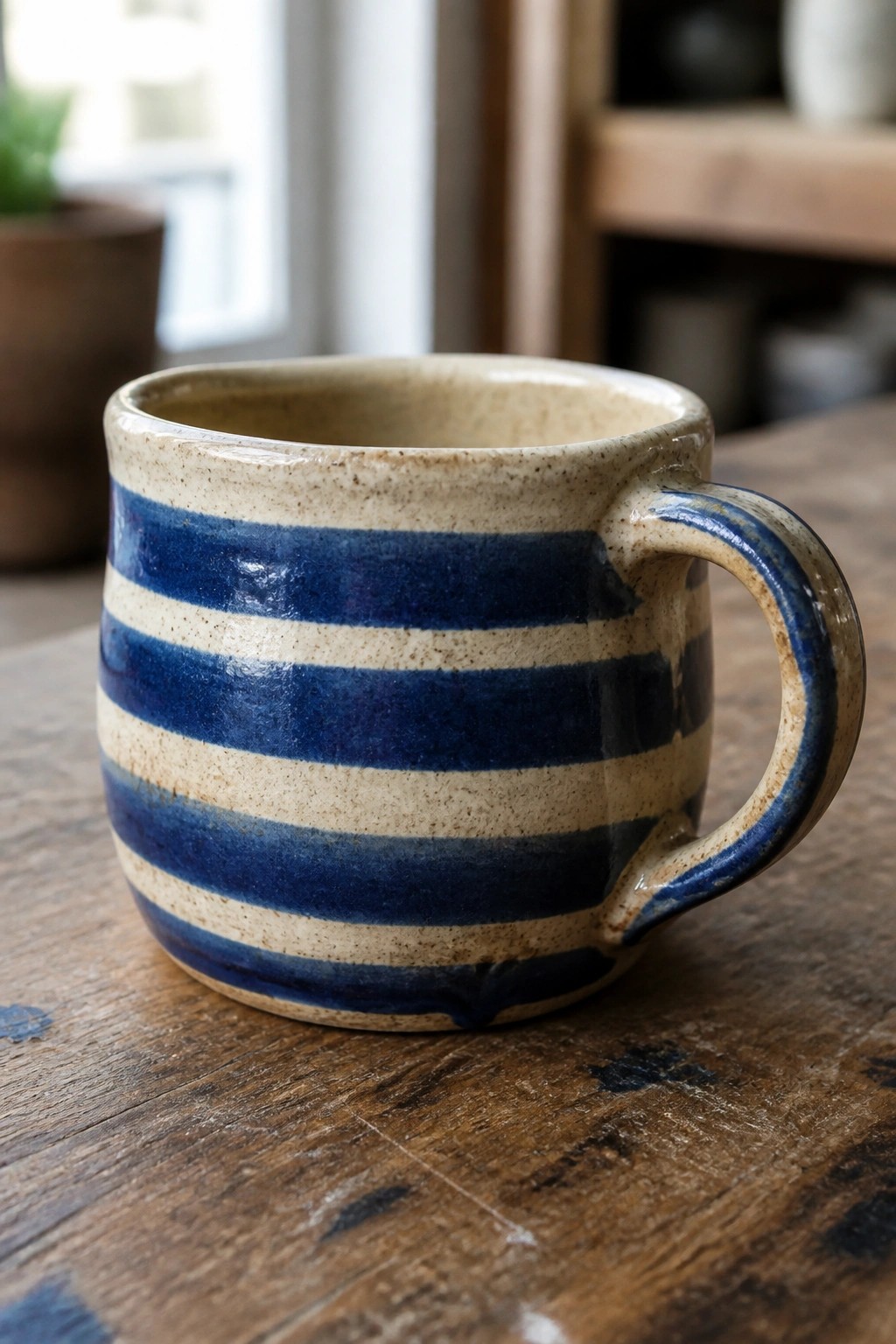
A ceramic mug covered in alternating horizontal bands of deep blue and speckled cream glaze uses simple color blocking to create visual interest. The stripes wrap evenly around the body, with the blue glaze showing slight pooling and variation that adds depth to the surface. This idea belongs to the color-pattern category of mug designs, where the contrast between the bands does the main work instead of added texture or sculpting.
What makes this idea useful is how the stripe layout can be changed in width or color to suit different preferences without altering the mug shape. The standard handle and rounded form keep it practical for daily use on a kitchen counter or desk. The same banding approach could be applied to a larger bowl or a set of smaller cups to create matching pieces. A pattern like this stands out in photos because the clean lines read clearly even at small sizes.
Mini Ribbed Creamer Mug with Soft Green Glaze

A small ceramic mug built as a tiny pitcher gains interest from vertical ribs pressed into the sides and a short pouring spout added at the rim. The pale green crackle glaze keeps the surface simple while letting the texture show through clearly. This fits the category of a functional mug that uses sculptural details and color rather than relying on size or complex carving.
The shape does a lot of the work here because the compact size makes the ribs and spout easy to form in one session. You could repeat the same rib pattern on a taller drinking mug or scale it down further for a set of small kitchen pourers. A piece like this works especially well as a desk or table accent where the spout gives it a clear purpose without needing extra decoration.
Relief Floral Mug in Soft Green Glaze
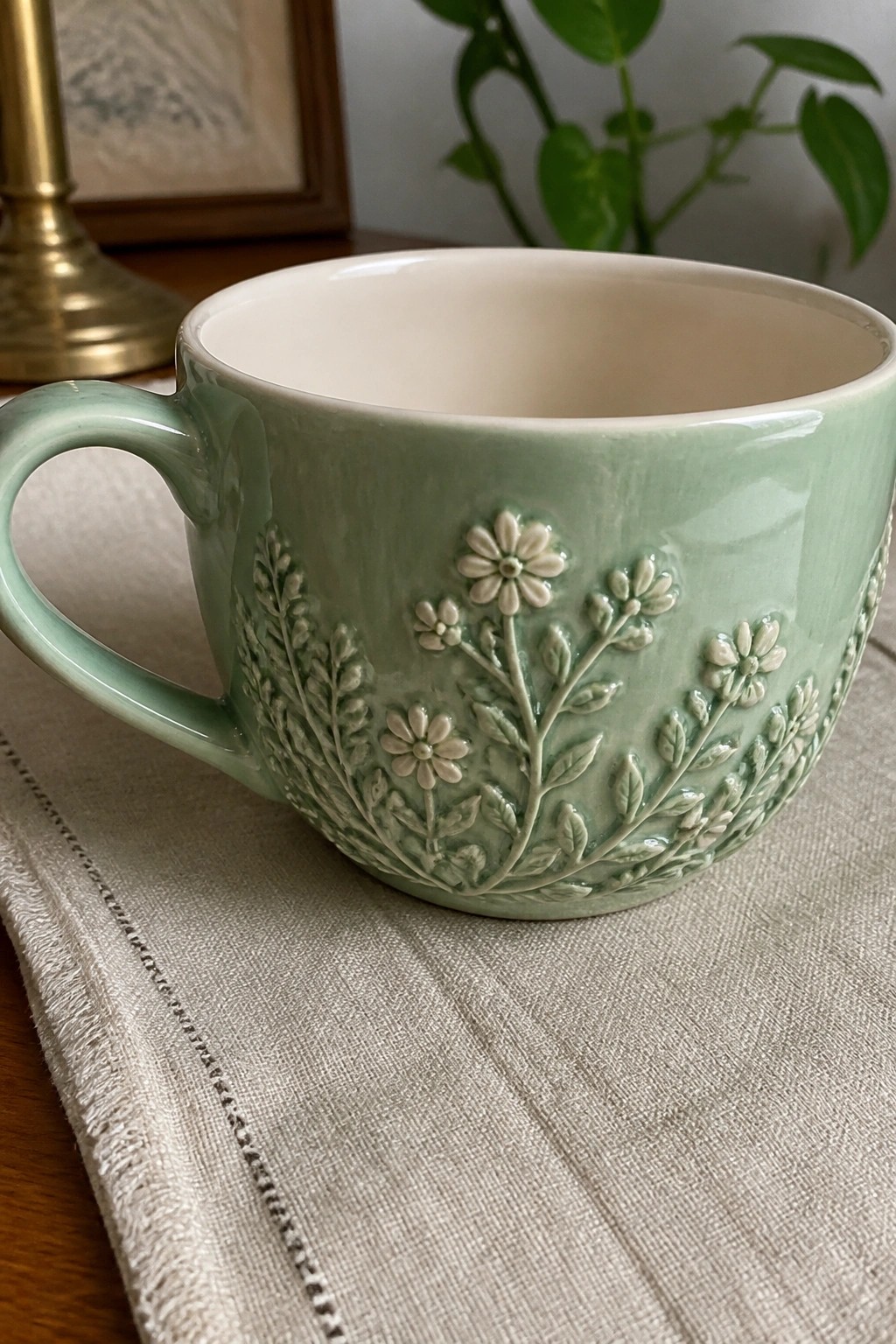
A ceramic mug with a wide rim and sturdy handle becomes more interesting when botanical designs are pressed into the clay to create raised flowers and leaves. The mint green glaze covers the body while a lighter slip or clay highlights the stems, petals, and foliage so the pattern stands out clearly after firing. This approach turns a basic drinking vessel into a piece that relies on surface texture rather than added paint or decals.
What makes this idea useful is how the raised pattern gives the mug extra grip and visual weight without changing its everyday function. You can adapt the same stamping method to smaller cups or a matching pitcher by scaling down the motif size. The soft green tone pairs easily with neutral kitchen linens or plant displays, and the contrast between the relief and glaze helps the finished piece stand out in project photos.
Ribbed Mug with Cork Lid and Drippy Glaze

A tall cylindrical mug built from clay and finished with deep vertical ridges gives the surface a strong linear texture that catches light and shadow. The green glaze with brown speckles and a few controlled drips near the rim adds color variation without overwhelming the form. Adding a fitted cork lid turns the mug into a practical lidded container while keeping the overall shape simple and balanced.
The fluted texture is easy to repeat on any wheel-thrown or hand-built cylinder by using a rib tool or stamp before the clay firms up. This style works well as a desk mug for tea or coffee because the lid helps retain heat and keeps dust out. You could swap the green glaze for a matte white or deep blue and keep the same ridges and cork top, or shrink the form slightly to make a set of smaller lidded jars for the kitchen. The clean lines and visible texture also photograph clearly for sharing project ideas online.
Gradient Glaze Mugs with Speckled Texture
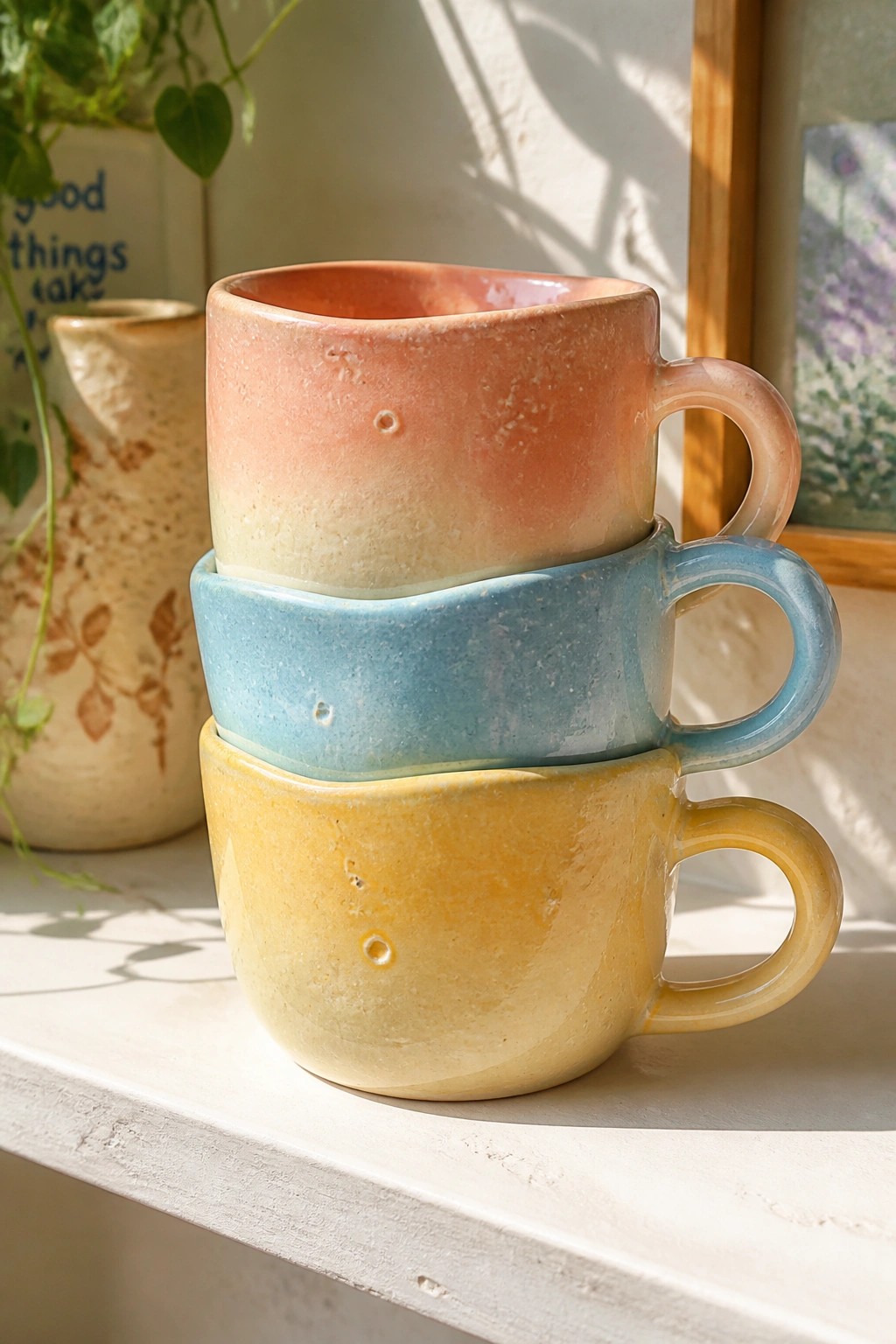
Create a set of mugs by blending two glazes on each piece so the color shifts from a saturated tone at the top down to a lighter base. The clay surface stays slightly rough with small impressed dots that catch light and give the glaze something to sit against. This method turns a simple cylinder shape into a coordinated collection where each mug keeps its own color while matching the others in form and handle.
What makes this idea useful is how the gradient uses up small amounts of glaze without needing perfect application. The mugs stack well for daily kitchen use and the dotted texture stays visible even after glazing. You could rework the same blending on taller tumblers or shorter espresso cups, or swap the dot pattern for shallow lines if you want less contrast. A set like this photographs clearly for sharing because the color changes read well in natural light.
Reactive Blue Glaze Mug with Speckled Texture
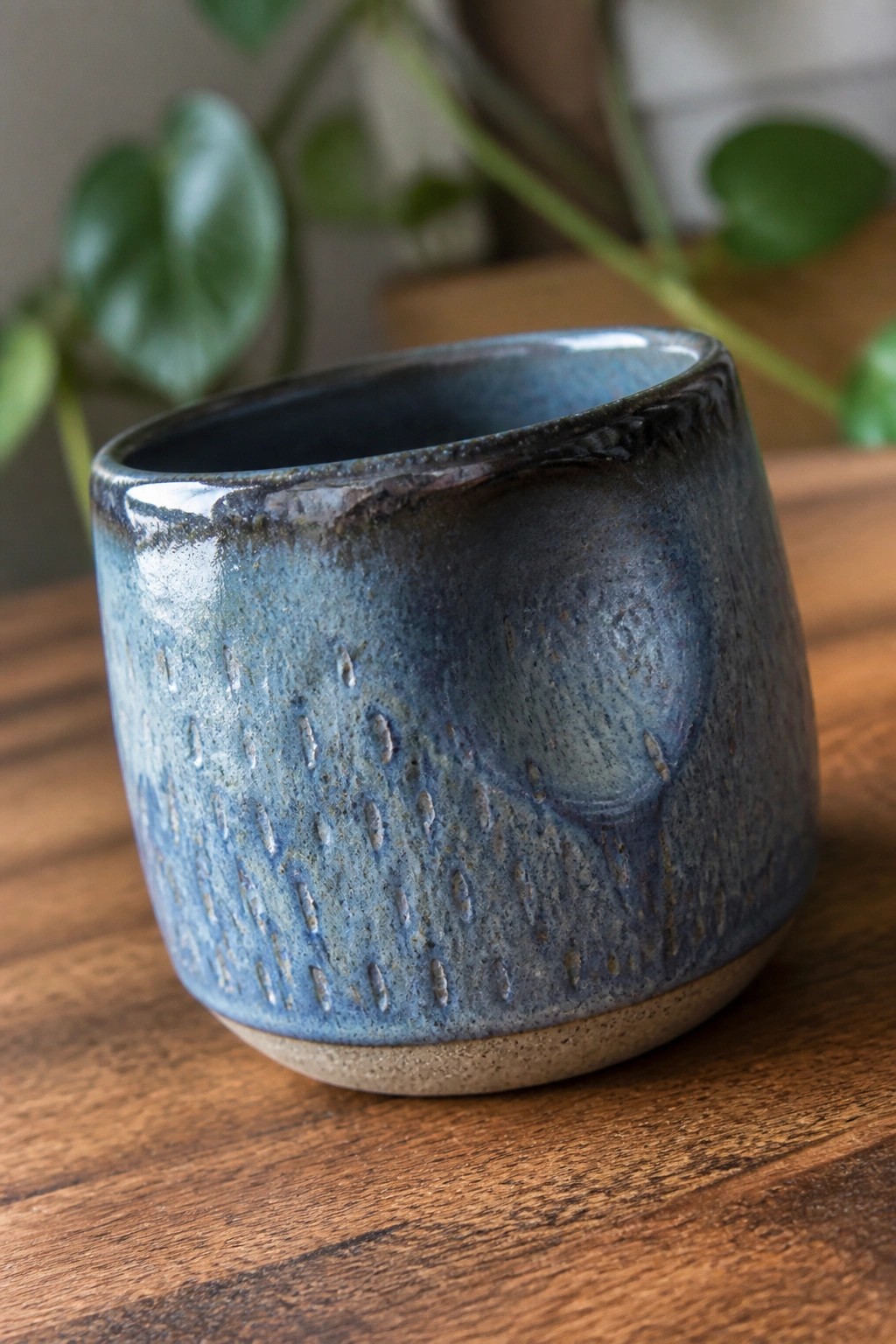
A small ceramic mug finished with a reactive blue glaze creates depth through natural color shifts and speckling as the glaze moves during firing. The glaze pools thicker in some areas while thinning in others, producing a mottled surface that ranges from light blue to near black without any added carving or painting. This style fits the mug category and relies on the glaze chemistry itself to generate the pattern and texture on a simple wheel-thrown or hand-built form.
What makes this idea useful is that the same glaze can be tested on different clay bodies to shift the final colors and break patterns. A piece like this works especially well as a daily drinking mug or a small desk holder for pens and brushes. The compact shape makes it easy to repeat in a set or scale slightly larger into a tea bowl while keeping the same glaze treatment.
Rabbit Ear Handles on a Small Ceramic Bowl

A small ceramic bowl gains interest when clay ears are attached to opposite sides of the rim and a simple face is painted on the interior bottom. The ears are shaped separately, joined at the leather-hard stage, and glazed in a soft pink on the inner surface to contrast with the speckled stoneware body. This approach keeps the main form functional as a tiny bowl or cup while the added details make it read as a character piece rather than a plain vessel.
The small scale makes this easy to adapt for different animals by changing ear shape or swapping the painted features. It works well as a desk catch-all, a ring dish, or a small snack bowl for kids. You could simplify the idea by using only one ear or by leaving the face off entirely for a cleaner look. The same rim attachments could be tried on a slightly taller cylinder to turn it into a small mug instead.
Crackled White Glaze on a Basic Mug Form
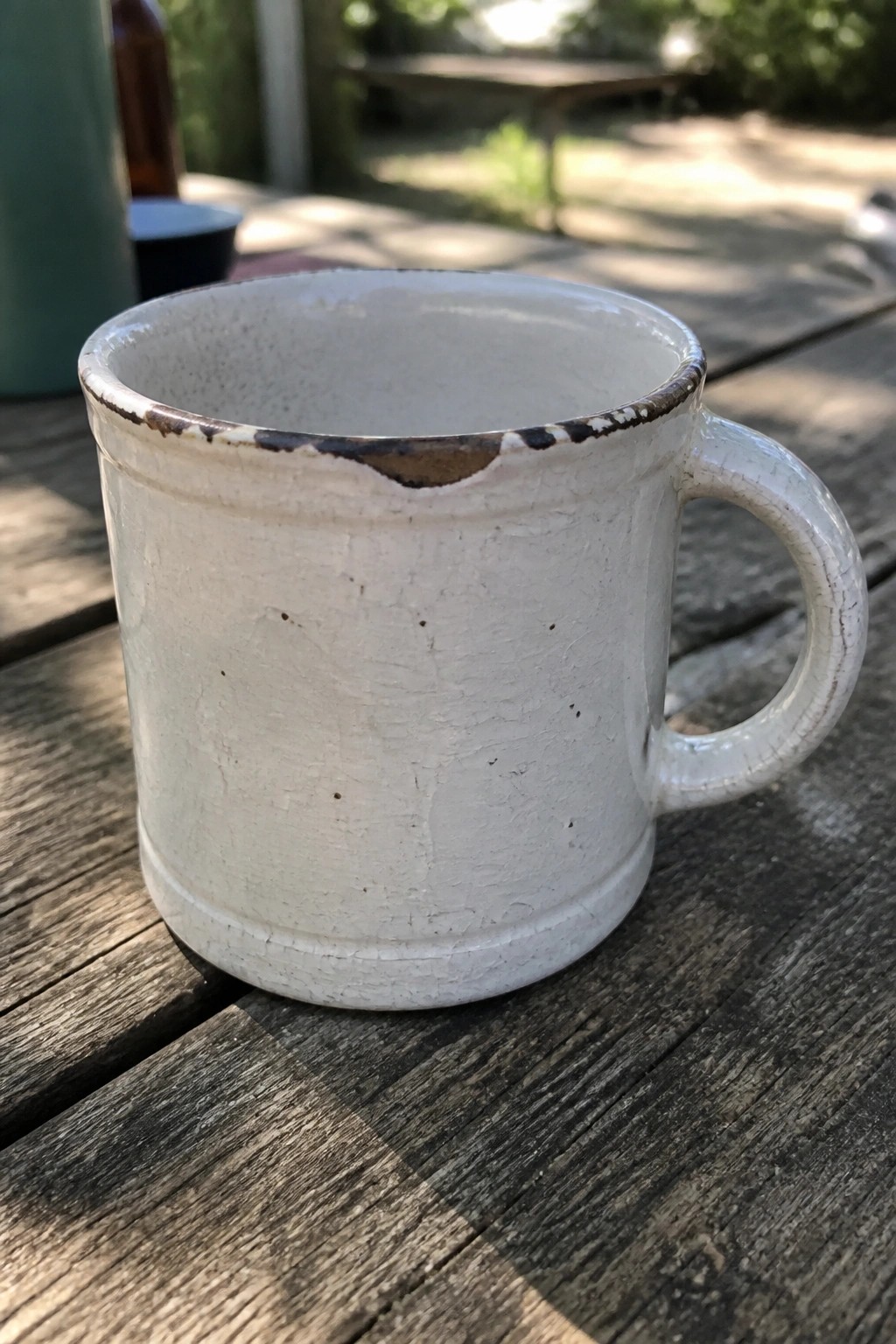
A wheel-thrown ceramic mug finished with an all-over white crackle glaze shows how surface texture can replace added sculptural details. The glaze breaks into fine lines across the body while a darker rim creates a simple color break at the top edge. This approach keeps the mug shape straightforward but gives the finished piece a visibly handmade surface.
What makes this idea useful is that the crackle glaze works on almost any mug size or proportion without requiring new molds or handles. The same treatment adapts easily to different clay colors underneath or a changed rim tone for variety. In a kitchen setting the matte texture hides minor wear from daily use better than a smooth glossy glaze would.
Incised Sun and Wave Mug

A ceramic mug in deep blue glaze uses an incised sun motif with radiating lines and a brown center circle. Wave patterns wrap around the lower half, with the carved lines filled in a contrasting earth tone to create clear definition. The design keeps the mug shape simple while the surface pattern adds strong visual contrast through texture and color.
What makes this idea useful is the carved motif that works on any standard mug form without needing extra sculpting. You could adapt the same sun and wave layout to a different glaze color or repeat it around the full circumference for more impact. In a kitchen, this kind of piece stands out on a shelf or in a gift set because the graphic pattern reads clearly from a distance. The incising technique could transfer easily to a matching bowl or small pitcher.
Sculpted Bubble Clusters on a Teal Glazed Mug
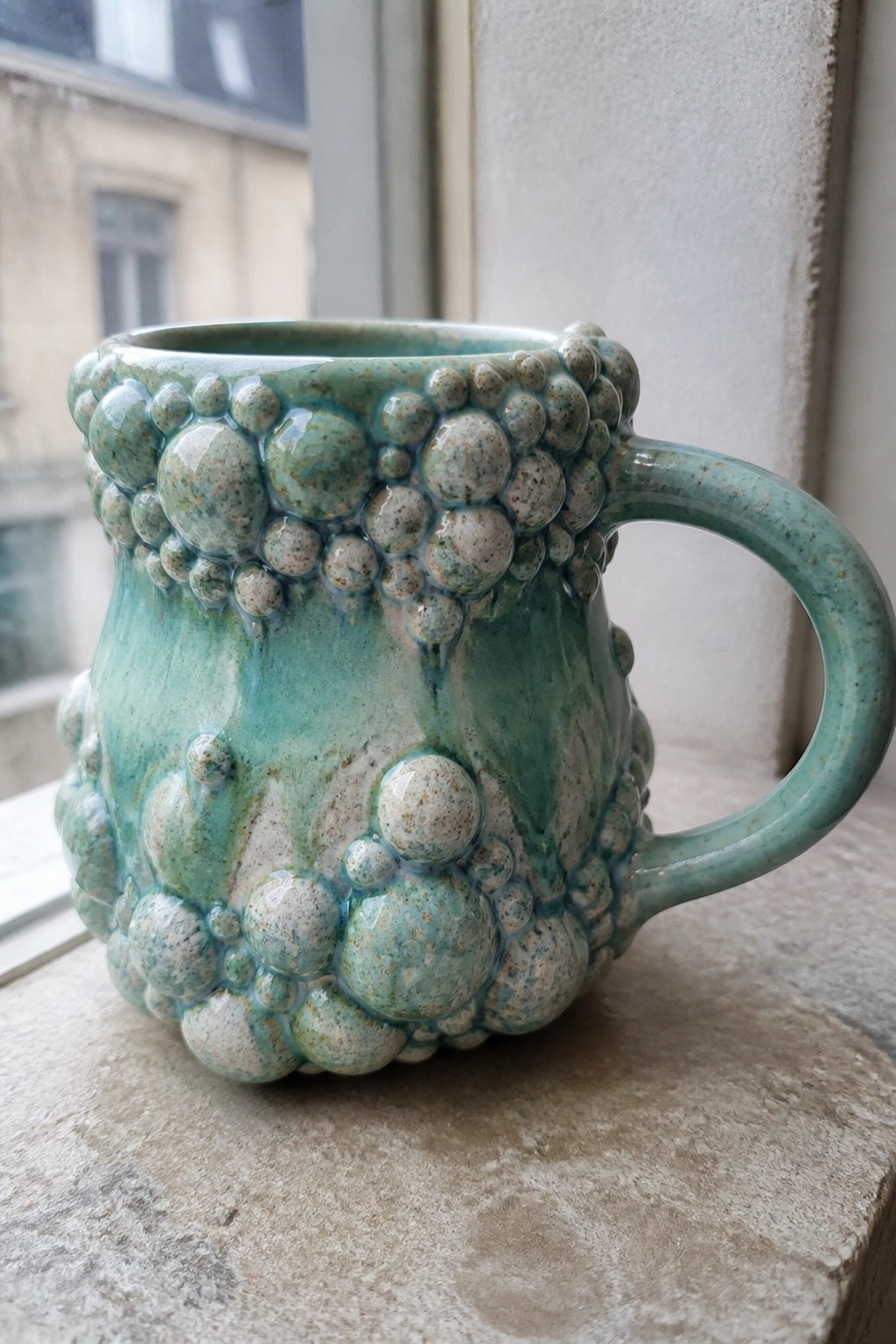
A ceramic mug built with clusters of raised spheres across the exterior creates a strong textural surface that catches light and glaze. The spheres vary slightly in size and sit close together, leaving spaces where the turquoise and green glaze runs and pools during firing. This turns an ordinary mug into a project centered on applied sculptural detail rather than surface painting or carving.
What makes this idea useful is how the bubble clusters can be scaled up or down depending on the mug size you throw. You could cover only the lower half for a simpler look or add them around the handle base to tie the form together. The same technique works on smaller cups or taller tumblers if you want to repeat the texture on other pieces. In a collection of mugs, this one stands out on a shelf because the raised shapes create shadows that flat glazes cannot match.
Horizontal Striped Mug with Layered Glazes
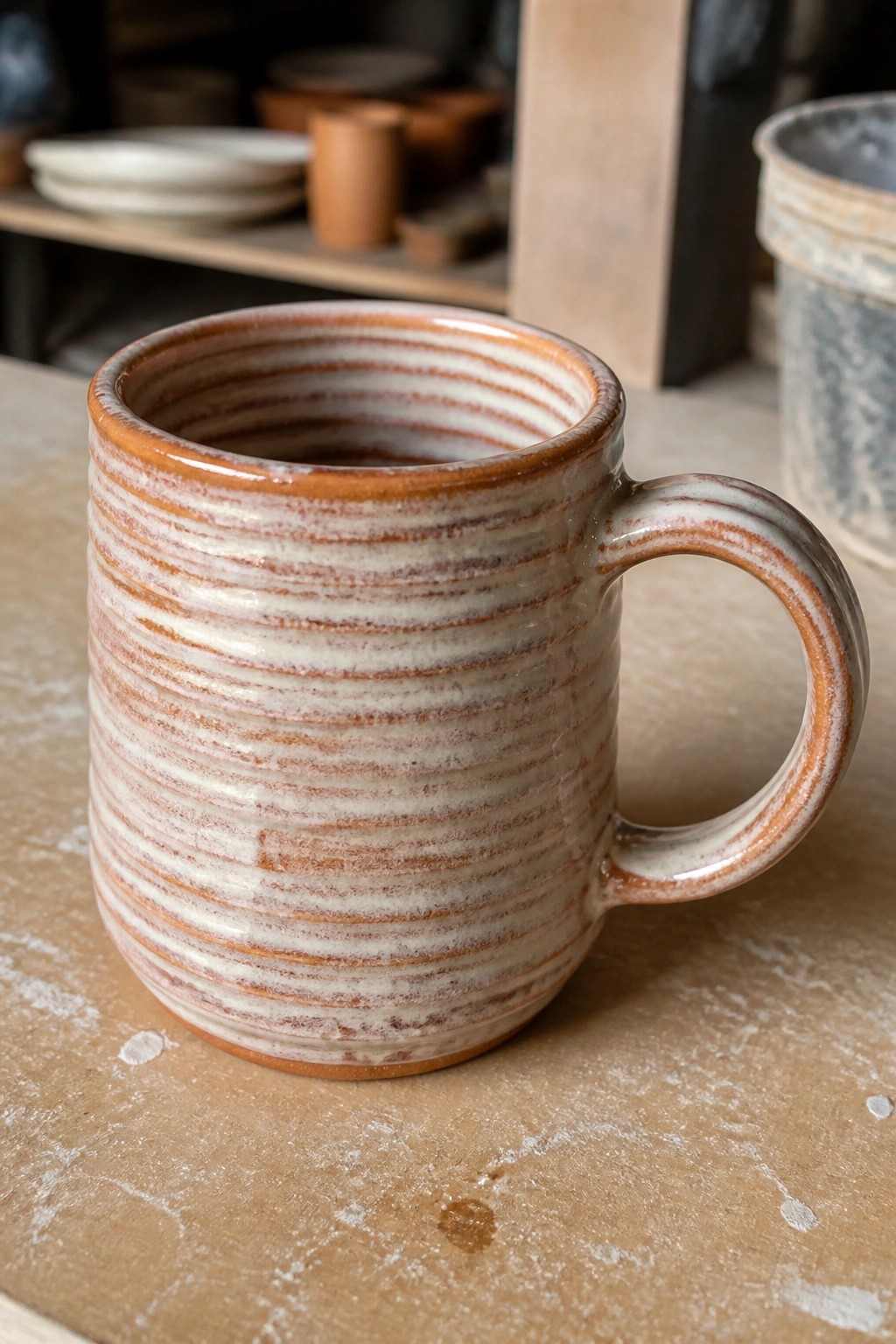
A ceramic mug finished with alternating horizontal bands of cream and terracotta glaze. The stripes are created by applying multiple glaze layers that break and run slightly during firing, producing a textured surface across the cylindrical body and handle. This category of mug relies on simple color repetition to add visual interest while keeping the overall form straightforward and functional.
What makes this idea useful is how easily the stripe pattern can be changed by swapping glaze colors or adjusting band widths. The standard mug size works for everyday drinks and fits well in a kitchen cabinet or on open shelving. You could apply the same banding method to a small pitcher or set of bowls to create matching pieces, or reduce the number of stripes for a quicker version on a wheel-thrown form.
Ombre Purple Mug with Thrown Ridges and Pour Spout

A wheel-thrown mug with a built-in pouring lip adds a simple functional twist to a basic cup shape. The horizontal ridges left from throwing create lines that help the glaze settle unevenly and show depth. Applying a purple glaze in graduated tones produces a clear shift from lighter at the top to darker near the base. This combination of texture and color layering turns an everyday mug into a piece that stands out through surface detail rather than added sculpting.
What makes this idea useful is how the ridges do the work of holding glaze variation without extra carving. The small spout lets the mug double as a creamer or sauce server on a table. You could repeat the same ridge pattern and glaze blend on a larger pitcher or shorten it into a set of espresso cups. The compact size and strong color change make the design easy to photograph and share as a repeatable mug variation.
Sculpted Profile Face Mug with Braided Handle

A ceramic mug formed as a side profile of a human face uses simple sculpting to create the nose, lips, and brow line before firing. A soft pink wash on the cheek and a painted eye add color accents without covering the entire surface, while the handle is shaped into a thick braid that provides both texture and a secure grip. This idea fits the sculptural mug category by turning the basic drinking vessel into a three-dimensional form that still functions normally.
What makes this idea useful is how the face profile can be reworked with different expressions or simplified to just the nose and mouth for quicker projects. The braided handle works on taller or wider mugs too and adds visual weight that balances the design. In a kitchen or on a desk, the piece stands out among plain mugs while remaining easy to hold and wash. You could adapt the same sculpting approach to a small bowl or turn the braid detail into a knob on a lidded jar.
Ribbed Mug with Soft Green Glaze

A wheel-thrown mug finished with vertical ridges creates built-in texture that catches glaze and light across the surface. The matte sage green glaze pools slightly in the grooves while leaving raised areas lighter, which gives the form visual depth without added decoration. This style keeps the mug fully functional while turning a plain cylinder into something more interesting to hold.
The ribbed pattern can be made quickly with a simple tool on leather-hard clay or even a notched rib during throwing. It adapts easily to taller or wider mug shapes and works with other glaze colors if green is not the goal. This approach stands out in a set of mugs because the texture does most of the visual work without requiring painting or sculpting.
Scalloped Rim Strawberry Mug

A ceramic mug with a scalloped rim gets most of its visual interest from the painted strawberries scattered across the white surface. Small red dots fill the spaces between the fruit, keeping the pattern light without overcrowding the form. The shape stays simple and functional while the painted motif supplies the color and detail.
The painted strawberries make this mug easy to adapt by swapping in other fruits or changing the dot placement. It works well as a daily kitchen piece or a small gift because the scale stays manageable and the design does not require complex carving. You could repeat the same rim shape on a smaller cup or add the motif to a matching pitcher for a set.
Pressed Leaves Add Organic Texture to a Stoneware Mug

A stoneware mug becomes more interesting when real leaves are pressed into the clay to leave clear vein and edge details. The leaves wrap around the lower half of the form at varied angles, and a light speckled glaze settles into the recesses to make the patterns readable without extra carving. This method turns a basic cylinder mug into a piece that carries natural texture while still functioning as an everyday drinking vessel.
What makes this idea useful is how simple it is to repeat with different leaf sizes or orientations on the same mug shape. The low-relief surface stays practical for stacking or washing, and the same pressing step works on small bowls or tumblers if you want to build a matching set. For a gift, the design adapts quickly by changing the leaf type or glaze color to match someone’s kitchen without needing new molds or stamps.
Whale Tail Handle Mug with Glaze Gradient
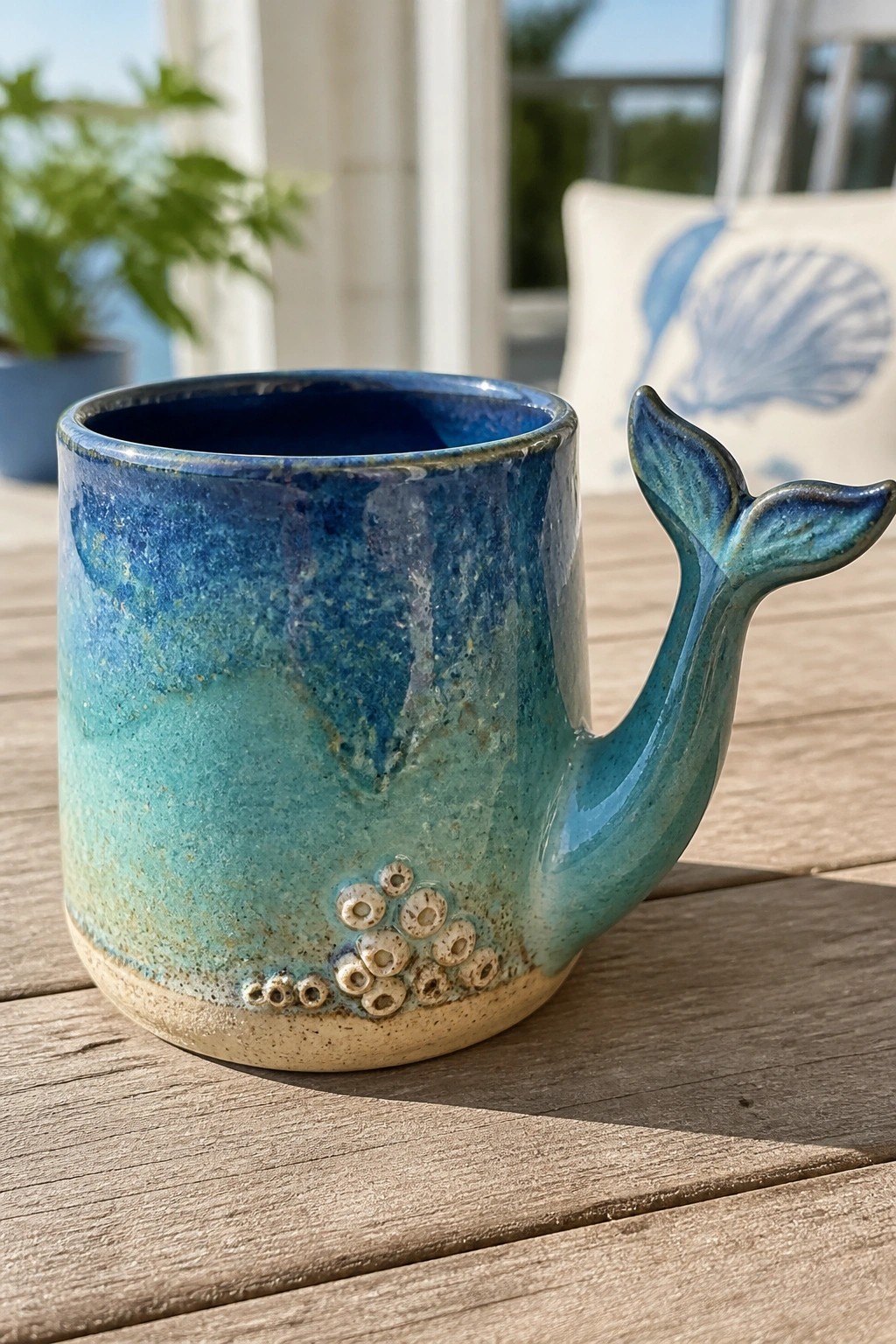
A ceramic mug can incorporate a sculpted whale tail as its handle to add a clear sculptural element. The tail attaches at the side and curves outward, giving the mug a distinct profile while remaining functional to hold. Blue and turquoise glazes blend across the surface with a lighter base, and small raised circles near the bottom create a simple barnacle texture. This approach fits the mug category by combining a standard drinking form with one strong decorative feature.
What makes this idea useful is the way the handle shape itself carries the theme without needing extra painting. The same tail detail could be adapted to other sea creatures or simplified to a basic curved handle on a smaller cup. In a kitchen or on a desk, the compact size keeps it practical for daily use while standing out from plain mugs. For a gift, the color blend and texture can be adjusted to match different glaze palettes or simplified to just the tail form on an otherwise plain cylinder.
Geometric Grid Texture on a Two-Tone Mug

A ceramic mug with a repeating grid of impressed geometric patterns across the exterior surface. The dark clay body keeps the carved details visible while the interior uses a bright yellow glaze that contrasts sharply at the rim. This approach works because the square layout organizes the texture into clear sections that read well from a distance. It belongs to the category of textured mugs that rely on surface pattern rather than added sculptural elements.
The grid pattern stays easy to adapt by swapping in different stamp designs or adjusting the spacing. A mug like this works well on a desk or kitchen shelf because the dark exterior hides daily wear while the yellow inside stays noticeable when in use. You can simplify the idea by using just a few rows of texture instead of covering the whole surface. The same contrast effect could transfer to a small bowl or planter by keeping the interior glaze light and the outside dark.
Embossed Floral Oval Mug

A ceramic mug with a raised oval medallion of wildflowers and leaves pressed into the surface creates a clean relief design without added color. The light speckled glaze keeps the focus on the sculpted details while the oval frame organizes the bouquet neatly on the side. This approach turns a basic mug into a textured piece by using simple stamping or carving to add the botanical motif.
What makes this idea useful is how the relief detail stays visible even in a single neutral glaze. The oval shape helps the design read clearly without crowding the mug’s form, and the same technique works on other sizes or with different flower arrangements. In a kitchen or on a desk this mug adds interest through texture alone. You could adapt it by switching the motif to herbs or abstract lines for a quicker version that still feels intentional.
Branch-Handled Mug with Dripping Pink and Green Glaze

A ceramic mug with an organic, slightly pinched body uses a flowing glaze that shifts from soft pink at the top to muted green at the base. The glaze shows visible drips and streaks that create movement across the surface. The handle is formed to resemble a short branch, with a small protruding detail at the end that gives it a sculptural quality. This approach combines color blending with a simple added form on a standard drinking vessel.
What makes this idea useful is the way the branch handle turns an everyday mug into something distinctive without requiring complex construction. The shape works well for daily use or as a small gift because the sculptural detail stays practical while still standing out. You could adapt the same glaze transition and branch handle to a larger pitcher or a set of smaller cups by keeping the form simple and focusing on the color flow. The combination of texture and color also photographs clearly, which helps it perform well as a pin for pottery inspiration.
Hammered Texture Mug with Riveted Handle
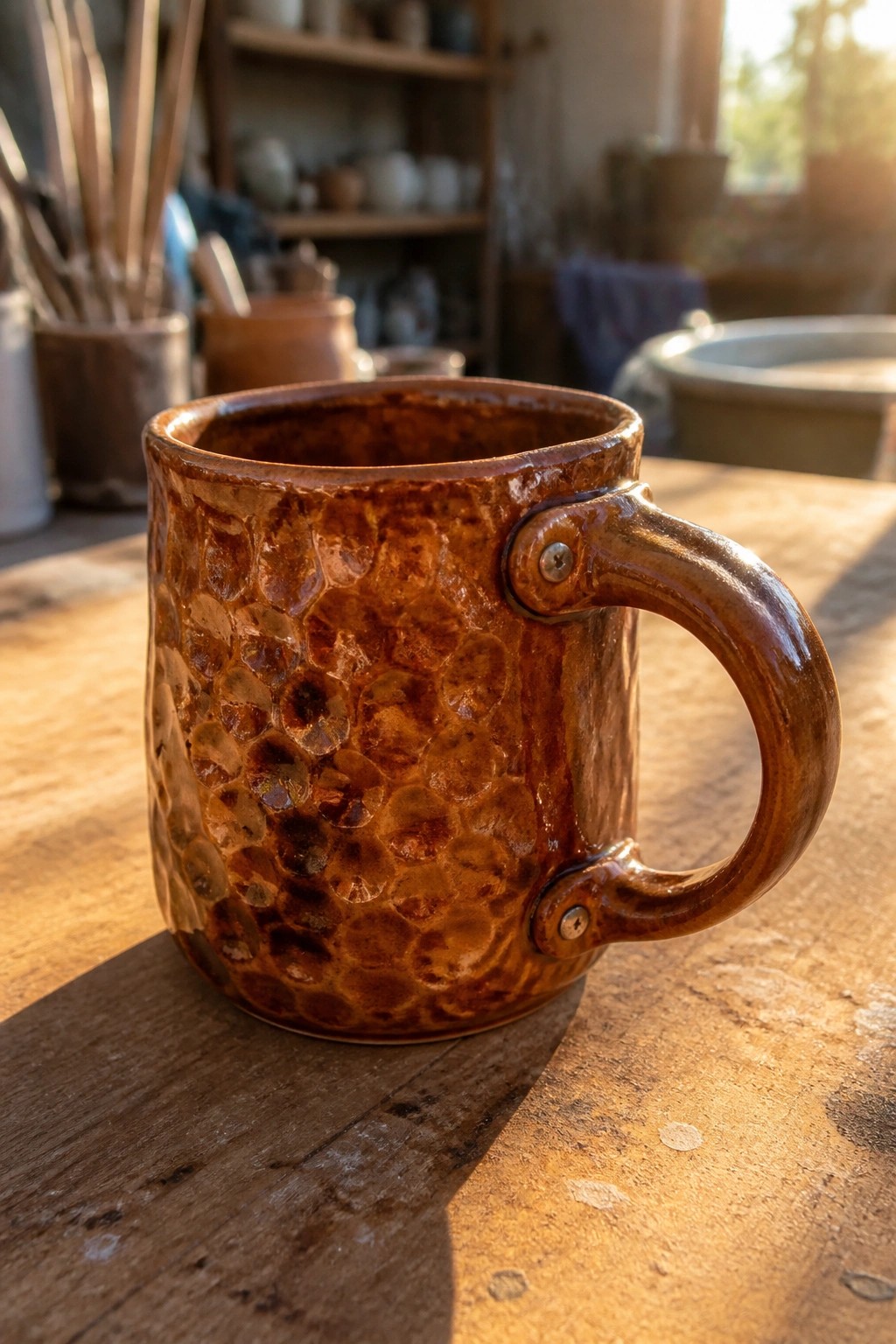
A handmade ceramic mug gains strong visual impact from its all-over dimpled surface that catches light and shadow across the form. A deep brown glaze settles into the texture to emphasize the pattern while the handle attaches with exposed metal rivets that add a deliberate sculptural contrast. This combination turns a basic drinking vessel into a piece that highlights both surface treatment and hardware details.
What makes this idea useful is how the texture does most of the design work without requiring complex shaping. The rivet detail could be simplified with decorative studs or swapped for different metal finishes to match other styles. A piece like this works especially well as a daily coffee mug on a desk or kitchen counter where the texture provides grip and the color hides minor wear. The same hammered surface would translate easily to a shorter tumbler or a small pitcher using the same glaze.
Notched Rim Mug with Built-in Spoon Rest

A handmade ceramic mug with a squared-off body and a notch cut into the rim turns the vessel into a functional holder for a spoon. The speckled matte glaze adds subtle texture across the surface while keeping the overall form simple and sturdy. This approach combines a drinking mug with a practical kitchen detail that keeps small utensils from sliding off the counter.
The shape does a lot of the work here because the notch fits standard teaspoons without extra attachments. You could scale the same rim cut down for espresso cups or widen it slightly for larger serving spoons in a matching set. The speckled glaze also pairs easily with plain or lidded jars to build a small coordinated collection for daily use.
Painted Mountain Landscape Mug

A ceramic mug decorated with a hand-painted landscape works well when the design uses a smooth color gradient across the surface. The upper half shifts from pale tones into warm orange and red to suggest a sky, while the lower section shows mountains, pine trees, and water in cooler blues and greens. A small sun detail sits near the horizon to anchor the scene. This keeps the mug fully functional while adding a clear painted motif that fits the landscape category.
What makes this idea useful is how the gradient glaze does most of the color work and leaves only the trees and hills to be added by hand. The same layout could be reworked with different terrain like coastal cliffs or rolling hills, or applied to a taller travel mug shape. It stands out for gifts because the scene can be changed to match a specific place without needing new molds or sculpting. On a kitchen counter or desk the simple round form stays easy to stack and store while the artwork gives it more visual weight than a plain mug.
Mug with Intricate Cutout Band in Ochre Glaze

A ceramic mug with a wide band of carved openwork around the upper section creates a repeating pattern of loops and pointed shapes that allow light to pass through. The lower half stays solid to keep the piece functional for holding liquid. A single warm mustard glaze covers the surface and settles into the carved lines to emphasize the shapes. This idea fits the category of a mug that relies on surface carving for its main visual impact.
What makes this idea useful is how the openwork section can be scaled up or down depending on the mug size you throw. You could adapt the same carving approach to a shorter band or repeat it around a small bowl instead. The solid base below the pattern keeps the mug stable and easy to grip. A design like this works well for gifts because the cutouts give it a finished look without needing extra color layers or handles in different shapes.
Lidded Mug with Textured Red Lid

A lidded ceramic mug pairs a simple speckled off-white body with a domed lid finished in a bright red glaze. The lid carries a raised, bumpy texture across its entire surface and includes a small knob at the top for lifting. This approach keeps the mug functional while letting the lid carry the main visual detail.
What makes this idea useful is the lid’s ability to retain heat, which works well for soup, tea, or coffee at a kitchen table. You could repeat the same textured lid on a smaller cup or a sugar bowl to create a matching set. The strong color contrast also helps the piece stand out in photos, which makes it easier to adapt for gift projects or kitchen storage.
Frequently Asked Questions
What types of clay bodies work best when adding heavy textures and sculptural elements to mugs?
Stoneware or porcelain clays with grog content offer good strength and tooth for holding carved lines, stamped patterns, or attached sculptural pieces without slumping during firing. Start with a medium-fire body around cone 6 so you can layer underglazes for color while keeping the form stable for daily use.
How can I ensure the colors on textured mugs stay vibrant after multiple firings and dishwasher cycles?
Apply food-safe underglazes in thin layers over bisque ware, then seal them with a clear gloss or satin glaze that matures at the same temperature as your clay. Test combinations on small tiles first because some pigments shift or fade when overfired, and always run a cone pack to avoid underfiring that leaves colors dull.
What practical steps keep sculptural details from interfering with a mug’s comfort and function?
Keep added elements such as handles, knobs, or relief designs below the rim line and on the lower half of the body so lips do not touch them. Round sharp edges with a damp sponge before drying, and check the final weight once leather hard to make sure the mug still feels balanced when filled.
Which simple tools help beginners create varied surface textures without expensive equipment?
Household items like lace fabric, rubber stamps, carved wooden blocks, and wire loops produce excellent results. Press them gently into soft clay at the same pressure for consistent depth, then refine any rough spots with a rib tool before the piece dries too much to avoid cracking.
How should I plan a design that combines texture, color, and sculptural details without the mug looking cluttered?
Sketch the layout on paper first, assigning texture to one zone such as the lower third, color to the middle band, and one focal sculptural accent near the handle. Limit your palette to two or three harmonious hues and repeat a single motif so the eye moves smoothly around the form rather than jumping between competing elements.

Pottery Path is my cozy corner of the internet where I share clay ideas, pottery inspiration, and simple projects you can recreate at home. I love exploring everything from air dry clay to handbuilt pottery to cute minis that brighten your day. My goal is to make clay crafting feel easy, fun, and welcoming for anyone who wants to try it.
You will find beginner friendly tutorials, creative pottery painting ideas, and lots of warm inspiration for slow and happy crafting. If you enjoy hands on creativity, this space will feel like home.