I like making pottery that I can use around the house instead of just putting it on a shelf.
Over the years I have tried different shapes and sizes and some have become regulars in my kitchen.
These ideas focus on things that are simple to make but still turn out looking nice.
I picked ones that hold up well and do not require too much extra work.
Maybe one or two will give you a starting point for your own projects.
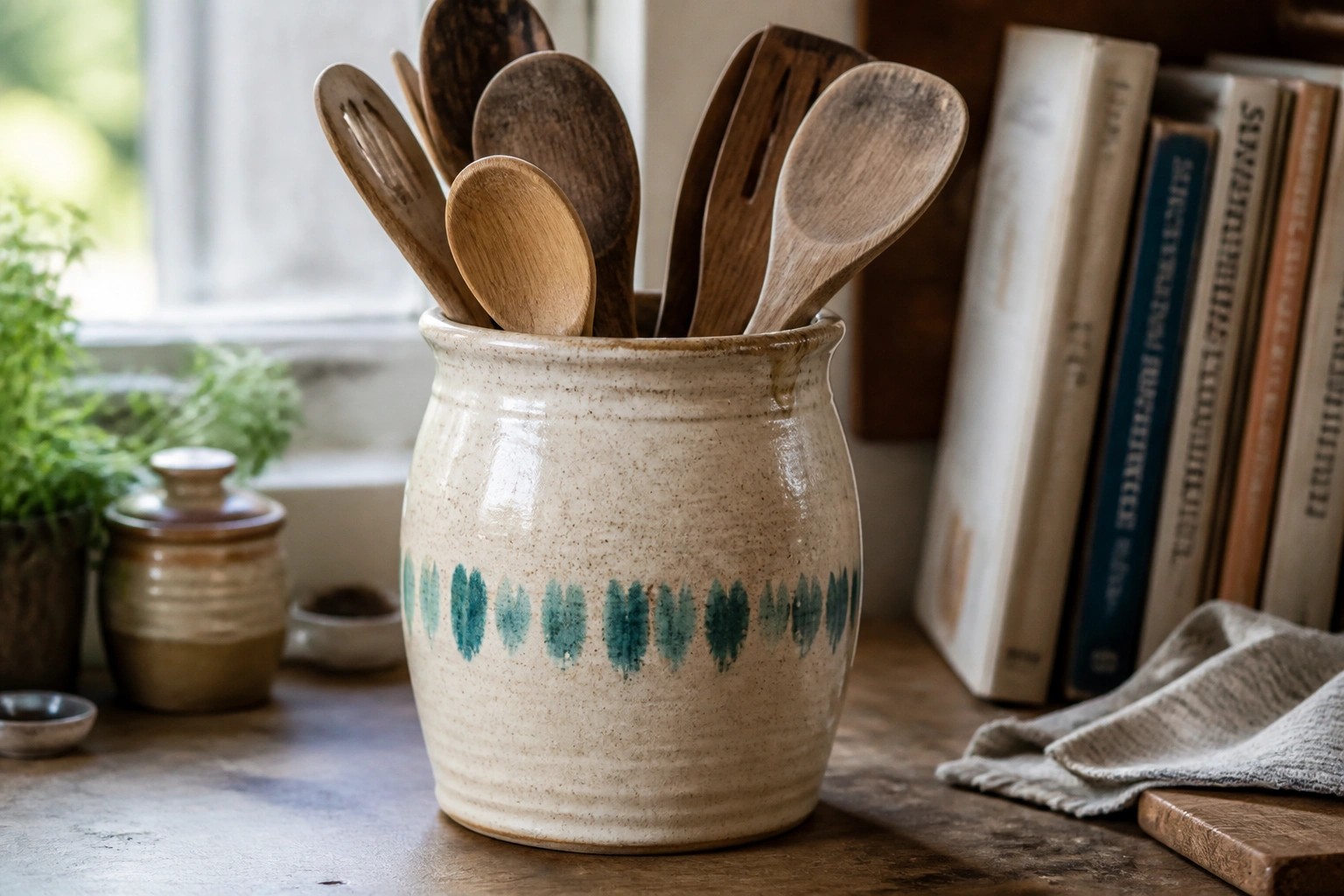
Ceramic Crock for Holding Kitchen Utensils

A wide-mouthed ceramic crock works well as a dedicated holder for wooden spoons and other cooking tools. The straight sides and stable base keep the handles upright so you can reach for what you need without knocking pieces over. The off-white speckled glaze with a simple band of green brush marks gives enough color to stand out on a counter while still blending with everyday kitchen items. This approach turns a basic storage need into a single handmade piece that stays in one spot.
What makes this idea useful is how the shape handles both function and fit on a countertop without taking up much room. You can change the stripe pattern or skip it for a solid glaze if you want it to match other dishes you already own. In a kitchen this kind of piece keeps tools organized and within reach while doubling as something you actually look at every day. The same form could be made shorter for a smaller set of spatulas or widened slightly to hold a few more items like whisks and tongs.
Soap Dish with Built-in Drainage Grooves

A round ceramic soap dish solves a basic bathroom problem by keeping bar soap from sitting in water. The flat top has several parallel slots that let excess moisture drain down instead of pooling under the bar. The muted green glaze and simple rim give it a clean look that works on most counters without standing out too much. This type of piece fits the bathroom item category and stays practical because the shape and slots do the main work.
What makes this idea useful is the drainage slots that actually extend how long a bar of soap lasts. You could scale the same design down into an oval for a guest bath or add a small lip around the edge to catch stray drips. The slotted pattern would also translate to a sponge holder near the kitchen sink. A piece like this stands out on Pinterest because it shows a clear fix for an everyday issue rather than just another decorative tray.
Scalloped Ceramic Dish with Painted Goldfish

A small scalloped ceramic dish like this serves as a ring holder or catch-all tray. The wavy rim creates a soft outline while the goldfish paintings sit clearly on the interior surface. A light base glaze lets the orange and black fish stand out without extra decoration. This approach fits the small decorative dish category that combines simple function with a painted motif.
What makes this idea useful is how the fish can be painted in just a few strokes and still read clearly once fired. The compact size works on a bathroom counter for earrings or on a nightstand for loose change. You could repeat the same scalloped shape but change the motif to leaves or dots for a different room. For a gift this style takes modest clay yet feels finished because of the hand-painted detail inside.
Hanging Two-Tone Ceramic Planter

A round hanging planter made from ceramics gives trailing plants room to grow downward without taking up shelf space. The form uses a simple sphere shape with four holes drilled near the rim so rope can be threaded through for suspension. The glaze application creates a clear split between the green top half and the unglazed terracotta bottom, keeping the surface smooth while adding color contrast through the firing process.
What makes this idea useful is how the rounded shape lets vines drape evenly on all sides. It works especially well near a window where light reaches the plant but the pot itself stays off the sill. You could adapt the same idea by scaling it down for a smaller plant or switching the glaze split to a single solid color for a cleaner look. In a kitchen or living room, this kind of planter stands out on Pinterest because the hanging style shows off the plant rather than hiding it in a standard pot.
Painted Lemon Serving Bowl

A ceramic bowl with a scalloped rim uses hand-painted lemon slices and green leaves placed around the inside edge. The yellow and green colors sit on a light clay surface so the design stays visible while the center stays open for food. This approach keeps the painting simple and functional on a basic bowl form.
What makes this idea useful is how the motif stays limited to the rim so it does not interfere with serving. You could repeat the same lemon slices on plates or a pitcher by matching the color placement and spacing. In a kitchen the bowl works for salads or bread without needing extra pieces, and swapping the fruit to oranges keeps the same layout but changes the look.
Ceramic Creamer Pitcher for Daily Use

A small ceramic pitcher works well as a creamer for coffee or tea. The rounded body and short spout allow controlled pouring, while the attached handle makes it easy to hold and tip with one hand. The blue glaze covers most of the surface and leaves the lower section in a lighter clay tone, giving it a simple kitchen look without extra decoration.
What makes this idea useful is the compact size that stores easily on a counter or in a cabinet. You could scale it up slightly for larger households or switch the glaze to a neutral tone to match existing dishes. This shape also adapts well to a small milk pitcher for tea service or even a narrow vase for single stems. In a kitchen setting it stays practical while adding a handmade touch that stands out from basic store-bought options.
Ceramic Salt Cellar with Matching Spoon

A small salt cellar shaped from speckled clay gives you a dedicated spot for coarse salt right on the counter. The rounded body includes a short pouring lip that helps control how much comes out, while the matching spoon rests across the rim so it stays with the bowl. This kitchen item stays useful because the neutral glaze and simple form handle daily scooping without showing wear.
What makes this idea useful is the compact size that fits between a stove and cutting board without crowding the workspace. You could rework the same shape for sugar, matcha, or ground spices by adjusting the rim width or picking a different glaze color. In a kitchen, this kind of piece keeps salt off the stove while staying easy to reach. The basic form also works as a template for making a set of two or three cellars in one firing.
Speckled Tealight Holder with Three Short Legs

A small ceramic bowl formed on three short feet works as a tealight candle holder. The low, rounded shape keeps the flame contained while the legs raise the base just enough for airflow and to prevent direct contact with surfaces. A matte, speckled glaze in neutral tones covers the outside and rim, adding subtle texture without competing with other objects nearby.
What makes this idea useful is the small footprint that lets it sit on side tables or mantels without crowding the space. You could adapt the same form into a ring dish or small soap holder by skipping the feet and switching to a smoother glaze. The three legs give it stability and keep the bottom from scratching wood or fabric, so the piece stays practical even when moved around the room often.
Fern Relief Ceramic Trivet

A square ceramic trivet with an embossed fern frond makes a straightforward kitchen project that protects counters from hot dishes. The raised leaf detail gives the surface texture and catches light without needing extra color or paint. The crackle glaze in a muted green keeps the focus on the sculpted motif while the speckled clay edge adds a natural finish. This fits the kitchen item category and stays simple enough to produce in small batches.
What makes this idea useful is the flat square shape that works under both round and rectangular bakeware. You could swap the fern for other leaves or a simple grid pattern if you want faster carving. In a kitchen this kind of piece handles daily use while still looking intentional on open shelving. The same slab and stamp method scales down easily into smaller coasters or up into a larger serving board.
Ridge Bottom Sponge Tray

A ceramic sponge dish with raised ridges along the base keeps a sponge lifted so water drains off instead of sitting against the surface. The oval shape sits flat beside a sink, and the speckled blue-green glaze gives it a finished look that matches typical bathroom or kitchen colors. This type of project belongs in the kitchen or bathroom item category because it turns a basic tray into a practical holder that solves a daily mess.
What makes this idea useful is the way the ridges do the main job of keeping things dry without any extra parts. You can scale the same shape down for a soap dish or widen the ridges if you want it to hold a scrub brush instead. In a sink area it stays put and looks cleaner than a store-bought plastic caddy. The compact size also makes it a quick project to test new glazes on without using much clay.
Polka Dot Ceramic Toothbrush Holder

A round ceramic toothbrush holder gives a simple way to keep brushes upright and separated on a bathroom counter. The cylinder shape has a flat top drilled with several holes that fit standard handle sizes. A pink glaze covers the body with scattered white dots and a lighter band wrapped around the middle section.
What makes this idea useful is the compact footprint that fits tight sink ledges without tipping. You can adapt the same form by changing the dot spacing, using a single color, or adding an extra hole for a razor. For a gift, something like this works because it stays practical while letting you match the glaze to different bathroom colors. The pattern also photographs clearly for sharing the finished piece.
Ceramic Yarn Bowl with Spiral Side Opening

A yarn bowl is a practical ceramics project that keeps a ball of yarn contained while feeding the strand out smoothly during knitting or crocheting. This version uses a rounded bowl shape with a wide opening on one side that curls inward to form a spiral guide. The deep green glaze covers the exterior and rim, while the interior remains accessible for dropping in a skein. The form belongs to the functional holder category and works best when the opening is sized to match typical yarn weights.
What makes this idea useful is the way the spiral cutout stops the yarn from pulling the whole ball out or tangling around the edge. You can adapt the same opening on a smaller scale for embroidery thread or on a wider base for chunky yarns used in blankets. In a living room or craft space the bowl sits steady on a lap or side table without extra hardware. For a gift it pairs well with a skein of yarn and needs no further decoration once the glaze is applied.
Ceramic Butter Dish with Lid

A rectangular ceramic butter dish holds a full stick of butter in the base while the fitted lid keeps it covered on the counter. The lid features a small sculpted knob for lifting, and both pieces carry a smooth cream glaze with a narrow blue rim line. This kitchen item keeps butter accessible without plastic wrap or tubs and fits neatly into daily meal prep.
What makes this idea useful is that the proportions match standard butter packaging so the dish does not waste space. You could adapt the same rectangular form and lid style into a small cheese keeper or a covered dish for herbs by adjusting the height. In a kitchen, this kind of piece replaces disposable wraps while staying compact enough to store in the fridge when needed. For a gift, something like this works well because the simple shape and rim detail are easy to customize with different glaze colors.
Ceramic Napkin Holder with Heart Cutouts
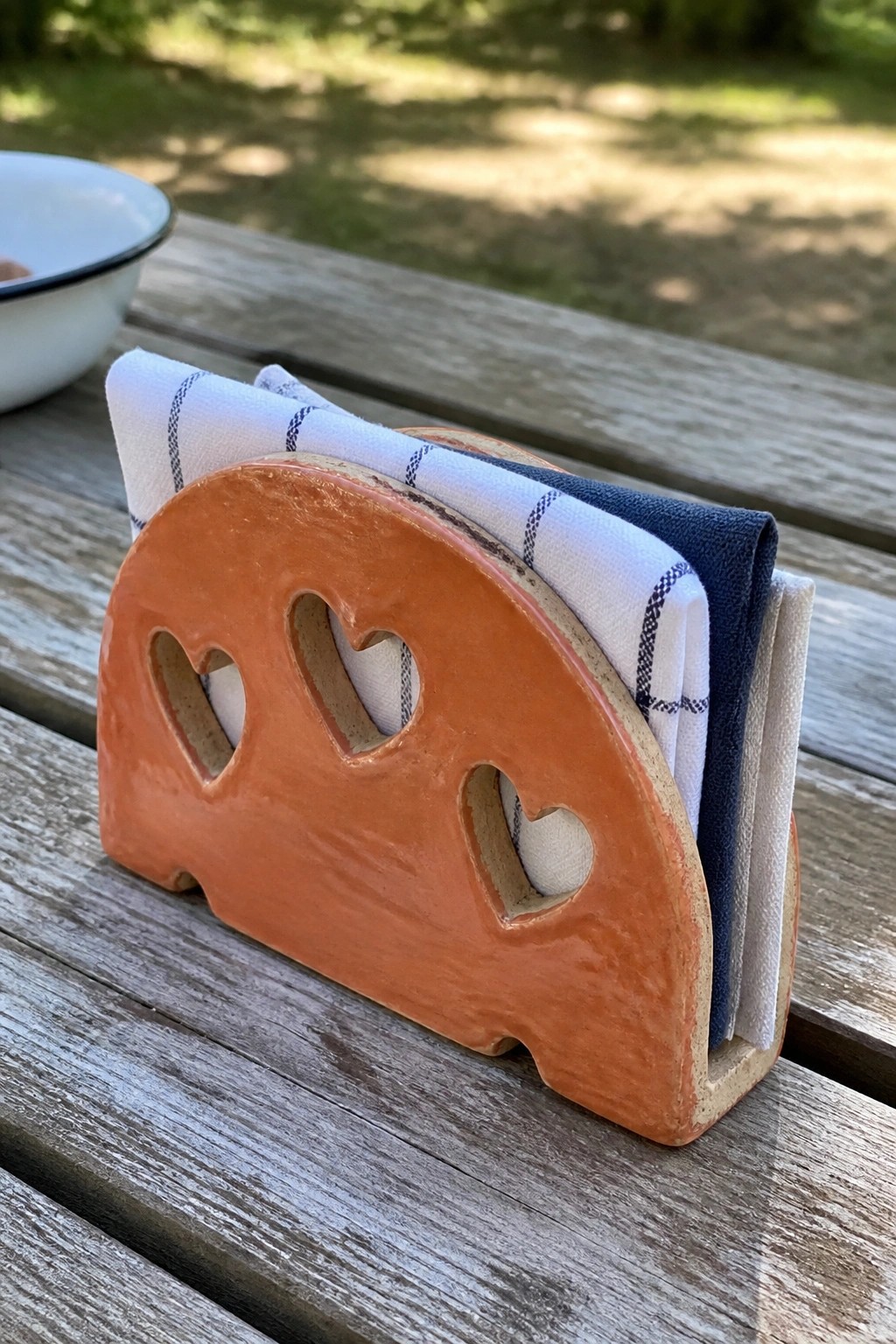
A ceramic napkin holder made from a single slab of clay formed into a wide U-shape works well as a kitchen item. Heart-shaped cutouts run along both sides, allowing the stacked napkins to show through while keeping the structure light. The orange glaze covers the outside surface and stops short of the base, leaving the natural clay visible along the bottom edge.
What makes this idea useful is the way the cutouts double as both decoration and a way to grip the napkins. You could scale the same form down for letters on a desk or widen it slightly for kitchen towels. A piece like this works especially well as a quick gift because the shape stays simple to build yet leaves room to change the cutout pattern or glaze color.
Crescent Ceramic Spoon Rest

A crescent-shaped ceramic spoon rest keeps cooking utensils off the counter while containing any drips in one spot. The curved form supports the bowl of the spoon and lets the handle rest at an angle, and the deep blue glaze with its natural brown rim edge gives the piece a finished look that still feels practical. This kitchen item works especially well in a simple, functional style rather than as a decorative accent.
What makes this idea useful is that the shape itself does most of the work without needing extra details. You could make the same form in a smaller size for teaspoons or stretch it slightly longer for bigger utensils like ladles. The compact footprint fits neatly beside a stove or on a prep counter, and the design adapts easily to other glaze colors or a matte finish if you want it to blend with existing dishes.
Small Lidded Jars for Kitchen Storage

Small lidded jars made from speckled clay give you practical containers for spices, salt, or small produce like garlic. Each jar has a low rounded body and a fitted lid topped with a knob, finished with a simple base glaze and one accent color on the lid. The different lid colors create an easy way to tell the jars apart while the speckled surface keeps the overall look simple. This category of kitchen pottery focuses on everyday storage that still looks intentional on open shelves.
What makes this idea useful is how the compact shape takes up little counter or shelf space yet holds enough for daily use. You can adapt it by making a matching set with different lid colors or by changing the knob size for a different grip. In a kitchen these jars keep ingredients handy without needing labels if the colors are distinct. The same form works for tea bags or coffee scoops if you want to shift the use slightly.
Fluted Ramekins with Gradient Glaze

These small ramekins are wheel-thrown or press-molded ceramics with vertical fluting on the outside walls and a smooth interior. The glaze moves from a brighter coral at the rim down to a softer peach tone at the base, giving each piece a gentle color shift while keeping the surface practical for food use. They belong in the kitchen item category and stack cleanly because of their slightly tapered shape and modest scale.
What makes this idea useful is the ribbed texture that improves grip when the bowls come out of a hot oven or dishwasher. The same fluting pattern could be applied to slightly larger sizes for soup or cereal, or the glaze could be swapped for a single matte color if you want them to match existing dishes. In a kitchen these work well for individual desserts, dips, or side dishes and take up little shelf space when stacked.
Wall-Mounted Ceramic Scoop Planter

A wall-mounted ceramic planter in a scoop shape creates a simple way to display trailing plants on vertical surfaces. The form has a wide, curved opening that holds soil and roots while the back stays flat for easy mounting against a wall or window frame. An exterior glaze in yellow covers the main body, leaving the rim in a natural clay finish. This type of piece works as a dedicated planter rather than a general decor object.
What makes this idea useful is how it frees up windowsill or shelf space while still showing off hanging greenery. The rounded profile can be scaled up or down and glazed in other colors to suit different rooms. In a bathroom, the same shape could hold small ferns or moss. For a gift, pairing the planter with a string of beads plant keeps the project quick and focused.
Sculpted Cat Mug with Painted Flowers

A ceramic mug shaped with a rounded body and standard handle gains a distinctive touch from a small sculpted cat head fixed along the rim. The cat shows closed eyes, whiskers, and soft pink cheeks, while the exterior carries simple hand-painted flowers in muted tones. The speckled surface finish keeps the overall look casual and functional for everyday drinking.
What makes this idea useful is how the rim detail turns a basic mug into a recognizable piece without changing the handle or capacity. You could swap the cat for another animal or object and apply the same painted flowers to bowls or small pitchers. This shape works especially well for a desk or kitchen shelf where the cat element stands out during daily use, and the design scales easily if you want to make a set with matching smaller cups.
Frequently Asked Questions
What materials work best for making the pottery ideas both sturdy for daily use and visually appealing? For practical pottery designs, start with stoneware or porcelain clay because they fire to a strong, nonporous finish that holds up well in kitchens and homes. Mix in grog for added strength on larger pieces like planters or serving trays. Choose food-safe glazes in earthy tones or subtle patterns to keep the beauty without sacrificing function. Always test your clay and glaze combination on a small sample before committing to a full project.
How can beginners adapt the more advanced designs to build skills without frustration? Focus first on simpler forms such as basic bowls or mugs from the list, then gradually add elements like handles or textured surfaces. Use a pottery wheel or even hand-building techniques with templates to maintain consistent shapes. Practice centering clay and controlling wall thickness to avoid cracks during drying. Many of the ideas scale down easily, so try miniature versions first to gain confidence before moving to larger, more detailed items.
What steps ensure the finished pottery remains food safe and easy to clean after firing? Apply only certified food-safe glazes on the interior surfaces and avoid metallic lusters or underglazes that may leach. Fire pieces to the clay’s recommended cone temperature for a fully vitrified result that resists stains and bacteria. After firing, wash new items by hand with mild soap and avoid the dishwasher until you confirm the glaze durability. Store pieces away from extreme temperature changes to prevent chipping.
How do the design ideas balance visual interest with everyday practicality in small living spaces? Choose compact forms such as stackable cups, wall-mounted planters, or multi-use trays that double as decor and storage. Incorporate subtle textures or soft colors that complement existing home styles without overwhelming them. Test proportions by sketching or making paper models first so the final piece fits shelves or tables nicely. Many of the ideas emphasize clean lines that look elegant yet remain simple to handle and store.
What maintenance routines keep these pottery pieces looking beautiful while staying functional over years of use? Wipe pieces regularly with a soft cloth and avoid abrasive scrubbers that can dull glazes. For items used with food, reapply a thin coat of mineral oil to wooden accents if any are combined with the clay. Inspect for hairline cracks after seasonal temperature shifts and repair minor chips with food-safe epoxy if needed. Rotate displayed items to prevent uneven fading from sunlight and store them with padding to protect edges.

Pottery Path is my cozy corner of the internet where I share clay ideas, pottery inspiration, and simple projects you can recreate at home. I love exploring everything from air dry clay to handbuilt pottery to cute minis that brighten your day. My goal is to make clay crafting feel easy, fun, and welcoming for anyone who wants to try it.
You will find beginner friendly tutorials, creative pottery painting ideas, and lots of warm inspiration for slow and happy crafting. If you enjoy hands on creativity, this space will feel like home.