
I’ve been experimenting with pottery on and off for a few years and I’ve noticed that simpler modern shapes often turn out better than I expect.
These ideas focus on clean lines and basic forms that don’t need a lot of experience to pull off.
I put this list together because I know how easy it is to get stuck when you’re just starting out and want something that looks current.
Some of the projects use hand building while others work on the wheel but all of them stay pretty straightforward.
I tried most of them in my own studio and they helped me feel more confident with contemporary styles.
Mug With a Single Painted Band

A handmade ceramic mug in a speckled off-white glaze uses one wide dark brushstroke wrapped around the middle as its only decoration. The simple cylinder shape keeps the focus on the contrast between the light surface and the bold horizontal stripe. This idea fits the painted accent category and works because the stripe breaks up the form without requiring multiple layers or complex patterns.
The shape does a lot of the work here since a basic mug form is easy to throw or hand-build and needs only one coat of underglaze for the band. You could adapt the same stripe to a shorter tumbler or a wider soup bowl by changing the width or switching the dark color to a deep blue or rust. In a kitchen this kind of piece stands out on open shelves because the single mark reads clearly in photos without extra styling.
Two-Tone Square Planter
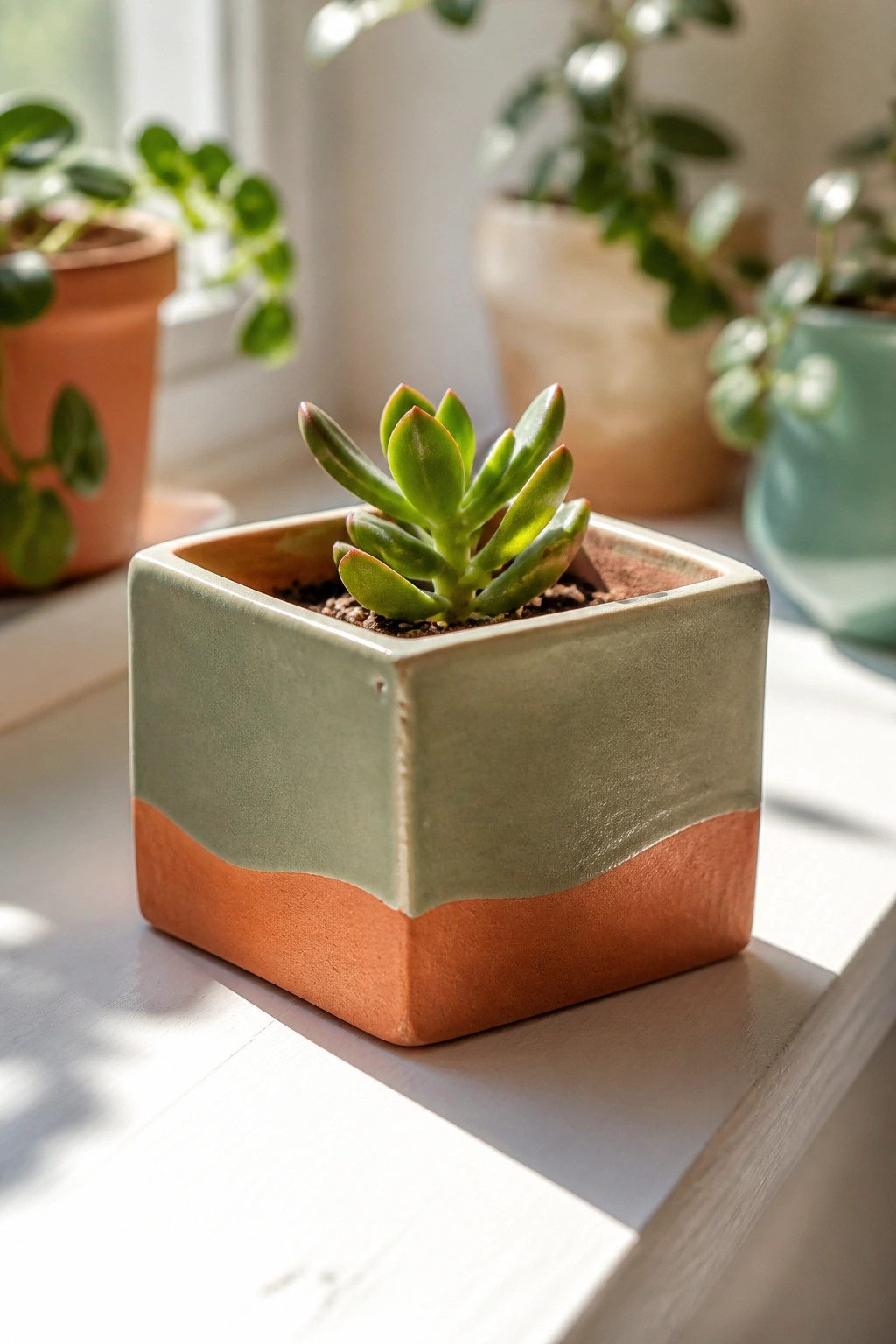
A small square planter with a clean modern form works well when the lower half stays in raw terracotta and the upper half gets a simple matte green glaze. The wavy line between the two finishes adds just enough variation without any extra carving or texture. This approach keeps the piece compact enough for a windowsill or shelf while still giving the plant room to grow.
What makes this idea useful is how the square shape and color split translate easily to other sizes or colors. You could swap the green for a different matte tone or flip the division so the terracotta sits on top. The small scale also makes it simple to batch out several at once for a grouped display or to give as gifts with a succulent inside.
Streaky Multi-Glaze Ceramic Bowl
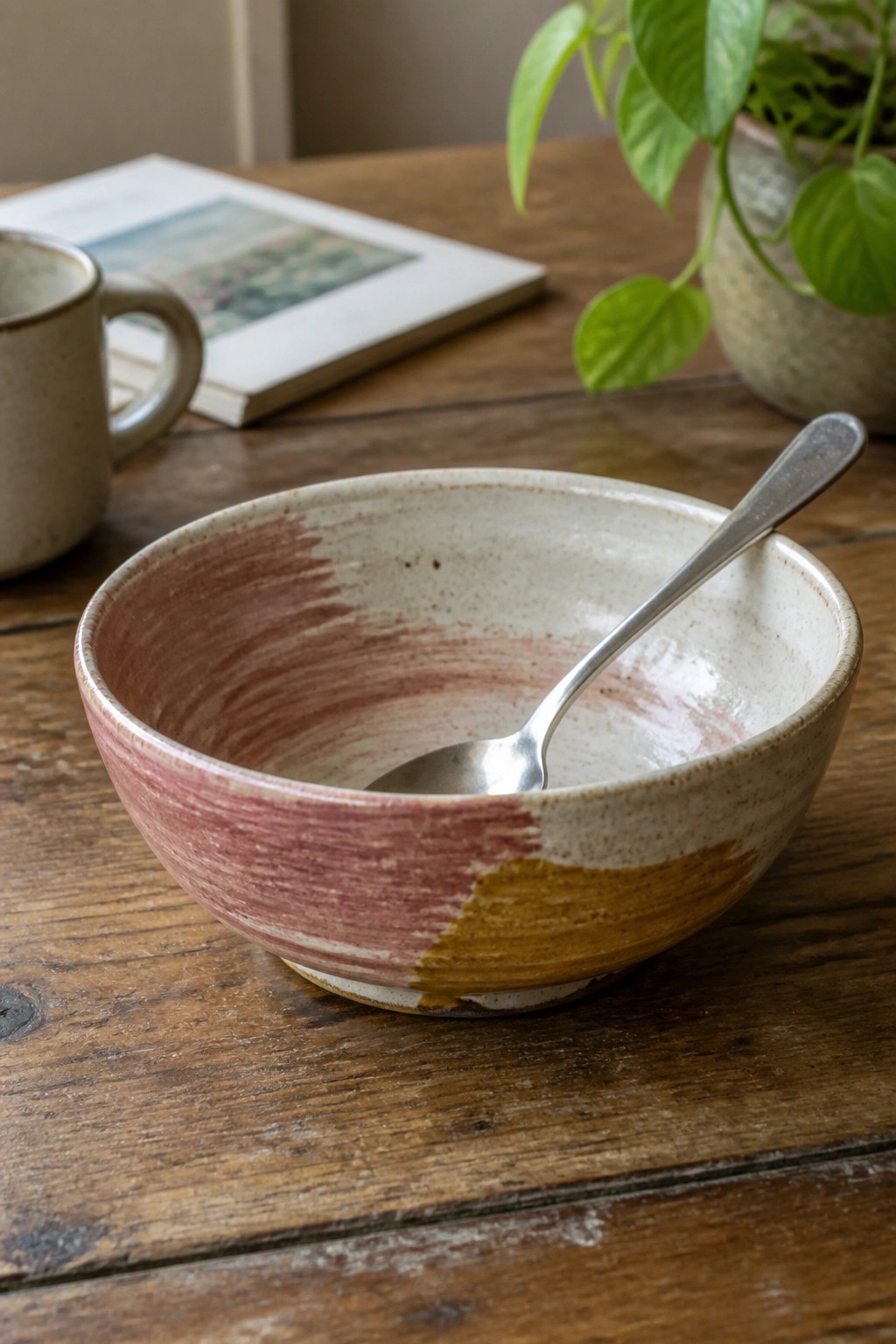
A simple ceramic bowl gets its look from brushing several glazes in horizontal strokes across the surface. The top section uses a pinkish red that blends into cream, with a mustard yellow band added near the base. This method keeps the form straightforward while the glaze layers create movement and contrast on a functional kitchen piece.
What makes this idea useful is that the brushed technique works on any basic bowl shape without needing extra tools or carving. A piece like this works especially well as a serving bowl for salads or sides on a wooden table. You could repeat the same color sequence on smaller bowls or a set of ramekins to create a matching collection. The limited yellow accent at the bottom also gives you an easy way to mark future pieces with the same detail.
Two-Tone Catch-All Tray

A rectangular ceramic tray split into two solid color blocks creates a simple catch-all for small items. One half uses a dark matte glaze while the other stays light and speckled, forming a clear visual divide without extra lines or compartments. The flat form and rounded edges keep the focus on the color split, making it easy to place keys, coins, or cards in separate zones. This fits the modern tray or desk organizer category for small storage pieces.
What makes this idea useful is how the color block can be swapped or rotated to match different surfaces. It works well on an entry table or nightstand where daily items need a quick landing spot. The shape scales easily into a longer version for mail or a smaller square for jewelry. For a gift, something like this can shift into a bathroom tray by changing the proportions and keeping the same two-glaze layout.
Abstract Color-Blocked Wall Plaque

This project is a flat ceramic wall hanging made from a slab of clay cut into a soft rectangular form with rounded edges. Three glazes are applied in large sections separated by gentle curves, with a crackle finish on the peach area and a speckled texture on the teal section. A single hole near the top edge lets it hang from rope or cord. The result is a simple decorative plaque that relies on color placement and surface contrast rather than added details.
A piece like this works especially well hung in a hallway or above a small shelf where you need a low-profile accent. You can adapt the same layout by swapping the glaze colors to fit your space or by making two smaller versions to hang as a pair. The wavy glaze lines are easy to adjust if you want straighter divisions or more sections. This approach stands out on Pinterest because the clean blocks read clearly even in small thumbnails.
Footed Tea Light Holder
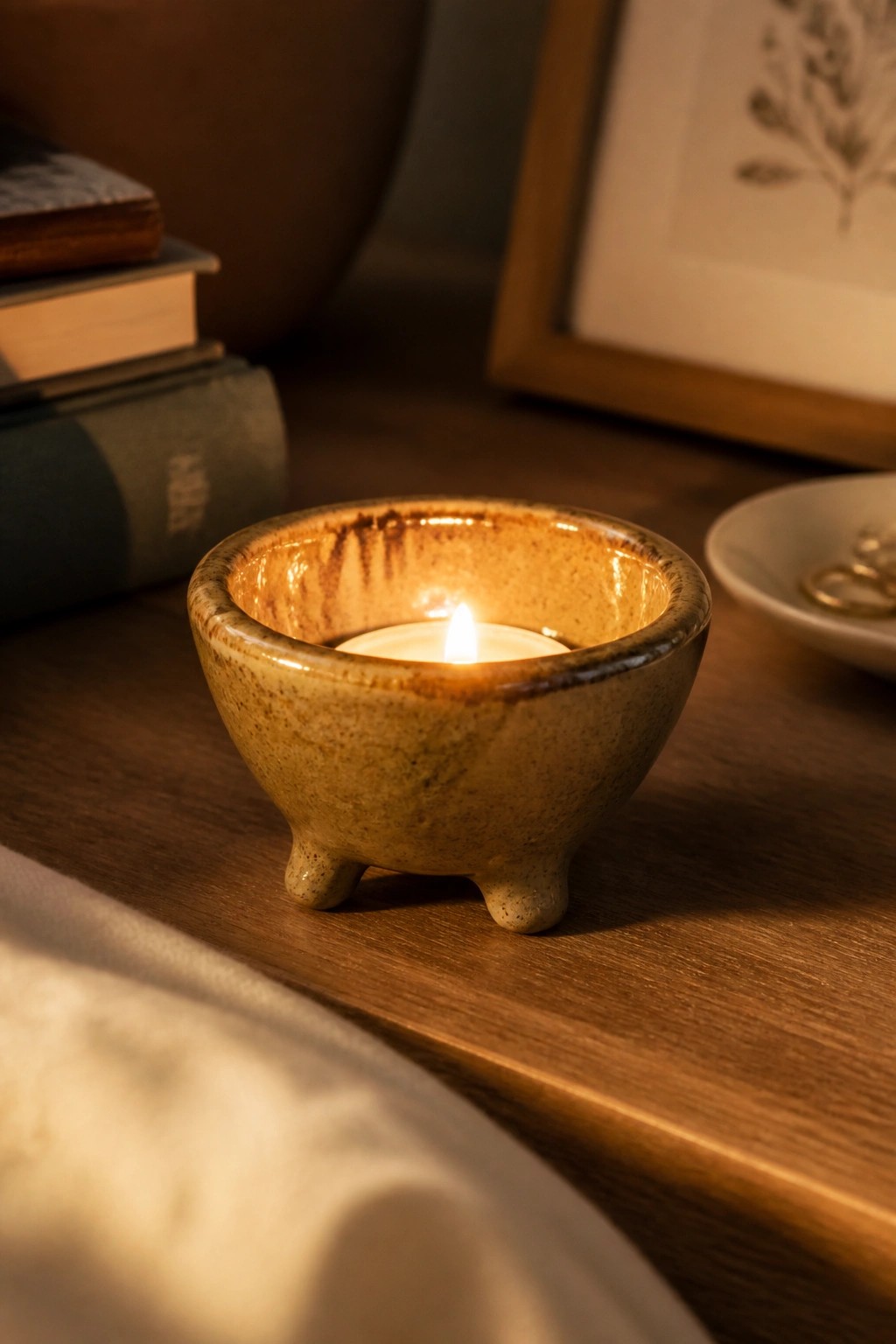
A small tripod bowl works well as a tea light holder. The rounded shape sits on three short feet that raise the piece slightly, and the speckled glaze in warm earth tones reflects light from the flame while keeping the surface simple. This kind of project fits the candle piece category and stays functional because the form is compact enough to hold a standard tea light without extra details.
What makes this idea useful is the small scale that lets you test a new glaze or foot style without much clay. The same shape adapts easily into a ring dish or small trinket bowl by skipping the candle. In a living room or bedroom, the lifted base keeps the piece from sitting flat and collecting dust. You could also widen the opening slightly to turn the idea into a tiny planter for a single succulent.
Oval Ceramic Spoon Rest

A long oval tray made from clay works well as a spoon rest in this project. The shallow form has a soft green speckled glaze with a natural clay edge that shows through at the rim. Its narrow shape and low sides keep a wooden spoon stable without taking up much counter space. The piece fits the kitchen item category and stays simple enough for beginners to try on a wheel or with a slab.
What makes this idea useful is how the elongated shape directly solves a common kitchen problem by holding a spoon between uses. You could scale the same form down for a smaller salt spoon rest or widen it slightly for a butter knife tray. The speckled glaze gives visual texture while staying neutral, so it blends with most existing dishware. For Pinterest, this kind of clean, functional piece photographs well in real kitchen settings and gets saved for its practical shape rather than just decoration.
Scalloped Ring Dish with Gold Crescent Accent
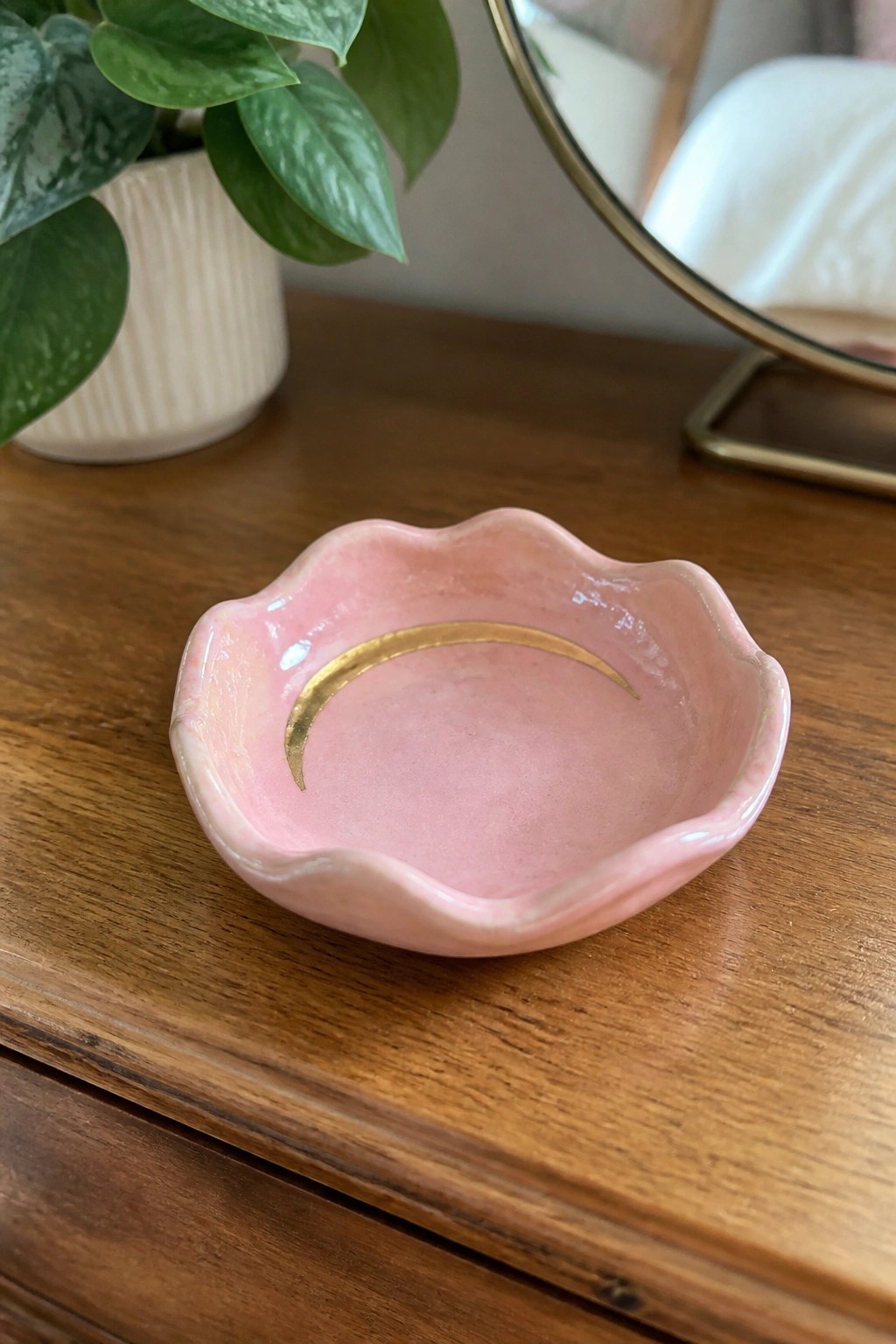
A small scalloped dish like this serves as a ring holder or trinket bowl. The pink glaze covers the full form while a thin gold crescent provides a single interior accent. The wavy rim keeps the shape simple yet distinct from a standard round bowl. This approach fits the category of small functional decor pieces that sit on a dresser or nightstand.
The small scale makes this easy to adapt into a soap dish or catchall for keys. You could change the crescent to other basic line motifs or skip the gold entirely for a solid color version. What makes this idea useful is how the painted detail stays minimal while still giving the piece a clear focal point. For a gift, something like this works well because it needs only basic glazing and one added motif.
Speckled Rounded Bud Vase

A small rounded vase makes a simple project for holding single stems or dried botanicals. The bulbous body narrows into a short neck that keeps stems stable while the speckled teal glaze gives the surface subtle variation without extra decoration. This shape stays compact enough to sit on a narrow ledge or shelf.
What makes this idea useful is how the rounded form balances on its own and works with both fresh cuttings and dried material. You could scale the same profile up slightly for a small planter or switch to a matte glaze for a softer finish. The small size also makes it easy to try different clay bodies or test new glaze combinations without using much material.
Slotted Ceramic Toothbrush Holder

A tall cylindrical clay holder with three vertical slits cut down the front makes a functional toothbrush cup for the bathroom. The dark upper glaze that fades into a lighter base emphasizes the rough surface texture while keeping the overall form simple. The slits break up the smooth cylinder without adding extra parts or attachments.
The shape does a lot of the work here because the same vertical cuts can be scaled down for a smaller makeup brush holder or a desk pencil cup. You could swap the two-tone glaze for a single matte finish if you want it to blend with existing bathroom fixtures. In a small space this kind of piece works well because it stays compact yet still holds several brushes upright.
Painted Ceramic Cat Figurine
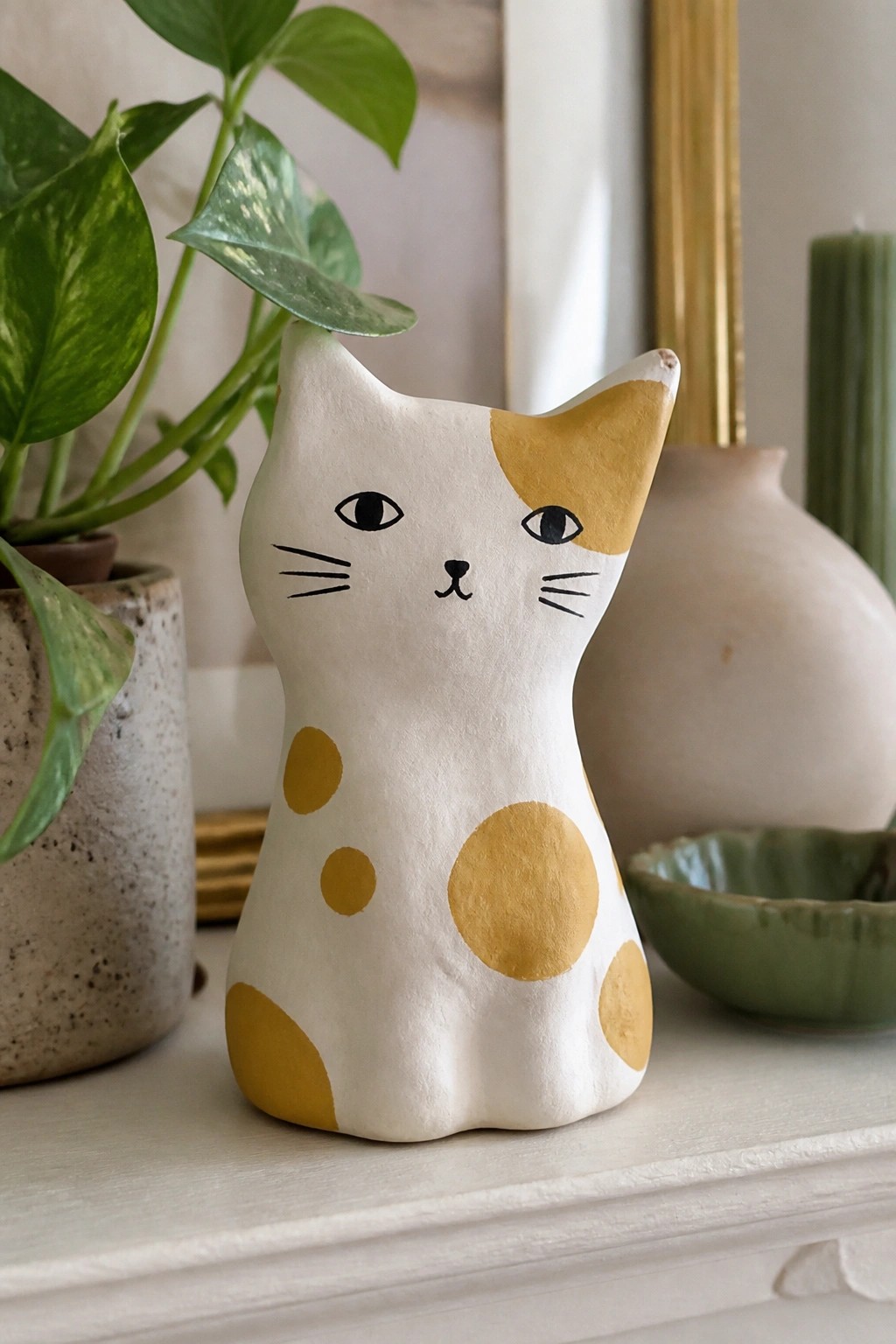
Sculpt a rounded cat body and head from clay to form a small figurine that functions as standalone decor. Apply a white base and add yellow patches on the ear, body, and legs, then paint simple black details for the eyes, nose, and whiskers. This approach keeps the shape basic while the color blocking and minimal lines give it a clean, graphic look that fits modern interiors.
The small scale makes this easy to adapt into other animal shapes or even abstract forms if you want to experiment. A piece like this works especially well as a shelf accent or desk object where it can sit among plants and neutral ceramics. You could simplify the spots further or change the color palette to match your existing decor.
Yarn Bowl with Side Notch for Knitting
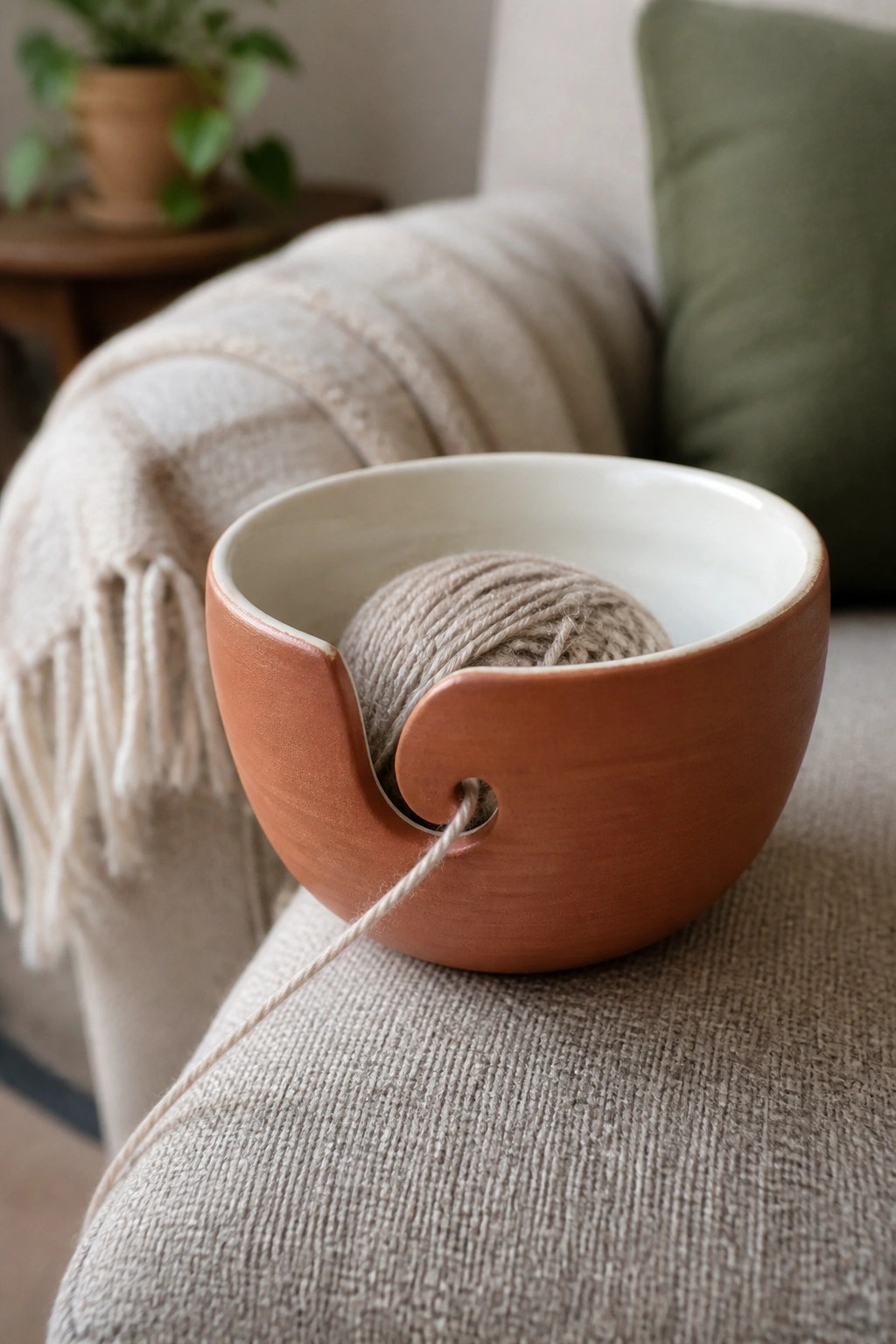
A yarn bowl is a practical ceramics project that keeps a ball of yarn contained while you work. This version uses a rounded bowl form with a notch cut into the rim so the strand can feed out smoothly without tangling or rolling away. The terracotta exterior paired with a plain white interior keeps the focus on the functional cutout rather than extra decoration. It works as a dedicated holder that solves a common issue for anyone who knits or crochets regularly.
What makes this idea useful is how the notch turns an ordinary bowl into a tool that actually improves the process of working with yarn. You can adapt the same shape in a smaller size to hold embroidery thread or even use it for charging cables on a nightstand. The simple two-tone finish makes it easy to personalize with different glaze colors without complicating the form. In a craft space this kind of piece keeps supplies tidy and ready to grab while staying compact enough to move between projects.
Nesting Pinch Bowls for Kitchen Staples

These small ceramic bowls use a simple squared shape with rounded corners that lets them nest together for compact storage. The solid interior glazes in yellow and gray stand out against the speckled clay, creating a clean contrast without extra decoration. They function as pinch bowls or salt cellars, holding small amounts of spices, salt, or ingredients right where you need them during cooking.
The compact scale makes them easy to line up on a countertop or tuck into a drawer. You could repeat the same form in a single color for a uniform set or adapt the shape slightly taller to hold tea bags or cotton swabs. Their plain surfaces leave room to test different glaze combinations while keeping the overall look consistent across multiple pieces.
Ceramic Soap Dish with Drainage Grooves

A rectangular ceramic soap dish with parallel ridges molded into the base makes a practical bathroom item. The grooves lift the bar slightly so water drains off instead of pooling underneath. The deep green glaze and matte texture keep the form simple while still showing the handmade quality of the clay.
What makes this idea useful is how the same basic tray shape works for different bar sizes without much change. You can keep the ridges for function or smooth them out if you want a flatter surface for other small objects. In a bathroom this piece stays useful on the edge of a sink and pairs easily with plain towels or tile. The form also translates well to a small desk tray or catchall by adjusting the depth and skipping the drainage detail.
Two Tone Creamer Pitcher

A small pitcher like this serves as a creamer or milk server for everyday table use. The idea centers on a simple wheel-thrown form with a spout and handle, finished in two contrasting glazes that meet along an irregular wavy line. The upper half stays light and speckled while the lower section takes a muted blue-green tone that stops short of the rim. This keeps the project focused on glaze placement rather than added sculpting or carving.
What makes this idea useful is how the same basic shape works for other table items such as a syrup pitcher or small gravy boat. You can change the height of the color split or straighten the line to match different dish sets. The compact size also makes it a quick test piece when trying out new glaze combinations or clay bodies. In a kitchen, this kind of pitcher stands out on a tray with matching mugs without taking up much space.
Frequently Asked Questions
What basic supplies do I need to try the 15 modern pottery ideas as a complete beginner?
Start with a few pounds of air-dry clay or oven-bake clay if you lack access to a kiln. Add a basic toolkit that includes a rolling pin, cutting wire, smoothing sponges, and wooden ribs for shaping. Keep a spray bottle of water nearby to prevent cracking, and use simple household items like cookie cutters or plastic containers as molds for contemporary forms. These items let you experiment with the listed projects right away without major expense.
How can I shape contemporary forms without a pottery wheel or prior experience?
Focus on hand-building techniques such as slab construction and pinch pots to create clean lines and geometric shapes featured in the ideas. Roll out even slabs, cut them into rectangles or circles, then join edges with slip made from clay and water. Practice scoring the surfaces before attaching pieces so they hold together. This approach produces modern silhouettes like angular vases or stacked bowls while keeping the process beginner-friendly.
Which clays work best for the contemporary designs in the article?
Choose stoneware or earthenware clays that fire to a smooth finish and accept modern glazes well. Air-dry clays offer an easy entry point for testing forms before committing to kiln firing. Avoid very coarse clays at first because they can make crisp edges harder to achieve. Test small samples of each clay type to see how they hold shape during drying, which helps match the clean aesthetic of the 15 projects.
What glazing or finishing options give the pottery a modern look?
Apply matte or satin glazes in neutral tones like charcoal, soft gray, or terracotta to highlight contemporary shapes. Use tape or wax resist to create crisp geometric patterns before glazing. For a low-fire option, paint with acrylics and seal with a clear matte varnish once the piece is fully dry. These finishes keep the focus on the form rather than busy decoration and work well with beginner hand-built pieces.
How do I avoid common mistakes when making the listed modern pottery ideas?
Always let pieces dry slowly and evenly under a loose plastic cover to prevent warping or cracks. Score and slip every joint thoroughly, and keep walls at a consistent thickness of about a quarter inch. If a form starts to slump, support it with crumpled newspaper or foam until it firms up. These steps help the contemporary designs stay true to their intended clean profiles from the article.

Pottery Path is my cozy corner of the internet where I share clay ideas, pottery inspiration, and simple projects you can recreate at home. I love exploring everything from air dry clay to handbuilt pottery to cute minis that brighten your day. My goal is to make clay crafting feel easy, fun, and welcoming for anyone who wants to try it.
You will find beginner friendly tutorials, creative pottery painting ideas, and lots of warm inspiration for slow and happy crafting. If you enjoy hands on creativity, this space will feel like home.