
I have been experimenting with coil building on a larger scale lately and it is interesting how much presence a pot can have when it is oversized.
These forms work well in a room without needing much else around them.
I gathered eighteen examples that show different approaches to thick walls and strong shapes.
Some stay low and wide while others reach up with simple curves that still feel balanced.
Seeing them has me thinking about trying a taller piece myself soon.
Oversized Coil Vase With Stacked Horizontal Rings

A tall floor vase built from thick coils of clay forms the main shape here. Each ring stays visible after assembly, creating a series of horizontal ridges that run from base to rim and give the surface its texture. The body swells into a rounded middle section before tapering upward to a wide, uneven lip, and a deep blue glaze covers the entire piece to emphasize the layered construction.
What makes this idea useful is how the coil ridges do most of the visual work without needing extra carving or painting. The same stacking method can be scaled down for a side-table vase or widened into a large planter by adjusting the coil width and curve. A piece this size works especially well in corners that need height, and the simple ring pattern translates easily to other colors or even a two-tone glaze treatment for variety.
Oversized Stacked-Coil Planter with Layered Paint

A large planter formed from thick coils stacked into horizontal bands creates a sturdy, oversized container suited for ferns or other plants with spreading foliage. The visible coil ridges give the piece structural strength while adding a clear handmade texture. Paint applied in multiple layers and allowed to wear away in places reveals the clay beneath and emphasizes the scale of the form.
What makes this idea useful is that coil building lets you reach this size without a wheel or kiln large enough for a single piece. The shape works especially well on a patio or along a garden path where it can support a full-size plant without tipping. You could simplify the same approach by using two colors instead of three or by leaving parts of the clay bare for a different surface effect. The bold size and ridged profile make this planter easy to spot in a collection of garden projects.
Oversized Coil Planter with Wavy Scalloped Rim

This planter is formed from coils into a wide, low vessel with an exaggerated undulating rim that creates strong visual movement. Horizontal ridges left from the building process give the surface texture that shows up clearly under the glossy turquoise glaze. The oversized proportions and open top make it suited for holding multiple plants at once in a single container.
What makes this idea useful is the low, broad shape that supports plant groupings without needing extra stands or risers. You could scale the wavy rim down for a medium coil pot meant for a side table or keep the full size for a floor placement in a bright room. The ribbed texture is straightforward to add with a rib tool during construction, and the finished form photographs well because the bold edge and color create clear contrast against wood floors or neutral walls.
Oversized Coil Jar With Horizontal Ridges

A coil-built lidded jar uses stacked horizontal coils to create a tall, rounded body with clear ridges that run around the entire form. The glaze in earthy green tones pools along those ridges and drips downward, which highlights the construction and adds variation to the surface. This type of piece works as a storage vessel or a standalone decorative object where the visible coils and glaze movement give it presence without extra decoration.
The large scale lets the shape carry the design, so the same coil method can be scaled down for smaller jars or used with a different glaze color to change the look. In a kitchen or entryway it functions as a covered container for dry goods or as a visual anchor on the floor. You could simplify the profile to a straighter cylinder or stop the glaze higher up the body if you want less drip detail while keeping the coil texture as the main feature.
Coiled Cylinder Umbrella Stand with Bold Rim Strokes

A tall coil-built vessel makes an effective umbrella holder when the walls stay thick and the opening stays wide. The visible horizontal ridges from the coiling method give the surface texture while keeping construction straightforward. Broad blue brush marks across the top rim create a strong contrast against the light clay body and help define the top edge.
What makes this idea useful is how the oversized scale turns a basic storage need into a clear focal point near an entry. The same coil construction and rim painting approach could be shortened into a large waste bin or lengthened for a floor planter by adjusting the height and foot shape. Keeping the body in one or two tones lets the brushwork stay the main feature, which photographs clearly for idea boards.
Oversized Coil Vase With Drippy Earth Glaze

A large coil-built vase keeps its impact through a low, rounded body paired with a short, wide neck that flares at the rim. The exposed horizontal coils create clear texture across the form while a thick glaze in brown, amber, and dark gray pools and runs down the sides. This combination makes the vessel read as a single bold shape rather than a collection of details. The project sits firmly in the oversized decor category because the scale and surface movement give it presence without added elements.
The shape does a lot of the work here because the wide belly provides room for glaze movement while the compact neck prevents the piece from feeling too tall to handle. You could adapt the same coiling and glazing approach to make a floor planter or a wide storage jar by stretching the body even lower. In an entryway or living room this size works as a standalone object that does not need flowers or branches to hold attention. The strong horizontal lines and dripping glaze also translate well to photos, which helps the idea perform on Pinterest.
Ribbed Coil Planter With Wide Rounded Form

A large planter formed by stacking coils into even horizontal bands produces a broad, rounded body that tapers toward a narrow foot. The visible ridges give the surface a clear handmade structure while the soft turquoise crackle glaze sits lightly in the grooves and catches light across the curves. This style works as a floor or stand planter sized for big houseplants where the pot needs to hold its own visually.
The shape does a lot of the work here because the wide middle gives the piece stability and presence without extra surface detail. You could repeat the same coil spacing on a taller cylinder or switch to a matte stoneware glaze if the pot needs to sit in a brighter room. A piece like this stands out on Pinterest when paired with a single large-leaf plant because the texture stays simple enough to let the foliage do the rest.
Double-Necked Coil Vessel With Horizontal Stripes

This coil-built vessel uses a single rounded body that splits into two separate necks. Thick coils create both the structure and the visible ridges that run across the surface. Broad alternating bands of black and orange cover the form, with the color changes following the coil lines to keep the pattern simple and strong.
What makes this idea useful is how the double neck adds shape without extra carving or attachments. The same striped layout could be applied to a single large planter or a garden urn by adjusting the coil spacing. The high contrast between the two colors helps the piece read clearly from a distance, which works well for outdoor patios or entryways. You could simplify the design by using just three bands instead of many or switch the colors to match a specific room.
Large Coiled Vase With Deep Horizontal Ridges

This project is a large coil-built vase that relies on stacked coils to form bold, evenly spaced horizontal ridges from base to rim. The body swells into a rounded, oversized shape that narrows slightly at the foot and opens wide at the top. A layered green and brown glaze settles into the grooves, creating natural contrast that highlights the coil texture without extra carving or painting. It works as a standalone decor object or oversized planter for outdoor or entryway use.
The shape does a lot of the work here because the ridges give the piece strong visual weight from across a room or garden. You could repeat the same coiling pattern at a slightly smaller scale to make matching side pieces or stretch the form taller for a narrow hallway spot. The glaze variation means each piece will look a little different, which helps it stand out in photos for Pinterest without needing extra surface detail. For a gift, the same ridge pattern could be applied to a lower, wider bowl shape instead.
Ribbed Coil Lamp Base with Blue Splatter
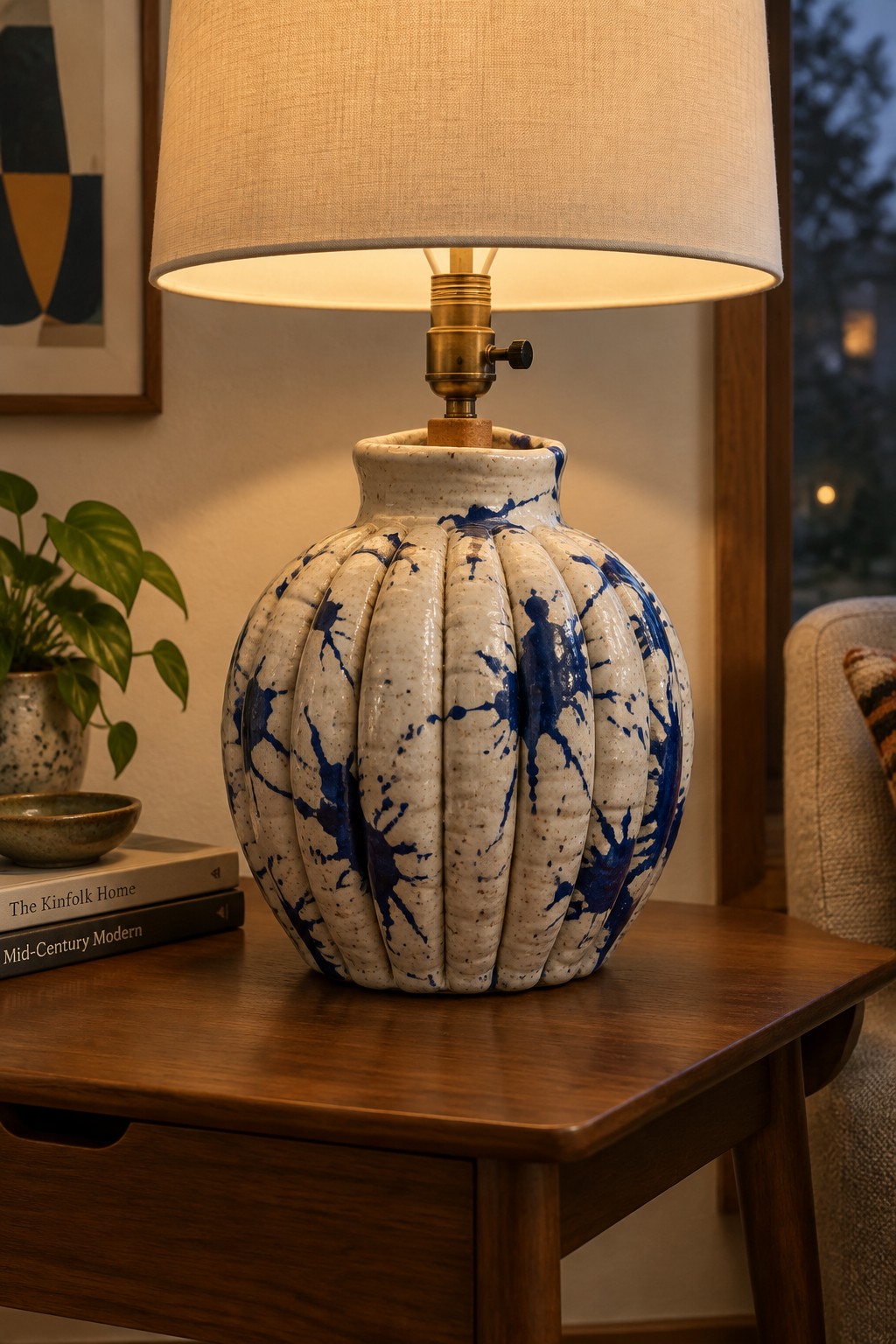
A large coil-built vessel with deep vertical ribs works well as a table lamp base. The rounded, oversized form gives the piece weight and presence while the ridges create strong vertical lines that break up the surface. White clay with loose blue splatter glaze adds contrast without covering the texture. This approach turns a basic coil pot into a functional lighting piece that still reads as pottery.
What makes this idea useful is how the ribbed shape handles scale without extra decoration. You can build the same form taller for a floor lamp or shorten it for a smaller side table. The splatter glaze is easy to adapt by changing the color or density to fit different rooms. In a living room, this kind of bold coil base stands out next to plain furniture and pairs with any neutral shade.
Coil Built Amphora With Partial Glaze

A large coil-built vase starts with stacked coils that leave clear horizontal ridges across the surface. The terracotta body stays mostly exposed while a turquoise glaze covers only the upper section and handles, letting the raw clay show through where the glaze stops. Thick looped handles sit high on the shoulders to balance the height and give the form a traditional storage jar shape. This combination keeps the piece simple while the size and glaze placement create a strong visual split.
What makes this idea useful is how the partial glaze lets the coil texture do the work without extra decoration. You could adapt the same form by changing how far the glaze runs or by using a different color on just the handles. The shape works especially well as a floor planter or outdoor accent where the height can stand out against a wall or steps. For a smaller version, keep the same coil ridges and handle style but reduce the overall scale so it fits on a table or shelf.
Coil-Built Planter With Scalloped Rim and Footed Base

A large coil-built ceramic planter creates a wide rounded body that rests on three thick stacked coil feet. The rim is formed into a continuous wavy scallop that gives the top edge a soft but bold outline. Horizontal coil ridges show through the surface under a mustard glaze with white drips that run downward.
What makes this idea useful is the way the three feet raise the pot and keep the base from sitting flat on a surface. You can repeat the scalloped rim on a simpler cylinder shape or reduce the whole form for a medium-sized plant. The dripping glaze treatment works well on coil surfaces because it follows the texture instead of fighting it.
Leaf Relief Coil Vase with Perforated Bands

A large coil-built vase uses raised leaf shapes and rows of circular cutouts to add surface interest across its rounded form. The deep green glaze settles into the carved lines and textured areas, making the foliage stand out while keeping the overall shape simple. This approach layers natural patterns onto a basic oversized vessel without adding extra parts or complex construction.
What makes this idea useful is how the cutouts and leaf details reduce visual weight on a big piece, so it reads as lighter than a solid form. You could scale the same leaf carving down for a medium planter or skip the holes and keep just the texture on a different shape. The perforations also create small shadow lines that photograph well, which helps the pot stand out in a feed full of plain garden vessels.
Two-Tone Coil Vase With Split Glaze
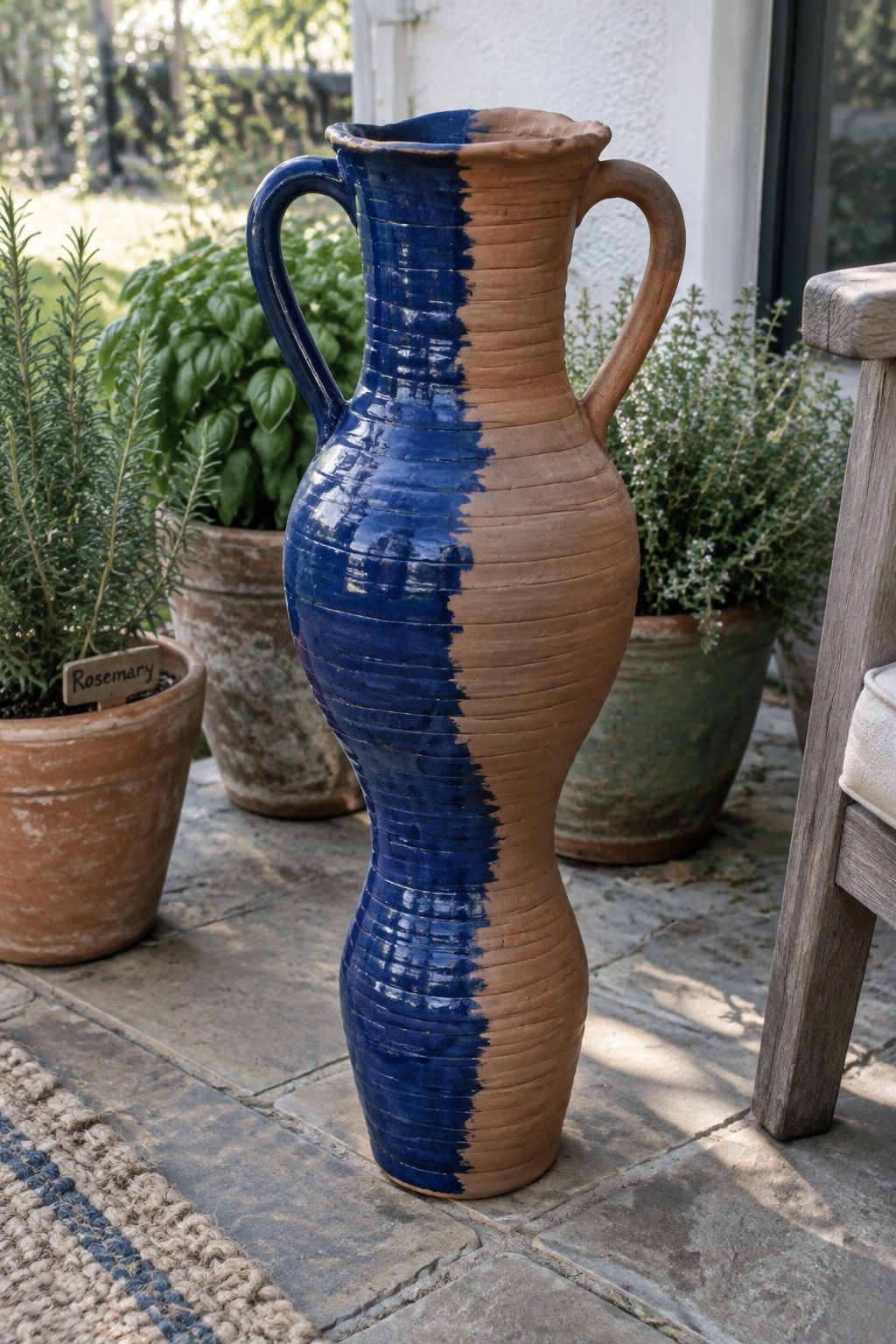
A large coil-built vessel uses a simple split glaze where one half gets a deep blue coating and the other stays raw terracotta. The tall, narrow-necked form with visible horizontal coils and paired handles gives it an amphora shape that reads as both vase and pitcher. This approach works because the color break runs straight down the center, making the coil lines and curves stand out without added decoration.
What makes this idea useful is how the half-glaze treatment turns a basic coil pot into a strong focal point for outdoor spaces. The shape adapts easily to different sizes or single-color versions if the split feels too bold. In a garden or patio setting, it functions well as a large planter or standalone decor piece among smaller pots. The same coil structure and glaze split could be reworked into a narrower jug or a shorter urn form depending on the scale you need.
Oversized Coil-Built Chiminea for Outdoor Use
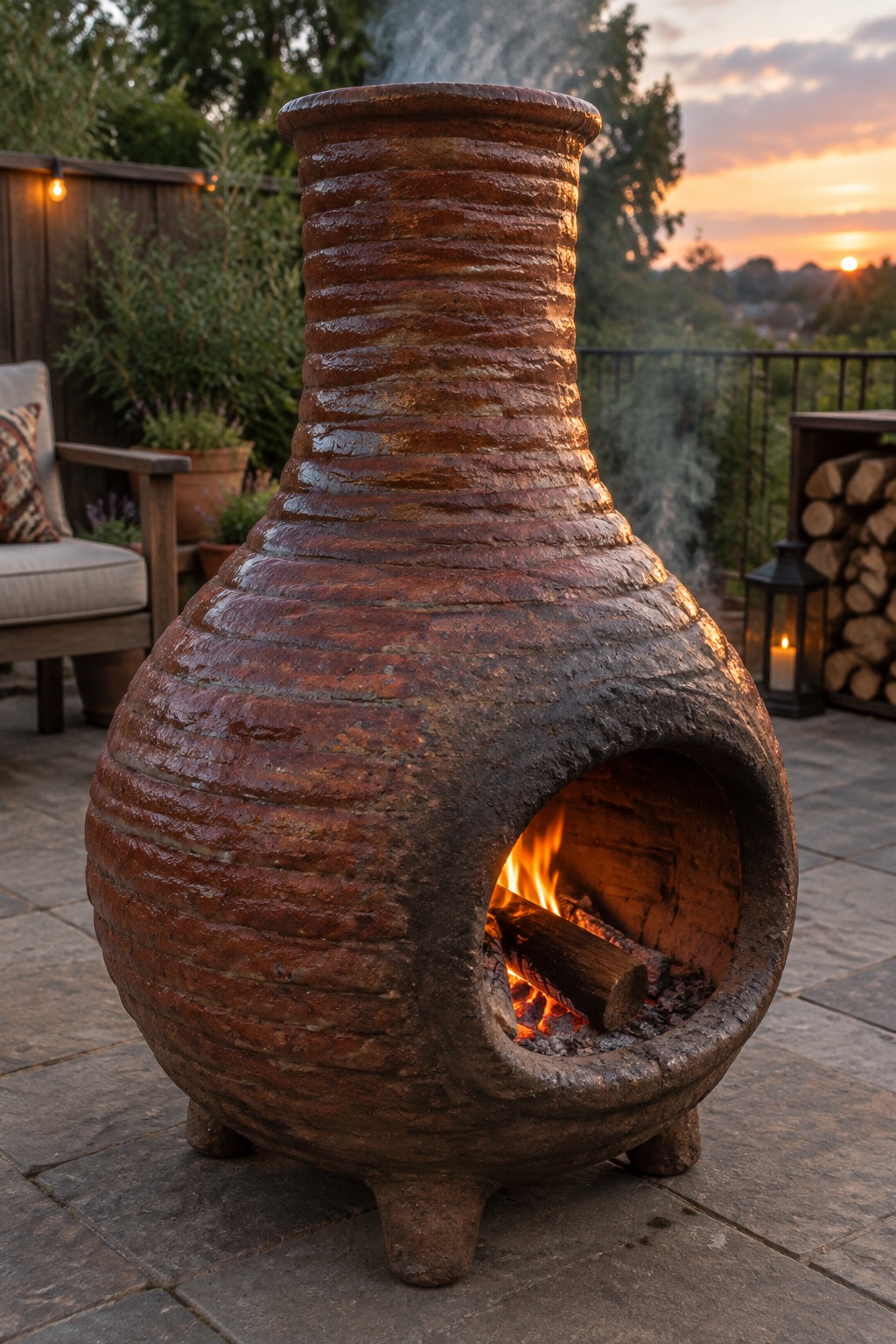
A large coil-built chiminea gives you a functional fire container made entirely from stacked clay coils. The rounded body widens at the base and narrows into a tall neck, with the coils left visible to create horizontal ridges across the entire surface. The opening at the bottom is sized to hold logs, so the piece works as an actual outdoor heater rather than just a sculpture.
What makes this idea useful is how the coil texture and scale do most of the visual work without needing extra decoration. You could adapt the same shape for a giant planter by closing off the base and widening the top rim, or simplify the neck for a more compact version that fits smaller patios. The rough, earthy surface also photographs well in natural light, which helps it stand out on Pinterest boards focused on outdoor projects.
Ridge Textured Coil Pitcher With Bold Blue Strokes

A large coil-built pitcher uses visible horizontal ridges to create an oversized, sturdy form that supports a wide spout and a thick twisted handle. The cream glaze stops short in places to reveal the brown clay underneath, while loose blue brushstrokes cover the upper half in abstract shapes. This combination gives the piece clear visual weight and makes the handmade construction part of the finished look.
The shape does a lot of the work here because the wide belly and tall neck hold branches or tall stems without tipping. You could repeat the same coil ridges and blue strokes on a shorter, wider version to make a matching planter or a set of smaller jugs for kitchen utensils. In a kitchen or on a windowsill the strong texture and contrast make the piece easy to spot in search results even at small sizes.
Hanging Coil Planter With Horizontal Ridges

A large coil-built planter works well when you want a bold outdoor form that still hangs flat against a surface. The pot uses thick coils stacked in even rows to create a rounded, deep shape with strong horizontal lines that catch light and shadow. A simple white wash over the terracotta clay gives the surface a striped, worn look without covering the clay completely. This approach keeps the piece firmly in the large-scale planter category while letting the construction method stay visible.
The shape does a lot of the work here because the deep curve and wide opening give trailing succulents room to spill forward. You could repeat the same coil ridges on a shorter, wider version to sit on a patio table or scale the height down for a kitchen herb planter. The white wash is easy to copy with thinned slip or acrylic paint, so the look stays achievable even if you change the clay color. This kind of wall-mounted coil form stands out on Pinterest when people search for oversized outdoor planters that do not need a stand.
Coil Built Face Planter With Open Mouth Opening

This large coil-built planter takes the form of a stylized human face where the open mouth becomes the planting cavity. The eyes, nose, and ears are built up in strong relief while the top rim shows visible coils that emphasize the hand-built construction. The matte terracotta finish keeps the focus on the bold shape rather than surface decoration, making the planter read as a single strong form even from a distance.
What makes this idea useful is how the mouth opening creates a natural spill point for trailing plants without needing extra drainage holes or inserts. You could adapt the same coil method to make smaller versions for indoor shelves or change the facial features to suit different rooms. A planter like this works especially well on a patio or entry table where the oversized scale can handle bigger plants and still leave room around it. For Pinterest, the combination of recognizable face shape and functional planting space gives it clear visual impact without extra styling.
Frequently Asked Questions
What techniques do artists use to build these large coil pots without structural failure? Artists begin with a thick, stable base of clay and add coils in stages while keeping the walls supported from inside and out. They blend each coil thoroughly into the previous layer to create strong bonds and often work in sections over several days to allow partial drying for better stability.
How large are the oversized forms featured in these examples? Most of the pots stand between three and five feet tall with diameters that reach up to two feet or more at their widest points. This scale requires careful planning of weight distribution so the finished piece remains balanced and suitable for display.
What type of clay performs best for creating bold oversized coil pots? Clays with added grog such as stoneware or sculpture mixes offer the necessary strength and resistance to cracking. These materials hold their shape during building and survive the stresses of drying and firing large volumes of clay.
How should these pots be cared for once they are completed and fired? Keep them indoors away from direct moisture or extreme temperature changes. Dust them gently with a soft cloth and avoid placing heavy objects inside unless the piece was specifically made for functional use. Regular inspection for hairline cracks helps maintain their condition over time.
Where can someone view or purchase similar large coil pots? Check ceramic galleries, university art shows, or online platforms that feature contemporary potters. Many artists also offer commissions through their personal websites or participate in craft fairs where oversized coil work is on display.

Pottery Path is my cozy corner of the internet where I share clay ideas, pottery inspiration, and simple projects you can recreate at home. I love exploring everything from air dry clay to handbuilt pottery to cute minis that brighten your day. My goal is to make clay crafting feel easy, fun, and welcoming for anyone who wants to try it.
You will find beginner friendly tutorials, creative pottery painting ideas, and lots of warm inspiration for slow and happy crafting. If you enjoy hands on creativity, this space will feel like home.