I have been making coil pots for some time and I like how forgiving the process is.
Adding little animal inspired details has become a favorite part for me lately.
Things like ears or paws can make a pot feel more alive without much extra work.
I collected 22 examples that show different ways to do this.
Coiled Cat Planter With Painted Face Details

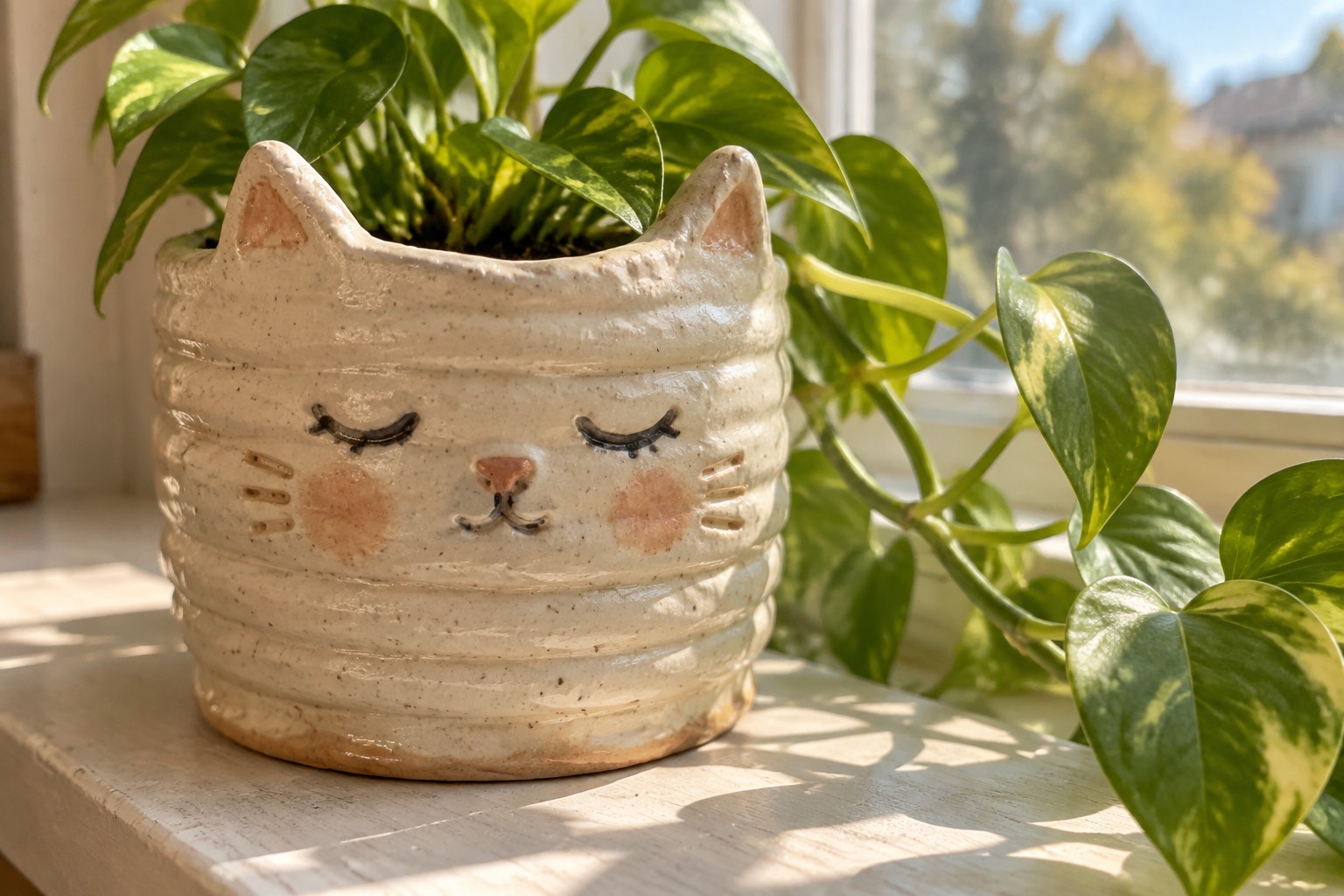
A coil-built planter forms the base for this project, with the clay left in visible horizontal ridges that give it a textured surface. Two small ears are pinched and attached at the rim, while the front gets a simple cat face through painted eyes, nose, whiskers, and cheek patches. The result is a functional plant holder that uses basic sculpting and underglaze painting to add the animal detail without covering the entire surface.
The compact round shape fits easily on a windowsill or shelf next to other pots. You could repeat the same coil construction and ear placement for other animals by swapping the eye shape or whisker pattern. For a gift, this approach works because the painted face reads clearly even from a distance and does not require advanced carving skills. The open top also gives you flexibility to use it for small trailing plants or as a holder for other items.
Giraffe-Spotted Coil Vase

A tall vase formed from stacked coils carries a bright yellow glaze dotted with irregular brown spots that copy a giraffe’s markings. The raised coil lines create horizontal texture that breaks up the spots and keeps the surface from looking flat. This turns a simple coil build into a decorative vase suited for dried stems or single branches.
What makes this idea useful is how the coil ridges already supply part of the pattern, so the spotting can stay loose and still read clearly. The narrow shape fits a windowsill, side table, or shelf where a wider pot would crowd the space. You could shrink the same spotting method to a shorter coil planter or repeat the colors on a set of small coil bowls for a matching group.
Coiled Fox Mug with Sculpted Ears

A coil-built mug gains an animal shape when you add two small ear forms to the rim and paint a simple face across the front using contrasting slips or underglazes. The visible coil ridges create a textured surface that shows through the glaze, while the orange base with white muzzle and black eye and nose marks keep the fox features clear and readable. This method turns a standard cylinder into a functional mug without requiring complex carving or molds.
What makes this idea useful is that the same coil construction and face layout can be changed to other animals by swapping ear shapes and color patterns. The mug size works for everyday drinking or small gifts, and you can simplify the glazing by using just underglaze on the face and a single clear coat over the rest. For online sharing, the raised ears and bold face details help the piece stand out in photos compared to plain coil mugs.
Owl Tea Light Holder

A small ceramic owl serves as a tea light candle holder, with the rounded body shaped into an open cup that cradles the flame. Sculpted details include layered feather textures, large round eyes, and a short beak that give the form clear character without extra decoration. The dark speckled glaze settles into the carved lines and creates contrast around the rim where the interior shows a warmer tone. This approach works as a compact decor object that combines sculptural form with a simple functional opening.
The compact size lets it sit on a shelf, desk, or bedside table without taking much space. You could rework the same body shape into a small planter by adjusting the opening or change the eye details to suggest a different animal. The textured surface gives the piece visual interest even when the candle is not lit, and the same idea scales easily if you want to try a taller version for a pillar candle. A piece like this stands out in a collection because the animal form is readable from a distance while the glaze keeps it understated.
Hedgehog Ring Dish Built from Coils

A coiled bowl shaped like a hedgehog makes a compact ring dish for holding jewelry. Coils build the body and form the raised spikes that run around the rim and sides, while a smooth green glaze covers the interior and the textured areas. The face at one end uses minimal sculpting with a natural clay tone and small black details for the eyes and nose. This keeps the piece small enough to sit on a dresser or desk without crowding the surface.
The shape does a lot of the work here by turning a basic coiled bowl into something that holds rings and chains while the spikes add visual interest. You could adapt the same rim texture to a different animal like a turtle or armadillo if you want more options. The small scale makes it easy to try in a weekend and it stands out in photos because the spikes catch light against the glazed inside. For a bathroom version, swap the green glaze for a solid color and widen the opening slightly to hold a bar of soap.
Hanging Coil Planter With a Perched Bird

A coil-built hanging planter creates a sturdy, rounded form with visible ridges that emphasize the construction method. The pot uses stacked coils to make a wide-mouthed vessel finished in a blue and white speckled glaze, and a small ceramic bird is attached directly to the rim so it appears to sit on the edge. This turns the planter into a single object that combines plant display with an animal detail. The trailing plant softens the lower half and keeps the focus on the bird without crowding it.
What makes this idea useful is that the hanging ropes let you place it where table space is limited. You could rework the same coil structure into a shorter version for a shelf or swap the bird for a different animal that matches another room. The rim placement keeps the sculpted detail visible even after the plant fills out. In a covered outdoor spot, this shape also handles weather better than flat trays or low bowls.
Turtle Ring Dish with Coiled Shell

A small ceramic ring dish formed as a sea turtle offers a simple way to keep jewelry in one spot. The shell is built from coiled clay that creates raised concentric rings, then finished with a turquoise glaze and gold accents on the coils and rim. Sculpted head and flippers turn the tray into a complete animal shape while keeping the surface flat enough for rings and small items.
What makes this idea useful is the compact size that fits on a nightstand or dresser without taking much space. The coil pattern on the shell can be repeated on other animal forms like frogs or lizards if you want a matching set. For gifts, the two-tone glaze gives it a polished look that photographs well, and the same base shape works as a small soap dish or trinket tray with minor changes to the rim.
Whale Shaped Ceramic Tray

A coiled ceramic tray shaped like a whale makes a practical kitchen piece for holding utensils or small snacks. The long body creates a shallow trough that tapers at one end while the tail lifts up as a simple handle detail. The marbled blue glaze covers the entire surface and adds visual interest without extra painting or carving. This approach uses basic coil construction to turn a functional tray into an animal form that still works as a dish.
The shape does a lot of the work here because the whale outline stays clear even with minimal sculpting. You could shorten the body to make a spoon rest or stretch it longer for a bread tray by changing the coil length and tail angle. In a kitchen this kind of piece sits well beside the stove or on a countertop for daily use. The marbled glaze technique can be swapped for solid colors or simple stripes if you want a faster finish on your own version.
Penguin Coil Pots in Three Sizes

Coil pots built in penguin shapes turn a basic vessel into a small animal container by stacking coils for the body and adding a few sculpted details. The horizontal ridges stay visible under a black and white surface treatment that suggests feathers, while a simple orange beak and dot eyes finish the face. Making the same form in three descending sizes creates a coordinated set without needing new techniques for each piece. These work as tiny planters or holders for small objects on a shelf or windowsill.
The shape does a lot of the work here because the rounded body already reads as a penguin once the face is added. You can adapt the idea by changing the color sections or trying the same coil method with other animals that have simple head shapes. A single medium size makes a quick gift when paired with a small plant, while the full set stands out in photos for its clear repetition. The painted details also cover uneven coils, so the project stays approachable even if your building is still developing.
Yarn Bowl with Sheep Head Detail

A ceramic yarn bowl uses a notched rim to feed yarn outward from a central ball while a sculpted sheep head sits along the edge as both decoration and visual marker. The bowl body carries a light speckled glaze with carved wavy lines that echo wool texture, keeping the overall form simple and round. This approach turns a standard functional holder into a small animal-themed piece that still performs its main job without extra parts.
What makes this idea useful is the notch placement right next to the sheep head, which keeps the yarn path clear and easy to grab. You could shrink the same rim shape and head detail to create a smaller version for thread or embroidery floss, or enlarge it for bulky yarns and ribbons. In a craft space this bowl keeps the working yarn contained on a table or lap without rolling away. For gifts, the same sheep head can be swapped for other animals to match different hobbies or recipient tastes.
Ladybug Salt Cellar

A small coiled or pinched pot shaped into a ladybug creates a compact salt cellar or kitchen holder. The rounded body receives a glossy red glaze with black spots, while a separate sculpted head with eyes attaches at the front to complete the form. The opening stays wide enough for easy access with a spoon or fingers. This approach turns a basic coil pot into a recognizable kitchen item that stays functional on a counter or tray.
The small scale makes it simple to place next to a stove or on a dining table without crowding the surface. You could rework the same ladybug body into a pepper holder or small butter dish by adjusting the opening size and adding a lid. In a kitchen this shape keeps salt visible and reachable while the painted spots help it photograph clearly for recipe posts or gift ideas. The same construction works for a ring dish or desk organizer if you skip the food-safe glaze.
Coiled Pig Lidded Jar

A coil-built lidded jar uses stacked horizontal coils to form a rounded body that doubles as a small kitchen canister or countertop storage piece. The lid carries the animal detail through two simple ears and a raised snout with open nostrils, keeping the rest of the surface plain so the sculpted features stand out. A two-tone glaze application, pink on the upper half fading to a natural clay tone below, emphasizes the coil ridges without adding extra decoration.
What makes this idea useful is the way the coil texture already supplies visual interest, so only basic glazing is needed to finish it. The same snout and ear treatment could be scaled down for a cotton swab holder or adapted to a straight-sided cylinder for a desk pencil cup. A piece like this works especially well on open shelves where the animal detail gives it presence without competing with other kitchen items.
Coiled Bowl With Frog Rim Detail

A coil-built ceramic bowl forms its walls and spiraled base from stacked clay ropes, then adds a frog head directly onto the rim as a single sculpted extension. The green glaze with brown undertones follows the coil lines to emphasize the handmade texture while keeping the interior open and shallow. This approach turns a basic coil pot into a functional bathroom dish without extra attachments or complex construction.
The low, wide shape makes it practical as a soap dish or small holder on a sink ledge where items need to stay visible and dry quickly. You could swap the frog for another simple animal head using the same rim placement and keep the coil pattern for visual consistency across a set. The small overall size also lets you finish the piece in fewer sessions, which works well if you want to make several variations for gifts or market sales.
Bear Paw Coil Pot Utensil Holder

A coil-built cylindrical pot works as a kitchen utensil holder when the coils are left visible to create a bark-like ridged texture. Two sculpted bear paws are attached to the side and glazed in a dark glossy brown that stands out against the white and brown streaked surface. The wide opening and stable base keep wooden spoons upright while the paw details give the piece its animal focus without changing the overall shape.
What makes this idea useful is how the paws attach cleanly to an already finished coil surface. The same paw shape could be added to a shorter coil pot for a bathroom toothbrush holder or used on a taller version for a small umbrella stand. In a kitchen this size keeps tools within reach on the counter and the neutral glaze helps it match existing dishware. You could simplify the idea by pressing just one paw into the clay before the final coil instead of attaching separate pieces.
Seahorse Relief Coil Pot Candle Holder

A short coil-built cylinder becomes a candle holder when seahorses are added as raised reliefs around the exterior. The seahorses are formed separately and attached so they stand out from the textured surface, then covered with a mottled turquoise glaze that settles into the crevices and highlights the shapes. The open top lets the flame show through while the sculpted details stay visible from every angle.
The compact size works well on a windowsill or side table where larger pieces would feel crowded. You can reuse the seahorse relief idea on a taller coil vase or a small tray by adjusting how many coils you stack before adding the animals. The same approach also translates to other sea creatures if you want to match a bathroom or coastal theme without changing the basic building method.
Koala Wall-Mounted Coil Planter

A wall-mounted coil pot uses stacked clay coils to build a wide, shallow bowl with clear horizontal ridges that show the construction. The gray glaze keeps the surface simple while a small sculpted koala clings to the rim, turning the planter into both a plant holder and a decorative accent. The piece hangs from a single wall hook, making it easy to install in any room with limited surface space. This fits the category of animal-accented planters where the sculpted detail supports the coil form instead of covering it.
What makes this idea useful is the way the koala sits on the side without blocking the planting area or the hanging hardware. You can swap the animal for another creature or change the glaze color to match different rooms while keeping the same coil shape. The compact size works well above a desk or in a narrow hallway where a full shelf would not fit. For a simpler version, try fewer coils and a smaller animal figure so the piece stays light enough for basic wall hooks.
Double Bowl with Bird Accent for Spreads

This project is a divided ceramic serving dish with two connected compartments that hold separate foods like honey and jam. The form uses a shared center wall where a small sculpted bird sits as the main detail, while the rest of the piece stays simple with rounded bowls and a yellow glaze. The bird’s size and placement turn a basic kitchen item into something more noticeable without complicating the shape. It works as a functional serving piece that still shows a clear animal-inspired element.
What makes this idea useful is the divided layout that keeps two toppings from running together on the table. You could rework the same bird onto a single larger bowl or a narrow tray if you want a different footprint. In a kitchen this shape handles breakfast spreads or small appetizers without needing much counter space. The compact size also makes it easy to try in a different color or with a different animal perched on the ridge.
Climbing Squirrel Coil Vase

A coil-built vase forms a tall, rounded shape by stacking and smoothing horizontal ropes of clay, then finishes with a mottled brown glaze that highlights the layered texture. The main detail is a sculpted squirrel fixed to the side, shown mid-climb with front paws gripping the rim and its tail curling around the lower half. This approach keeps the coil construction visible while adding a single animal accent that turns the pot into both a planter and a decorative object.
What makes this idea useful is that the coil base can stay the same while the animal changes to suit different rooms or seasons. You could shorten the form for a pencil cup or lengthen it for a larger plant pot without losing the stacked-coil look. The brown glaze range pairs easily with wood furniture, so the piece works on a shelf, mantel, or entry table. For a quicker version, reduce the squirrel to just a head and paws pressed onto the coils instead of modeling the full body and tail.
Coiled Elephant Pencil Holder

A coil-built cylinder forms the main body of this pencil holder, with the clay coils left visible to create horizontal ridges across the surface. The elephant head is added through two large ears, small bead eyes, and a trunk that curves downward into a loop at the base. The gray and tan glaze follows the ridges while the inner ears are painted a soft pink, keeping the animal details simple but readable. This approach turns a basic holder into a desk piece that clearly reads as an elephant without extra sculpting.
The trunk loop gives the piece a built-in stand that keeps it stable on a flat surface. You could scale the same coil method down for a smaller brush holder or swap the ears and trunk shape to make a different animal like a fox or rabbit. It works especially well on a workspace or studio table where the holder needs to be both functional and easy to spot. The visible coils make the construction straightforward to copy if you want to try the same build with different colors or a new animal face.
Narwhal Coil Mug with Tusk Detail

A coil-built mug formed from stacked clay rings creates a compact cup with visible horizontal texture. The surface gets a blue marbled glaze that pools in the ridges, while a tapered horn is attached at the rim and a simple face is painted on the front. This turns a basic coiled cylinder into a narwhal mug that still functions as a small drinking vessel or desk cup. The approach works because the coils supply both structure and built-in surface interest without extra tools.
What makes this idea useful is how the same coiled cylinder can be adapted for other animals by changing only the added horn or ears. The small scale fits easily on a desk or shelf and uses less clay than a full-size mug. You could simplify the face to just eyes or swap the tusk for a fin to make a different sea creature. The painted detail stays minimal so the glaze and coil texture remain the main visual focus.
Raccoon Coil Pot Jar with Striped Tail Lid

A coiled clay jar with a fitted lid works as a small storage container when the surface is painted with a raccoon face. Horizontal ridges from the coils give the painter clear lines to place the black eye patches, muzzle, and ears. The lid knob is formed into a short striped tail that matches the face markings and keeps the whole piece as one animal shape. This approach turns a basic lidded pot into a functional holder that still reads as a raccoon from the front.
The compact size and lid make this jar useful for holding tea, cotton pads, or desk supplies on a counter or shelf. You can change the face to any animal and keep the same coil ridges and tail knob for quick variation. High-contrast black markings on a light gray base help the design stay visible without fine detail work. For a gift, the same shape works well as a small kitchen canister or bathroom holder.
Frequently Asked Questions
What materials do I need to make these coil pots at home? Gather air-dry clay or pottery clay, a rolling pin, a plastic knife or scoring tool, water for smoothing, and basic sculpting tools like toothpicks for details. Start with a flat clay base and roll out even coils to build the walls, then attach small rolled pieces for ears, snouts, or tails to create the animal features.
How do beginners add the animal details without the pot falling apart? Score and slip the surfaces where you attach details like bunny ears or fish fins so they bond well. Build the main pot first and let it firm up slightly before adding playful elements, then smooth all joins with water to avoid cracks during drying.
Are these coil pot projects suitable for kids? Yes, with adult supervision for younger children, as the coiling technique is simple and forgiving. Use air-dry clay to skip the kiln step and focus on fun animal shapes like owls or frogs, which help develop fine motor skills while keeping the activity engaging and low-mess.
What is the best way to finish and display these pots once they are complete? After full drying, paint with acrylics or glaze if using kiln-fired clay, then seal with a waterproof varnish for durability. Place them on shelves as decorative planters for succulents or use them to hold small items like pencils, highlighting the animal details as conversation starters.
How can I customize the 21 designs to match my own style? Choose animals that appeal to you, such as swapping a cat face for a panda by adjusting ear shapes and adding spots with extra clay. Experiment with color combinations during painting and vary coil thickness for different textures, allowing each pot to reflect personal creativity while keeping the core playful theme intact.

Pottery Path is my cozy corner of the internet where I share clay ideas, pottery inspiration, and simple projects you can recreate at home. I love exploring everything from air dry clay to handbuilt pottery to cute minis that brighten your day. My goal is to make clay crafting feel easy, fun, and welcoming for anyone who wants to try it.
You will find beginner friendly tutorials, creative pottery painting ideas, and lots of warm inspiration for slow and happy crafting. If you enjoy hands on creativity, this space will feel like home.