
I’ve been making pottery for my own kitchen over the years and these ideas come from pieces that actually get used.
Some of them started as simple experiments with clay that turned into things like measuring cups or spoon rests I reach for often.
I like keeping the designs basic so they hold up to regular washing and stacking without any fuss.
The projects here stay focused on function rather than decoration.
They work well if you have basic tools and a bit of practice with throwing or hand building.
Speckled Yellow Ceramic Mug

A rounded ceramic mug with a thick pulled handle makes a practical daily vessel for coffee or tea. The bright yellow glaze scattered with dark speckles creates visual interest without needing extra decoration. Its slightly uneven form and glossy surface show the marks of hand-building, which helps it read as pottery rather than factory-made.
What makes this idea useful is the strong color choice that works against both light and dark countertops. You could scale the same shape down for espresso cups or widen it for soup bowls while keeping the speckled glaze. In a kitchen this size sits comfortably in the hand and stacks without tipping, so it earns its spot in the cabinet. For a gift, repeat the yellow on a matching small pitcher to turn one mug into a simple set.
Whale Spoon Rest
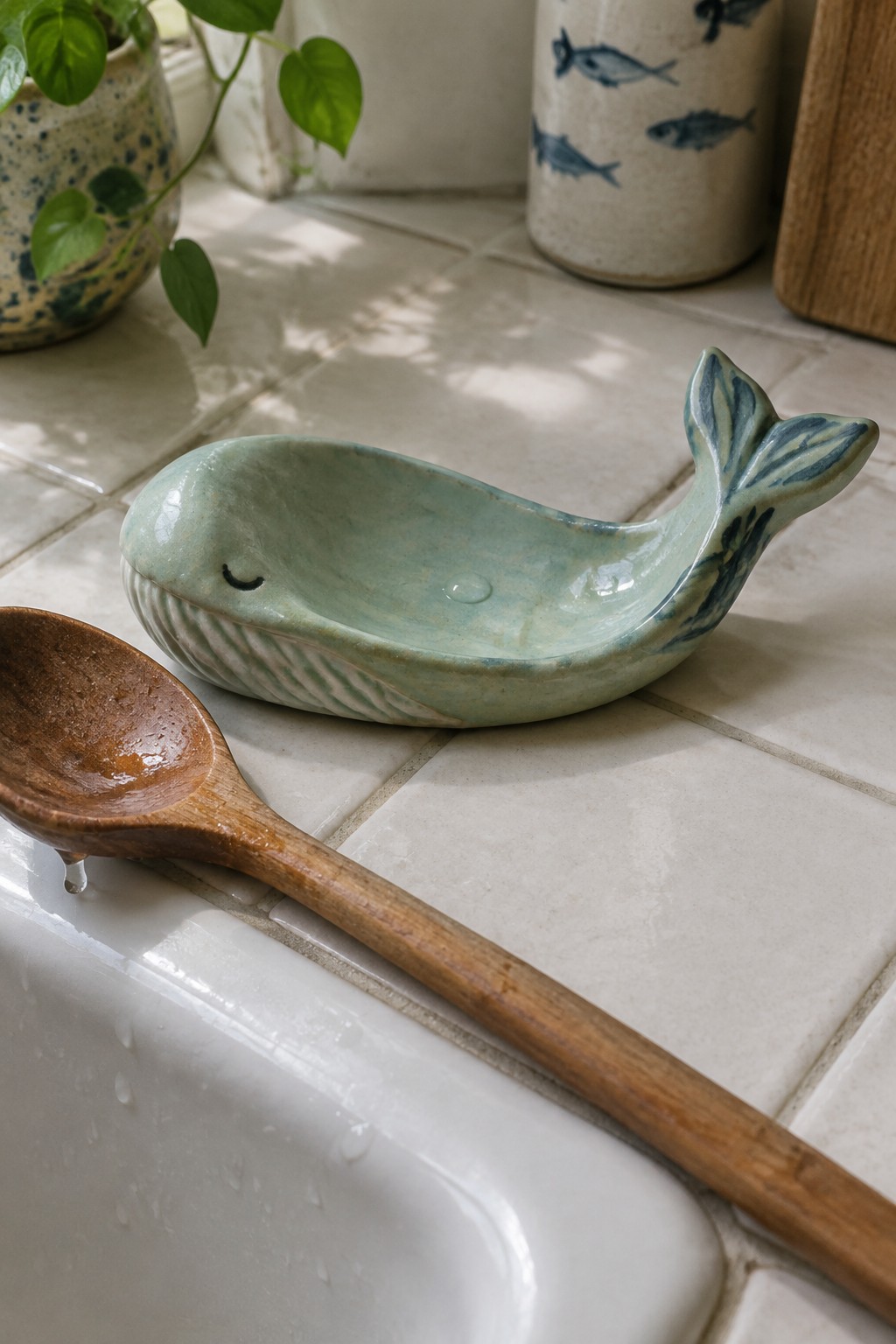
A ceramic whale spoon rest gives you a compact kitchen piece that holds cooking spoons or small utensils while keeping the counter clean. The design uses a simple sculpted whale body with a curved tail and minimal black details for the eye and fin markings. A soft turquoise glaze covers most of the form, while the tail shows added blue brushwork and a ridged texture along the side. This type of project works well as a functional kitchen accessory that stays small and easy to store.
The shape does a lot of the work here because the hollow body naturally cradles a spoon without extra construction. You could adapt the same whale form into other sea animals or drop the painted details for a plain glazed version. In a kitchen, this kind of piece sits neatly beside the stove or sink and pairs easily with wooden utensils for gifts. The small scale also makes it simple to try in different glaze colors while keeping the basic sculpted shape the same.
Divided Salt Cellar with Spoon Rest

A divided ceramic bowl serves as a practical salt cellar by keeping two seasonings separate in one small dish. The low center divider prevents mixing while the rim is shaped to hold a spoon across the top. This kitchen item stays compact enough to sit on a counter or table without taking up extra space. The speckled exterior and smooth glazed interior make it durable for daily use.
The shape does a lot of the work here because the divider and spoon rest are part of the original form. You could make one compartment larger for your main salt and keep the other for a finishing salt or spice blend. In a kitchen, this kind of piece keeps measuring tools off the counter and within reach while cooking. The same divided layout could be adapted into a small dish for holding loose tea or chopped herbs if you adjust the scale slightly.
Ceramic Butter Dish with Dome Lid
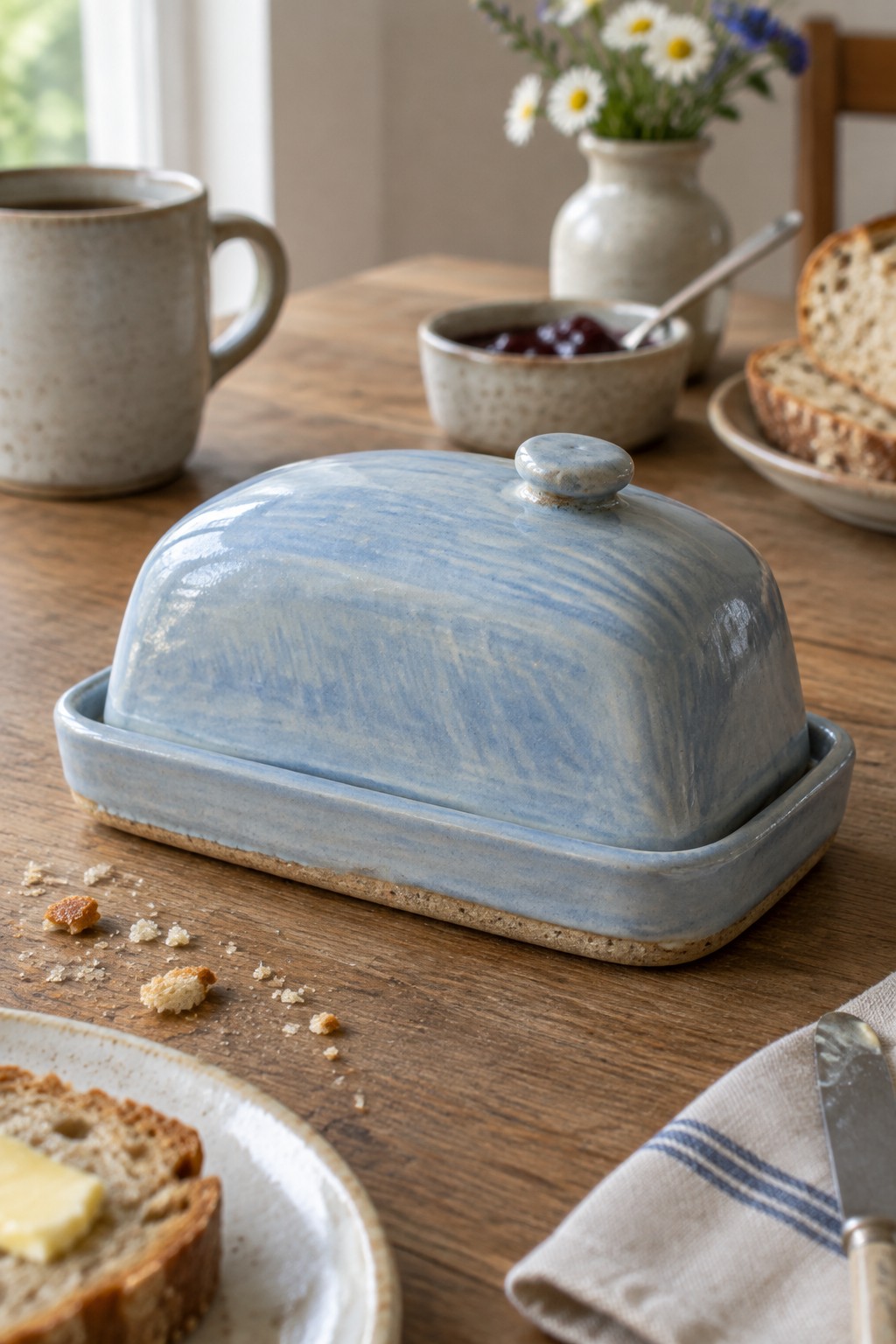
A covered butter dish made from clay gives you a simple way to keep butter on the table without using plastic wrap or a separate container. This version uses a rectangular tray base and a domed lid that fits inside the rim to create a seal. The blue glaze with visible streaking adds subtle texture without overpowering the form, and the overall size fits a standard stick of butter. It belongs to the category of functional kitchen pieces that stay out for daily use.
What makes this idea useful is how the lid keeps butter from drying out or picking up crumbs during meals. You could scale the same shape down for individual portions or widen it slightly to hold a small block of cheese. Switching the glaze to a neutral tone or a color that matches your plates lets the piece blend into an existing set. In a kitchen, this kind of covered dish works well as a practical item you reach for every morning.
Ceramic Utensil Crock with Incised Loops
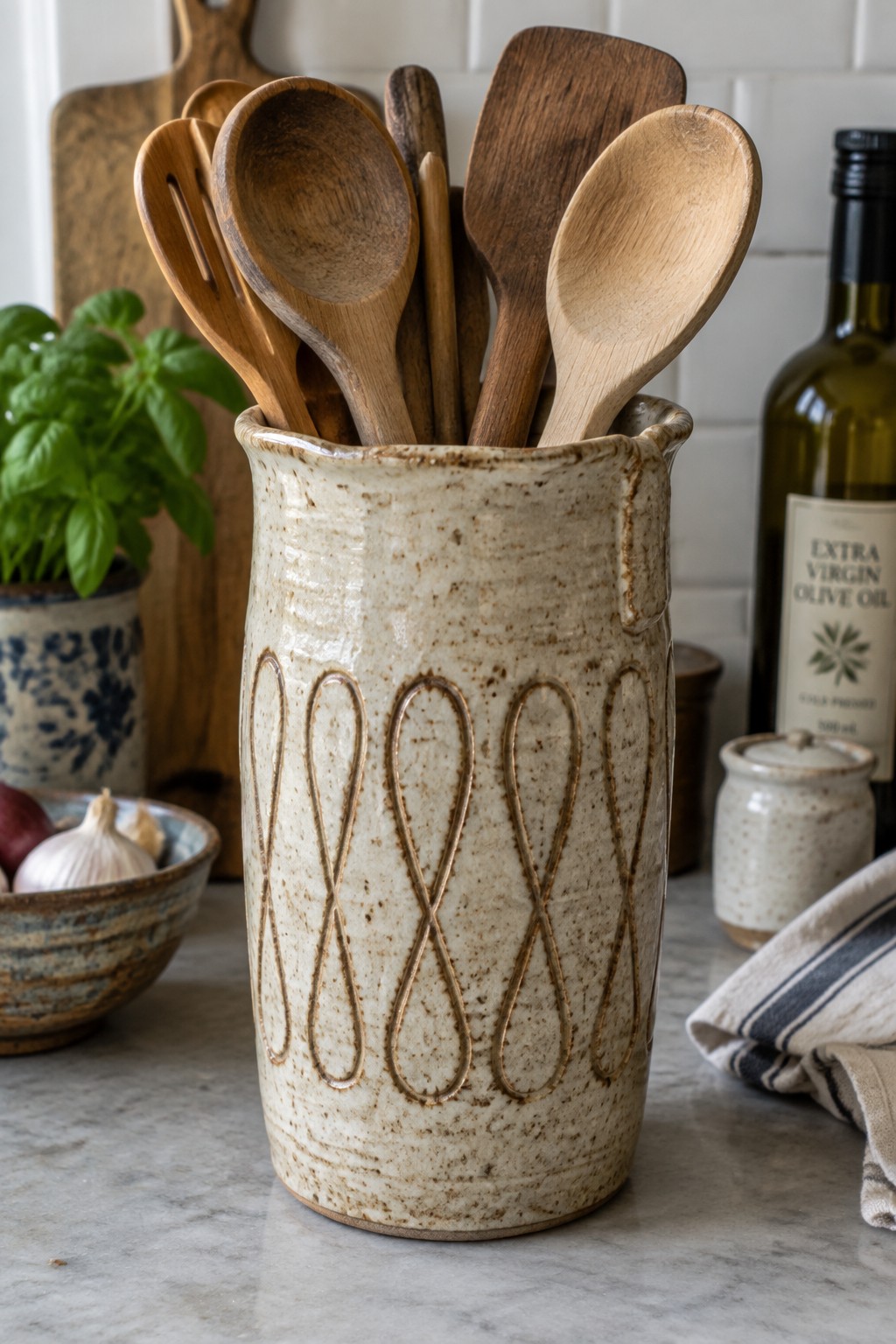
A tall cylindrical ceramic crock serves as a practical kitchen utensil holder. The incised loops carved into the surface create a repeating pattern that adds texture while keeping the overall shape simple and functional. The speckled glaze in neutral tones helps the piece fit with other handmade kitchen pottery. This type of holder keeps wooden spoons and spatulas upright and easy to grab on a countertop.
What makes this idea useful is the height and weight of the form, which prevents tipping even when full. You could adapt the same loop carving to a shorter, wider version for storing brushes or tools. In a kitchen, the neutral finish lets it sit alongside bowls or jars without clashing. For a gift, try the same shape but swap the pattern for a different carved motif to make it more personal.
Nesting Ceramic Ramekins for Serving Condiments

Handmade ceramic ramekins in this style serve as small kitchen bowls for jams, sauces, or single portions. The cylindrical shape with light horizontal ridges lets them stack cleanly when not in use. A soft dripping glaze in pastel tones creates contrast against the food while keeping the form simple. This project falls under functional kitchen accessories that stay practical without extra decoration.
What makes this idea useful is how the nesting design frees up shelf space in a small kitchen. You could adapt the same shape in different sizes to hold everything from salt to butter or make a set in one glaze color for a more uniform look. In a kitchen, these bowls work well on a breakfast table or as part of a gift set with homemade spreads. The straightforward form also makes it easy to adjust the rim height or glaze thickness on future versions.
Ceramic Oil Cruet
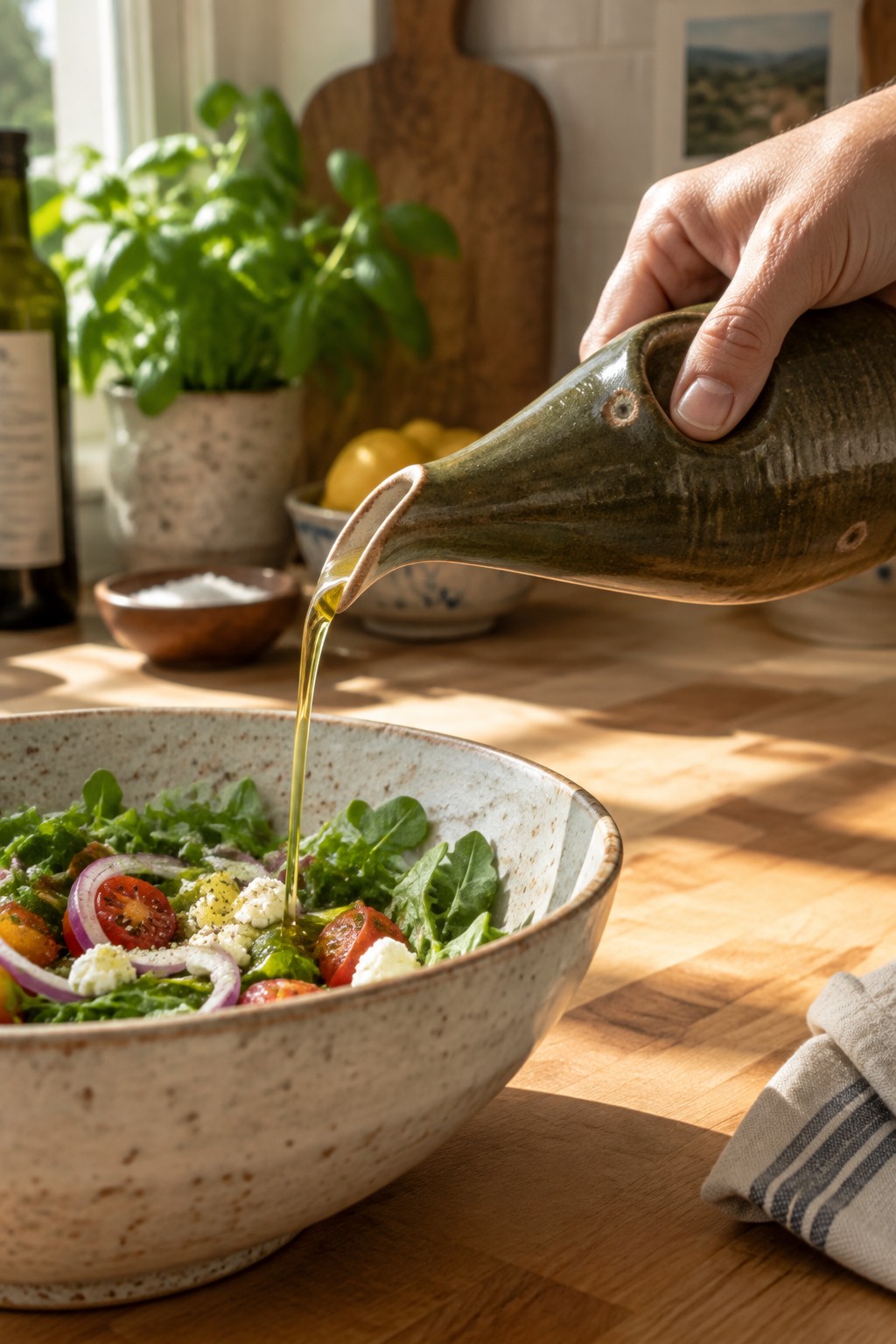
A ceramic oil cruet is a small pouring vessel made for drizzling oil over food or into pans. This version uses a tapered spout formed directly into the body and a thumb rest that helps control the pour without extra hardware. The matte green glaze and simple rounded shape keep it looking like a standard kitchen tool rather than a decorative piece. It belongs to the functional kitchen pottery category that handles both storage and serving.
What makes this idea useful is how the built-in spout removes the need for metal inserts or stoppers. You could scale it down for vinegar or widen the opening slightly for thicker dressings. In a kitchen, this kind of piece sits on the counter ready for daily use and protects oil from light better than clear glass. The same form can be reworked into a soy sauce dispenser or a small cream pitcher by adjusting the handle angle.
Handled Ceramic Casserole Dish
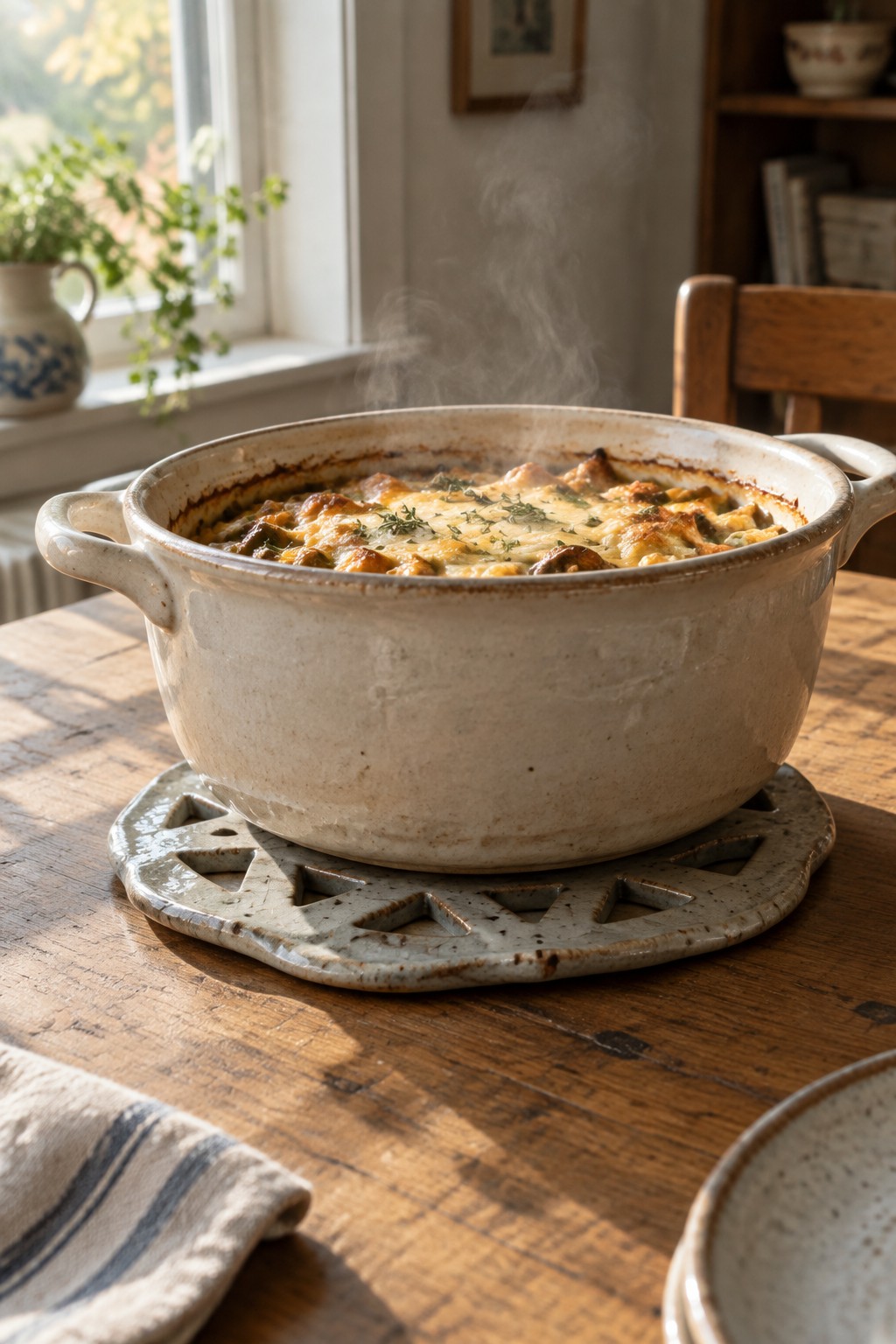
A deep round baking dish formed from stoneware or earthenware clay with two looped handles gives you a sturdy oven-to-table piece. The wide mouth and thick walls handle even heat distribution for casseroles or roasted vegetables. A matte, speckled glaze on the outside with a smoother interior finish keeps the surface practical for cleaning while still looking at home on a wooden table.
What makes this idea useful is how the handles let you move the hot dish straight from the oven without extra tools or trivets in between. You could make a smaller version for side dishes or add a fitted lid to create a covered baker for braises. In a kitchen this shape works for both cooking and serving so one piece replaces multiple bowls.
Nested Ceramic Measuring Cups

A set of four stackable measuring cups made from glazed ceramics offers a practical kitchen tool that stores neatly in a single stack. Each cup features a simple pulled handle stamped with its size (1 cup, 1/2 cup, 1/3 cup, 1/4 cup) and sits in its own distinct glaze color so the pieces are easy to identify at a glance. The slightly irregular rims and soft, satin glazes keep the set looking handmade while the nesting shape reduces countertop clutter. This project belongs to the functional kitchen item category and succeeds because the graduated sizes and color coding solve a real daily need without extra hardware.
What makes this idea useful is that you can start with just two or three sizes instead of committing to a full set. The same form could be adapted into small pouring bowls or coffee scoops by shortening the handles and adjusting the capacity markings. In a kitchen, this kind of piece works especially well because it replaces plastic or metal tools with something that matches other pottery dishes already in use. For a gift, something like this stands out on Pinterest since most people need measuring cups but rarely see them made in coordinated ceramic glazes.
Three-Section Herb Planter Tray

A long rectangular clay tray divided into three separate compartments works as a compact planter for kitchen herbs. Each section has its own drainage hole and holds a small plant like basil, while the overall shape keeps everything contained on a narrow surface. The interior uses a simple green glaze that helps retain moisture, and the outer rim stays unglazed for a straightforward raw clay finish. This idea fits the functional kitchen planter category, turning a basic slab-built form into something you can use daily for fresh cooking ingredients.
What makes this idea useful is how the divided layout lets you grow multiple herbs in one piece without crowding. The narrow profile fits standard windowsills where space is tight, and the same shape could be scaled down for microgreens or reworked as a shallow tray for small tools or spice packets. In a kitchen, this kind of piece keeps plants close to where you need them and avoids the mess of individual pots. You could change the glaze colors to match your dishes or add a fourth section if you want more variety in the same footprint.
Owl Salt and Pepper Shakers

Owl salt and pepper shakers are a compact ceramic project that turns two small pinched or wheel-thrown forms into functional tableware. Each owl uses a rounded body, pinched ears, and carved wing lines, with a row of small holes drilled into the top before firing so the pieces can actually dispense seasoning. The speckled glazes in contrasting tones make the sculpted details stand out while keeping the surface easy to wipe clean.
What makes this idea useful is that the same basic shape works for other small kitchen items like herb shakers or even tiny cream pitchers. You can simplify the wing carving or swap the owl face for a different bird or animal without changing the drilling step. The finished size fits neatly on a table or in a gift box, and the two-tone glaze approach helps the pair read clearly as a set when photographed for a Pinterest board.
Honey Pot with Dipper Slot

A round ceramic honey pot gives you a lidded jar that keeps honey or syrup fresh while the notched rim holds a matching dipper in place. The wide body and short neck create a stable shape that sits well on a countertop or table without tipping. Warm marbled glazes in brown and amber tones add a simple surface that hides drips and cleans easily after use.
What makes this idea useful is the built-in dipper slot that keeps the tool off the table and ready for the next pour. You could make a taller version for larger batches or shrink it for single servings at a breakfast table. In a kitchen, this kind of piece works especially well next to toast or pancakes since everything stays together in one spot. The same form adapts easily to hold jam or cream if you skip the dipper hole on the next try.
Ceramic Egg Cups with Painted Faces

Egg cups are small ceramic stands made to hold a single soft-boiled egg upright during a meal. These versions use a simple flared base and scalloped rim, finished in solid pastel glazes with hand-painted faces made from dots and curved lines for eyes and smiles. The compact size and matching set approach turn a basic kitchen tool into a coordinated group that can sit on a tray or table without crowding other items. This project fits the kitchen item category and stays functional while using surface decoration to create visual interest.
The shape does a lot of the work here because the wide foot keeps each cup steady even when the egg is cut. You can swap the pastel colors or drop the faces for plain glaze to match existing dishes more closely. In a kitchen, this kind of piece keeps eggs from rolling while giving you a quick way to make a set of four or six. For a gift, something like this works well since the small scale means lower material cost and faster production time.
Leaf-Shaped Ceramic Bowls

Leaf-shaped ceramic bowls offer a simple way to create small serving dishes for kitchen use. The form is built by pressing or carving leaf veins into soft clay, then shaping the edges into a shallow bowl with a pointed tip and curved sides. Glazes in green, blue, and amber highlight the texture while keeping the surface food-safe and easy to clean. This approach fits the category of functional kitchen items that double as table accents.
The shape does a lot of the work here because the natural contours already suggest portion sizes for olives, nuts, or dips without extra measuring. You can adapt the same leaf form into larger platters or stackable sets by adjusting the depth and scale during building. In a kitchen these pieces work well on a charcuterie board or as individual condiment holders, and the same idea translates easily to soap dishes or small jewelry trays if you change the glaze. A set like this stands out on Pinterest when the glazes vary but the leaf detail stays consistent across the pieces.
Speckled Ceramic Napkin Holder

A napkin holder shaped from clay gives you a stable, open form that keeps a stack of folded napkins upright on a counter. The wide arch design creates two sides that grip the napkins while leaving the top open for easy access. The brown glaze with white speckles adds a textured surface that hides minor wear and pairs with other kitchen pottery. This project fits the kitchen item category and works at a scale that sits comfortably beside a stove or sink without taking up much space.
What makes this idea useful is how the curved shape does the holding work without any moving parts or extra hardware. You could adapt it by shortening the height for cocktail napkins or lengthening the base for larger dinner napkins. In a kitchen, this kind of piece replaces flimsy plastic or metal holders and can be made to match existing bowls or plates. For a gift, something like this combines well with a set of simple linen napkins.
Ceramic Tea Bag Holder
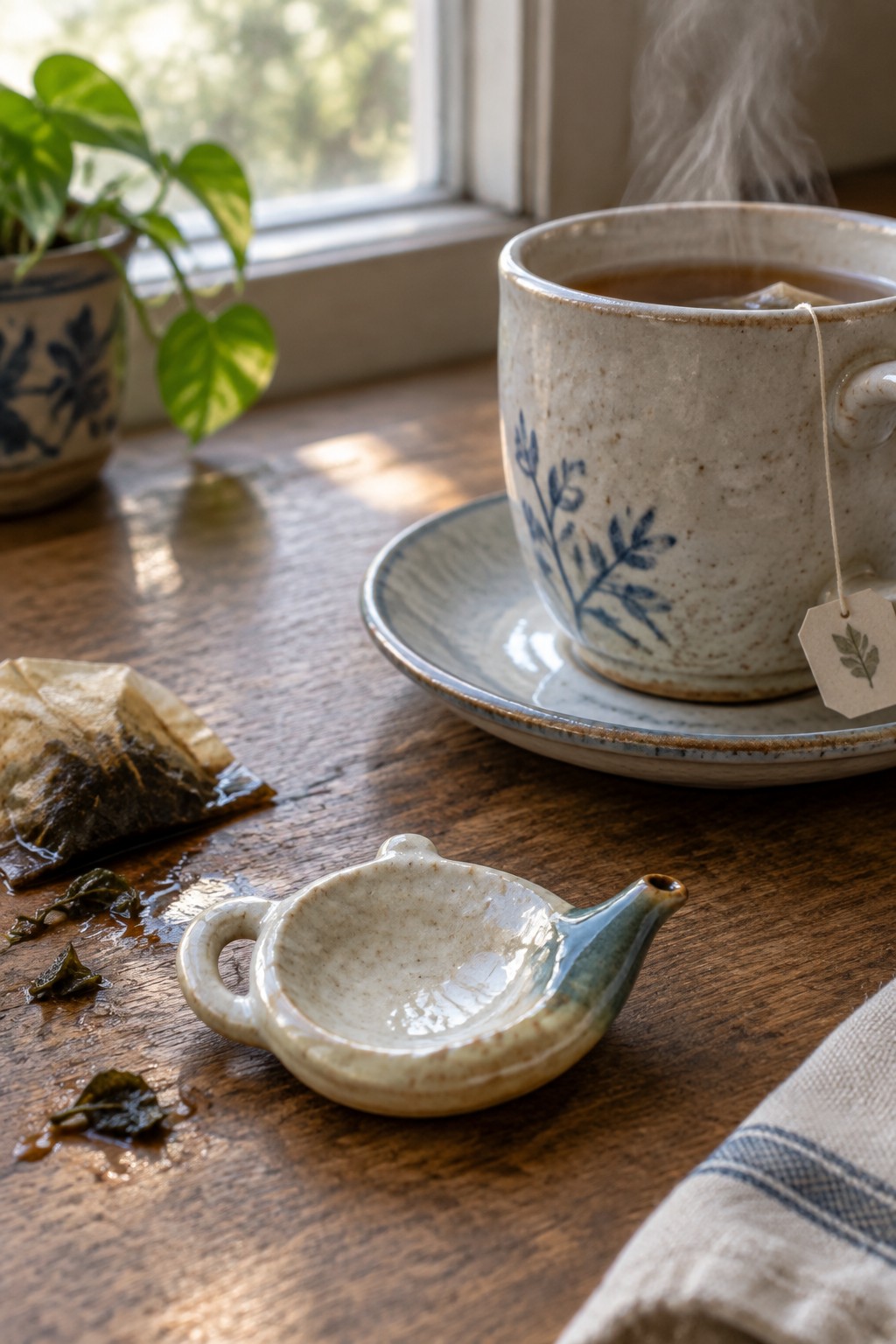
A small ceramic tea bag holder gives tea drinkers a dedicated spot to set a wet bag without making a mess on the counter. The piece has a shallow oval dish, a simple looped handle on one side, and a tapered end that directs drips back into the center. Its compact size and speckled off-white glaze with a blue-green tip keep the form clean and easy to place beside a mug or teapot. This kind of kitchen accessory fits into the category of functional tea service pieces that solve a daily problem.
What makes this idea useful is the way the shape catches liquid while staying small enough to store in a drawer. The same basic form could be lengthened slightly into a spoon rest or widened into a tiny dish for sugar packets. In a kitchen, this piece keeps surfaces dry during repeated tea pours and works well as a quick add-on when making a set of mugs. The painted detail on the tip also gives it enough visual interest to stand out in a simple product photo for Pinterest.
Ceramic Citrus Juicer

A handmade ceramic citrus juicer uses a ridged central cone set inside a shallow bowl with a pouring lip. The yellow glaze covers the entire form, and the raised ridges on the cone help break down fruit segments during use. This kitchen item keeps the juice contained and ready to pour without needing extra tools or containers.
What makes this idea useful is that the integrated reamer and bowl handle the full juicing process in one step. The shape works especially well when sized to fit common lemons or limes, and the spout makes transfer to a glass or measuring cup simple. You could rework the same form with a matte glaze or add a small foot ring underneath for better stability on wet counters. For a gift, something like this pairs easily with a bag of fresh citrus.
Divided Ceramic Tray for Kitchen Prep

A long rectangular ceramic tray divided into three shallow compartments offers a simple way to organize small amounts of chopped herbs, spices, or garnishes while cooking. The handmade piece uses a streaked reactive glaze in blue and brown tones that follows the contours of each section and emphasizes the clay form. This shape falls into the kitchen accessory category and keeps ingredients visible and contained without needing multiple small bowls.
The narrow footprint lets it sit beside a stove or cutting board without crowding the workspace. You could scale the same divided layout up for a longer version that holds multiple sauces or scale it down into a two-section version for salt and pepper. The clear function of separate compartments makes this idea easy to replicate in different sizes or glaze colors while still reading as intentional rather than generic.
Ceramic Bottle Stoppers with Sculpted Tops
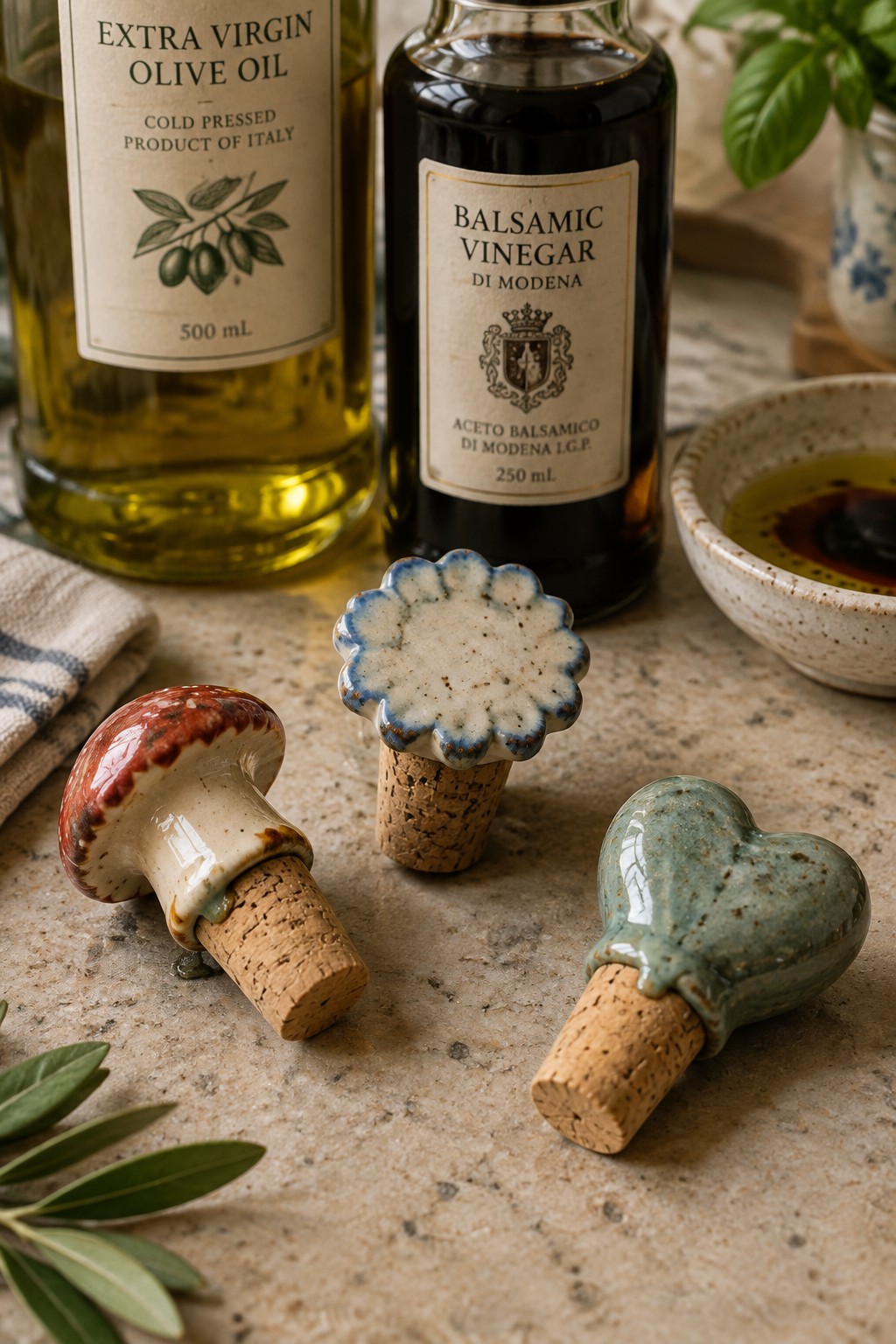
Handmade ceramic bottle stoppers combine a cork base with a small sculpted top to seal oil, vinegar, or wine bottles. The examples here use three simple shapes: a mushroom with a glossy red-brown cap, a scalloped round form with a blue rim, and a heart with a soft green glaze. Each top sits directly on the cork so it stays in place when inserted into the bottle neck. This keeps the design compact and functional for everyday kitchen use.
What makes this idea useful is how the same cork-and-top format can be reworked for different bottle sizes or kitchen themes. You could make smaller versions for spice jars or swap the shapes for leaves, fruits, or simple knobs that match your other pottery. In a kitchen these stoppers sit right on the counter without taking up space and help keep open bottles fresh. For gifts they work well because the form is quick to repeat once you have a few basic molds or templates.
Three-Compartment Ceramic Serving Tray

A three-compartment ceramic tray gives you separate spaces for different snacks or dips without needing multiple dishes. The sections use contrasting glazes, one solid brown, one plain off-white, and one with brown dots, while the oval form and ridged edge keep the piece simple and functional. This kind of divided tray fits the category of kitchen serving ware and works for holding olives, small appetizers, or condiments in one spot.
What makes this idea useful is how the compartments keep items from mixing while still taking up little counter space. You could adapt it by changing the dot pattern to stripes or leaving one section unglazed for a different texture. In a kitchen this shape works well for daily use with dips and crackers or even as a small station for coffee toppings. The same layout could be made smaller to create individual sauce dishes or lengthened into a longer version for a full cheese board.
Seashell Sponge Holder

A ceramic sponge holder shaped like a seashell gives you a compact way to keep a kitchen sponge or scrubber right at the sink edge. The form uses ridged shell details and a simple carved face on the front, finished with a glossy turquoise glaze that brings out the curves and texture. This kitchen item keeps the sponge slightly elevated so it can drain and dry between uses instead of sitting in a puddle.
The shape does a lot of the work here by naturally cradling a standard sponge without extra parts. You could simplify the design by skipping the face or scale it down for a soap dish or scrub brush holder. In a kitchen this kind of piece stays practical because it is easy to wipe clean and takes up little counter space. The same shell form would also work well in a bathroom for holding a small bar of soap or a razor.
Frequently Asked Questions
What type of clay works best for creating durable kitchen accessories like bowls and mugs? Stoneware or porcelain clay bodies fired to cone 6 or higher provide the strength needed for everyday kitchen use. These clays resist chipping and handle thermal shock better than earthenware when properly glazed and fired.
How can I ensure my handmade pottery is safe for food contact and dishwasher use? Select lead free glazes labeled for food safety and apply them in even coats before a full glaze firing. Test pieces by running them through multiple dishwasher cycles to confirm the finish holds up without cracking or leaching.
Which of the 21 ideas suit complete beginners who lack a pottery wheel? Hand built projects such as slab rolled trays, pinched spice jars, and coiled utensil holders require only basic tools like a rolling pin, templates, and scoring tools. Start with these to build skills before advancing to wheel thrown items like pitchers.
How long should I expect the drying and firing process to take for a typical kitchen pottery project? Allow at least one to two weeks for slow drying to prevent cracks, followed by a bisque firing and then a glaze firing. Total studio time varies but plan for several sessions spread over three to four weeks including kiln schedules.
What maintenance tips help handmade pottery accessories last longer in a busy kitchen? Avoid sudden temperature changes by letting items reach room temperature before placing them in the oven or microwave. Hand wash with mild soap when possible and store pieces with padding between them to reduce chipping risks over time.

Pottery Path is my cozy corner of the internet where I share clay ideas, pottery inspiration, and simple projects you can recreate at home. I love exploring everything from air dry clay to handbuilt pottery to cute minis that brighten your day. My goal is to make clay crafting feel easy, fun, and welcoming for anyone who wants to try it.
You will find beginner friendly tutorials, creative pottery painting ideas, and lots of warm inspiration for slow and happy crafting. If you enjoy hands on creativity, this space will feel like home.