
I got into pottery a few years ago and started with the most basic hand building methods.
Pinch slab and coil techniques have been the easiest for me to practice without a studio setup.
I have made quite a few small pieces using just these approaches over time.
This list includes projects that helped me build skills gradually.
Speckled Mug with Glazed Interior

A handmade ceramic mug uses a speckled clay body left mostly matte on the outside paired with a bright turquoise-green glaze inside. The rounded shape and simple pulled handle keep the form easy to grip while the interior color creates contrast that shows up during use. This idea fits the basic mug category and works well for pinching or coiling since the surface texture helps mask small irregularities in the walls.
The small scale keeps the project manageable for practicing even wall thickness and handle attachment. You can change the interior color to match other dishes or leave more of the exterior unglazed to highlight the clay. In a kitchen this style stands out on open shelves because the color contrast draws attention without needing extra decoration.
Floral Rim Breakfast Bowl

A wide ceramic bowl with a softly rounded profile makes a practical choice for serving breakfast or snacks. The design uses a repeating band of simple pink flowers painted around the upper rim against a speckled light glaze, keeping the decoration visible even when the bowl is filled. This approach works well for functional kitchen pottery because the motif stays secondary to the food while still adding color and interest. The handmade form shows slight variations in the rim and surface that are typical of slab or pinch construction.
What makes this idea useful is how the floral band can be scaled up or down to fit different bowl sizes without changing the overall style. You could adapt the same rim treatment to a set of smaller side bowls or a matching pitcher. In a kitchen, this shape gives you room for layered yogurt or grain bowls while the painted detail helps the piece stand out on open shelves. For a beginner project, the decoration can be simplified to just three or four flowers spaced evenly around the edge.
Leaf Border Plate

A shallow ceramic plate with a wide center and a raised rim formed from repeated leaf shapes pressed or pinched into the clay. The blue glaze shows soft streaks and pooling that follow the handmade surface, giving the piece a simple, varied finish. This design fits the category of a kitchen or table plate that can be used for serving or left out as a decorative dish.
The sculpted rim can be made by adding small coils or slabs and shaping them into leaves before the final shaping stage. You could scale the same form down for a smaller trinket dish or widen it into a tray for jewelry or keys. The blue tone works with most table linens, and the leaf detail gives the plate enough pattern to look finished without extra painting or carving.
Leaf-Shaped Ceramic Spoon Rest

A leaf-shaped ceramic spoon rest gives you a dedicated spot to set cooking spoons or spatulas without leaving drips on the counter. The elongated leaf form with pointed ends and a shallow center well keeps utensils contained, while the green and blue crackle glaze creates a subtle organic pattern that blends into kitchen surfaces. This type of piece works as a small functional tray made from a simple slab or draped form.
What makes this idea useful is how it solves a common kitchen problem with minimal material. You could lengthen the leaf shape for a narrow tray that holds multiple tools or shorten it into individual rests for a dinner table. The same basic form adapts easily to a soap dish or small jewelry tray by changing the glaze to something less food-safe. A project like this stands out on Pinterest because the leaf silhouette reads clearly even in a quick photo.
Coiled Planter with Stacked Horizontal Ridges

A small cylindrical planter formed from stacked coils creates even horizontal ridges that wrap around the full height of the piece. The clay stays mostly exposed with a light matte finish that shows natural speckling and slight color variation from the firing. This shape works well as a compact holder for succulents or small houseplants because the ridges add surface detail while the simple cylinder keeps the plant as the main focus.
What makes this idea useful is how the coil ridges build texture during construction without extra tools or carving steps. You can adjust the diameter and height to fit different plants or shelf spaces, and the same stacked-coil approach can be reworked into a taller vase or a low tray by changing how far you build up or out. In a kitchen or on a desk, this size stays practical for one plant while the repeated lines help the piece photograph clearly for project sharing.
Scalloped Edge Ring Dish

A small ceramic dish with five rounded lobes around the rim works well as a ring holder or jewelry tray. The low, open shape built from a simple slab or pinched form keeps items visible and easy to reach. White glaze with light brown speckling gives the surface a clean look while the uneven rim adds subtle texture that reads as handmade.
The small scale makes this easy to adapt by adjusting the number of lobes or trying a different glaze color for bathroom or desk use. It fits on a nightstand or dresser without taking much space and can double as a spot for earrings or small keys. Changing the rim to four or six lobes or switching to an unglazed interior gives quick variations without new tools.
Slab-Built Citrus Catch-All Tray
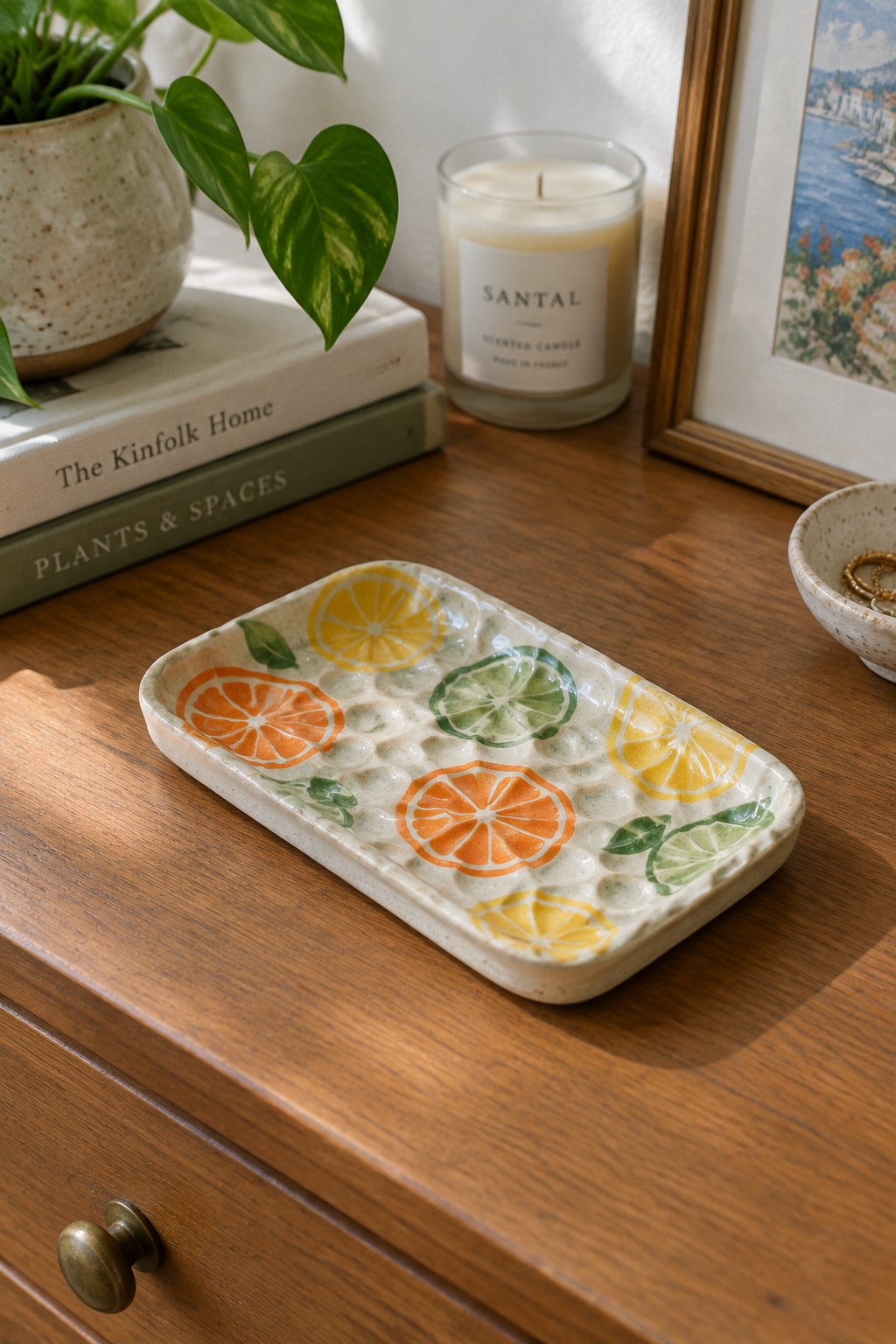
A flat slab of clay forms the base of this small rectangular tray, with a repeated dimple texture pressed into the surface before firing. Painted slices of orange, lemon, and lime sit across the tray in loose groupings, using underglaze colors that stay bright under a clear finish. The speckled clay shows at the edges and between the fruit, keeping the overall look simple and casual. This type of project fits the category of a small decor tray or catch-all dish.
The compact rectangle works well on a dresser or desk for holding jewelry or loose change without taking up much space. You can change the fruit to other easy shapes like leaves or dots if citrus does not fit your style, or scale the same slab method up slightly for a soap dish. Rolling out the base and adding texture first makes the construction quick, while the painted slices give it enough detail to stand out in a photo for sharing.
Speckled Pinch Pot Tea Light Holder

A small pinched bowl made from stoneware clay turns into a practical tea light holder when the walls stay thick enough to contain the flame safely. The uneven rim and speckled surface texture come from the clay body itself rather than added decoration, so the piece stays simple while still looking finished. This shape works as a standalone candle piece that needs no extra glazing beyond a basic clear coat to bring out the natural color.
What makes this idea useful is how little material and time it takes to produce something that can sit on a side table or shelf without taking up much space. The same pinched form can be made taller for a votive or flattened into a wider dish for multiple tea lights. You can change the look by smoothing the rim completely or pressing a stamp into the side before the clay firms up. In a living room or bedroom this kind of holder adds light without competing with other decor.
Pinched Clay Cat Figurine

A small cat figurine formed from clay makes a straightforward project using basic pinch techniques to create the rounded body and head in one piece. The design uses a simple painted face with black dots for eyes, a curved nose line, whisker marks, and soft pink on the ears and cheeks. This keeps the form compact while the painted details give it clear character without extra sculpting steps. It works as a decorative figurine suited for shelves or windowsills.
What makes this idea useful is the small scale that lets you practice shaping and surface painting without much material or kiln space. You could rework the same rounded body into other animals by swapping the facial markings or add a matte glaze over the body for a different finish. For desk or shelf use the compact shape fits easily into tight spots, and the approach adapts well if you want to make a matching set with slight variations in color or ear position.
Polka Dot Ceramic Toothbrush Holder

A rectangular ceramic block with three vertical holes creates a straightforward toothbrush holder for the bathroom counter. The speckled clay surface carries rows of hand-painted dots in blue, green, yellow, and rust that add color while staying simple to repeat. This shape keeps brushes separated and upright, and the glazed finish handles water without issue.
The compact size fits easily on a narrow ledge or beside the sink. Change the dot colors to match towels or wall tile, or drop to two holes if you only need space for a couple of brushes. The same slab form works as a desk pencil cup or small kitchen utensil holder by adjusting the number and size of the openings.
Pinch Pot Salt Cellar

A small ceramic salt cellar shaped with a low rounded body and one pulled lip gives you an easy way to keep salt or spices within reach on the counter. The form is simple enough to make by pinching and shaping a single piece of clay, then adding a short spout-like opening on one side for scooping or pouring. The speckled clay and light beige tone keep the piece neutral so it blends with other kitchen items rather than competing with them.
What makes this idea useful is how the lip turns a basic bowl into a functional kitchen tool without extra parts. You could scale the same shape up slightly for a sugar or herb dish or leave it small for finishing salts. This kind of piece stores neatly on a shelf or windowsill next to jars and stays practical for daily cooking. The straightforward form also works as a starting point for other small holders like a tea bag rest or a desk catch-all.
Compact Ceramic Pitcher Vase for Buds and Stems

A small ceramic pitcher works well as a bud vase when you want something slightly more structured than a plain cylinder. The tapered body narrows toward a short spout that helps hold stems in place, while the horizontal ridges give the surface light texture under a layered blue-green glaze. The glaze drips add movement without covering the entire form, leaving the lighter clay visible near the base. This style fits the small holder category and stays simple enough for beginners to attempt with basic pinching or coiling.
What makes this idea useful is how the spout detail can be left off entirely to turn the same shape into a plain vase or small cup. The compact size fits on a windowsill, bathroom counter, or desk without crowding other items. You could adapt the glaze by using fewer drips or switching to a single solid color for a cleaner look. For gifts, making two or three in different glaze combinations keeps the project quick while giving variety.
Yarn Bowl with Rim Notch for Knitting

A yarn bowl is a ceramic dish made to hold a skein of yarn while you knit or crochet. The rim includes a notch that guides the yarn out cleanly and keeps it from rolling away. This version uses a speckled clay body with a glossy green glazed interior, creating a stable, weighted form that sits comfortably on your lap or nearby surface. It belongs in the craft tool category rather than general kitchen or decor use.
What makes this idea useful is how the notch transforms a basic bowl into a dedicated tool for fiber work. You could adapt the same shape without the notch to hold small craft supplies or jewelry on a dresser. A slightly wider version would suit chunky yarns or multiple strands at once. For gifts, this kind of piece performs well on Pinterest because the function is immediately clear to anyone who knits.
Ceramic Soap Dish with Ridges

A rectangular ceramic soap dish built from slabs includes a series of raised parallel ridges that lift the soap bar and let water run off into the grooves. The piece uses a blue-green glaze that pools along the ridges and contrasts with warmer brown accents on the edges. This bathroom item keeps soap from sitting in pooled water while staying compact enough to rest on a sink ledge or counter.
The small footprint makes it simple to place beside a sink or tuck into a shower niche without taking up much space. You could shorten the ridges into a flatter surface for a quicker slab version or widen the tray slightly to hold a sponge instead. Pairing it with a matching cup or small tray from leftover clay creates a matching set without extra effort.
Floral Relief Wall Plaque

A rectangular slab forms the base for this wall plaque, with hand-shaped flowers and leaves added in low relief across the surface. A large pink bloom sits near the top, balanced by a smaller lavender flower and clusters of tiny white blossoms lower down, all framed by simple green leaves. The soft, matte glaze highlights the raised edges without filling in the details, giving the piece a clean, finished look that works as standalone decor.
What makes this idea useful is how the flat slab shape handles hanging easily with just a drilled hole and cord. The same layout could be scaled down for a smaller plaque or widened into a longer panel for a kitchen backsplash area. Changing the flower colors or simplifying the leaf count lets you match different rooms without changing the basic construction. For a gift, this style adapts quickly to a square tile or a set of two smaller versions.
Speckled Ceramic Creamer

A small ceramic creamer pitcher makes a practical kitchen item for serving milk or cream at the table. The rounded body, simple spout, and looped handle create a compact shape that pours easily. Scattered blue dots on the white surface provide a light pattern that stands out without complicating the form. This type of piece can be built with basic pinch and coil methods and finished with a food-safe glaze.
What makes this idea useful is the small scale, which lets it sit neatly on a tray or beside a coffee setup. You could swap the dots for stripes or a single color band to match existing dishes. The same shape works as a sugar bowl if you skip the spout or as a tiny vase for a few stems. For a gift, pairing it with a matching mug keeps the project quick while still feeling complete.
Speckled Pedestal Egg Cup

A small egg cup formed from speckled clay creates a stable holder for soft-boiled eggs. The rounded upper bowl sits on a short pedestal base, and the bright yellow glaze inside the bowl creates a clean contrast with the textured exterior. This kitchen piece stays compact enough to sit beside a plate without taking up much table space.
The small scale makes this easy to adapt by changing the glaze color or skipping the pedestal for a simpler flat-bottom version. You could also widen the bowl slightly to hold a larger egg or turn the same shape into a tiny salt cellar. In a breakfast setting the speckled surface keeps the cup from looking too plain next to everyday dishes.
Elephant Planter from Slab and Pinch Forms

A basic elephant planter starts with a rounded slab body, pinched legs, and attached ears and trunk to hold a small plant. The gray clay gets a simple matte finish, then pink circles on the cheeks and white marks on the toes add quick visual detail without extra tools. This shape works as both a functional pot and a shelf object that fits trailing plants like string of hearts or pothos.
What makes this idea useful is how the animal form gives the planter a clear focal point while keeping the opening wide enough for soil and roots. You could swap the trunk angle or ear size to make different animals using the same steps. The compact size fits on a desk or bookshelf where a round pot would blend in. Painting just the face details keeps the project fast for beginners who want something that photographs well for sharing.
Starry Slab Ornament

A flat round disk formed from a clay slab works well as a hanging ornament when you add a small hole near the top before drying. The deep blue glaze with scattered white stars and dots gives the surface a simple night sky pattern that reads clearly on this compact shape. You can cut the disk from a rolled slab, smooth the edges, and apply the stars with underglaze or slip before the final glaze coat.
What makes this idea useful is how easily the same slab base adapts to other themes or seasons. You could change the color to a soft green with gold dots for a different look or swap the stars for small geometric shapes. The small scale keeps the project quick for beginners and makes it easy to produce several at once for gifts. A piece like this also photographs well for sharing, which helps it stand out in a feed of similar small decor projects.
Ridged Ceramic Napkin Rings

These napkin rings are small cylinders built from stacked coils or slabs, then finished with horizontal ridges that create a stepped, layered surface. The rings are glazed in solid colors like soft pink, sage green, and mustard yellow, with the glaze settling into the grooves to emphasize the texture. Their compact size and open center make them practical holders that slide easily over folded cloth napkins.
What makes this idea useful is the simple coil-stacking method that produces a finished look without carving or handles. You can adapt the same ridges to different diameters for cloth napkins, rolled towels, or even small cord organizers. In a dining setup, the bright single-color glazes stand out against neutral linens and pair well with seasonal table pieces. This would be easy to turn into a matching set of eight using the same coil thickness and glaze palette.
Slab Built Toothpick Holder

A small slab-built ceramic holder with two short upright walls creates an open slot that keeps a bundle of toothpicks upright and easy to grab. The piece uses a speckled off-white glaze with simple brown dots along the edges and a fingerprint stamp on one side for decoration. Its compact rectangular base and low profile let it sit on a counter without taking up much space while still holding a generous number of toothpicks.
What makes this idea useful is how the open slot shape solves the common problem of toothpicks spilling across a surface or getting lost in a drawer. The same form works just as well for holding cotton swabs, incense sticks, or small plant labels. You could simplify the dots into lines or swap them for a stamped pattern, and the size scales easily if you want a wider version for cocktail picks. In a kitchen, this kind of piece keeps a basic item accessible without looking like generic plastic packaging.
Clay Hedgehog Figurine

A hedgehog figurine gives you a compact decor object you can form from clay using basic pinching and sculpting. The body stays rounded and low, while the back gets covered in short, repeated lines cut or pressed into the surface to create the spine texture. Natural clay color keeps the piece simple, so the shape and surface pattern do most of the visual work. This approach fits the small animal sculpture category and works without added glaze or complicated construction.
What makes this idea useful is how the small scale lets you set it on a shelf, windowsill, or desk without crowding the space. You can adapt the same body shape and line texture to other animals or change the line direction for a different look. For a gift, the carved detail helps the piece feel finished even when kept plain. The same method scales easily if you want a slightly larger version or a set of different sizes.
Two-Color Divided Serving Dish

A divided ceramic dish with two side-by-side compartments lets you serve two different snacks without them touching. The rectangular form with a low center wall keeps portions separate while the contrasting teal and pink glazes make each section easy to identify at a glance. This project works as a basic slab build where you add a simple divider before the first firing and then apply different glazes to each half.
What makes this idea useful is how the divided layout fits picnics, parties, or everyday snacking without needing extra small bowls. You can change the glaze colors to match dishes you already own or make one section larger if you want more room for one item. The same shape can be reworked into a desk organizer or a small jewelry tray by adjusting the overall size and skipping food-safe glaze on the inside.
Match Striker Tray

A small rectangular ceramic tray works as a match holder by splitting the surface into two parts. One side has a series of raised ridges that serve as a striker, while the other side holds loose matches in a shallow well. The brown glaze and compact size keep the piece simple and easy to place on a table without taking up much room.
What makes this idea useful is that it solves the problem of scattered matches and missing strikers in one object. The ridged texture can be made by pressing a tool or stamp into the clay before it dries, and the same divided layout could be lengthened into a longer tray for incense or shortened into a pocket-sized version for a desk. In a living room or kitchen, this kind of tray keeps a common item organized while using very little clay.
Divided Ceramic Tray for Desk Use

A divided ceramic tray gives you separate compartments for keeping small desk items organized. This version uses a rectangular slab form with low walls and one internal divider that creates three usable sections. The green glaze covers the entire surface while a few simple star shapes add contrast in one compartment. The result is a compact holder that keeps paper clips, pins, or erasers from scattering across a workspace.
The shape does a lot of the work here because the built-in sections stop small objects from mixing. You could rework the same layout with different compartment sizes for bathroom items like bobby pins or for craft supplies like beads. Painting a few basic motifs keeps the surface interesting without adding much time. For a gift, something like this stands out because it solves a common desk problem while staying small enough to make in a few sessions.
Frequently Asked Questions
What supplies do I need to begin these ceramic projects?
You will need a supply of hand building clay such as earthenware or stoneware, along with basic tools including a rolling pin or slab roller, a clay wire cutter, wooden ribs for smoothing, sponges, and a bucket of water. Access to a kiln is recommended for proper firing and glazing, though some air dry clay options work for non functional decorative pieces if a kiln is unavailable.
How do I prevent my projects from cracking during the drying process?
Dry your pieces slowly and evenly by covering them loosely with plastic sheeting for the first day or two, then gradually exposing them to air over several days. Keep them away from direct heat sources, sunlight, or drafts, and score and slip any joined parts thoroughly to ensure strong bonds that reduce stress points.
Which technique works best for a complete beginner with no prior experience?
Start with pinch techniques for simple rounded forms like bowls or ornaments since they require only your hands and build confidence quickly. Move to slabs for flat shapes and coils for adding height once you feel comfortable, as this progression matches the natural learning curve in most beginner project lists.
Do I need a kiln to finish the projects described in the article?
Most ceramic projects benefit from kiln firing to achieve durability and allow glazing, but if you lack access you can use air dry clay for decorative items that will not hold water. Always check your local community centers or pottery studios for affordable firing services if you want to work with traditional clay.
How should I choose my first project from the list of 25 options?
Begin with small, low risk items such as a simple pinch pot or coiled ring holder to practice the basics without frustration. Look for projects that use only one technique at a time and match the tools you already have on hand, then build up to combined methods as your skills improve.

Pottery Path is my cozy corner of the internet where I share clay ideas, pottery inspiration, and simple projects you can recreate at home. I love exploring everything from air dry clay to handbuilt pottery to cute minis that brighten your day. My goal is to make clay crafting feel easy, fun, and welcoming for anyone who wants to try it.
You will find beginner friendly tutorials, creative pottery painting ideas, and lots of warm inspiration for slow and happy crafting. If you enjoy hands on creativity, this space will feel like home.