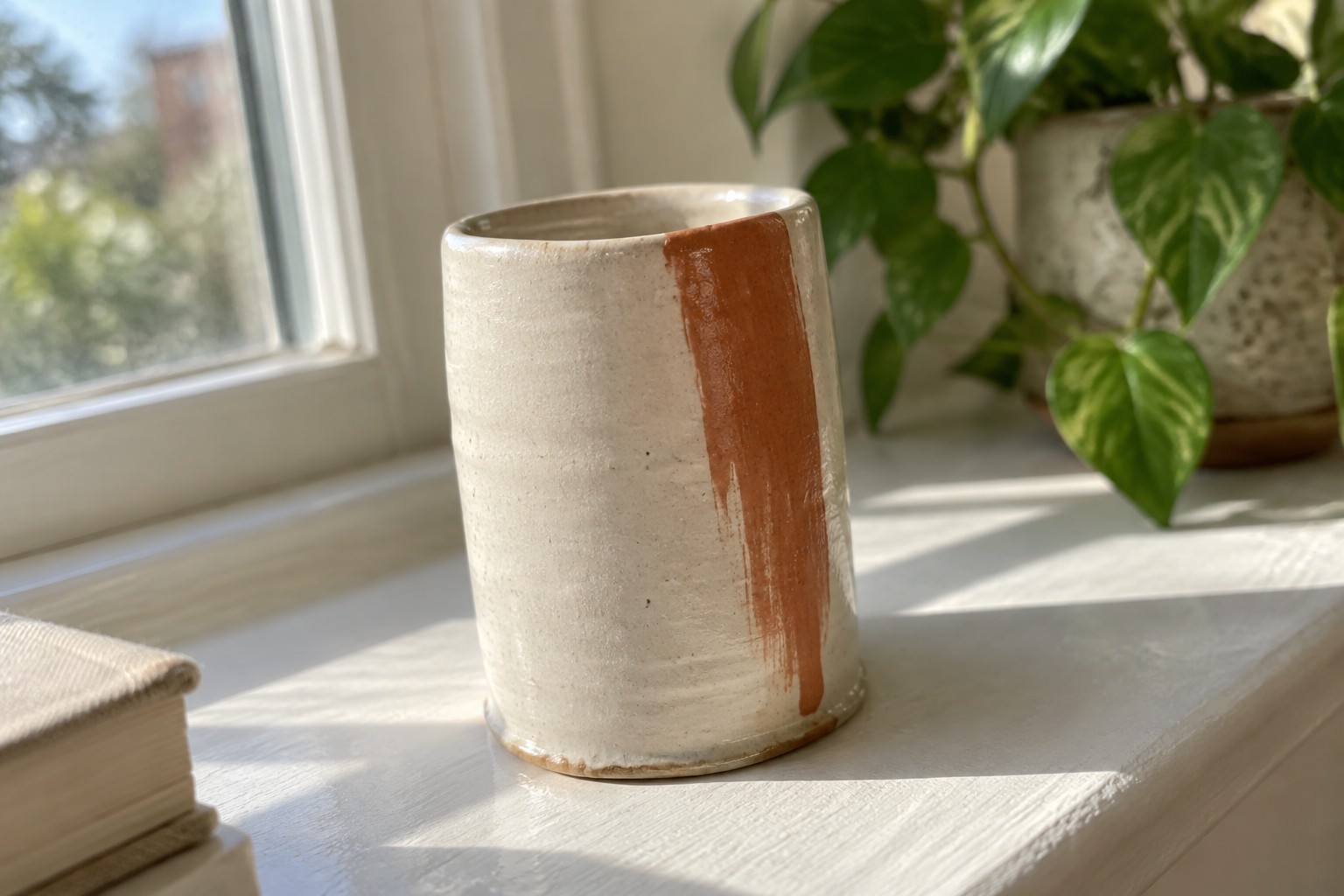
I have been making clay vases for my own home over the past year or so.
Most of the shapes are straightforward and do not need special tools or years of practice.
They sit well on my shelves and tables without drawing too much attention.
I put together these ideas because a few friends asked how I made them.
You can start with whatever clay you have and adjust the sizes to fit your space.
Cylinder Vase with Vertical Rust Stripe
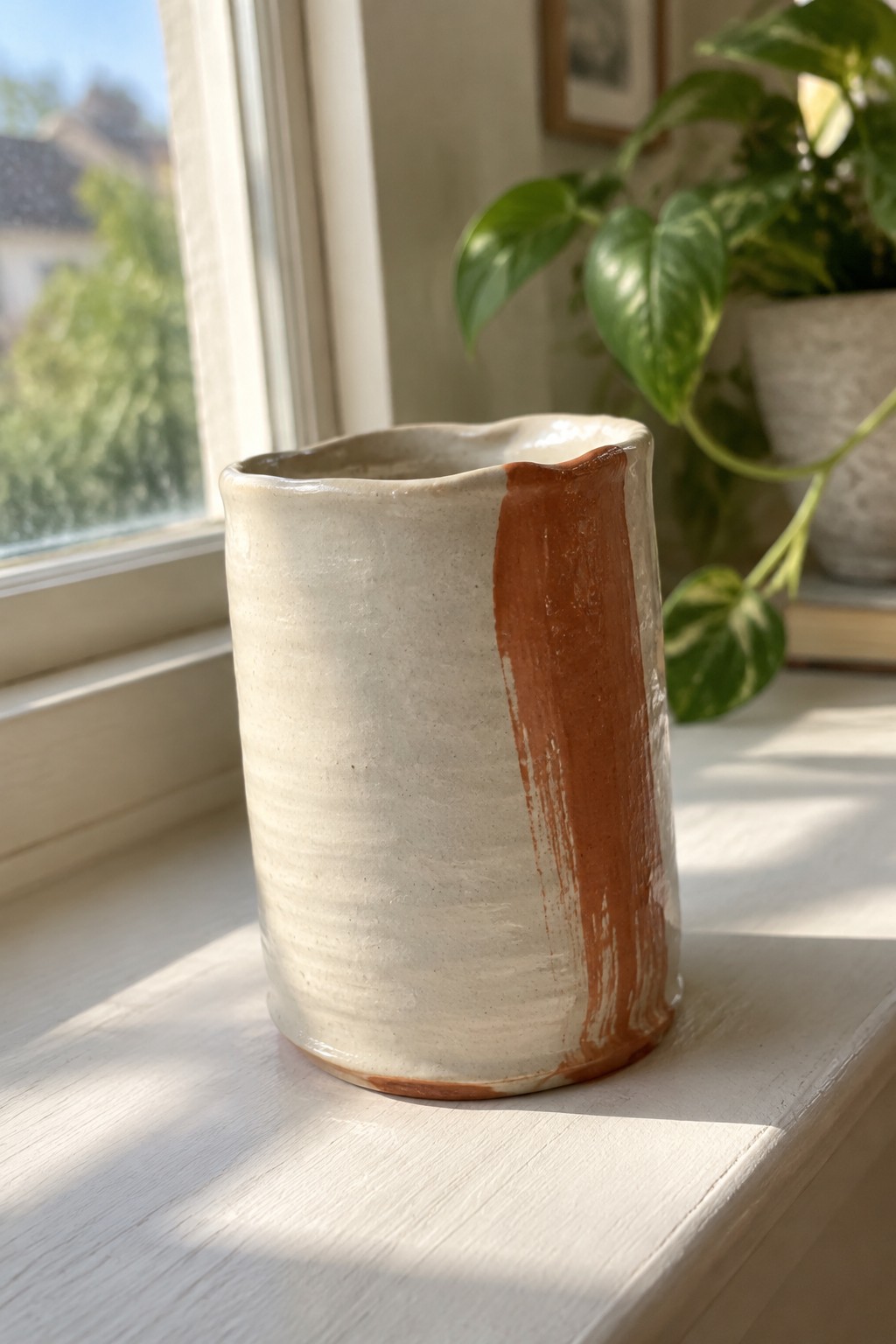
A wheel-thrown cylinder vase in a matte off-white glaze uses one vertical stripe of iron-rich slip to create contrast against the light surface. The rim is left slightly uneven so the form feels less rigid. This keeps the shape basic while the single color accent supplies the main visual detail, which works well for simple modern vases.
What makes this idea useful is how the stripe can be widened, narrowed, or repeated in different tones without changing the throwing process. The tall narrow shape fits easily on a shelf or windowsill as a single-stem holder or small plant container. You could apply the same vertical accent to a shorter tumbler or a wider mug using the same slip technique. The limited color and clean form make the piece easy to photograph and save for neutral decor boards.
Two Tone Bulb Vase for Dried Stems
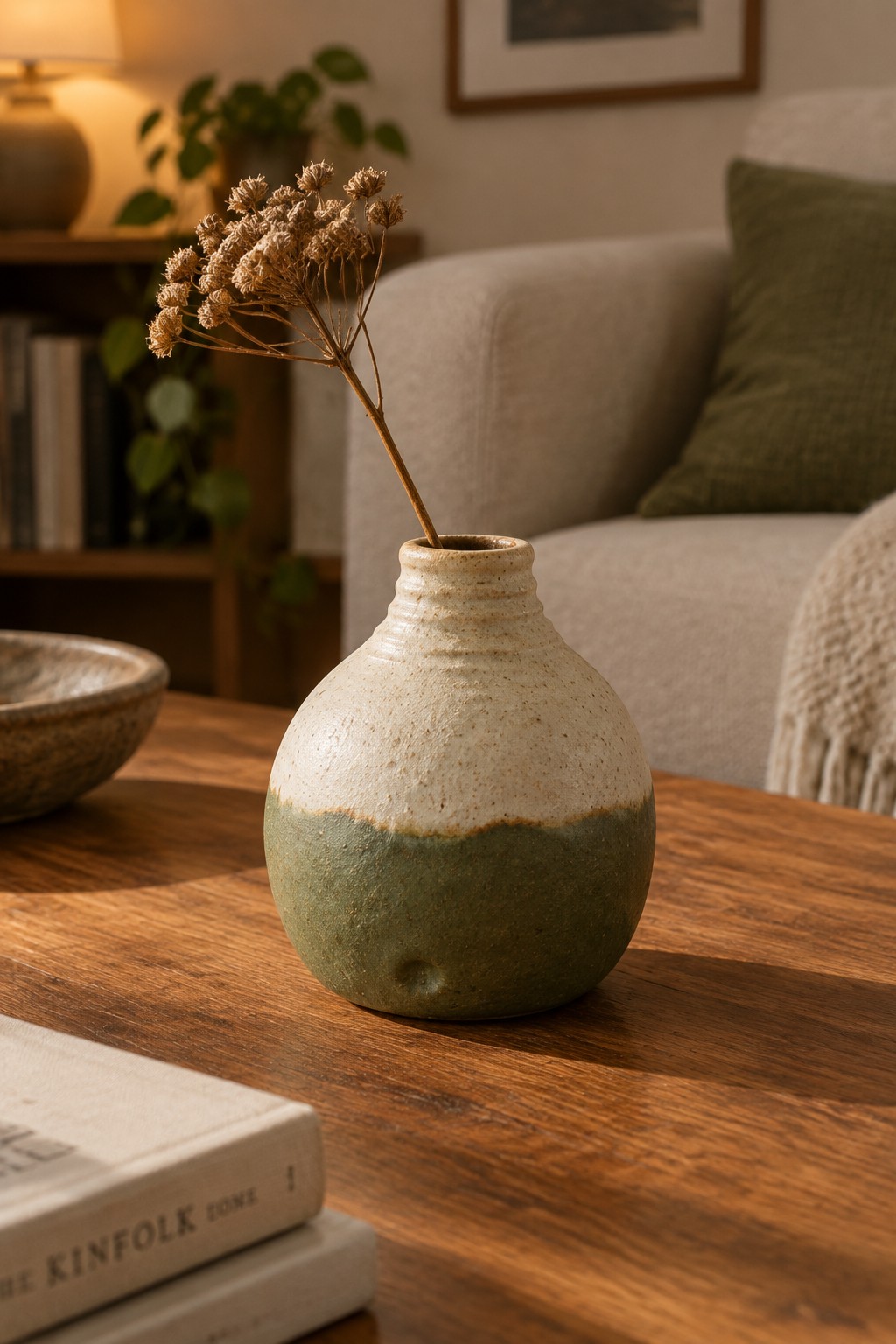
A small ceramic vase with a rounded body and narrow ridged neck works well for holding just a few dried stems or twigs. The split glaze treatment divides the piece into a light upper section and a muted green lower section, creating contrast through color rather than added patterns or texture. The slightly irregular surface and modest scale keep the form simple and easy to repeat.
The compact shape fits on shelves or side tables without taking over the surface. You could rework the same proportions with different glaze pairings or try a matte finish on the bottom half only to change the look. This vase also scales up for larger arrangements or works as a template for making several in matching colors to group together.
Faceted Dark Vase with Linear and Organic Surface Patterns
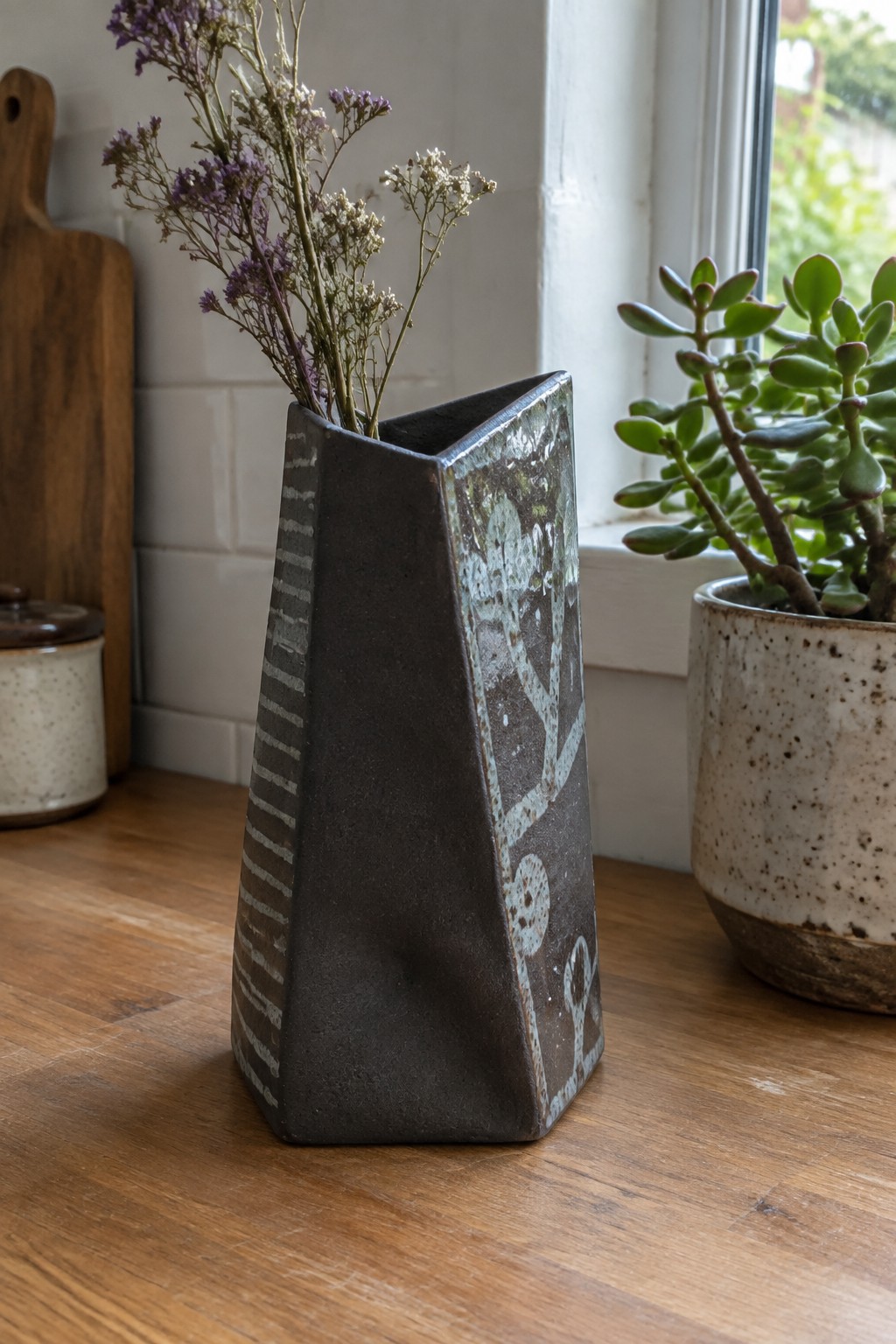
This handmade ceramic vase uses a faceted, angular form built from slabs that creates flat planes and sharp edges instead of a traditional round shape. One side features vertical incised lines while the opposite side shows abstract white patterns against the dark clay body, giving the piece two distinct visual sides. The narrow top opening works well for holding a few dried stems without them flopping over.
The shape does a lot of the work here because the angled sides make the vase look different from every viewpoint, which helps it photograph well for Pinterest. You could scale the same form down for a shorter version to use on a desk or try the same line and pattern treatment on a set of three vases in different heights. For a gift this style feels finished without extra decoration, and the dark surface pairs easily with light walls or wood shelves.
Tall Speckled Vase with Narrow Neck
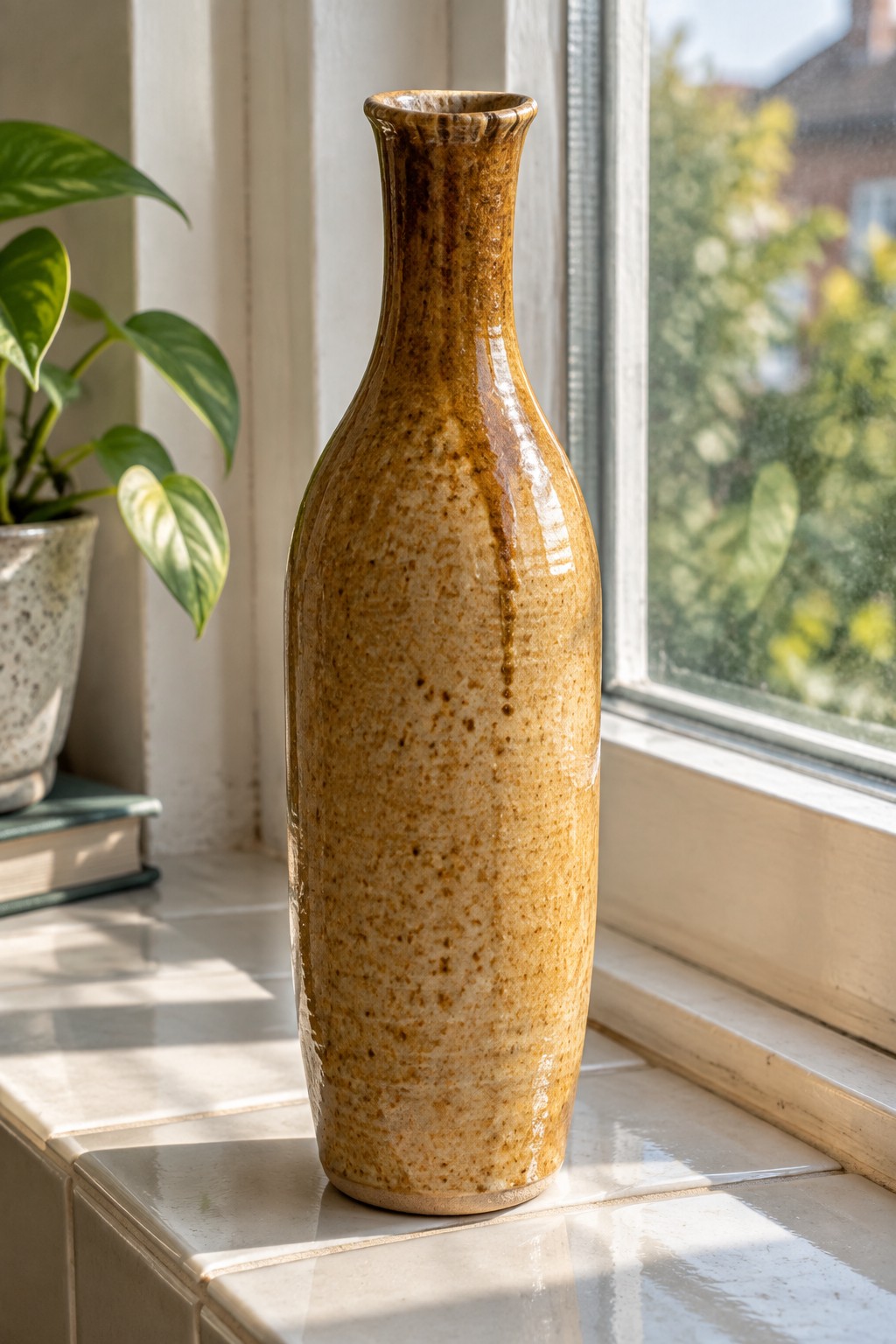
A tall ceramic vase with a narrow neck that widens into a rounded body creates a simple modern shape suited for holding a few stems or standing alone. The speckled brown glaze adds subtle variation across the surface while keeping the overall look clean and understated. This project falls into the tall vase category, where the form itself carries the design without added handles or sculpting.
The narrow neck helps the piece stay balanced even when the body is wider, making it easy to adjust the proportions for different shelf heights. You could rework the same shape in a matte finish or try a lighter clay body to change the color effect. This style works well on a windowsill or mantel where vertical lines are needed, and it stands out on Pinterest boards focused on neutral home pottery because the glaze does the visual work.
Double Vase with Joined Bulb Forms
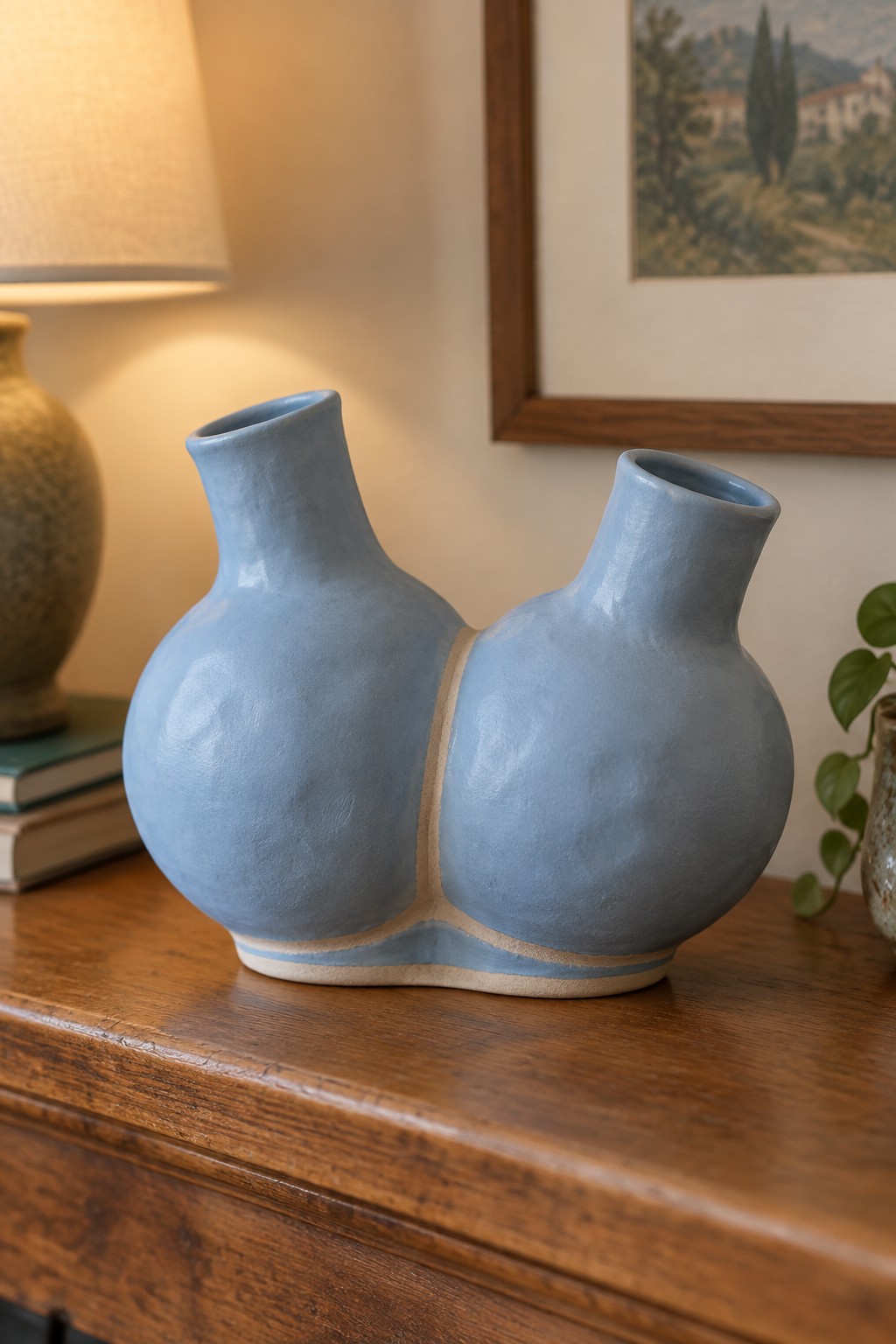
A double vase built from clay combines two rounded bulb bodies into one connected piece, each with its own neck and rim for separate arrangements. The matte light blue glaze covers the entire surface evenly and lets the soft curves and the natural seam between the forms show clearly. This shape belongs to the modern vase category because the joined structure creates balance and stability without needing extra base width.
What makes this idea useful is the pair of openings that let you place different stems or dried material in one compact object. The rounded profile sits well on a shelf, console, or coffee table where a standard single vase might feel too narrow. You can rework the same form by changing the glaze color, shortening one neck, or scaling the whole piece down for a desk or bathroom counter.
Fluted Tall Vase with Vertical Ridges
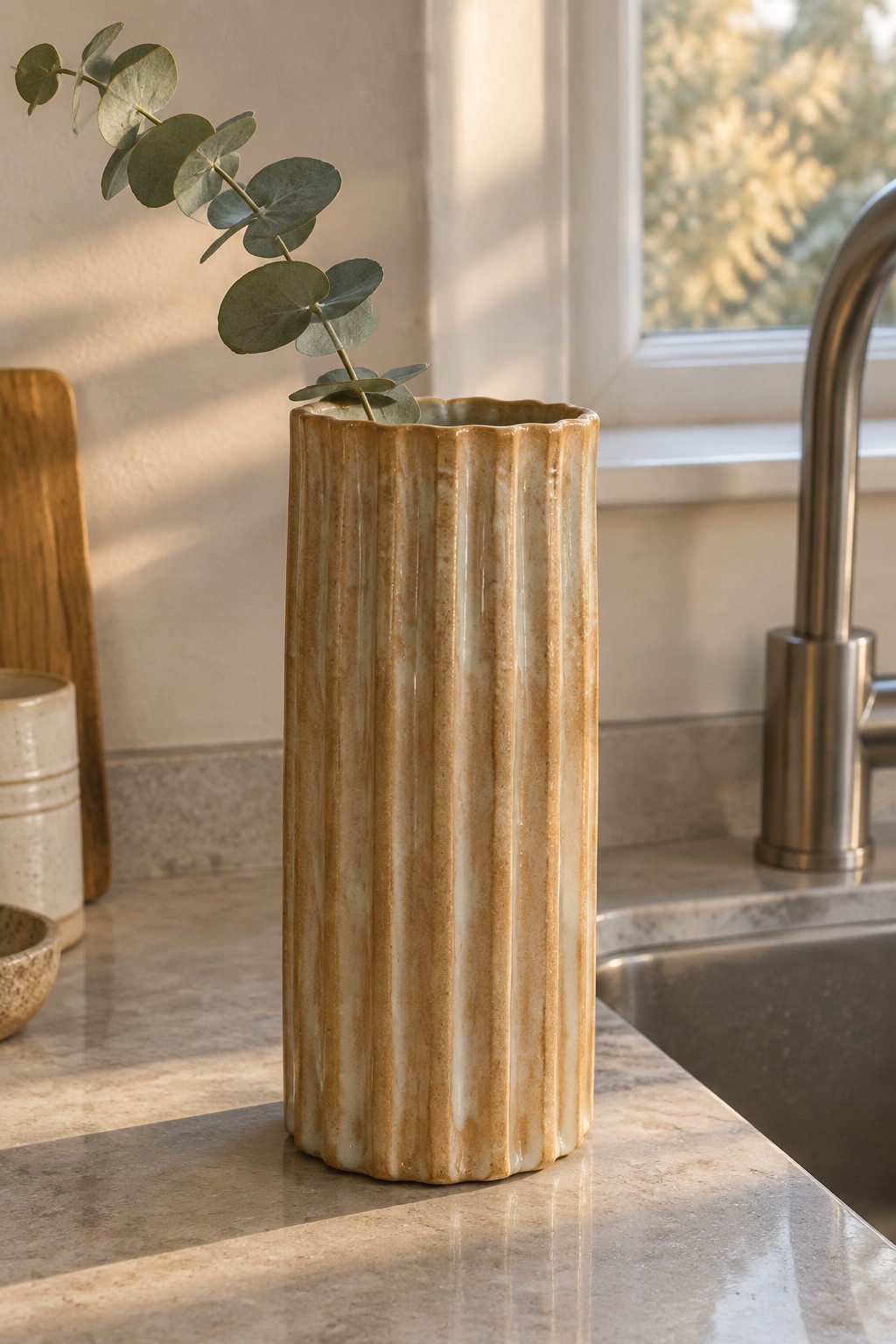
A tall cylindrical vase built with evenly spaced vertical ridges gives this project its clean modern shape. The ridges catch the glaze so it pools darker in the grooves and stays lighter on the raised areas, creating a natural striped pattern without extra painting. This approach works well for a simple slab or wheel-thrown form that you can texture with a rib tool before the clay firms up. The slightly wavy rim adds a small finishing detail that keeps the overall look balanced.
The shape does a lot of the work here because the tall proportions hold single stems or small bunches without needing extra filler. You could make a shorter version of the same fluted form for a bathroom counter or bedside table, or swap the glaze for a solid matte color if you want something quieter. In a kitchen setting like this, the neutral brown tones sit comfortably against stone and wood surfaces. The vertical texture also photographs well for Pinterest because the lines create clear contrast in bright light.
Faceted Black Ceramic Vase
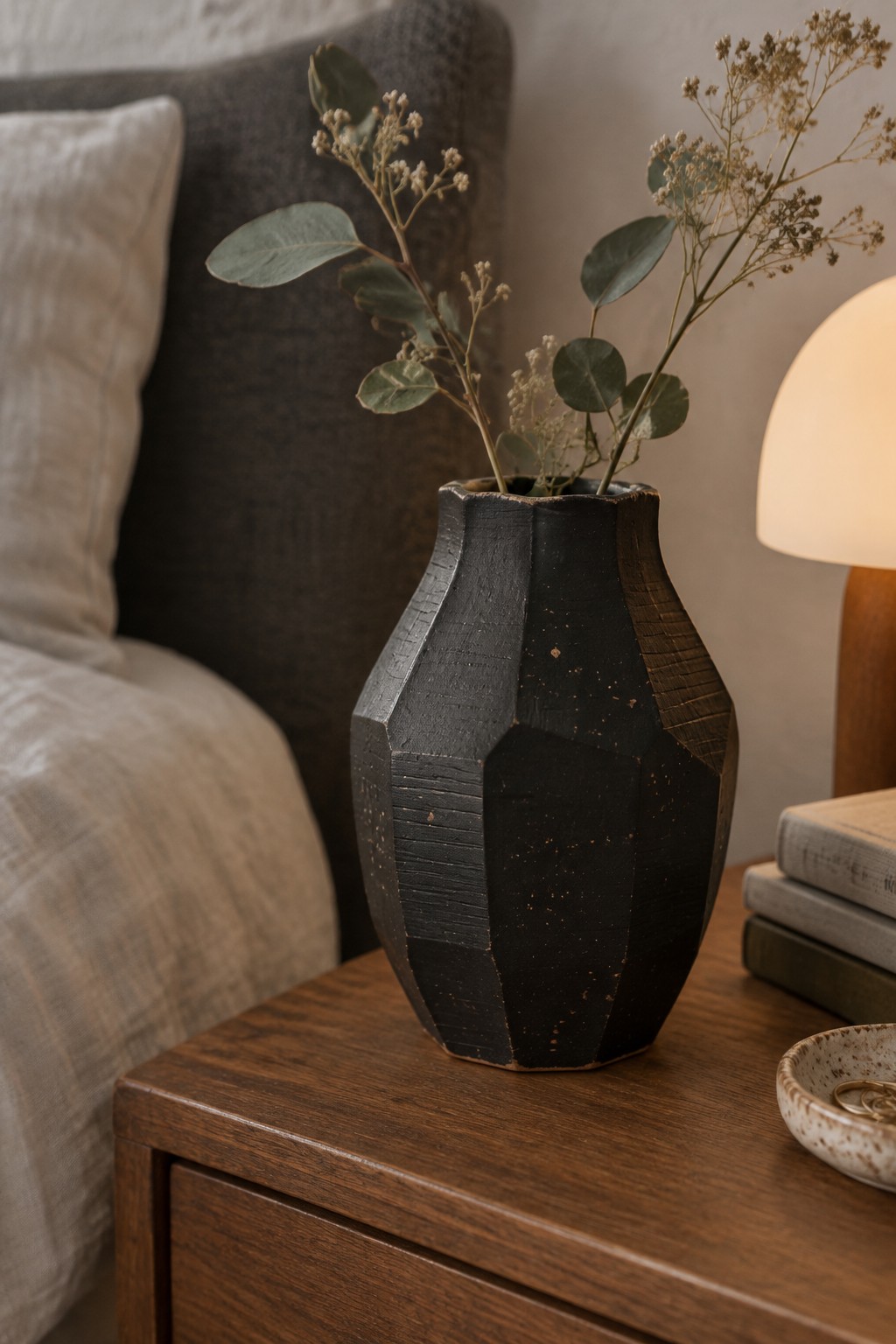
A hand-built ceramic vase with multiple flat planes creates a geometric, angular shape that catches light differently on each surface. The matte black finish keeps the focus on the sharp edges and clean lines instead of surface detail. This approach turns a basic vase into a sculptural object that works as modern home decor.
The faceted form gives you strong contrast against rounder items like pillows or lamps, so it stands out on a nightstand or console without extra decoration. You could adapt the same planes to a shorter planter or a set of three smaller vases by varying the height and number of sides. Scaling the idea down also makes it easier to try on a wheel or with slab construction if you want to test the shape first.
Organic Ceramic Vase with Pinched Neck
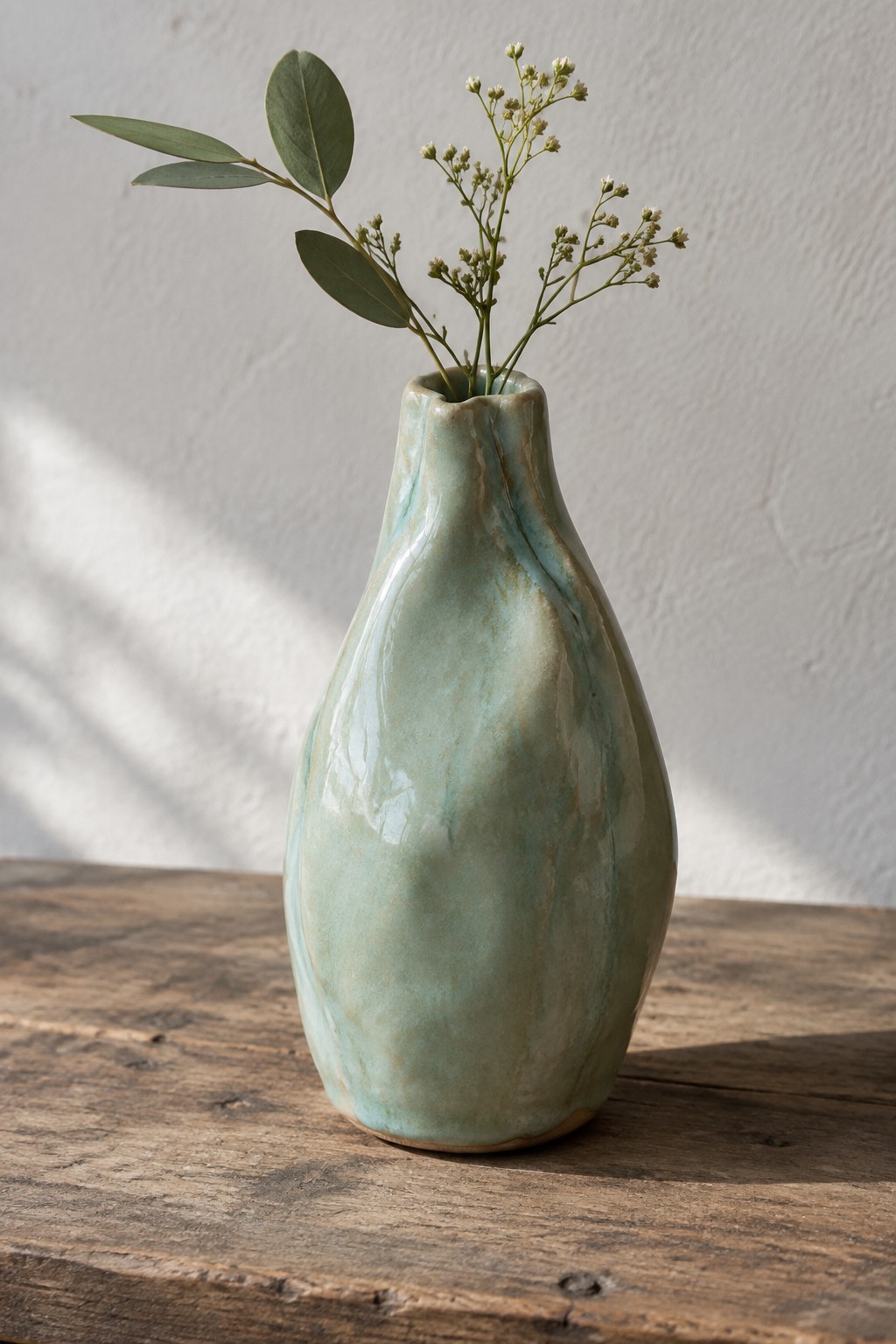
This vase idea centers on a bulbous clay body that narrows into a folded and pinched neck, creating an off-center opening. The soft turquoise glaze pools in the surface folds and thins along the raised areas, letting the form show through. The overall shape stays simple yet sculptural, relying on the clay manipulation rather than added surface detail.
What makes this idea useful is how the pinched neck gives the vase a built-in focal point that works with just a few stems. You could repeat the same neck treatment on a narrower cylinder base for a taller version or apply the glaze over a smoother form to change the look. The piece fits well on a low shelf or windowsill where the glaze can catch light, and the compact size makes it easy to try in a single afternoon without needing a large workspace.
Double Sphere Vase with Matte and Glossy Sections
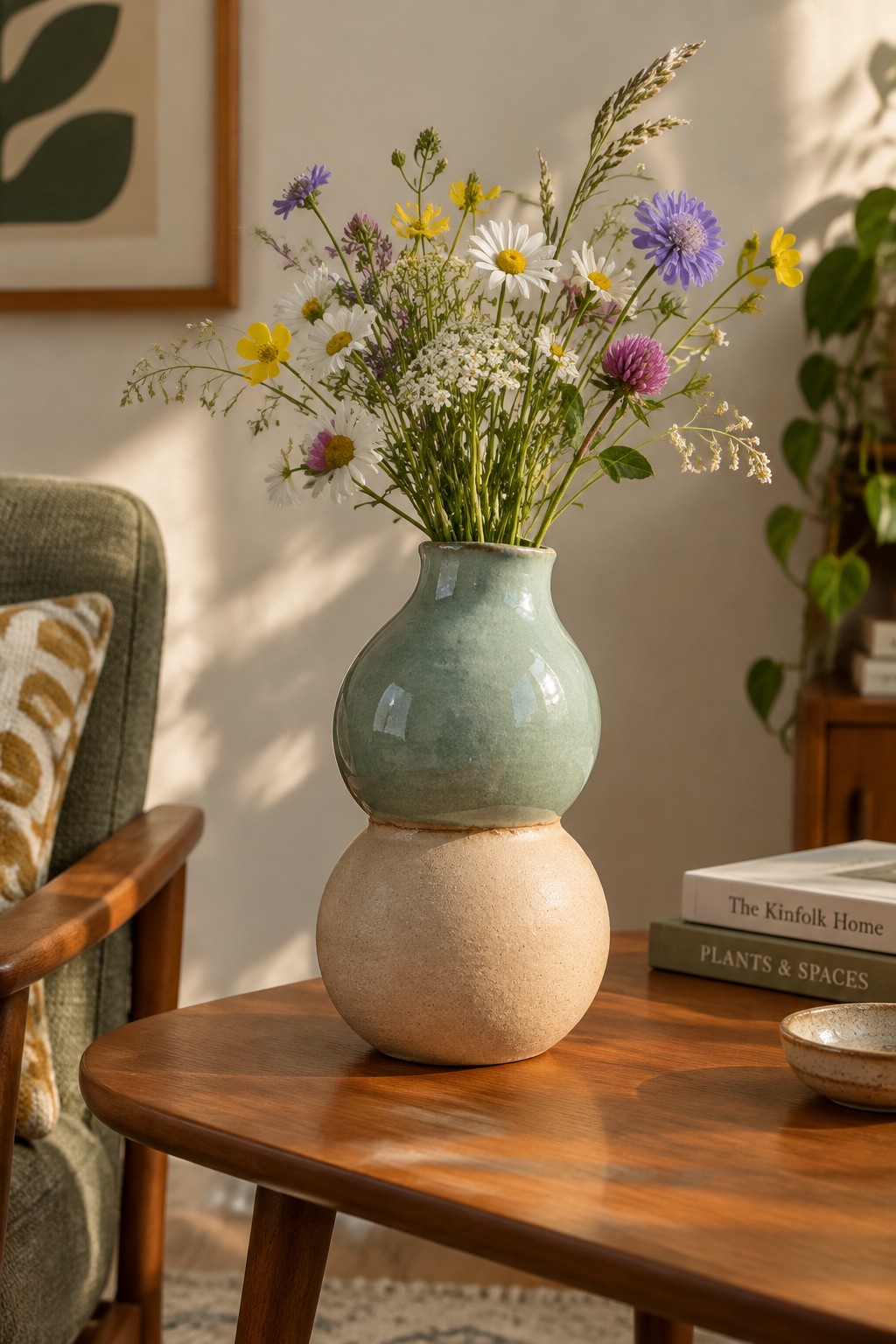
A ceramic vase built from two joined spheres gives this project its main shape. The lower ball stays in a raw matte clay while the upper section gets a soft blue-green glaze that stops at the join line. The narrow neck on top turns the whole form into a functional flower vase that holds stems upright without extra support.
What makes this idea useful is how the two-part construction creates contrast without extra decoration. You can adapt the same shape by switching the glaze colors or making the bottom sphere larger for a different balance. This size works well on a coffee table or shelf where the rounded outline stands out next to books or plants. For a simpler version, throw one sphere and add a short neck on top instead of joining two pieces.
Folded Angular Vase with Yellow Crackle Glaze
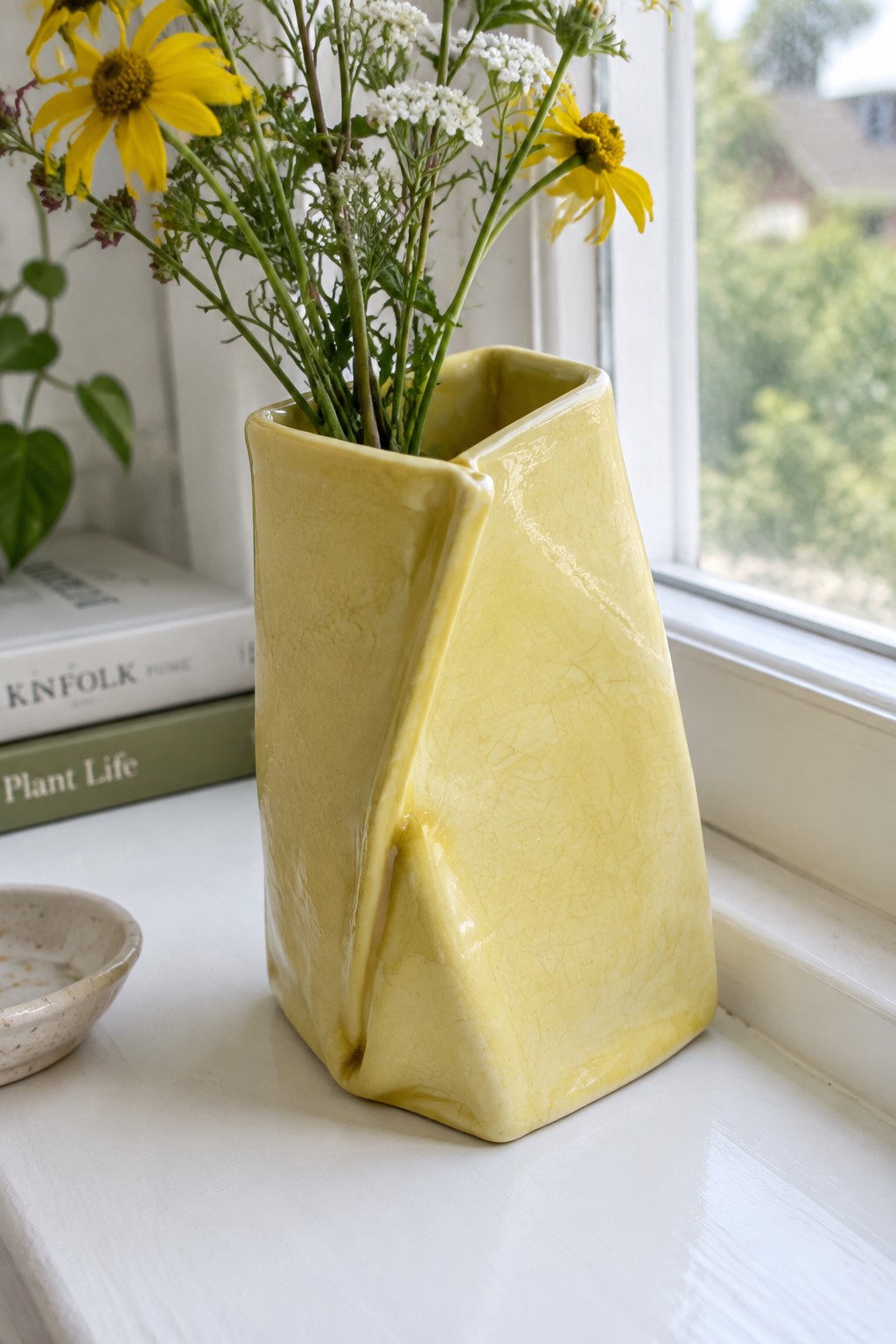
A ceramic vase with a sharply folded, angular body finished in bright yellow crackle glaze creates a sculptural form that still holds flowers easily. The shape uses flat planes and creases instead of smooth curves, so light hits each surface differently and gives the piece dimension. This approach keeps the project focused on form and glaze rather than added decoration.
The shape does most of the visual work here, so the same folded technique can be scaled down for a desk vase or widened into a low planter. A piece like this works especially well on a windowsill or shelf where the angled edges catch natural light. You could rework the idea in matte black or deep green to change the mood without changing the construction.
Wall-Mounted Planter with Integrated Hanging Tab
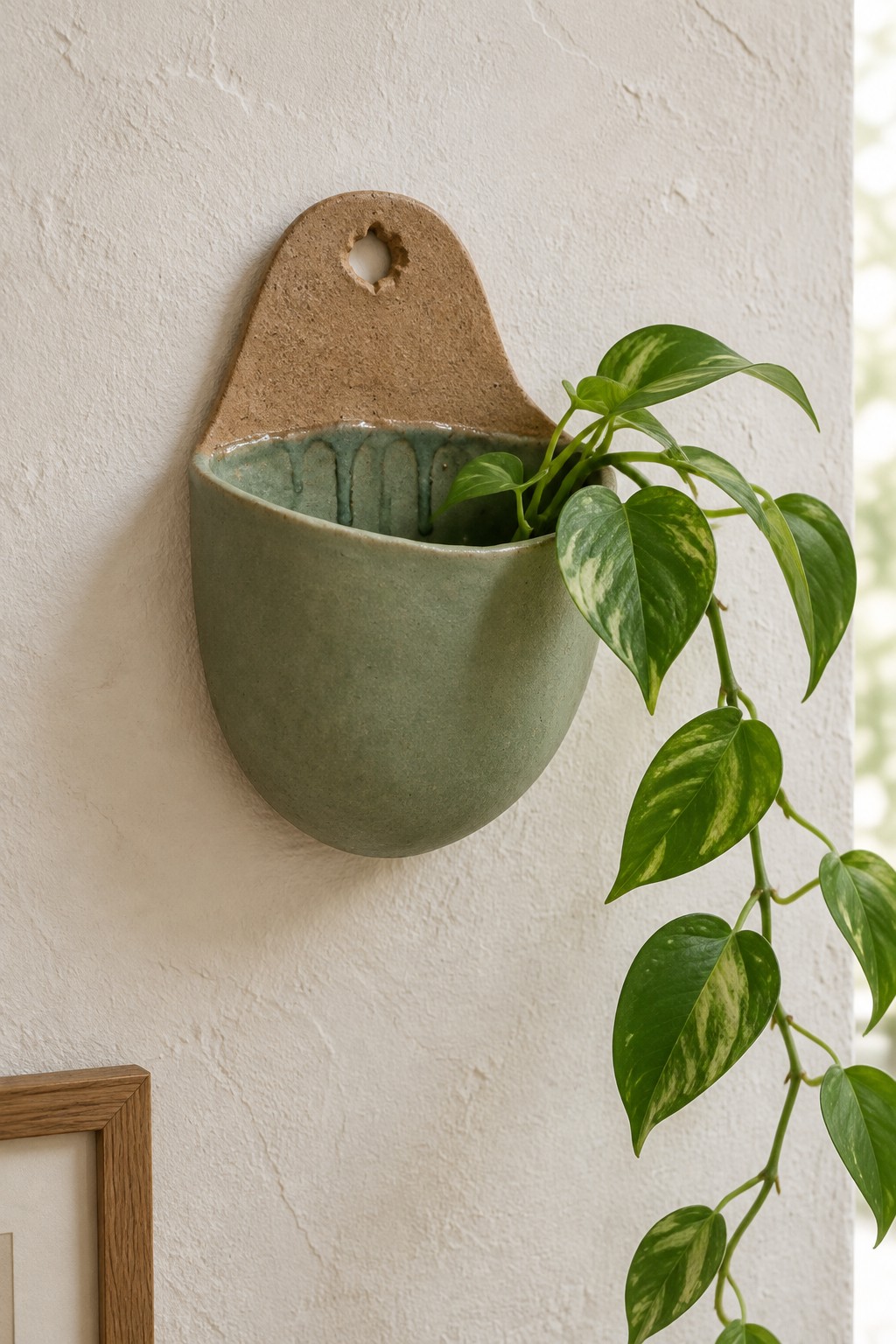
A wall-mounted clay planter works well when the form itself includes the hanging hardware. The rounded green body sits below a flat extension that has a simple hole cut through it, letting the piece hang flat against the wall without extra brackets. The main section uses a matte green glaze while the upper tab stays in the raw clay color, and a few glaze drips were left along the inside rim for subtle detail. This shape keeps the focus on the plant while the vertical orientation frees up surface space.
What makes this idea useful is that the hanging tab is part of the same piece, so no separate hardware shows. You could rework the same form into a narrower version for a single stem or make several smaller ones to group on one wall. In a kitchen or entryway, the shape handles trailing plants without crowding counters or shelves. The two-tone glaze treatment is easy to copy by applying wax resist or tape before the final firing.
Two-Tone Glazed Bowl Vase
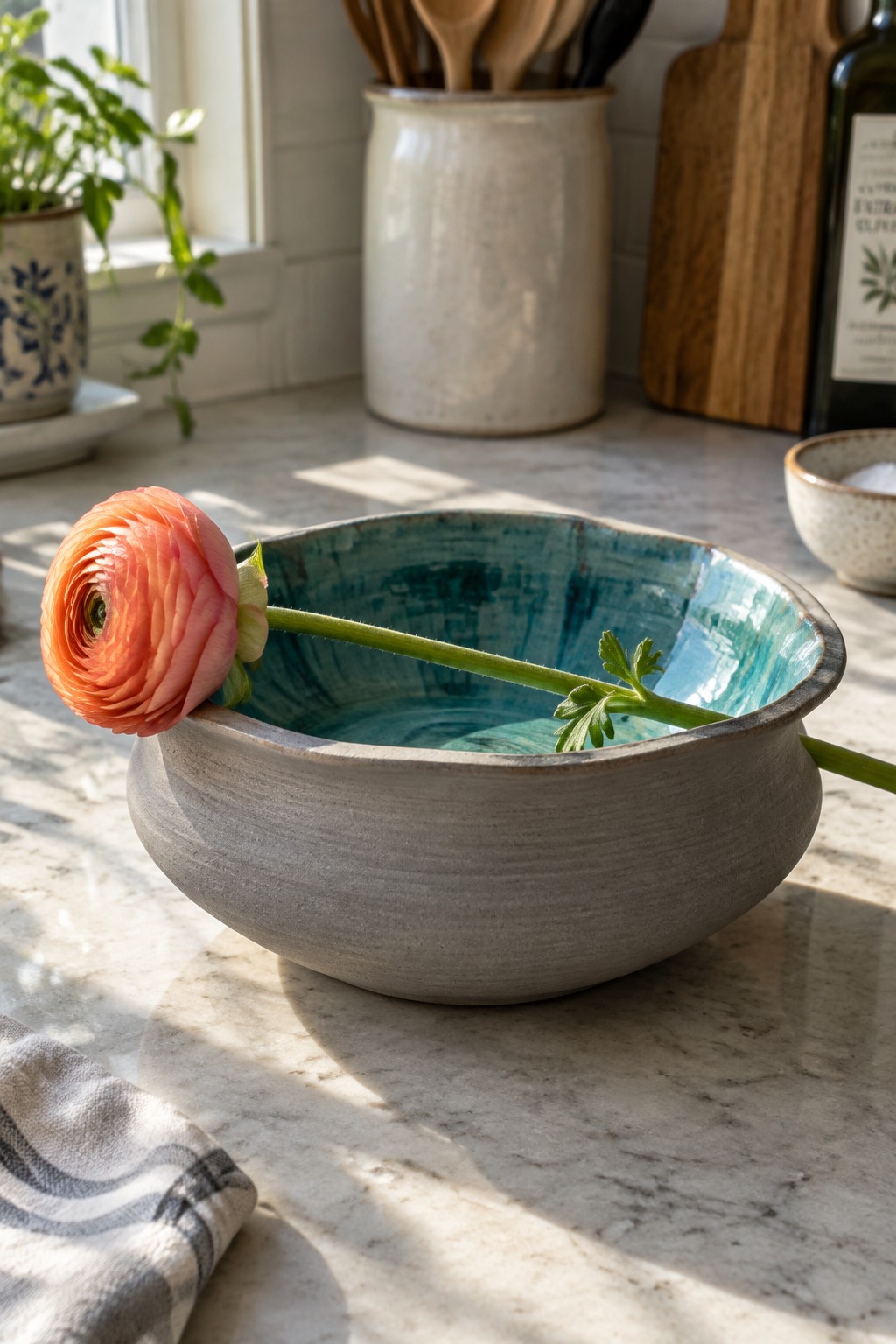
A wide, low ceramic bowl with a matte gray exterior and glossy turquoise interior creates a simple modern vessel for flowers. The contrast between the stone-like outer surface and the bright glazed inside draws attention to the open shape without extra details. This form works as a shallow vase where stems can rest across the rim or sit loosely inside the broad opening.
What makes this idea useful is how the wide mouth supports loose arrangements without needing a frog or grid. Scale the same two-glaze approach down for a smaller version that fits a nightstand or try it on a taller oval shape for a different profile. In a kitchen or entryway the neutral outside keeps it versatile while the interior color shows when the bowl is viewed from above. The clean color split also makes the piece easy to replicate in different sizes for gifts.
Tall Cylinder with Sculpted Handle
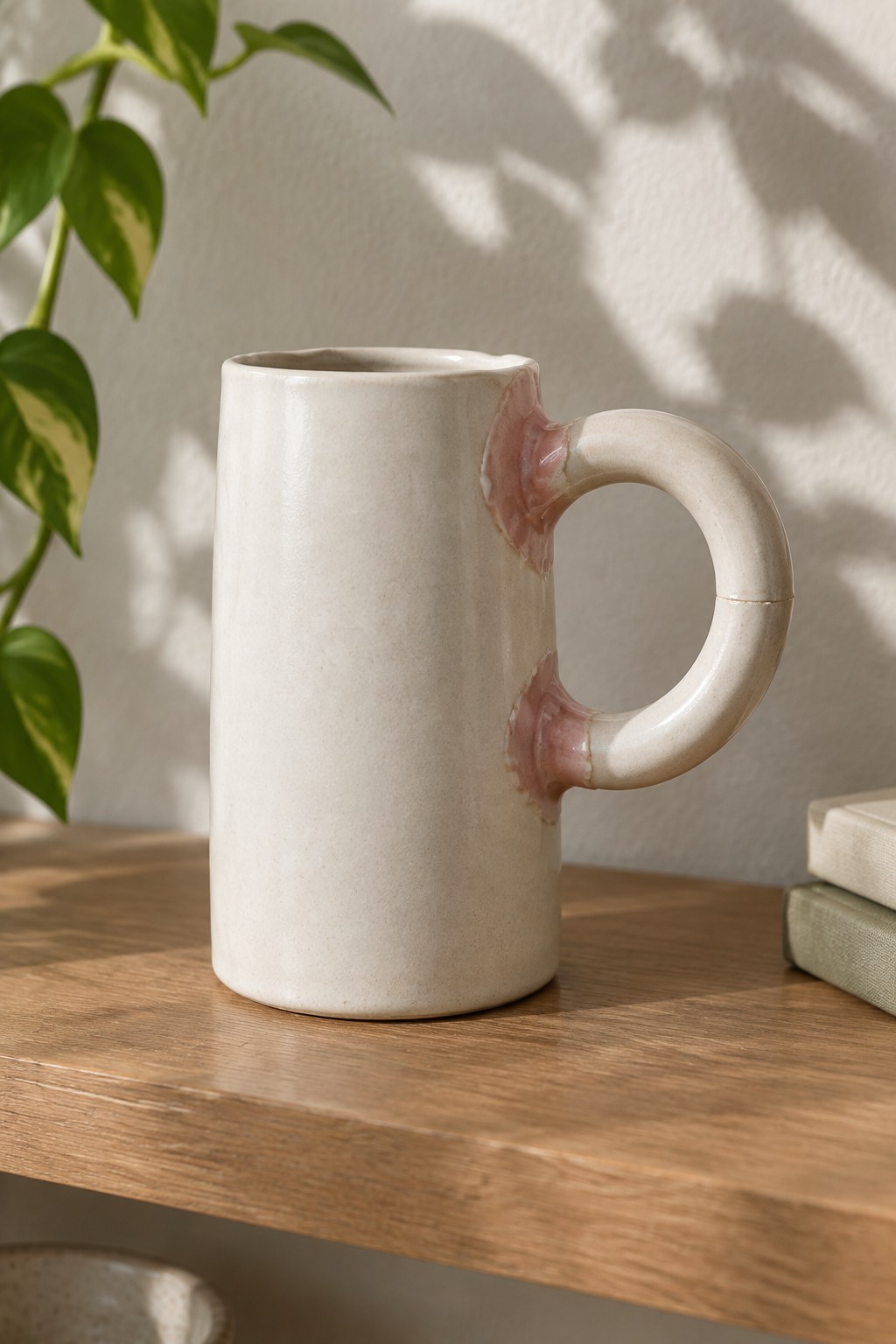
A tall cylindrical ceramic form with a large looped handle makes a strong modern vase shape when the handle attachments are highlighted with a second glaze color. The off-white matte surface keeps attention on the handle’s scale and the way the pink accents define the join points. This approach belongs in the sculptural vase category where the object relies on form and color contrast rather than surface patterns or added texture.
The shape does a lot of the work here because the height supports single stems or small branch arrangements while the handle adds side profile interest. You can adapt the idea by changing the accent color, shrinking the loop for a more delicate version, or stretching the same cylinder into a wider planter. For a gift this works especially well since the handle makes the piece easy to carry and gives it a distinct silhouette for photos. In a living room or entryway the clean lines let it sit comfortably on a shelf or console without competing with other objects.
Abstract Face Bud Vase
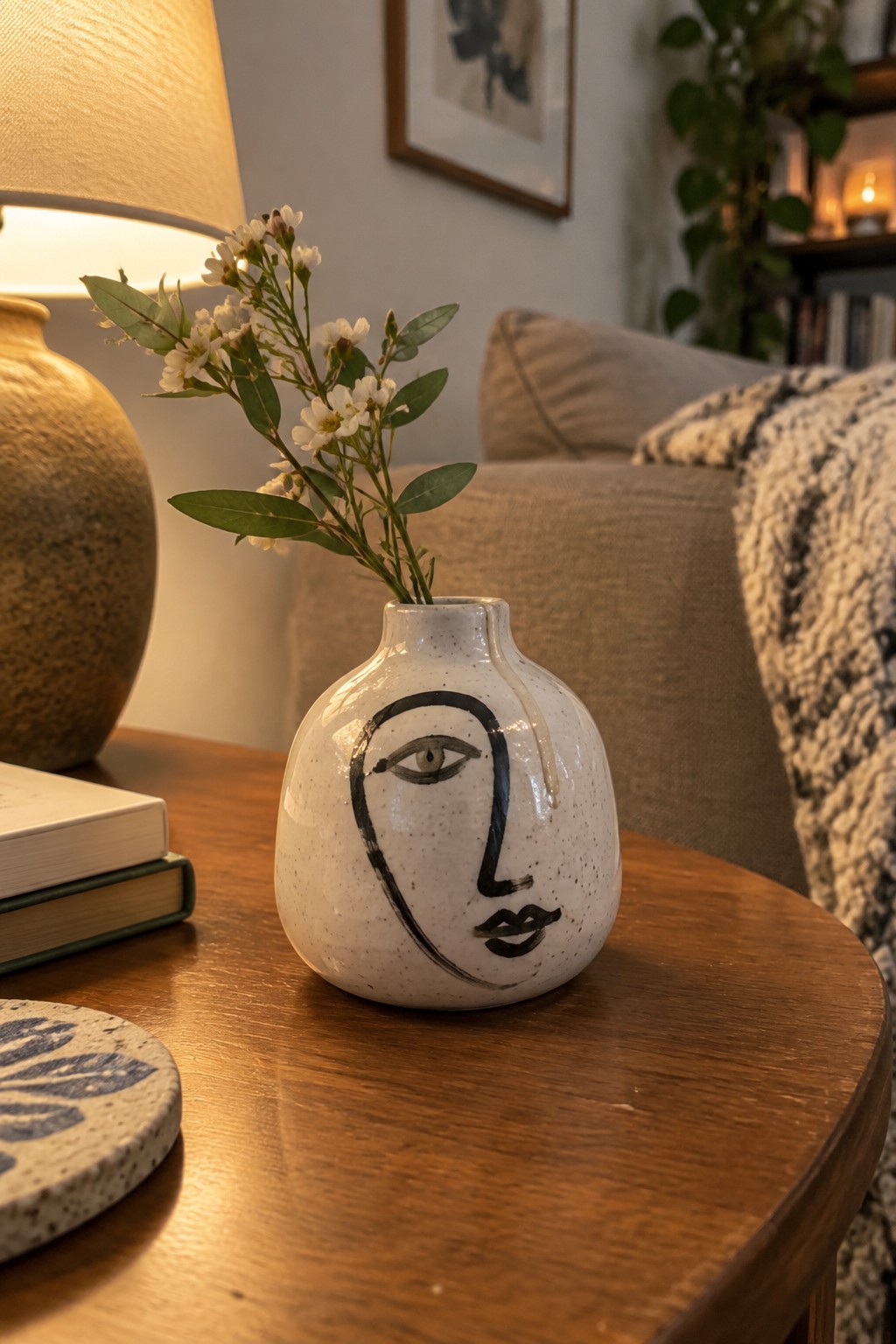
A small round ceramic vase with a narrow neck makes a simple base for a single stem or small bunch of flowers. The white speckled glaze gives a soft matte finish that lets the black line drawing of an abstract face stand out clearly. The design uses minimal strokes for one eye, a nose line, and lips, which keeps the surface decoration quick to apply by hand. This approach falls into the category of painted vases where the motif does the visual work instead of added texture or sculptural details.
What makes this idea useful is how the round shape supports the face layout without competing with it. You can scale the same line style to a taller cylinder or a low bowl if you want a different proportion. The small size fits a desk, shelf, or side table without taking up much room, and the neutral background lets you swap the face for other simple drawings later. For a gift, painting a single motif keeps the project fast while still feeling personal.
Two Tone Dip Glaze Vase
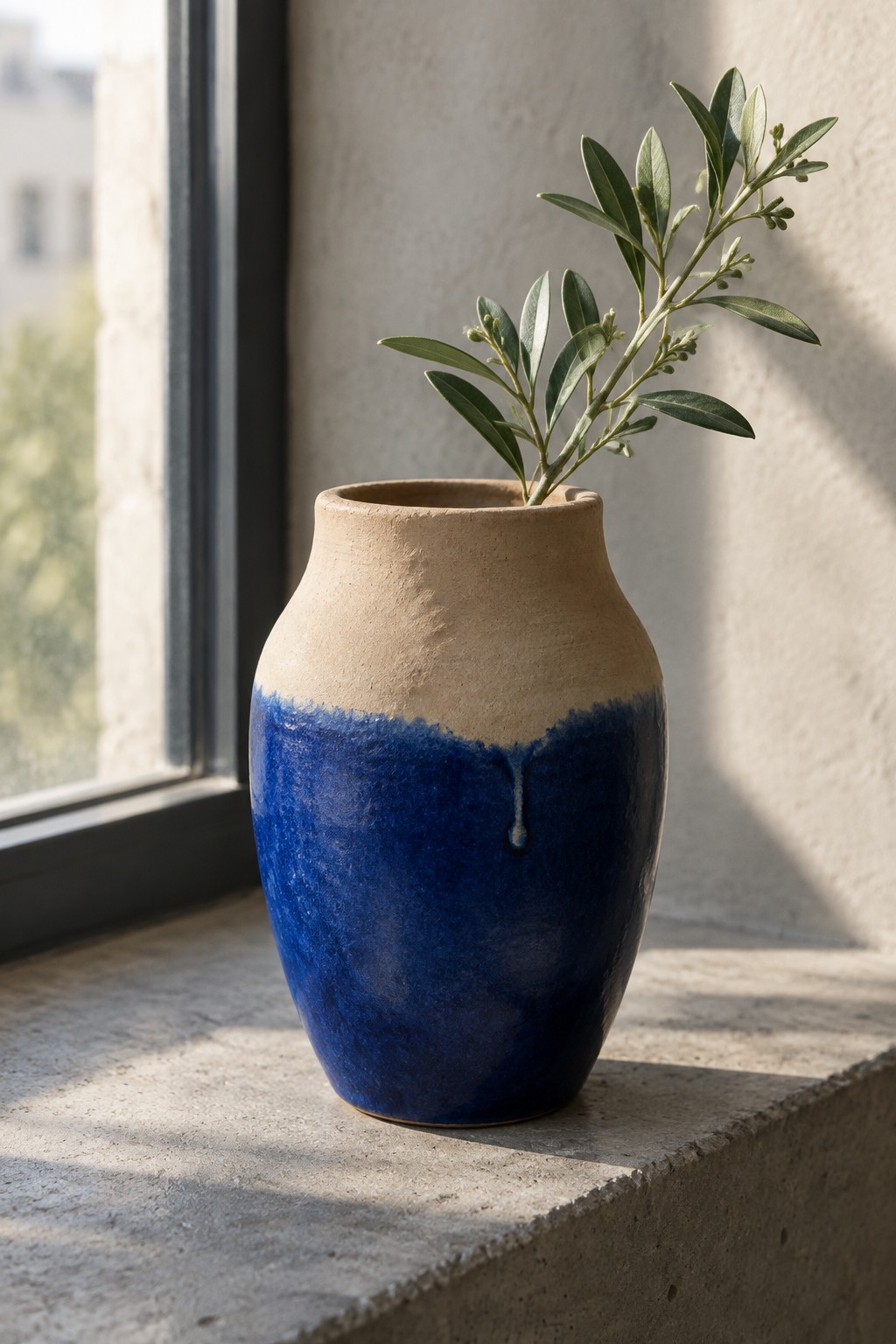
A rounded clay vase takes on a clean modern look through a partial glaze dip. The upper section stays in raw clay while the bottom half receives a deep blue glaze that ends in a soft drip line around the middle. This method keeps the form simple and lets the color split do the visual work. The shape stays balanced with a wider body that narrows slightly at the neck.
What makes this idea useful is how straightforward the glaze application stays. The same dip approach works on a taller cylinder or a flatter bowl without changing the core technique. In a living room or entryway, the strong color block stands out against neutral surfaces. You could swap the blue for another bold glaze color or leave more clay exposed to shift the balance.
Speckled Terrazzo Vase for Fresh Flowers
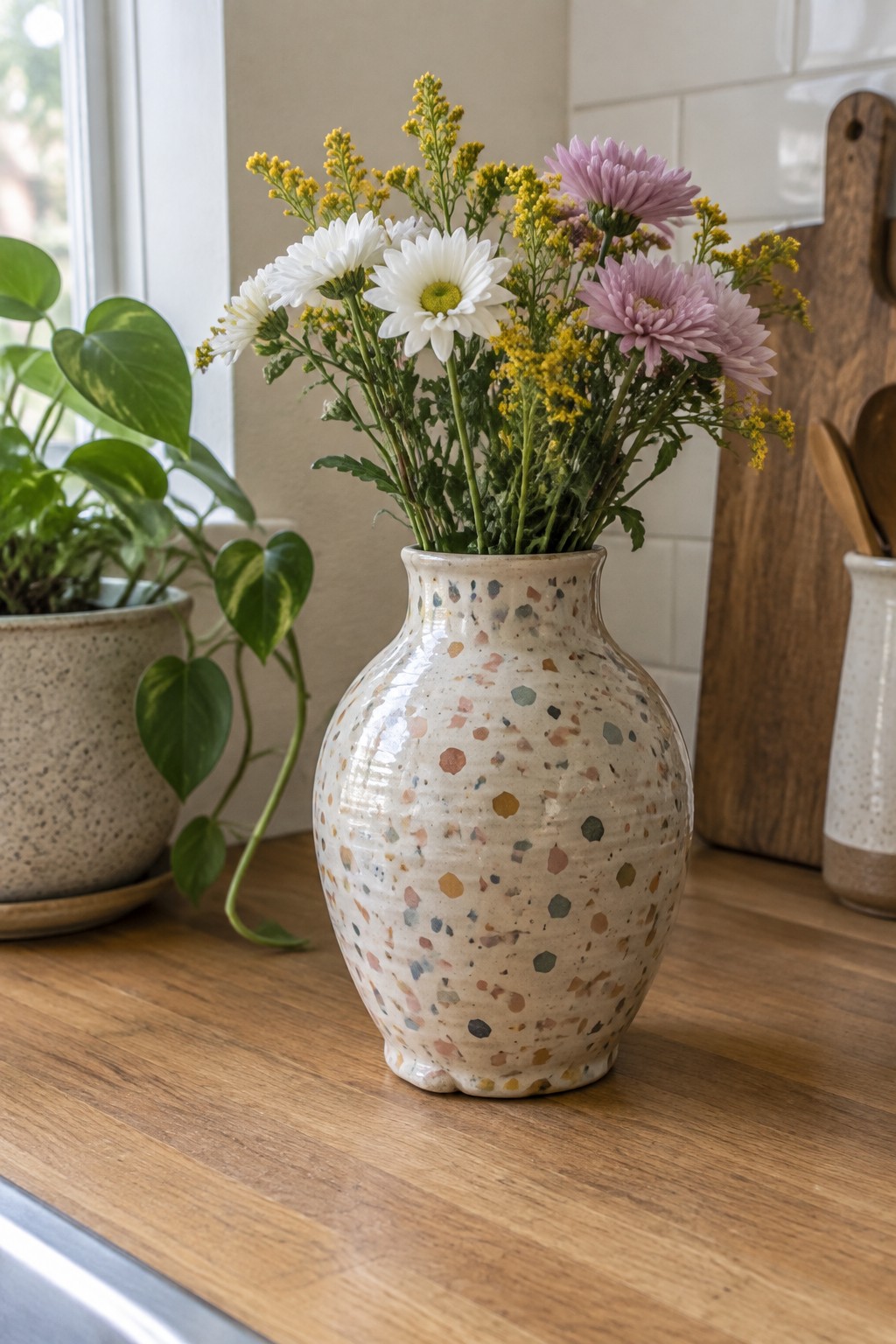
A handmade ceramic vase with a rounded body and gently tapered neck creates a stable base for mixed bouquets. The light clay body gets its interest from a cream glaze scattered with small dots in muted pink, blue, green, and ochre. This speckled treatment gives the surface texture and color without added carving or handles, keeping the form simple and modern.
What makes this idea useful is how the neutral background lets whatever flowers you add become the main color story. You can scale the same speckle pattern down to bud vases or across a set of three different heights for a grouped display. In a kitchen or bathroom, the shape holds just enough stems to look intentional while staying compact on a counter. The technique also transfers easily to a tray or low bowl if you want to shift the idea toward small storage or a candle holder.
Swirled Marbled Ceramic Vase
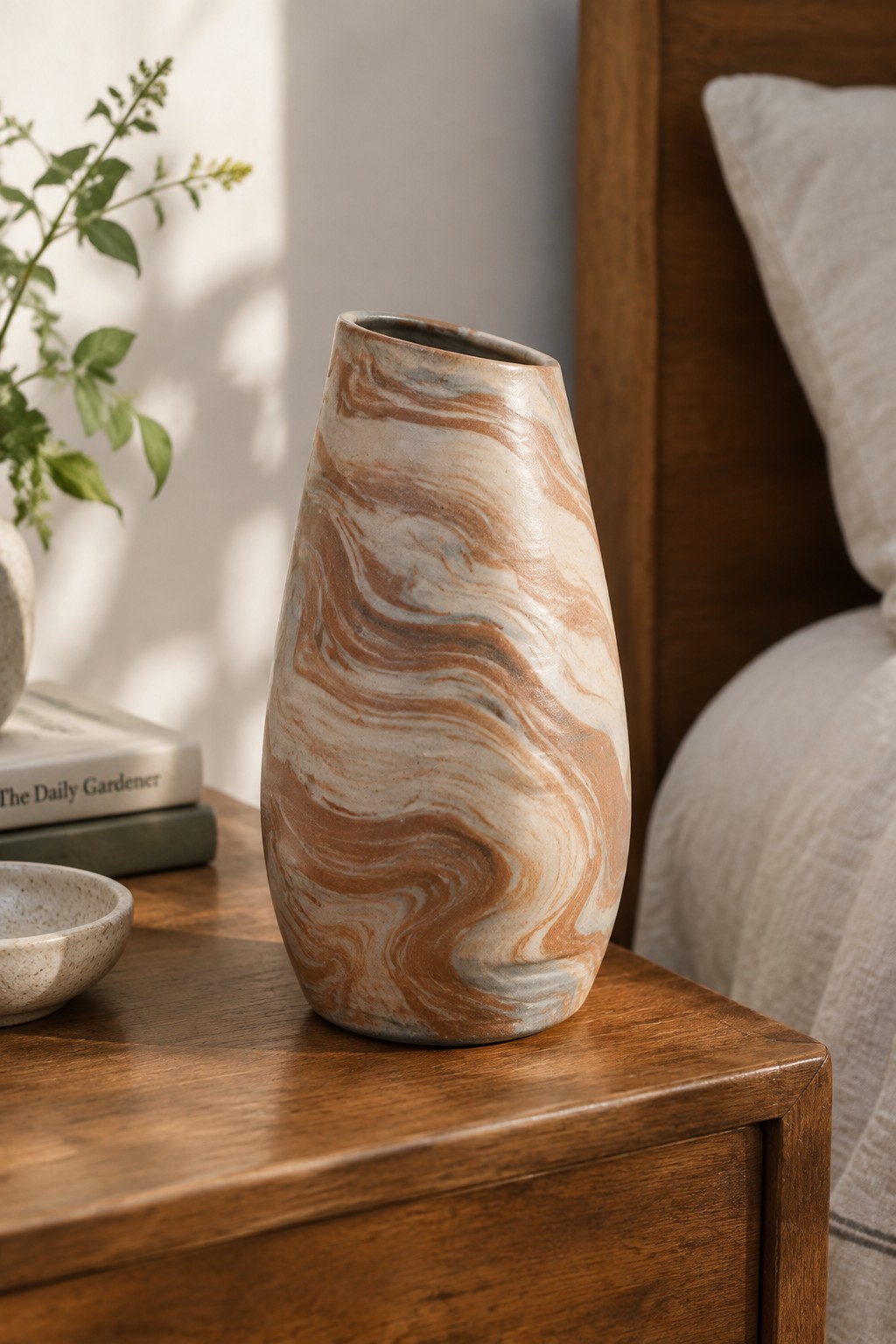
A tall ceramic vase formed with a narrow neck and softly rounded body uses a marbled slip technique to create flowing swirls of terracotta, cream, and muted gray across the surface. The pattern runs continuously around the form so the colors blend and separate in irregular waves rather than repeating in a set design. This keeps the overall shape simple while the surface does the visual work.
The shape does a lot of the work here because the tapered profile fits easily on a shelf or bedside table without taking up much space. You could scale the same marbling method down to a shorter bud vase or repeat it across a set of three different heights for a grouped display. The neutral color mix works with most room palettes, and the technique itself adapts well to a low bowl or a small lidded container if you want to try the pattern on another form.
Slender Tapered Vases in Mixed Glazes
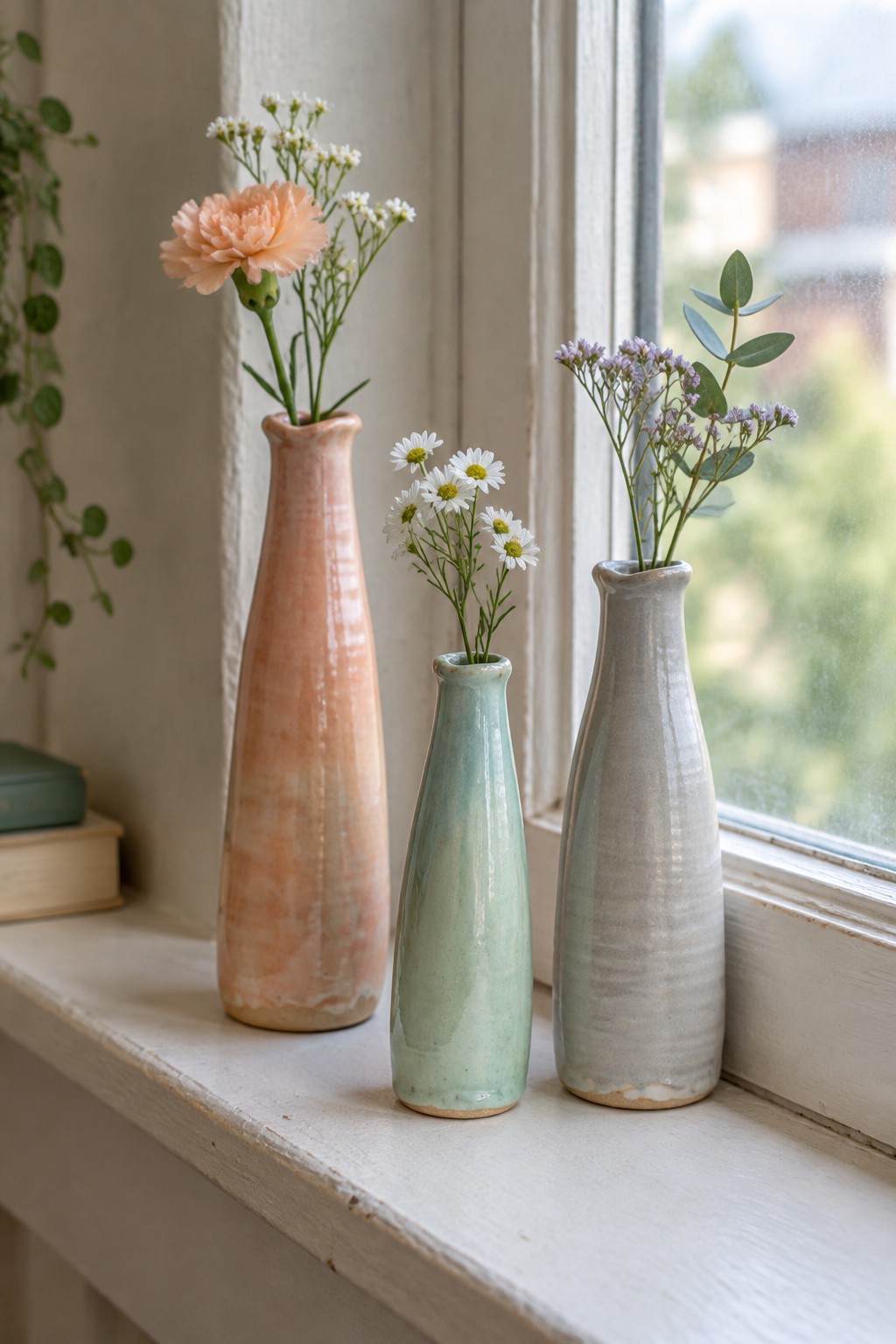
These vases follow a simple elongated cone shape that narrows toward the top and sits on a small foot. The three pieces use different glaze treatments on the same basic form, with one in a matte peach, one in a light speckled mint, and one in a cool gray with subtle texture. The variation in surface and color keeps the set interesting while the shared silhouette ties them together. This approach belongs in the modern vase category for everyday home displays.
What makes this idea useful is how the repeated shape makes it easy to produce a matching group without needing complex forms. The narrow profile takes up little room on a windowsill or shelf yet still holds small flower bunches or single stems. You could adapt the same template by changing only the glaze colors or by making one shorter for a desk. In a small space, this kind of set gives a clean display that works with whatever flowers are in season.
Coral Ruffled Ceramic Vase
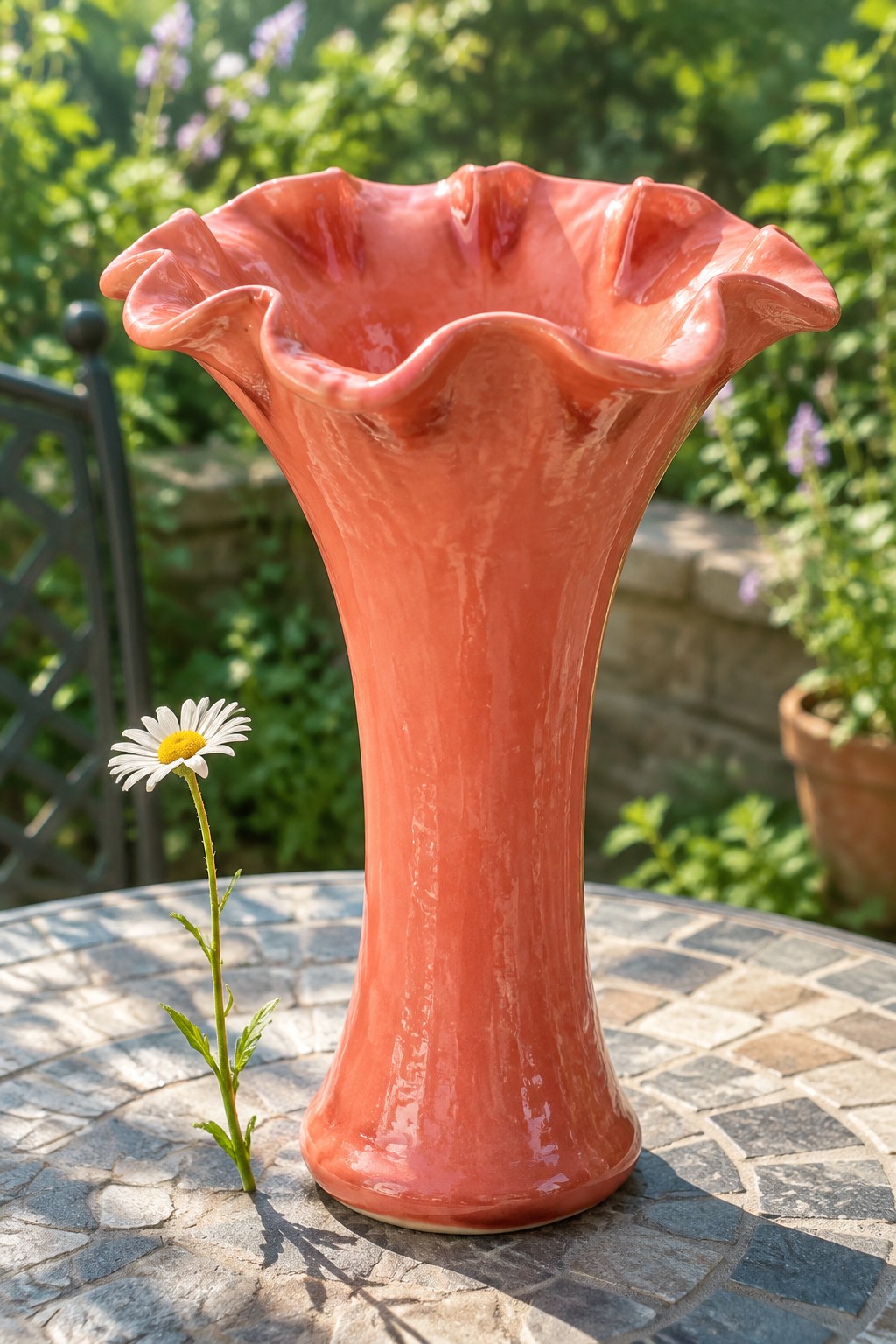
A tall ceramic vase with a tapered body and wide ruffled rim offers a simple way to display flowers without extra decoration. The glossy coral glaze covers the whole surface and creates soft reflections along the folds of the rim. This shape fits the classic vase category while the wavy edge adds movement that a straight cylinder lacks.
What makes this idea useful is how the ruffled rim can be adjusted in width or height to suit different flower stems. Scale the same form down for a smaller table version or change the glaze to matte for a softer look. In a living room the solid color keeps it from competing with patterned surroundings, and the shape works equally well as a standalone piece on a mantel.
Rectangular Vase with Vertical Texture and Angled Rim
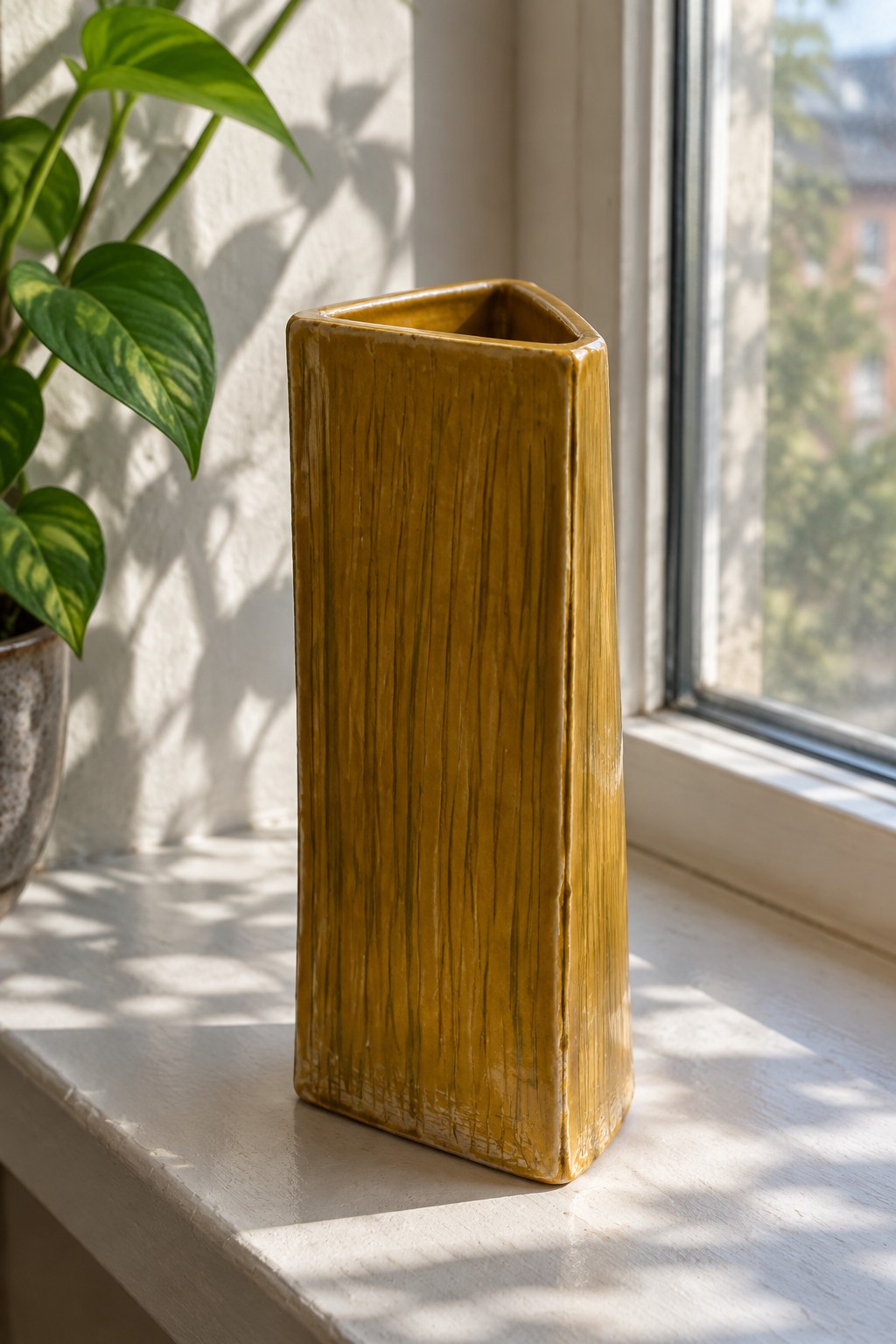
A tall rectangular vase built from slabs gives this project clean lines and a strong vertical presence. The sides carry shallow vertical ridges that add texture and help the glaze pool slightly for extra depth. An angled top opening breaks the strict rectangle just enough to keep the form interesting without extra pieces. The warm amber glaze keeps the whole piece simple while making the texture visible from across the room.
The narrow footprint works well on a shelf, windowsill, or entry table where a wider piece would crowd the space. You could shorten the height and keep the same texture for a smaller desk version or change the top cut to a straight edge for a more minimalist look. Switching to a matte or speckled glaze would give the same shape a completely different feel while using the same construction steps.
Ribbed Cylinder Vase in Deep Green
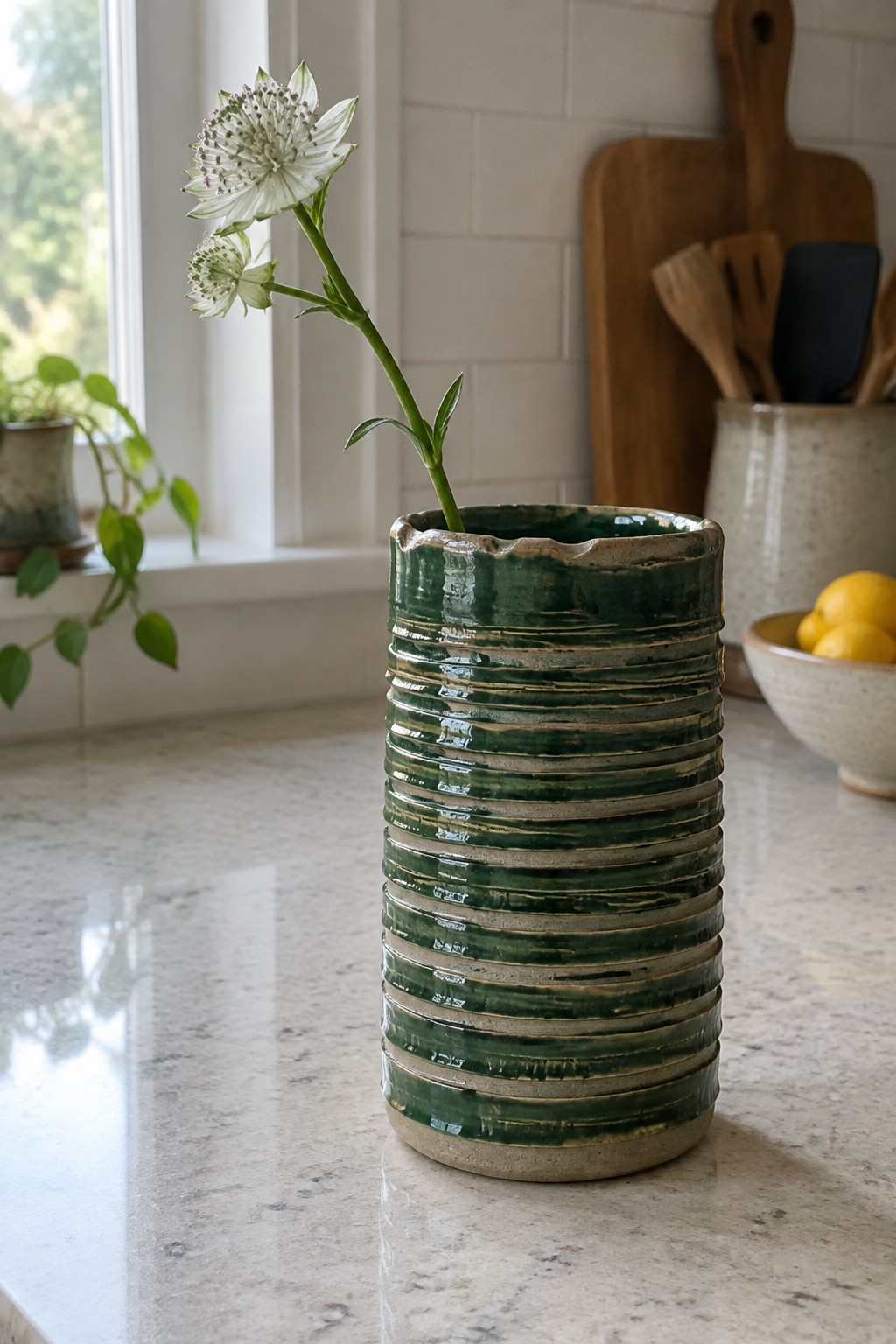
A tall cylindrical vase formed with repeated horizontal ridges gives the surface built-in texture that catches light and shadow. The deep green glaze settles into the grooves to emphasize each layer while the raw rim adds a slight handmade edge. This style fits the modern vase category because the clean shape stays simple enough to work with most flower arrangements yet the ridges prevent it from looking plain.
The stacked ridges let the piece stand out on a shelf without needing extra width or decoration. You could shorten the same form to make matching candle holders or small herb planters. Using a glossy glaze on ribbed work helps the texture read clearly even from a distance, which makes it useful for Pinterest photos. Scaling the height down and switching to a matte glaze would turn the idea into a desk organizer or bathroom cup.
Cylinder Vase with Leaf Accent
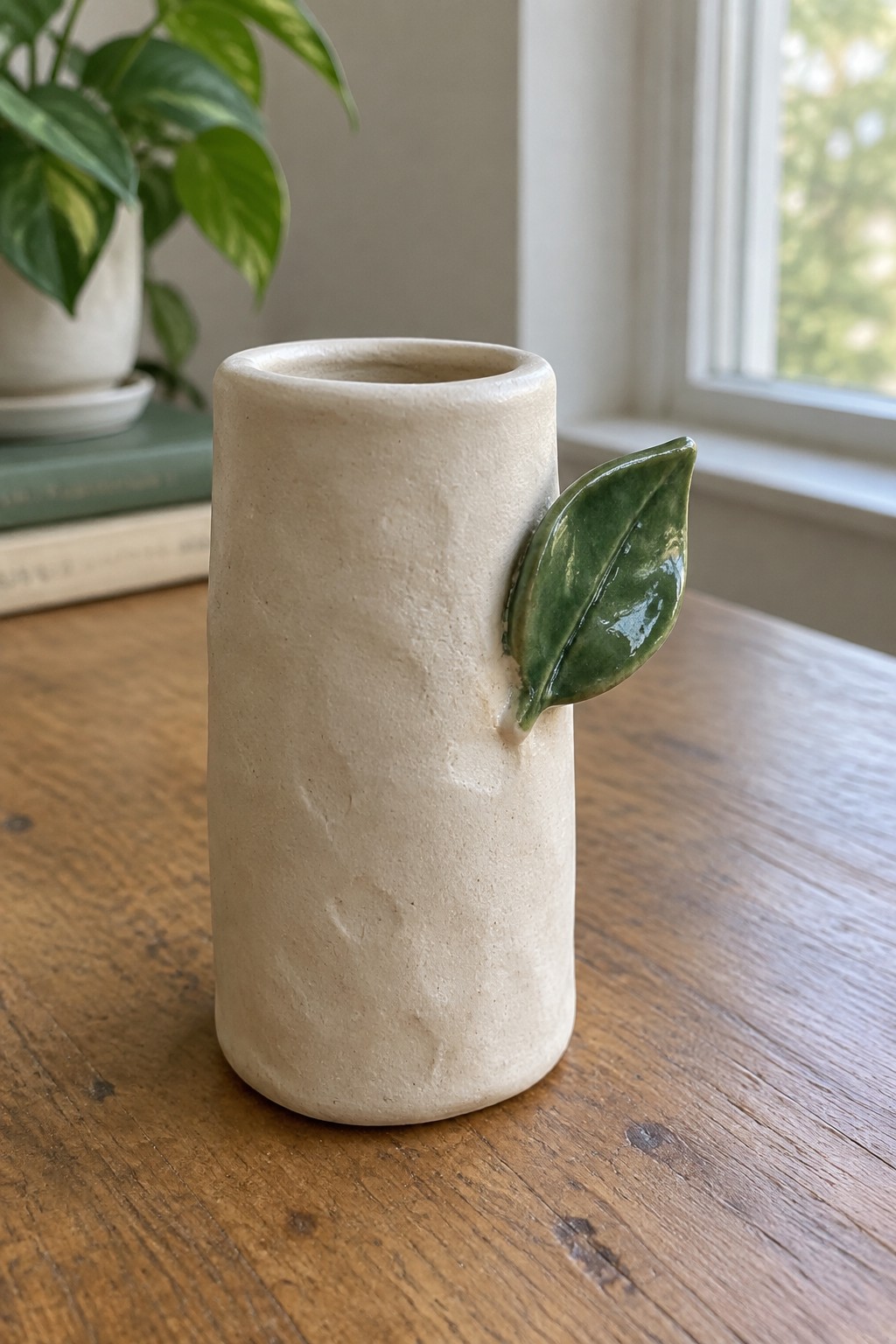
A simple cylinder vase made from pale clay uses a single sculpted leaf to add a focal point without complicating the overall form. The leaf is formed separately then attached and glazed in a glossy green that stands out against the matte surface of the vase body. This keeps the project focused on one clear detail rather than multiple surface treatments or complex carving.
The shape does a lot of the work here because the straight sides and modest height make it easy to place on a desk, windowsill, or narrow shelf. You could swap the leaf for other small elements like a line of dots or a simple band to create different versions from the same base form. For a gift this works well because the detail feels intentional yet the piece stays small enough to finish in one or two sessions.
Blue Drip Glaze Cylinder Vase
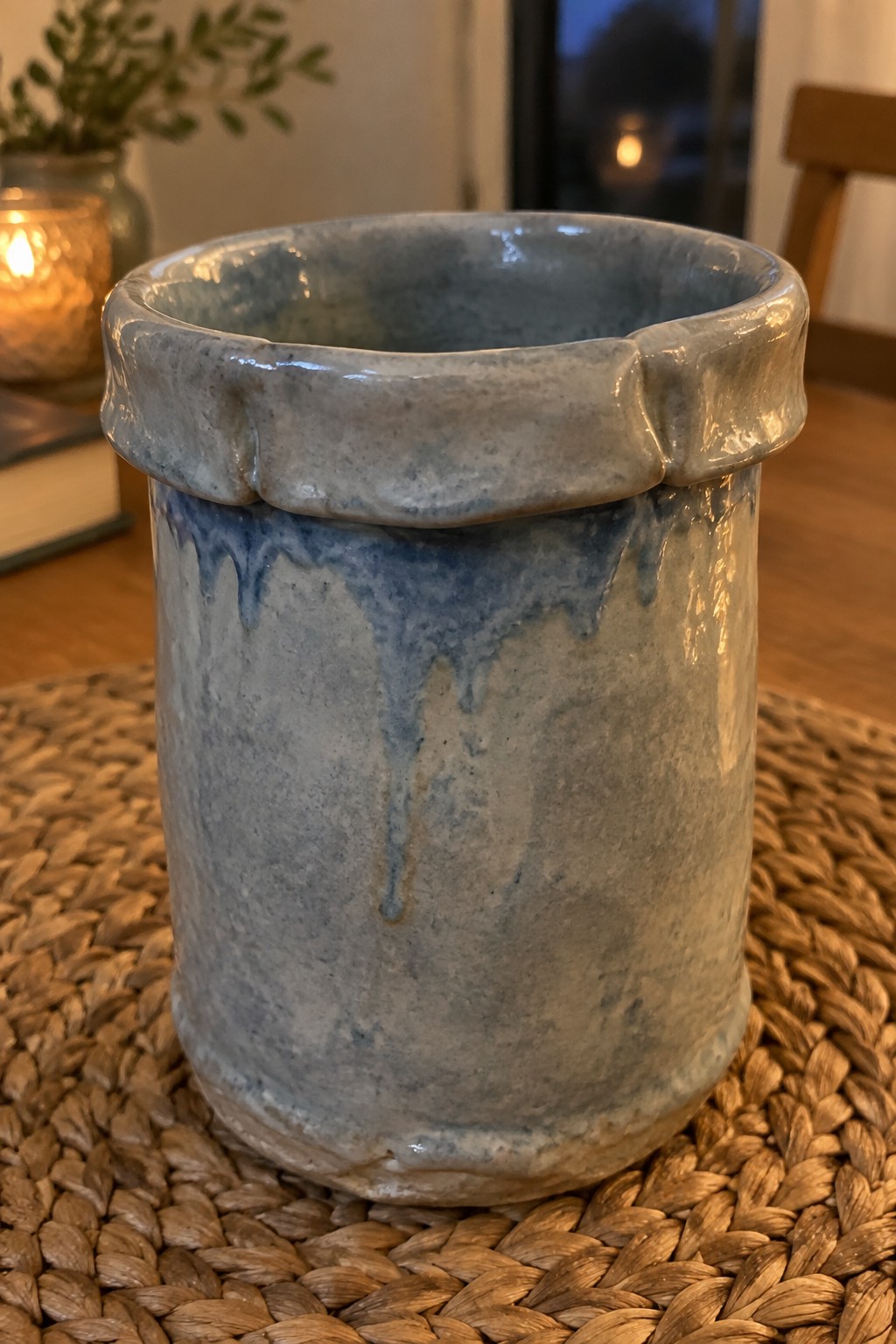
A tall cylindrical vase made from clay features an uneven wavy rim that gives it an organic shape. Blue glaze applied around the top drips down the sides in uneven streaks over a lighter speckled surface, creating contrast without extra decoration. This approach fits into the category of simple modern vases that rely on glaze movement rather than carved details or added handles.
What makes this idea useful is how the drip effect hides small imperfections in the glaze application, so it works well even on a first or second attempt. The narrow cylinder shape fits on shelves or side tables without taking up much space, and the same drip technique could be tried on shorter tumblers or wider bowls using different glaze colors. For a gift, this vase adapts easily by changing the rim shape or switching to a matte glaze on the lower half to keep the focus on the drips.
Organic Teardrop Vase in Matte Terracotta
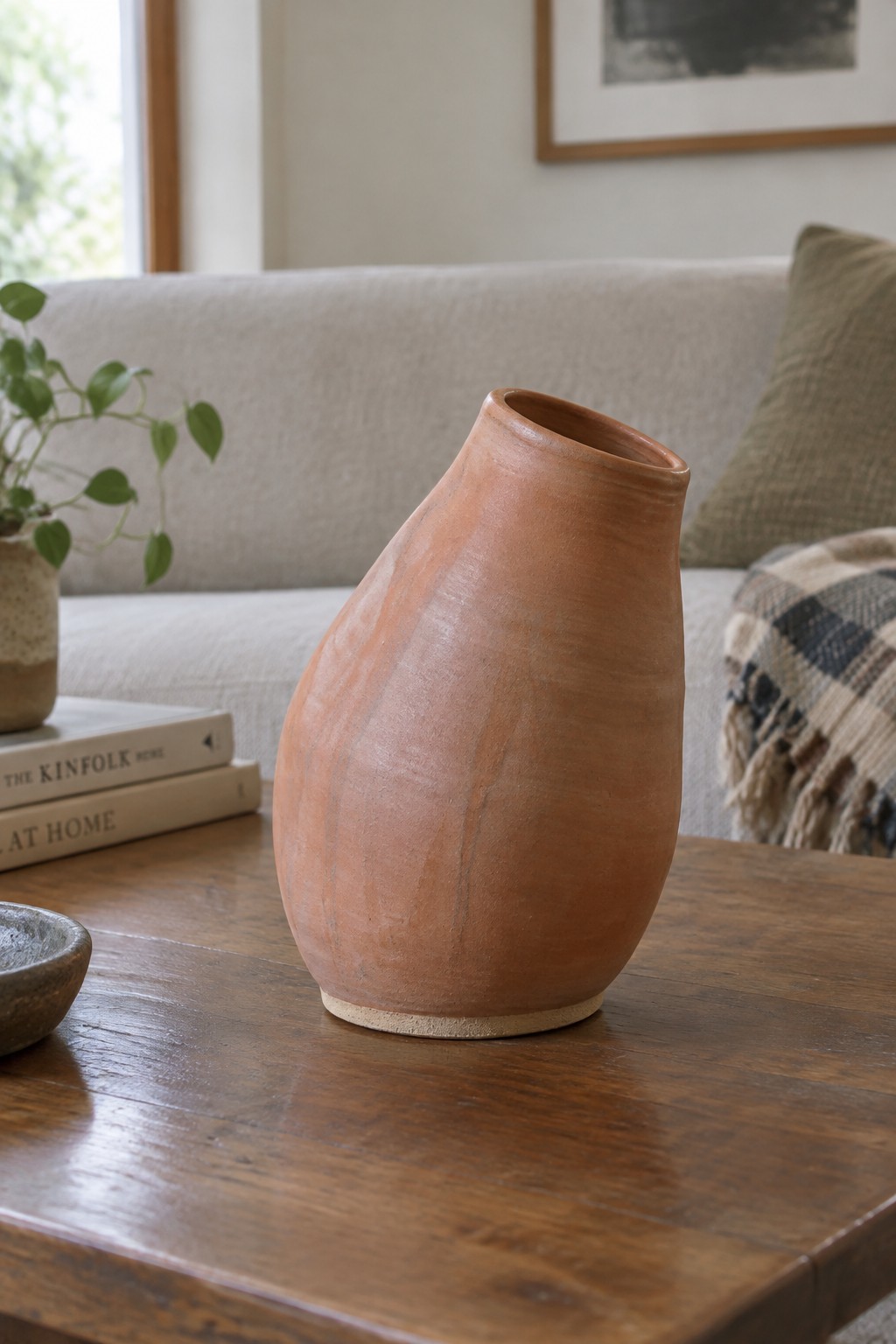
A handbuilt clay vase with a full rounded base that tapers into an uneven neck gives this piece a soft, sculptural profile. The warm terracotta tone and visible surface texture keep the focus on the form itself rather than any added decoration. This kind of vase works as a standalone object because the shape already holds visual interest on its own.
The shape does a lot of the work here since the slight lean and off-center opening prevent it from looking too perfect or mass-produced. You could adapt the same silhouette in a taller version for a mantel or shorten the neck to make a wider bowl form. It sits comfortably on a low table or shelf where its matte surface picks up light without competing with other objects nearby.
Frequently Asked Questions
What kind of clay works best for these easy modern vase projects? Air dry clay is the most beginner friendly option because it requires no kiln or oven and sets at room temperature over a few days. Choose a smooth air dry clay from any craft store, keep it covered with a damp cloth while you shape it to prevent cracking, and work in thin even layers for the clean lines of modern forms.
How can I make the finished vases hold water for fresh flowers? Once the clay is fully dry and hardened, brush two coats of clear waterproof acrylic sealant or epoxy resin on the inside surface only. Let each coat cure completely according to the product instructions before adding water. This simple step seals the porous material without changing the exterior appearance.
Which modern shapes are easiest for beginners to try first? Start with simple cylinders, cones, or low bowls because they need minimal tools and can be formed around household items like bottles or bowls for support. Roll the clay to an even thickness, cut straight edges with a craft knife, and smooth seams with a damp sponge to achieve the crisp, minimalist look.
How do I add color while keeping a contemporary style? After the vases dry, apply matte acrylic paint in neutral shades such as white, black, or terracotta. Use painter’s tape to mask off geometric sections before painting for sharp lines, then remove the tape once the paint is dry. Finish with a light matte sealer to protect the color without adding shine.
What is the best way to arrange these vases in a room? Group three to five vases of different heights and widths on a console or shelf to create visual interest. Leave some empty to highlight their sculptural forms and place a single stem or small bunch of greenery in others. Position them against a plain wall or beside neutral textiles so the modern shapes stand out.

Pottery Path is my cozy corner of the internet where I share clay ideas, pottery inspiration, and simple projects you can recreate at home. I love exploring everything from air dry clay to handbuilt pottery to cute minis that brighten your day. My goal is to make clay crafting feel easy, fun, and welcoming for anyone who wants to try it.
You will find beginner friendly tutorials, creative pottery painting ideas, and lots of warm inspiration for slow and happy crafting. If you enjoy hands on creativity, this space will feel like home.