
I’ve been making pottery bowls for a while now and often add flower motifs to them.
It started when I wanted something simple to decorate my own kitchen pieces.
Over time I tried different shapes and ways to include the flowers.
These are some of the ideas that worked out well for me.
They are straightforward enough if you like to try pottery at home.
Daisy Painted Ceramic Bowl

A medium-sized ceramic bowl painted with simple daisy motifs in blue and yellow makes a practical project for anyone working with underglazes. The flowers are spaced around the inside walls and rim, leaving the center plain to show the wheel-thrown texture. This style keeps the bowl usable for food while adding a clear repeating pattern that does not require precise placement.
The painted motif works well on bowls of this size because the curves give the flowers room to sit without crowding. You can repeat the same daisy layout on smaller prep bowls or scale it up for a salad bowl by adjusting spacing. In a kitchen this kind of piece stands out on open shelves and still functions for everyday use. For a variation, swap the blue for green leaves or test the design on a straight-sided mug instead.
Pink Petal Bowl with Painted Daisies
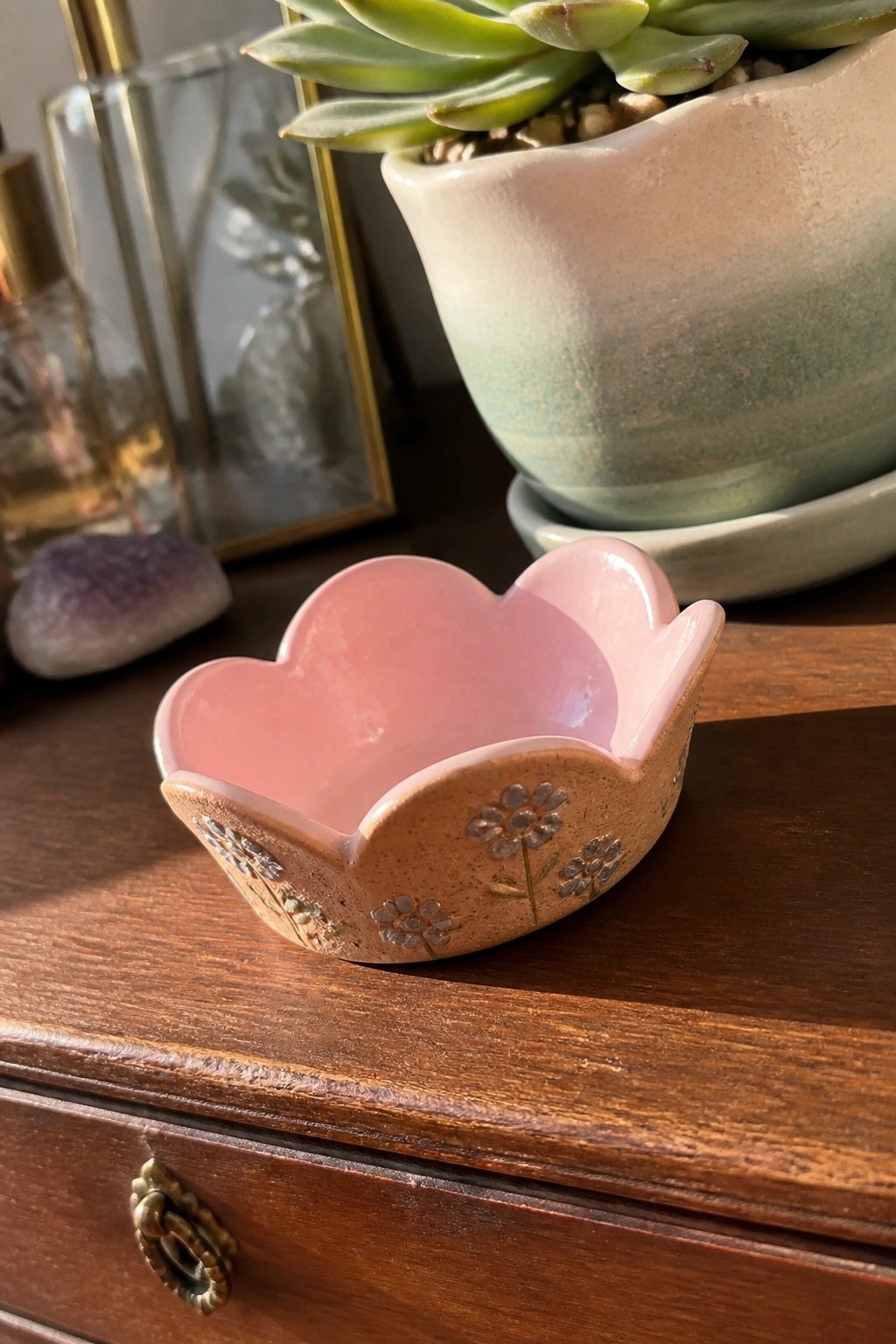
A small scalloped bowl formed into a flower shape works well as a ring dish or trinket holder. The glossy pink interior glaze stands out against the speckled brown exterior, where simple daisy motifs are painted along the sides. The rim is pinched into rounded petals that reinforce the flower theme without added pieces.
The small scale makes this easy to adapt for a nightstand or desk where it can hold earrings or loose change. You could change the painted flowers to a single color or repeat them in different sizes around the outside. This shape also works as a tiny soap holder or a place to set keys by the door. The painted details are quick to add with underglaze before the final firing.
Cherry Blossom Motif on Crackle Glaze Bowl

A wide ceramic bowl with a light green crackle glaze gives the pink cherry blossom branches room to show clearly across the curved surface. The flowers and brown stems are painted directly on the interior so the pattern stays visible whether the bowl holds food or sits empty on a counter. The crackle finish supplies texture that supports the painted motif without overwhelming it.
What makes this idea useful is the simple way the branches follow the bowl’s shape, which keeps the design readable at different angles. You can repeat the same painting approach on smaller bowls for individual servings or switch the flower color to match other kitchen pieces. The size works for rice, salad, or noodles, and the motif transfers easily to a tray or low planter if you want to change the form.
Wildflower Impressed Bowl

A low, wide ceramic bowl in a muted green glaze carries a band of impressed botanical motifs around the outside. Fern fronds, daisy shapes, and dandelion seed heads repeat in a loose pattern that was pressed into the clay before the final glaze. The lighter raised edges of the designs stand out against the darker background, giving the surface texture without added paint or carving after firing.
The shape does a lot of the work here because the gentle curve lets the full row of motifs show clearly from most angles. You could repeat the same stamping method on smaller prep bowls or switch the glaze to a warm tan for a different look. In a kitchen this size works for holding fruit or bread while still functioning as a decorative piece on open shelving. The impressed technique also transfers easily to a mug or small planter if you want to keep the motif but change the form.
Nesting Bowls with Mixed Flower Paintings
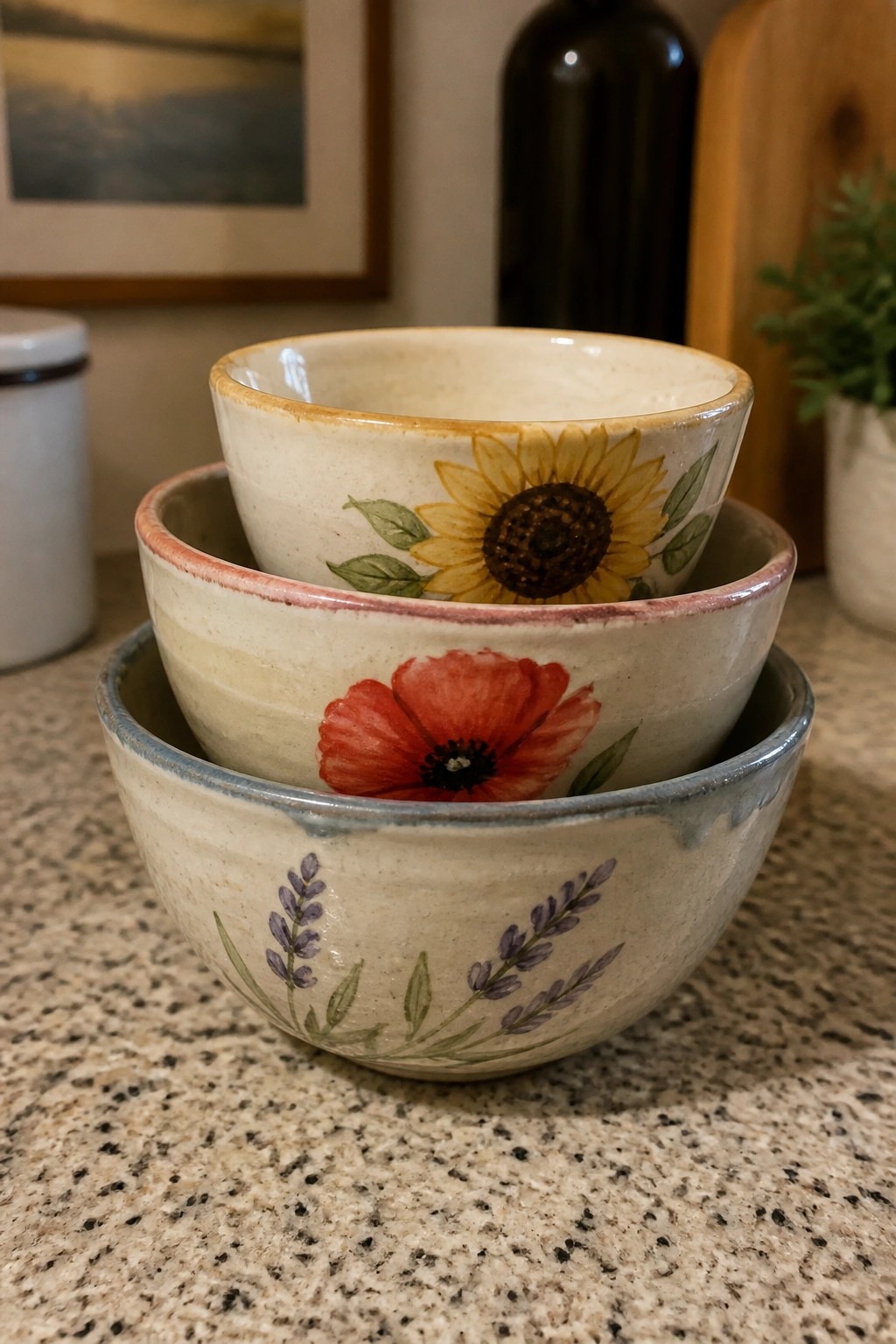
These are three nesting ceramic bowls made with a light stoneware body and finished in a matte off-white glaze. Each bowl carries a single hand-painted flower: a sunflower on the smallest, a red poppy on the middle size, and lavender stems on the largest. Colored rims in brown, pink, and blue add contrast without overpowering the floral work. The simple stacking form and repeated motif style make this a straightforward way to create a coordinated set of kitchen or serving bowls.
What makes this idea useful is the way the nesting shape keeps the set compact while still showing three different flowers. You can adapt the same layout by repeating one flower across all three bowls or by choosing blooms that match your existing dishes. In a kitchen the bowls handle mixing, serving, or storage and look finished even when left out on a counter. The painted approach also translates easily to a two-bowl set or to smaller prep bowls if you want to scale the project down.
Bowl with Painted Peony and Sculpted Rim Petals

A round ceramic bowl with an irregular rim uses a pale matte glaze as the background. The interior base holds a large purple peony painted in soft watercolor layers with green leaves extending up the sides. Around the outside edge, small overlapping clay petals are attached and glazed to create a raised border that echoes the painted flower.
What makes this idea useful is the way the sculpted rim detail adds texture without changing the basic bowl form. You can adapt the raised petals by making them smaller and spacing them farther apart for a subtler look on a larger serving bowl. The painted interior pairs easily with any light glaze color, so the same motif can be repeated across plates or mugs for a set. This style works well as a catch-all on a side table or as a small fruit bowl on a kitchen counter.
Raised Daisy Motif on a Footed Bowl

A wide ceramic bowl set on a short pedestal base gives you a stable form that still feels light. Pressing or carving daisy shapes into the clay before the final glaze creates raised petals that catch light and shadow, while the small blue centers keep the decoration simple and readable from a distance. The matte white surface lets the sculpted flowers remain the main focus without extra color layers.
The shape does a lot of the work here because the pedestal lifts the bowl just enough to sit nicely on a shelf or table edge without taking up much space. You could repeat the same daisy stamp on a flat tray or a shorter ramekin if you want a different profile for snacks or jewelry. Keeping the color count low also makes it easier to match existing dishes or to swap the blue for another accent if you want to personalize it.
Scalloped Bowl with Clustered Blue Flowers

A small ceramic bowl with a scalloped rim gives a clean surface for painting clusters of blue flowers. The design spreads the blooms across the interior with thin green stems and leaves to connect them naturally. A glossy white glaze keeps the focus on the painted details while the irregular edge softens the overall shape. This idea works as a decorative bowl or small catch-all dish.
The small size makes it simple to adapt into a ring dish or a holder for loose tea. You could repeat the same flower clusters on a plain round bowl if you want to skip the scalloped rim. For a gift, this kind of piece fits well on a nightstand or desk without taking up much space. The blue flowers on white stand out clearly in photos, which helps if you plan to share the finished result.
Tulip Border Bowl with Handles
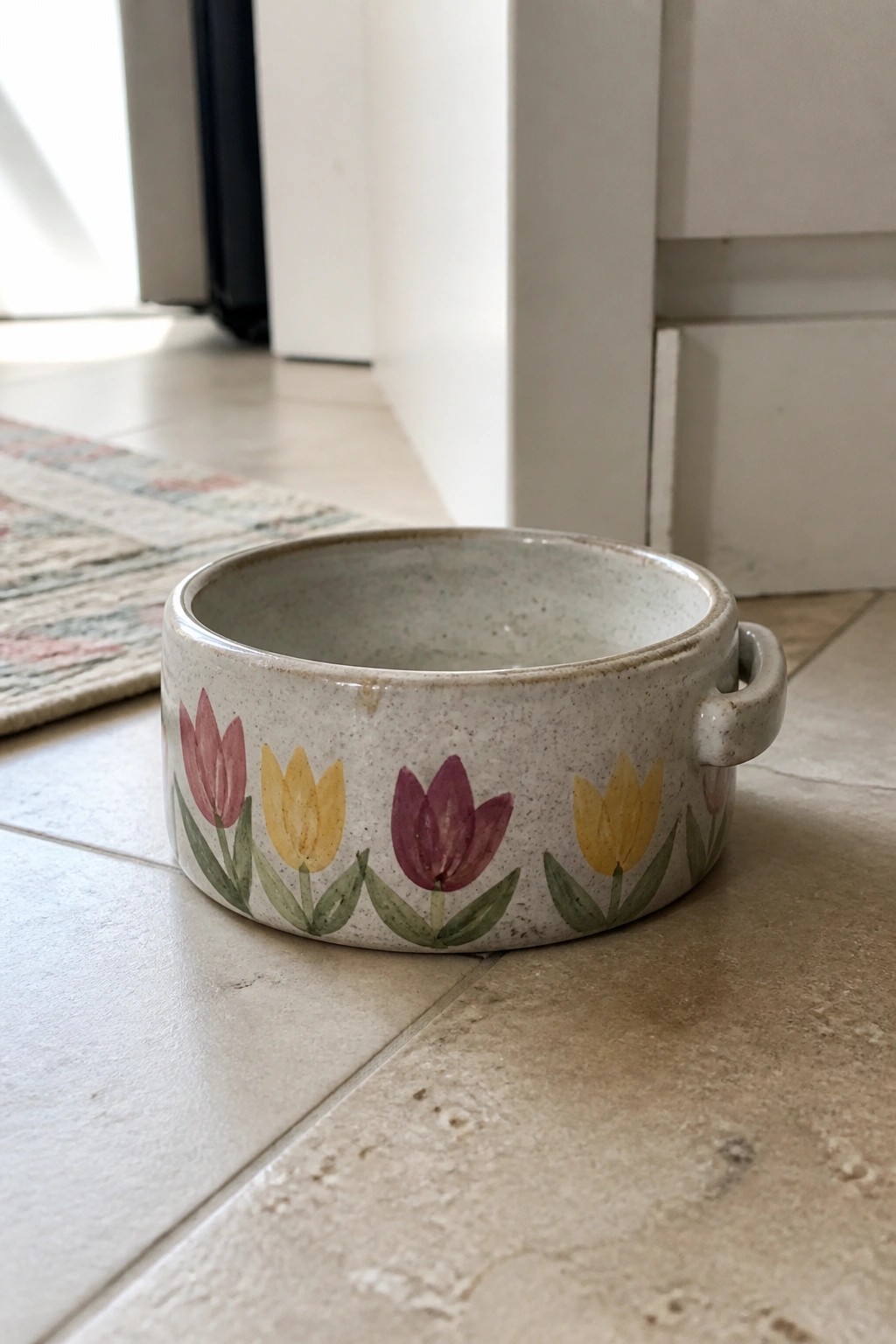
A small round ceramic bowl with two loop handles uses a repeating row of painted tulips around the outside as its main decoration. The flowers sit in a straight band just below the rim, each one drawn with a few brushstrokes in pink, yellow, and purple plus simple green leaves. The light speckled surface keeps the colors clear while the handles add a practical grip without breaking up the pattern. This approach works well for any bowl shape where you want a single flower motif to run all the way around.
The shape does a lot of the work here because the straight sides give the tulips a clean surface to sit on. You could repeat the same border on a larger salad bowl or scale it down for small dip dishes. The limited color palette also makes it easy to swap in other flowers later without repainting the whole piece. In a kitchen this kind of bowl works for serving or as a fruit holder while still showing off the motif on a shelf.
Pink Peony Bowl with Scalloped Rim

A shallow ceramic bowl with a wavy scalloped edge serves as the base for this project. Large pink flowers are painted across the interior in soft washes, then outlined with gold that also trims the rim. The rest of the surface stays light with scattered gold flecks to let the blooms stand out. This style works as a decorative bowl that can still hold small everyday items.
The shape does a lot of the work here because the curved rim naturally frames the painted flowers. A piece like this fits on a dresser or side table for jewelry or loose change. You could adapt the same flower layout to a deeper bowl or shrink it for a set of small dishes. Painting the blooms in layers of pink first, then adding gold details, makes the motif easy to repeat on future pieces.
Lavender Bowl with Pressed Flower Rim
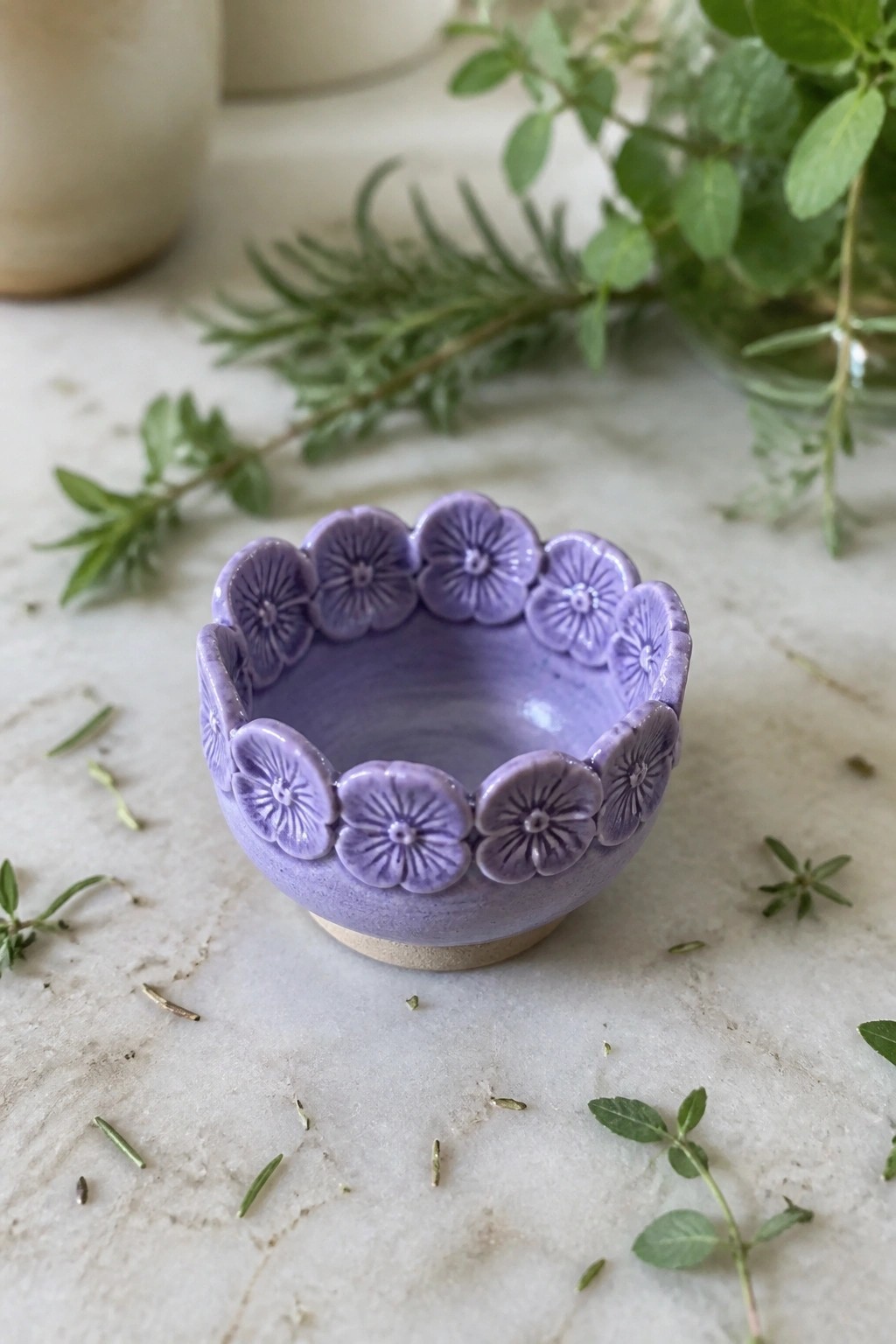
A small ceramic bowl gains interest when its scalloped rim is lined with repeated flower impressions. The flowers are formed directly in the clay so they stand out under a single lavender glaze. This keeps the surface simple while the raised details catch light along the edge. The result is a compact bowl suited for rings, small herbs, or loose change.
The small scale makes this easy to adapt as a nightstand dish or desk catch-all. You can press the same flower pattern with a stamp or carved tool on any round bowl before the clay firms up. Using one glaze color reduces steps and still lets the motif read clearly. The consistent border also photographs well for project boards when you want a clean, repeatable flower idea.
Red Poppy Mixing Bowl

A wide ceramic mixing bowl works well when the interior is painted with loose red poppy flowers that wrap around the curve. The design uses saturated reds for the main blooms, softer pinks for accents, and simple black centers with green stems to keep the pattern readable from a distance. The exterior keeps a plain speckled glaze so the focus stays on the painted flowers inside.
What makes this idea useful is that the bowl can move straight from counter to table without needing extra decoration. You could scale the same poppy motif down to smaller prep bowls or switch the reds to blues if you want a different color story. In a kitchen this shape gives you plenty of room for dough or salad while the painted detail makes it stand out when stored on open shelves.
Wide Bowl With Lotus Border for Succulents

A low, wide ceramic bowl finished in a speckled light glaze carries a repeating blue lotus motif around the outside edge. The design uses the flower pattern as a simple border that frames the rim without covering the whole surface. This keeps the bowl functional as a planter while the lotus motif supplies the required flower detail. The open shape works well for grouping several small succulents together in one container.
What makes this idea useful is the low profile that lets plants spread naturally without needing extra height. You could apply the same lotus border to a taller cylinder pot or repeat it on a set of smaller dishes for matching pieces. The single-color motif on a neutral ground stays easy to paint and leaves room for different plant choices later. In a sunny spot this bowl keeps the focus on the succulents while still showing the flower pattern clearly.
Nesting Bowls with Painted Lotus Motifs

These ceramic bowls use a light speckled clay body covered in a soft matte glaze that serves as a neutral background for the painted lotus designs. One bowl carries a sage green flower while the other uses a dusty pink version, both centered on the exterior so the motif is visible whether the bowls sit alone or stacked. The simple rounded shape and modest size make them easy to produce as a matching pair or small set without needing complex forms or multiple glazes.
The shape does a lot of the work here because the wide curve gives the flower plenty of surface area while still letting the bowls nest cleanly for storage. You could scale the same lotus motif down for smaller prep bowls or up for a single large serving piece by adjusting the petal count and spacing. In a kitchen these work well for sides or snacks, and the painted style translates easily to other objects like plates or mugs if you want to build a loose matching collection.
Lavender Sprig Ceramic Bowl

A small ceramic bowl with a glossy white glaze has several lavender sprigs painted directly onto the interior surface. The design uses muted purple for the flower heads and soft green for the stems and leaves, placed at varying angles so the pattern follows the bowl’s curve without crowding the center. This keeps the exterior plain while turning the inside into the main decorative element, which suits both everyday use and display.
What makes this idea useful is how the motif stays protected inside the bowl, so it holds up better to handling than exterior painting. You could scale the same sprigs down for ramekins or spread them farther apart on a larger salad bowl. In a kitchen this works as a simple way to bring in a botanical detail without adding color to the outside, and the layout would adapt easily to other narrow-stemmed plants like rosemary or wheat.
Sunflower Relief Ceramic Bowl

A medium-sized ceramic bowl formed on the wheel carries a sunflower motif created by pressing a stamp or mold into the soft clay before the first firing. The flower sits front and center with leaves filling the remaining space around the sides, and a simple yellow-to-brown glaze lets the raised edges catch light while the interior stays a solid warm tone. This style keeps the design functional for mixing or serving while adding a clear flower element that reads well from a distance.
The shape works especially well on a kitchen counter or dining table because the wide opening and stable base handle real use without tipping. You could repeat the same stamp on a set of smaller prep bowls or swap the sunflower for another bloom to match different seasons. The relief technique also translates easily to slab-built trays or mugs if you want to carry the motif across multiple pieces for a cohesive look.
Flower Petal Tea Light Bowl

A small ceramic bowl built with overlapping sculpted petals offers a direct way to add a flower motif to a simple form. The petals sit around the rim in coral, pink, and magenta tones, each one shaped and attached before glazing to keep the details crisp. This turns a basic bowl shape into a candle holder while keeping the overall size compact enough for a tea light.
What makes this idea useful is how the raised petals create a natural barrier that holds the candle in place. You can adapt the same petal layout to a slightly wider bowl for holding rings or loose change, or reduce the number of petals to speed up the build. The mix of matte and glossy areas on the petals helps the colors stand out without extra painting. For a gift, this size works well because it needs only a standard tea light to finish the project.
Hanging Wall Pocket Planter

A wall-mounted ceramic pocket bowl gives you a compact way to display a small plant or store items. The half-round form sits flat against the wall and hangs from a single hole at the top. Raised stems and flower heads are pressed into the clay before glazing, so the botanical pattern stays visible even under the soft green finish. This keeps the project focused on the sculpted motif rather than added paint.
What makes this idea useful is how the curved shape holds a plant without using counter space. You could repeat the same pressed stem design on a flat tray or a set of small dishes to match. The muted glaze works on most painted walls and keeps the focus on the texture. For a gift, scale the pocket down slightly and use a single flower instead of the full row of stems.
Frequently Asked Questions
1. What materials are best for creating pottery bowls with flower motifs at home? Start with a suitable clay body such as stoneware or porcelain that holds fine details well. You will also need basic pottery tools like a needle tool for carving petals, a sponge for smoothing, underglazes in various colors to paint the flowers, and a clear food-safe glaze for the final coat. Access to a kiln is essential for proper firing, though some community studios offer rental space if you do not have your own equipment.
2. How can beginners adapt the flower motif ideas if they lack a pottery wheel? Handbuilding techniques such as slab construction or coil methods work well for these designs. Roll out a flat slab of clay, cut it into a circle, and drape it over a mold to form the bowl shape. Once the form is set, use stamps, sgraffito tools, or applique pieces to add flower shapes directly onto the surface before the clay dries. This approach lets you focus on the decorative motifs without needing wheel-throwing skills.
3. Which glazes help the flower designs stand out while keeping the bowls functional? Choose underglazes in vibrant shades for the petals and leaves, then cover everything with a transparent gloss glaze that enhances colors without obscuring details. Test the combination on sample tiles first to confirm the flowers remain crisp after firing. Always verify that the final glaze is rated food safe and lead free if you plan to use the bowls for serving.
4. How should I care for pottery bowls decorated with flower motifs to preserve the designs? Hand wash the bowls with mild soap and avoid abrasive scrubbers that could scratch the surface. Do not place them in the microwave or dishwasher unless the maker specifies they are safe for those uses. Store them away from direct sunlight to prevent any potential fading of the underglaze colors over many years.
5. What variations can I try to expand on the 18 flower motif concepts? Combine different flowers on a single bowl, such as pairing daisies with trailing vines, or experiment with color palettes like soft pastels versus bold primaries. Add texture by pressing real leaves into the clay for vein details or layering multiple underglaze shades within each petal. These small changes create unique pieces while building on the original motif ideas.

Pottery Path is my cozy corner of the internet where I share clay ideas, pottery inspiration, and simple projects you can recreate at home. I love exploring everything from air dry clay to handbuilt pottery to cute minis that brighten your day. My goal is to make clay crafting feel easy, fun, and welcoming for anyone who wants to try it.
You will find beginner friendly tutorials, creative pottery painting ideas, and lots of warm inspiration for slow and happy crafting. If you enjoy hands on creativity, this space will feel like home.