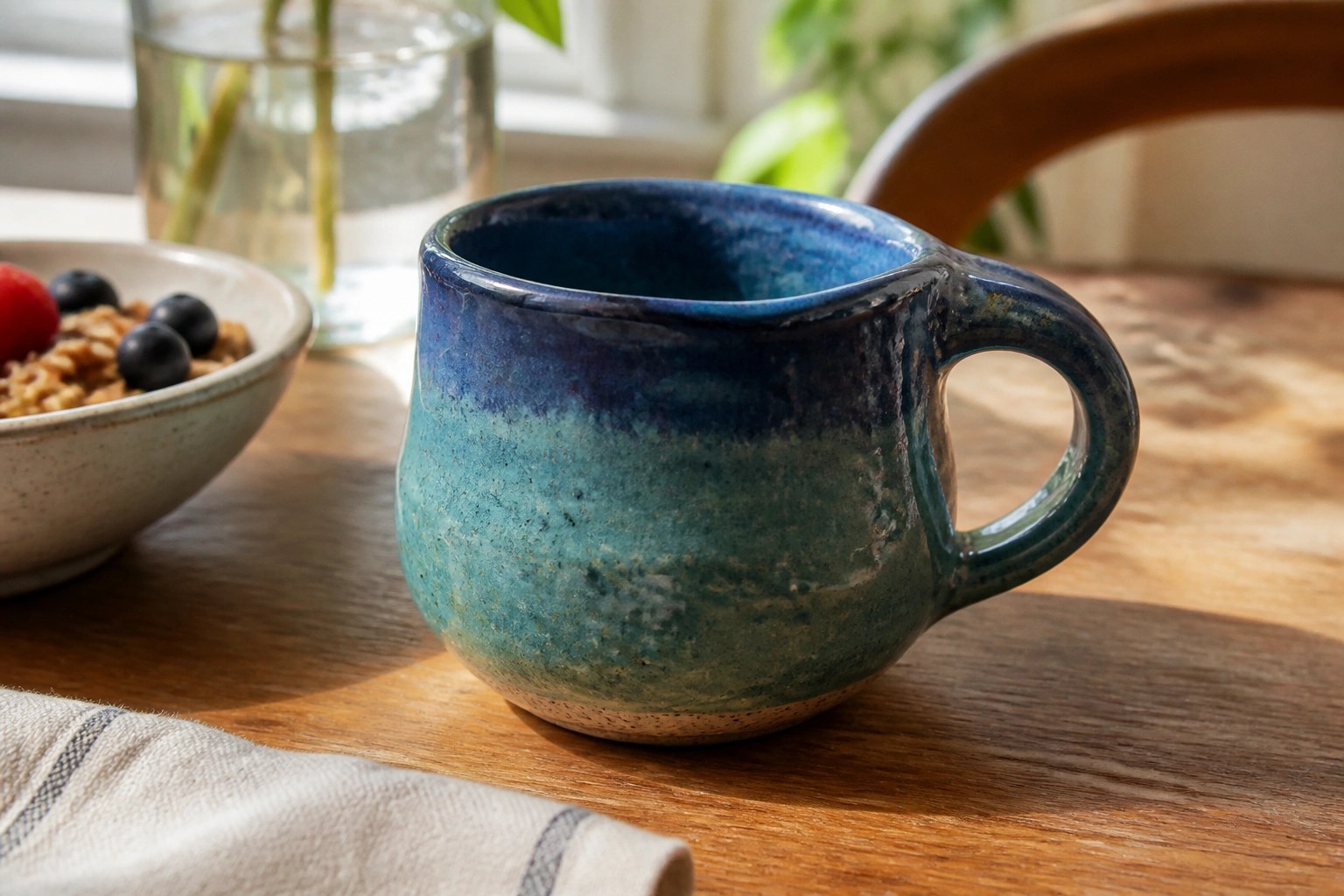
I have been playing around with different glazes on my pottery pieces lately.
Blues and greens always seem to work well for me especially on mugs and bowls.
Earth tones give a nice grounded feel that I like for everyday items.
Soft neutrals are great when I want something simple and calm.
I put together some of my favorite combinations in this list.
Blue Gradient Glaze on a Simple Mug
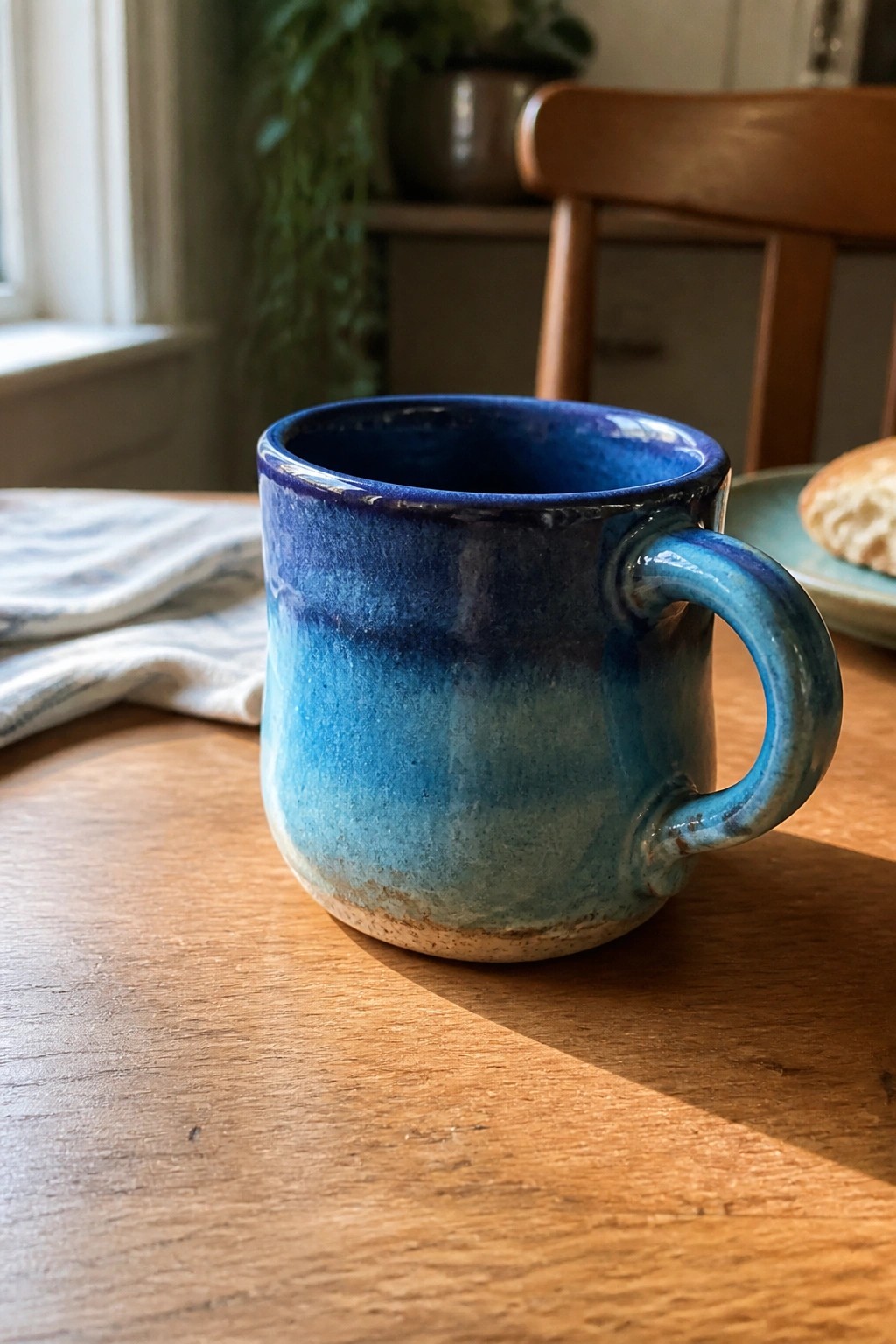
A wheel-thrown mug like this uses a blue glaze applied in layers that shift from deep navy at the rim to a lighter turquoise lower down. The gradual fade creates soft horizontal bands where the glaze thickness changes, giving the surface depth without added carving or pattern. This keeps the form clean and functional while letting the color do the main visual work on an everyday drinking vessel.
The compact size fits well on a desk or in a kitchen cabinet without taking up much space. You could repeat the same layering technique on small bowls or a pitcher by varying how far each glaze coat reaches down the form. The idea also works as a starting point for a set where each piece gets a slightly different stop point in the fade.
Fox-Shaped Planter with Painted Details
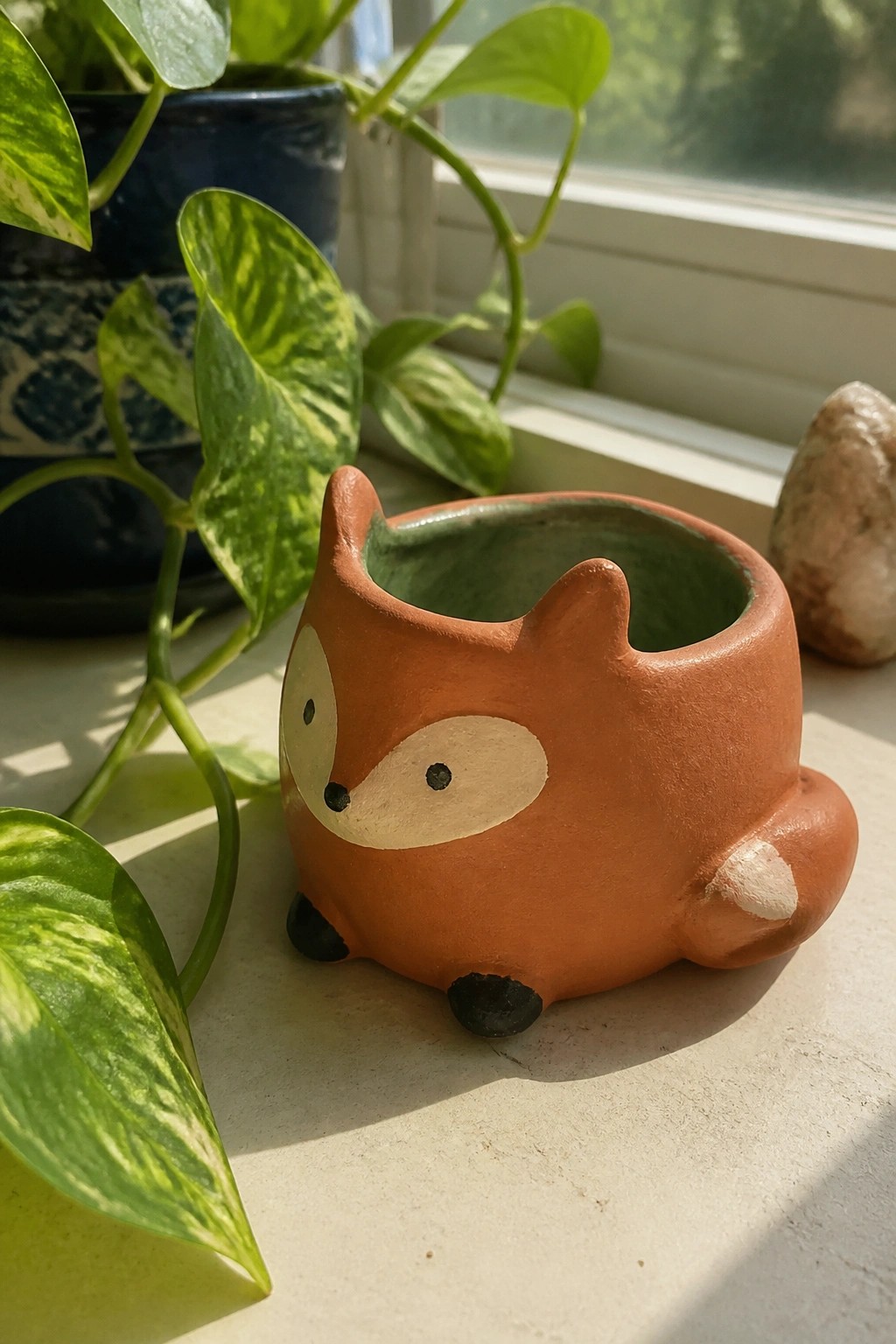
A small fox-shaped planter gives you a compact bowl form when you sculpt the body from clay and hollow out the top. The terracotta clay takes an orange finish on the outside while the interior gets a simple green glaze. Painted beige patches around the eyes, black dots for eyes and nose, and black feet keep the animal shape clear without needing many colors.
The shape does a lot of the work here because the rounded body already holds a small plant or succulent while the ears and tail add just enough detail. This kind of planter works especially well on a windowsill or desk where space is tight. You could simplify it by skipping the painted face and using one solid glaze or turn the same form into a cat or rabbit for variety. The small scale also makes it quick to produce multiples for gifts.
Blue Radiating Glaze Bowl
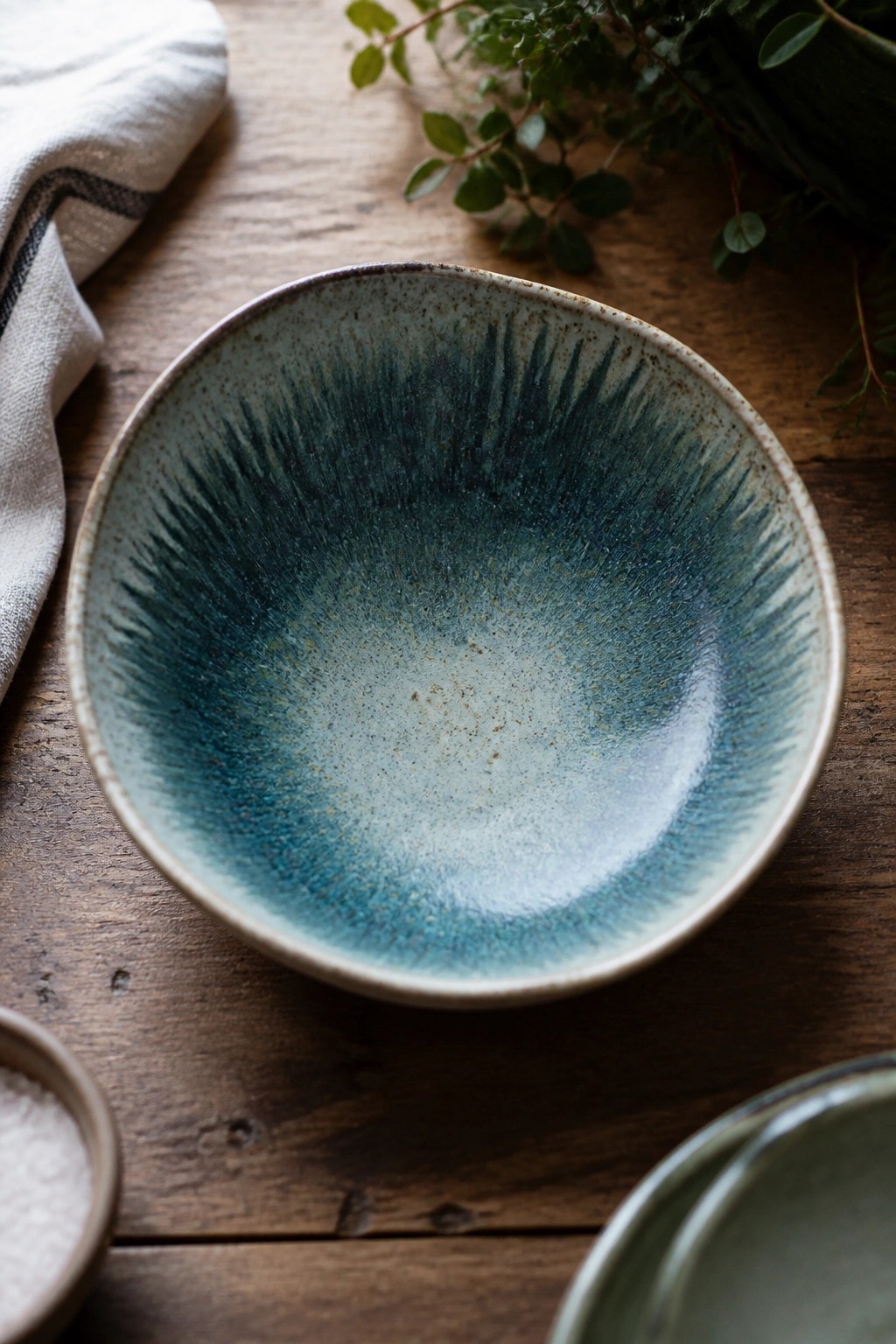
A shallow ceramic bowl finished with a blue glaze that spreads outward in fine brush marks from a pale center to deeper teal tones near the rim. The speckled base layer softens the color transition and keeps the surface from looking flat. This style suits a functional serving bowl or everyday salad bowl where the glaze adds visual interest without complicating use.
What makes this idea useful is how the radial pattern scales easily to different bowl sizes for a simple set. The shape works well in a kitchen for serving or on a table as a catch-all. You could rework the same glaze approach on smaller dishes by tightening the brush strokes or shifting the color mix toward green for variety.
Earthy Two-Tone Glaze on a Tall Ceramic Vase
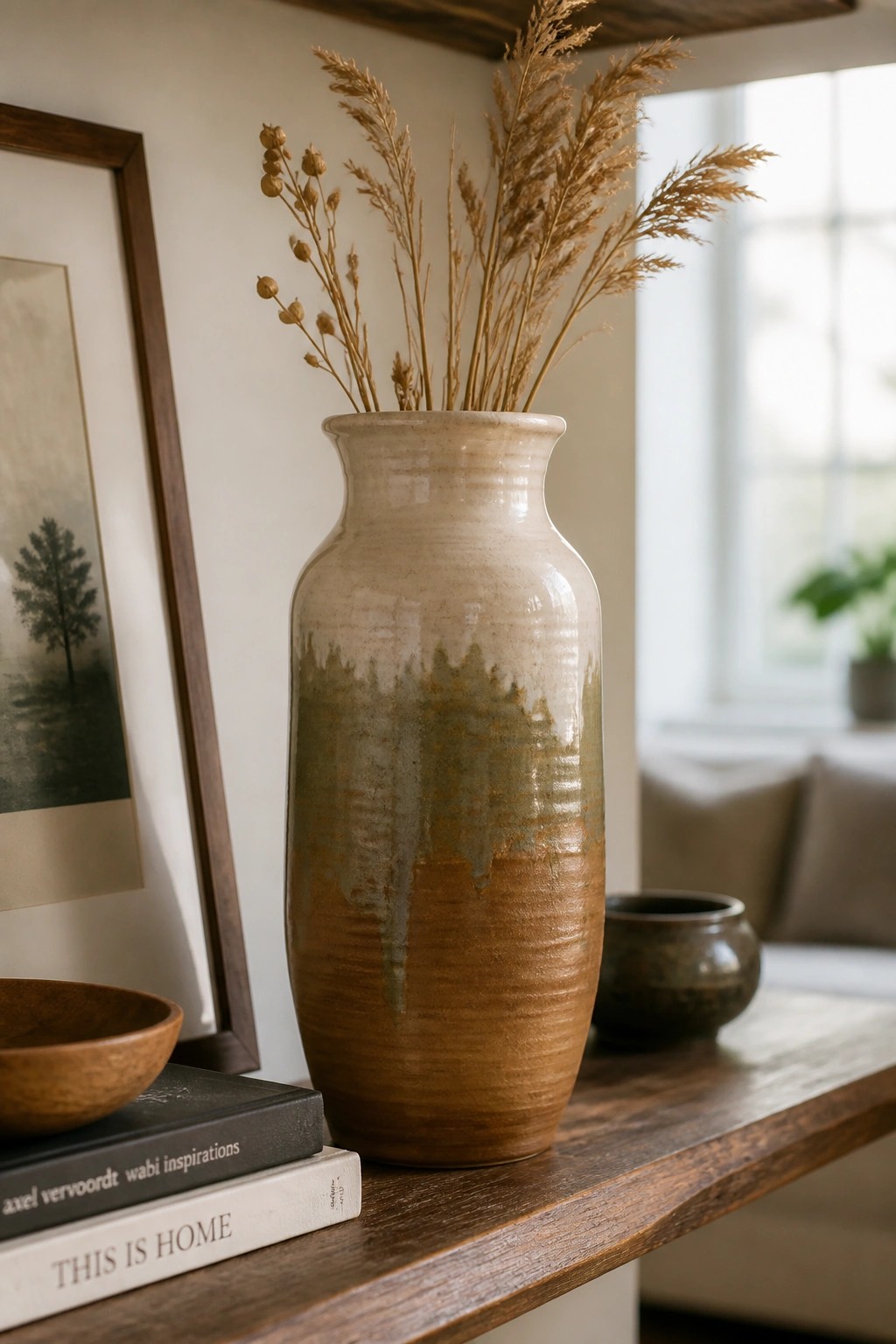
A tall ceramic vase with a rounded body and narrow neck works well when finished in a glaze that moves from a soft cream at the top into deeper brown and olive tones lower down. The visible drip line where the lighter glaze overlaps the darker one adds a simple break in the surface without extra carving or painting. This kind of finish fits the earth tone and soft neutral category and pairs easily with dried stems or stands alone as a shelf piece.
What makes this idea useful is how the color shift hides minor imperfections in the glaze application while still looking intentional. The same transition can be tried on a shorter jug or a set of canisters using the same brown and cream glazes. A vase of this scale fits on a console or mantel without taking over the space, and the neutral palette lets it stay in place through different seasons.
Hanging Tile with Raised Leaf Relief
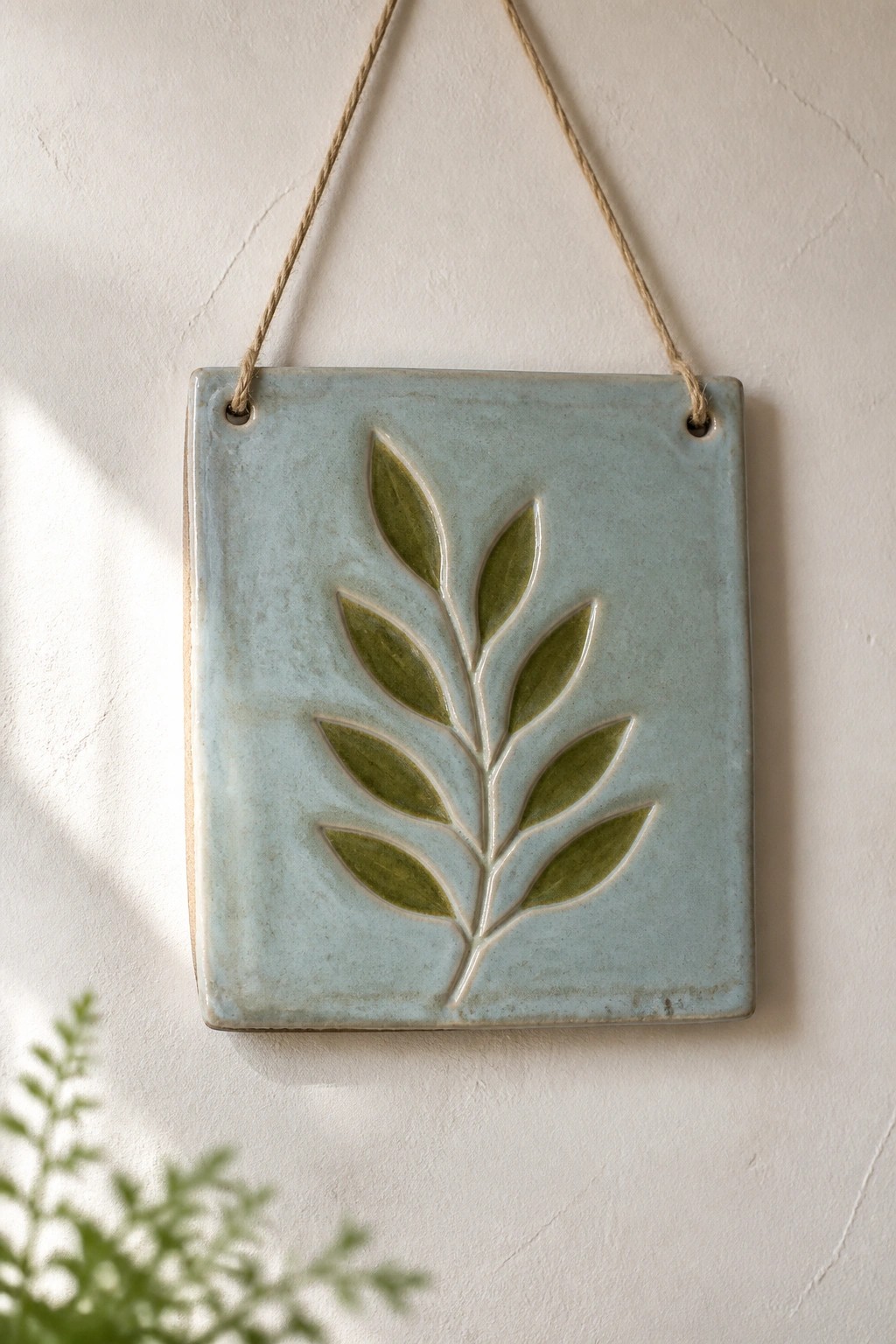
A rectangular ceramic tile works as a wall hanging when two small holes are added near the top edge for cord. The main feature is a raised branch with multiple leaves sculpted in relief, covered in a light blue glaze while the leaves receive a contrasting green that emphasizes the texture. This approach turns a flat slab into a simple decorative object that needs no additional framing or hardware.
The shape does a lot of the work here because the rectangle hangs cleanly without extra weight or bulk. You could repeat the same leaf motif on a smaller scale for drawer pulls or a set of magnets. In a kitchen or plant corner the blue-green combination blends with existing pottery without competing for attention. The relief carving stays visible even if you simplify the color palette to one glaze.
Soft Neutral Ring Dish with Blue Rim
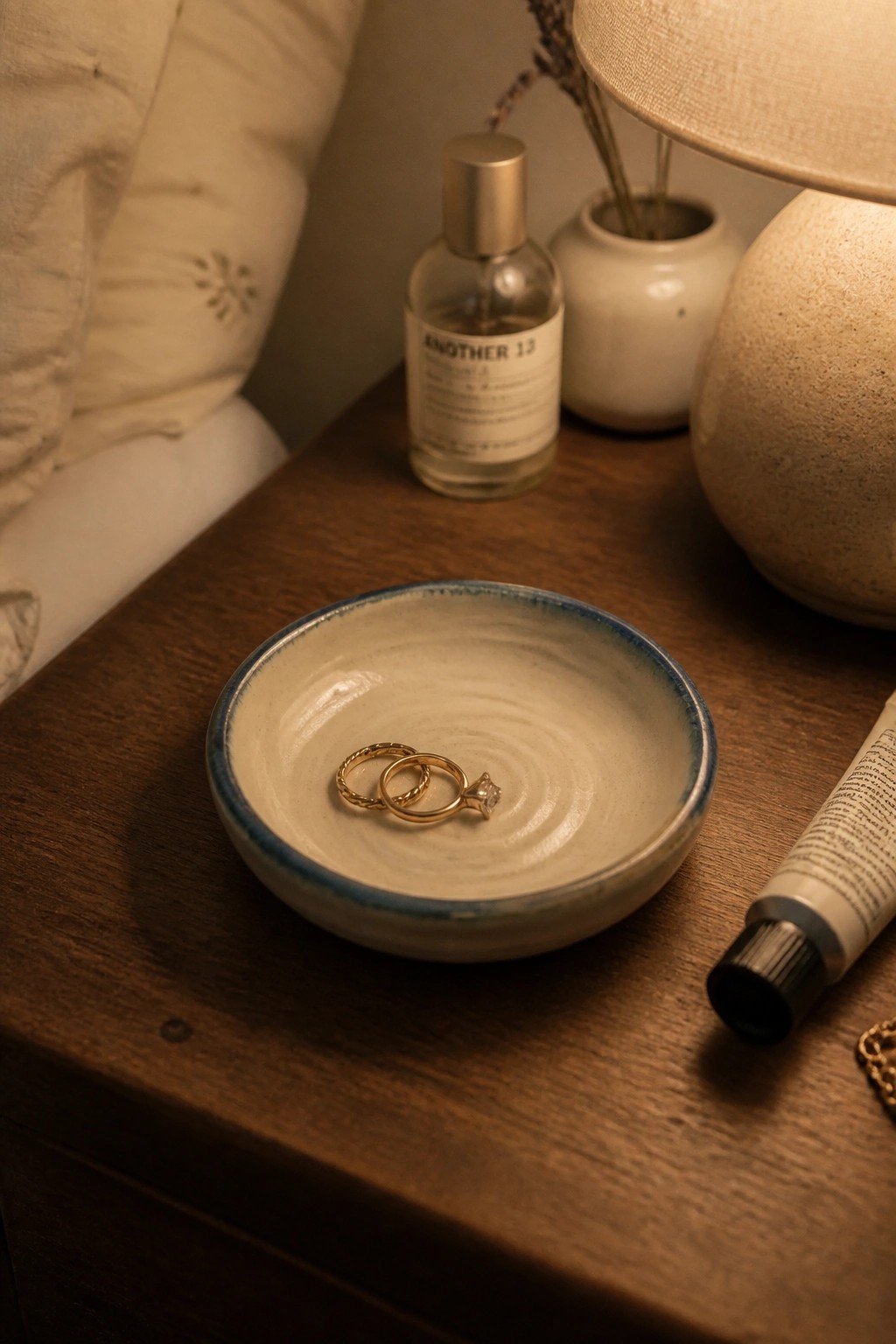
A small ring dish offers a practical way to hold jewelry on a nightstand or dresser. The form is a shallow, rounded bowl with a soft off-white glaze across the interior and a narrow blue rim along the edge. The surface has a gentle spiral texture that catches light without adding extra decoration. This approach combines a neutral base with a single accent color for a clean, adaptable look.
The shape does a lot of the work here because the low profile keeps it stable while still containing rings or small items. You can scale the same rim treatment up for a soap dish or down for a tiny trinket holder depending on your space. The neutral glaze makes it easy to match with wood furniture or other earth tones, while the blue edge prevents it from blending in completely. For a variation, swap the blue for a muted green or add a second thin line inside the rim.
Hand-Sculpted Ceramic Spoon Rest
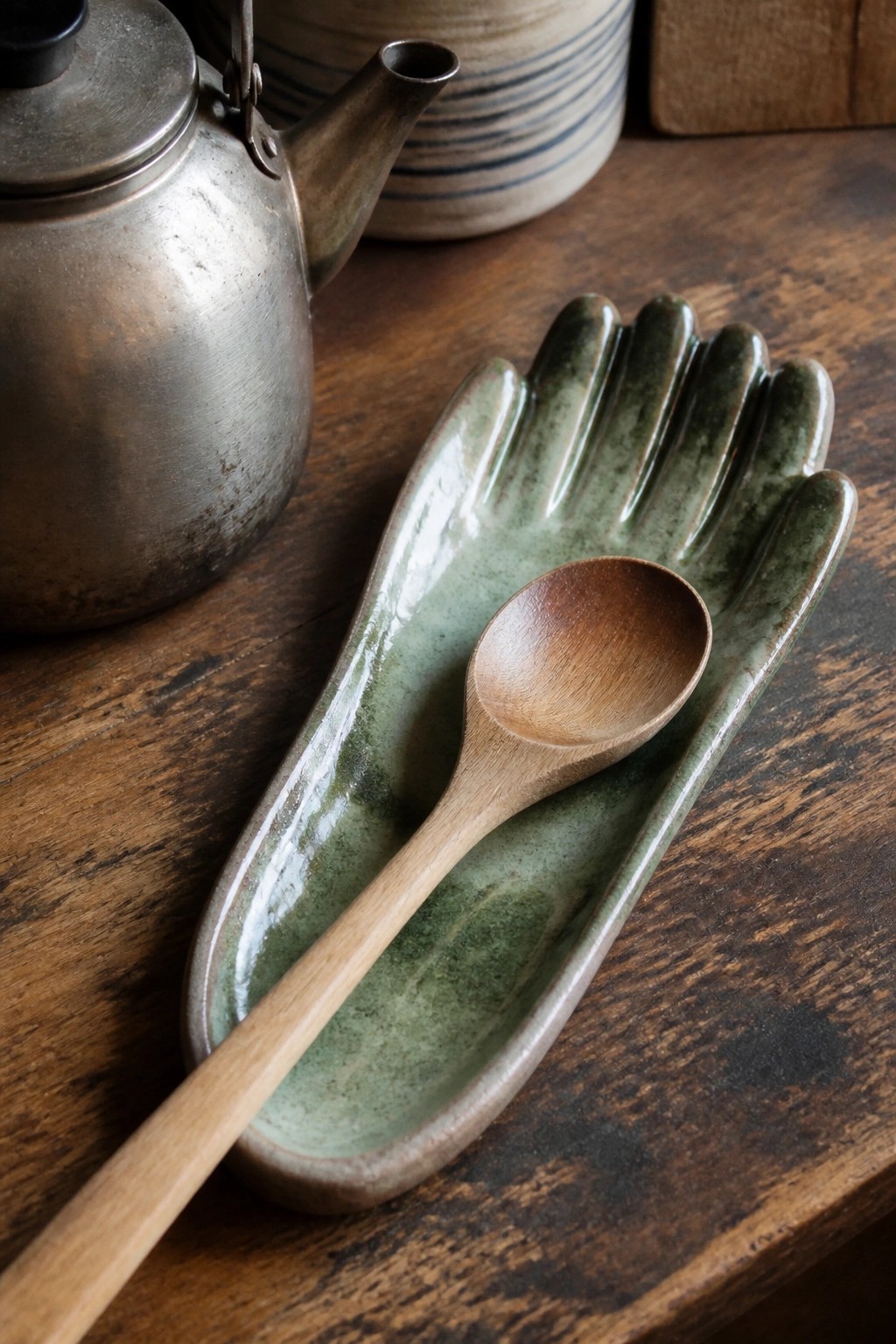
A hand-shaped ceramic tray works well as a spoon rest or small utensil holder on a kitchen counter. The form uses raised fingers to create natural ridges that keep a spoon from rolling, while the mottled green glaze settles into the recessed areas to emphasize the sculpted details. This turns a basic kitchen tool into a compact piece that can sit out without looking out of place next to other cookware.
The cupped palm shape makes the piece practical for catching drips and containing small tools during cooking. You can adapt the same hand form into a smaller ring dish or stretch it into a longer tray for multiple utensils. A glaze in this range of greens pairs easily with wood and metal items already in most kitchens, so the idea translates well if you want to make a matching set for gifts or daily use.
Sunburst Glaze on a Scalloped Bowl
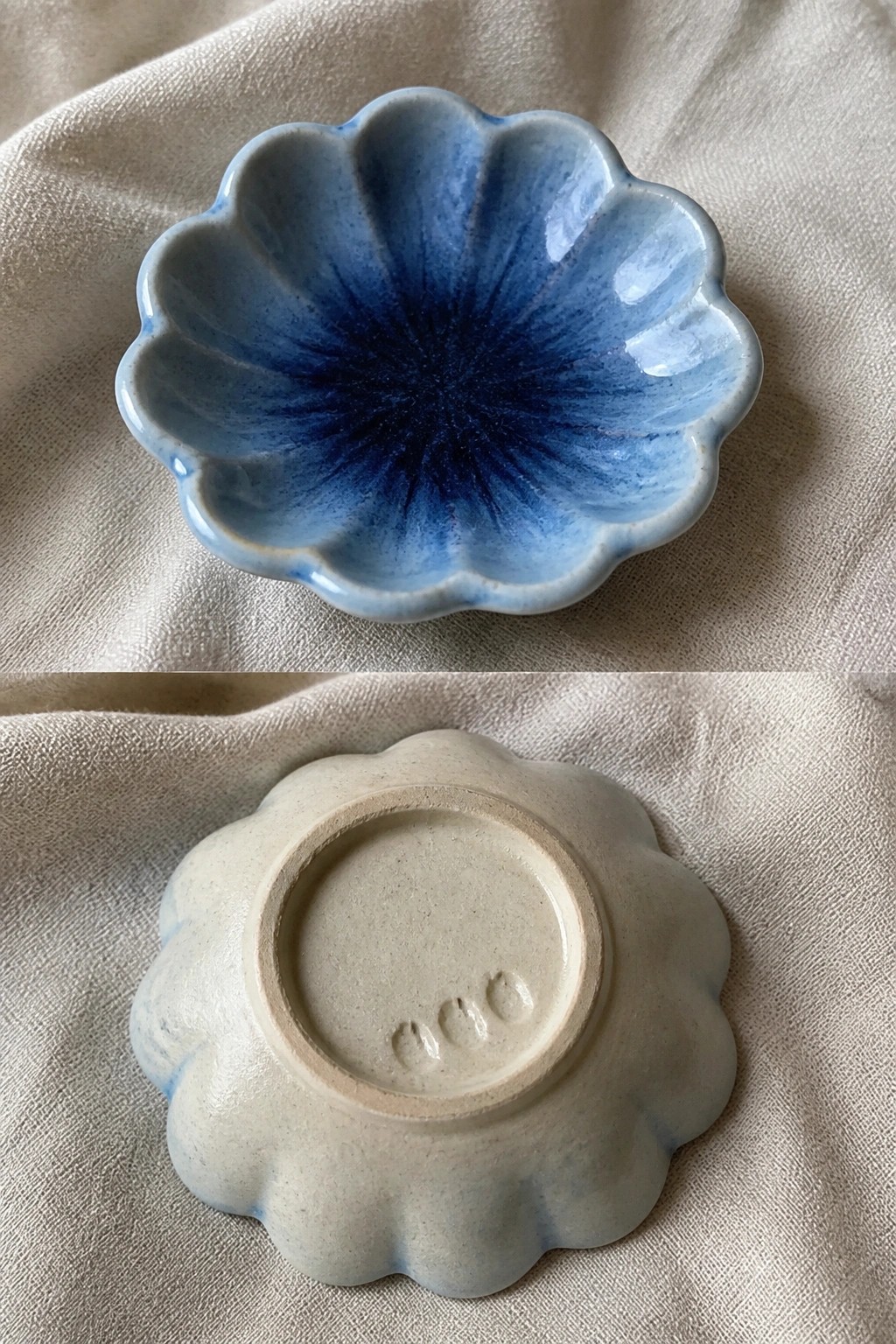
A small ceramic dish shaped with rounded petals around the rim uses a blue glaze that moves from dark at the center to lighter tones near the edges. The radial pattern forms naturally during application and gives the interior a simple starburst look without added lines or stamps. This style works well for a ring dish, small condiment bowl, or jewelry catch-all because the compact size and scalloped edge keep it distinct from plain round forms.
What makes this idea useful is how the petal rim and radial glaze together create a finished look with minimal extra work. You can repeat the same glaze approach on a set of small dishes or scale it up for a larger serving plate. The shape also translates easily to soap dishes or tea bag holders if you adjust the depth slightly. For a gift, this size and color scheme fits quickly into bathroom or desk styling without needing much space.
Mottled Green Tea Light Holder
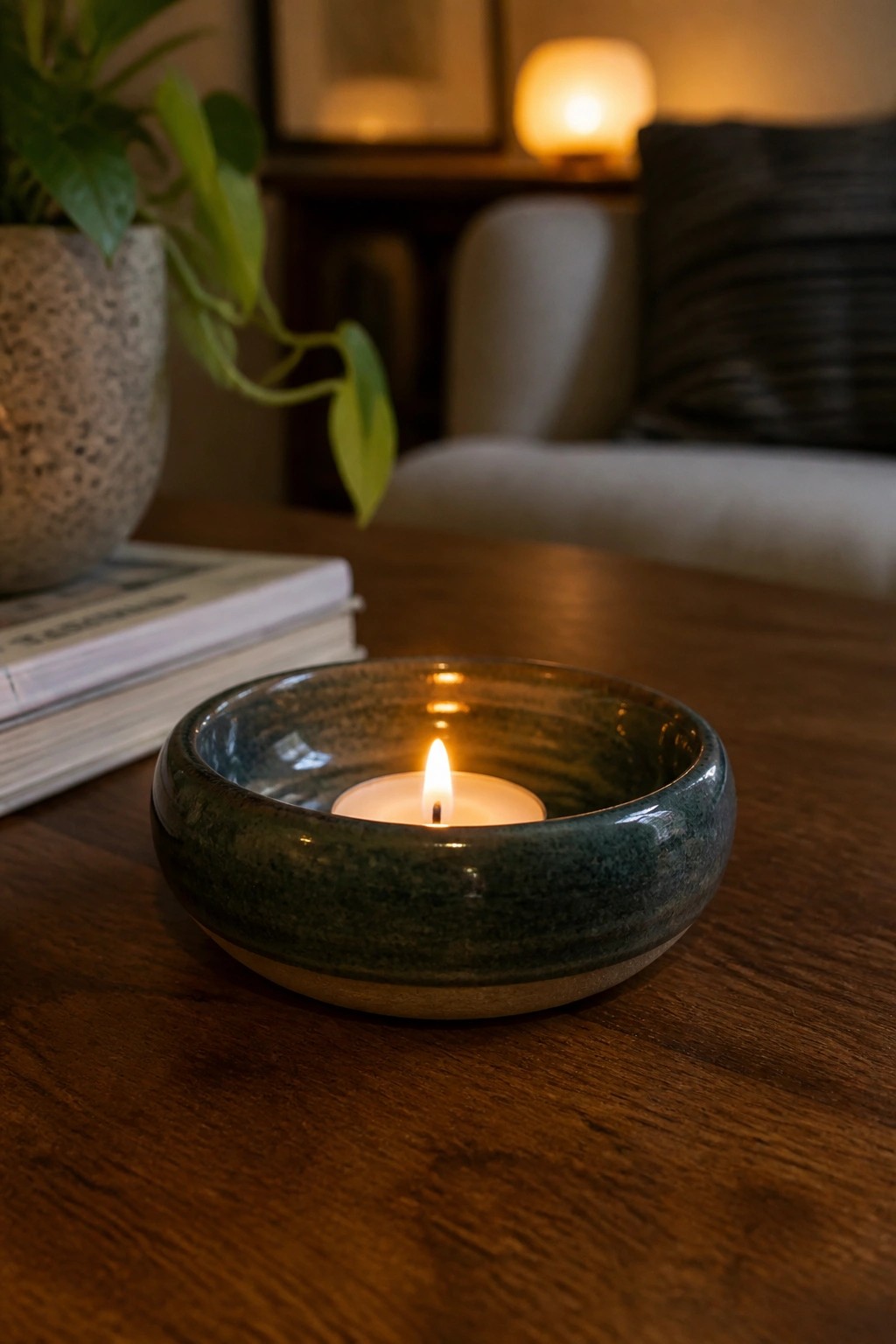
A low, wide ceramic bowl works well as a tea light holder when glazed in a deep mottled green that mixes blue tones with earthy speckles. The simple rounded form keeps the flame stable and contained while the glossy finish reflects light without overpowering the glaze pattern. This idea fits the category of small candle pieces that rely on surface color rather than added details or complex shaping.
The compact size makes it easy to move between shelves, side tables, or mantels. You could repeat the same bowl shape in a slightly larger version for a pillar candle or switch the use to a shallow ring dish or desk tray. The glaze palette slots directly into green and earth tone collections, and the speckled effect gives the piece enough visual interest to photograph well for inspiration boards.
Terracotta Fox Figurine Using Earth Tone Glazes
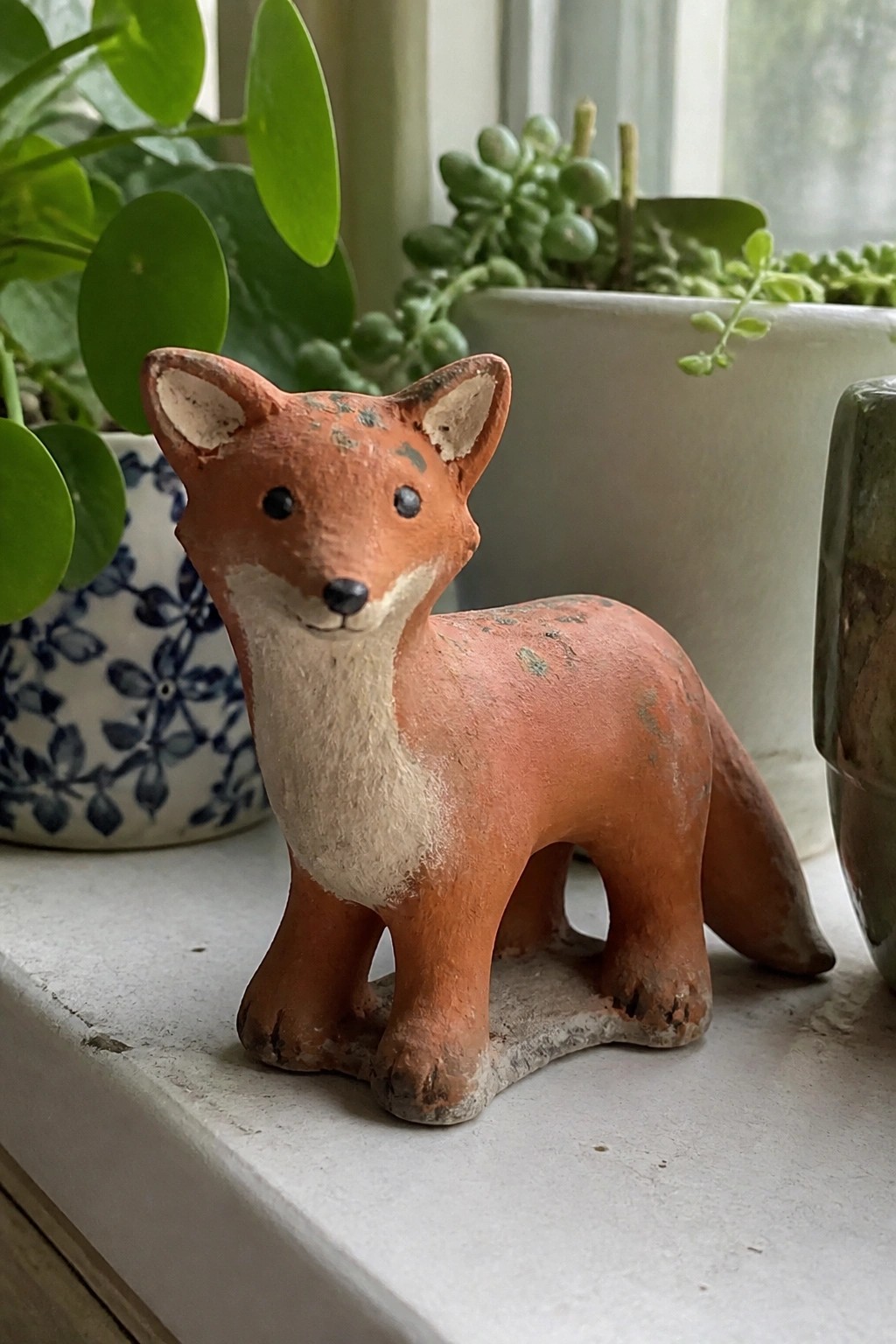
A small fox figurine formed from clay uses a matte terracotta glaze over the main body and legs. The chest, muzzle, and inner ears receive a soft off-white glaze that breaks up the orange-red surface and adds simple contrast. Black dots form the eyes and nose while faint green specks appear across the back from either a second glaze layer or intentional spotting. This keeps the project focused on basic animal shaping and a limited earth-tone palette that matches the article theme.
The small scale makes this easy to adapt into other animal shapes using the same two-glaze setup. It works well as a windowsill accent next to plants or on a narrow shelf where larger pieces would not fit. You could swap the fox for a rabbit or bird and keep the terracotta base with cream accents for a quick variation. The flat base also lets you add it to a tray or group several figures without extra hardware.
Neutral Base with Green Drip Glaze for Bathroom Holders
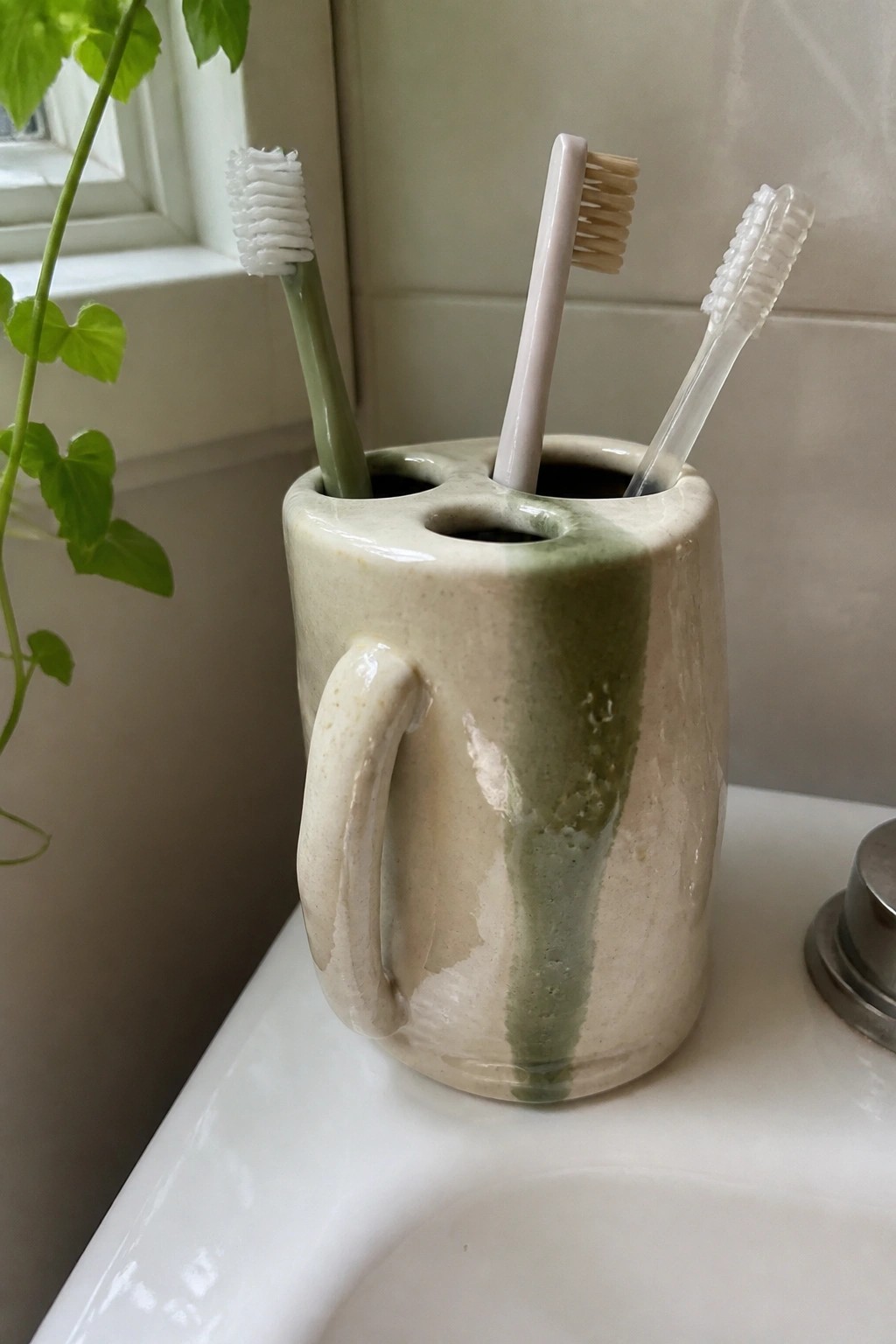
A handmade ceramic toothbrush holder with three holes and a side handle uses a speckled cream clay body covered by a flowing green glaze that runs vertically down one side. The multiple openings keep brushes upright and separated while the handle adds a practical grip for moving the piece around the sink. This approach pairs a simple form with an earth tone glaze that fits the soft neutral and green palette without needing extra decoration.
What makes this idea useful is how the drip glaze creates interest on a small scale without extra painting or carving. The same shape works well on a bathroom counter or as a desk organizer for pens and small tools if you reduce the number of holes. You could swap the green for other earth tones or soft neutrals to match different tile colors, and the handle makes the piece easy to lift for cleaning. The compact size also translates well to a similar caddy for makeup brushes.
Blue-Green Gradient Glaze on a Rectangular Planter
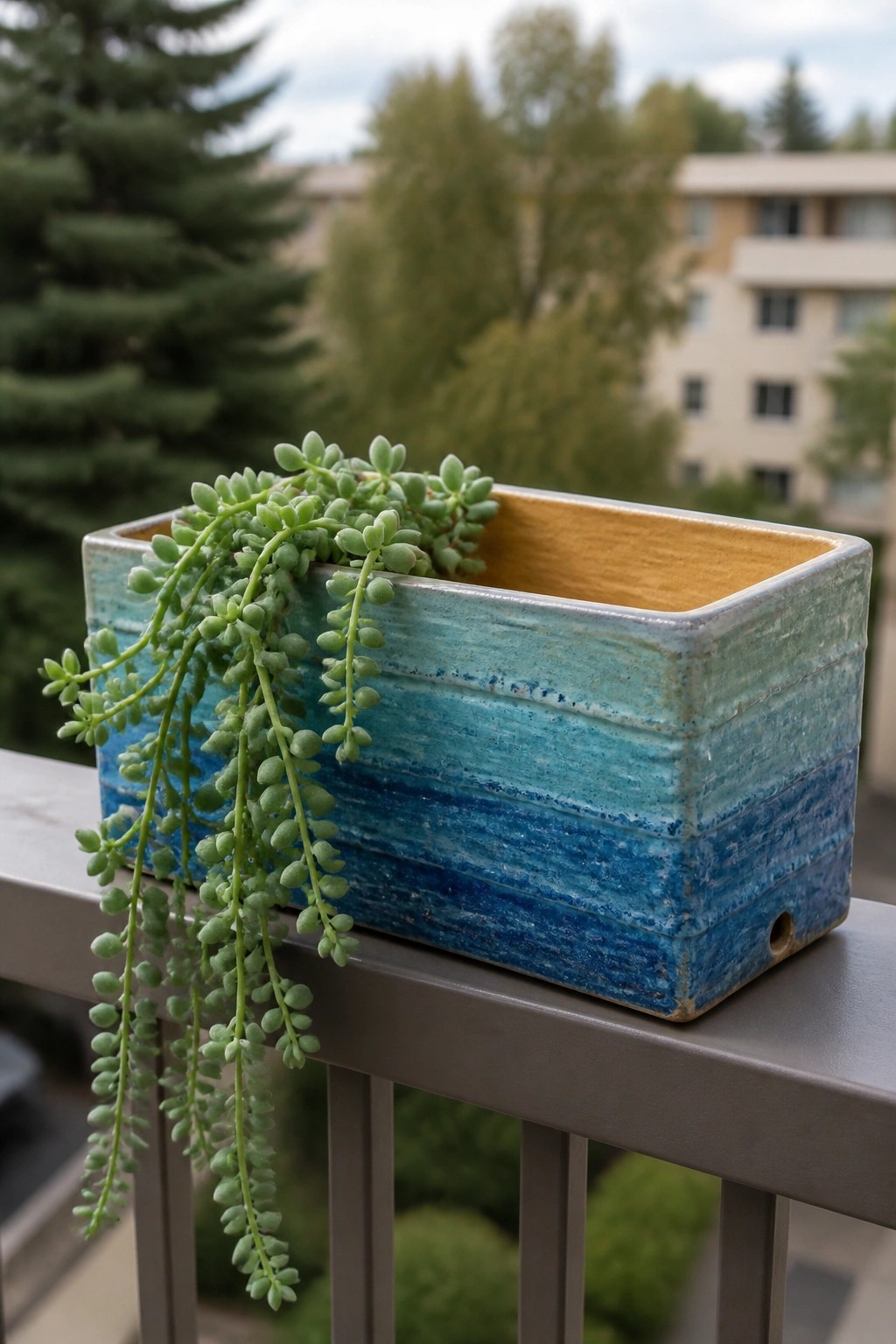
A rectangular ceramic planter with a blended blue to teal glaze across the exterior creates a simple but striking look for succulents or trailing plants. The horizontal texture in the glaze adds subtle variation while the lighter interior keeps the focus on the plant. This approach works well for a mid-size piece that sits on a railing, shelf, or windowsill without taking up much space.
The shape does a lot of the work here because the long, low form supports trailing growth without crowding. You could adapt the same glaze blend to a smaller square pot or a wider tray for different plant arrangements. It stands out in photos for plant styling because the color shift reads clearly even from a distance. For a balcony or outdoor spot, this size gives you room to move plants around easily.
Speckled Green Ceramic Dinner Plate
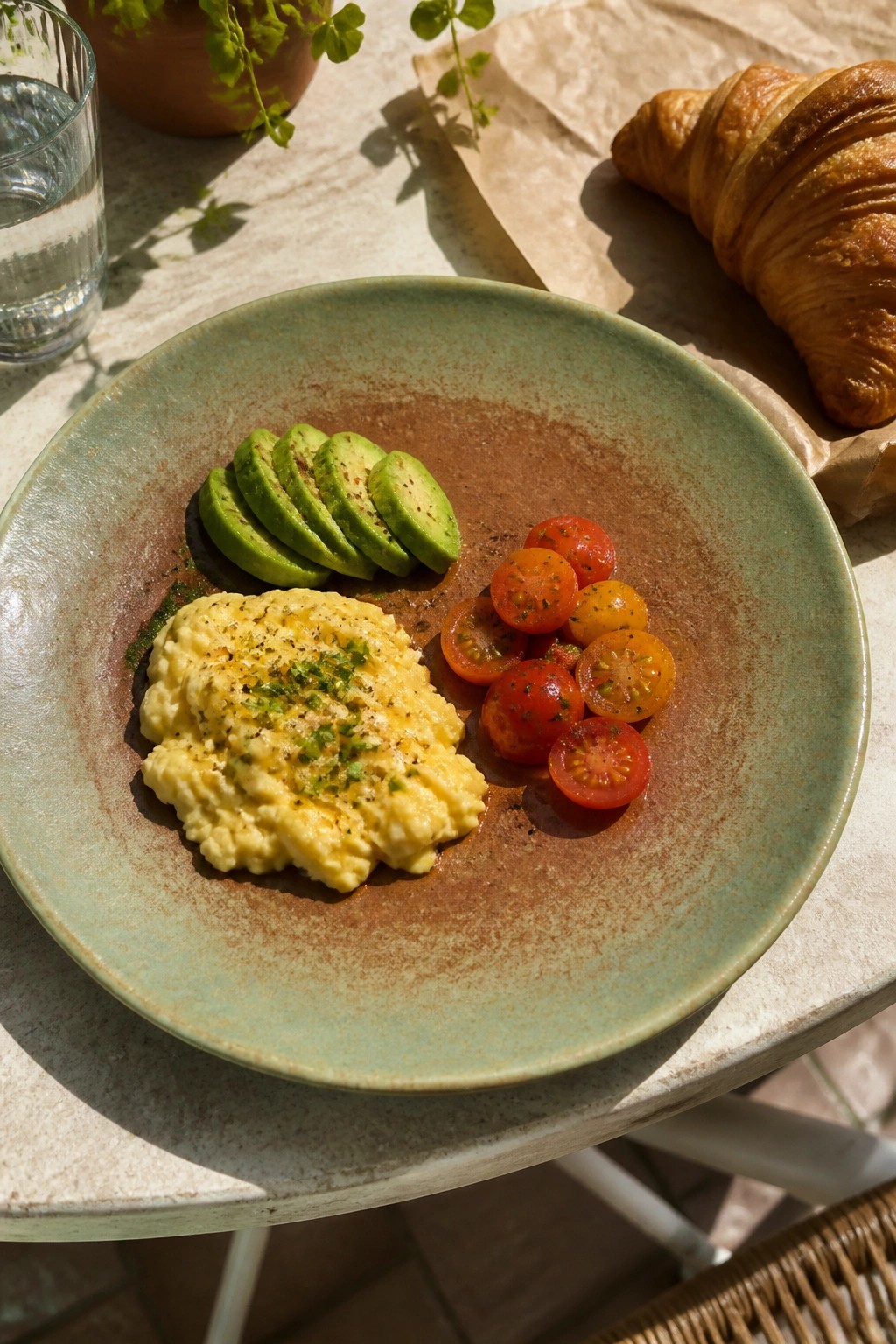
A wide, shallow ceramic plate finished with a mottled green glaze that breaks to show warm brown tones underneath. The glaze sits unevenly across the surface, creating natural color shifts that give the piece an organic look without any added decoration. This approach fits the dinner plate or serving plate category and works because the soft green and earth tones stay neutral enough to frame food without competing with it.
What makes this idea useful is how the glaze variation adds subtle interest while staying versatile for daily use. You could apply the same mottled green finish to side plates or shallow bowls to build a simple matching set. In a kitchen this shape holds up well for both breakfast and dinner portions, and the color sits comfortably with other earth-tone pieces on open shelves. The same glaze effect could be simplified on a smaller scale for a tray or adapted to a deeper bowl shape if you want to change the function.
Blue-Green Glazed Mug with Sculpted Face
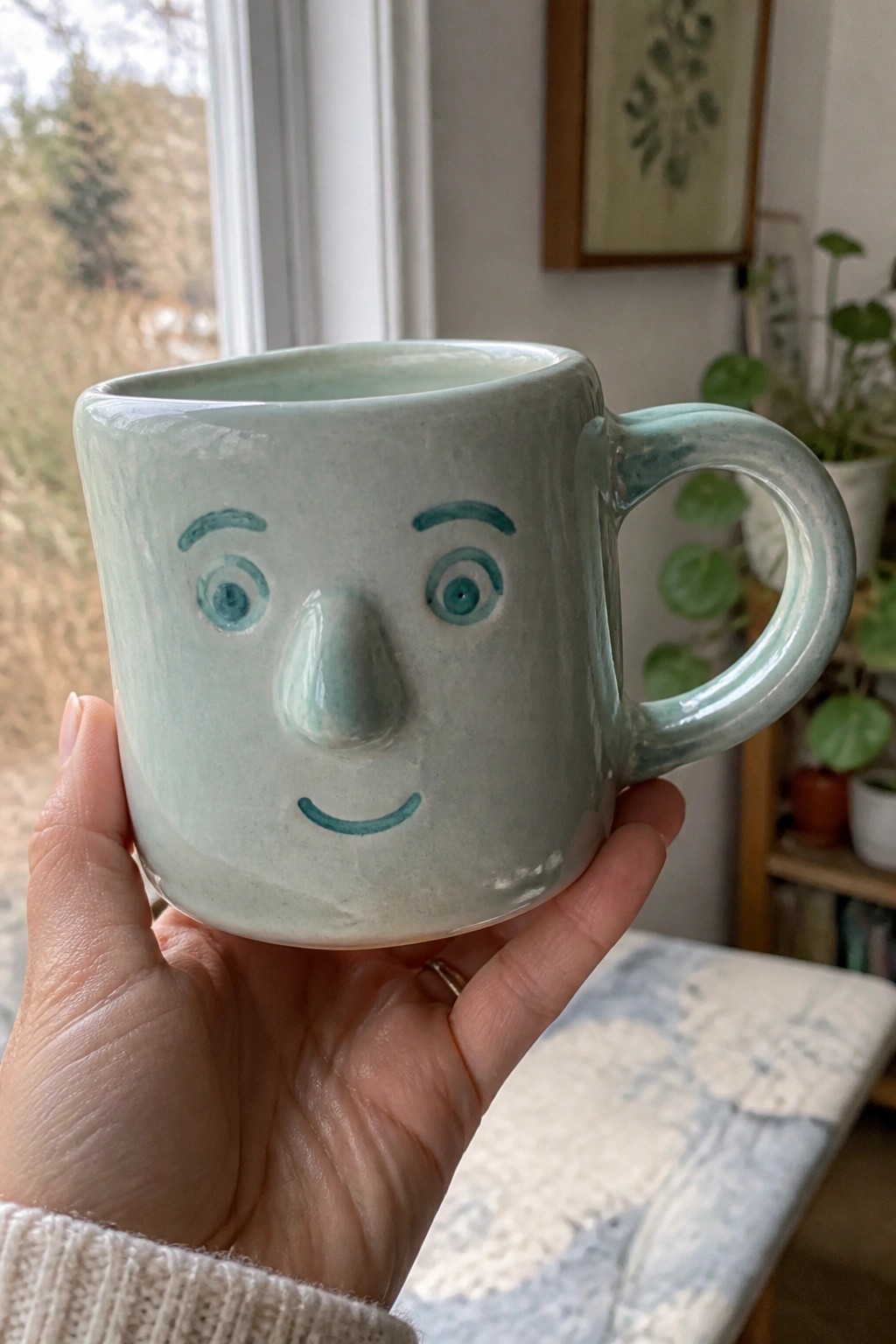
A small ceramic mug works well here because the form is simple enough to throw or hand-build while still leaving room for a face on the front. The nose is raised from the clay, and the eyes, brows, and mouth are added with a contrasting teal glaze over the pale mint base. This keeps the design readable without needing many colors or complex carving.
What makes this idea useful is how easily the face can be adjusted in size or expression to fit other mugs or small cups. The soft green glaze pairs with everyday kitchen use and still shows up clearly in photos for sharing. You could repeat the same face layout on a set of four mugs or swap the teal for a darker blue to change the mood without changing the shape. For gifts, this size and detail level finishes quickly once the base form is made.
Divided Salt Cellars in Earthy Glazes
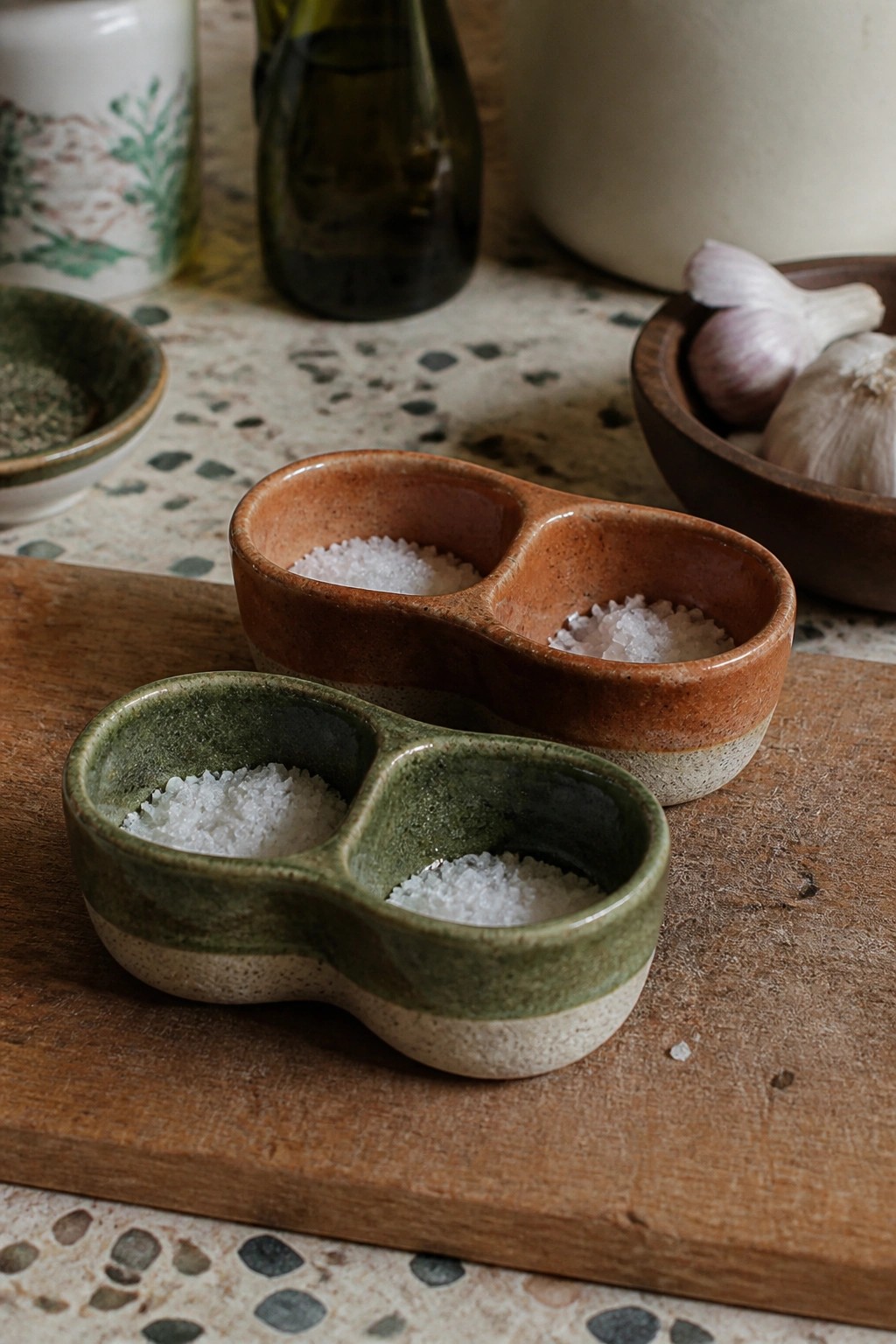
These double-compartment dishes function as compact salt cellars or spice holders for the kitchen counter. The connected figure-eight shape keeps two different seasonings separate in one small piece. The glazes use simple earth tones, with a speckled green on one and a warm terracotta over a lighter base on the other, so the form stays visible while the colors add contrast.
What makes this idea useful is how the divided shape works for multiple small kitchen tasks beyond salt. You could make the same form slightly larger for holding nuts or olives during meals. The small scale also adapts easily into a two-section ring dish or desk tray by switching to softer neutral glazes. In a kitchen setting this kind of piece keeps daily seasonings handy without taking up much space.
Speckled Soap Dish with Drainage Ridges
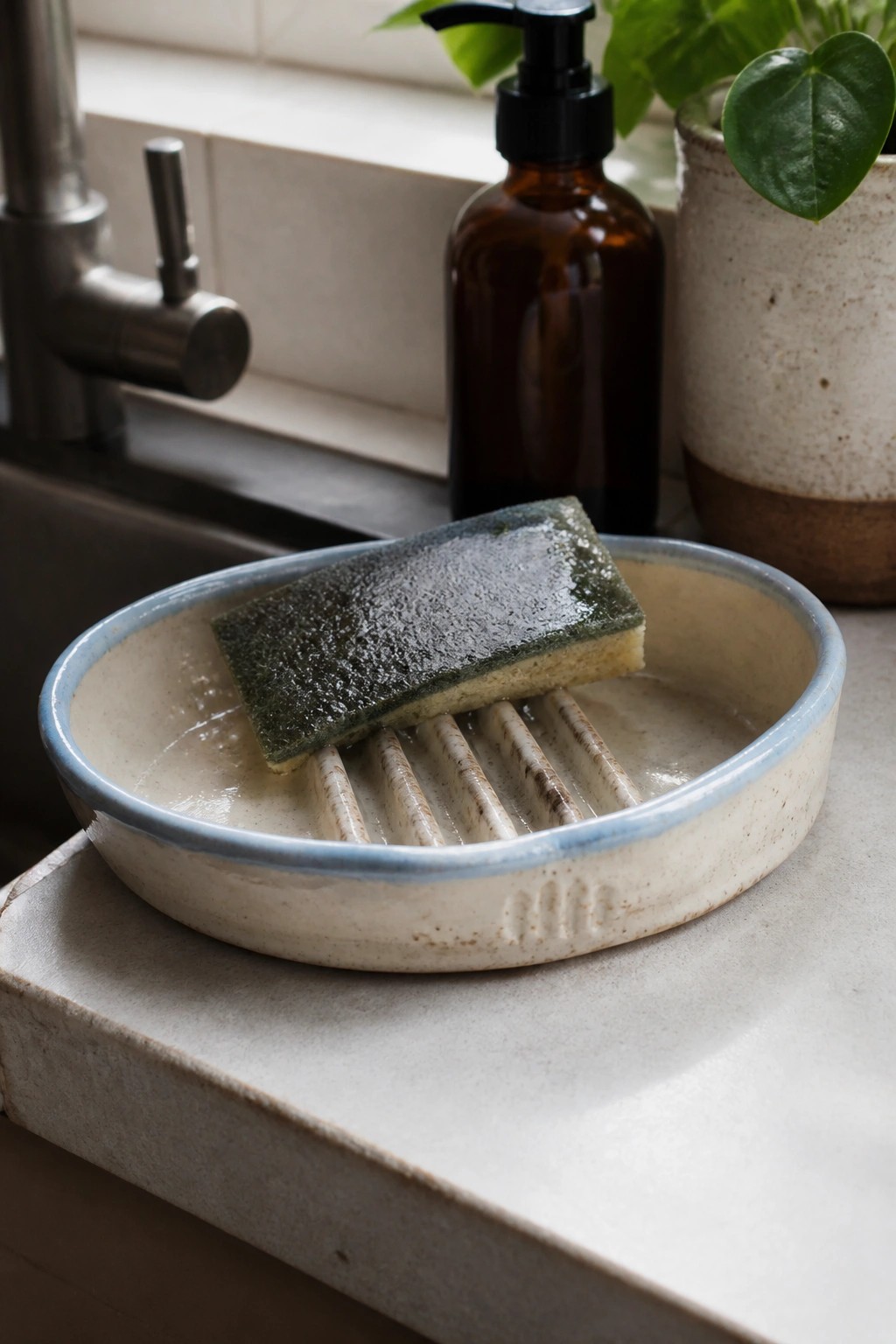
A round ceramic soap dish with raised ridges down the center keeps a sponge lifted so water drains instead of sitting in a puddle. The soft neutral glaze has light speckling and a thin blue rim that adds a touch of color without overpowering the piece. The shallow form and simple rolled edge make it stable on a counter while still looking like a finished pottery object rather than a plain tray. This fits the category of a practical bathroom or kitchen item that combines function with an earthy glaze palette.
What makes this idea useful is how the ridges turn a basic dish into something that actually solves a sink-side problem. You could scale the same shape up slightly for a bar soap holder or swap the blue rim for a green accent to match other pieces in the same glaze set. The neutral base with one rim color keeps it easy to reproduce even if you only have a couple of glazes on hand. For Pinterest, the combination of visible texture and clear function tends to get saved more than plain round dishes.
Functional Yarn Bowl in Blue-Green Glaze
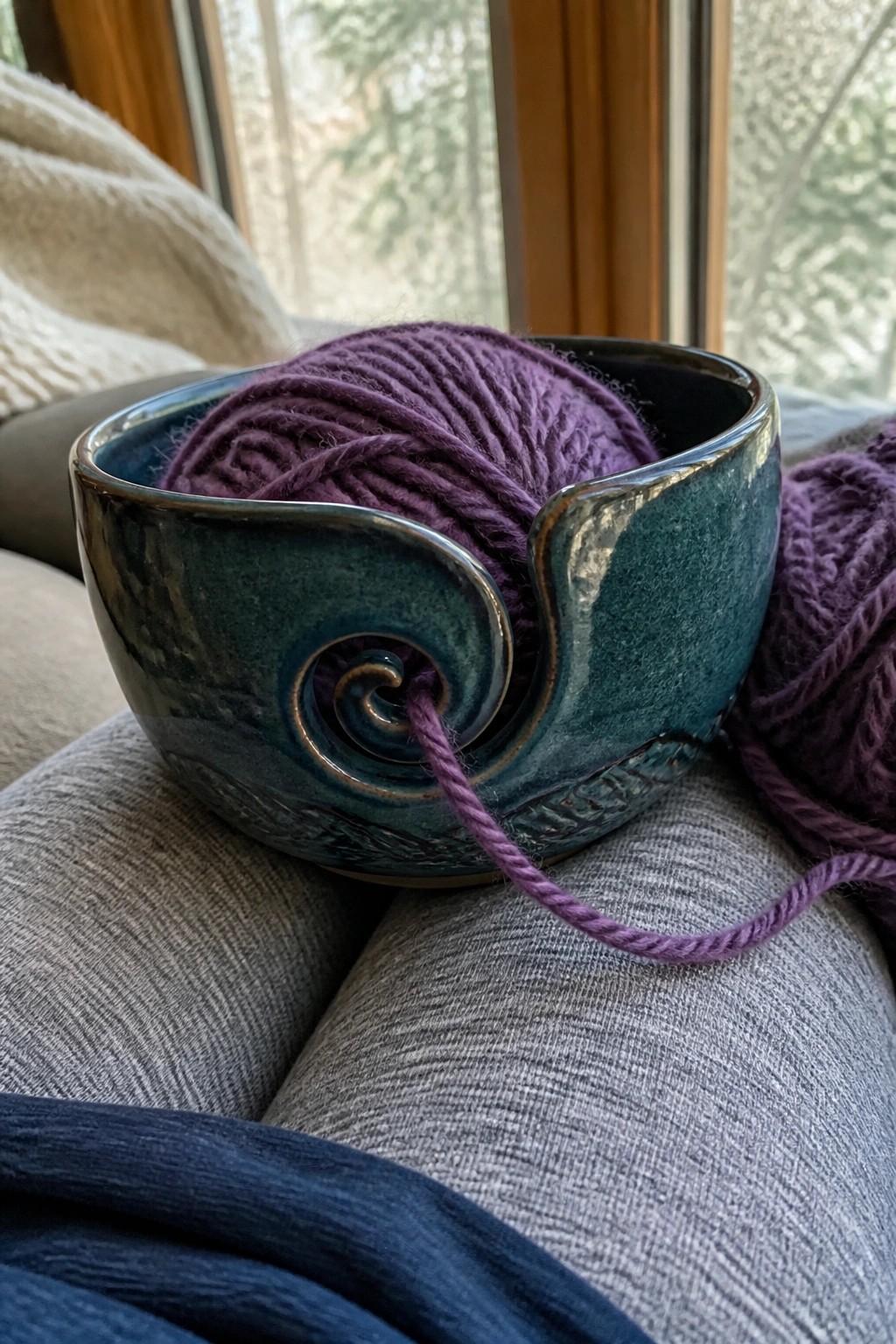
A yarn bowl is a simple ceramic project that keeps yarn balls from rolling while you work. This version uses a rounded bowl form with a sculpted spiral cutout along one side that guides the strand outward without snags. The glossy blue-green glaze covers most of the surface and pools darker in the recessed areas, which helps the feed detail stand out.
What makes this idea useful is how the notch turns an ordinary bowl into a dedicated tool for knitting or crochet. You could repeat the same spiral opening on a smaller bowl for embroidery floss or change the glaze to a soft neutral for a subtler version. In a craft room or living space, this shape keeps supplies tidy and works well as a gift for anyone who knits regularly. The small scale also makes it easy to test new glaze colors without using much clay.
Small Lidded Jar with Blue Stripe
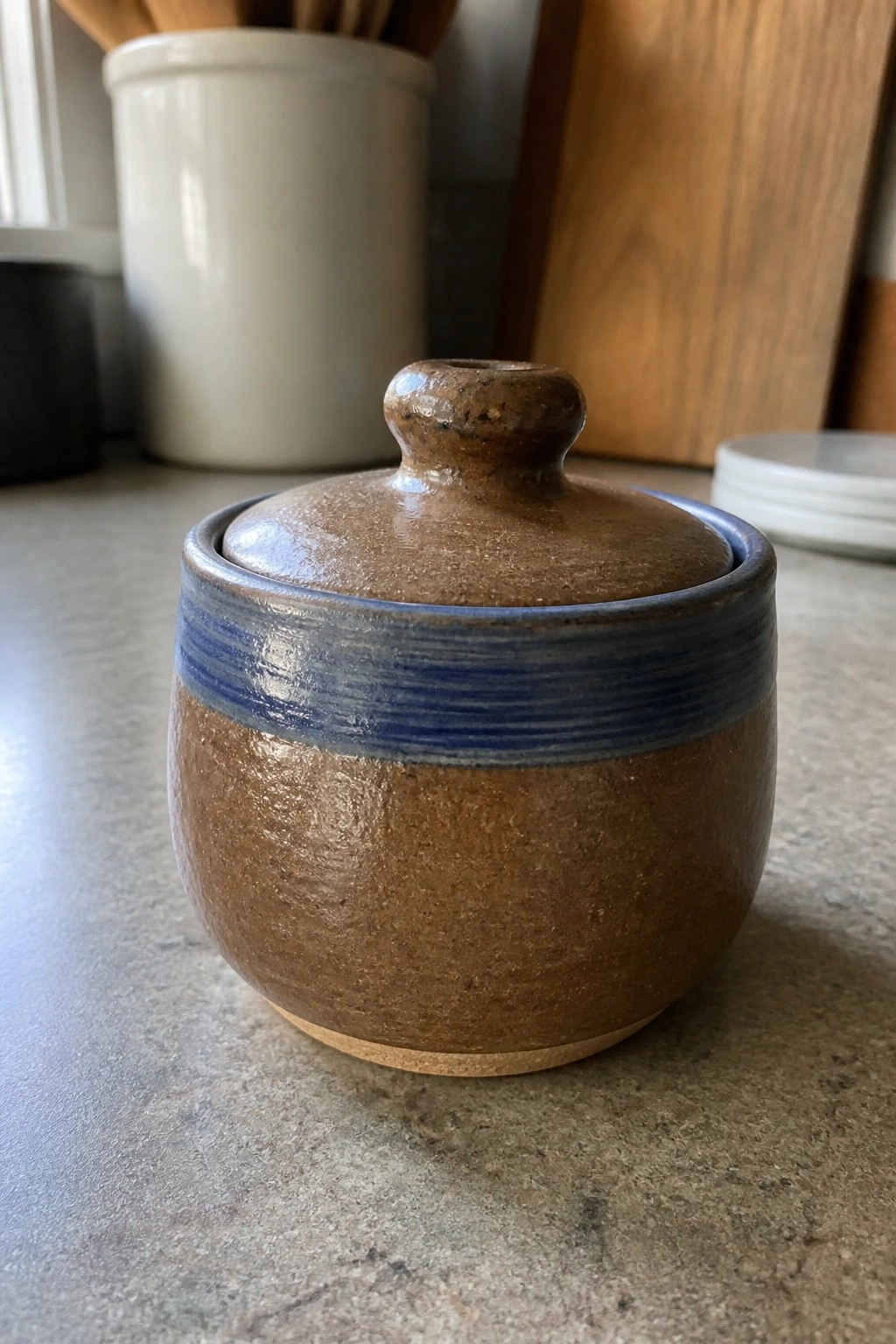
A small lidded jar makes a practical kitchen storage piece for salt, sugar, or loose tea. The brown speckled glaze covers the body while a single blue band circles the upper section and rim, creating a clear horizontal break that keeps the round form from looking plain. The lid sits flush with a simple knob handle, which makes one-handed use easy during cooking. This approach works as a kitchen item that stays both functional and compact on a countertop.
What makes this idea useful is how the modest size fits crowded shelves or small prep areas without taking over the space. You could repeat the blue band in two thinner lines or swap the color to match existing dishware. For a gift, something like this pairs well with a small batch of homemade spice blends. The same shape and stripe layout could shift to a taller canister for coffee or a shallower version for a bathroom cotton ball holder.
Pedestal Candle Holder with Blue-Green Rim
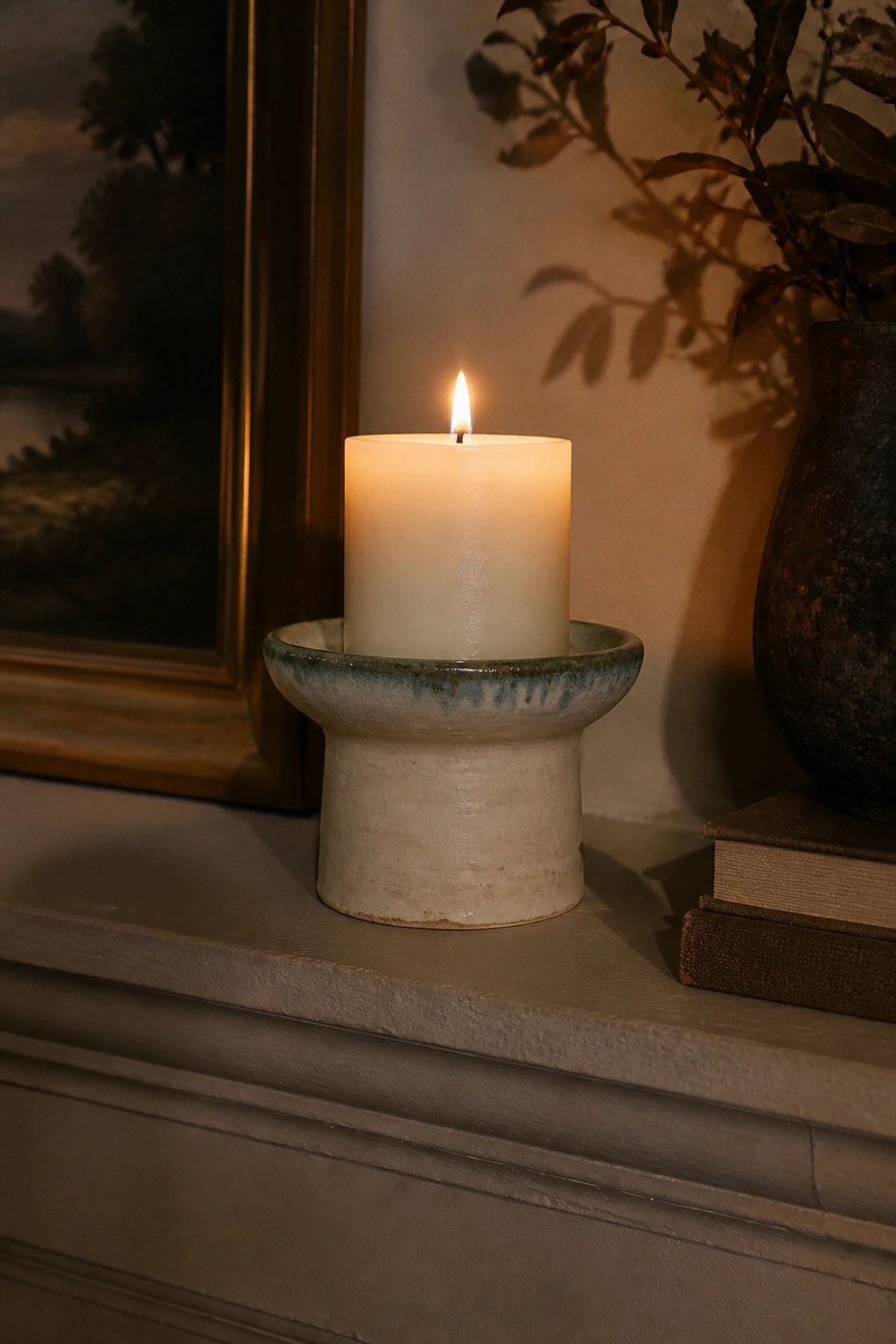
A handmade ceramic candle holder combines a wide, shallow top dish with a solid cylindrical base. The top rim carries a speckled blue-green glaze that stops short of the off-white body, creating a clean two-tone effect. This shape keeps a pillar candle stable while the dish catches wax, and the raised base gives the piece height on a flat surface.
What makes this idea useful is the simple pedestal form that works on a mantel, shelf, or side table without crowding the space. You could scale the same shape down for tea lights or widen the dish slightly to hold small items like matches. The limited glaze application keeps the project straightforward while still giving visual contrast. For a gift, the same base shape can be finished with a different rim color to match various room palettes.
Hanging Planter in Muted Green Glaze
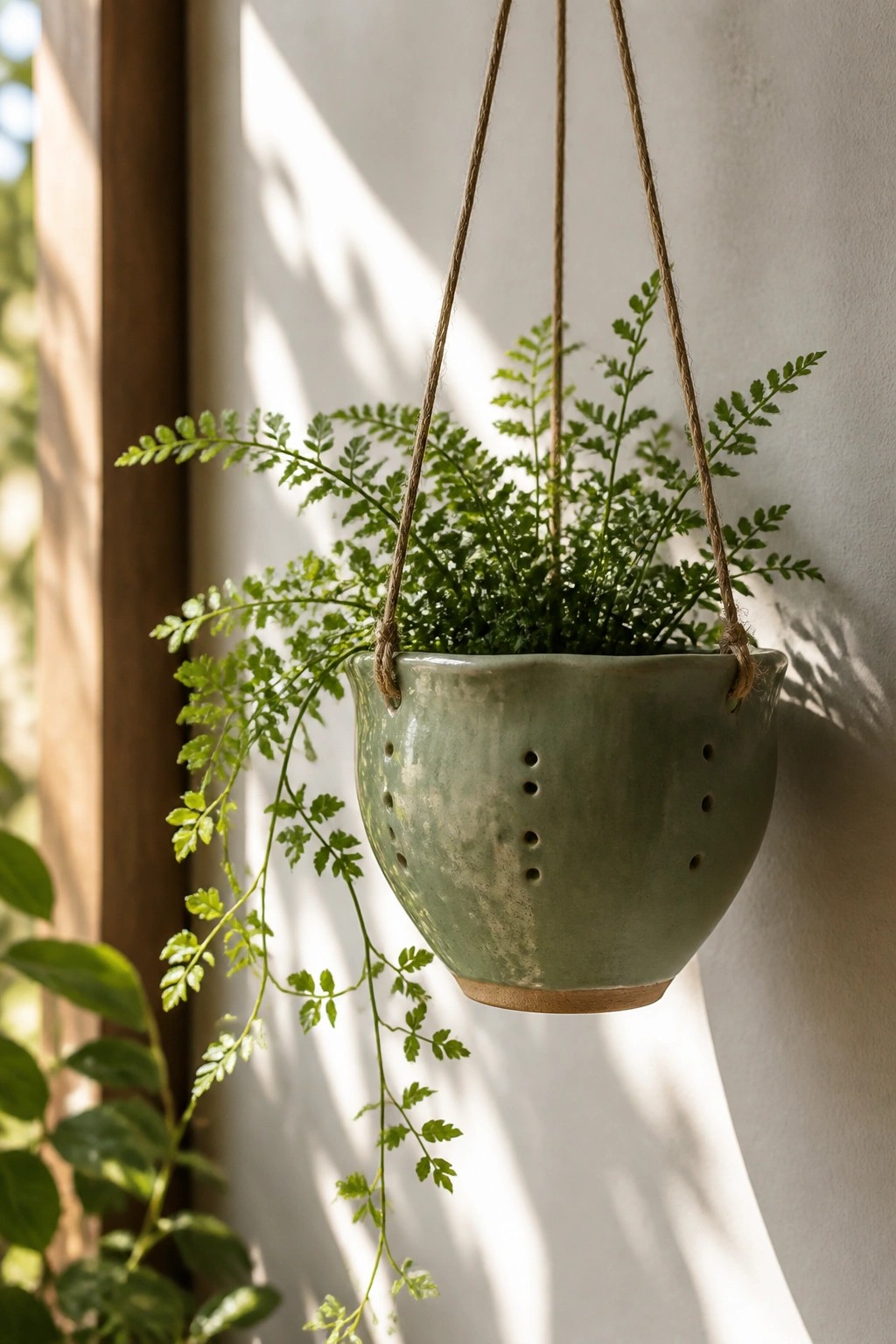
A rounded hanging planter formed from clay creates an easy way to grow trailing plants like ferns without taking up floor space. The soft sage green glaze covers the exterior while small holes near the base allow drainage, and four larger holes at the rim hold the ropes that suspend the piece from above. This shape keeps the plant centered and visible while the glaze adds a subtle color that blends with earth tones or soft neutrals.
What makes this idea useful is how the basic bowl form works for different plant sizes without extra hardware. You can simplify the same shape into a smaller wall-mounted version by using just one rope loop, or widen the rim slightly if you want to fit a plastic nursery pot inside. In a kitchen or bathroom window the drainage holes handle moisture directly, and the green glaze gives you a quick color match for other pieces in a neutral collection.
Scalloped Bowl in Neutral Glaze with Blue Rim
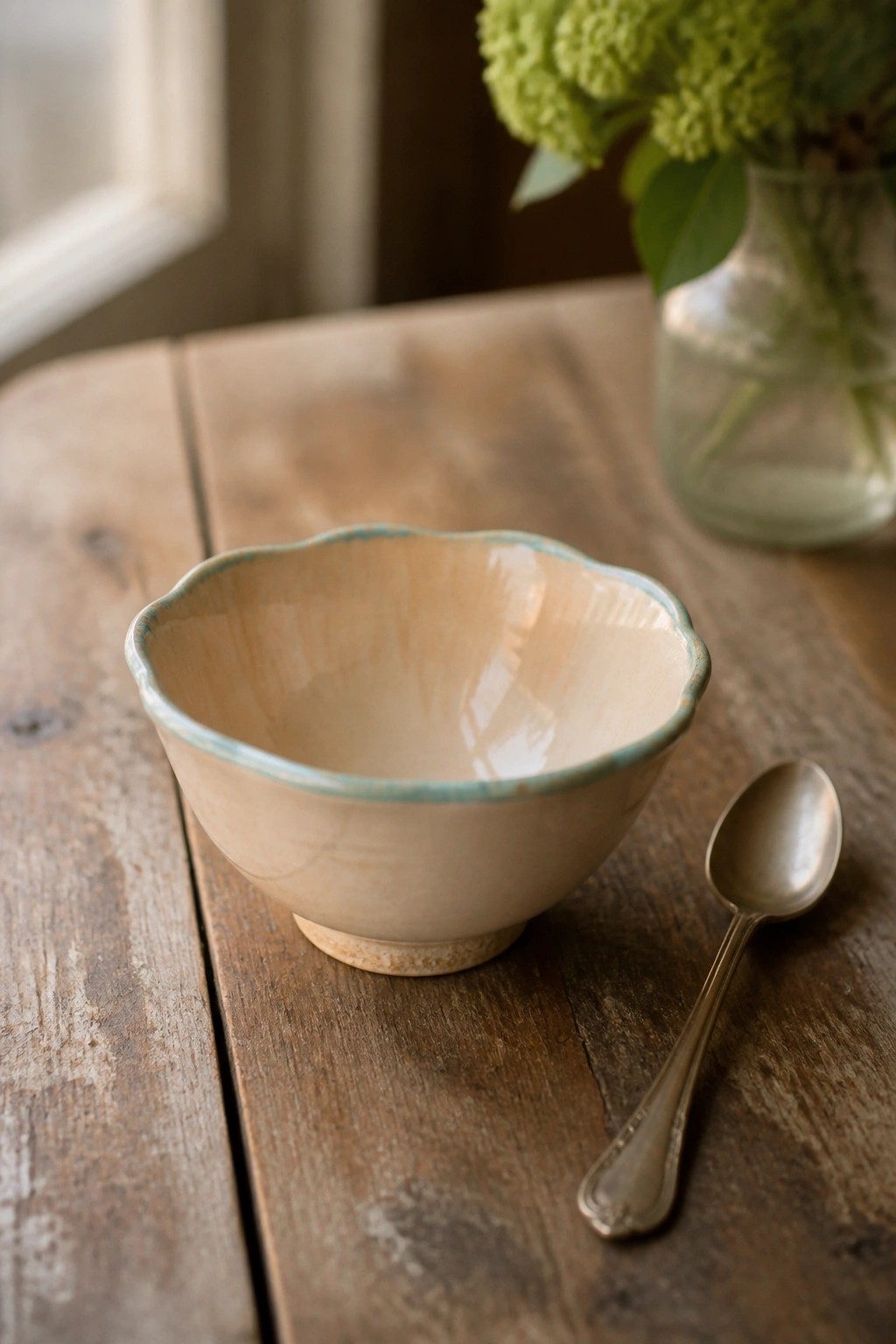
A small ceramic bowl with a wavy scalloped rim gives a simple way to add soft color without much detail. The piece uses a warm beige glaze that shows some clay texture underneath, with a narrow blue line along the edge to tie it into the blue and earth tone range. This approach keeps the focus on the form and the glaze contrast rather than extra decoration, making it easy to repeat for a set of bowls.
The shape does a lot of the work here because the rim can be formed on bowls of many sizes for soup, cereal, or side dishes. A thin blue edge like this stays easy to adapt if you want to change the main glaze to a deeper neutral or add a second color inside. The small scale also makes it a quick project to test new glaze combos before committing to larger pieces.
Streaky Blue Glaze on an Oval Tray
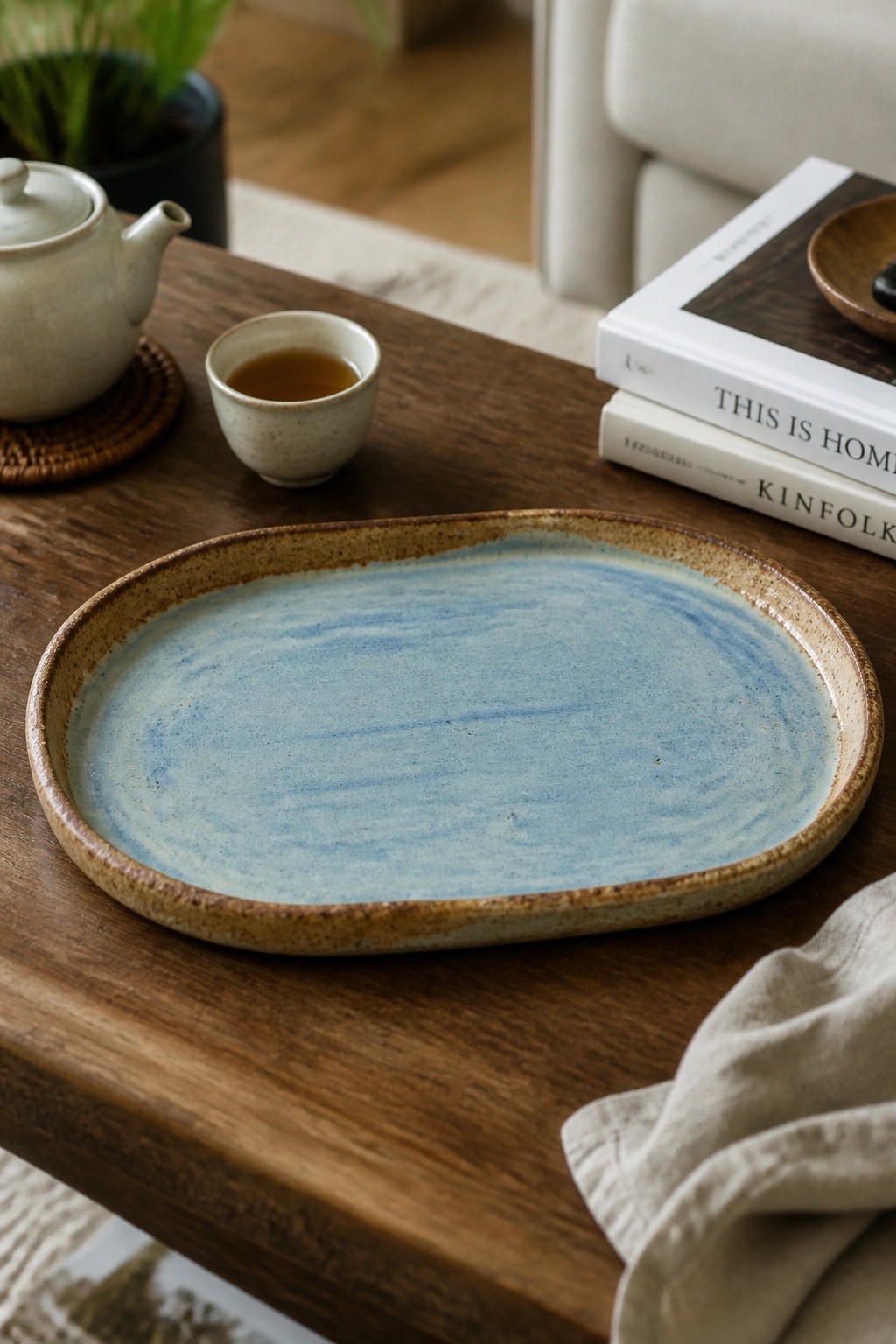
A handmade oval ceramic tray finished with a light blue glaze that shows soft darker streaks across the surface. The rim keeps an earthy brown tone that frames the blue without competing with it. This shape works as a low-profile serving piece or table tray because the elongated form sits flat and leaves room for other items around it.
What makes this idea useful is how the simple oval lets the glaze pattern stand out on its own. You could repeat the same streaky blue on a set of smaller plates or a matching spoon rest to create a coordinated group. The size fits well on a coffee table or kitchen counter for holding cups or small dishes, and the blue mixes easily with both warm wood tones and neutral linens if you want to expand the look later.
Split-Glaze Ceramic Whale Figurine
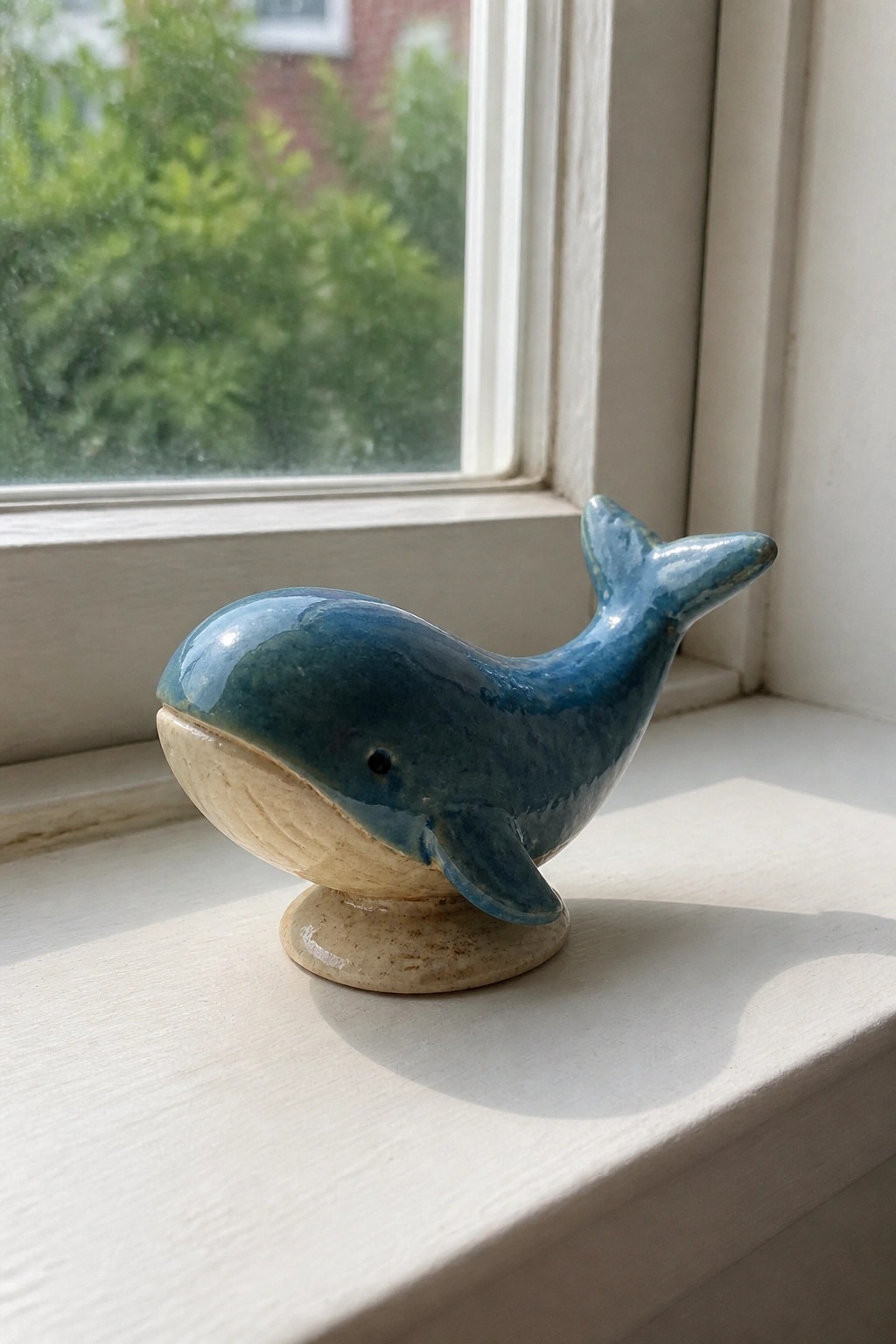
A small ceramic whale figurine serves as a compact decor object. The idea relies on a glossy blue glaze covering the upper body and tail while the lower half stays in a lighter clay tone. This split finish draws attention to the simple sculpted shape and rounded form. The piece sits on a flat base that keeps it stable without extra supports.
What makes this idea useful is how the small scale lets you test glaze combinations with minimal clay. The same two-tone approach could shift to other animal shapes like a fish or seal using the same firing. It fits easily on a desk, shelf, or bathroom counter where larger pieces would crowd the space. For gifts, the figurine works well because it requires little material and finishes quickly once the glaze is chosen.
Speckled Green Ring Cone
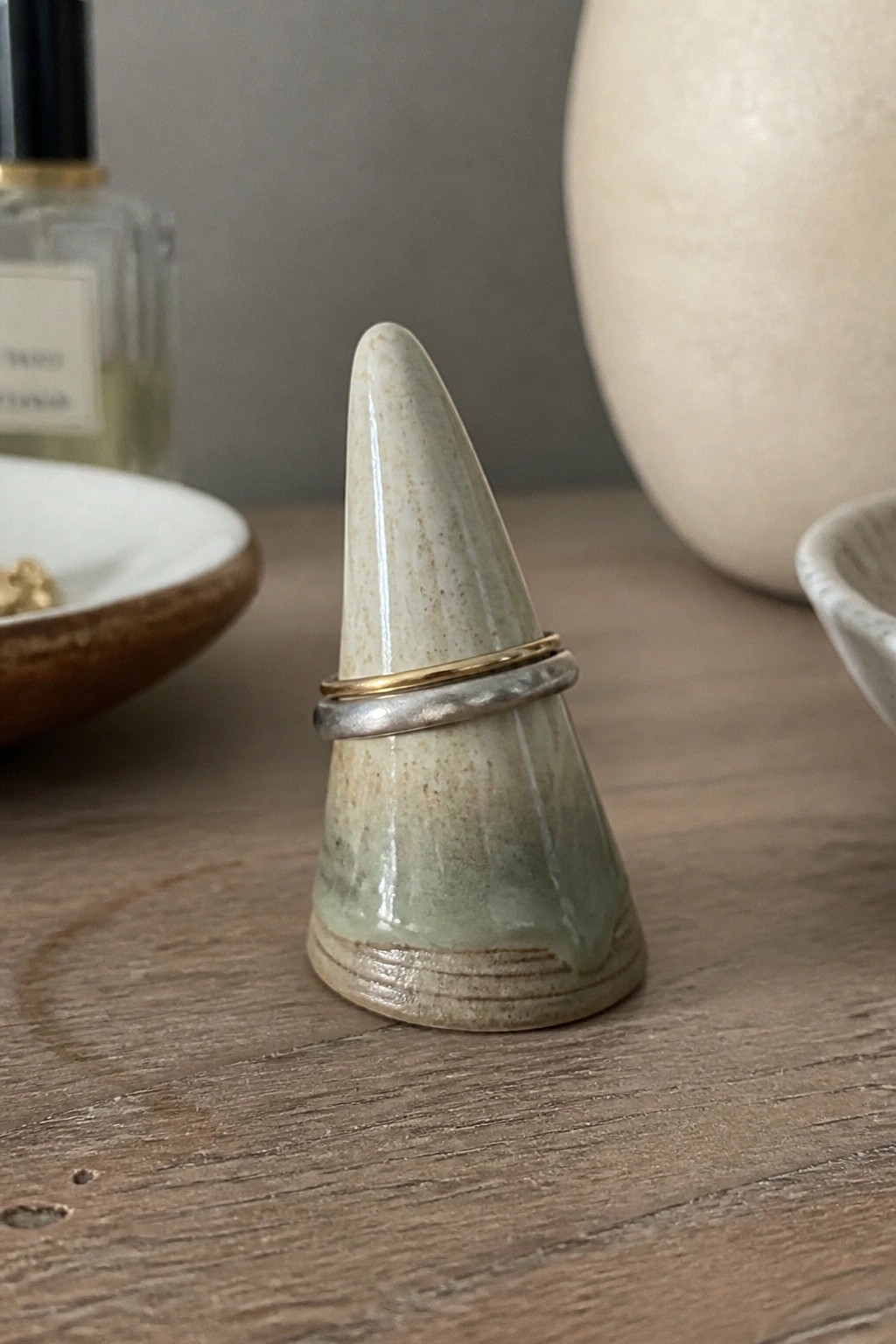
A cone-shaped ring holder in ceramics gives rings a stable place to rest while keeping them visible. The tapered form lets multiple rings stack at different heights, and the soft green glaze with natural brown speckling adds subtle variation without overwhelming the simple shape. This style fits the holder category and works especially well when the glaze stays in the earth tone range.
The small scale makes this easy to adapt for a dresser, nightstand, or bathroom counter where space is limited. You could rework the same cone using other muted greens or soft neutrals to coordinate with existing pottery. For a gift, this kind of piece stands out because it serves a clear purpose and takes up little room in a drawer or on a shelf.
Speckled Earth Tone Egg Cups with Blue Rims
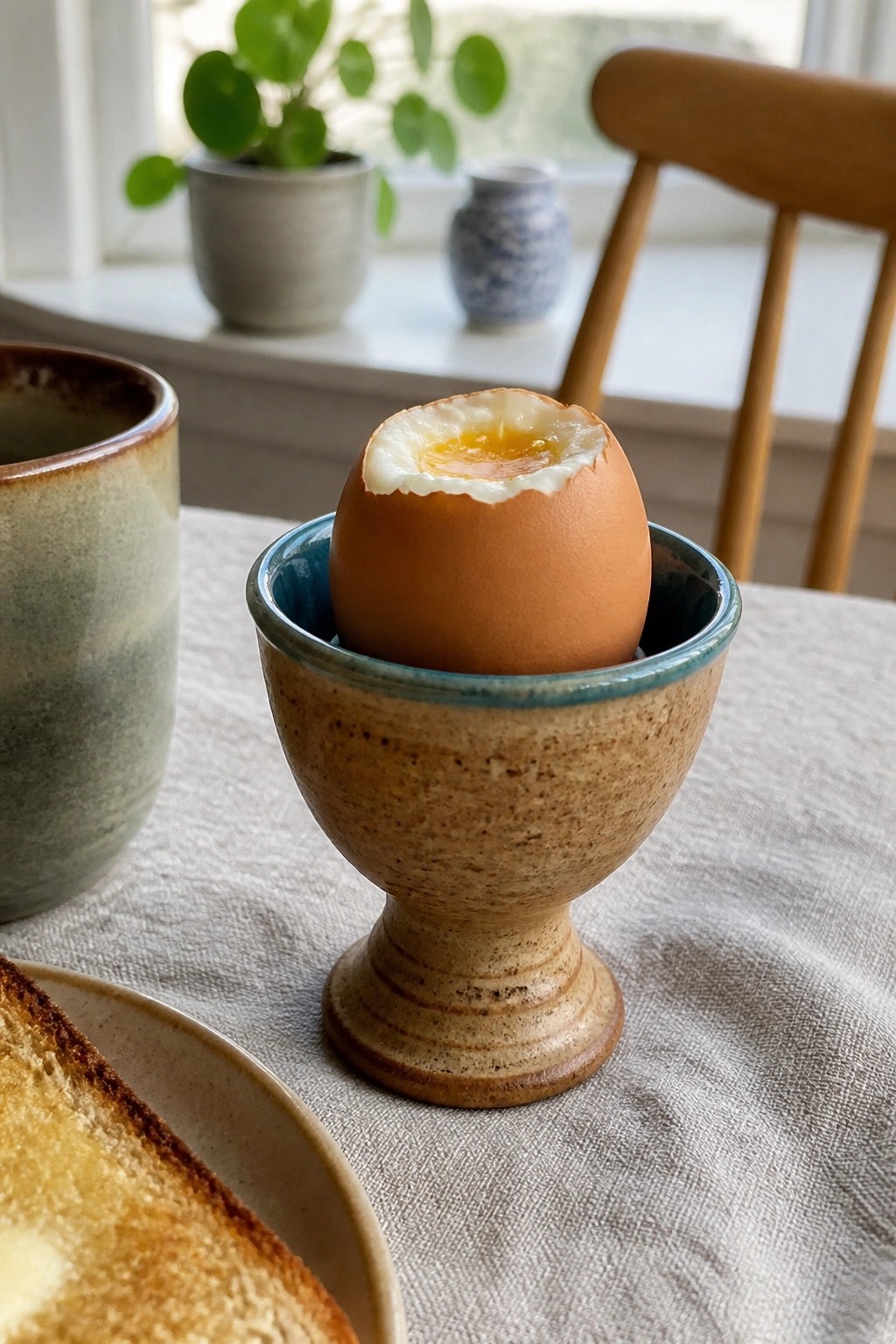
An egg cup is a small kitchen item designed to hold a soft-boiled egg upright. This version pairs a speckled brown glaze across the body with a narrow turquoise rim that highlights the footed shape and rough clay texture. The contrast between the earthy base and the blue edge keeps the form simple while adding a clear color break that works with neutral tableware.
What makes this idea useful is how the compact size lets you test glaze combinations without much material or kiln space. You could repeat the same brown-and-blue pairing on small bowls or butter dishes to build a loose set. The footed shape stays stable on a table and the rim color helps the pieces stand out in photos for sharing. For a first project on the wheel, this form is quick to repeat and easy to customize with different rim colors.
Frequently Asked Questions
What clay bodies work best with earth tones and soft neutrals? Stoneware and porcelain clays tend to enhance the warm, muted qualities of earth tones and neutrals by providing a stable base that reduces excessive running. Always run test tiles with your specific clay to observe the final color and texture after firing.
How can I layer blues and greens for added depth without them bleeding together? Apply a base layer of the lighter color and let it dry fully before adding the second glaze on top in selective areas. Use wax resist between layers if needed to maintain crisp boundaries, and fire at the recommended cone for your glazes to control flow.
Are these glaze colors suitable for food safe functional ware like plates and cups? Many commercial glazes in blues, greens, and neutrals are formulated to be food safe once fired correctly, but always check the manufacturer’s label for certification. Avoid using glazes with high levels of certain metals on surfaces that touch food, and test finished pieces if you mix your own recipes.
What firing temperature range brings out the best results in these color families? Most blues and greens develop fully between cone 5 and cone 10, while earth tones and soft neutrals often look richest at cone 6 to cone 8 on stoneware. Consult the specific glaze instructions and adjust your kiln schedule gradually to avoid underfiring or overfiring issues.
How do I prevent common problems like bubbling or pinholing with these glazes? Apply glazes in even coats no thicker than recommended and ensure your bisque ware is completely dry before glazing. If issues persist, try a slower ramp during the early stages of firing to allow gases to escape, or switch to a different clay body that releases fewer volatiles.

Pottery Path is my cozy corner of the internet where I share clay ideas, pottery inspiration, and simple projects you can recreate at home. I love exploring everything from air dry clay to handbuilt pottery to cute minis that brighten your day. My goal is to make clay crafting feel easy, fun, and welcoming for anyone who wants to try it.
You will find beginner friendly tutorials, creative pottery painting ideas, and lots of warm inspiration for slow and happy crafting. If you enjoy hands on creativity, this space will feel like home.