I often find myself needing places to put small things around the house.
That’s why I started experimenting with handbuilt ceramics for storage.
These projects don’t require a wheel and they work well for everyday use.
I’ve put together some ideas that might help if you’re looking to make your own.
I like keeping them practical so they don’t just sit on a shelf.
Ceramic Catch-All Dish for Keys and Coins
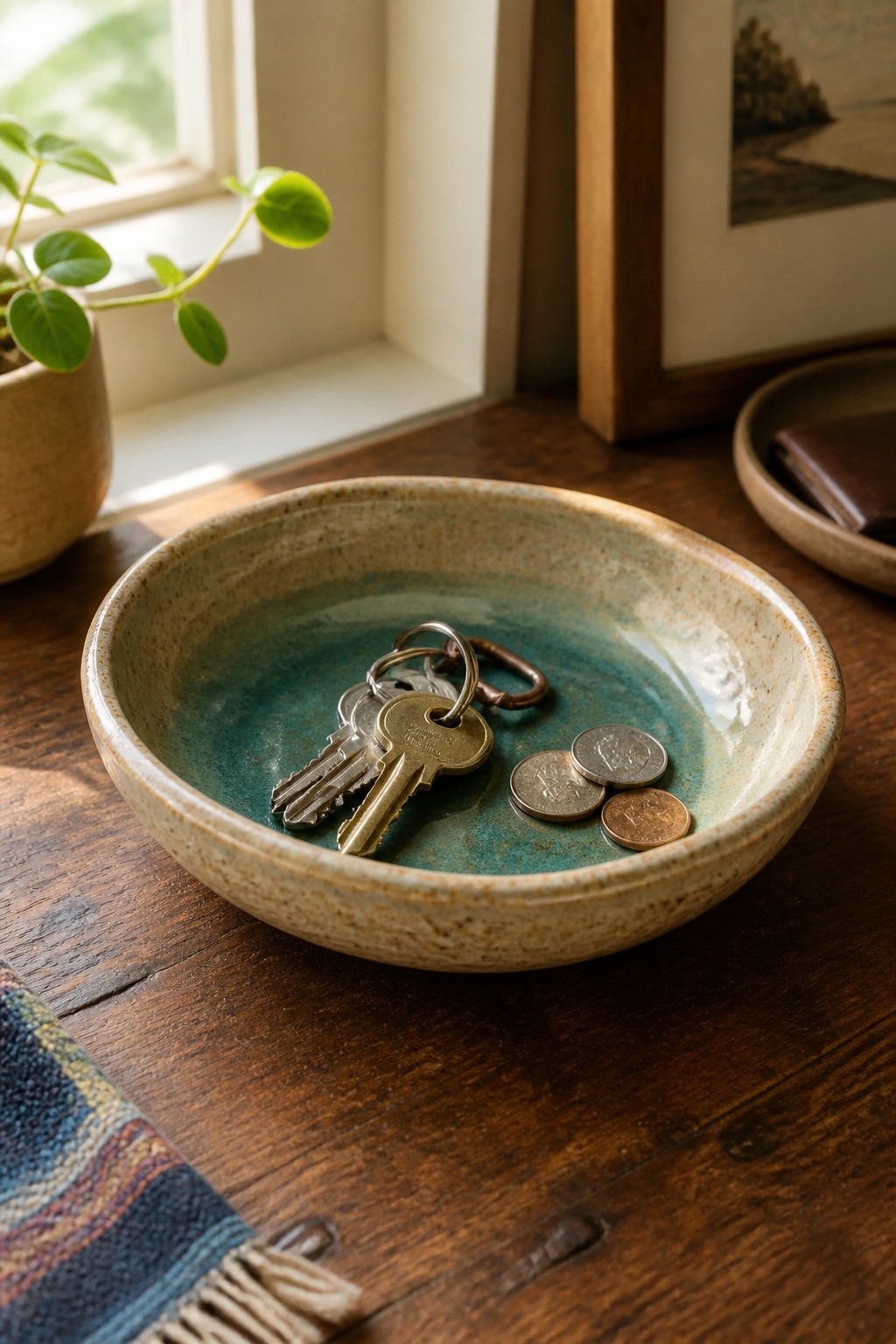
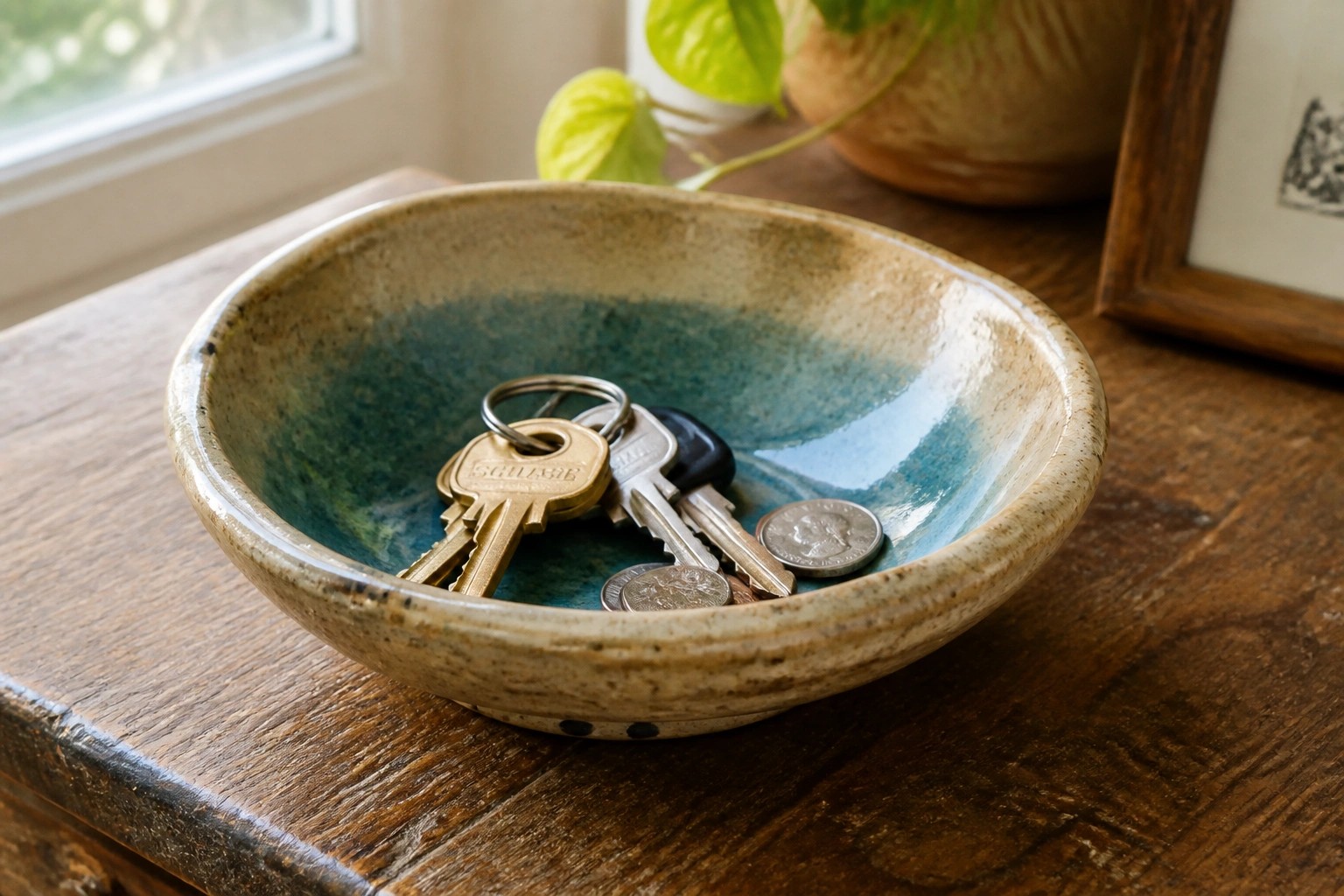
A small handbuilt ceramic dish serves as a dedicated holder for keys and loose coins. The shallow round shape with a glossy turquoise interior keeps small items visible and contained while the speckled rim creates a simple finished edge. This type of tray fits the everyday storage category and works as a compact surface piece without needing extra hardware or compartments.
What makes this idea useful is how the low profile lets it sit on a console table or nightstand without crowding other objects. You could scale the same form down for a ring dish or widen it slightly to hold a phone and earbuds. The two-tone glaze treatment also makes the piece easy to match with other handmade items when building a set for gifting or selling.
Handled Ceramic Utensil Crock
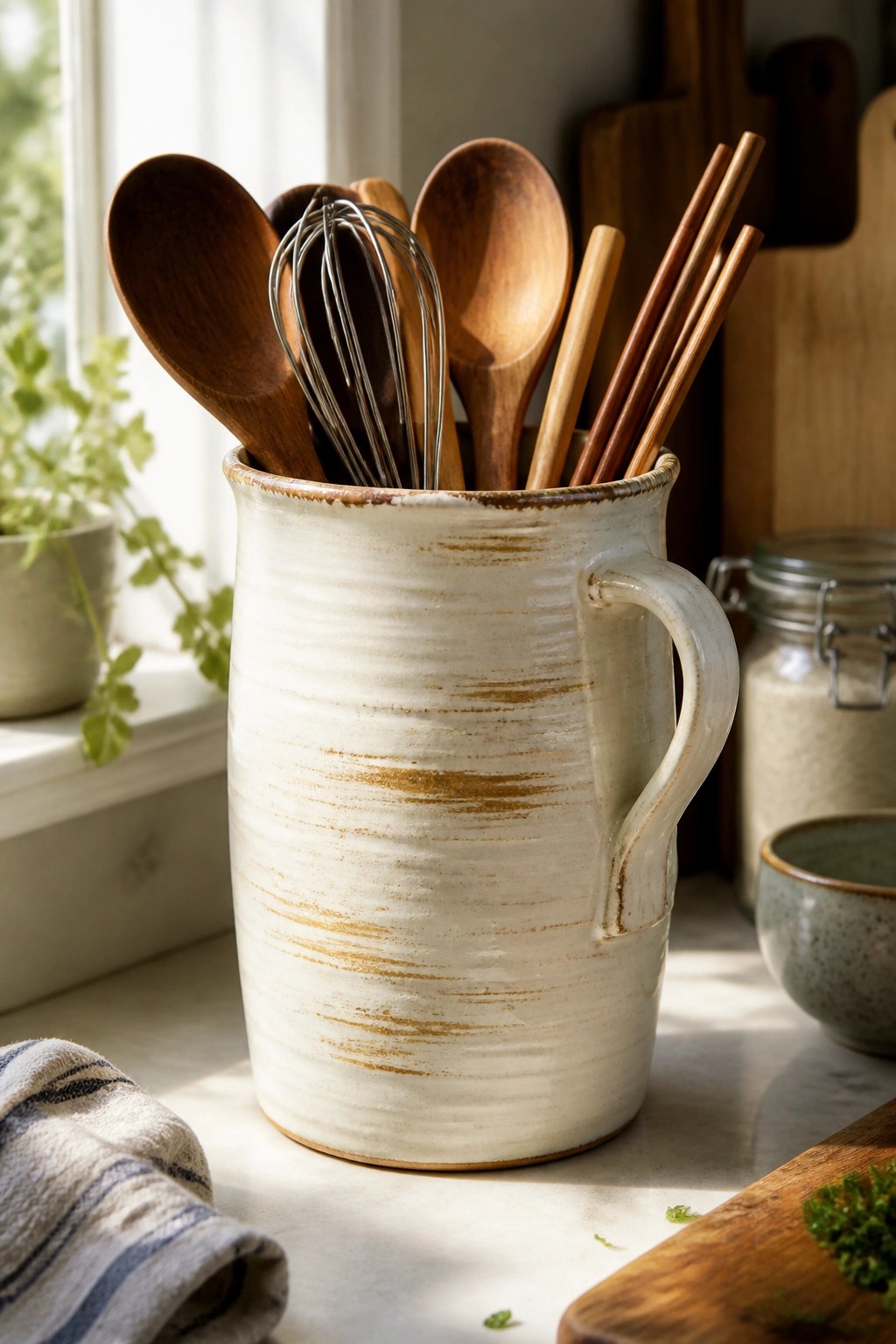
A handbuilt ceramic pitcher works as a sturdy countertop holder for spoons, whisks, and chopsticks. The wide opening and added handle make it simple to grab tools while cooking and easy to carry to the sink for cleaning. The white glaze with light brown streaks keeps the surface practical and low-maintenance in a busy kitchen.
The shape does a lot of the work here because the tall sides prevent smaller tools from tipping out. This kind of holder fits best next to the stove or prep area where daily utensils stay within reach. You could scale the same form down for desk pencils or stretch it taller for spatulas and rolling pins. The handle detail turns a basic cylinder into something more convenient without adding extra steps.
Ridged Ceramic Sponge Tray

A handbuilt rectangular tray with a series of parallel grooves across the base works as a sponge holder that keeps the sponge elevated and allows water to drain. The glossy glaze covers both the interior and exterior, and the low rim contains drips without trapping moisture. This design fits into the everyday storage category of sink-side pieces meant for kitchen or bathroom use.
The grooves do the main job by preventing a soggy sponge from sitting in standing water. You could shorten the length to make a compact soap dish or widen it slightly for a double sponge version. A matte finish in a different color would change the look while keeping the same drainage layout. This idea shows up well in storage project roundups because the functional ridges give it a clear purpose without needing extra parts.
Handbuilt Ceramic Toothbrush Holder

A handbuilt ceramic toothbrush holder serves as a compact bathroom storage piece that keeps brushes upright and separated. The rounded form includes multiple holes sized for standard toothbrushes along with a small central opening that can hold a toothpaste tube or extra items. Speckled clay and a simple blue brushstroke across the surface create visual interest while the lower dimpled texture adds grip and contrast to the smooth upper section. This project falls into the category of small functional bathroom items that solve daily countertop clutter.
What makes this idea useful is its small scale and straightforward hole layout that can be adjusted for one or more users. The same rounded body works equally well for makeup brushes or desk pens if you change the hole spacing during building. A piece like this sits neatly on a windowsill or shelf without taking much space and can be made in batches for quick gifts. The painted accent is easy to adapt with different colors or left plain for a more minimal look.
Leaf-Shaped Ceramic Ring Dish
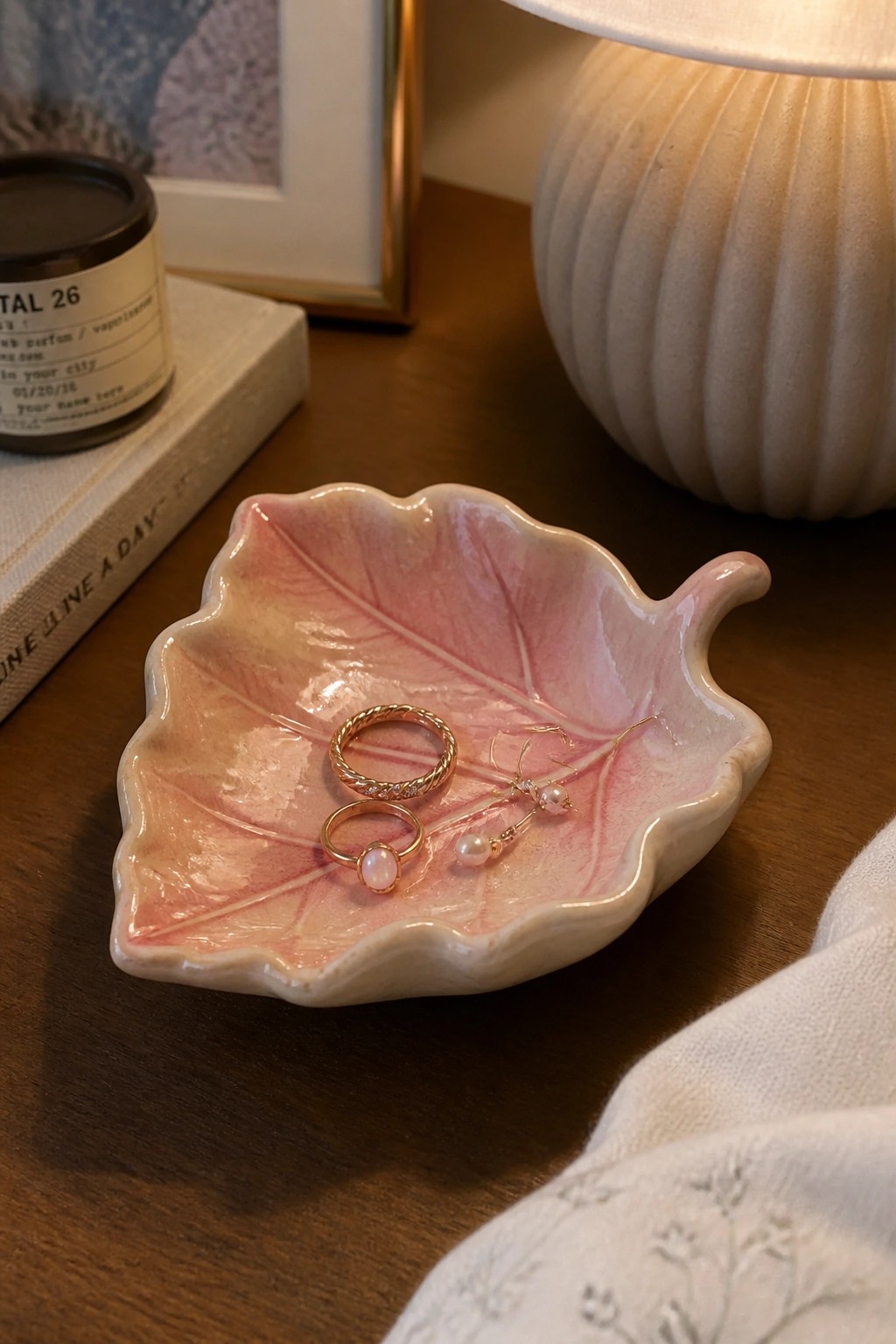
A handbuilt ceramic leaf dish serves as a compact tray for holding rings and small jewelry pieces. The form follows a simple leaf outline with veins pressed into the surface before the final glaze. A pink glaze blended toward white at the edges keeps the piece light while the shallow walls prevent items from sliding off. This approach fits the ring dish category and turns a basic slab into everyday storage.
What makes this idea useful is how the leaf shape fits on a nightstand or dresser without crowding other items. You can scale the same outline down for a single ring or widen it slightly to hold keys and a watch. Changing the glaze to a solid tone or adding a different edge detail lets you match it to other room colors. For a bathroom version the same shallow form keeps earrings from falling into the sink.
Stacked Ceramic Canisters for Kitchen Staples

These handbuilt ceramic canisters are formed as two-part stacked cylinders with fitted lids, each set sized for a common pantry item. The lower section carries an incised label while the upper section and lid complete the height. Matte glazes in soft earth tones with a single light slip stroke keep the surface simple and the focus on the function. The rounded edges and consistent diameter make the pieces easy to repeat as a matching set.
What makes this idea useful is the vertical stacking that saves shelf space without hiding the contents. You can change the labels for spices or grains and adjust the height of each section to fit what you store most often. The same shape works as single jars if you skip the stack, or you can widen the base for bulk items like flour. The muted glaze colors also help the set blend into open shelving without competing with other kitchen pieces.
Hanging Ceramic Pouch for Daily Items
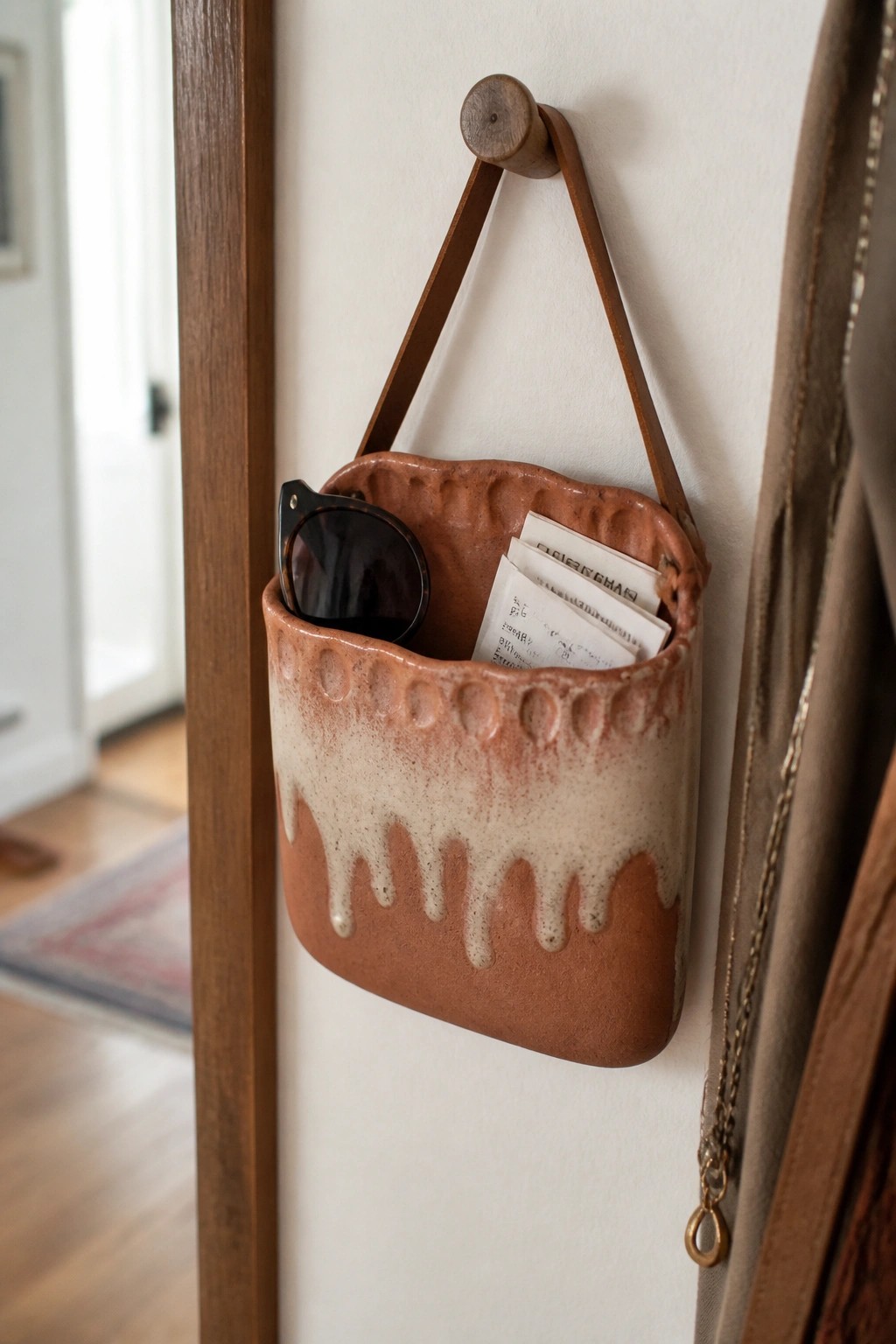
A hanging ceramic pouch works as a wall-mounted holder that keeps small everyday objects off counters and in one spot. The shape is a soft rectangular bag form with a rolled rim and a leather strap that loops over a hook or peg for easy hanging. The two-tone drip glaze creates a clear visual break between the upper and lower sections while keeping the surface simple. This idea falls into the category of wall storage rather than a tabletop piece.
The shape does a lot of the work here because the open top and slight depth let you drop in items like sunglasses or mail without lids or dividers. You could scale it down for a bathroom to hold hair ties or make a taller version for a mudroom to catch gloves. The leather strap is a smart detail since it avoids drilling holes into the clay and lets you move the pouch between hooks. In a small entryway this kind of holder keeps clutter contained while using very little wall space.
Three-Compartment Tray for Desk Items
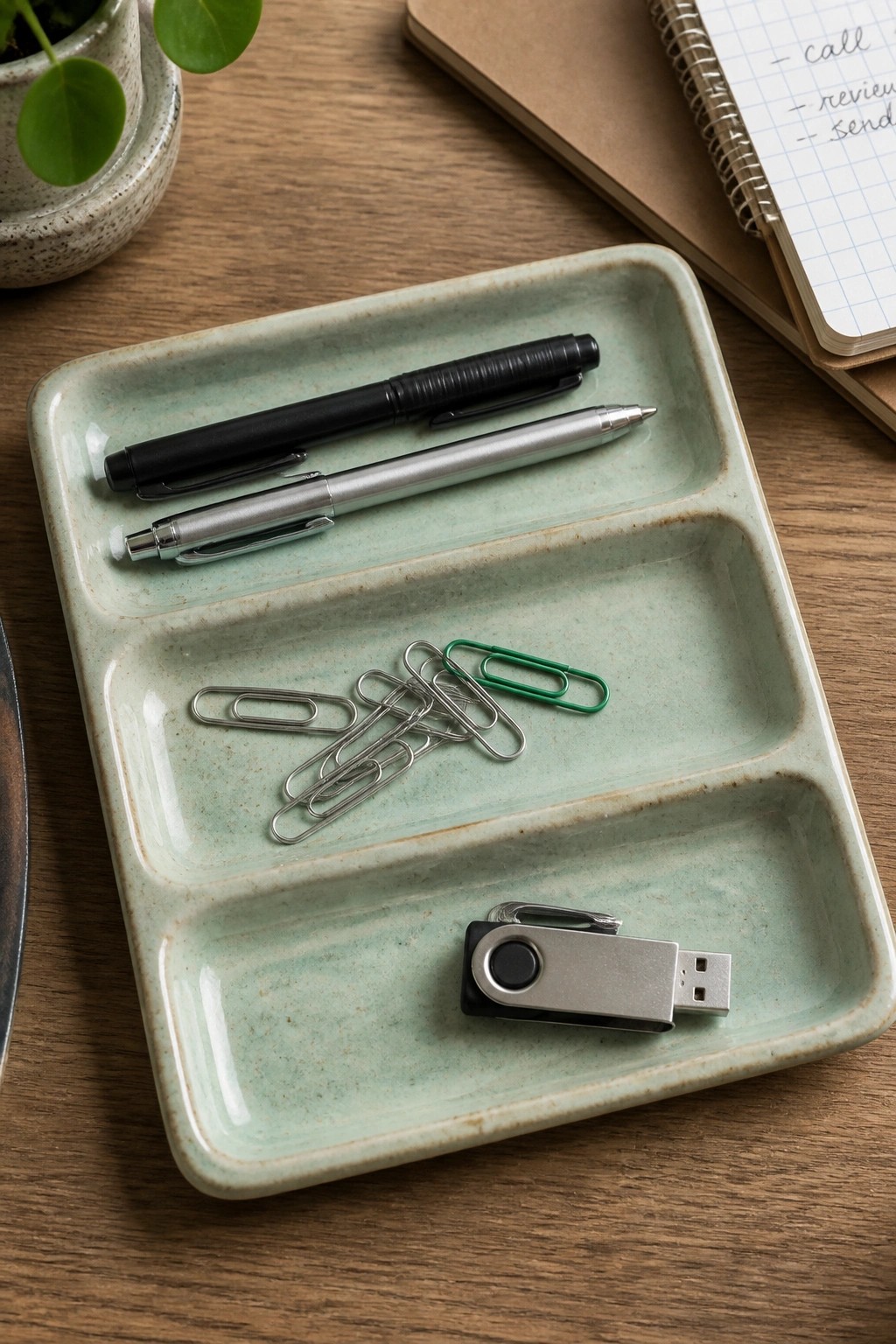
A three-compartment ceramic tray keeps small desk supplies sorted without taking up much space. The handbuilt rectangular form uses simple raised dividers to create separate zones, one long enough for pens and the others sized for clips or drives. A soft green glaze covers the surface and gives the piece a quiet finish that fits into a workspace without standing out.
What makes this idea useful is how the divided layout turns one piece into three practical storage areas on a desk or shelf. You could adjust the compartment widths to hold jewelry, bathroom products, or kitchen odds and ends instead. The basic shape works well if you want to add a fourth section or resize the whole tray to match a specific drawer or corner.
Spiral Yarn Bowl for Knitting Storage
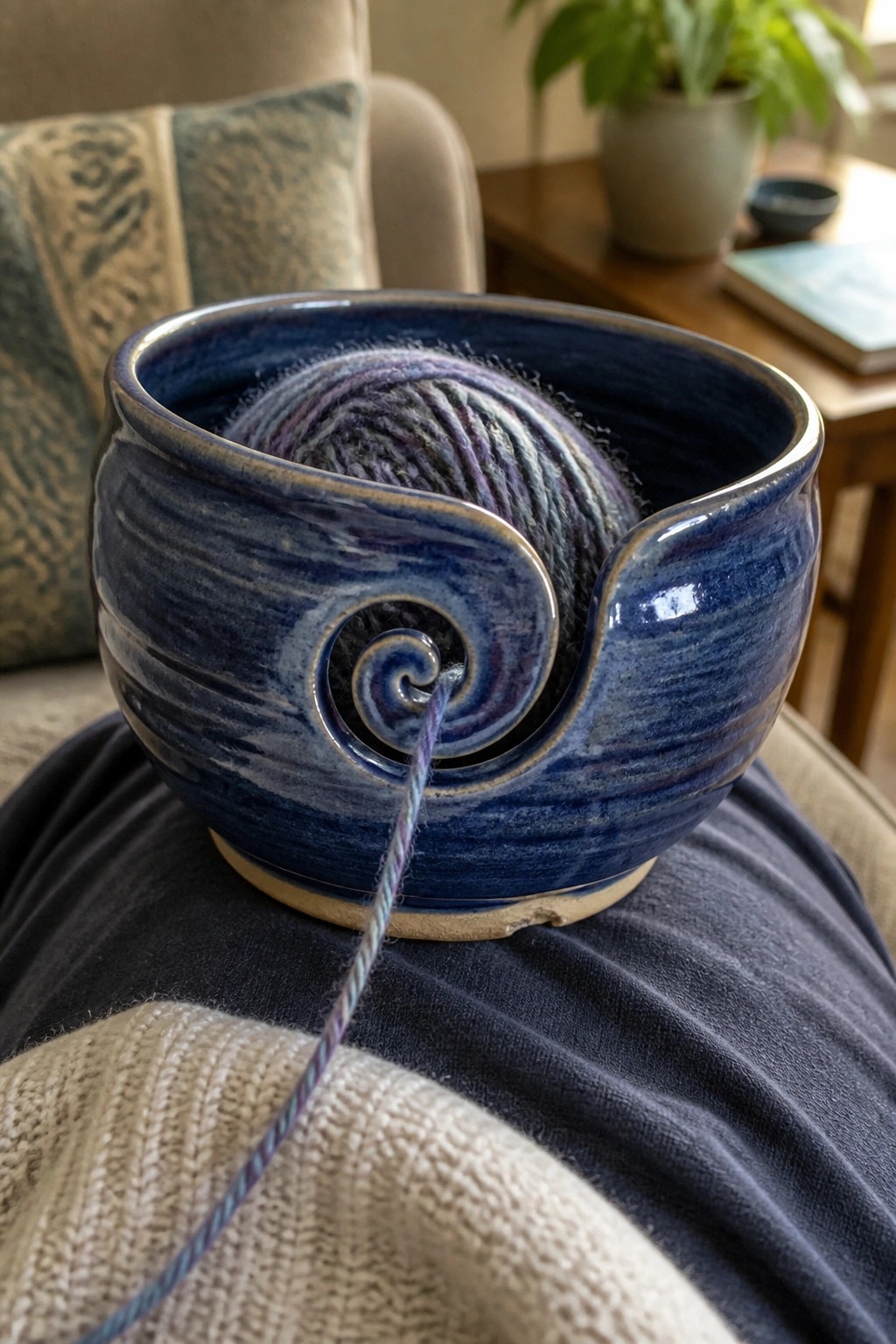
A handbuilt ceramic yarn bowl gives a simple way to store and use a ball of yarn without it rolling off the surface. The deep, rounded form includes a spiral slot cut into one side so the yarn strand can pull through smoothly while the ball stays inside. The glossy blue glaze covers the entire piece and creates a durable surface that holds up to regular handling during projects.
What makes this idea useful is how the spiral opening keeps the yarn contained and untangled during use. You can adjust the width of the slot when making your own version to match thicker or thinner yarns. This type of bowl works especially well on a lap or side table while knitting or crocheting. The same rounded shape could be reworked into a small holder for cords or craft supplies by leaving the side solid instead of adding the cutout.
Seashell Spoon Rests

Handbuilt ceramic spoon rests formed in seashell shapes give spoons a stable place to rest while cooking. The curved shell creates a shallow well that catches drips, and the raised rim keeps the handle from sliding off the counter. Soft glazes in pink, blue, and green with light speckling or striping emphasize the shell ridges without overpowering the form. This turns a basic kitchen need into a compact storage solution that sits neatly beside the stove.
What makes this idea useful is how the shell shape already solves the problem of spoon placement while using very little clay. In a kitchen these rests stay handy during meal prep and take up almost no space when stacked for storage. The same basic mold can be lengthened into a longer tray for multiple utensils or shortened into a smaller version for teaspoons. A single color batch or a mix of glaze tones both work well for quick gifts or market sales.
Divided Ceramic Tea Tray
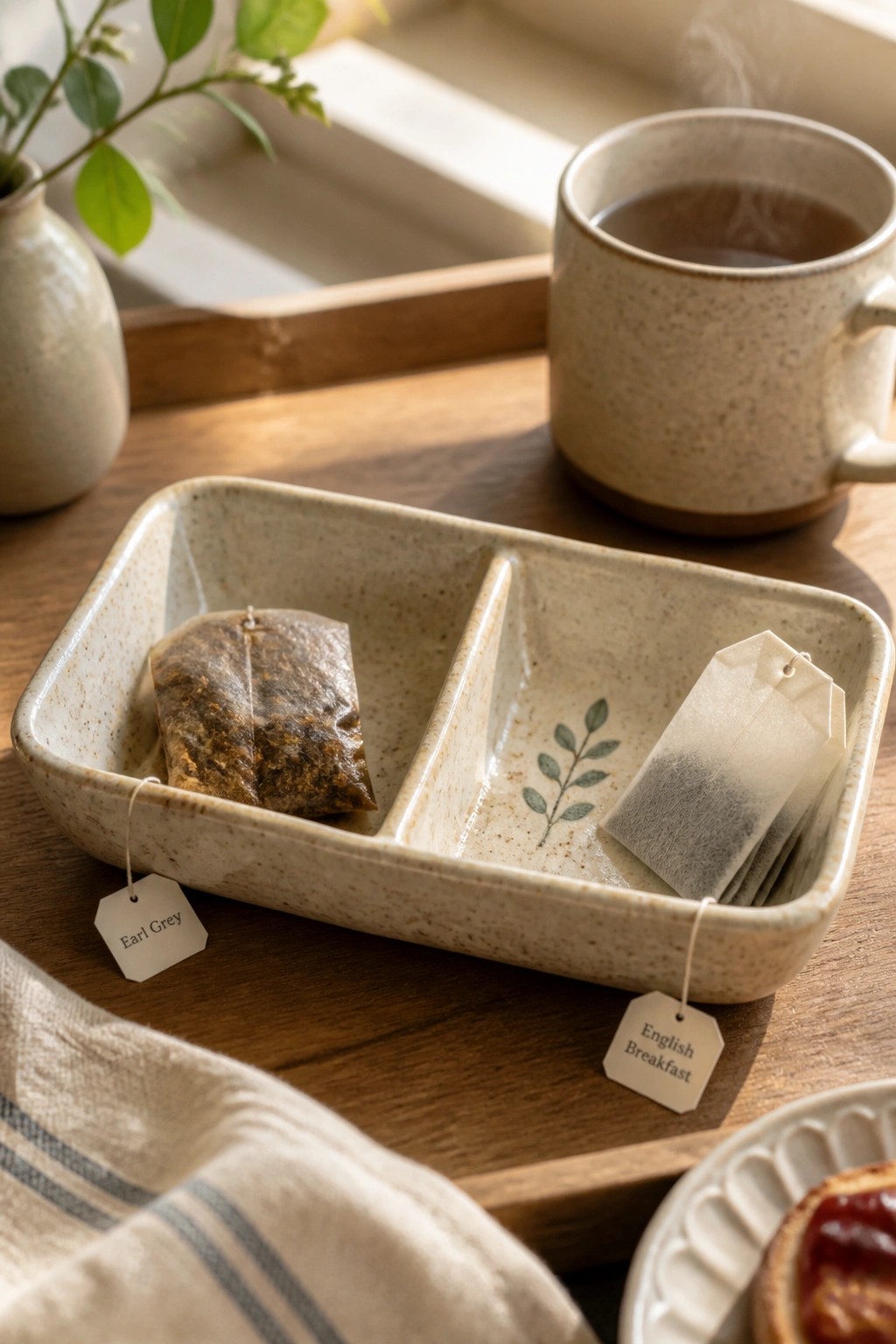
A handbuilt ceramic tray with one central divider forms two compartments sized for tea bags. The rectangular form keeps bags flat and visible, while a simple leaf motif marks one section for quick sorting of flavors. Speckled glaze covers the surface and creates a matte finish that resists showing minor wear from daily kitchen use. This project fits the kitchen item category and solves the problem of scattered tea bags on counters.
What makes this idea useful is the way the divider and tag overhang let you grab one bag without digging through a pile. The compact size works on a breakfast tray or next to a kettle where space is limited. You could rework the same divided layout for sugar packets, coffee filters, or small desk supplies by changing the motif or glaze color. For a gift, make two matching trays in different glazes and fill one with assorted teas.
Divided Ceramic Dish for Salt and Herbs

A handbuilt ceramic divided bowl gives you two connected wells in one compact piece for keeping salt in one side and dried herbs or spices in the other. The oval shape with a pinched center wall keeps the contents separate while letting the dish sit flat on a counter or board. The matte dark surface and simple rounded form make it easy to place next to bread or other kitchen items without competing for attention.
What makes this idea useful is how the two-section layout solves the common problem of needing both salt and seasoning within reach while cooking. You could scale the same shape down for smaller portions or widen one well if you want to store a larger amount of one ingredient. In a kitchen this kind of piece stays practical on a cutting board or near the stove and can be adapted for sugar and cocoa or even small nuts. The straightforward form also works as a template if you want to try making a longer version with three wells instead.
Ceramic Napkin Holder
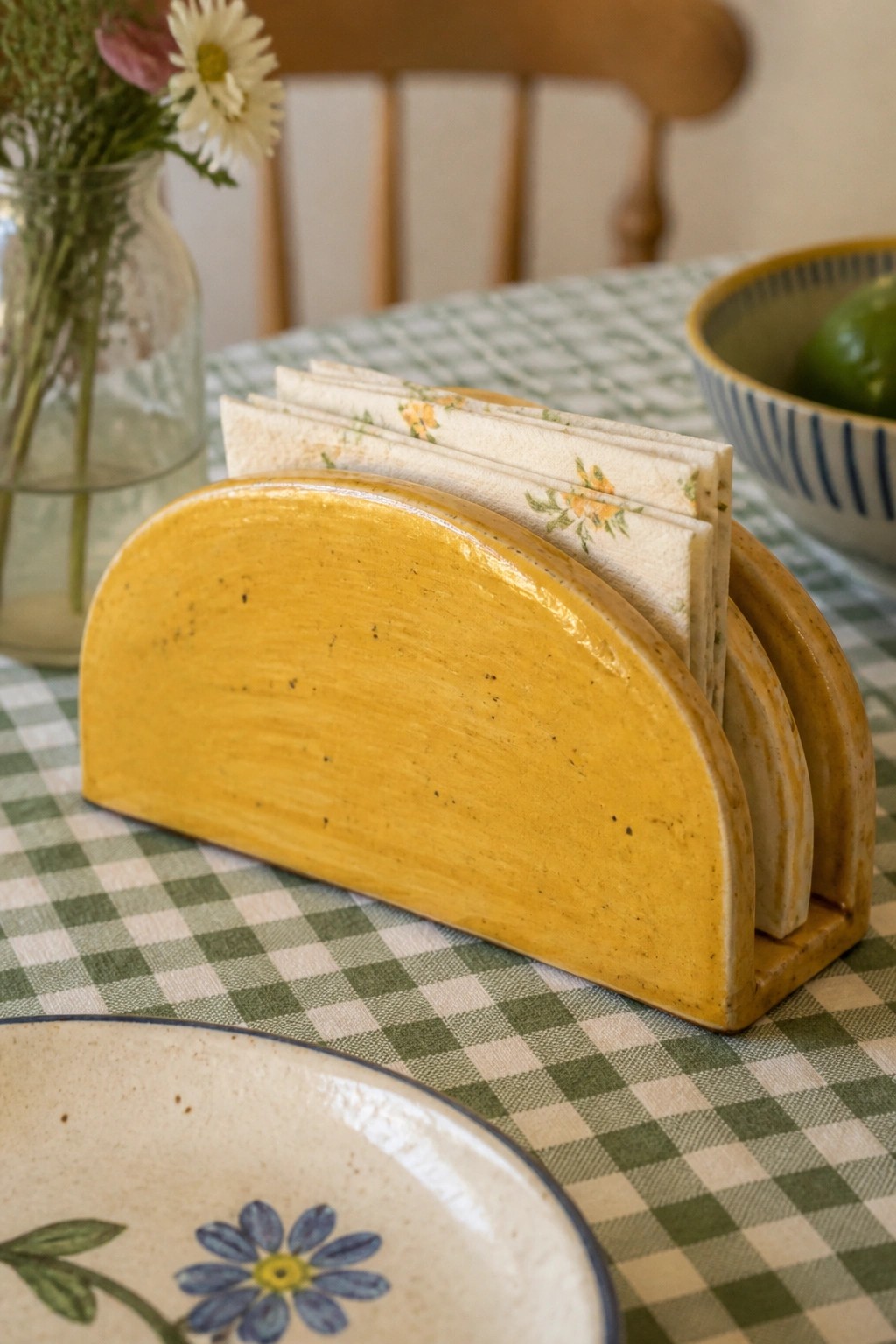
A handbuilt ceramic napkin holder with a wide arched shape keeps a stack of paper napkins upright and easy to grab. The form is made from clay and finished with a yellow glaze that shows some dark speckles across the surface. Its open sides and stable base let napkins slide in from either end while preventing them from tipping over during use. This project falls into the kitchen item category for simple table storage.
The shape does a lot of the work here since the curve holds napkins securely without needing extra pieces or hardware. You can adapt the width to fit different napkin sizes or shorten the arch to make a smaller version for recipe cards or mail. In a kitchen this kind of piece sits cleanly on a table or counter and matches other handmade dishes without taking up much space. For a gift the same form could be glazed in a solid color or left unglazed for a different look.
Divided Ceramic Tray for Remotes and Cables

A handbuilt rectangular ceramic tray with one internal divider forms two compartments sized for everyday household items. The exterior shows vertical ridges under a deep green glaze that highlights the handmade surface. This setup keeps remotes in one section and coiled cables in the other so they stay together on a side table or media console.
The shape does a lot of the work here by creating clear separation without needing extra hardware. You could shorten the length for a nightstand version that holds glasses and a phone or stretch the compartments wider for kitchen counter use with small tools and tags. A lighter or matte glaze would let the same form blend into different rooms while still solving the same clutter problem.
Ceramic Phone Charging Tray with Cable Notch

A shallow oval tray formed from speckled white clay creates a simple resting spot for a phone during charging. The rim includes a small notch that lets the cable slide through so the phone can lie flat without the cord getting caught underneath. This turns an ordinary tray into a dedicated storage piece for nightstands or desks where cables tend to slide around.
What makes this idea useful is the notch solving the everyday problem of charging cables bunching up under the device. The compact oval shape fits easily on small surfaces while still holding both the phone and a coiled cable in one place. You could adapt the same notch on a longer rectangular version to handle a tablet or two phones side by side. On a bedside table this kind of tray keeps cords from hanging off the edge and getting in the way.
Lidded Jar for Button Storage
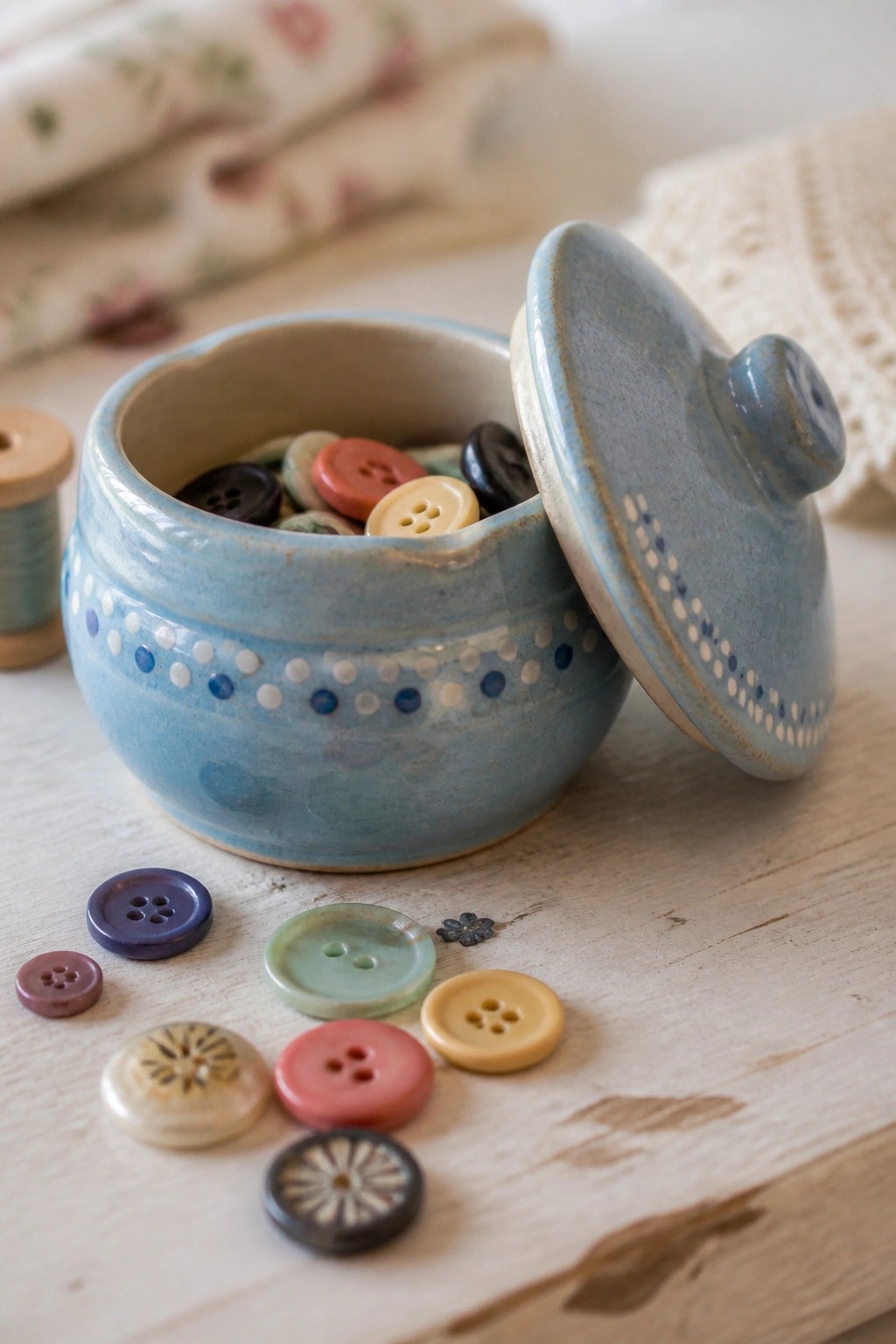
A small lidded ceramic jar works well as a dedicated holder for buttons and other tiny sewing notions. The rounded body with a fitted lid keeps loose items contained while the knob on top makes it easy to open and close. Handbuilt from clay and finished with a soft blue glaze plus a row of dots around the rim, this piece stays simple enough to make in a few steps.
What makes this idea useful is how the compact size fits on a craft table or inside a drawer without taking up much space. You could change the dots to lines or leave the surface plain if you want a faster build. In a sewing room this kind of jar keeps supplies visible and organized at the same time. The same basic shape scales easily into a larger version for cotton balls or tea bags.
Labeled Ceramic Jars for Kitchen Spices and Herbs
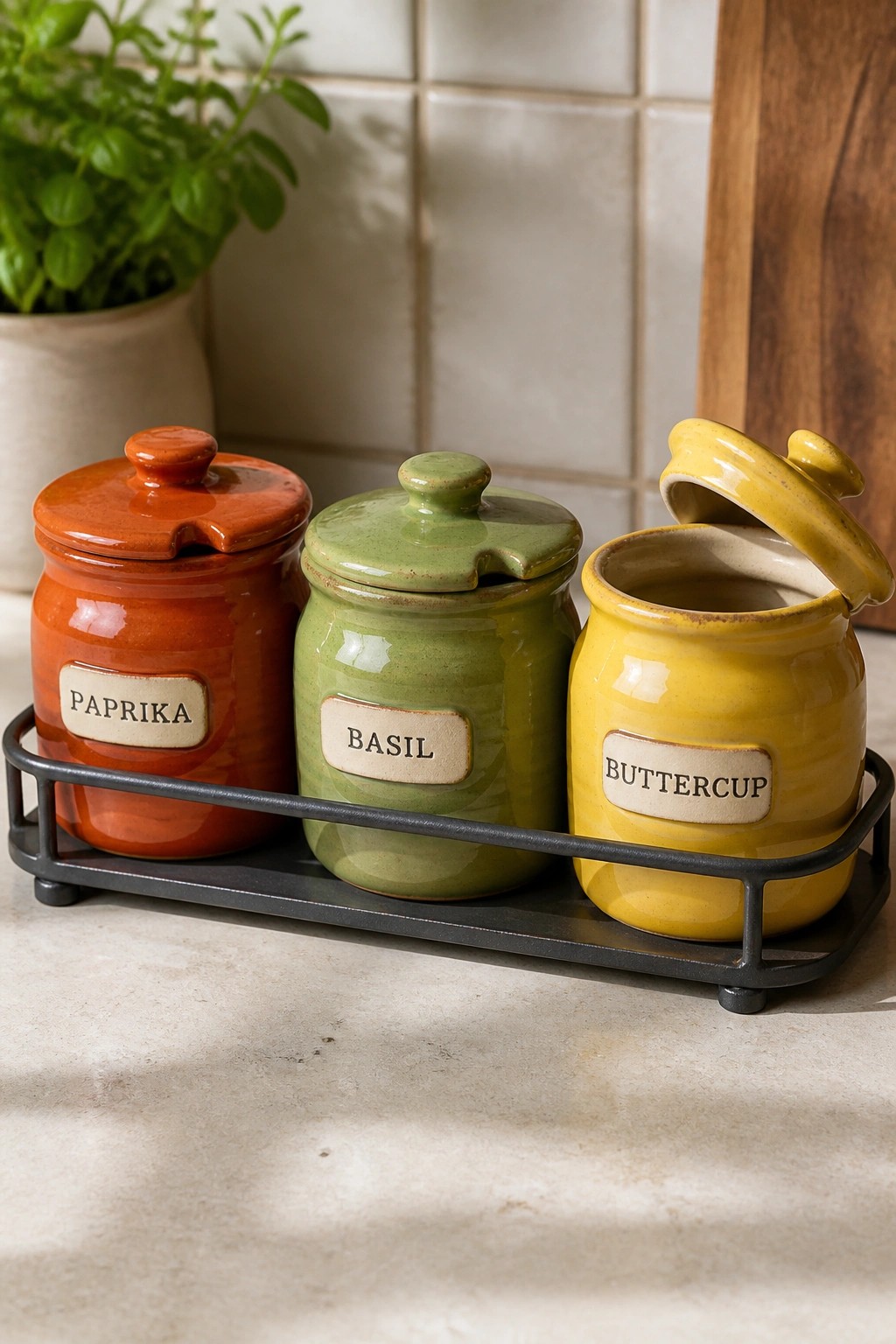
A set of three small handbuilt ceramic jars with fitted lids makes a practical storage solution for spices or dried herbs. Each jar has a simple rounded form, a knobbed lid, and a flat label panel on the front. Different colored glazes separate the pieces visually while the metal tray underneath keeps them together as one unit. The open lid on the yellow jar shows how the design supports quick access without fully removing the top.
What makes this idea useful is how the labels and tray turn ordinary jars into an organized counter system. You could adapt the same shape for tea, sugar packets, or even desk supplies like paper clips. The tray also lets you move the whole set at once for cleaning or restocking. For a simpler version, make two jars without labels and keep the tray in a neutral finish so the focus stays on the glazes.
Rectangular Ceramic Tray for Bathroom Counter Storage
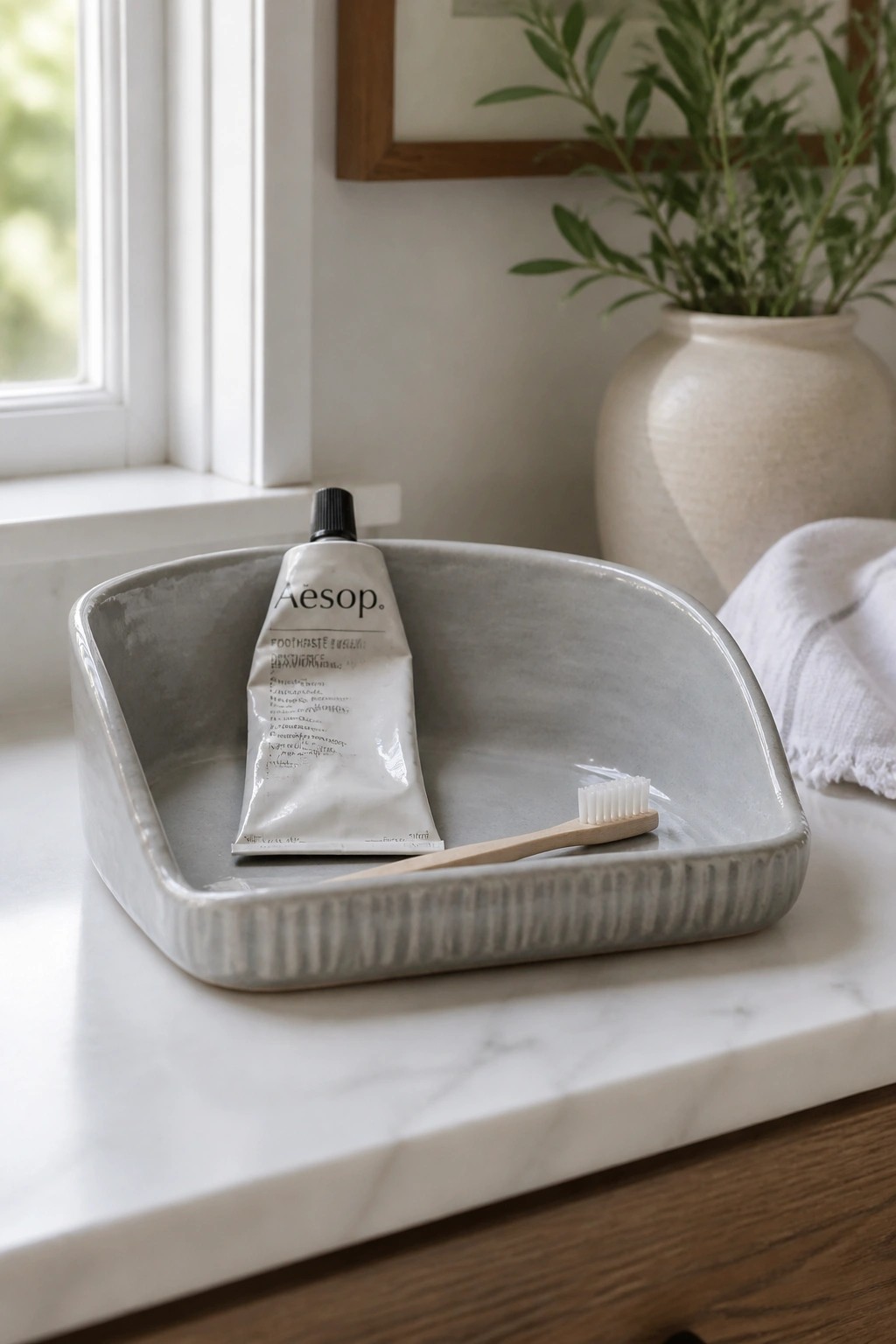
A handbuilt rectangular tray with softly raised sides creates a contained spot for small daily items like toothpaste and a toothbrush. The form comes from a simple slab with the edges lifted and one long side given a repeating impressed texture that prevents things from sliding. Its matte gray glaze keeps the surface practical while the overall scale stays compact enough for a typical vanity or sink ledge. This fits the tray category in storage projects and turns an open counter into an organized area without needing compartments.
What makes this idea useful is how the shallow walls and flat base let you adapt the dimensions for other spots like a desk or entry table. You could shorten the length for keys and mail or widen it slightly for makeup brushes. The textured edge detail is easy to add with a stamp or rib and gives a functional stop for cylindrical objects. In a small bathroom, this kind of piece keeps essentials together and visible while protecting the surface underneath.
Ceramic Branch Jewelry Holder
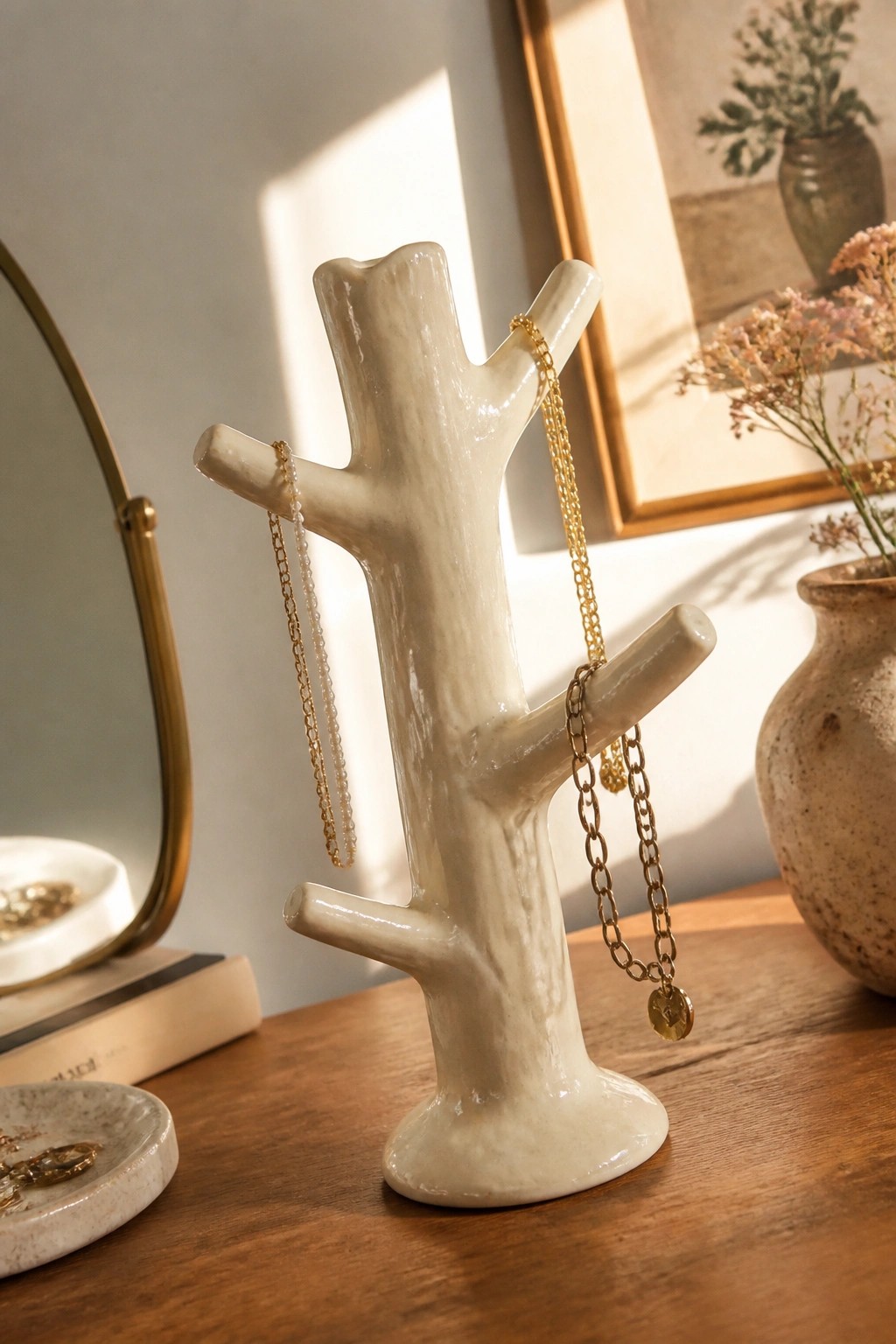
A handbuilt ceramic jewelry holder shaped like a small tree with several extending branches works as a stand for hanging necklaces and chains. The branches are positioned at different heights and angles to create multiple hanging points without the chains tangling. The glossy off-white glaze covers the irregular surface, keeping the focus on the simple sculpted form rather than added decoration. This fits the holder category for everyday jewelry storage.
What makes this idea useful is the way the branch shape naturally provides hooks without needing extra hardware. It works well on a dresser or vanity where necklaces can be kept visible and untangled. You could adapt the same form by making shorter branches for bracelets or adding a small dish at the base for rings. The compact size makes it easy to try in different glaze colors to match existing room decor.
Sectioned Ceramic Tray for Daily Clutter

A handbuilt ceramic tray divided into three low compartments creates a simple organizer for mail, sunglasses, and keys. The rectangular form with raised dividers keeps items from sliding together while the unglazed sandy base and soft green wash give it a clean, finished look. This type of tray fits the holder category and works at a scale that sits easily on a console or desk without taking over the surface.
What makes this idea useful is the way the compartments handle mixed small objects without needing extra containers. The low walls make it easy to reach in quickly, and the same layout could be narrowed for a bathroom counter or lengthened for a kitchen junk drawer station. Adjusting the number of sections lets you match it to whatever items pile up most in your space.
Frequently Asked Questions
What supplies are essential for starting these handbuilt ceramic storage projects?
You will need a suitable clay body such as stoneware or porcelain for durability, basic handbuilding tools like a rolling pin, ribs, wire cutter, and scoring tools, along with slip for joining pieces. Access to a kiln is important for bisque and glaze firing, though many community studios offer rental space. Start with small batches of clay to practice and gather nontoxic glazes that fit your clay type for a reliable finish.
How long does it typically take to complete one of these projects from start to finish?
Most projects require several sessions spread over one to two weeks due to drying times between stages. Building the form might take a few hours, followed by slow drying over three to five days to avoid cracks. Bisque firing, glazing, and final firing add another week depending on kiln schedules. Plan for patience during the drying phase, as rushing this step often leads to issues.
Can these ceramic pieces be made food safe, and what steps ensure that?
Yes, many everyday storage solutions like jars and canisters can be made food safe by using food-safe clay and glazes that are labeled as such. Apply glaze only to the interior or food-contact surfaces, fire to the correct cone temperature for your clay, and avoid glazes with heavy metals like lead or cadmium. Always test a small piece first and confirm the final firing reaches maturity for a nonporous surface.
What techniques help prevent warping or cracking during the drying process?
Cover your finished pieces loosely with plastic for the first day or two to slow moisture loss evenly, then gradually uncover them over several days. Use a ware board that allows air circulation underneath and avoid direct sunlight or heat sources. For larger storage forms, add grog to the clay body and score joins thoroughly with slip to maintain strength as the piece dries.
Where can I find inspiration or templates for customizing the 20 projects mentioned?
Look to everyday objects around your home such as kitchen containers or desk organizers for shape ideas, then adapt them using simple templates cut from cardboard. Online pottery communities and books on handbuilding offer variations, while local workshops provide hands-on guidance. Experiment with adding lids, handles, or divided interiors once you master the basic forms to fit your specific storage needs.

Pottery Path is my cozy corner of the internet where I share clay ideas, pottery inspiration, and simple projects you can recreate at home. I love exploring everything from air dry clay to handbuilt pottery to cute minis that brighten your day. My goal is to make clay crafting feel easy, fun, and welcoming for anyone who wants to try it.
You will find beginner friendly tutorials, creative pottery painting ideas, and lots of warm inspiration for slow and happy crafting. If you enjoy hands on creativity, this space will feel like home.