
I have always liked the simple forms from mid century design when I make pottery at home.
The sculptural shapes give a piece some presence without extra decoration or fuss.
Over time I have tried a few of these ideas in my own work and they hold up well in everyday use.
Some of them even work as accents around the house without taking over the space.
These examples might give you a few starting points if you want to try something similar.
Sculptural Hourglass Vase
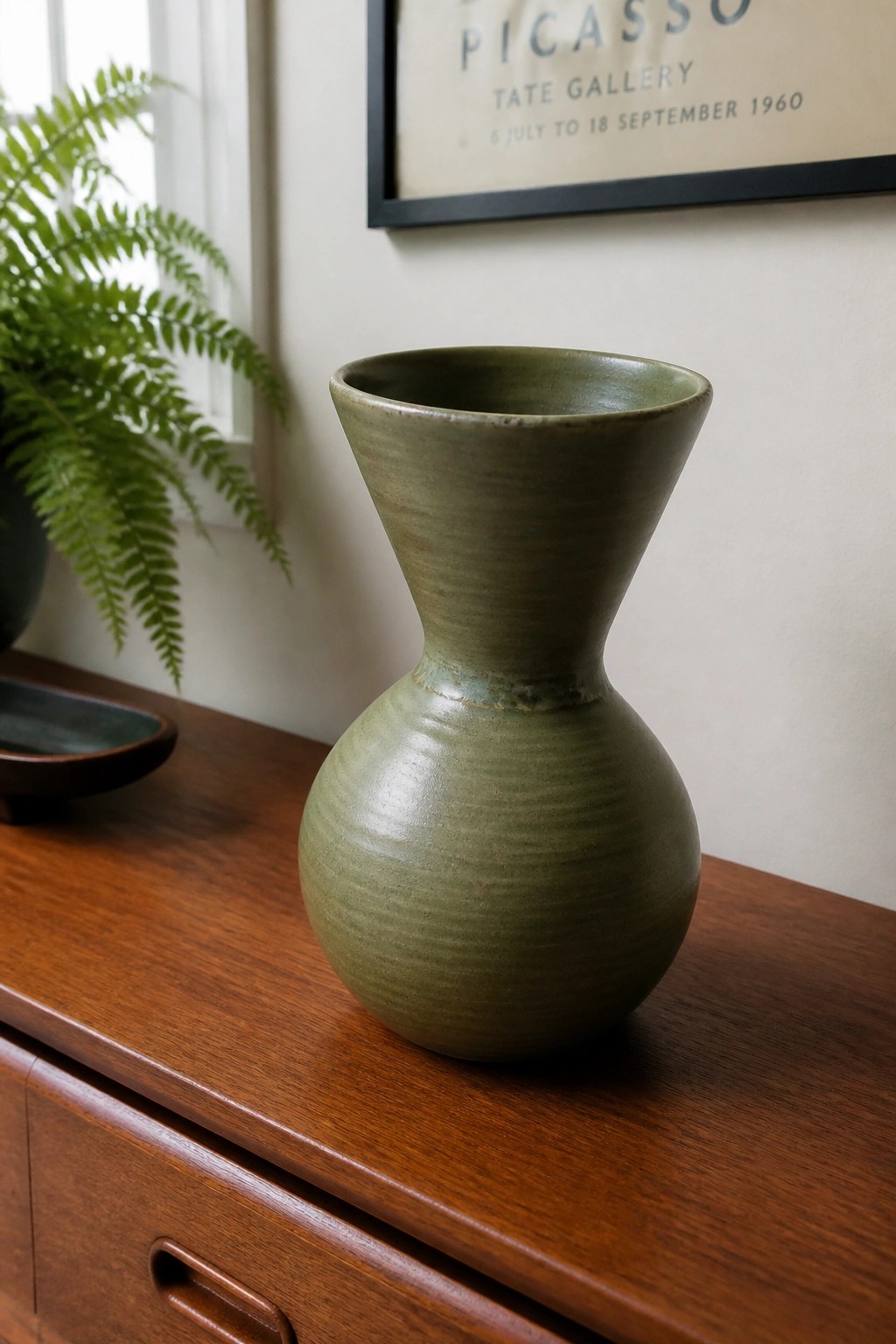
A wheel-thrown ceramic vase with a pronounced hourglass silhouette gives a clear mid-century shape through its full lower bulb, tight waist, and wide flared rim. The matte olive glaze covers the surface evenly while allowing the horizontal throwing lines to remain visible. This approach keeps the focus on the form itself rather than surface pattern or added detail. The result sits squarely in the sculptural vase category and reads as a single strong object rather than a decorated container.
The shape does a lot of the work here because the narrow waist creates contrast that holds attention even in a simple setting. A piece like this works especially well on a sideboard or entry table where the profile can be viewed from multiple angles. You could adapt the same proportions in a smaller scale for a desk piece or shift the glaze to a matte black to change the weight of the object. The clean single-color treatment also makes the form easy to repeat in different sizes for a grouped display.
Low Tripod Bowl With Crescent Cutout

This project is a low, wide ceramic bowl built on three short legs with a crescent moon shape cut through one side. The rounded body keeps the form compact while the cutout and raised base add visual interest without extra parts. A speckled mustard glaze covers the surface and highlights the handmade texture. The result is a simple vessel that works as a small planter or decorative holder.
The legs and cutout give the bowl a clear profile that stands out on a shelf or windowsill. You could adapt the same shape for a larger planter by widening the opening or use it as a desk tray by skipping the cutout. The small scale makes it quick to throw and easy to test in different glazes. A piece like this works especially well when you want a mid-century shape that still leaves room for plants or small objects.
Organic Loop Handle Mug in Two-Tone Glaze
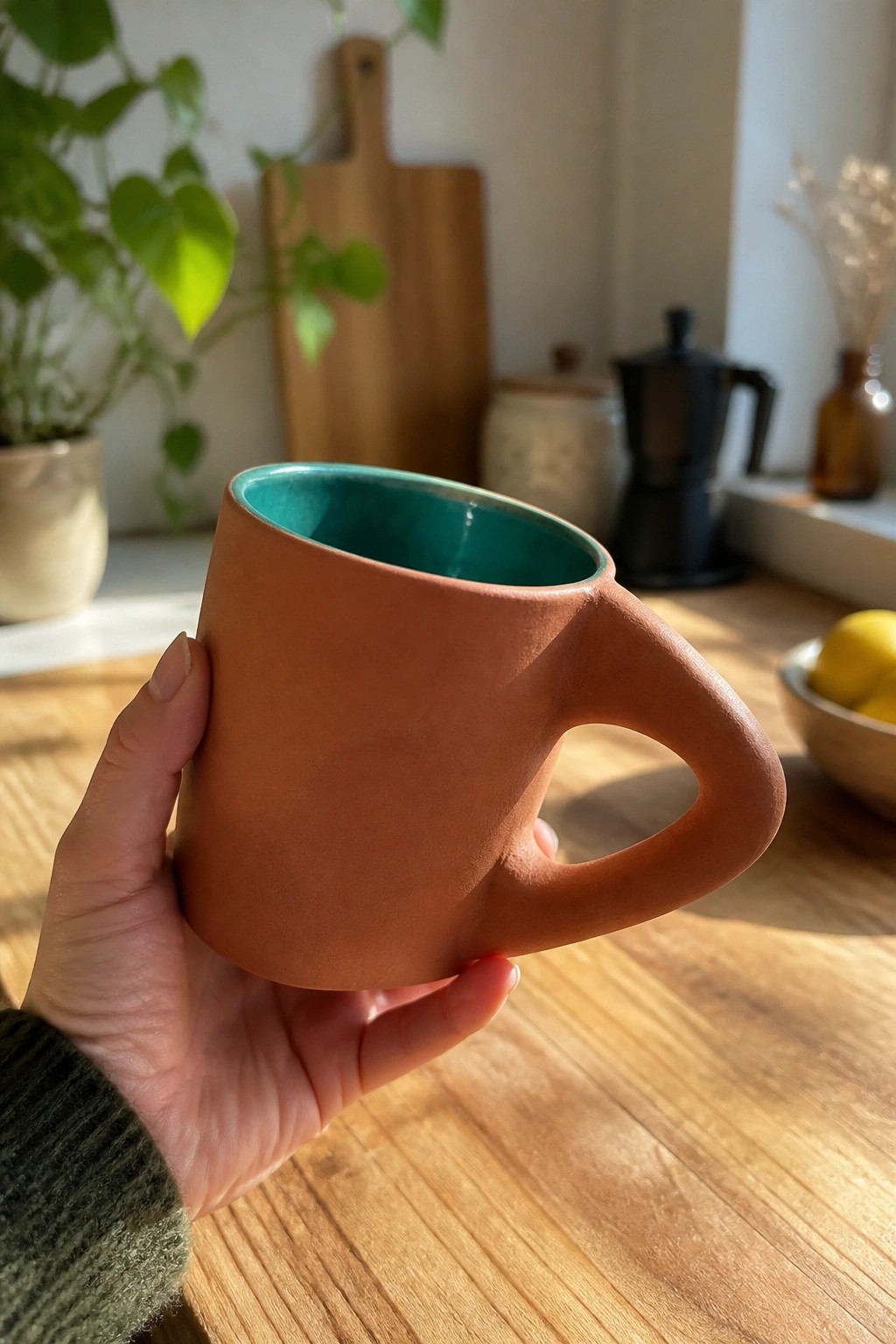
A handmade ceramic mug uses a simple cylinder shape paired with a thick, exaggerated loop handle that gives it a strong sculptural profile. The matte terracotta exterior contrasts with the glossy teal interior, creating a clean two-tone effect that highlights the form. This approach keeps the body understated while letting the handle carry the visual weight. It works as a kitchen mug with a clear mid-century modern direction.
What makes this idea useful is how the handle shape does most of the design work without needing extra surface decoration. You could scale the same proportions down for espresso cups or widen the body slightly for soup bowls while keeping the same handle style. In a kitchen, the mug sits well on open shelves and still feels comfortable to hold. The two-tone glazing is straightforward to adapt by changing the interior color or switching the exterior to a different matte tone.
Scalloped Rim Bowl with Narrow Edge Line
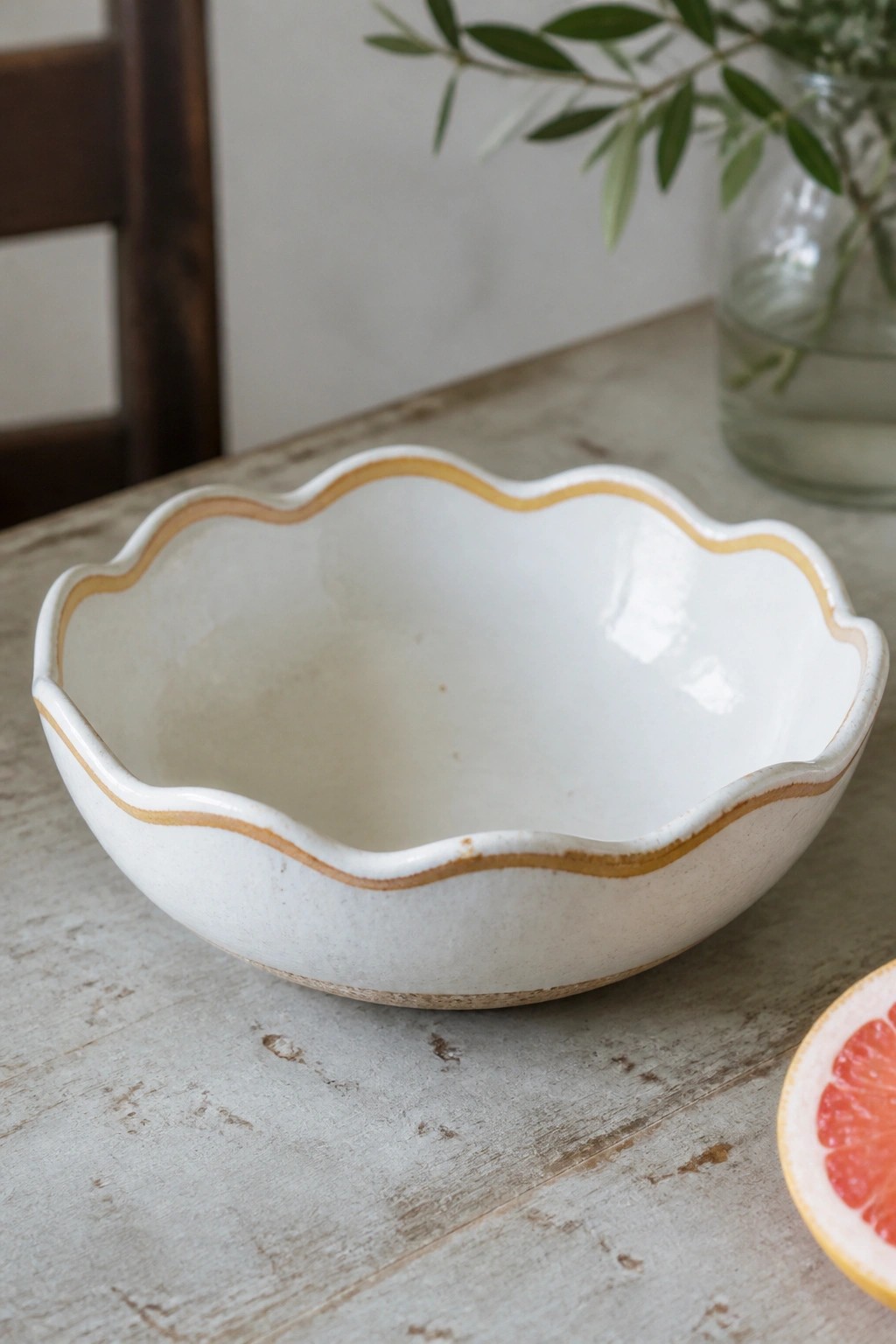
A ceramic bowl shaped with a wide, wavy scalloped rim creates an organic outline that stands out from standard round forms. The thin band of earthy glaze along the edge emphasizes the irregular curves while keeping the rest of the surface plain white. This approach works well for a fruit bowl, salad server, or general kitchen piece where the rim detail draws attention to the handmade shape.
What makes this idea useful is how the scalloped edge can be adjusted by making the waves shallower or deeper depending on the size of the bowl. The narrow line detail is easy to repeat on plates or smaller dishes to build a simple matching set. In a kitchen this shape holds up well for everyday use while still looking distinct on open shelves.
Stacked Ceramic Discs with Carved Sunbursts

Three round clay discs can be formed, carved with radiating lines, and glazed in alternating colors before being stacked vertically for wall mounting. The sunburst pattern is cut into each disc with a contrasting center color, and the simple circular outlines keep the overall shape bold and graphic. This creates a sculptural decor object that sits flat against the wall while the carved lines and glaze shifts provide visual interest. The project fits into the category of mid-century style wall art made from basic wheel or slab forms.
What makes this idea useful is how the stacked format works in narrow spaces like above a sideboard or beside a doorway. You can change the number of discs, swap the glaze colors, or scale the whole piece down to fit a smaller wall area. The carved radial lines are straightforward to repeat with basic tools, so the same motif could be adapted into individual coasters or a single large tray. The strong color contrast and geometric pattern also photograph clearly for project sharing.
Sculptural Double Candle Holder With Central Opening

A double candle holder formed from clay uses two short upright sockets connected by a wide, curved body that includes a large oval cutout through the center. The shape stays low and horizontal, letting the negative space and flowing lines do the visual work. A white base glaze with uneven yellow-brown drips adds surface variation while keeping the focus on the overall form. This fits the holder category and works as a table or shelf piece rather than a tall vase or planter.
The shape does a lot of the work here, so the same idea can be adapted by widening the sockets for thicker candles or flattening the base for a more stable desk version. A piece like this fits well on a nightstand or console because it stays compact yet still reads as a deliberate mid-century accent. You could rework the cutout into a simple rectangle or swap the drip glaze for a single matte color if you want a cleaner look for gifting.
Wavy Elongated Tray

A long, shallow ceramic tray with an irregular wavy outline gives a sculptural presence while remaining usable for small items. The form stretches in gentle curves instead of straight sides, and the brown rim creates a clear border around the speckled light interior. This shape category works as a catch-all or low-profile serving piece rather than a standard rectangular tray. The handmade quality shows in the soft variation along the edge and the way the surface texture shifts across the length.
What makes this idea useful is how the extended shape fits narrow surfaces like a console or dresser without crowding the space. You could adapt the same profile into a shorter version for a desk or nightstand, or widen the curves slightly for a different visual weight. The rim color against the lighter center helps the form stand out in photos, which is why similar pieces perform well on Pinterest boards. For a simpler version, keep the wavy edge but drop the rim detail to test the shape first.
Abstract Figure With Circular Void
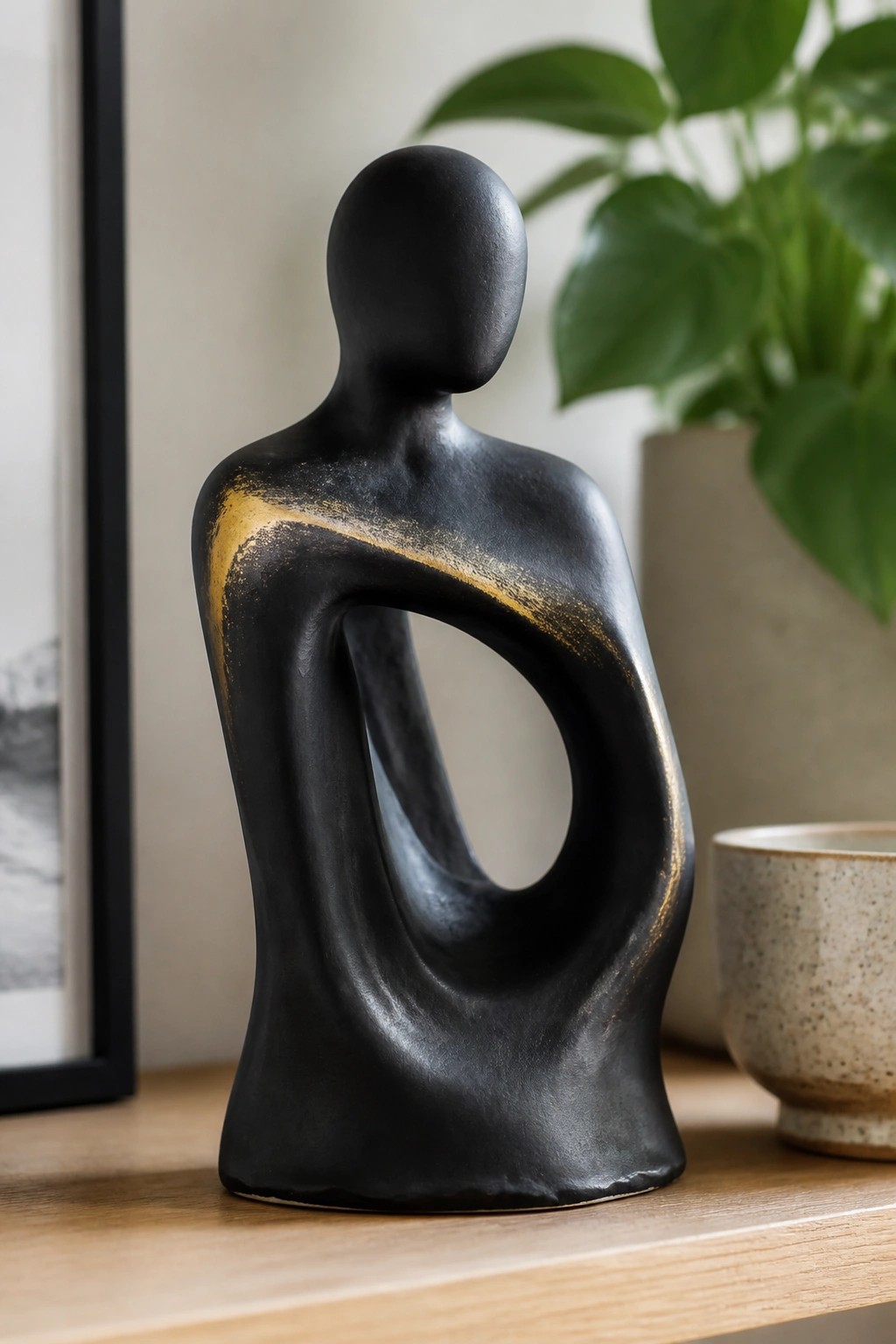
A ceramic figurine in an abstract human form makes a strong mid-century statement when the shape relies on smooth curves and negative space. The design uses a large oval opening through the torso to break up the solid mass and create movement across the piece. Matte black clay gives the form weight and presence, while light gold accents along the edges highlight the flowing lines without overwhelming the silhouette. This approach works especially well as a standalone decor object on a shelf or console.
The shape does a lot of the work here because the cutout keeps the piece balanced and visually light despite its size. You could scale the same idea down for a smaller desk piece or try it in a matte white or terracotta clay to match different room palettes. For a gift, something like this fits easily into a modern pottery collection and stands out on Pinterest when photographed against simple wood or linen backgrounds. The gold detail can be added with a quick dry-brush pass if you want to keep the focus on form rather than color.
Organic Ceramic Ring Dish
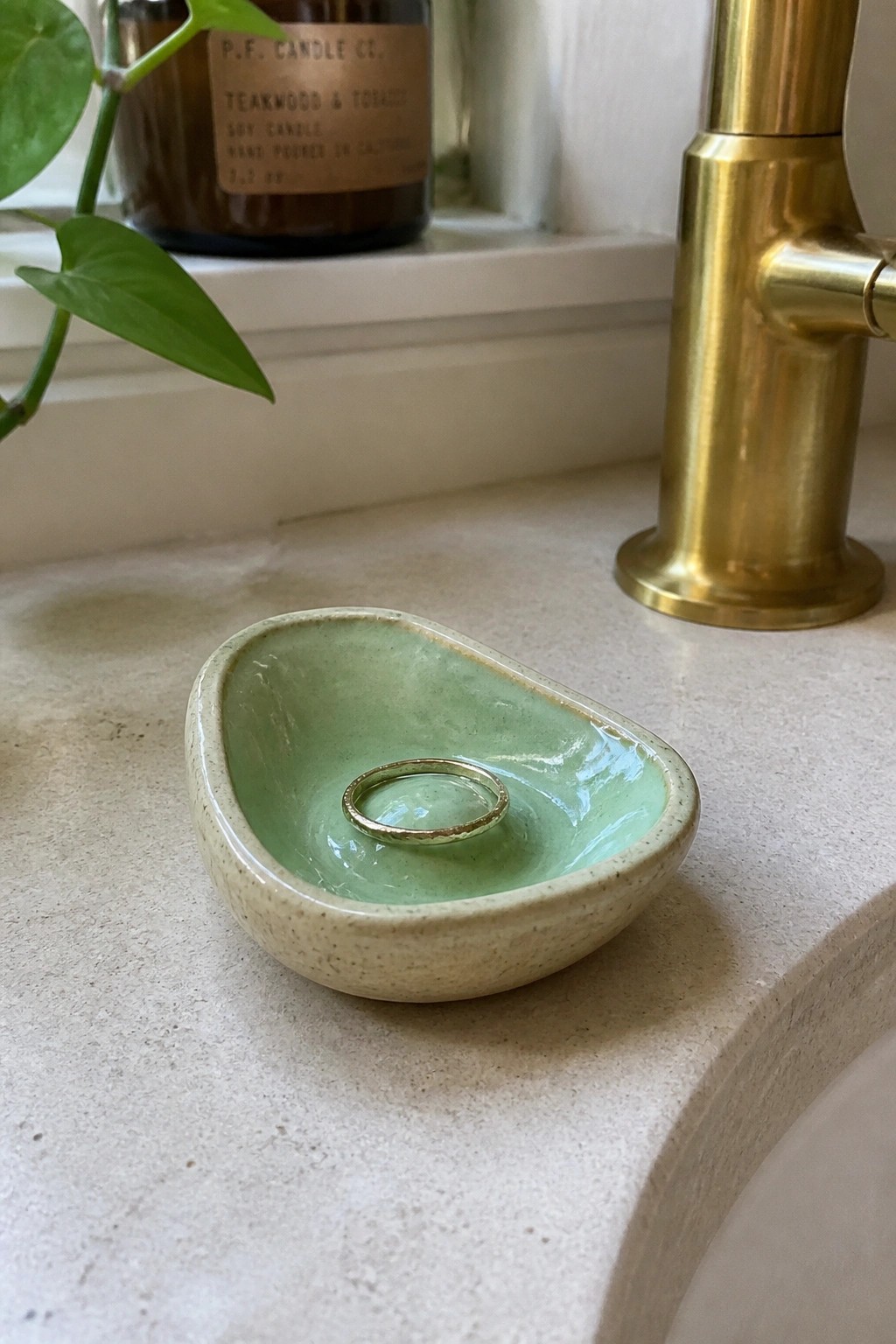
A small handmade ceramic dish with an irregular rounded shape serves as a ring holder for daily use on a counter or shelf. The interior carries a glossy light green glaze that pools slightly in the center while the outside stays matte with a speckled finish. This combination keeps the focus on the simple form and makes the piece easy to spot among other bathroom items.
The compact size works well next to a sink so rings stay out of the drain during hand washing. You can adapt the same shape for earrings or a small soap rest by changing the depth and glaze color to match existing tiles or fixtures. A version in a single solid glaze would simplify the process while still giving a clean modern result that photographs clearly for reference.
Linked Double Bowls for Table Seasonings
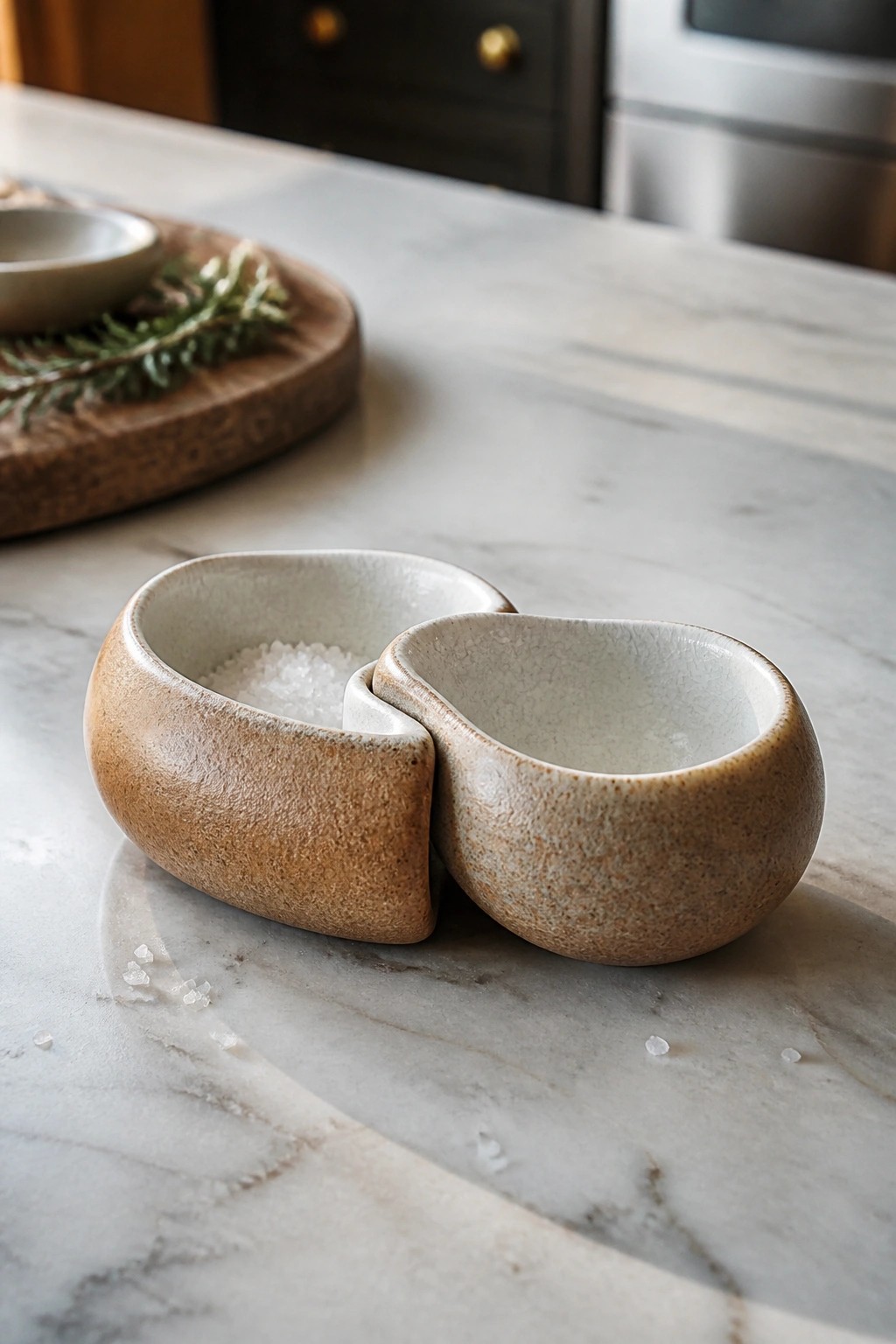
A pair of small ceramic bowls joined along one side forms a single sculptural piece meant for salt, pepper, or other seasonings. The rounded shapes connect in a smooth curve that keeps each bowl distinct while creating one stable unit. An earthy speckled glaze covers the outside, leaving the interiors lighter and smoother for easy cleaning. This kitchen item works as both a practical holder and a mid-century style accent.
What makes this idea useful is the connected form that prevents the bowls from shifting during use. You could adapt the same joined shape for oil and vinegar or make the link narrower to create a more dramatic silhouette. The small scale fits easily on a countertop or dining table without crowding other dishes. For another version, simplify the curve into a straighter connection and use a single glaze color across both bowls.
Curved Ceramic Spoon Rest With Organic Edge

A handmade ceramic spoon rest shaped like an asymmetrical kidney with one side lifted into a soft wavy rim. The green glaze shows swirling brushstrokes that follow the curve, creating movement across the surface without added decoration. This type of kitchen pottery works because the raised edge stops spoons from sliding while the compact size keeps it from taking over counter space.
What makes this idea useful is how the same curved form can be scaled down for a ring dish or lengthened into a small tray for butter knives. Try it in a matte glaze for a more modern look or keep the swirl pattern but change the color to match your existing dishes. In a kitchen, the shape gives you a clear function that still looks intentional next to the stove, which helps it perform well as a standalone Pinterest pin.
Sculptural Ceramic Toothbrush Holder with Wavy Form
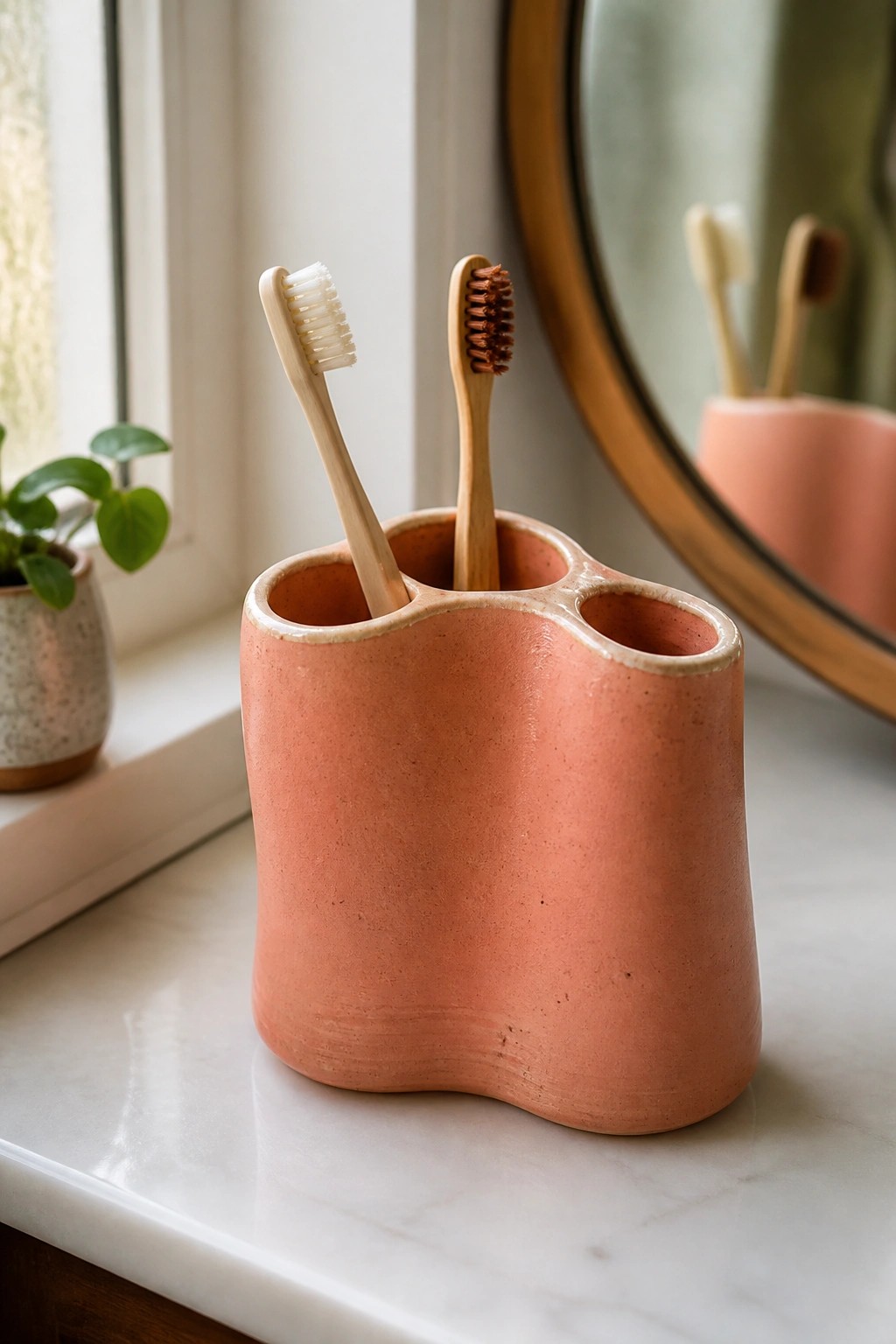
A handmade ceramic toothbrush holder shaped with soft, irregular curves creates multiple compartments through simple pinching and pulling of the clay walls. The piece uses a matte terracotta tone with a lighter rim to emphasize the organic silhouette and give it a mid-century modern feel. This approach turns a standard bathroom item into a sculptural object by letting the form carry the design instead of relying on surface patterns or added details.
The shape does a lot of the work here by creating visual interest while still keeping the holder practical for daily use. You could adapt the same undulating profile into a desk organizer or a small kitchen tool caddy by changing the height and spacing of the openings. The compact scale makes it simple to hand-build or throw in sections, and the earthy color pairs easily with neutral bathrooms or plant displays. This kind of piece tends to perform well on Pinterest because the curves catch light differently from straight-sided holders.
Bulbous Ceramic Pitcher with Wide Spout
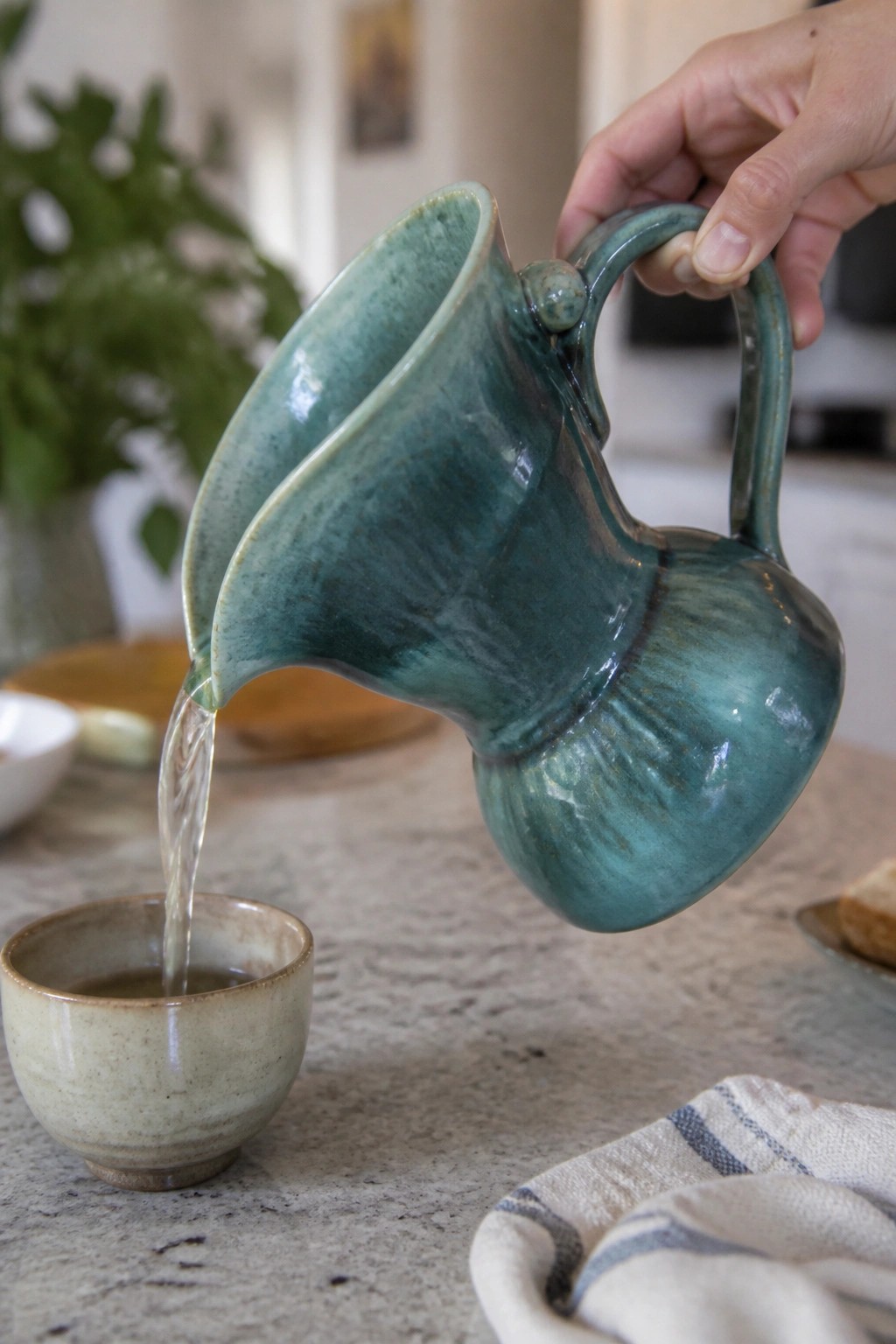
A ceramic pitcher with a rounded body and broad spout creates a practical serving piece for water, juice, or sauces. The form includes a looped handle with a small knob accent and a glossy teal glaze that shows off the wheel-thrown curves and slight asymmetry. This shape falls into the kitchen serving category and stands out because the weight sits low, making controlled pours easier without tipping.
What makes this idea useful is how the same rounded profile can be scaled down for a creamer or widened for a larger beverage jug. The glaze color works well against wood or linen settings, so the piece fits both everyday meals and open-shelf display. You could rework the handle attachment into a simpler strap style or test matte finishes for a different surface feel. A pitcher of this size photographs cleanly for recipe posts or table-setting boards.
Sculptural Lamp Base with Circular Cutout
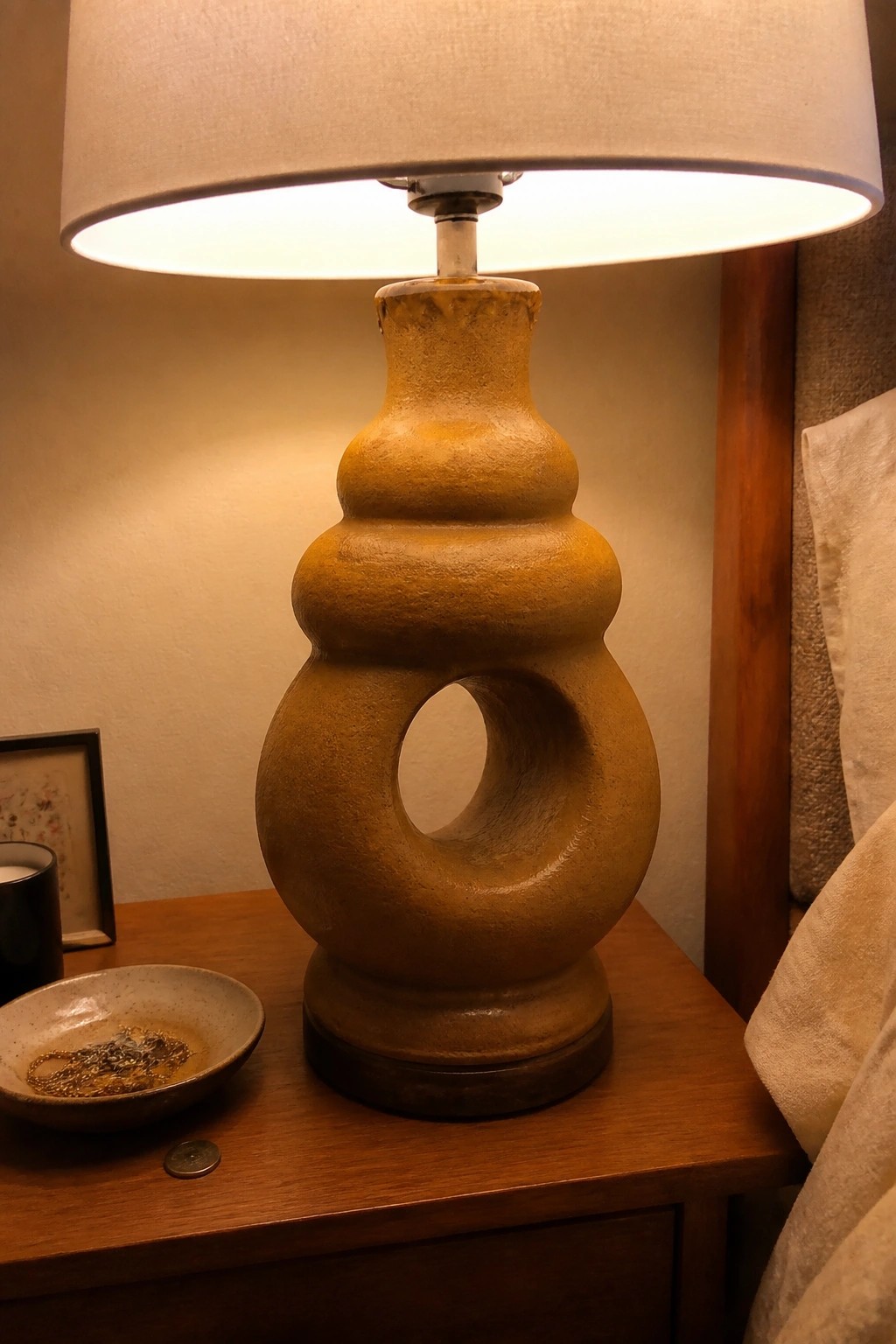
A ceramic lamp base built from stacked rounded forms and a large circular opening gives a lighting piece real sculptural weight. The warm ochre glaze shows a matte, slightly rough texture that emphasizes the handmade shape rather than hiding it. This turns a standard table lamp into a mid-century style decor object that works through form instead of surface detail.
The shape does a lot of the work here by using negative space to keep the solid volume from feeling heavy. You could scale the same stacked silhouette down for a vase or candle holder if a full lamp base seems too big for your space. The earthy tone pairs easily with wood furniture and neutral textiles, so it fits bedside tables or sideboards without competing for attention.
Sculptural Yarn Bowl with Spiral Cutout
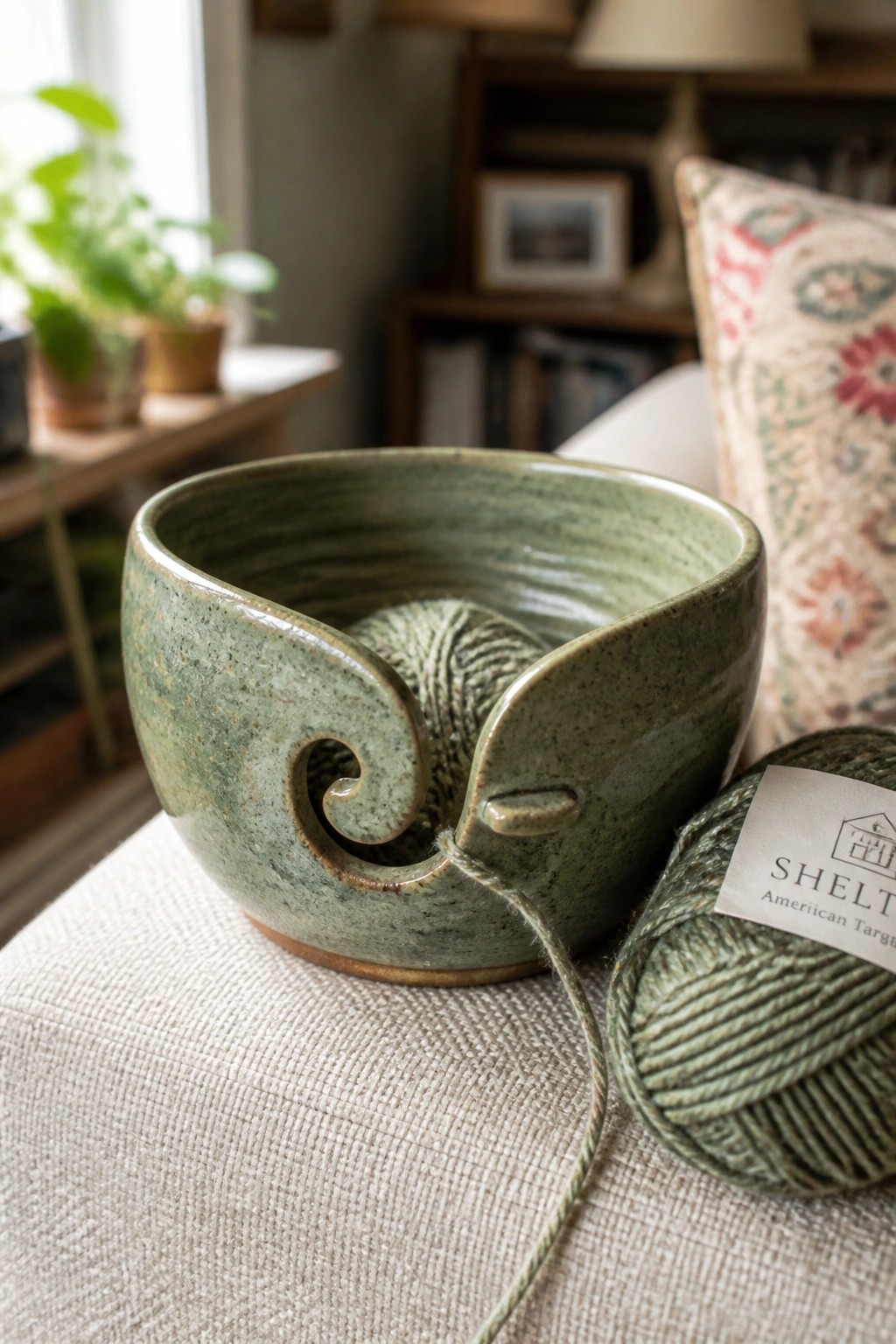
A ceramic yarn bowl with a large spiral opening cut into one side holds a ball of yarn while letting the strand feed through smoothly. The rounded, organic shape combined with the swirling detail creates visual interest without extra decoration. The glossy green glaze highlights the handmade curves and gives the form a solid, mid-century presence. This idea belongs in the functional holder category, where the sculpted element serves both form and daily use.
What makes this idea useful is how the spiral turns a plain bowl into a dedicated craft tool that actually works. You could adapt the same cutout on a smaller bowl for embroidery thread or scale it up for bulkier yarns. The shape sits well on a coffee table or side table in a living room without taking much space. For a different project, the same swirl detail could be applied to a lidded jar or a shallow tray for desk supplies.
Sculptural Matte Black Pitcher
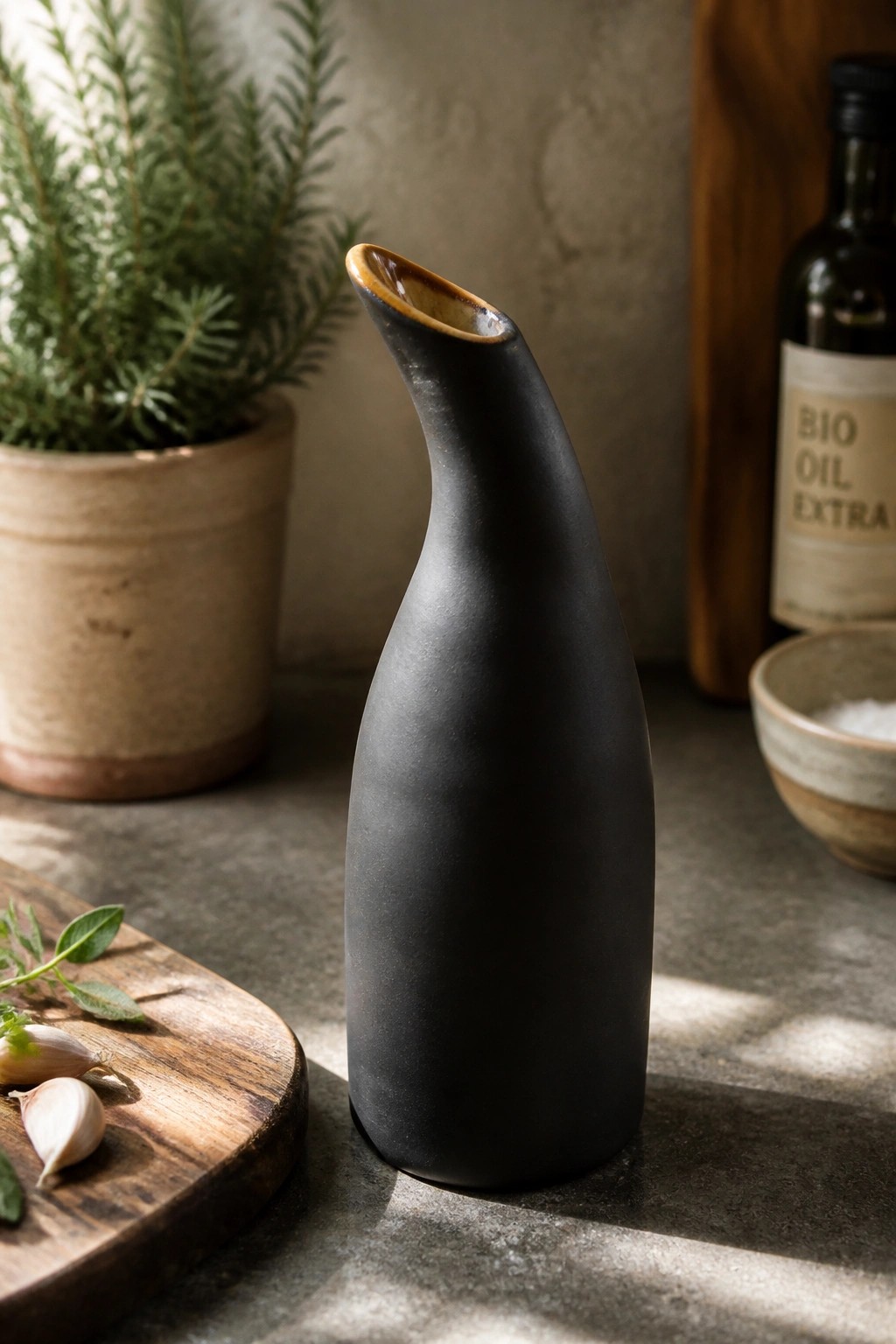
A tall ceramic pitcher with a narrow angled neck gives this project a clear mid-century shape that works as both a functional pourer and a standalone object. The matte black surface keeps the form simple while the warm brown rim at the opening adds a small contrast that highlights the handmade edge. This approach turns a basic vessel into a kitchen item that still reads as decor because of the elongated taper and minimal surface detail.
The shape does a lot of the work here since the lean and height let the pitcher stand out on open shelving without extra decoration. You could scale the same neck angle down for a smaller oil cruet or widen the base slightly to make a vase instead. In a kitchen this kind of piece pairs easily with wooden boards and herbs, and the solid color makes it simple to repeat in different sizes for a set.
Striped Cactus Napkin Holder

A ceramic napkin holder built from two curved slabs joined at the base creates a sculptural kitchen item with a clear slot for folded linens. The design uses a glossy yellow glaze broken by evenly spaced vertical teal stripes that run the full height of the form. This simple color repeat and the rounded cactus-like silhouette give the piece strong visual interest while keeping the overall shape compact and easy to place on a table. The result fits the category of a functional dining accessory that also reads as mid-century decor.
The shape does a lot of the work here because the arched profile already suggests a plant form without needing extra sculpted details. You could adapt the same striped glaze pattern to a shorter butter dish or a pair of salt and pepper shakers using the same two-tone application. In a dining space this kind of holder keeps cloth napkins organized while adding a single bold accent to the table. The compact size also makes it straightforward to rework as a mail holder or desk organizer if you adjust the opening width.
Mountain Ridge Incense Holder
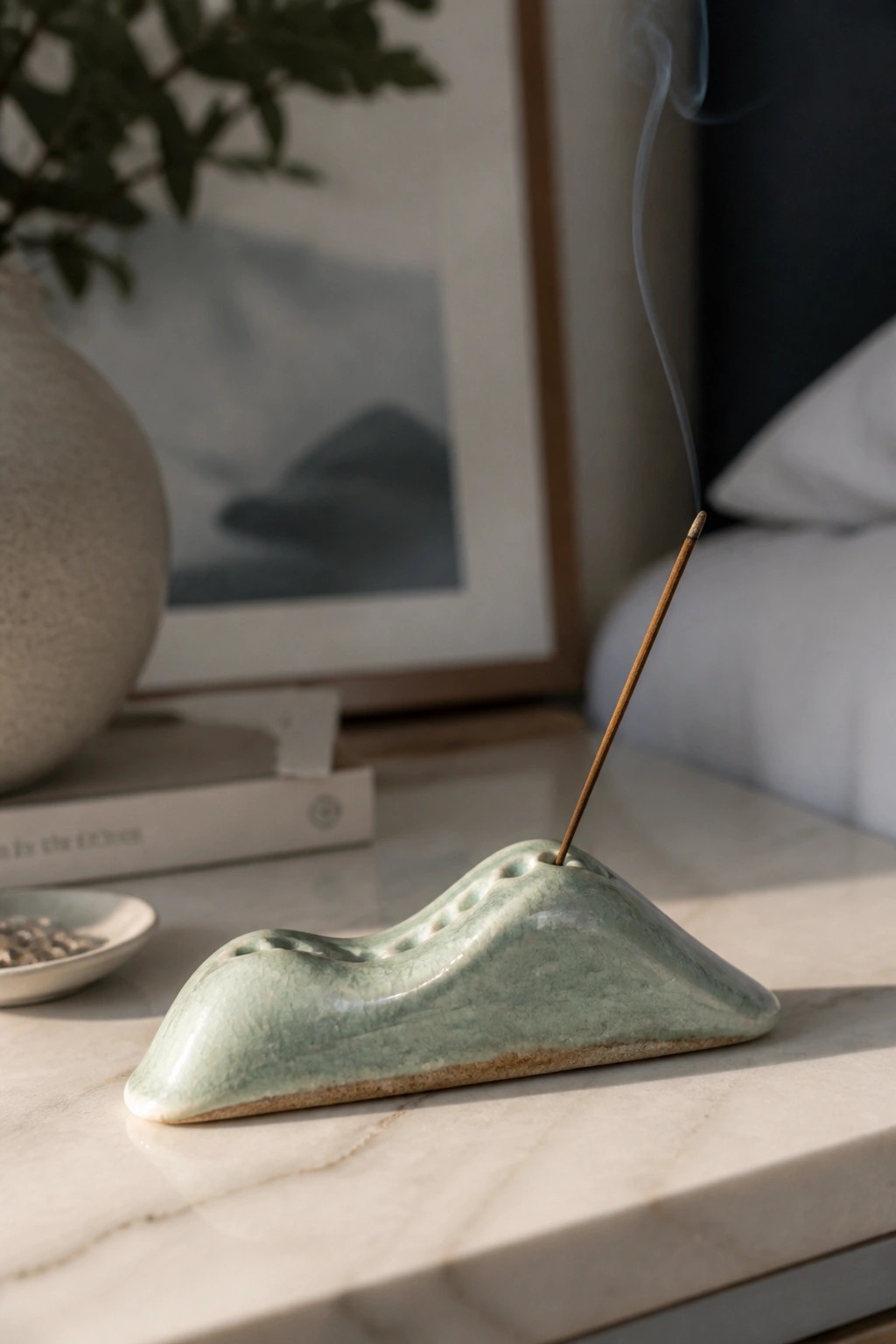
A handbuilt ceramic incense holder formed as a low, rolling mountain range creates multiple holes along the peaks so sticks can sit at different angles. The green glaze with its soft variation and visible clay edge keeps the focus on the sculpted shape rather than surface pattern. This type of project works as a decorative holder that also serves a clear function on a surface.
What makes this idea useful is the way the ridges turn a simple holder into a piece that can sit on a desk, shelf, or bedside table without needing extra decoration. You could shorten the form for a single-hole version or stretch the same profile into a longer tray for several sticks at once. The small scale makes it simple to try in a few different clays or glazes while keeping the core shape intact.
Leaf-Shaped Ceramic Soap Tray
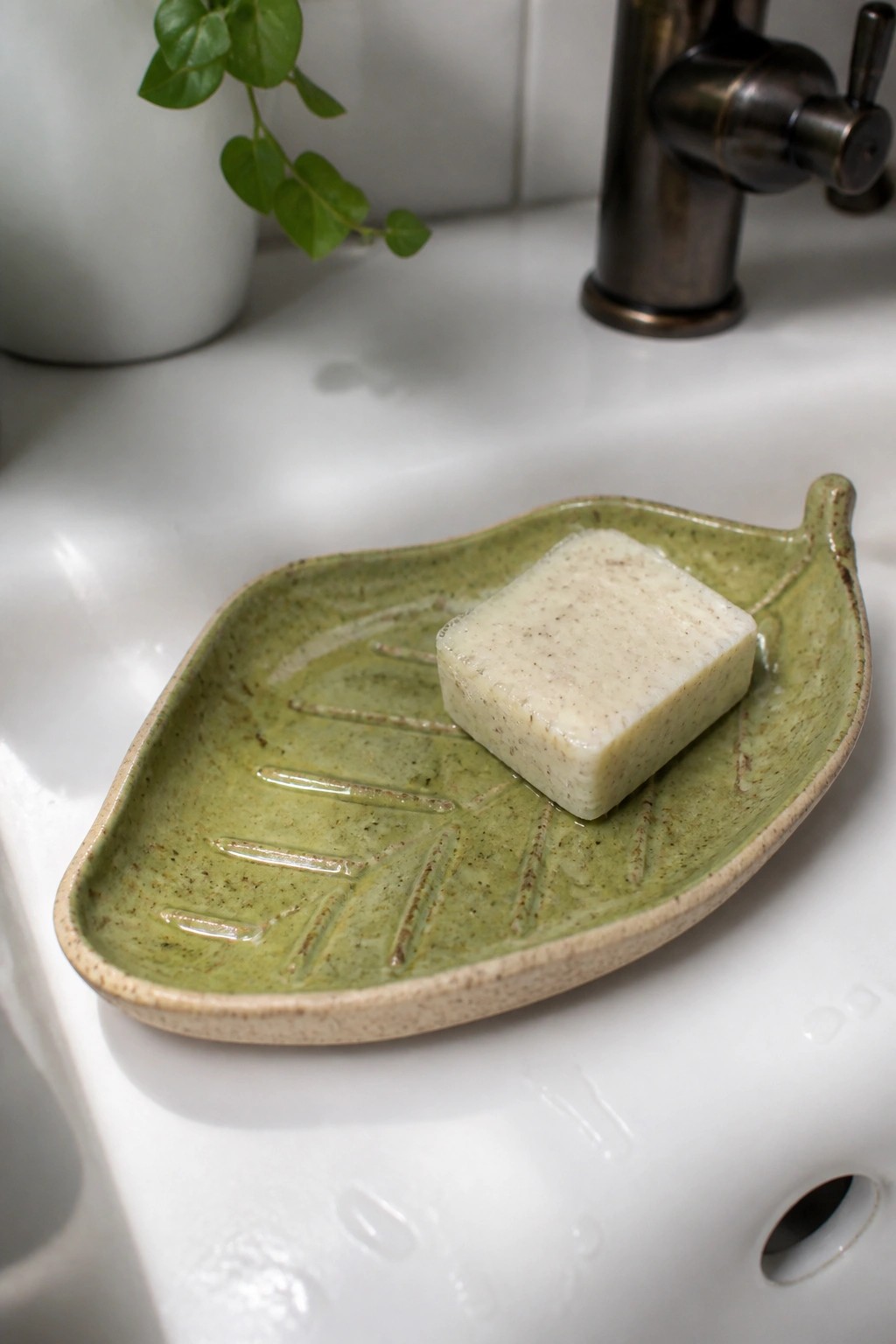
A leaf-shaped soap tray gives a bathroom a sculptural but functional ceramic piece that keeps soap elevated and dry. The form uses a broad leaf outline with raised edges and impressed lines that mimic veins, allowing water to drain away from the bar. A speckled green glaze adds subtle texture and color variation while keeping the surface simple enough to suit mid-century modern spaces. This approach turns a basic bathroom item into something with clear shape and purpose.
What makes this idea useful is how the leaf outline can be adjusted in size or proportion for different sinks or counters without losing its function. The same vein pattern could be pressed into a smaller dish for rings or adapted into a shallow tray for keys. The compact scale makes it easy to test in one firing and still produce something that looks intentional on a sink ledge. A version with a slightly deeper rim would also work for holding small bathroom accessories.
Frequently Asked Questions
1. Where can I find affordable modern mid-century pottery with sculptural shapes? You can explore online marketplaces like Etsy and eBay for handmade ceramic pieces from independent artists. Specialty retailers such as West Elm or CB2 often carry inspired collections at reasonable prices. Local thrift stores and vintage shops may yield original finds if you search for organic forms in neutral tones.
2. How do I display sculptural pottery without overwhelming a room? Select one or two standout pieces as focal points on a console table or floating shelf. Arrange them at varying heights using books or small stands underneath. Keep surrounding decor minimal with neutral backgrounds so the shapes remain the highlight.
3. What is the best way to clean and preserve these pottery items? Wipe surfaces weekly with a dry microfiber cloth to remove dust. For stains mix a small amount of mild dish soap with warm water and gently rub using a soft sponge. Avoid soaking pieces in water or using harsh chemicals since many glazes can be delicate.
4. Can I create similar sculptural shapes at home using basic supplies? Yes start with air-dry clay or polymer clay available at craft stores. Build forms by hand pinching and smoothing to achieve organic curves then let them dry fully before painting with acrylics or sealing with varnish. Online tutorials on hand-building techniques provide step-by-step guidance for beginners.
5. How can I incorporate these pieces into a space with existing traditional furniture? Choose pottery in earthy colors like terracotta or matte black to bridge styles. Position them alongside classic items such as wooden tables or upholstered chairs to create contrast. Layer in a few plants or simple textiles to soften the overall look and tie elements together.

Pottery Path is my cozy corner of the internet where I share clay ideas, pottery inspiration, and simple projects you can recreate at home. I love exploring everything from air dry clay to handbuilt pottery to cute minis that brighten your day. My goal is to make clay crafting feel easy, fun, and welcoming for anyone who wants to try it.
You will find beginner friendly tutorials, creative pottery painting ideas, and lots of warm inspiration for slow and happy crafting. If you enjoy hands on creativity, this space will feel like home.