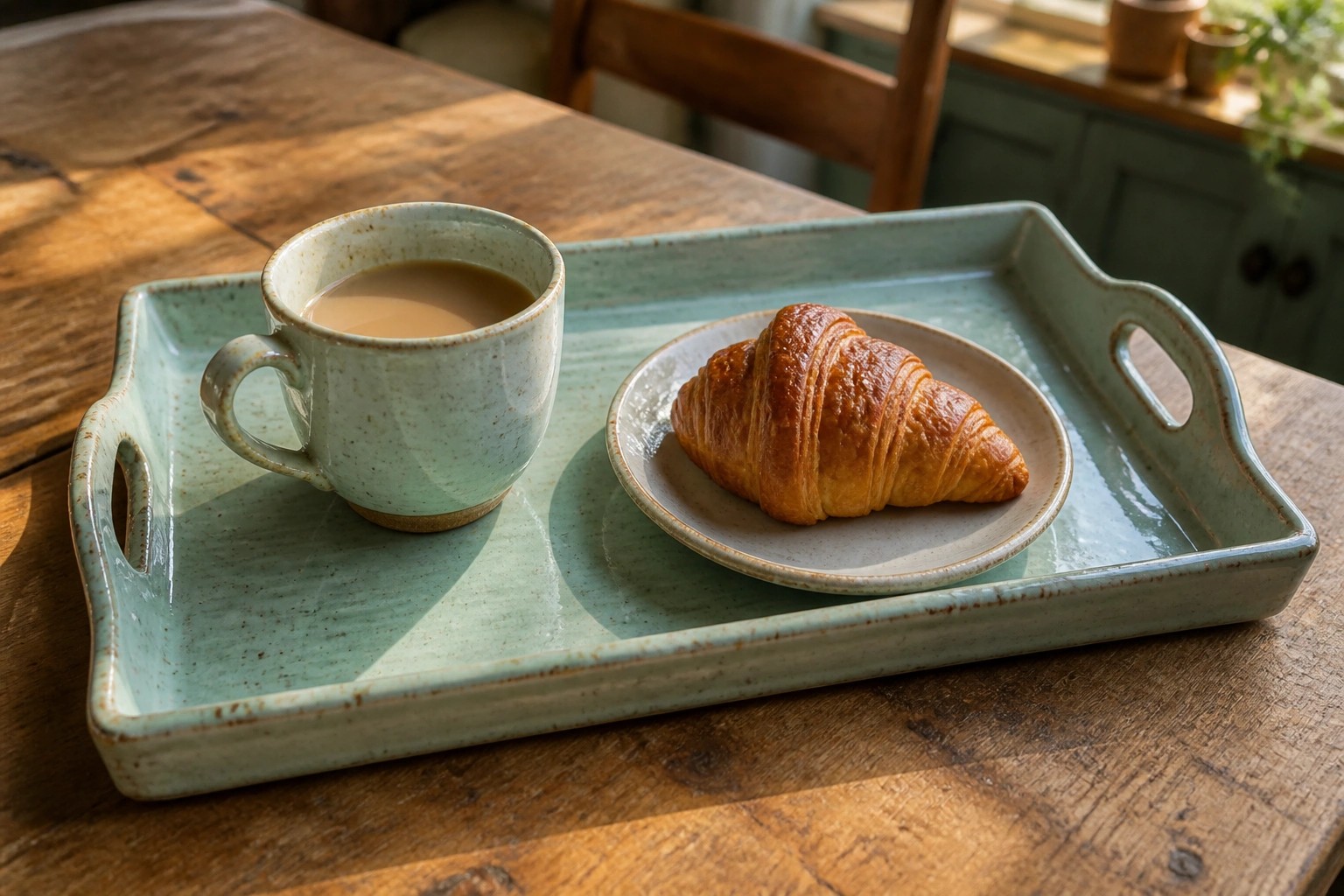
I have been making serving trays in my pottery studio for a while now.
Cutout handles are one of my favorite details to add since they keep things simple.
Over time I have come up with a few different designs that work nicely for everyday use.
In this article I am sharing eighteen ideas that might give you some inspiration for your own projects.
Some use basic shapes while others have a bit more pattern to them.
Cutout Handle Tray in Soft Green Glaze
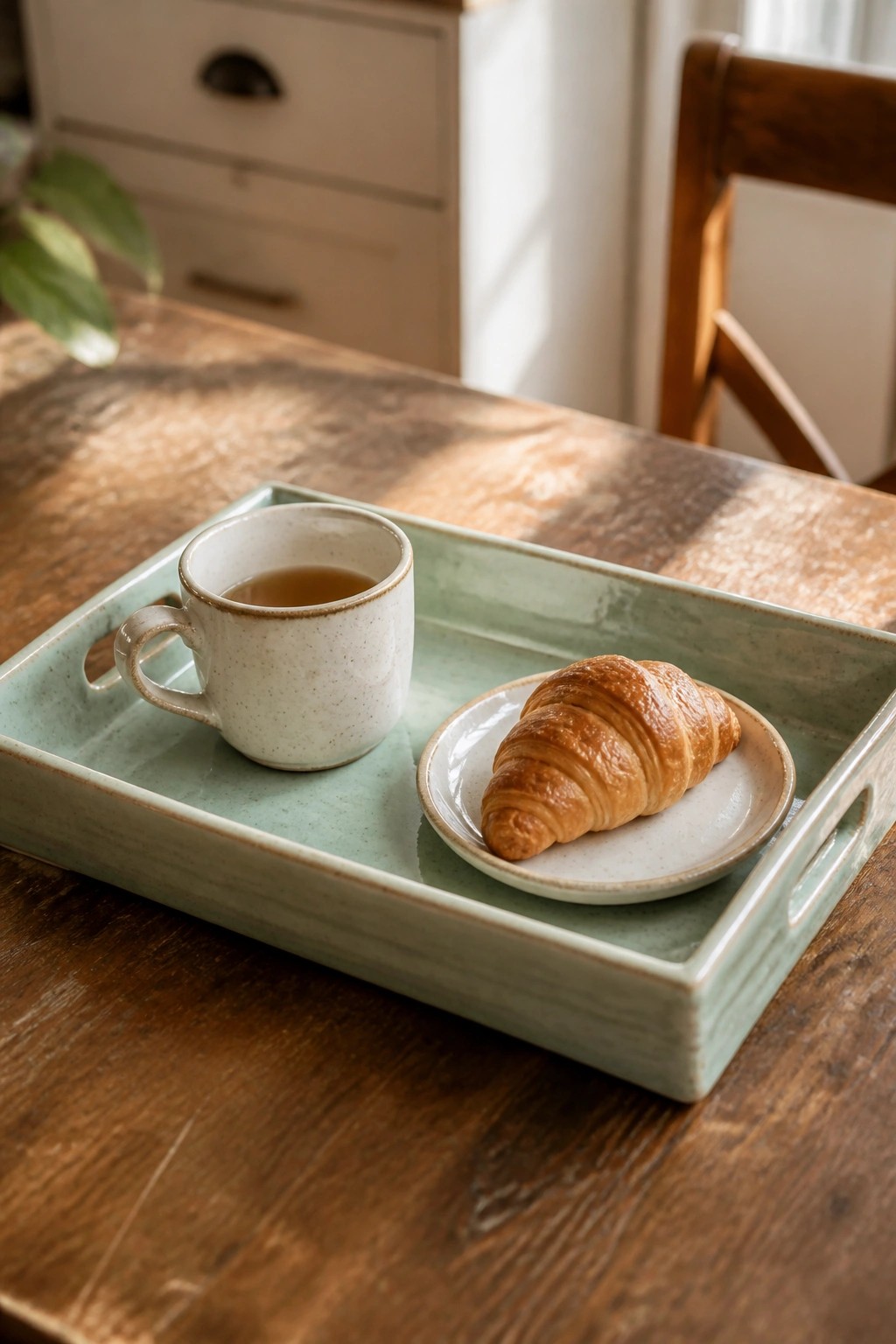
A rectangular clay serving tray with cutout handles on the short ends gives you a simple way to carry mugs or small plates without adding extra parts. The light green glaze covers the surface evenly while leaving a bit of the clay body visible at the edges for contrast. This shape stays flat and stable, making it practical for everyday use on a table or counter.
What makes this idea useful is how the cutouts double as both handles and a clean design detail that keeps the tray from looking too plain. It works especially well in a kitchen for breakfast trays or as a catch-all for tea setups. You could scale the same rectangle down for a smaller version or swap the glaze for a warmer tone to match different dish sets.
Round Ceramic Tray with Cutout Handles and Gold Dot Border
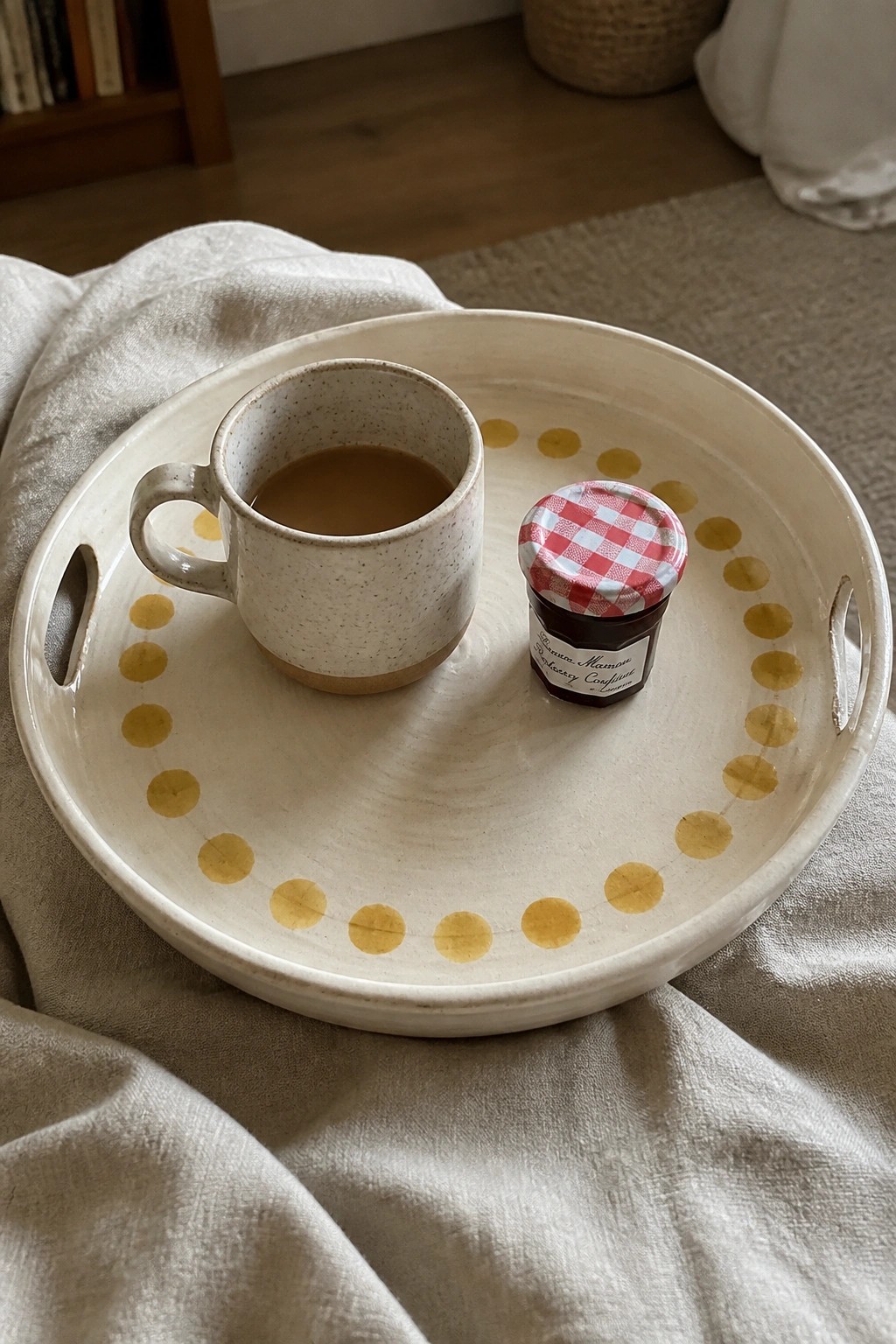
A handbuilt ceramic serving tray with two cutout handles on opposite sides creates a simple, functional piece for carrying drinks or small plates. The tray uses a matte off-white glaze and features a single ring of gold dots spaced evenly around the inner rim. This layout keeps most of the surface plain while the dots add a light, repeating detail that contains whatever sits inside the circle. The cutouts give a clean way to grip the tray without extra attachments.
What makes this idea useful is how the cutout handles keep the form flat and easy to roll out from a slab. You can change the dot spacing or switch to another color to match different tableware. The same tray shape works for breakfast trays on a bed or for passing small snacks, and the pattern could be left off entirely for a plainer version or repeated on a smaller oval tray for condiments.
Divided Ceramic Tray with Cutout Handles
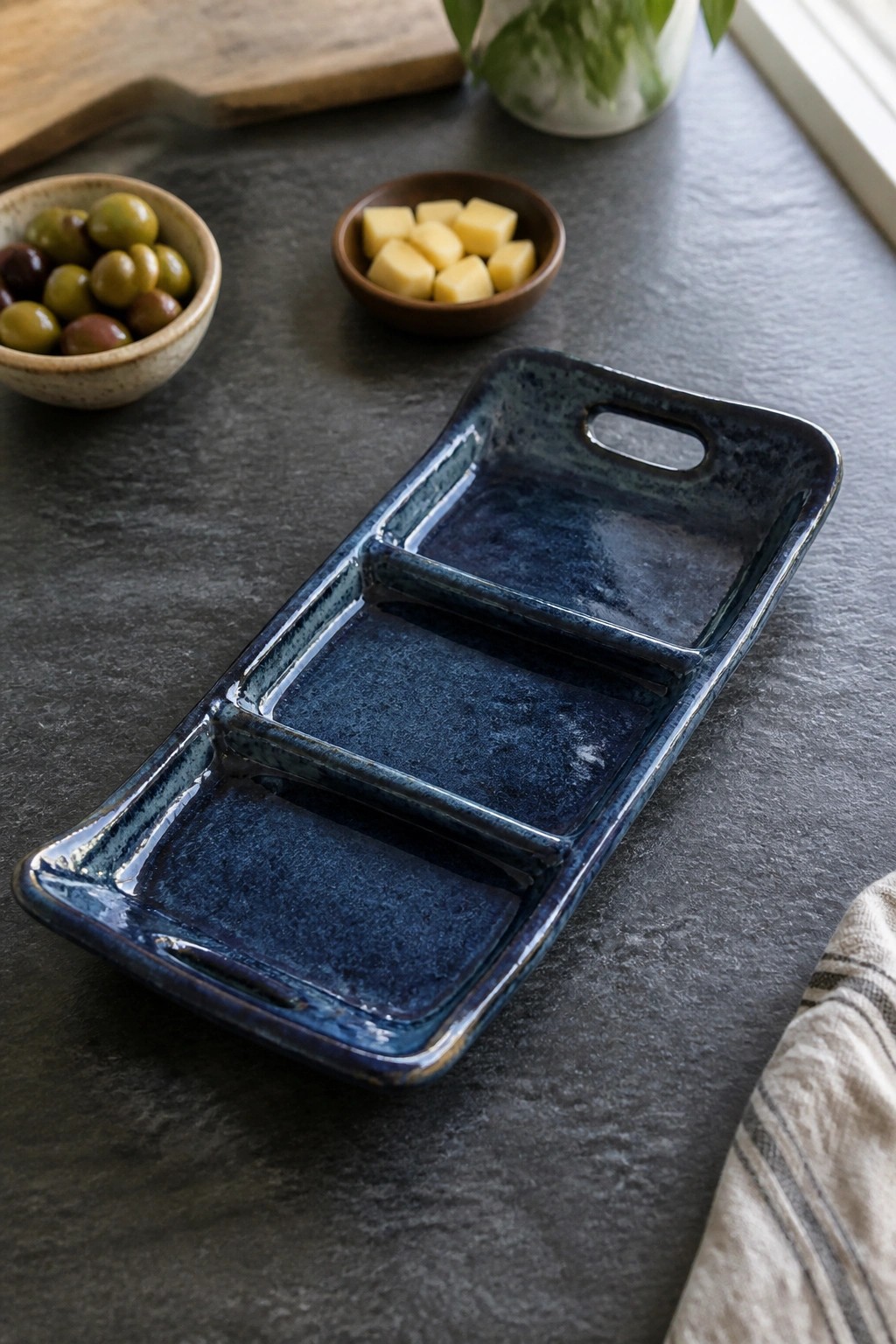
A handbuilt ceramic serving tray divided into three sections works well for presenting snacks like olives and cheese. The rectangular shape includes cutout handles on each end for easy carrying. A deep blue glaze covers the surface, giving it a rich finish that highlights the handmade form. This idea fits into the category of functional kitchen serving pieces that combine compartments with practical handles.
What makes this idea useful is how the compartments keep different foods separate without needing multiple dishes. The cutout handles make it simple to move from kitchen to table. You could adapt the same shape using a lighter glaze or add more sections for a larger group. In a kitchen, this kind of piece stands out on Pinterest because the divided layout shows up clearly in photos.
Elongated Tray with Cutout Handles
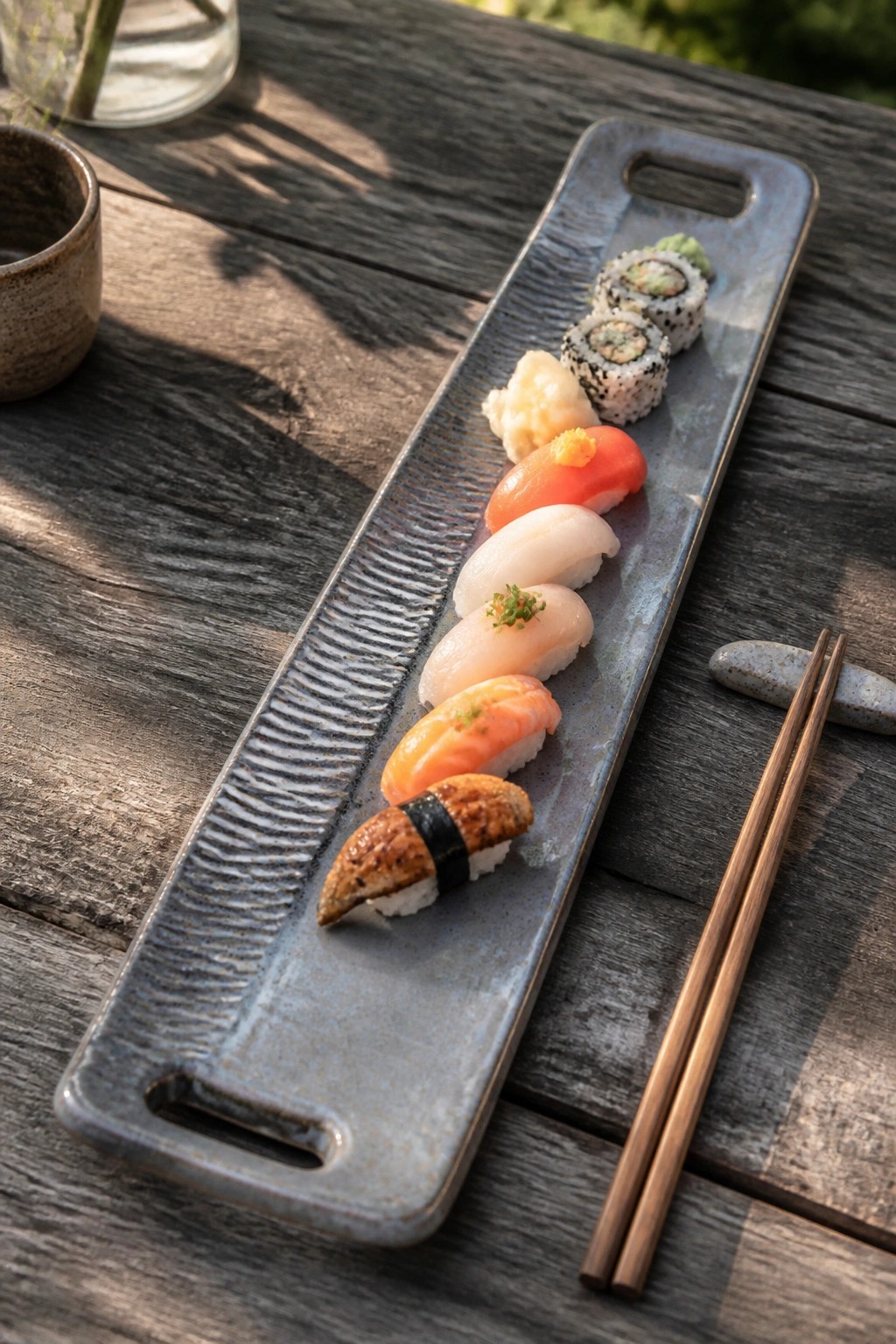
A handbuilt ceramic serving tray in a long rectangular shape works well for presenting food like sushi or appetizers. The cutout handles at each end make it easy to carry, while the ridged texture along the sides adds grip and visual interest without extra pieces. A matte glaze in a soft blue-gray tone keeps the focus on the form and lets the food stand out.
What makes this idea useful is how the cutouts turn a simple slab into a functional tray that feels balanced in the hands. You could adapt the length for different table settings or change the glaze to match your kitchen colors. This shape would work especially well for a cheese board or small dessert tray if you shorten it slightly. The textured edges help it stand out from plain trays on Pinterest boards.
Rectangular Tray with Oval Cutout Handles
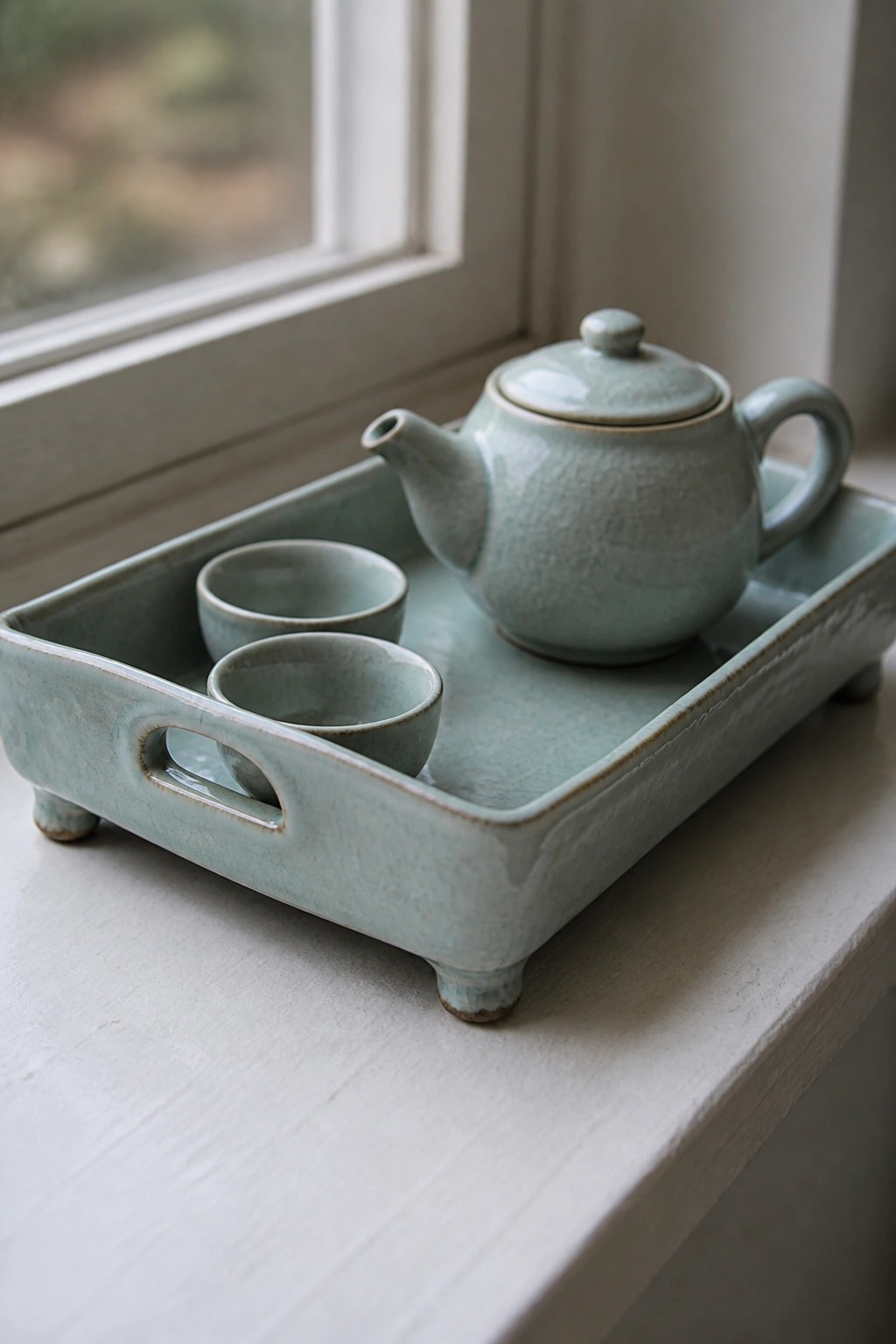
A rectangular ceramic serving tray built with oval cutout handles on the long sides gives a simple way to carry smaller items like a teapot and cups. The low walls and small feet keep contents stable while the single soft green glaze unifies the whole set. This idea sits in the handbuilt tray category by using basic slab construction and cutouts instead of added feet or handles.
What makes this idea useful is how the cutouts give a secure grip without extra parts that could break. The shape works especially well on a kitchen counter or small table when serving tea or snacks. You could adapt the same cutout placement on a longer tray for appetizers or shorten the walls for a shallow catchall. The single glaze color makes it simple to repeat the design in different sizes for matching pieces.
Leaf-Shaped Tray with Cutout Handle
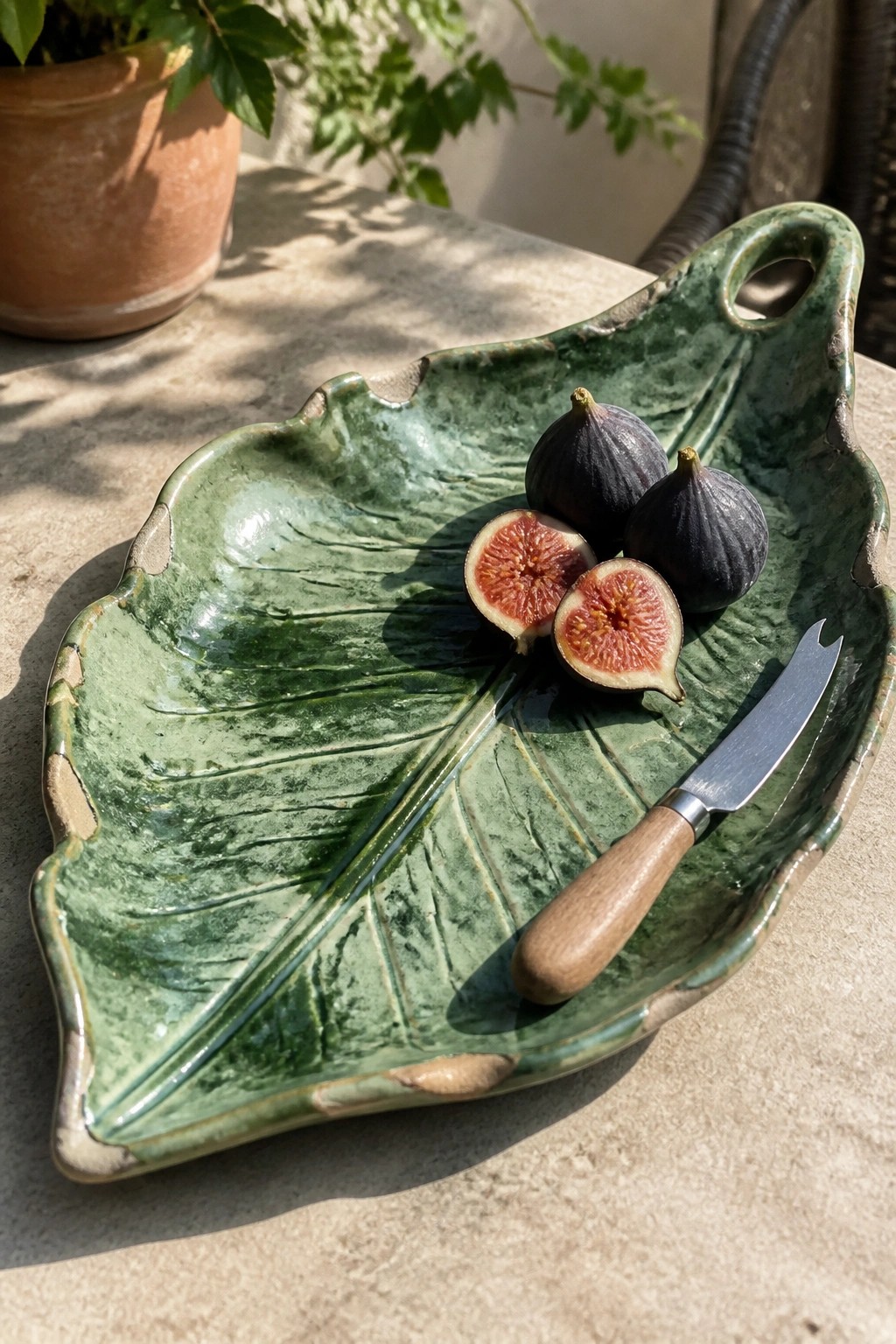
A handbuilt ceramic serving tray shaped like a broad leaf works well when the cutout handle is placed at the stem end. The surface carries impressed veins that catch the glaze and add texture without extra pieces. Green glaze keeps the form readable while the irregular rim gives the tray a finished edge that still feels organic.
What makes this idea useful is how the leaf outline creates both the tray body and the handle in a single slab. You can adapt the cutout by testing narrower or wider leaf shapes or by changing the glaze to a matte earth tone for indoor use. In a kitchen or on an outdoor table the tray holds fruit or small appetizers cleanly and needs no added hardware. The same leaf form could be scaled down for a cheese board or reworked as a shallow catch-all by softening the rim curve.
Oval Tray with Heart Cutout Handles and Stripes
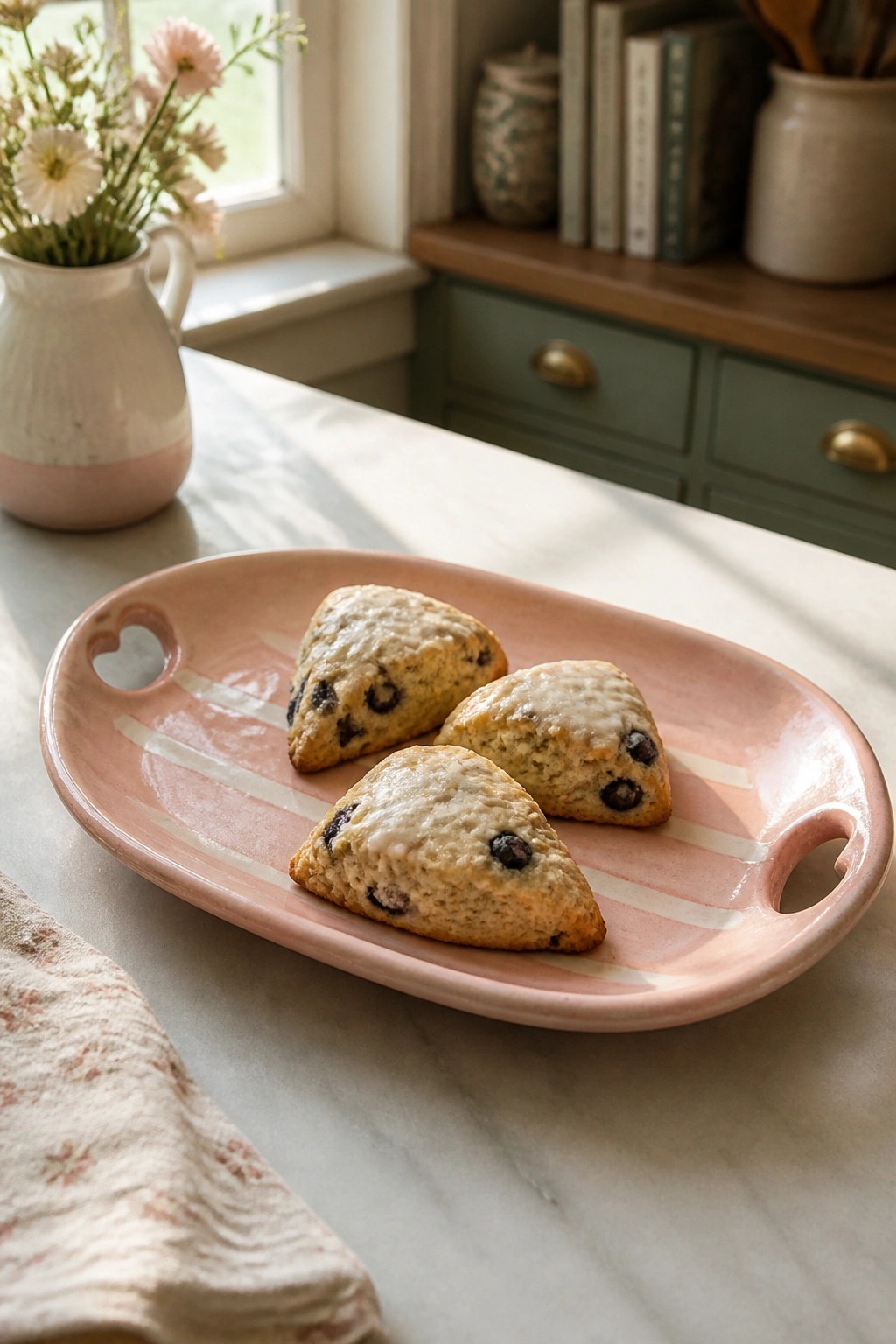
A handbuilt oval serving tray made from clay uses heart-shaped cutouts for handles on both ends. The soft pink glaze with horizontal white stripes creates a simple pattern that keeps the focus on the shape and cutouts. This approach works as a kitchen serving piece that can hold food or small items without needing extra hardware for lifting.
What makes this idea useful is how the cutout handles stay functional while adding interest without extra pieces. You could adapt the same oval form and stripe layout to other glaze colors or skip the stripes for a solid finish if you want something quicker. The size shown here works well for passing snacks or baked goods, and the shape could be lengthened or widened depending on what you plan to serve on it. For a different project, the heart cutout style could transfer to a rectangular tray or a low planter base.
Speckled Tray with Simple Round Cutout Handles
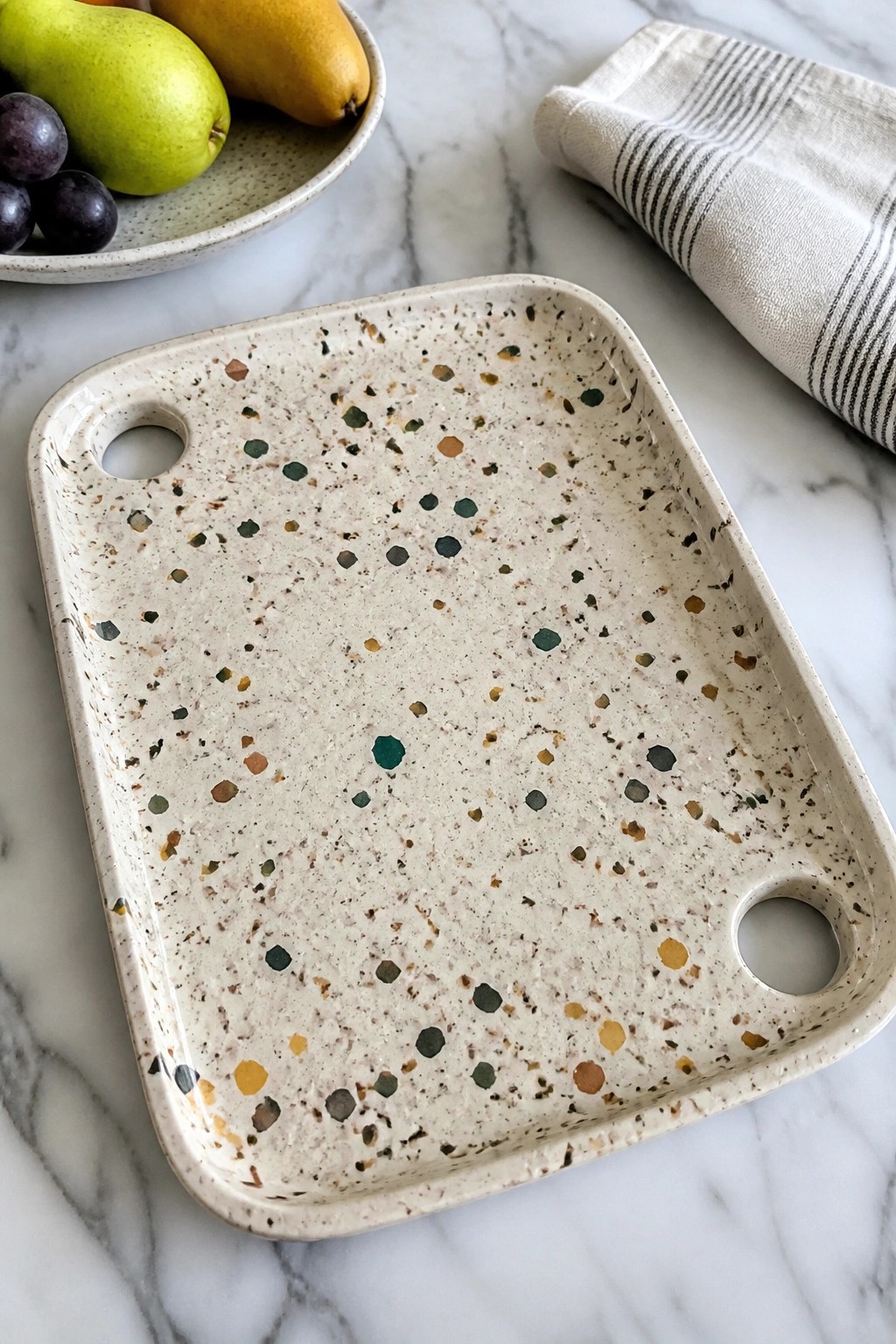
A handbuilt rectangular tray like this uses two circular cutouts on the short ends to create built-in handles without adding extra pieces. The off-white clay body is covered in a light base glaze scattered with small flecks of green, gold, brown, and black that create a terrazzo look across the surface. This keeps the design focused on the clean slab form while the glaze pattern adds visual texture that works well on a larger serving piece.
What makes this idea useful is how the cutouts reduce weight and make the tray easier to move between kitchen counter and table. You could adapt the same shape with a single color glaze or change the speckle density to match other dishes you already have. In a kitchen this size works for holding fruit, bread, or small appetizers and stores flat on a shelf when not needed.
Two-Tone Slab Tray with Cutout Handles
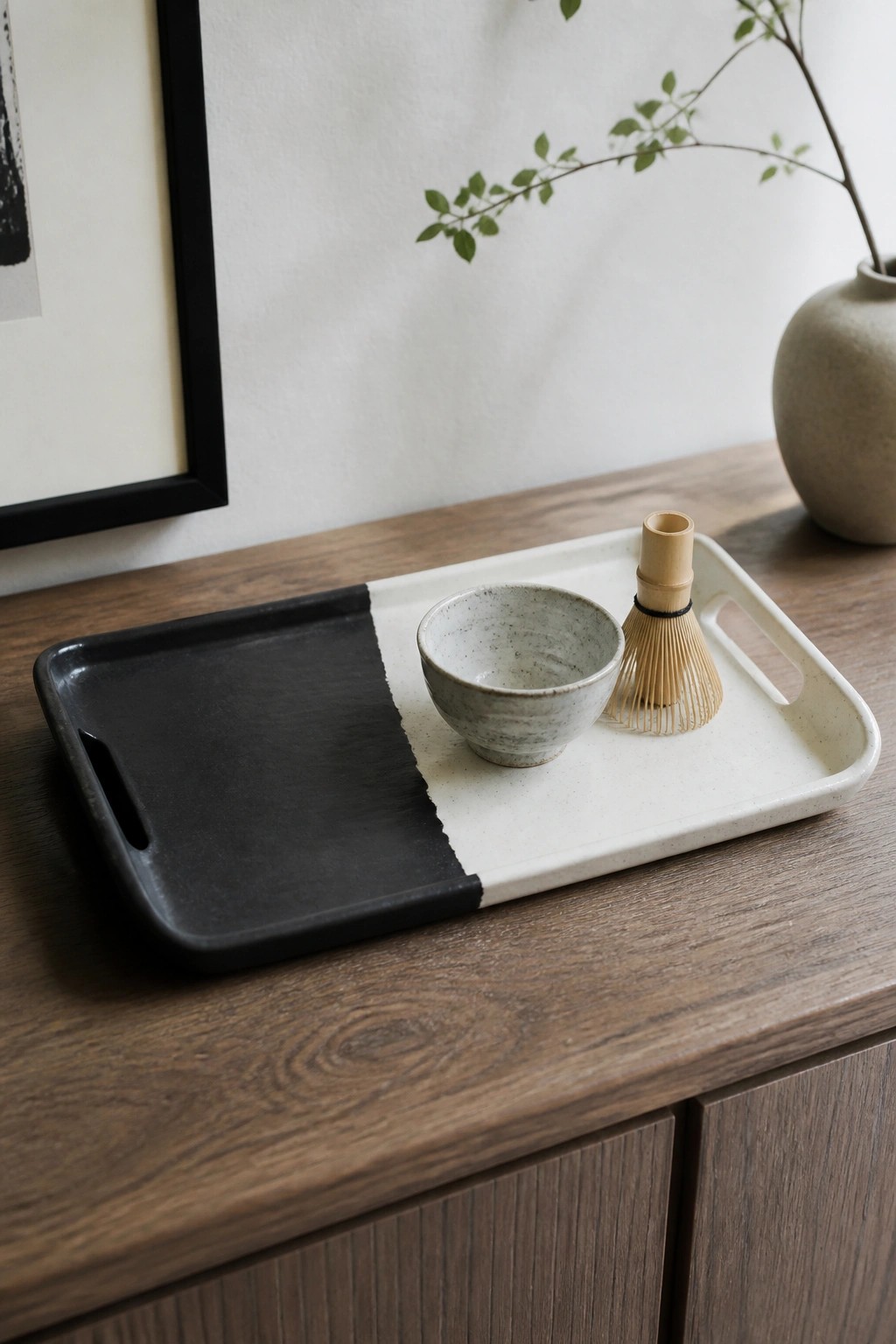
A handbuilt ceramic serving tray divided into black and cream sections creates a simple contrast that works well on a flat surface. The rectangular form uses straight edges and oval cutouts at each short end for grip. The glaze changes along an uneven line rather than a straight seam, which keeps the surface interesting without added patterns. This approach belongs to the category of functional kitchen trays that also serve as display pieces for smaller items.
What makes this idea useful is how the color split emphasizes the tray’s shape while the cutouts handle the practical side of carrying. You could swap the black section for a deep blue or keep both sides in the same glaze family for a subtler look. The scale works for tea setups or small appetizers, and the same slab method can be shortened into a smaller version for jewelry or desk use. A piece like this photographs cleanly for boards focused on modern tableware.
Citrus Painted Ceramic Tray with Cutout Handles
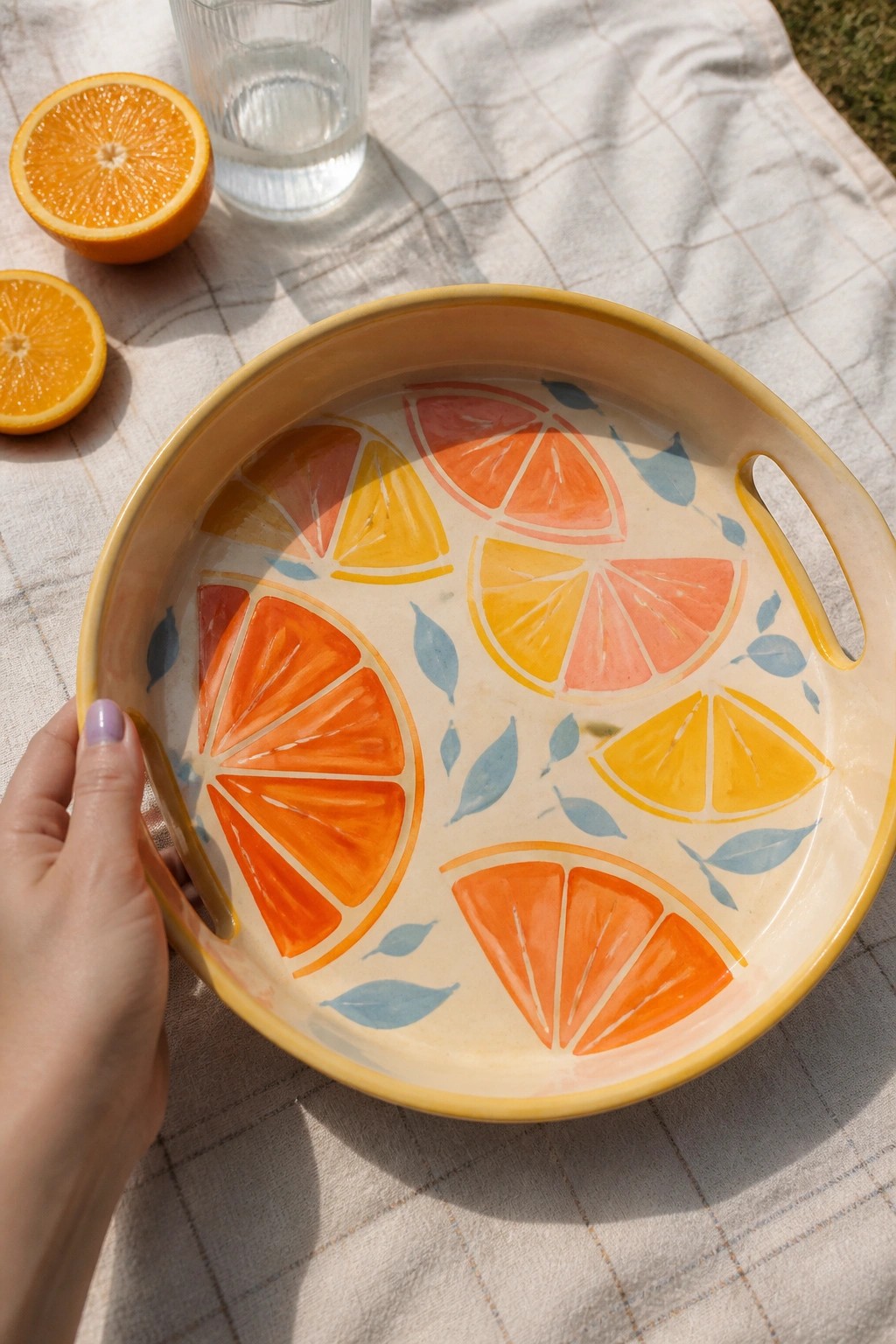
A round handbuilt ceramic serving tray with two cutout handles uses a light base glaze and a yellow rim to frame painted slices of citrus in orange, yellow, and coral tones. Blue leaf accents scattered between the fruit keep the surface from feeling crowded while the simple cutouts make the tray easy to lift. The design works as a kitchen or outdoor serving piece that stays flat enough for plates or snacks.
What makes this idea useful is how the painted fruit motif can be swapped for other produce like berries or apples without changing the tray shape. The cutout handles keep the form simple to build yet add function that plain trays lack. In a kitchen this style handles both daily use and casual hosting, and the same layout scales down easily into a smaller cheese board or up into a larger platter for sharing.
Oval Trays with Cutout Handles for Serving Bread
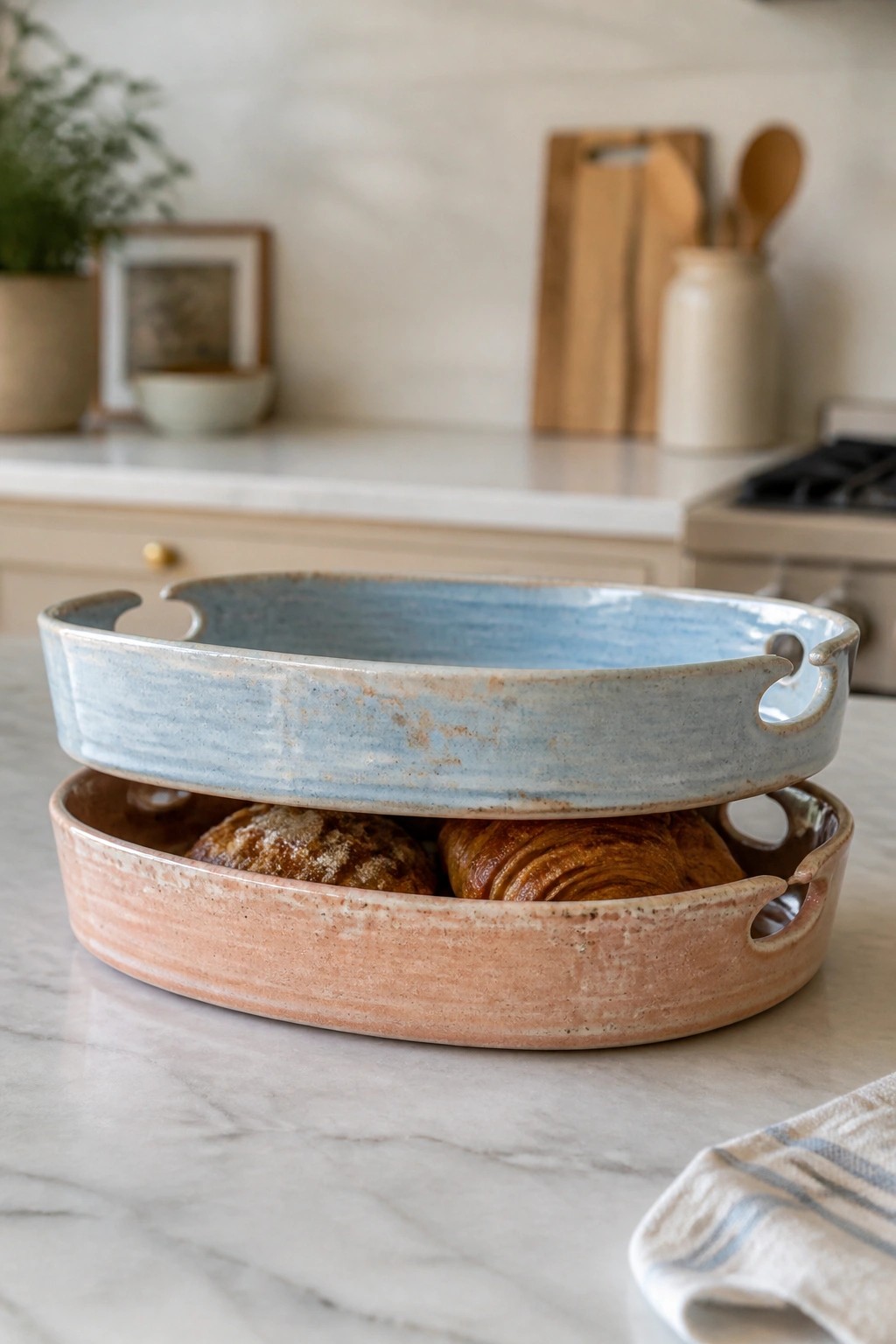
Handbuilt oval trays with cutout handles make a practical serving piece for baked goods. The rim cutouts act as integrated grips so the trays stay easy to carry even when full. Using two different glazes, one soft blue and one warm terracotta, lets the trays stack cleanly while still showing contrast.
What makes this idea useful is that the cutouts keep the overall height low and the trays nest when not in use. You could scale the same oval form down for smaller cheese or appetizer trays or swap the glazes for a single solid color if you want a simpler look. In a kitchen these trays sit well on a countertop for daily use and translate easily to other food-serving shapes.
Rustic Tray with Integrated Cutout Handles
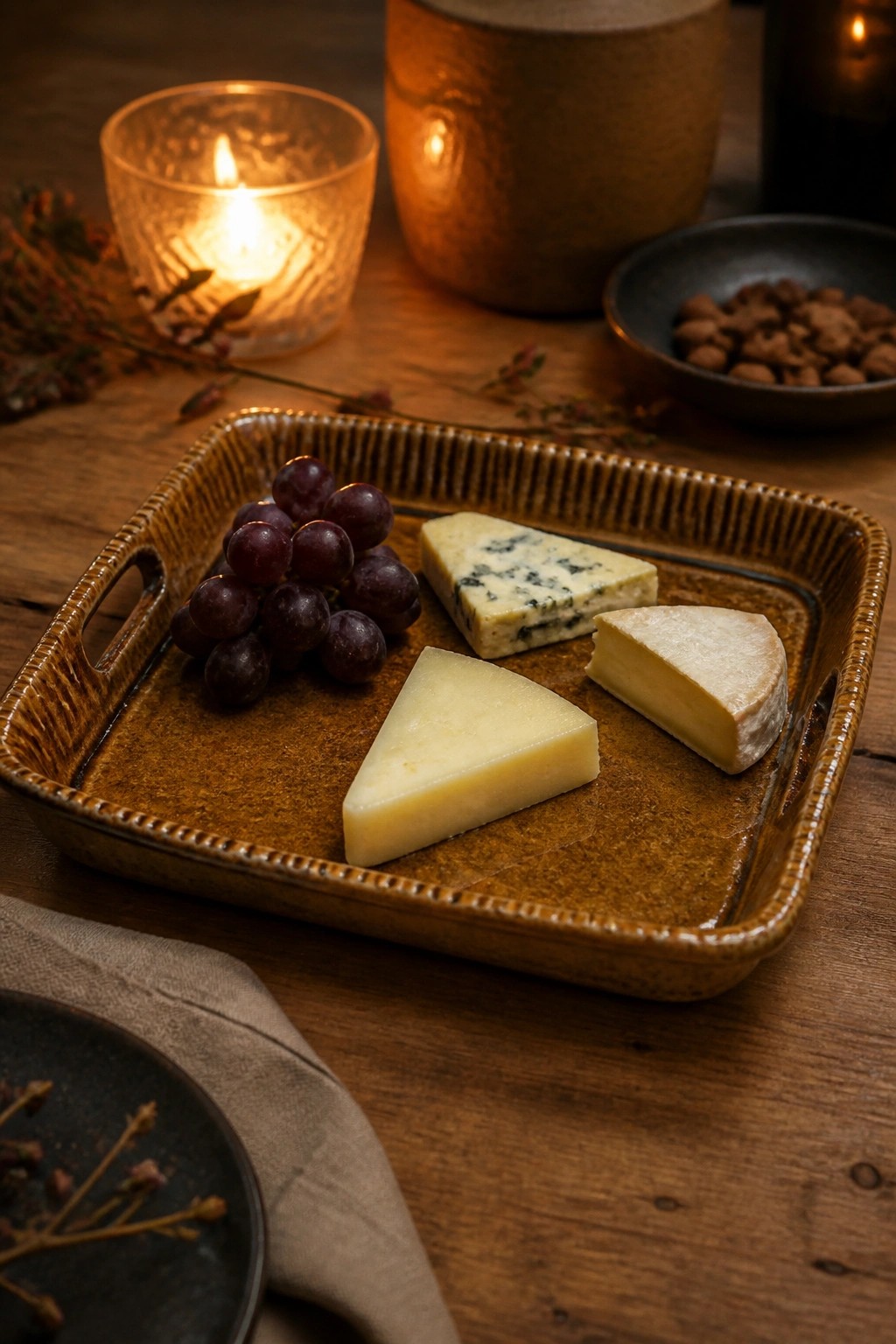
A rectangular handbuilt ceramic serving tray with cutout handles on the short sides gives a sturdy base for food presentation. The piece uses a deep brown glaze over a textured surface and a ridged rim that catches light and adds grip. This approach keeps the tray simple to form from a single slab while the handles remain part of the main body rather than separate attachments.
What makes this idea useful is the way the cutout handles sit flush with the rim so the tray stacks or stores flat. You can adapt the same shape by shortening the length for a smaller cheese board or switching to a matte white glaze for contrast against dark foods. In a kitchen this tray works well for everyday use because the earthy tone hides minor marks and pairs with wood tables or linen. The ridged edge detail can be recreated with a simple tool mark before firing if you want to repeat the look on other slab projects.
Floral Relief Tray with Cutout Handles
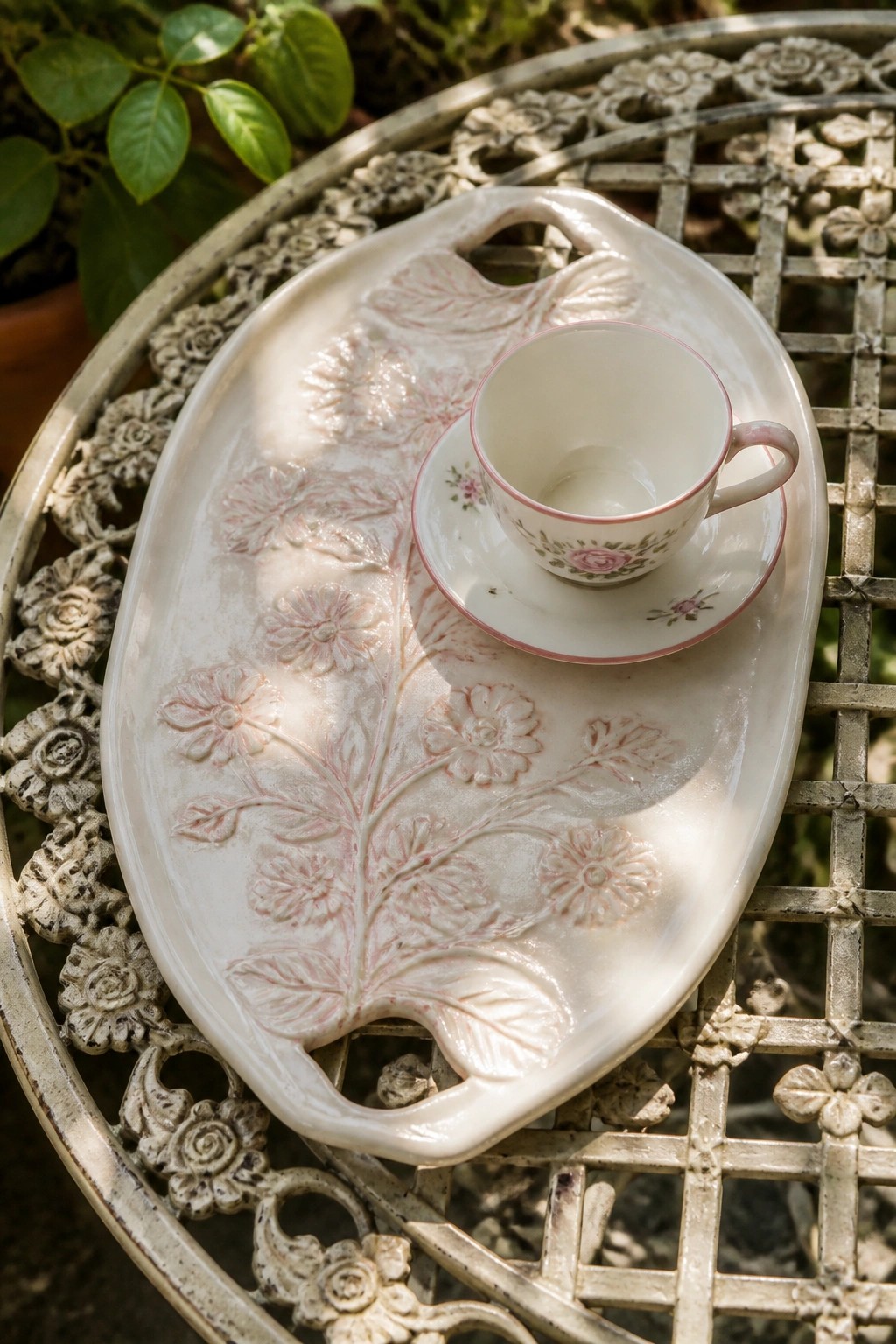
A handbuilt ceramic serving tray takes shape when you roll out a slab, add an embossed floral pattern across the surface, and cut simple handles at each end before drying and firing. This oval version uses raised leaves and flowers that hold a light pink wash to make the design stand out against the cream clay. The cutout handles keep the piece lightweight and easy to move while the overall size works for carrying a cup and saucer or a few small plates. The idea fits the serving tray category because it stays flat and functional yet gains visual interest from the sculpted surface.
What makes this idea useful is how the relief pattern adds detail without extra painting or multiple glazes. You could repeat the same embossing on a rectangular tray or shorten the length for a smaller version that holds just one mug. The pink on the raised areas shows up clearly against the base color, so the same wash technique works if you swap in other stamps or leaf shapes. For everyday use the tray keeps things simple on a table or counter without needing much storage space.
Hexagonal Tray with Cutout Handles
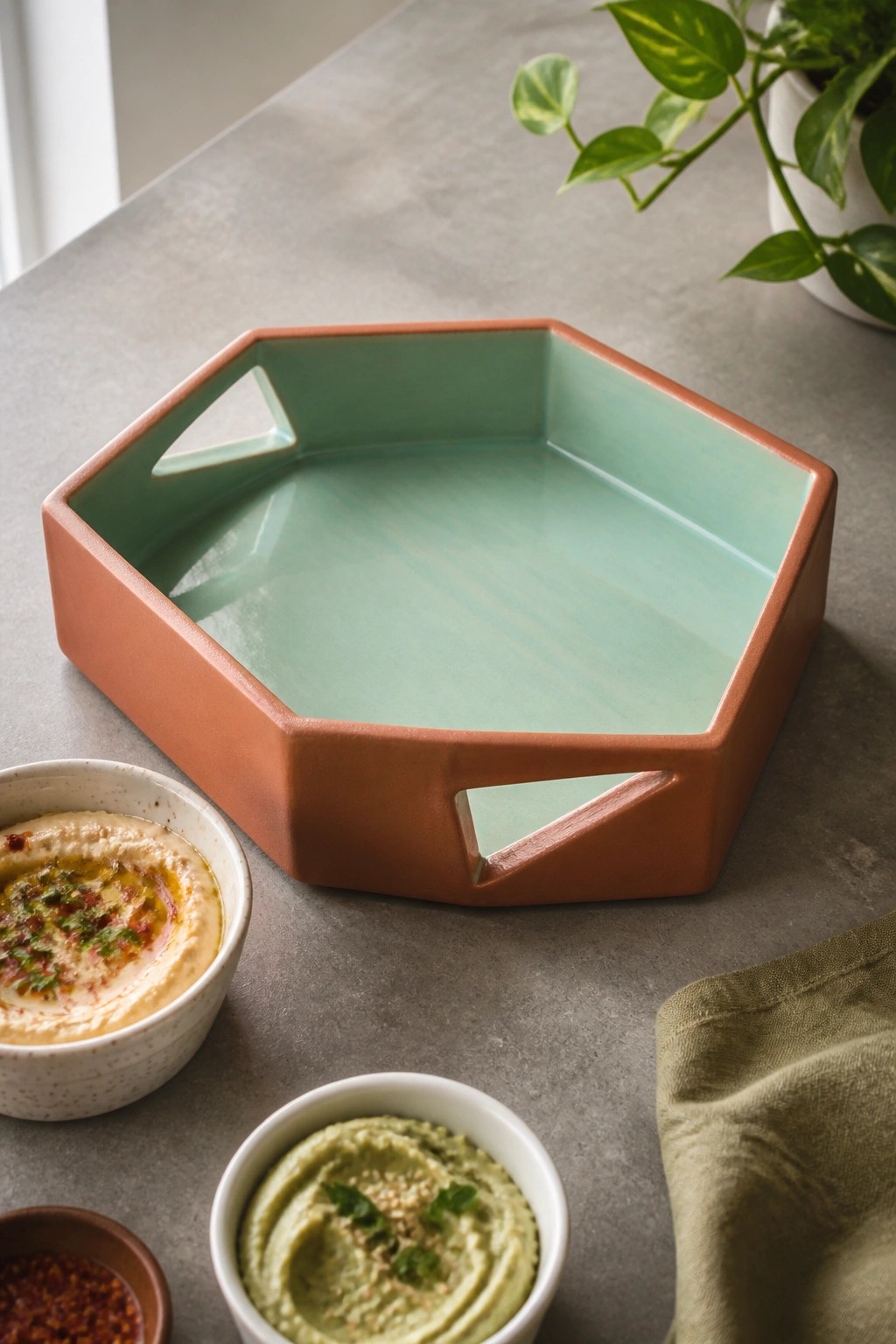
A handbuilt ceramic serving tray in a simple hexagon shape uses angled cutouts on two opposite sides to create built-in handles. The form stays low and wide so it can hold several small bowls or plates at once without crowding. A matte terracotta finish on the outside contrasts with the smooth light green glaze inside, giving the piece clear visual separation between exterior and food surface.
The cutout handles keep the tray easy to lift while adding a geometric detail that fits the overall shape. This style works well on a kitchen island or outdoor table where you need to move food around quickly. You could make a smaller version for cheese boards or stretch the same hexagon into a longer tray by adjusting the angles. The two-tone glaze approach also translates easily to other tray shapes if you want to keep the look consistent across a set.
Whale-Shaped Tray with Cutout Tail Handles
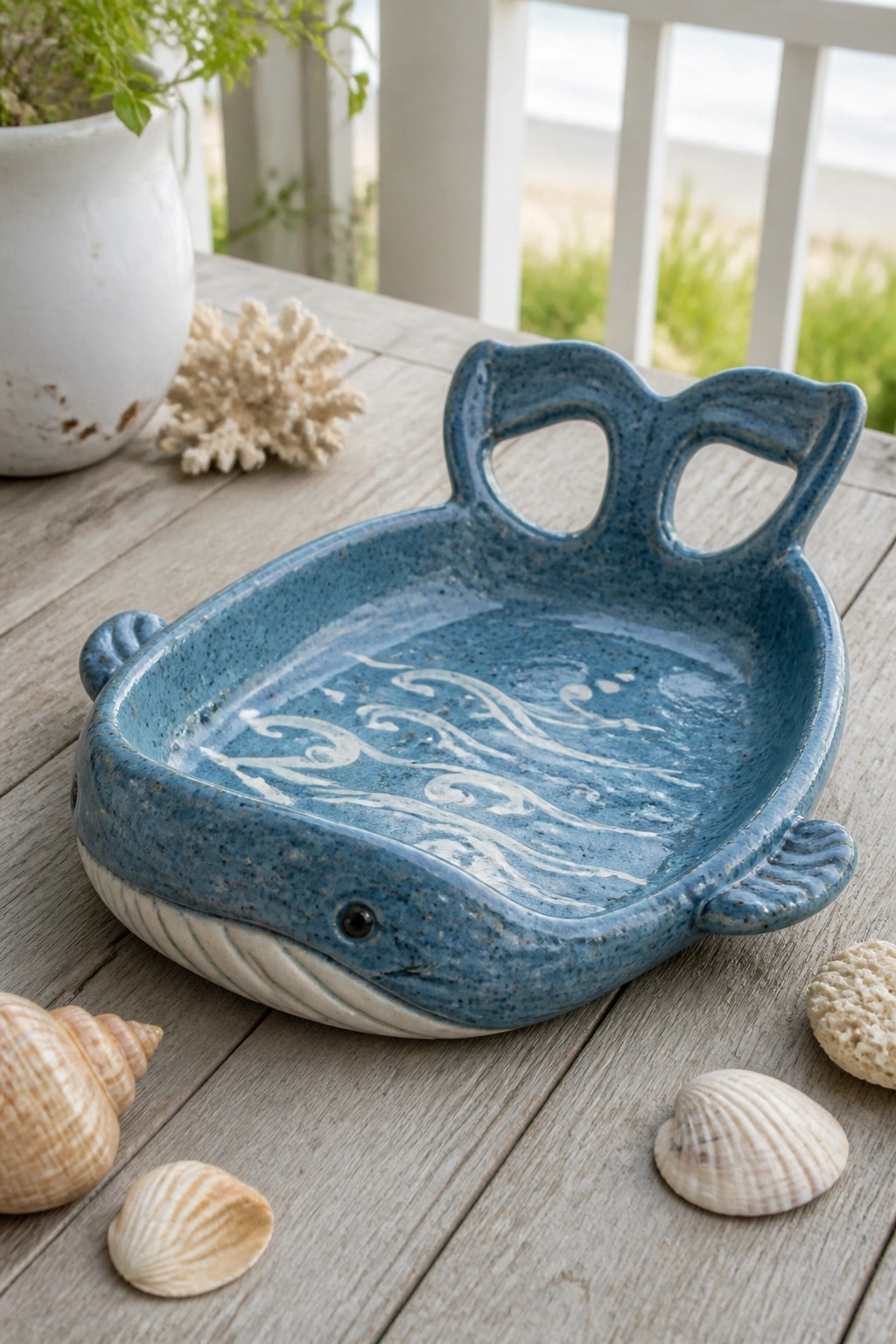
A handbuilt ceramic serving tray formed as a whale gives the cutout handles a clear purpose by turning the tail into two open grips. The main body stays shallow and oval for holding food or small items while the head and fins add just enough sculptural detail to define the shape. White wave lines painted over the blue speckled glaze keep the surface pattern simple and tied to the marine theme. This fits the category of a functional tray that also works as a standalone decorative object.
What makes this idea useful is how the cutouts do double duty as both handles and part of the animal form without extra parts. You could rework the same layout with different sea creatures or even abstract wave shapes while keeping the overall size practical for snacks or jewelry. The blue glaze and line work translate to other color choices or reduced detail if you want a faster build. In a kitchen or on a patio table this style of tray reads as intentional rather than generic.
Rectangular Tray with Cutout Handles and Central Stripe
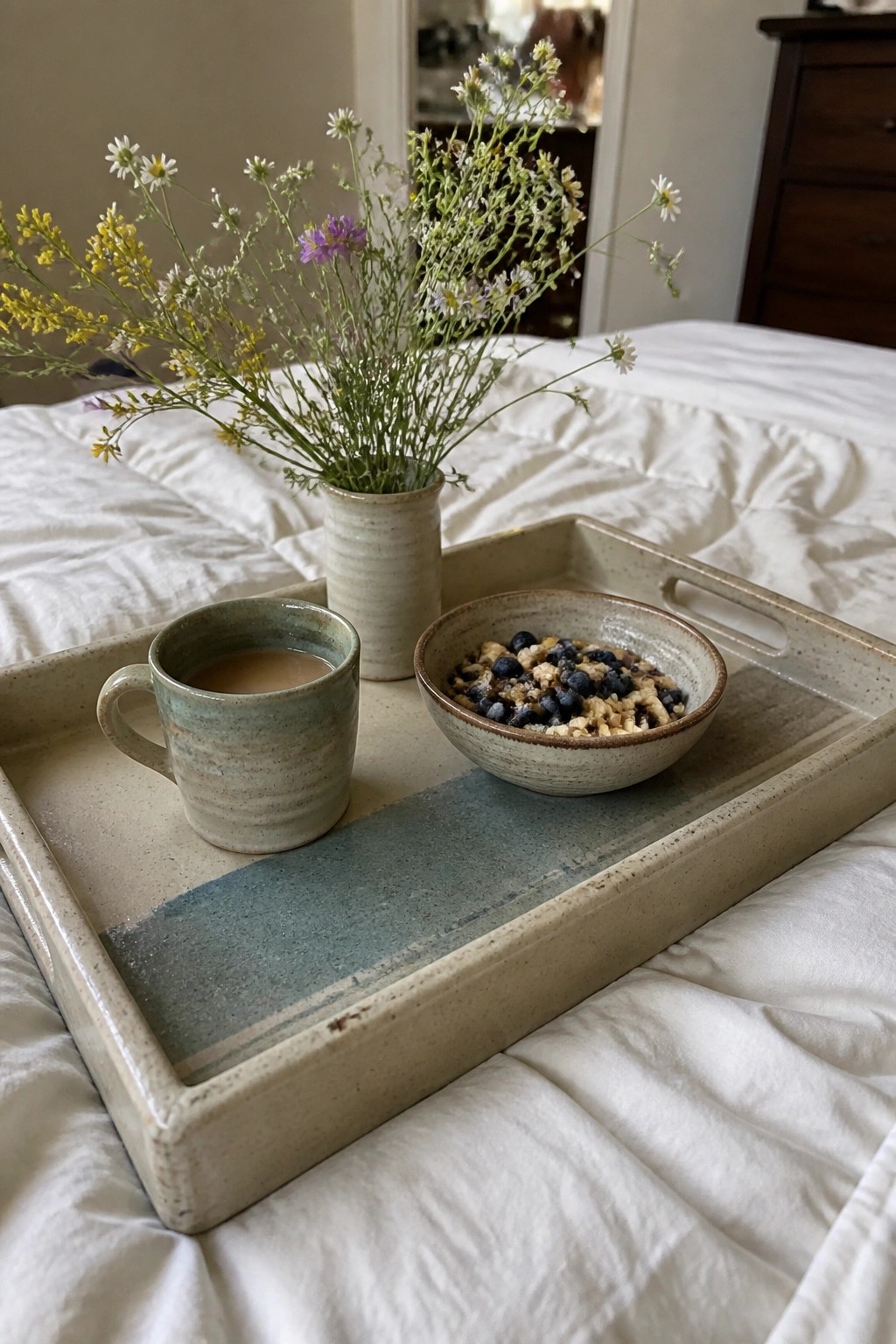
A handbuilt ceramic serving tray takes shape from a flat slab rolled out and trimmed into a rectangle with oval cutouts formed directly into the long sides. The speckled off-white glaze covers most of the surface while a wide band of blue-green glaze runs down the center, creating contrast without extra decoration. This approach keeps the tray sturdy enough to carry dishes or cups while the integrated handles remove the need for added hardware.
What makes this idea useful is how the cutout handles stay level with the tray rim so the piece stacks or stores flat. You can change the stripe color or drop it entirely for a single-tone version that still reads as intentional. The same slab-and-cut method scales down for a smaller catchall tray or up for a larger breakfast tray depending on the size of your slab. For a gift this style works because the handles are built in from the start and the glaze choices can be adjusted to match existing kitchen colors.
Divided Sauce Tray with Cutout Handle
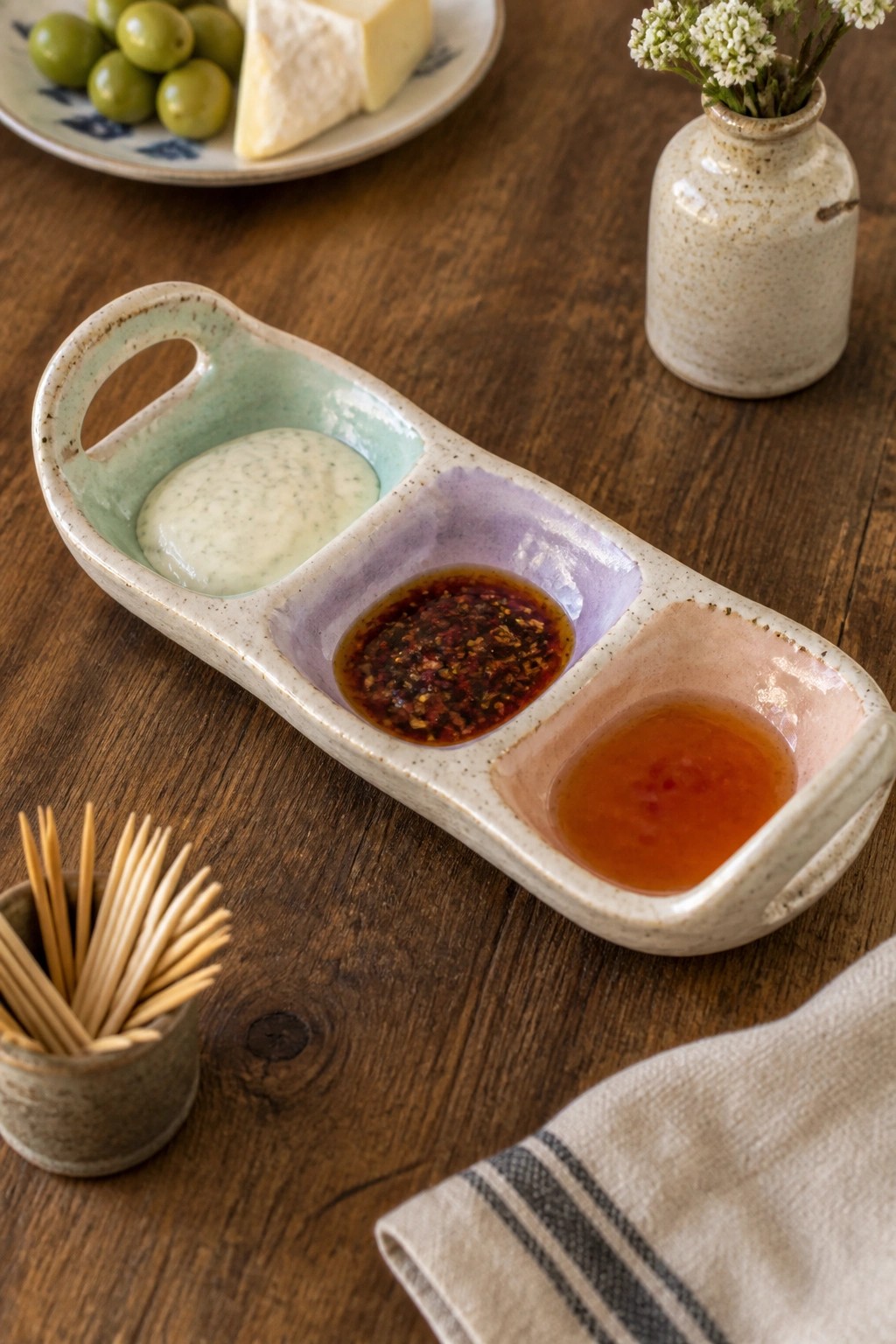
A long rectangular tray divided into three sections works well as a serving piece for dips or small appetizers. Each compartment gets its own glaze color, which keeps sauces separate and gives the piece visual interest without extra decoration. The oval cutout at one end turns the tray into something easy to carry from the kitchen to the table. This approach fits the handbuilt serving tray category because the divisions and handle are formed directly in the clay rather than added later.
What makes this idea useful is how the cutout handle solves the practical problem of moving a loaded tray without adding bulk. The three-section layout works especially well for parties or cheese boards where you want multiple options in one dish. You could simplify it to two sections for everyday use or change the glaze colors to match different table settings. The same basic shape could also be adapted into a paint palette or a small desk organizer if you adjust the depth of the compartments.
Ceramic Tray with Rope-Threaded Cutout Handles
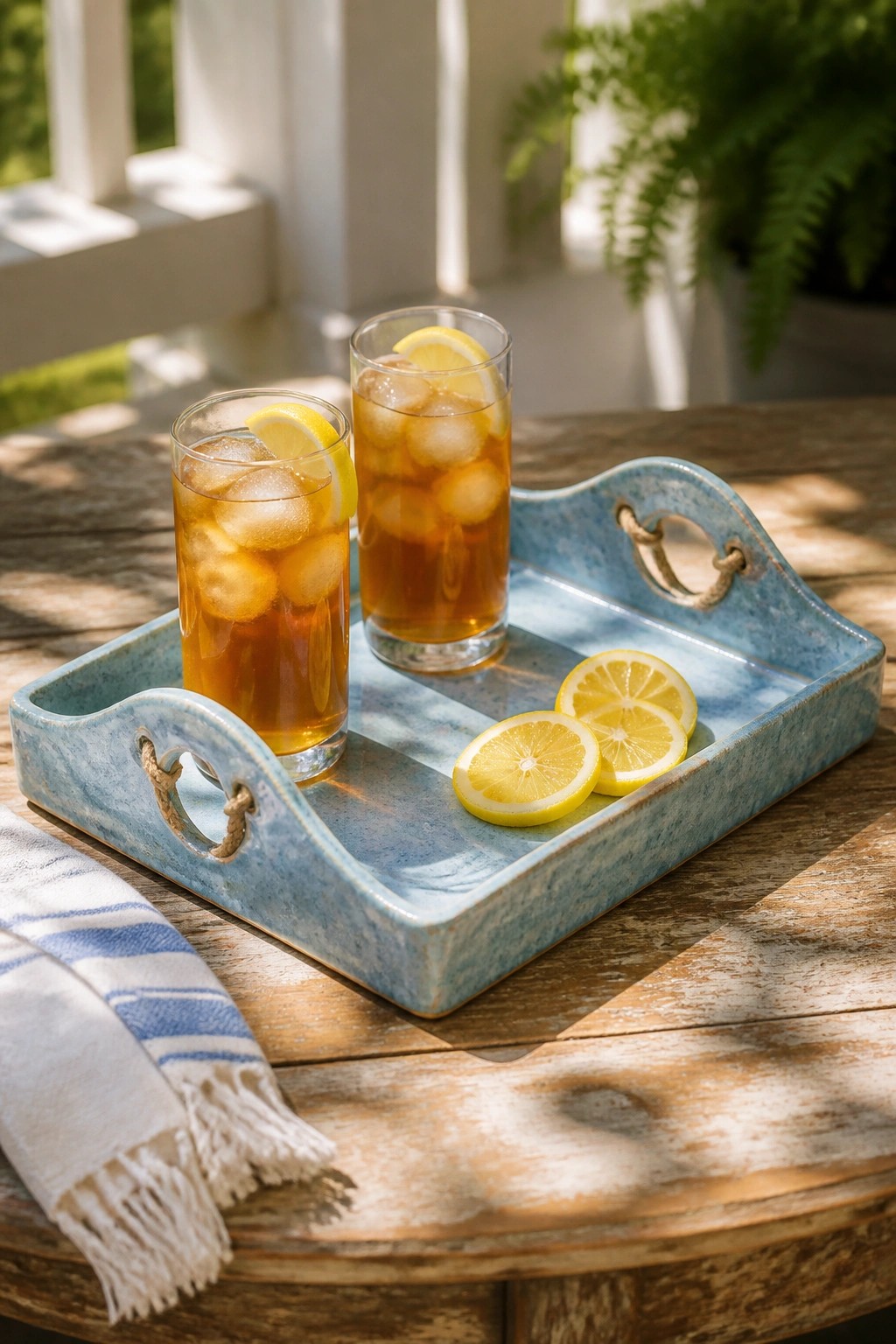
A rectangular handbuilt ceramic serving tray with raised edges and cutout handles at both ends gives a sturdy base for carrying glasses or small plates. Threading natural rope through the openings creates a simple grip while adding texture that contrasts with the smooth clay. The mottled blue glaze covers the entire surface and helps the piece read as one cohesive object rather than separate parts. This approach belongs to the serving tray category where the cutouts replace attached hardware for a cleaner handmade look.
What makes this idea useful is the way the rope turns a basic cutout into something that feels finished and ready for daily use. You can change the rope color or thickness to match different table settings or swap it for leather cord if you want a more modern result. In an outdoor space the blue glaze and natural rope hold up well against weather and wear while still looking intentional. The same handle style could be scaled down for a smaller breakfast tray or adapted to a rectangular planter by adjusting the depth and keeping the cutouts for easy moving.
Frequently Asked Questions
Q: What materials are recommended for building these serving trays with cutout handles? A: Hardwoods like maple, walnut, or cherry work best for durability and a stylish look since they resist warping and hold up well to daily use. Start with a 3/4 inch thick board cut to your desired tray size, then sand all edges smooth before cutting handles. These choices align with many of the 18 ideas that emphasize natural wood finishes for both function and aesthetics.
Q: How do I create comfortable cutout handles without making them too large or small? A: Measure your hand width and aim for handles about 1 inch wide and 4 to 5 inches long, positioned 1 inch from the tray edge for easy gripping. Use a jigsaw or router for clean cuts, then round over the edges with sandpaper or a file to prevent discomfort. Several of the 18 ideas show variations like elongated ovals or rectangular slots that balance style with practicality.
Q: What finishes protect the trays while keeping them food safe? A: Apply food grade mineral oil or beeswax blends in multiple thin coats, allowing each to soak in fully before buffing. Avoid polyurethane on surfaces that touch food unless it is explicitly rated as safe. This approach enhances the rustic or modern vibes in the 18 ideas without compromising usability.
Q: Can these projects be adapted for beginners with limited tools? A: Yes, focus on simpler designs from the 18 ideas that use basic cuts and pre cut boards from a lumber yard. A handheld drill, jigsaw, and sandpaper are enough to start, and you can practice on scrap wood first. Many ideas incorporate minimal hardware like corner brackets for added strength without complex joinery.
Q: How should the trays be maintained after use to prevent damage? A: Wipe them clean with a damp cloth right after serving, then dry immediately and reapply oil monthly if used often. Store them flat to avoid warping, and avoid soaking in water. This care keeps the cutout handles and overall structure intact across the various styles outlined in the 18 ideas.

Pottery Path is my cozy corner of the internet where I share clay ideas, pottery inspiration, and simple projects you can recreate at home. I love exploring everything from air dry clay to handbuilt pottery to cute minis that brighten your day. My goal is to make clay crafting feel easy, fun, and welcoming for anyone who wants to try it.
You will find beginner friendly tutorials, creative pottery painting ideas, and lots of warm inspiration for slow and happy crafting. If you enjoy hands on creativity, this space will feel like home.