I have been working with slab clay for a few years and I keep coming back to folded forms.
They give the vase a gentle tilt that feels more natural than anything I can throw on the wheel.
Asymmetry lets me hide small mistakes and still end up with something I actually use.
I pulled together these ideas from pieces I have made and from ones I have seen in workshops.
Most of them start with a simple rectangle and a few careful folds.
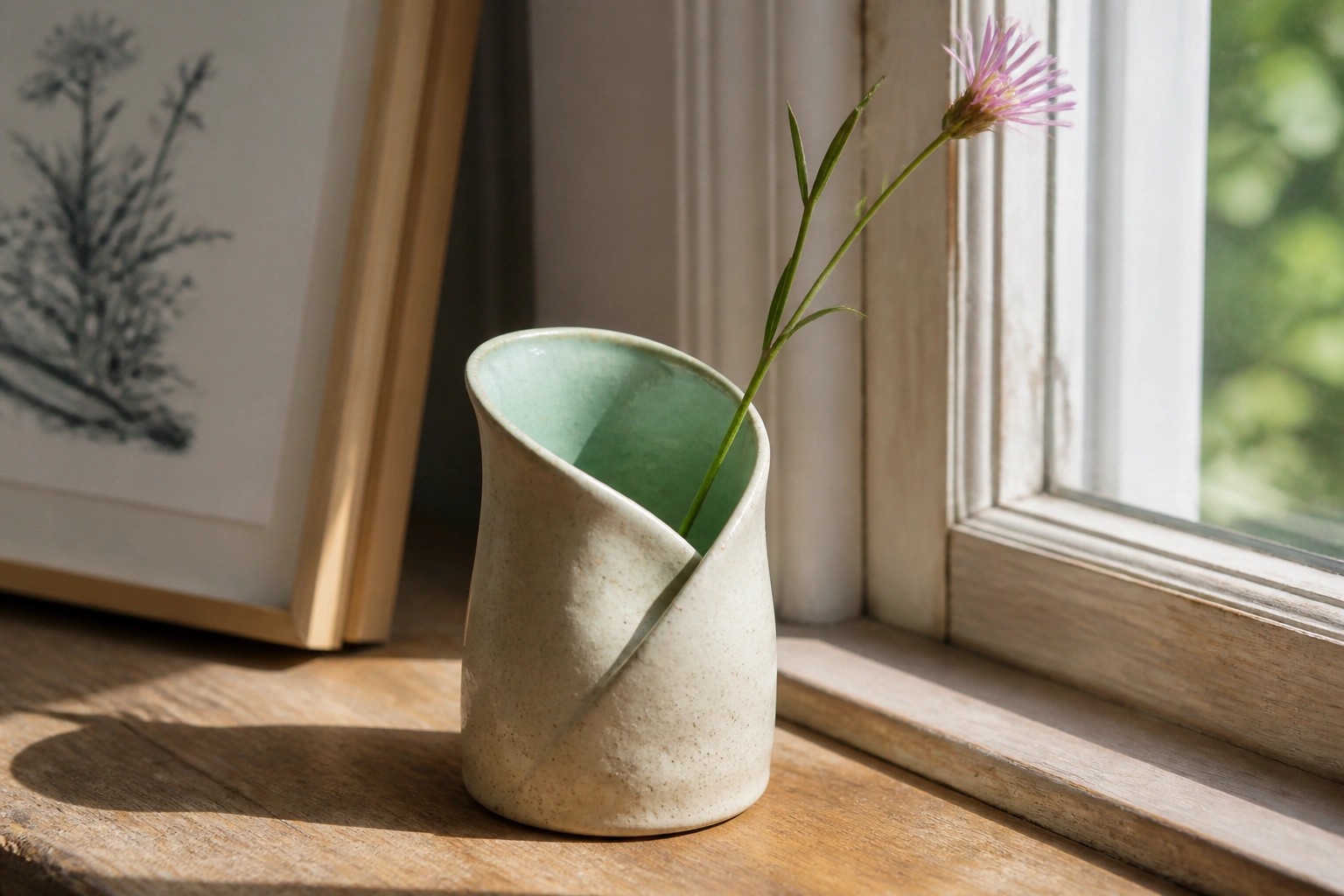
Folded Slab Vase With Glazed Interior Accent

A slab vase built from a single sheet of clay that has been folded and twisted creates an off-center opening suited to holding one or two stems. The exterior keeps the natural speckled clay surface while the interior is coated with a flowing green glaze that shows at the rim. This combination highlights the form itself and lets the twist determine how the flower sits without added decoration.
What makes this idea useful is how the same folding method can be varied by changing the depth of the crease to control the final height and tilt. The compact size fits narrow windowsills or small tables where a round vase would feel too wide. You could rework the shape into a low bud vase by flattening the base or scale the slab larger for a bigger arrangement. The matte and glossy contrast also helps the piece read clearly in photos, which makes it easy to adapt for different glaze colors.
Folded Slab Wall Pocket with Exposed Clay Corner
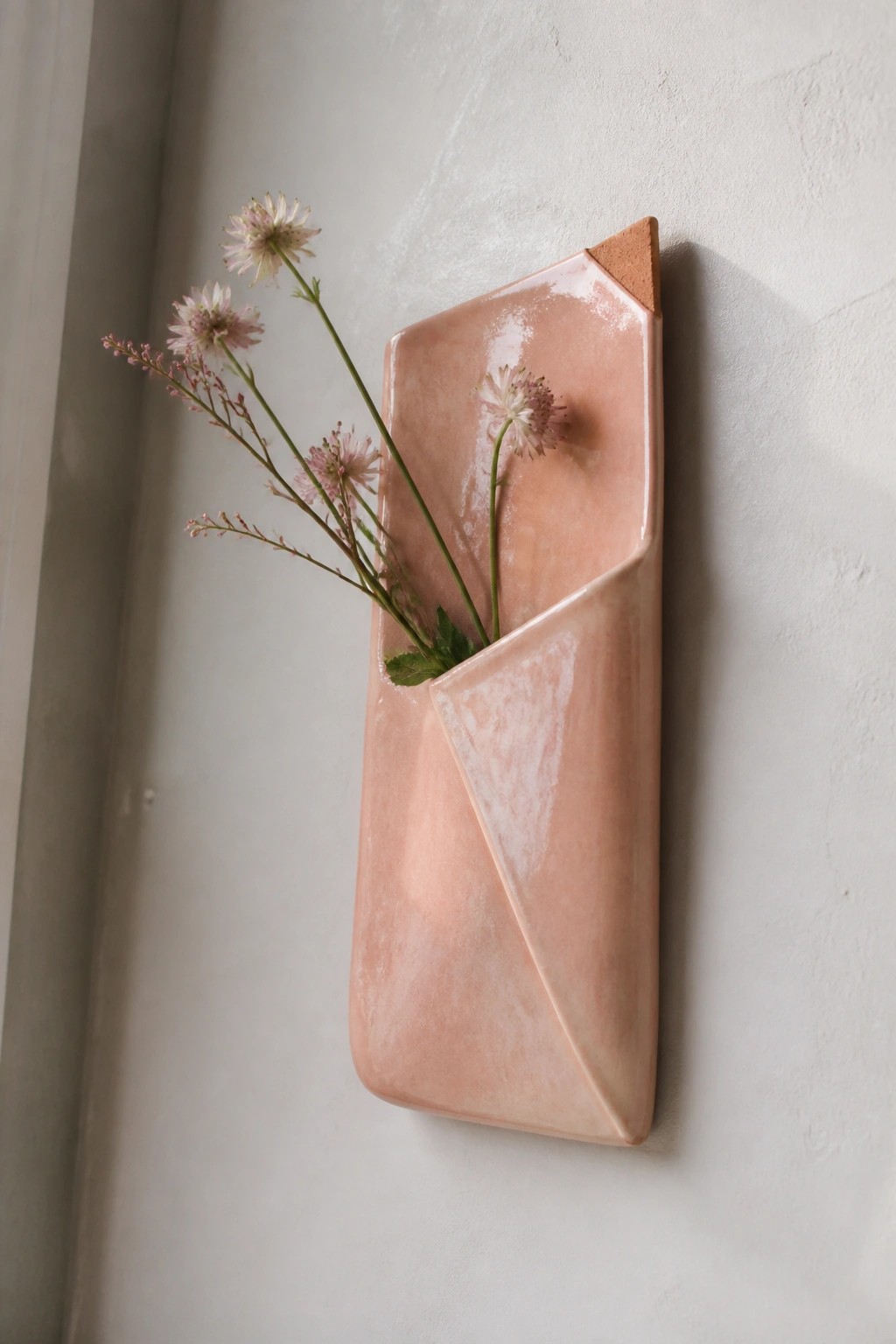
A slab-built wall vase takes shape here as an overlapping folded form that creates a secure pocket for stems. The design uses a glossy blush glaze over most of the surface while leaving one pointed corner in raw clay for simple contrast. This keeps the piece flat enough to hang on the wall yet deep enough to support a small bunch of flowers without tipping.
The shape does a lot of the work here by turning a single slab into a hanging holder that needs no extra hardware beyond a basic wall mount. You could adapt the fold pattern with a different glaze color or shorten the overall height to make a version for a desk or shelf. In an entryway or bathroom this kind of piece gives you a practical spot for fresh stems that stays out of the way. For a gift the same idea works well if you vary the exposed clay area or try a matte glaze on the main body instead.
Angular Slab Vase with Sharp Folds and Metallic Drips

A slab vase built from folded clay sheets produces clean geometric planes and an asymmetrical profile that shifts as you move around it. The form stays tall and narrow with angled sides that taper slightly toward the base. A dark metallic glaze with thin red streaks runs down the facets to highlight the edges created during assembly. This type of project belongs in the vase category and works best as a standalone decor object rather than a functional container for water.
What makes this idea useful is the way the folds give the piece visual weight without needing extra surface texture or carving. You can adapt the same construction by shortening the height for a desk version or widening the top opening for larger stems. The metallic finish translates easily to other glaze colors if you want to match a specific room scheme. In a living room or entryway, this shape holds its own next to plants or on a mantel without competing with surrounding objects.
Tall Slab Vase With Folded Neck and Blue Interior

A slab vase formed with uneven folds creates a tall, slightly leaning body that narrows toward the base and opens with an off-center rim. The exterior keeps a matte cream finish while the interior is lined with a solid blue glaze that appears only at the top edge. The construction relies on soft curves and one deliberate pinch at the neck rather than added surface details.
The shape does a lot of the work here because the folds give the vase presence without extra texture or pattern. It fits well on a dining table or windowsill for single branches or dried stems. You could rework the same idea by shortening the height for a smaller version or switching the interior color to match different room tones. The slab method also lets you vary the lean of the rim on future pieces so each one feels distinct.
Folded Slab Vase with Overlapping Wavy Edges
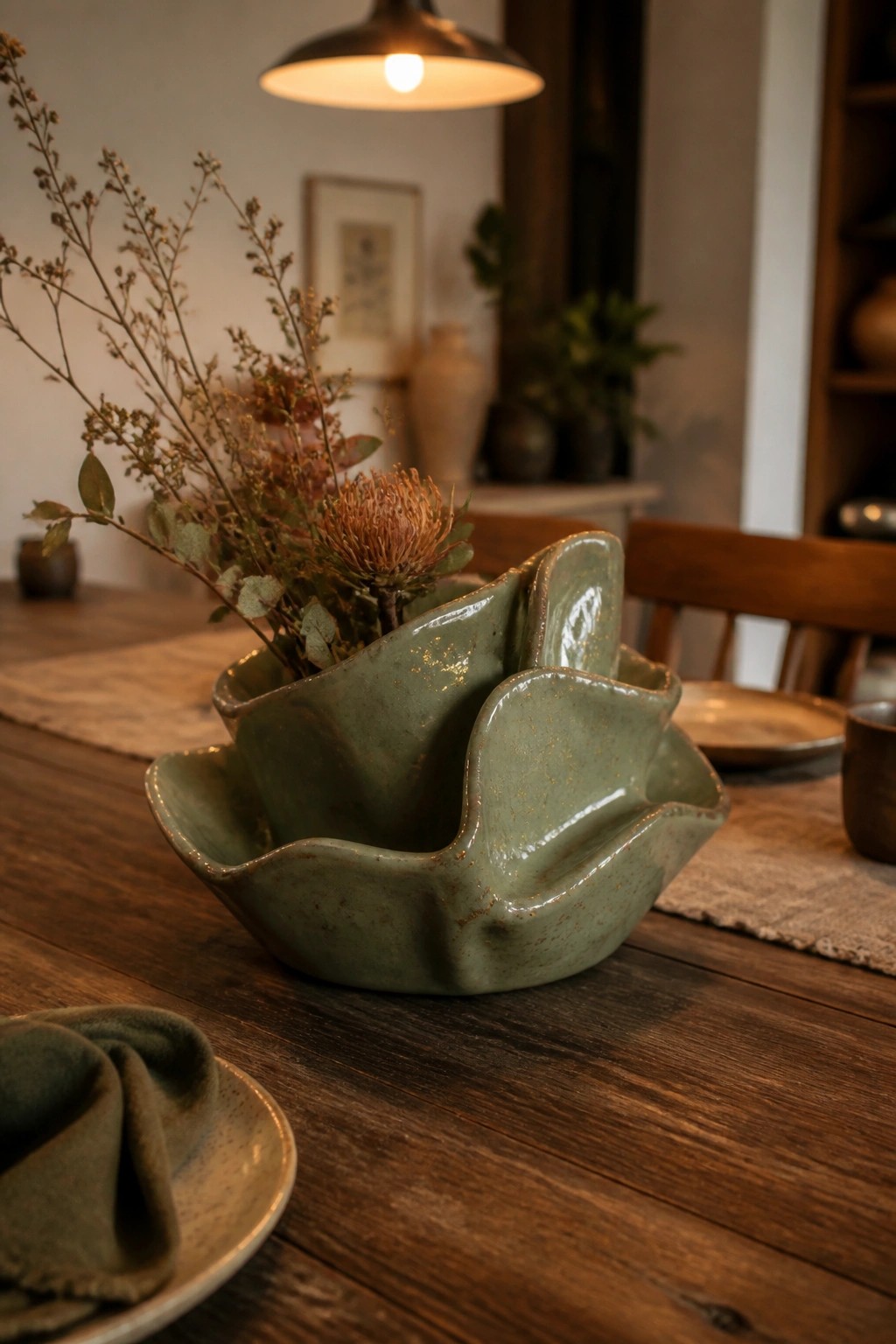
A slab vase built from clay sheets that are folded and layered creates a low, wide vessel with irregular, petal-like rims. The overlapping folds give the piece an asymmetrical silhouette while keeping the overall form stable enough to hold water or floral stems. A soft sage green glaze with subtle speckling covers the surface and highlights the handmade texture without adding extra decoration.
What makes this idea useful is the way the folded slabs do most of the visual work, so you can focus on shaping the edges rather than carving details. The same technique scales easily to taller versions or smaller ring dishes by changing slab size and the number of folds. In a dining space this shape sits well as a low centerpiece that still leaves room for plates and linens. You could simplify it further by using just two or three slabs for a quicker version or add a small base slab to turn the form into a shallow planter.
Asymmetrical Double-Neck Slab Vase

This vase is built from slabs that are joined and shaped into an asymmetrical form with two uneven cylindrical necks rising from a single twisted body. The pale crackle glaze sits over a light base and settles into the seams and folds, making the construction lines part of the finished surface. The irregular profile and slight lean give the piece its visual weight while keeping it functional as a vessel.
What makes this idea useful is the way two simple slab cylinders can be joined at different heights to create an interesting silhouette without extra carving. The same construction works for a taller floor vase or can be scaled down for a desk piece that holds a few stems. In a living room or on a mantel, the shape stands out against plain walls and pairs easily with neutral decor. You could adapt it by changing the neck angles or swapping the crackle glaze for a matte finish to suit different room styles.
Wall-Mounted Folded Slab Pocket Vase

A slab vase formed by folding one side of a flat clay sheet creates an open pocket that sits flush against the wall while holding a single stem upright. The asymmetrical fold gives the piece its structure and depth without added parts, and the glossy green glaze highlights the ridges and curves from the shaping process. This type of wall vase keeps the focus on the form itself rather than surface decoration.
What makes this idea useful is how the fold turns a basic slab into a stable holder that needs no extra hardware beyond a simple hanger on the back. You could adapt the same shape in a smaller size for a narrow hallway or entry, or change the glaze to a matte finish if you want it to blend into a lighter room. The vertical layout saves table space and works especially well for dried stems that do not need water. For a gift, the same folded construction could be repeated in different heights to create a small set.
Asymmetrical Folded Hanging Planter
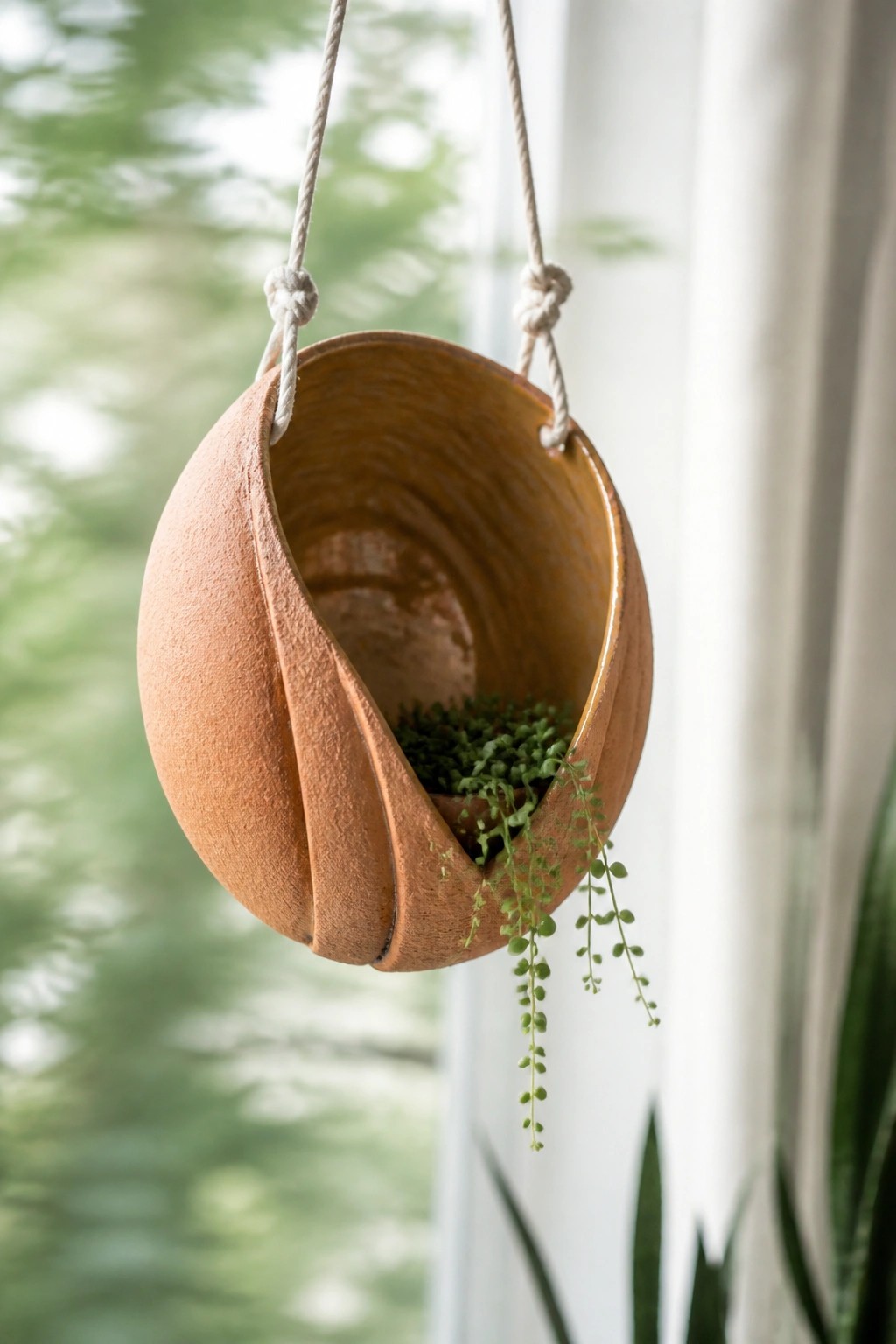
A slab-built planter shaped by folding and overlapping clay into an open, twisted form creates a lightweight hanging vessel. The irregular edges and pinched seams give the piece its asymmetrical profile while still holding soil for small plants. Holes near the rim let cords thread through for suspension, turning the planter into a vertical display piece. The matte terracotta finish highlights the handmade folds without adding extra surface detail.
What makes this idea useful is how the folded structure itself creates both the container and the visual interest in one step. You can adapt the same approach by changing the number of folds or the angle of the overlap to suit different plant sizes. This shape works especially well for trailing plants in a window or corner where vertical space is limited. For a different version, try scaling the slab down and adding a flat base so the same form can sit on a shelf instead of hanging.
Folded Slab Vases with Pinched Asymmetrical Rims

These vases start as simple slab cylinders that are gently folded and pinched at the top while the clay is leather-hard. The uneven rims create soft overhangs and angled openings that give each piece a relaxed, organic profile. Matte glazes in pale blue, warm blush, and soft yellow keep the focus on the form rather than surface decoration. The approach belongs to the slab vase category and works especially well for displaying single stems or small clusters.
The shape does a lot of the work here because the folded rim already adds visual interest without extra carving or handles. You can scale the same slab method down for bud vases on a desk or stretch it taller for entryway arrangements. Switching to a single glaze color across a set of three different heights would make the group feel cohesive yet varied. This idea saves well for anyone who wants a modern vase that still looks handmade rather than manufactured.
Folded Asymmetrical Pitcher Form
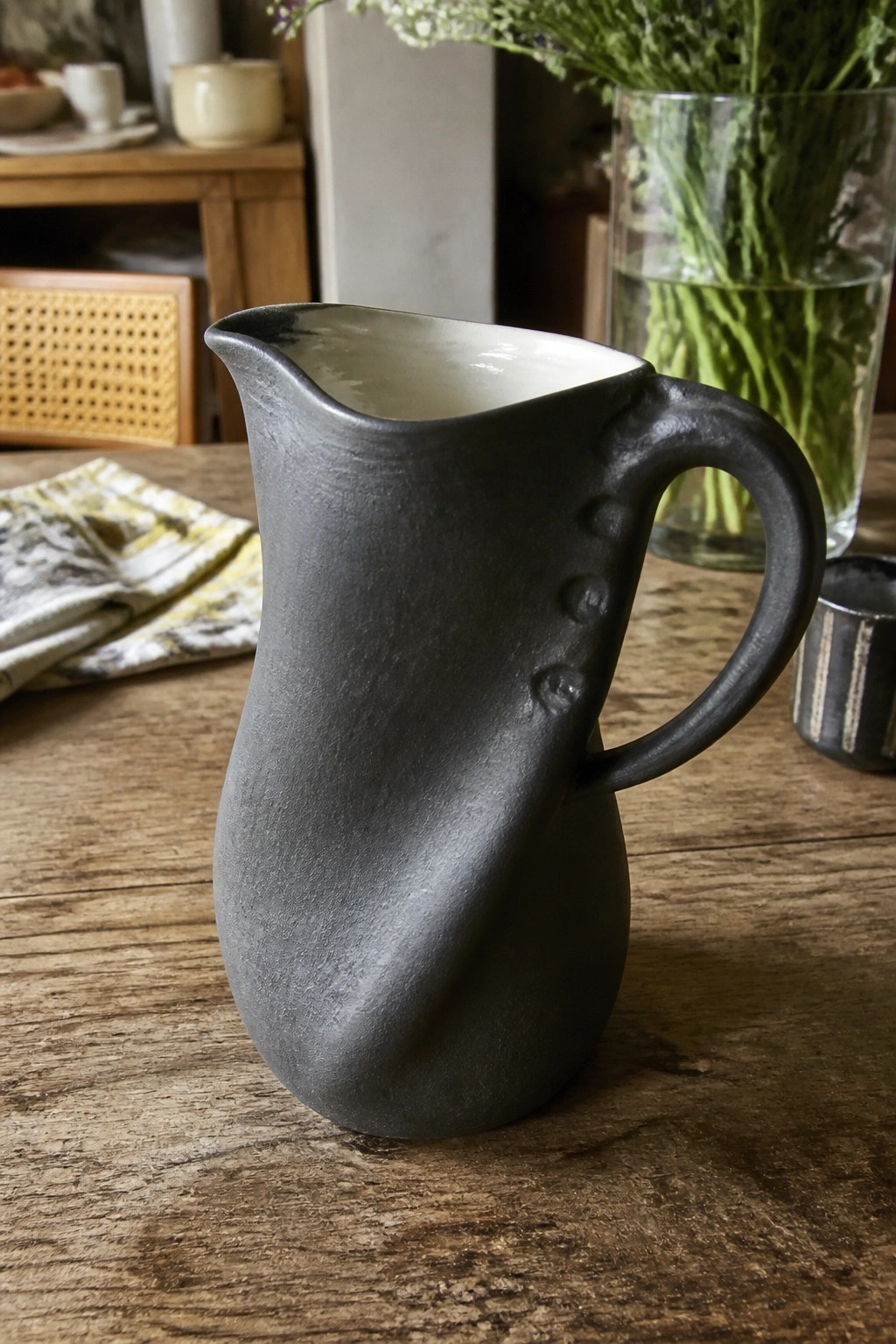
Hand-built ceramics often use slabs folded and pinched while soft to produce an off-kilter body that leans and twists. This pitcher carries the approach through to a functional shape, with the spout pulled from one side of the rim and the handle attached opposite the lean. The dark matte exterior stops at the rim, leaving a clean white interior that emphasizes the irregular opening. Small rounded clay dots placed along the handle join add a quiet surface break.
What makes this idea useful is how easily the same fold can be adjusted into a vase by raising the slab height and omitting the spout. The lean gives the finished piece a strong profile that reads clearly in photos, which helps it stand out in a grid of more upright forms. You could repeat the shape at a smaller scale for a bud vase or stretch the same twist into a taller, narrower version for a side table.
Asymmetrical Slab Vase with Folded Face Form
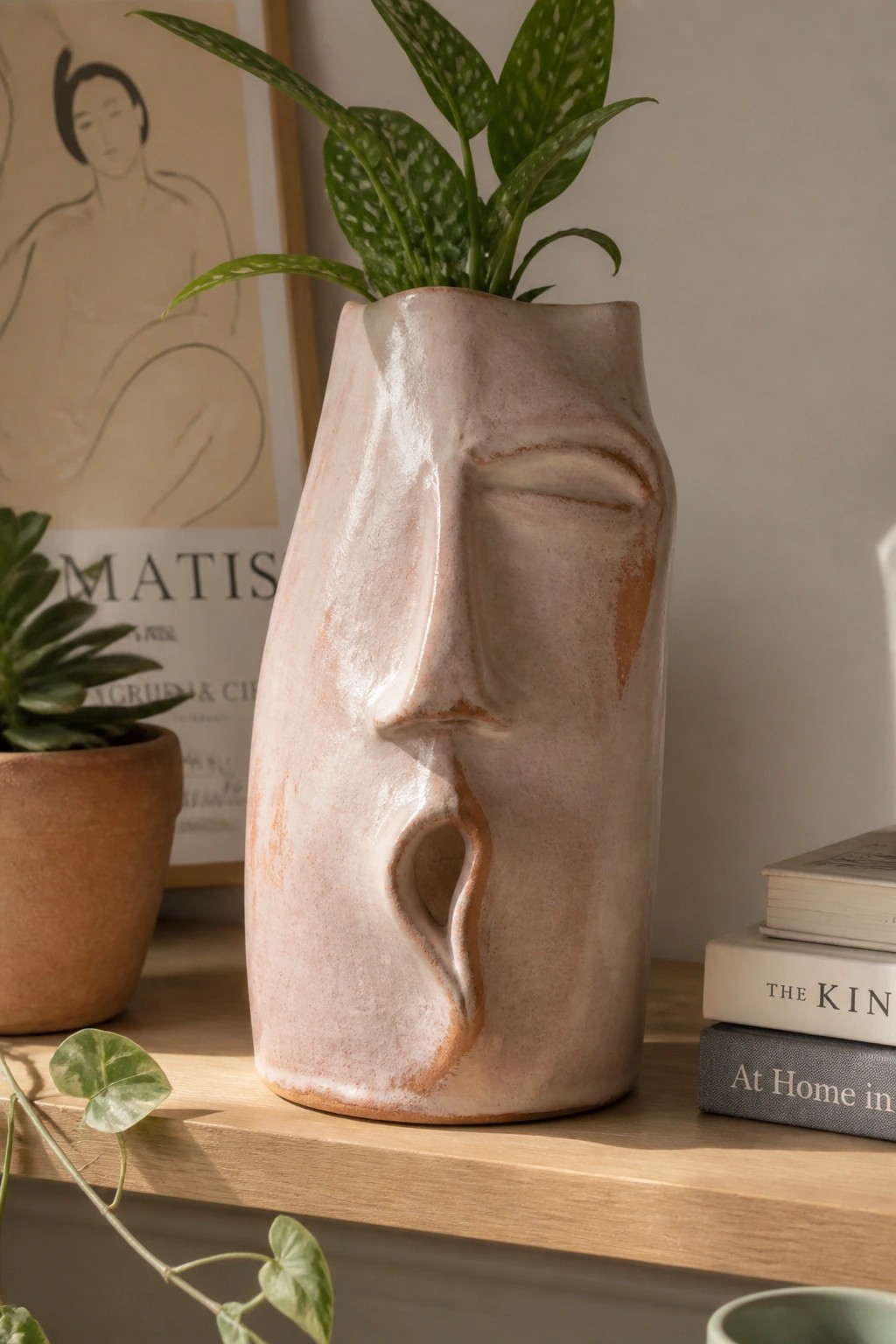
A hand-built slab vase can be folded and pinched into an asymmetrical face shape where the mouth becomes the main opening. The clay is manipulated while soft to raise a nose, define an eye, and create uneven edges that keep the profile from looking flat. A single matte glaze in a pale tone lets the surface variations and slight color shifts from the firing show without covering the form.
This shape works especially well as a small planter on a low shelf where the side profile shows clearly. You could rework the same slab method by reducing the facial details to just a few folds or changing the glaze to a deeper tone for more contrast. The irregular opening also makes it simple to adjust for different plant sizes without needing a separate liner.
Folded Slab Vase with Vertical Ridges
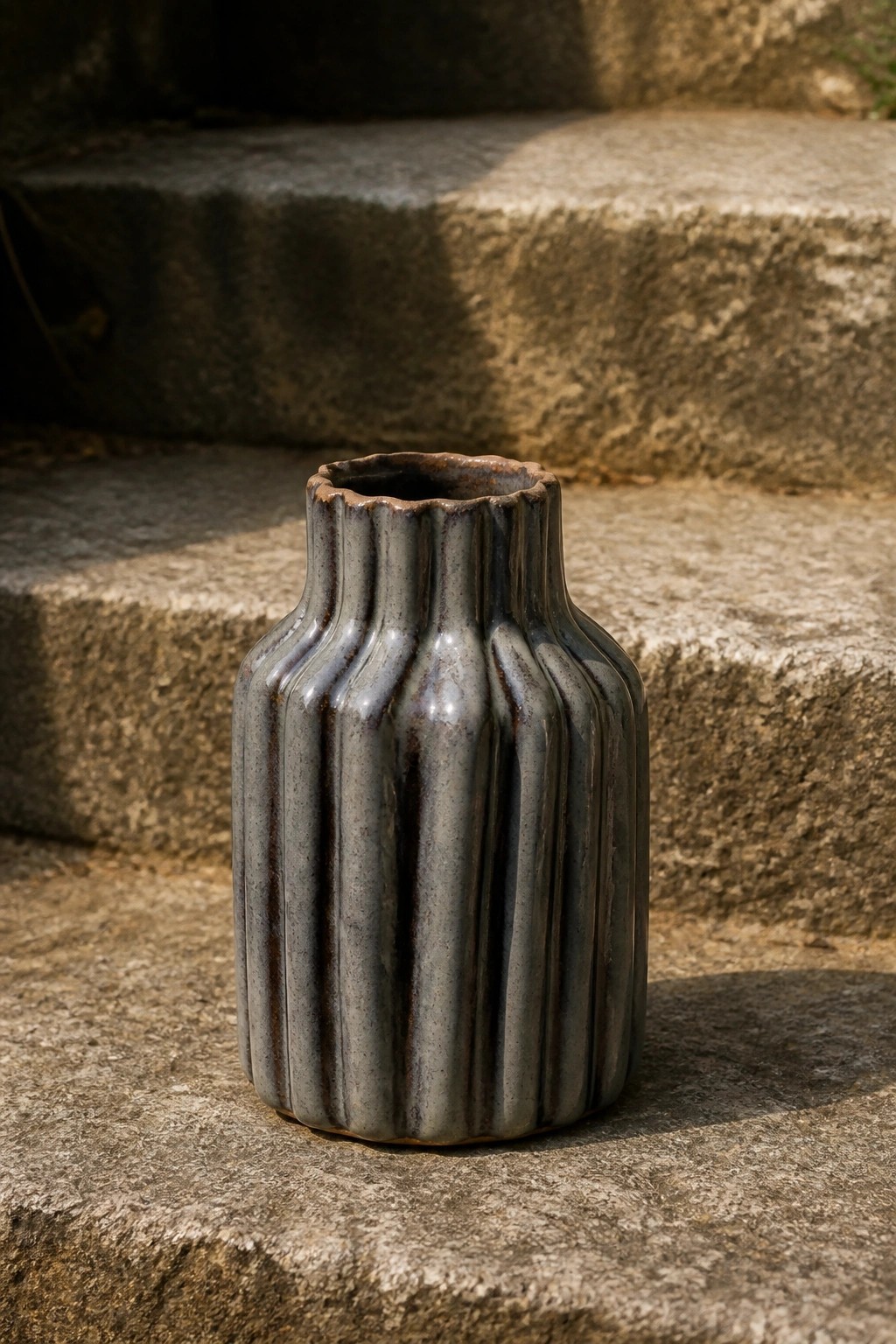
A slab vase built by folding the clay into repeated vertical ridges that run from base to neck. The irregular scalloped rim continues the same fold lines upward and creates an asymmetrical opening. A matte gray glaze with faint brown flecks settles into the grooves and emphasizes the texture created by the folds. This keeps the construction method visible while giving the piece a structured, columnar shape.
What makes this idea useful is how the folds add surface detail without any added carving or slip work. The compact size fits easily on a desk or narrow shelf as a single-stem holder. You could repeat the same fold pattern on a wider slab to make a low bowl or shorten the height for a small utensil crock. The neutral tone also lets the form stand out on its own or pair with brighter glazes on future versions.
Slab Vase with Folded Angular Rim
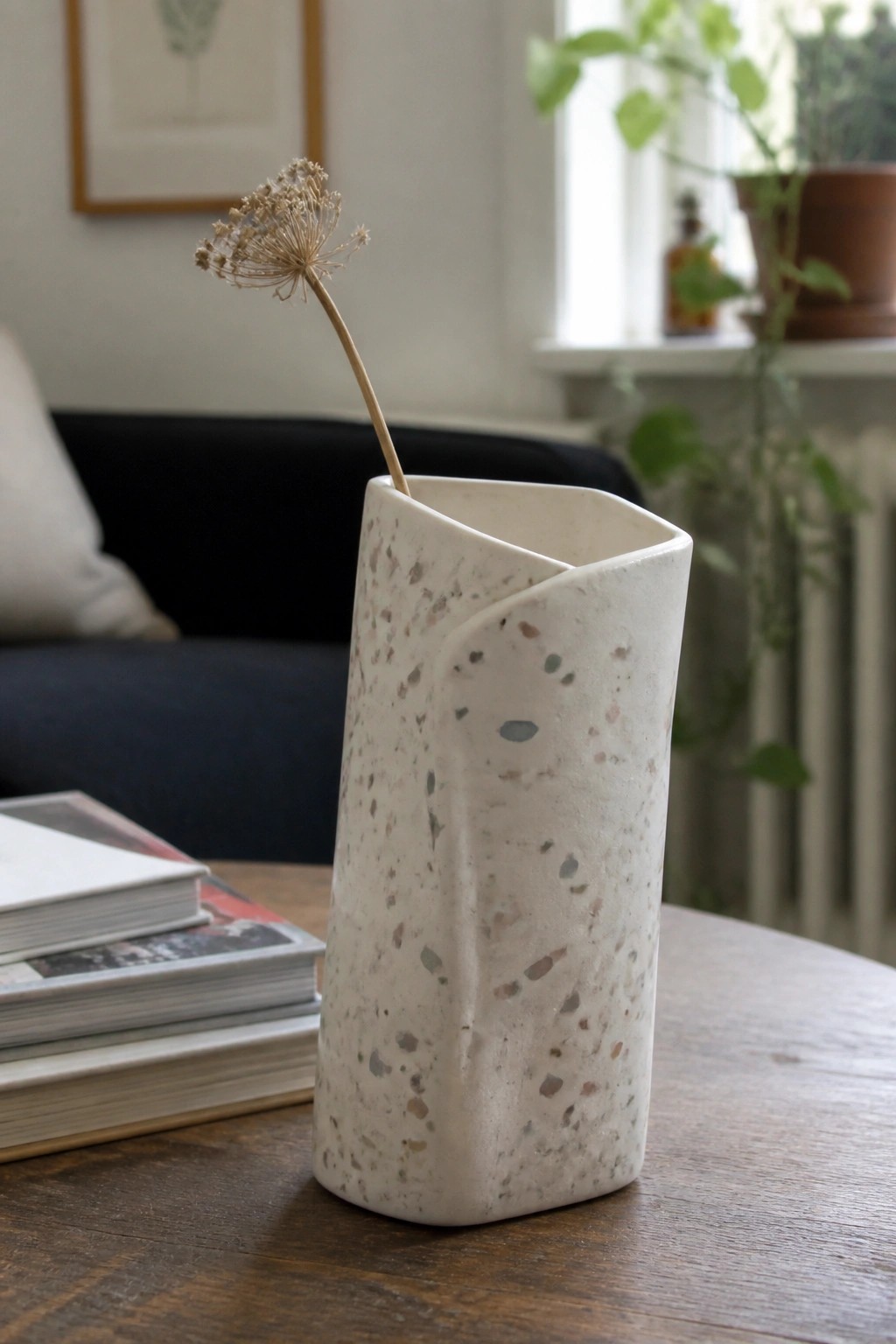
A slab vase built from a flat sheet of clay that is folded and pinched along one side to create an off-center opening. The form stays tall and narrow with straight sides that shift slightly where the clay overlaps, and the surface carries a light tone with small dark and brown flecks mixed into the clay. This construction keeps the piece simple while the uneven top edge gives it a distinct profile that works for single stems or small dried arrangements.
What makes this idea useful is the way the folded rim adds shape without extra carving or handles. The same slab method can be adjusted to make shorter versions for desk use or slightly wider ones for a few flowers. The speckled surface pairs easily with neutral rooms and needs no glaze beyond a clear coat, so the focus stays on the form. A piece like this works especially well as a quick project when you want an asymmetrical vase that still feels balanced.
Folded Slab Vase with Split Glaze Finish
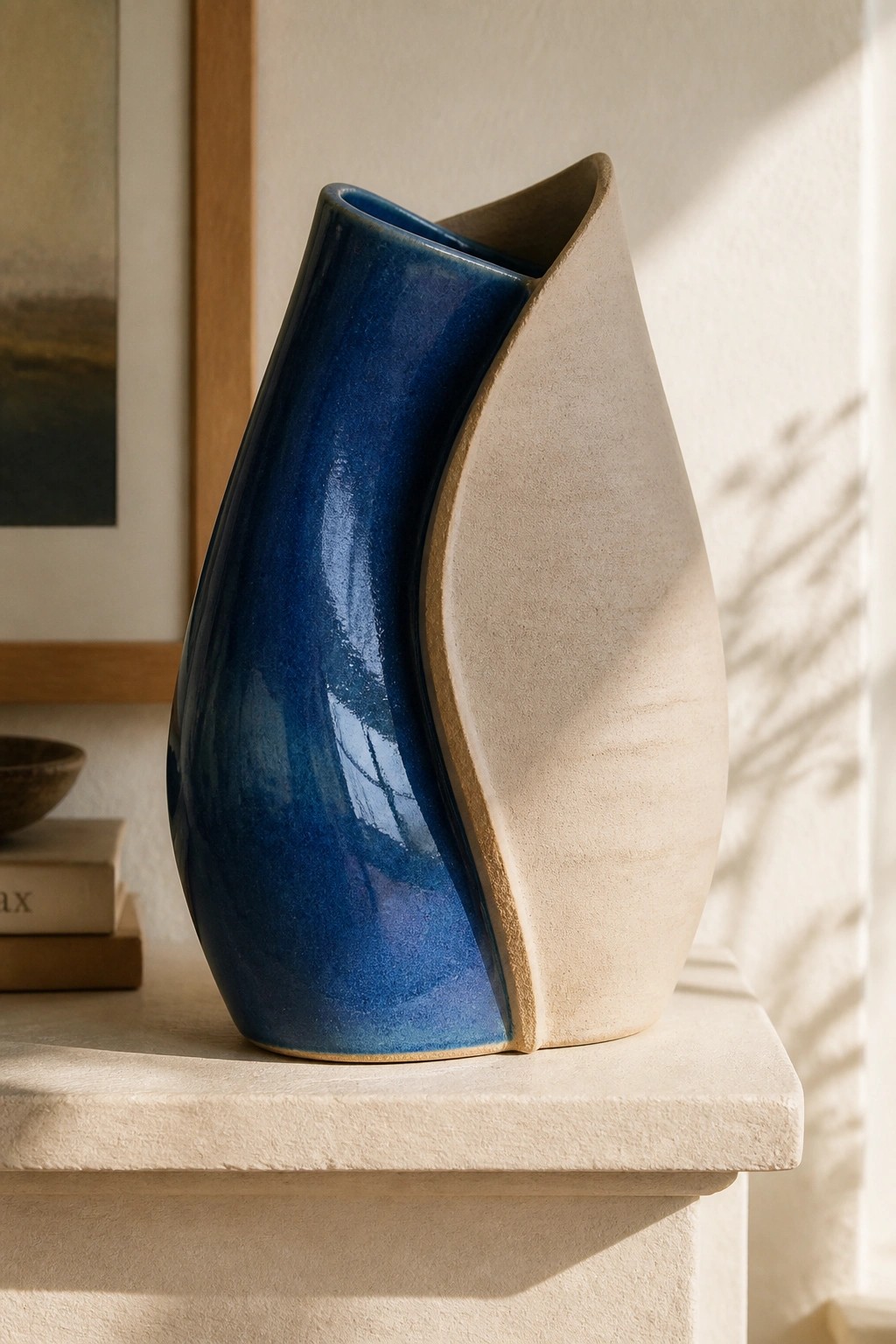
This slab vase is built from two joined clay sheets that create an asymmetrical folded form with a wide base tapering into an angled opening. One half receives a deep blue glossy glaze that pools and reflects light while the other half stays in its original matte beige surface. The contrast between the reflective and non-reflective areas emphasizes the curve where the slabs meet and gives the piece a clean two-tone look without extra decoration.
What makes this idea useful is the simple way the split glaze highlights the fold without needing complex carving or handles. You could adapt it by changing the glaze color on the shiny side or by adjusting how far the fold wraps around the body to suit a narrower shelf. A piece like this works especially well as a dry floral holder or standalone accent because the flat matte side sits cleanly against a wall while the glazed curve catches light. The same slab method could be scaled down for a smaller bud vase or lengthened into a taller version for a console table.
Folded Slab Vase with Pinched Asymmetric Rim
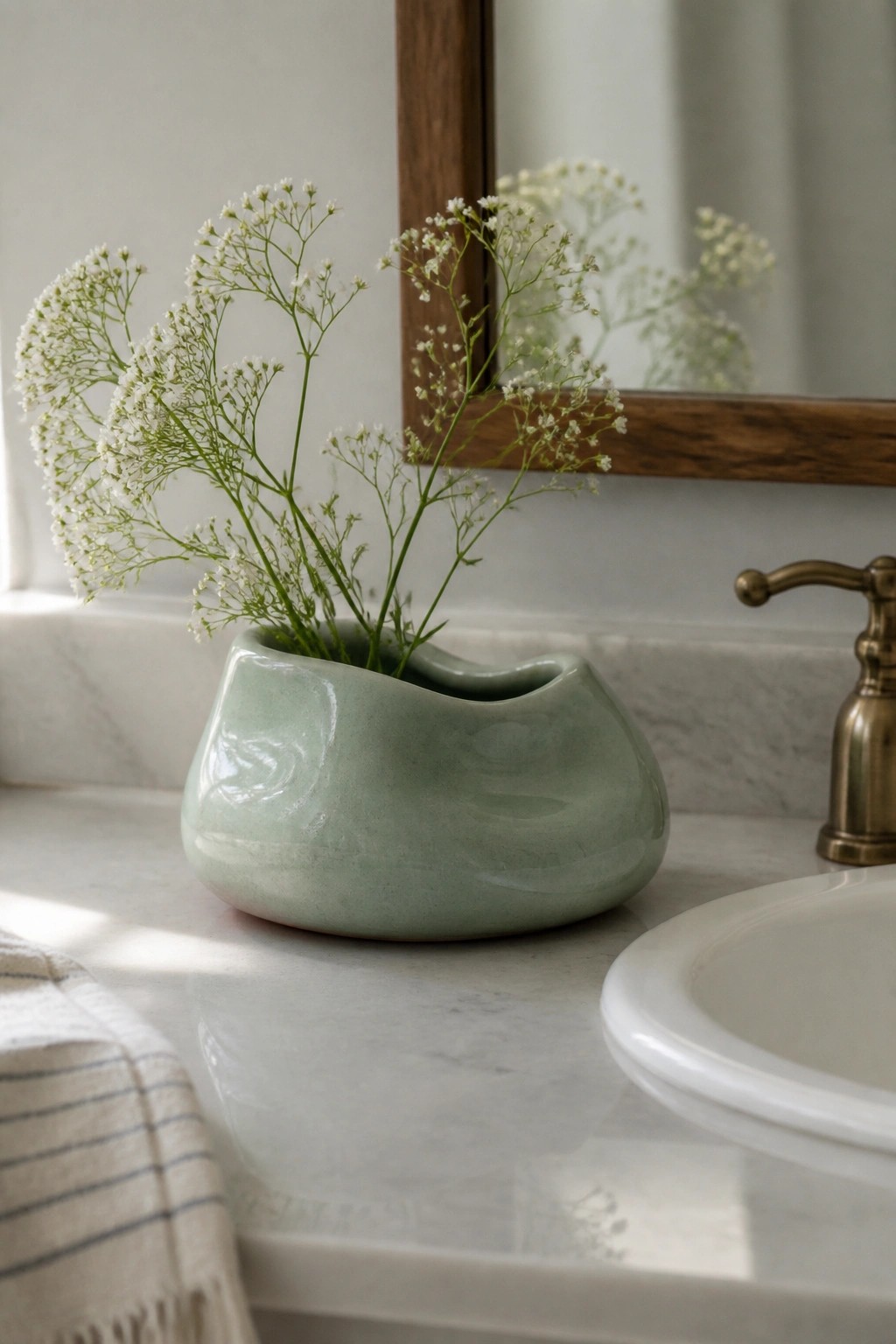
A slab vase built from a single sheet of clay and shaped by folding creates this low, rounded form with an uneven opening. The soft curves and slight pinch at the rim give the piece its asymmetrical character while keeping the overall profile compact. A glossy pale green glaze covers the surface evenly and emphasizes the gentle shifts in the handmade shape. This style works as a small vase suited for delicate stems or filler flowers rather than large arrangements.
What makes this idea useful is the low height and stable base that let it sit on a countertop or narrow shelf without tipping. The same folding method can be adjusted to make the opening wider or narrower depending on the stems you want to use. In a bathroom, the compact size pairs with everyday items like soap dishes or towels without crowding the space. You could also scale the form up slightly and switch to a matte glaze if you want a version for a living room table.
Vertical Slab Layers on an Asymmetrical Folded Vase
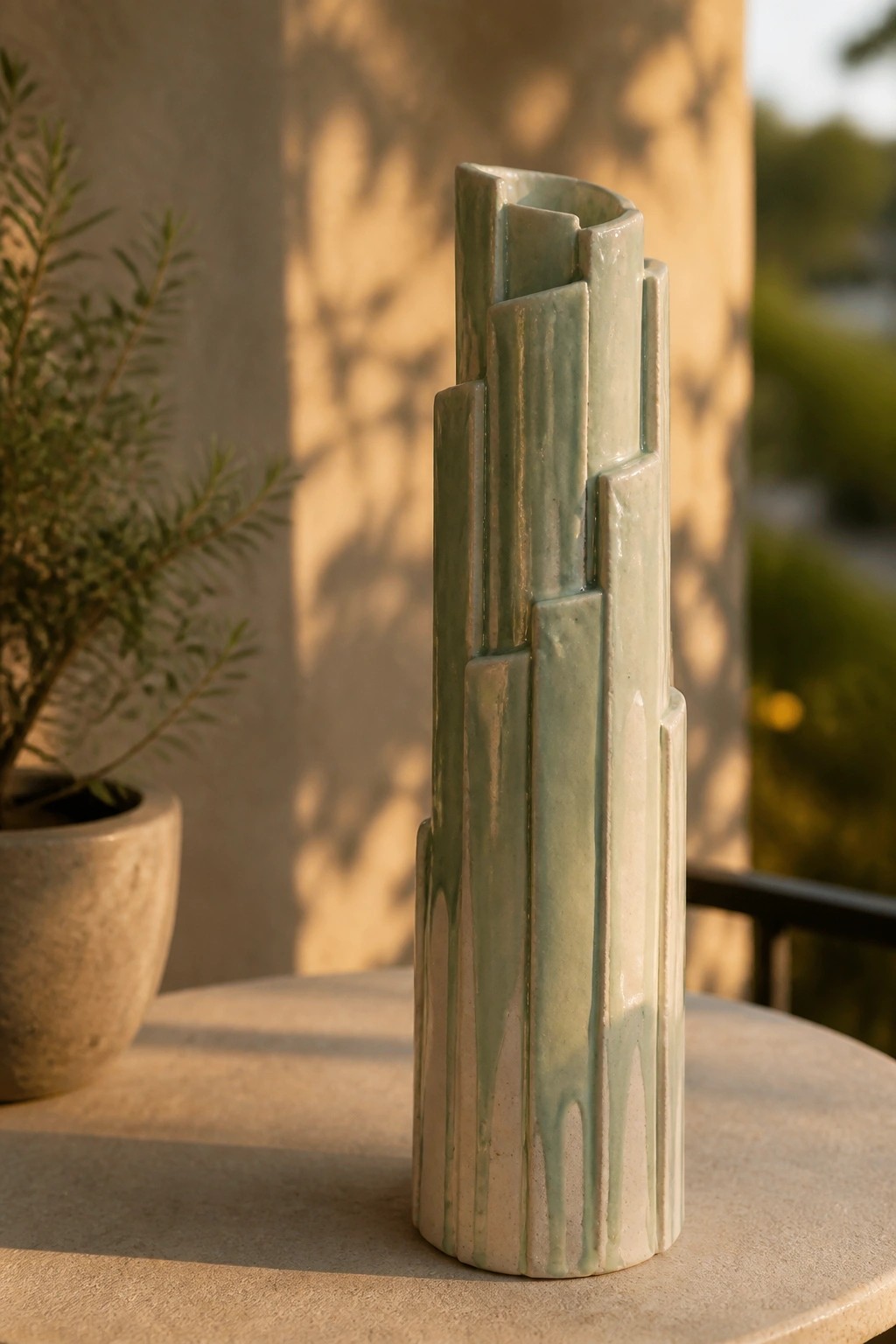
A slab-built vase uses overlapping vertical clay panels that step outward to create an architectural profile around a basic cylinder. The top rim is folded and pinched into an irregular opening that breaks the symmetry. A pale green glaze drips down the ridges and seams, emphasizing the handmade joins and giving the surface a layered, textured finish.
What makes this idea useful is the way the added slabs quickly add height and shadow lines without extra carving. You can adapt the same structure by changing the number or width of the panels or switching to a matte white glaze for a softer look. This shape works especially well as a tall decor piece on a sideboard or entry table where the vertical lines stand out against simpler surroundings. For a smaller version, shorten the cylinder and reduce the panels to make a desk vase.
Segmented Slab Holder With Four Glazed Compartments

A long rectangular ceramic piece built from slabs creates four connected square compartments, each finished in a different soft glaze color that runs from lavender through sage, sky blue, and cream. The simple boxy form lets stems stand upright without crowding, and the color progression adds visual interest while keeping the overall shape clean and balanced. This type of project fits into the category of a multi-stem flower holder or small tabletop vase arrangement.
The shape does a lot of the work here by turning one slab build into four usable spaces without extra pieces. It works especially well on a narrow windowsill or shelf where a single large vase would feel too wide. You could adapt the idea by shortening it to three sections, switching the glaze order, or adding a shallow tray base underneath for extra stability. For a gift, something like this stands out because the color blocks make it easy to match different home styles without needing extra decoration.
Folded Angular Slab Vases for Single Stems
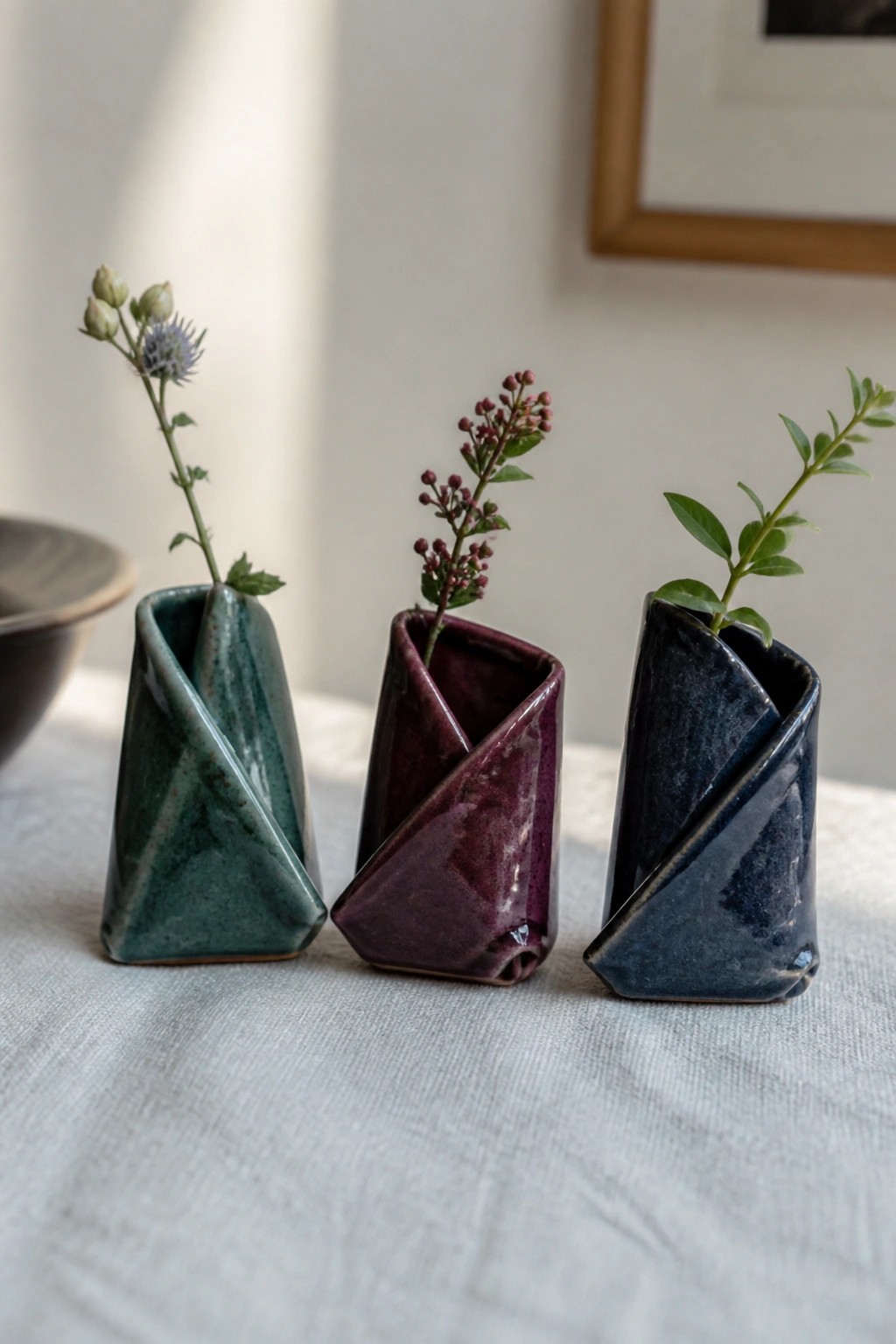
These small vases are built from flat clay slabs that are folded and joined along one seam to create an irregular, angular body with a narrow top opening. The glossy glaze pools slightly along the folds and edges, which emphasizes the geometric planes and gives the form a clean, finished surface. The compact size and tapered shape make them suitable as minimal holders for single stems or small cuttings rather than larger bouquets.
What makes this idea useful is how the folded construction adds structure and visual lines without extra carving or attachments. You could scale the template up slightly for a wider base or try matte glazes on the same shape to shift the look toward a more earthy style. This works especially well on a narrow shelf or desk where space is limited and a single stem is enough. The same folding method could be adapted into a shorter, wider version for a small utensil holder or match holder.
Frequently Asked Questions
What kind of clay works best for folded asymmetrical slab vases? Stoneware or porcelain clays with good plasticity are ideal because they hold folds well while remaining flexible enough to avoid tearing during shaping. Start with a slab rolled to about a quarter inch thick, and test small samples first to confirm the clay does not slump or crack when folded at angles.
How do I prevent cracks when creating the asymmetrical folds? Keep the clay at a consistent leather-hard stage before folding, and score and slip all seams thoroughly. Work slowly, supporting the form with foam or crumpled paper on the inside as you bend the slabs. If cracks appear, gently smooth them with a damp sponge and let the piece dry slowly under plastic to reduce stress.
What tools help most when building these elegant slab forms? Basic tools include a rolling pin or slab roller, a sharp knife or wire cutter for clean edges, wooden ribs for smoothing, and soft brushes for scoring. A flexible ruler helps measure uneven folds accurately, while a banding wheel allows you to check balance from all angles without touching the wet clay.
How can I adapt these ideas for different sizes or seasonal displays? Scale the original templates up or down by adjusting slab dimensions proportionally, and vary the number of folds to suit taller or wider vases. For seasonal use, choose glazes in soft neutrals for year-round elegance or add subtle texture stamps that echo natural elements like leaves or waves.
What finishing steps ensure the vases remain both artistic and usable? Apply two to three coats of a durable mid-range glaze inside and out, then fire to the clay’s recommended temperature. After firing, check the base for stability and add felt pads if needed. Avoid over-glazing the interior if you plan to use the vase with fresh flowers, since a slightly porous surface helps regulate water.

Pottery Path is my cozy corner of the internet where I share clay ideas, pottery inspiration, and simple projects you can recreate at home. I love exploring everything from air dry clay to handbuilt pottery to cute minis that brighten your day. My goal is to make clay crafting feel easy, fun, and welcoming for anyone who wants to try it.
You will find beginner friendly tutorials, creative pottery painting ideas, and lots of warm inspiration for slow and happy crafting. If you enjoy hands on creativity, this space will feel like home.