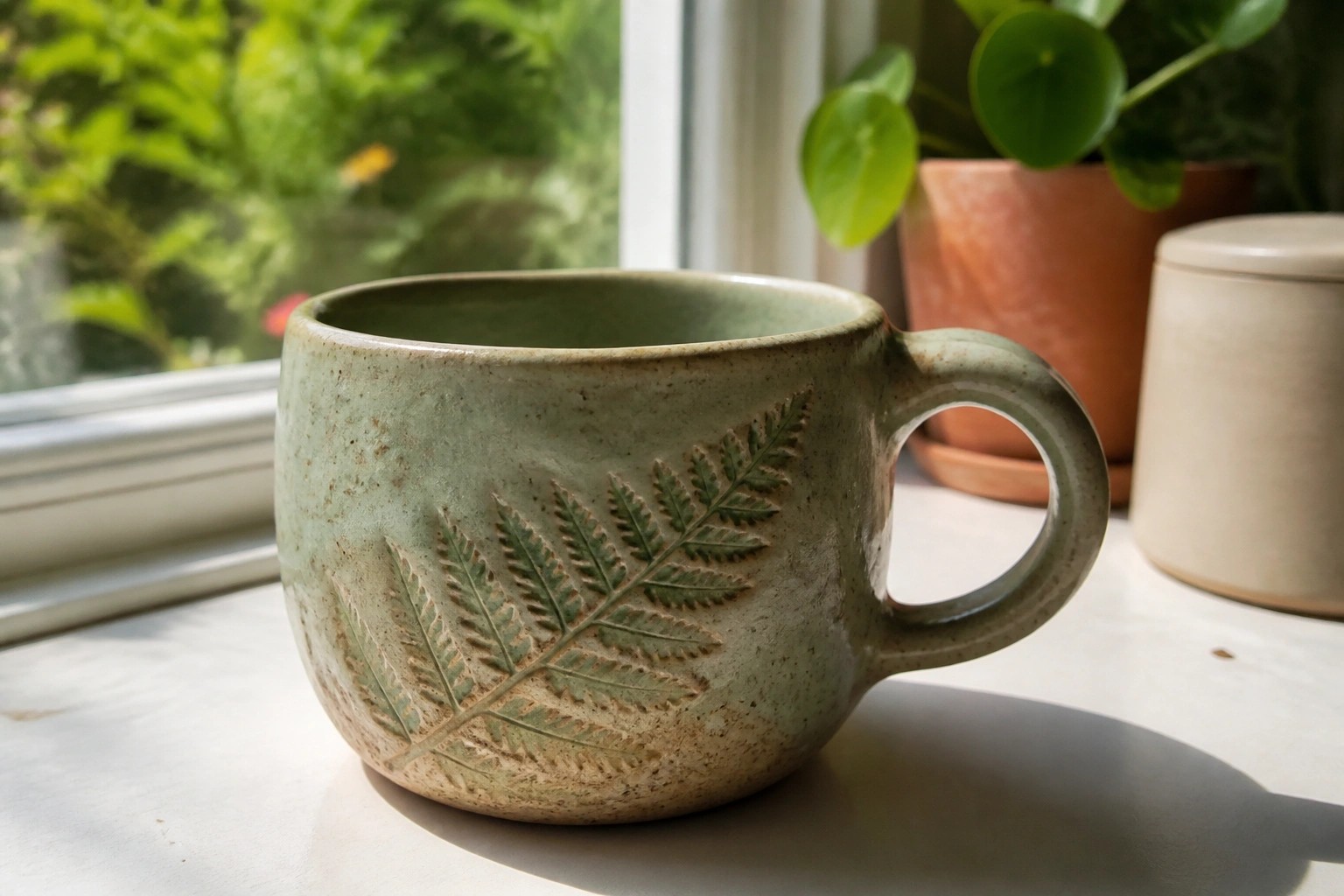
I started pressing leaves and flowers into my clay pieces a few years ago when I wanted to add some natural patterns without carving.
It turned out to be a simple way to make my handbuilt pots look more interesting.
Over time I collected a few ideas that worked well and decided to put them together here.
These textures come from things like ferns or herbs that I find in my garden or nearby.
Some of them make nice vases or trays that I actually use around the house.
Fern Imprint Mug
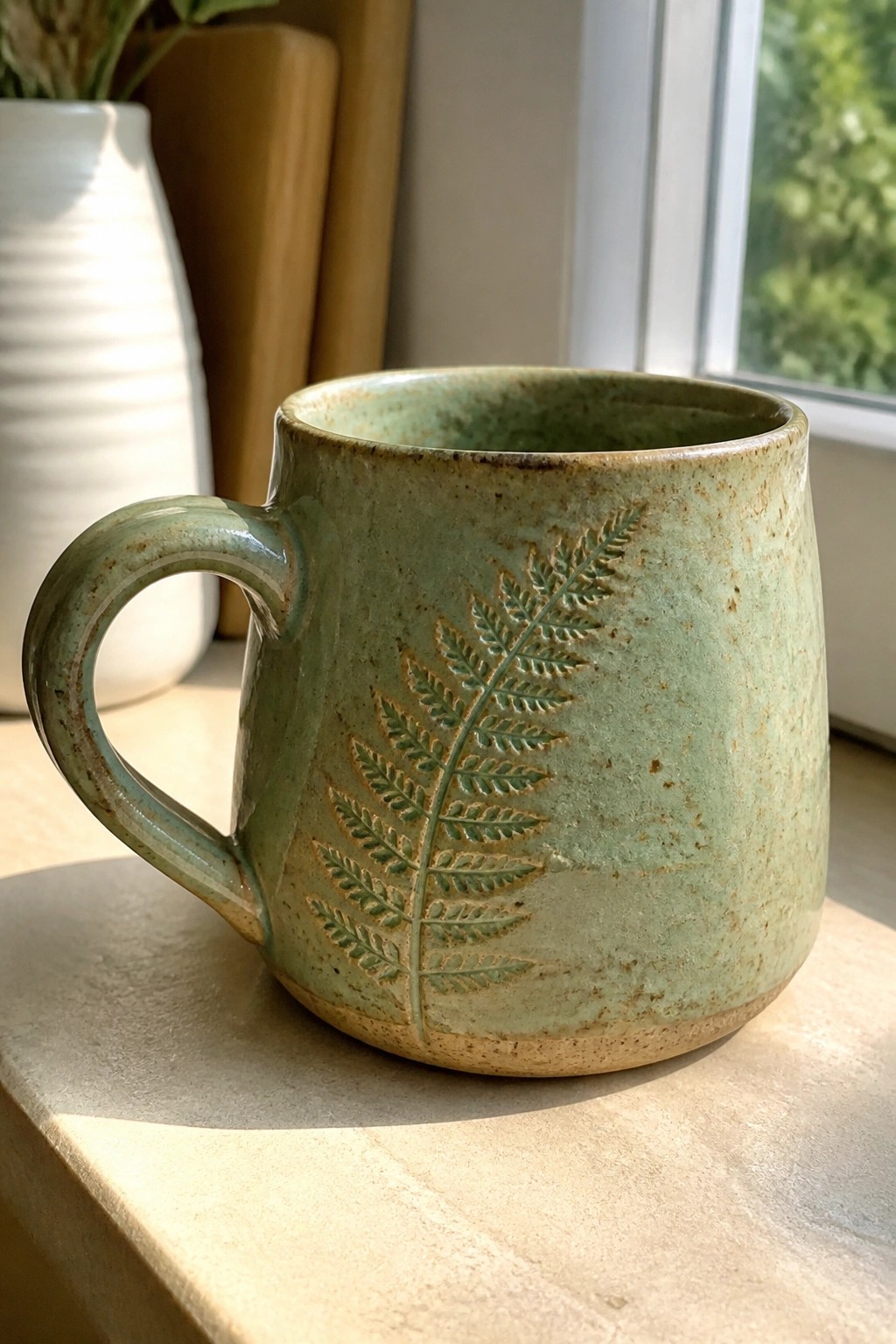
A handbuilt ceramic mug uses a large fern frond pressed directly into the clay wall to create a raised botanical texture. The leaf sits centered on one side of the rounded form, with the natural vein patterns becoming the main surface detail under a mottled green glaze. This keeps the project focused on a single slab or pinch-pot shape while the imprint adds the decorative element without extra attachments.
What makes this idea useful is how the pressed leaf works on a drinking vessel without interfering with the handle or rim. You could adapt the same method to smaller espresso cups or a lidded sugar bowl by choosing different leaf sizes. In a kitchen the texture shows up well against the glaze when the mug sits on open shelving. For a gift the design is easy to personalize by pressing leaves from a specific garden or season.
Pressed Flower Ring Dish
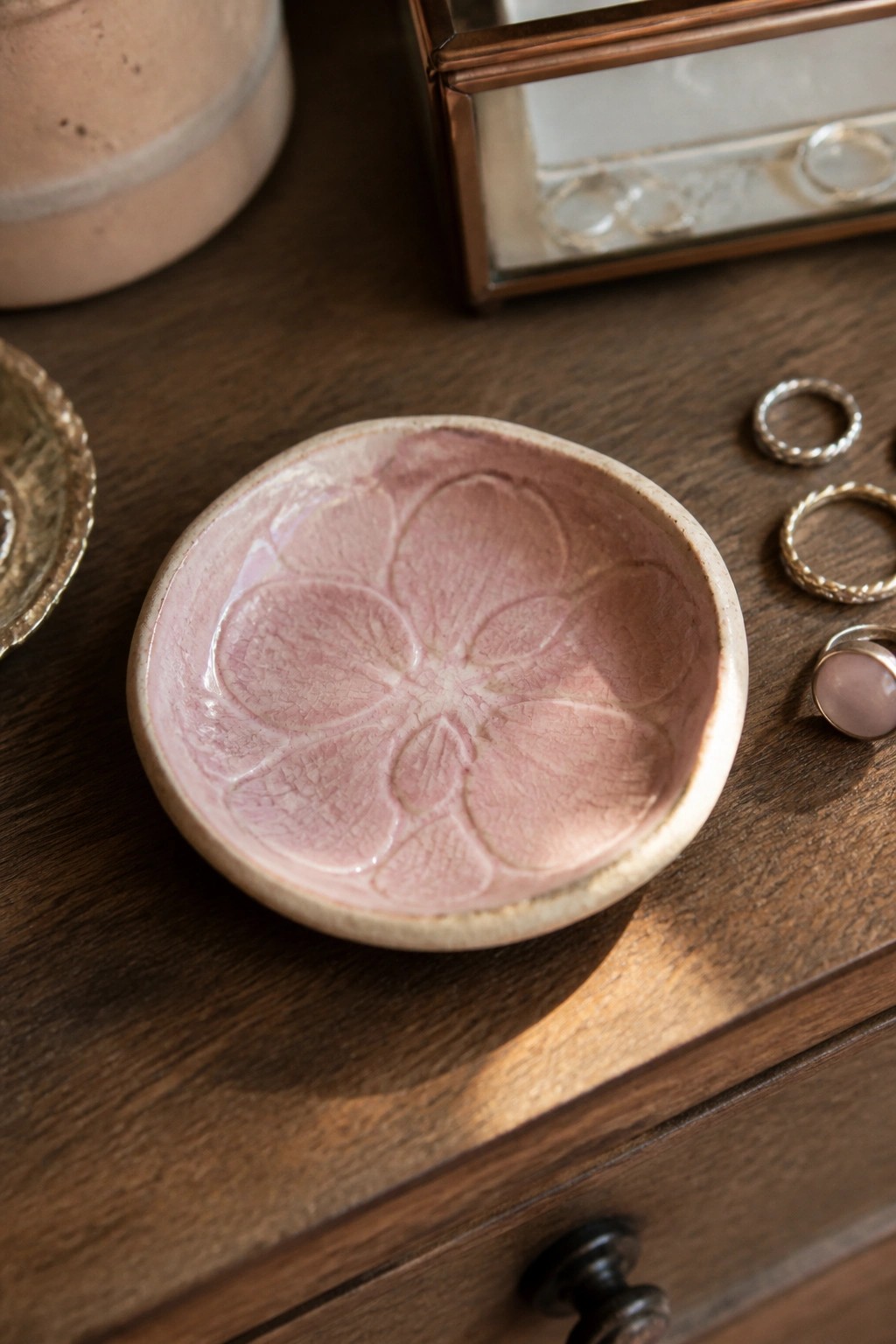
A small, shallow clay dish shaped by hand and pressed with a real flower captures the full petal structure and center details in the surface. A soft pink glaze settles into the impressed lines to emphasize the botanical texture while the raised rim keeps the form functional. This ring dish approach works because the compact size and clear imprint make it both decorative and practical for holding small items.
What makes this idea useful is the way a single pressed flower adds instant pattern without needing carving tools or multiple steps. The shallow bowl shape fits easily on a dresser or bedside table for everyday jewelry storage, and the same pressing technique scales well to slightly larger versions for soap dishes or small catchalls. You could swap in different flowers or leaves to create matching sets for gifts while keeping the overall form simple.
Pressed Leaf Cylindrical Planter
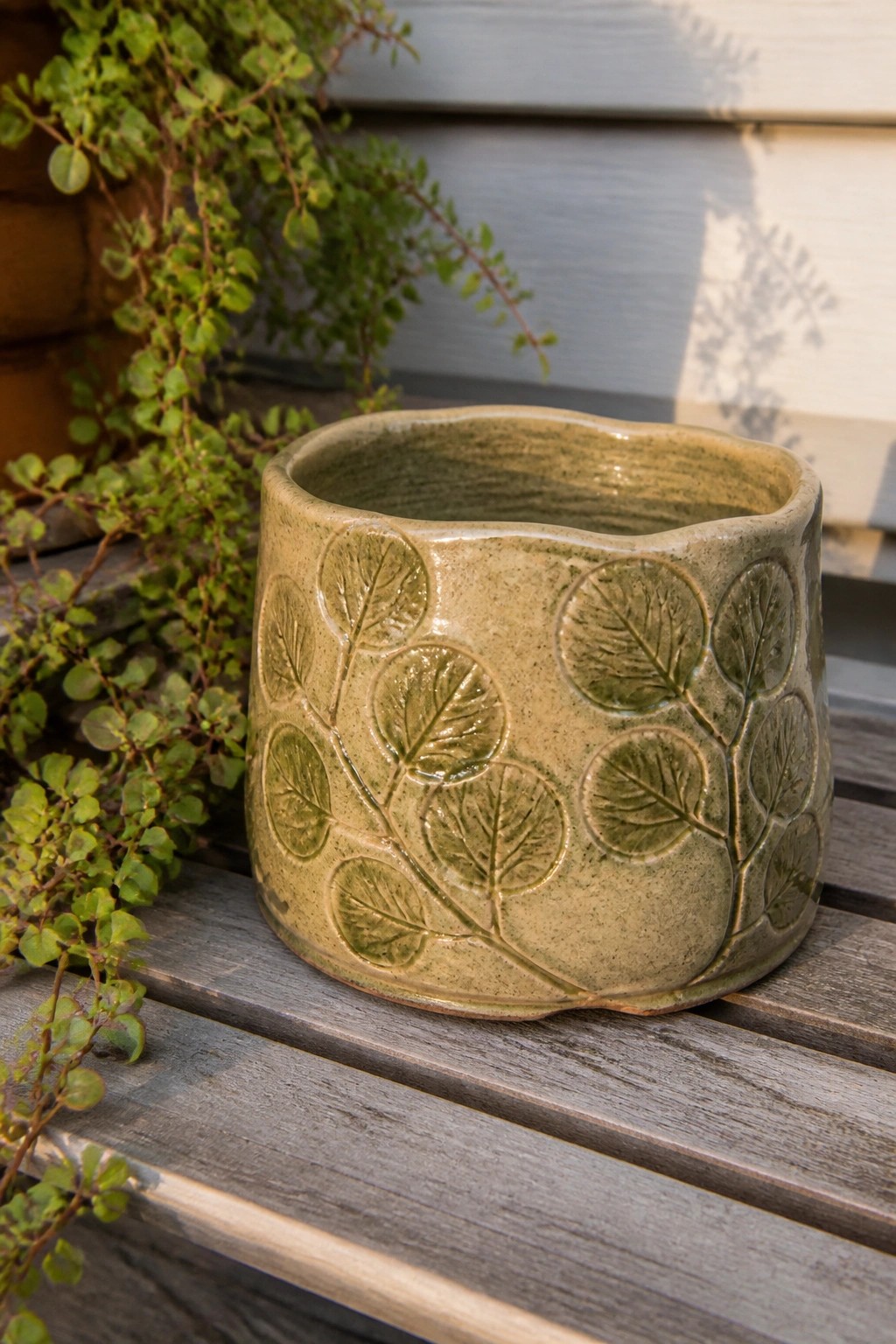
A small cylindrical planter built from slabs or coils can be decorated by pressing actual leaves into the surface to leave clear vein and shape impressions. The green glaze pools slightly in the recessed areas to make the botanical details stand out against the lighter clay body. This method keeps the form simple while the repeated leaf clusters create an all-over pattern that works on a rounded shape.
What makes this idea useful is how the pressing technique requires no carving tools and still produces consistent texture. You could apply the same leaf layout to a wider bowl or a shorter tumbler shape by adjusting spacing and leaf size. For a windowsill or desk this scale fits small houseplants without taking much space, and the same impressions can be reworked on a flat slab to make matching trays or coasters.
Pressed Botanical Border Plate
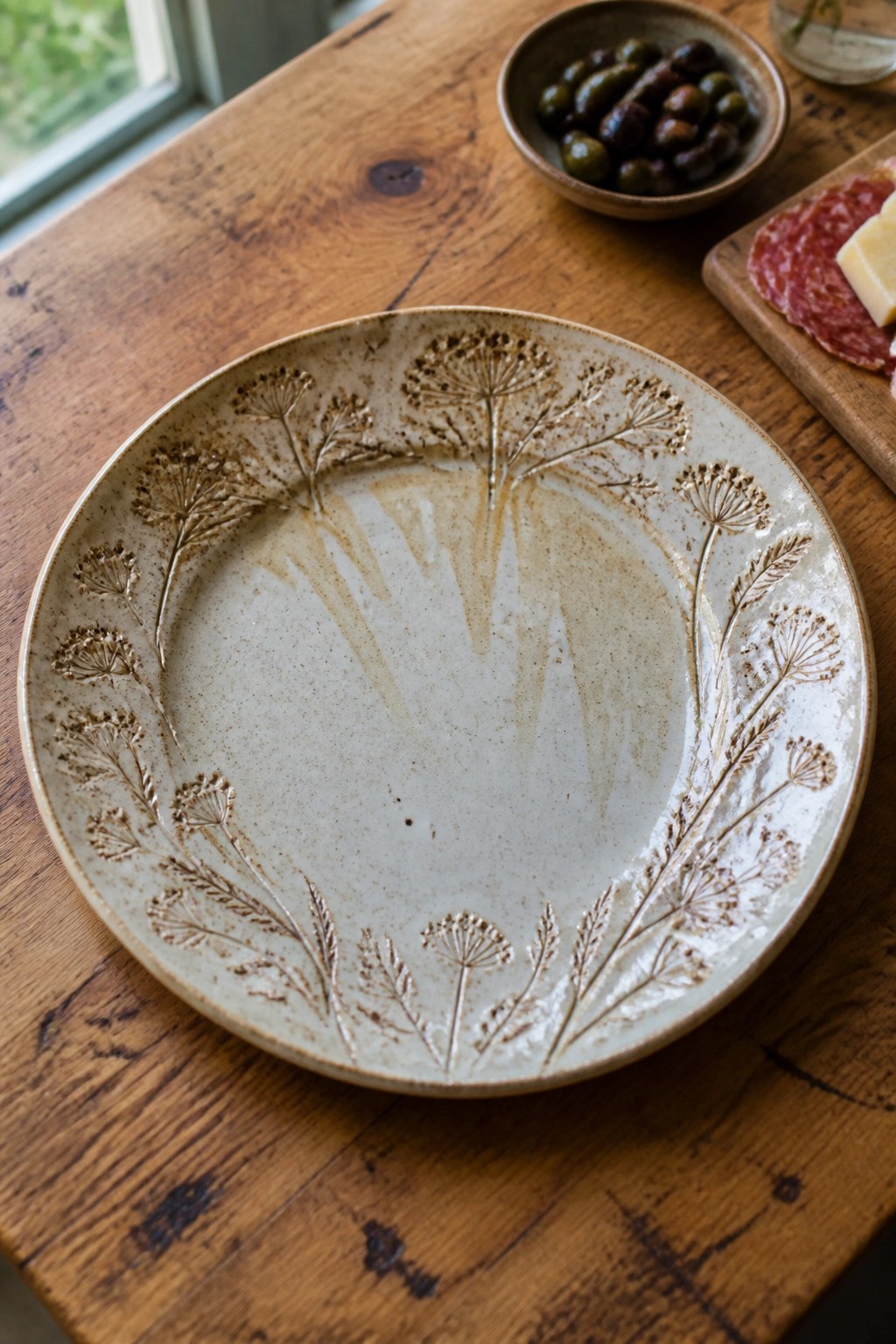
A wide-rimmed ceramic dinner plate uses pressed plant material to create a repeating border of flower heads and leaves. The raised impressions sit only on the outer edge, leaving the center smooth and functional for food. A light speckled glaze highlights the texture without covering it, making the botanical details easy to read from a distance. This fits the kitchen serving piece category and works at a scale large enough for the patterns to show clearly.
What makes this idea useful is how the border design keeps the center practical while still adding detail. You can adapt the same pressing method to smaller salad plates or a shallow bowl by scaling the plant pieces down. The neutral glaze also makes it simple to match existing dinnerware or try different local foliage for variety. For a gift, a plate like this stands out in photos because the texture catches light without needing extra color.
Pressed Botanical Spoon Rest
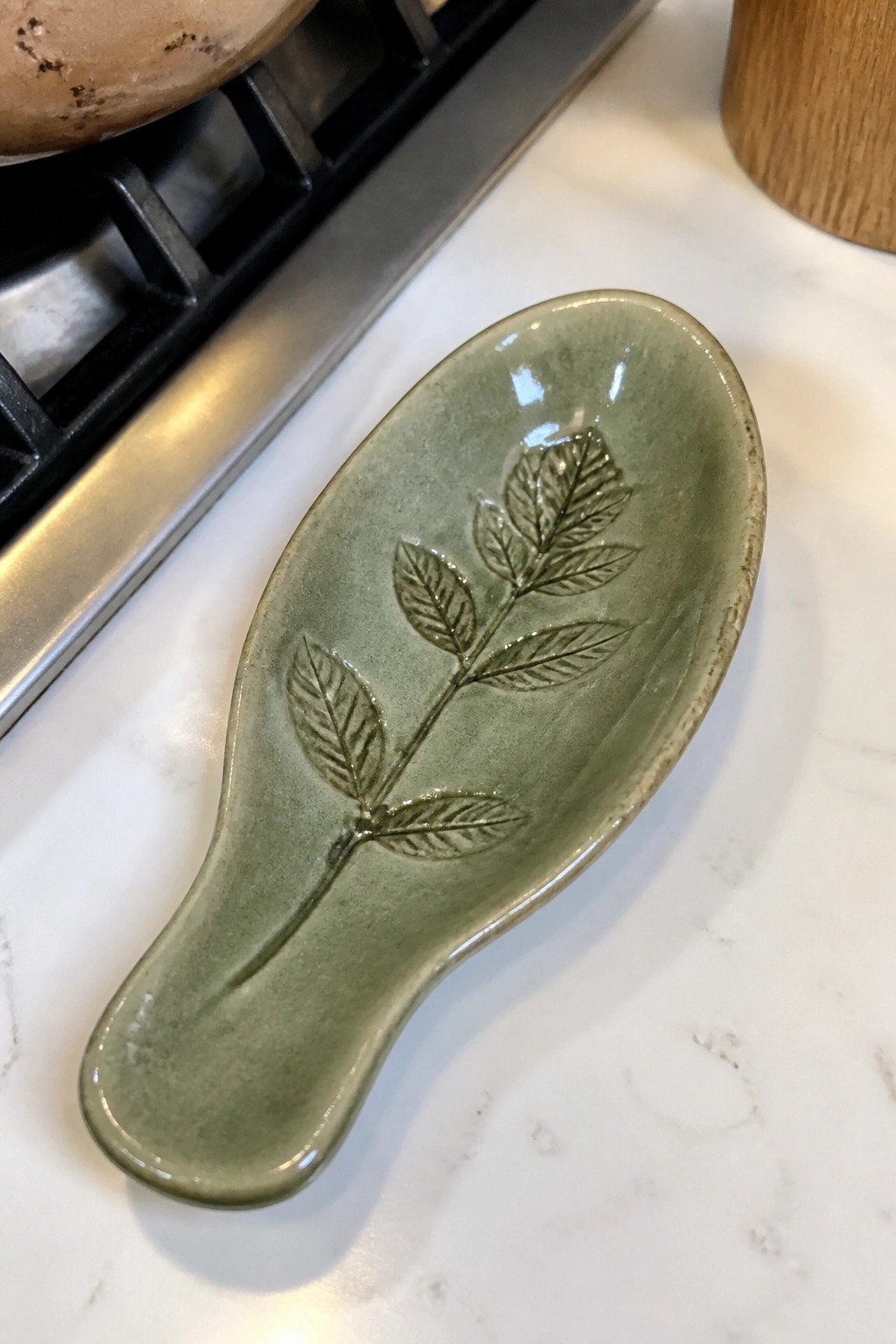
A handbuilt clay spoon rest takes shape as a narrow oval with one tapered end, using pressed leaves and stems to form the main surface design. The botanical impression runs the full length of the piece, with the stem aligned along the center so the leaves branch outward naturally. A muted green glaze settles into the recessed areas of the texture while leaving the raised edges slightly lighter for contrast.
What makes this idea useful is how the long, low form keeps utensils from rolling off a countertop or stovetop. The same pressing method works on a wider rectangle for a butter dish or on small rounds for individual soap dishes in a bathroom. You can scale the leaf size up or down depending on the plant material you have on hand, and the finished piece photographs cleanly for project boards because the texture reads clearly in one glance.
Pressed Monstera Tile for Wall Display
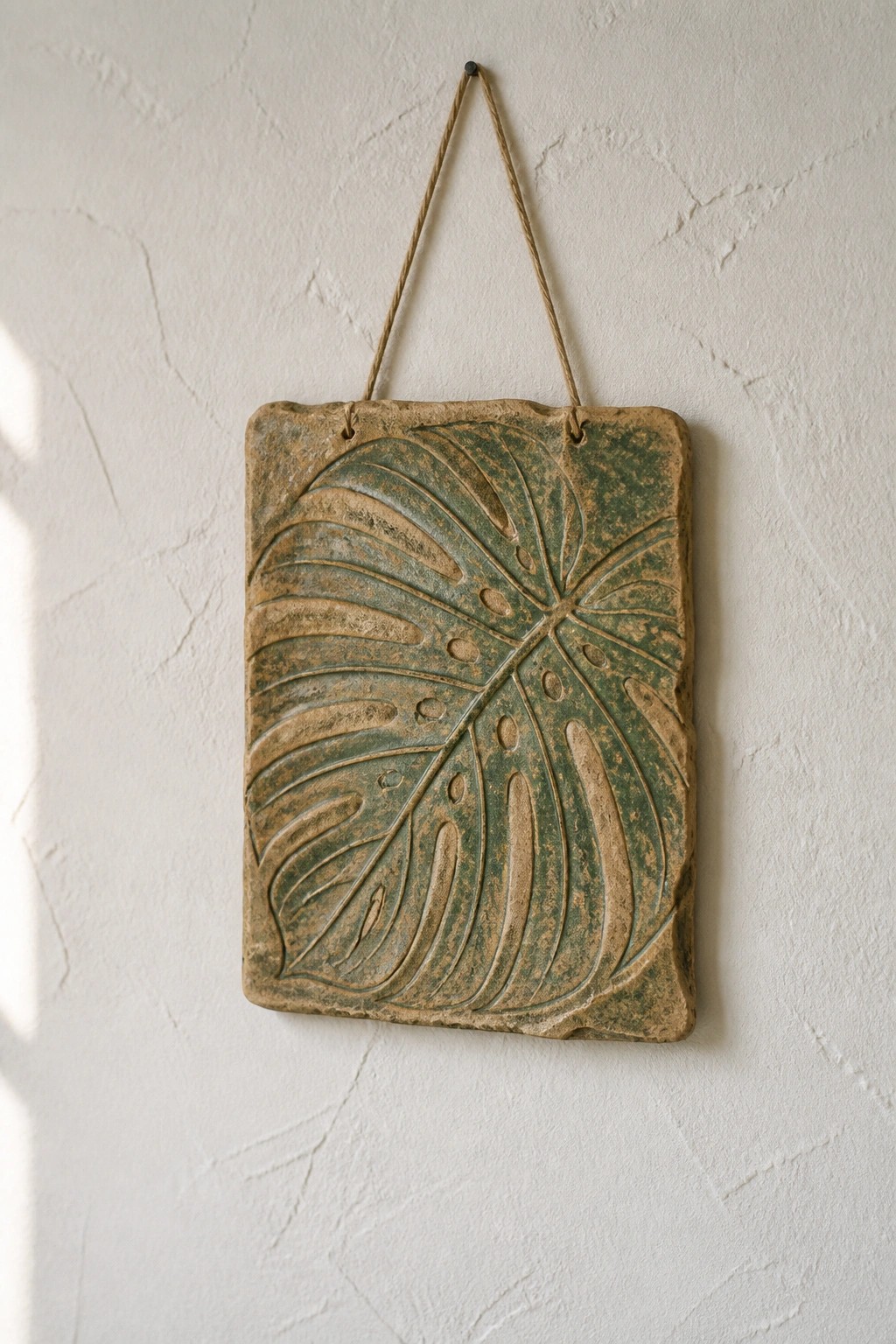
A flat rectangular clay slab with a single large leaf pressed into the surface makes an easy wall tile. The leaf imprint captures the veins and lobes in clear relief, and a green glaze pools in the recessed areas to emphasize the texture while leaving the raised clay edges in their natural tone. This method suits simple handbuilt decor pieces that rely on the plant material itself for the pattern rather than added carving.
What makes this idea useful is how the flat format lets you press multiple leaves or test different plant types on one slab before committing to a final piece. You could repeat the same leaf on several smaller tiles and hang them in a grid, or adapt the pressing step to create a matching set of coasters by cutting the slab into squares. The exposed clay border also gives a clean way to frame the design without extra glazing work.
Botanical Pressed Tealight Holder
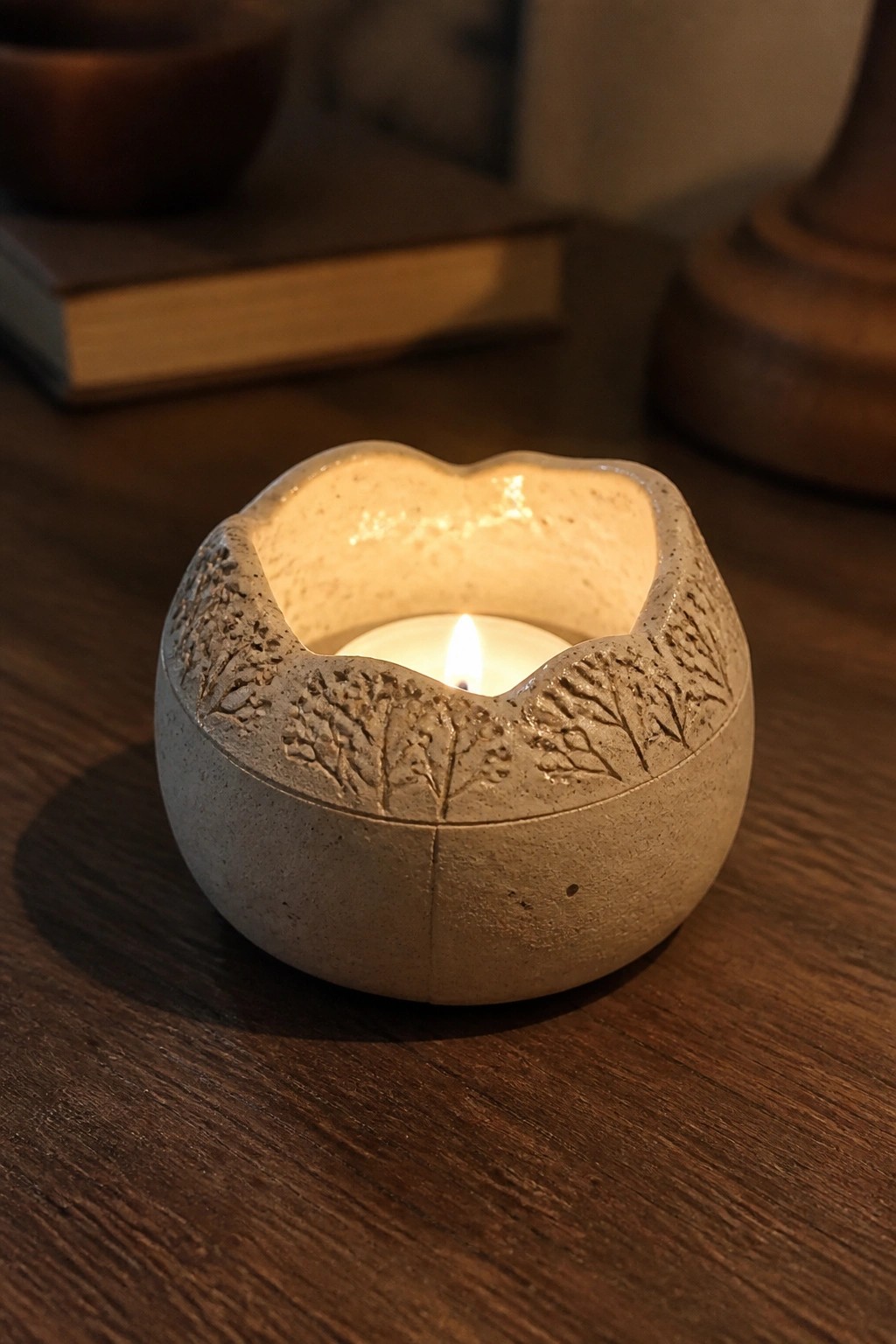
A compact handbuilt clay holder shaped as a low round bowl holds a standard tealight while the upper section carries pressed botanical imprints. The rim is formed into soft irregular waves that follow the natural curve of the piece, and the clay remains matte so the texture from leaves and stems shows clearly. This approach keeps the project simple by focusing on one surface treatment rather than added color or glaze.
What makes this idea useful is that the pressed texture requires only common dried plant material and works on any small pinched or slab-built form. You could repeat the same rim shape for a set of matching holders or flatten the base slightly to turn it into a shallow ring dish. The small scale also makes it easy to test different plant impressions on test tiles before committing to a full piece. In photos the candle flame catches the edges of the imprints, which helps the texture read clearly when shared online.
Pressed Flower Vase with Clustered Botanical Imprints
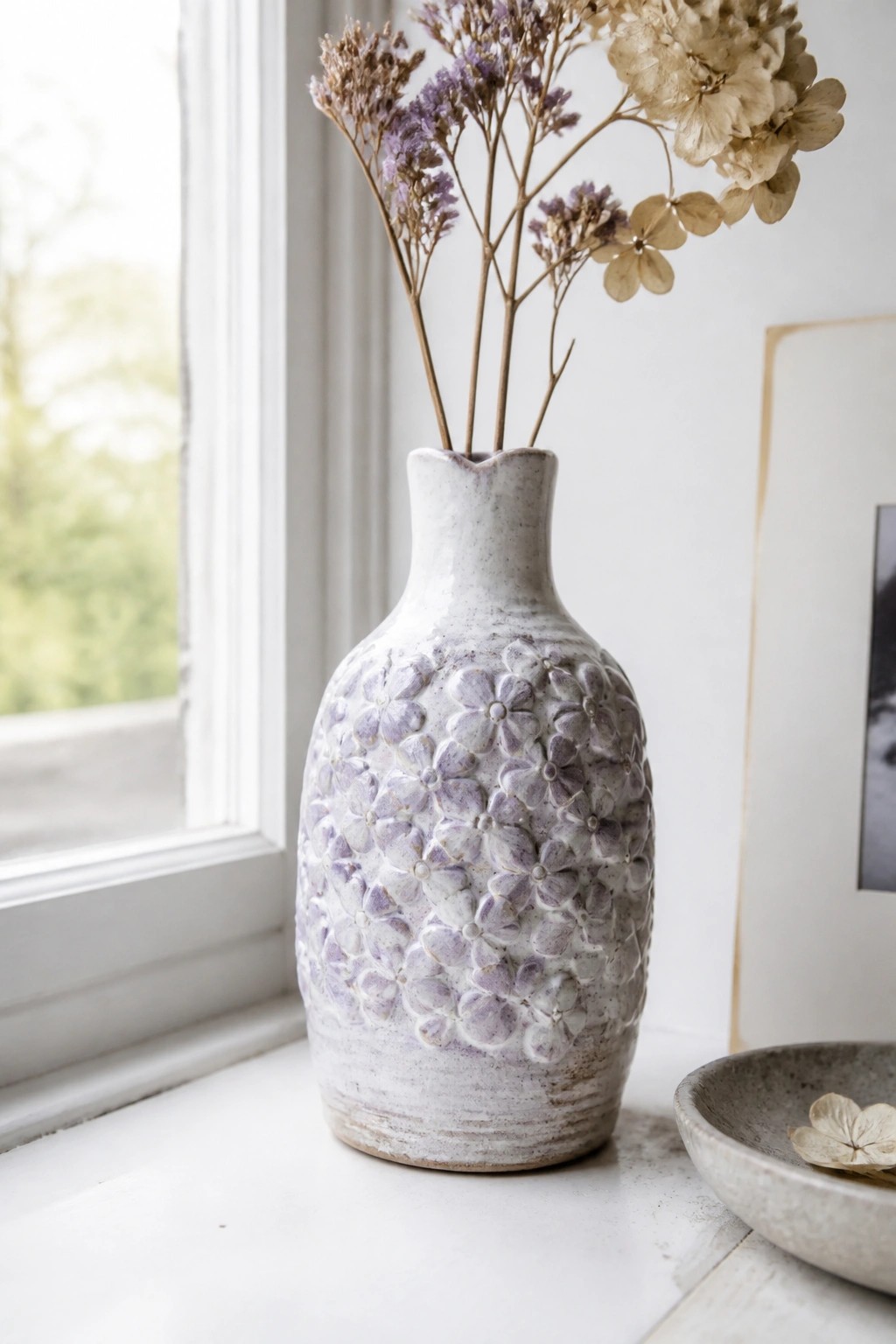
A handbuilt vase takes on more interest when you press small flower heads and clusters straight into the clay to form raised patterns across the surface. The rounded body lets the impressions sit at different angles so the glaze pools unevenly and highlights the edges. A speckled white base with soft purple tones in the recessed areas keeps the textures readable while still reading as one cohesive piece.
What makes this idea useful is that the same pressing method works on smaller items like trays or lidded jars without changing the process. You can swap in whatever dried flowers you have on hand to create new patterns each time you make one. This shape also fits easily on a narrow shelf or windowsill where a wider bowl would feel too big.
Pressed Leaf Shallow Bowl
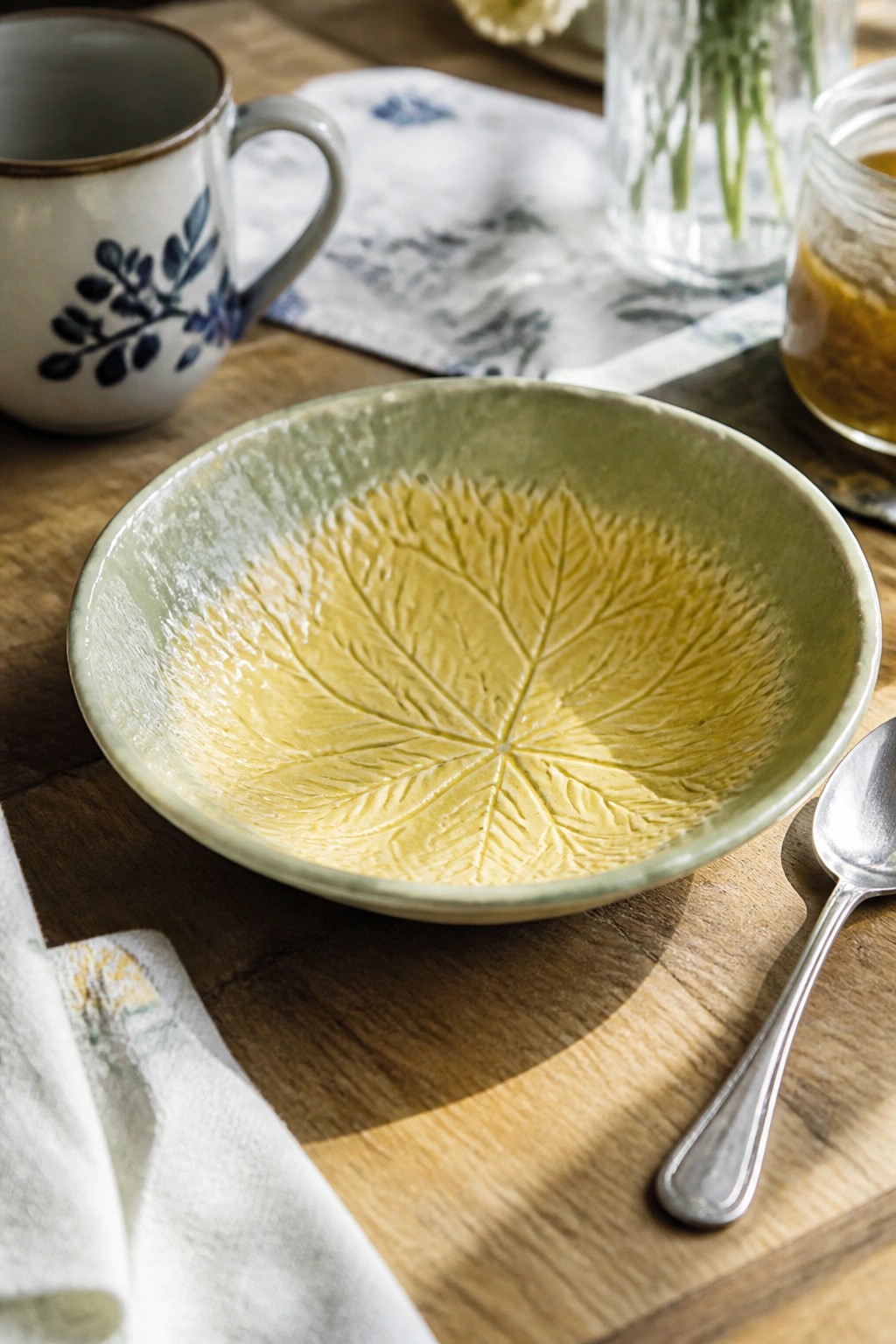
A shallow bowl made from handbuilt clay uses a large leaf pressed directly into the wet surface to create detailed vein patterns across the interior. The center is finished with a warm yellow glaze that settles into the recessed texture, while the rim has a soft green tone. This creates a simple botanical design that stays functional as a serving or decorative piece.
What makes this idea useful is how the single leaf pressing gives instant texture without complex tools or multiple steps. You could scale the same method down for small ring dishes or up for larger platters using different leaf shapes from your garden. In a kitchen this kind of bowl works well for fruit or bread, and the clear vein pattern photographs clearly for sharing on Pinterest.
Lavender Sprig Soap Dish
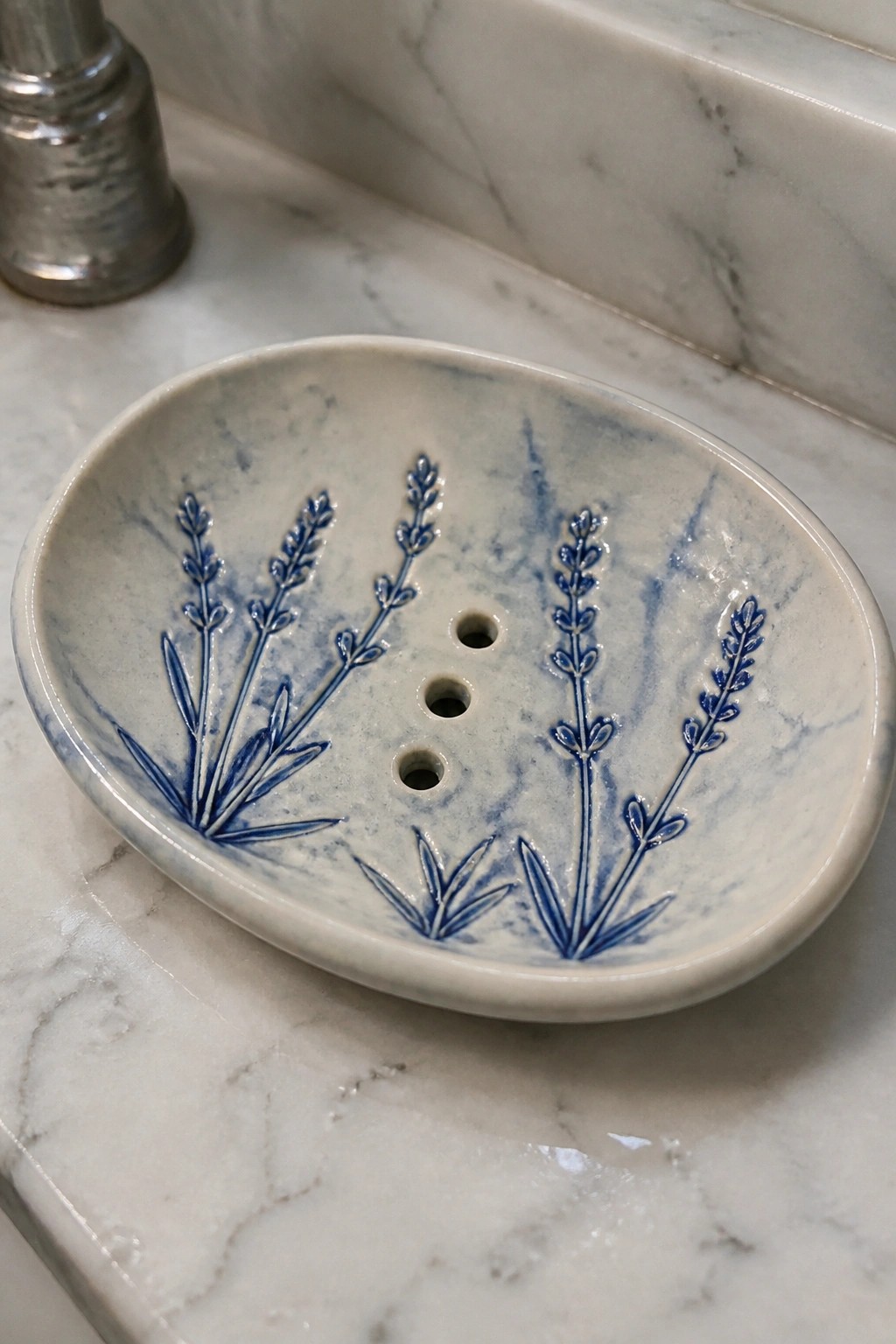
An oval soap dish built from a simple slab gives you a practical bathroom item when you press fresh lavender stems into the surface before firing. The three drainage holes cut into the center let water run off while the raised botanical details stay crisp. Blue slip or underglaze brushed into the impressions creates contrast against the light clay and highlights the leaf and flower shapes without extra painting.
What makes this idea useful is how the same pressing method works on a smaller ring dish or a longer tray for the kitchen sink. The compact oval shape fits standard soap bars and takes up little counter space, so it is easy to make several at once for gifts. You could press different herbs or grasses to match other rooms or change the color of the slip to suit your existing tiles.
Lidded Salt Cellar with Pressed Botanical Lid
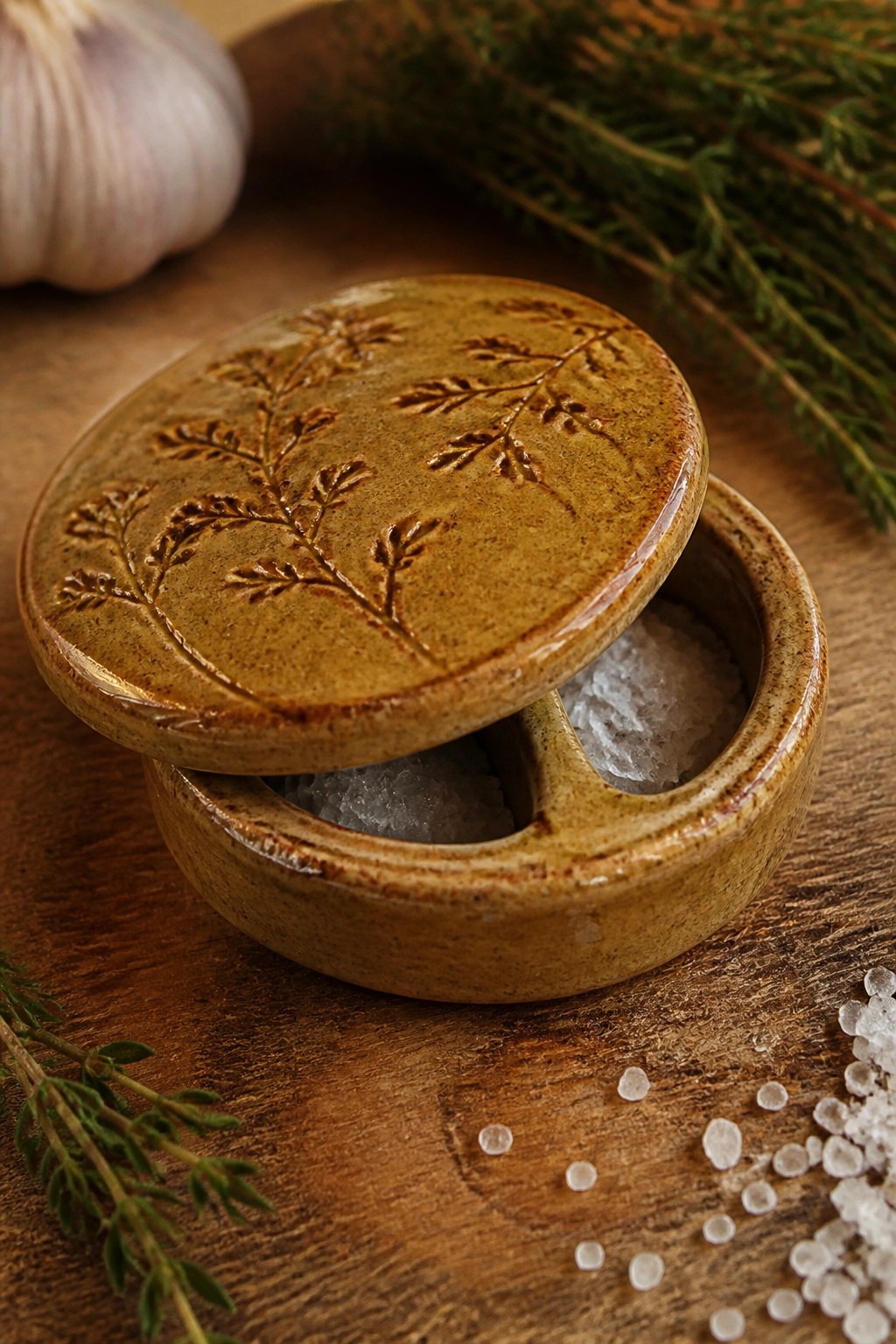
A small round handbuilt container with two interior compartments serves as a salt cellar or dual seasoning holder. The lid carries pressed botanical textures from leaves or herbs that create clear raised patterns beneath a matte brown glaze. This keeps the surface detail simple and natural while the divided base lets you store separate types of salt or spices in one piece. The compact size and flat lid shape suit the pressed texture method without needing extra sculpting.
What makes this idea useful is how the same pressed lid treatment can be applied to any small round form using whatever herbs or leaves you have on hand. In a kitchen this kind of piece sits right on the counter for daily use and takes up little space. You could simplify it into a single compartment version or adapt the shape into a small spice jar by adjusting the base. The divided interior also makes it easy to try different botanicals on future lids while keeping the overall form straightforward.
Pressed Maple Leaf Yarn Bowl
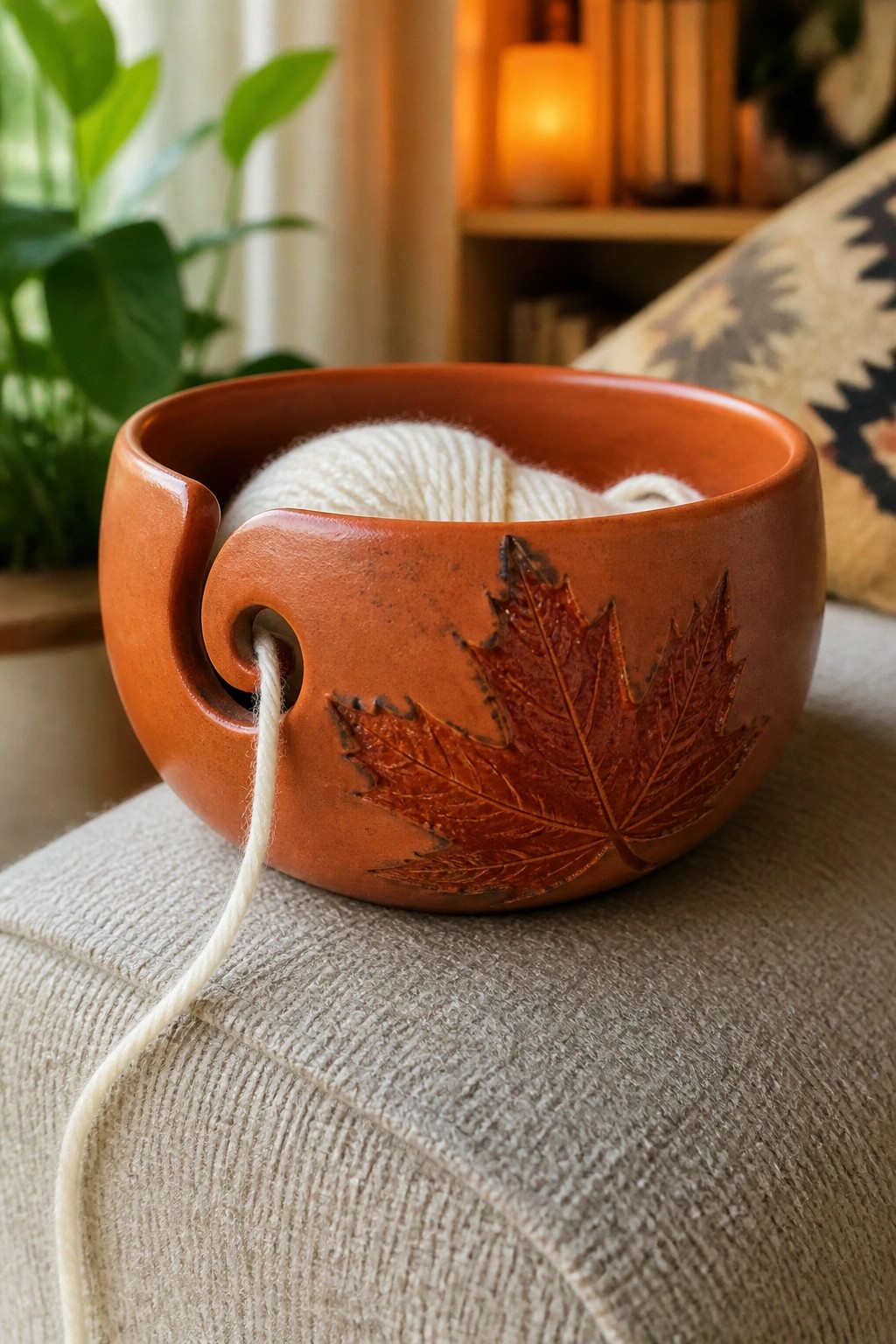
A handbuilt clay yarn bowl uses a simple rounded shape with one side cut into a spiral slot that feeds yarn smoothly outward. The design centers on a large maple leaf pressed directly into the clay wall, leaving a clear raised impression that contrasts with the matte orange-red surface. This turns a basic functional holder into a botanical-textured piece that fits the pressed texture theme without added paint or layers.
What makes this idea useful is how the leaf detail gives the bowl personality while the slot keeps the yarn practical for knitting or crocheting. You could press smaller leaves around the rim of a tray or on the side of a lidded jar to carry the same texture across different forms. The compact size works well on a side table or in a craft corner, and the same pressing method scales easily if you want to try it on a taller vase or a set of matching small dishes.
Pressed Fern Toothbrush Holder
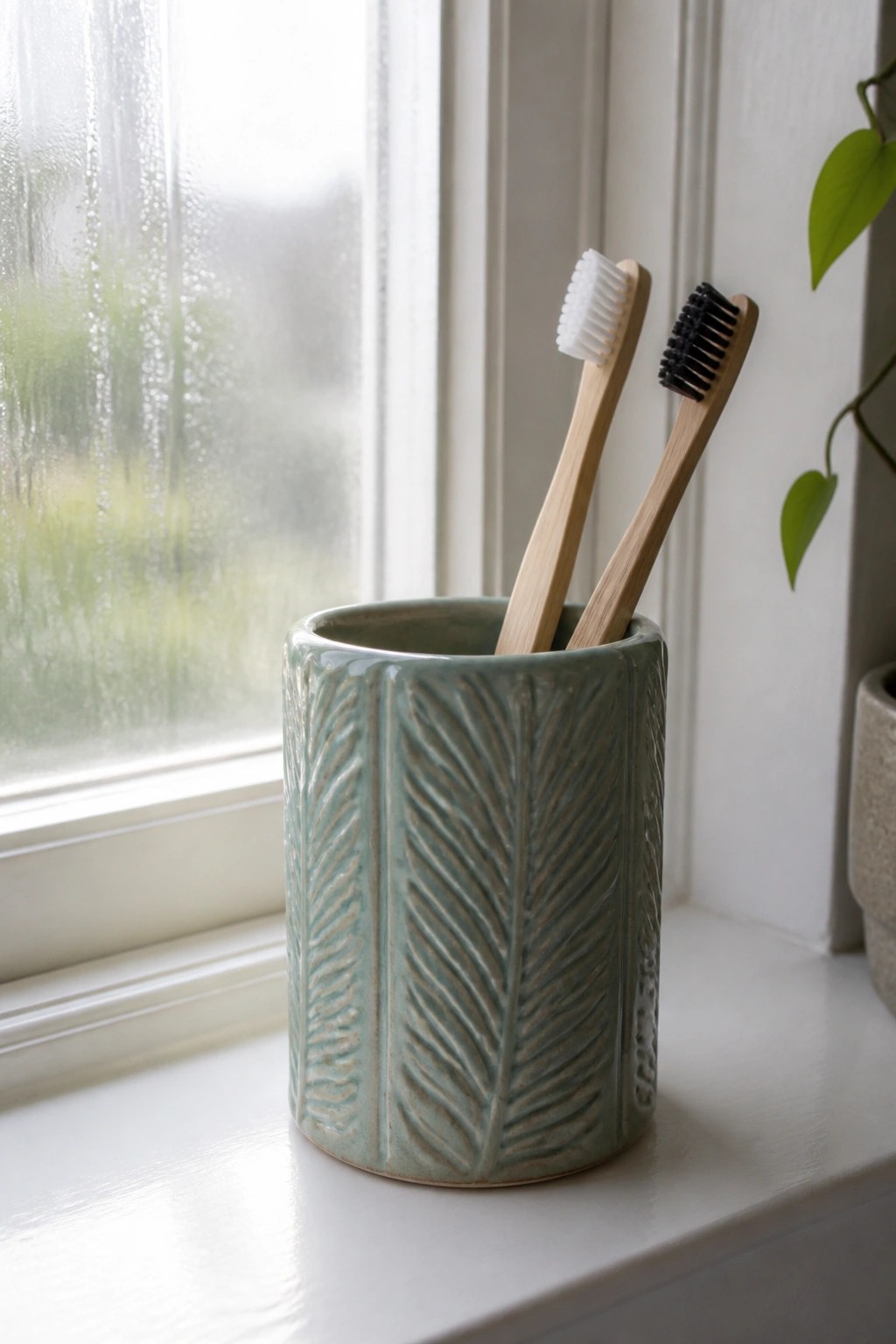
A simple cylindrical clay cup becomes a toothbrush holder when you press fern fronds or similar leaves into the surface while the clay is soft. The vertical rows of pressed texture catch the light green glaze unevenly, creating subtle depth without any added carving or painting. This approach keeps the form basic while turning an everyday bathroom item into something more interesting through the natural patterns.
What makes this idea useful is how the same pressing method works on other small cylinders like soap dishes or cotton swab containers. The narrow shape fits tight spaces on a sink or windowsill and keeps items from tipping. You could adapt the texture to a wider bowl form or change the glaze color to match different bathroom setups.
Daisy Pressed Cup and Saucer
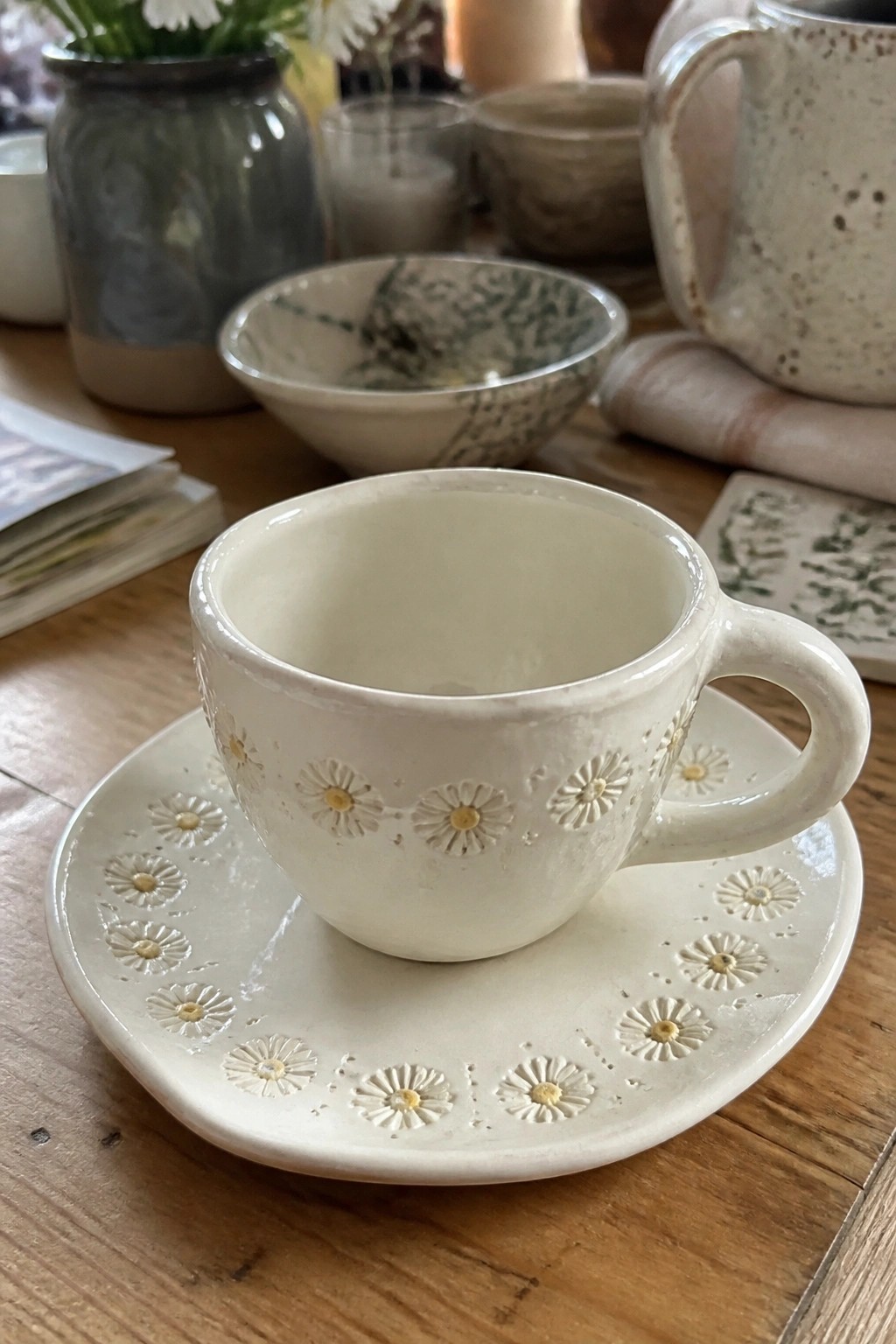
A cup and saucer set formed from white clay uses rows of daisy shapes pressed into the surface before the final glaze. The motifs run in a single band around the upper half of the cup and repeat along the outer edge of the saucer, with yellow centers added for contrast. The rounded form lets the repeated impressions sit evenly without crowding, and the white glaze keeps the raised details clear.
What makes this idea useful is that the same pressing method works on any small rounded piece where you want a clean border. You can space the daisies farther apart on a larger mug or tighten them on a small bowl to change the look without new tools. The set stays practical for daily drinks or gifting because the detail stays limited to the upper edge and leaves the inside smooth.
Hedgehog Figurine with Pressed Fern Texture
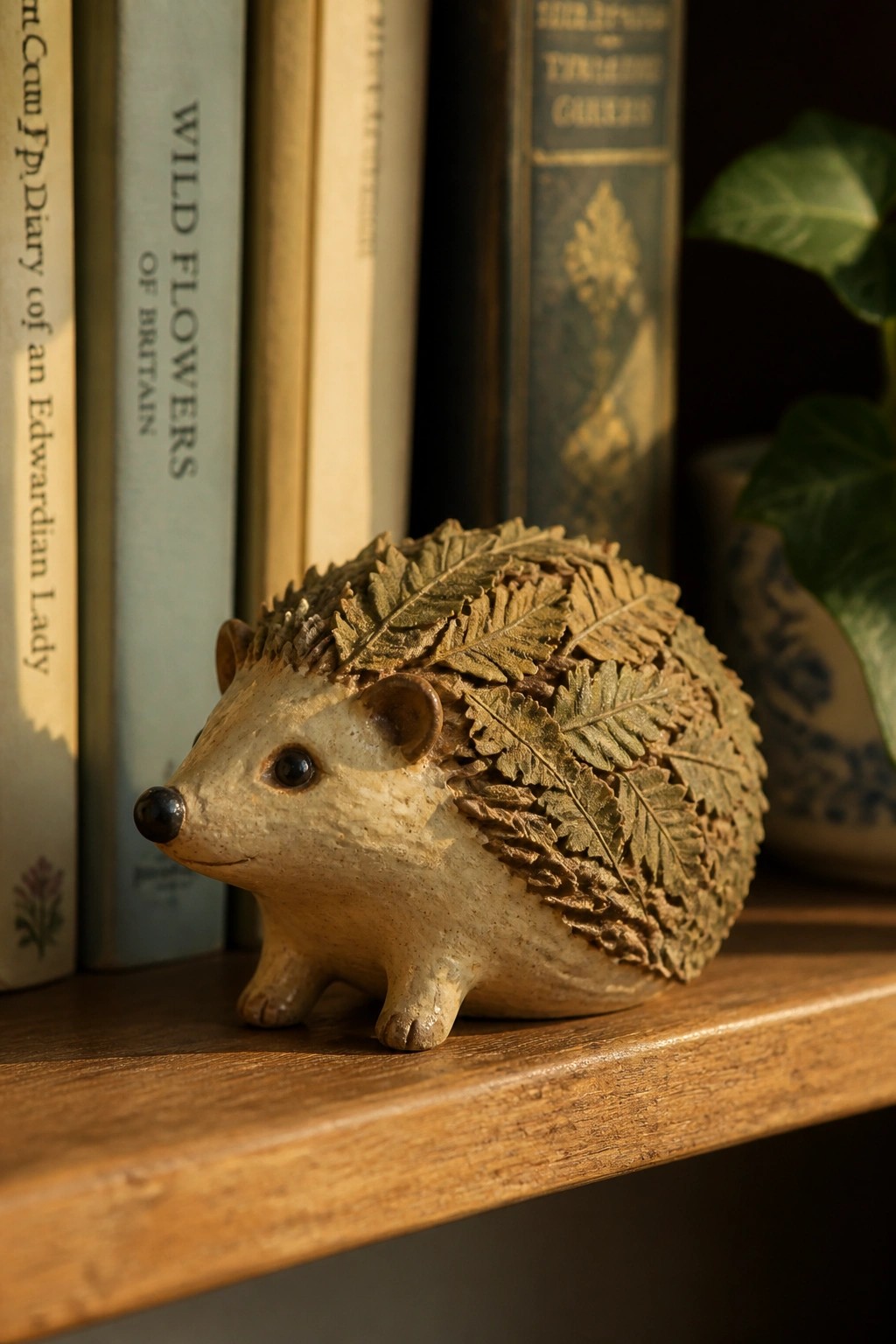
A small handbuilt clay hedgehog works well as a decorative figurine when you press real fern leaves into the soft clay to form the back texture. The leaves leave clear vein patterns that stand in for spines while the rest of the body stays smooth and rounded. This keeps the project focused on one strong surface detail rather than full sculpting.
What makes this idea useful is how easily it fits on a shelf or desk without taking much space. You can change the leaves for different patterns or scale the same shape down for a set of smaller versions. The pressing technique also transfers directly to other simple animal forms if you want to build a small collection.
Pressed Botanical Tray
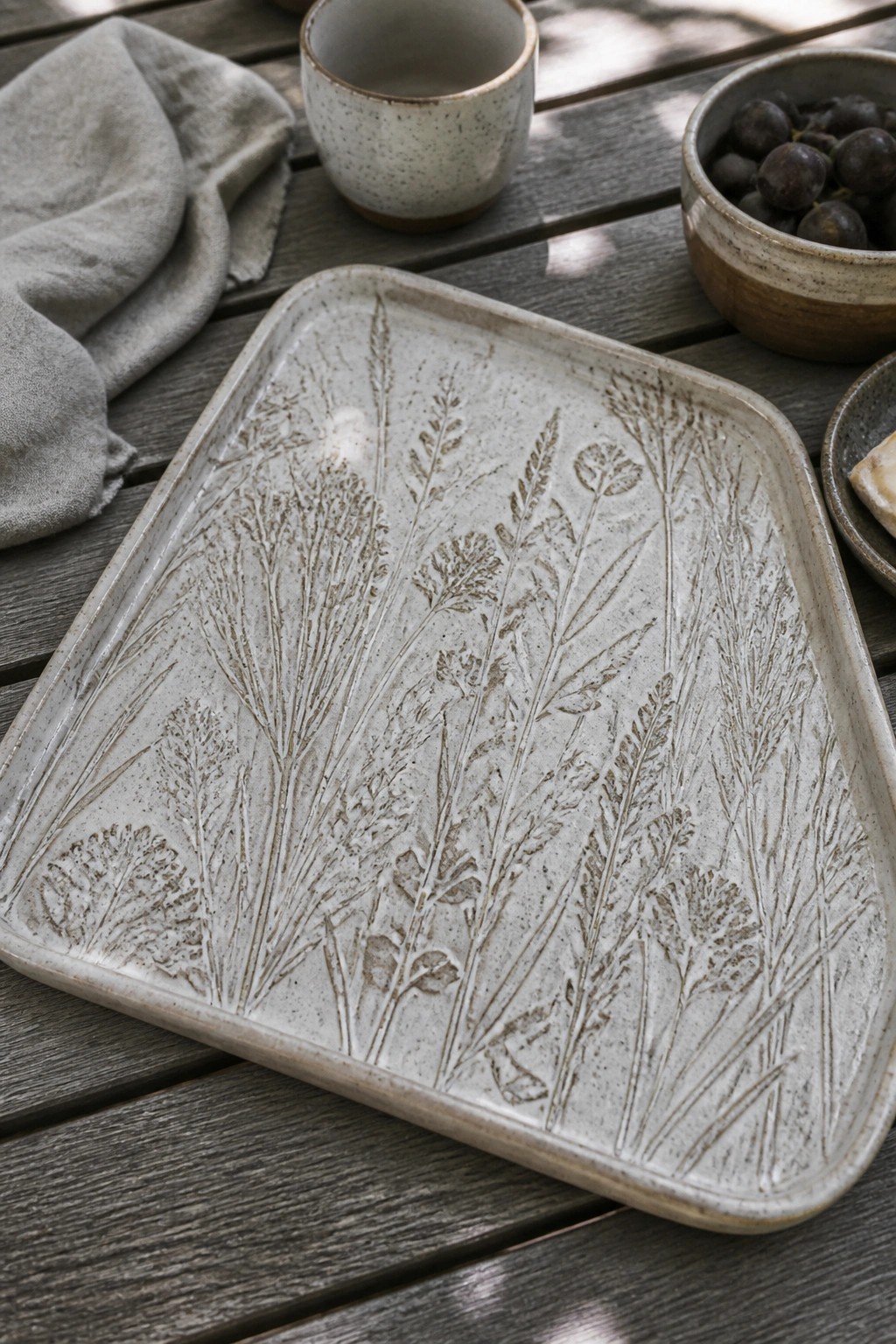
A rectangular clay tray handbuilt with impressions from grasses, ferns, and wildflowers creates a flat surface covered in raised botanical textures. The light speckled glaze lets the pressed details show clearly while keeping the overall color neutral. This idea fits the pressed texture category by turning a basic tray form into a decorative piece where the plant imprints supply the main visual interest.
What makes this idea useful is how the same pressing method transfers directly to other flat projects like cheese boards or wall tiles. The rectangular shape works well for serving or as a catchall on a table, and the neutral finish lets it blend with existing kitchen or dining items. You could simplify it by using fewer plants or scale it down into a smaller soap dish for a bathroom.
Wall Pocket Planter with Pressed Texture
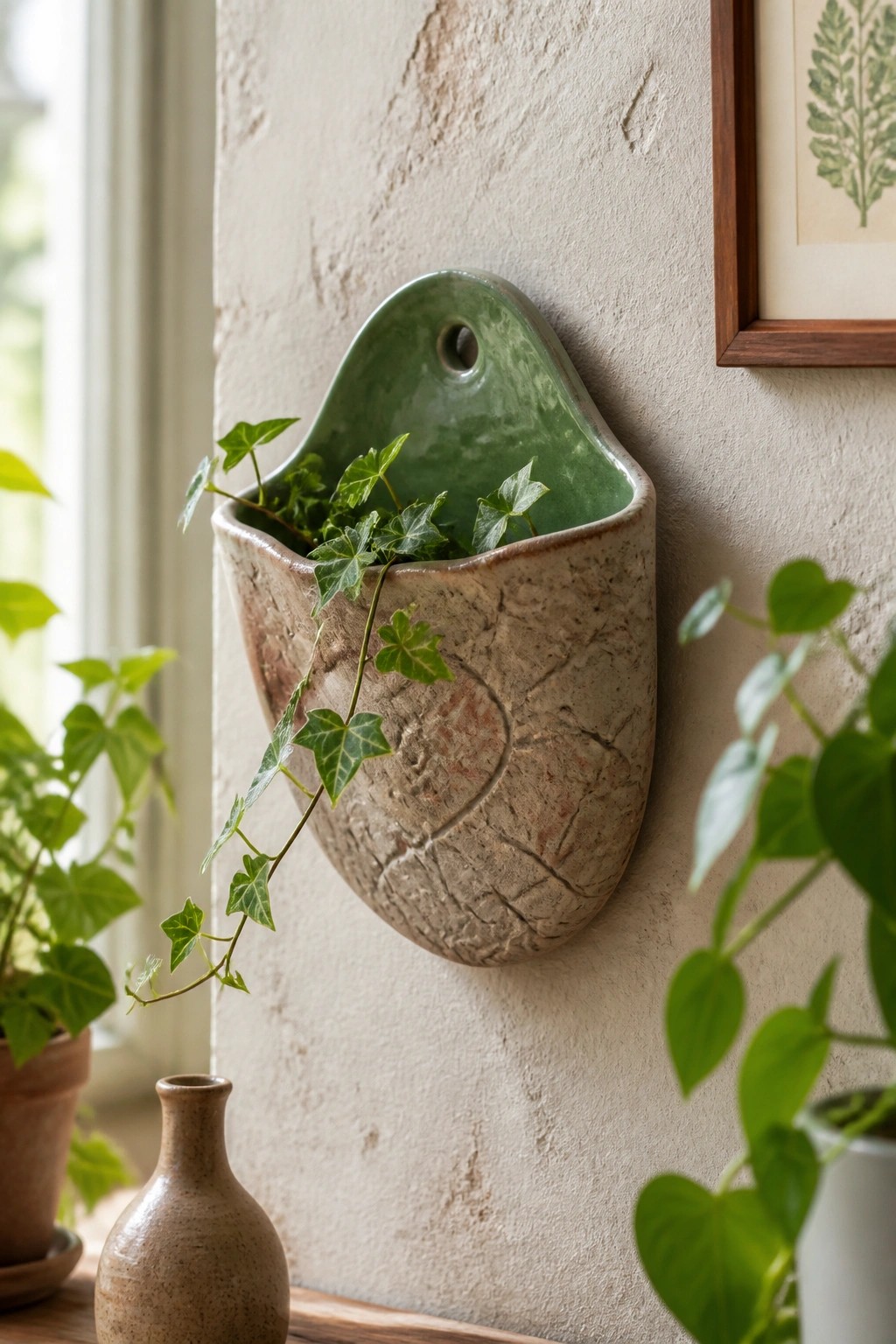
A wall-mounted ceramic planter gives you a way to grow trailing plants vertically without using floor or shelf space. Shape the clay into a pocket form with a small hole near the top for hanging, then press botanical materials into the surface to leave clear impressions before the piece dries. Leave the exterior unglazed or lightly stained to show the texture while coating the inside with a smooth, waterproof glaze that holds soil and moisture.
What makes this idea useful is how the pocket shape fits narrow wall areas like a windowsill edge or hallway. You can adapt the same form into a shorter version for succulents or make it wider to hold multiple small plants. Pressing different leaves changes the pattern without adding extra steps, and the hanging hole lets you move it easily when you want a new arrangement.
Pressed Sunflower Candle Tray
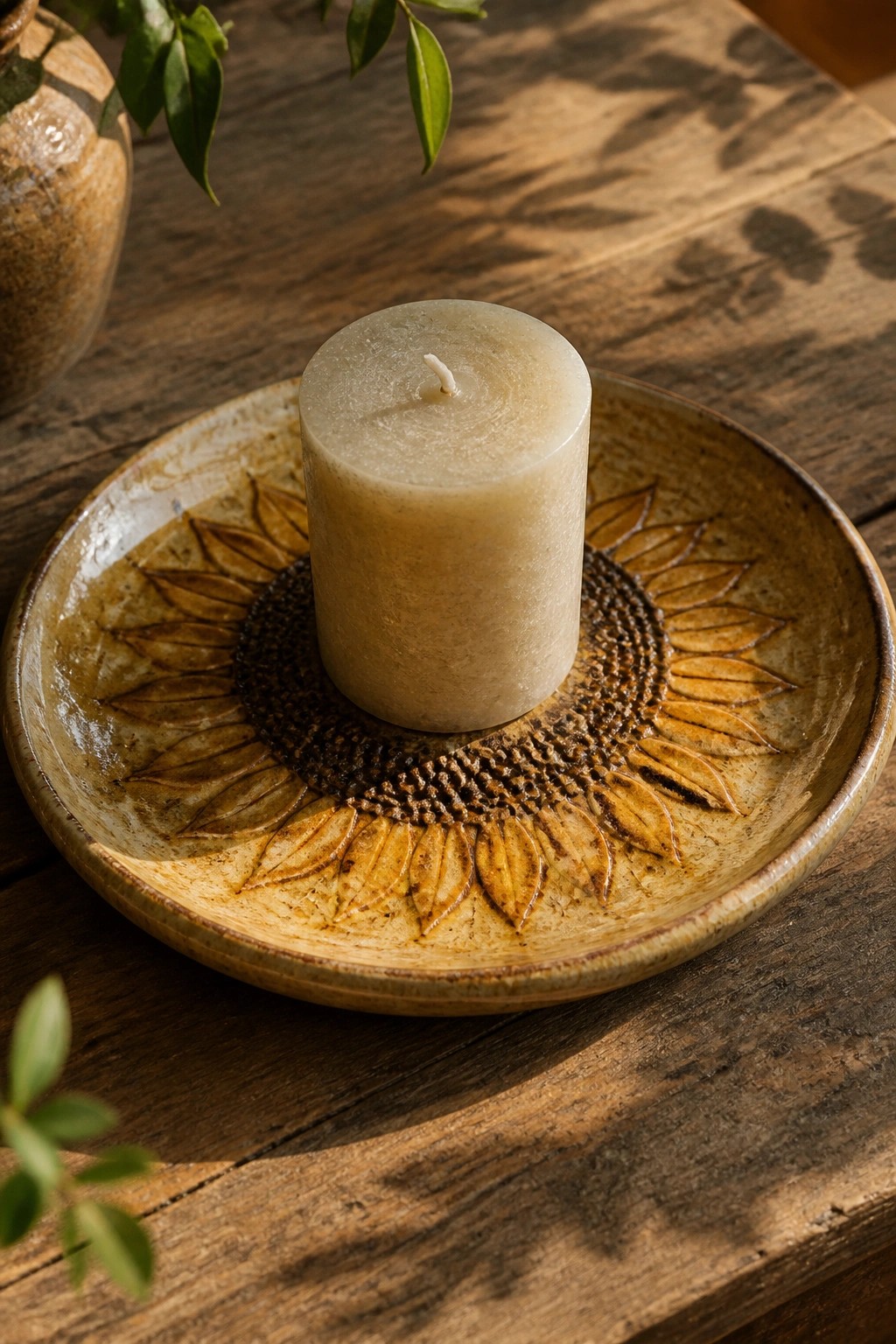
A shallow handbuilt dish becomes a candle holder when you press leaves or petals into soft clay to form a radiating sunflower pattern around the center. The impressed texture creates both the visual design and a slight raised ring that keeps a pillar candle stable. Earthy brown and tan glazes are applied thinly so the pressed details stay visible after firing.
What makes this idea useful is how the same pressed texture can be adapted to other botanicals like ferns or hosta leaves on a similar dish shape. The low profile works on a table or shelf without taking much space, and the small scale means you can finish one in a single session. For gifts, this kind of tray is easy to personalize by choosing different plant material that matches the season.
Pressed Citrus Bowl as a Jewelry Dish
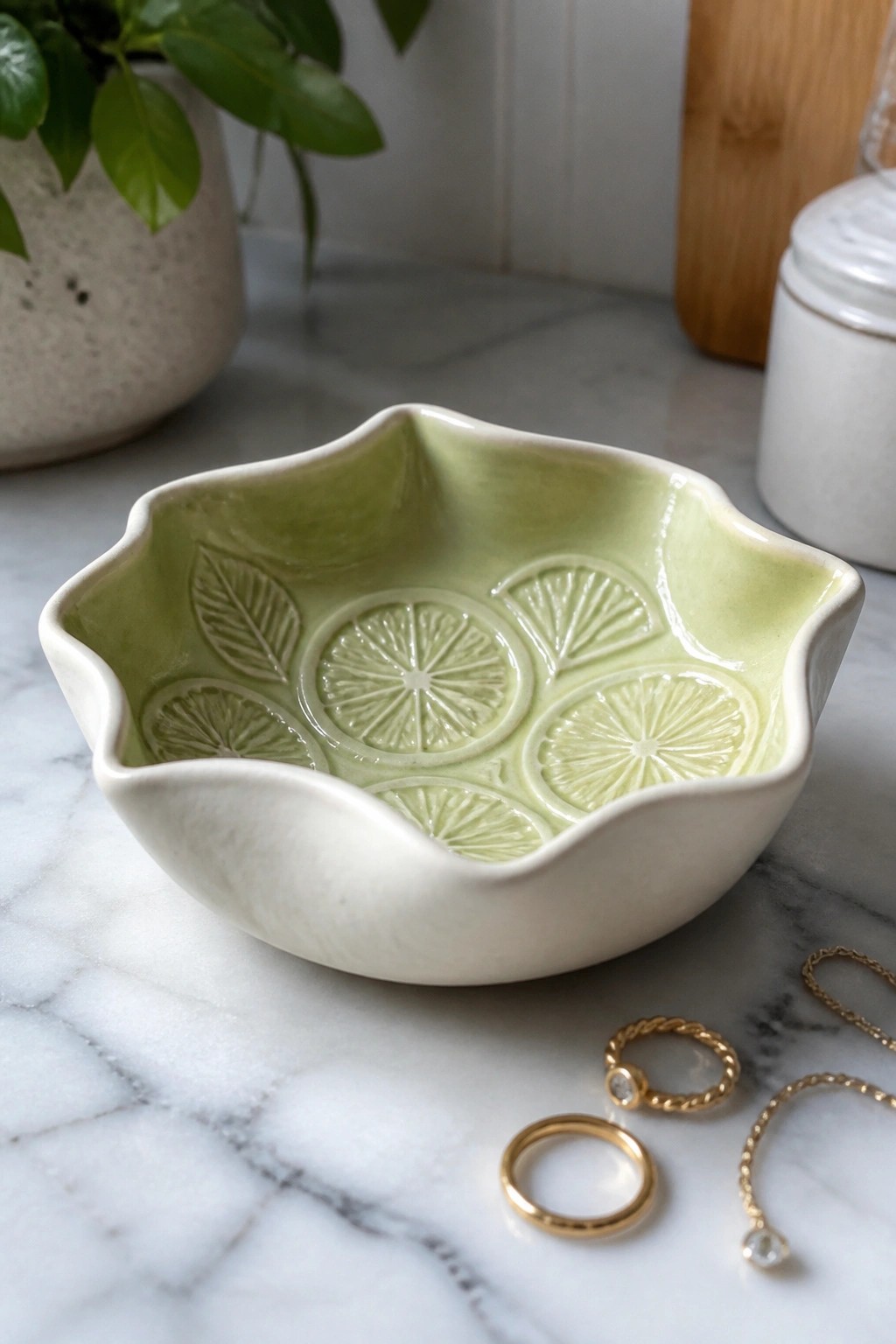
A small handbuilt bowl with a scalloped rim works well for holding rings and small jewelry when you press citrus slices and leaves directly into the clay to create raised impressions. The light green glaze on the inside sits in the textured areas and leaves the raised fruit details slightly lighter, while the outside stays plain white. This keeps the focus on the botanical patterns without extra carving or painting.
The compact size and shallow shape make it practical for a bathroom counter or bedside table where it can catch everyday items. You can rework the same pressed citrus technique on a flatter tray or a slightly deeper catch-all bowl by adjusting the slab size before forming the edges. Using different fruit slices or leaf combinations lets you change the look while keeping the same simple construction.
Incense Tray with Pressed Leaf Texture
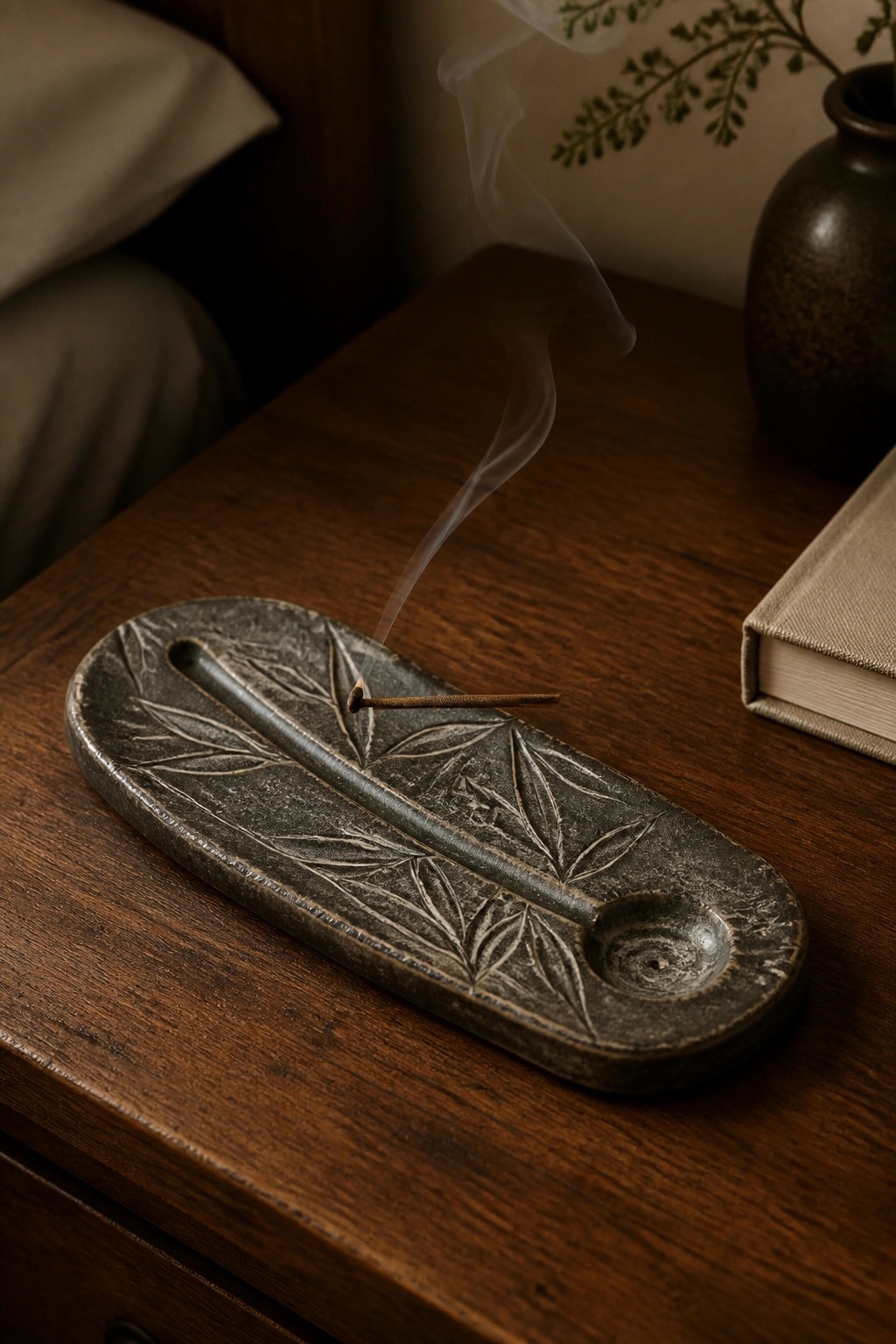
A narrow slab tray shaped with a shallow channel and a small well at one end makes a practical incense holder. Pressing overlapping leaves into the clay before drying leaves clear impressions that run the full length of the piece. A dark matte glaze settles into the recessed leaf shapes and leaves the raised areas slightly lighter, so the pattern stays visible without extra carving. This keeps the project simple while turning a basic handbuilt form into something that holds incense cleanly on a tabletop.
What makes this idea useful is how the same pressed texture works on different proportions. You can shorten the slab into a compact ash catcher for a desk or stretch it longer if you want a version that fits two sticks side by side. The channel and well are easy to adjust with a simple tool, so the design adapts quickly if you want to make a few at once for gifts. The leaf impressions also read clearly on a smaller scale, which means you can test the idea on test tiles before committing to a full tray.
Pressed Circle Texture Planter for Succulents
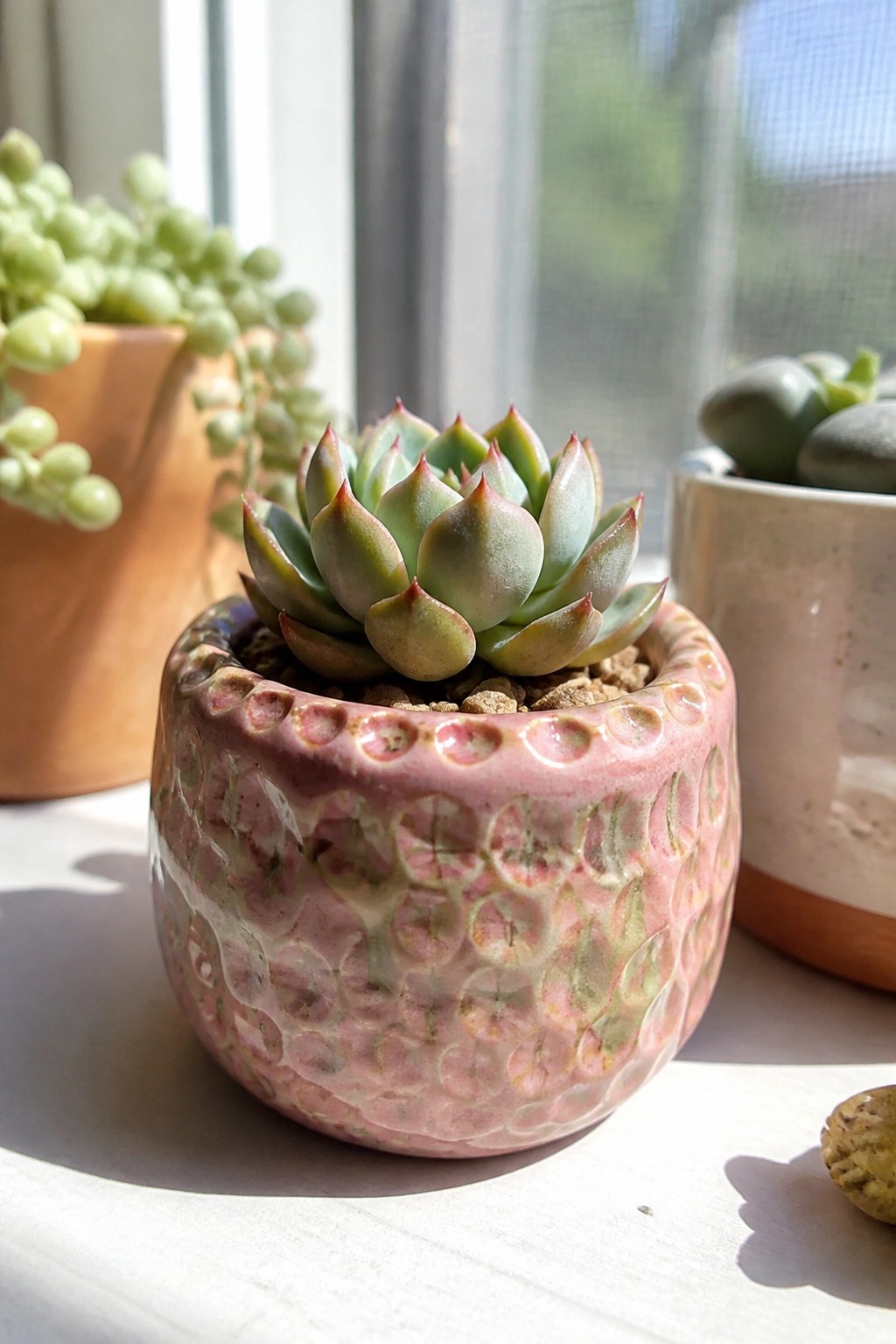
A small round ceramic planter works well when the surface is covered in repeating circular impressions made by pressing botanical elements into the clay before firing. The soft pink glaze pools inside the dimples and highlights the edges, giving the form extra depth without extra decoration. This approach turns a basic pinched or slab-built pot into a finished piece that suits small succulents or cuttings.
What makes this idea useful is how the texture itself becomes the main detail, so you can keep the shape simple and still get a finished look. The same pressed pattern could be adapted to a low tray, a small ring dish, or a set of matching pinch pots for desk plants. A piece like this stands out in photos because the glaze variations inside the circles catch light, which helps it perform well on Pinterest boards focused on plant styling. For a gift, you could repeat the texture on a slightly taller cylinder and use a single glaze color to keep the focus on the surface.
Impressed Dandelion Pitcher
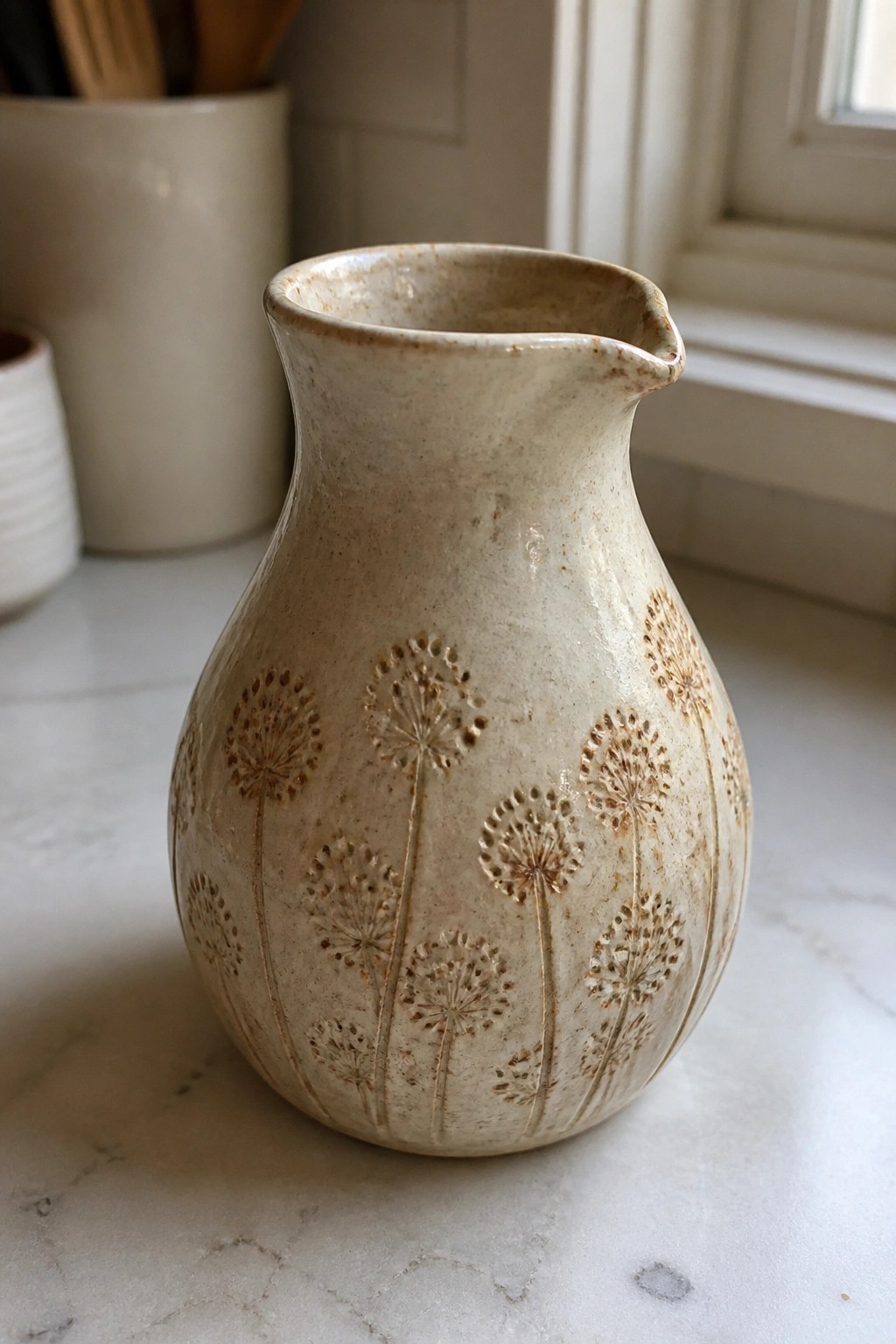
A small pitcher form gives a simple surface for repeating pressed botanical textures. Form the shape by hand or on the wheel, then press dried dandelion or allium seed heads into the clay while it is still soft to create the recessed flower patterns. A light speckled glaze highlights the impressions without covering them, letting the texture stay visible after firing.
The rounded body provides enough room to repeat the motif in staggered rows without crowding. You can adapt the same pressing method to a taller vase or a shorter creamer shape depending on the size of your flower stamps. In a kitchen this piece works as a small water pitcher or herb holder, and the design stands out on Pinterest because the botanical pattern reads clearly even in a quick photo.
Frequently Asked Questions
What types of clay work best for handbuilt pottery projects that feature pressed botanical textures?
Earthenware and stoneware clays with a smooth, fine particle size hold fine details from leaves and flowers especially well. Avoid very groggy clays because they can blur the impressions. Test a small slab first to see how your chosen clay captures textures before committing to a full piece.
How should I prepare fresh or dried botanicals to get the clearest impressions without damaging the clay surface?
Select flat, non fleshy leaves and petals that release easily. Lightly mist the clay with water if it feels too dry, then press the botanical firmly with a rolling pin or your palm. Peel it away slowly at a low angle. For repeated use, press the same leaf into multiple slabs while it is still flexible.
What steps help prevent botanicals from sticking or leaving residue in the clay?
Dust the clay lightly with cornstarch or use a thin layer of plastic wrap between the plant and the clay for tricky specimens. Work on leather hard clay rather than soft clay so the texture stays crisp. If residue remains, gently brush it away with a soft toothbrush once the piece is bone dry.
Can pottery made with pressed botanical textures be glazed and used for food or drink?
Yes, once the piece is bisque fired you can apply a food safe glaze over the textured areas. Make sure the glaze matures at the correct temperature for your clay and test the finished surface with a metal fork to confirm it is not overly rough. Avoid glazing the very bottom if the piece will sit on tables.
How can I adapt the 22 decorative ideas to suit different skill levels or seasonal botanicals?
Start with simple flat tiles or shallow dishes for your first attempts. Swap in whatever local leaves and flowers are available each season to create fresh variations. Keep a sketchbook of which plants produced the best results so you can repeat successful combinations in future projects.

Pottery Path is my cozy corner of the internet where I share clay ideas, pottery inspiration, and simple projects you can recreate at home. I love exploring everything from air dry clay to handbuilt pottery to cute minis that brighten your day. My goal is to make clay crafting feel easy, fun, and welcoming for anyone who wants to try it.
You will find beginner friendly tutorials, creative pottery painting ideas, and lots of warm inspiration for slow and happy crafting. If you enjoy hands on creativity, this space will feel like home.