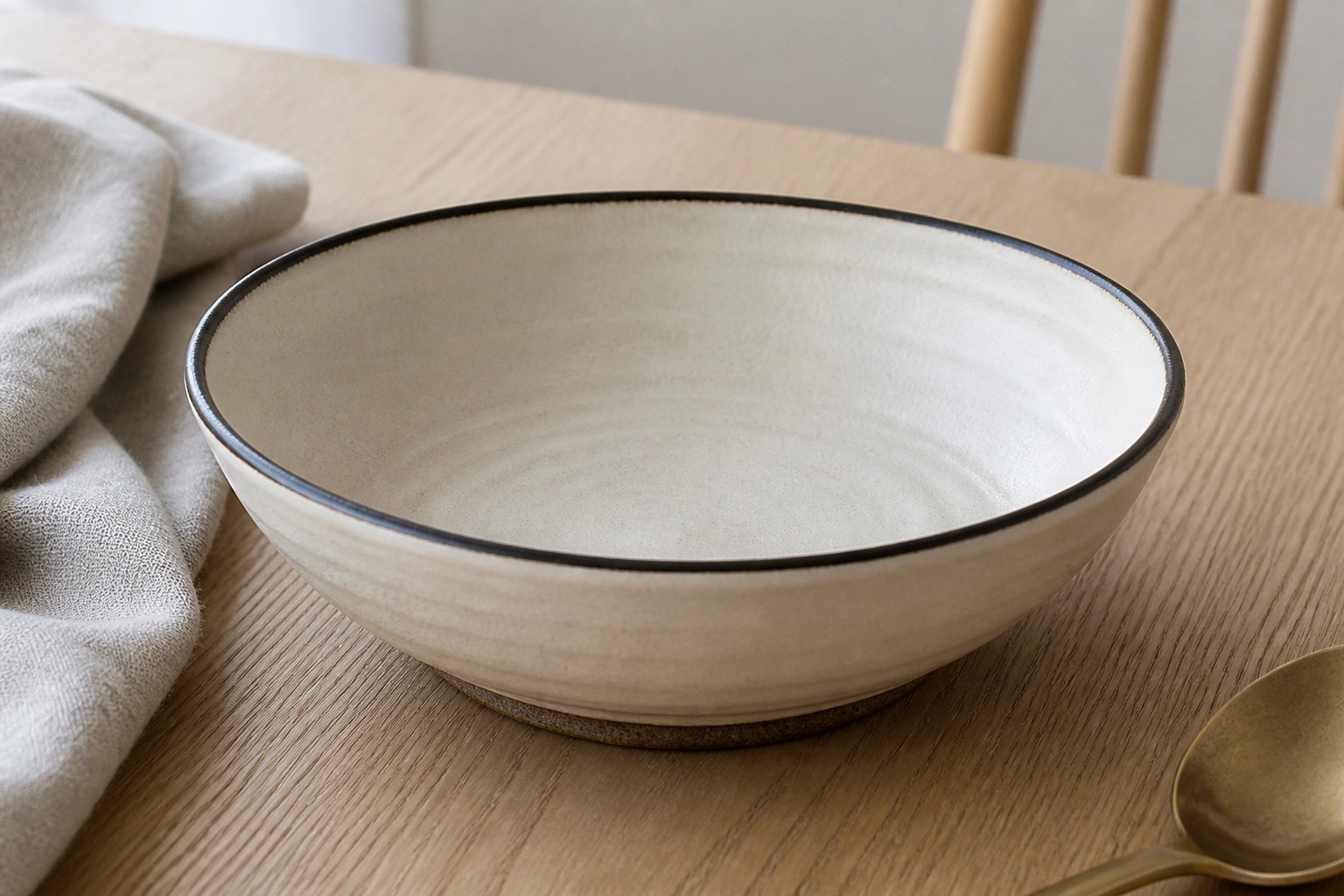
I have always liked how a simple ceramic bowl can make a table feel put together without much effort.
Over time I started collecting different minimalist styles that work well for everyday meals or small gatherings.
Some of these bowls come from my own attempts at the wheel while others are pieces I found and liked.
They all share clean lines and soft colors that fit into a modern setting.
Here are some ideas that might help if you are looking to update your tableware.
Shallow Ceramic Bowl with Dark Rim
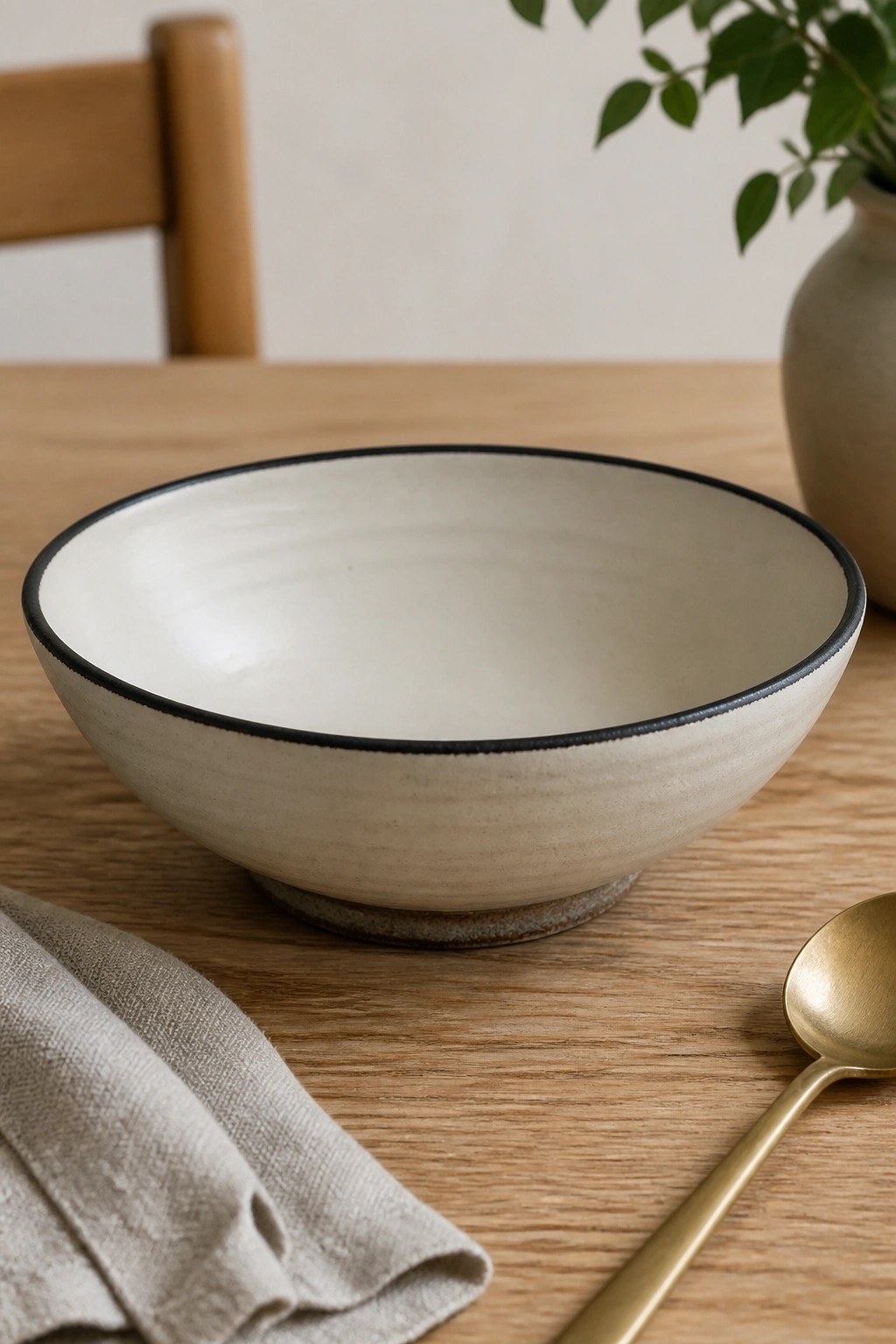
A wide, shallow ceramic bowl like this uses a simple wheel-thrown form with an off-white glaze that stops short of the rim. The exposed dark clay edge creates a clean border that defines the shape without added decoration. The slight texture left from throwing shows through the glaze and keeps the surface from looking flat. This approach fits the minimalist bowl category because it relies on form and a single contrast line rather than patterns or multiple colors.
The shape works well as a serving piece for salads or grain dishes on a wooden table. You could repeat the dark rim on smaller bowls to create a matching set or scale the same idea down for soup bowls. The contrast line is easy to add with underglaze before the final firing, so the design stays simple to adapt. In a modern table setting the rim detail helps the bowl read as intentional while the neutral glaze keeps it versatile for daily use.
Two-Tone Glazed Dip Bowl
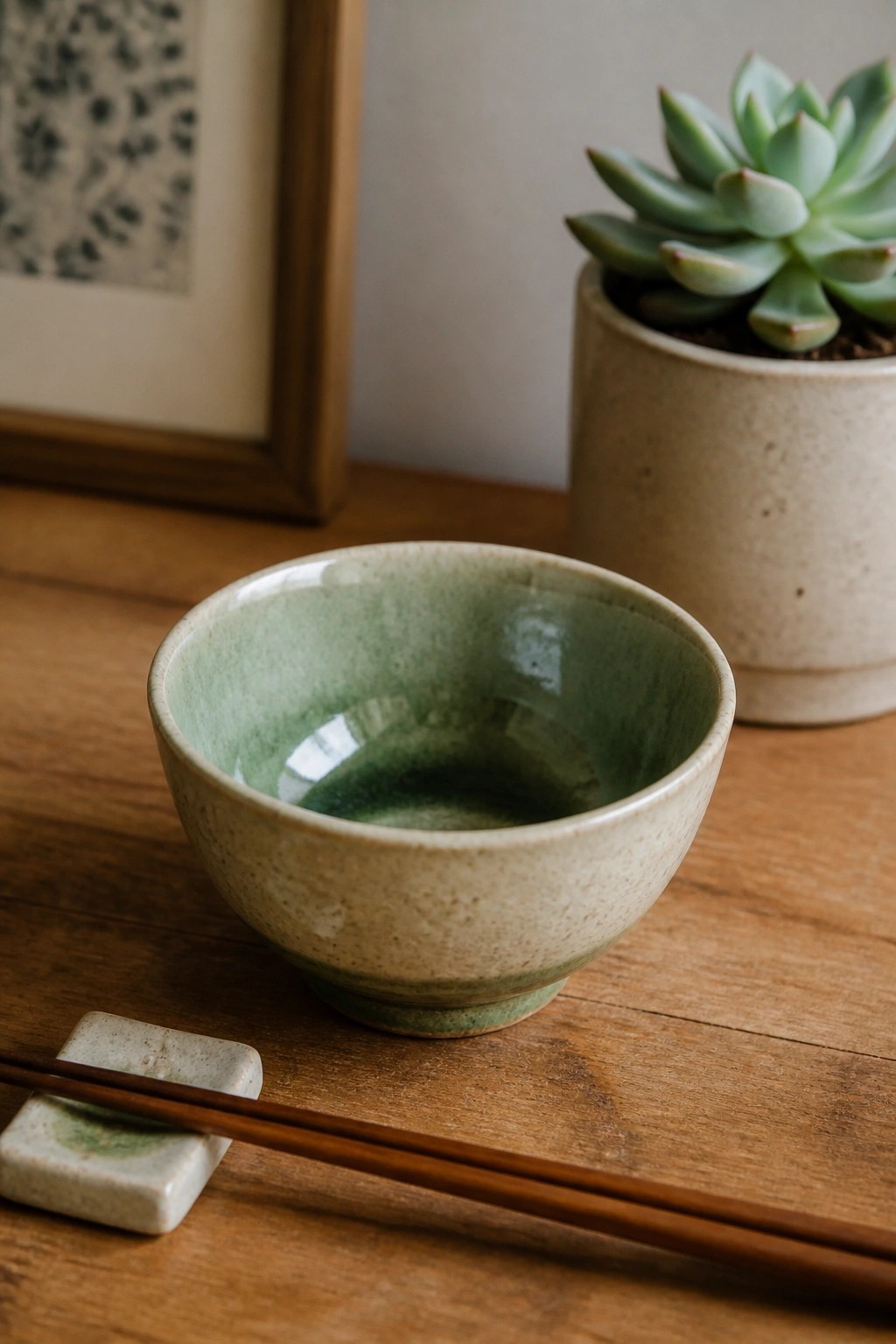
A small ceramic bowl with a speckled beige clay body and a green glaze that fades from light at the rim to deeper tones at the base gives a clean option for sauces or small servings. The rounded shape sits low on a narrow foot, and the interior glaze stops short of the rim to leave a natural edge. This approach keeps the focus on the simple form and the contrast between the matte exterior and the glossy, pooled interior.
What makes this idea useful is the compact size that works for individual portions at the table without taking up much space. You could repeat the same glaze fade on a set of four to create matching condiment bowls or scale it up slightly for rice. Pairing it with a small rectangular rest like the one shown turns the piece into a quick two-item set. The speckled surface also gives you room to test different clay bodies while keeping the overall look minimal.
Nested Speckled Bowls for Stacking Storage
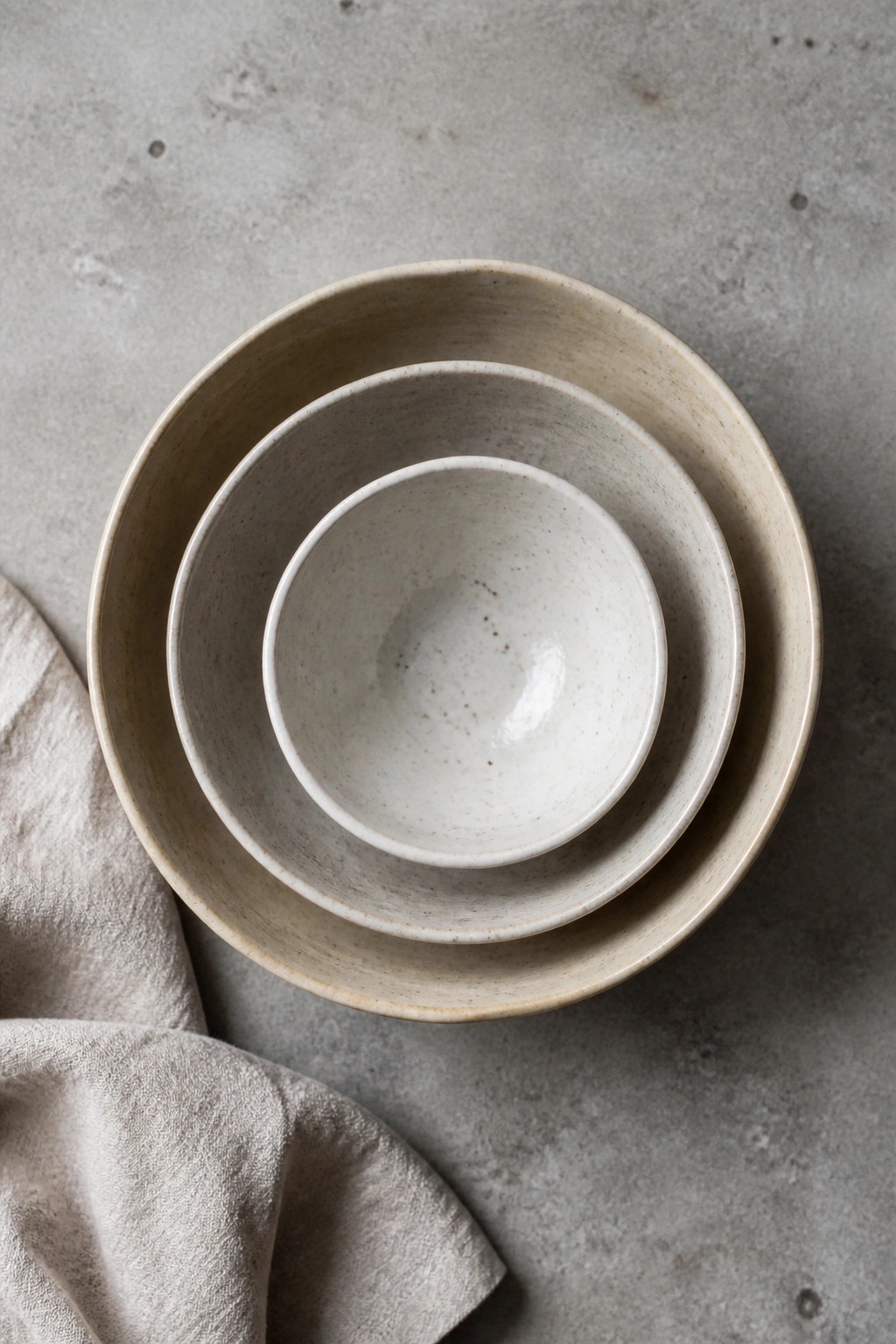
A set of three graduated ceramic bowls offers a straightforward way to keep tableware organized without taking up extra space. The bowls share a simple rounded profile and a light speckled glaze that adds subtle texture while staying neutral. This design works as everyday dinnerware that can move from prep to serving without extra pieces. The handmade quality shows in the slight variations along the rims and the soft matte finish across all three sizes.
What makes this idea useful is how the nesting shape solves both storage and display needs at once. You could adapt the same approach by adjusting the depths for different uses like cereal or salad. In a kitchen this kind of set keeps counters clear and pairs easily with other plain dishes. The neutral speckled glaze also gives you room to add color through napkins or placemats instead of changing the bowls themselves.
Organic Drip Rim Bowl for Minimalist Tables
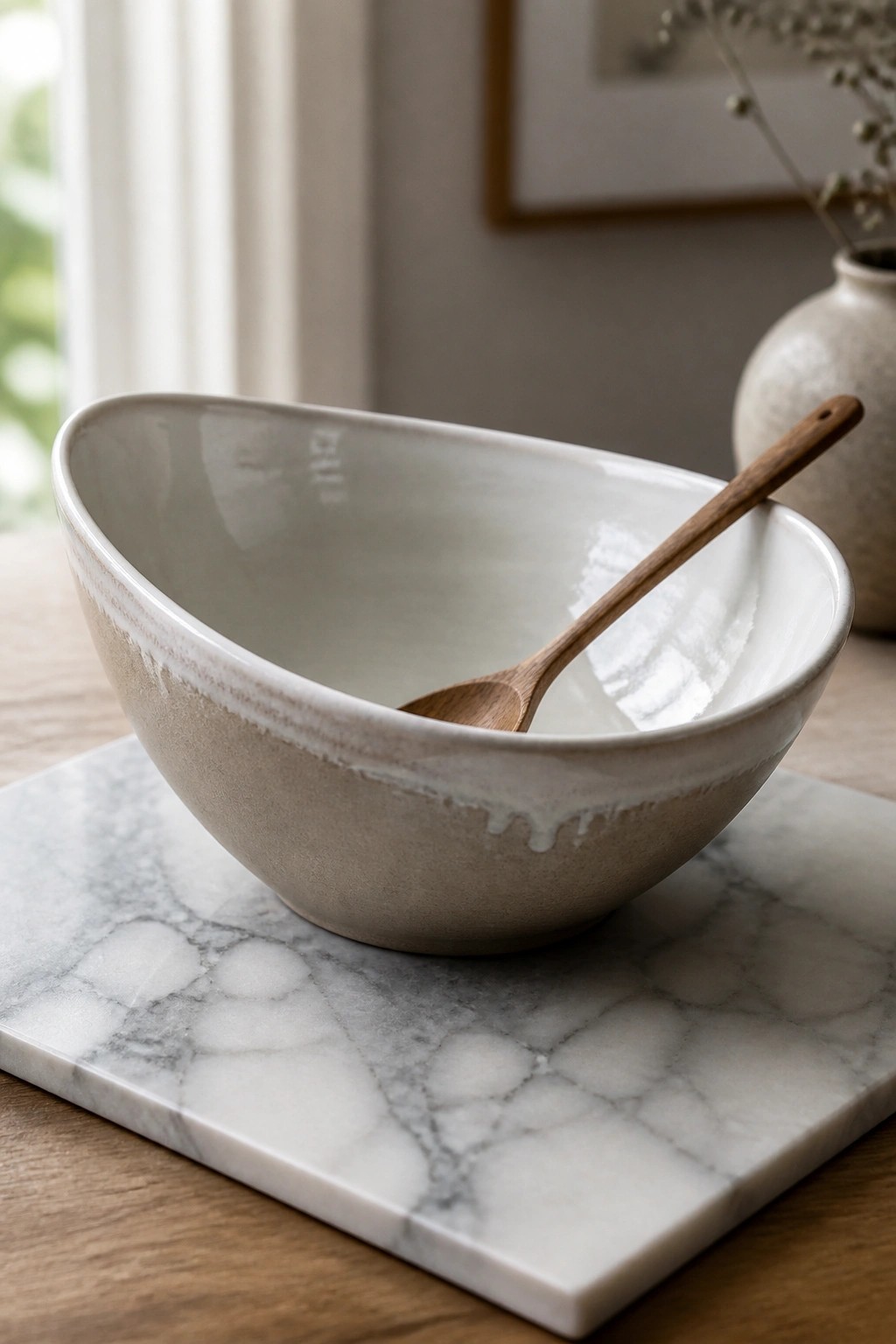
A handbuilt ceramic bowl with an irregular, pinched oval shape keeps the form simple while still feeling intentional. The matte stoneware body pairs with a white glaze applied so it drips naturally over the rim, leaving most of the exterior unglazed. This contrast between the soft matte surface and the glossy drips gives the bowl visual interest without any added pattern or color.
The shape does a lot of the work here because the asymmetry adds quiet movement that still reads as clean and modern. You could try the same drip technique on a wheel-thrown bowl or scale it down for smaller prep bowls. In a kitchen setting this kind of piece works well for serving salads or sides since the organic edge keeps it from looking too formal.
Small Matte White Dipping Bowl with Matching Spoon
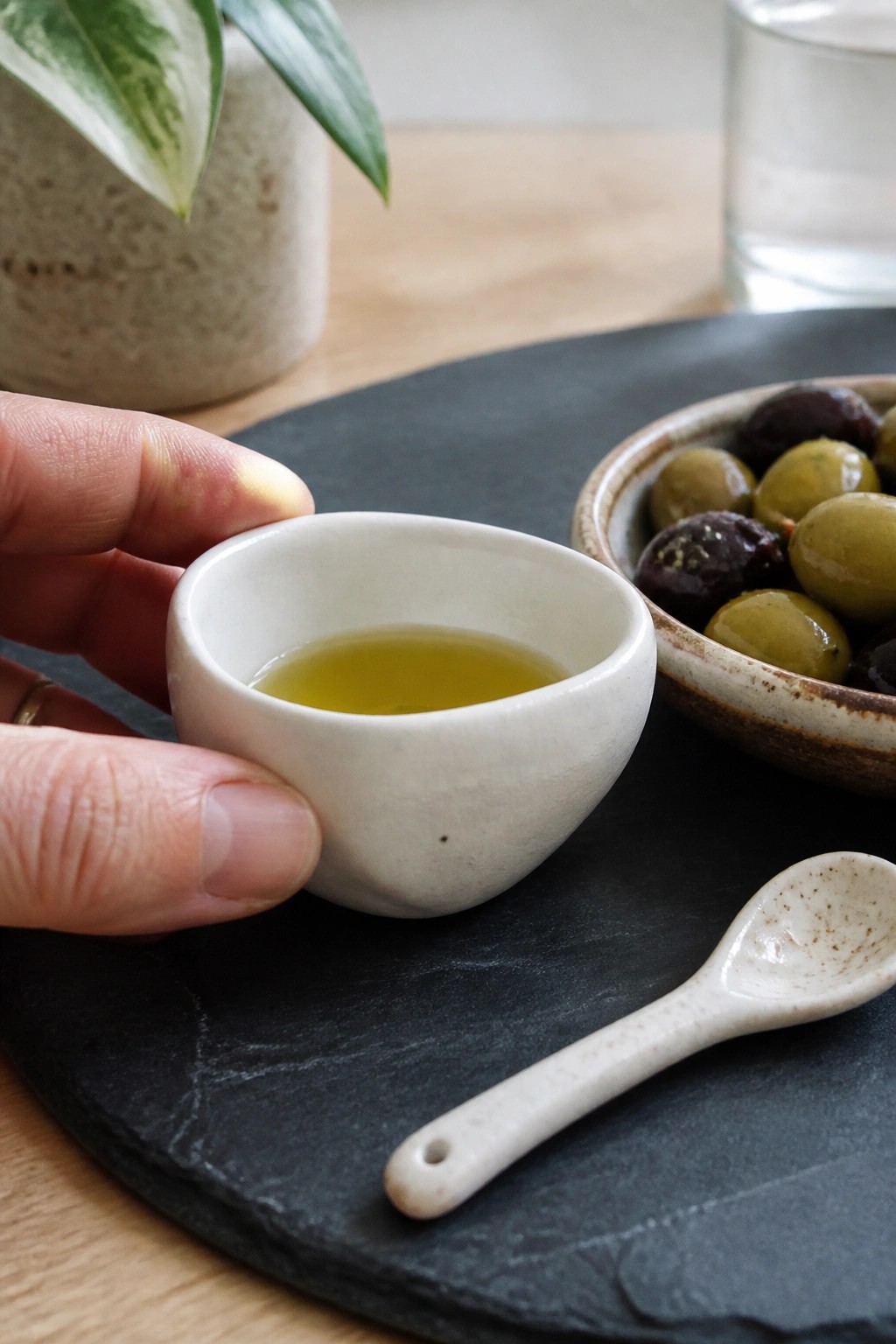
A small ceramic dipping bowl like this serves olive oil or other condiments in single portions at the table. The simple white matte surface and soft organic shape keep the focus on the food rather than the dish itself. The matching spoon adds function without introducing new colors or materials.
The small scale makes this easy to adapt into a set for multiple dips or sauces during a meal. It works especially well on a dark tray or board to create quiet contrast in a minimalist spread. You could rework the same form into a salt cellar or small prep bowl by adjusting the rim slightly wider.
Ridged Spiral Bowl for Minimalist Table Use
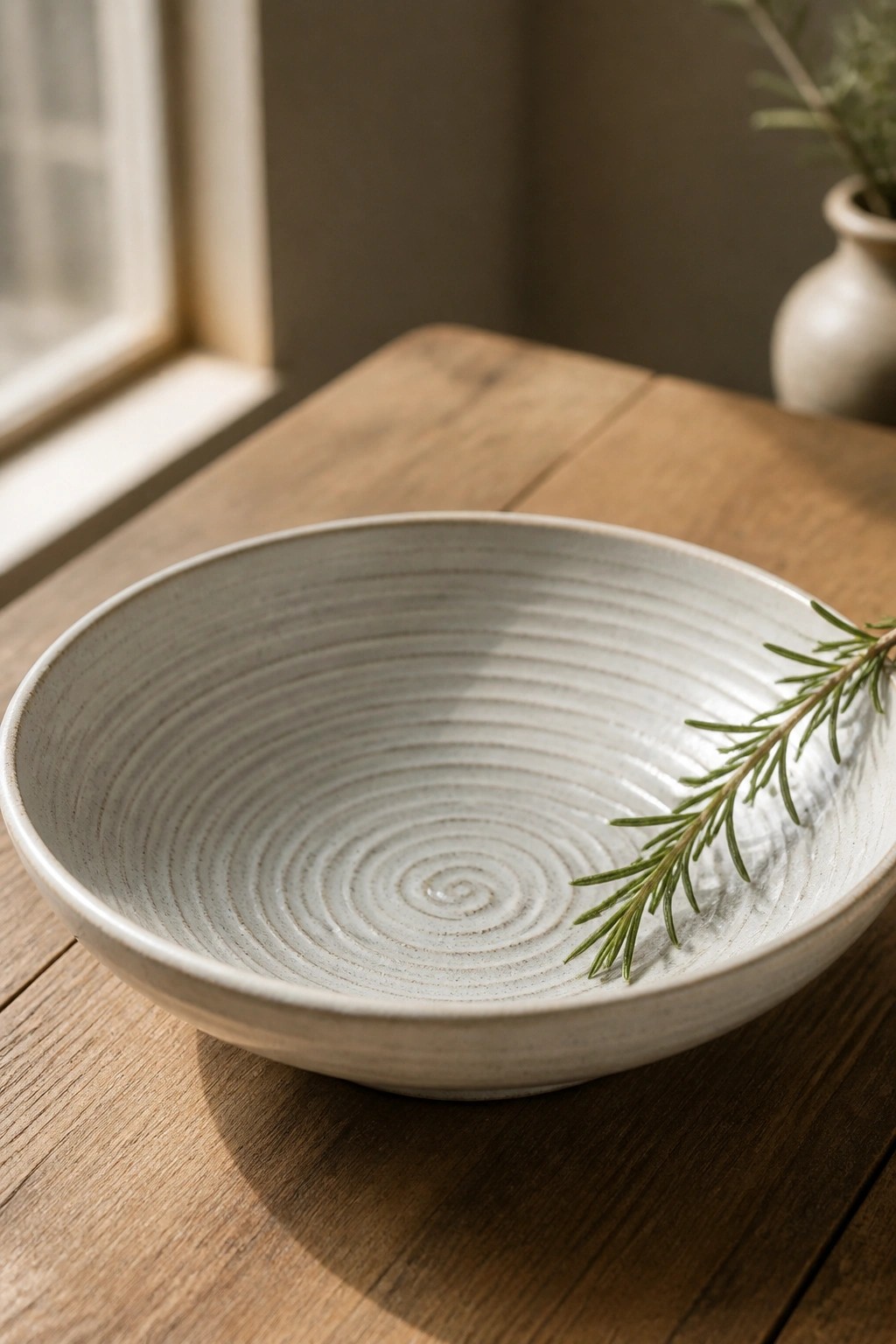
A wheel-thrown ceramic bowl with evenly spaced horizontal ridges that tighten toward the center gives the surface a quiet linear pattern. The matte light gray glaze stays neutral so the ridges remain visible without added color or slip. This keeps the piece firmly in the minimalist bowl category where the throwing process itself supplies the only decoration.
The ridged surface helps the bowl catch light on a wooden table or in a simple place setting without looking busy. You can repeat the same throwing technique at a smaller scale for individual salad bowls or widen the form slightly for a shared serving piece while using the same glaze. This approach stands out on Pinterest because the texture reads clearly in photos yet stays versatile enough to pair with plain dinnerware.
Ribbed Ceramic Serving Bowl for Everyday Meals
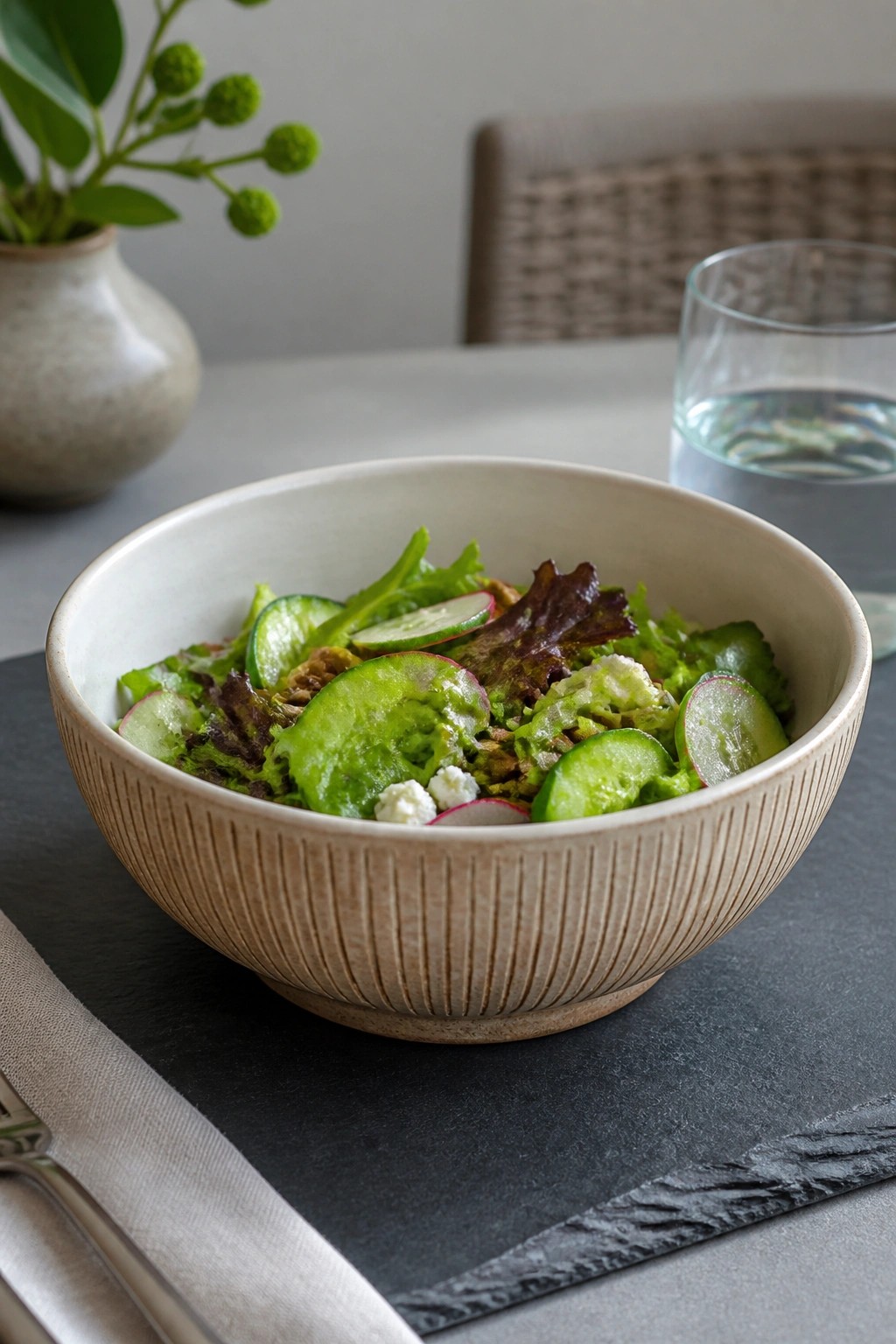
A wide, shallow ceramic bowl with evenly spaced vertical ridges on the exterior gives a simple serving piece subtle surface interest while staying true to a minimalist look. The matte neutral tone keeps attention on the contents rather than the object itself, and the handmade ridges provide enough texture to feel intentional without adding color or pattern. This approach works well for any larger bowl intended for salads, sides, or shared dishes at the table.
What makes this idea useful is how the ribbed detail stays visible even when the bowl holds food, so the texture still registers on a full table. You could scale the same shape down for individual portions or use a slightly taller version for grain bowls. In a kitchen setting the ridges make the piece easy to identify in photos, which helps it perform well as a saved reference for clean, modern table styling.
Textured Neutral Glaze Serving Bowl
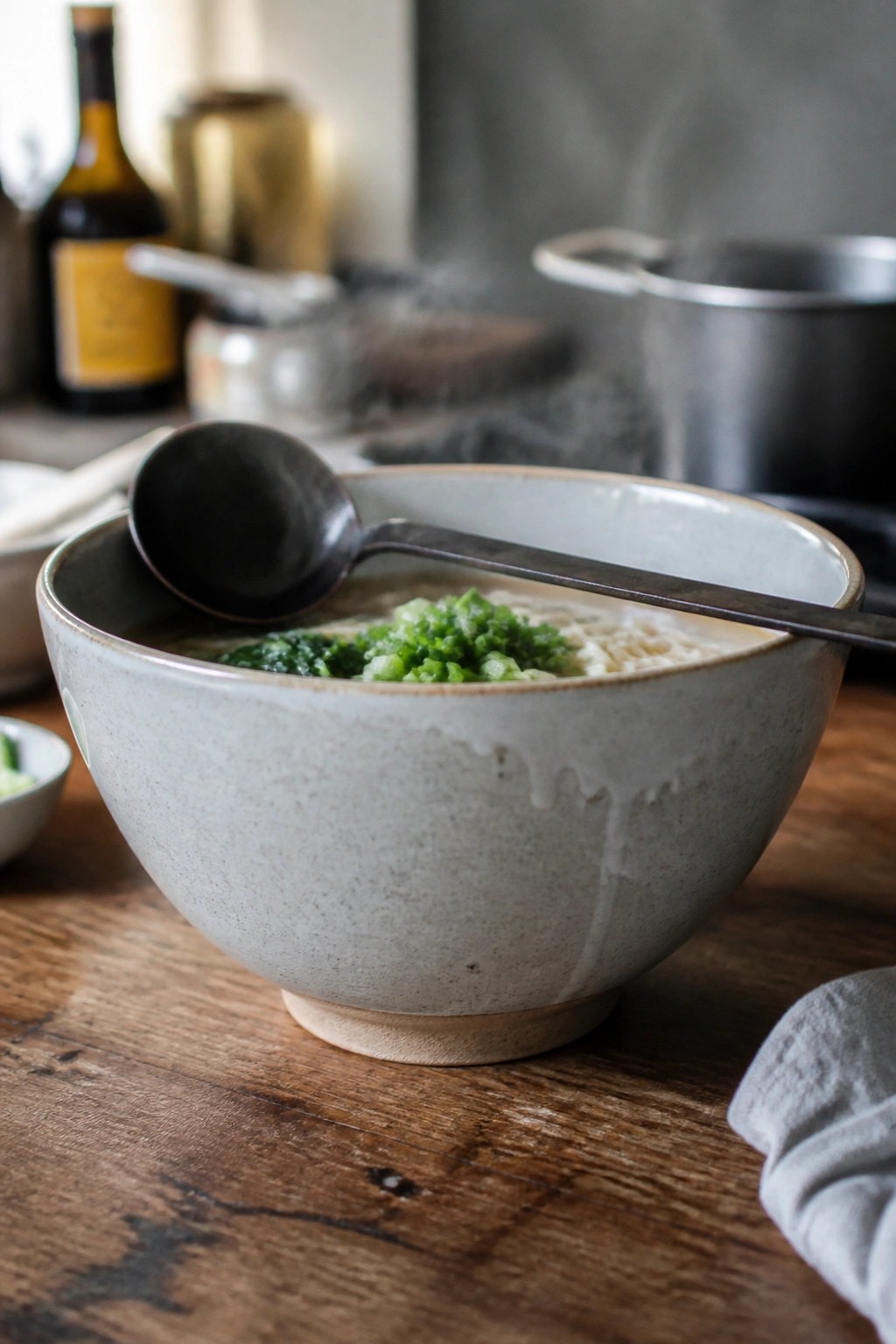
A wide ceramic bowl with a speckled matte glaze in soft gray tones gives a simple, functional form for serving. The slightly irregular rim and subtle texture from the clay body keep the surface interesting without extra decoration. This shape suits soups or stews because the open top allows easy access and the thick walls help retain heat.
What makes this idea useful is how the neutral color works with most tableware while the texture prevents it from disappearing into a minimalist setup. You could make the same bowl in a smaller size for side dishes or switch the glaze to an off-white for a lighter look. In a kitchen, this kind of piece stays practical for daily use and still reads as intentional when stacked on open shelves.
Two-Tone Ceramic Bowls
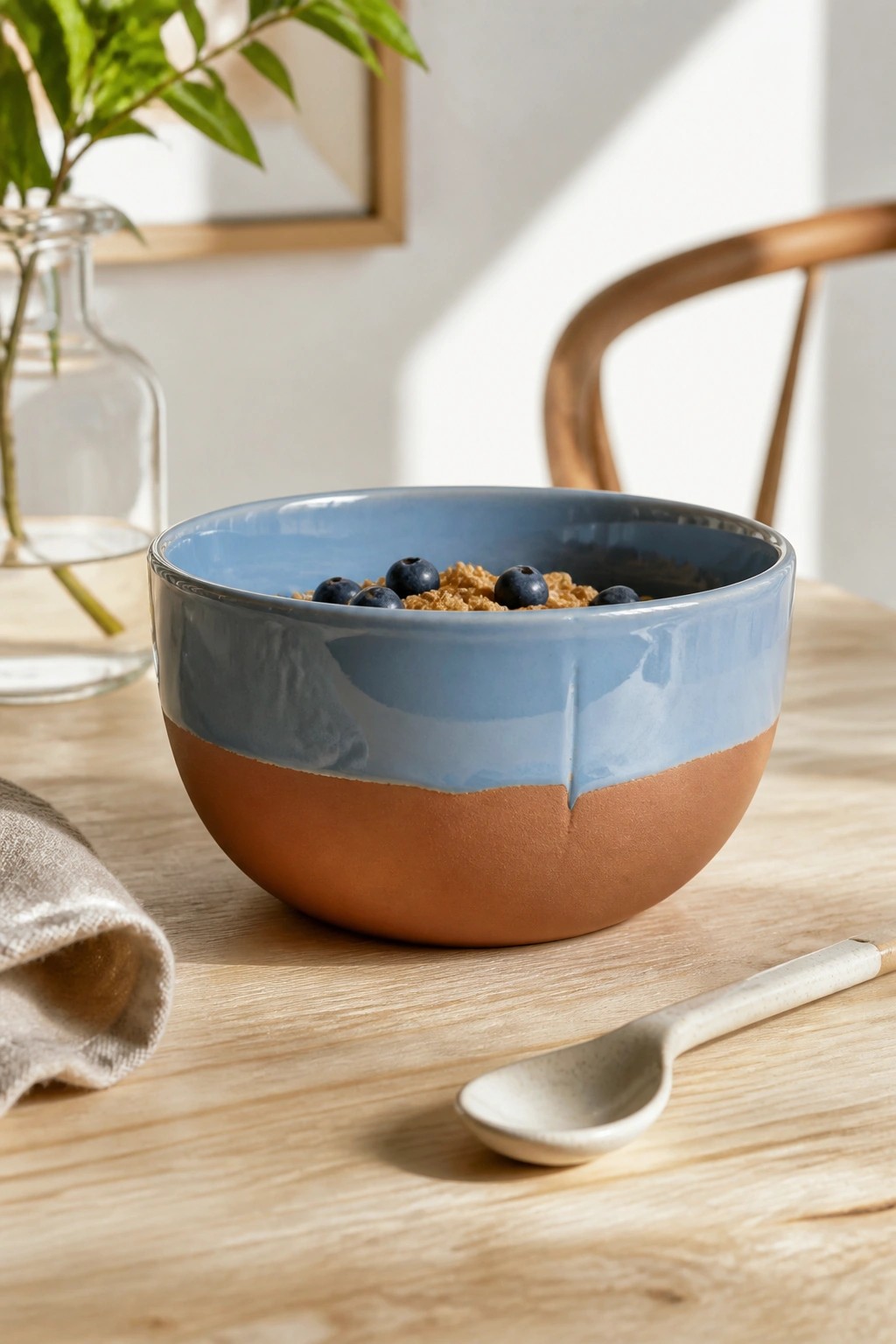
A wide ceramic bowl with a simple two-tone glaze splits the surface into a soft blue upper section and a warm terracotta lower half. The color change happens at a slightly irregular line that follows the natural curve of the form. This approach keeps the design minimal while still giving the bowl a finished, intentional look. The shape stays practical for breakfast portions or side dishes.
What makes this idea useful is how the color split can be shifted higher or lower depending on the size of the bowl. You could repeat the same split on a set of smaller bowls to create a matching collection. In a kitchen this works well with light wood and linen because the two tones already provide enough contrast. The same glazing method could be used on plates or mugs if you want the pieces to coordinate without matching exactly.
Organic Wavy Rim Bowl in Blush Pink
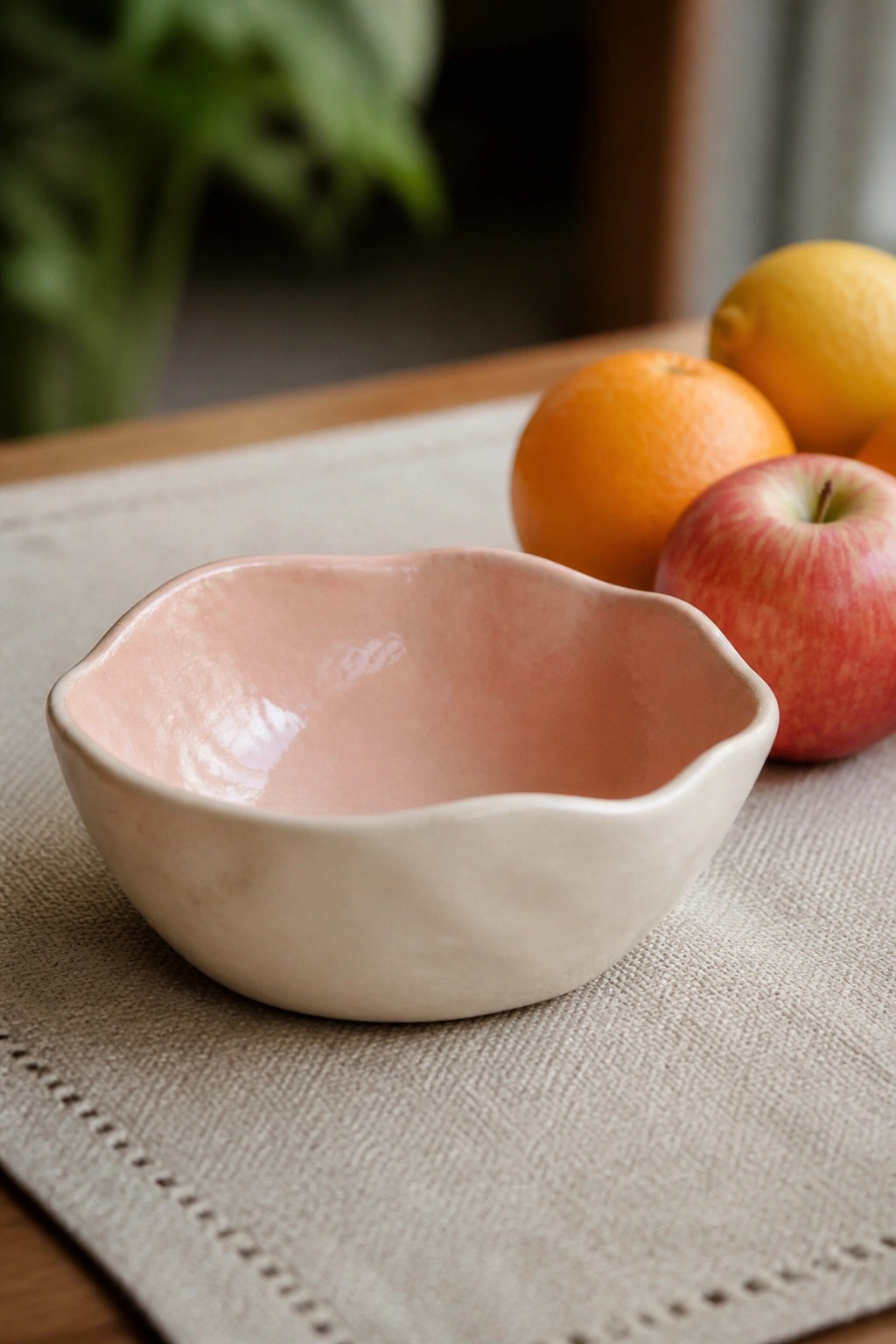
A handbuilt ceramic bowl with a softly pinched, irregular rim creates a relaxed shape that still reads as minimalist. The interior uses a light pink glaze while the exterior stays matte and off-white, letting the form do the visual work. This approach fits the bowl category well for small servings or fruit displays on a clean table.
What makes this idea useful is how the rim shaping adds subtle movement without patterns or added color. You could scale the same pinch technique to a set of smaller dishes or switch the glaze to a pale gray for a different palette. In a modern kitchen this shape works for everyday use and adapts easily if you want to try it on a tray or low planter instead.
Earthy Two-Tone Ceramic Mixing Bowl
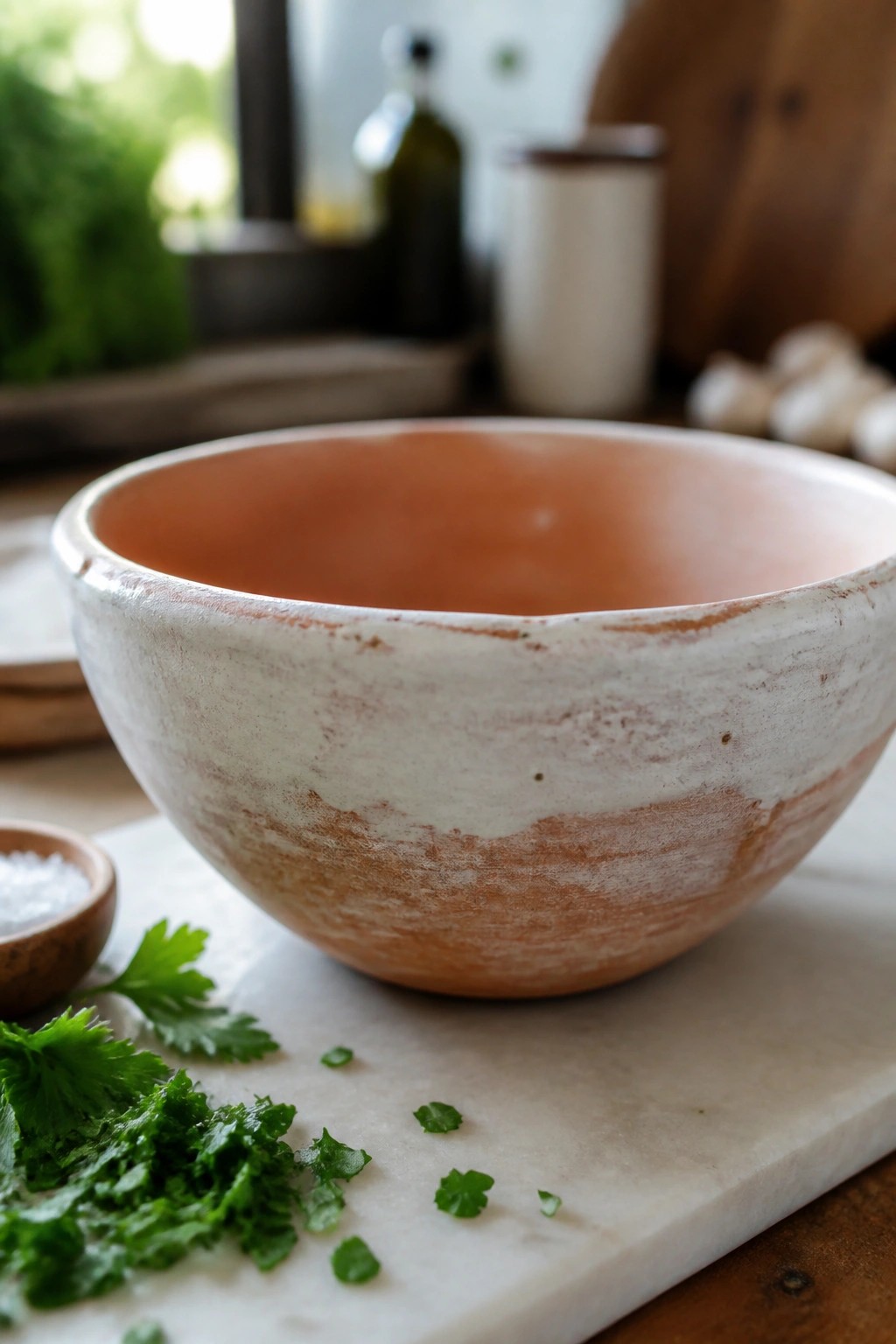
A wide, rounded ceramic bowl with a smooth interior and a rough exterior surface makes a practical mixing or serving piece. The design pairs a white glaze on the upper half with the natural terracotta clay showing through below, creating a simple color split that highlights the handmade form. This approach keeps the shape clean and the focus on the material rather than added patterns or details.
What makes this idea useful is how the neutral palette and sturdy shape work for both prep and table use without looking fussy. You could scale the same glaze transition down to smaller bowls for side dishes or adapt the rounded form into a shallow serving dish. The textured exterior gives it enough visual weight to stand out in minimalist kitchen photos while still pairing with everyday linens and wooden boards.
Concentric Ridge Bowl in Matte Gray
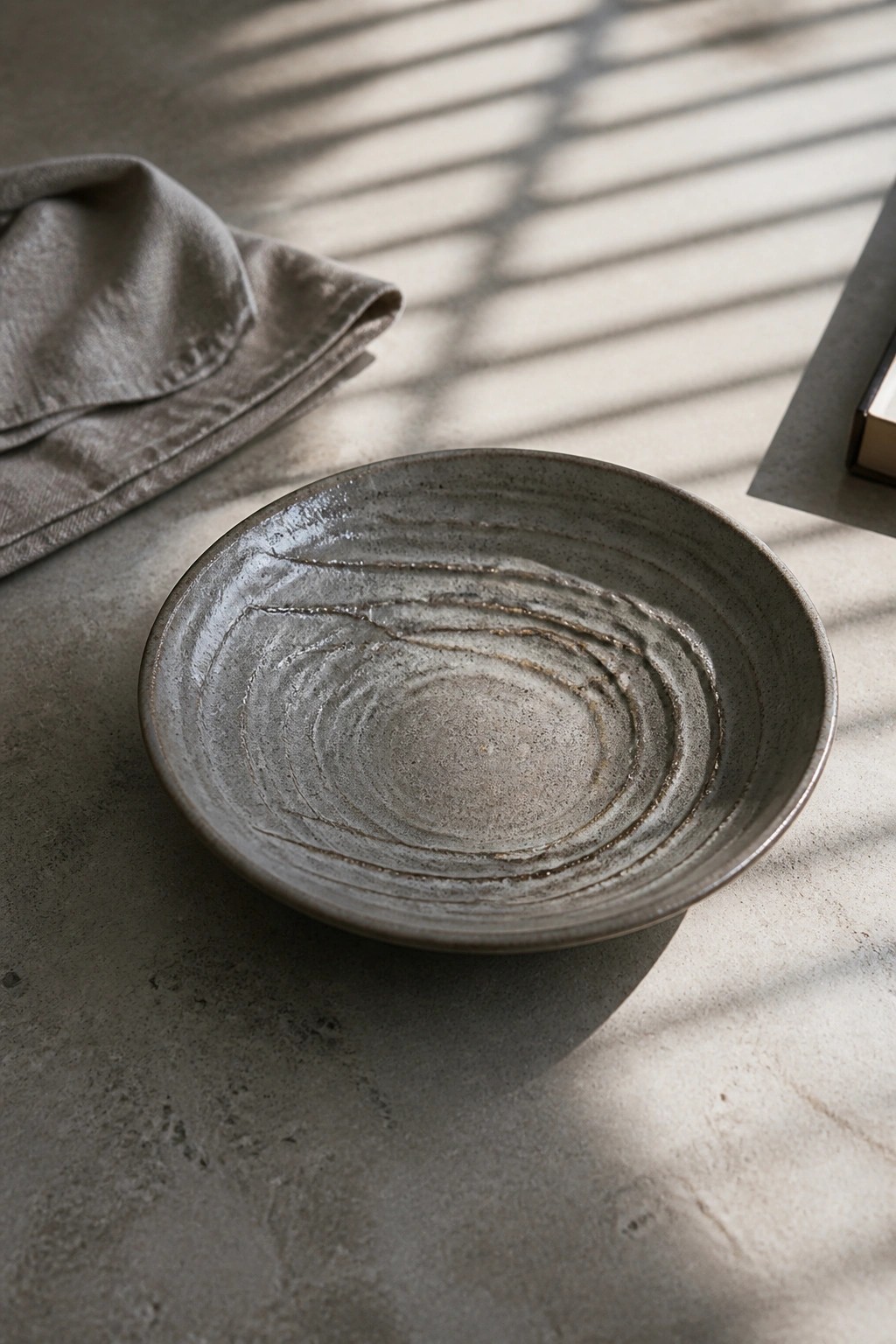
A shallow ceramic bowl with evenly spaced concentric ridges across the interior gives the surface a quiet layered texture. The ridges are formed while the clay is still workable and then finished with a matte gray glaze that settles into the grooves and catches light along the raised edges. This keeps the overall form simple and round while the pattern adds enough detail to hold interest on its own.
What makes this idea useful is how the ridges turn a plain bowl into something that feels more finished without extra color or decoration. The same groove pattern works just as well on dinner plates or small side dishes if you want to build a matching set. In a modern table setting the neutral tone and organic lines sit comfortably next to linen napkins and other stoneware. You could adapt the look by widening the spacing between ridges or leaving the center smooth for a different balance.
Small Handled Bowl with Blue Brushstroke Glaze
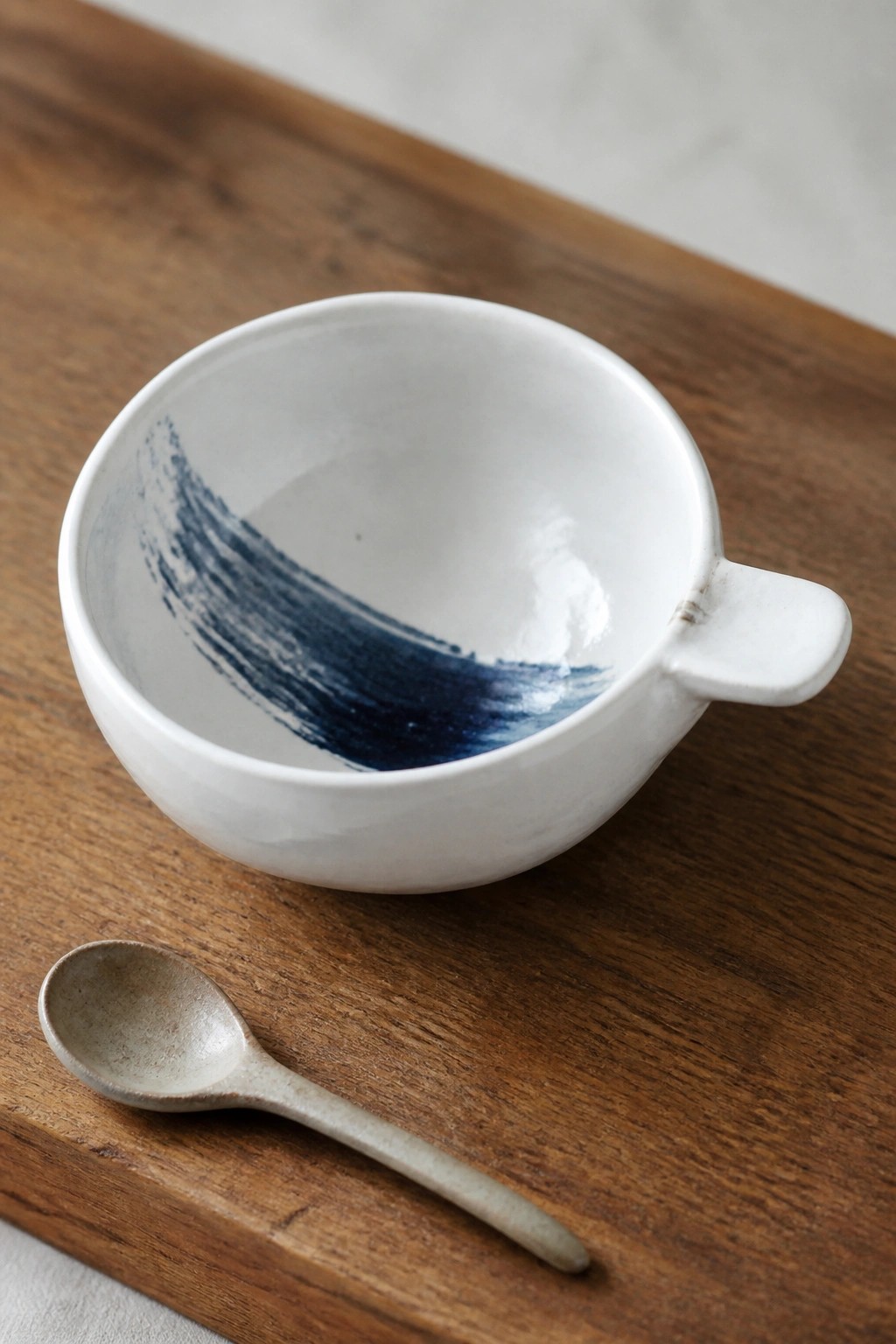
A small ceramic bowl with an attached side handle works well for individual servings like soups, dips, or sides. The white clay body keeps the overall look light, while the single sweeping blue brushstroke inside draws the eye without adding extra decoration. This combination creates a functional kitchen piece that stays true to minimalist principles through limited color and simple form.
What makes this idea useful is how the handle turns an ordinary bowl into something more practical for table use or passing dishes. The brushstroke technique can be adapted by changing the width, direction, or number of strokes to suit different glaze colors or bowl sizes. In a modern table setting, a piece like this stands out because it pairs everyday function with one strong visual detail rather than relying on patterns or multiple colors. You could rework the same shape into a set of four matching bowls for a cohesive look.
Divided Ceramic Bowl for Serving Dips and Vegetables
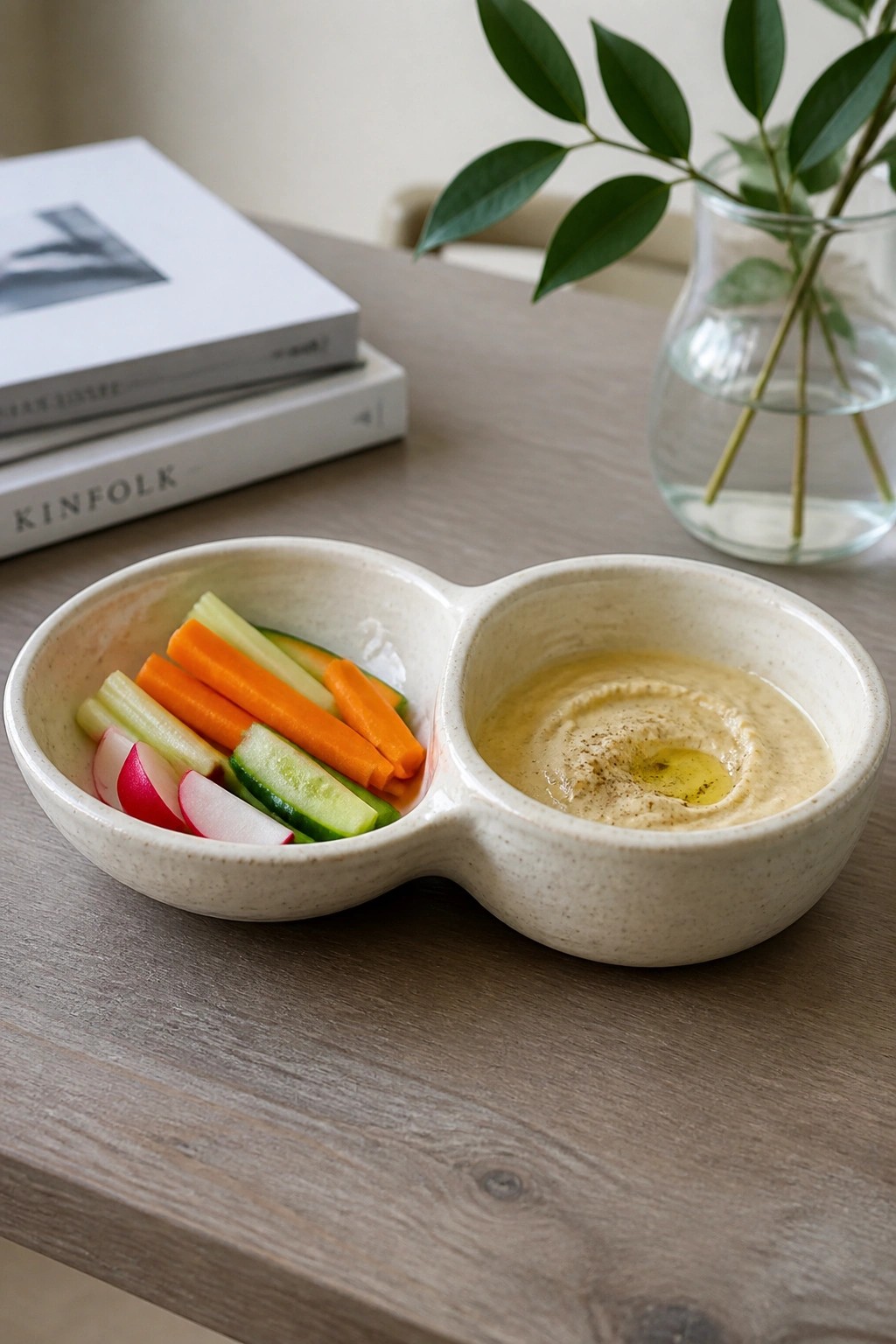
A divided ceramic bowl made from two connected round sections creates a simple way to serve a dip next to cut vegetables on the same piece. The speckled matte glaze and slightly irregular rim keep the form casual and understated while still looking intentional on a table. One compartment holds the dip while the other holds the vegetables, so everything stays organized without extra dishes. This shape fits the kitchen item category and works especially well for small appetizer setups.
What makes this idea useful is the connected layout that reduces clutter on a tabletop while keeping foods separate. You could adapt the proportions to make one side larger for bigger batches of dip or shrink the whole piece for single servings. The neutral speckled surface pairs easily with different vegetable colors and can be reworked into a two-part bowl for sauces or small sides. In a kitchen, this kind of piece keeps snack arrangements compact and easy to move from counter to table.
Speckled Bowl with Subtle Exterior Dimples
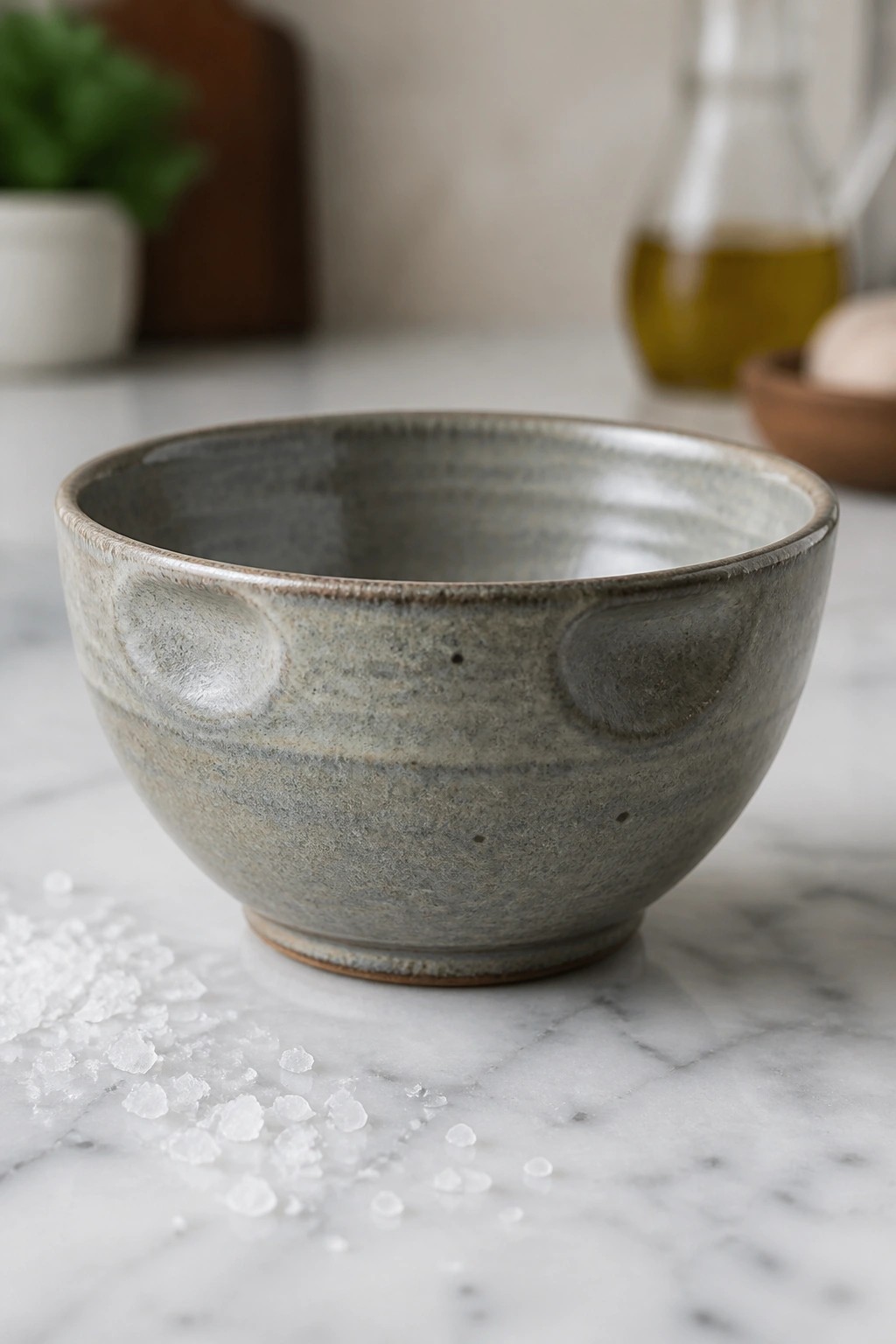
A wheel-thrown ceramic bowl finished in a muted gray-green speckled glaze uses two shallow circular indentations on the exterior as its only decoration. The soft rim and light horizontal throwing lines keep the overall shape simple and functional while the dimples add just enough surface interest. This type of bowl fits the minimalist category well because it stays plain in color and relies on small handmade marks instead of patterns or bright glazes.
The shape does a lot of the work here since the wide, low profile makes it practical for serving sides or holding fruit on a clean table. You could repeat the dimple detail at different heights or use it on a taller cylinder to turn the same idea into a utensil holder. The neutral glaze also photographs cleanly against light surfaces, which helps when pinning kitchen styling ideas. For a variation, try pressing the circles deeper or spacing them farther apart so the texture reads differently on a smaller bowl.
Wide Footed Bowl in Neutral Glaze
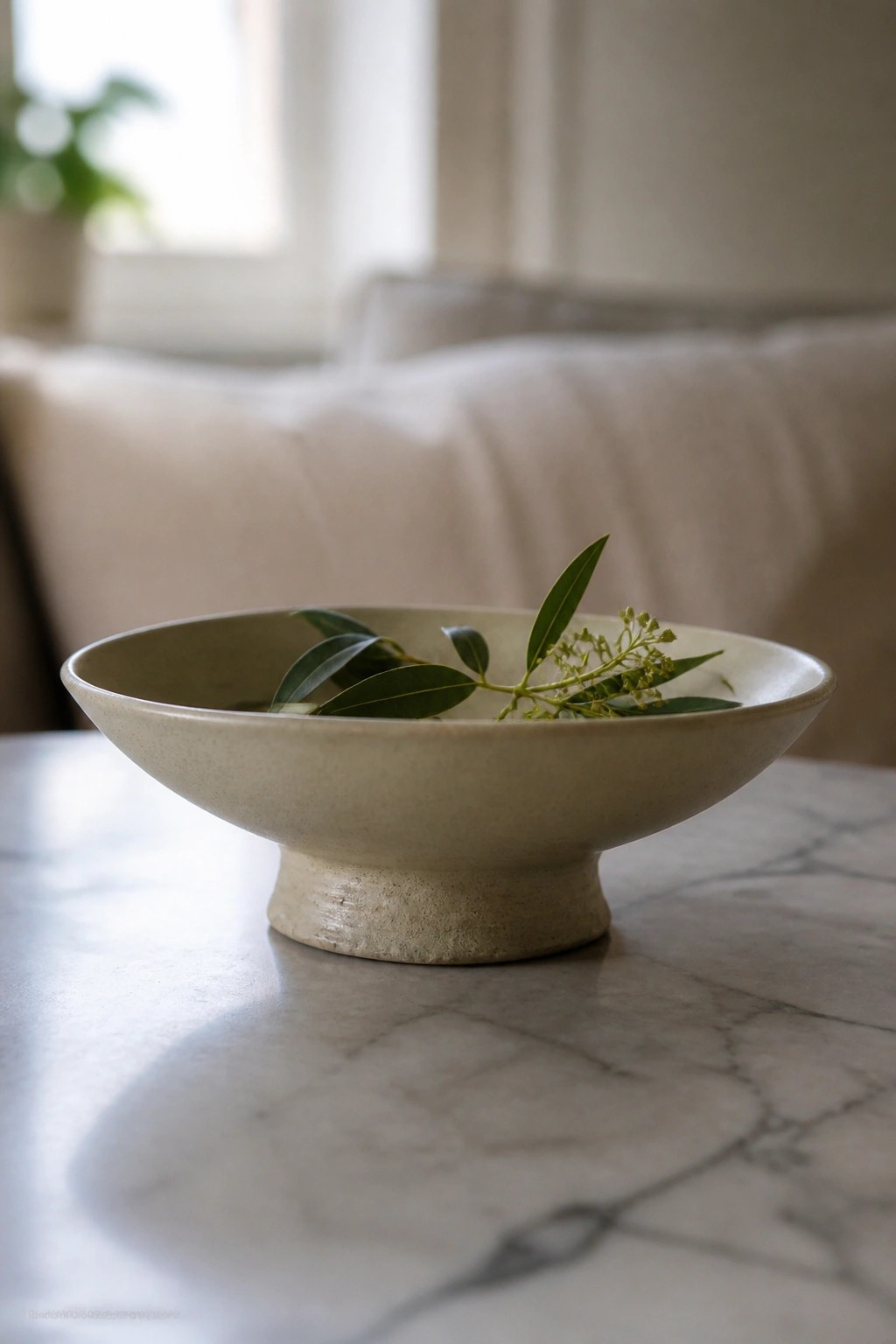
A wide shallow bowl raised on a short foot creates a simple platform that sits low on the table. The light speckled glaze keeps the surface quiet while the slightly irregular rim shows the handmade form. This shape works well for holding a single stem or a few small items without taking up much visual space.
The low profile and neutral tone make it easy to place on dining tables or sideboards where you want something understated. You could adapt the same footed base to a smaller diameter for condiments or use a matte version in a different color for bathroom storage. The clean lines help it photograph well for Pinterest without needing extra styling.
Herringbone Carved Ceramic Mixing Bowl
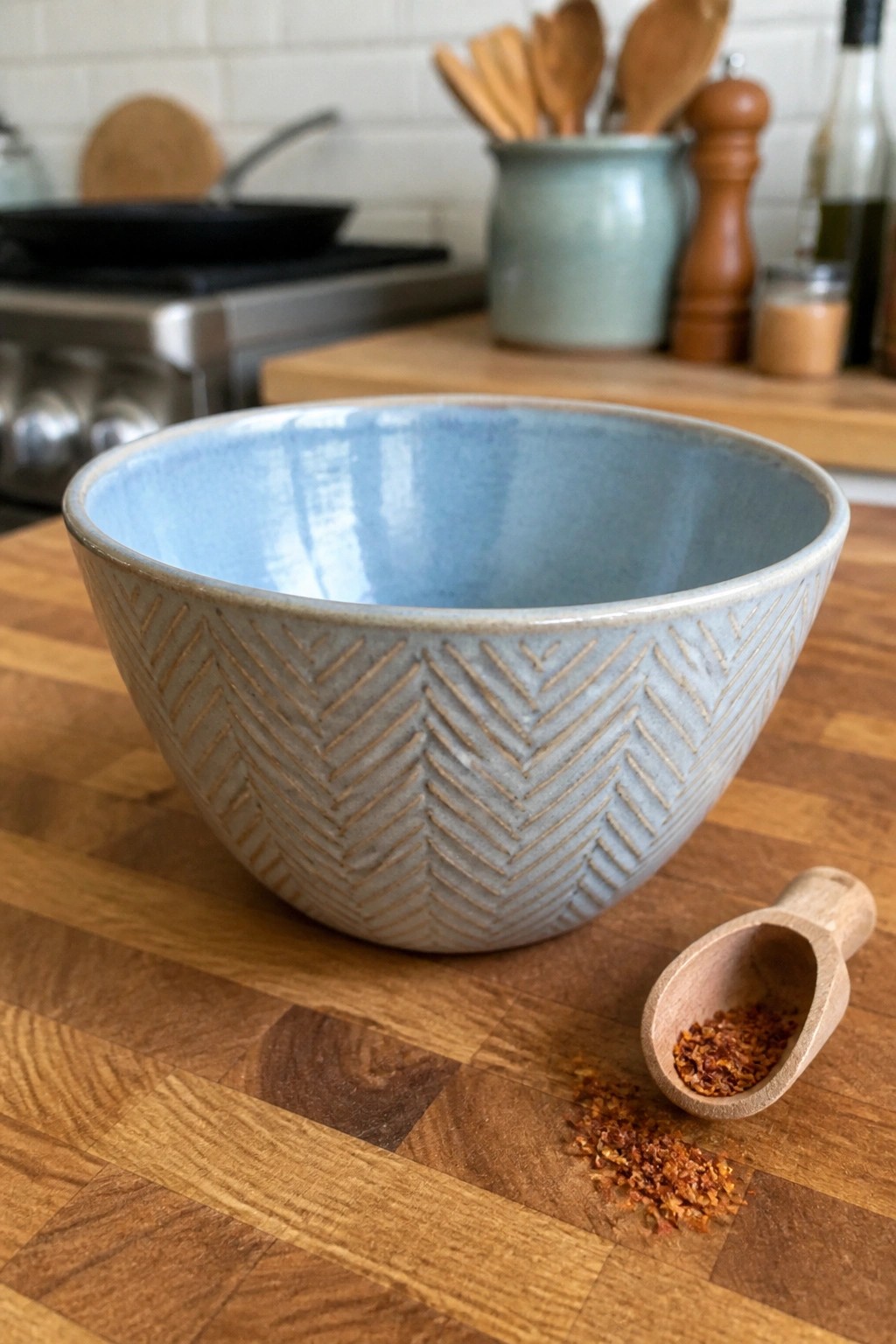
A wide, rounded ceramic bowl with a carved repeating chevron pattern on the exterior gives a simple kitchen piece extra surface interest. The clay is left in a matte gray tone on the outside while the inside carries a smooth light blue glaze that contrasts with the textured exterior. This approach keeps the overall look clean yet adds enough detail to make the bowl stand out on a plain table or counter. It belongs in the functional kitchen ceramics category rather than purely decorative work.
What makes this idea useful is how the carved pattern stays visible even when the bowl is stacked or used daily. You could adapt the same chevron carving to smaller prep bowls or a set of plates for a coordinated look. In a kitchen, the shape works for both mixing and serving without needing extra decoration. The small scale of the pattern also makes it easy to simplify or enlarge depending on the size of the piece you want to make.
Scalloped Rim Ring Dish
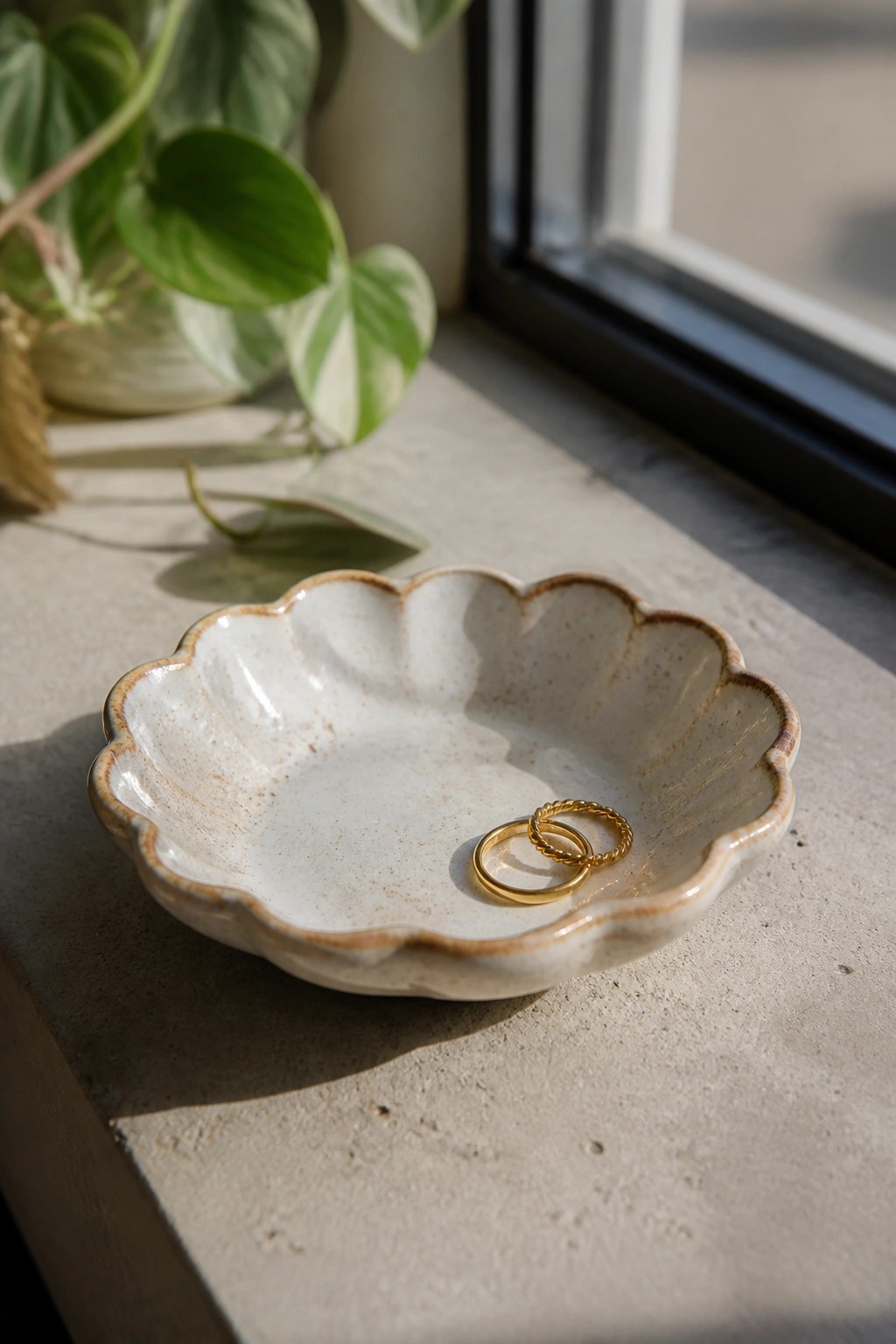
A small ceramic bowl with a scalloped edge makes a simple ring dish or catch-all for jewelry and small items. The wavy rim gives the piece a soft shape while the light speckled glaze keeps the surface plain and understated. This compact form fits easily on a table or ledge and stays functional without extra decoration.
What makes this idea useful is how the scalloped edge can be repeated on slightly larger bowls for serving nuts or small snacks. The neutral tone works with most table settings and avoids clashing with other dishes. You could scale the same rim detail down for a soap holder in the bathroom or use a deeper version for holding tea lights.
Shallow Oval Bowl in Muted Green Glaze
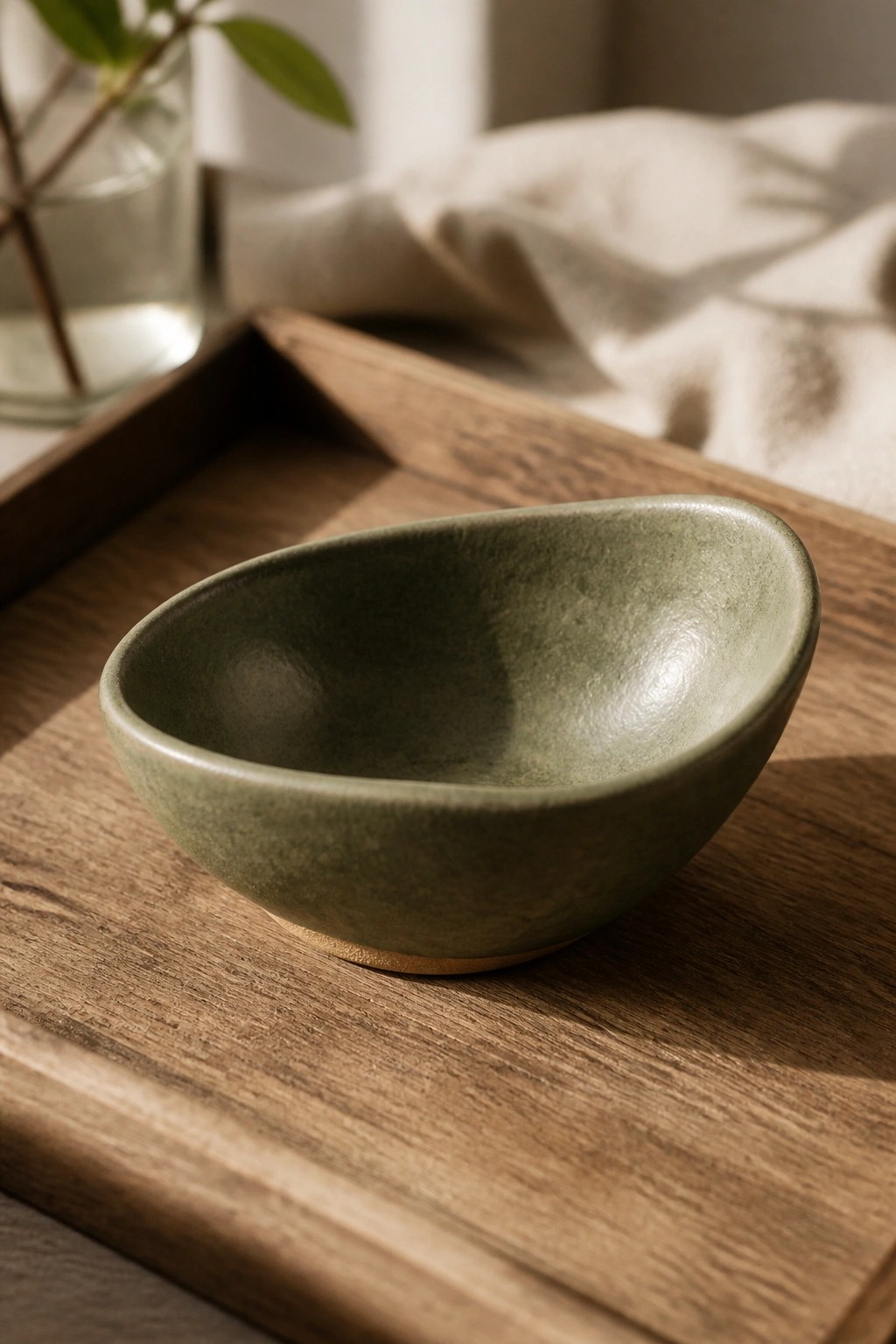
A small oval ceramic bowl with low sides and a soft green glaze creates a simple serving piece that works for individual portions or small shared dishes. The rounded form keeps the profile low and balanced, while the glaze shows subtle variation that comes from hand application rather than perfect uniformity. This kind of bowl fits the minimalist category because the shape and color stay restrained enough to pair with other plain tableware.
What makes this idea useful is the oval shape, which takes up less visual space than a round bowl of the same capacity. You can adapt the same proportions in white or gray glaze for a different mood or make a slightly deeper version for cereal or soup. The small scale also makes it easy to produce in batches for gifts or to keep a few on hand for everyday use without crowding storage.
Frequently Asked Questions
Question: What size ceramic bowls work best for everyday meals in a minimalist setting? Answer: Choose bowls between 5 and 7 inches wide for soup or cereal since they fit neatly on standard plates without crowding the table. Larger 8 inch versions suit salads or shared sides and help maintain clean lines when placed at each seat.
Question: How can I pair these bowls with existing dinnerware for a cohesive modern look? Answer: Select bowls in neutral shades like matte white or soft gray that match your current plates. Limit accents to one textured style per table and arrange them symmetrically to keep the overall arrangement simple and balanced.
Question: Are minimalist ceramic bowls safe for the dishwasher and microwave? Answer: Many glazed ceramic options handle both appliances well but always check the manufacturer label first. For pieces with unglazed bases or delicate finishes hand washing prevents wear and keeps the surface looking fresh over time.
Question: Where should I look for affordable yet high quality options? Answer: Start with stores such as IKEA or Target for basic shapes then check Etsy or local pottery studios for unique handmade versions. Compare prices online to find sets that offer good value without sacrificing the clean minimalist aesthetic.
Question: How many bowls do I need when setting a table for four to six guests? Answer: Plan for one bowl per person plus two extras for serving. This number supports both individual portions and shared dishes while preserving the uncluttered feel of a modern arrangement.

Pottery Path is my cozy corner of the internet where I share clay ideas, pottery inspiration, and simple projects you can recreate at home. I love exploring everything from air dry clay to handbuilt pottery to cute minis that brighten your day. My goal is to make clay crafting feel easy, fun, and welcoming for anyone who wants to try it.
You will find beginner friendly tutorials, creative pottery painting ideas, and lots of warm inspiration for slow and happy crafting. If you enjoy hands on creativity, this space will feel like home.