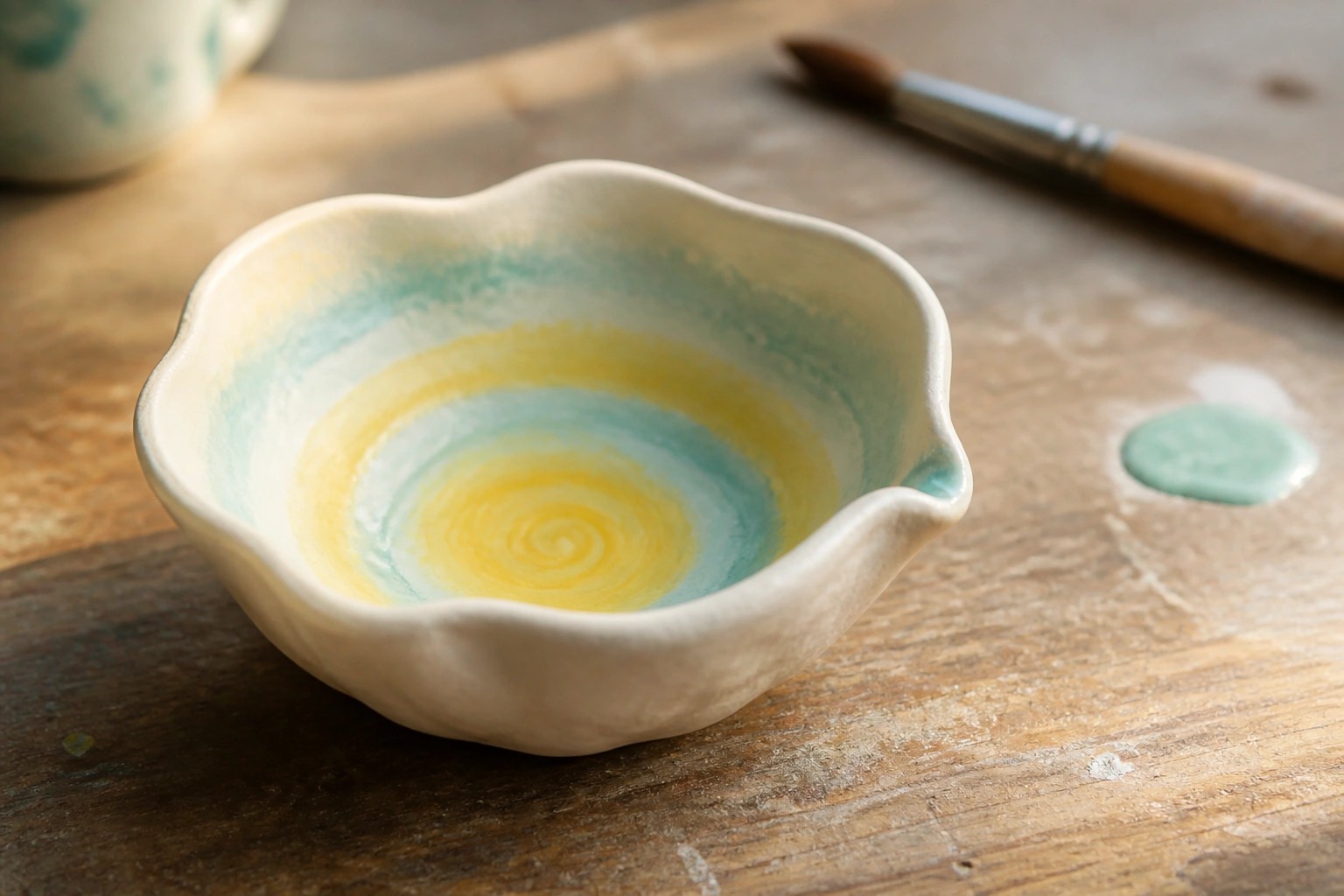
I like spending time at the pottery studio painting bowls when I have a free afternoon.
It is a simple activity that does not need a lot of planning ahead.
I have tried out different approaches over the years and kept track of the ones that felt easy to repeat.
These are the ideas that have worked best for me during my own visits.
They stay pretty basic so I can focus on the process without overthinking it.
Swirled Glaze Bowl with Organic Rim
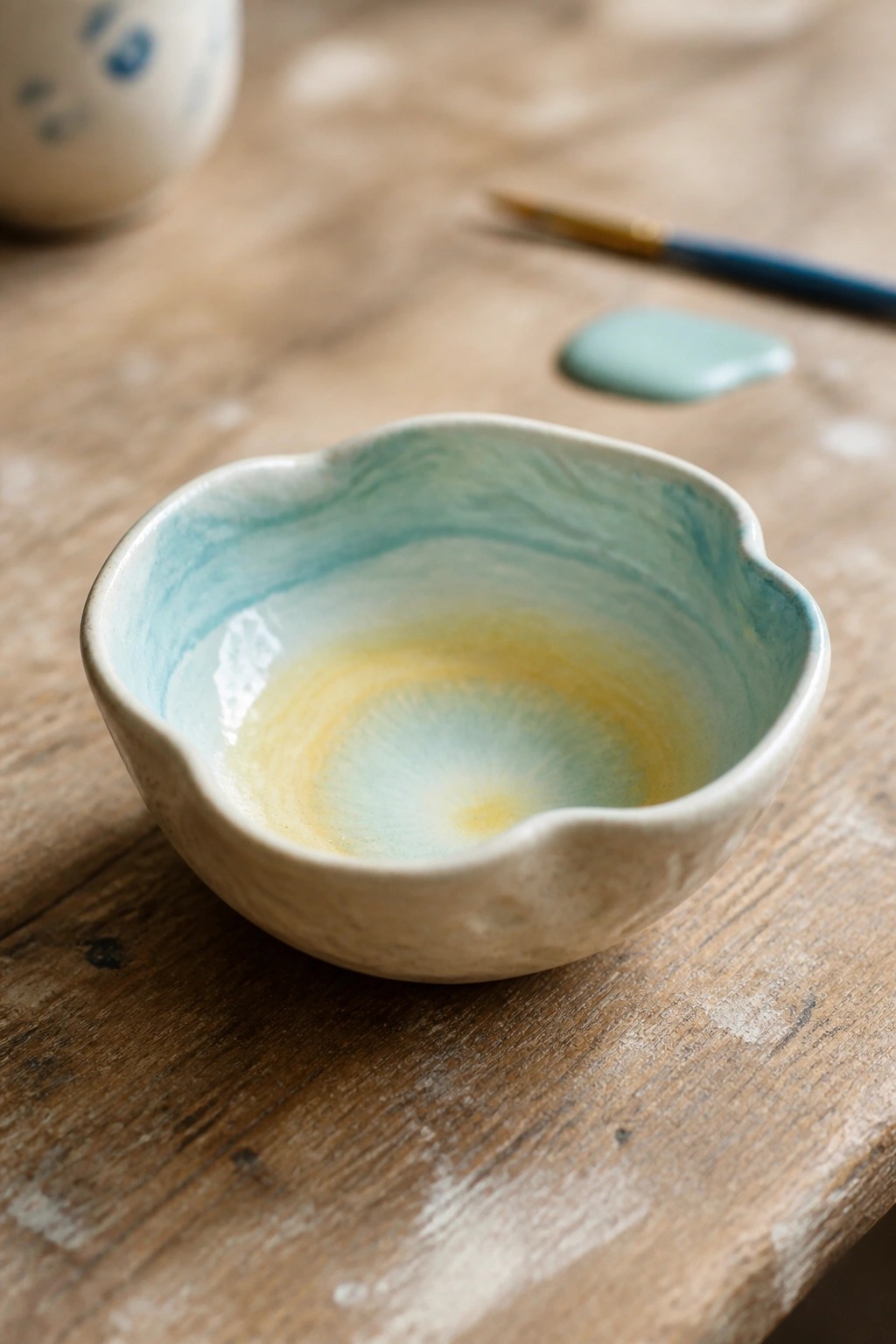
A small ceramic bowl with a wavy, hand-formed rim gives you room to experiment with simple glaze painting. The interior shows blended strokes of turquoise, blue, and yellow that move from the edges toward a soft center, creating a loose spiral without needing perfect symmetry. This kind of project works when you want color variation that comes mostly from how the glazes interact during firing.
What makes this idea useful is that the irregular rim already looks intentional, so small brush marks or glaze overlaps do not stand out as mistakes. You could repeat the same two or three colors on a plain round bowl or a low dish to make matching pieces for a desk or vanity. The small size also means you can finish the painting in one session and still have room on the kiln shelf for other items.
Wave Motif Ceramic Bowl
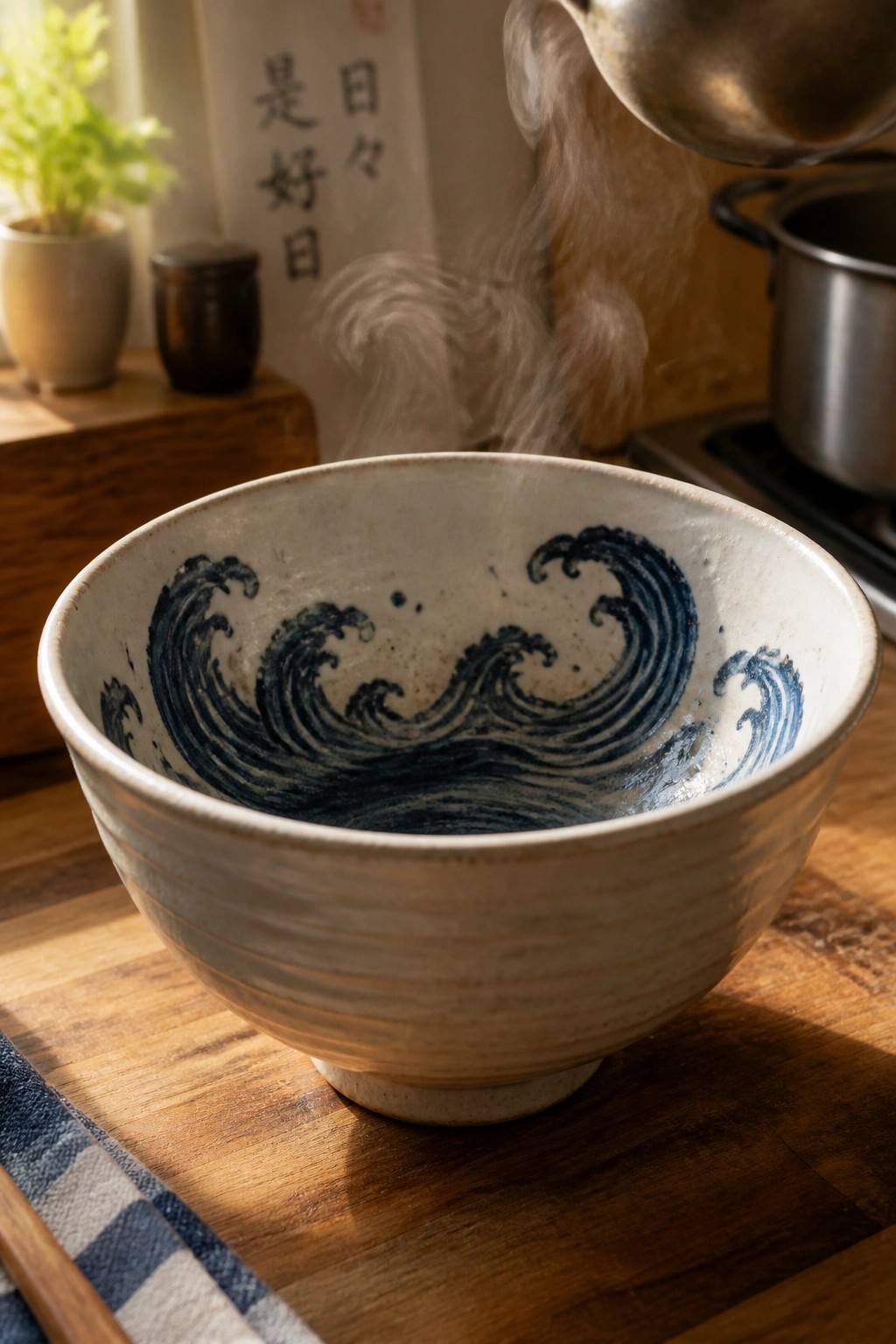
A painted ceramic bowl with layered blue waves around the interior gives a simple way to add movement to a standard bowl shape. The design uses curved brushstrokes that follow the bowl’s walls, creating repeating wave forms without needing fine detail work. This style works as a kitchen or table piece where the pattern stays visible even when the bowl holds food.
What makes this idea useful is how the wave layout adapts easily to different bowl sizes or rim widths. You can shorten the strokes for a smaller prep bowl or stretch them on a wider serving piece. In a kitchen this kind of painted bowl pairs well with plain dishes because the blue lines provide contrast without extra color. The same wave approach can be reworked into a shallow tray or a set of smaller dipping bowls for variety.
Citrus Slice Painted Inside Nesting Bowls
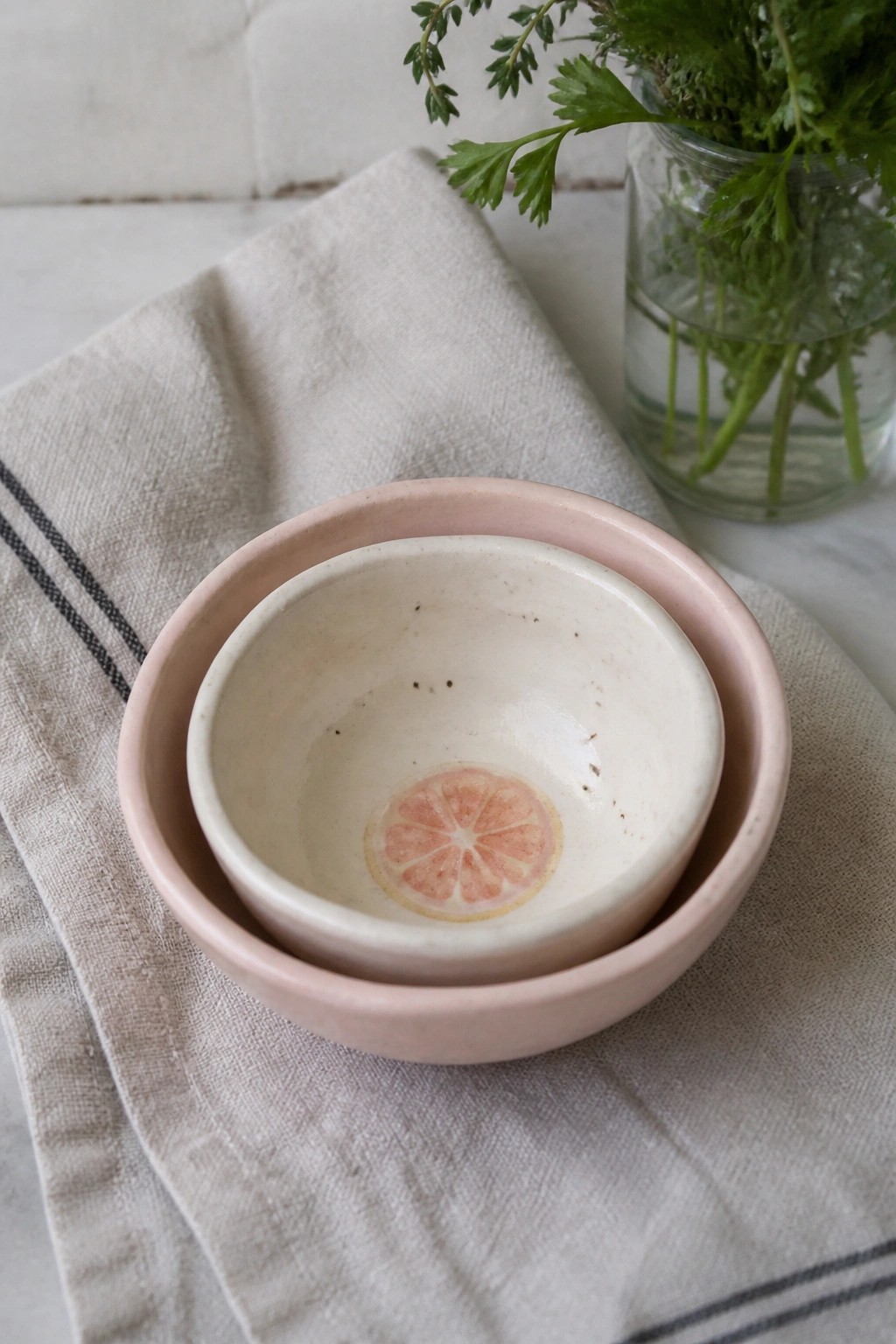
A simple painted citrus slice on the bottom of a small bowl gives the piece a clear focal point without covering the whole surface. The white clay body of the inner bowl contrasts with the soft pink outer bowl and the pale orange fruit detail, keeping the design balanced. This approach works as a kitchen bowl idea where the motif only appears when the bowl is in use or empty.
What makes this idea useful is how the small painted motif stays hidden until the bowl is picked up or filled. You could swap the citrus for another fruit slice or repeat the same shape on a set of three graduated bowls. In a kitchen this kind of piece doubles as both a serving dish and a low-key accent. For a gift the nesting format keeps the project compact while still looking intentional.
Polka Dot Yarn Bowl with Notch
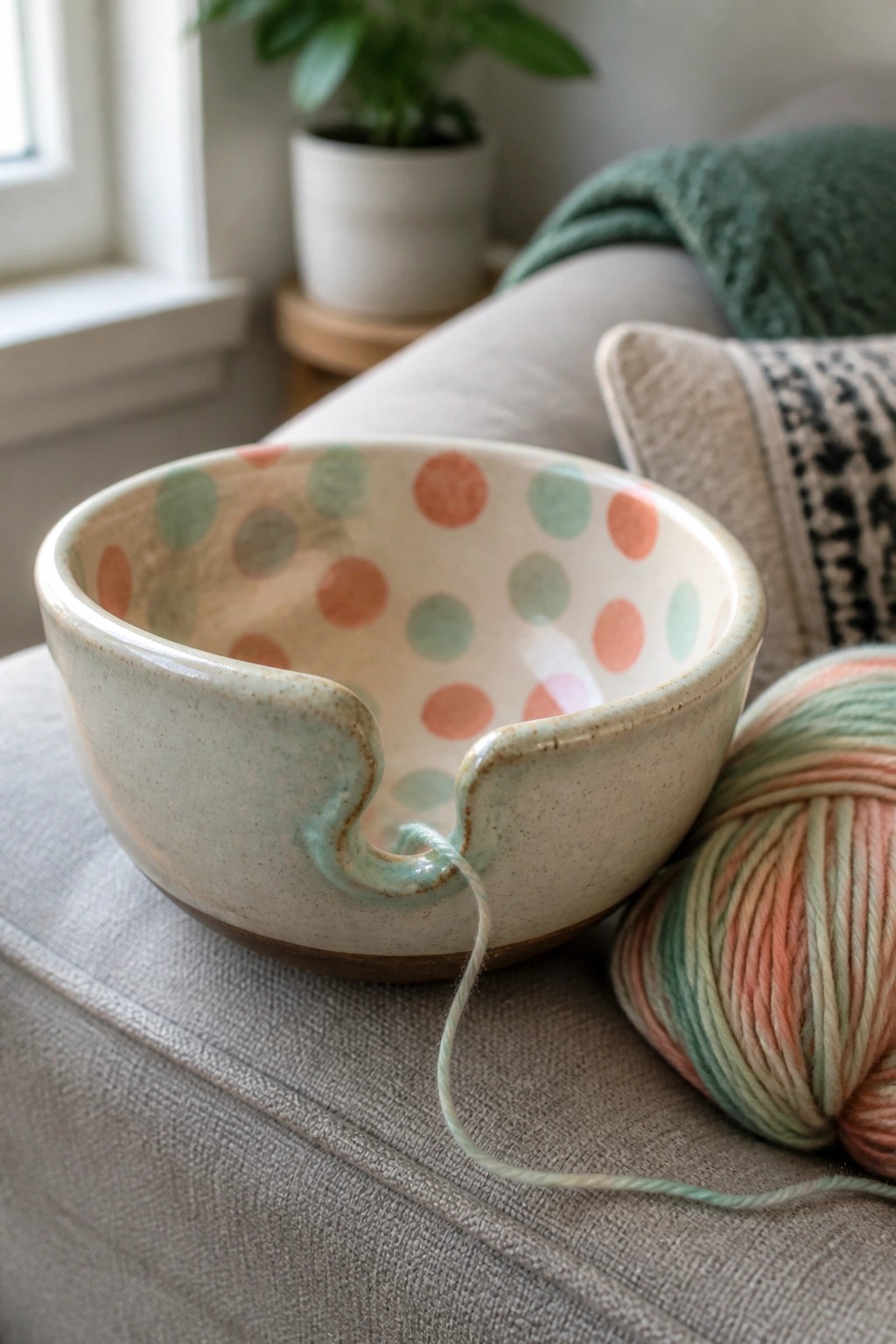
A yarn bowl gives knitters and crocheters a steady place to keep a ball of yarn while they work. This one is a rounded ceramic bowl with a cut notch along the rim that lets the yarn feed out without rolling away. The design uses scattered dots in coral, mint, sage, and soft teal over a light speckled glaze, which keeps the surface simple but still patterned. The form stays low and wide so it sits flat on a couch or table during use.
The notch turns a basic bowl into a tool that actually solves a common problem with loose yarn. You can change the dot colors to match a specific project or swap them for stripes if you want something faster to paint. The same shape works for different yarn weights if you adjust the notch width slightly. For another version, try the same dot pattern on a smaller bowl meant for holding scissors or stitch markers instead.
Painted Paw Print Pet Bowl
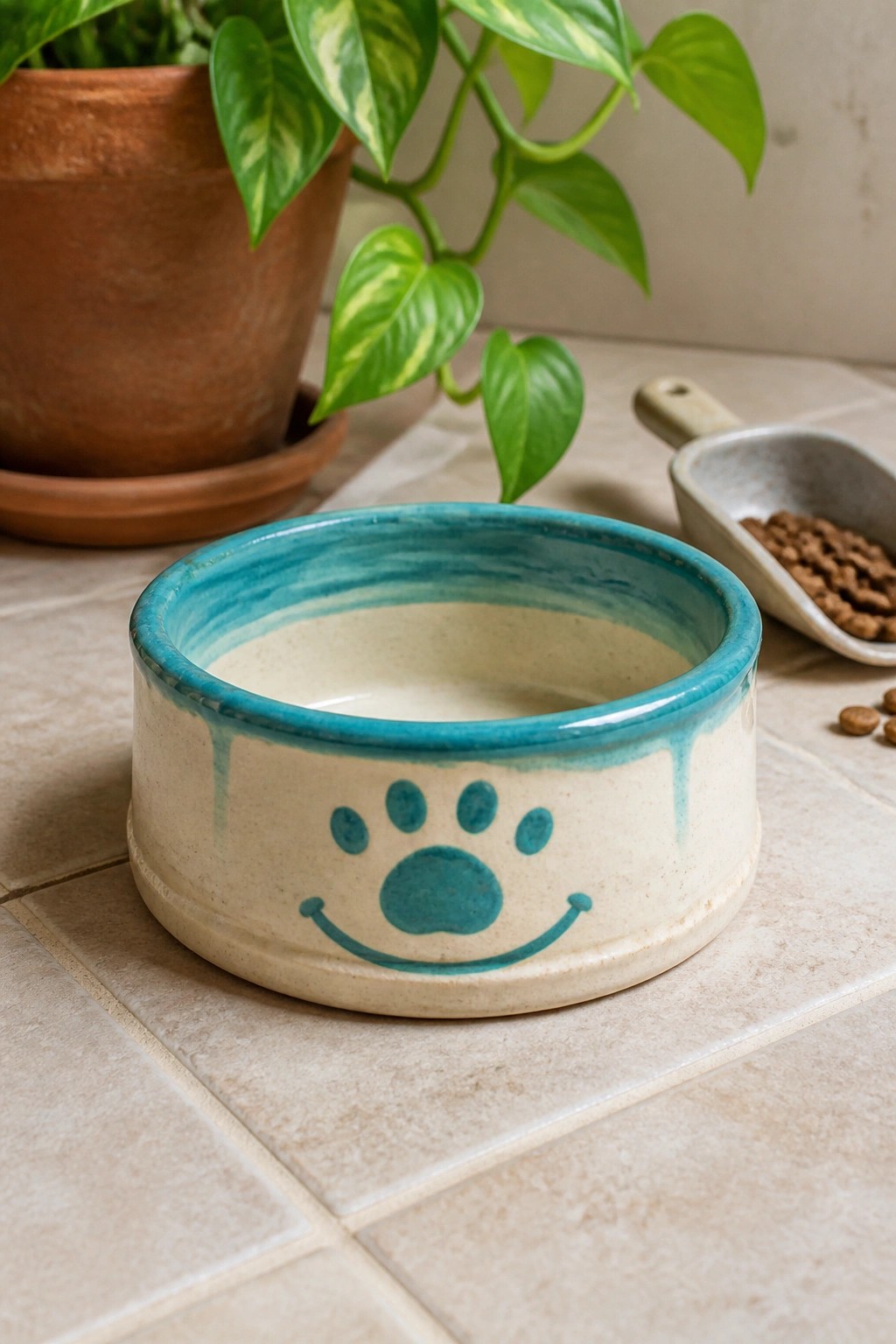
A round ceramic bowl becomes a pet feeding dish once you paint a simple paw print and smile on the front. The teal rim glaze that drips down the beige body frames the design and keeps the focus on the paw and curved mouth. This approach works because the motif is large enough to read clearly on a low, wide bowl shape without needing extra sculpting.
What makes this idea useful is how quickly the same layout adapts to different pet sizes by changing the bowl diameter. You can swap the paw for a bone or heart, or keep the smile and change the rim color to match your kitchen. In a studio session it requires only basic underglaze and a steady hand on the paw pads, so it stays simple while still looking finished.
Sunflower Painted Interior Bowl
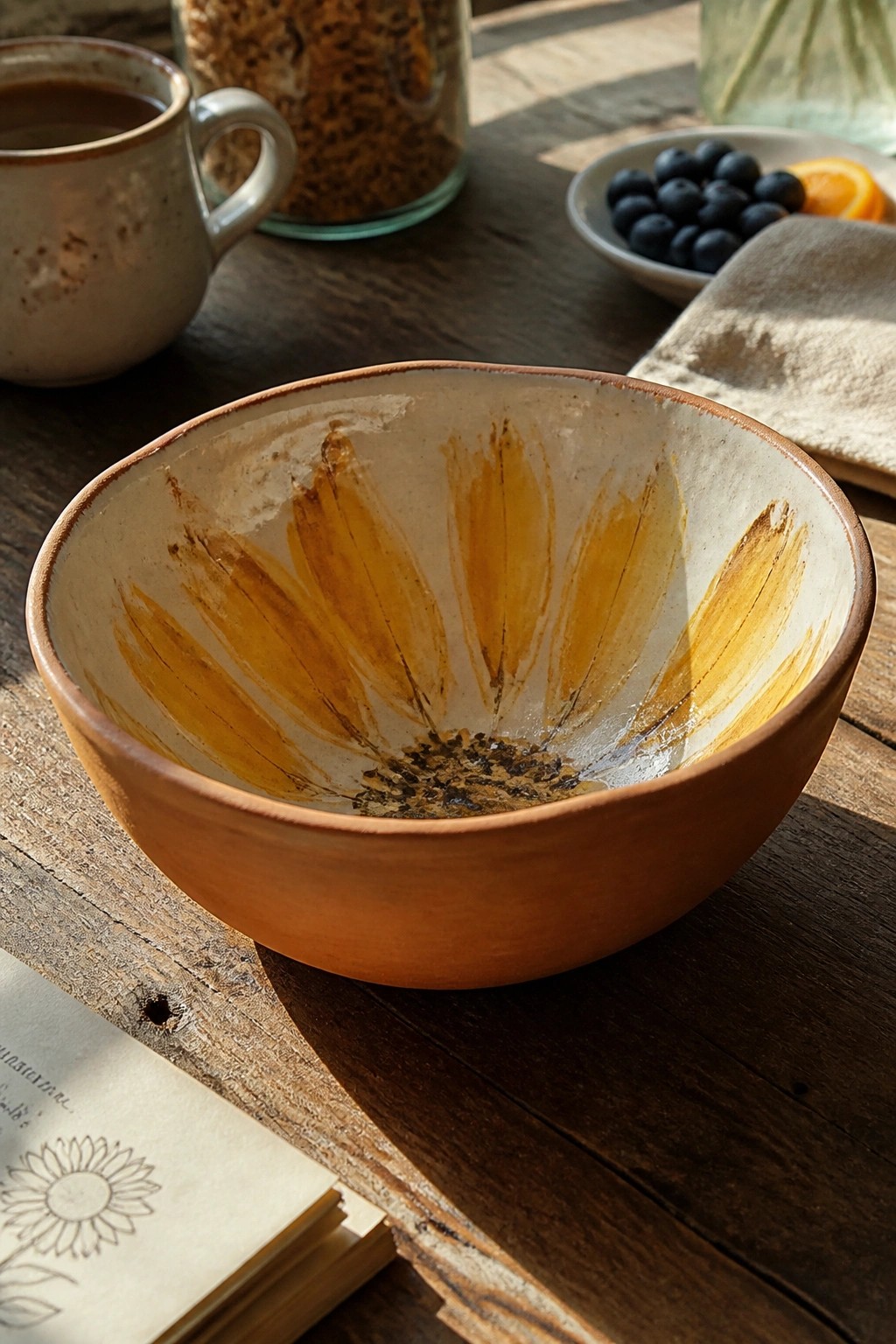
A wide, low bowl gets its main impact from a hand-painted sunflower that fills the interior. Yellow petals radiate from a dark, textured center, stopping short of the rim so the light clay background stays visible. The simple two-color approach keeps the design readable from above and works on either a smooth or slightly textured surface.
What makes this idea useful is how the open shape keeps the sunflower visible whether the bowl holds fruit, snacks, or sits empty on a table. You can copy the same petal layout on a smaller bowl for cereal or change the flower to a daisy or abstract burst for a different look. The painted center also hides minor glaze variations, so the design stays forgiving if your brushwork is not perfectly even.
Marbled Swirl Bowl
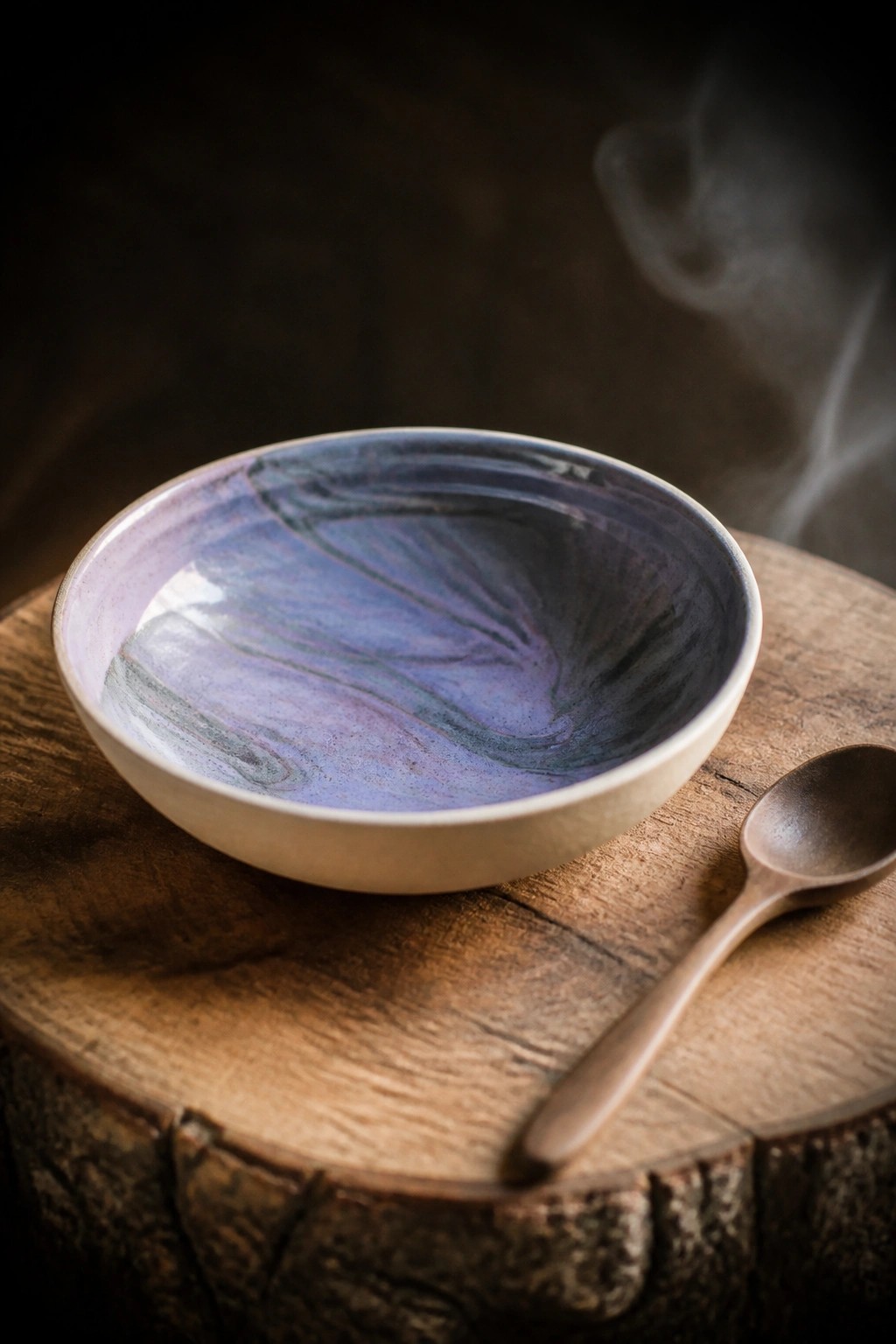
A bowl project like this uses a marbled glaze technique to create flowing patterns of blue, purple, and pink inside a simple round form. The colors blend in organic streaks that move across the surface without needing extra lines or shapes. This approach keeps the focus on the painted interior while the outside stays plain, which helps the design stay clean and easy to repeat.
What makes this idea useful is how well the marbled pattern hides small application mistakes during painting. The same swirl method can be tried on different bowl sizes or changed to warmer colors for variety. In a kitchen or on a dining table this shape works for both serving and display. You could simplify it further by using fewer colors or scale it down for smaller prep bowls.
Kiwi Fruit Painted Bowl
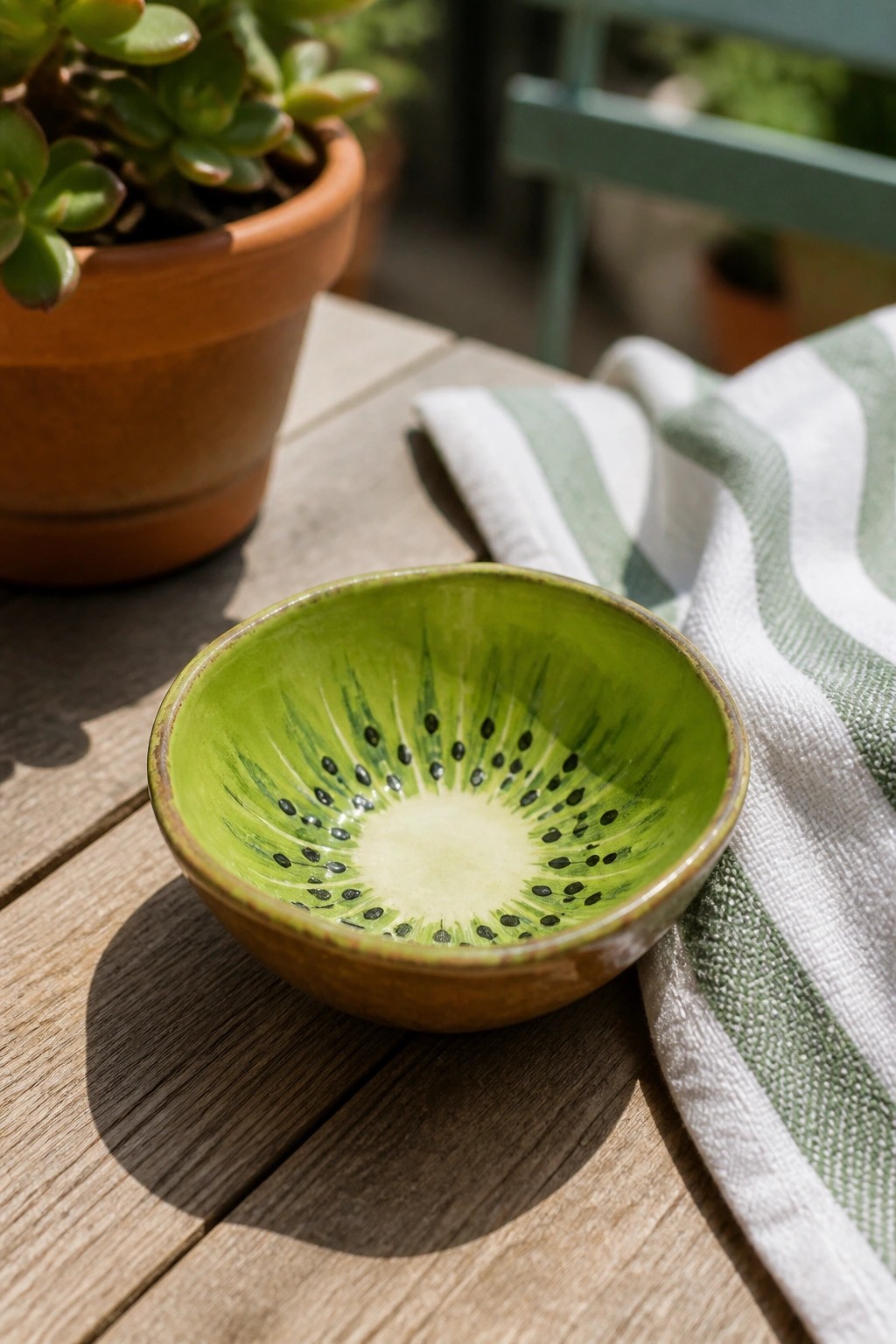
A small ceramic bowl gets its main impact from a hand-painted kiwi slice covering the entire interior. Bright green glaze forms the outer ring while black dots for seeds radiate outward from a pale center. The simple radial layout keeps the design balanced and readable even on a curved surface. This approach fits the painted bowl category and works as both a small serving dish and a tabletop accent.
The compact size lets you finish the painting in one session without rushing. You can swap the kiwi for any round fruit by keeping the same seed or segment pattern and changing only the color rings. It works especially well as a dip bowl or nut dish on a kitchen counter where the interior shows when the bowl sits empty. For a different version, try the same layout on a slightly larger cereal bowl or shorten the pattern to just the rim on a mug.
Spiral Design on a Painted Ceramic Bowl
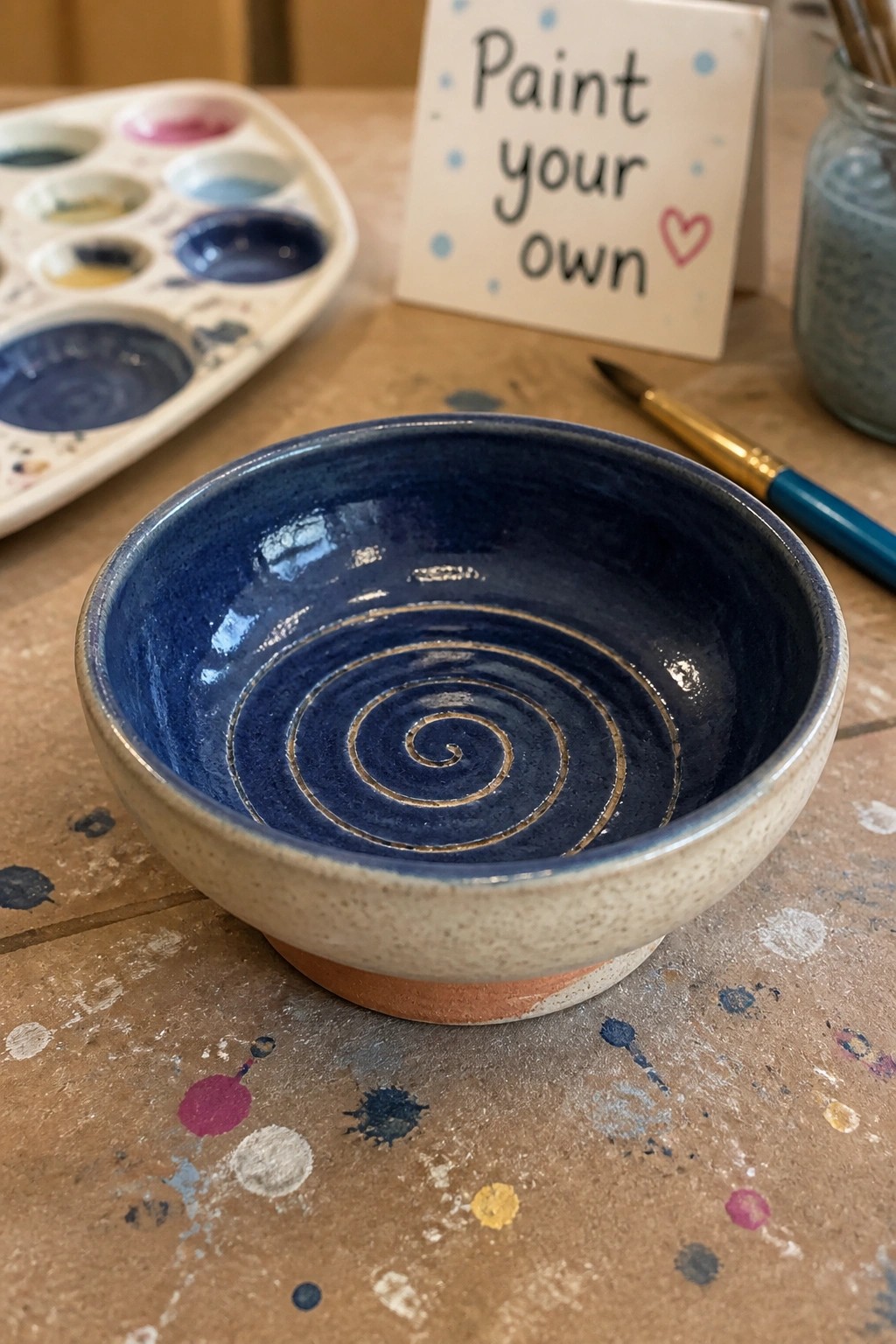
A ceramic bowl finished in dark blue glaze uses a series of lighter concentric spirals painted across the interior to create the main design. The spiral starts near the center and expands outward with consistent line weight, giving the bowl a clear focal point without covering the entire surface. This approach keeps the idea simple while making the most of the bowl’s curved shape and glossy finish.
The shape does a lot of the work here because the open interior displays the spiral pattern clearly from above. You could adapt the same idea by changing the spiral color, using a single continuous line instead of multiple rings, or applying it to a smaller dish form. In a kitchen or on a desk this kind of bowl works well for holding snacks, keys, or jewelry. The painted motif is also easy to personalize with different line thicknesses or by adding a second color for contrast.
Leaf-Shaped Bowl with Gold Vein Lines
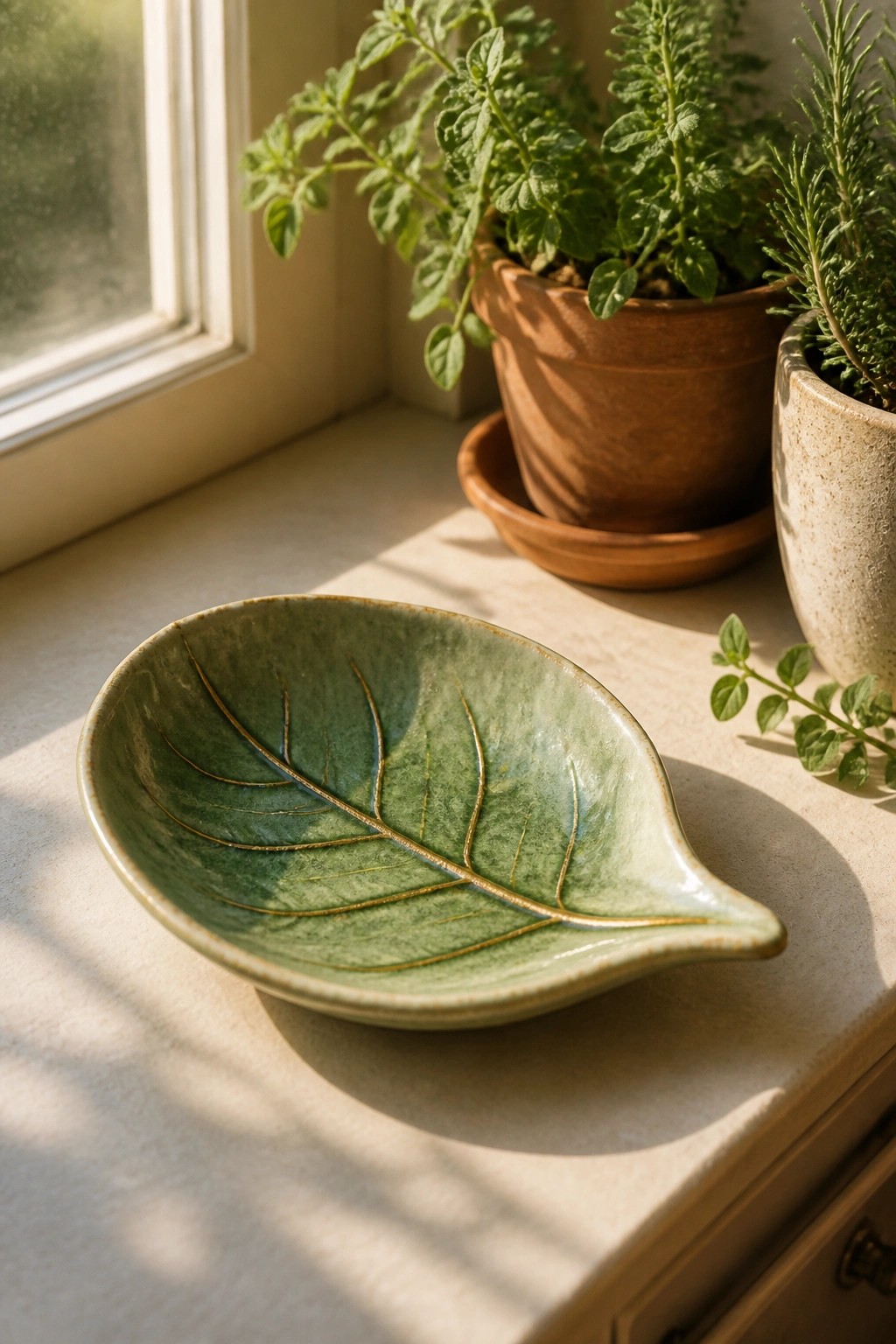
A leaf-shaped ceramic bowl uses a molded outline and a green glaze to create a simple botanical form. The gold lines follow the natural vein pattern across the interior, adding contrast without requiring freehand painting. This approach works as a small decorative bowl or catch-all dish that stays functional while keeping the focus on the leaf motif.
What makes this idea useful is how the shape itself carries most of the visual interest, so you only need to add the veins for impact. You could rework the same leaf form into a larger tray or shrink it into a ring dish by adjusting the mold size. The green-and-gold combination pairs easily with plant displays or neutral kitchen counters, and it stands out in photos because the metallic lines catch light. For a variation, try swapping the gold for a different metallic or using a matte glaze on the veins instead.
Abstract Brushstroke Serving Bowl
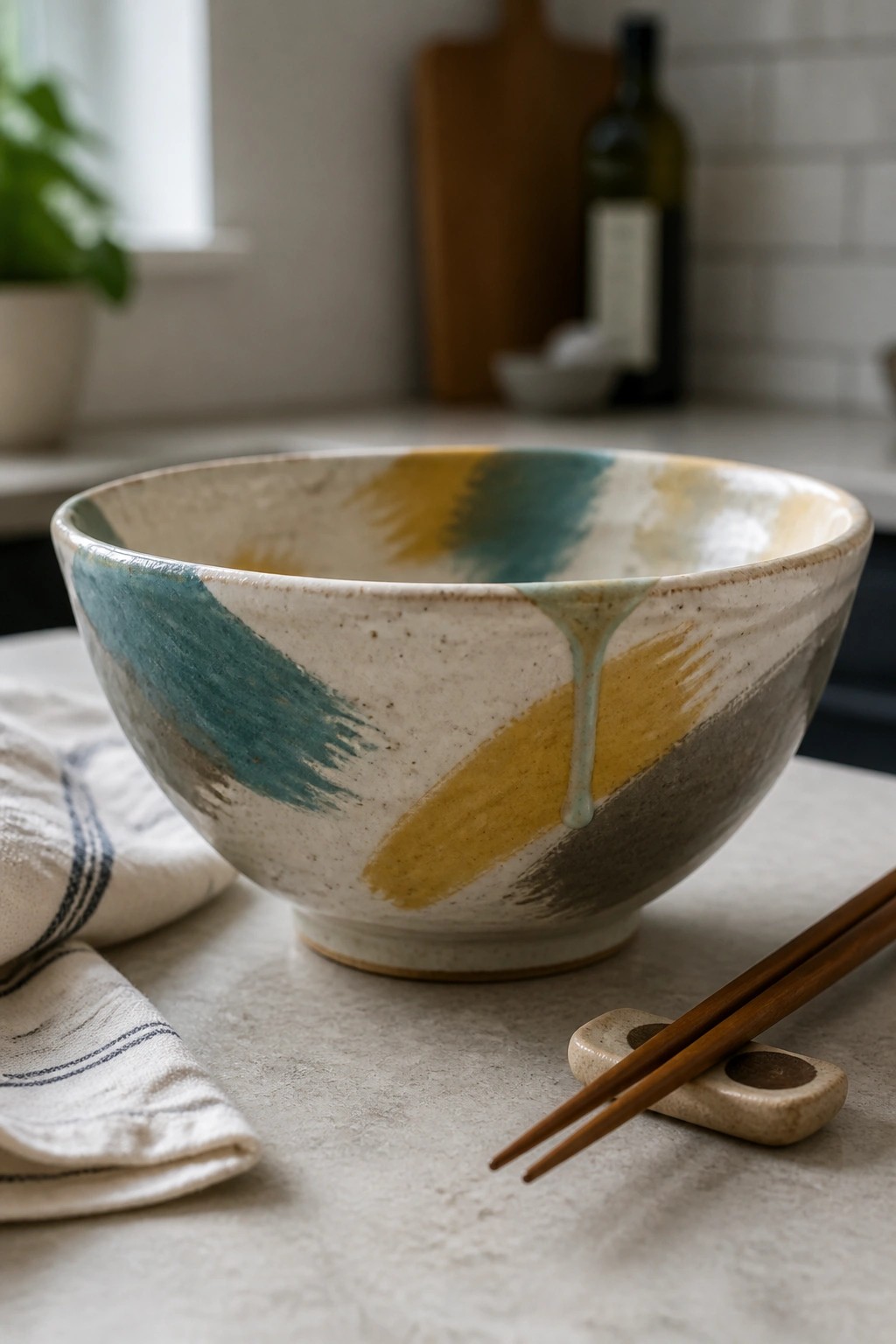
A wide ceramic bowl covered in broad, overlapping brushstrokes of teal, yellow, and gray gives a loose, painterly effect on a light clay base. The strokes vary in thickness and direction, with a few areas where the glaze runs slightly down the side. This style turns a basic bowl shape into a functional kitchen piece that still shows the handmade surface underneath.
The shape does a lot of the work here because the open form lets the strokes wrap around naturally without crowding. You can adapt the same idea by using just two colors or switching to vertical strokes for a different look on plates or smaller bowls. In a kitchen this kind of piece works well for salads, snacks, or as a catch-all on the counter. The loose pattern also photographs clearly for sharing, which helps it stand out when people search for simple painted bowl options.
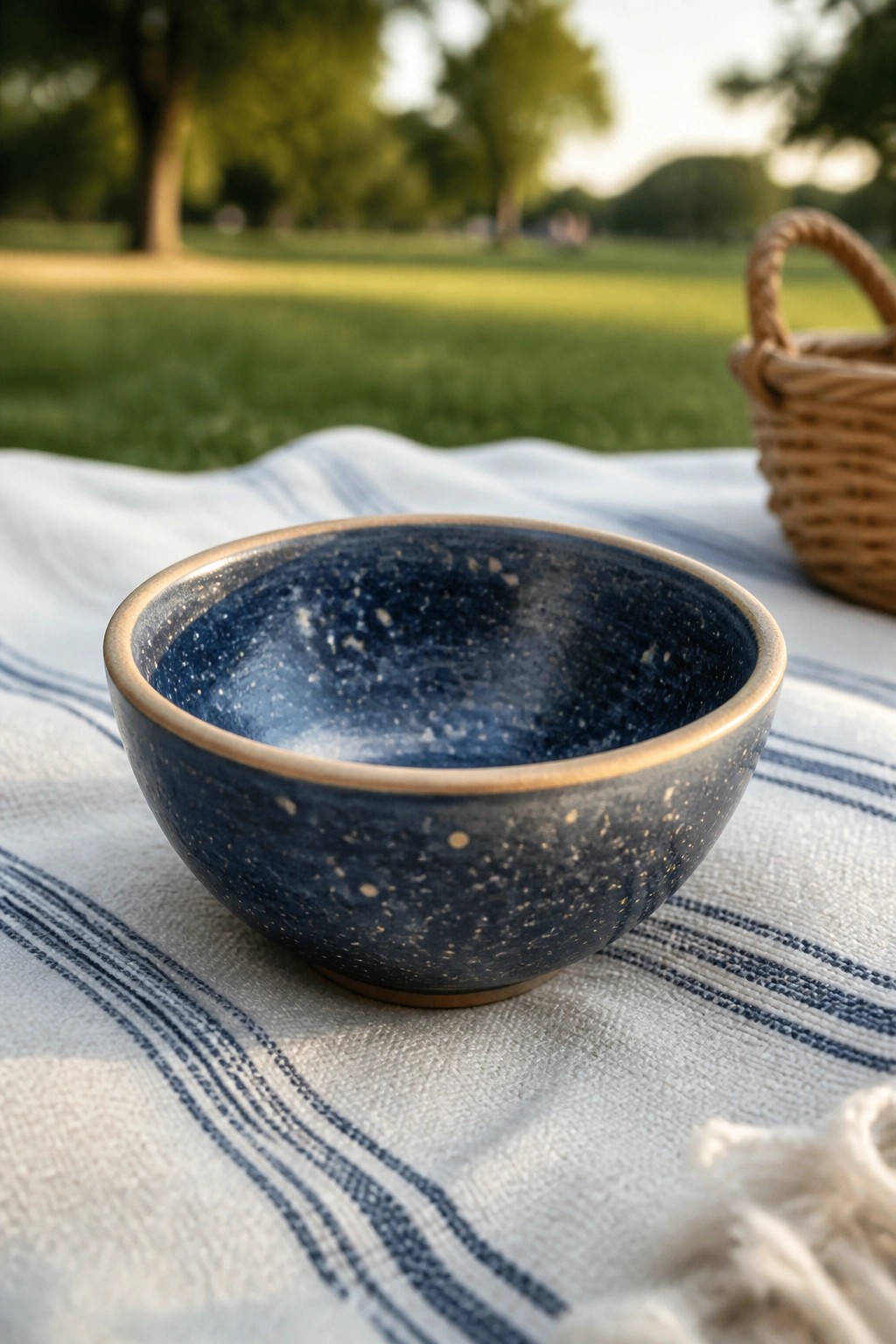
A painted pottery bowl with a dark blue base and scattered light speckles creates a simple starry effect using minimal pattern work. The round, open shape works well for mixing or serving, and the contrast between the deep glaze and the flecks gives the surface visual interest without needing extra lines or shapes. Leaving the rim in a lighter tone keeps the focus on the speckled field inside. This approach suits the painted bowl category for both functional kitchen pieces and small decorative accents.
The shape does a lot of the work here because the curved interior shows off the speckles evenly from any angle. You can adapt the same idea by switching the base color to black or charcoal and varying the speckle size for a different mood. In a kitchen, this kind of piece holds up well as a fruit bowl or dip server, while the small scale makes it easy to repeat for a matching set. For a gift, keep the speckles loose and irregular so each bowl looks unique without extra effort.
Concentric Stripe Ring Dish
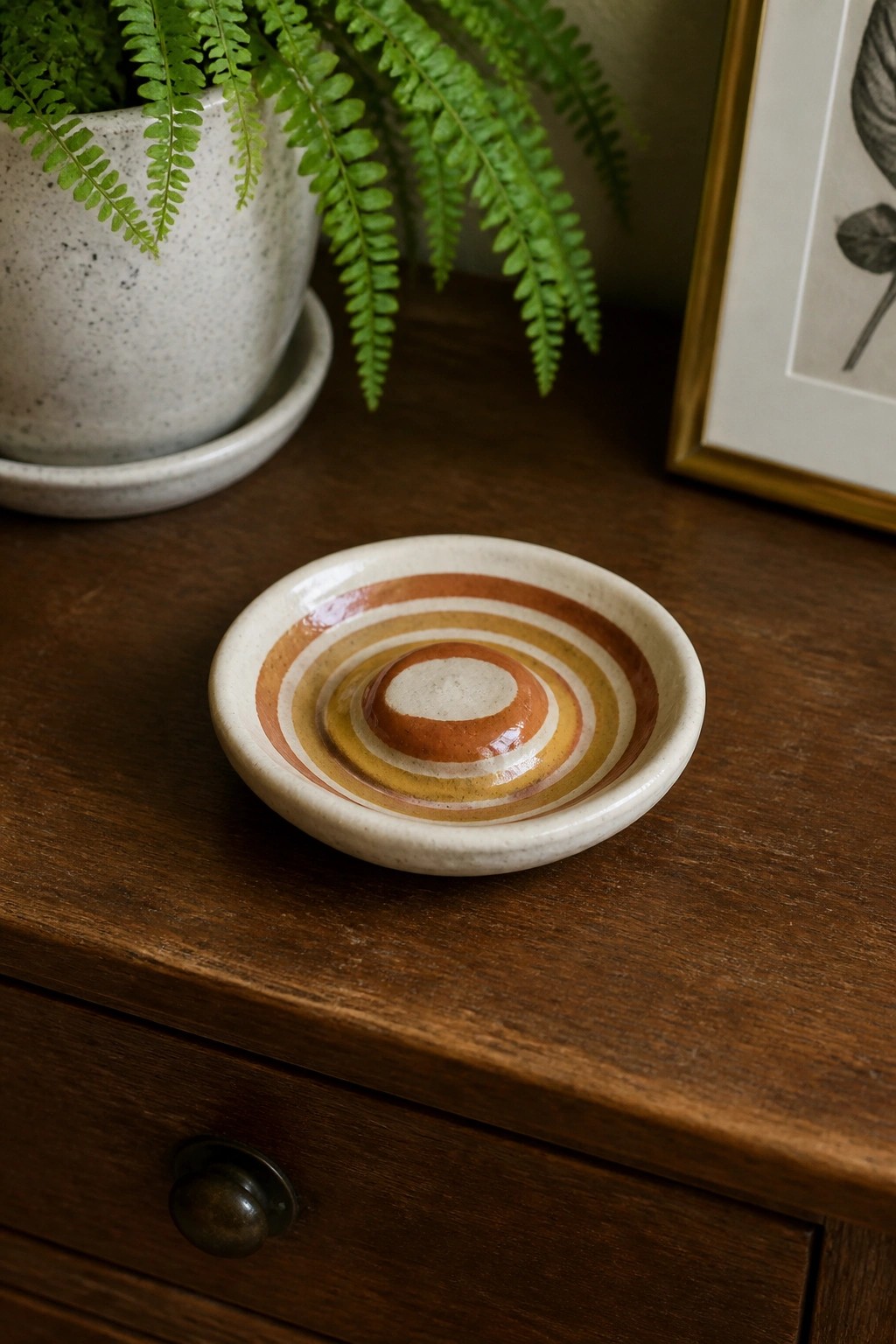
A small shallow bowl makes an easy canvas for concentric rings in warm earth tones like terracotta, mustard, and cream. The rings follow the natural curve of the form and create a simple bullseye pattern that stays centered even on an uneven handmade surface. This approach fits the ring dish or trinket bowl category and works best on a compact scale where the stripes can be painted quickly without crowding the space.
What makes this idea useful is how the same ring layout transfers to other small shapes like a square soap dish or a narrow spoon rest. Use three or four colors from the same palette to keep the session short while still getting clear contrast. The small size also means it fits easily on a dresser or bathroom counter without taking up much room.
Painted Leaf and Berry Border Bowl
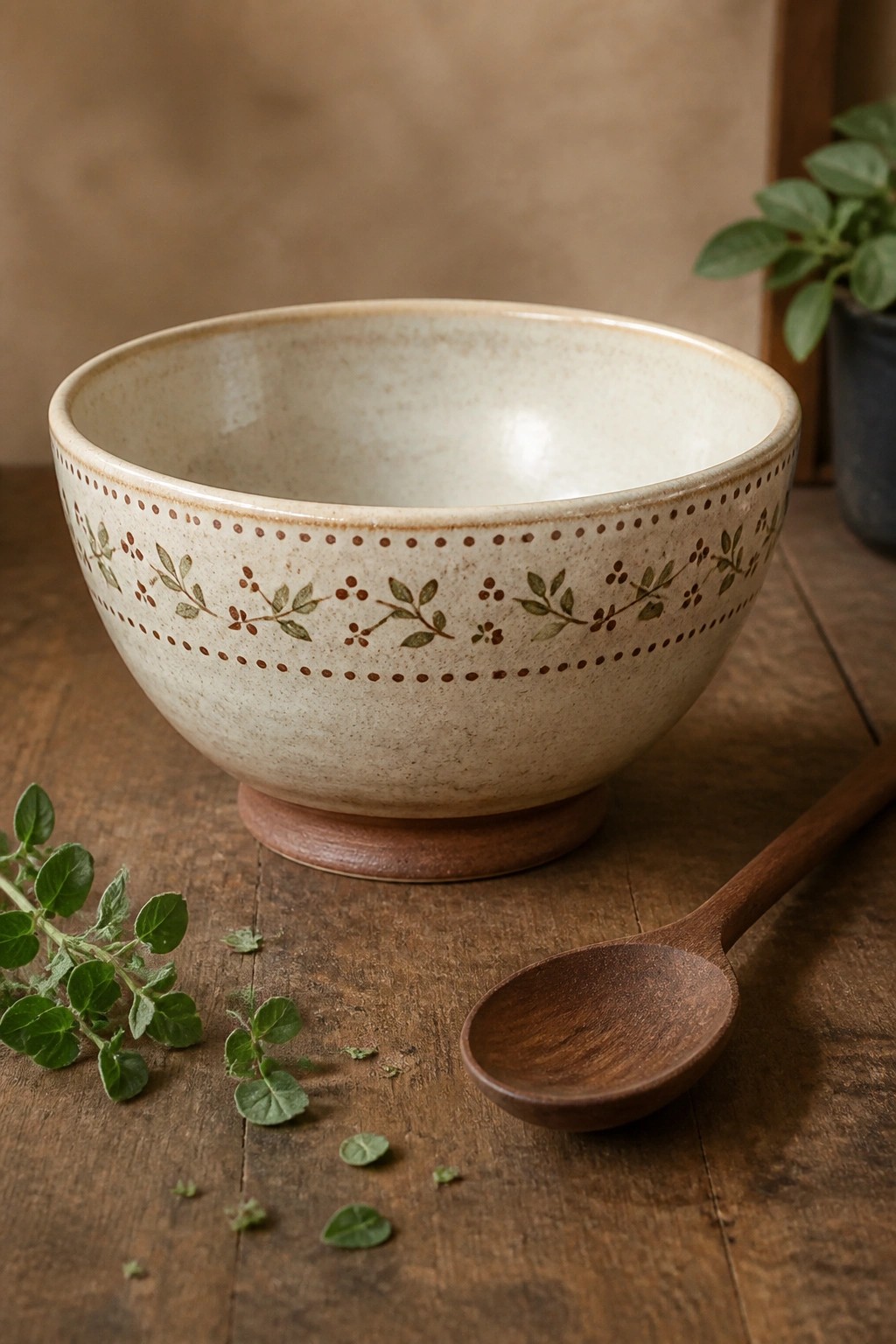
A bowl with a repeating botanical border gives you a clean way to add detail without covering the whole surface. Paint a line of small dots first to create a frame, then add short vines of leaves and berries in between using two or three colors. The light base glaze keeps the design readable and lets the shape of the bowl stay visible. This style works as a simple kitchen or table bowl that still shows the handmade surface.
What makes this idea useful is how the narrow border leaves most of the bowl plain for easy glazing or quick painting. You can change the leaf and berry motif to other small repeats like dots and dashes or tiny flowers without changing the layout. A piece like this works especially well as a mixing bowl or a serving dish because the design sits above the food area. The same border can be shortened to fit a smaller dessert bowl or a shallow tray if you want to test the pattern first.
Cloud Faces Painted on a Bowl
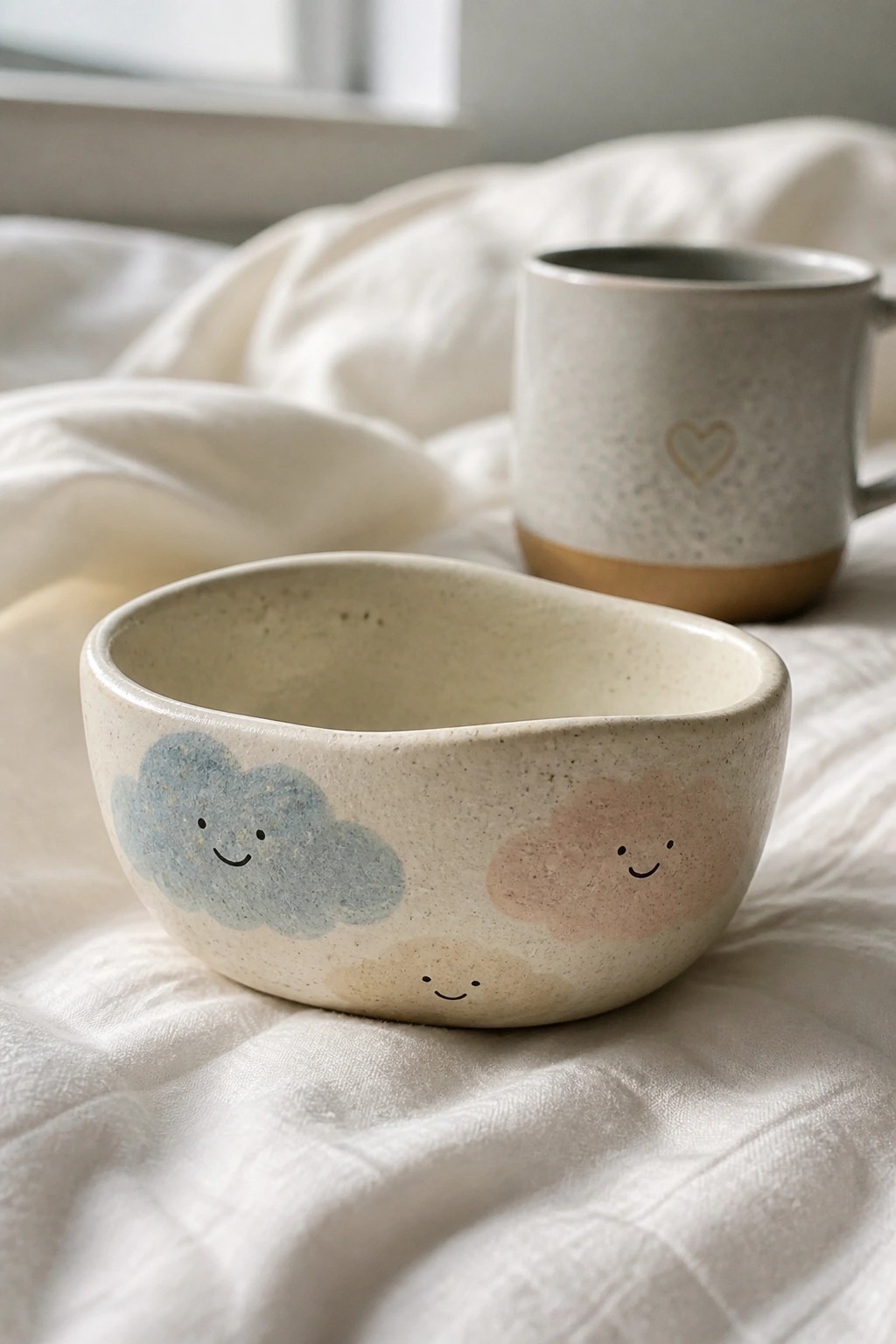
A low, wide ceramic bowl works well for this approach because the curved exterior gives you a clear surface for repeating a simple motif. Three cloud shapes are painted around the outside in soft blue, pinkish-tan, and beige, each with a small black face added using basic dots and lines. The speckled clay base keeps the look casual while the painted details stay minimal and easy to repeat.
What makes this idea useful is how the same cloud-and-face layout can be changed to stars, leaves, or waves without altering the bowl shape. The low profile makes it practical as a desk catch-all or small snack bowl. You could apply the face detail to a matching mug or plate set, or scale the motif down for a ring dish if you want a quicker project.
Zigzag Painted Bowl
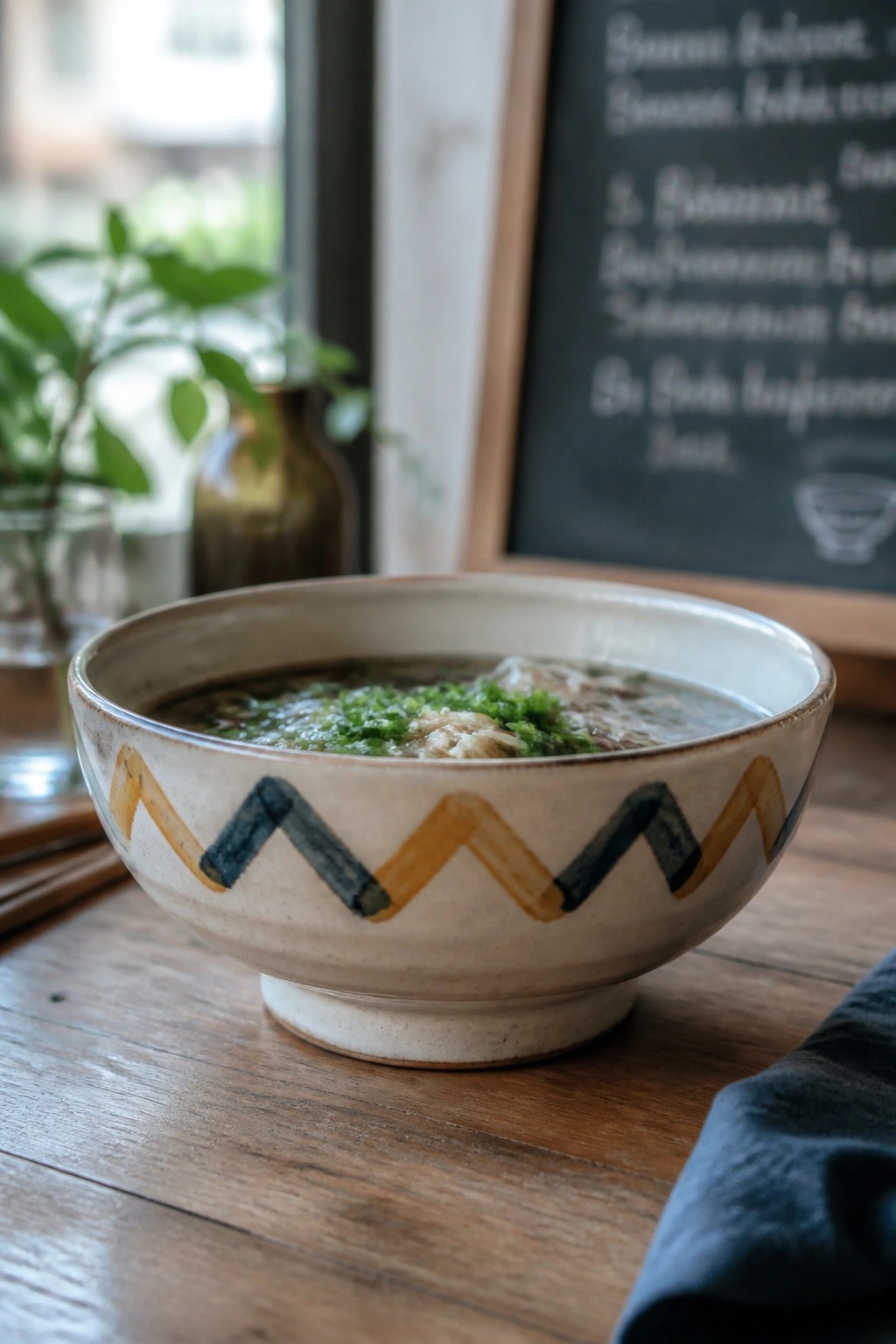
A painted bowl with a bold repeating zigzag band around the exterior gives a simple way to add pattern to a functional piece. The design uses two strong colors against the light clay to create clear contrast that reads well from a distance. This fits the straightforward paint-your-own pottery bowl category where the focus stays on the painted motif rather than added texture or sculpting.
What makes this idea useful is how the geometric band can be adjusted in width or spacing to fit bowls of different sizes. You could repeat the same motif on a set of smaller bowls or stretch it into wider stripes on a larger serving piece. In a kitchen this shape works for soups or salads and the painted detail keeps it from blending in with plain dishware. The same pattern would also translate easily to a tray or planter if you want to carry the look across other objects.
Rainbow Striped Bowl
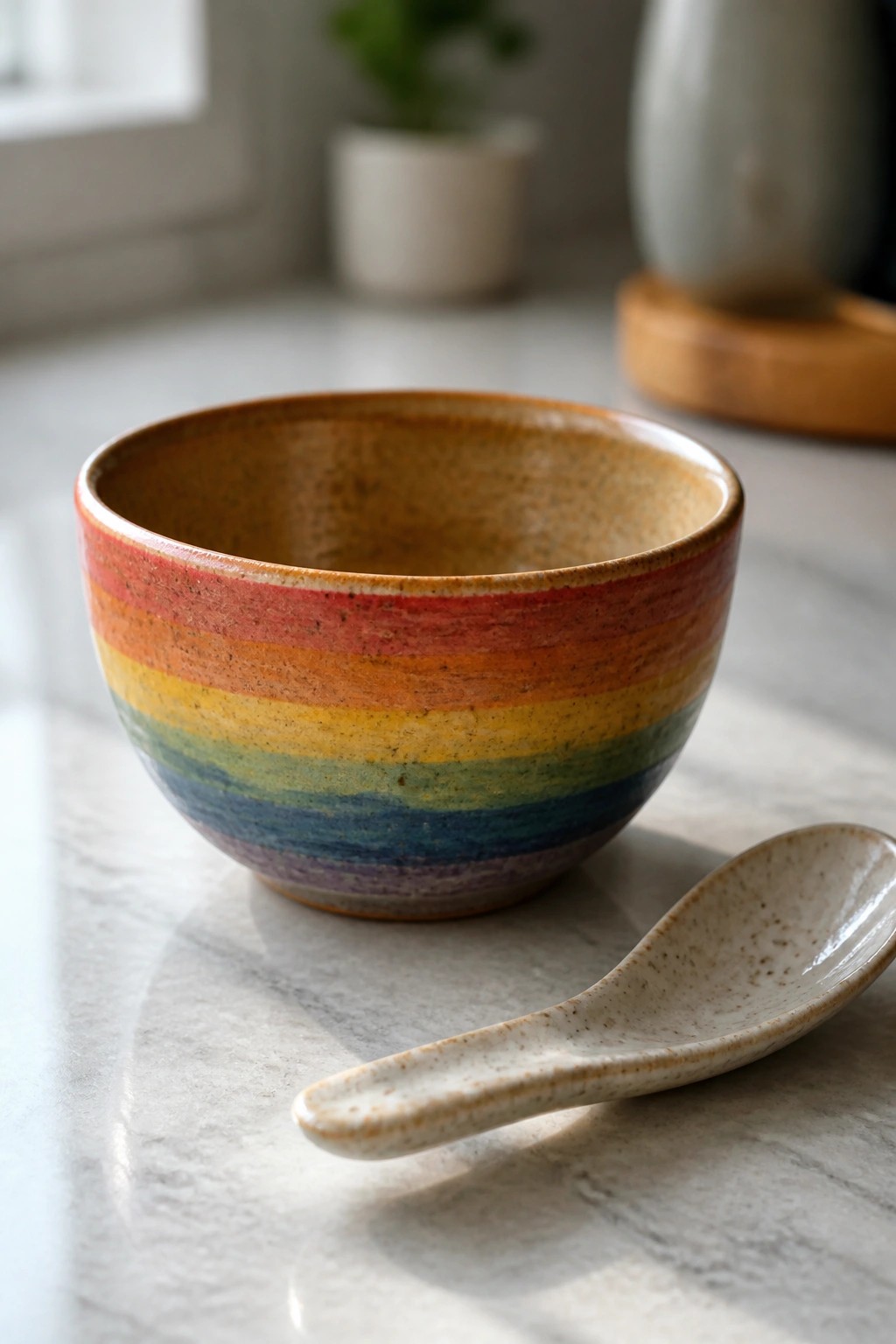
A painted ceramic bowl with even horizontal stripes in rainbow colors creates a straightforward studio project. The design uses bands of red, orange, yellow, green, blue, and purple that wrap around the form, leaving the natural speckled clay visible between layers. This approach works for a standard eating or serving bowl and relies on simple brushwork rather than complex carving or sculpting.
What makes this idea useful is how the stripe layout adapts to different bowl sizes without extra tools. You can shorten the color sequence on a smaller piece or extend it on a larger one for salads or mixing. The pattern also translates well to other functional items like a mug or small tray if you want to repeat the same color order across a set.
Daisy Painted Scalloped Bowl
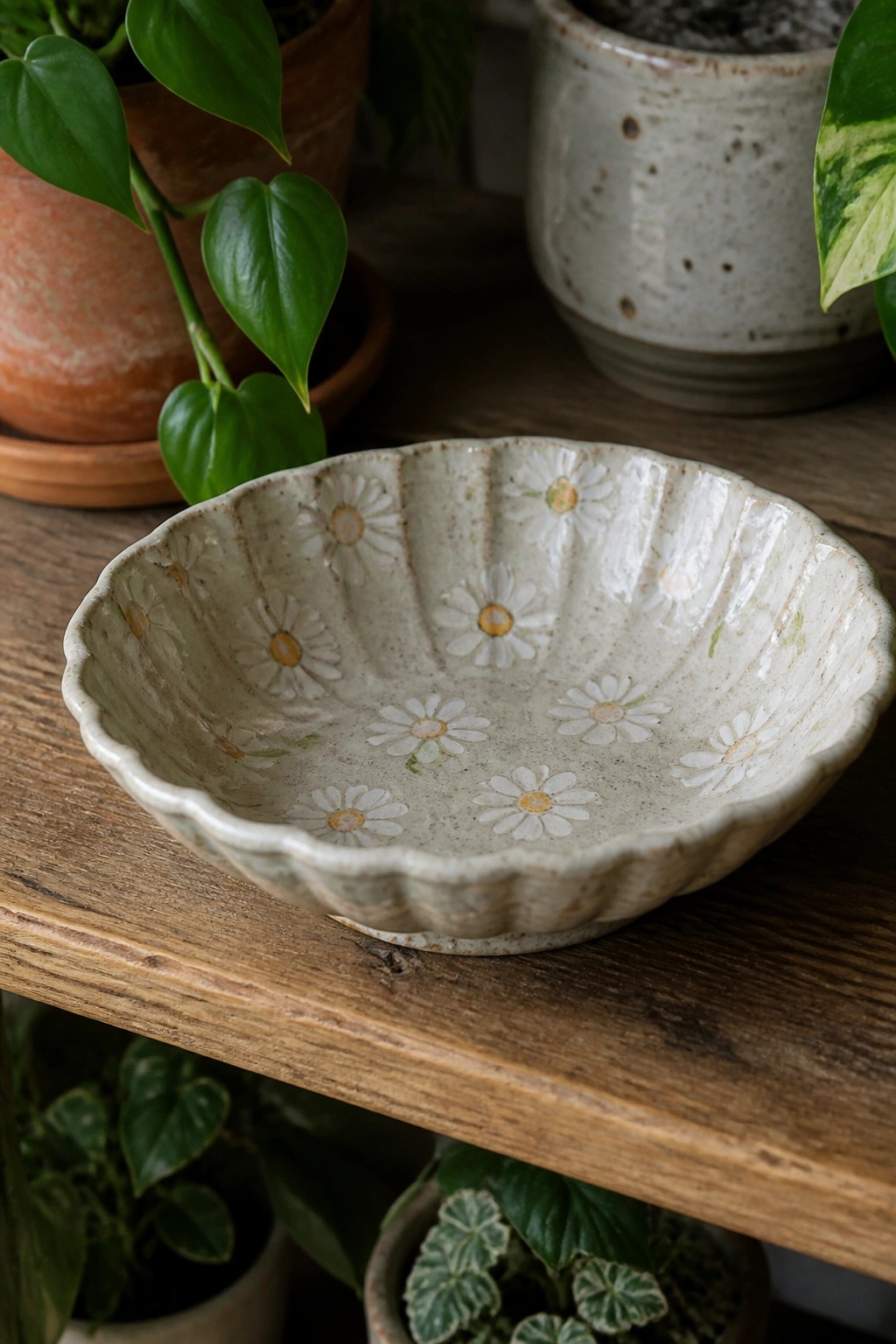
A simple daisy pattern on a fluted bowl gives you an easy way to add a repeating motif without needing advanced painting skills. Choose a bowl shape with a scalloped rim and paint small white flowers with yellow centers along the interior curve, spacing them evenly so the design follows the form. The speckled glaze underneath keeps the surface textured and prevents the flowers from looking flat against a solid background.
The shape does a lot of the work here because the rim already creates movement before any paint is added. You could repeat the same daisy layout on a smaller ring dish or scale it up for a serving bowl. In a kitchen this piece works for snacks or fruit, while the same idea on a plain round bowl would still read as fresh. The motif stands out on Pinterest because the flowers are clear and the rim detail adds instant structure.
Wavy Blue Glaze Bowl
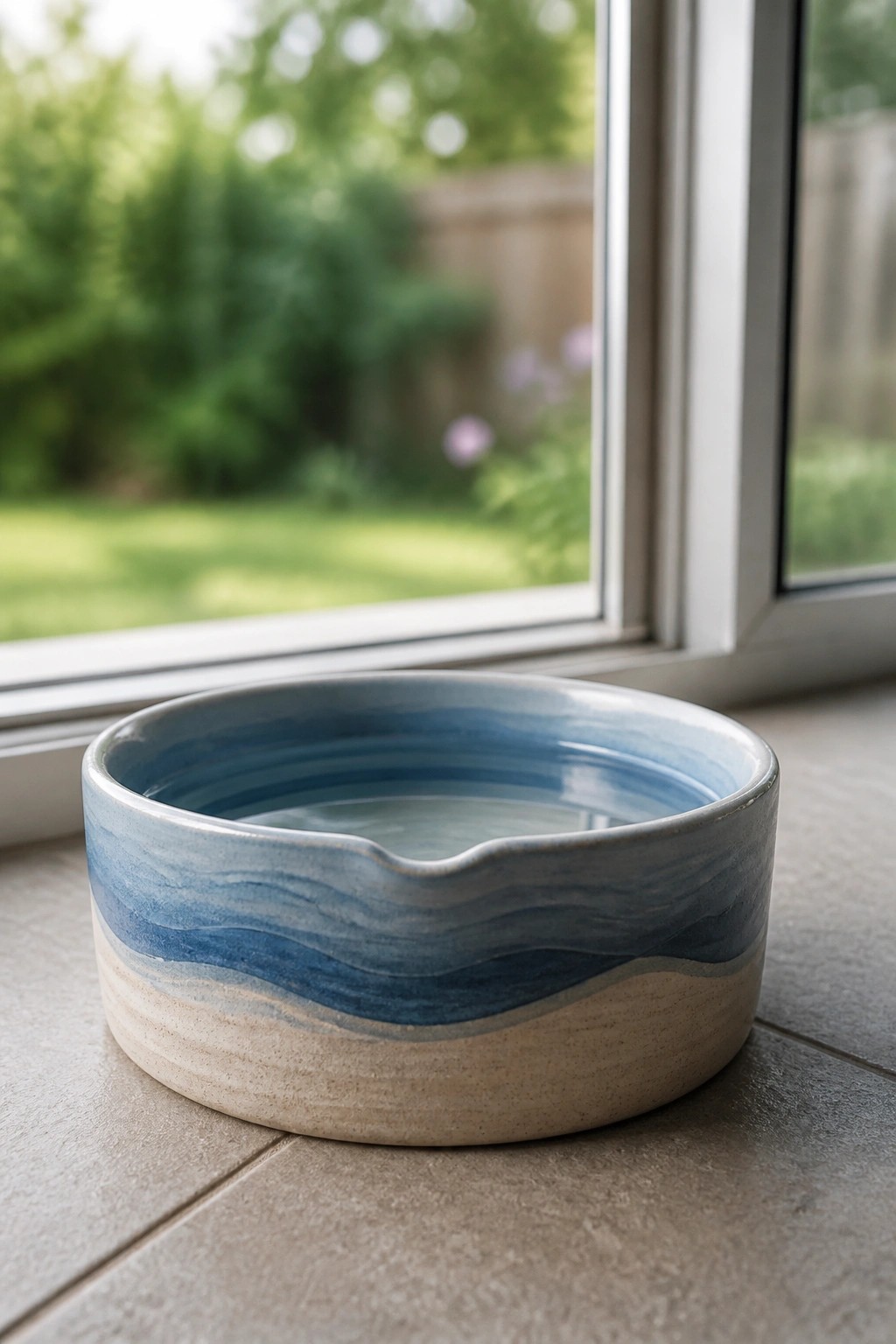
A wide, low bowl painted with horizontal wavy lines of blue glaze creates a simple water effect by stacking several shades across the upper half while leaving the bottom in raw clay. The irregular lines give the design movement without requiring precise brushwork, and the contrast between the blue bands and the lighter base keeps the pattern from feeling flat. This approach suits painted bowl projects where the glaze application itself becomes the main feature.
What makes this idea useful is how the wave pattern scales to different bowl sizes or even transfers to plates and trays with little change. You can adjust the stripe width or swap in other colors like greens or grays to match a room. A piece like this works especially well as a small catch-all near a window or on a shelf, and the same horizontal layering method simplifies further if you want to test it on a first attempt.
Painted Fruit Motif Bowl
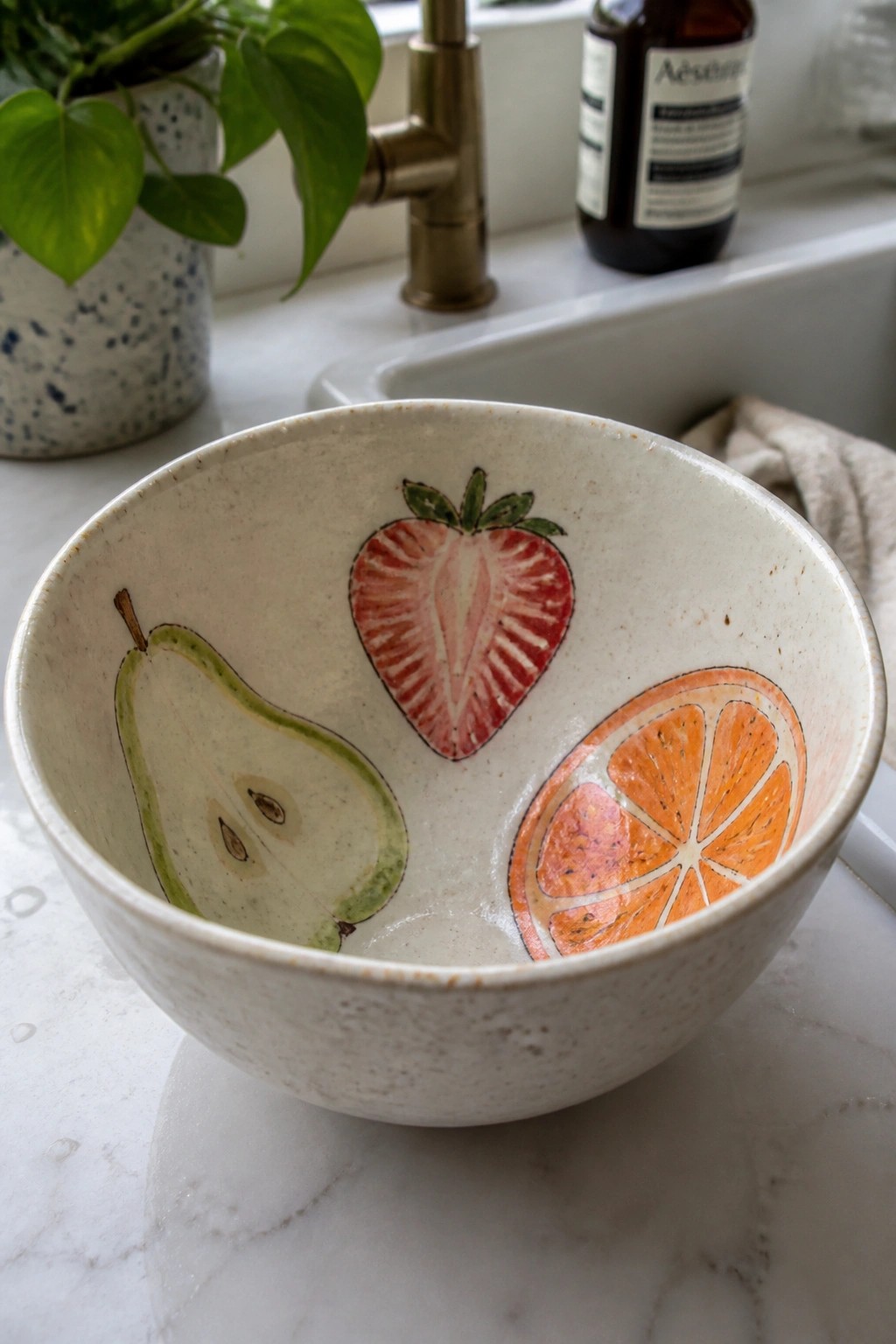
A round ceramic bowl with three loose fruit paintings inside gives a direct way to practice simple food illustrations on a functional shape. The design shows a halved pear on one side, a cut strawberry at the top, and an orange slice on the right, all done in flat color with light shading. The speckled clay surface lets the painted areas stand out while keeping the overall look casual. This idea falls into the kitchen bowl category and works for holding snacks or fruit on a counter.
What makes this idea useful is how the wide interior curve gives each fruit its own clear space without overlap. You could rework the same motifs onto plates by using just one fruit per piece or shrink them for a set of small prep bowls. In a kitchen this shape holds produce or serves as a catch-all near the sink. The small scale also makes it easy to try the same painting style on a mug or tray if you want to test the idea first.
Bamboo Painted Bowl for Incense
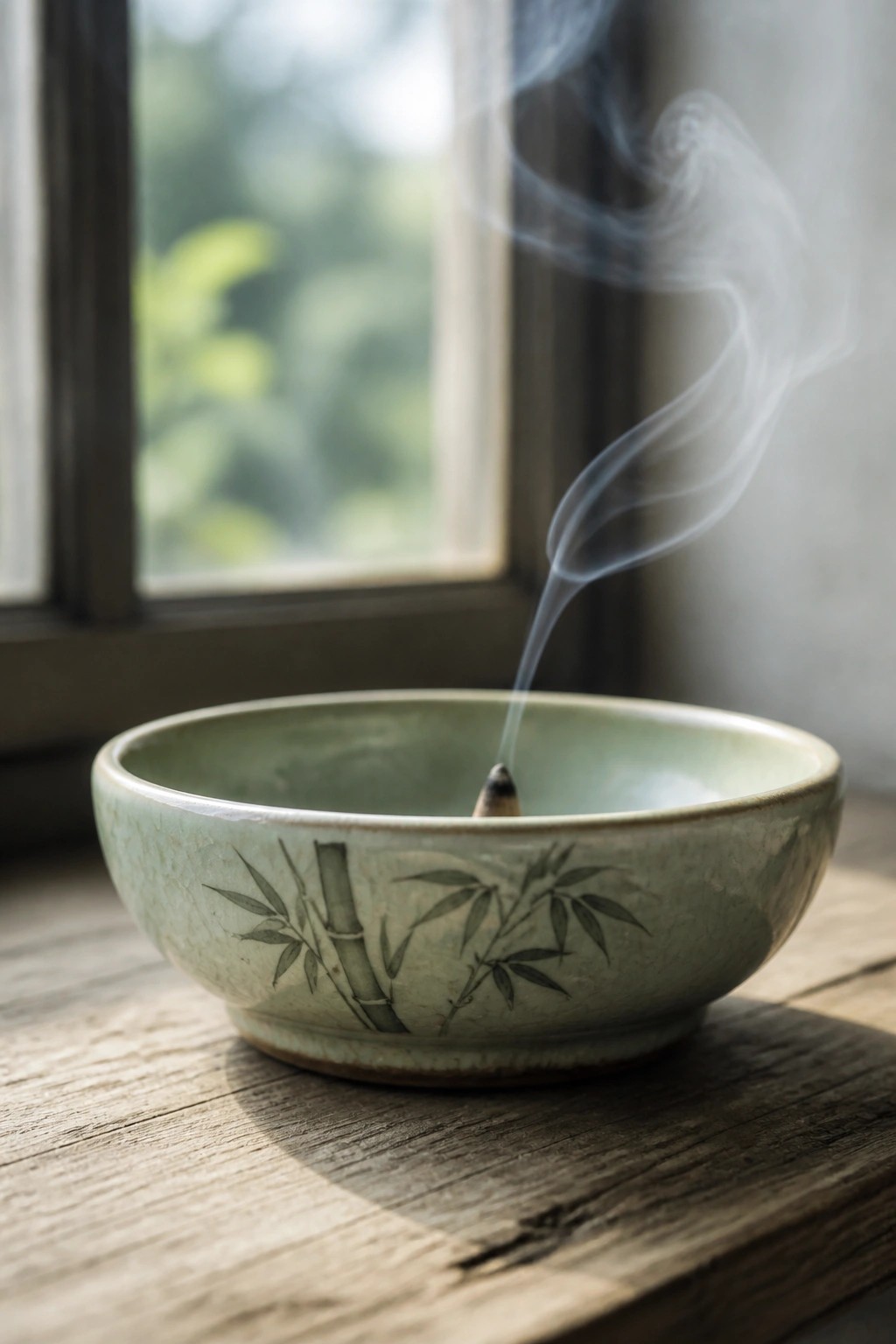
A shallow ceramic bowl finished in a soft green crackle glaze makes a simple base for a hand-painted bamboo motif. The design shows a few stalks and leaves in dark slip or underglaze, placed around the outside so the pattern stays visible when the bowl sits on a surface. This approach turns an ordinary bowl shape into a working incense holder while leaving the interior open for other small uses.
The shape does a lot of the work here because the low profile fits easily on a desk or shelf without crowding other items. You can copy the same bamboo layout on a slightly deeper bowl to hold rings or keys, or swap the motif for simple grasses if you want a faster painting session. The limited number of strokes keeps the project beginner-friendly and makes the piece easy to repeat for gifts.
Fox Face Painted Bowl
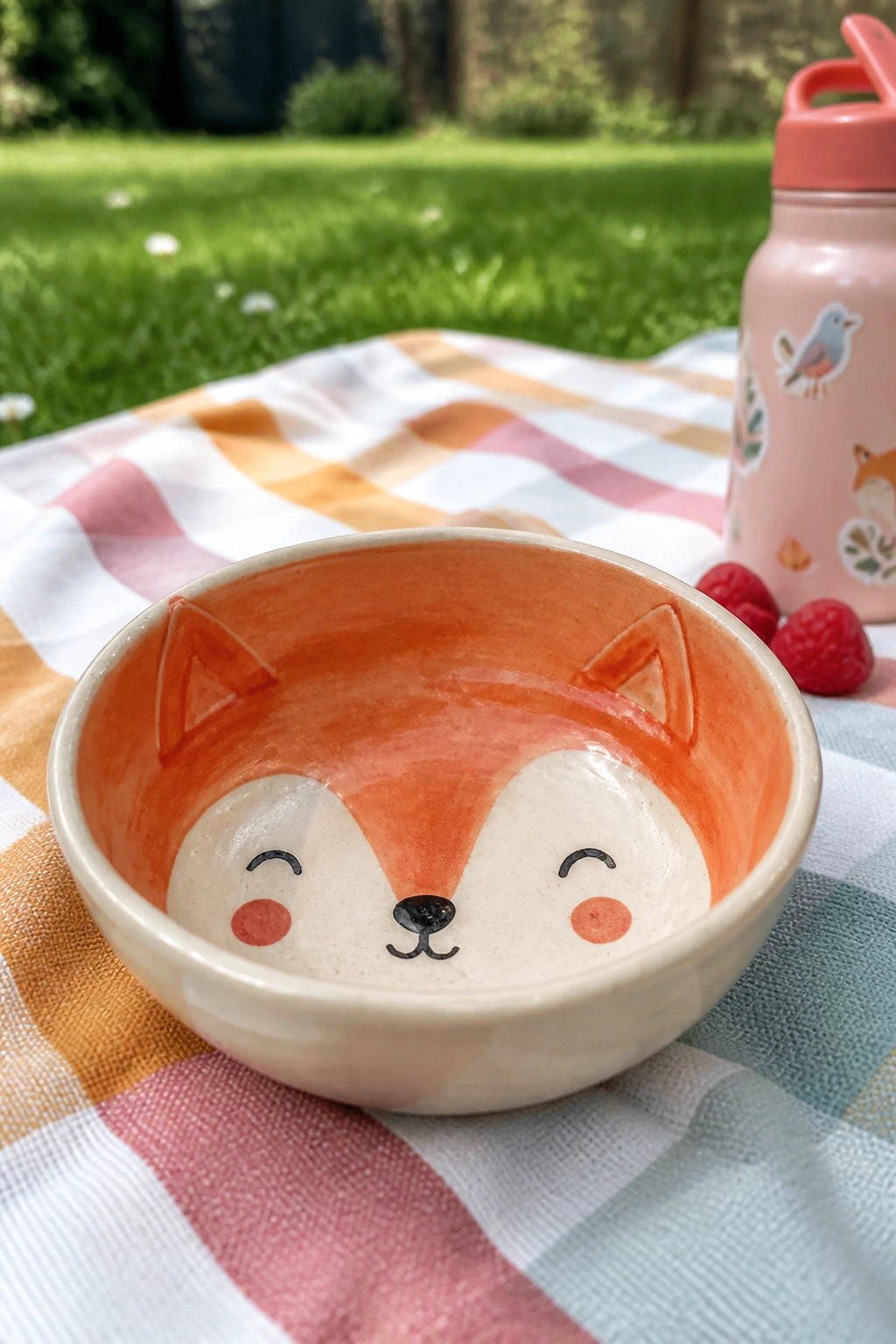
A painted ceramic bowl with a fox face uses an orange wash across the upper half to create the look of fur while the lower half stays in a light clay tone for the muzzle area. Black lines define the eyes, nose, and mouth, with small red dots for cheeks and simple triangular ears added at the rim. This keeps the design in the animal motif category for bowls and works as a small functional piece for snacks or sides.
The shape does a lot of the work here because the rounded form already suggests a face once the ears are added. It works well as a kid-sized snack bowl or for portioning fruit at the table. You could adapt the same layout to a cat or raccoon by changing the ear placement and color washes. For a gift, something like this turns a basic bowl into a personal item without needing detailed painting.
Repeating Circle Pattern on a Ceramic Bowl
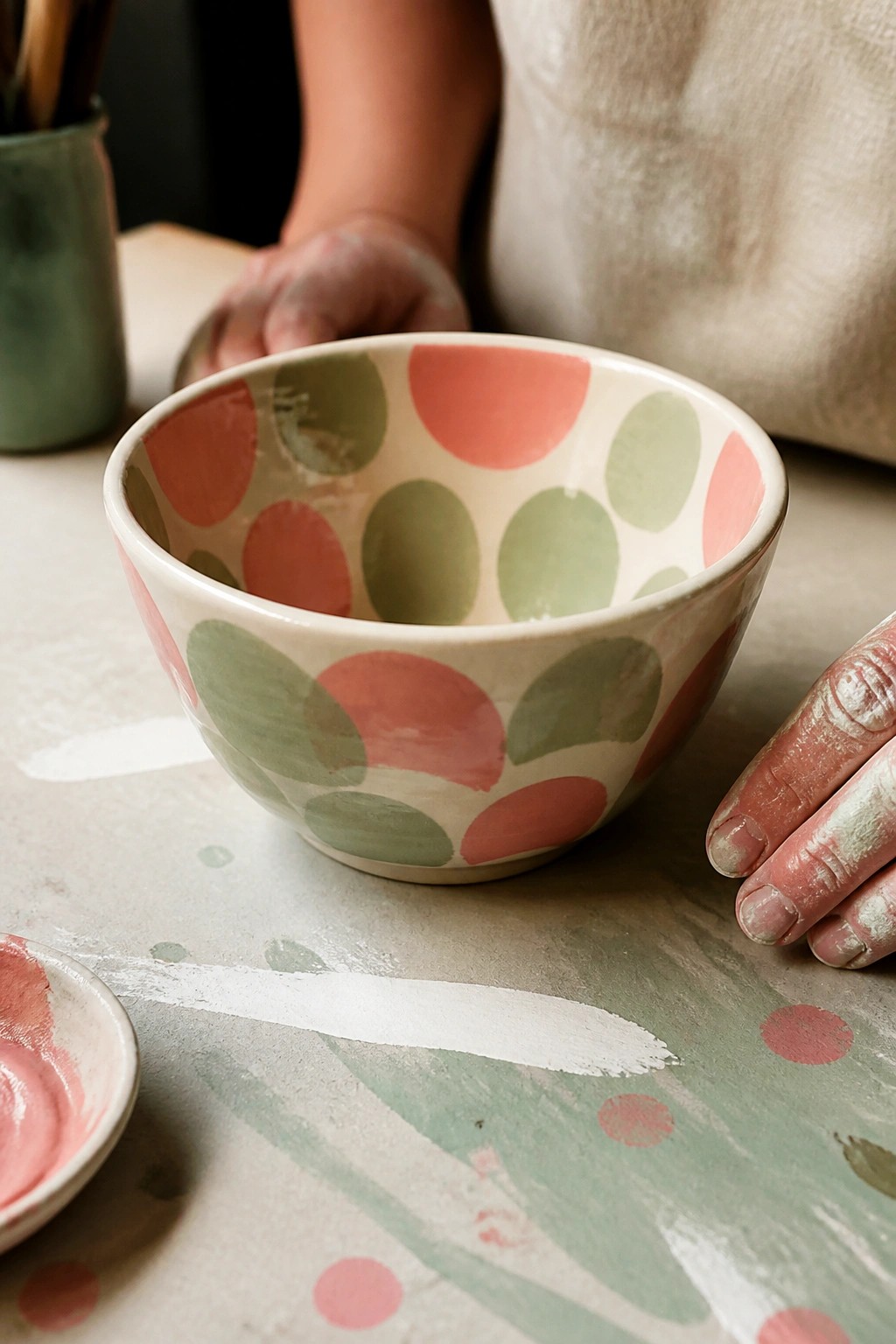
A wheel-thrown bowl gets its surface pattern from large overlapping circles painted in two shades of coral and two shades of green. The circles vary slightly in size and placement so they wrap around the curved form without looking rigid. Using two related hues in each color keeps the design lively while still letting the white clay show through between shapes.
What makes this idea useful is how simple it is to adjust the circle size to fit different bowl diameters. The same motif could be reworked on a smaller pinch bowl or stretched across a wider serving dish by spacing the shapes farther apart. In a kitchen this kind of bowl works for snacks or as a fruit holder, and the two-color approach makes it easy to match existing dishware without buying new glazes.
Sunburst Painted Small Ceramic Bowl
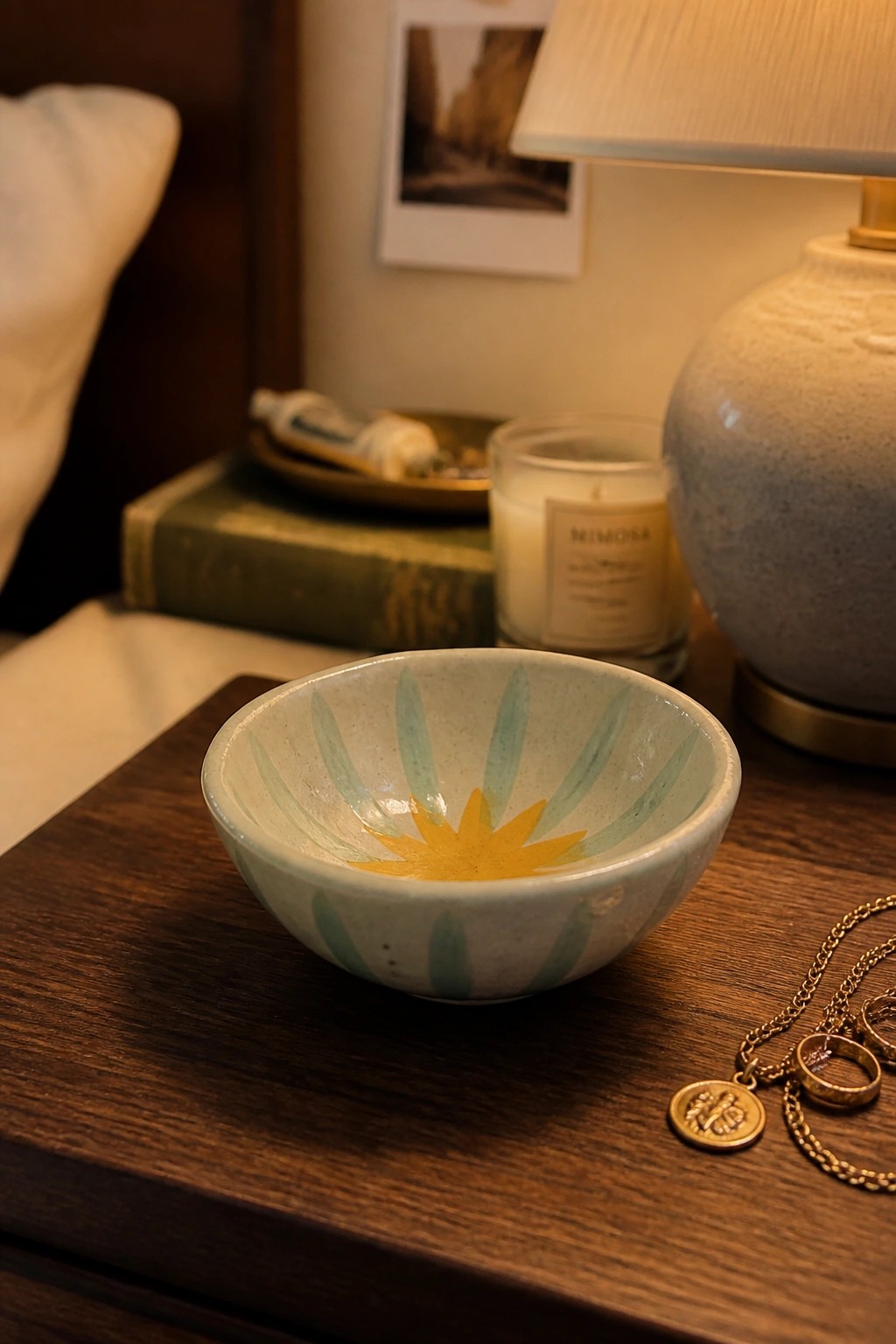
A small round bowl works well for this idea because its curved surface lets the painted design radiate naturally from the center. The pattern uses a solid yellow circle at the base with simple teal brush strokes fanning outward to create a sun or petal effect. The light glaze background keeps the colors bright and makes the motif stand out without needing extra layers. This fits the paint-your-own bowl category as a quick decorative or catch-all piece rather than a large serving dish.
The small scale makes this easy to finish in one studio session and keeps the focus on the painted motif. A piece like this works especially well as a nightstand dish for rings or as a desk holder for small items. You could adapt the same radiating strokes to different color combinations or stretch the design across a slightly larger bowl shape. The clean lines also translate easily if you want to try the idea on a plate or tray instead.
Speckled Glaze Dipping Bowl
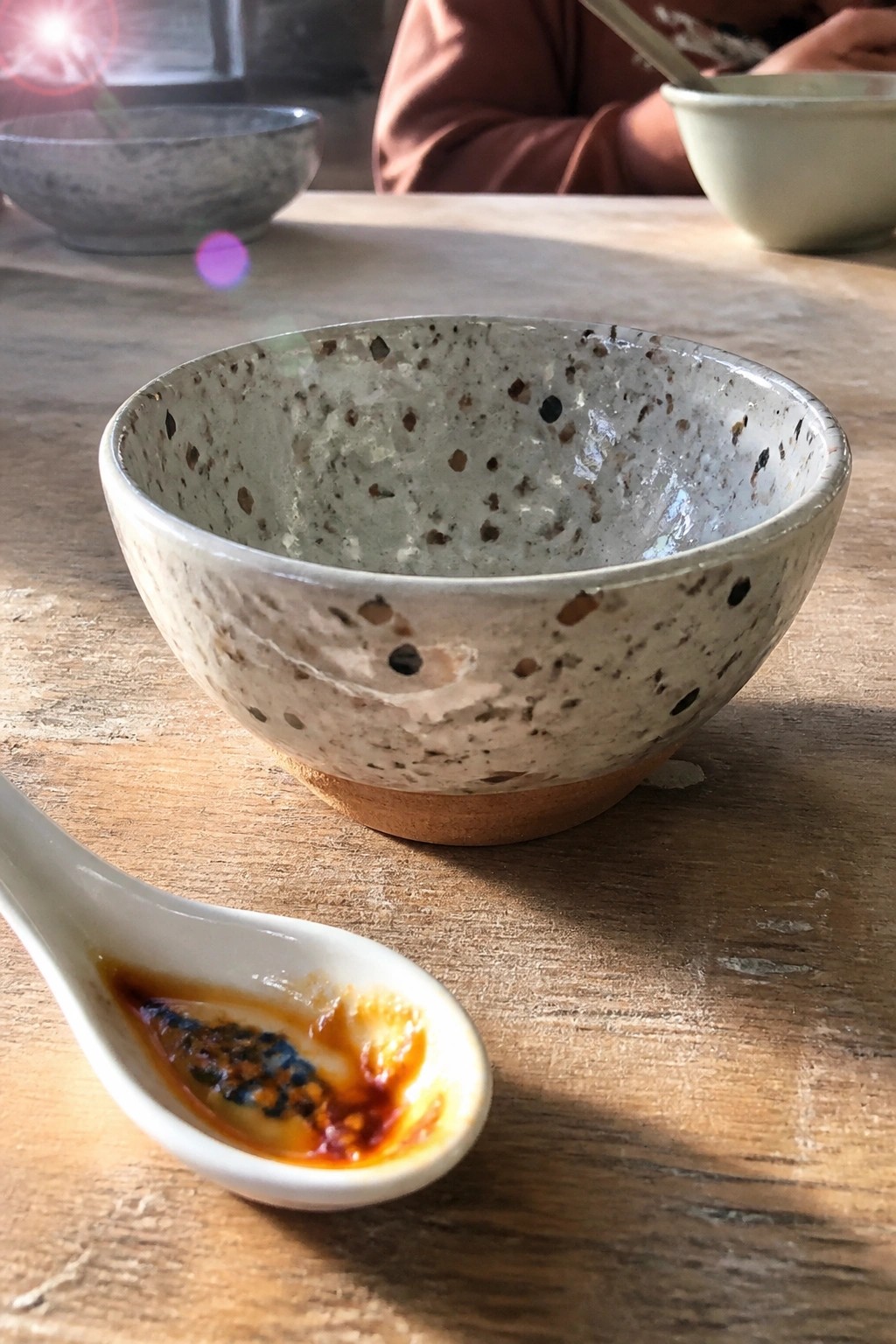
A small ceramic bowl finished with a mottled speckled glaze produces an organic pattern of dark spots scattered across a light, off-white surface. The glaze application creates variation in coverage and tone without requiring precise brushwork or added decoration. This style suits a compact kitchen bowl intended for sauces, condiments, or single servings.
What makes this idea useful is the way the speckled effect masks uneven application while still reading as deliberate. You can replicate it on a set of four bowls for consistent tableware or scale the same glaze to a larger mixing bowl. The small size keeps it practical for dips or side portions and works well as a starting project when testing new glazes.
Frequently Asked Questions
What supplies should I bring to a paint your own pottery studio session for these bowl ideas?
Most studios provide paints, brushes, and aprons, but it helps to bring a sketchbook with your chosen ideas from the list noted down along with any personal color preferences. A small container of water for rinsing brushes and a towel for drying can keep your workspace clean. If the studio allows, pack reference images on your phone for quick looks during the session.
How can I make the simple bowl designs food safe after painting?
Ask the studio staff about their glazing and firing process since many places apply a clear food safe glaze over your painted designs before firing them in a kiln. Avoid painting the inner bowl surface if the studio does not guarantee food safety, and always confirm the final pieces can handle everyday use like serving snacks or salads.
What should I do if I make a mistake while painting one of the bowl ideas?
Wipe away wet paint gently with a damp sponge or paper towel right away to avoid smearing. For dried mistakes, many studios let you sand the area lightly before repainting or cover it with a new layer of a different color from your chosen idea. Practice on a spare tile first if available to test corrections without risking your main bowl.
How long does it typically take to complete one of these painted pottery bowl projects in a studio?
Plan for one to two hours of active painting time depending on the complexity of the idea you select, such as simple stripes versus layered patterns. Add extra time for the piece to dry between coats if needed and for the studio to handle glazing and firing, which often takes several days before you can pick up the finished bowl.
Can I personalize these bowl ideas with my own twists while keeping them simple?
Yes, start with a base design like geometric shapes or nature motifs from the list and add personal elements such as initials, favorite colors, or small symbols that represent hobbies. Keep additions minimal to avoid overcrowding the bowl surface and test your changes on paper first to ensure the overall look stays balanced and easy to execute.

Pottery Path is my cozy corner of the internet where I share clay ideas, pottery inspiration, and simple projects you can recreate at home. I love exploring everything from air dry clay to handbuilt pottery to cute minis that brighten your day. My goal is to make clay crafting feel easy, fun, and welcoming for anyone who wants to try it.
You will find beginner friendly tutorials, creative pottery painting ideas, and lots of warm inspiration for slow and happy crafting. If you enjoy hands on creativity, this space will feel like home.