
I have been handbuilding pottery for a few years now and I find it lets me try shapes that feel more like sculptures than regular pots.
Sculptural forms give the work a different look and I like playing around with balance and texture in simple ways.
Some of my recent pieces started from basic ideas about stacking or carving clay rather than making something to hold water.
I gathered a few approaches that keep the focus on the form itself and how it sits in a space.
These might be useful if you want to move away from the wheel and build something that stands on its own.
Sculptural Vase with Folded Vertical Seams
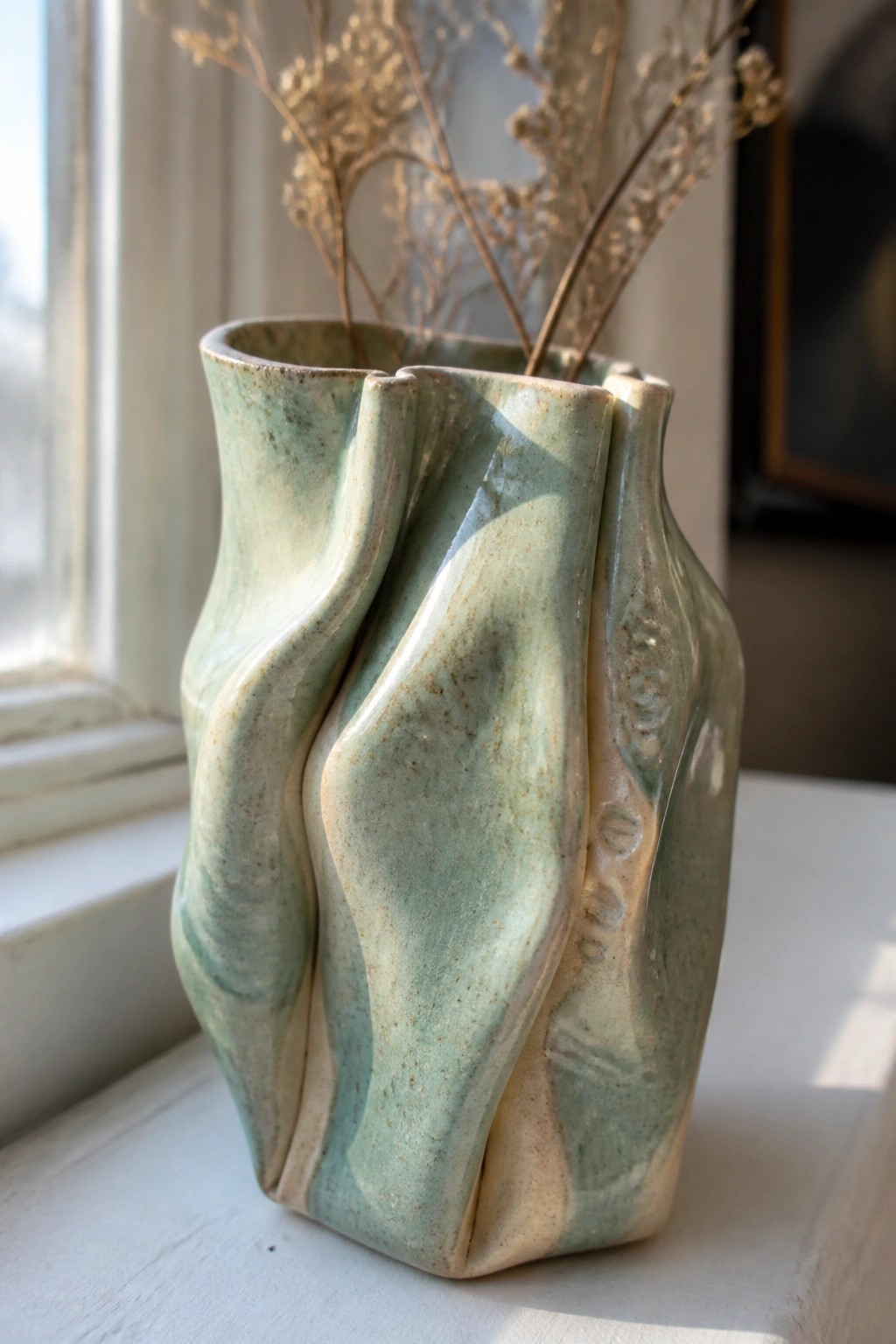
A handbuilt vase formed by pinching and folding clay into vertical undulations creates a faceted surface that shifts in width from top to base. The design uses overlapping seams and gentle curves to produce depth without added attachments. A mottled green glaze with beige highlights settles into the ridges, making the form changes more visible.
The shape does a lot of the work here by giving a standard vase more presence on a shelf or table. You could adapt the folding technique to a shorter cylinder for a small utensil holder or apply it to a wider opening for a planter. The glaze variation works well for testing different clay bodies since it shows texture clearly. This kind of piece photographs strongly for project sharing because the light plays across the uneven walls.
Hedgehog Planter with Carved Texture
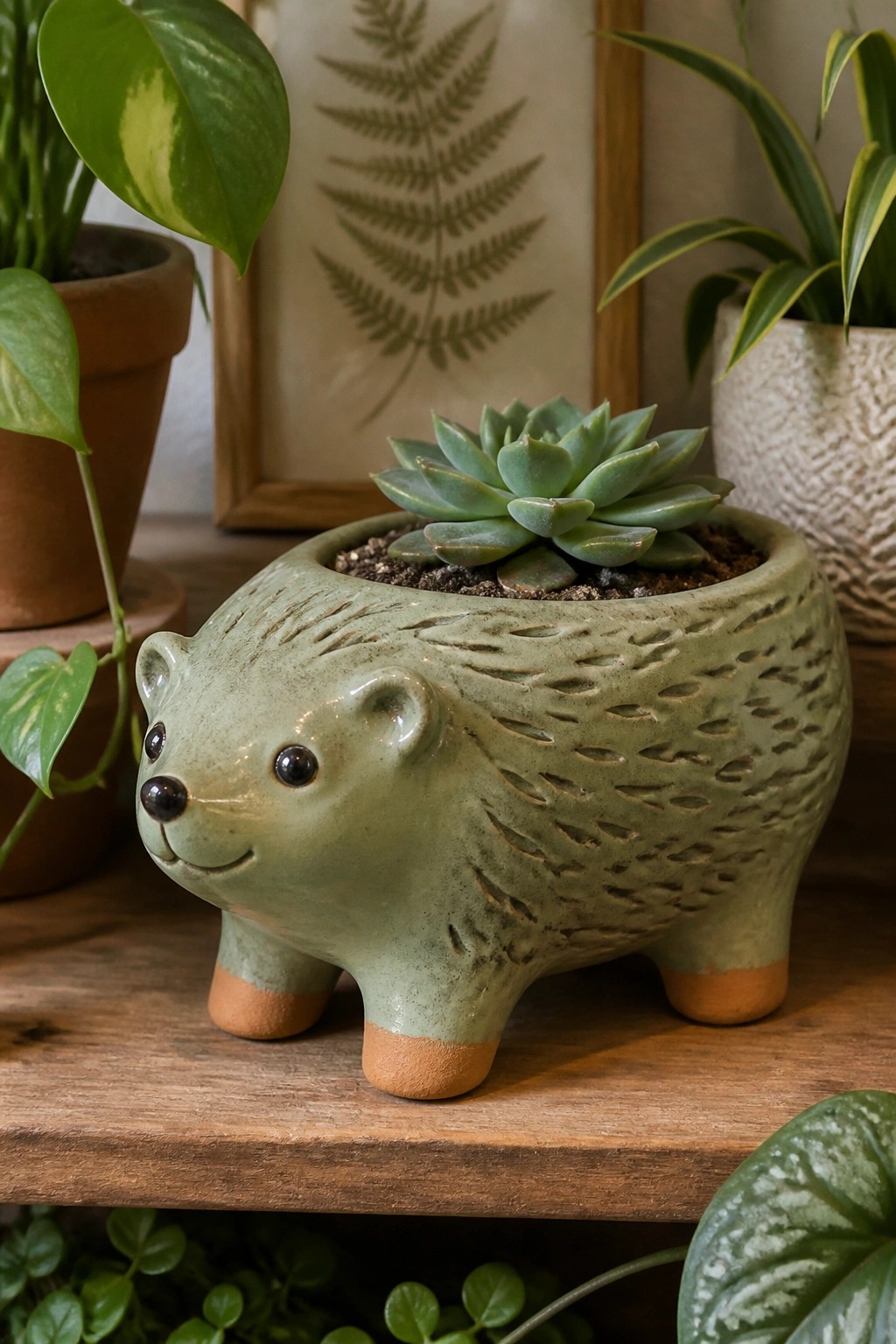
A handbuilt clay planter shaped like a hedgehog gives a simple way to display small succulents. The rounded body includes carved lines that suggest spines, while the short legs and face are formed from the same piece of clay. A matte green glaze covers the main form and leaves the feet in raw terracotta. This keeps the object clearly a functional pot while turning the shape itself into the main detail.
The small scale works well on a shelf or desk where a standard pot would feel plain. You can adapt the same idea by using a different animal or by pressing in texture with basic tools instead of carving. For plant styling, the low rounded shape lets the foliage stay the focus without competing. This kind of planter shows up well in photos because the form is easy to recognize from a distance.
Sculpted Face Mug

A handbuilt ceramic mug with a raised face on the front combines a standard drinking vessel with basic sculptural modeling. The face is built from simple clay additions that form the eyes, nose, and mouth directly on the mug body, keeping the handle and rim fully functional. This turns an ordinary mug shape into a project that practices both form building and surface relief without requiring complex molds or attachments.
What makes this idea useful is that the face can be simplified to just the eyes and mouth if you want a faster build or made more detailed once you get comfortable with adding volume. A mug like this fits well in a kitchen for everyday use or as a small gift since the sculptural part does not interfere with stacking or washing. You could easily carry the same relief face technique over to a small pitcher or planter by adjusting the curve of the base form.
Scalloped Rim Bowl with Speckled Blue Glaze
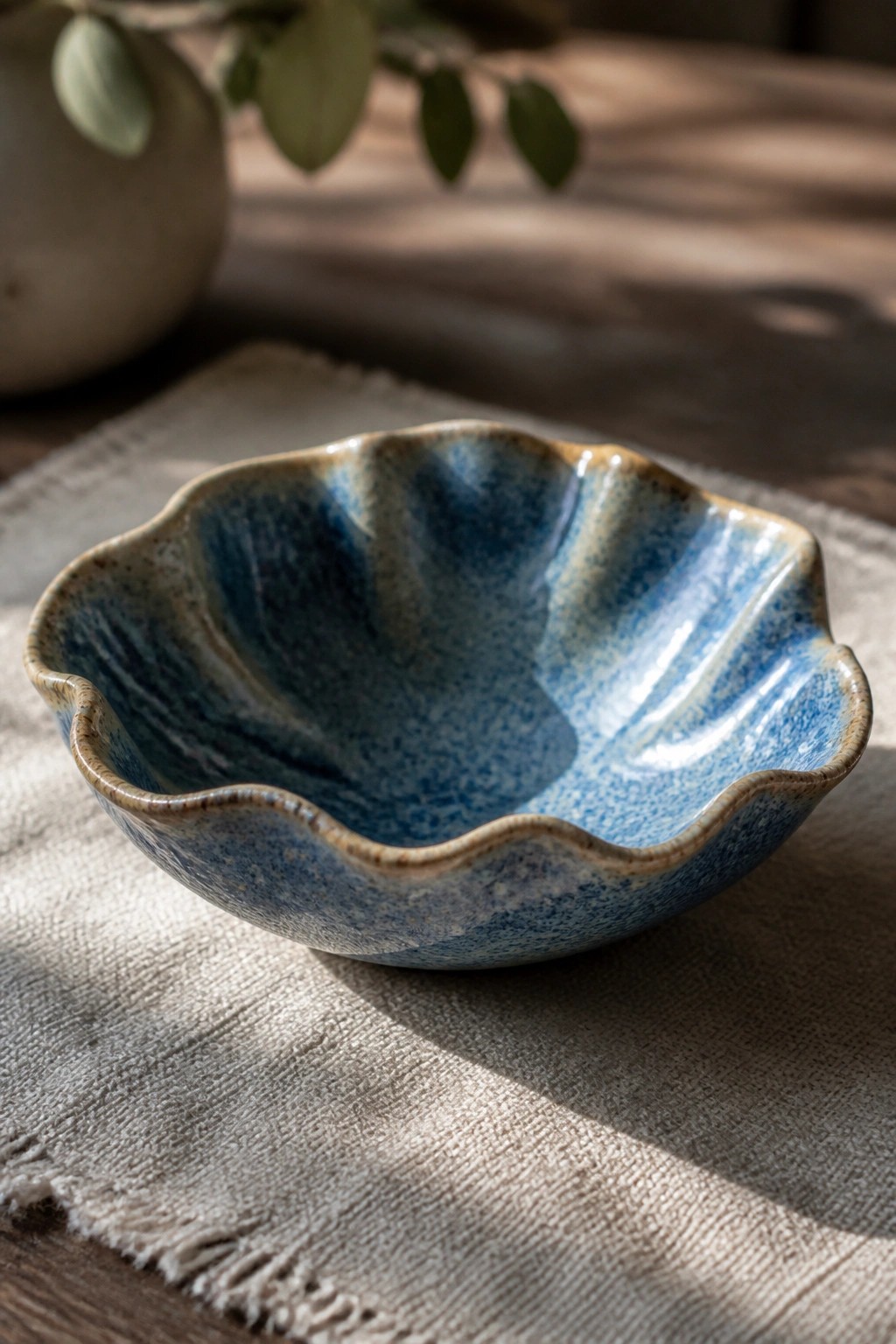
A handbuilt bowl shaped with a wavy scalloped rim creates a sculptural edge that draws attention to the form itself. The blue glaze covers the interior and exterior with varying tones and small speckles that emphasize the hand-shaped curves. This project fits the category of a decorative or serving bowl where the rim detail adds interest without extra attachments or handles.
What makes this idea useful is the rim technique can be repeated on different sizes to make matching sets for snacks or small sides. The shape works well on a dining table or countertop where the edge catches light and stands out against simpler dishes. You could adapt the same scalloped method to a low tray or shallow plate if you want to change the function while keeping the sculptural focus.
Handbuilt Relief Tile with Bird and Leaves
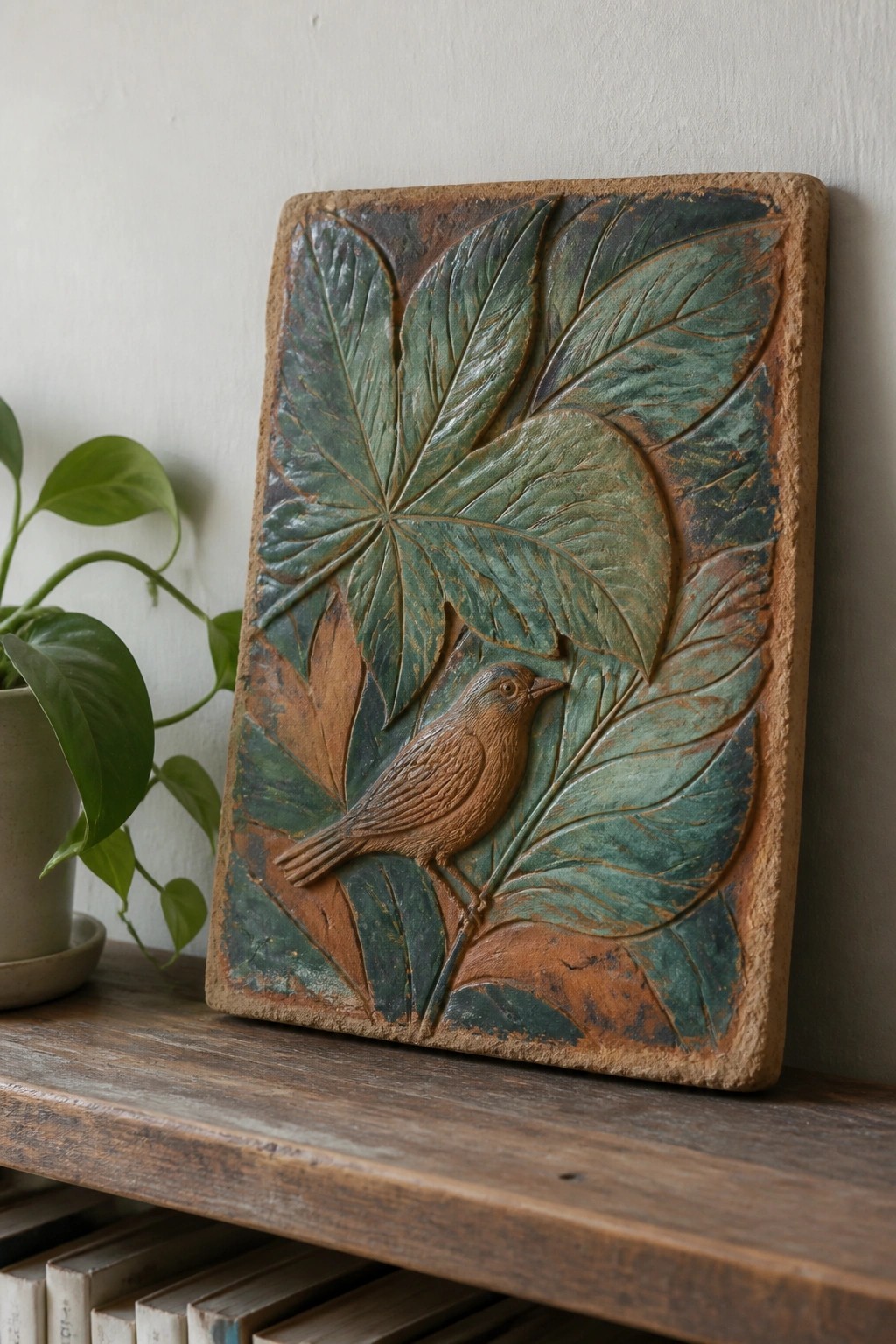
A handbuilt slab tile makes a straightforward sculptural project when you press or carve a simple scene into the surface before glazing. This version uses a rectangular clay panel with a raised bird on a branch and large surrounding leaves, finished with green and brown glazes that settle into the recessed areas to emphasize the texture. The flat back and modest depth let it hang on a wall or rest on a shelf without taking up much space.
What makes this idea useful is how the same relief approach adapts to different sizes or subjects, such as replacing the bird with flowers or abstract shapes. The small scale keeps firing simple and lets you group several tiles together for a bigger display. In a living room or entryway, a piece like this adds interest without needing a functional purpose, and you could personalize the leaf shapes to fit a specific space or color scheme.
Stacked Coil Dual Candle Holder
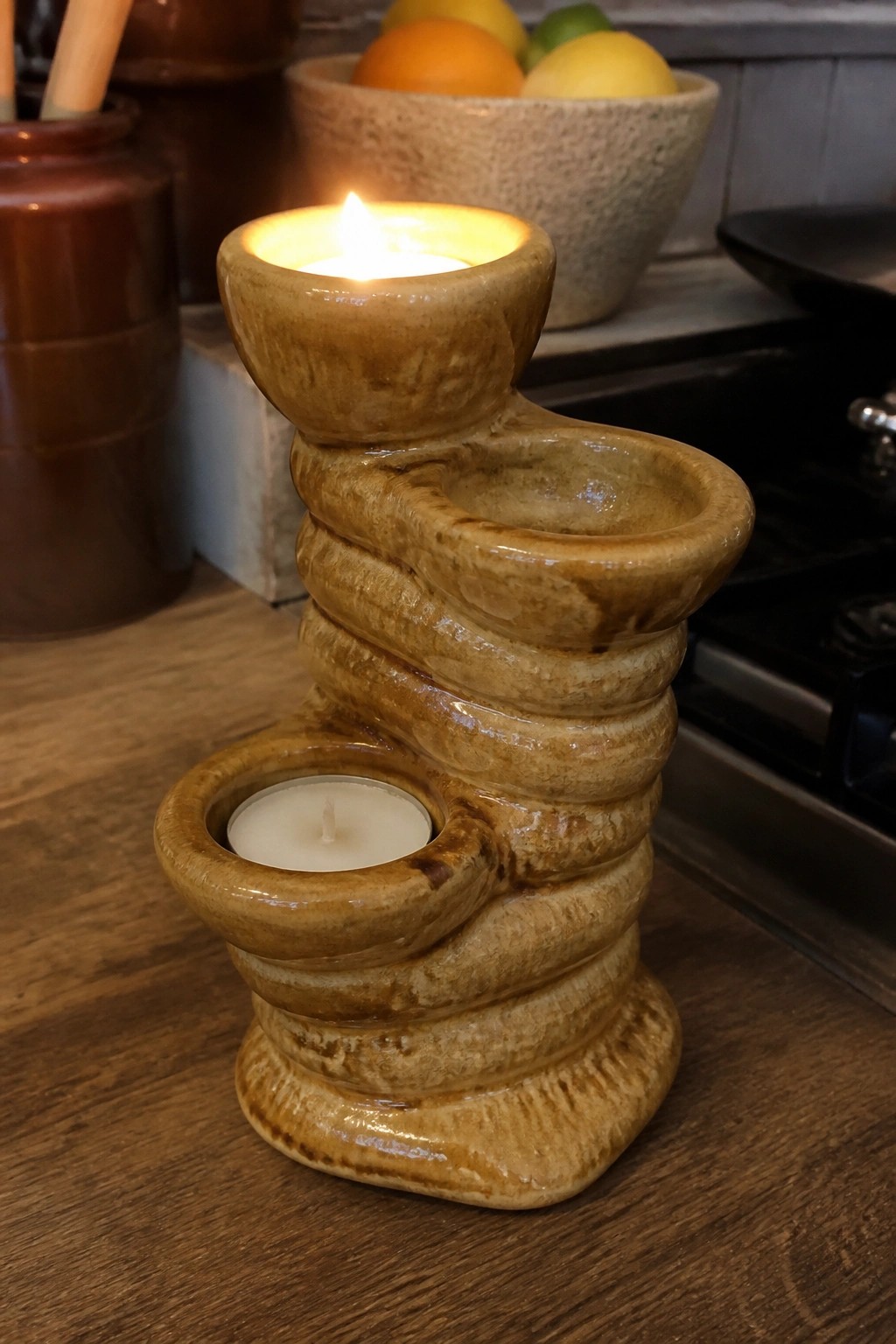
A handbuilt ceramic candle holder uses stacked and twisted coils to create two integrated tea light cups at different heights. The lower cup sits close to the base while the upper one perches on the tallest section of the form. The glossy brown glaze emphasizes the ridges between coils and gives the piece a unified surface without hiding the construction marks.
This shape works especially well on a countertop or mantel where you want two light sources without needing separate holders. You could simplify the stack to three coils for a quicker build or stretch it taller for a single larger candle. The same coil technique could be adapted into a small planter by widening the top cup and adding drainage holes.
Leaf-Shaped Clay Ring Tray
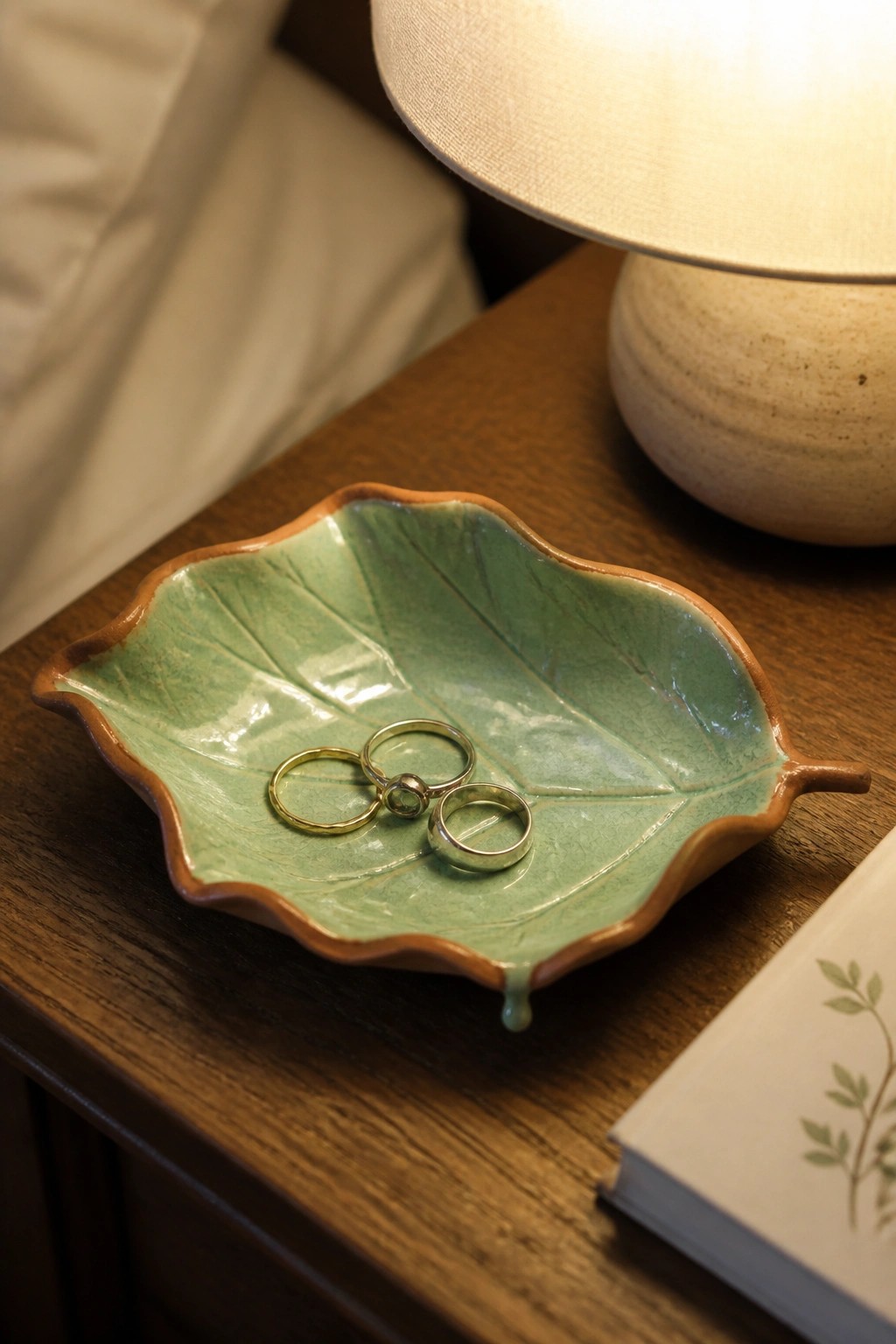
A leaf-shaped clay tray gives you a compact dish for holding rings on a nightstand or dresser. The form comes from a rolled slab shaped into a broad leaf with pinched edges and lightly carved veins that suggest real foliage. A glossy green glaze covers the interior while the rim keeps a warmer clay tone to define the outline. This approach lands in the ring dish category and keeps the piece small enough to sit beside a lamp without crowding the surface.
What makes this idea useful is how the shallow leaf shape prevents rings from sliding off while still looking like a natural object rather than obvious jewelry storage. You can rework the same slab method to create trays in other leaf outlines or scale it slightly larger for keys and small accessories. For a gift, something like this pairs directly with wedding bands since it keeps them in one visible spot overnight. The small size also means it fires quickly and fits easily into most kiln loads.
Sculptural Spoon Rest with Accent Stripe
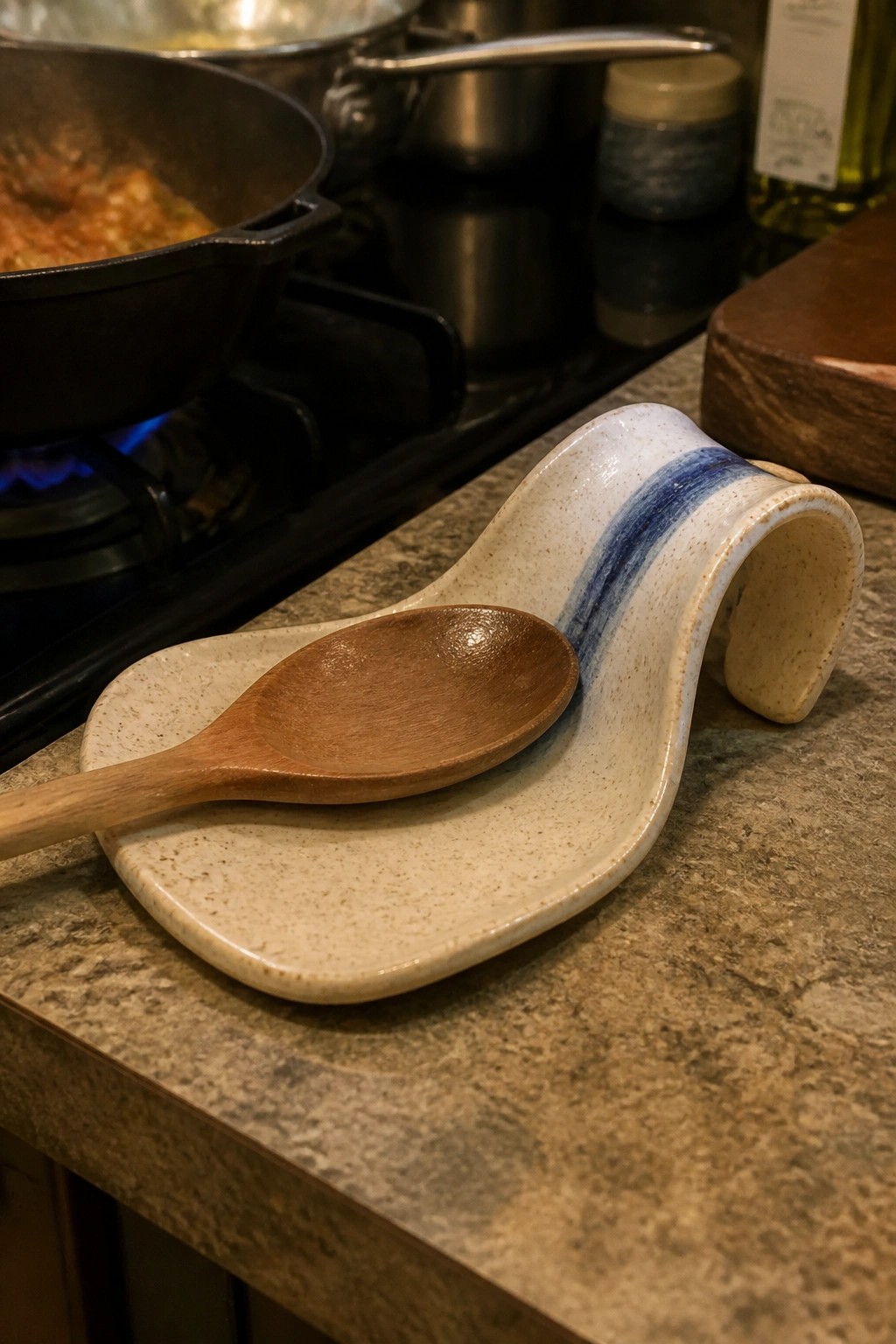
A handbuilt ceramic spoon rest serves as a kitchen tool that props a cooking spoon above the counter surface. The elongated form curves upward at one end to support the handle while the flat base holds the spoon bowl steady. A blue stripe running along the curve provides visual contrast against the speckled glaze and emphasizes the handmade shape.
What makes this idea useful is how the curved profile keeps the spoon clean without needing extra space on the stove. You could adapt the same basic form into a longer version for larger utensils or swap the stripe for a different color that matches your kitchen. In a kitchen, this kind of piece works especially well because it stays functional while adding a simple sculptural element that photographs clearly for sharing.
Sculptural Teapot with Wide Spout Form
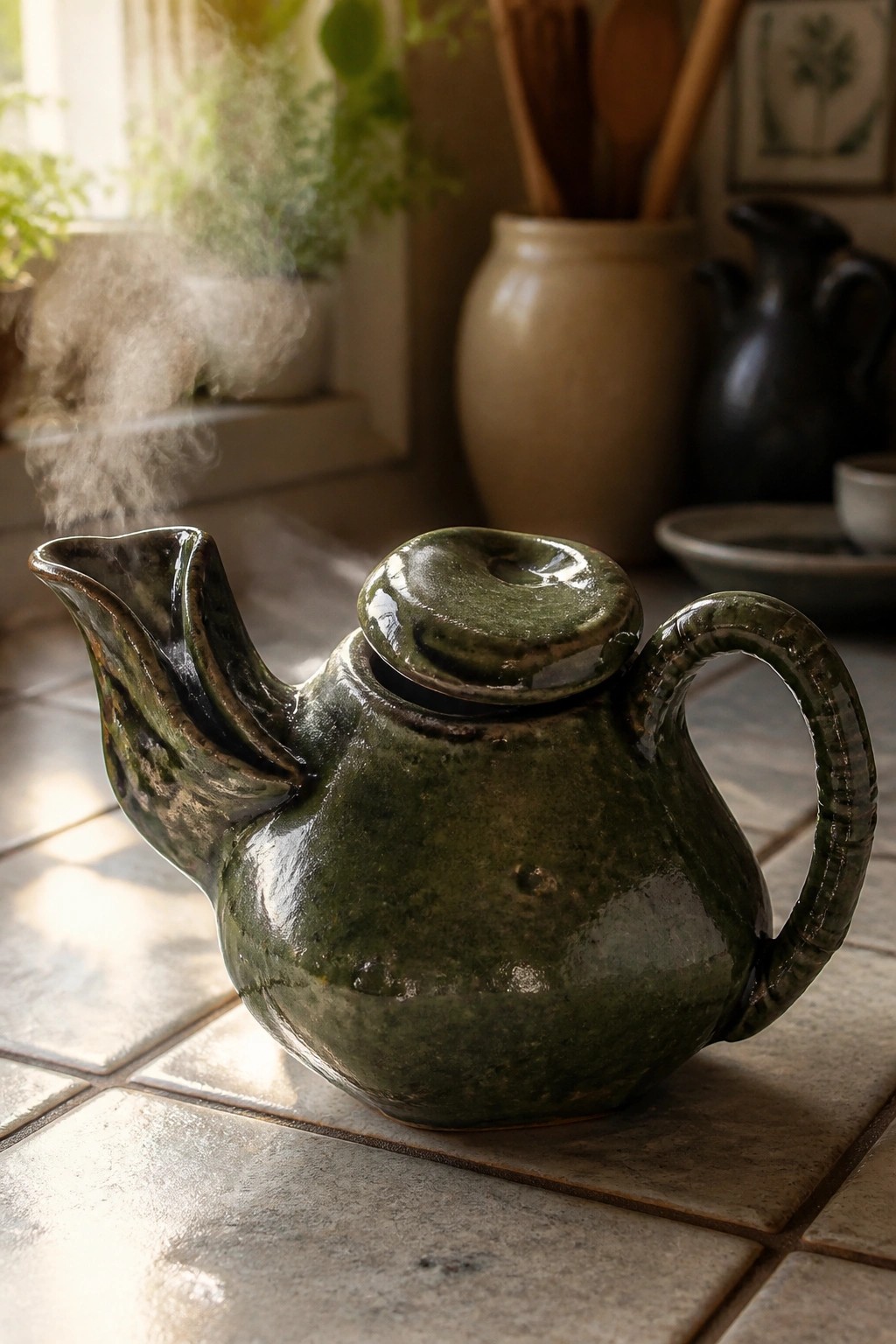
A handbuilt teapot built around a low rounded body and an exaggerated spout gives you a kitchen piece that still reads as sculpture. The glossy green glaze settles into the uneven surface and makes the hand-shaped edges stand out without extra decoration. The simple lid and looped handle keep the focus on the overall silhouette rather than on added detail.
The shape does a lot of the work here because the spout angle and body curve can be changed easily on the next version. A piece like this works especially well on an open shelf or as a serving pot for loose tea. You could shorten the spout for a more compact look or stretch the handle into a different curve to match another glaze color. The strong profile also photographs clearly, which helps when you want to share the project online.
Seated Torso Clay Sculpture
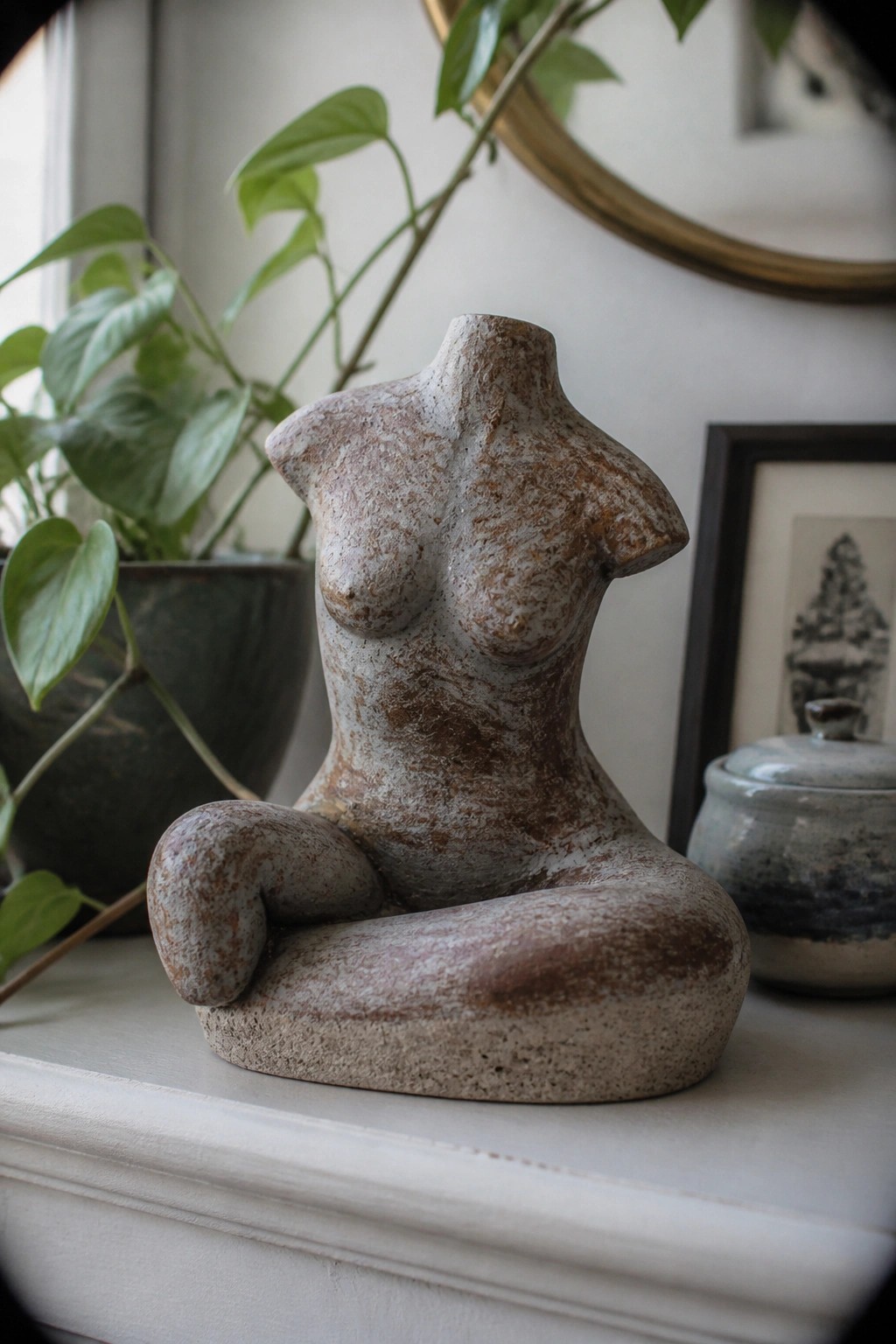
A handbuilt clay torso sculpture focuses on the human form from the chest to the hips, with the head and arms left off to keep the shape simple. This piece uses a seated position with one leg folded across the base to create stability and visual balance without extra supports. The rough, uneven surface texture and muted earth tones come from minimal finishing, which highlights the natural clay body and tool marks.
What makes this idea useful is how the compact seated shape sits well on a shelf or windowsill without tipping. You could rework the same torso by shortening the base or adjusting the leg fold to fit different display spots. For a gift, something like this pairs easily with neutral ceramics or plants. The textured surface also lets you try the form in different clay colors or light slips instead of full glazing.
Two-Tone Double Bowl Salt Cellar
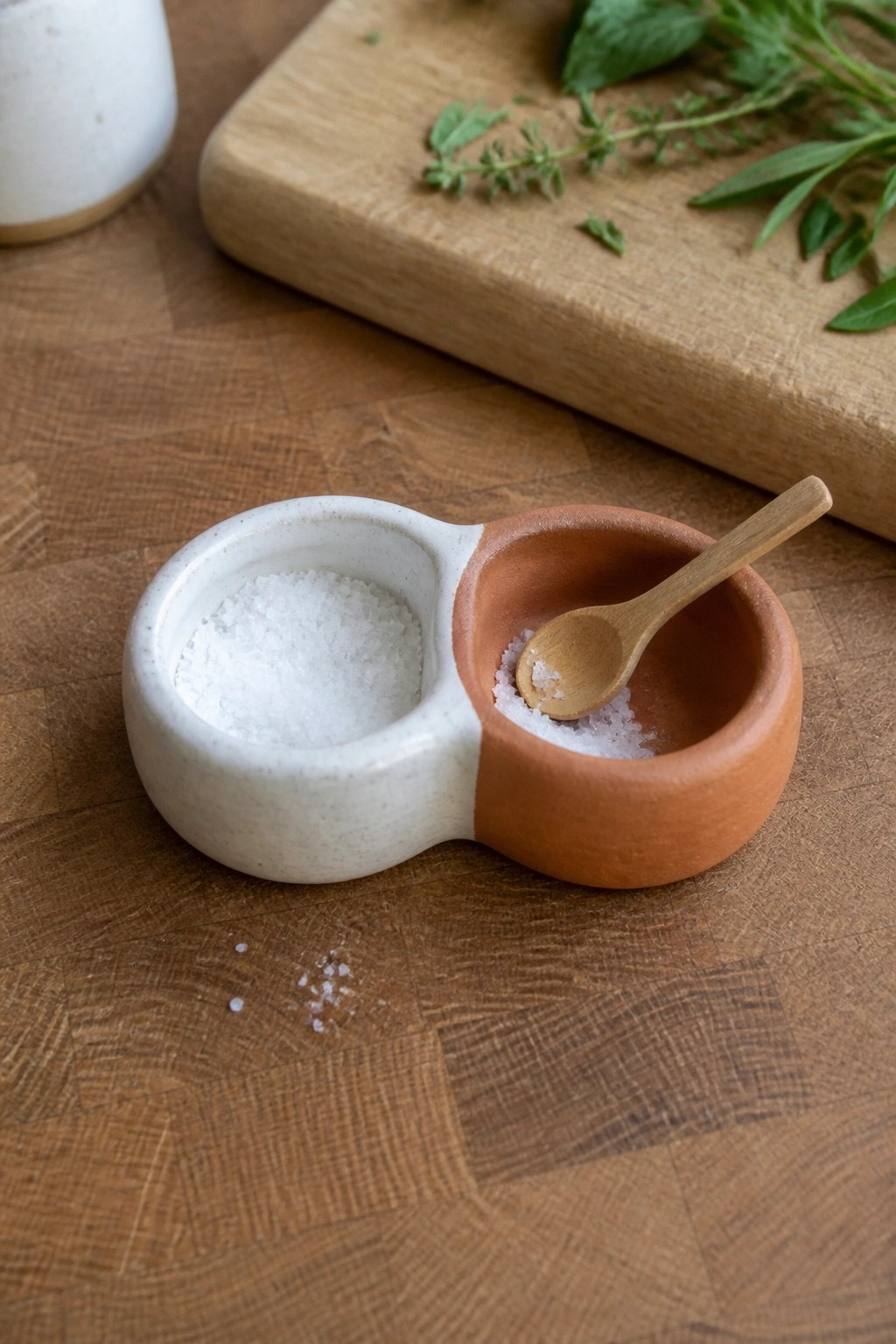
This handbuilt ceramic piece consists of two small connected bowls that share a single wall, one finished in speckled white and the other left in raw terracotta. The form works as a compact kitchen item for holding salt or other dry seasonings, with the divided shape keeping separate ingredients together without extra dishes. The contrasting clay colors and rounded joined silhouette give the piece a simple, balanced look that stays practical on a countertop.
What makes this idea useful is the connected shape that prevents the two sections from sliding apart during use. You could scale the same form up slightly for holding spices next to the stove or adapt the color split to mark one side for coarse salt and the other for finer grains. For a gift, something like this stands out because it is quick to handbuild and easy to personalize with different clay bodies or surface textures. The small overall size also makes it simple to fit into a standard kiln load when you want to make several at once.
Notched Yarn Bowl for Knitting Projects
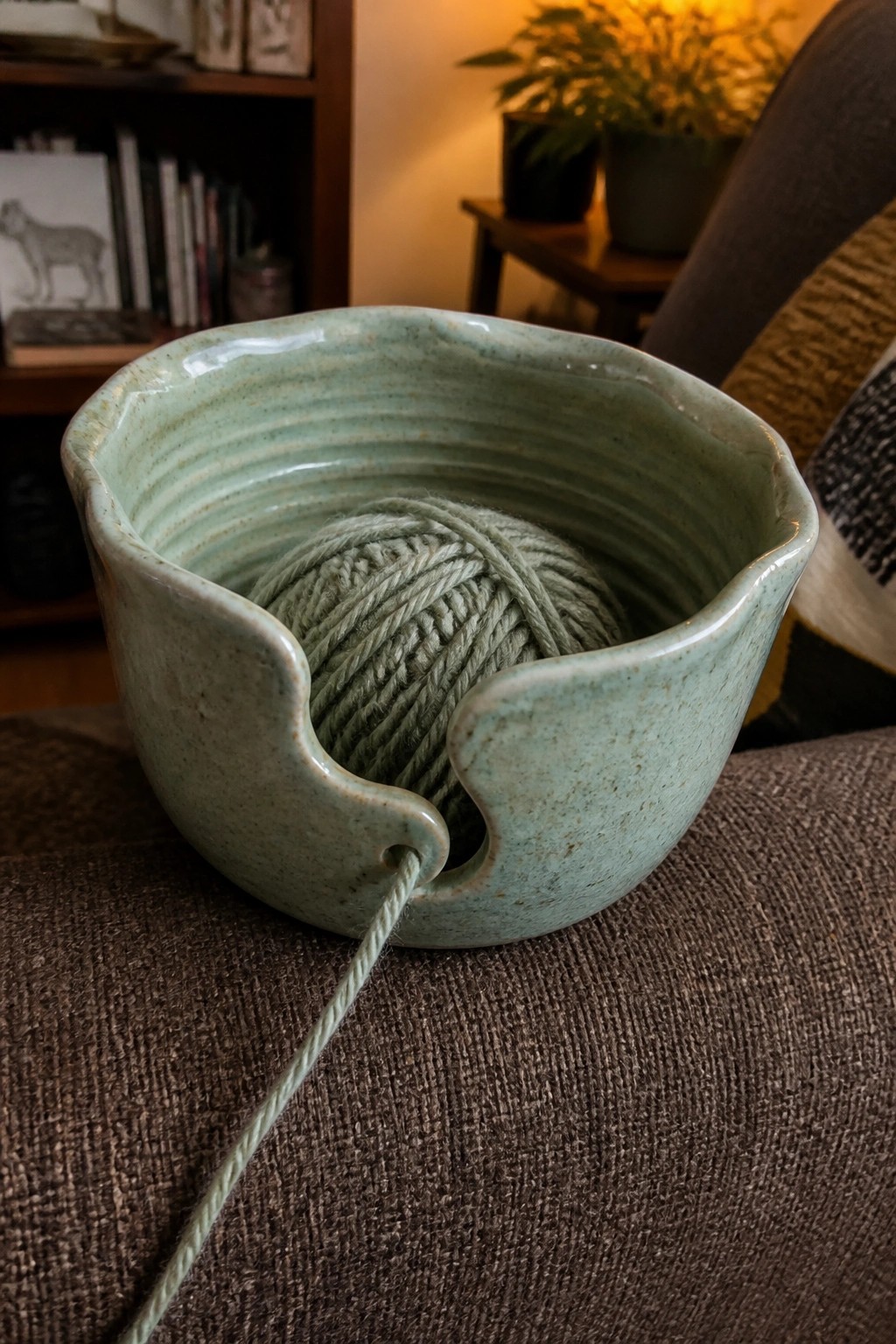
A yarn bowl is a handbuilt pottery form made to hold a ball of yarn while feeding the strand through a sculpted notch in the rim. The rounded body keeps the yarn contained, and the side opening guides the thread outward without letting the ball escape or tangle. This version uses a soft, speckled glaze and an irregular rim to emphasize the clay form rather than hide it. The result is a simple craft tool that doubles as a functional piece of studio pottery.
The shape does a lot of the work here because the notch solves a real problem for knitters and crocheters who need steady yarn flow. You can adapt the same idea by making the bowl larger for bulky yarns or adding a second notch for colorwork projects. It fits easily on a side table or in a craft corner and makes a straightforward gift that does not require extra parts. The same basic form can be reworked into a cord holder or small desktop organizer by changing only the notch size.
Branching Ceramic Holder with Three Glazed Sections
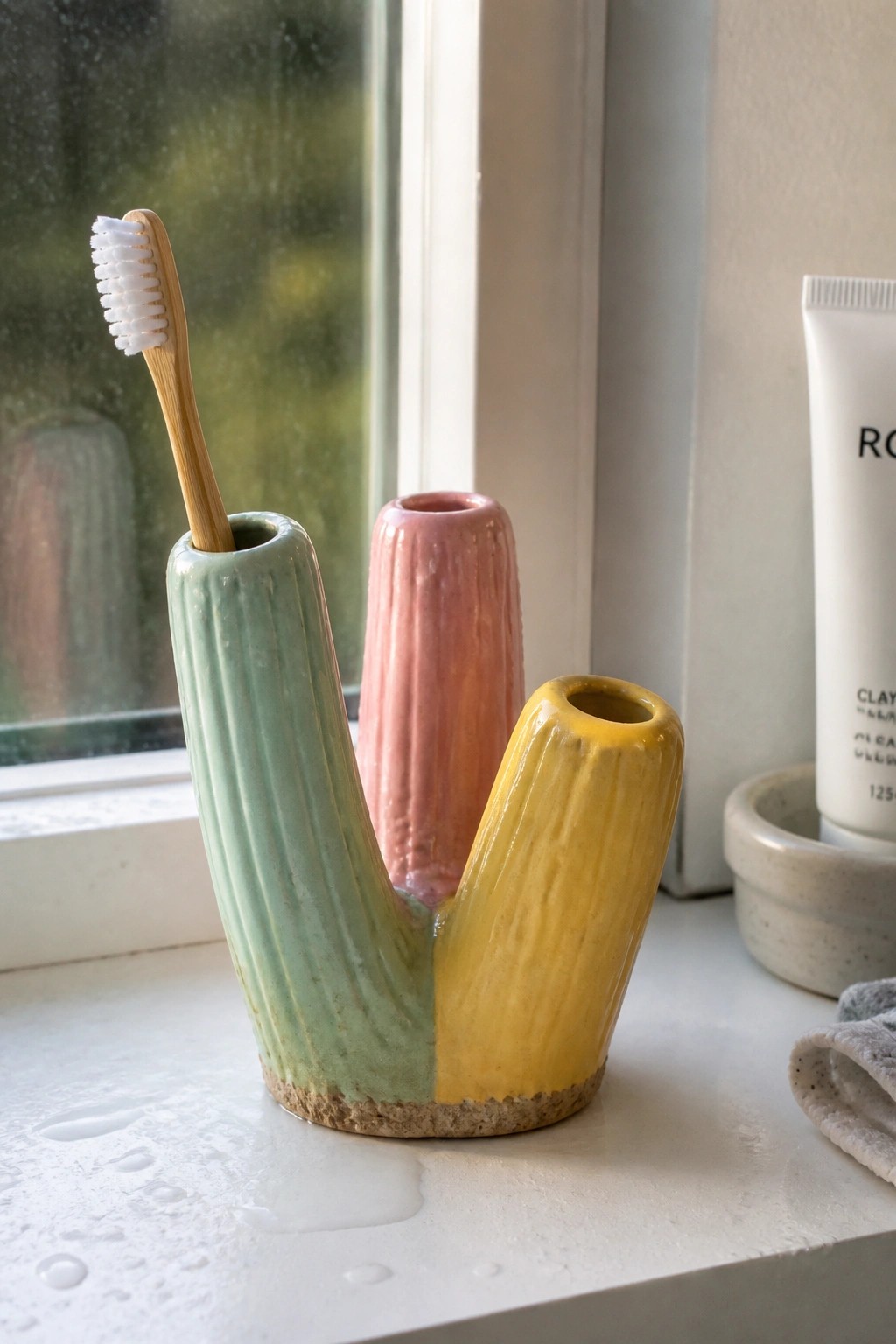
A handbuilt ceramic piece formed from three connected upright tubes creates a compact multi-compartment holder. Each section leans slightly outward from a shared base, with vertical ridges pressed into the clay before glazing in separate matte colors. The unglazed foot shows the raw clay edge, and the overall shape keeps items separated while occupying little surface area. This approach fits the bathroom-item category and works equally well for toothbrushes, small brushes, or desk tools.
What makes this idea useful is the connected layout that groups related objects without needing multiple separate pieces. You can adapt the same branching shape for paintbrushes or kitchen tools by changing the tube diameters and lowering the overall height. The ridged surface gives texture that helps with grip during use, and the three-color split makes the form easy to personalize with different glaze combinations. In a small bathroom this kind of holder keeps counters tidy while using only one footprint.
Handbuilt Tray with Carved Ripple Texture
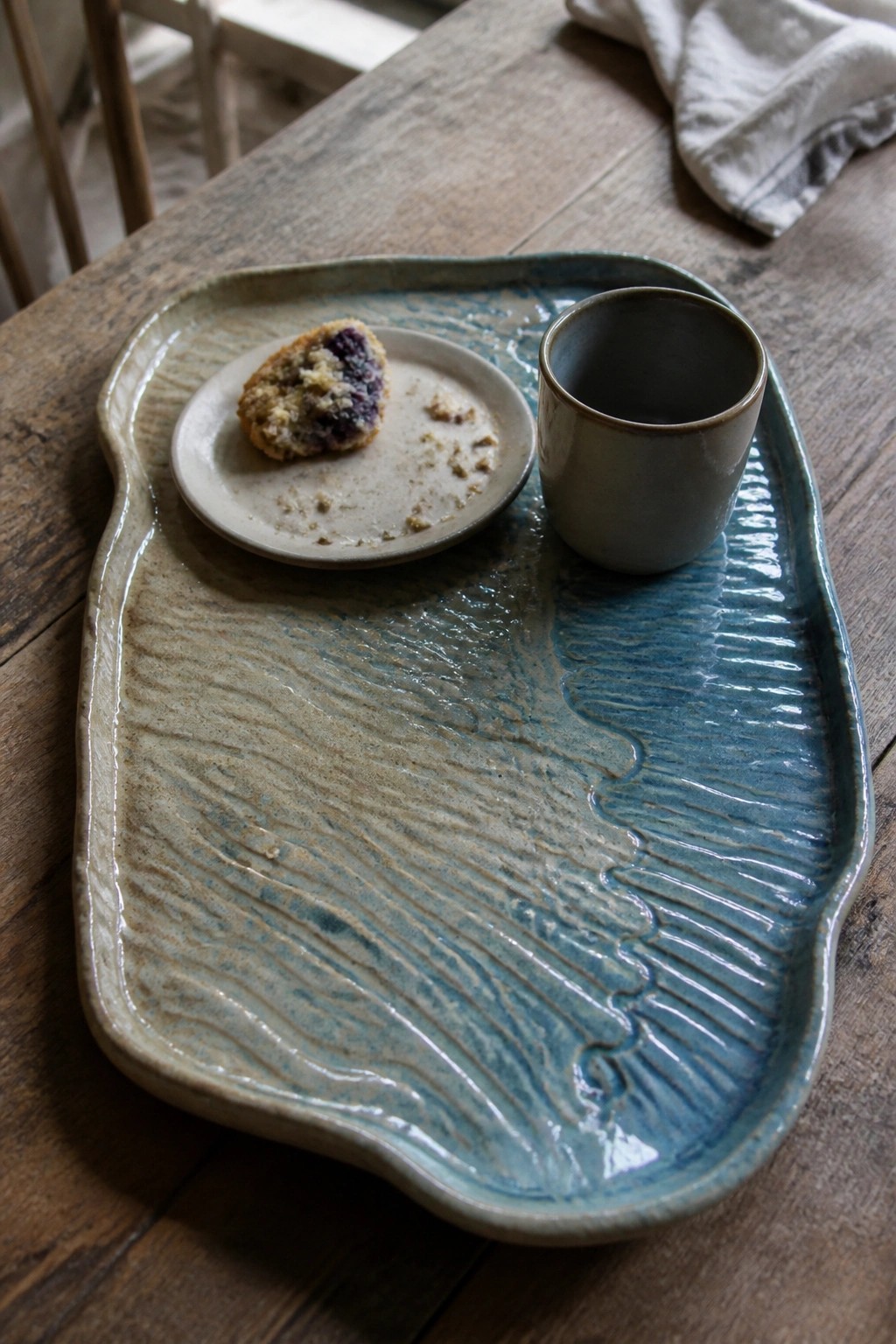
A handbuilt tray with an irregular organic shape makes a versatile serving or display piece. The surface carries carved or impressed lines that run in flowing patterns, allowing a blue glaze to pool and emphasize the texture against the lighter clay body. This creates a functional tray that also reads as a sculptural object through its simple form and surface detail.
What makes this idea useful is how the carved texture does most of the visual work once glazed. You could adapt the same approach to smaller trays for holding keys or jewelry, or repeat the ripple pattern on a set of coasters. In a kitchen or on a breakfast table the piece stands out because the texture catches light and shows wear in a way that flat glazes do not. For a variation, try the same carving on a rectangular slab before forming the edges to keep the process straightforward.
Coiled Snail Incense Holder
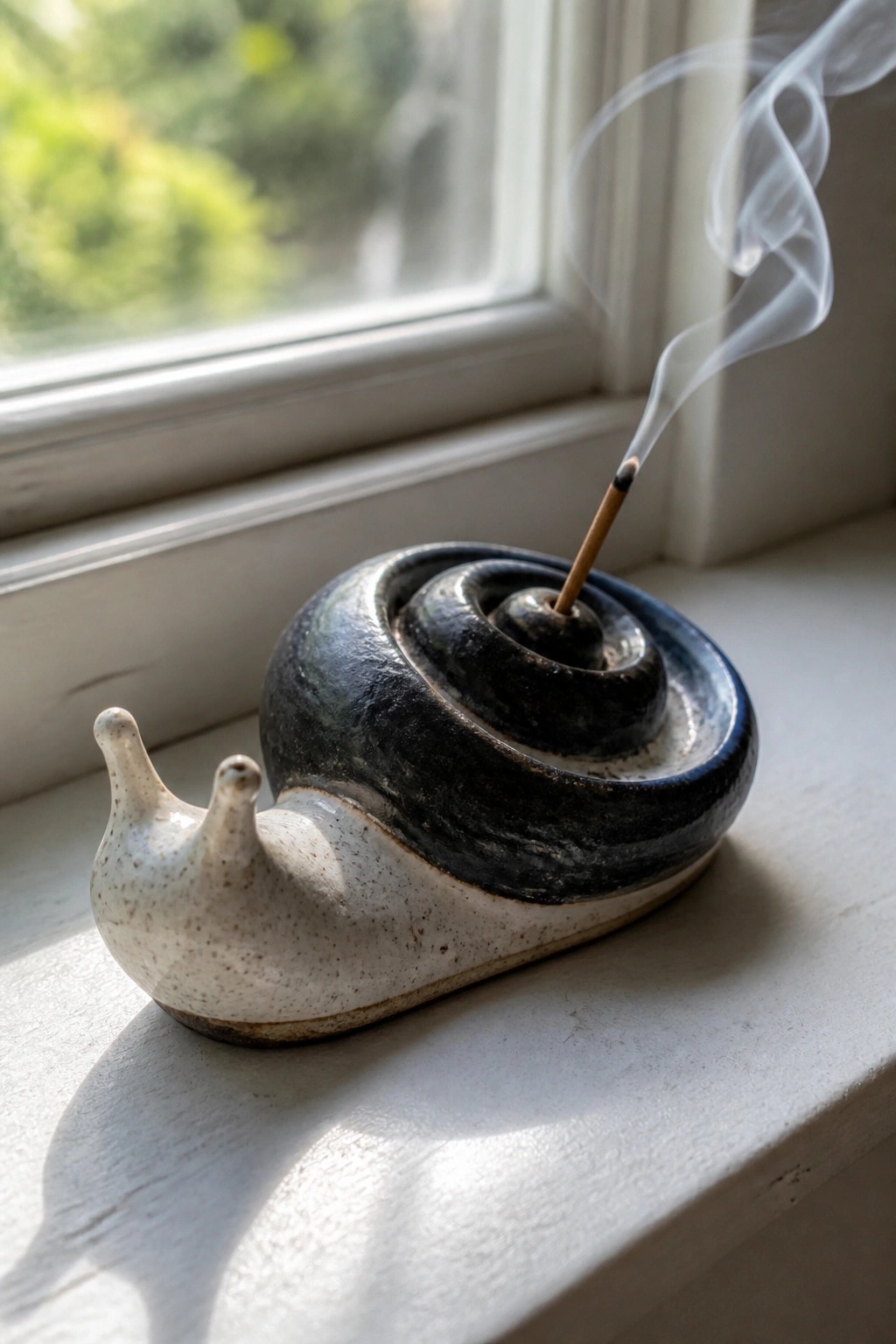
A handbuilt clay snail makes a simple incense holder. The body serves as the base while the spiral shell creates a raised center that holds the stick upright. The head with two small antennae adds just enough detail to show the form without extra parts. A two-tone glaze keeps the shell and body separate so the shape stays easy to read.
What makes this idea useful is how the coil gives the incense a built-in spot without needing extra holes or stands. It sits well on a windowsill or small shelf where smoke can drift. You could shrink the size for a desk version or stretch the shell into a longer spiral for a different holder shape. The same snail body could also work as a small tray for matches or a single ring.
Striped Ceramic Lamp Base
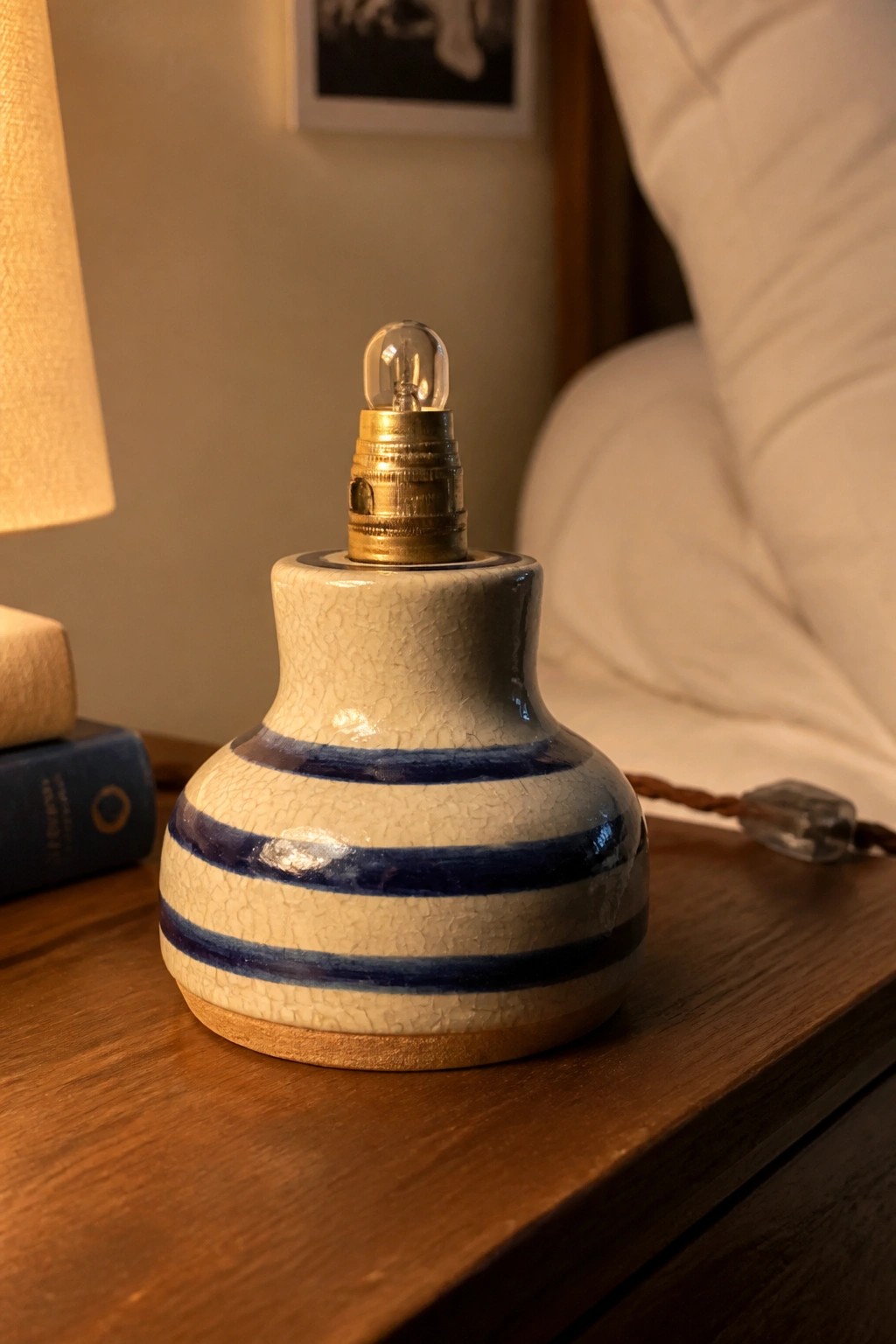
A compact lamp base formed from clay takes a simple rounded bulb shape and adds wide horizontal stripes in deep blue over a cream crackle surface. The clean contrast between the bands and the textured glaze keeps the form easy to read from a distance. This approach turns a standard lighting piece into a sculptural decor object that still functions as a working lamp.
The small scale makes it easy to fit on a bedside table or desk without crowding the surface. You can adapt the stripe widths or change the color pairing to match different rooms while keeping the same rounded profile. For a gift the shape stays practical and quick to repeat in multiples. The same base form could be made slightly taller or left plain to serve as a small vase instead.
Face Shaped Wall Planter
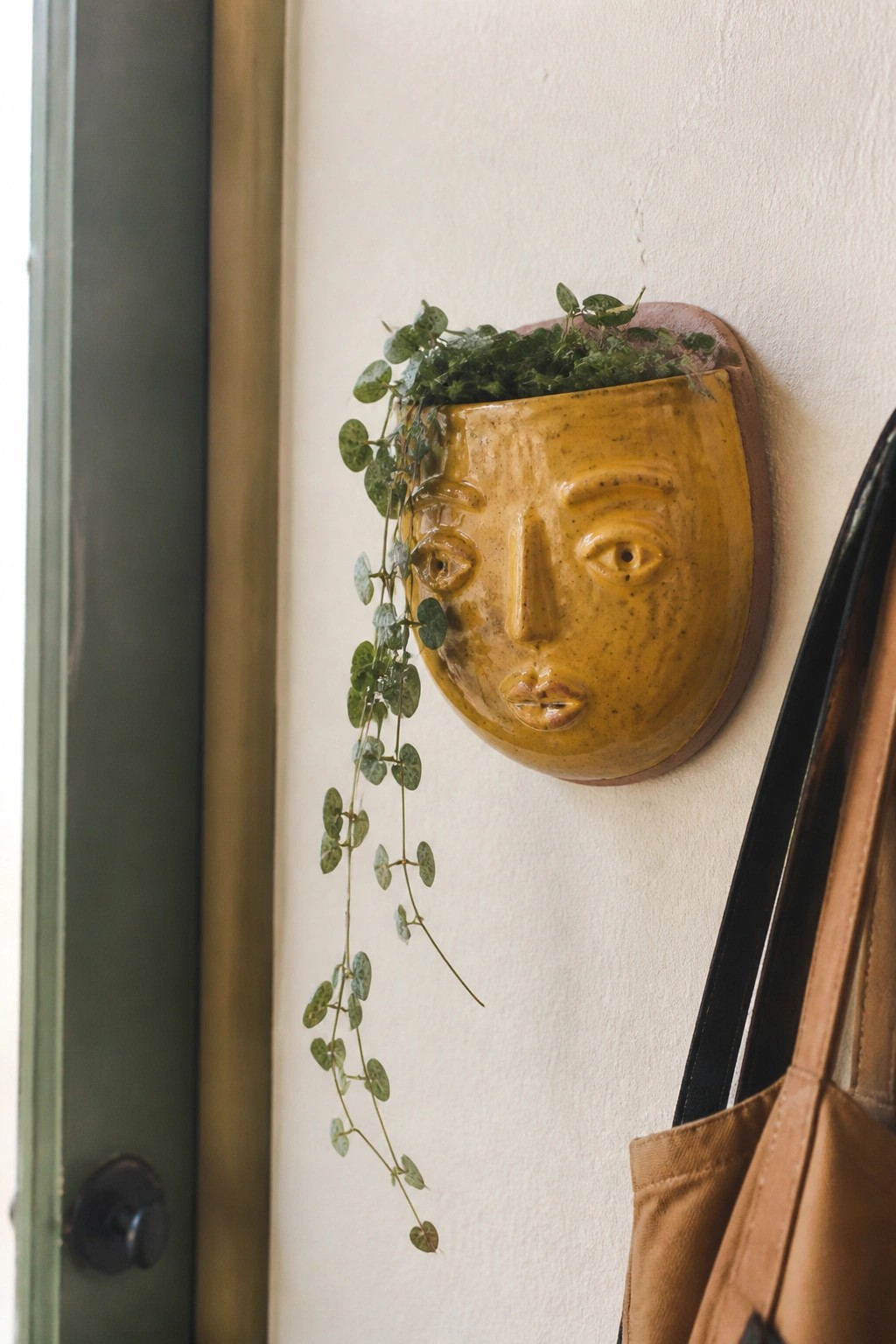
A handbuilt ceramic wall planter formed as a face creates a sculptural way to display trailing plants. The design uses molded facial features like eyes and mouth under a speckled yellow glaze, with an open top that holds soil and lets vines spill over the edges. This approach turns a basic planter into a wall-mounted decor object that blends plant care with form.
What makes this idea useful is how the face shape gives the piece built-in visual interest without needing extra decoration. You could rework the same idea with a smaller scale for a bathroom or try different glaze colors to match existing tiles. It works especially well mounted near a window where vines can grow freely. For an easier version, simplify the features to just eyes and mouth while keeping the open top for plants.
Twisted Clay Caddy for Napkins and Utensils
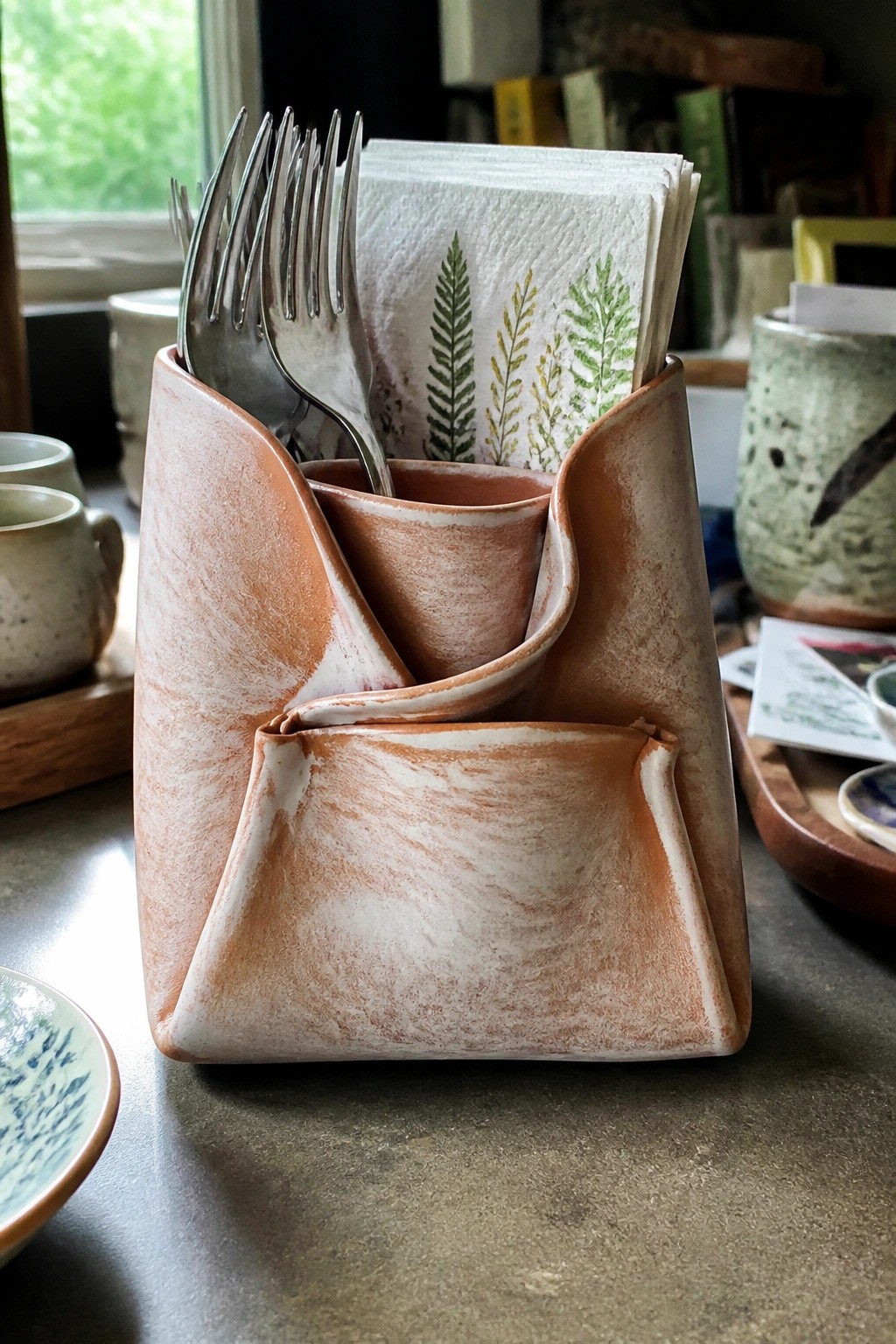
A handbuilt ceramic caddy with multiple open pockets keeps napkins and flatware together on a table. The design uses overlapping and folded clay walls to form separate compartments that hold different items without extra dividers. Swirled earthy glaze on the surface blends with other handmade dishes while the irregular shape keeps the piece from looking like a standard tray. This fits the kitchen item category but works mainly as a decorative organizer.
What makes this idea useful is how the pocket layout can be adjusted in size to hold anything from silverware to small tools. You could build a wider version for a sideboard or shrink the pockets for a bathroom counter to store rolled towels. The sculptural form stands out because most napkin holders stay flat or cylindrical, so this one catches attention in photos. For a gift, pair it with printed napkins to make the whole set feel complete.
Compact Spouted Clay Cruet
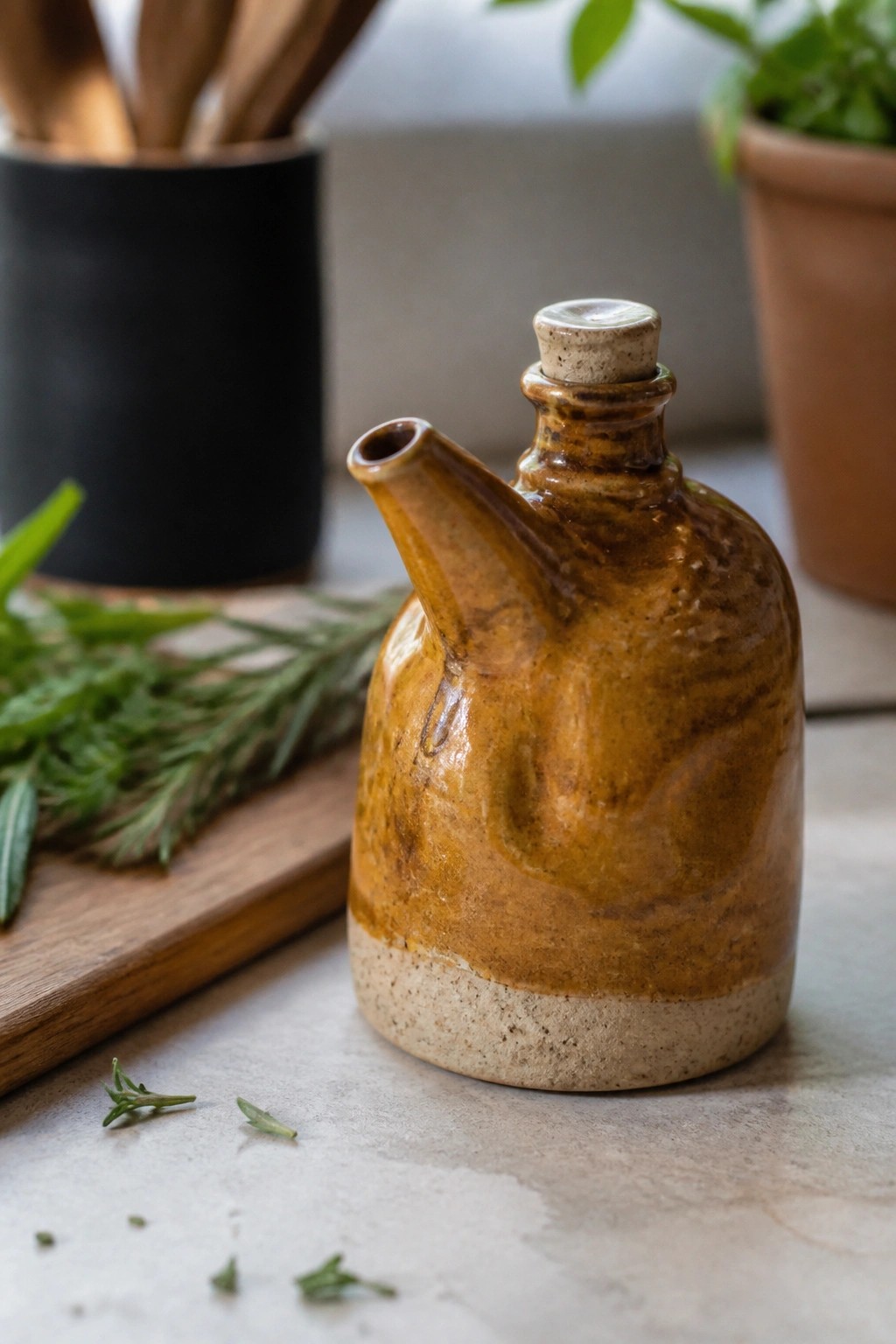
A small handbuilt ceramic bottle with a short angled spout and cork stopper works well as a kitchen oil or vinegar dispenser. The rounded body tapers slightly at the neck, and the two-tone brown glaze with a lighter speckled base gives the form visual weight without extra decoration. This shape fits the sculptural category because the spout is integrated directly into the body rather than added as a separate handle or tube.
What makes this idea useful is the compact scale that keeps it practical on a counter while still reading as a deliberate clay object. You could rework the same body into a small plant mister by swapping the cork for a spray top or shorten the spout for a simple cream pitcher. The glaze split at the middle is easy to repeat with a quick dip technique, and the overall form stands out in searches for functional kitchen pottery because most dispensers stay plain and cylindrical.
Organic Form Ceramic Ocarina
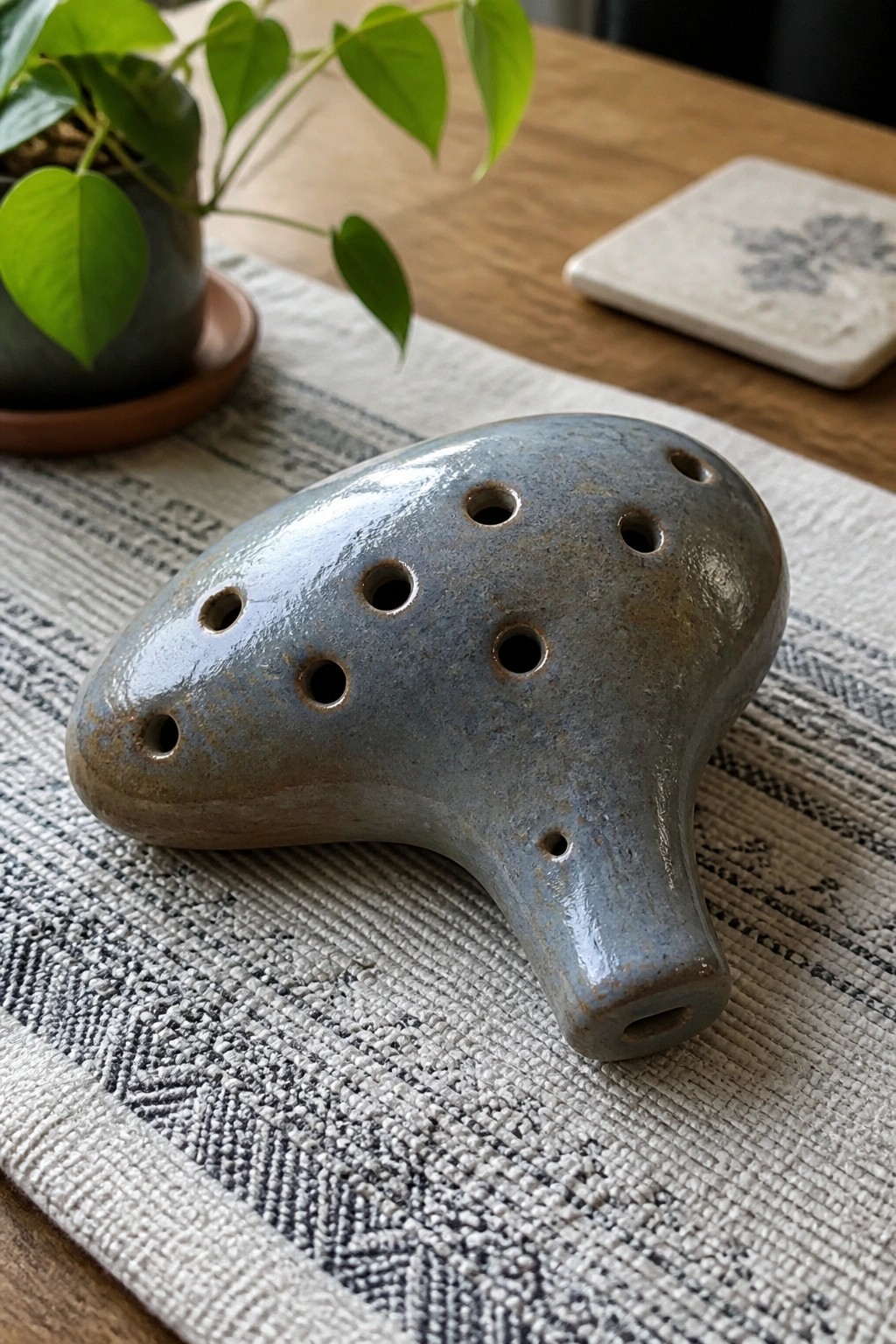
A handbuilt ceramic ocarina creates a sculptural clay instrument with an organic rounded body and tapered mouthpiece. Multiple finger holes are spaced across the top surface to produce different notes when played. The glossy blue-gray glaze highlights the smooth curves and gives the form a finished surface that still shows the handmade shaping. This approach turns a functional wind instrument into a standalone sculptural object rather than a standard geometric shape.
What makes this idea useful is that the same handbuilding method can be scaled up or down and the hole placement adjusted to change the pitch range. A piece like this works especially well as a playable decor item on a shelf or desk when not in use. The compact size makes it straightforward to adapt into other small wind instruments or simplified non-functional versions if the focus stays on the form alone.
Stacked Pebble Sculptures
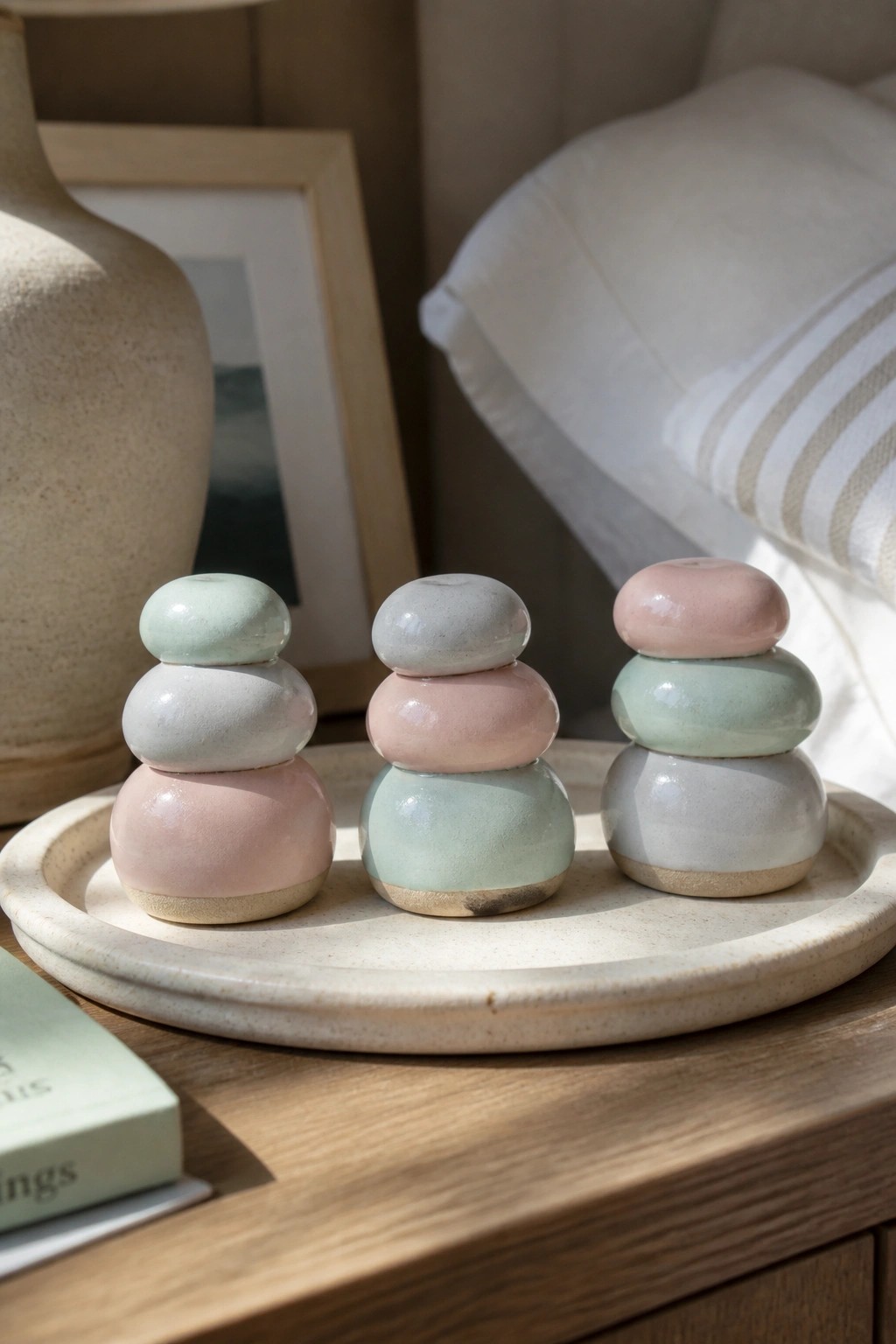
Handbuilt rounded forms stacked into short towers create simple sculptural objects that sit well on a tray or shelf. Each piece is assembled from three or four individual ovoid shapes, with soft pastel glazes applied in shifting bands of mint, blush, and gray. The rounded profiles and uneven stacking give the forms a balanced but informal look that reads as handmade without extra surface detail. This style works as a small decor object rather than a functional vessel.
The small scale makes these easy to adapt by varying the number of stacked elements or limiting the palette to two colors. They fit on a bedside table, desk, or entryway tray where larger pieces would crowd the space. You could rework the same stacking method into a single taller form or a group of five for a different arrangement. The color blocking and rounded shapes photograph cleanly, which helps the idea stand out in a feed of more detailed pottery projects.
Frequently Asked Questions
What types of clay work best for creating large sculptural handbuilt forms?
Choose clay bodies with added grog or sand for added strength and reduced shrinkage. Stoneware or earthenware with grog suits most sculptural projects since it holds shape well during coiling or slab construction and withstands the stresses of drying and firing.
How can beginners prevent cracking in complex sculptural clay pieces?
Build in stages and keep walls even in thickness. Wrap unfinished work in plastic to slow drying and check daily for moisture differences. Use supports like foam or newspaper inside hollow forms to maintain structure until the piece reaches leather hard stage.
What tools help add fine details to artistic handbuilt pottery sculptures?
Basic tools include wooden ribs for smoothing, wire loops for carving, and texture stamps made from household items. Start with simple impressions while the clay is soft and layer details gradually to avoid distorting the overall form.
Can sculptural techniques from these ideas be adapted for outdoor installations?
Yes, select high fire clay and apply weather resistant glazes or leave pieces unglazed. Fire to maturity for durability and consider adding drainage holes if the form will hold water. Test small samples outdoors first to check performance.
How should I approach glazing sculptural forms to highlight their shapes?
Apply glazes selectively to emphasize curves and textures rather than covering everything evenly. Use matte glazes on recessed areas and test combinations on sample pieces. Multiple light coats often produce better results than heavy single applications.

Pottery Path is my cozy corner of the internet where I share clay ideas, pottery inspiration, and simple projects you can recreate at home. I love exploring everything from air dry clay to handbuilt pottery to cute minis that brighten your day. My goal is to make clay crafting feel easy, fun, and welcoming for anyone who wants to try it.
You will find beginner friendly tutorials, creative pottery painting ideas, and lots of warm inspiration for slow and happy crafting. If you enjoy hands on creativity, this space will feel like home.