
I enjoy working with slab-built pottery because it’s a simple way to create clean, geometric shapes by hand.
Raku firing adds its own character, so each piece can turn out a little different.
I’ve gathered 22 project ideas, from small decorative forms to useful pieces for the home.
I hope they give you a few ideas to try with clay and your own style.
Geometric Slab-Built Raku Vase
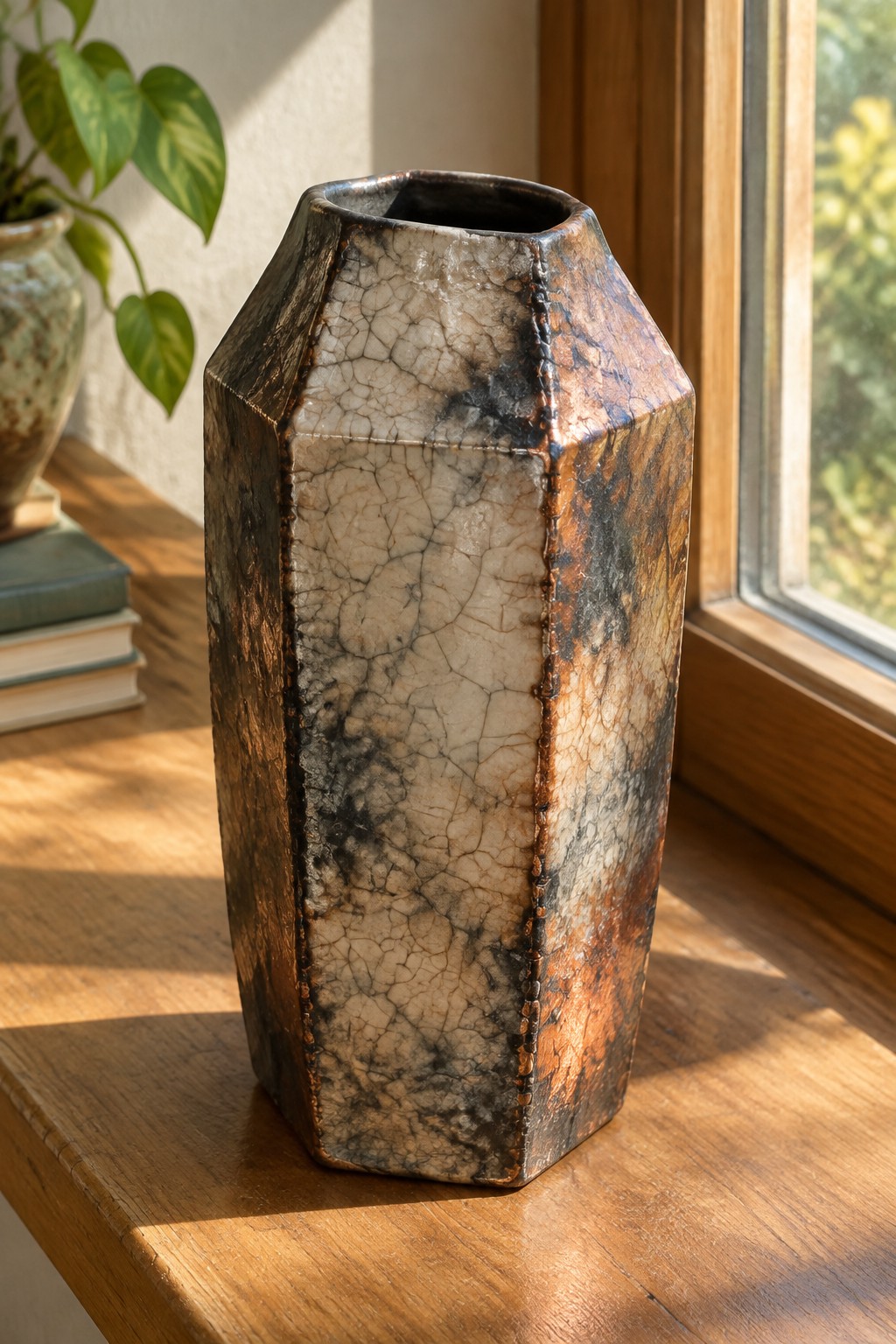
A tall, faceted ceramic vase turns simple geometric planes into a strong decor feature. Its pale crackled center panels contrast with dark, coppery edges, while the narrow opening and angular shoulders make it fit naturally among slab-built vase ideas.
The shape can stand on its own on a console, shelf, or table, especially where a rounded vase would feel too soft. Adapt the panel layout or use a simpler two-tone surface treatment, and keep the opening sized for a few stems; the crisp silhouette and contrasting finish also make this an easy project to save for geometric pottery inspiration.
Geometric Slab-Built Ceramic Serving Tray

A long, shallow ceramic serving tray gets its visual interest from a raised rim and a repeating pattern of angular, overlapping shapes across the base. The muted cream, charcoal, and iridescent glaze keep the geometric surface from feeling too busy, making this a decorative kitchen or coffee-table piece.
A tray like this can hold small dishes, candles, or keys, but the same design could be scaled down into a ring dish or made simpler with fewer, broader geometric sections. Varying the glaze colors or arranging the shapes in a single direction would make it easy to adapt while keeping the slab-built form distinctive enough to stand out in a pottery inspiration collection.
Geometric Slab-Built Raku-Style Mug
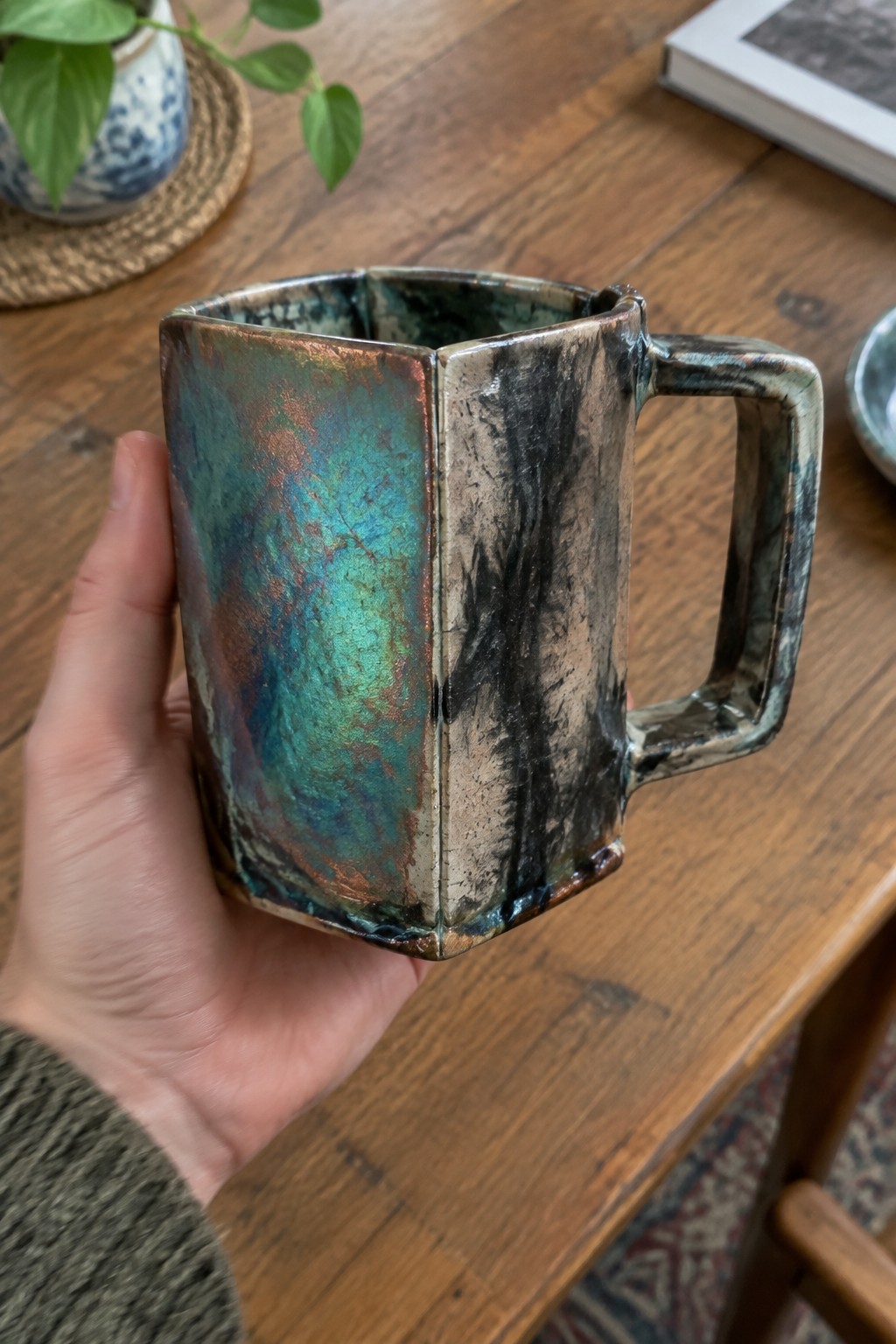
A square-sided handmade ceramic mug uses flat planes and a sharply angled handle to give a familiar kitchen item a geometric form. The mottled turquoise, copper, and charcoal surface adds contrast while keeping the slab-built shape easy to read.
The angular silhouette would stand out on an open shelf or make a distinctive handmade gift, and the same design could be scaled down into a small desk cup or pencil holder. Try a simpler two-color finish or adjust the handle and body proportions to make the form your own; keep the inside food-safe if you plan to use it for drinks.
Slab-Built Geometric Raku Planter
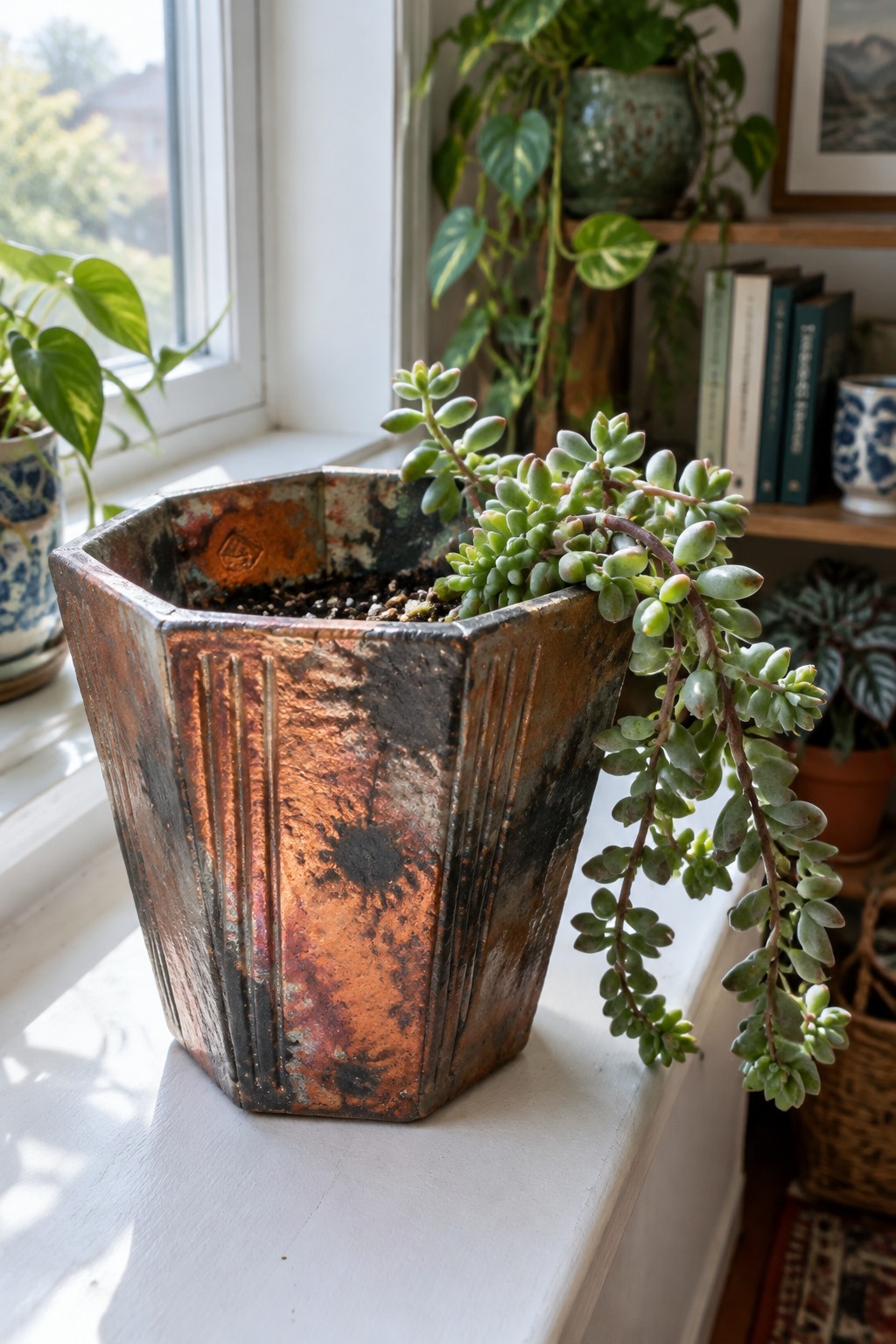
A tapered, faceted planter is a useful way to bring geometric form into a slab-built pottery project. Its broad rim and ridged sides give the handmade ceramic pot a strong shape, while a mottled copper-and-dark finish adds contrast without needing a painted pattern. A trailing succulent suits the planter’s angular silhouette and makes this a natural fit for plant-focused decor.
The faceted sides can be kept simple or varied with deeper grooves, uneven edges, or a different glaze palette. Use a form like this on a sunny windowsill or shelf, and make sure a functional planter has drainage or holds a separate nursery pot. The mix of crisp geometry and a weathered-looking surface gives the project a distinctive Pinterest-ready look.
Geometric Slab-Built Hanging Wall Sculpture
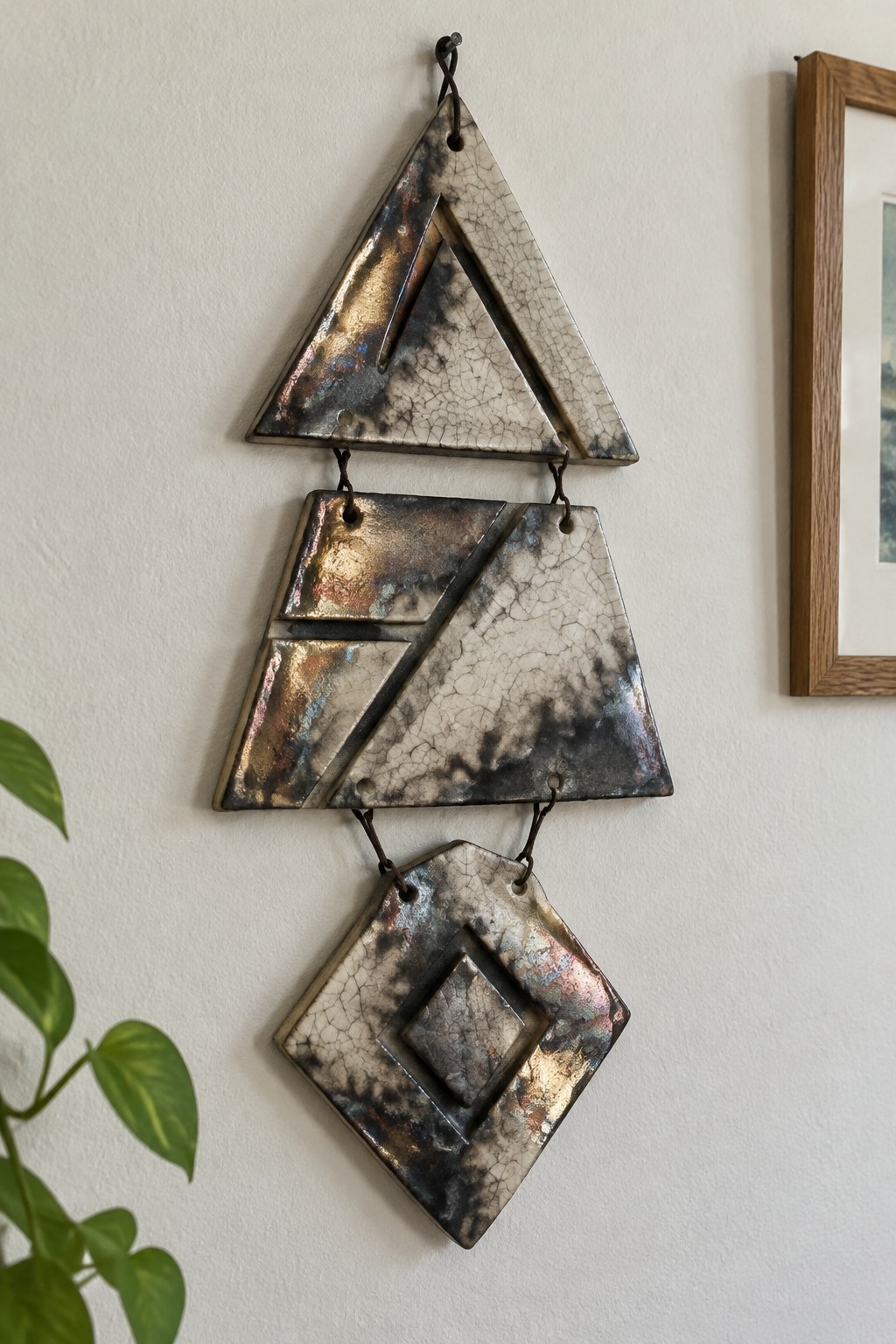
A linked ceramic wall sculpture uses cut slab forms and raised geometric details to create a vertical decor piece rather than a functional vessel. Triangles, trapezoids, and a diamond shape give it a clear pattern, while the mottled dark and cream surface adds contrast across the sections.
The hanging format suits a narrow wall space where a vase or framed print might feel too familiar. You could adapt the design with fewer shapes, different cutouts, or a more limited color palette, then size it to fit an entryway or small wall. Its layered geometry and distinctive surface make it easy to save as inspiration for a slab-built decor project.
Slab-Built Geometric Raku Bowl
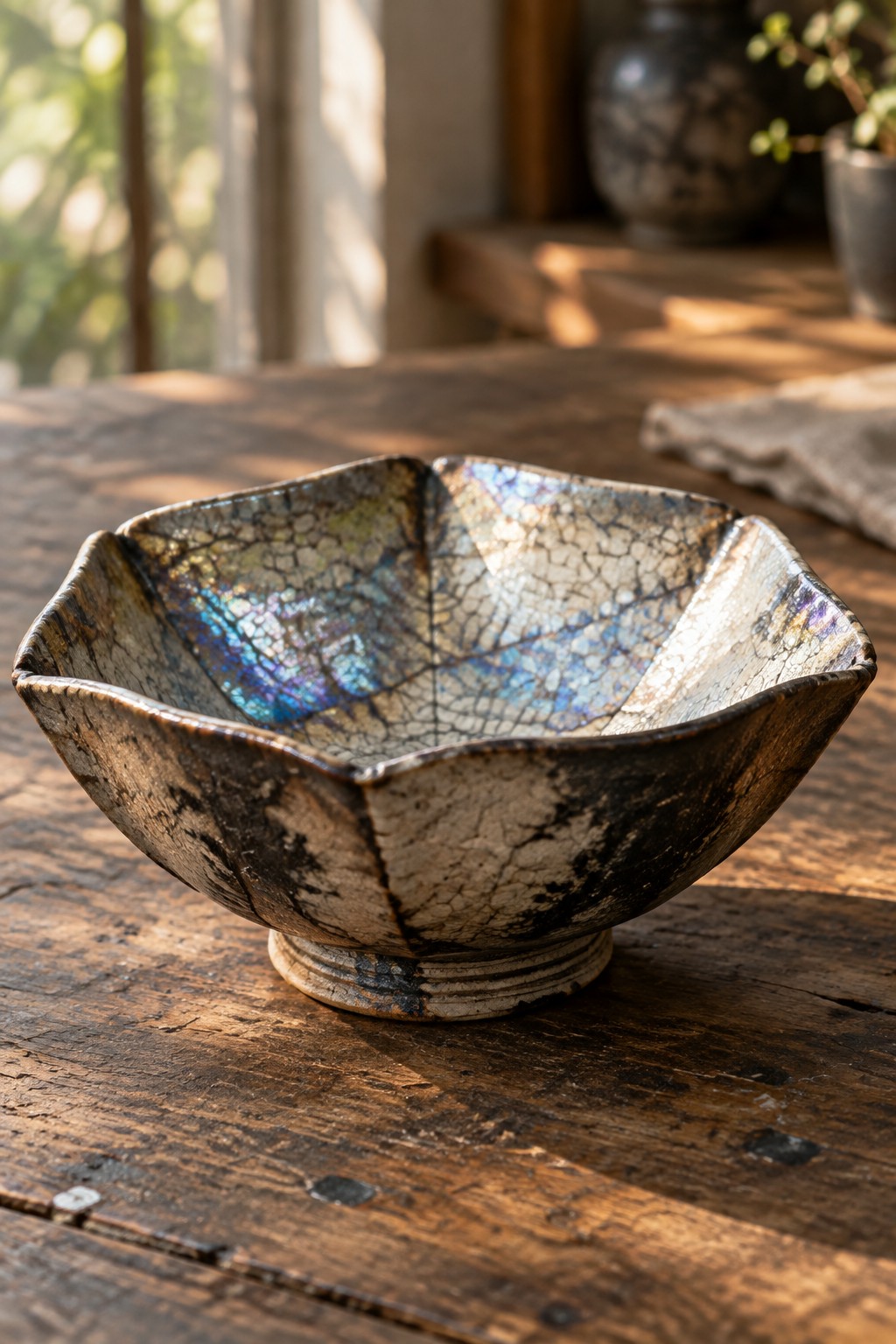
A handmade ceramic bowl with angular, folded sides turns a simple table piece into a geometric decor object. Its irregular faceted rim and crackled, iridescent glaze make the surface pattern part of the design, while the foot gives the bowl a stable base.
The wide opening makes this form useful as a fruit bowl or a catchall for keys and other small items, though the textured finish is especially suited to display. Adapt the idea with fewer facets for a simpler shape, or try a more restrained glaze palette to make the angular silhouette stand out. Its unusual form and reflective surface give it strong visual interest for a pottery inspiration board.
Slab-Built Geometric Three-Section Dish

A three-section ceramic serving dish turns simple slab-built geometry into a useful piece for serving bread, snacks, or small accompaniments. Its adjoining angular compartments and contrasting dark, rust-red, and crackle-patterned surfaces make each section easy to distinguish while keeping the overall form cohesive.
Use the compartments for olives, nuts, dips, or toppings, or adapt the layout into a smaller catchall for keys and desk supplies. Changing the number of sections or choosing a simpler palette can make the design easier to personalize, while the combination of bold geometry and varied surfaces gives it a clear focal point for a kitchen or serving table.
Slab-Built Geometric Ceramic Candle Holder

A handmade ceramic candle holder turns a simple tea light into a sculptural decor piece. Its angular, open-sided form gives it a clear geometric shape, while the mottled glaze and darkened areas around the candle add contrast and bring out the handmade surface.
The broad opening keeps the candle easy to place, and the sturdy sides help frame it on a bedside table or living-room shelf. Adapt the idea with a lower profile, a different polygon shape, or a lighter glaze, and make sure the candle sits securely inside; the mix of strong geometry and textured finish also makes it easy to spot on Pinterest.
Slab-Built Geometric Raku Ring Dish

A shallow, triangular ring dish is a compact slab-built pottery project that turns a useful catchall into a geometric decor piece. Its irregular outline and radiating star motif create visual interest, while a crackled, mottled finish gives the ceramic surface extra texture.
The small footprint makes this dish easy to place on a dresser or bedside table for rings and other small jewelry. Adapt the idea with a simpler painted line pattern, a different angular shape, or a personalized color palette, and keep the rim gently raised to help contain small items.
Slab-Built Geometric Copper-Toned Utensil Rest
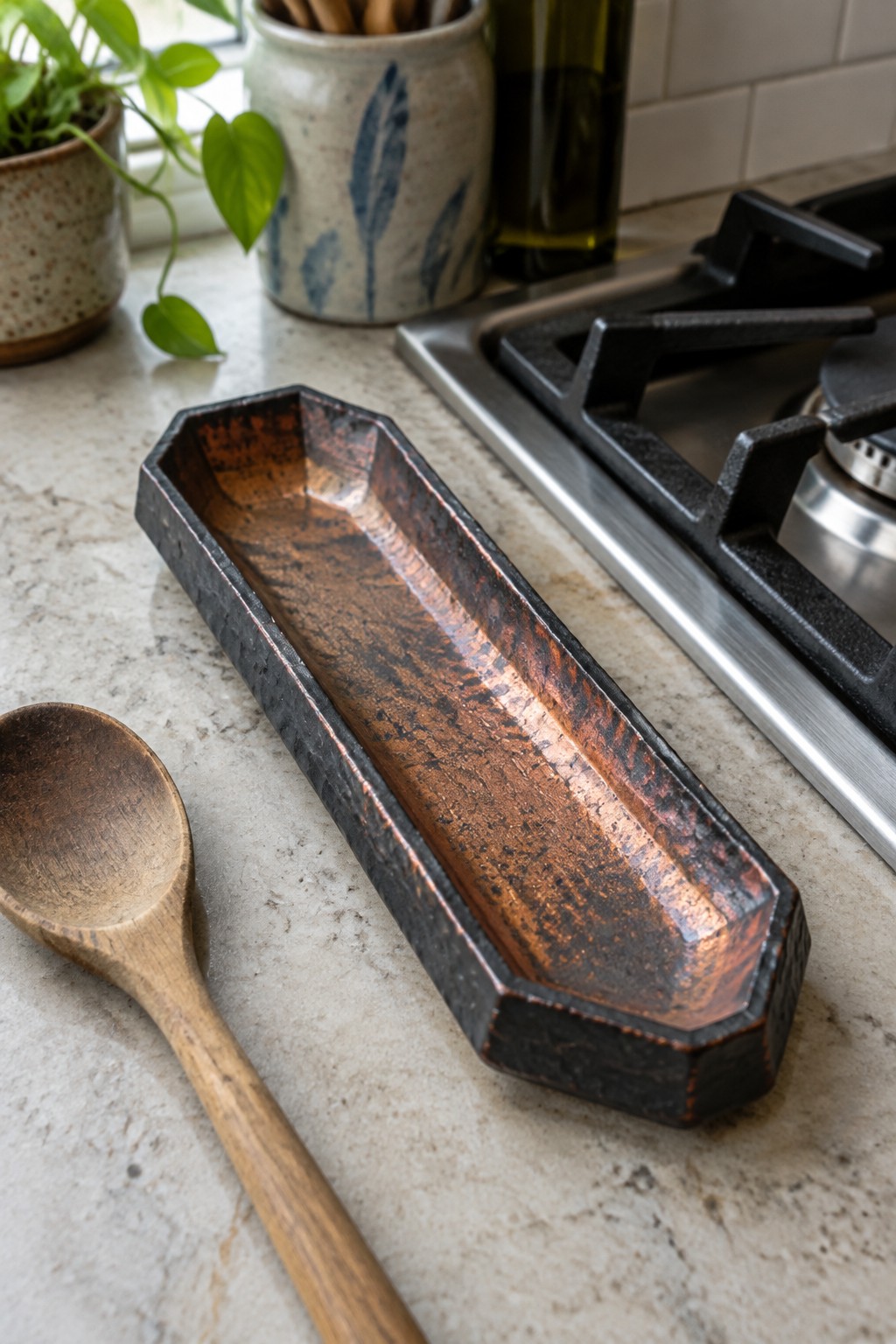
A long, angular utensil rest is a useful kitchen pottery project that makes geometric slab construction part of the design. Its faceted ends and dark, textured exterior frame the warm copper-toned interior, giving the handmade ceramic piece a strong contrast without needing a painted pattern.
The narrow shape gives cooking spoons a place to rest beside the stove, while the raised sides help keep drips contained. Adapt the idea with a shorter form for a single spoon, a wider tray for several utensils, or a simpler finish in one glaze color; the bold geometric silhouette makes it easy to spot and save for kitchen pottery inspiration.
Slab-Built Geometric Salt and Spice Cellar
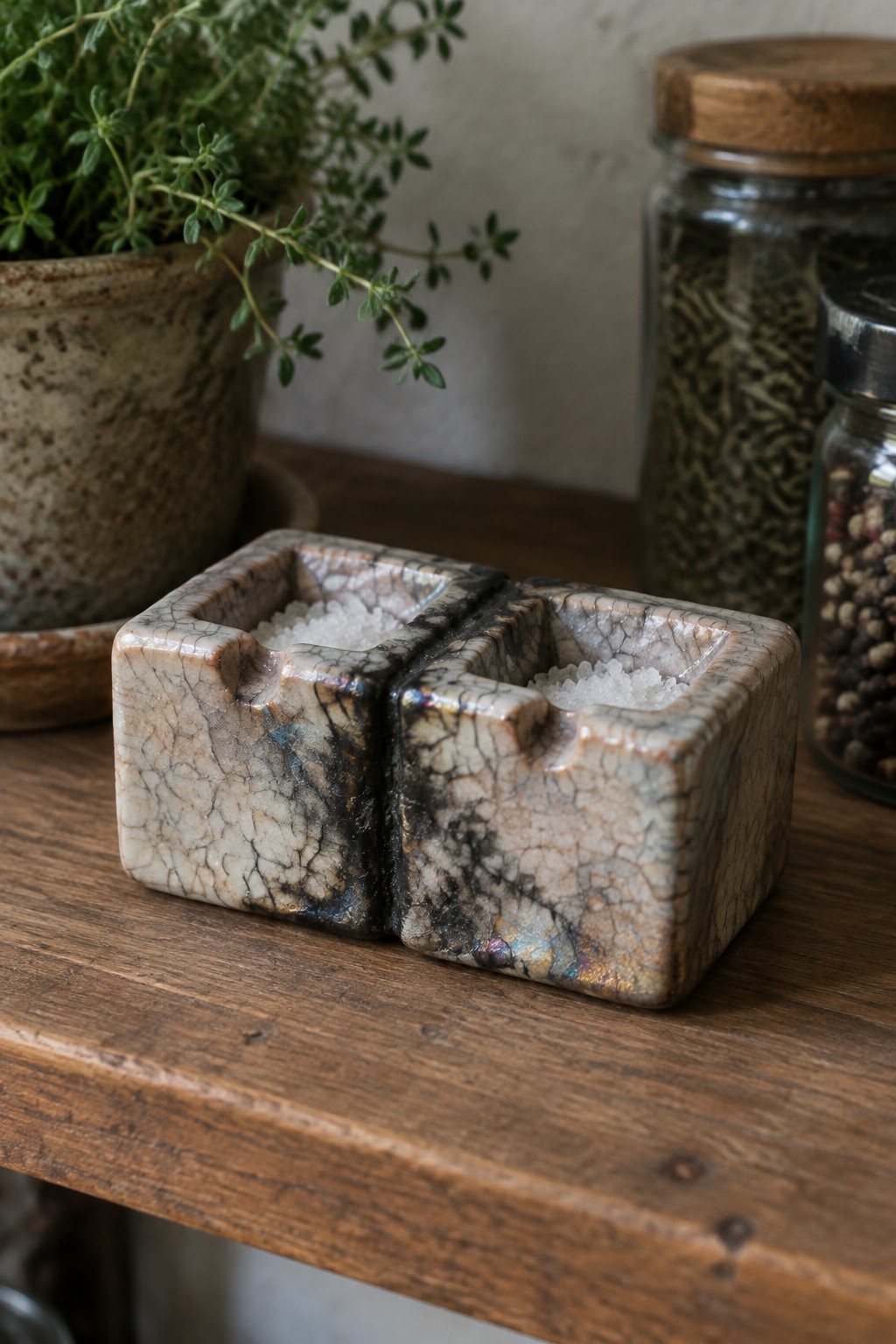
A divided ceramic cellar turns a simple kitchen holder into a compact geometric pottery project, with two open compartments for pinches of salt, spices, or small toppings. Its squared slab-built form and crackled-looking mix of pale, dark, and iridescent glaze make the contrast between the clean shape and varied surface the main design feature.
On a kitchen counter, the two sections can keep finishing salt and pepper or favorite seasonings close at hand. Adapt the layout into three smaller wells for spice blends, or make a single-compartment version as a pinch pot; the strong contrast and useful form also make it a distinctive handmade gift.
Geometric Slab-Built Metal-Finish Bird Sculpture
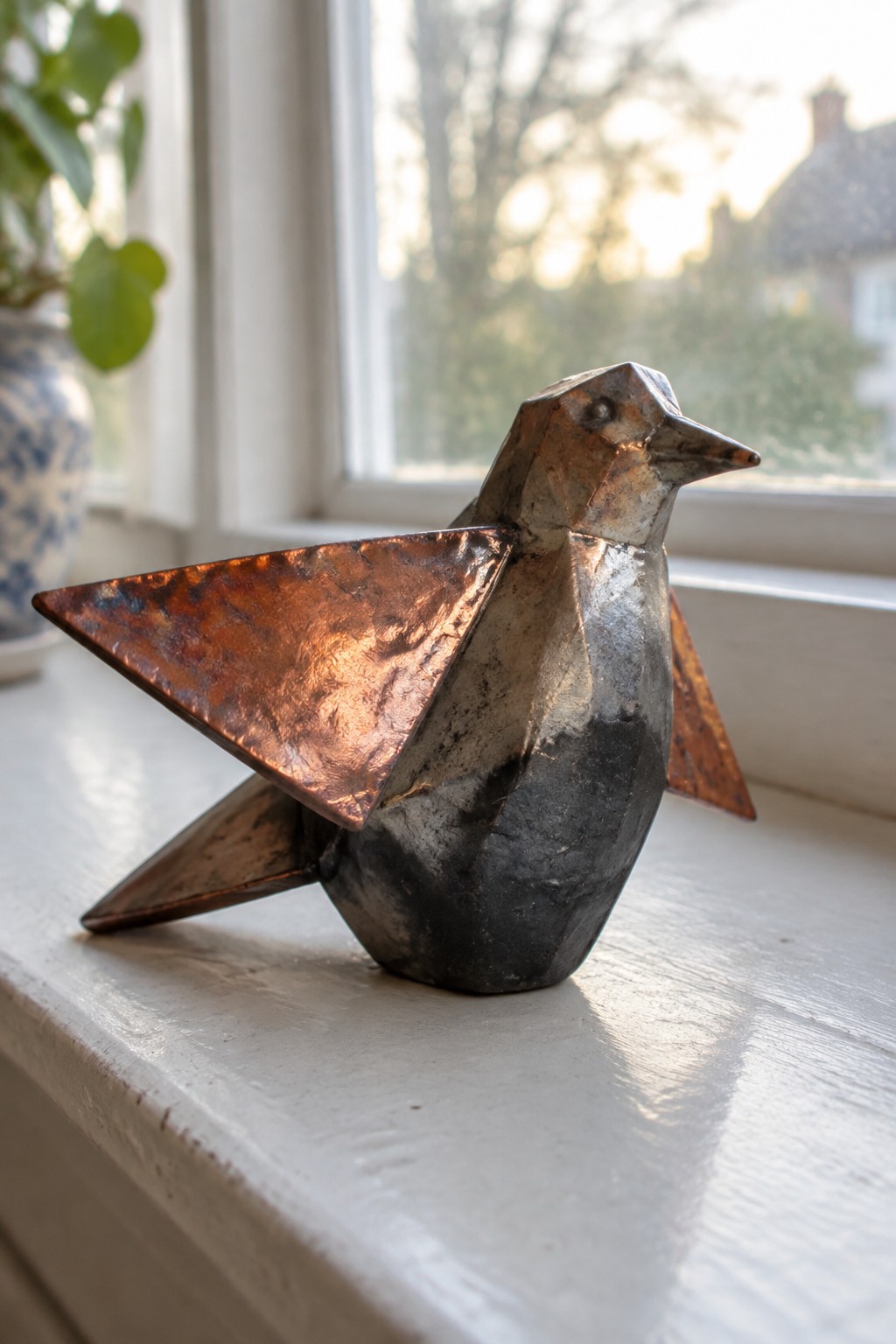
A geometric bird figurine is a distinctive slab-built pottery decor project, shaped with angular planes and broad, triangular wings. A dark, mottled body paired with copper-toned wings gives the handmade ceramic form contrast without relying on painted patterns or small sculpted details.
The wide wings and simple body make this idea easy to adapt into a smaller desk ornament or a flatter wall piece, while keeping the bird silhouette recognizable. Set it on a shelf or windowsill as a standalone accent, or personalize the surface with different earthy colors and textures; its strong outline also makes it easy to notice in a project gallery.
Slab-Built Geometric Raku Utensil Holder

A tall, faceted ceramic utensil holder turns a basic kitchen organizer into a statement-making countertop piece. Its angular slab-built form and weathered, mottled surface bring visual interest without taking up the space of a wide crock.
The narrow footprint suits cooking tools such as spatulas and whisks, and the neutral finish can fit into many kitchen styles. Adapt the height or number of sides to suit your counter, or make a shorter version for paintbrushes or desk supplies; the mix of strong geometry and irregular surface texture also gives it a distinctive look in project collections.
Slab-Built Geometric Incense Holder

A long, narrow ceramic incense holder is a useful decor piece that turns a simple slab-built form into a geometric tabletop accent. Its shallow trough catches ash, while the crackled, earthy surface and angled end detail give the handmade pottery a varied look without making the shape overly complex.
Set it on a dresser, shelf, or meditation table, and keep the length generous enough to catch falling ash from the incense stick. You could adapt the form with straighter edges, contrasting geometric panels, or a small matching dish for spare incense, making it a distinctive handmade gift or a strong Pinterest project idea.
Geometric Slab-Built Ceramic Soap Dish

A handmade ceramic soap dish pairs a simple rectangular slab form with three long drainage slots, giving this bathroom accessory a strong geometric look while helping water run away from the soap. The mottled, metallic-looking surface adds visual interest without relying on painted decoration.
Set it beside a bathroom or kitchen sink, and adapt the dimensions or slot spacing to suit a larger soap bar or a different style of bar. A restrained shape makes it easy to personalize with a contrasting glaze or a more angular outline, while the practical form gives it a clear use in a pottery gift set.
Slab-Built Geometric Raku Pendant Light
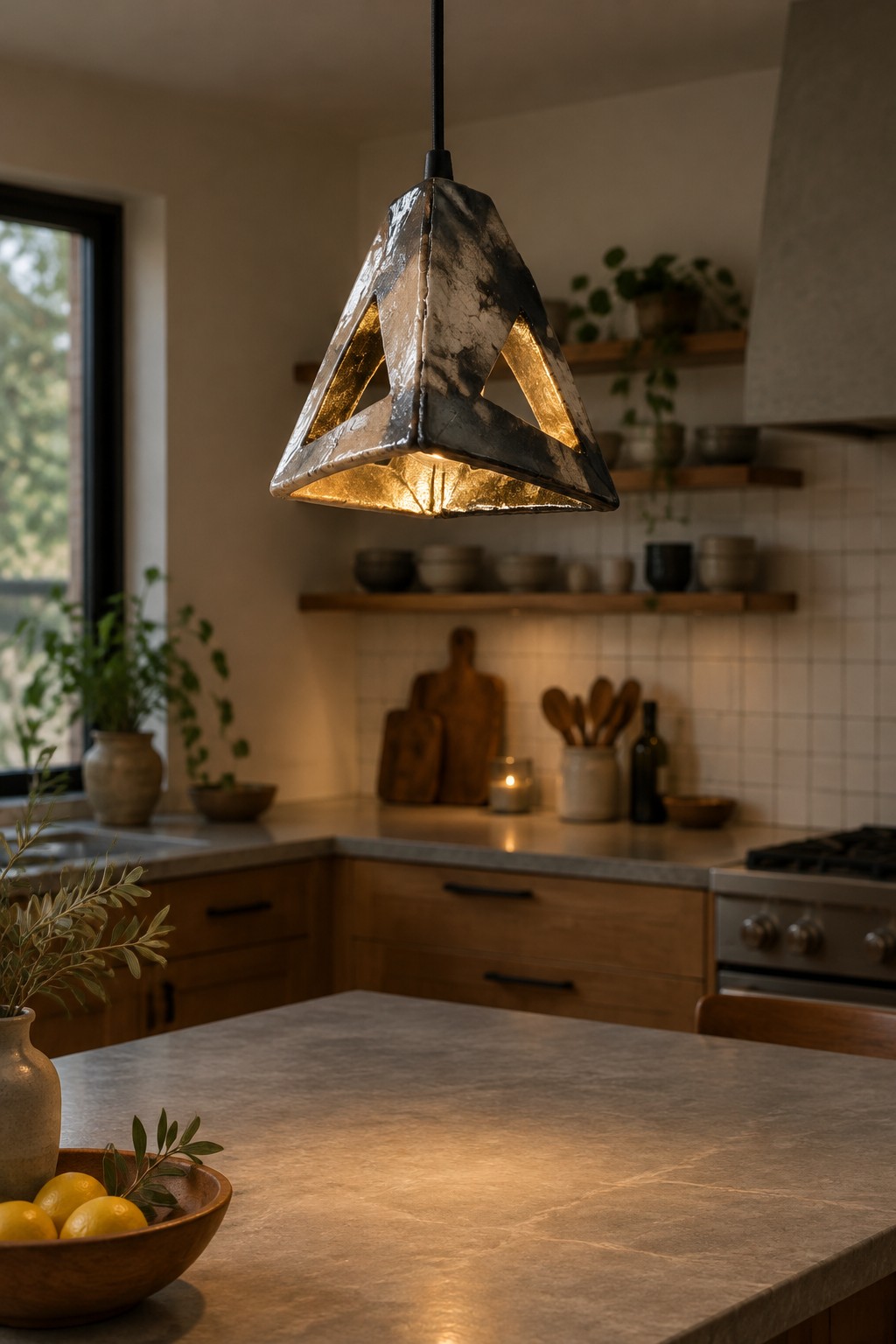
A faceted ceramic pendant shade turns a geometric slab-built form into a kitchen lighting feature. Its open triangular sides let the warm light show through, while the mottled dark and metallic-looking surface gives the handmade clay exterior contrast without hiding the angular construction.
The open design makes this idea best suited to decorative lighting over a kitchen island or dining table, rather than a small storage piece. Adapt the shape with fewer, broader facets for a simpler shade, or make a small unlit version as a sculptural tabletop object; the strong silhouette and glowing openings give it clear visual impact for a pottery inspiration board.
Slab-Built Geometric Raku Yarn Bowl
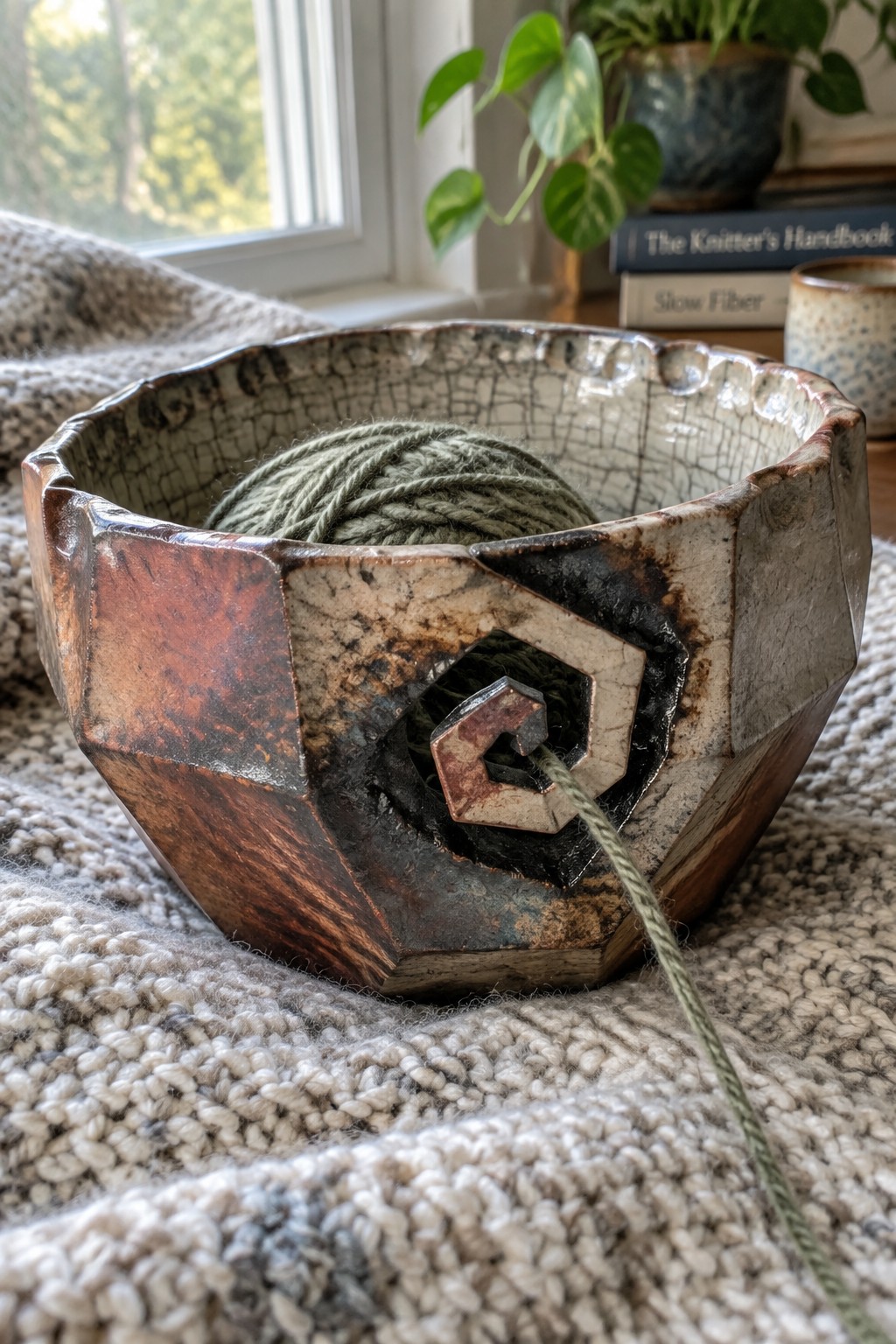
A handmade ceramic yarn bowl keeps a ball of yarn contained while a strand feeds through a cutout in the side. Its angular slab-built body and contrasting crackled, earthy surfaces make a practical craft-room holder double as a decorative accent.
Set it beside a knitting chair or on a craft table to keep yarn from rolling away as you work. You could adjust the side opening for thicker yarn, simplify the color blocks, or adapt the form into a holder for cords or small tools; the bold geometric shape gives it a clear, distinctive profile for Pinterest.
Slab-Built Geometric Wall Planters
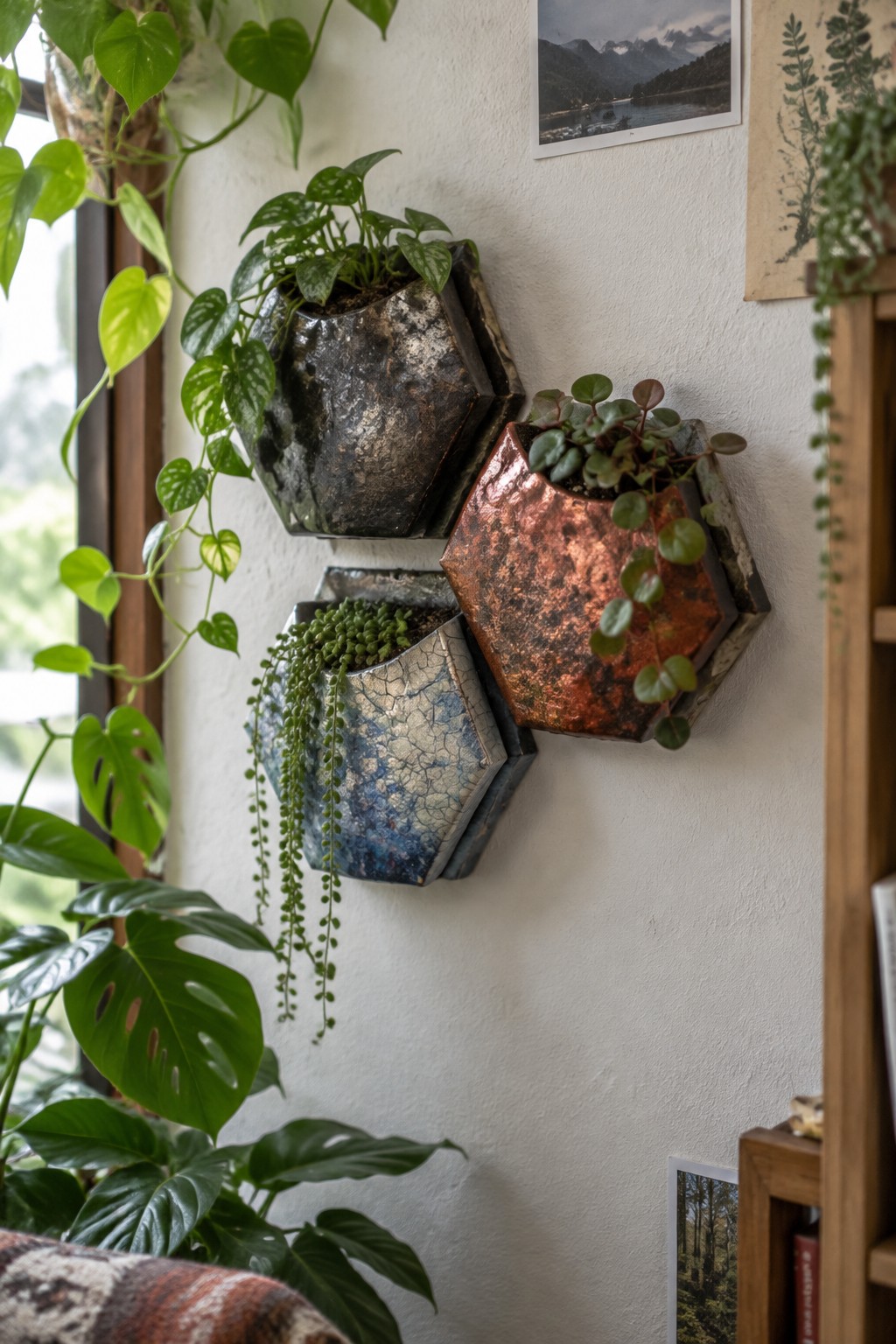
Geometric slab-built ceramic planters turn a small wall area into a display for trailing and compact houseplants. Their faceted shapes create strong outlines, while varied dark, copper-toned, and blue surfaces give each handmade pot its own look.
These planters are useful for styling a sunny indoor wall without taking up shelf space, especially with plants that spill over the edges. Adapt the idea with fewer facets, a single glaze color, or smaller pockets for succulents, and make sure the finished pieces have secure hanging hardware and drainage suited to the plants you choose.
Slab-Built Geometric Napkin Holder
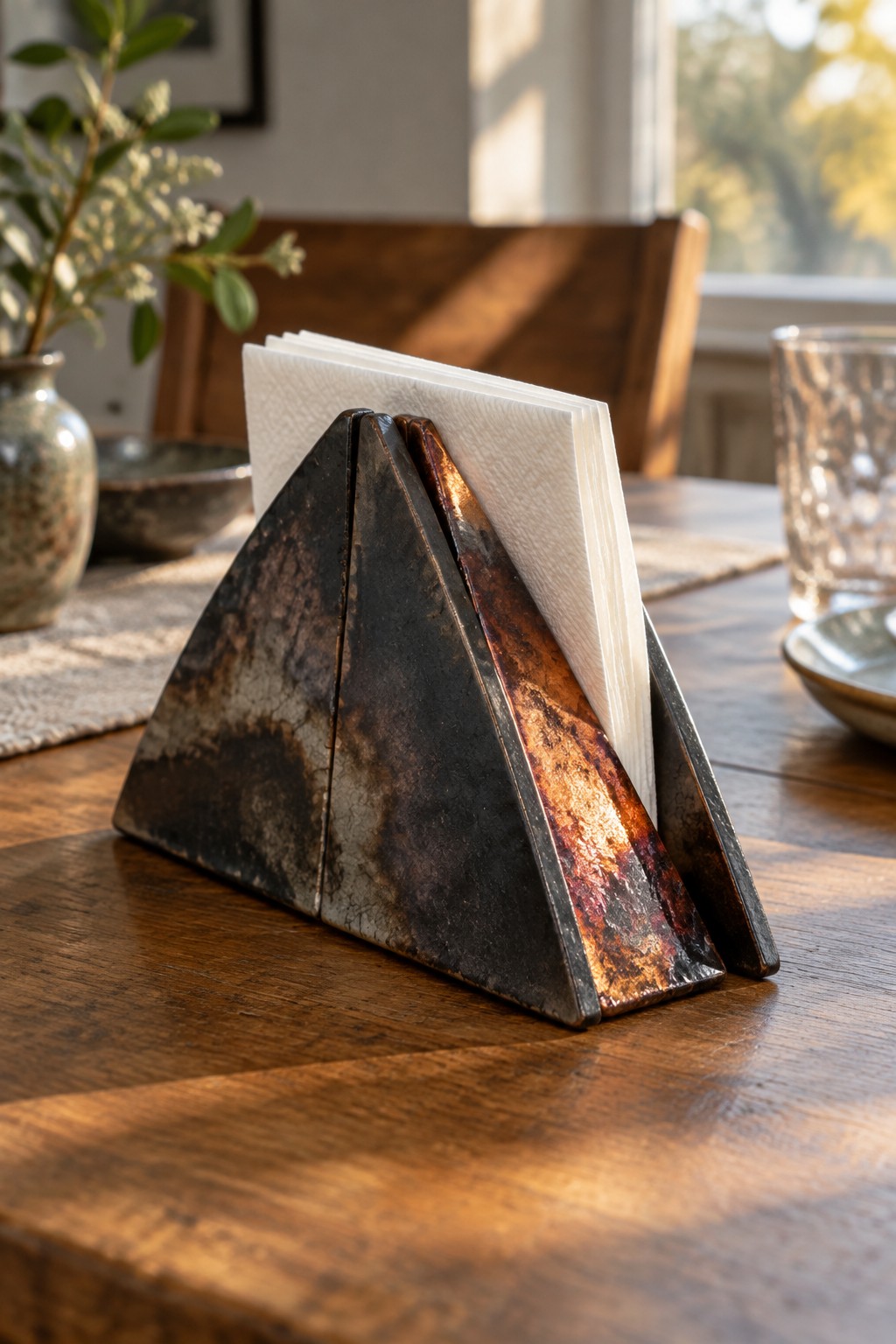
A handmade ceramic napkin holder turns folded napkins into a tidy tabletop display. Its triangular, open-sided form creates strong geometric lines, while the dark, copper-toned surface gives the simple shape a distinctive raku-style look.
The open slot keeps napkins easy to reach, making this a useful accent for a dining table or kitchen counter. Adapt the shape with wider sides for larger napkins, or use a simpler finish and contrasting panels to match your tableware; its sculptural silhouette also makes it stand out in pottery inspiration collections.
Slab-Built Geometric Raku Coasters

These handmade ceramic coasters use thick, faceted slab forms and iridescent, mottled surfaces to turn a practical tabletop accessory into a small decor piece. Their irregular polygon shapes keep the set from feeling too uniform, while the earthy clay edges contrast with the blue, copper, and dark metallic-looking finishes.
A set like this can protect a coffee table or sit out as a colorful accent, and the varied surfaces make each coaster easy to distinguish. Adapt the idea with simpler hexagons, a limited palette, or a matching trivet, keeping the slab edges thick enough to give the pieces a sturdy profile.
Slab-Built Geometric Lidded Storage Jar

A square slab-built ceramic jar with a stepped, pyramid-like lid makes a distinctive small-storage piece for a bedroom or living space. Its angular silhouette gives it a geometric form, while the pale crackle-like surface and dark band of repeating motifs add detail without competing with the shape.
Use a jar like this on a bedside table to hold jewelry, hair ties, or other small items, or adapt it as a decorative container for a desk or shelf. The stepped lid can be simplified to a flat square top, and the surface pattern could be changed to suit a different color palette or room.
Stacked Geometric Raku Incense Burner
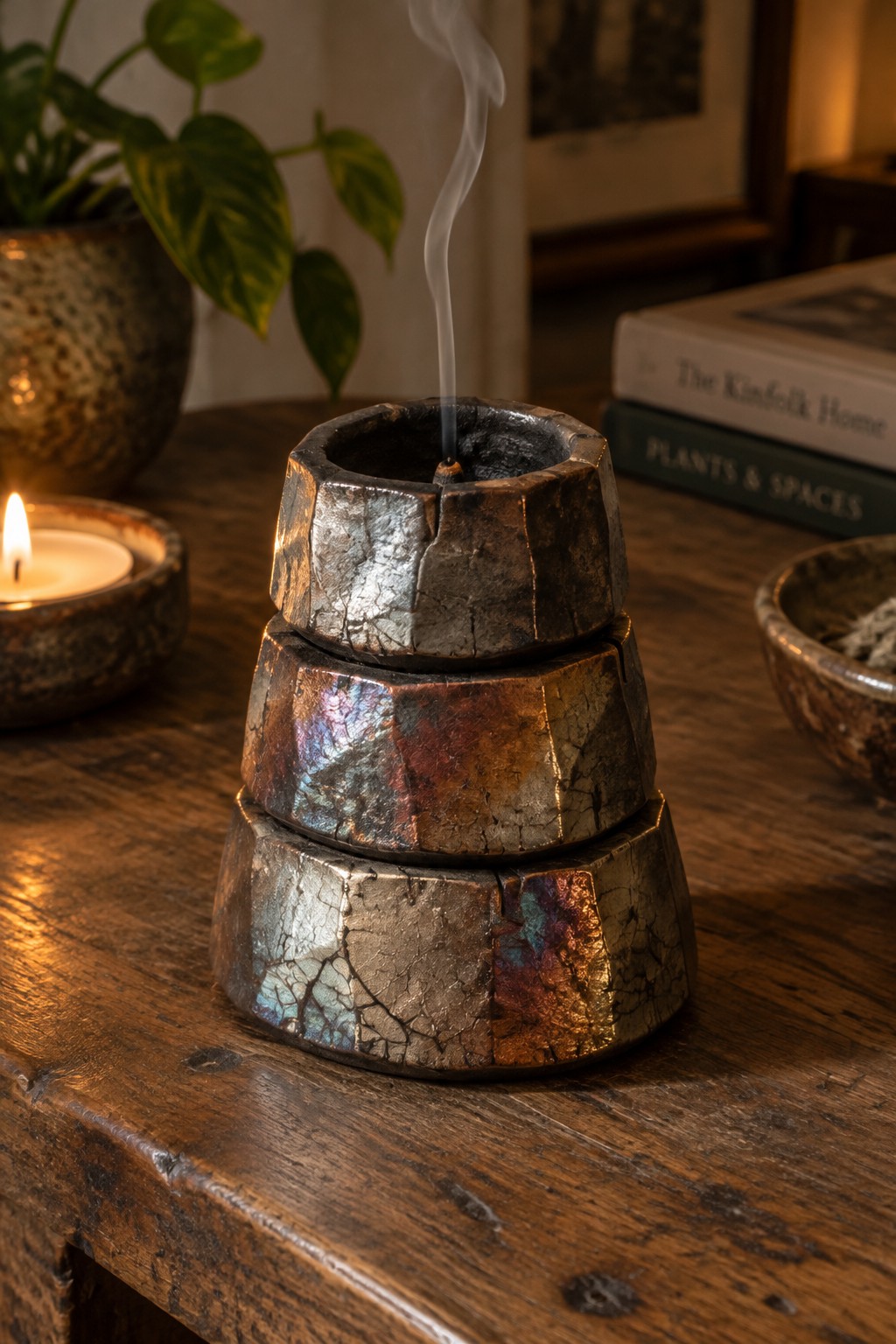
A slab-built incense burner made from stacked, faceted ceramic forms turns a simple incense stick into a sculptural decor piece. Its stepped silhouette and mottled metallic-looking surface make the geometric construction the main feature, placing it firmly in the decorative incense holder category.
The stacked shape would suit a shelf, desk, or meditation corner, where the rising smoke has room to drift without competing with other objects. To adapt the idea, make the tiers shorter or fewer for a simpler form, or change the proportions and surface colors to coordinate with a room; Pinterest readers can quickly recognize both the geometric shape and its use.
Frequently Asked Questions
Slab-built pottery is made by rolling clay into flat sheets, then cutting, joining, and shaping those sheets into forms. It is especially well suited to geometric projects such as boxes, angular vases, pyramids, and sculptural vessels because you can control the planes and edges directly. Wheel-thrown pottery, by contrast, is shaped on a spinning wheel and tends to have rounded, symmetrical forms.
Raku refers to a firing process, not a building method. A slab-built piece can be fired using raku techniques if the clay and glaze are appropriate and the firing setup is designed for raku.
Choose a clay body specifically labeled as suitable for raku or for the firing temperature you plan to use. Clay bodies vary, so check the manufacturer’s instructions and test your materials before making a large project.
Useful tools include a rolling pin or slab roller, thickness guides, a ruler, a sharp cutting tool, a rib, and a small brush or sponge for joining edges. A beveling tool can help create clean seams. For geometric forms, templates made from paper or thin card are helpful for repeating shapes and checking that panels fit together.
Roll slabs to an even thickness and avoid stretching them as you cut or move them. Let the clay firm up to a consistent, leather-hard stage before assembly, especially when making boxes or other forms with several panels. Score and slip the joining surfaces, press the seams together carefully, and reinforce interior joints with a small coil of clay when appropriate.
Dry the finished piece slowly and evenly. Cover it loosely with plastic, and rotate it from time to time so one side does not dry much faster than another. Thick corners, uneven walls, and rushing the drying process are common causes of cracks and distortion.
Start with simple projects that use a small number of flat panels, such as a square tray, a triangular wall pocket, or a basic cube-shaped vessel. These teach you how to measure, cut, join, and support slabs without requiring complicated curves or many seams.
Once you are comfortable with those skills, try more involved shapes such as faceted vases, lidded boxes, or multi-sided sculptural forms. Make a paper or cardboard model first to check the proportions and panel layout before cutting clay.
Raku firing involves high temperatures, hot pottery, and combustible materials, so it should be done with suitable equipment, protective gear, and an experienced, supervised setup. Follow the kiln and glaze manufacturers’ instructions, and use clay and glazes rated for your firing process. Never use a kitchen oven or an improvised firing setup.
Test glaze combinations on small sample tiles before glazing a finished piece. Apply glaze consistently, and keep it away from the bottom and areas that will touch kiln shelves or firing supports. Raku results are unpredictable by nature, so variations in color, metallic effects, and crackle patterns are part of the process. Raku ware is generally decorative rather than food-safe unless the materials and firing process have been specifically tested and confirmed safe.

Pottery Path is my cozy corner of the internet where I share clay ideas, pottery inspiration, and simple projects you can recreate at home. I love exploring everything from air dry clay to handbuilt pottery to cute minis that brighten your day. My goal is to make clay crafting feel easy, fun, and welcoming for anyone who wants to try it.
You will find beginner friendly tutorials, creative pottery painting ideas, and lots of warm inspiration for slow and happy crafting. If you enjoy hands on creativity, this space will feel like home.