
I’ve tried a few ways to decorate my pottery pieces over the years.
Lately graphic motifs have been my go to because they don’t require much detail.
I put together some ideas that are simple and work well for beginners.
There are 23 of them in this list and they all use basic patterns like dots and shapes.
You can adapt them to whatever pottery you have on hand.
Two-Tone Circle Motif on a Speckled Mug

A standard ceramic mug works well with simple painted circles arranged in two offset rows around the body. Pink circles fill the upper row while yellow ones sit below, using the natural texture of the clay as a background instead of a solid glaze. The design stays graphic and clean because the shapes are repeated at the same size without extra details or shading.
What makes this idea useful is how the circle pattern adapts easily to any round form without precise spacing. You could change the color pairing for different seasons or repeat the same layout on a small pitcher or jar. The motif also translates well to a set of mugs where each one uses a slightly different color combination.
Wavy Dashed Lines Bowl
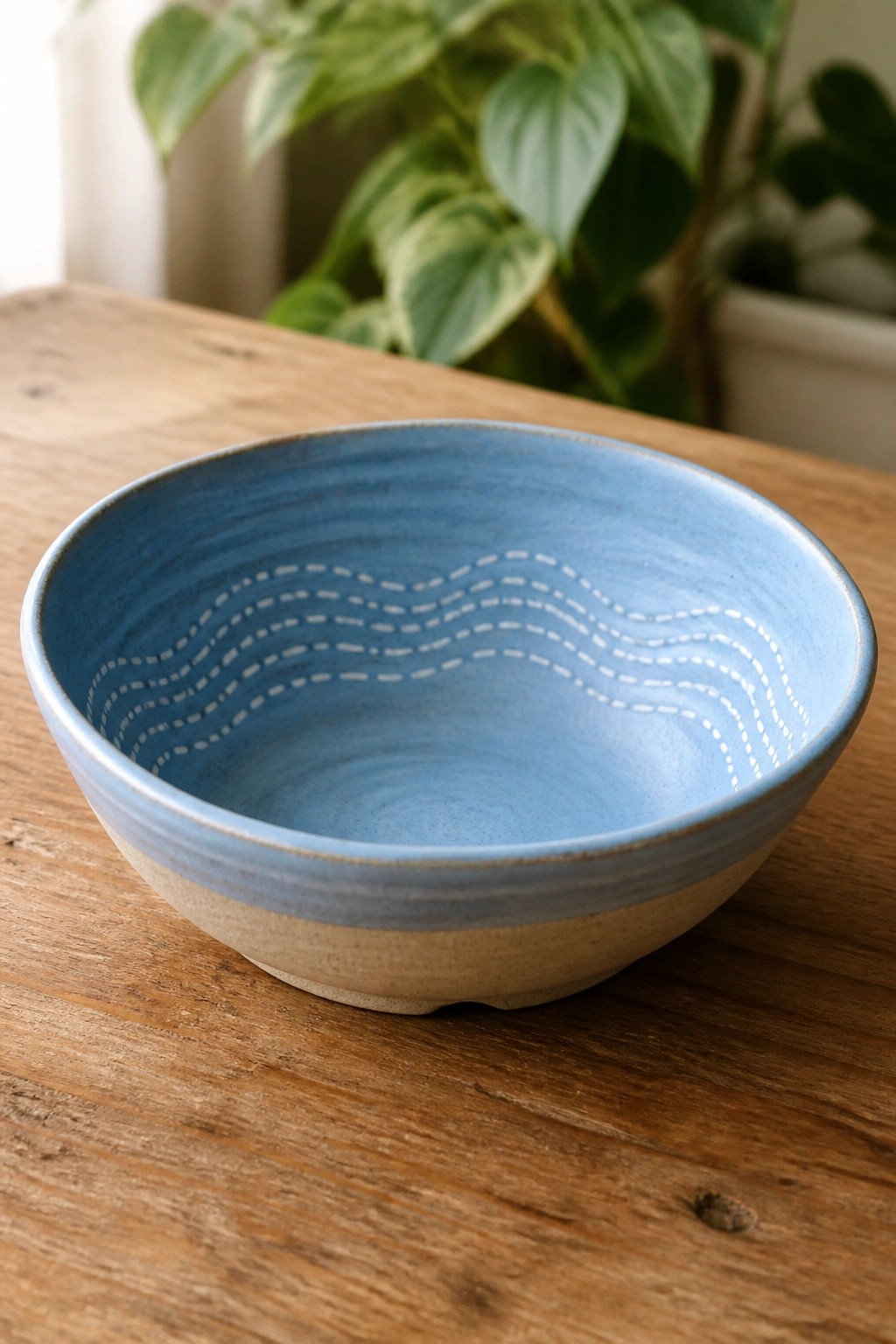
A ceramic bowl with a blue interior glaze uses a band of wavy dashed lines to create a simple graphic pattern. The white dashes sit just below the rim and follow the curve of the bowl in repeating rows. This approach keeps the focus on clean linear marks instead of full illustrations or heavy texture.
The shape works well as a small serving bowl or catch-all on a countertop. You can scale the same dashed wave motif down for plates or mugs to make a set. Changing the spacing or color of the dashes gives an easy way to customize the look without changing the base form.
Citrus Slice Trinket Plate

A small handmade ceramic plate works well as a base for this graphic motif. The design uses a simple circle divided into wedge segments painted in layered orange tones with white lines to separate each section. The speckled clay body and soft rim give the flat motif enough contrast to stand out without extra details. This approach fits the ring dish or small tray category and keeps the focus on the painted fruit slice.
What makes this idea useful is how the round shape already matches the citrus cross-section, so the painter only needs to add the segments and color. The same layout works on a larger dinner plate or can be reduced to fit a ring dish or soap rest. For a gift, swapping the orange for lemon yellow or blood orange red changes the look with almost no extra work. The clean graphic style also photographs clearly for sharing.
Geometric Glaze Block Ring Tray
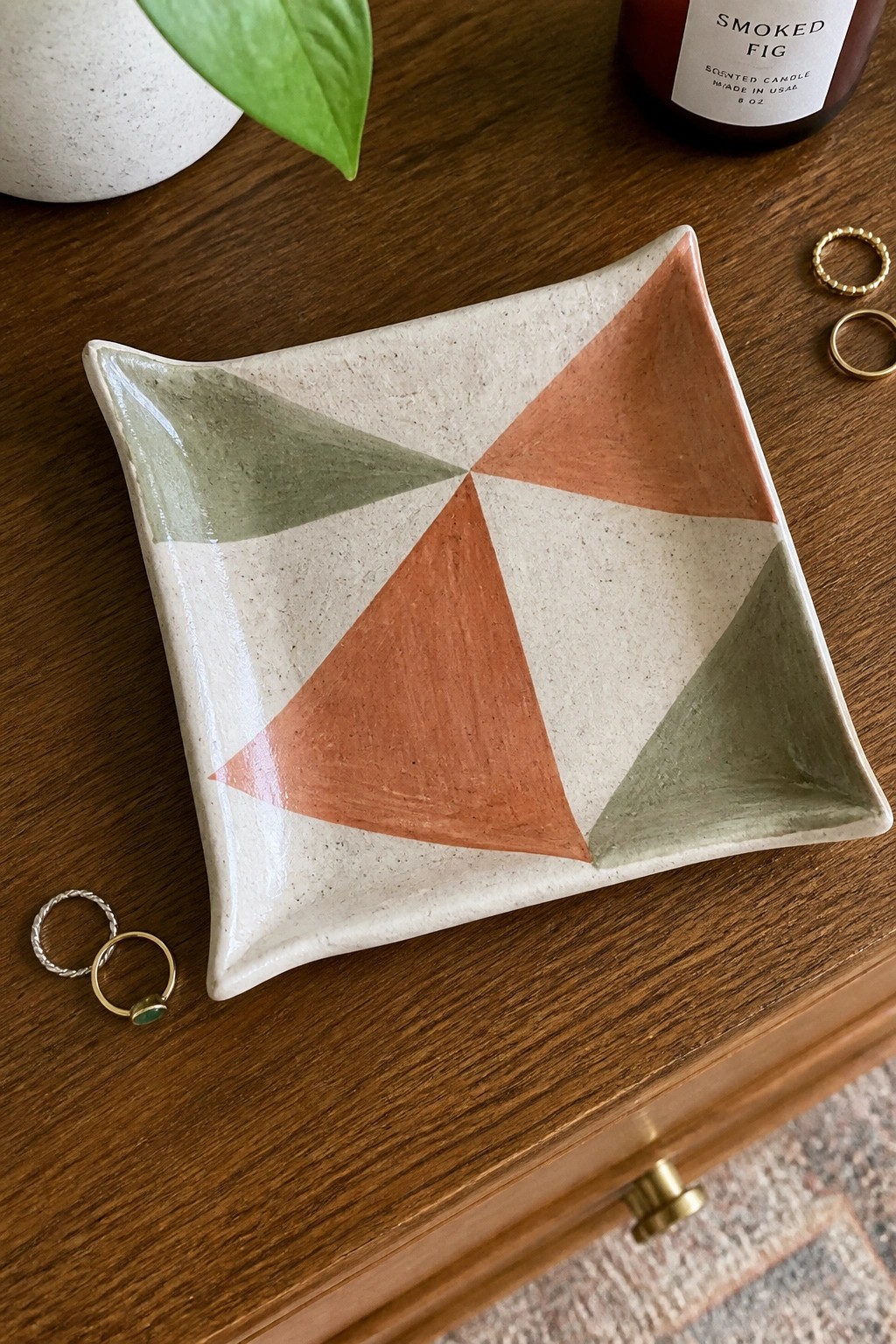
A small diamond-shaped ceramic tray makes a practical ring dish when the surface is split into three large triangles. Each section receives a single glaze color, such as terracotta, cream, and sage green, so the pattern stays bold with minimal brushwork. The soft, irregular edges and low walls keep the form simple while giving the piece enough depth to hold small items.
The shape works especially well on a dresser or bathroom counter where rings need a dedicated spot. You can repeat the same triangle layout on a square or oval tray if you prefer a different outline. The color blocking requires only three glaze pours or brush applications, which makes the project fast to finish and easy to customize with other color combinations. A version like this photographs cleanly for sharing because the large shapes read well even at small sizes.
Repeating Semi-Circle Border on a Small Plant Pot
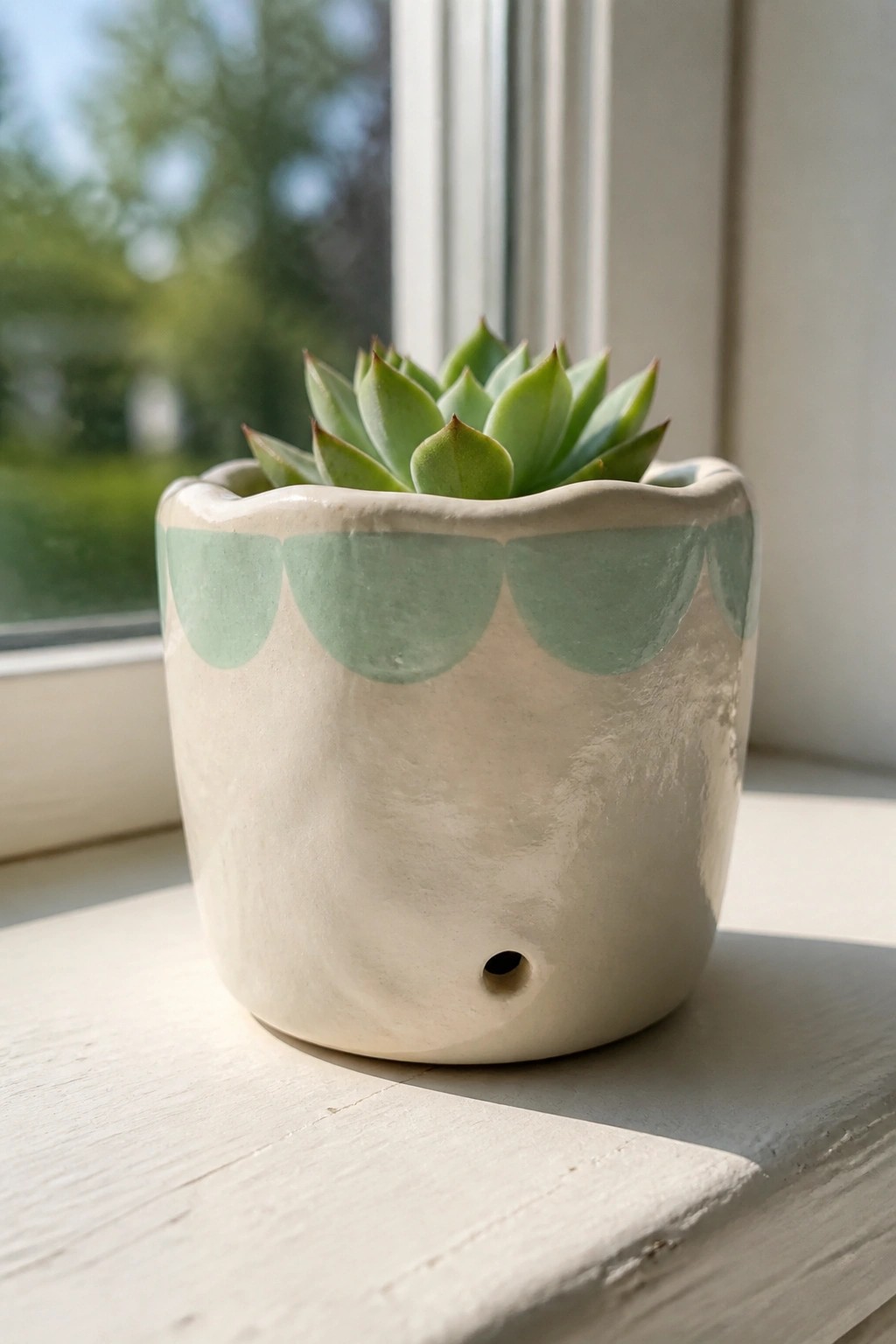
A small ceramic planter gains a clear graphic look from a row of painted half-circles in soft green placed just below the rim. The motif follows the curve of the pot and sits against a matte off-white clay body, keeping the pattern simple and easy to repeat. This style works as a straightforward way to add a painted border without covering the whole surface.
The compact shape fits on a narrow windowsill or shelf where a larger pot would feel crowded. You can change the color of the half-circles or stretch the same spacing to a taller cylinder for herbs. The drainage hole at the base keeps the piece usable for live plants while the border stays visible above the soil line.
Graphic Moon and Star Spoon Rest

A handmade ceramic spoon rest with an elongated shape that widens at one end gives you a stable surface for resting utensils. The design uses a simple vertical line of small stars and crescent moons painted in gold and blue directly down the center. The light speckled glaze keeps the background plain so the graphic motifs read clearly without extra decoration. This approach works as a basic painted kitchen item that relies on repeating celestial shapes rather than complex scenes.
The narrow form fits easily beside a sink or stove and takes up little counter space. You could repeat the same line of motifs on a soap dish, a small tray, or even along the rim of a plate by adjusting the spacing. Mixing metallic gold with solid blue keeps the pattern quick to paint while still creating contrast. This kind of straightforward motif stands out on Pinterest because it reads well in photos and translates to other small kitchen pieces without much extra work.
Spiral Glaze Ring Dish

A small shallow ceramic dish makes a practical ring holder when finished with a graphic spiral motif in pink and cream glazes. The round form keeps the design contained while the swirling glaze pattern creates a clear focal point without extra painting steps. This approach relies on the glaze movement itself to form repeating stripes that read as a simple graphic element.
What makes this idea useful is how the compact size works on a bedside table or bathroom counter for everyday jewelry. You can adapt the spiral by switching to other glaze colors or by brushing the pattern onto bisque ware for more precise control before the final firing. The same motif translates directly to a set of matching dishes or a slightly larger tray for keys.
Daisy Motif Tea Light Holder
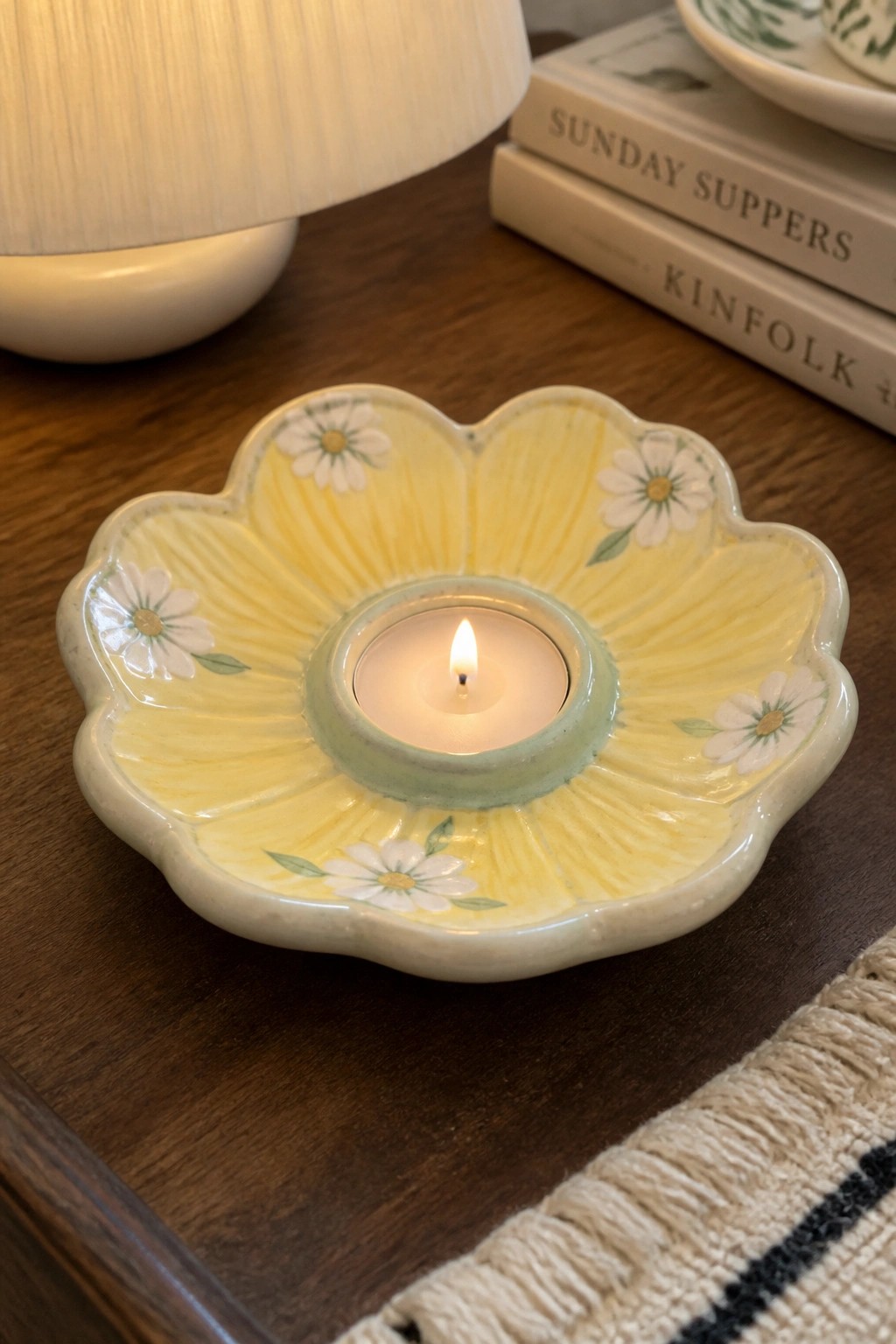
A flower-shaped ceramic dish works as a tea light holder when the edges are formed into petals and a raised ring is added in the center. The yellow glaze provides the base while white daisies with simple centers are painted at intervals around the rim. This keeps the design graphic and repeatable without needing fine detail work. The approach fits the candle piece category and stays practical because the shape itself defines the layout.
The small scale makes this easy to adapt into a ring dish or small trinket tray by skipping the center well. You could repeat the same daisy motif on a plain round dish or switch the color to match kitchen or bathroom items. For a gift this shape stands out because it is compact yet clearly handmade. The repeating motif also helps the finished piece photograph clearly for sharing.
Graphic Clouds on a Toothbrush Holder
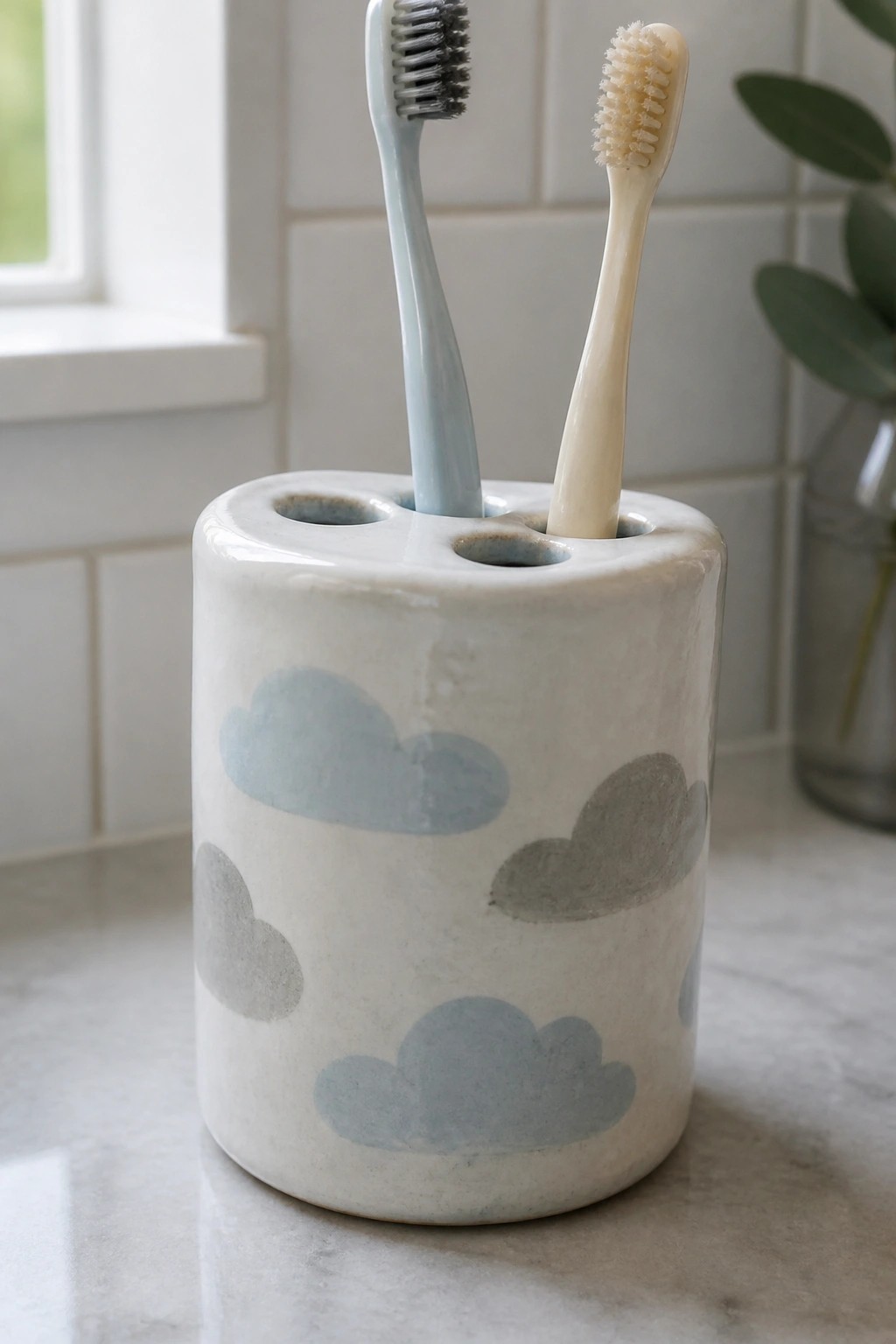
A ceramic toothbrush holder with multiple top openings works well as a bathroom item when painted with simple cloud shapes in soft blue and gray. The rounded cylinder form gives the flat graphic motifs enough space to repeat without crowding. A matte white base keeps the design clean and lets the clouds read clearly as a single motif.
What makes this idea useful is how the same cloud shapes transfer directly to other small bathroom pieces like a soap dish or lidded jar. You could paint fewer clouds on a shorter cylinder for a single brush or stretch the pattern across a wider tray for daily items. The limited palette makes the motif fast to repeat if you want to test graphic painting on a new shape.
Gingham Petal Ring Dish

A small flower-shaped ceramic dish makes a practical ring holder when covered in a hand-painted gingham pattern. Divide the surface into four sections and fill them with overlapping pink and green checks so the pattern stays bold even on the curved petal edges. The scalloped shape needs no extra carving, and a clear gloss glaze keeps the graphic lines sharp after firing.
What makes this idea useful is how the compact size fits on a bedside table or vanity without taking up space. You can rework the same gingham layout on a round tray or small plate by adjusting the check scale to the new surface. For gifts, swap the pink and green for any two colors that match a room or personal style while keeping the simple petal outline. The pattern also translates easily to other small items like soap dishes if you want to repeat the motif.
Sunburst Pinch Bowl
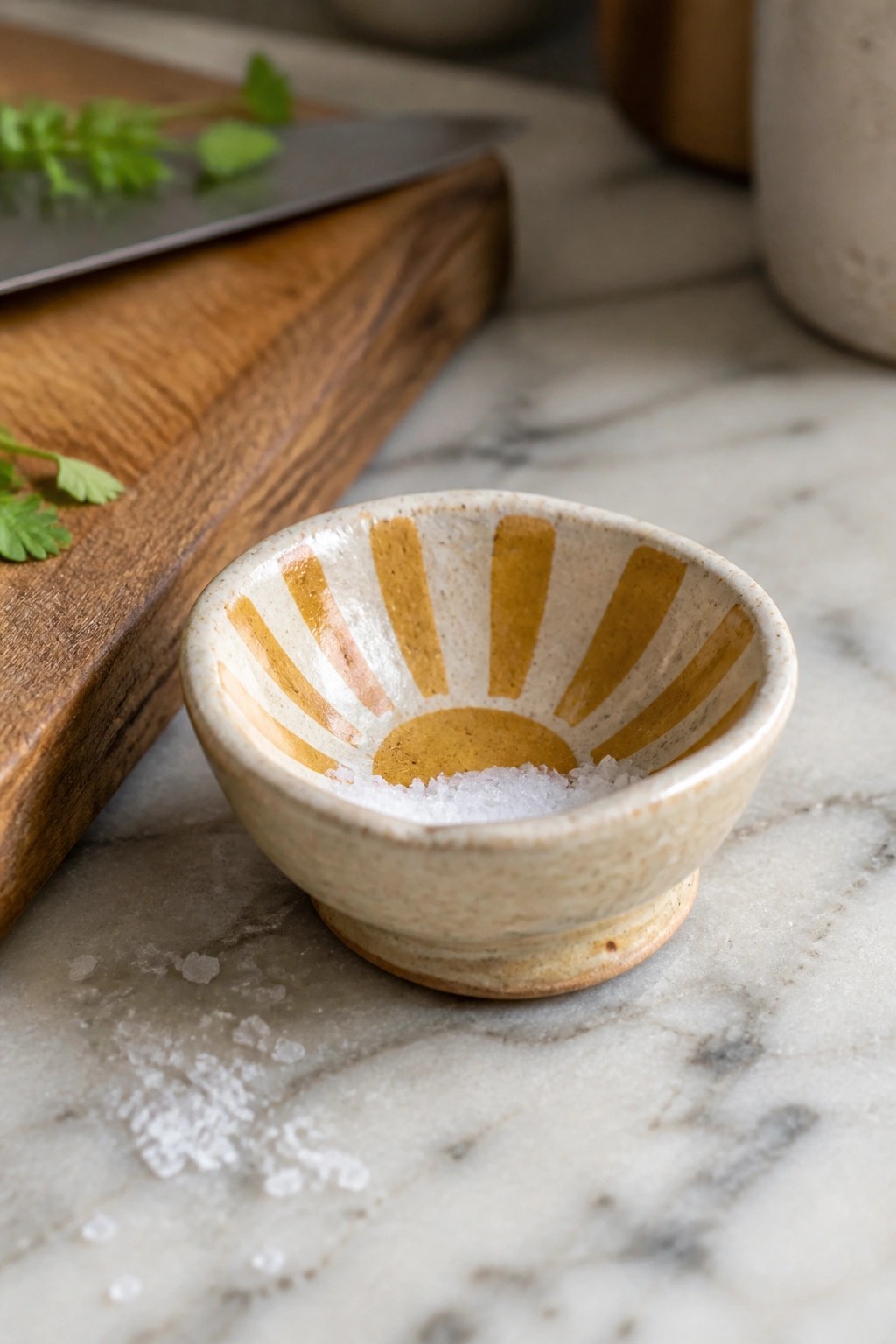
A small ceramic pinch bowl painted with a radiating sun motif works well as a kitchen staple for holding salt or spices. The design uses simple vertical stripes in warm yellow and orange tones that meet at a semicircle in the center, creating a clean graphic look against the light speckled clay. This style fits into the category of functional kitchen pottery where the painted detail adds interest without complicating the form.
What makes this idea useful is its compact size that fits easily on a countertop or near a stove. You can adapt the same sun pattern to larger bowls or try it on a set of matching dishes for a cohesive look. For a gift, something like this pairs nicely with a small jar of finishing salt.
Graphic Leaf Motif on a Narrow Ceramic Vase

A slim ceramic vase with a speckled off-white surface makes a good base for a single bold leaf motif. The black painted branch runs down the front in a simple silhouette that contrasts sharply with the light textured glaze. This style keeps the focus on the graphic shape rather than multiple colors or patterns.
The shape does a lot of the work here because the tapered neck draws the eye straight to the leaf design. The same motif could be repeated on a matching set of small cups or a wider bowl for a coordinated group. This kind of painted vase works well as a desk accent or on a narrow shelf where a single stem shows off the graphic clearly.
Hanging Heart Tile With Scallop Border

A flat rectangular ceramic tile works as an easy wall hanging when you add two drilled holes at the top. Four hearts painted in soft blue-green, pink, yellow, and sage sit in a straight row across the middle, while a band of overlapping half-circles in the same colors runs along the bottom edge. The crackle surface shows through the paint and gives the flat design a bit of texture without extra steps. This type of project fits the graphic motif category because the shapes stay simple to repeat on any flat clay form.
What makes this idea useful is how the rectangle keeps the focus on the painted pattern and lets you hang it with basic twine. You could paint the same hearts and scallops on square coasters or a longer tray by adjusting the spacing to fit the new shape. The small size makes it quick to finish in one session and easy to tuck into a gallery wall or gift for a desk. The clean rows of color also photograph clearly, which helps the motif stand out when shared online.
Fox Figurine with Blocked Color Motifs

A small ceramic fox figurine makes a simple decor object when you use solid color blocks instead of detailed painting. The orange covers the main body while white fills the muzzle, inner ears, and tail tip, and small black marks define the eyes and nose. This graphic approach works on a basic sculpted shape and keeps the surface clean under a glossy glaze.
The small scale makes this easy to adapt for a shelf, desk, or windowsill display. You could apply the same blocked color method to other animal forms like cats or rabbits to create a set. For a gift, this kind of figurine stands out because the motif stays minimal and the shape does most of the work.
Checkerboard Pattern on an Oval Ceramic Dish

A small oval ceramic dish covered in a black and white checkerboard glaze pattern works as a soap dish or ring tray in the bathroom. The high-contrast squares fill the entire surface and stand out clearly against the glossy finish. This graphic approach suits flat, simple shapes where the motif can run edge to edge without competing with curves or handles.
What makes this idea useful is how the same checkered layout can be scaled to fit coasters, small plates, or a rectangular tray. You can keep the squares even or vary their size to match the object dimensions. In a bathroom setting the dish holds soap or small items neatly while matching plain tile and fixtures. The pattern also translates easily to other graphic motifs like stripes or grids if you want to change the look on a new piece.
Pastel Ovals on a Yarn Bowl
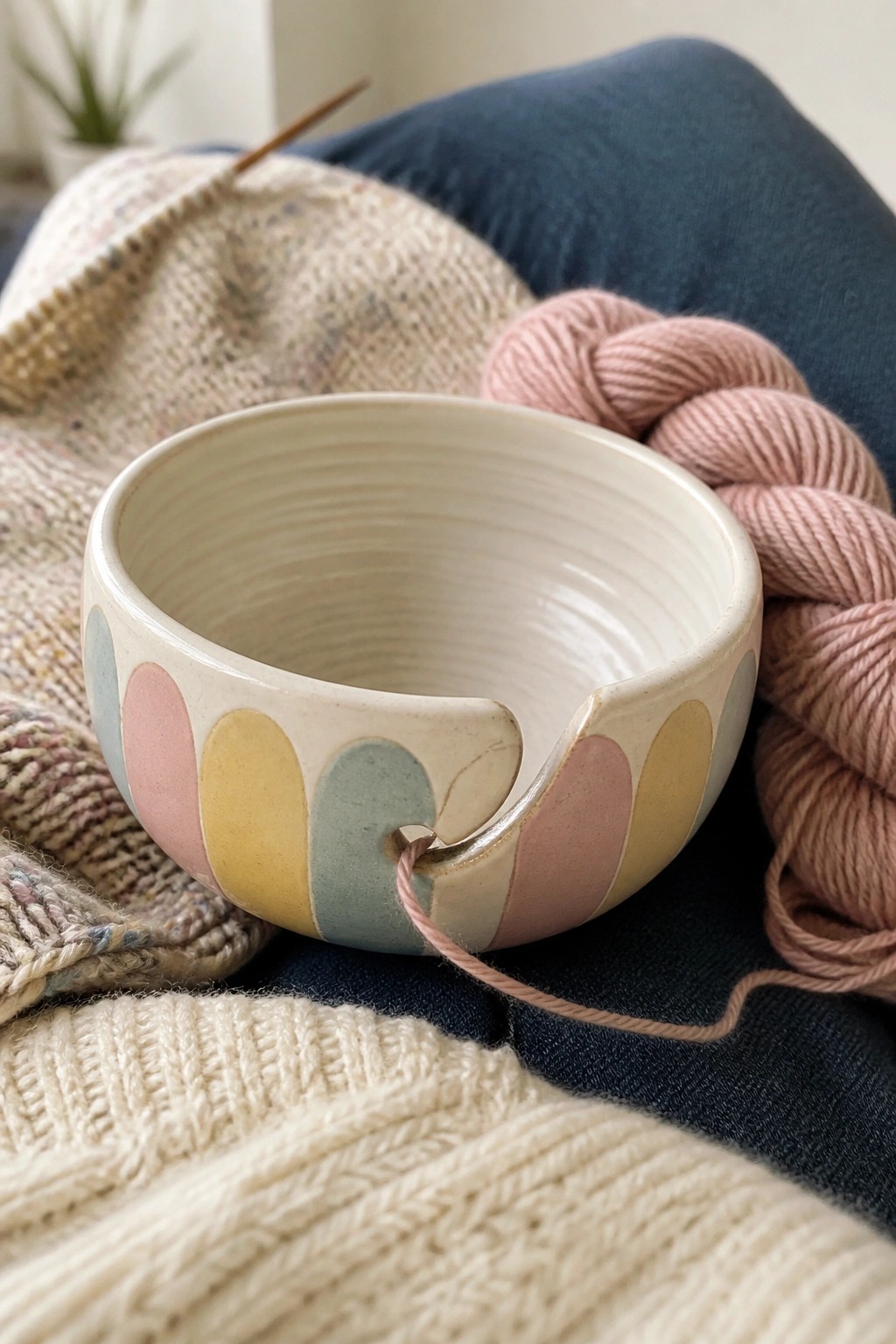
A yarn bowl with a notched rim holds skeins steady while you knit or crochet. The exterior uses a simple row of rounded oval shapes painted in soft pastel tones that wrap around the form without crowding the notch. The light clay body keeps the colors bright and the motif easy to read even on a curved surface. This approach works well for any bowl shape where you want a graphic pattern that still leaves room for the functional cutout.
What makes this idea useful is how the oval motif adapts to different sizes without losing impact. You could repeat the same shapes on a larger mixing bowl or shrink them for a small ring dish. The notch turns the piece into a dedicated craft tool while the painted band gives it a finished look that works on a shelf when not in use. Swapping the pastel palette for brighter colors or a single tone keeps the same layout but changes the mood completely.
Egg Cup with Graphic Face Motif

An egg cup works as a small ceramic holder that keeps a boiled egg steady during a meal. Apply the motif directly to the body using two black dots for eyes, a short curved line for the mouth, and two pink circles for cheeks. The rounded form of the cup gives the face natural proportions while the white glaze keeps the black and red marks sharp and easy to read. This approach fits the kitchen item category because the object stays functional while the graphic elements stay minimal.
What makes this idea useful is how the compact shape already provides a built-in canvas for small motifs. The same eye and cheek placement can transfer to a small bowl or mug if you want a matching set. In a kitchen, this style of piece fits easily on a breakfast table and takes only a few brushstrokes to complete. For a gift, paint the face on four egg cups so the motif repeats across the set without extra design work.
Repeating Chevron Motif on a Lidded Jar
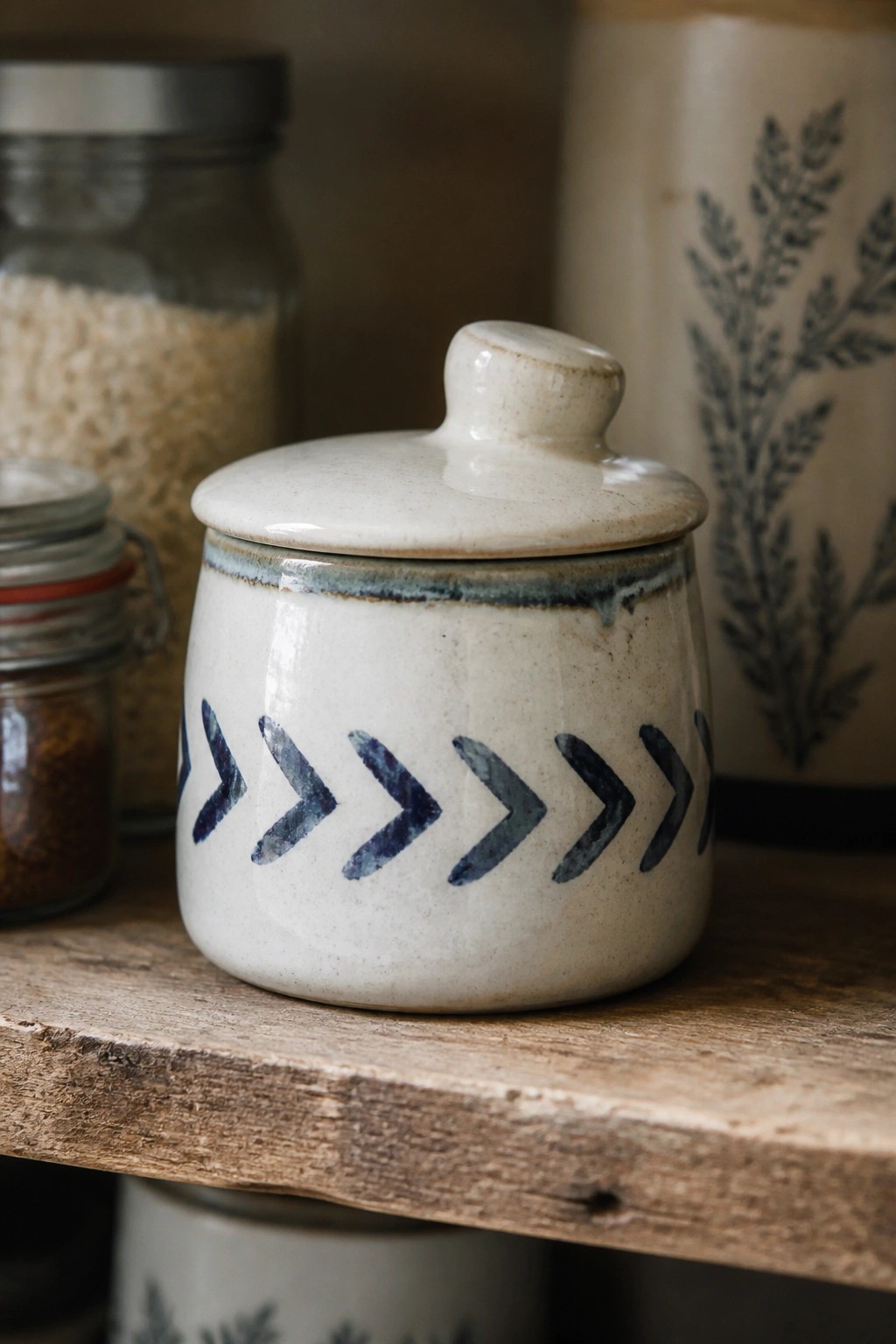
A small lidded ceramic jar takes on a clean graphic look when covered with a row of hand-painted chevrons in dark blue. The pattern sits on a white speckled surface and is anchored by a narrow blue band just under the rim. This keeps the design simple while giving the jar a distinct identity among other kitchen or pantry pieces.
The small scale makes this easy to paint in one sitting and simple to repeat on a set of matching jars. You could swap the chevrons for arrows or triangles and change the accent color to match different kitchen themes. In a kitchen or bathroom this shape works as a sugar jar, cotton ball holder, or small snack container without taking up much shelf space.
Vertical Stripe Utensil Crock

A wide cylindrical crock painted with thick vertical stripes in orange and white works as a kitchen utensil holder. The graphic motif relies on simple blocks of color rather than fine lines, so the pattern stays clear even on a curved surface. This approach keeps the design bold and easy to paint while turning a basic storage piece into something more noticeable.
What makes this idea useful is that the stripe pattern can be adjusted in width or color to match any kitchen palette. The shape works well on a counter because it holds spoons upright without taking much space. You could repeat the same stripes on a smaller jar for a matching salt cellar or switch to horizontal bands if you want a different layout on a taller vase.
Wall Pouch Planter with Graphic Face Lines
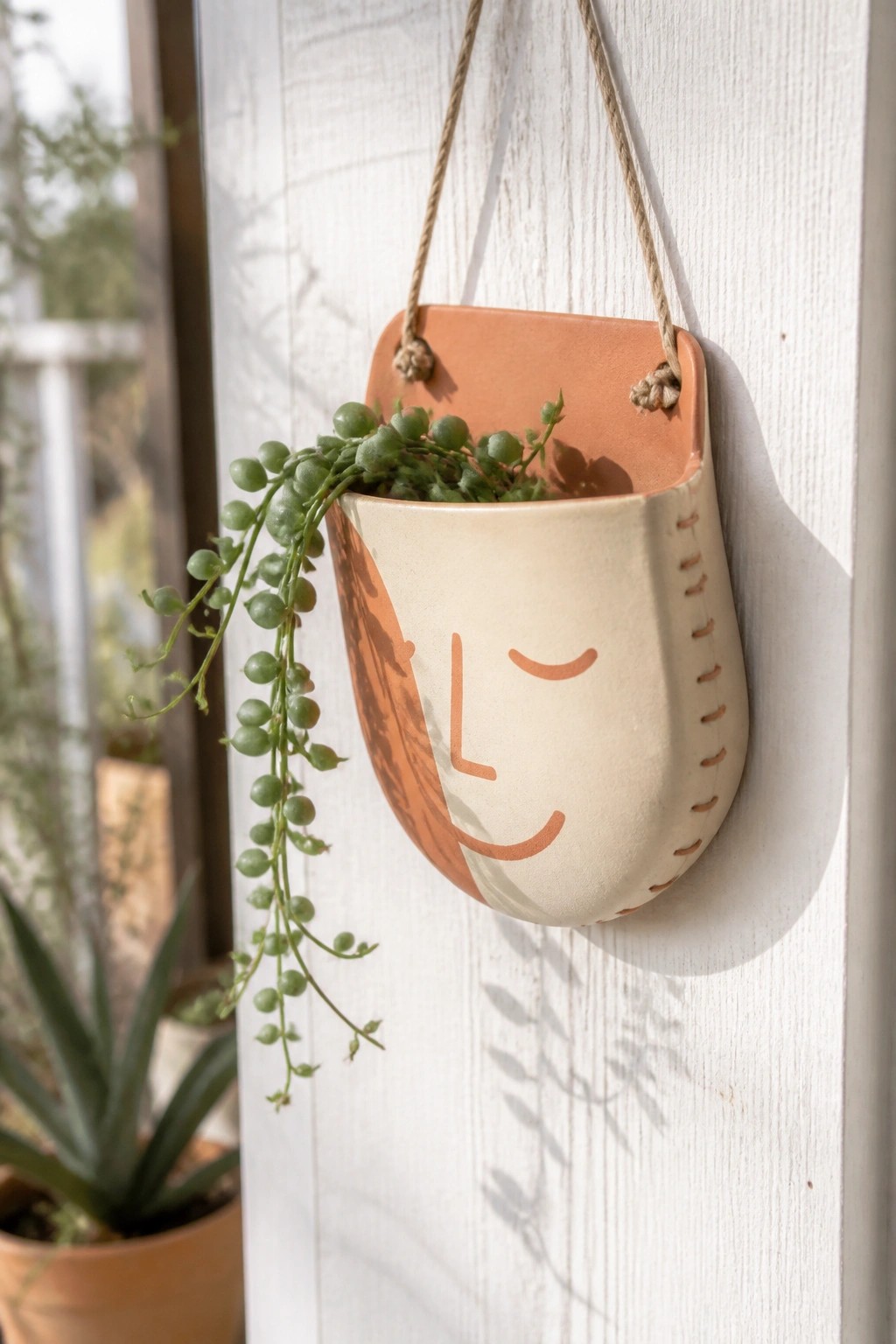
A pouch-shaped hanging planter gives a clear surface for a simple graphic face motif done in one color. The design places closed eyes and a curved smile on the cream lower half while leaving the top rim in the original terracotta tone. Rope ties through two holes at the rim turn the piece into a wall-mounted holder that works for trailing plants.
What makes this idea useful is the flat back and two attachment points, which let it hang on any wall or fence without extra hardware. You could repeat the same minimal face on a set of smaller pockets for a group display or swap the color blocks for other line motifs like stars or leaves. The shape also works for a bathroom or kitchen window where space is tight and a single trailing plant needs a clean backdrop.
Graphic Motif Ceramic Coasters

These are round ceramic coasters painted with single repeating graphic motifs on an off-white base. One shows scattered pink dots, another blue stars, a third has white shapes on a light purple band, and the bottom one uses short yellow dashes. The flat, unglazed-looking surface keeps the painted marks crisp and simple, which works well for small functional pieces.
What makes this idea useful is how the round coaster shape gives you a ready-made canvas for testing different motifs without needing much space or clay. You can adapt it by painting a full set in one color family for a kitchen or by mixing the same patterns onto small trays or ring dishes. For a gift, a short stack of these takes little time to finish and still reads as a complete set. The basic motifs also translate easily if you want to swap in lines, dots, or simple shapes on future projects.
Graphic Diamond Napkin Rings
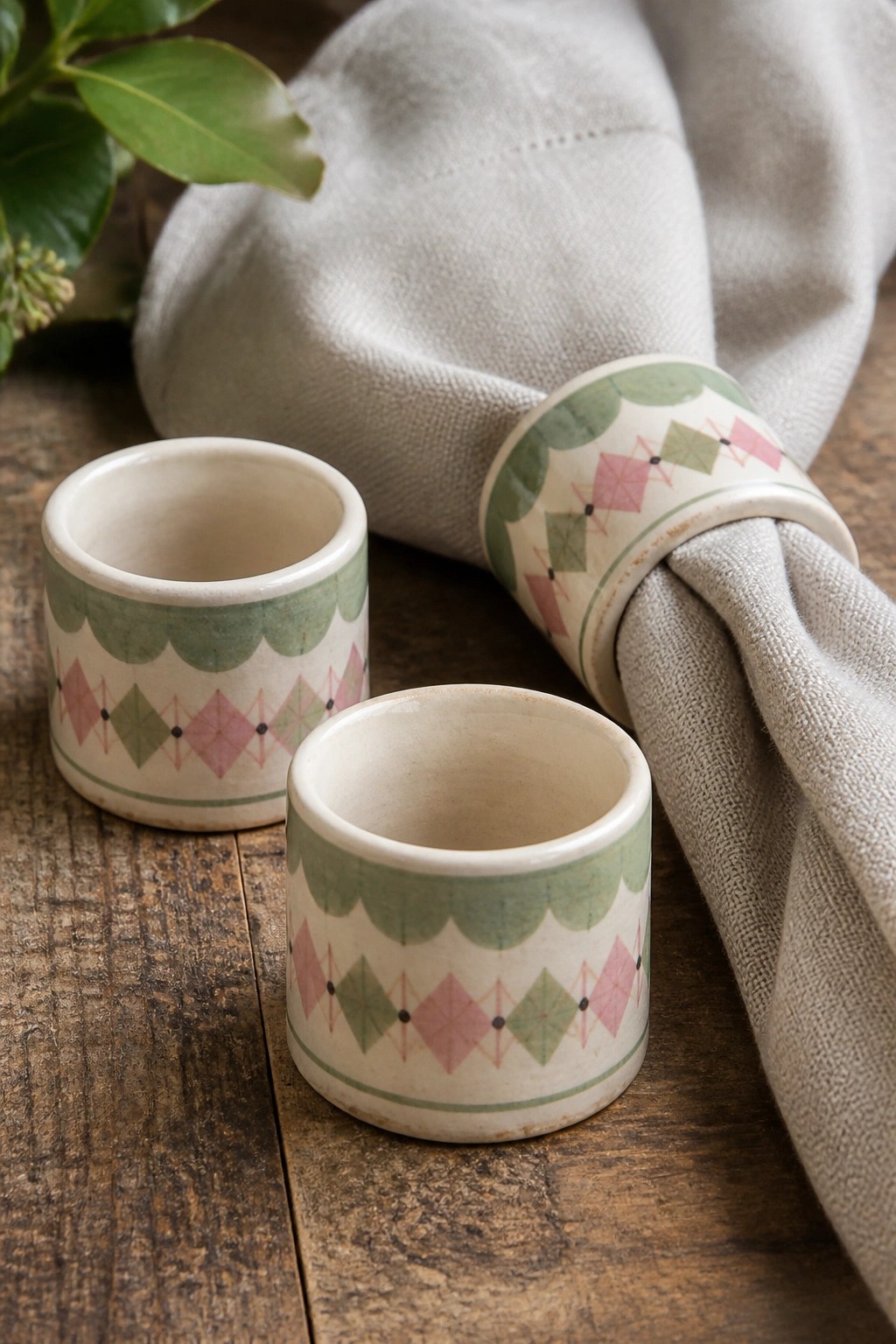
Ceramic napkin rings take on a clean graphic look when covered with a repeating diamond and scallop pattern. The design uses soft pink, green, and neutral tones in simple connected shapes that wrap evenly around the cylinder. This keeps the surface interesting without needing extra texture or sculpting. The small round form makes the motif easy to repeat and balance.
What makes this idea useful is how the compact shape lets you practice a full repeat pattern on a single piece. You can shift the same diamond layout to other small cylinders like votive holders or mini planters by adjusting the spacing. The limited palette keeps the design readable even when the rings sit together on a table. For gifts these work well because the pattern reads as intentional and coordinated without extra detail.
Wavy Line Motif on a Succulent Planter Bowl

A shallow ceramic bowl makes a simple succulent planter when you paint a continuous wavy blue line around the outside with small dots at the peaks. Green curved shapes placed below the line add contrast without crowding the surface. The speckled clay body keeps the graphic pattern visible while the low profile lets the plant stay the main focus. This fits the graphic motif category because the design relies on flat, repeated shapes rather than shading or detail.
What makes this idea useful is how the bowl’s wide rim gives you plenty of space for the border without needing perfect symmetry. You can repeat the same wave on a set of small dishes or shorten it to a single stripe on a taller pot. The painted line stands out best against a light clay, so the idea works well for testing new underglaze colors before committing to larger pieces. For a gift, the finished planter needs only a small plant to look complete.
Frequently Asked Questions
What supplies do I need to start painting simple graphic motifs on pottery? You will need unpainted ceramic or terracotta pieces such as mugs plates or vases along with acrylic paints designed for ceramics or porcelain. Gather fine tipped brushes a pencil for sketching motifs an eraser a palette and a clear sealant spray. Many of the 23 ideas use basic shapes like hearts stars and dots so start with a small set of primary colors plus black and white for outlines.
How do I transfer graphic motifs onto curved pottery surfaces without distortion? Sketch your chosen motif on paper first then use graphite transfer paper or trace lightly with a soft pencil onto the pottery. Work in small sections and rotate the piece as needed to keep lines even. For the cute ideas in the article such as animal faces or geometric patterns this method keeps everything simple and accurate even on rounded items like bowls.
What steps help beginners avoid smudges when painting clean graphic designs? Paint one color at a time and let each layer dry fully before adding the next. Use painter’s tape to mask off straight lines or borders and work with thin coats rather than heavy ones. If a motif like a cactus or cloud from the list starts to bleed gently wipe it with a damp cloth while the paint is still wet then repaint the area.
How do I seal and care for finished pottery pieces so the designs last? Apply two thin coats of a food safe ceramic sealant after the paint dries completely usually after 24 hours. Allow the sealant to cure for several days before use. Hand washing is best for longevity though some sealants allow gentle dishwasher cycles. This protects the 23 motif ideas from fading or chipping over time.
Can I adapt these graphic motif ideas for different pottery shapes or skill levels? Yes the simple designs like stripes polka dots or basic icons scale easily. On flat plates try larger motifs while on narrow mugs stick to smaller repeating patterns. Beginners can start with just outlines and add color later while more experienced painters can layer details. Experiment on inexpensive test pieces first to match the style to your chosen item.

Pottery Path is my cozy corner of the internet where I share clay ideas, pottery inspiration, and simple projects you can recreate at home. I love exploring everything from air dry clay to handbuilt pottery to cute minis that brighten your day. My goal is to make clay crafting feel easy, fun, and welcoming for anyone who wants to try it.
You will find beginner friendly tutorials, creative pottery painting ideas, and lots of warm inspiration for slow and happy crafting. If you enjoy hands on creativity, this space will feel like home.