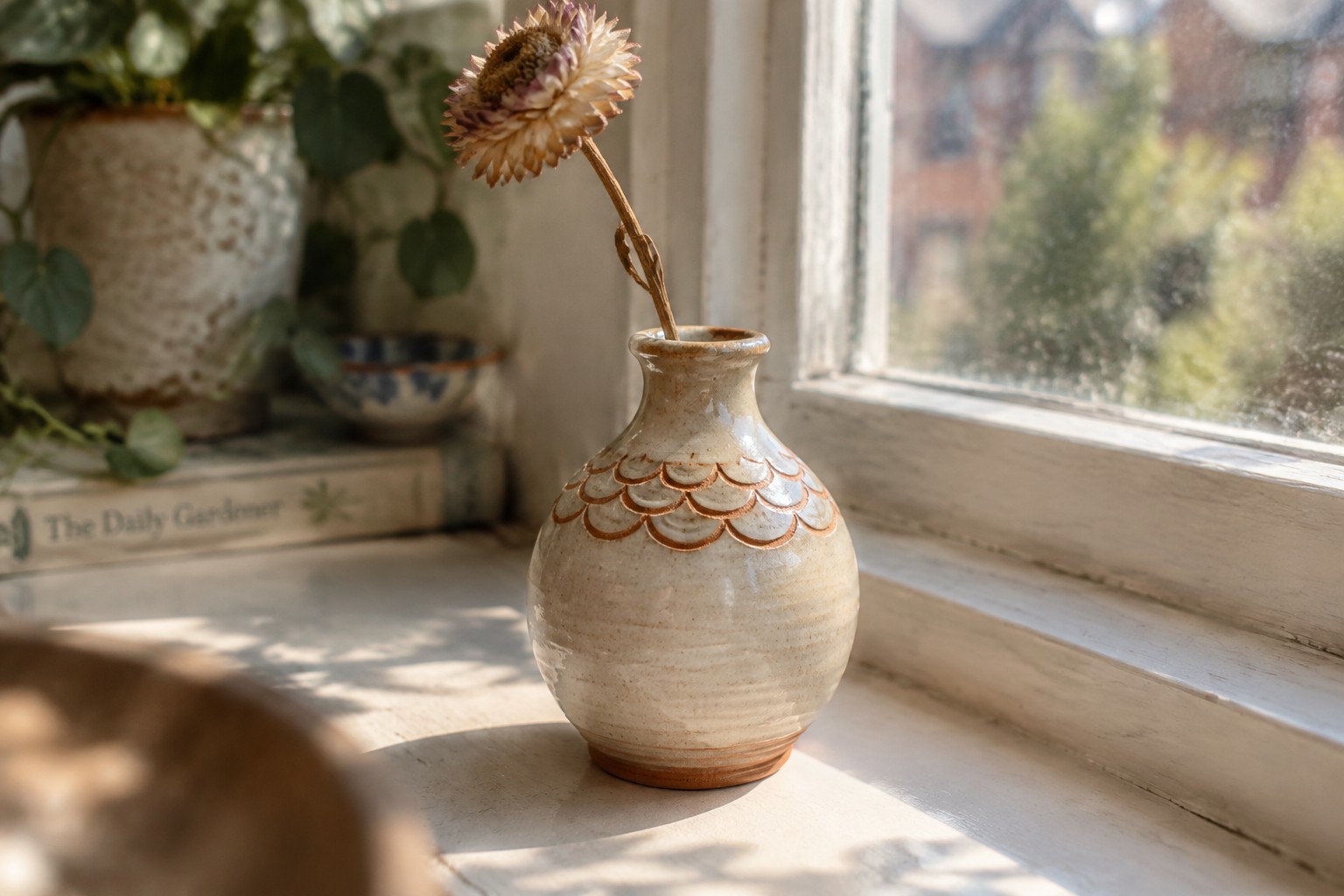
I’ve always liked how a vase’s shoulder gives a design a natural place to curve and change direction.
When I’m working with sgraffito, I enjoy seeing how a few simple lines can follow that shape.
These 21 vase designs offer plenty of ideas, from loose patterns to more detailed motifs.
I hope you find a style that feels right for your next pottery project.
Scalloped Shoulder Bands on a Rounded Vase
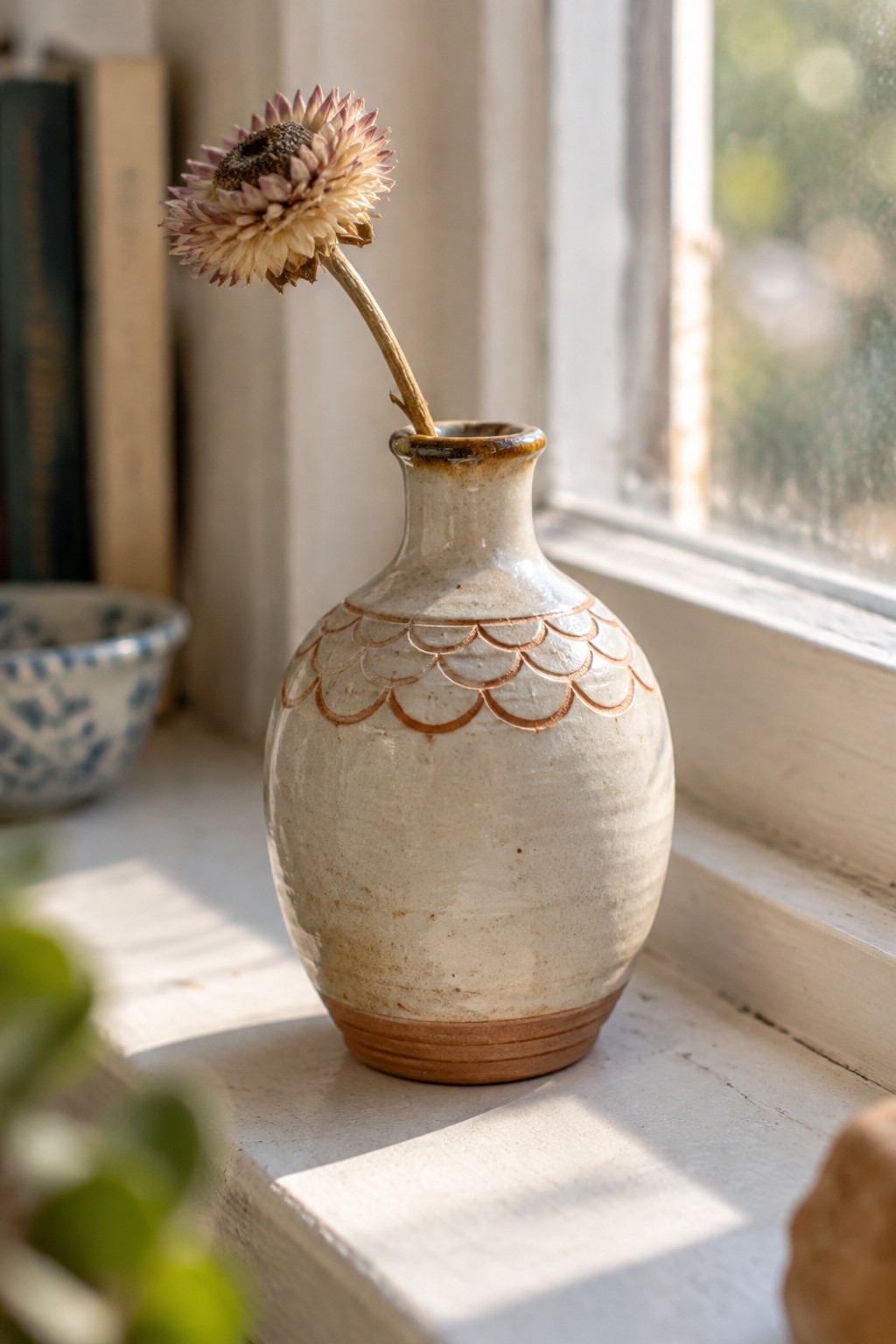
A rounded handmade ceramic vase can use a band of repeated scallops to draw attention to the curve of its shoulder. The raised-looking brown outlines contrast with the pale, softly mottled glaze, creating a simple decorative motif that suits a dried-flower vase or shelf display. The scallops follow the vessel’s shape rather than sitting as a straight stripe, which helps the decoration feel connected to the form.
A piece like this works well on a windowsill or console, especially with dried stems that do not need water. To adapt the idea for a sgraffito design, carve the scalloped lines through a contrasting surface layer, adjusting their spacing as they wrap around the shoulder; a few larger scallops can make the pattern easier to repeat on a smaller vase. The curved motif gives a Pinterest-worthy detail while leaving plenty of the vessel’s surface plain.
Sgraffito Wave Band on a Tall Shoulder Vase

A tall handmade ceramic vase can use its sloping shoulder as the focal point for a carved wave band. The flowing motif follows the curve of the form, while the sea-green glaze and quieter lower body keep the decoration from feeling crowded. This is a useful approach for a sculptural decor vase where the surface design matters as much as the silhouette.
The raised shoulder gives you a natural guide for adapting the pattern to a shorter bottle vase or a wider vessel. Keep the wave band to one area and use a simple glaze below it for a more manageable design; a contrasting clay or glaze color can make the carved lines easier to read. As a display piece, the tall shape stands out on a kitchen counter or console, and the clear banded design makes it easy to pin as inspiration for other curved forms.
Floral Sgraffito on a Rounded Shoulder Vase
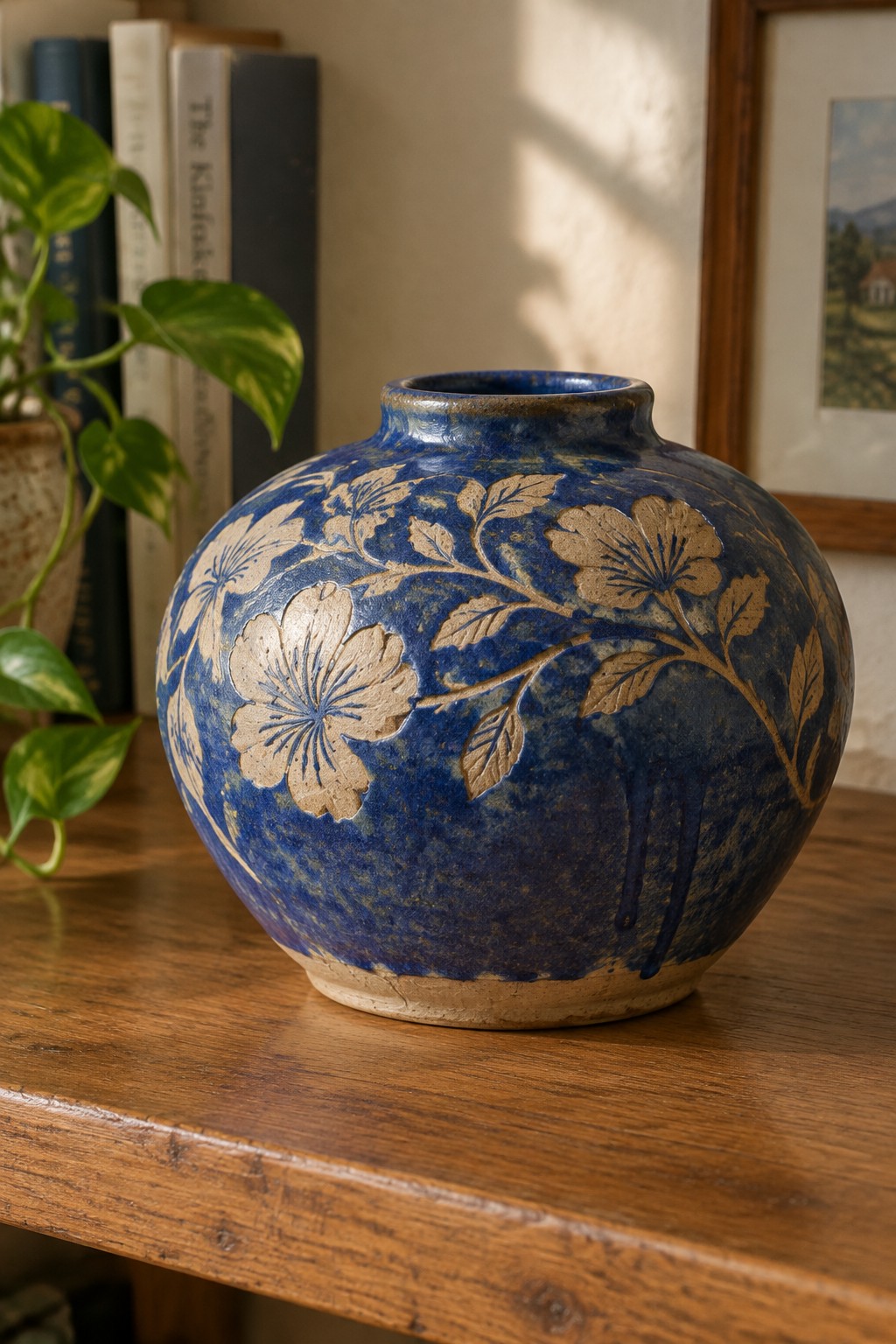
A rounded handmade ceramic vase uses a deep blue ground and pale carved-looking flowers to make its shoulder the focus. The vines follow the curve of the form, so the floral pattern feels connected to the vase’s shape rather than like a flat band of decoration. This is a decorative vase idea that suits sgraffito designs built around curved surfaces.
The broad shoulder gives you room to draw a branching motif, while the narrow neck leaves the pattern from feeling crowded. Adapt the layout with simpler leaves, fewer flowers, or a different two-color palette, and carry the same curved design onto a smaller bud vase. It would work as a shelf or tabletop accent, and the contrast between the blue surface and light motif makes the design easy to save for floral pottery inspiration.
Layered Shoulder Sgraffito on a Double-Gourd Vase
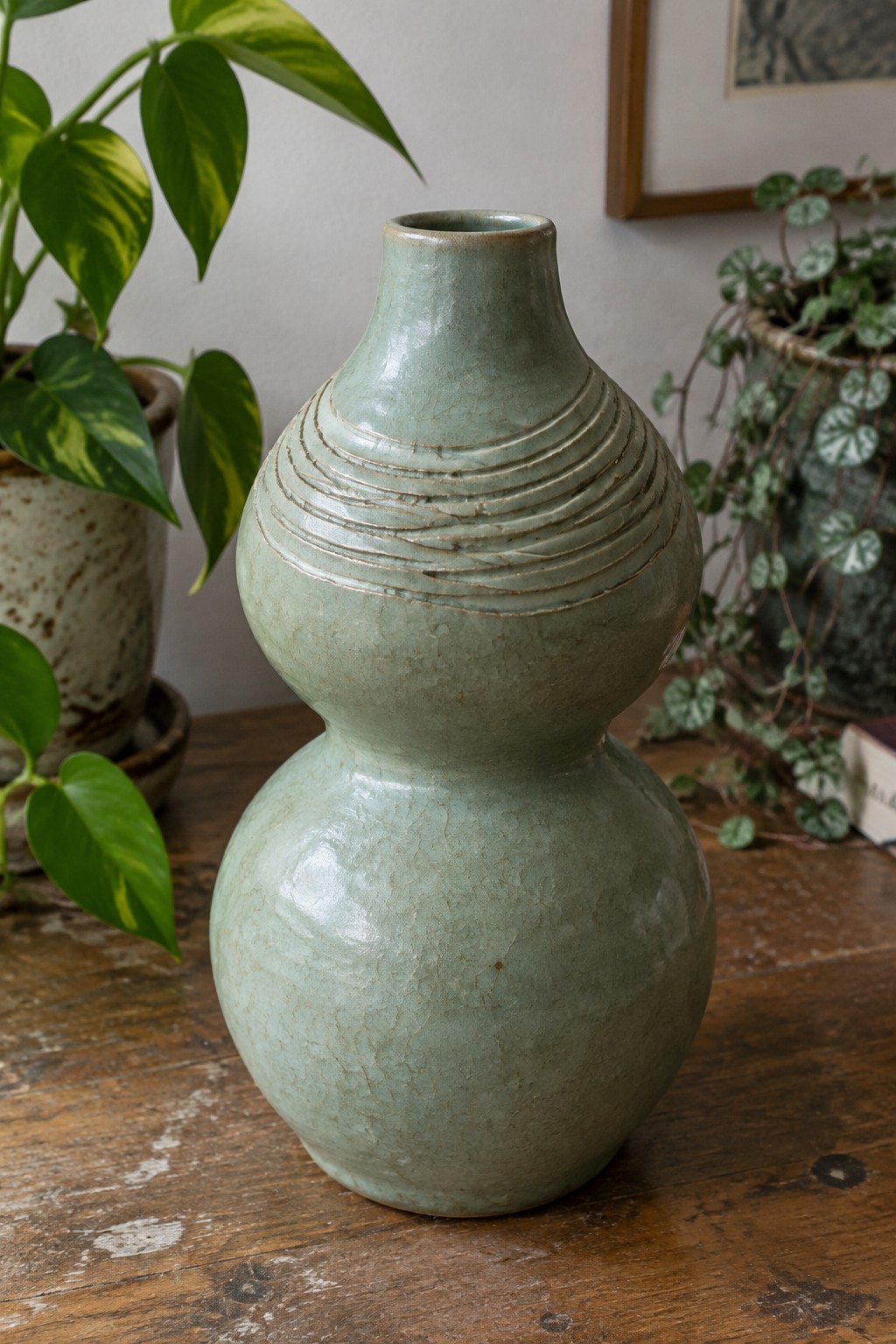
A handmade ceramic vase can use the curve of its shoulder as a guide for a band of sgraffito lines. On this double-gourd form, repeated curved grooves wrap around the upper bulb, making the transition from the narrow neck to the rounded body stand out while leaving the rest of the pale green surface relatively simple.
The curved band would suit a shelf or console where the vase can be viewed from different angles, and its restrained color keeps it easy to pair with plants or other decor. To adapt the idea, vary the spacing or number of lines, or use a smaller round vase and a single carved band; the clear contrast between the textured shoulder and smooth body also makes the design easy to save as a reference for other curved forms.
Leaf Sgraffito on a Flared-Neck Vase

A tall handmade ceramic vase can use its rounded shoulder as a broad canvas for a band of pointed leaf motifs. The incised brown lines stand out against the cream, speckled surface, while the pattern’s vertical flow connects the vase’s fuller body to its narrow neck. This is a decorative sgraffito vase idea that puts the carved design where the form naturally widens.
The tall shape makes this vase a strong choice for a console, shelf, or windowsill, even without flowers. To adapt the design, try fewer, larger leaves for a simpler pattern, or change their spacing and direction to follow a different shoulder shape. The cream-and-brown contrast is easy to personalize with another background and line color, and the clear carved motif gives the design a strong, recognizable look for Pinterest.
Chevron Sgraffito on a Broad-Shouldered Vase

A handmade ceramic vase can use a carved chevron band to draw attention to the curve where its narrow neck opens into a rounded body. The repeated angular lines contrast with the soft, horizontal glaze marks, making this decorative vase idea feel structured without covering the whole surface.
The motif is worth adapting for a mantel, entry table, or shelf, where a large vase can stand on its own or hold a few branches. Keep the chevrons to one band and vary their spacing to suit a smaller vessel, or carry the pattern onto a bowl for a coordinated decor piece.
Perforated Shoulder Bands on a Two-Handled Vase

A handmade ceramic vase can use a rounded body and curved shoulders as the canvas for bands of incised dots and lines. The dark brown surface and exposed terracotta-colored marks make the decoration stand out, while the pair of handles gives the form a classic amphora-like profile. This is a decorative vase idea where the pattern follows the shape instead of sitting as a separate motif.
The curved bands make this design easy to adapt to different vase sizes: use fewer rows on a smaller form, or vary the spacing and dot patterns to suit a wider shoulder. It would work as a focal piece on a shelf or patio table, and a simplified version could be made as a single-handled jug or a small planter. The contrast between dark and warm clay tones also gives the shape and surface detail a clear, eye-catching outline in a Pinterest grid.
Botanical Sgraffito Band on a Wide-Bellied Vase
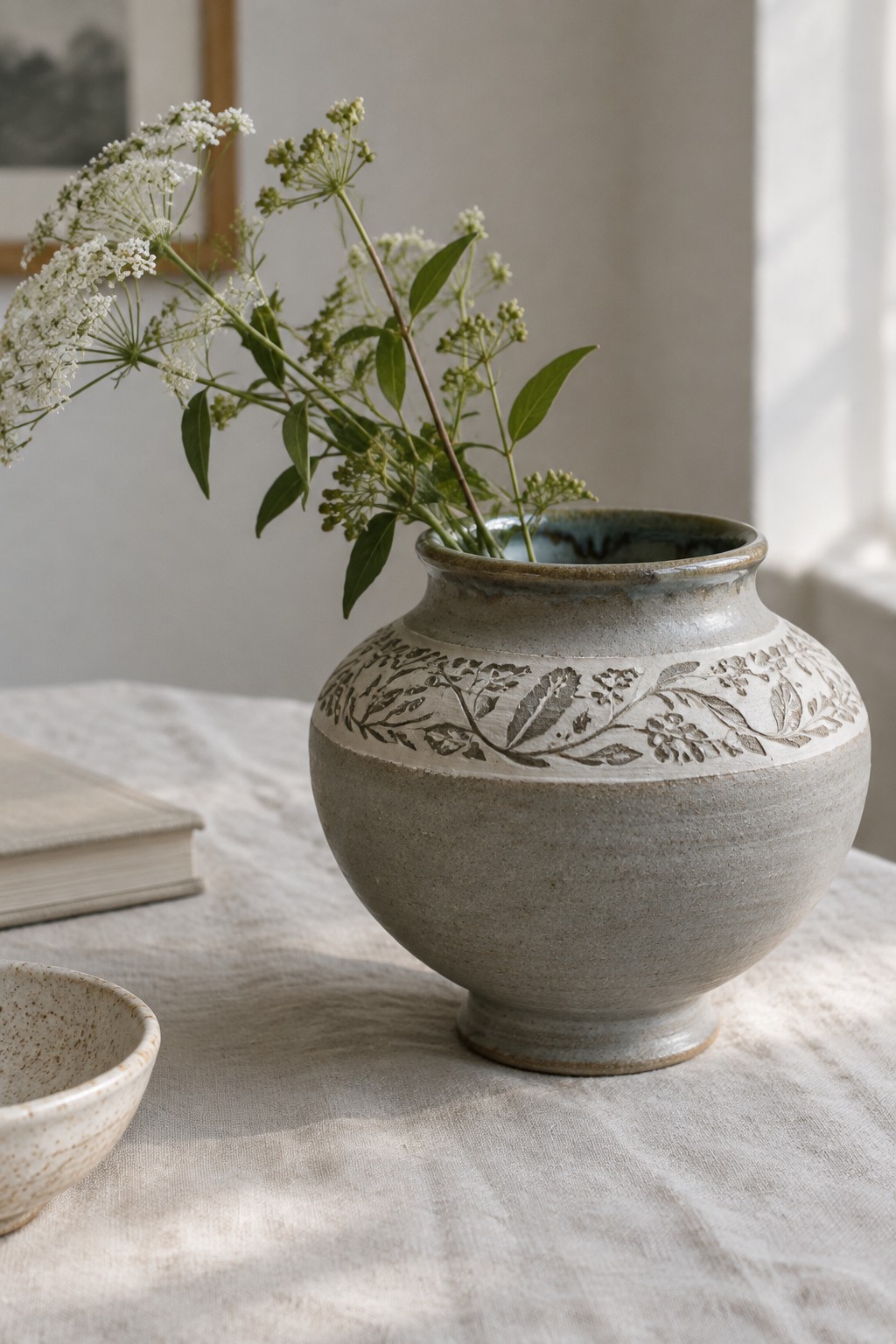
A rounded handmade ceramic vase can carry a leafy sgraffito band across its shoulder, using a pale carved motif against a darker ground to define the vessel’s widest curve. The continuous botanical pattern suits a decor vase because it follows the form without competing with the simple, generous body.
The broad shoulder gives you room to adapt the design with small leaves, branches, or a repeating pattern, while keeping the lower body plain for contrast. Use the vase for cut flowers or display it on a shelf, and try the same band on a smaller bud vase if you want a more compact project or gift.
Sgraffito Arches on a Square-Shouldered Vase

A tall handmade ceramic vase uses a squared silhouette and a softly mottled green glaze as the base for several incised arches that follow the shoulders and meet at the front seam. The curved lines draw attention to the change from the narrow neck to the broad body, making this a decorative sgraffito design that works especially well on a substantial floor or tabletop vase.
The repeated arches could be adapted to a smaller bud vase or simplified to one or two lines for a cleaner look. This shape suits a mantel, entryway, or windowsill, where the shoulder pattern can be seen from different angles; changing the glaze color or spacing the lines more widely would also make the design easy to personalize.
City Skyline Sgraffito on a Round-Bellied Vase
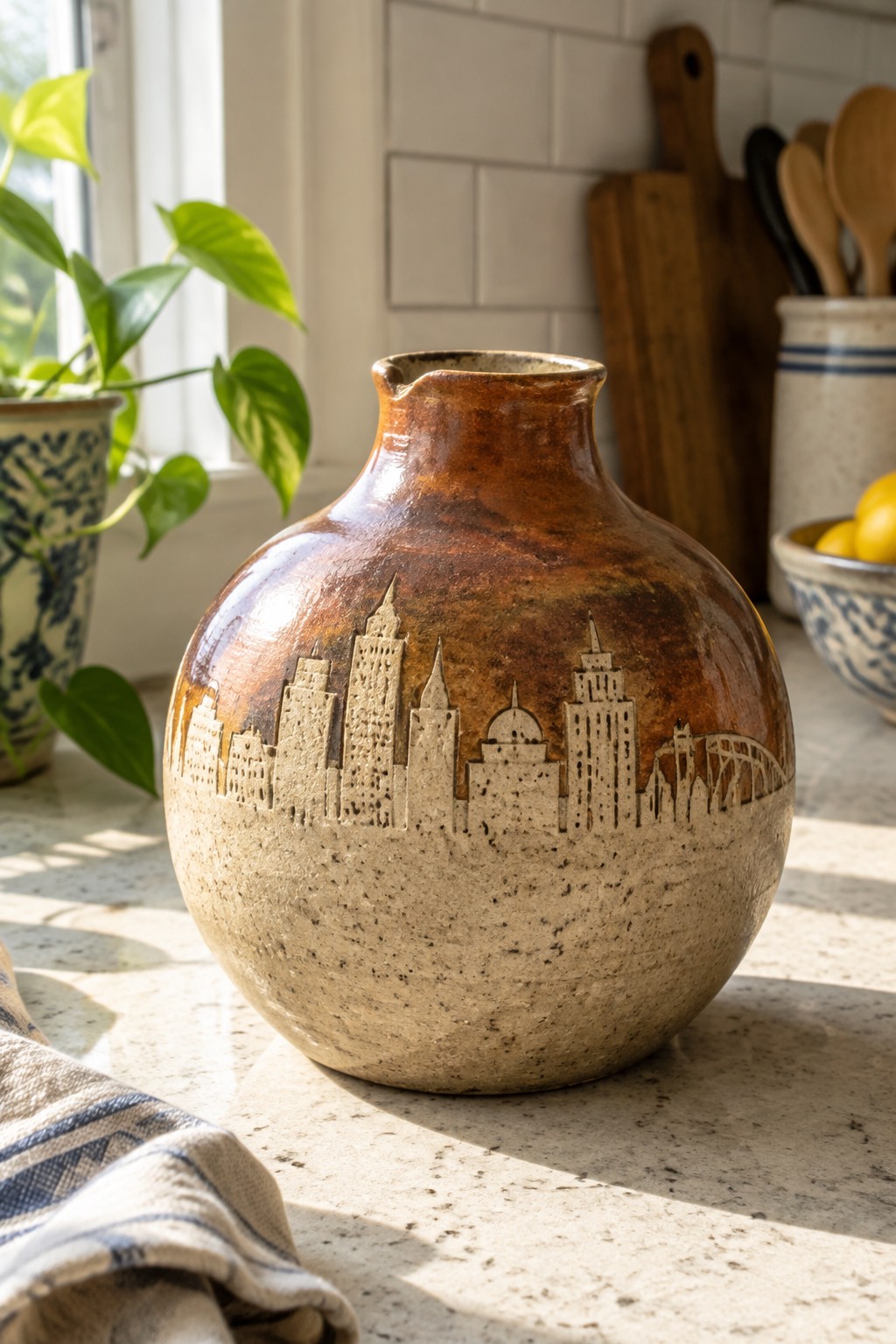
A rounded handmade ceramic vase uses a city skyline as a sgraffito-style band across its widest part, where the buildings follow the curve of the body. The contrast between the dark brown upper glaze and sandy, speckled lower surface makes the carved-looking architecture easy to read while keeping the shape central to the design.
This decorative vase could anchor a kitchen counter or shelf, especially where its earthy colors suit the surrounding ceramics and wood. Adapt the skyline to a familiar city or simplify it to a few varied building outlines, keeping the motif low on the belly so it bends naturally around the form.
Repeating Circle Motifs on a Rounded Vase Shoulder

A handmade ceramic vase can use a band of incised circles and dots to give its rounded shoulder a clear focal point. The repeated pattern follows the widest part of the vase, while the narrow neck and glazed lower section keep the surface design from feeling crowded. This decorative vase idea suits floral arrangements or display on a shelf or table.
The simple motif is easy to adapt by changing the circle size, spacing, or band placement to fit a different vase shape. Try the same design on a smaller bud vase, or use just a few circles as an accent on a planter or utensil holder. A close view of the patterned shoulder also makes a useful Pinterest reference for planning a balanced surface design.
Fern Sgraffito on a Green Shoulder Vase
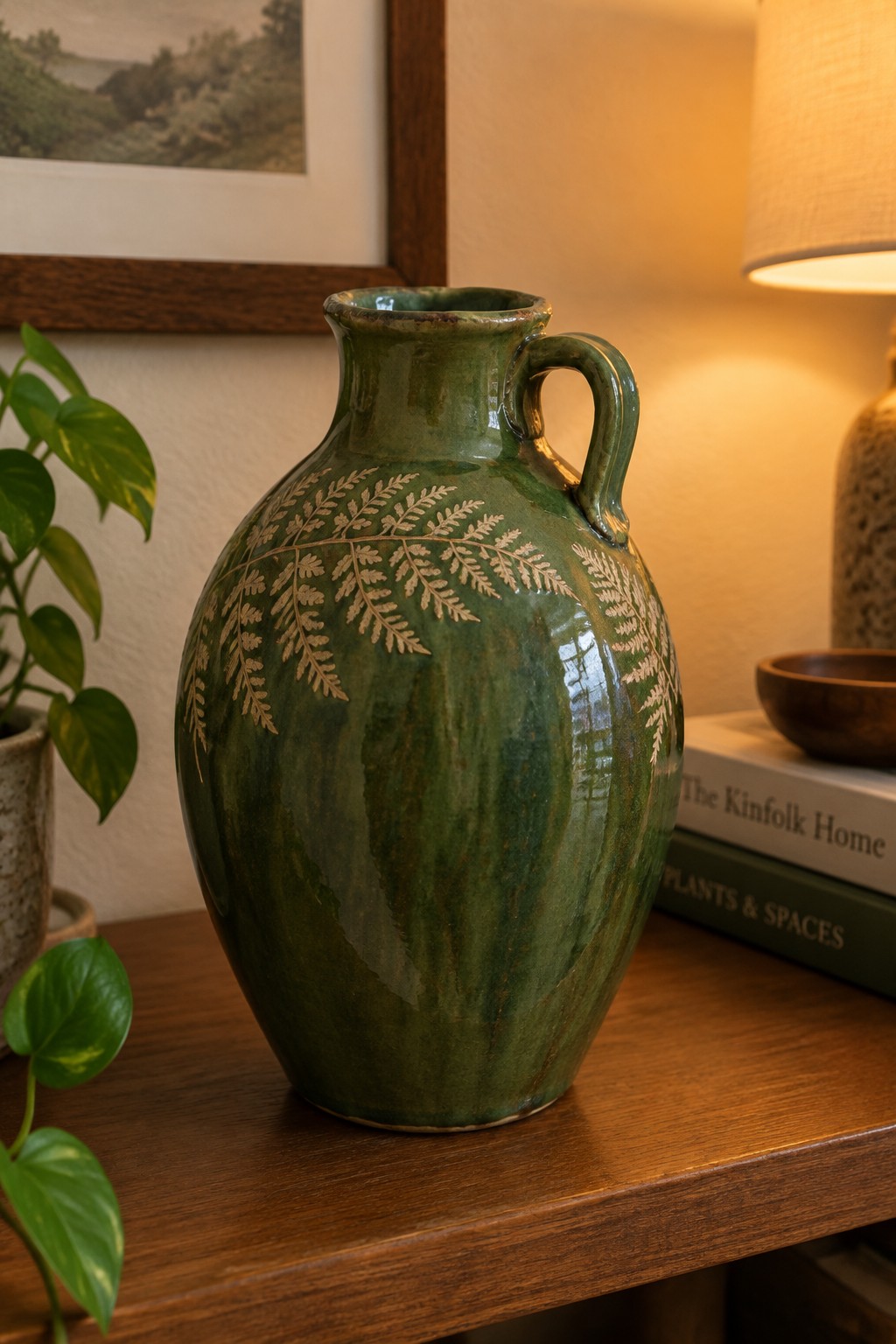
A rounded handmade ceramic vase can use a band of incised fern-like leaves to draw attention to its broad shoulder without covering the whole surface. The pale botanical lines contrast with the dark green glaze, while the plain lower body keeps the decorated area clear and makes this a distinctive botanical decor idea.
The shoulder-following motif suits a console table, bookshelf, or mantel, where it can be seen without competing with other patterns. Adapt the design with simpler leaf shapes, a narrower band, or a different glaze-and-clay contrast, and carry the same motif onto a smaller bud vase for a coordinated pair.
Overlapping Scallop Relief on a Tall Vase
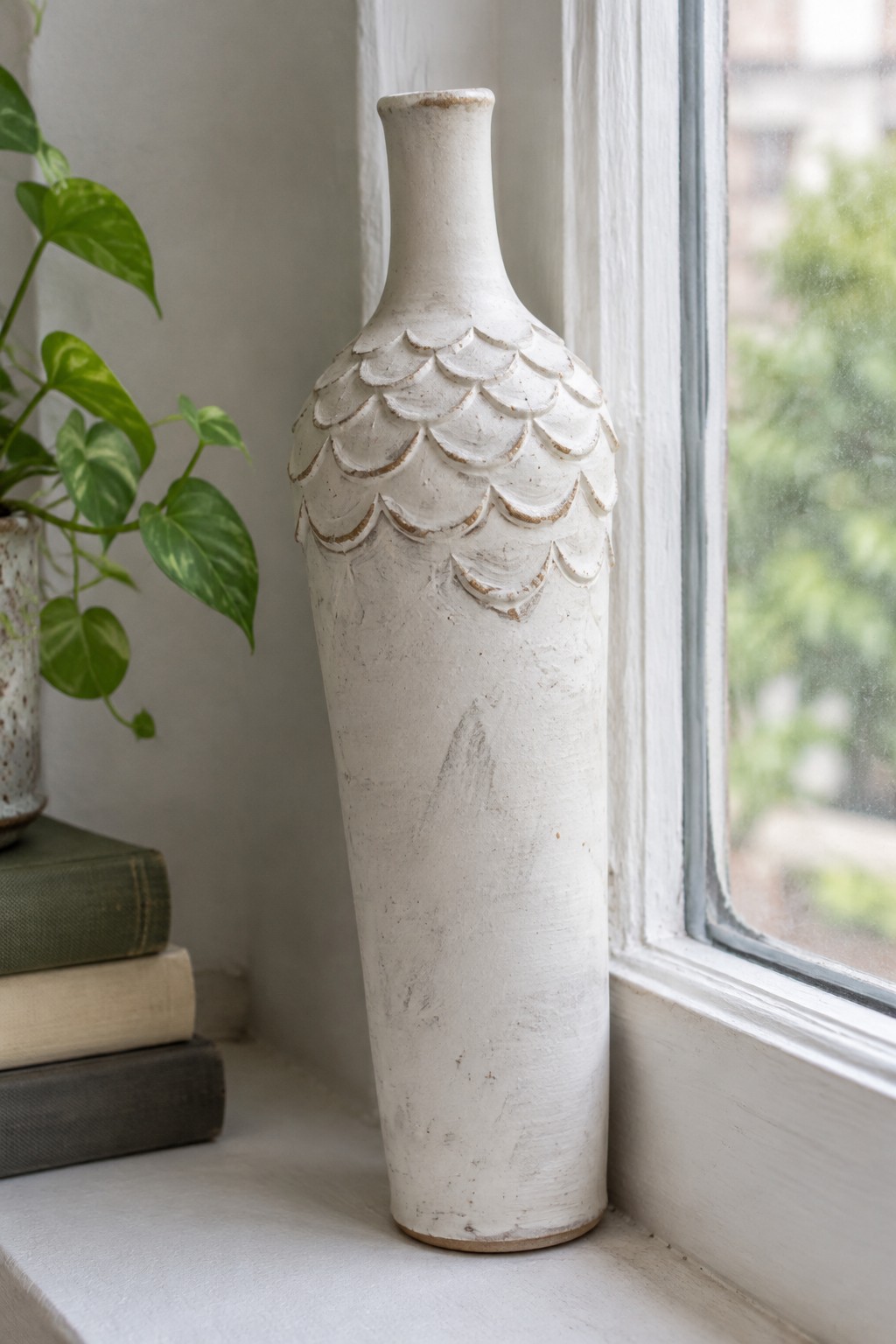
A tall, narrow-necked ceramic vase can use overlapping scallop shapes to create a band that follows the curve of its shoulder. The raised, layered pattern contrasts with the plain, weathered-looking body and gives this decor piece a clear focal point without covering the whole surface.
The shoulder is a useful area for adapting the design because repeated shapes can wrap around the vase while leaving the long body simple. Try carving the scallops through a contrasting surface layer for a sgraffito version, or simplify them into a single row on a smaller bud vase; either approach keeps the pattern easy to read from a distance and makes a strong decor idea to save.
Curving Floral Sgraffito on a Broad-Shouldered Vase
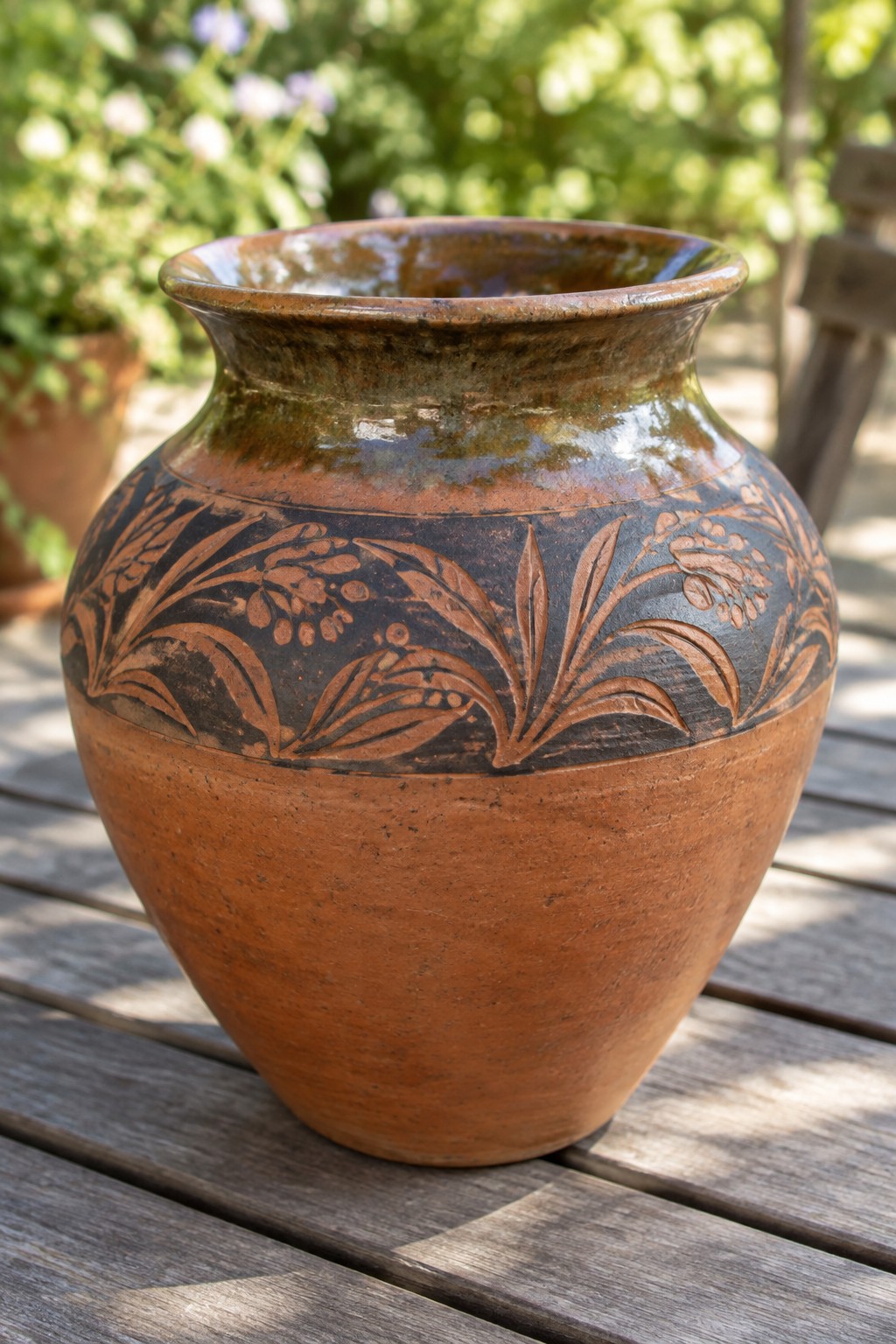
A handmade pottery vase can use a wide, rounded shoulder as the main canvas for a carved botanical band. The sweeping leaves and flower clusters follow the curve of the vessel, while the warm clay-colored lines stand out against the dark surface; the plain lower body keeps the decorative area easy to read.
The broad band would make this vase a strong focal point on a shelf or outdoor table, especially with a few simple stems that do not hide the design. Adapt the motif to ferns, grasses, or a single repeating flower, and let the marks bend with the shoulder rather than forcing them into a flat panel. That clear contrast and curved layout also make the idea easy to save as inspiration for other rounded forms, such as a planter or covered jar.
Sunrise and Seabird Sgraffito on a Tall Vase
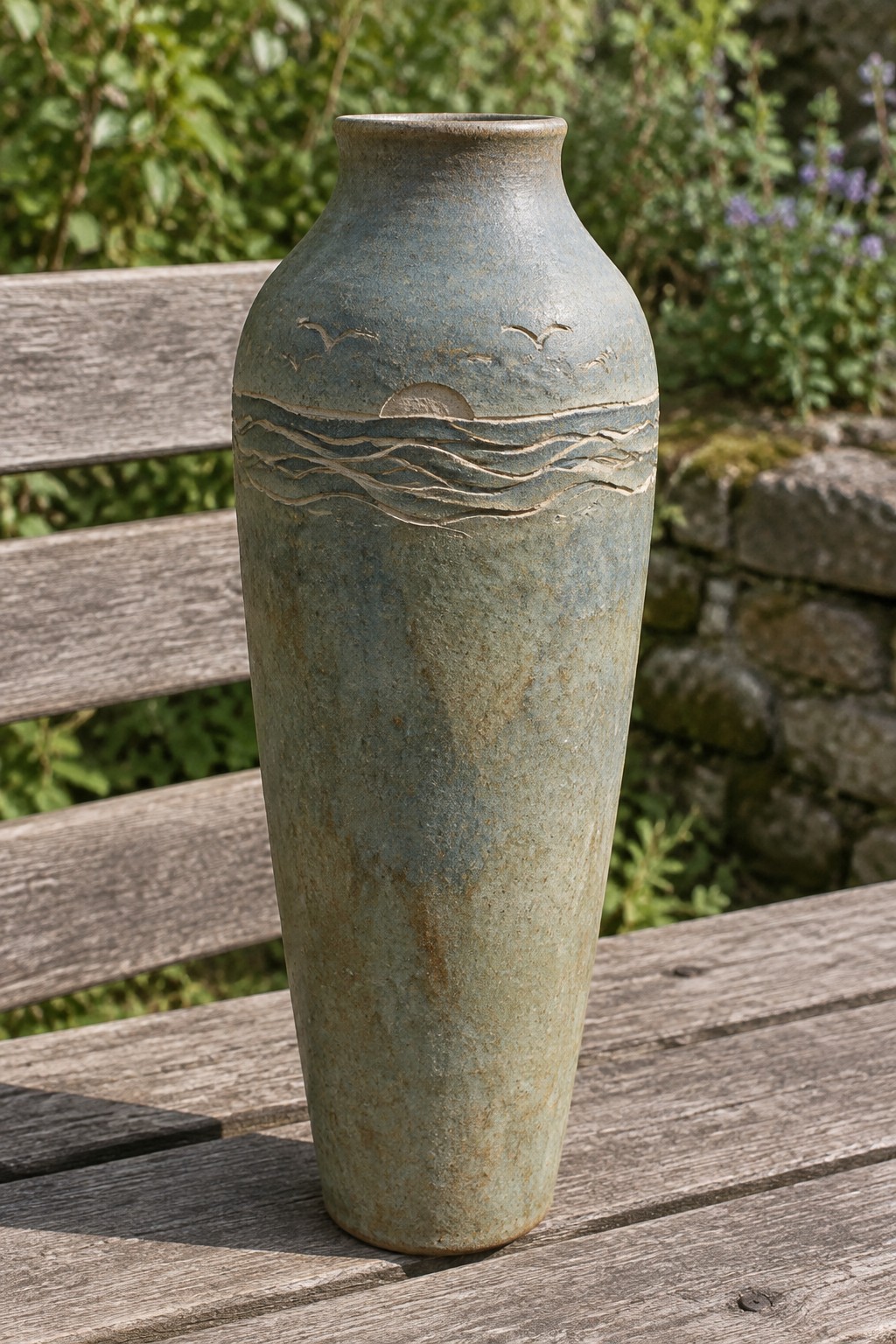
A tall handmade ceramic vase gets its focal point from a sgraffito shoreline band placed across the rounded shoulder. A small sun, flying birds, and layered waves make the blue-green surface read as a simple coastal scene, while the long plain body keeps the decoration from feeling crowded.
The narrow band is a useful approach when you want to decorate a large vase without covering its whole surface. Keep the scene centered on the shoulder, or adapt it with hills, clouds, or a single wave motif; the same design can also suit a smaller bud vase. As decor, this tall shape can anchor a shelf or patio display, and its clear silhouette and carved pattern make it easy to spot in a pottery inspiration collection.
Flowing Sgraffito Ridges on a Handled Shoulder Vase

A large handmade ceramic vase with a loop handle uses curved, carved bands to guide the eye from its narrow neck over the rounded shoulder. The layered ridges and earthy glaze make the surface pattern follow the vessel’s shape, fitting the sculptural vase and home-decor category.
The broad shoulder gives a flowing sgraffito motif room to bend and spread, so the design can be adapted with simpler parallel lines or a few carved arcs. Use a vase like this as a focal point on a console or shelf, or scale the idea down for a handled pitcher; its strong silhouette and textured surface give it clear Pinterest appeal.
Incised Leaf Bands on a Green-Glazed Shoulder Vase
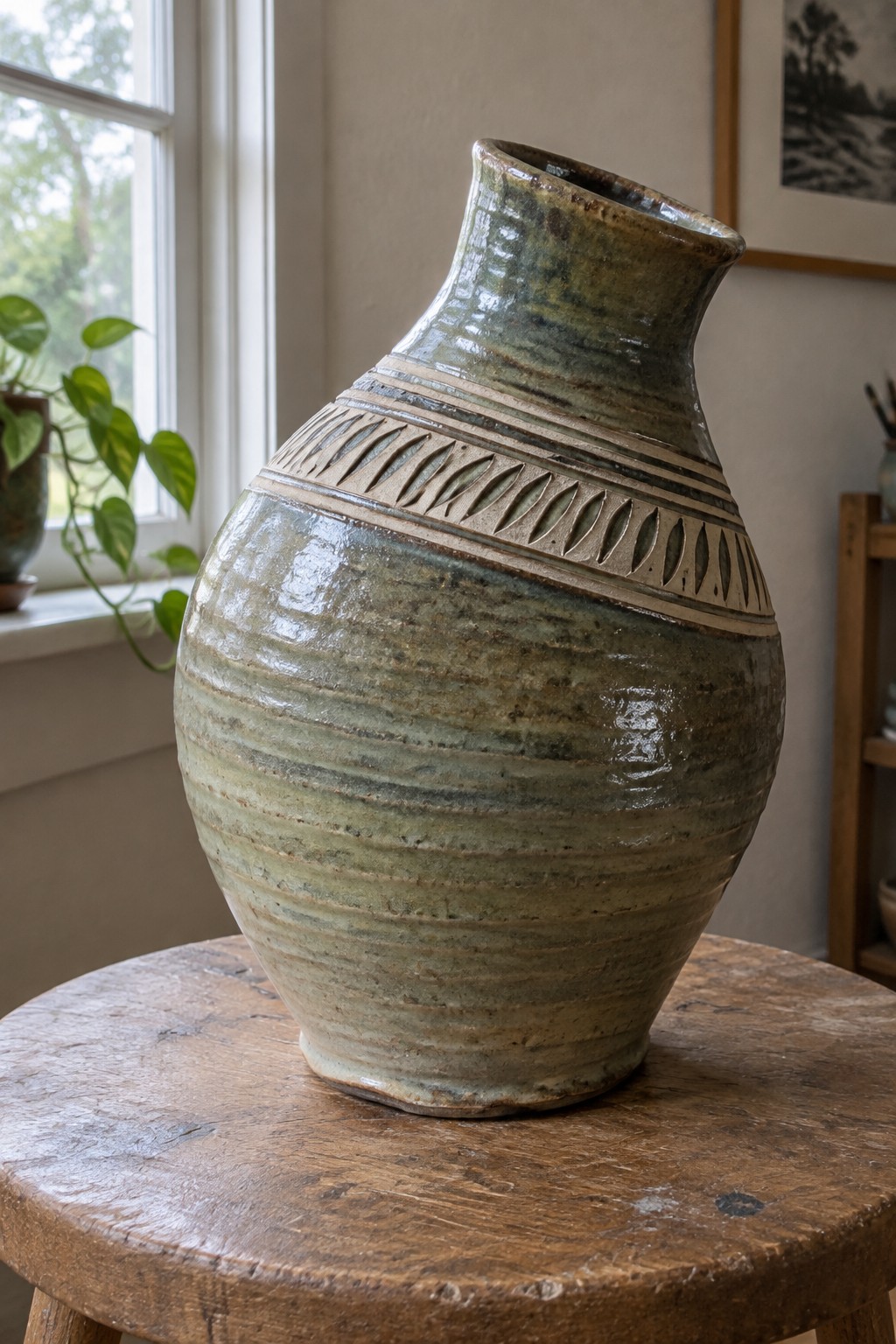
A handmade ceramic vase can use a broad shoulder band of repeated leaf-like cuts to make the transition from neck to body the main design feature. The contrast between the pale incised decoration and the mottled green-brown glaze keeps the pattern distinct while the rounded body and flared neck give it room to follow the vase’s curve.
The band is a useful detail to adapt for a large statement vase or a smaller shelf piece, and the repeated marks can be simplified into short slashes or changed into another leaf pattern. For a similar look, keep the incisions spaced consistently and let them angle with the shoulder rather than forcing them into a straight row. This approach stands out in a pottery inspiration collection because the decoration is clear from a distance and still rewards a closer look.
Leaf Sgraffito on a Rounded Green Vase

A rounded handmade ceramic vase gets its visual structure from a continuous band of pointed leaves carved across the broad shoulder. The warm clay-colored lines stand out against the mottled green glaze, while the curved layout helps the botanical motif follow the vase’s shape instead of sitting like a flat panel.
The broad belly gives this decor vase a good spot on a kitchen counter, mantel, or entry table, even when it is displayed without flowers. To adapt the idea, vary the leaf size or spacing, or use a simpler repeating branch motif on a smaller vase; the contrast between a carved pattern and a colored glaze also makes the design easy to recognize in a Pinterest save.
Interlocking Loop Sgraffito on a Wide-Shouldered Vase

A large handmade ceramic vase gets its focal point from an interlocking loop motif carved around the shoulder, where the rounded body narrows into the neck. The broad, flowing lines follow the curve of the form, while the muted, layered surface keeps the decorative band grounded in a rustic vase design.
The wide shoulder gives the pattern room to wrap around the vase without crowding the neck or lower body, making this a useful approach for a statement piece on a patio table or indoors on a console. Adapt the loops into simpler arcs or wider curves for a smaller vessel, and choose contrasting clay colors beneath the carved surface so the design reads clearly in close-up photos.
Sgraffito Portrait Band on a Narrow-Neck Vase
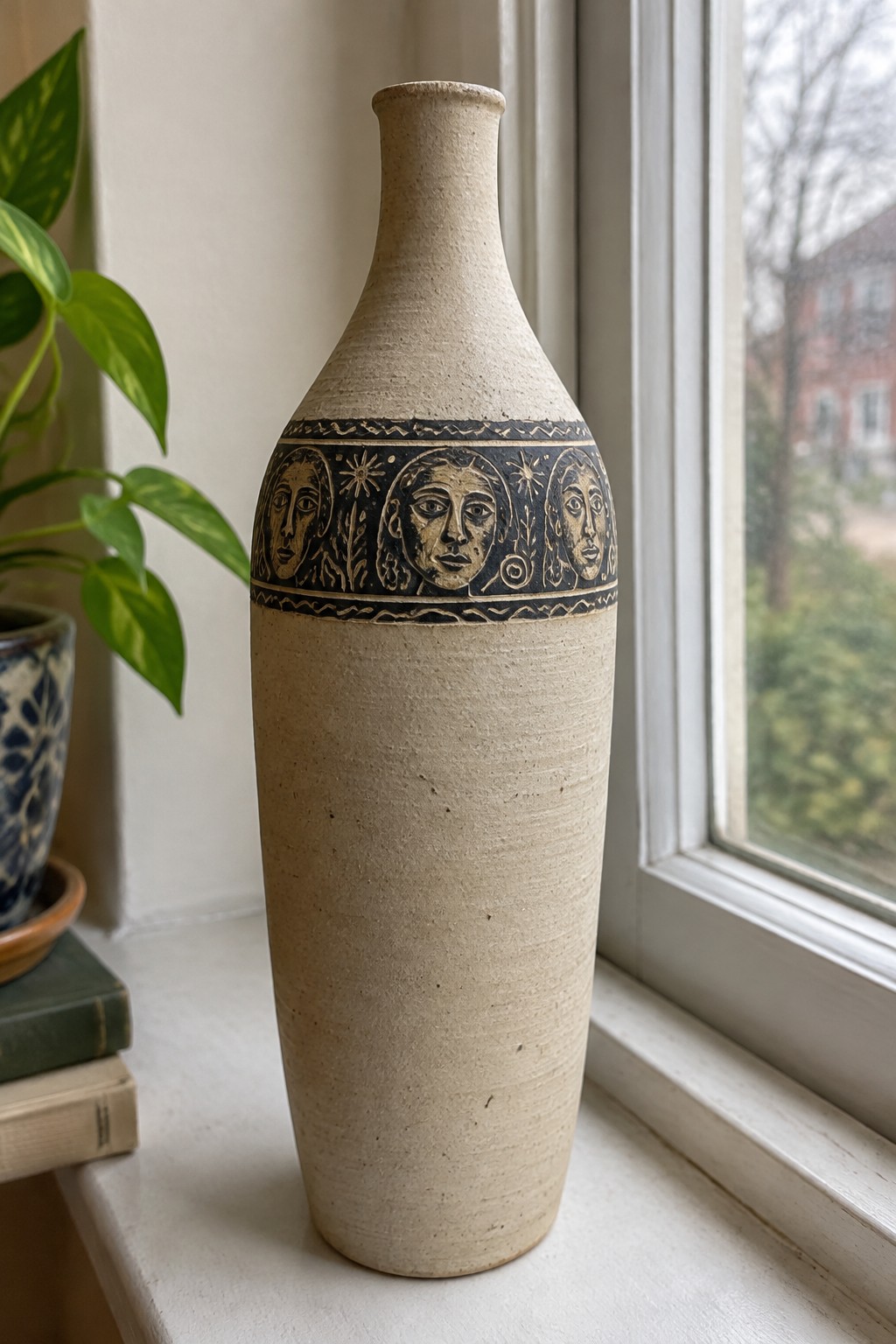
A tall handmade ceramic vase can use a dark sgraffito band to draw attention to the curve where its broad shoulder meets the neck. The carved portraits, stars, and small border patterns make a decorative focal point while leaving most of the textured clay body plain, so the design suits a statement vase rather than a piece meant for everyday use.
The contrast between the detailed band and open clay surface is useful to adapt: try a single repeating motif, a row of leaves, or personalized faces, and keep the carving within the shoulder’s curve. This approach works as shelf or windowsill decor, and the same idea can be scaled down for a bud vase or made into a wall pocket; the distinct band also gives a Pinterest project a clear, easy-to-recognize design feature.
Layered Sgraffito Arches on a Flared-Shoulder Vase

A handmade ceramic vase can use its broad shoulder as a continuous canvas for layered arch motifs. Raised-looking pale lines and small dotted marks stand out against the darker patterned band, while the plain neck and tapered lower body keep the decoration focused on the curve.
The shoulder’s changing width helps the arches follow the vase’s form, making this a useful idea for a tabletop or shelf display. Adapt the motif with wider arches, fewer dotted rows, or a limited palette, and try it on a smaller vase if you want the pattern to be easier to repeat around the surface.
Frequently Asked Questions
The shoulder is the area where a vase’s neck widens into its body. A design follows that curve when its marks respond to the change in shape rather than sitting like a flat band. Motifs might fan outward, arc around the form, taper toward the neck, or grow fuller as the body widens. These choices help the decoration feel connected to the vase’s shape.
Arcs, flowing lines, leaves, petals, feathers, waves, and repeating geometric marks can all work well. Simple motifs are often easiest to adapt because they can stretch or narrow with the curve. For a lively effect, try a pattern that changes scale as it moves from the neck toward the body. For a calmer look, use evenly spaced marks that echo the shoulder’s natural outline.
Plan the decoration as a design that wraps around a three-dimensional form, not just as a picture on the front. Mark a few reference points around the vase, then sketch how the motif will continue between them. Keep spacing consistent, and check the vase from several angles as you work. If the design has a focal element, position it deliberately rather than letting it land awkwardly at the back or side.
Work while the surface is at a stage that lets you scratch cleanly without dragging or crumbling. Use a comfortable grip, rotate the vase gradually, and support it securely so the area you are decorating stays easy to reach. Make a light guide first, then deepen the lines once the layout looks right. Test your tools and timing on a similar clay surface, since clay body, slip, and drying conditions affect the result.
Think about the vase’s shape, the scale of the motifs, and how much contrast you want. A narrow shoulder may suit fine lines or small repeating shapes, while a broad shoulder can accommodate larger leaves, fans, or sweeping bands. Also consider whether you want the decoration to emphasize the neck, highlight the widest part, or lead the eye down the body. Choose a design you can adapt to your particular vase rather than copying it without adjusting for the form.

Pottery Path is my cozy corner of the internet where I share clay ideas, pottery inspiration, and simple projects you can recreate at home. I love exploring everything from air dry clay to handbuilt pottery to cute minis that brighten your day. My goal is to make clay crafting feel easy, fun, and welcoming for anyone who wants to try it.
You will find beginner friendly tutorials, creative pottery painting ideas, and lots of warm inspiration for slow and happy crafting. If you enjoy hands on creativity, this space will feel like home.