I’ve been making pottery for a while now and most of my pieces are things I use in the kitchen every day.
Finding glazes that hold up well and look good on mugs and bowls has taken some trial and error.
Here are some combinations that have worked reliably for me on functional ware.
They are straightforward to apply and don’t require fancy techniques.
I hope these ideas help you with your own projects.
Blue Horizontal Stripes on a Speckled Mug

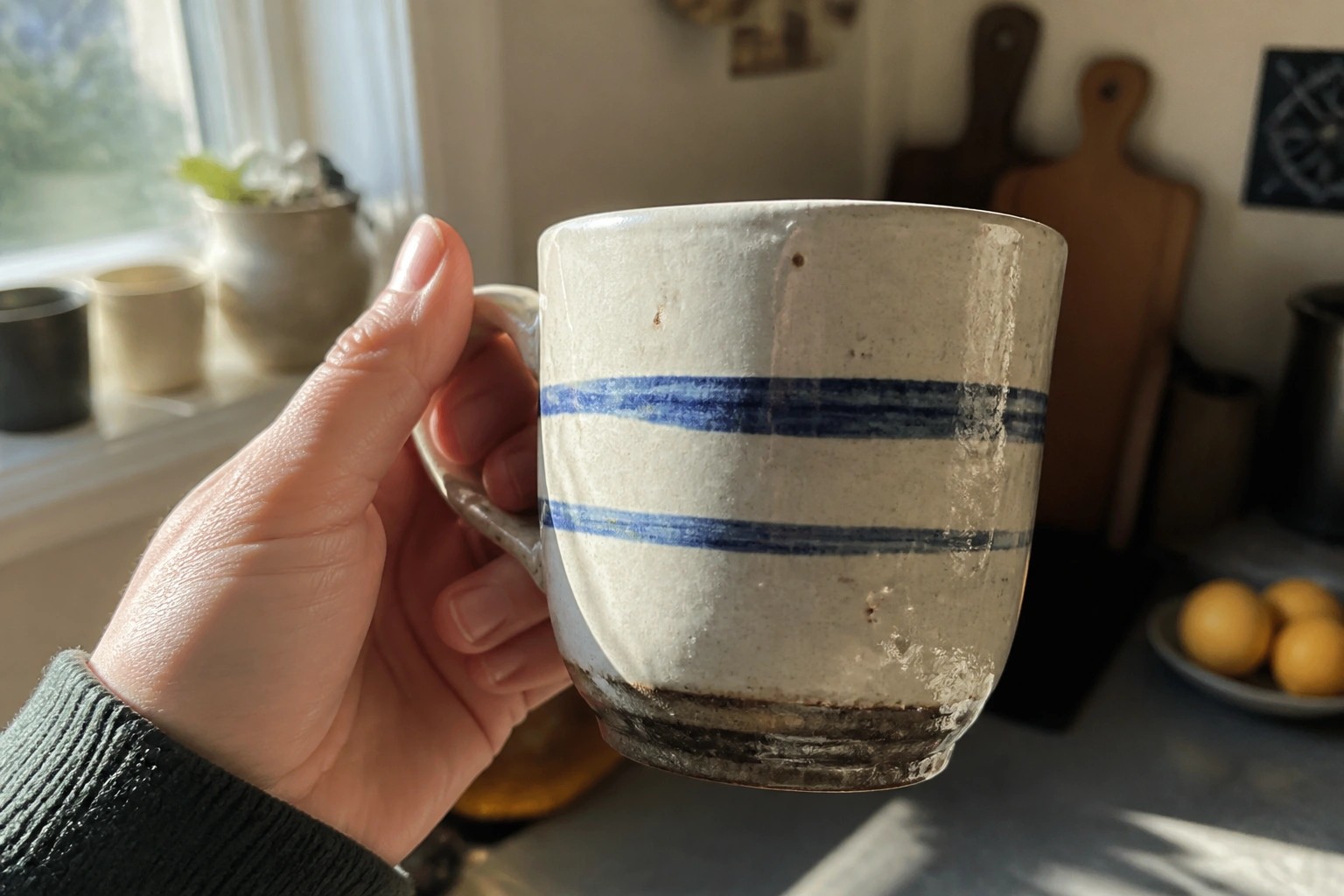
A small ceramic mug finished with two even blue bands on a speckled white glaze gives a clean, repeatable pattern that works for daily use. The stripes sit midway down the body so they remain visible whether the mug sits on a table or is held by the handle. This style keeps the surface simple while still breaking up the plain glaze area.
What makes this idea useful is how the banding can be scaled or spaced differently on other forms like bowls or small pitchers. You can keep the same two-stripe layout or add a third line without changing the base glaze. In a kitchen, these mugs mix easily with plain dishes and still read as intentional rather than plain. The approach also translates well if you want to test new glaze colors on the bands alone.
Mottled Green Glaze on a Simple Bowl

A bowl finished with a variegated green glaze that blends soft sage tones with darker streaks gives the surface natural depth and movement. The glaze settles unevenly across the curved interior, creating subtle shifts in color that highlight the form without added decoration. This approach suits functional bowls because the shape encourages the glaze to pool and vary during firing. It falls into the category of everyday kitchen ware where the glaze itself becomes the main design element.
What makes this idea useful is how easily the same glaze layering can be adjusted by changing the base color or adding a light wash on top. A piece like this works especially well as a cereal or side dish bowl on a kitchen table. The same effect could be reworked for plates or mugs by applying fewer coats to keep the variation more controlled. In a kitchen, this kind of piece stands out because the glaze handles the visual interest while staying practical for daily use.
Freehand Blue Brushwork on Small Plates

A small ceramic plate made from light speckled clay uses wide, loose blue brushstrokes applied only around the rim. The center stays plain so the plate remains practical for food. This keeps the design simple while the strokes create a clear border that draws the eye without covering the whole surface.
What makes this idea useful is how the same rim treatment works on different sizes of plates or shallow bowls. The plain center makes the piece easy to use for sides, desserts, or small snacks without competing with the food. You could repeat the strokes in a different color or space them farther apart for a lighter look. The contrast between the neutral clay and the bold strokes helps the plate photograph well for sharing.
Gradient Blue Glaze on a Divided Serving Tray

A three-section rectangular tray gives you separate spaces for dips, snacks, or small sides without needing multiple dishes. The glaze moves from a dark navy through a bright blue into a lighter turquoise, so each compartment picks up a slightly different tone while the whole piece stays connected. This works on a basic slab or press-molded form and keeps the focus on the glaze rather than added carving or texture.
What makes this idea useful is how the divided layout fits right into meal prep or table serving for small portions. You could repeat the same glaze blend on a longer version for a cheese board or shrink it down for a desk organizer that holds paper clips and pens. The color shift also photographs clearly, which helps when you want to share the finished piece.
Leaf Shaped Ceramic Dish

A leaf-shaped ceramic dish makes a simple functional piece for the kitchen. The molded veins create a clear leaf form while the shallow center holds small amounts of food or utensils. The light green speckled glaze keeps the surface practical and easy to clean without hiding the details. This idea works as a small tray or spoon rest because the pointed tip and curved edges give it a stable, usable shape.
The shape does a lot of the work here since the leaf outline makes the dish easy to grab and place on a counter. You can adapt the same form for a soap dish by changing the glaze to a matte finish or scale it down for a ring holder. In a kitchen this kind of piece keeps things organized without taking much space. The speckled glaze also photographs well for Pinterest because it adds texture while staying simple to replicate.
Two-Tone Glaze on Fluted Ramekins

A small fluted ramekin works well as a baking and serving piece when the exterior gets a solid yellow glaze and the rim and upper interior stay white. The vertical ridges catch light and give the form extra definition without any added carving. This setup keeps the focus on the glaze colors while the shape stays simple enough to repeat for a set.
What makes this idea useful is how the same form doubles as both a cooking vessel and a table piece. You can swap the yellow for any mid-tone glaze and keep the white rim to create a clean break at the top edge. The size works for custards, small sides, or even dips, and the fluted detail carries over easily to slightly larger bowls if you want matching pieces. A set of these stands out in a feed because the color blocks read clearly even in a small thumbnail.
Soft Blue Lidded Butter Dish

A rectangular lidded butter dish works well as a simple kitchen piece when finished in a single soft blue glaze. The form stays low and wide with rounded corners, and the small knob on the lid gives an easy grip without adding extra detail. A matte or lightly speckled glaze finish helps the color read evenly across the surface while still showing the handmade shape underneath.
The shape does a lot of the work here because it fits standard butter sticks and stacks neatly in a fridge or on a counter. You can adapt the same idea by changing the glaze color or making the dish slightly longer for larger blocks. This kind of piece stands out on Pinterest when the glaze is kept simple and the lid fits cleanly, so it reads as both useful and finished.
Speckled Neutral Body with Soft Green Lid

A small lidded jar makes a practical kitchen storage piece when the body gets a speckled neutral glaze and the lid receives a pale green one. The rounded form stays compact on shelves while the simple knob handle keeps the lid easy to lift. This approach pairs a matte, textured surface on the main body with a smoother contrasting glaze on top, giving the jar clear visual separation without added patterns.
What makes this idea useful is how the two glazes create contrast that works for everyday items like salt, sugar, or loose tea. The shape adapts easily to slightly taller or wider versions, and the lid color can be swapped for blue or gray to match different kitchen palettes. In a small space, this size keeps counters uncluttered while still standing out as a handmade piece rather than plain store-bought ware.
Contrasting Dark and Light Glazes on Small Salt Bowls
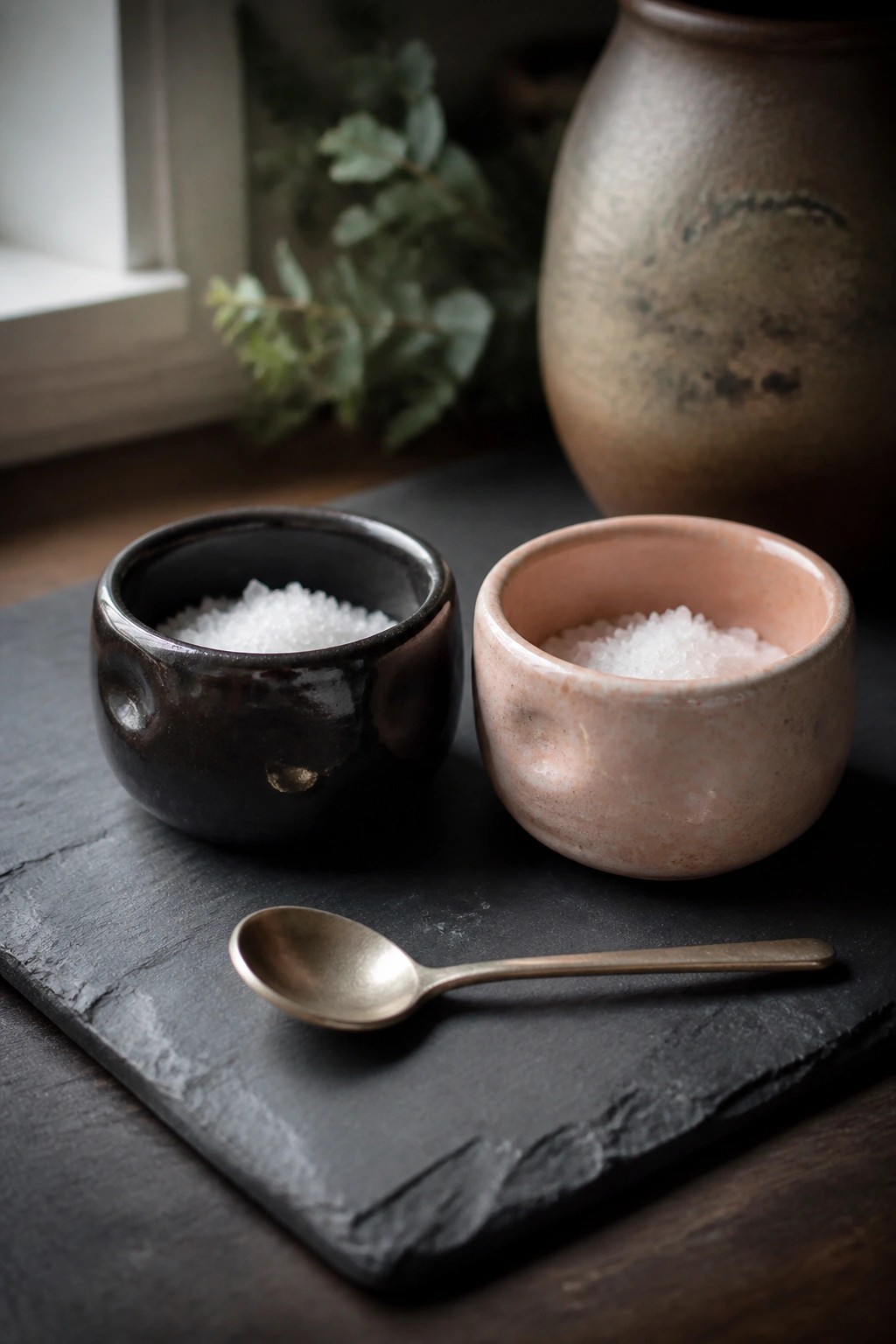
Small bowls finished with one deep glossy glaze and one lighter matte glaze make practical salt cellars or pinch bowls for the table. The dark bowl uses a rich brown-black glaze that pools slightly, while the lighter bowl shows a soft pink-beige tone with visible clay texture. This simple two-glaze approach works because the contrast draws attention to the bowls without any added carving or pattern.
What makes this idea useful is that the pair can sit together on a countertop or dining table for salt and other seasonings. You could repeat the same glaze combo on four or six bowls to create a matching set, or scale the shape slightly larger for small prep bowls. The compact size also makes the project fast to throw and easy to test new glaze combinations on.
Two-Tone Utensil Crock

A tall cylindrical crock works as a kitchen utensil holder when finished with a simple horizontal glaze split. The upper section uses a speckled off-white glaze while the lower half takes a dark matte brown, creating a clean break that keeps the form from looking plain. The speckled texture adds just enough surface interest without competing with the wooden tools stored inside. This approach suits any basic cylinder shape made for countertop storage.
What makes this idea useful is how the split glaze stays easy to repeat on future pieces by changing the height of each color band. In a kitchen it keeps spoons and spatulas upright and within reach while taking little counter space. You could shorten the same form into a smaller holder for paintbrushes or desk tools. The straightforward shape also works if you want to handbuild rather than throw the piece on the wheel.
Running Brown Glaze Over White on a Small Pitcher

A small ceramic pitcher takes on a simple two-tone effect when a white base glaze is covered at the rim with a brown glaze that runs downward in uneven vertical drips. The drips vary in length and thickness, leaving streaks of white visible between them and following the curve of the body down to the base. This glaze approach works for any functional pouring vessel where the goal is to highlight the form rather than create a solid color surface.
What makes this idea useful is how the running glaze adds visual interest to a basic kitchen pitcher without extra carving or painting. You can adapt the same drip method to creamers, small jugs, or even mugs by adjusting how much glaze loads at the top edge before firing. In a kitchen, this kind of piece fits on an open shelf or windowsill where the contrast between the two glazes shows up clearly against other everyday items.
Two-Tone Glaze Planter with Raw Clay Base

A low, rounded ceramic planter uses a glossy green glaze on the upper half and rim while leaving the lower half as raw terracotta. The horizontal break between the two surfaces creates a simple division that shows both the fired clay texture and the depth of the glaze. This approach works well for small herb planters where the form stays basic and the glaze placement supplies the interest.
What makes this idea useful is how the partial glaze keeps the piece practical for indoor plant use without covering the entire surface. The same split works on slightly larger bowls or cache pots by changing the glaze color or adjusting how far down the glaze reaches. You could repeat the look on a set of three different sizes for a windowsill grouping or switch the green to a matte blue for a cooler palette. The raw clay section also helps hide minor scuffs that happen with regular watering.
Two-Tone Tea Light Bowl

A small, low ceramic bowl with a matte black exterior and glossy white interior works well as a tea light holder. The rounded form keeps the candle stable while the white glaze inside reflects light and brightens the flame. This approach fits the candle piece category and turns a basic bowl shape into a functional tabletop item without added details.
What makes this idea useful is how the same bowl shape can be made slightly wider for larger candles or left as is for standard tea lights. The contrast between the dark outside and light inside reduces the need for extra surface decoration. In a bathroom, it sits neatly on a shelf or counter near towels, and the idea adapts easily by swapping the black glaze for another matte color to match different rooms.
Speckled Ceramic Toothbrush Holder

A round ceramic toothbrush holder with three drilled openings makes a practical bathroom item. The light green speckled glaze covers the simple cylinder form and leaves a natural clay rim at the top. This shape keeps brushes separated and upright while fitting easily on a sink ledge or windowsill.
What makes this idea useful is how the same cylinder can be made with two holes or four depending on household size. You could swap the speckled glaze for a solid matte color to match existing tiles or shorten the height for a lower profile. The small footprint also works for storing makeup brushes or small tools on a desk.
Iridescent Shell Shaped Ring Dish

A small ceramic ring dish formed in a scallop shell shape works well as a simple holder for jewelry or small everyday items. The fluted edges and shallow bowl create natural compartments that keep rings from sliding around. An iridescent white glaze adds a soft sheen that reflects light without overpowering the form. This type of piece fits the practical category of small functional ware meant for daily use on a dresser or counter.
The compact size makes it easy to produce in batches or adapt into slightly larger versions for keys or loose change. You can keep the same shell form and try the iridescent glaze on other neutral bases to see how it behaves at different thicknesses. For a gift, this shape needs little extra decoration since the glaze and contour already give it interest. The idea also translates to other shallow dishes where you want a bit of light play without adding painted details.
Speckled Dark Glaze on a Deep Serving Bowl

A wide, deep ceramic bowl finished in a dark charcoal glaze that carries fine white and brown speckles across the surface. The glaze thins at the rim to show a lighter tone while pooling thicker inside to create subtle variation. This style suits a functional serving or soup bowl where the rough texture and earthy color provide contrast against lighter foods. The form stays simple and sturdy so the glaze effect carries the design.
What makes this idea useful is how the dark speckled glaze hides minor wear from regular use. You could repeat the same glaze on a set of smaller individual bowls or try it on shallow plates for a coordinated collection. The heavy speckling gives enough pattern that no additional carving or painting is needed. For everyday kitchen pieces, this approach keeps the focus on durability and easy pairing with basic table linens.
Interior Spiral Glaze on a Wide Serving Bowl

A wide, shallow ceramic bowl uses a contrasting spiral pattern glazed into the center base to create a built-in visual anchor. The spiral sits in a lighter tone against the warmer, matte surface while thin reddish lines ring the rim for extra definition. This style works especially well on bowls intended for pasta, grain dishes, or salads because the design stays visible as food is added or removed.
The shape does a lot of the work here since the broad base gives the spiral room to show without competing with the food. You could scale the same motif down for dinner plates or soup bowls by tightening the coils to match the smaller diameter. A piece like this photographs clearly for sharing, which makes it a reliable option when building a portfolio of functional ware.
Drip Glaze Nesting Bowls

These are ceramic bowls formed from a speckled clay body and finished with pastel glazes that run down the exterior during firing. Each bowl uses a different accent color—pink, green, or blue—applied near the rim so the glaze drips unevenly over the lighter base. The simple rounded shape and the contrast between the matte speckled surface and the glossy drips keep the focus on the glaze movement rather than on added decoration.
What makes this idea useful is that the same glaze layering can be repeated across a set without needing precise brushwork. The bowls work well stacked in a kitchen cabinet or on open shelving, and the drip pattern scales easily to smaller ramekins or larger serving bowls. You could swap the pastel colors for bolder shades or limit the drips to one side if you want a more controlled look on plates or mugs.
Speckled Blue Measuring Scoops

These small ceramic scoops come in graduated sizes with short handles that include vent slits near the end. Each one is wheel-thrown or hand-built from stoneware, then coated in a blue speckled glaze that breaks to show the underlying clay at the rims and foot. The shape keeps them stable on a counter while the handle makes pouring or scooping easy, turning a basic bowl form into a practical kitchen tool.
What makes this idea useful is the clear size progression, which lets you measure dry or wet ingredients without reaching for plastic cups. The same form works just as well for salt cellars or spice dishes if you skip the handle slits. You can adapt the glaze by using a single color across all three sizes or by testing different speckling densities to see how the blue breaks on your clay. In a kitchen setting the earthy rim and handle keep the scoops from looking too precious while still standing out from plain white ware.
Speckled Glaze Yarn Bowl with Spiral Notch
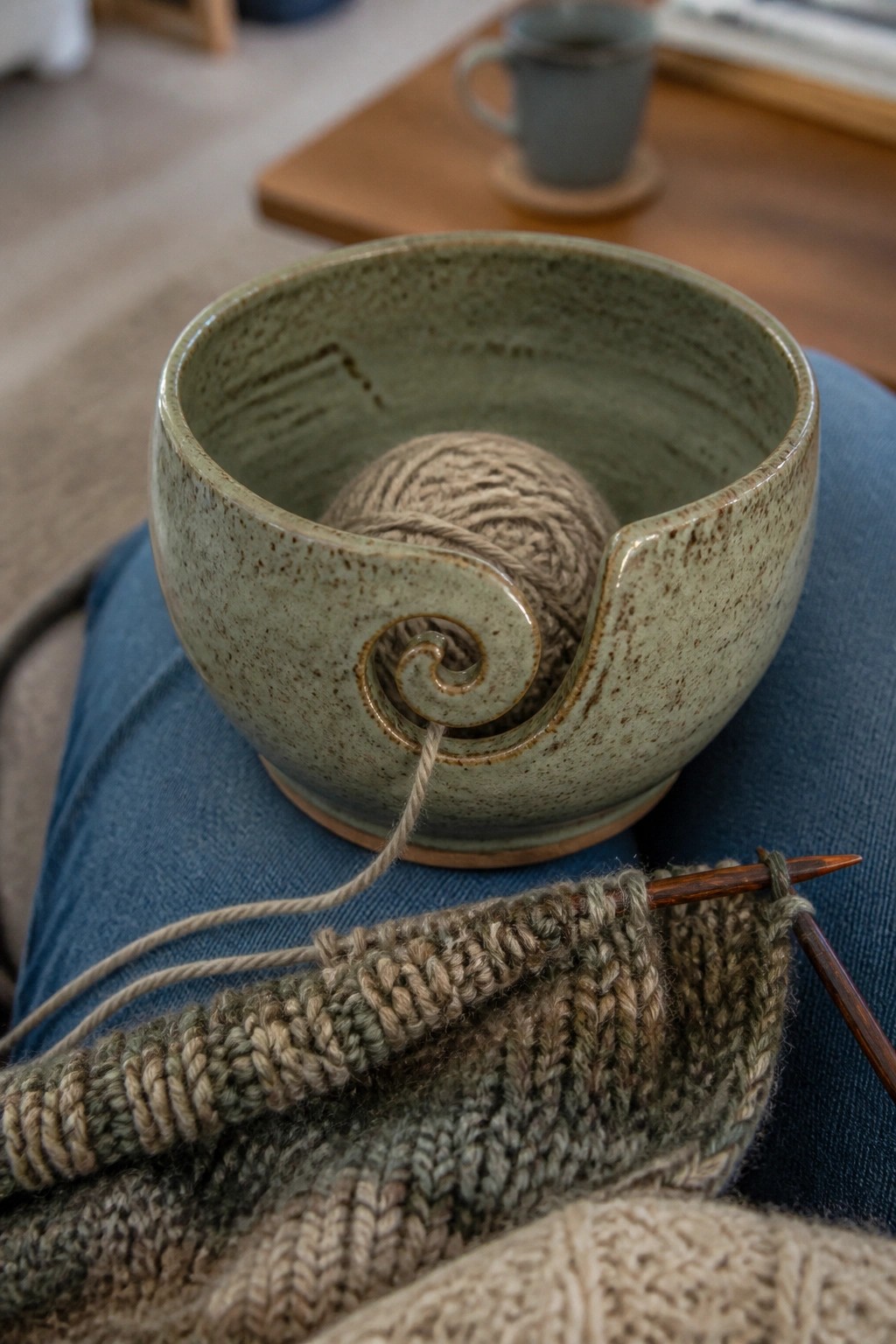
A yarn bowl shaped from clay gives knitters a stable place to keep a skein while working. The rim features a spiral notch that guides the strand outward so it feeds evenly without knots. A mottled green glaze with brown speckles covers the surface and adds subtle texture that pairs well with wood needles and natural fibers.
What makes this idea useful is the way the notch turns an ordinary bowl into a task-specific tool. The same form and glaze could be scaled down for a smaller version that holds embroidery thread or sits on a desk as a simple container. The speckled finish also masks everyday scuffs, so the piece stays practical after repeated use. For a gift, a yarn bowl like this combines two hobbies in one object that people actually reach for.
Speckled Glaze Oil Cruet with Pour Spout

A wheel-thrown ceramic oil cruet gives you a dedicated pouring vessel for kitchen use. The tall, narrow body pairs with an attached spout that lets you control the flow without a separate spout attachment. A warm tan speckled glaze covers the surface and shows light horizontal ridges from throwing plus a few darker runs that break up the color.
What makes this idea useful is how the glaze handles variation on a functional shape. The same speckled base could cover a set of matching vinegar bottles or small syrup pitchers. You could shorten the spout on future versions if you want faster throwing or swap in a different accent color on the rim for contrast. In a kitchen this kind of piece keeps oil handy while staying simple enough to repeat in batches.
Nested Mixing Bowls with Two-Tone Glaze

A set of three graduated ceramic bowls forms a practical kitchen project. Each bowl shows a glossy blue glaze on the interior that contrasts with the natural brown clay on the outside. The rounded shapes stack neatly for storage, and the simple color split keeps the focus on the form and function. This approach works well as a kitchen item for mixing or serving.
What makes this idea useful is how the sizes cover multiple tasks from small prep work to larger dough mixing. The two-tone glaze is easy to adapt by swapping the interior color to match existing dishes or trying a matte finish instead. In a kitchen, this kind of set holds up for daily use without extra decoration. You could scale the same shape down for individual serving bowls or use just the largest one as a main mixing bowl.
Dripping Glaze on a Tall Mug

A tall ceramic mug finished with a dark blue glaze that breaks into vertical drips over a lighter speckled band gives a clean two-tone result. The drips create natural lines that run down the sides without covering the entire surface, leaving the lower section with more texture and a different feel. This style works for everyday mugs because the glaze stays functional on the drinking area while the base remains simple to grip.
What makes this idea useful is that the drip technique needs only one glaze application and gravity to form the pattern. You can repeat the same colors on a shorter cup or a small pitcher to build a set. In a kitchen, the contrast helps the mug show up on open shelves while the shape stays comfortable for daily use. The same drip approach can be adjusted by changing the base glaze color or letting the drips run farther for a different look on bowls.
Speckled Glaze on a Ridged Soap Dish

A small oval ceramic soap dish includes several raised ridges across the base that let water drain away from the bar. The piece uses a soft blue-green glaze with brown speckles that settles into the grooves and along the rim. This creates a simple bathroom item that stays practical while showing off how glaze behaves on a textured surface. The irregular oval shape and modest size keep the focus on everyday use rather than decoration.
The ridges solve the common issue of a wet soap bar sitting in a puddle, so the dish works best on a sink edge or shower ledge. You could repeat the same ridge layout on a larger tray for sponges or a small plate for brushes if you want the drainage idea elsewhere. The speckled glaze effect is easy to scale down for ring dishes or coasters without changing the clay recipe. Pieces like this perform well in searches for functional pottery because they combine one clear practical feature with a straightforward form.
Reactive Glaze on an Oval Serving Platter

An oval ceramic platter gives you a wide, flat surface that works for both serving food and displaying it. The glaze blends turquoise, teal, and warm amber tones that shift and pool naturally across the clay, with a visible crackle pattern adding texture. This approach keeps the focus on the glaze movement rather than added decoration or carving. It fits the category of functional dining ware where color and surface variation carry the design.
What makes this idea useful is how the same glaze mix can be tested on smaller plates or shallow bowls first to control the flow. The oval shape adapts easily to cheese boards, roasted vegetables, or bread service without needing extra details. You could rework the color combination into a set of everyday dinner plates for a matching collection. The crackle effect also shows up well in photos, which helps when sharing finished pieces online.
Frequently Asked Questions
What safety steps should I follow to make sure glazes on my mugs and bowls are suitable for food contact?
Test every glaze batch with a food safety test kit before using it on functional pieces. Apply the glaze in thin, even coats and fire to the recommended temperature. Avoid glazes with high amounts of heavy metals like lead or cadmium, and always run finished items through a dishwasher cycle multiple times to check for leaching.
How can I layer multiple glazes on plates without them running or blending in unwanted ways?
Start with a base glaze that has good adhesion, then add accents in small dots or lines using a brush. Leave at least a quarter inch of space near the rim or foot to account for flow during firing. Test combinations on small tiles first and adjust the firing schedule by slowing the ramp rate in the last 200 degrees to control movement.
What should I consider when choosing glazes for everyday items like mugs that go in the microwave?
Select glazes labeled as microwave safe and avoid metallic lusters or thick applications that could cause hot spots. Matte glazes often perform better than glossy ones in microwaves because they do not reflect heat as strongly. Run a test by heating water in the finished mug for two minutes and checking for cracking or excessive warmth on the handle.
How do I adapt these glaze ideas if I work with mid-range stoneware instead of high-fire porcelain?
Mid-range glazes need slight recipe tweaks such as adding more silica to improve durability. Test small batches on your clay body because stoneware absorbs differently than porcelain. Many of the listed combinations work well if you raise the firing temperature by one cone and extend the hold time at peak heat to achieve similar color and texture results.
What common problems occur with glazes on bowls and how can I fix them before the final firing?
Crazing often appears when the glaze and clay have mismatched expansion rates, so switch to a recipe with added flint or adjust the cooling cycle. Pinholing usually comes from trapped gases, which you can reduce by bisque firing to a higher temperature or applying thinner glaze layers. Always do a test firing with one or two pieces to spot these issues early.

Pottery Path is my cozy corner of the internet where I share clay ideas, pottery inspiration, and simple projects you can recreate at home. I love exploring everything from air dry clay to handbuilt pottery to cute minis that brighten your day. My goal is to make clay crafting feel easy, fun, and welcoming for anyone who wants to try it.
You will find beginner friendly tutorials, creative pottery painting ideas, and lots of warm inspiration for slow and happy crafting. If you enjoy hands on creativity, this space will feel like home.