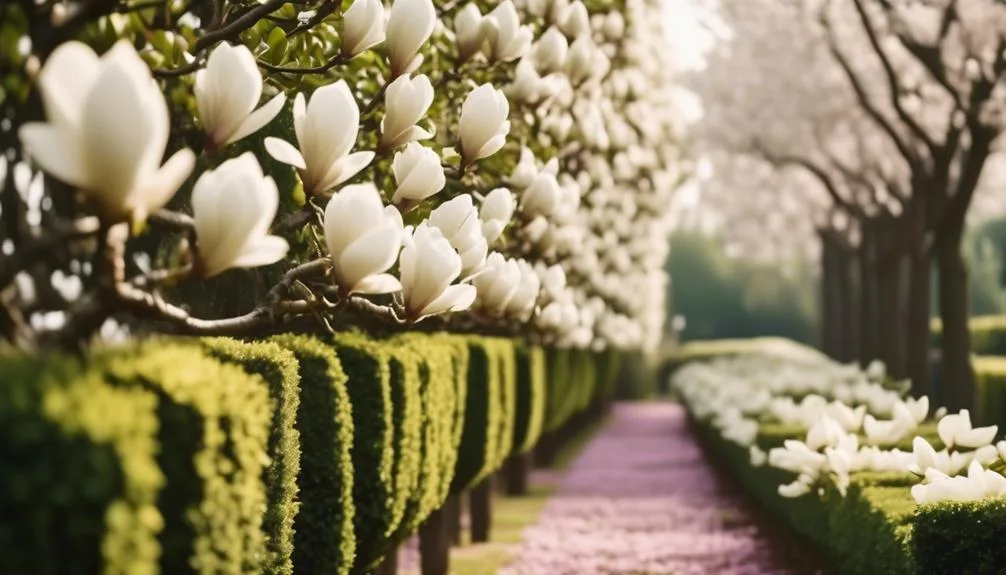
Creating a magnolia tree hedge turns your backyard into a beautiful natural masterpiece. It's like composing a symphony of beauty, where each tree harmonizes to form a lovely boundary.
From choosing the right trees to nurturing their growth, establishing a magnolia tree hedge is a fulfilling journey.
As you embark on this adventure, you'll learn how to cultivate a lush, vibrant hedge that breathes new life into your outdoor space.
Let's take the first step on this captivating journey.
Choosing the Right Magnolia Tree Species
When choosing the right magnolia tree species for your hedge, consider factors such as climate suitability, size, and bloom time.
Magnolia tree varieties come in various sizes and shapes, so it's essential to select one that fits your hedge vision.
For instance, if you prefer a compact hedge, consider the Little Gem magnolia, while the Sweetbay magnolia is excellent for a larger, more expansive hedge.
Additionally, understanding soil requirements is crucial for the successful growth of your magnolia hedge. Most magnolia varieties thrive in well-drained, slightly acidic soil.
Amending the soil with organic matter can improve its texture and drainage, creating an optimal environment for your magnolia hedge to flourish.
Recommended Products

💖Little Gem Magnolia comes with easy to use plant food and blooms every Year during Summer months with luminous, white flowers that round skyward

Due to agricultural laws, we cannot ship to CA, AZ, AK, or HI - orders will be cancelled if you ship to one of these states

Includes special blend fertilizer & planting guide
Selecting the Ideal Location for Your Hedge
To ensure the successful growth of your magnolia hedge, it's crucial to carefully select the ideal location that aligns with the specific soil and climate requirements of your chosen magnolia tree species.
Magnolias thrive in well-draining, slightly acidic soil with a pH range of 5.0 to 6.5. Before planting, test the soil to ensure it meets these ideal soil conditions.
Additionally, consider the sunlight exposure in the chosen location. Most magnolia species prefer full sun to partial shade, so aim to plant your hedge in an area that receives at least 6 hours of sunlight per day. However, some species, such as the saucer magnolia, can tolerate more shade.
Planting and Spacing the Magnolia Trees
Consider the mature width of your chosen magnolia species to determine the appropriate spacing for planting your trees, ensuring they've ample room for growth and development. When planting and spacing your magnolia trees, follow these guidelines:
- Planting Techniques:
- Dig a hole that's twice as wide and just as deep as the root ball.
- Gently loosen the roots and place the tree in the center of the hole.
- Backfill with soil, tamping it down gently as you go to remove air pockets.
- Soil Preparation:
- Ensure the soil is well-draining and rich in organic matter.
- Incorporate compost or peat moss into the soil to improve its fertility and texture.
- Spacing Guidelines:
- Space small magnolia varieties 10-15 feet apart.
- Larger varieties may require 15-20 feet between each tree to accommodate their wider growth patterns.
- Growth Patterns:
- Be mindful of the expected mature width of the magnolia species.
- Allow sufficient space between trees for healthy growth.
Recommended Products

Light Requirements: Magnolias thrive in full sun to partial shade. Ensure they receive at least 4-6 hours of sunlight daily.

[Fragrant Ornamental Blooms] Large, cup-shaped white flowers up to 6 inches across appear before leaves in early spring. Pleasant citrus-lemon fragrance perfumes the garden.

10 Premium Magnolia Seeds: Start growing these magnificent flowering trees with our exclusive collection of 10 magnolia seeds. Cultivate these classic ornamental trees known for their spectacular blooms and elegant form.
Caring for and Maintaining Your Magnolia Tree Hedge
To ensure a healthy and vibrant magnolia tree hedge, it is important to prioritize regular watering and proper pruning techniques. Water your magnolia trees deeply and infrequently, ensuring the soil is moist but not waterlogged. Additionally, maintaining the soil health by adding a layer of organic mulch around the base of the trees can significantly benefit their growth. When it comes to pruning techniques, focus on removing any dead, damaged, or diseased branches to promote new growth and maintain the desired shape of the hedge. Avoid heavy pruning immediately after the flowering season to prevent disrupting the next year's blooms. Here's a helpful guide for caring for and maintaining your magnolia tree hedge:
| Caring for Magnolia Tree Hedge | Maintenance Tips |
|---|---|
| Watering | Deep, infrequent watering to keep the soil moist |
| Soil Health | Add organic mulch to maintain soil moisture and health |
| Pruning Techniques | Remove dead, damaged, or diseased branches; avoid heavy pruning post-flowering season |
Recommended Products

Yard Tools set including 1pc 26" compound action loppers, 1pc 23" hedge shears, 1pc 8" professional pruning shears, branch cutter and tree pruner with excellent cutting capacity, effortless pruning will solve your tough trimming job with ease

Yard Tools Set including 1pc 19" compound action loppers, 1pc 19" hedge clippers and 1pc 8" professional pruning shears, branch cutter and tree cutter with excellent cutting capacity, effortless pruning can help people chop the tree more smoothly and less effort

CUT, TRIM & PRUNE: With these 15 inch hedge shears, cutting your branches, hedges, shrubs, bushes, boxwood, plants, flowers and trees is easy, thanks to High Carbon Steel Blades and Comfortable Grips. Keep your bushes and trees healthy and pretty!
Troubleshooting Common Magnolia Tree Hedge Issues
Experiencing yellowing leaves or stunted growth in your magnolia tree hedge may indicate underlying issues that require attention. To troubleshoot common magnolia tree hedge issues, consider the following:
- Identifying Pests: Inspect the leaves and stems for signs of pests such as aphids, scale insects, and spider mites. Address any pest infestations promptly to prevent damage to the hedge.
- Soil Health: Test the soil for pH levels and nutrient deficiencies. Magnolia trees thrive in slightly acidic soil, so ensure the pH level is suitable. Nutrient deficiencies can cause yellowing leaves and stunted growth.
- Disease Prevention: Keep an eye out for signs of common magnolia tree diseases such as leaf spot, powdery mildew, and canker. Proper maintenance and pruning can help prevent the spread of diseases.
- Environmental Stress: Assess the hedge's environment for factors like inadequate sunlight, poor drainage, or extreme weather conditions. Addressing these issues can help promote the health of your magnolia tree hedge.
Conclusion
As your magnolia tree hedge begins to take root, envision the beauty and privacy it will bring to your outdoor space.
With the right species, location, and attentive care, it will flourish and stand as a stunning natural barrier for years to come.
Stay vigilant for common issues and promptly address them to ensure your hedge remains healthy and vibrant.
Happy planting!

My interest in trees started when I first saw the giant sequoias in Yosemite.
I was a teenager then, and I remember thinking, “I need to learn more about this.”
That moment stuck with me.
A few years later, I went on to study forestry at Michigan Tech.
Since graduating, I’ve worked in a mix of hands-on tree care and community education.
I’ve spent over ten years helping people understand how to plant, maintain, and protect the trees in their neighborhoods.
I don’t see trees as just part of the landscape.
They are living things that make a real difference in our daily lives.