Lately I’ve been trying to loosen up a bit when I’m throwing on the wheel.
Instead of sticking to the usual bowls and mugs I started experimenting with forms that feel more playful.
A lot of these ideas came from just letting the clay move in different directions without worrying too much about the end result.
Some turned out better than I expected and others needed a few tries to get right.
Here are a few that I kept coming back to.
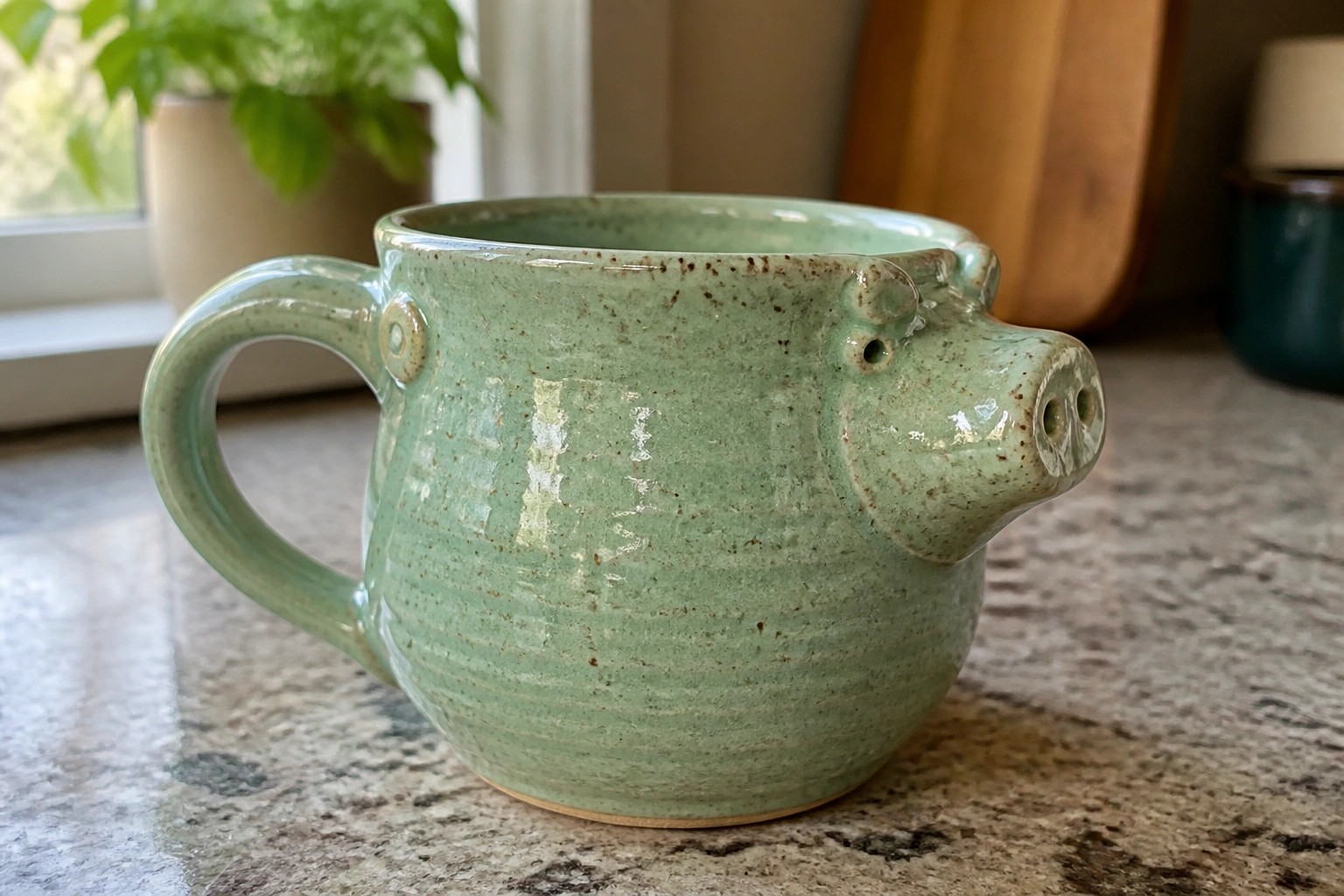
Pig Snout Mug with Sculpted Details
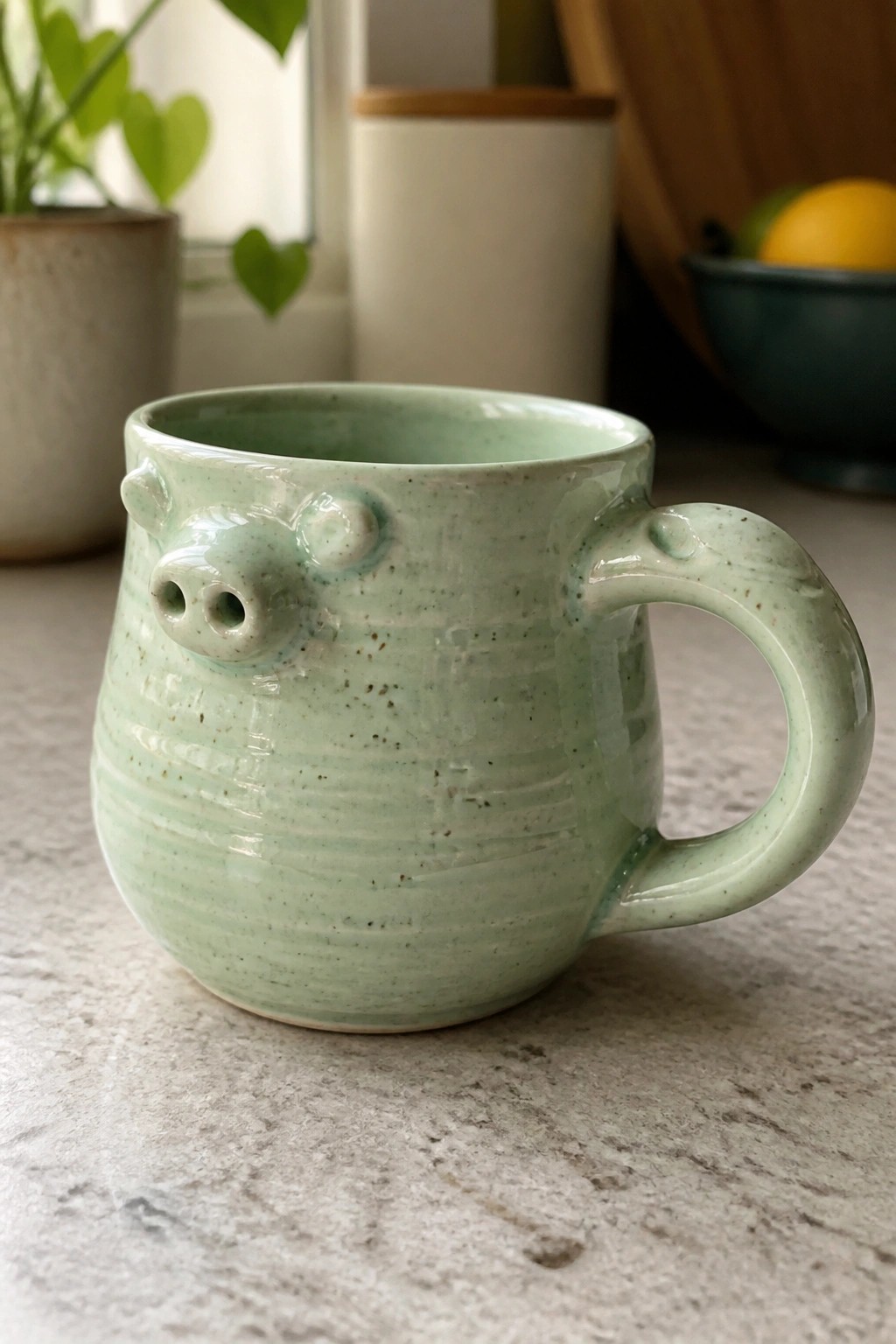
A wheel-thrown mug gets its playful look from a simple pig snout and small ears added to the front. The light green speckled glaze covers the horizontal throwing lines, keeping the surface textured while the handle stays clean and functional. This approach turns a basic mug into an animal-themed piece without changing the overall form or size.
What makes this idea useful is how easily the snout and ears can be attached after throwing. The same method works for other animals or faces, and the small scale keeps the mug practical for daily use or gifting. You could swap the glaze color or simplify the features to match different styles while still using the same base shape.
Cat Planter with Ear and Foot Details
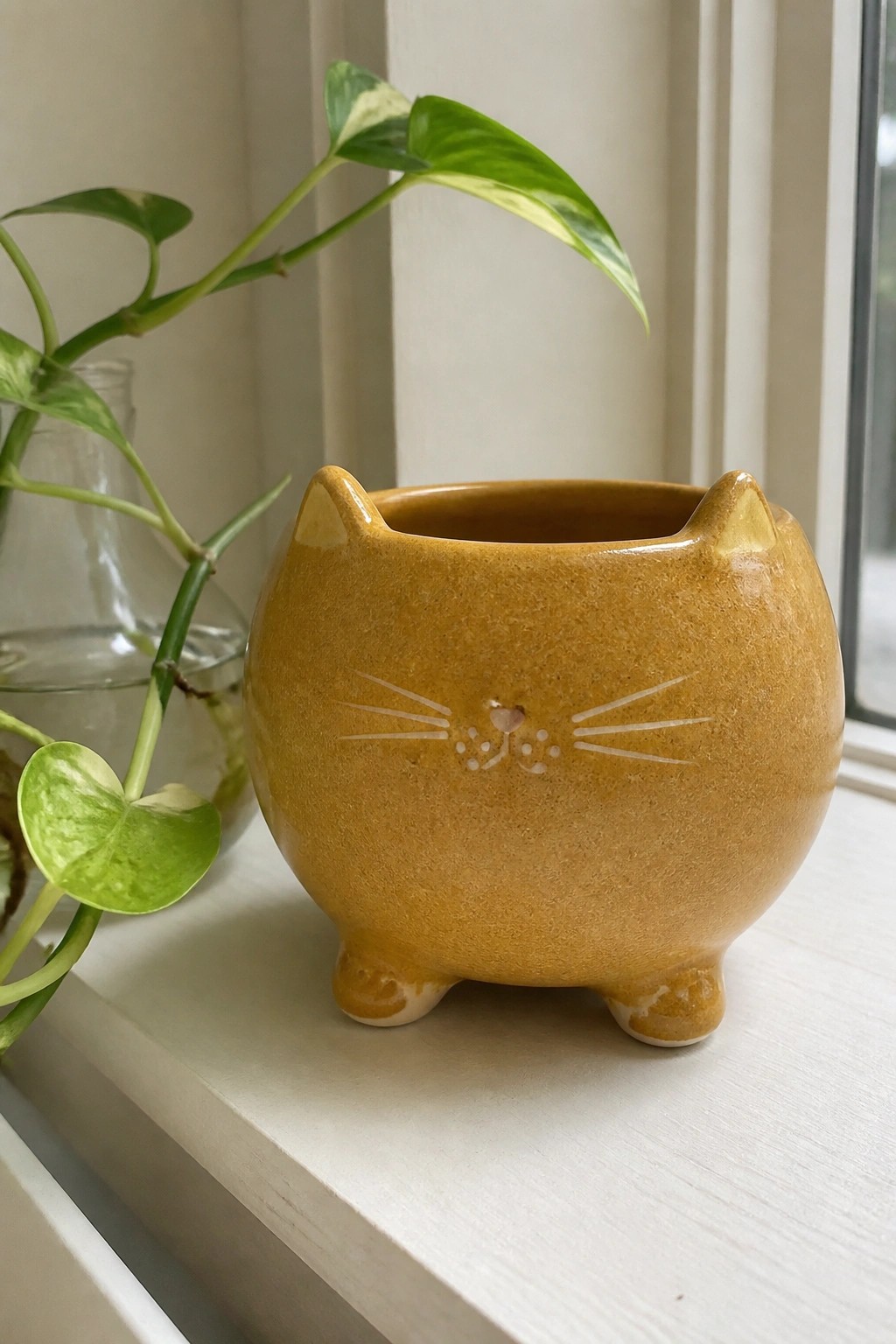
A wheel-thrown planter can be altered after throwing to add two small ears at the rim and three pinched feet at the base. The cat face is created with quick incised lines for whiskers plus a few dots for the nose and mouth before a single warm glaze is applied. The rounded body stays practical for holding soil while the added details turn it into a recognizable animal form. A speckled mustard glaze gives the surface enough variation to keep the simple lines visible without extra decoration.
What makes this idea useful is how the same thrown cylinder works for multiple plant sizes without taking up much room on a windowsill or shelf. You can change the ear angle or skip the feet to make a flatter version that still reads as a cat. For gifts this shape is easy to repeat in different glaze colors so each one feels distinct. The face lines are fast to draw with a needle tool so the project stays quick once the throwing is done.
Scalloped Rim Bowl with Gradient Glaze
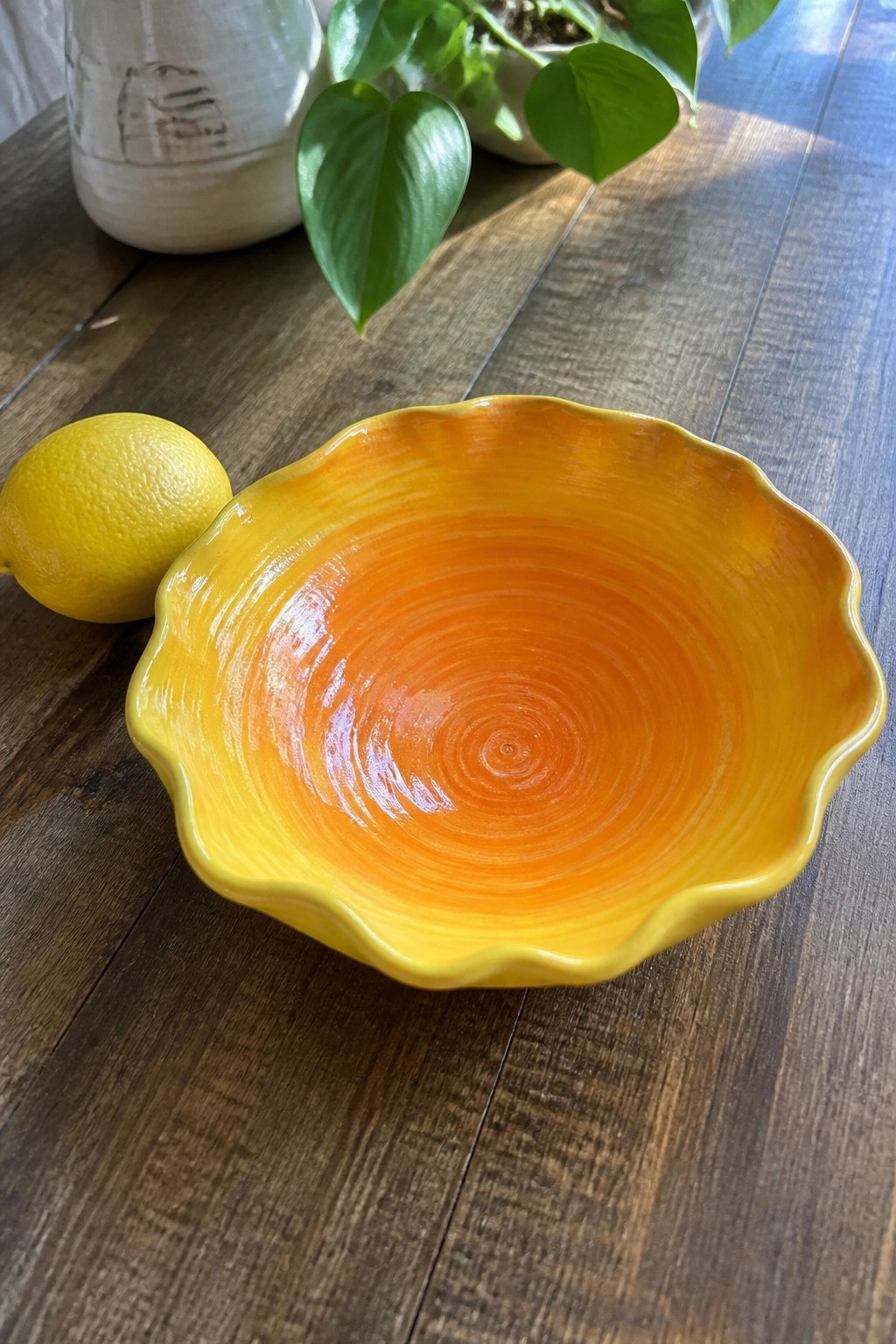
A wheel-thrown bowl with a scalloped rim gives a basic round form extra shape without added pieces. The glaze blends from yellow at the edge to orange in the center, and the spiral wipe pattern inside emphasizes the wheel-thrown lines. This works as a fruit bowl or small serving piece where the bright color and wavy edge provide the main interest.
The shape does a lot of the work here because the ruffled rim stays simple to form yet changes the look enough to stand out. Scale the same rim treatment down for individual bowls or keep the size for a countertop fruit holder. Try swapping the yellow-orange blend for other bright pairs if you want the piece to match different kitchen colors.
Rounded Vase with Incised Face Motif

A wheel-thrown vase with a full rounded body gives you a good surface for adding a simple face after the form is pulled. You cut or press lines for eyebrows and mouth, then attach small clay dots for cheeks and inset small blue ceramic eyes. The soft blue glaze keeps the surface smooth while letting the raised details stand out. This turns a standard vase into a decorative piece that still functions for stems or dried flowers.
What makes this idea useful is the compact size, which works on a mantel, shelf, or side table without crowding other objects. You can repeat the same face layout on different forms like a taller cylinder or a low bowl by shifting where the features sit. The incised lines are quick to add once the piece is leather hard, so the same motif can be adapted for gifts or a small batch of matching items. For Pinterest it stands out because the face is clear even in a thumbnail.
Star-Shaped Ring Dish

A star-shaped ring dish gives you a compact tray for holding jewelry like rings and small hoops. The five-point form creates natural edges that keep items from sliding off while the speckled red glaze adds subtle texture across the surface. This type of project starts as a simple wheel-thrown plate that gets reshaped before firing. It works as a small storage piece rather than a large decorative object.
What makes this idea useful is how the pointed outline stands out on a dresser or bathroom counter without taking much space. You could adapt the same star form into a soap rest by making it a bit larger and adding a shallow center. Different glaze colors would let you match it to existing room tones or turn it into a quick gift option. The small scale also makes it simple to test new surface textures on future versions.
Sushi Tray with Painted Roll Motifs
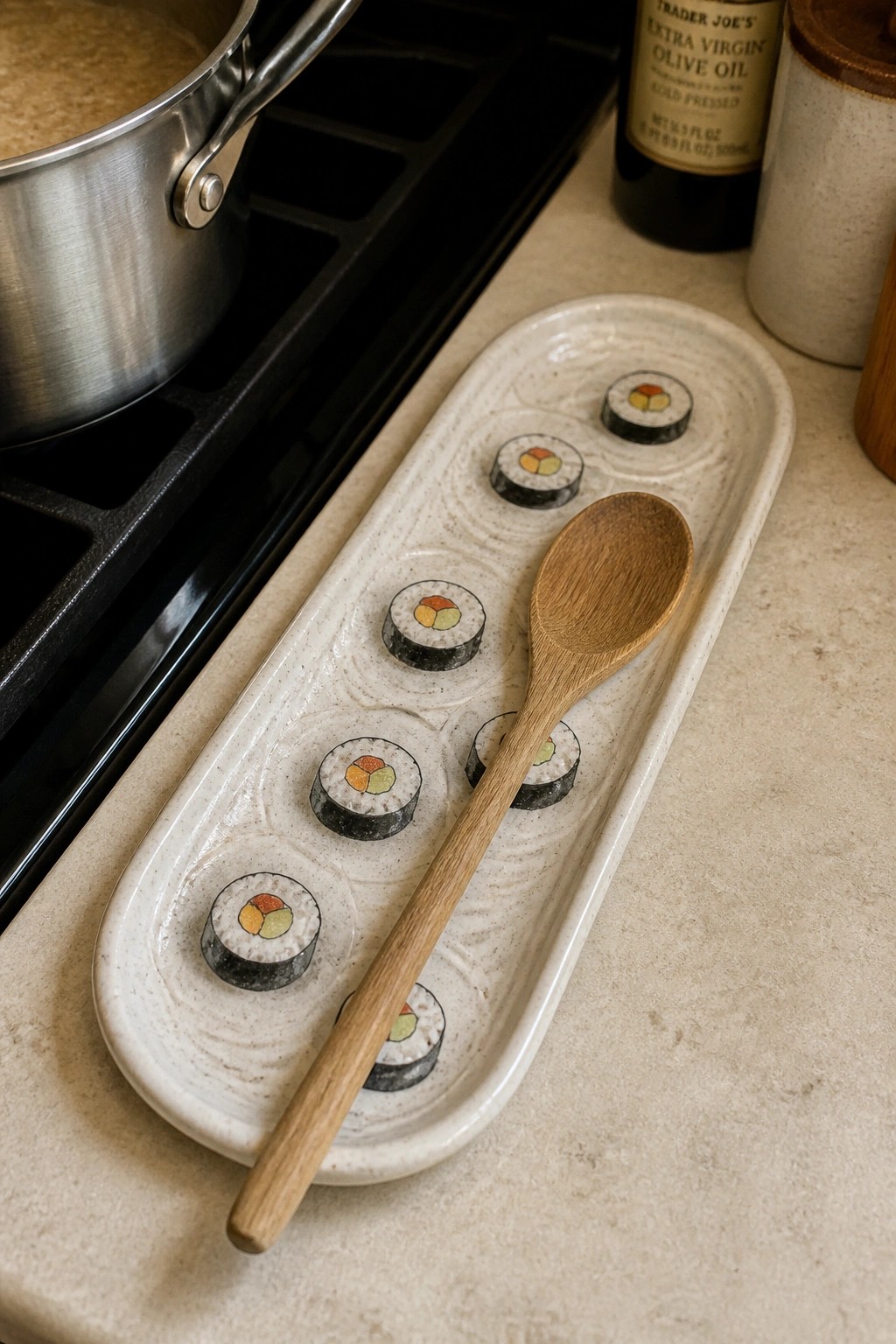
A long oval tray formed with six shallow circular wells makes a practical sushi serving piece. Each well holds a hand-painted sushi roll created with underglazes that show rice, nori, and simple fillings. The speckled glaze keeps the surface light so the painted details remain clear and readable.
What makes this idea useful is how the wells organize portions while the painted motifs add a direct food reference without extra decoration. You could swap the sushi images for dumplings or fruit slices, or shrink the tray to hold small snacks on a desk. The same layout works for gifting because it stays compact and reads clearly from a distance on a table.
Nesting Bowls with Overlapping Pastel Glazes

Wheel-thrown bowls like these use bands of purple, pink, orange, and turquoise glaze applied in loose horizontal strokes so the colors overlap and shift around each piece. The same glaze palette carries across the set, but the placement changes from bowl to bowl so they coordinate without matching exactly. This keeps the group visually connected while still giving each bowl its own mix of tones. The rounded forms and simple rims let the glaze pattern stay the main focus.
What makes this idea useful is that the glazing method works on any size bowl you already throw regularly. You can repeat the color order on two bowls and reverse it on a third to create variety without extra planning. The finished set stacks compactly for storage and still reads as a collection when pulled out for use. The same band approach translates directly to ramekins or small serving dishes if you want to expand the set later.
Lidded Jar with Mushroom Knob

A wheel-thrown lidded jar makes a compact storage piece that works in the kitchen or on a shelf. The body shows horizontal ridges under a green glaze while the domed lid carries a speckled off-white finish and a small sculpted mushroom knob that doubles as the handle. The knob gives the lid a clear visual anchor and makes lifting easier without adding extra parts.
The small scale makes this easy to adapt for spices, loose tea, or small bathroom items. You could swap the mushroom for another simple form like a knob or berry and keep the same ridged body. In a kitchen this shape stays practical because the lid fits securely and the texture hides minor throwing marks. The idea works well on Pinterest because the single detail stands out against a plain background.
Crescent Moon Tea Light Holder
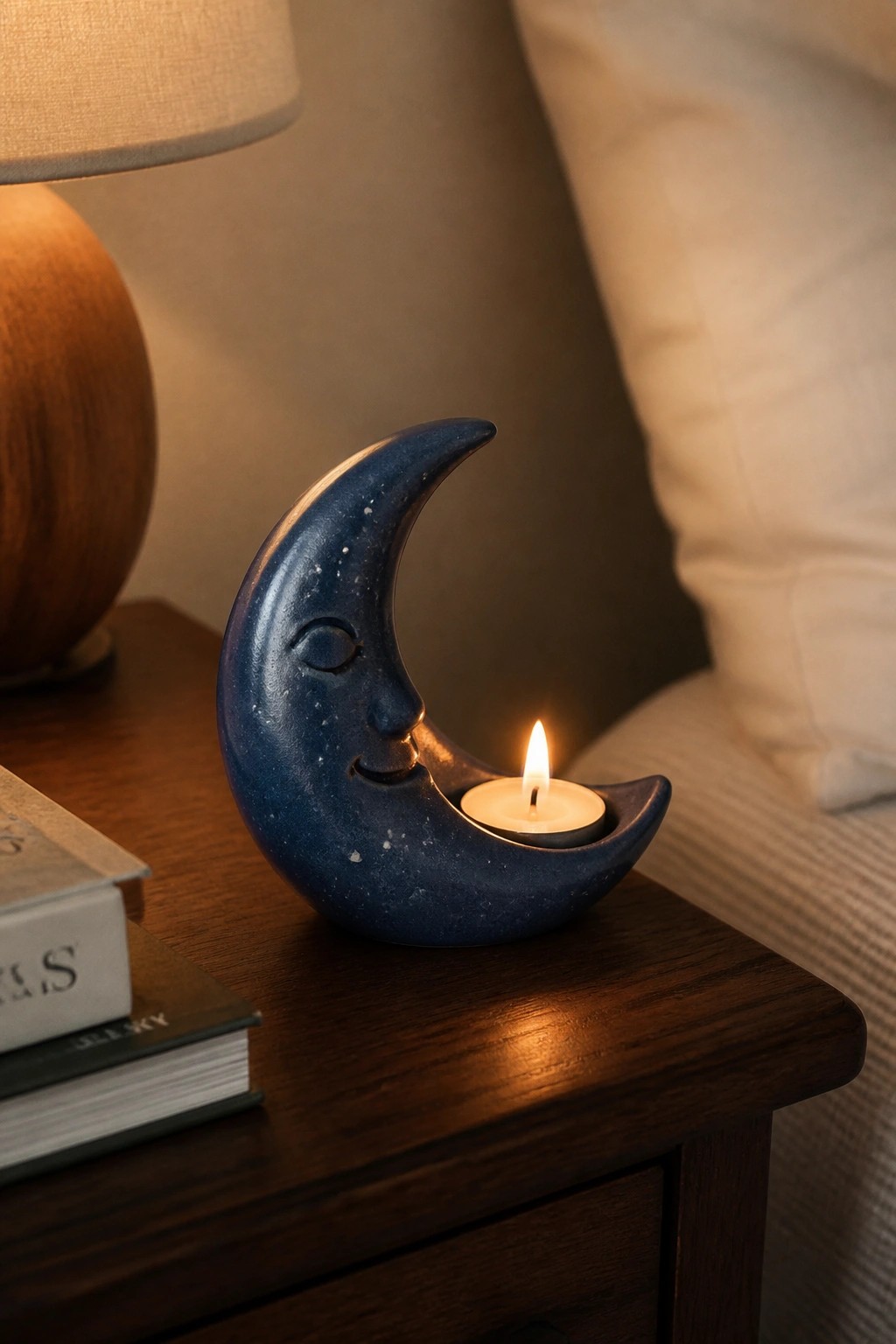
A crescent moon candle holder makes a compact tea light piece that sits on a flat surface. The form curves around the candle base while the outer edge follows the moon shape. A simple face gets carved into the clay with basic lines for the eye and mouth before the piece is glazed. A speckled dark blue finish covers the surface and helps the flame stand out at night.
What makes this idea useful is how the curved shape holds a standard tea light without needing extra hardware. You could rework the same moon outline into a small ring dish or pinch pot by flattening the bottom curve. The carved face stays easy to add with a loop tool on any similar form. For decor use, this kind of piece fits on a nightstand or shelf where the silhouette reads well in photos.
Striped Creamer with Reactive Glaze Stripes
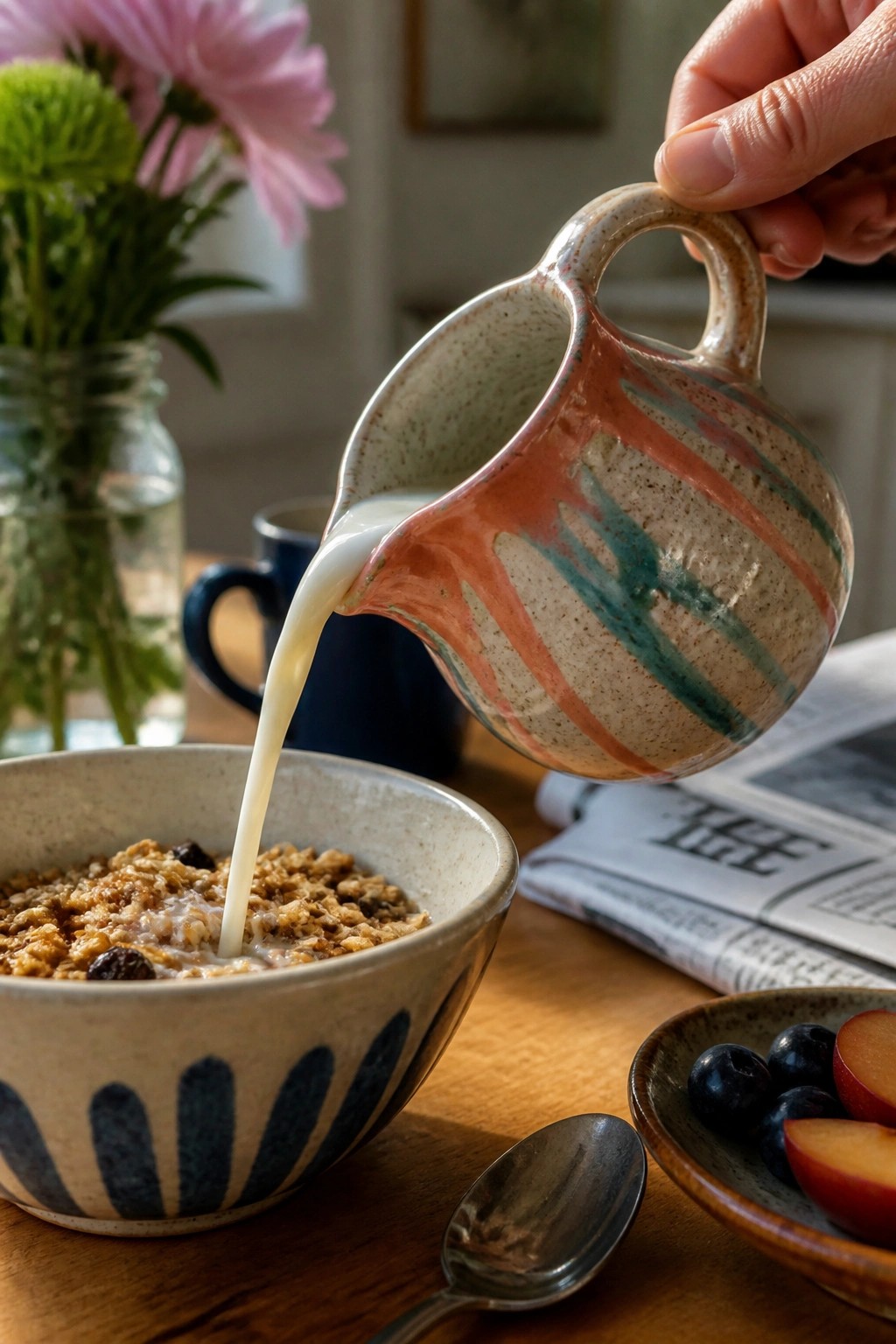
A small wheel-thrown creamer or pitcher works well as a kitchen item when the glaze combines flowing coral and teal stripes over a speckled clay body. The pinched spout and simple looped handle keep the form practical for pouring milk or cream. This approach fits the category of everyday tableware where the glaze movement adds interest to a compact, repeatable shape.
What makes this idea useful is how easily the stripe pattern can be recreated with different glaze combinations or adjusted for a taller jug. The small size keeps it simple to throw and glaze in a single session while still giving you a piece that stands out next to plain mugs or bowls. You could rework the same form into a syrup pitcher or small vase by changing the handle angle slightly.
Cat Paw Yarn Bowl
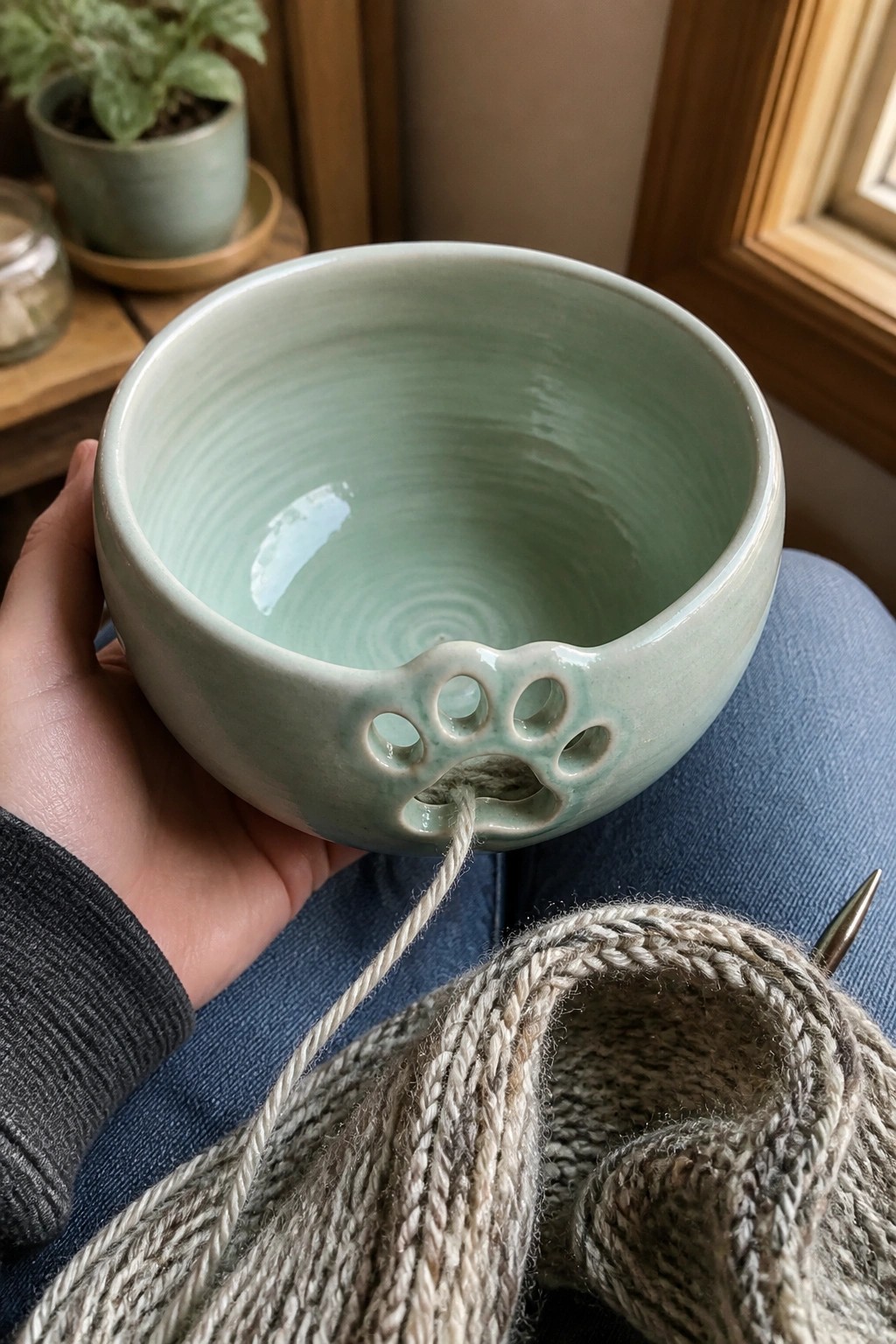
A wheel-thrown bowl turns into a yarn holder once you cut a paw print shape into the rim with several holes for the strand to pass through. The rounded openings keep the yarn from catching while the main bowl shape holds the ball in place as you work. A single soft glaze color keeps the focus on the cutout detail rather than surface decoration. This approach fits the functional holder category and gives a standard bowl a clear purpose for knitting or crochet.
What makes this idea useful is how the cutout solves a common problem without needing extra parts or attachments. You could swap the paw print for simple slots or leaf shapes if you want a less themed version. The same bowl works well on a desk for holding cords or as a small plant saucer once the yarn is gone. Scaling the form smaller makes it easier to throw in batches for gifts.
Sculpted Face Toothbrush Holder

A simple cylinder thrown on the wheel becomes a bathroom holder once you add two small pinched ears and incised dots for eyes plus a curved line for a mouth. The speckled matte glaze and light horizontal ridges give the surface enough texture to highlight the face without extra decoration. This approach keeps the form functional for standing toothbrushes upright while turning an everyday object into a recognizable bathroom piece.
What makes this idea useful is the way the basic cylinder shape already does the work of holding items, so you only need to add the ears and face details. You could easily rework the same size into a makeup brush cup or a small desk pencil holder by changing the facial expression or leaving the ears off. The compact scale fits well on a narrow windowsill or shelf and still leaves room for a soap dish beside it. For gifts the form is quick to repeat once you have the cylinder and face proportions figured out.
Double Salt Cellar

A wheel-thrown double salt cellar joins two small bowls at a single point to create one compact piece. Each chamber holds a different seasoning while the shared connection keeps both parts together on the counter. The glossy green glaze covers the curved forms and makes the pinched connection look intentional rather than added on. This kitchen item stays useful because the shape handles everyday salt and pepper without needing extra trays or lids.
What makes this idea useful is how the small scale lets you throw several sets quickly and test different glaze pairings. The connected shape works especially well beside a mixing bowl or on a stovetop where space is tight. You could adapt the same form into a double oil dish or a holder for two different finishing salts by widening one side slightly. In a kitchen, this kind of piece stands out on Pinterest because it solves a simple storage problem with a form that still reads as playful.
Mini Yellow Pedestal Cake Stand

A wheel-thrown mini pedestal stand gives you a compact serving piece for cupcakes or small desserts. The form pairs a flat plate with a tapered, ridged base that narrows toward the bottom for stability. A single glossy yellow glaze covers the whole piece and creates a clean, unified look. The scalloped edge on the plate keeps the design simple while still feeling finished.
The small scale makes this easy to throw in one piece and quick to glaze. It works especially well on a kitchen counter for holding a single treat or on a dessert table for individual portions. You could swap the yellow for other bright colors or remove the ridges if you want a smoother surface. The same proportions could be adapted into a small soap dish or ring holder by lowering the plate height.
Drip-Glazed Tumblers with Layered Color Runs

Wheel-thrown tumblers like these use a simple cylindrical shape with subtle throwing ridges that help guide the glaze downward. A light speckled clay body provides contrast while layers of bright glaze are applied near the rim so they run in uneven drips of yellow, orange, blue, purple, and green. The result is a set of functional drinking cups that stay easy to throw yet gain strong visual movement from the glaze alone.
What makes this idea useful is how the drip method turns basic forms into eye-catching pieces without extra handles or carving. You can adapt the same approach by testing different glaze thicknesses or limiting the palette to two or three colors for a more controlled look. These tumblers work well as everyday water glasses, small herb planters, or desk holders for pens and brushes. The small scale also makes them quick to repeat as gifts or to photograph for sharing color-combination ideas.
Dotted Wall Pocket Planter
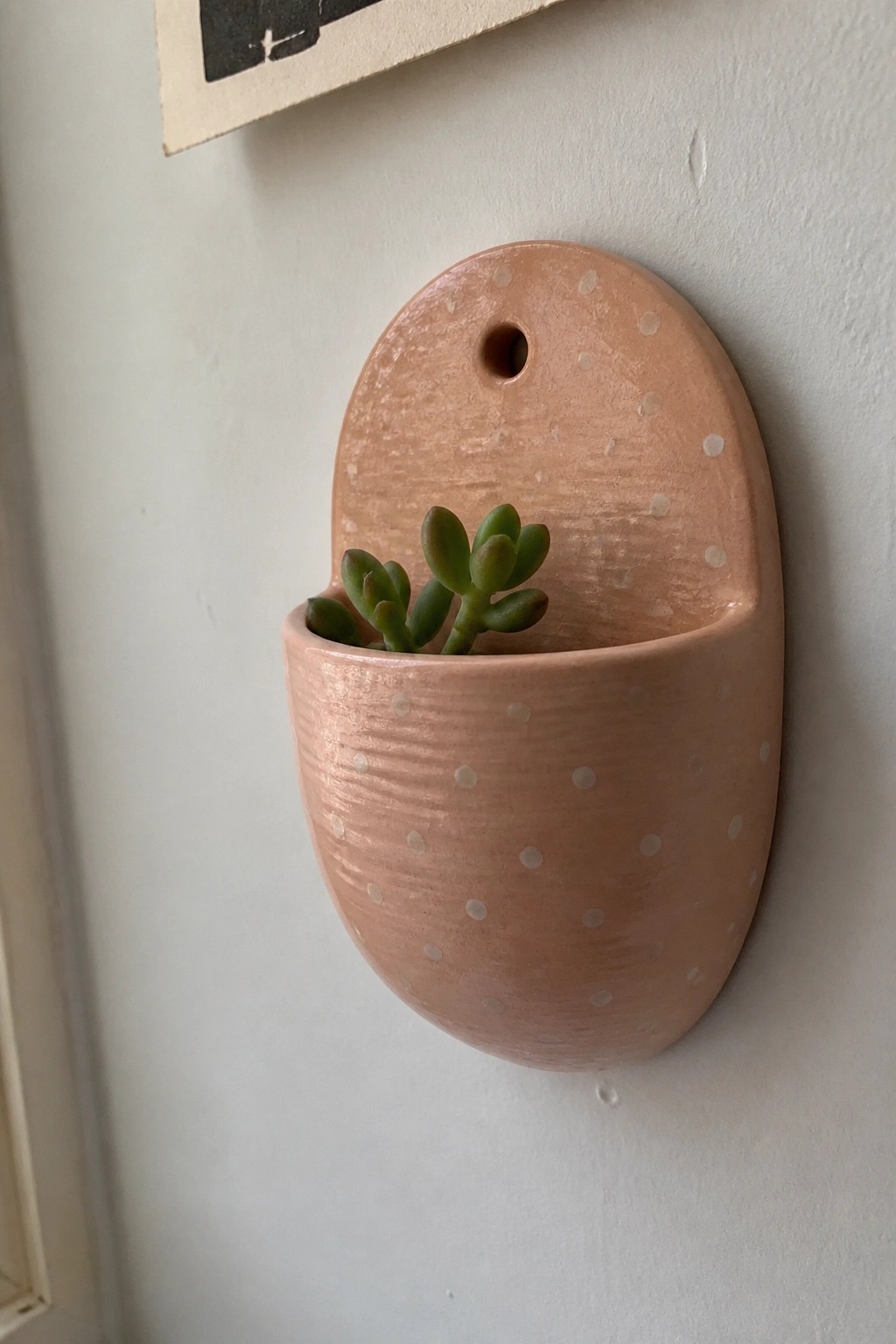
A wall-mounted ceramic planter with a rounded pocket shape gives a simple way to display small succulents or trailing plants. The flat upper section includes a hole for hanging, while the curved lower section holds soil and roots. A matte peach glaze with scattered white dots creates a soft pattern that stays visible from across the room. This fits the category of compact wall planters that combine function with surface decoration.
What makes this idea useful is the small scale, which lets you make several in one session and hang them in a cluster. You could rework the same form without the dots for a cleaner look or change the glaze color to match different rooms. In a kitchen or bathroom, the hanging design keeps surfaces clear while still showing off plants. The shape also adapts easily to a desktop version by adding a flat base instead of the hanging hole.
Wheel-Thrown Jar with Sculpted Sleeping Animal Lid

A wheel-thrown lidded jar works as a small storage piece when the lid carries a separate sculpted animal resting on top. The body keeps a straightforward cylindrical shape with visible throwing lines and a matte speckled glaze in off-white tones. The animal is modeled as a compact curled form with closed eyes and minimal color accents on the face before being attached to the lid. This combines a functional canister with a decorative element that stays within the playful forms category.
What makes this idea useful is the way the sculpted topper adds interest while the thrown base stays quick to repeat. You could swap the animal for other small figures or simplify it to a basic knob shape if you want less detail. The compact size fits well on a kitchen counter for tea or spices or on a desk for small supplies. The same lid treatment can be adapted to different jar heights or even used on a matching set of containers.
Wheel-Thrown Pitcher with Incised Waves

A wheel-thrown pitcher like this uses a rounded body and pulled handle to create a functional serving shape that still leaves room for surface decoration. The repeating wave lines are carved into the clay before glazing, then filled with a lighter slip or glaze to stand out against the speckled teal surface. Horizontal ridges on the neck add a second texture that contrasts with the smooth lower section. This approach keeps the piece in the kitchen item category while adding a playful element through the motif.
What makes this idea useful is how the wave carving can be repeated on smaller pieces like mugs or cups to build a coordinated set. The pitcher shape works for water, juice, or even as a flower holder on a table. You could change the wave depth or spacing to match different glaze colors or simplify the lines if carving takes too long. In a kitchen this kind of piece draws attention on open shelves because the pattern shows up clearly from a distance.
Frequently Asked Questions
What tools are essential for creating these playful wheel-thrown forms at home?
To get started with the ideas in the article, you will need a pottery wheel, basic clay such as stoneware or porcelain, a set of throwing tools including ribs, sponges, and wire cutters, along with water buckets and bats for your wheel. Beginners should also have access to a kiln for firing, though many community studios offer shared equipment. Start with smaller batches of clay to practice the forms before scaling up to more complex playful designs.
How can I adapt the 18 ideas if I am a complete beginner at wheel throwing?
Many of the creative forms can be simplified by focusing on basic cylinder and bowl shapes first, then adding playful elements like uneven rims or attached handles once you build control. Practice centering clay on the wheel for several sessions before attempting the full ideas. Consider taking a short workshop or watching tutorial videos on foundational techniques to build confidence without frustration.
What types of clay work best for these whimsical ceramic shapes and why?
Stoneware clay is often ideal because it is forgiving during throwing and holds playful distortions well without cracking. Porcelain offers a smoother finish for delicate forms but requires more skill to avoid collapse. Avoid air-dry clays since they do not suit wheel throwing and will not fire properly for functional or durable pieces. Test small samples of your chosen clay to see how it responds to the specific manipulations described in the article.
How do I prevent my playful forms from warping or collapsing during drying?
Allow pieces to dry slowly and evenly by covering them loosely with plastic for the first few days, then gradually exposing them to air. Support unusual shapes with foam or props to maintain their playful structure. Avoid direct sunlight or heat sources, and check regularly for even moisture loss. This careful process helps preserve the creative details from the wheel-thrown stage through to bisque firing.
What glazing techniques enhance the fun and colorful aspects of these pottery ideas?
Apply underglazes or slips before the bisque firing to add bold patterns and colors that highlight the playful forms. Layer multiple glazes for depth and experiment with drips or splashes that complement the organic shapes. Always test glaze combinations on sample tiles first, and ensure proper ventilation during application. This approach brings the whimsical elements to life after the forms are created on the wheel.

Pottery Path is my cozy corner of the internet where I share clay ideas, pottery inspiration, and simple projects you can recreate at home. I love exploring everything from air dry clay to handbuilt pottery to cute minis that brighten your day. My goal is to make clay crafting feel easy, fun, and welcoming for anyone who wants to try it.
You will find beginner friendly tutorials, creative pottery painting ideas, and lots of warm inspiration for slow and happy crafting. If you enjoy hands on creativity, this space will feel like home.