I’ve found that slab pottery is a good starting point for beginners since it doesn’t involve throwing on a wheel or anything too technical.
Simple forms like boxes or trays are what I usually reach for when I want to make something useful without overthinking the design.
I gathered these twenty ideas because they all rely on basic cuts and joins that anyone can manage with a bit of practice.
Most of them use everyday items around the house as molds which keeps things straightforward.
I hope you find one or two that fit what you’re looking for in your own workspace.
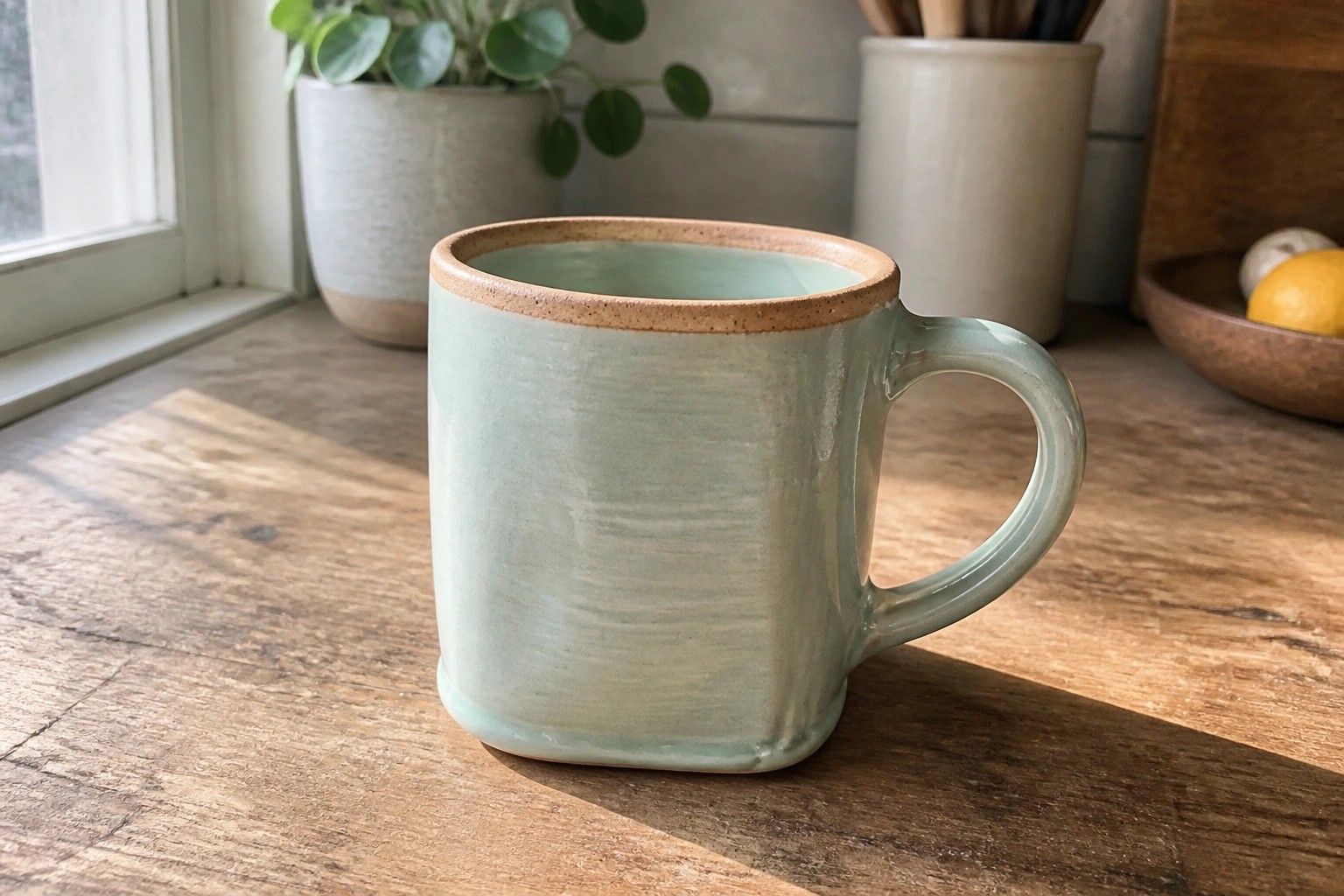
Square Slab Mug

A square mug formed from clay slabs creates a sturdy, modern drinking vessel that stands out from wheel-thrown rounds. The flat sides come from simple slab construction, while the soft green glaze and raw clay rim keep the surface understated. This shape works well as a kitchen item because the broad walls give a comfortable grip and the form is easy to repeat.
What makes this idea useful is that slab building removes the need for a wheel and lets you focus on clean edges and even joins. The same square base can be adapted into a small planter or a desk pencil holder by changing the height. A piece like this works especially well as a gift because the flat sides give you space to add a stamped name or simple line design without crowding the form.
Simple Yellow Slab Bowl
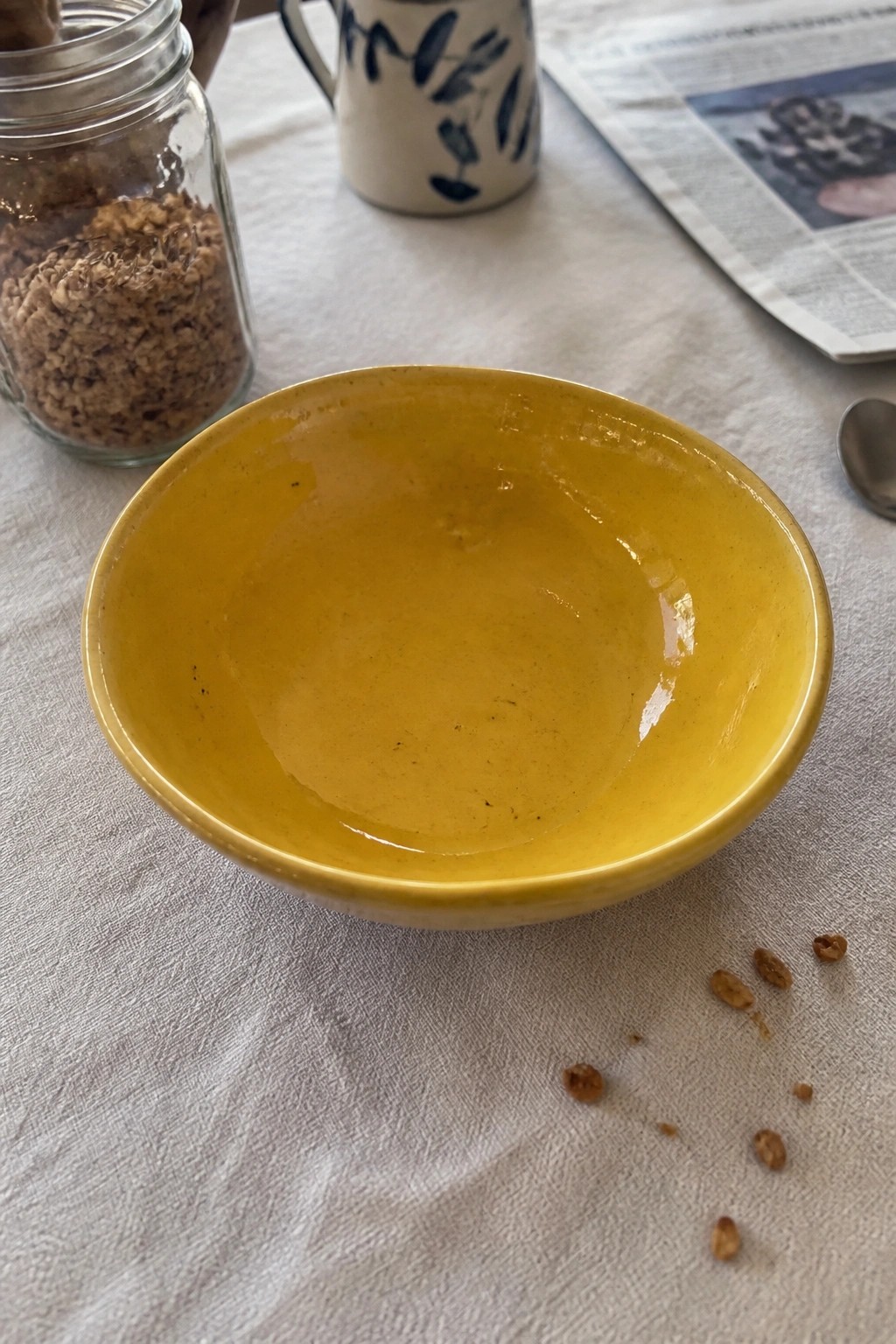
A basic round bowl formed from slabs and finished with a glossy yellow glaze makes a clean, functional piece for the table. The even shape and single bold color keep the design simple while still looking finished and intentional. This approach works well as a beginner project because it focuses on getting a smooth curve and even walls without extra decoration.
What makes this idea useful is how the same form can be made in different sizes for snacks, cereal, or side dishes. The bright glaze covers minor surface flaws and gives the bowl a fresh look that pairs easily with everyday dishes. You could swap the color for something neutral or add a simple rim texture if you want a quick variation on the same slab shape.
Scalloped Ring Dish with Concentric Dot Pattern
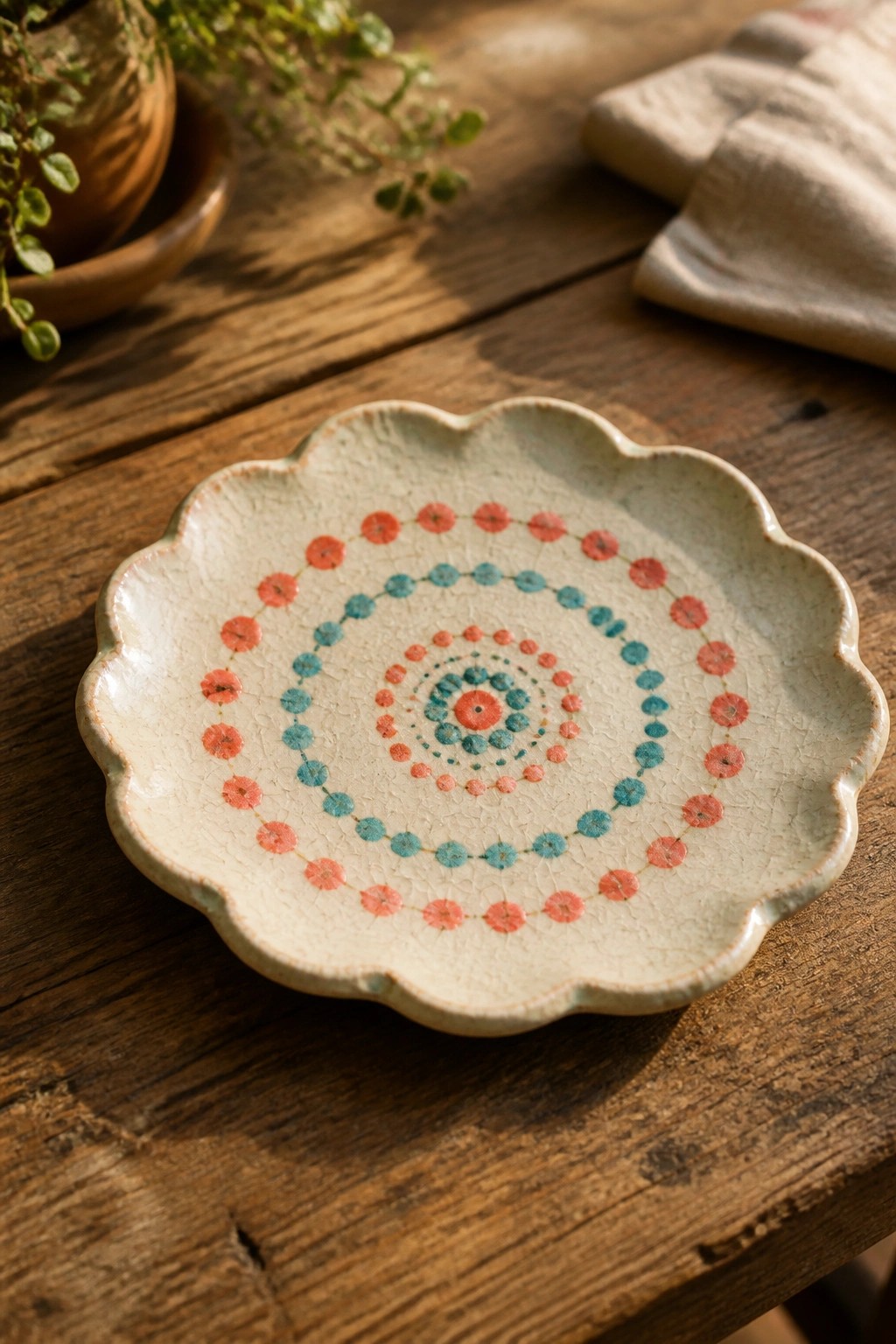
A small round dish formed from a slab and cut with a scalloped edge makes a practical ring dish or small catch-all. The surface carries a series of dotted circles in coral and teal that step outward from a single center dot, applied over a light crackle base. This keeps the construction simple while the painted rings supply the main visual detail.
What makes this idea useful is how the wavy rim adds shape without extra pieces or handles. The same dot pattern can be spaced differently or swapped for one color if you want quicker painting, and the compact size fits easily on a nightstand or bathroom counter. You could repeat the layout on a square slab for a desk tray or change the edge cut to straight for a more minimal version.
Square Slab Planter with Carved Leaves
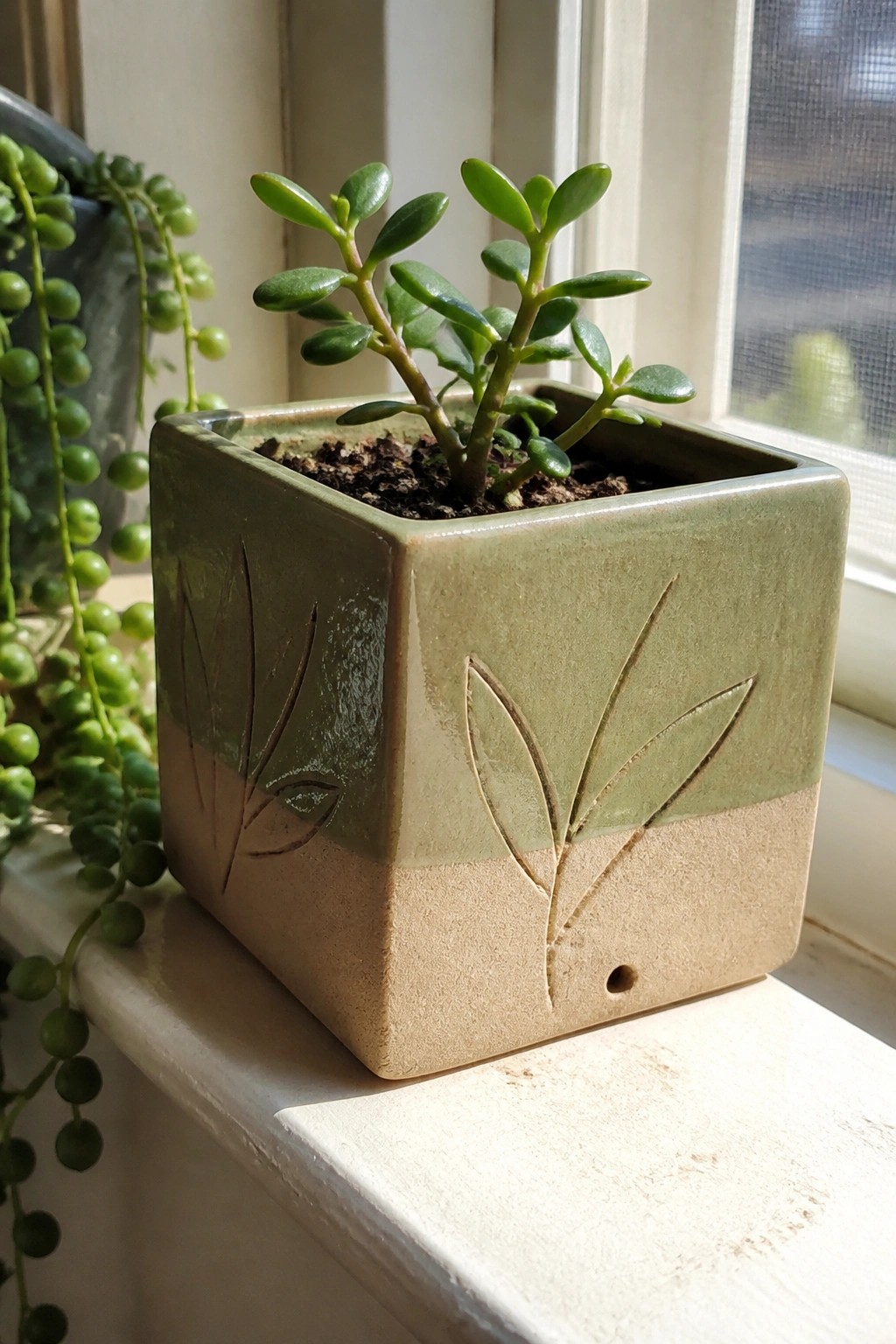
A square slab planter built from flat clay sheets joined at the corners gives beginners a straightforward way to create a stable plant container without a wheel. The design uses a split glaze that covers the upper half in green while leaving the lower half in a natural clay tone, and simple leaf shapes are carved directly into the sides before the final firing. A small drainage hole at the base keeps the form practical for succulents or small houseplants.
What makes this idea useful is how the square profile fits neatly on narrow windowsills or shelves without taking much space. You can repeat the same leaf carving on all four sides for a uniform look or vary the pattern on each face to use up leftover clay scraps. The same slab construction works for a matching tray or a taller version if you want to group several pieces together for a plant display.
Slab-Built Sitting Cat Figurine
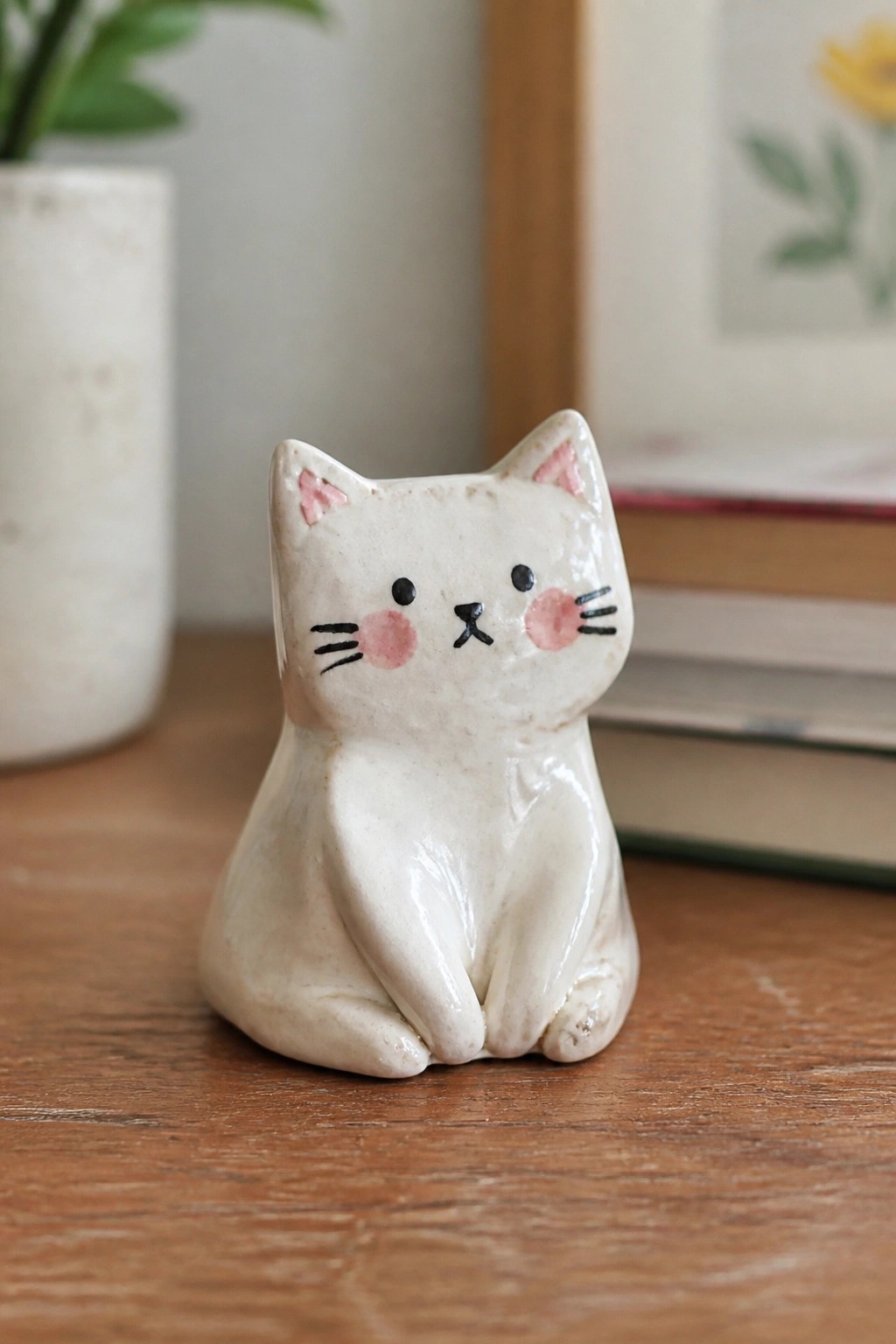
A small sitting cat figurine works as a beginner slab project by using basic rectangular and oval shapes for the body, legs, and head. Cut and join the slabs, then add triangular ears and a short tail before smoothing the seams. Once bisque fired, add the face with black lines for eyes, whiskers, and nose plus soft pink circles on the cheeks and ears to keep the design simple and readable.
The shape does a lot of the work here because the compact sitting pose stays stable without extra supports. This kind of piece fits on a desk, bookshelf, or windowsill and makes a quick gift that needs little clay. You could adapt the same slab method for a dog or rabbit by swapping ear shapes and adjusting the tail length. The painted face keeps production time low while still giving each one a distinct look.
Rectangular Slab Tray for Jewelry Storage

A flat rectangular tray rolled from a single slab of clay makes an effective catch-all for rings and other small jewelry pieces. Low built-up edges keep items contained while the unglazed rim with impressed texture gives the piece a finished border without extra steps. Using a soft blue glaze only on the interior creates contrast against the natural clay and keeps the focus on the items placed inside.
The shape does a lot of the work here because a basic rectangle cuts quickly from a slab and fits easily on a dresser or bedside table. You could adapt the same form by making a smaller version for just rings or adding a second tray in a different glaze color to group items by type. This kind of piece stands out on Pinterest when shown holding both jewelry and a tiny plant because it looks useful right away.
Oval Ceramic Spoon Rest

A small oval ceramic spoon rest makes a practical beginner project using a simple slab form. The shape includes a shallow central well to hold the bowl of a spoon and a flat rim that keeps the piece stable on a counter. A single painted flower on one side provides a focal point against the speckled surface without requiring complex decoration. This style of kitchen item stays functional while letting the handmade texture show through the glaze.
What makes this idea useful is how the oval shape fits neatly beside a stove or kettle without taking much space. You could adapt the same form into a soap dish by adjusting the depth slightly or turn it into a small tray for tea bags and sugar packets. The painted motif can be swapped for other simple designs like leaves or dots to match different kitchen colors. For gifts, this size works well because it requires minimal clay and can be made in batches.
Heart Shaped Ring Dish

A heart-shaped ring dish is a straightforward slab project that starts with a flat piece of clay cut into a heart and then gently formed into a shallow bowl. The pink glossy glaze on the interior creates contrast against the speckled clay rim and gives the dish a simple finished surface. This type of small tray fits the jewelry holder category and works for holding rings or other small items on a flat surface.
What makes this idea useful is how the heart outline can be resized or swapped for other basic shapes like ovals or rectangles with the same forming steps. The shallow depth keeps it stable and quick to dry, so it is easy to make several at once in different glaze colors. For a gift, something like this can be adapted by adding a small notch in the rim or leaving the exterior unglazed for a more matte look. In a bathroom or bedroom it provides a dedicated spot for rings without taking up much space.
Polka Dot Tea Light Tray

A slab-rolled oval tray with three shallow wells holds standard tea lights in a straight row. The base stays light and neutral so the scattered dots in soft orange, blue, green, and yellow stand out as the main surface detail. This approach keeps the project to basic slab construction plus simple painting after the first firing.
What makes this idea useful is how the same oval slab can stretch longer or shorter depending on how many candles you want. The dot pattern works with any color mix and transfers easily to stamps or underglaze pencils if you prefer not to paint freehand. A piece like this sits well on a mantel or side table for low lighting and could shift into a small trinket tray by leaving out the wells.
Starburst Hanging Plaque
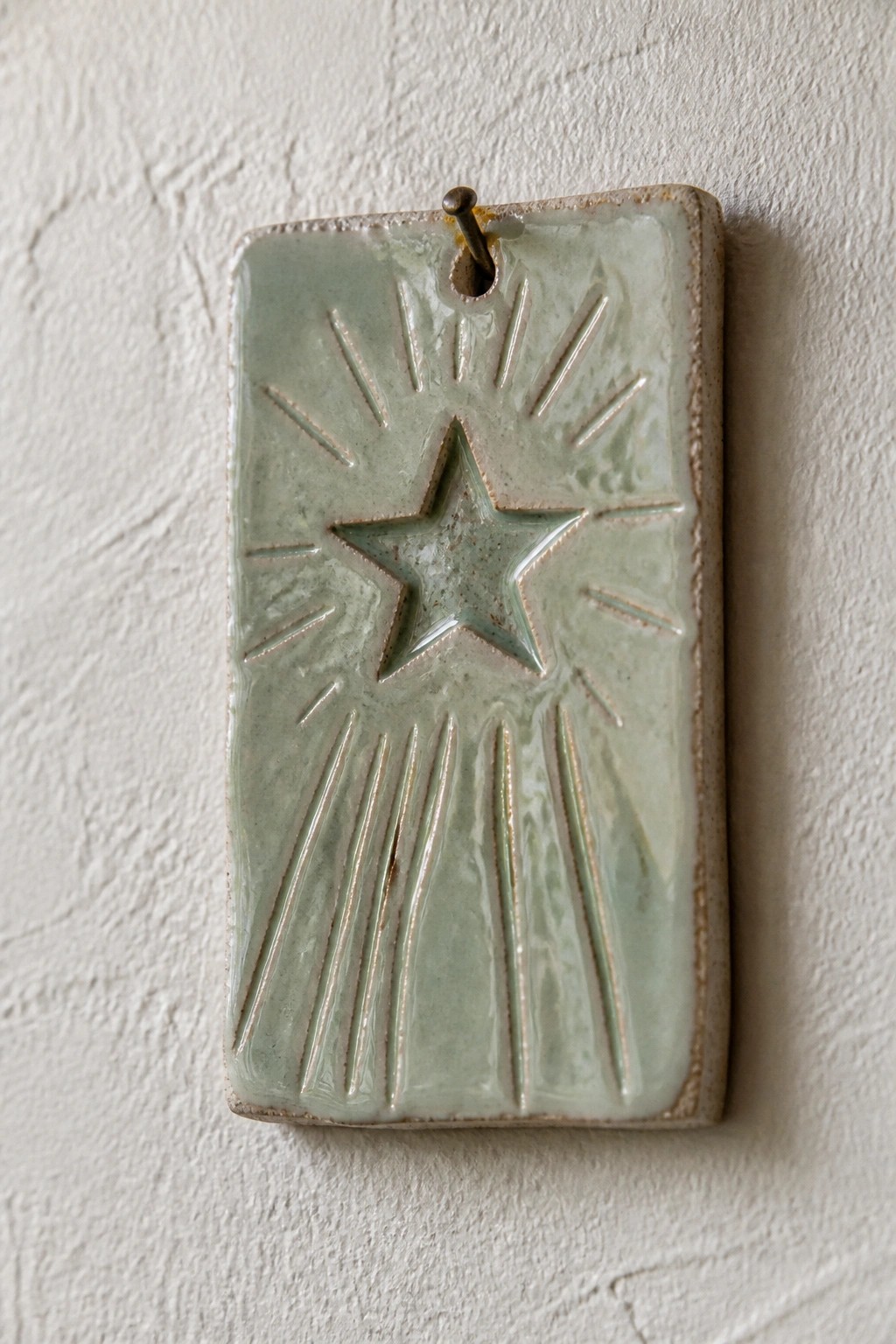
A flat rectangular slab serves as the base for this hanging plaque, with a raised star centered and lines pressed outward in a radiating pattern to create a simple starburst design. The light green glaze settles into the impressed lines, making the star and rays stand out against the smoother background areas. This turns basic slab work into a straightforward wall decor piece that needs only a small hole at the top for hanging.
What makes this idea useful is how the same slab shape and impressed detail can be repeated with different center motifs like circles, leaves, or abstract lines. The compact size keeps drying and firing times short, and the finished piece fits easily on a wall, shelf, or even as part of a grouping. You could scale it down for ornaments or make several in matching glazes to create a quick set for gifts.
Slab-Built Sponge Holder with Raised Bar

A slab sponge holder makes a practical kitchen item. It uses a flat tray base with a raised rectangular bar across the middle that has a long slot cut through it. The sponge rests on the bar so water drains into the tray instead of pooling underneath. A matte green glaze keeps the surface simple and easy to clean.
What makes this idea useful is the way the raised bar solves the common problem of a soggy sponge. You can change the tray size to match your sink ledge or shorten the bar to hold a smaller sponge. The same cut-and-lift method works for a soap dish by making the slot wider and the tray narrower. The clean drainage detail photographs well for sharing without needing extra decoration.
Rectangular Slab Toothbrush Holder with Dripped Glaze

A simple rectangular box formed from slabs makes an effective bathroom toothbrush holder when three holes are cut into the top surface. The design pairs a blue glaze on the upper section with an unglazed speckled base so the glaze naturally runs downward during firing. This approach keeps the form compact enough to sit on a narrow ledge while still holding multiple brushes upright.
What makes this idea useful is how the flat slab sides let you build the shape quickly without a wheel. You could change the hole layout to hold makeup brushes or small paintbrushes instead, or shorten the height to create a soap dish tray. The two-tone glaze treatment works on any plain box form and helps the piece read as intentional rather than plain. In a small bathroom this size fits neatly without taking up counter space.
Flower Shaped Ring Dish

A small slab-built ring dish cut into overlapping petals creates a shallow bowl form that holds jewelry or small items. The center is impressed with a simple stamp to add a raised radiating pattern before glazing. A single soft purple glaze covers the entire piece and pools slightly in the stamped areas to emphasize the texture.
What makes this idea useful is how the petal outline can be cut from any basic circle template without extra tools. The same shape works as a small soap dish or a holder for keys by the door. Swap the center stamp for a different motif or add a second glaze color along the rim to change the look quickly for gifts or matching sets.
Square Slab Coasters with Color Blocks
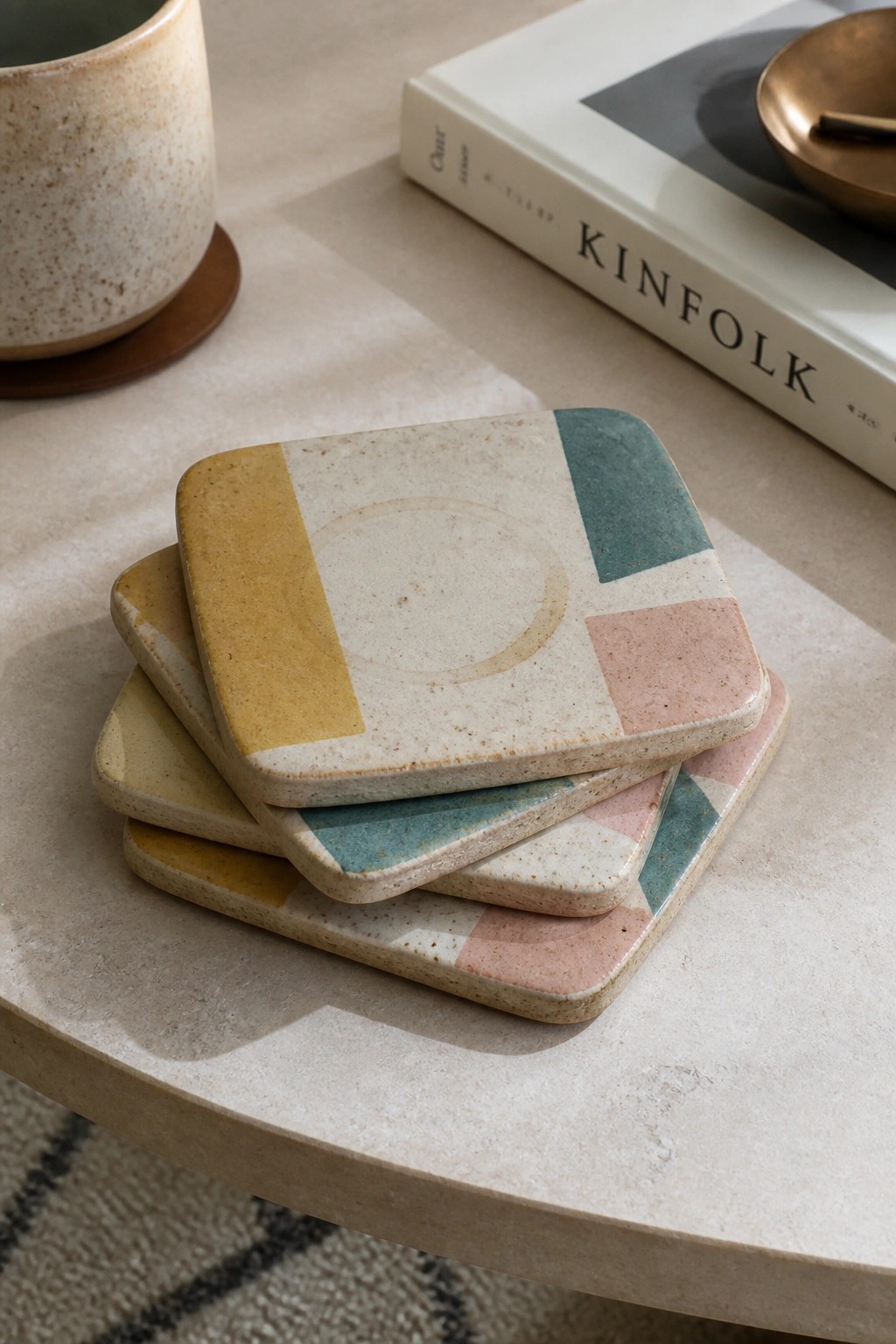
Square ceramic coasters made from flat clay slabs work well because the simple cut shape keeps the focus on surface decoration rather than forming. Colored glaze sections in yellow, teal, pink, and neutral tones are applied in geometric divisions across each piece, with a faint circle added on the top surface for extra detail. The flat form and repeated pattern let the coasters stack neatly while still showing off the handmade slab construction.
What makes this idea useful is how quickly a full set can be produced once the slab is rolled out and cut. The same block layout can be changed by swapping colors or swapping the circle for straight lines to fit different rooms. These pieces suit coffee tables, desks, or kitchen counters where you need something small that still looks intentional. You could reuse the exact slab method to make matching trivets or shallow trays without adding much extra work.
Square Slab Soap Dish with Drainage Slots

A square soap dish built from slabs makes a practical bathroom item because the low sides hold the bar in place while the three cut slots let water drain through to the sink. The soft green glaze covers the surface evenly and gives the piece a simple finished look without any added patterns or texture. This project uses basic slab rolling and template cutting to create a functional holder that sits flat on any countertop.
What makes this idea useful is how quickly the same square shape can be adjusted for different soap sizes or turned into a small tray for rings. You could change the glaze to match your tiles or skip the slots and add a shallow rim if you want a version for jewelry instead. The drainage detail keeps the soap from sitting in water, which makes the dish more usable than a plain plate. For a first slab project this form delivers something you can actually put to work right away.
Two Tone Bud Vase

A small slab-built bud vase uses a rounded base that narrows into a short neck to hold a single stem. The lower half stays in the natural terracotta clay while the upper half receives a light speckled glaze, creating a clean color block without extra carving or painting. This approach keeps the form simple yet gives the piece enough visual interest to stand on its own as a holder or small vase.
What makes this idea useful is how the compact size works on a narrow shelf or windowsill where larger pots would not fit. You can change the proportions by rolling the slab thinner for a taller neck or by adding a flat slab base to turn the same shape into a tiny planter. The two-tone finish requires no tools beyond basic glazing, so it adapts easily if you want to try different clay bodies on the bottom section instead. A piece like this also photographs cleanly for project boards because the contrast reads well even at small sizes.
Organic Salt Cellar From a Simple Slab
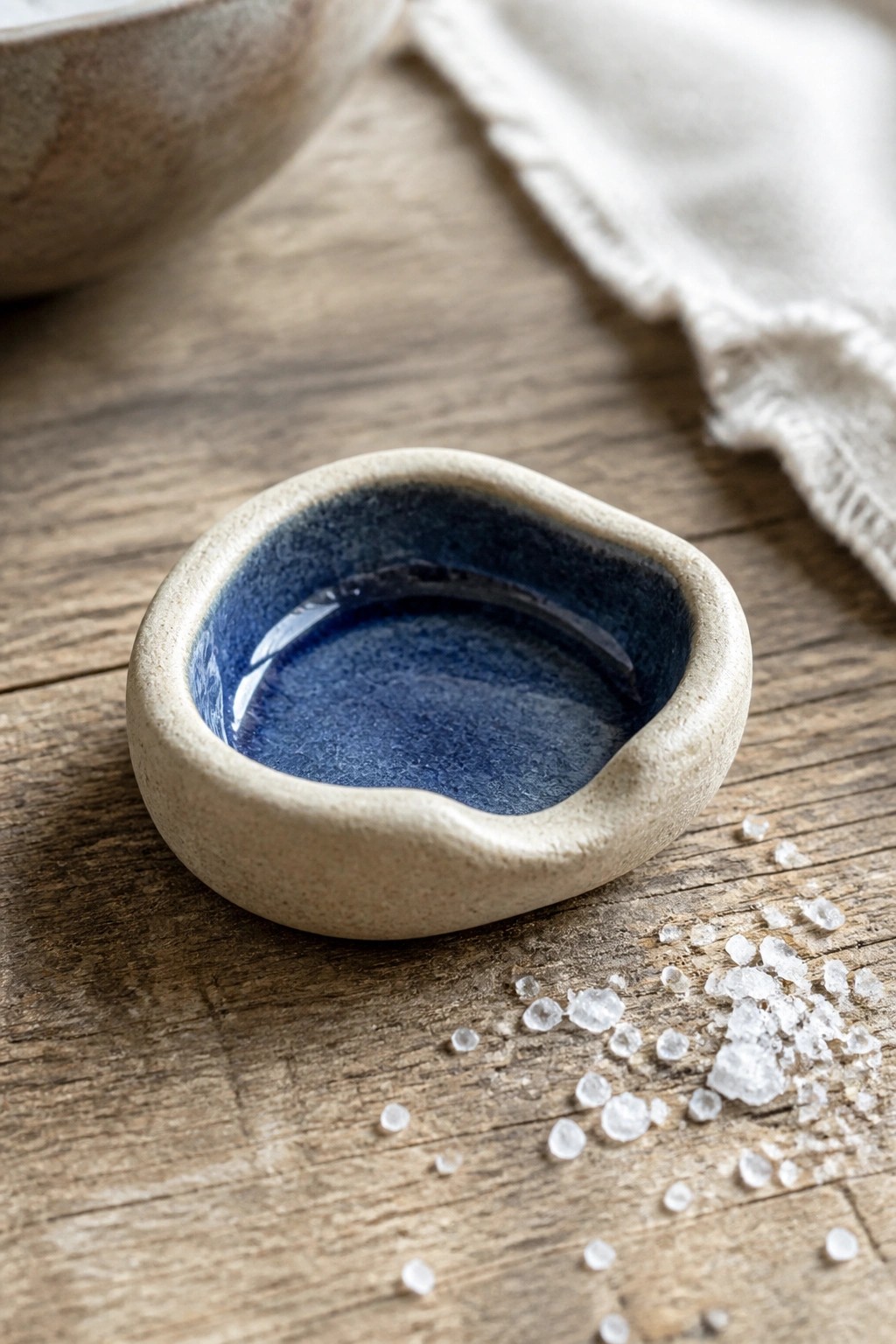
A small handbuilt dish with a soft wavy rim works well as a salt cellar or pinch bowl for kitchen use. The shape starts with a basic slab that gets pinched and curved into an irregular shallow form. The matte exterior keeps the focus on the deep blue glossy interior, which makes the small space inside feel more defined without adding extra details.
What makes this idea useful is how easily it fits on a countertop or beside the stove for everyday salt or spice storage. You can adapt the same slab approach by changing the rim shape, scaling it up slightly for a butter dish, or glazing the outside to match the inside for a more uniform look. The compact size also makes it a quick project that still gives you practice with basic forming and glazing before moving on to larger pieces.
Yarn Bowl with Notch for Yarn Feeding
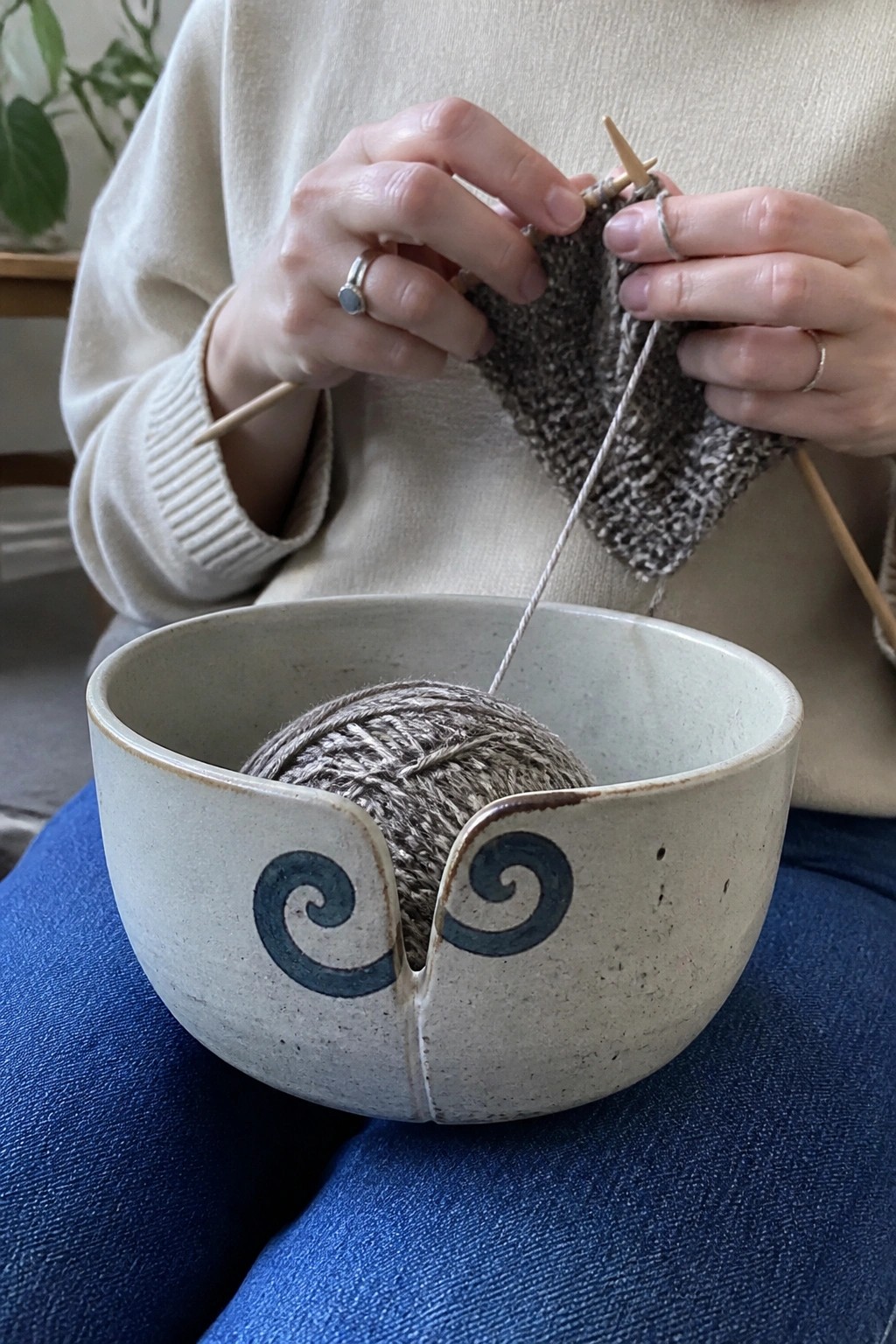
A yarn bowl holds a ball of yarn in place during knitting or crocheting so the strand stays untangled. The rim features a single notch that guides the yarn outward while the bowl rests on a lap or surface. Two blue spiral shapes painted around the notch give the piece a clear focal point without covering the whole surface. The rounded form and simple cutout turn an ordinary bowl into a dedicated craft tool.
What makes this idea useful is how the notch solves a common problem for knitters without requiring complex construction. You can adapt the same shape for different yarn weights by changing the notch width or bowl depth. The painted spirals can be swapped for lines, dots, or left plain depending on the maker’s style. In a craft room or as a gift for fiber artists, this type of bowl stands out because it is both functional and easy to produce from a basic form.
Grooved Ceramic Knife Rest

A small rectangular slab can be shaped into a knife rest by pressing a long oval groove along the top surface. The brown speckled glaze brings out the clay texture while keeping the groove smooth for the knife blade to rest in. This kitchen piece works well next to a butter dish and keeps the knife from touching the table.
What makes this idea useful is how simple it is to adjust the groove width or length to fit different knives. You can make a set of four using the same slab template or change the glaze to a matte finish for a different look. The small size also means it takes little clay and kiln space, so it is easy to batch out as gifts or add to a larger tableware set.
Moon-Shaped Hanging Planter

A crescent moon planter made from a rolled slab gives you a curved form that holds soil while staying light enough to hang from cords. The surface uses a turquoise and white glaze with scattered teardrop shapes in yellow, pink, blue, and gray to create contrast without extra texture or carving. This approach keeps the project in the simple slab category since the shape comes from cutting and joining flat pieces rather than building up coils or throwing.
What makes this idea useful is that the open curve lets vines trail naturally over the edge, so it works on a railing, porch hook, or window frame. You could swap the teardrop motif for dots or stripes to match different plant types or room colors, and the same slab method scales down easily for a smaller version that holds a single succulent. For a gift, something like this stands out because the hanging style and bold color blocks photograph well for sharing.
Frequently Asked Questions
What kind of clay works best for beginners starting with slab pottery projects? Stoneware or earthenware clay that is labeled as beginner-friendly and has good plasticity is ideal. These types hold their shape well when rolled into slabs but remain forgiving if you need to make adjustments. Start with a low-fire clay if you plan to use a community kiln, as it requires less heat and reduces the chance of warping during firing.
How do I keep my slabs from cracking while I shape them around simple forms? Work on a slightly damp surface and cover your clay with plastic between steps to maintain even moisture. Score and slip the edges before joining pieces, then gently compress the seams with your fingers or a rib tool. Avoid forcing the clay into tight curves too quickly, and let each stage dry slowly under loose plastic wrap.
What simple tools do I need beyond a rolling pin and basic forms? A basic set includes a wire cutter for slicing clay, a scoring tool or fork for joining edges, a sponge for smoothing, and a ruler for measuring even slabs. Keep a bucket of water nearby for cleaning tools and a few pieces of thin cardboard or foam for supporting curved forms while they dry.
How long should I let my finished slab pieces dry before firing them? Allow pieces to dry slowly for at least one to two weeks in a draft-free area until they reach a leather-hard stage, then another week or more until they are fully bone dry. Test dryness by touching the clay to your cheek; it should feel room temperature rather than cool. Rushing this step often leads to cracks in the kiln.
Can these simple slab forms be made functional for holding food or liquids? Yes, but choose food-safe clay and glazes, and ensure the piece is fired to the clay’s recommended temperature. Make the walls thick enough for strength, avoid sharp inside corners that trap moisture, and test your finished item by filling it with water overnight to check for leaks before regular use.

Pottery Path is my cozy corner of the internet where I share clay ideas, pottery inspiration, and simple projects you can recreate at home. I love exploring everything from air dry clay to handbuilt pottery to cute minis that brighten your day. My goal is to make clay crafting feel easy, fun, and welcoming for anyone who wants to try it.
You will find beginner friendly tutorials, creative pottery painting ideas, and lots of warm inspiration for slow and happy crafting. If you enjoy hands on creativity, this space will feel like home.