
I’ve been experimenting with handbuilt vases for a while now and I like how asymmetrical shapes turn out.
They feel less forced than the symmetrical ones I used to make.
Here are twenty ideas that center on those organic forms.
I tried to keep the instructions simple so anyone can follow along.
Most of them don’t require special tools beyond what you probably already own.
Organic Asymmetrical Vase with Folded Rim
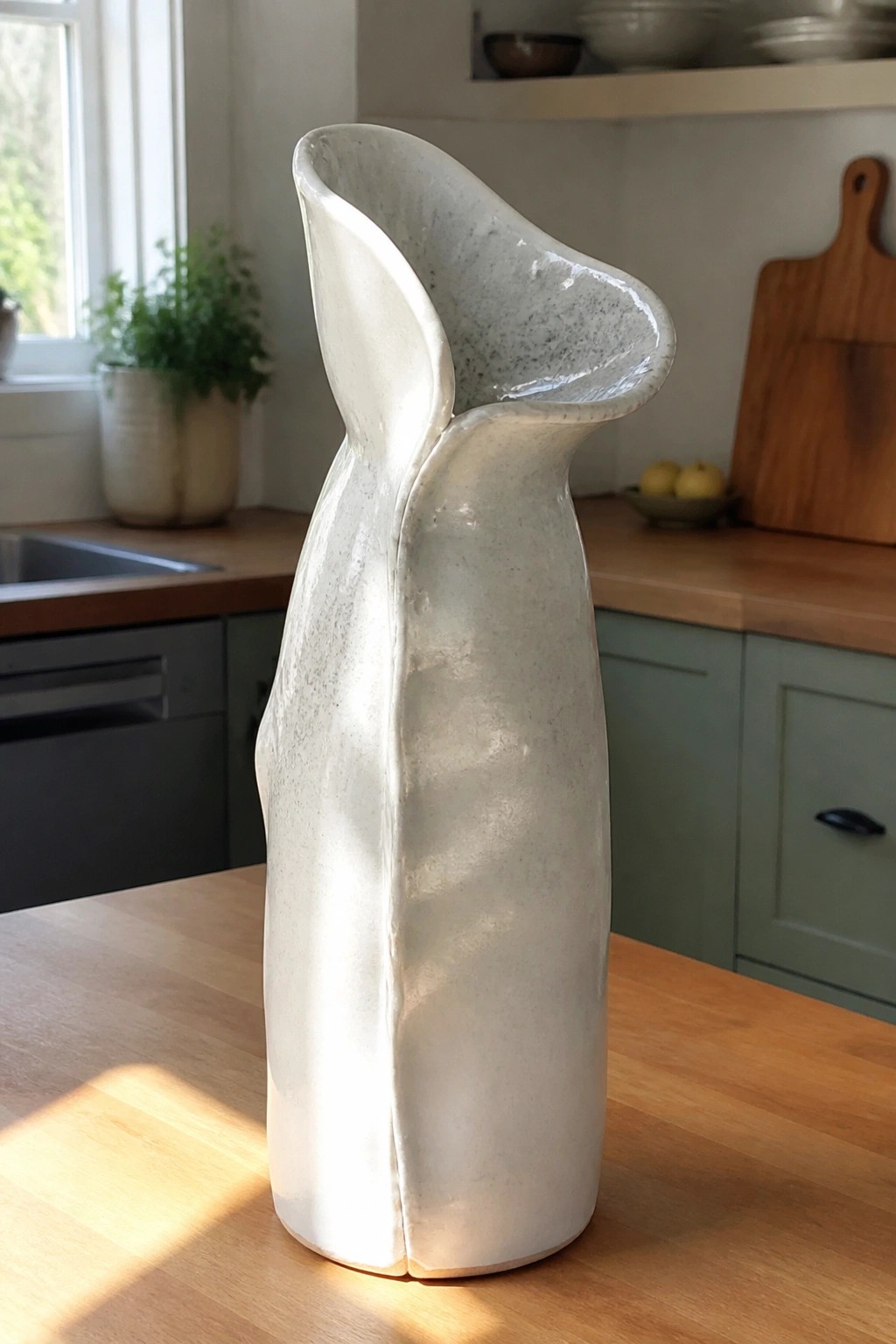
A tall handbuilt vase formed from a single slab or coil build gives this piece its organic asymmetrical profile. The top section is pinched and folded inward on one side to create an irregular, sculptural opening that breaks the usual cylinder shape. A light speckled white glaze keeps the surface simple while letting the form and subtle texture stand out.
What makes this idea useful is how the folded rim turns a basic tall shape into something more interesting without extra decoration. The height works well for displaying a few long stems or branches on a kitchen island or side table. You could adapt the same idea by changing the angle of the fold or shortening the overall height to make a smaller version for a desk or shelf. The clean glaze also leaves room to test different clay bodies if you want more color variation in the speckles.
Asymmetrical Handbuilt Vase with Two-Tone Glaze Finish

A handbuilt vase with a rounded, uneven body uses a simple two-tone approach where the lower section remains in its natural matte clay color and the upper part gets a green glaze that pools and drips slightly along one side. The narrow neck and wider base keep the form stable while allowing the irregular shape to stand out on its own. This style fits the organic asymmetrical vase category because the silhouette comes from the clay’s natural movement rather than measured symmetry or added surface details.
The shape does a lot of the work here by letting the curve of the form create interest without extra carving or texture tools. Try scaling the same two-tone idea down for a set of smaller bud vases or widen the base slightly if you want to hold a few more stems on a side table. A piece like this works especially well as a quick weekend project since it needs only basic pinching and one glaze application to look finished.
Organic Hanging Wall Vase with Rope Suspension
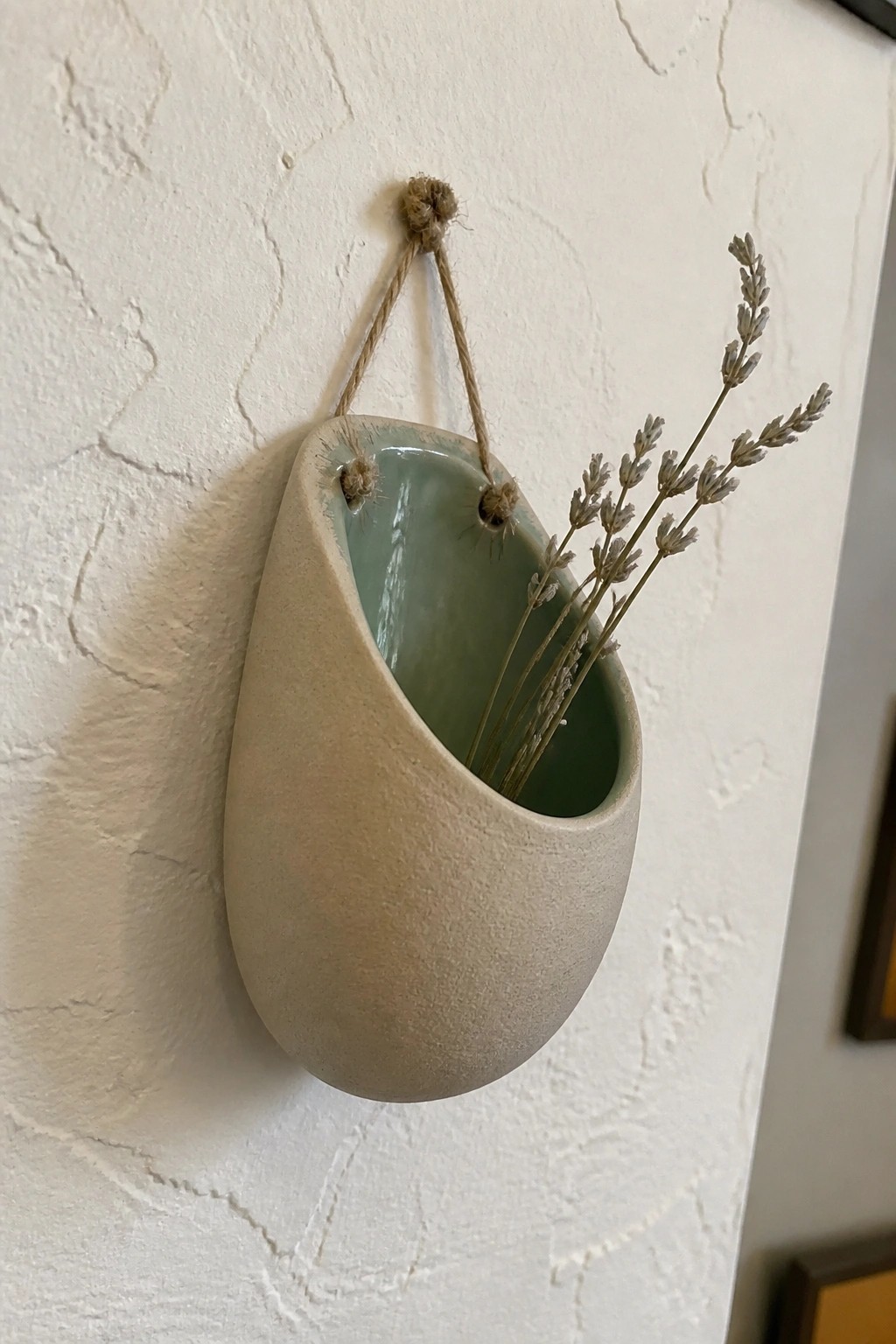
A handbuilt wall vase in an asymmetrical teardrop shape gives you a vertical display option that sits flat against the surface. Two small holes near the top rim allow cord or twine to thread through for hanging, while the wide lower section holds stems upright. The outside stays matte and unglazed to show the clay texture, and the inside gets a simple glossy wash that makes the cavity read as a container rather than a solid form. This approach keeps the focus on the silhouette and lets the piece function as a pocket vase without extra brackets or stands.
What makes this idea useful is how the hanging format works in tight spaces where a table vase would crowd the surface. You can adapt the same shape by widening the base slightly for bigger bunches or shortening the overall height to fit above a switch plate. The cord suspension lets you change the angle or height in seconds, and the same hole placement works if you want to turn the idea into a narrow planter for air plants. This kind of piece stands out on Pinterest because the profile reads clearly even in a thumbnail.
Asymmetrical Double-Neck Vase with Horizontal Texture

A handbuilt ceramic vase formed by joining two bulbous sections creates an organic asymmetrical shape with one tall neck and one shorter neck rising from the same base. The surface shows clear horizontal ridges from the building process and carries a muted gray glaze that breaks slightly over the texture to highlight the form. This approach fits the category of a decorative vase where the silhouette itself becomes the main feature rather than added surface decoration.
The shape does a lot of the work here because the uneven necks give the piece visual interest without needing extra carving or colorwork. It works especially well as a single stem holder on a low shelf or sideboard where the profile can be seen from multiple angles. The same joined form could be simplified by making both necks closer in height or expanded by adding a third smaller neck on the opposite side. For Pinterest, the clear silhouette against a plain background makes it easy to photograph and saves well as a reference for other handbuilt projects.
Asymmetrical Bulb Vase with Offset Spout
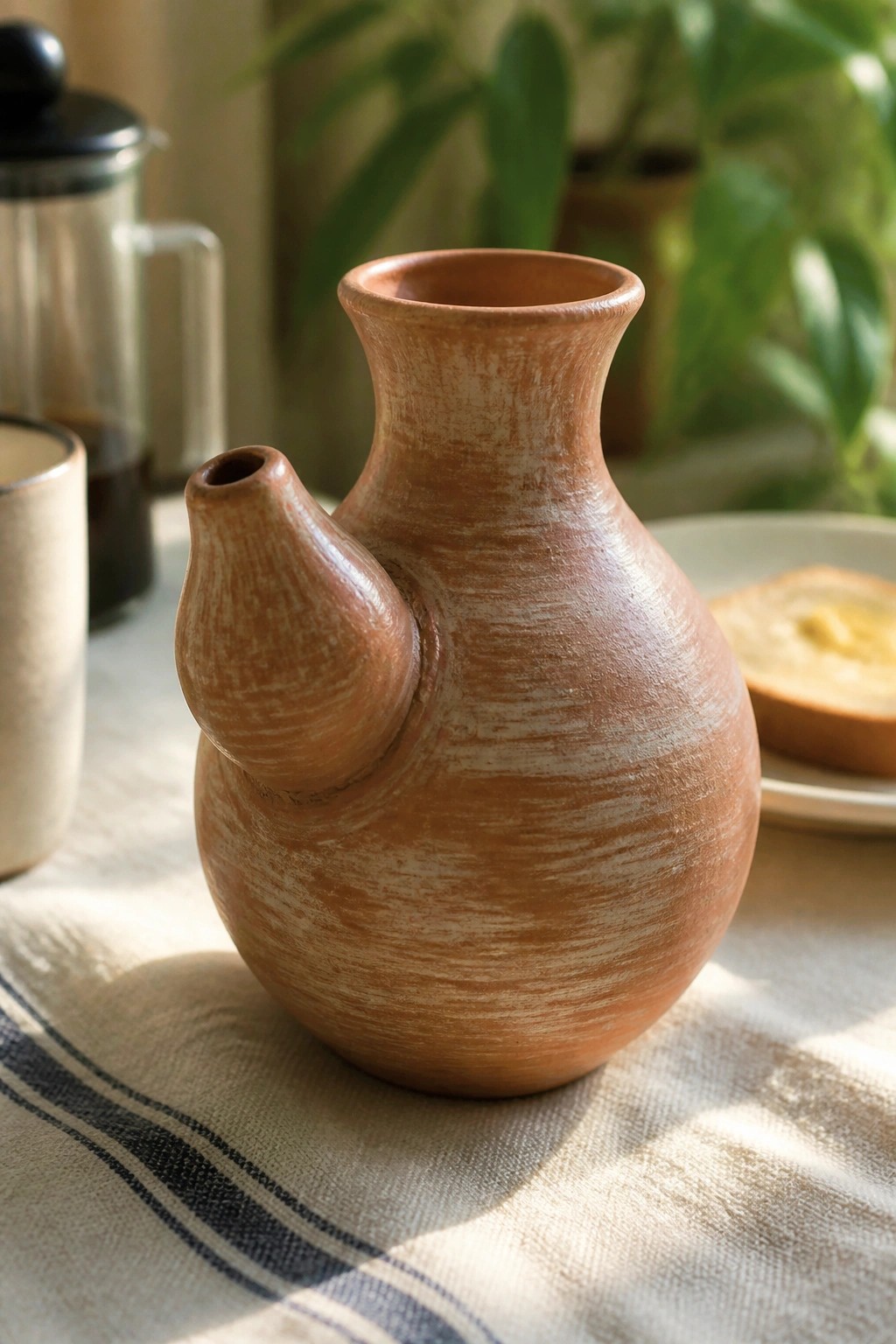
A handbuilt clay vase with a low, rounded body and a small side spout creates asymmetry through form rather than added surface details. The main volume stays full and centered while the spout shifts the balance to one side, and the short flared neck keeps the top open and functional. This shape fits the organic asymmetrical vase category because the silhouette itself supplies the movement.
The shape does a lot of the work here since the asymmetry is built into the profile, making it easy to adapt by changing the spout angle or lowering the body further. You could scale it down for a desk piece or widen the neck to hold thicker stems. In a kitchen setting, this kind of vessel works well for a single branch or a few flowers without competing with other table items.
Vase with Organic Asymmetry and Side Cutout

A handbuilt ceramic vase takes an elongated, curving silhouette and adds a large teardrop-shaped opening through one side. The exterior uses a dark surface scored with vertical lines that hold a lighter brown tone, while the interior and rim stay smooth and glossy in warm amber. This combination keeps the form simple yet makes the negative space a central part of the design.
The shape does a lot of the work here because the cutout lets light move through the piece and changes how it sits against a wall or shelf. You can adapt the idea by making the opening smaller for a more traditional flower vase or by carrying the vertical scoring across a taller, narrower body. In a living room this works well as a standalone accent, and the same approach scales easily to a smaller desktop version or a wider planter base.
Pebble-Shaped Bud Vases with Asymmetrical Curves

These handbuilt vases use compact, rounded forms that lean and flatten slightly on one side to create an organic pebble shape. Each piece has a narrow opening at the top and a surface left with visible texture from the clay body. The glazes stay in muted earth tones, with some areas left matte and others finished glossy to catch light differently across the set.
What makes this idea useful is the small scale that lets you group several together for a table display without taking up much space. You could adapt the same shape by stretching the form taller or squatter depending on the stems you want to use. The rounded profile also works well as a starting point for larger versions or for testing different clay colors in a single firing.
Asymmetrical Vase with Flowing Blue Green Glaze

A handbuilt vase with a rounded asymmetrical body gives an organic shape that still feels balanced enough for everyday use. The form narrows toward the base and opens with a slightly uneven rim, while the surface carries vertical streaks of blue and green glaze that shift in tone across the curves. This approach keeps the focus on simple silhouette and glaze movement rather than added decoration.
What makes this idea useful is how the glaze pattern follows the shape without needing extra carving or texture. The vase works well on a shelf or table where the color can catch natural light. You could build a similar piece from slabs, shorten the height for a wider planter version, or swap the glaze colors to match a different room.
Asymmetrical Vase with Raised Leaf Relief
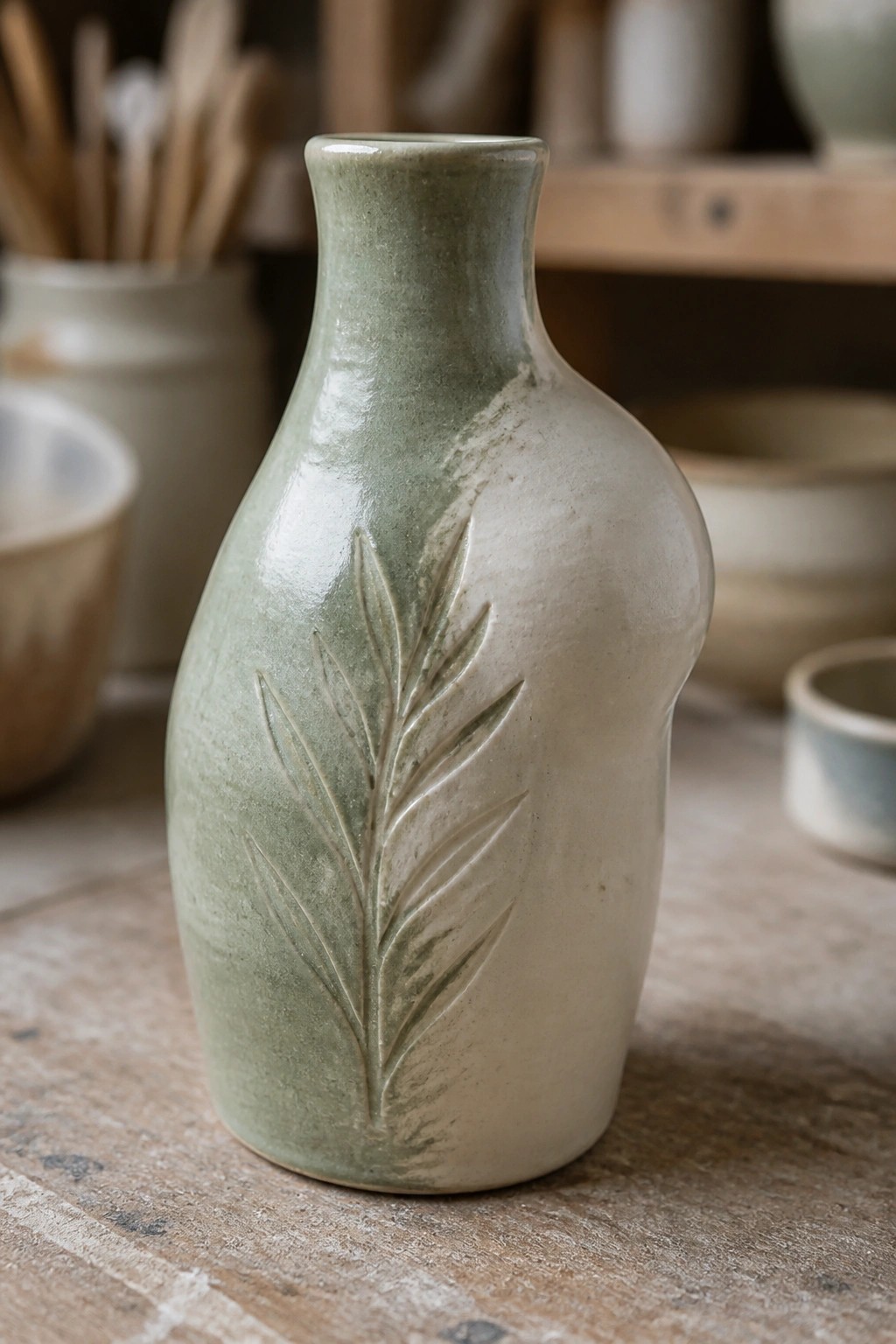
A handbuilt ceramic vase with an uneven, pinched body gives the form an organic, slightly lopsided profile that narrows at the neck and bulges toward one side. The design features a raised leaf or branch motif carved into the surface, paired with a green glaze that fades into a matte cream tone on the lower half to emphasize the texture and sculpted lines. This approach fits the category of a decorative vase that relies on shape and simple surface detail rather than symmetry or complex patterning.
What makes this idea useful is the way the carved leaf provides focal interest while keeping the overall surface clean. The asymmetrical shape works especially well as a single accent on a shelf or mantel where its profile can be seen from the side. You could adapt the same pinched form and leaf motif to a wider planter or shorten the neck for a small bud vase. For a gift, the carved detail makes the piece feel considered without requiring extra glazing steps.
Ribbed Vase with Scalloped Asymmetrical Rim

This handbuilt ceramic vase uses a tapered body that flares outward into a wide, uneven opening. The rim is shaped with repeating scallops that create an organic edge, while horizontal ridges run down the sides to add surface texture. A white glaze with rust-orange wash settles into the grooves and highlights the form without covering it completely. The project belongs in the vase category and works as a standalone decor piece or a holder for a few stems.
What makes this idea useful is the way the scalloped rim gives the piece its main focal point without extra carving or attachments. The shape fits well on a low shelf or side table where the flare can be viewed from multiple angles. You could adapt the same ribbing and rim treatment to a shorter cylinder for a desk holder or stretch it taller for a floor vase. The simple two-tone finish also makes it straightforward to recreate in different clay bodies while keeping the same visual balance.
Asymmetrical Flattened Vase with Horizontal Ridges

A handbuilt ceramic vase works well here because the flattened oval body creates an organic asymmetrical shape that still feels balanced. The form tapers up into a small irregular neck, and the horizontal ridges across the surface add subtle texture without overpowering the simple silhouette. A matte neutral glaze keeps the focus on the shape rather than on color or pattern. This approach fits the handbuilt vase category where the profile itself becomes the main design element.
The shape does a lot of the work here by allowing the vase to sit low and stable on a counter or shelf while still holding a few stems upright. You can adapt the same idea by changing the width of the body or spacing the ridges farther apart to suit different glaze colors or clay bodies. In a kitchen or bathroom setting this kind of piece serves as quiet decor that does not compete with other objects. For Pinterest it stands out because the asymmetry reads as intentional rather than perfectly round or symmetrical.
Spiraled Asymmetrical Vase

A handbuilt ceramic vase with a pronounced spiral twist forms an organic asymmetrical shape that tapers to a narrow opening. The raised ridges create strong linear texture while the form leans slightly to one side for added movement. A speckled matte glaze in warm beige and brown tones settles into the grooves and highlights the surface variation. This approach works as a simple vase for dried stems or single flowers.
The shape does a lot of the work here because the twist gives the piece presence without needing extra decoration. It fits well on a bedside table or low shelf where a taller symmetrical vase would feel too formal. You could adapt the same idea by tightening the spiral for a more compact version or widening the base for better stability with fresh flowers. For Pinterest this kind of form stands out in flat lays because the ridges catch light and create clear shadows.
Asymmetrical Handbuilt Vase with Bold Interior Glaze

A handbuilt vase shaped with soft folds and an undulating rim gives the form an organic, slightly flattened profile that still holds water or stems. The exterior keeps a matte neutral surface while the interior carries a deep teal glaze that emphasizes the interior curves and depth. This combination lets the irregular silhouette carry the design instead of added texture or patterns.
The shape does a lot of the work here because the pinched walls create natural variation without extra tools or stamps. You could adapt the same pinching method to make a wider version for branches or a shorter one for a desk planter. The strong interior color also works well if you want to keep the outside simple and let the glaze do the visual lifting when the piece sits near a window.
Asymmetrical Colander Vase with Mixed Cutouts

A handbuilt ceramic vessel modeled after a berry bowl creates an open structure for arranging branches and stems. The rounded form incorporates a combination of vertical slots and circular holes that let foliage settle at natural angles without additional supports. A speckled matte glaze in warm beige with brown flecks emphasizes the uneven walls and slightly pulled rim. This vase idea sits in the organic asymmetrical category by letting the cutouts and hand-shaped edges define the silhouette rather than relying on symmetry.
What makes this idea useful is how the openings double as both drainage features and visual texture when the piece is used for flowers. The compact size works on a kitchen counter or windowsill and can be adapted by varying the hole shapes to hold thicker stems or dried materials. For a gift, something like this could be simplified to a smaller version with fewer cutouts or reworked as a shallow tray for candles. The speckled surface treatment also translates easily to other neutral glazes if you want to match existing tableware.
Pinched Asymmetrical Vase with Flowing Contours

A handbuilt ceramic vase shaped through pinching creates an organic asymmetrical form with soft curves and recessed areas along the body. The narrow neck rises from a wider base that tapers irregularly, producing a silhouette that shifts depending on the viewing angle. A muted green glaze with subtle variations in tone covers the surface and emphasizes the handmade texture without adding extra decoration.
What makes this idea useful is how the pinched contours let you build visual interest using only basic handbuilding steps on a simple cylinder. You can adapt the same approach by pushing the walls inward at different heights while the clay stays soft, then adjust the neck width to suit taller or shorter stems. A piece like this works especially well on a shelf or table where the uneven shape catches light differently throughout the day. The small scale also makes it straightforward to test the same form in a few sizes before committing to a larger version.
Double Pod Vase with Horizontal Glaze Drip

A handbuilt ceramic piece made from two rounded forms joined along one side creates a single asymmetrical vase with two separate openings. The upper half uses a warm peach glaze while the lower section is covered in a soft turquoise, and the colors meet in an uneven drip line that follows the natural seam between the two lobes. This approach keeps the form simple while the color split adds movement across the curved surfaces.
What makes this idea useful is how the joined shape gives you two vases in one object without extra construction steps. You can adapt the same silhouette for a single larger vessel or reduce the scale for narrow bud vases on a shelf. The horizontal glaze split works well for emphasizing the organic curves and pairs easily with other color combinations or matte finishes. In a living room or entryway, this kind of piece functions as a low-maintenance focal point that still reads contemporary.
Organic Bulb Vase with Pinched Neck

A handbuilt vase formed from a wide rounded body that narrows into an off-center neck gives a clear example of an asymmetrical organic shape. The form relies on simple pinching to create the transition from base to opening, with the rim left slightly uneven to emphasize the handmade quality. Using an unglazed terracotta surface keeps the focus on the silhouette and the soft curves rather than added decoration.
The shape does a lot of the work here because it needs no handles or extra details to read as intentional. You could scale the same proportions down for a smaller version that fits on a desk or widen the base further for a more grounded look. This approach adapts easily if you want to try a different clay color or add a light interior wash while keeping the exterior matte. It performs well in searches for contemporary handbuilt vases since the asymmetry comes from the overall profile instead of surface patterns.
Joined Rounded Bulbs in Pastel Glaze Blocks
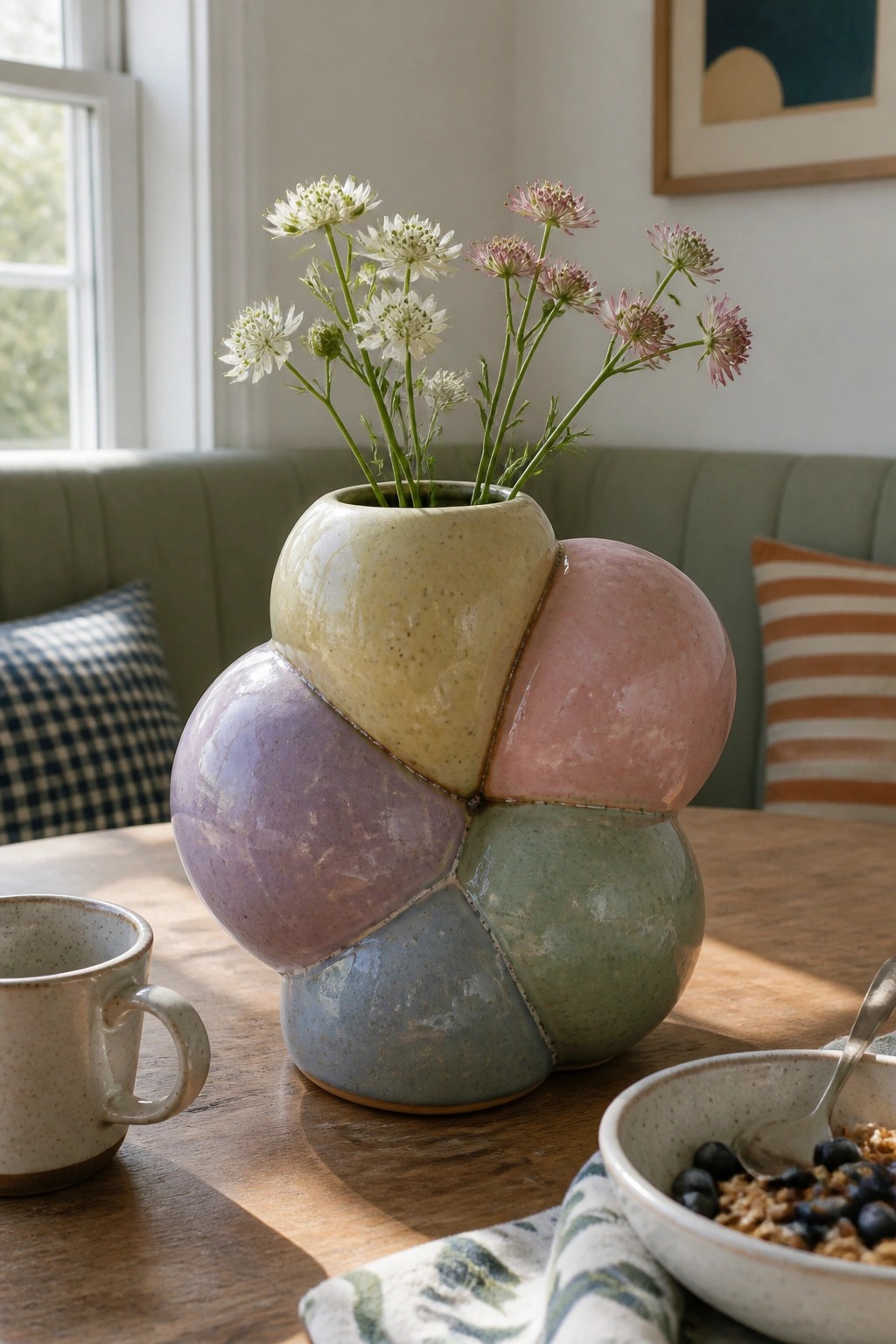
A handbuilt ceramic vase made by joining several rounded bulb forms into one low, asymmetrical cluster. Each section carries its own matte glaze in soft yellow, pink, lavender, blue, and green, with the seams left visible to emphasize the separate shapes. The design relies on the irregular outline and color separation to create interest instead of relying on a balanced or symmetrical profile.
The shape does a lot of the work here because the rounded lobes naturally guide how the glazes are applied and viewed. You could adapt the idea by reducing the number of bulbs to three or four or by using one speckled glaze across the whole piece to simplify construction. This kind of vase works especially well on a table or low shelf where it can support a few stems without needing much height. For a gift, the same clustered form could be scaled down and used as a small bud vase or even reworked into a sculptural planter.
Crescent Wall Pocket Vase

A handbuilt wall vase with an asymmetrical crescent form gives a simple way to display dried stems without using shelf space. The shape mounts flat to the wall while the open rim tilts outward enough to hold several stems at different angles. The smooth blue glaze on the exterior contrasts with the rougher interior surface, which keeps the focus on the organic curve rather than on perfect symmetry.
What makes this idea useful is how the compact size fits narrow wall areas like hallways or above a table. You can build the same crescent profile with a single slab and adjust the depth to hold more or fewer stems depending on the season. The two-tone finish is easy to adapt by leaving more or less of the clay exposed. For a gift, the same shape works at a smaller scale as a single-stem holder near a desk or bedside.
Tall Vase with a Pinched Asymmetric Rim

Handbuilt vases like this use a tall tapered body that narrows into a neck, then gets pinched or folded on one side to create an uneven opening. The brown glaze with vertical drips and lighter patches follows the form without covering it, letting the clay texture show through in places. This approach keeps the focus on the irregular silhouette rather than on symmetry or precise lines.
What makes this idea useful is how the pinched rim turns a basic tall shape into something more distinctive without extra tools or attachments. It works well as a single-stem holder on a narrow shelf or windowsill where a balanced form would feel too formal. You could scale the same pinch technique down to a smaller bud vase or apply the streaky glaze to a wider planter body for a different proportion. The vertical glaze movement also gives a simple way to add interest on future pieces without painting patterns.
Frequently Asked Questions
What materials should I use to handbuild these organic asymmetrical vases? Stoneware or porcelain clays are excellent choices because they offer good plasticity for shaping irregular forms while holding structure during drying. Start with a wedged ball of clay around 5 to 10 pounds depending on the size you want. Pinch and coil methods work well for building walls that curve unevenly. Always score and slip joints thoroughly to avoid cracks later.
How can I keep an asymmetrical vase stable so it does not tip over? Focus on a wide base that flares slightly outward at the bottom while allowing the upper sections to twist and lean. Test balance frequently by placing the piece on a flat surface during construction and adjusting the foot if needed. Adding subtle weight to the lower third through thicker walls helps counterbalance taller asymmetrical extensions without making the form look forced.
Are these vase ideas suitable for beginners or do they require advanced skills? Many of the ideas can be adapted for beginners by starting with simple pinch pots that gradually incorporate one or two uneven bulges or folds. Practice basic coiling on symmetrical forms first to build control before moving to more complex twists. Watching short videos on handbuilding fundamentals and working in small batches will help you gain confidence without frustration.
What techniques create natural looking textures on these contemporary shapes? Press leaves, fabric, or found objects into the surface while the clay is soft to imprint organic patterns. Carving shallow irregular lines with a loop tool or dragging a serrated rib across curves adds movement that complements the asymmetry. Avoid uniform pressure so the texture varies across the form and feels more alive.
How do I make sure my finished vase can hold water without leaking? Apply a food safe glaze to the interior after the first firing and fire to the clay body’s recommended temperature. If you prefer an unglazed interior test a small sample piece first to check porosity. For extra security insert a glass test tube or liner into the opening before arranging flowers.

Pottery Path is my cozy corner of the internet where I share clay ideas, pottery inspiration, and simple projects you can recreate at home. I love exploring everything from air dry clay to handbuilt pottery to cute minis that brighten your day. My goal is to make clay crafting feel easy, fun, and welcoming for anyone who wants to try it.
You will find beginner friendly tutorials, creative pottery painting ideas, and lots of warm inspiration for slow and happy crafting. If you enjoy hands on creativity, this space will feel like home.