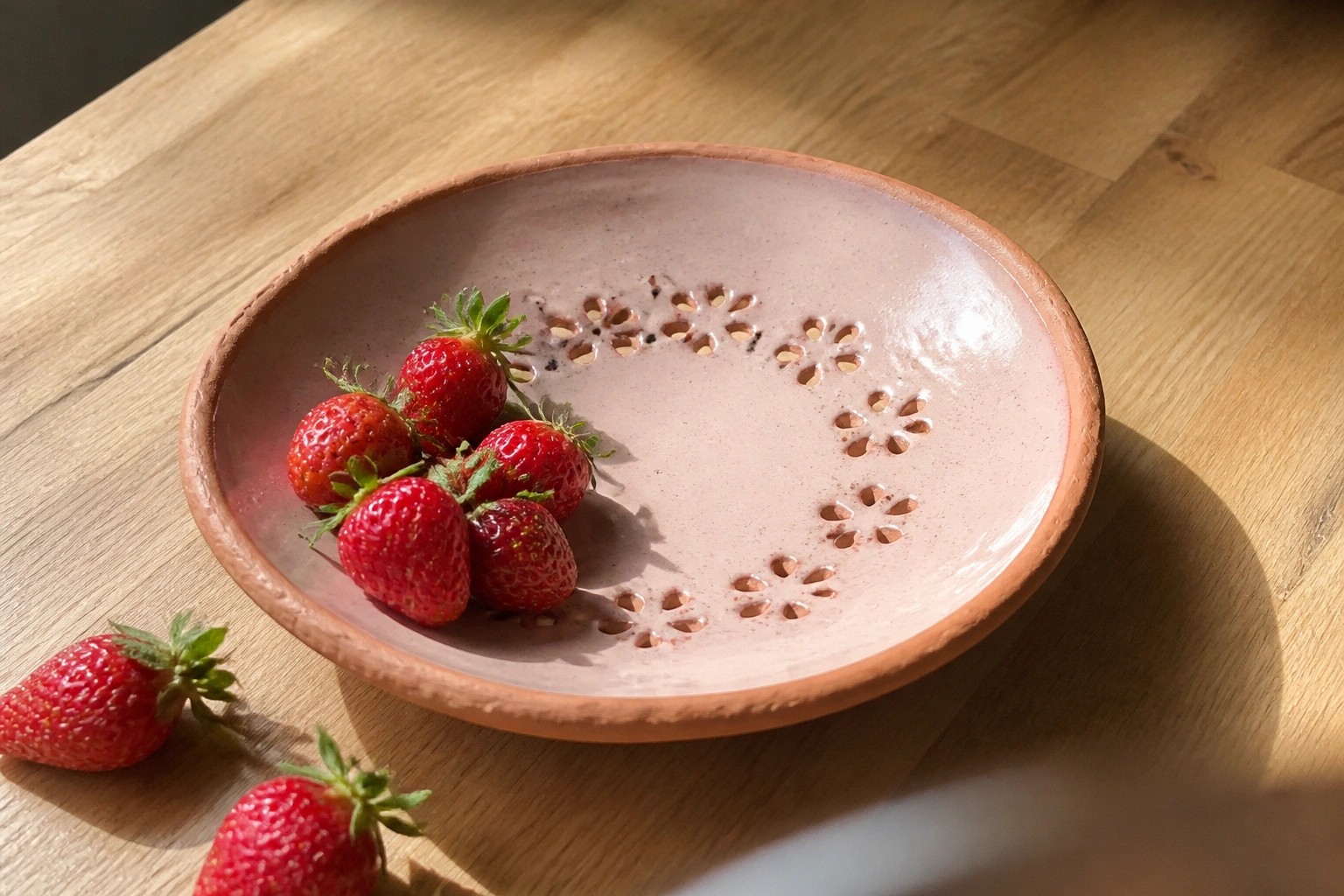
I have been making berry bowls in my pottery studio for a few years now.
The pierced patterns at the bottom help the berries drain after washing.
I like to try different designs that still let the water flow through easily.
Some of my recent ones use simple geometric shapes for the holes.
It is satisfying to see them used in the kitchen every day.
Flower Cutout Drainage in a Shallow Berry Bowl
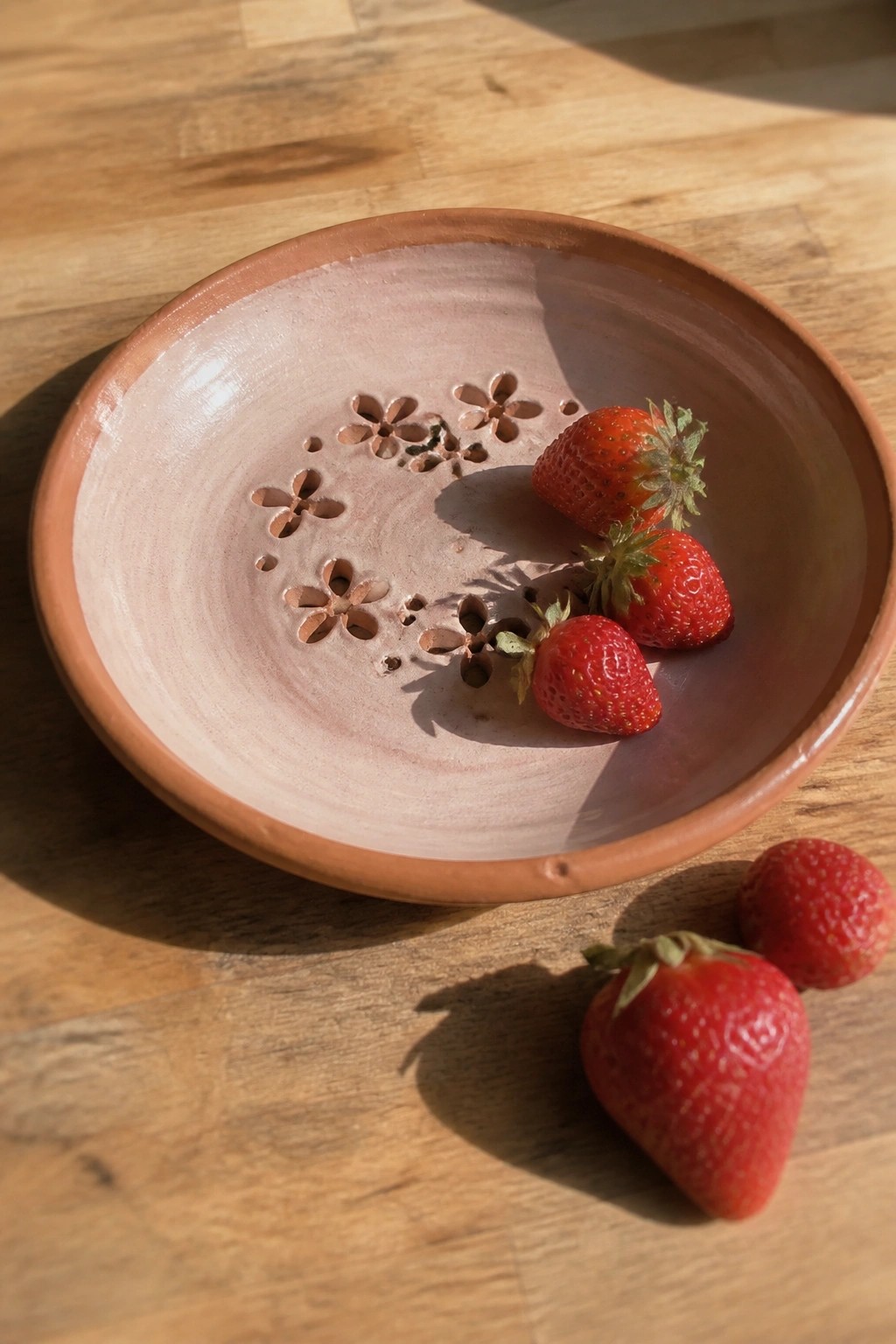
A wide, low ceramic berry bowl lets you rinse strawberries or other small fruits directly inside while the water drains away through the base. Several small flower shapes are cut through the clay in a loose circular arrangement, creating both the drainage and a simple repeating pattern. The pink-toned interior pairs with the exposed terracotta rim and foot, keeping the piece lightweight and easy to handle on a countertop. This approach turns a standard kitchen colander into a dedicated berry bowl that stays functional after washing.
What makes this idea useful is how the cutouts handle drainage without needing a separate insert or rack. You could repeat the same flower shapes on a slightly deeper bowl for blueberries or raspberries, or reduce the number of holes if you want slower draining for delicate fruit. In a kitchen, the low profile fits on open shelving and moves easily from sink to table. For a variation, cluster the flowers toward one side instead of centering them so the bowl still drains well but leaves more solid surface for serving.
Star-Pierced Berry Colander
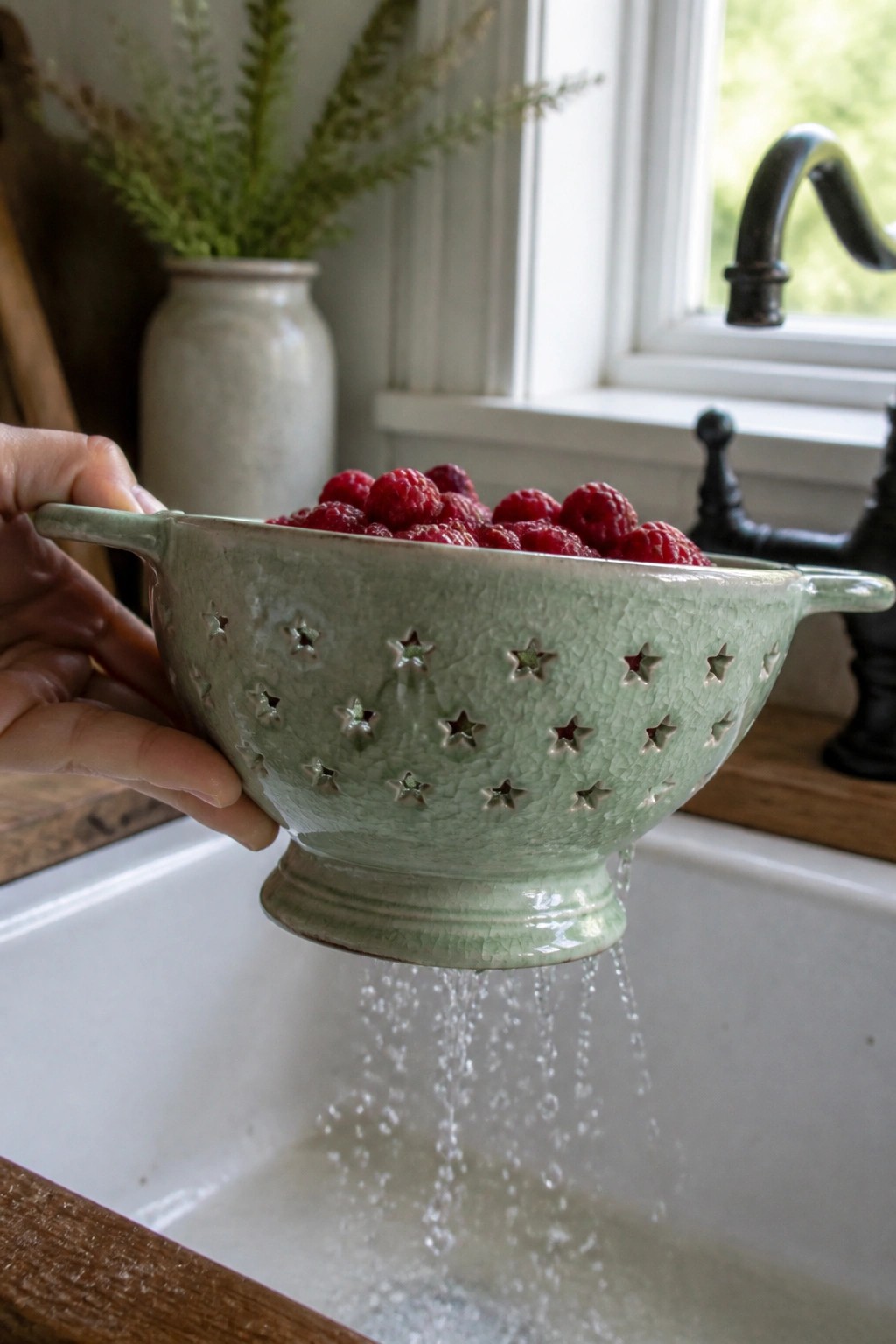
A ceramic berry bowl with repeated star cutouts works as a built-in colander for rinsing fruit. The soft green crackle glaze covers the entire surface and makes the drainage pattern easy to see. Two short handles on opposite sides give a secure grip while water runs through the openings into the sink. This kitchen piece keeps the berries contained during washing and then doubles as a serving bowl once drained.
What makes this idea useful is the way the star cutouts handle both drainage and decoration in one step. You could repeat the same piercing layout on a deeper bowl for larger batches or switch to simpler round holes if the stars prove too time-consuming to cut. In a kitchen this shape sits flat on a counter or shelf without taking much space. Scaling the diameter down creates a version sized for one or two servings that still keeps the drainage function intact.
Hanging Ceramic Berry Strainer with Leather Straps
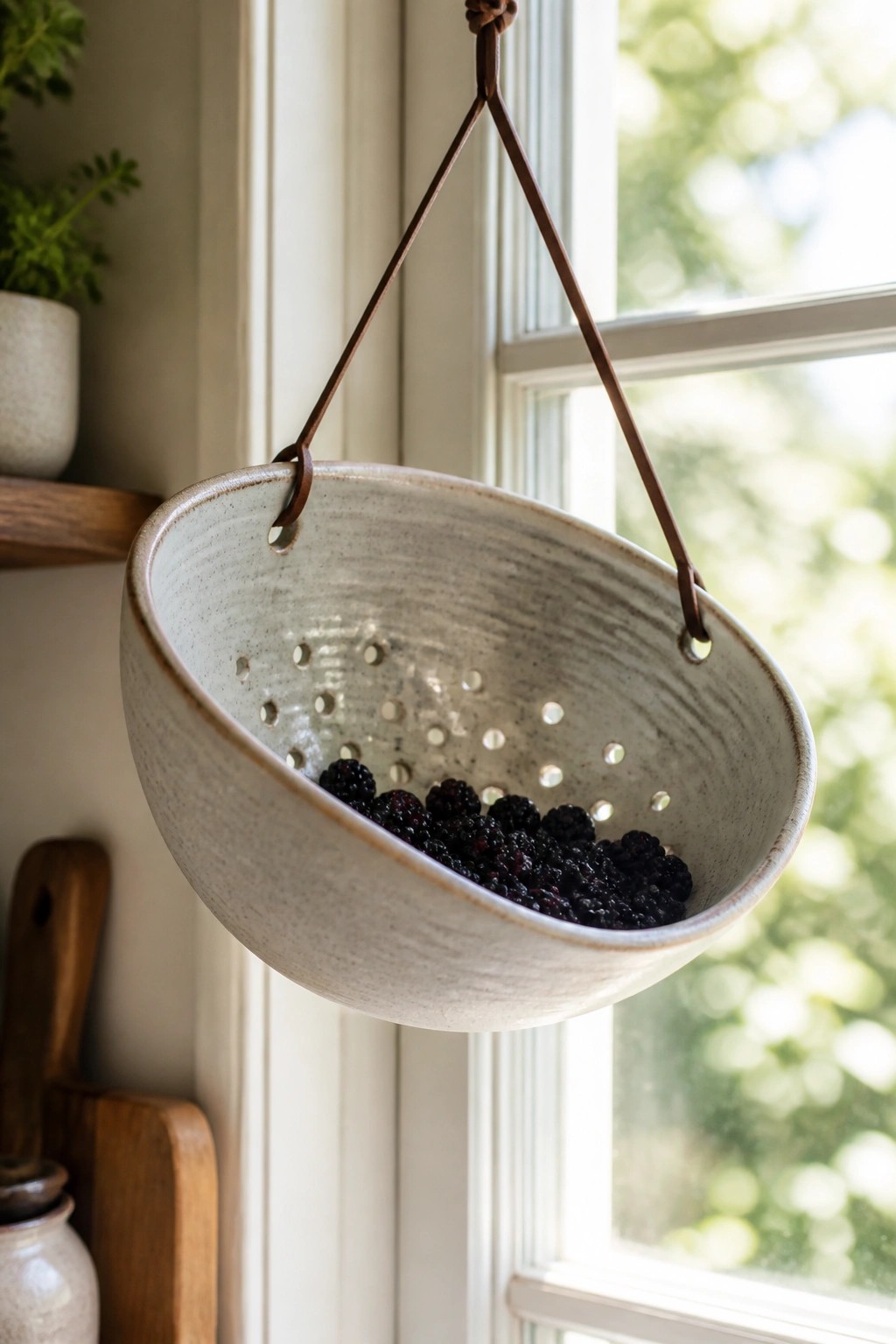
A hanging berry bowl made from ceramic gives you a dedicated spot to rinse and drain fruit without using a separate colander. The form includes rows of small pierced holes across the lower half that let water pass through while holding berries in place. Leather straps threaded through holes in the rim allow the bowl to hang from a hook or rod, keeping it off the counter and within reach. The light speckled surface and wide, shallow shape make the drainage pattern the main visual feature.
What makes this idea useful is how the suspension turns a standard strainer into a space-saving kitchen tool. You could scale the same hole pattern down for a smaller countertop version or skip the straps entirely for a sink-side bowl. In a kitchen, this shape works well near a window or above a prep area where you can let berries air-dry after washing. The leather straps make it simple to lift the bowl for emptying or to move it between hooks without adding extra hardware.
Stacked Berry Bowls with Mixed Drainage Patterns
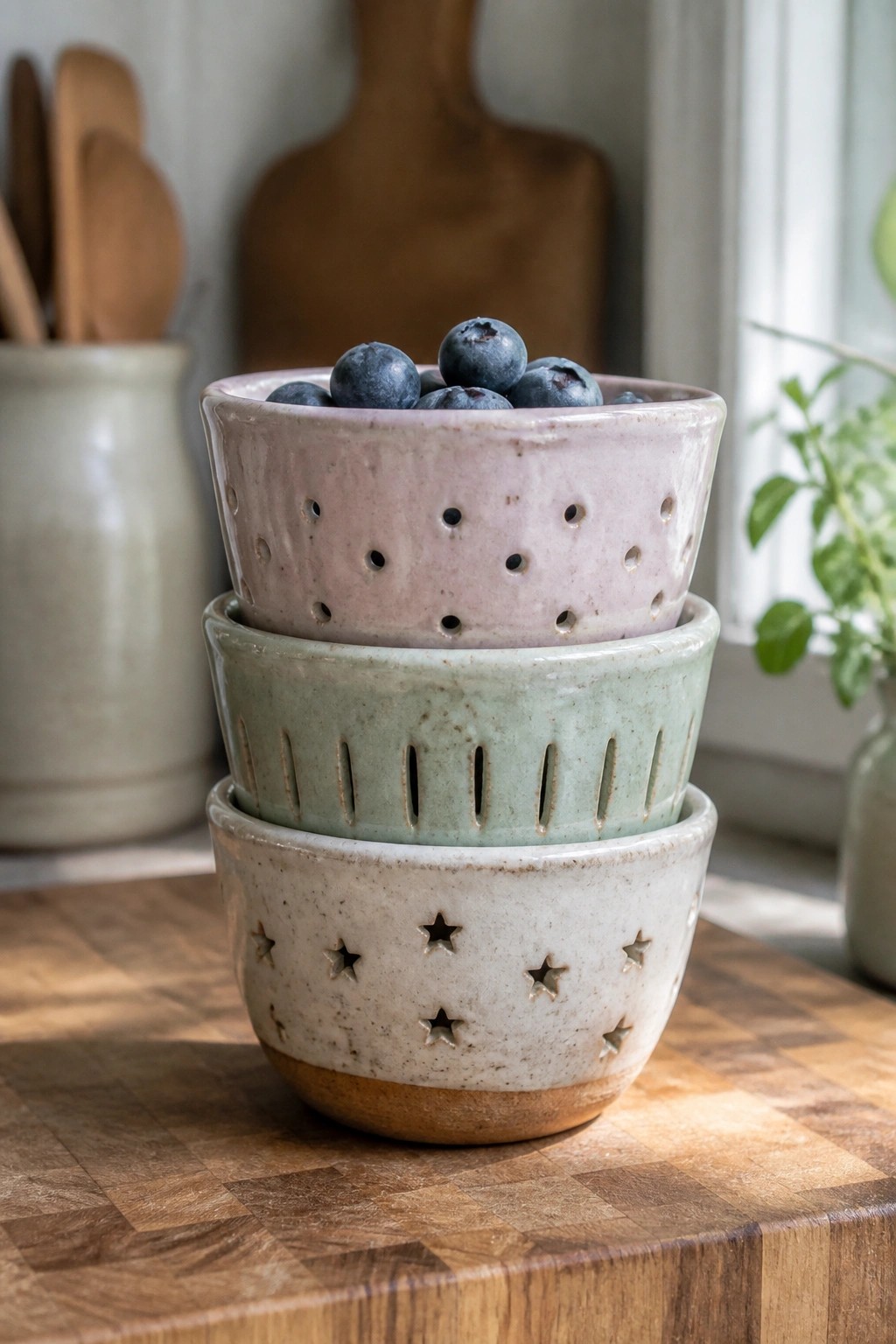
These three nested ceramic bowls function as berry colanders, each sized to sit inside the next for compact storage. The bottom bowl uses star-shaped cutouts, the middle bowl has vertical slits, and the top bowl features scattered round holes that allow water to drain while holding fruit. Speckled glazes in beige, green, and soft pink keep the set unified while the varying hole shapes add visual contrast. The form is a straightforward kitchen piece built for rinsing and serving berries or small produce.
What makes this idea useful is how the nesting design solves storage while letting you test three drainage styles in one project. You could easily adapt it by making just two bowls or scaling the sizes differently for strawberries versus blueberries. The neutral glazes work well in most kitchens and would translate to a single bowl if you want a quicker version. A set like this stands out on Pinterest because the stacked arrangement clearly shows the functional patterns without extra styling.
Wall-Mounted Berry Bowl Herb Planter
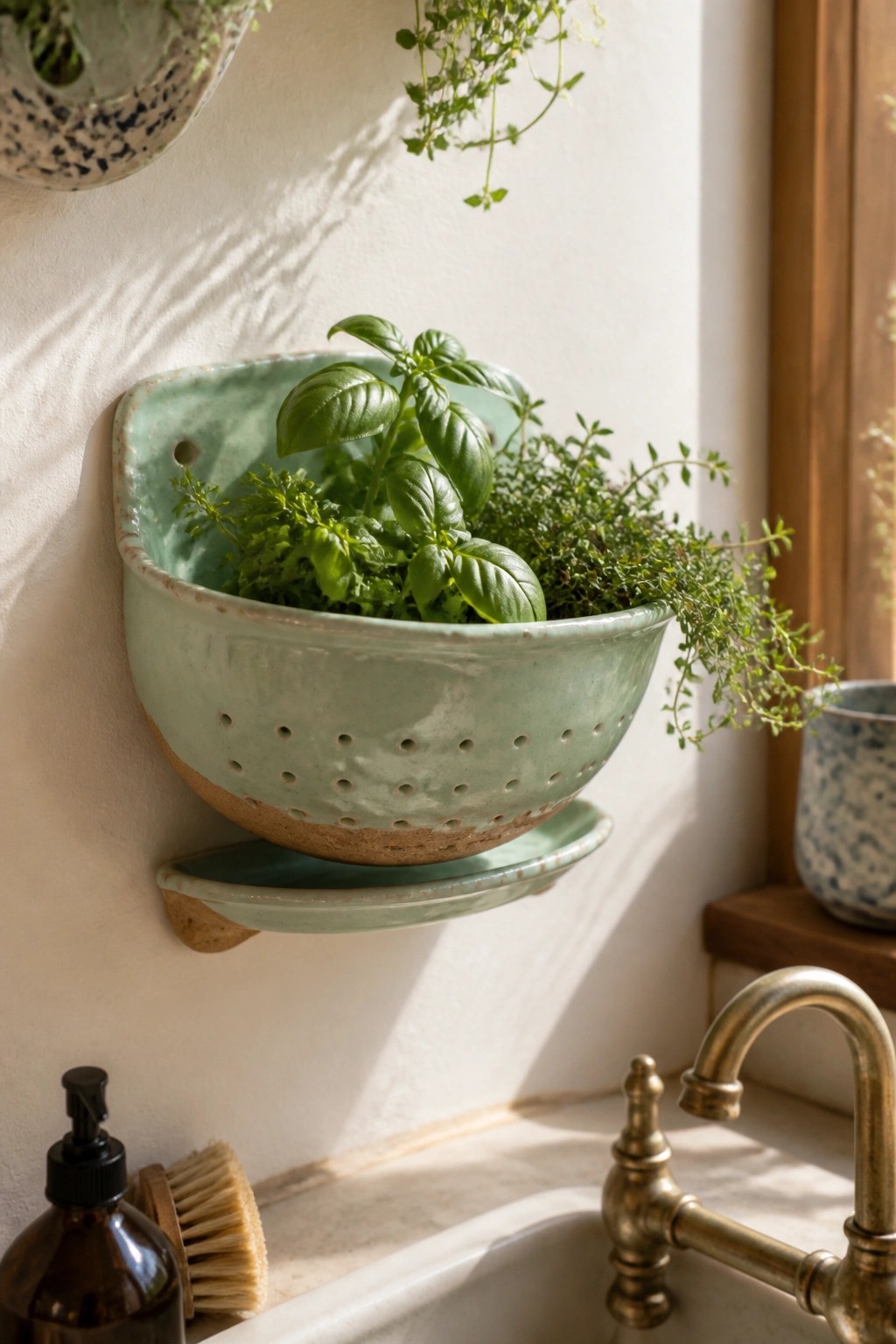
A ceramic berry bowl with a full pattern of drainage holes works well as a wall-mounted planter when fitted with a simple hanging bracket and a catch tray below. The rounded form holds soil for multiple herbs while the perforations prevent water from pooling. A matte green glaze over a raw clay base keeps the piece looking like standard kitchenware rather than a dedicated planter.
What makes this idea useful is how the berry bowl shape already provides good drainage and volume without extra construction. You can hang the same style near a sink for easy watering or scale it down for a smaller wall spot with just one or two plants. The pierced pattern stays functional whether you grow basil, thyme, or other kitchen herbs, and the setup frees up counter space while keeping plants within reach.
Nested Ceramic Berry Colander Set
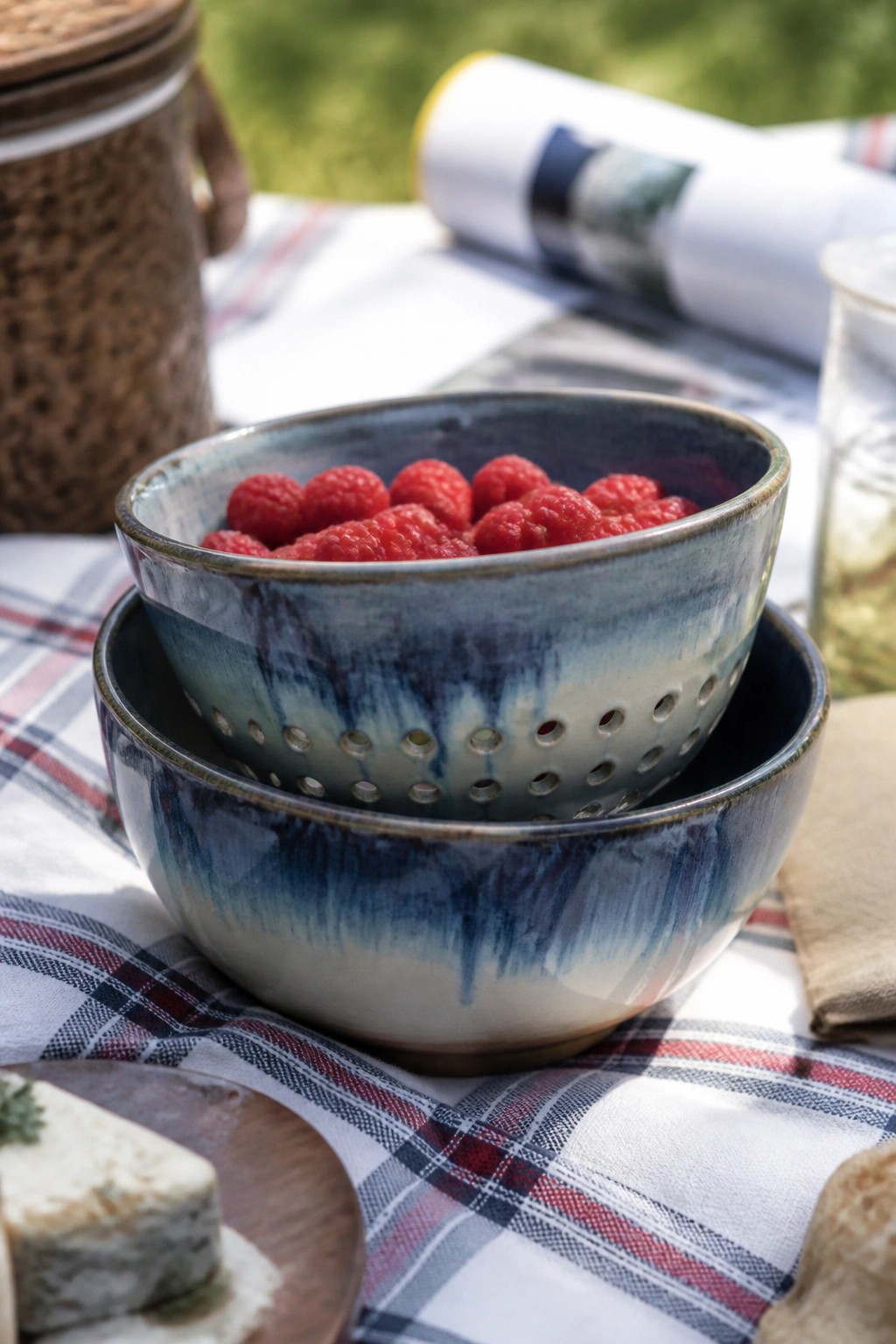
A pair of matching stoneware bowls forms a practical berry drainer where the upper bowl has evenly spaced holes pierced through its base. The top piece sits inside the solid lower bowl so rinse water collects below while the berries stay in place. The flowing blue glaze across both pieces keeps the set unified without extra decoration.
What makes this idea useful is how it handles rinsing and serving in one step without needing a separate strainer. You can scale the same nesting design down for smaller batches or swap the glaze for a single solid color if you want something quicker to make. In a kitchen this setup keeps berries from sitting in leftover water and works just as well for other small fruits that need draining.
Spouted Berry Bowl with Rim Drainage Slits
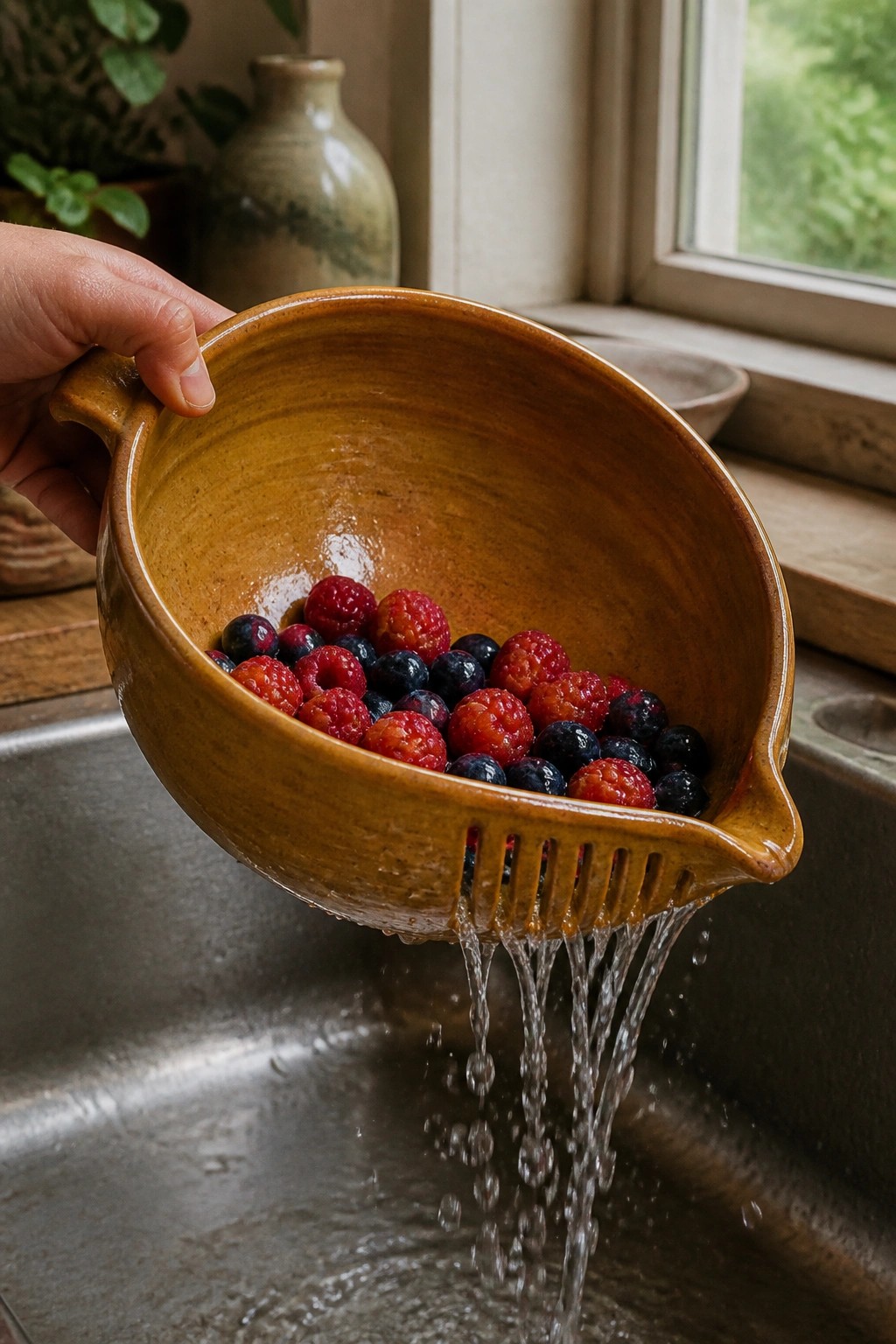
A berry bowl formed from clay includes a rounded body, a short integrated spout, and a row of vertical slits cut into the rim on one side. The warm brown glaze covers the surface evenly and provides a smooth, waterproof finish that holds up to repeated rinsing. This setup lets water drain away while the fruit stays contained, so the bowl works directly over a sink or bowl without an extra strainer.
What makes this idea useful is the spout that channels water neatly into the drain instead of splashing. The slit pattern can be adjusted in width or spacing to handle larger fruit or smaller berries. In a kitchen this shape serves as both a washing tool and a serving piece. The same drainage approach adapts easily to a smaller herb bowl or a deeper colander for greens.
Leaf-Patterned Berry Bowl with Low Pierced Drainage
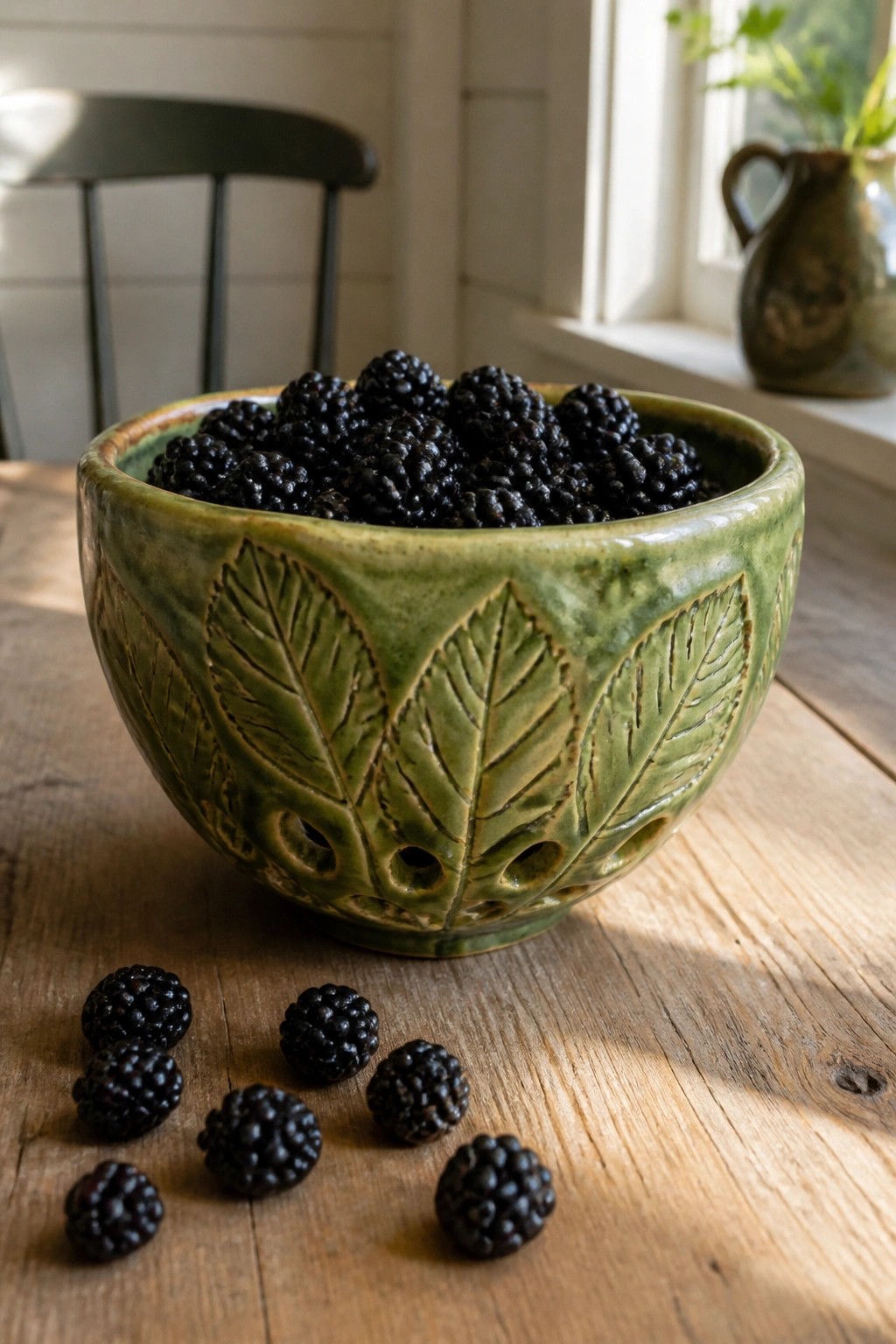
A wide ceramic bowl made for holding berries features raised leaf designs pressed into the clay around the exterior. Small holes are cut through the lower half of the form so excess water drains out without pooling at the bottom. The green glaze covers the textured leaves while leaving the interior smooth for easy cleaning. This creates a single-piece kitchen bowl that keeps fruit fresher by letting moisture escape.
What makes this idea useful is the placement of the holes below the main berry mass so they do not clog with fruit. The same leaf motif and hole pattern can be adapted to a shallower dish for strawberries or scaled smaller for raspberries. In a kitchen this shape sits well on a counter or inside the fridge without taking much space. You could simplify the leaves to just the vein lines if you want to speed up the building process while keeping the drainage function intact.
Bunny Colander Berry Bowl with Paw Feet and Ear Handles
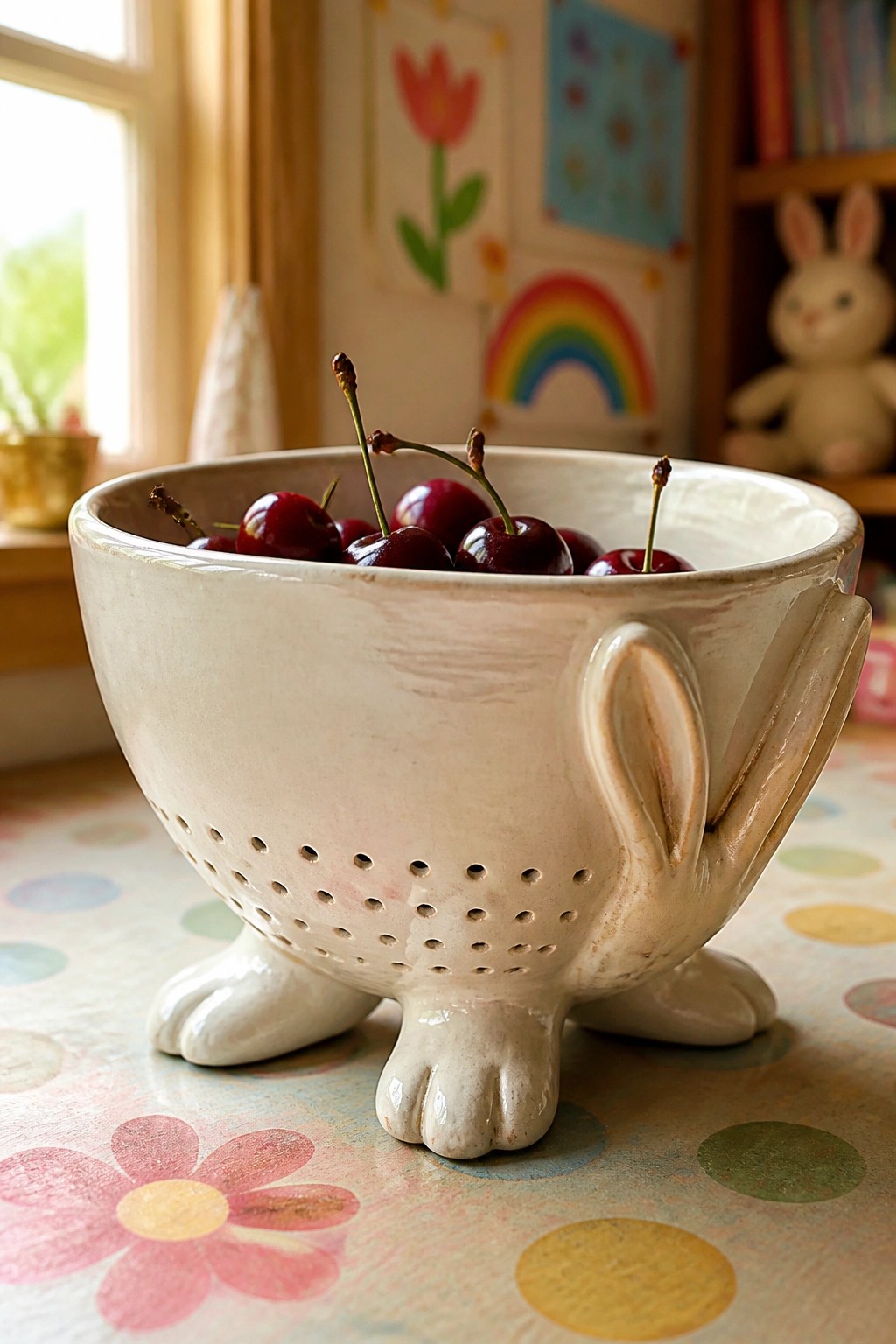
A ceramic berry bowl formed as a rabbit gives a clear animal shape to a functional colander. The rounded body sits on three paw feet and carries a series of small drainage holes across the lower section. One side features two upright ears that serve as handles while the opposite side remains plain. The even white glaze shows the form and the pierced pattern without added color or texture.
What makes this idea useful is that the sculpted feet lift the bowl off the counter so liquid drains freely through the holes. In a kitchen the rabbit shape turns a basic strainer into something that can stay out on display. You could swap the ears for different animal features or reduce them to simple tabs while keeping the same hole layout and foot style. The same approach works for a smaller individual bowl or a wider version meant for larger batches of fruit.
Scalloped Berry Bowl with Star Drainage Cutouts
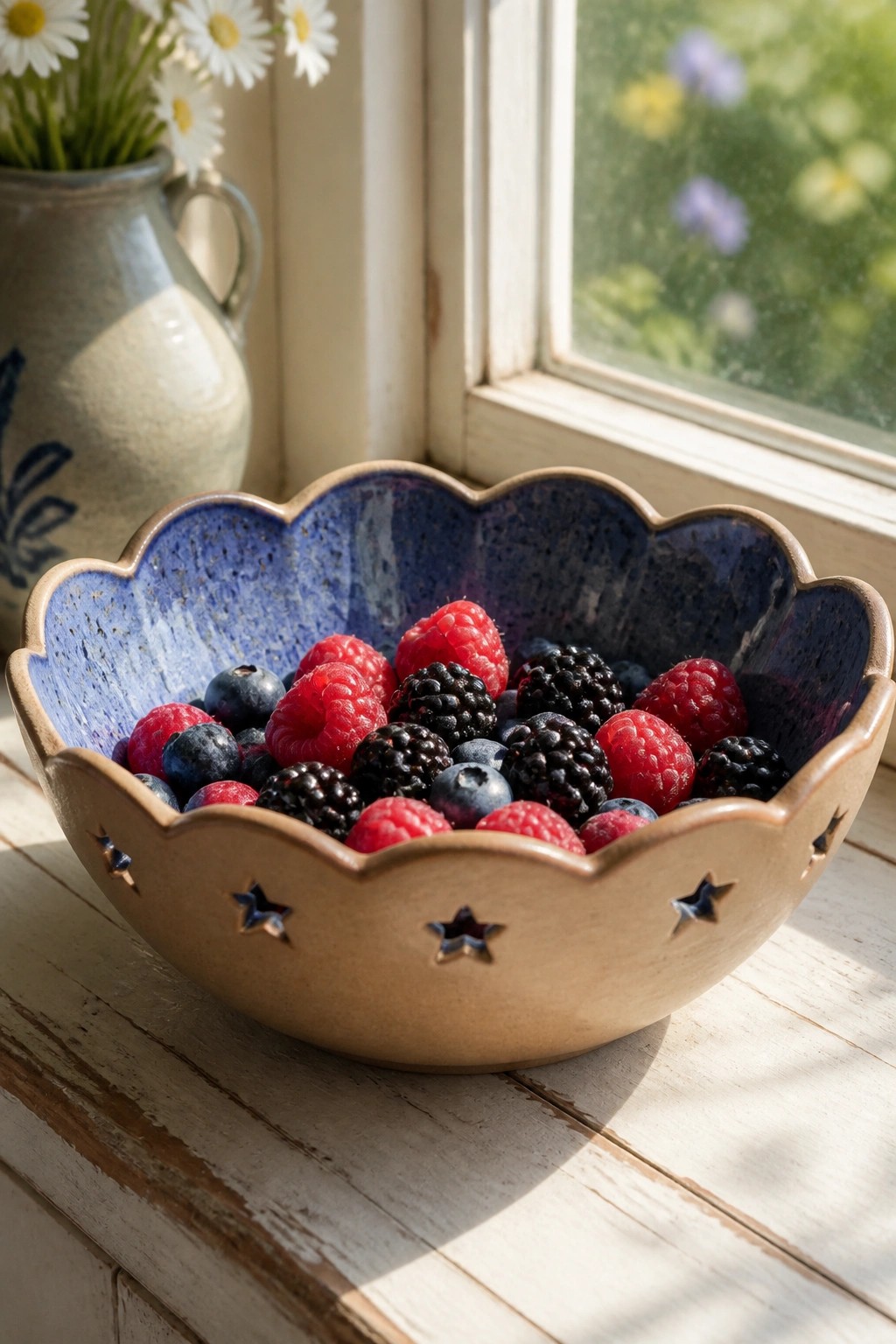
A wide, shallow clay bowl with a scalloped rim works well as a berry server because the small star-shaped holes pierced around the upper sides allow air to circulate and any moisture to drain away from the fruit. The interior uses a dark blue speckled glaze that contrasts with the unglazed tan exterior, keeping the focus on the functional cutouts rather than heavy surface decoration. This approach turns a standard fruit bowl into a piece that actively helps berries stay fresh longer on the counter.
What makes this idea useful is the way the star cutouts handle both ventilation and visual interest without extra steps. You could repeat the same piercing pattern on a plain cylinder form or reduce the number of holes if you want less airflow for other produce. In a kitchen this shape sits flat on a table or windowsill and needs no liner, so it moves easily from storage to serving. The same rim and hole layout could be adapted to a slightly deeper bowl for holding rinsed greens.
Berry Bowl with Built-In Spoon Pocket
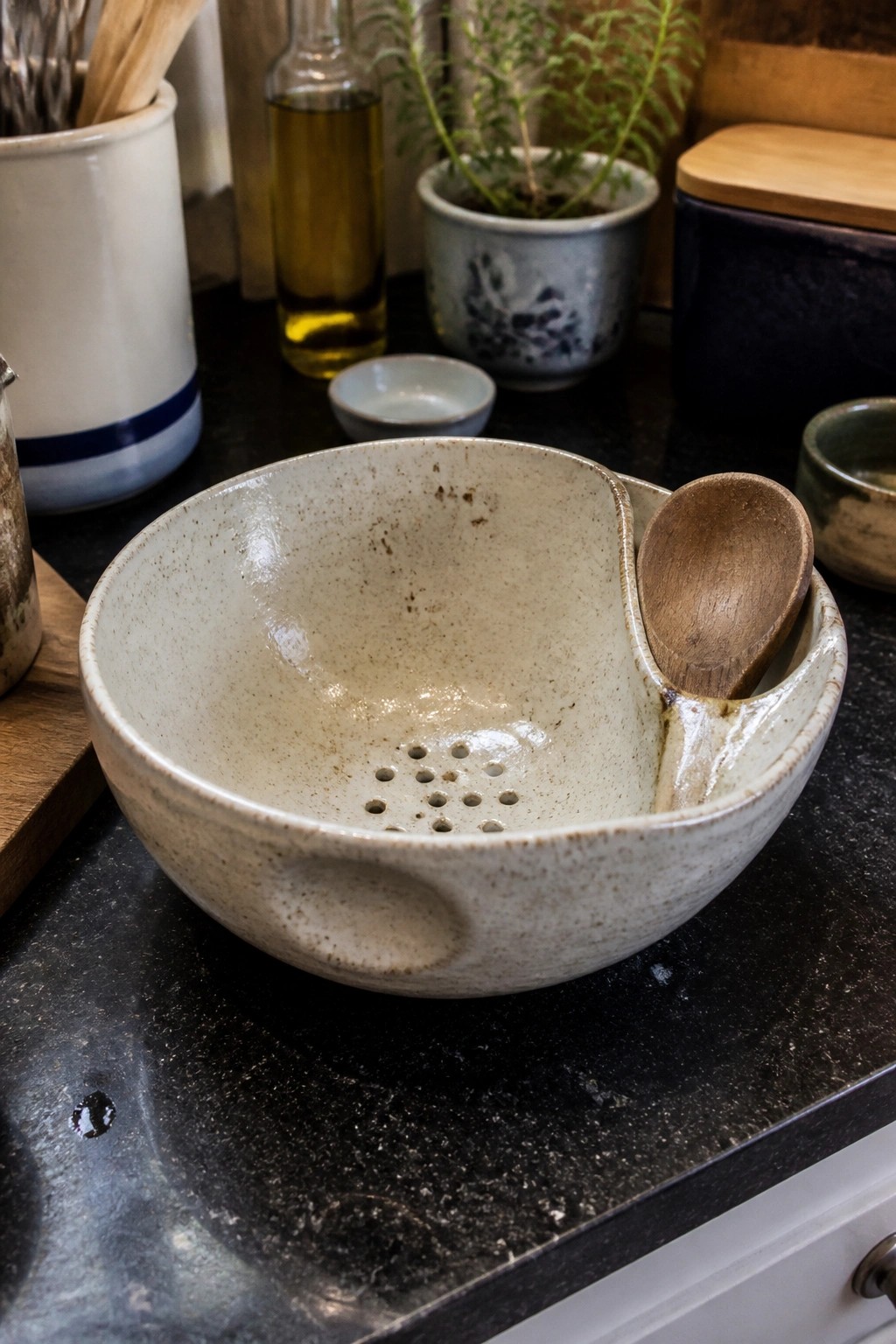
A ceramic berry bowl gains extra function when the rim is shaped into a small side pocket that holds a wooden spoon. The base features a cluster of small drainage holes that let water run out while keeping berries inside. A speckled matte glaze covers the surface and helps the piece blend into everyday kitchen use without showing wear quickly.
What makes this idea useful is how the spoon pocket keeps the utensil from rolling away after rinsing. The same form works well on a countertop or in the fridge once the berries are drained. You could adapt the design by making the pocket larger for a bigger spoon or by spacing the holes farther apart for different fruit sizes. In a kitchen, this kind of piece reduces the need for a separate colander and spoon rest.
Oval Slit Drainage Berry Bowl
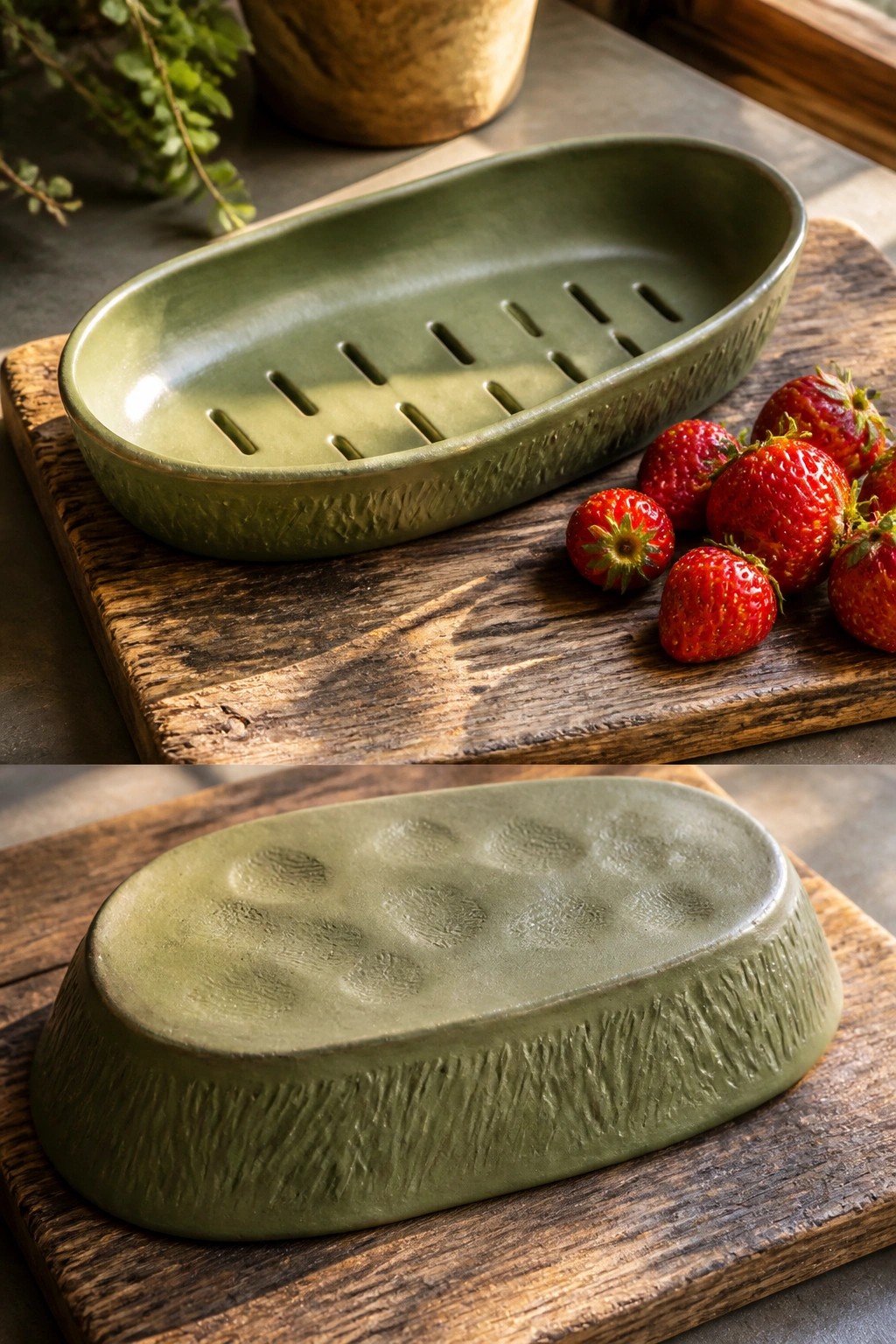
A handmade oval ceramic berry bowl with multiple elongated drainage slits running along the base creates a simple rinsing and serving piece for fresh fruit. The matte green glaze covers both the smooth interior and the textured exterior, where linear tool marks and circular impressions on the underside add subtle surface detail without interfering with function. This shape sits low and stable on a counter while the slits let water drain fast, keeping berries from sitting in moisture.
What makes this idea useful is the compact oval form that holds a good handful of strawberries or other small fruit without taking much space. You could adapt the slit layout to wider or narrower openings depending on the produce you use most, or swap the glaze for a lighter color that shows off the berries better. The same base shape works as a small herb washer or a countertop catchall for produce that needs airflow. The textured sides also give it enough grip to handle easily when wet.
Perforated Dome Berry Bowl
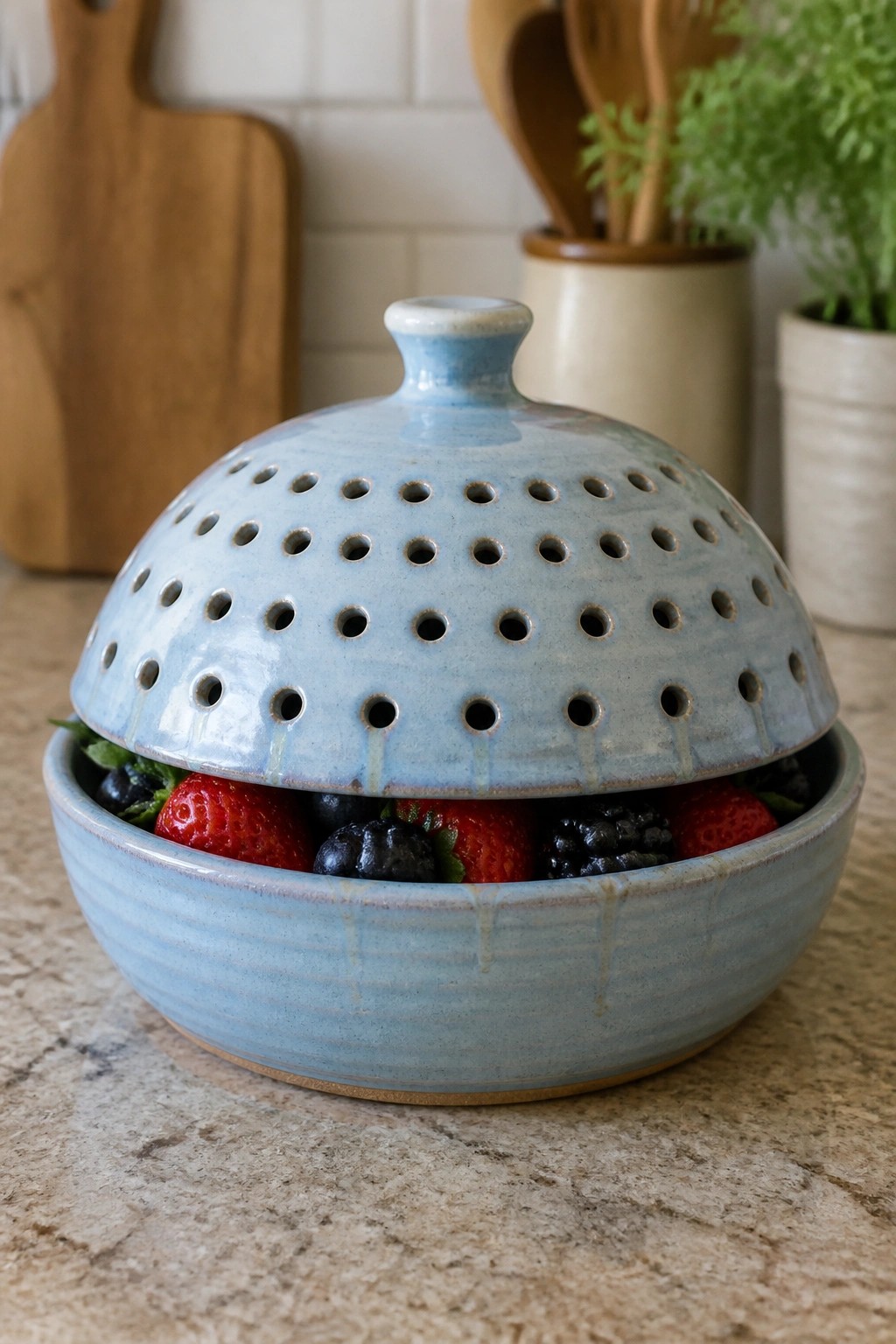
A two-piece ceramic berry bowl uses a shallow base paired with a domed lid that is covered in a regular pattern of small holes. The lid rests on the rim of the base to cover the fruit while the perforations allow air to reach the berries and help prevent moisture buildup. The soft blue glaze with light drips along the edges keeps the focus on the functional form and the contrast between the solid base and the openwork lid.
What makes this idea useful is how it turns a simple storage bowl into a practical kitchen piece that can sit on the counter without attracting fruit flies. The dome shape gives good clearance for piled berries and could be made in different diameters to match common harvest amounts. You could adapt the same lid pattern onto a flatter cover for a salad bowl or reduce the hole size if you want to use it for smaller items like cherry tomatoes.
Stacked Nesting Berry Bowls with Perforated Bases
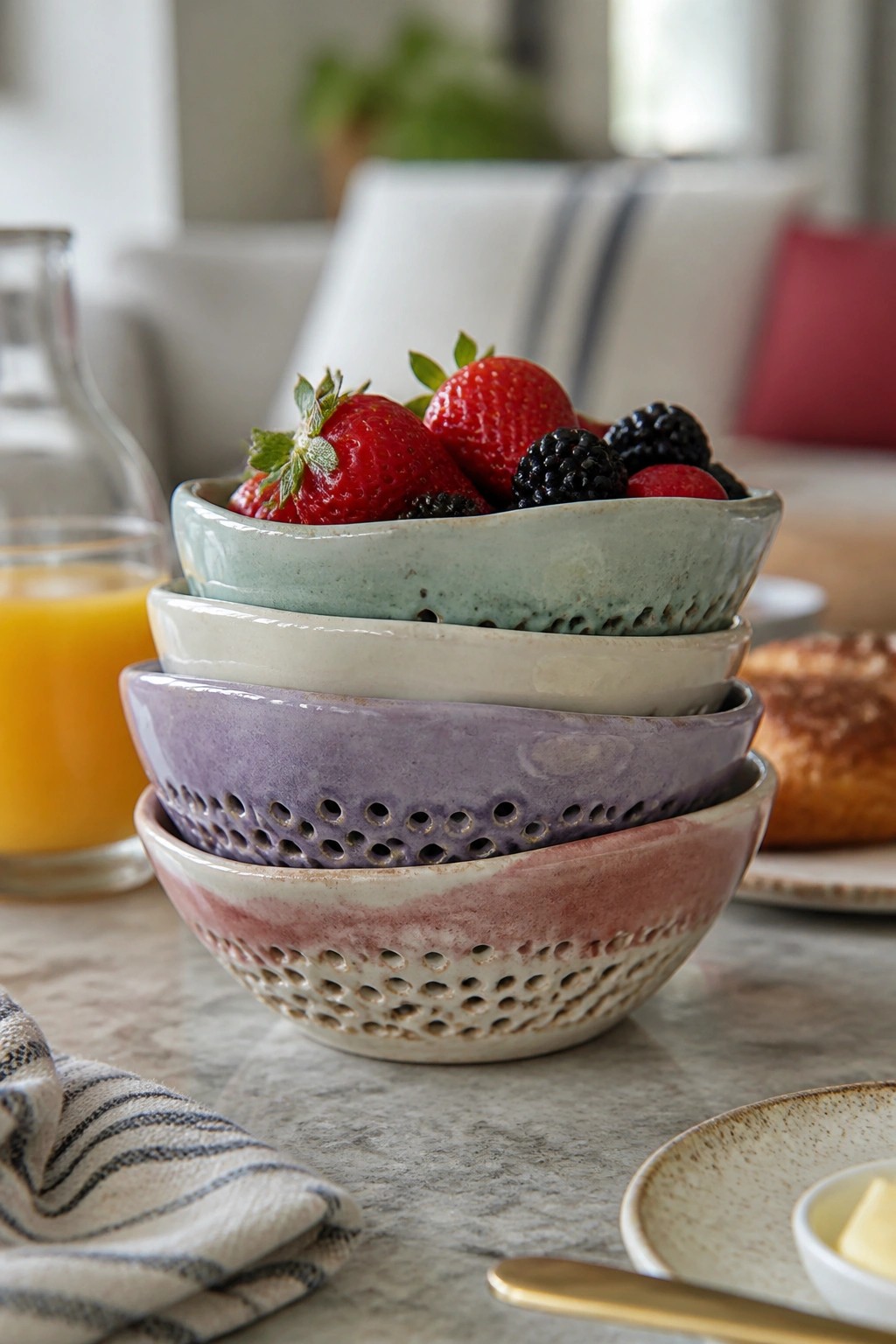
Berry bowls built in graduated sizes let you rinse and drain fruit in one step while keeping the pieces ready for serving. Each bowl features rows of small holes clustered near the base, combined with a slightly raised foot so water can escape freely. Soft matte glazes in sage, lavender, cream, and rose create a quiet color progression that still reads as a set. The same form works whether you throw the bowls on the wheel or handbuild them from slabs.
What makes this idea useful is how easily the nesting shapes save shelf space after use. You can repeat the piercing layout on a single large bowl for parties or shrink it for small prep tasks like washing herbs. In a kitchen, the varied glaze colors keep the set from looking like plain kitchen equipment. For a gift, making just two or three bowls in matching glazes gives you a complete, practical present without needing a full dinnerware set.
Handled Berry Bowl with Flower Cutouts
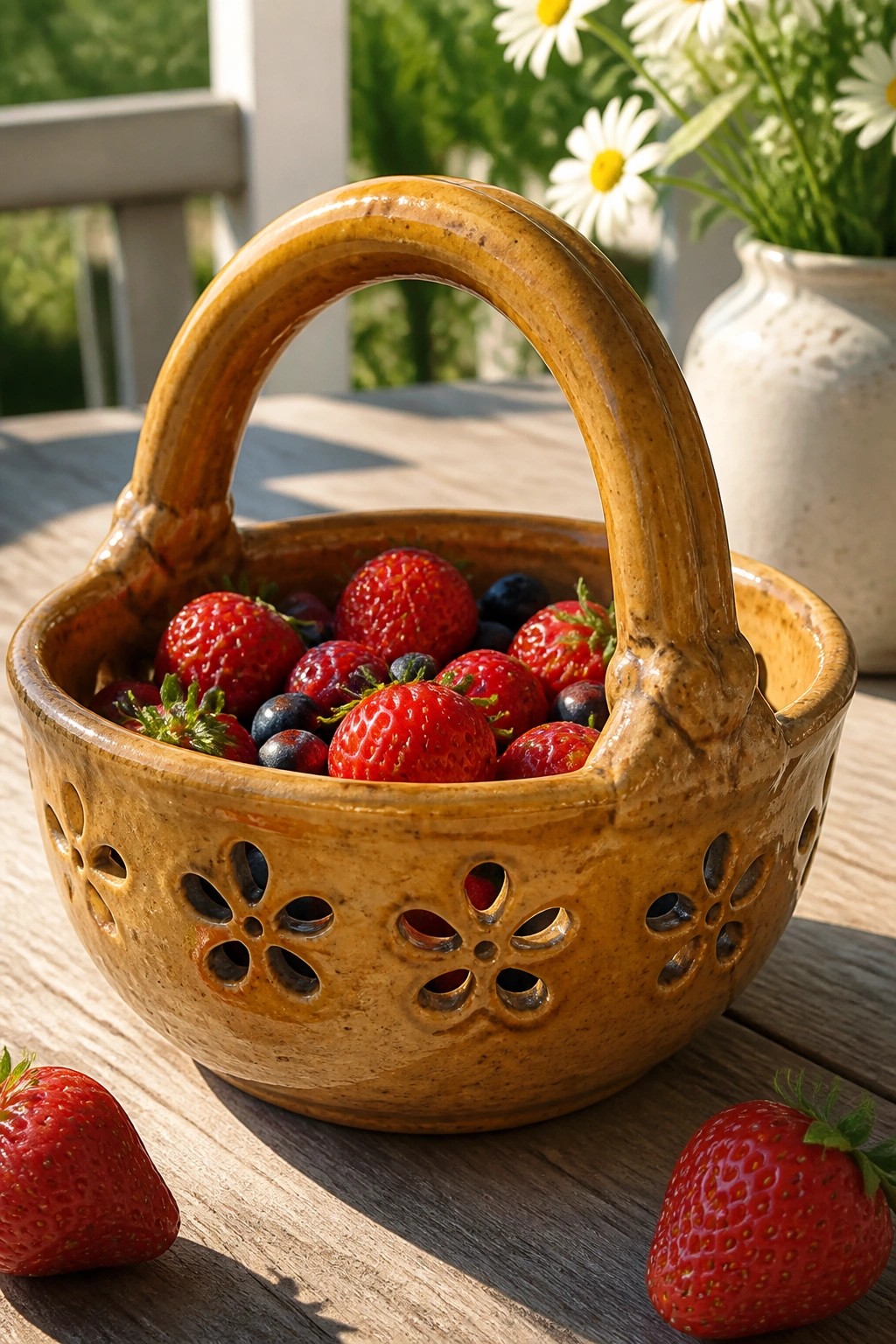
A ceramic berry bowl shaped like a small handled basket lets you rinse and serve fruit in one piece. The sides include repeated flower-shaped openings that drain water while holding the berries in place. The warm brown glaze and rounded body keep the focus on the functional cutouts rather than extra decoration. This approach turns a standard colander into a kitchen piece that can sit on the counter or go to the table.
What makes this idea useful is the built-in handle combined with the drainage pattern, so you can wash berries and set the bowl out without transferring them. The shape does a lot of the work here by giving good airflow around the fruit while staying compact enough for daily use. In a kitchen, this kind of piece works especially well for strawberries or blueberries that need to stay dry. You could rework the same cutout style on a flatter tray or a taller canister for other produce.
Stoneware Berry Bowl with Vertical Drainage Slits
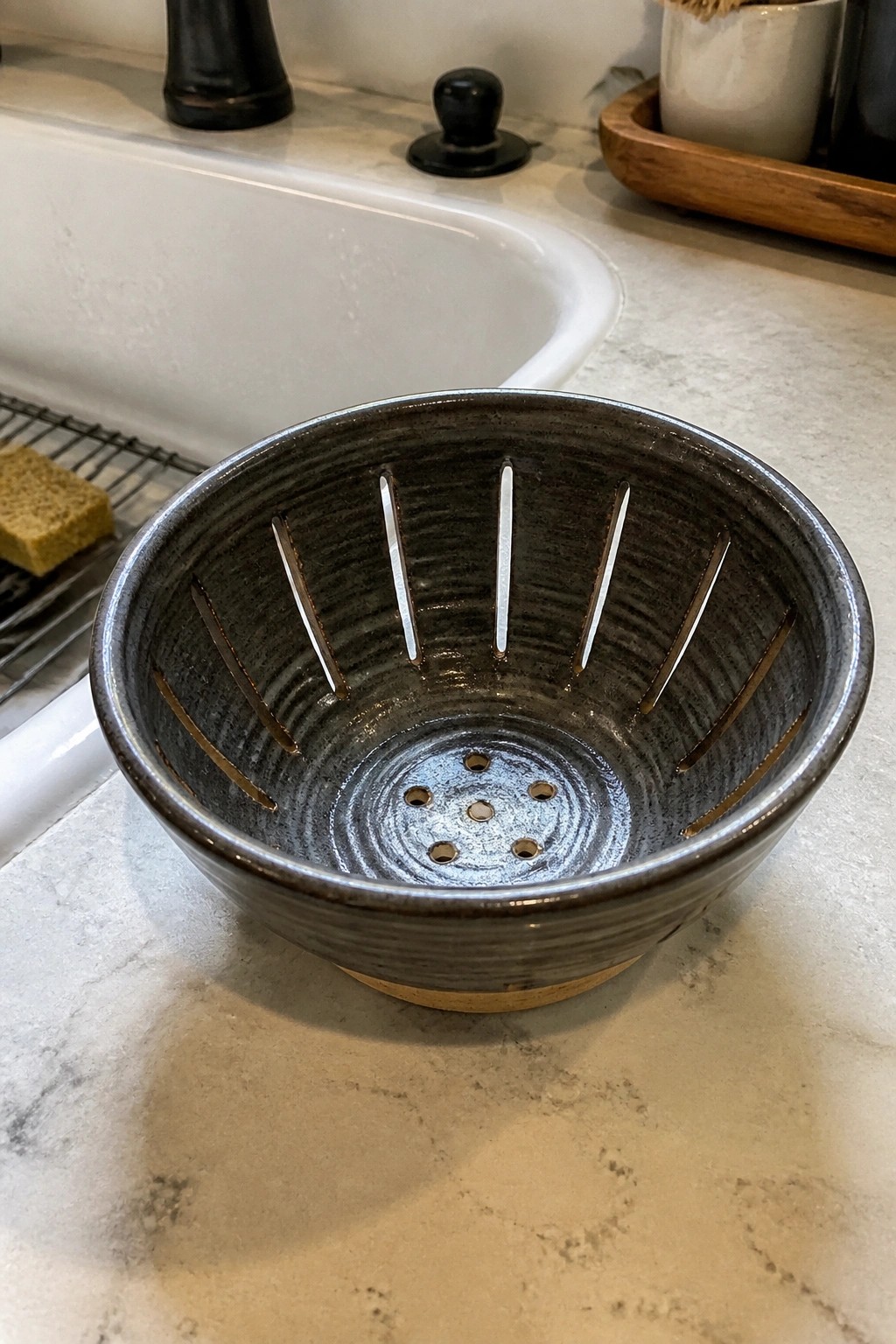
This berry bowl is a deep, wheel-thrown ceramic piece made for rinsing and draining produce. Vertical slits cut into the upper walls let water flow out quickly while the base holds six small holes to finish the drainage. The dark matte glaze with visible throwing rings gives the slits clear definition against the form, turning a simple functional detail into the main visual feature.
What makes this idea useful is how the slit placement keeps the bowl sturdy yet open enough for good airflow around berries. The shape works especially well on a kitchen counter next to the sink since it doubles as both a washing vessel and a serving piece. You could adapt the same vertical cuts to a wider, shallower bowl for larger batches or switch to a lighter glaze so the drainage lines read even more clearly on photos.
Polka Dot Berry Bowls for Individual Portions
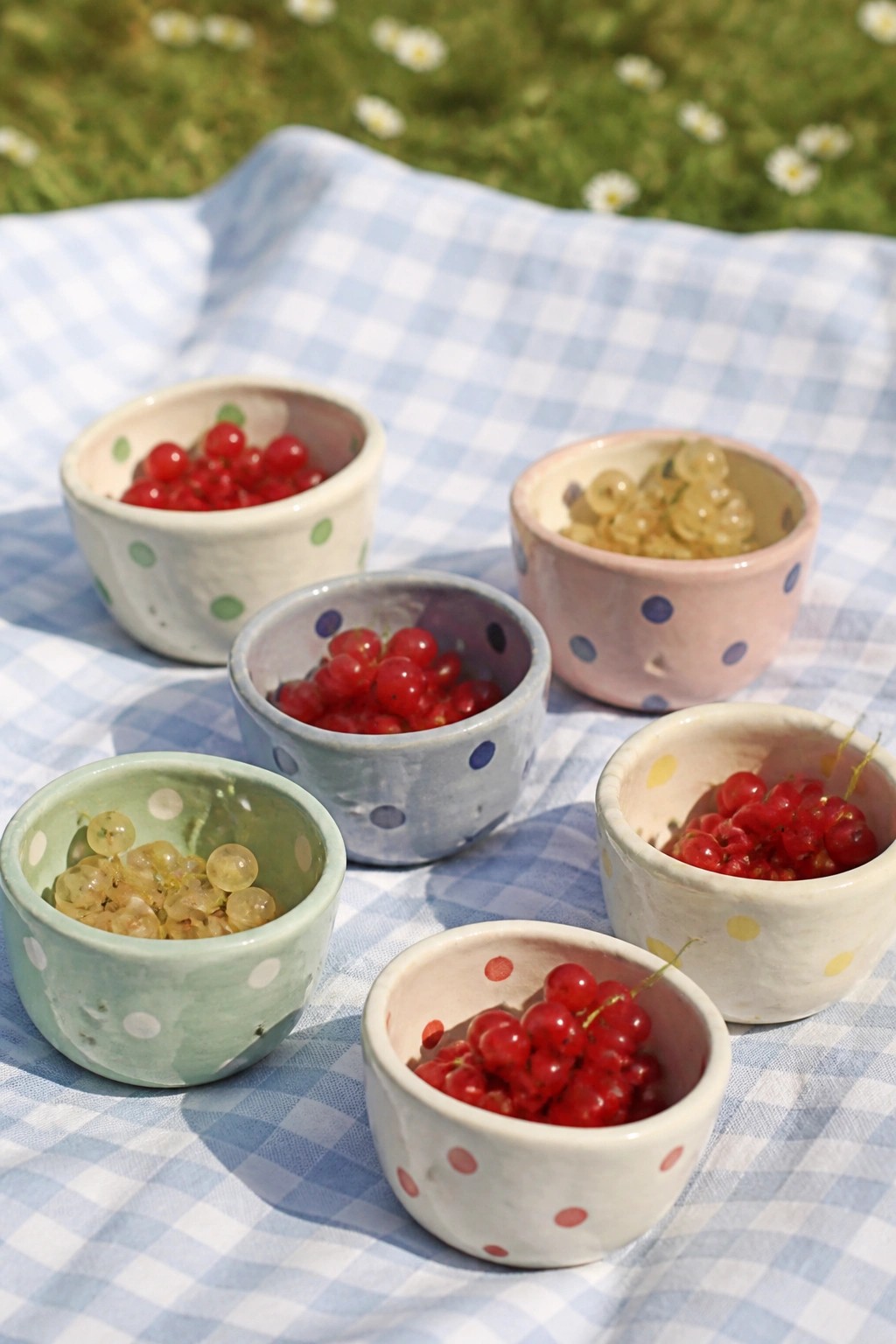
Small rounded ceramic bowls make practical berry servers because their compact size holds a single serving without taking up much table space. These pieces use a thick-walled form with a simple rim and are finished in pastel glazes accented by evenly spaced dots in contrasting colors. The handmade surface and basic shape keep production straightforward while the painted pattern gives each bowl its own identity within a set.
What makes this idea useful is how the small scale lets you create a mix-and-match collection without using much clay or kiln space. In a kitchen these bowls work well for breakfast or snacks and can be carried outside easily for picnics. You could adapt the same shape with drainage holes added to the base or drop the dots for a solid glaze if you want a quicker version.
Oval Terracotta Berry Bowl with Heart Pierced Drainage
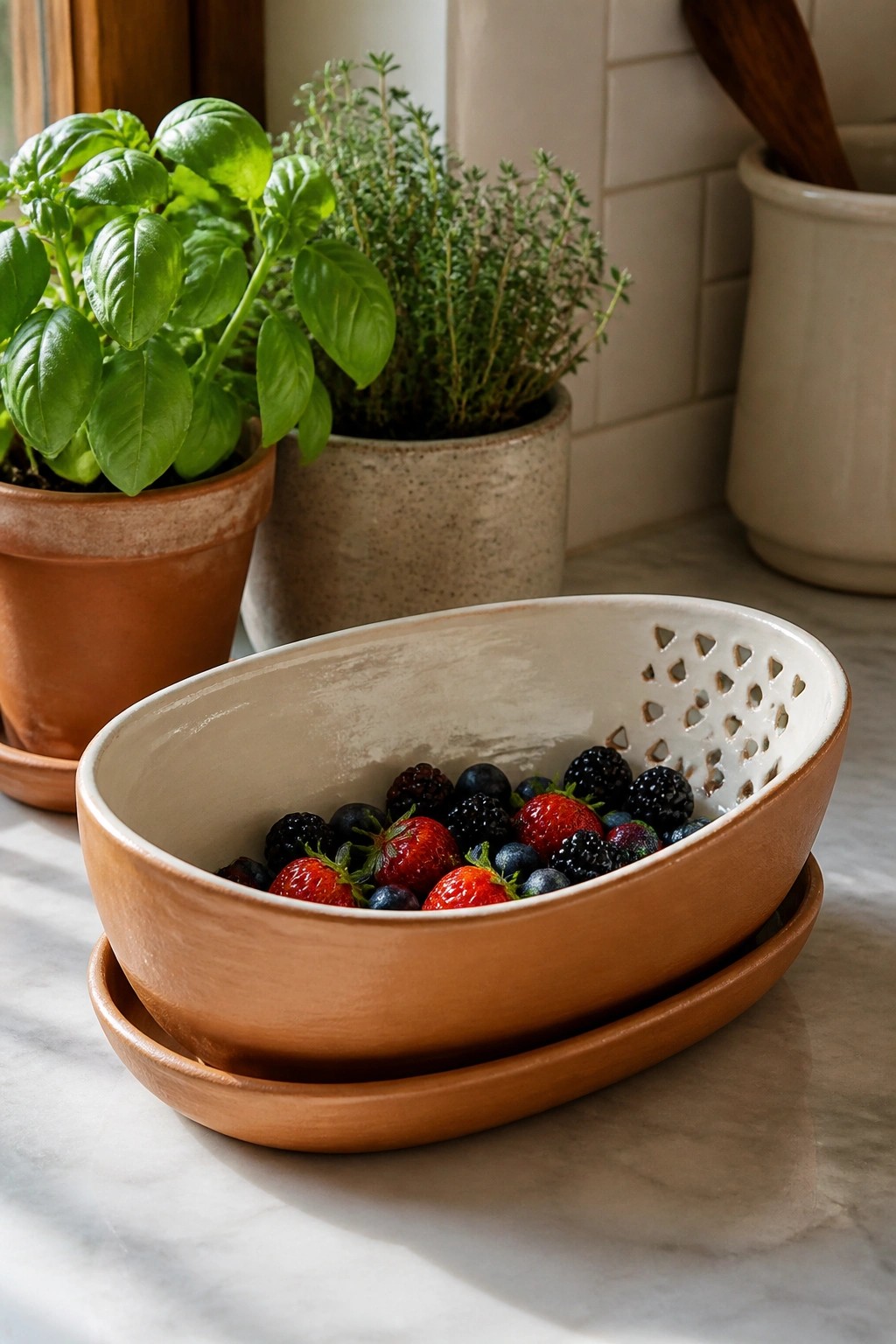
A two-piece berry bowl set made from terracotta clay pairs an oval upper bowl with a solid matching tray. One side of the upper bowl has a cluster of small heart-shaped cutouts that let rinse water drain away from the fruit. The interior is finished with a simple white glaze while the exterior keeps the natural clay surface. This setup works as a kitchen colander and serving piece in one.
What makes this idea useful is the way the pierced section handles washing without needing a separate strainer. You could swap the hearts for rows of round holes or slots if you want a cleaner look for everyday use. The nesting tray keeps counters dry and turns the whole thing into a ready-to-serve dish once the berries are rinsed. The compact oval shape also scales easily to smaller or larger versions depending on how much fruit you usually buy.
Blue Glazed Berry Bowl with Integrated Drainage Relief
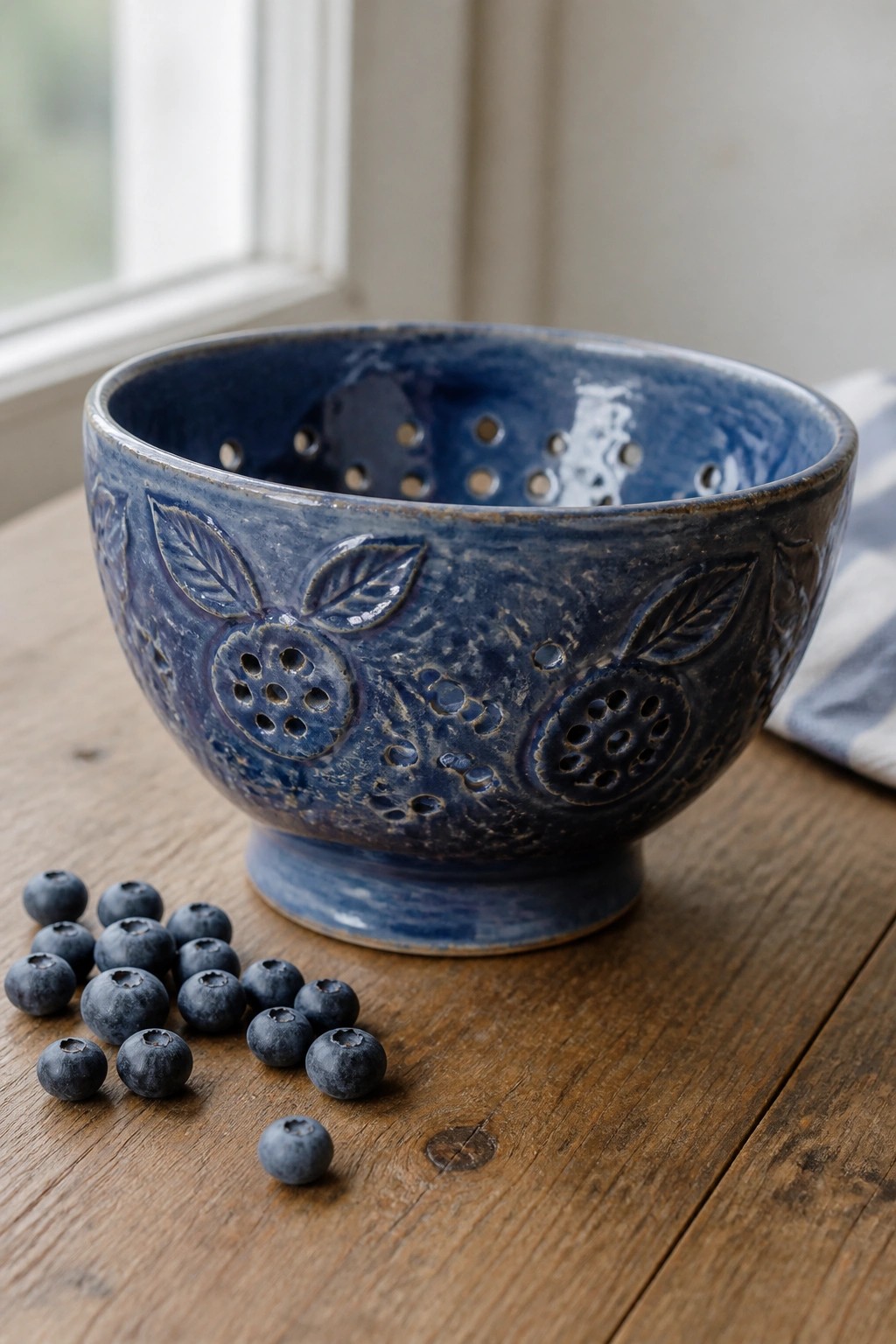
A footed ceramic berry bowl in deep blue glaze uses dozens of small pierced holes for drainage while keeping the interior smooth enough for easy berry rinsing. Sculpted clusters of oranges and leaves wrap around the exterior, with many of the holes placed directly inside those raised shapes so the pattern itself helps water flow out. The thick, slightly uneven glaze pools in the texture and highlights the handmade surface without covering the details.
What makes this idea useful is the way the drainage holes double as part of the decoration, so the bowl still looks finished when it is empty on a counter. In a kitchen it works well for washing and serving berries in one step, and the same relief-and-pierce method could be scaled down for smaller prep bowls or swapped for different fruit shapes. You could also simplify the carving to just a few repeating motifs if you want a faster version for gifts or market sales.
Openwork Rim Berry Bowl for Drainage
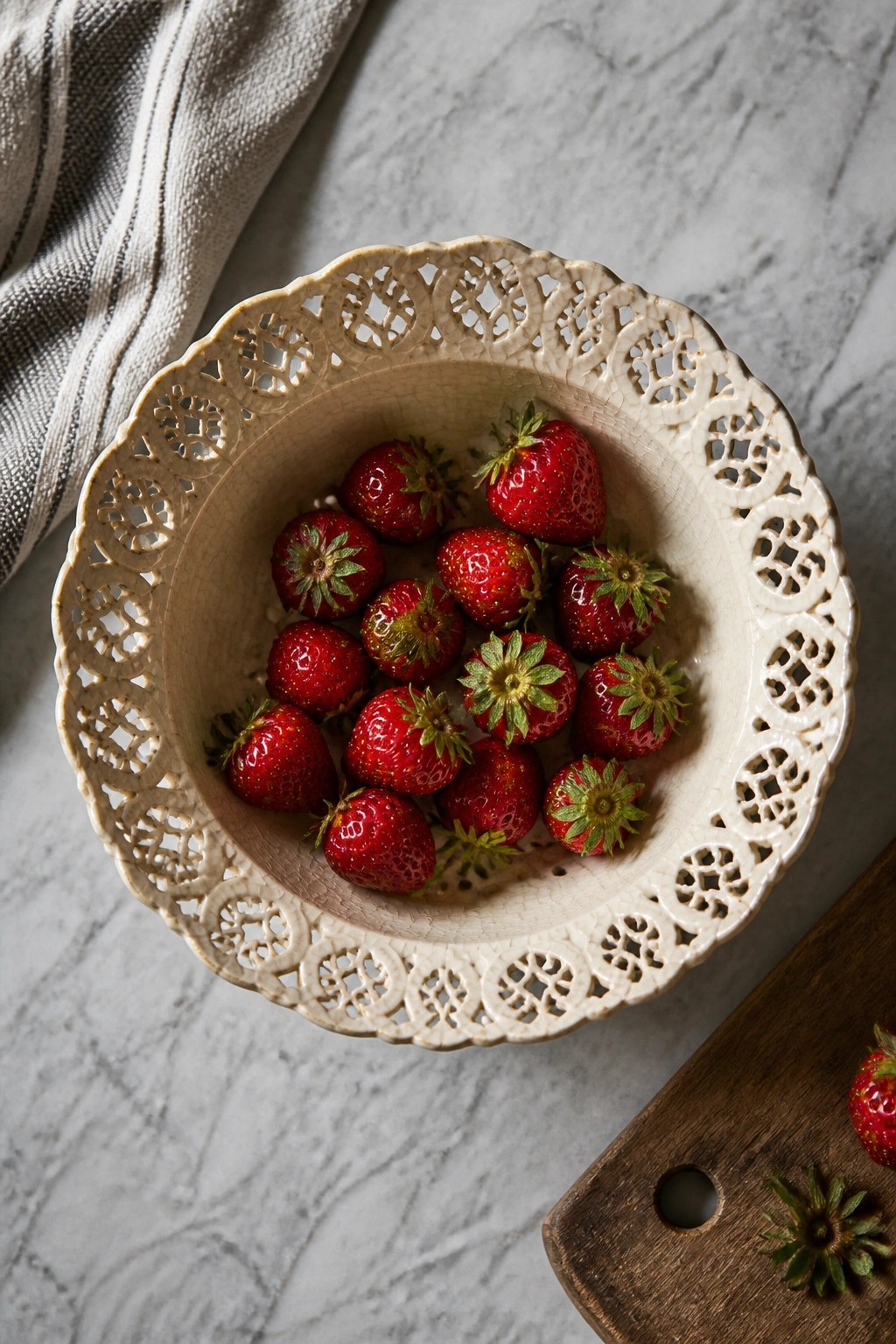
A berry bowl shaped with a wide, solid base and an elevated rim of cutout patterns keeps fruit from sitting in moisture. The openwork around the edge creates ventilation while the main bowl area holds the strawberries in place. This cream-colored piece uses a subtle crackle surface that highlights the contrast between the solid clay and the pierced sections. It belongs to the category of functional kitchen bowls built specifically for produce that needs airflow.
What makes this idea useful is how the rim pattern turns decoration into a working drainage system so berries last longer on the counter. You could simplify the cutouts to basic geometric shapes if the full lace look takes too long to carve. In a kitchen this shape fits neatly inside a larger serving bowl or on a shelf for everyday use. The same open rim approach could be scaled down for smaller herb dryers or adapted to a rectangular tray for cherry tomatoes.
Spouted Berry Bowl with Pierced Drainage Holes
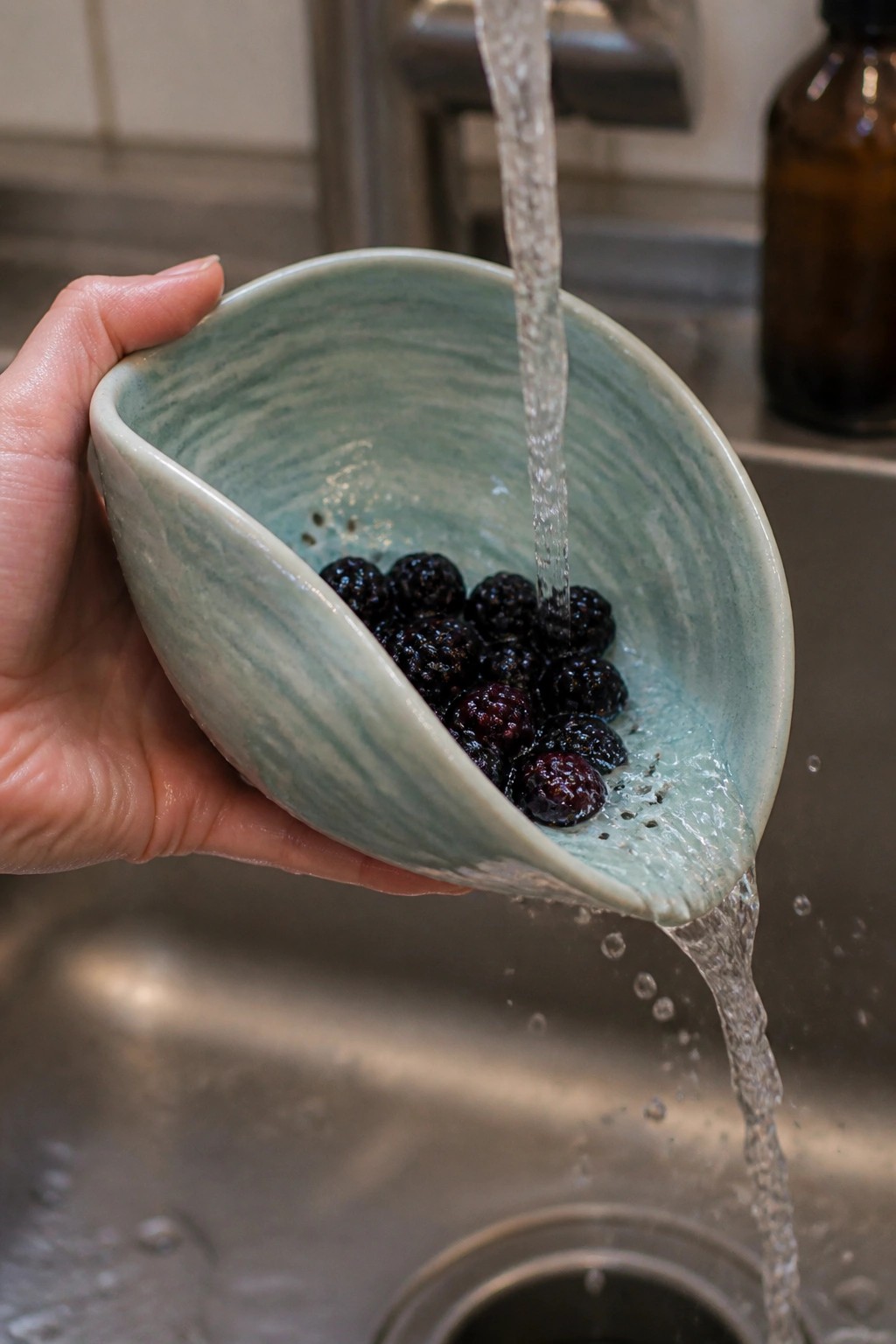
A handmade ceramic berry bowl with an offset pouring lip lets you rinse fruit under the tap and tip the water out in one motion. The marbled green glaze covers a form that narrows toward the front, guiding water through small pierced holes clustered near the rim. This keeps the berries inside while excess water exits cleanly into the sink.
The shape does a lot of the work here because the lip and hole placement remove the need for a separate strainer. You could scale the same pattern down for a single-serve version or swap the glaze for a matte white to match other kitchen dishes. In a kitchen, this kind of piece stays on the counter ready for daily berry washing and looks intentional rather than makeshift.
Speckled Ceramic Berry Bowl with Full-Side Drainage
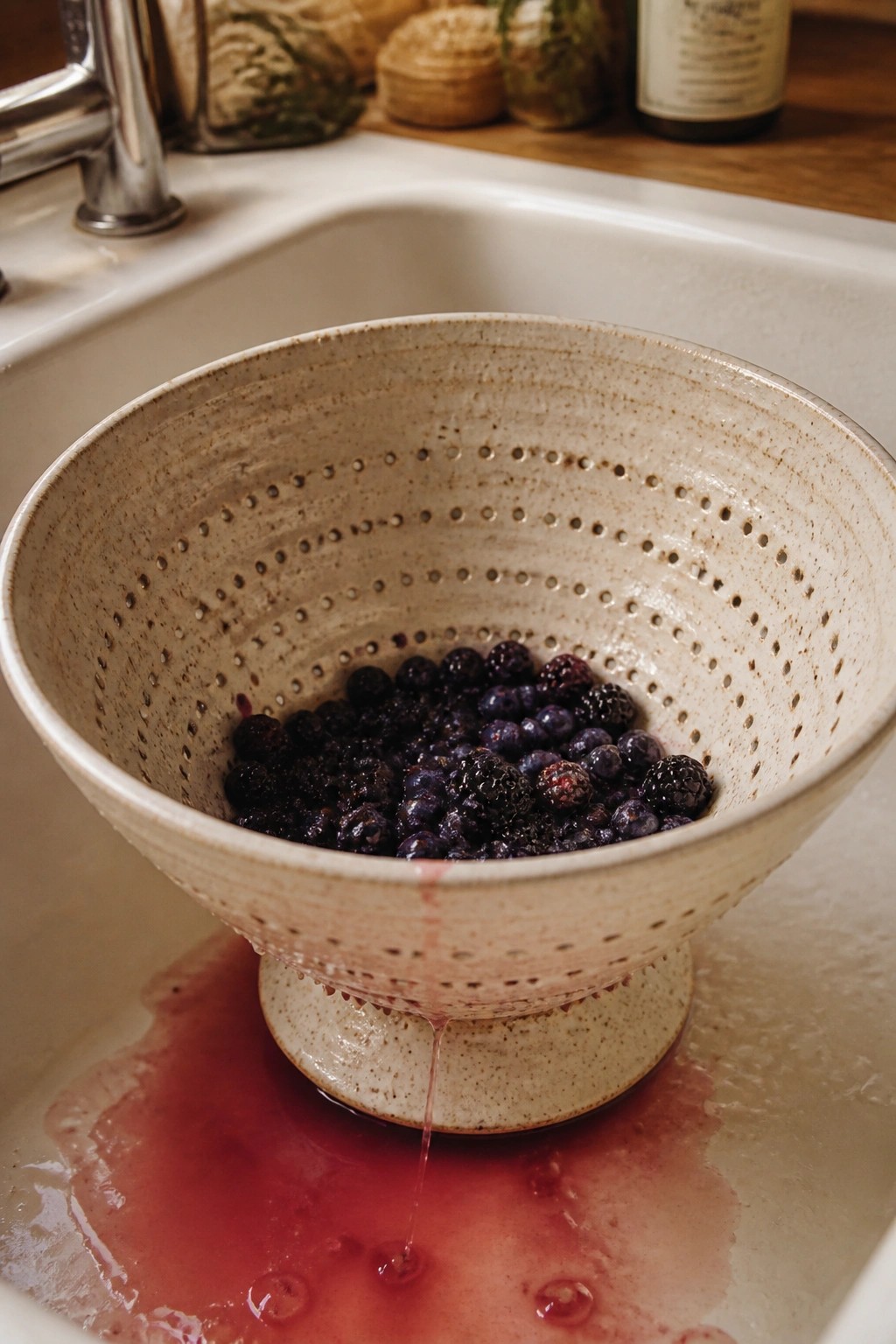
A ceramic berry bowl with dozens of small pierced holes across the sides and base lets you rinse fruit directly and drain it without a separate strainer. The short pedestal foot raises the bowl so liquid flows out freely, and the matte speckled glaze gives it a durable, everyday kitchen surface. This design fits the functional berry bowl category because the holes are spaced to hold back berries while releasing juice and water quickly.
What makes this idea useful is the way the drainage pattern handles real kitchen tasks like washing berries or defrosting frozen fruit without extra tools. You could scale the same hole layout down for a smaller two-person version or widen the foot slightly to make it more stable on a wet countertop. In a kitchen this shape keeps produce from soaking and doubles as a serving piece straight from the sink.
Stacked Berry Bowl with Pierced Drainage Colander
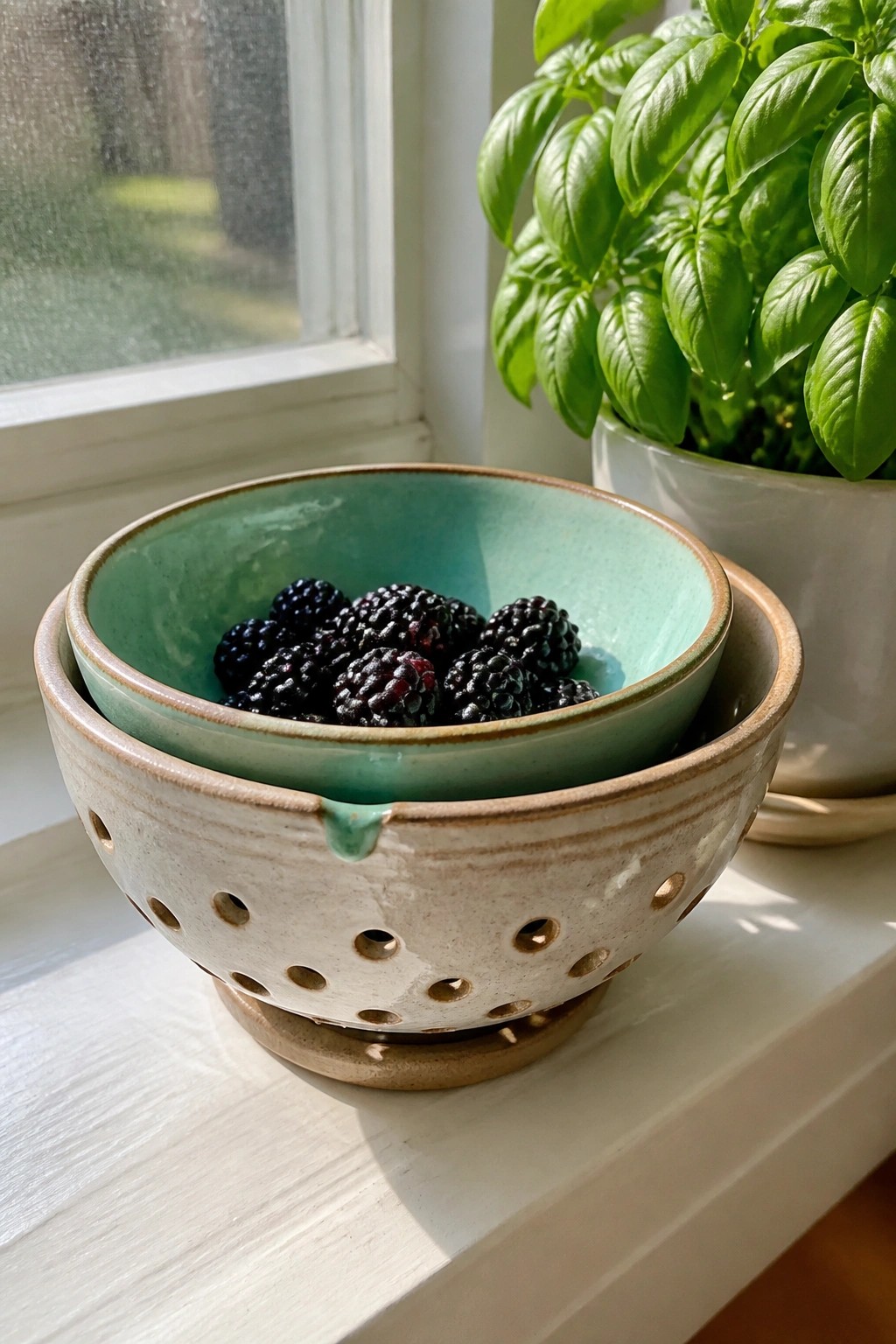
A two-part berry bowl uses an outer colander-style piece with evenly spaced holes and a small pouring lip to handle rinsing, paired with a smooth inner bowl that nests inside for serving. The outer bowl has a speckled matte surface and sits on a matching saucer, while the inner bowl carries a glossy turquoise glaze that contrasts with the earthy outer tone. This design keeps the berries from sitting in water after washing and turns the whole set into a single kitchen item for prep and table use.
What makes this idea useful is the way the outer bowl doubles as both a strainer and a holder, so you rinse the fruit once and move straight to serving. The stacked shape works well on a countertop or windowsill where space is limited. You could adapt the same idea by switching the inner bowl to a different glaze color or by adjusting hole spacing to suit strawberries or cherries instead. For a gift, something like this stands out because it solves a real kitchen task without extra tools.
Cat Face Berry Bowl with Pierced Drainage
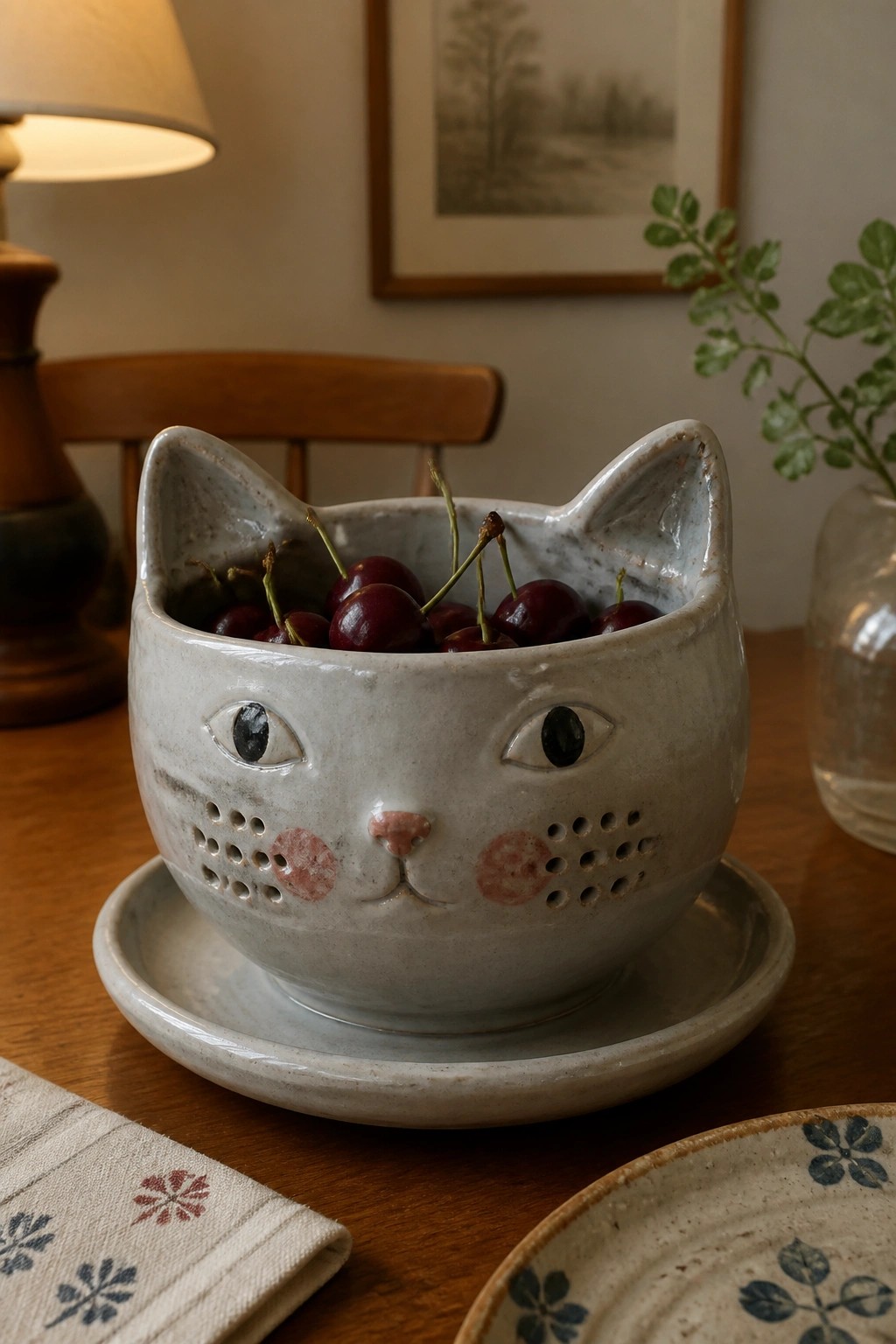
A cat-shaped berry bowl gives you built-in drainage through a series of small holes pierced into the cheeks and sides. The sculpted ears, eyes, nose, and whiskers turn the bowl into a single piece that works as both strainer and serving dish. A shallow saucer underneath catches any drips. The light speckled glaze keeps the focus on the form and the pattern of holes rather than on bright color.
What makes this idea useful is how the holes double as decoration while doing the actual draining work. You could repeat the same face on a taller or wider bowl if you need more capacity, or simplify it to just the pierced cheeks on a plain round form. In a kitchen this shape sits easily on the counter or table without taking up much space. For a variation, change the hole layout to match a different animal or leaf pattern while keeping the same overall size.
Frequently Asked Questions
1. How do pierced drainage patterns keep berries fresh longer in pottery bowls? Pierced patterns allow air to circulate around the fruit while excess moisture drains away from the bottom. This reduces mold growth and prevents the berries from becoming soggy. When making your own bowl, space the holes evenly across the base and sides so water flows freely without letting small berries fall through.
2. What type of clay works best for creating functional berry bowls with drainage holes? Stoneware or porcelain clays that fire to cone 6 or higher offer good durability and food safety. These clays hold their shape well during the piercing process and resist cracking after multiple uses. Test a small sample piece first to confirm the clay does not warp when you add the drainage pattern.
3. How can beginners safely add pierced designs without damaging the bowl? Start with a leather-hard bowl and use a thin needle tool or small drill bit to create holes while the clay is still firm but not fully dry. Work slowly and support the inside of the bowl with your hand to avoid dents. Allow the piece to dry completely before bisque firing to prevent cracks around the holes.
4. What glazing choices keep the drainage area effective and the bowl food safe? Apply food-safe glazes only to the interior surfaces and avoid covering the pierced holes. Leave the drainage area unglazed or use a light wash that will not clog the openings. Fire the bowl to the recommended temperature for your clay so the glaze matures properly and seals the surface against bacteria.
5. How should these pottery berry bowls be cleaned and stored after use? Hand wash the bowl with mild soap and a soft brush to clear any residue from the holes. Avoid dishwashers if the glaze is not rated for it. Store the bowl upside down in a dry cabinet so air can reach all surfaces and prevent moisture buildup inside the drainage pattern.

Pottery Path is my cozy corner of the internet where I share clay ideas, pottery inspiration, and simple projects you can recreate at home. I love exploring everything from air dry clay to handbuilt pottery to cute minis that brighten your day. My goal is to make clay crafting feel easy, fun, and welcoming for anyone who wants to try it.
You will find beginner friendly tutorials, creative pottery painting ideas, and lots of warm inspiration for slow and happy crafting. If you enjoy hands on creativity, this space will feel like home.