I’ve been working with clay on and off for a couple of years and handbuilding still feels like the most straightforward way to begin.
I collected these projects because they use basic tools and don’t require a wheel or advanced skills.
Most of them are things I have tried myself or seen work well for people just starting out.
They focus on simple shapes like trays bowls and planters that can be made in a few steps.
I hope they give you a place to begin without making it more complicated than it needs to be.
Two Tone Glazed Mug With Textured Base

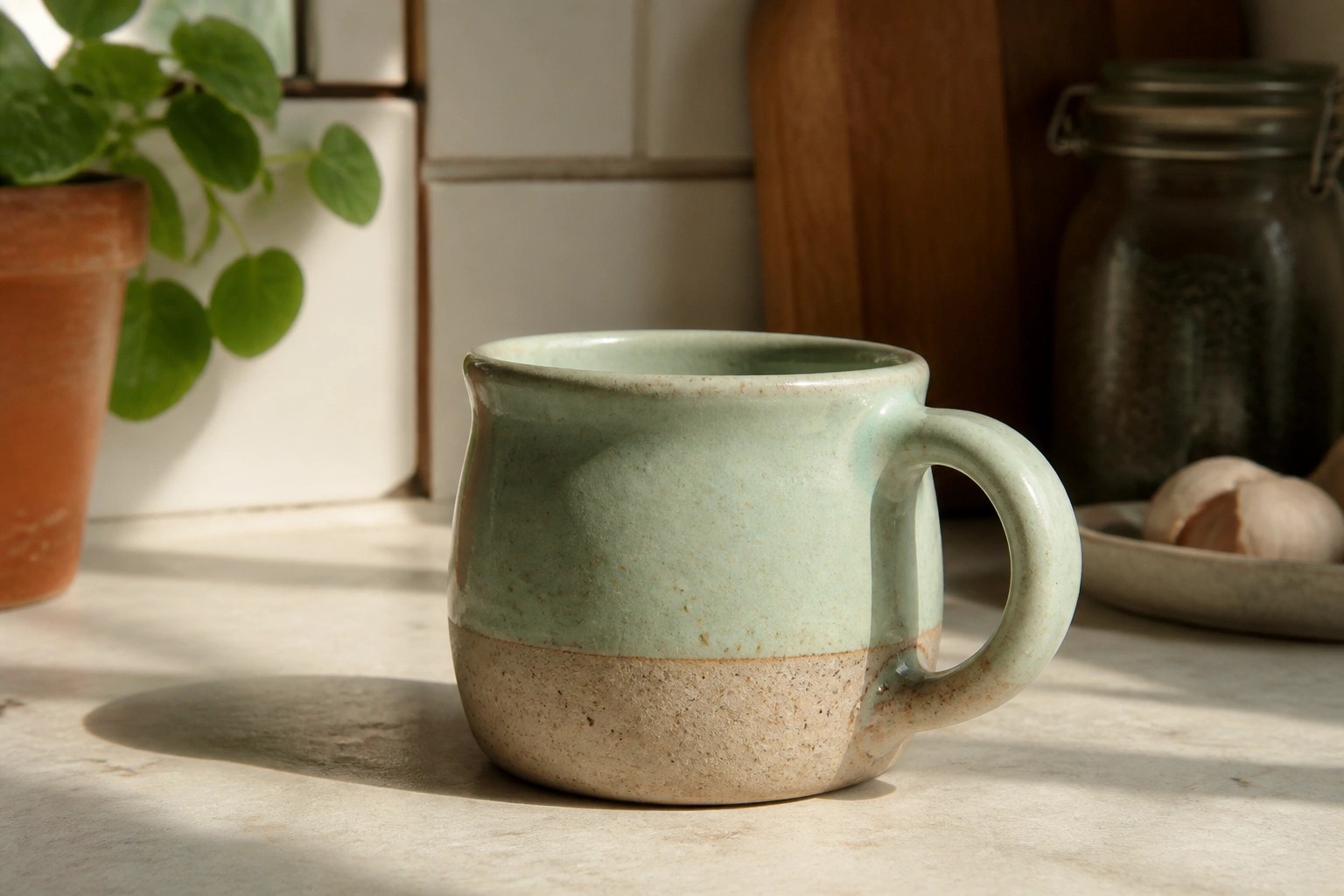
A handbuilt ceramic mug uses a simple two-part glaze treatment where the upper half gets a light green coating and the lower section stays in a speckled matte clay finish. The shape stays low and wide with a thick looped handle added on one side. This split finish highlights the natural clay texture below while keeping the inside and rim smooth for daily use. It works as a straightforward kitchen mug that needs only basic pinching and handle attachment.
What makes this idea useful is how the color break covers small surface bumps on the lower half. You can scale the same split to taller cups or shorten it for small bowls without changing the glazing steps. The matte base also pairs with plain kitchenware and avoids looking too finished. For a first project the handle stays thick enough to attach securely before any drying stage.
Cat Head Planter
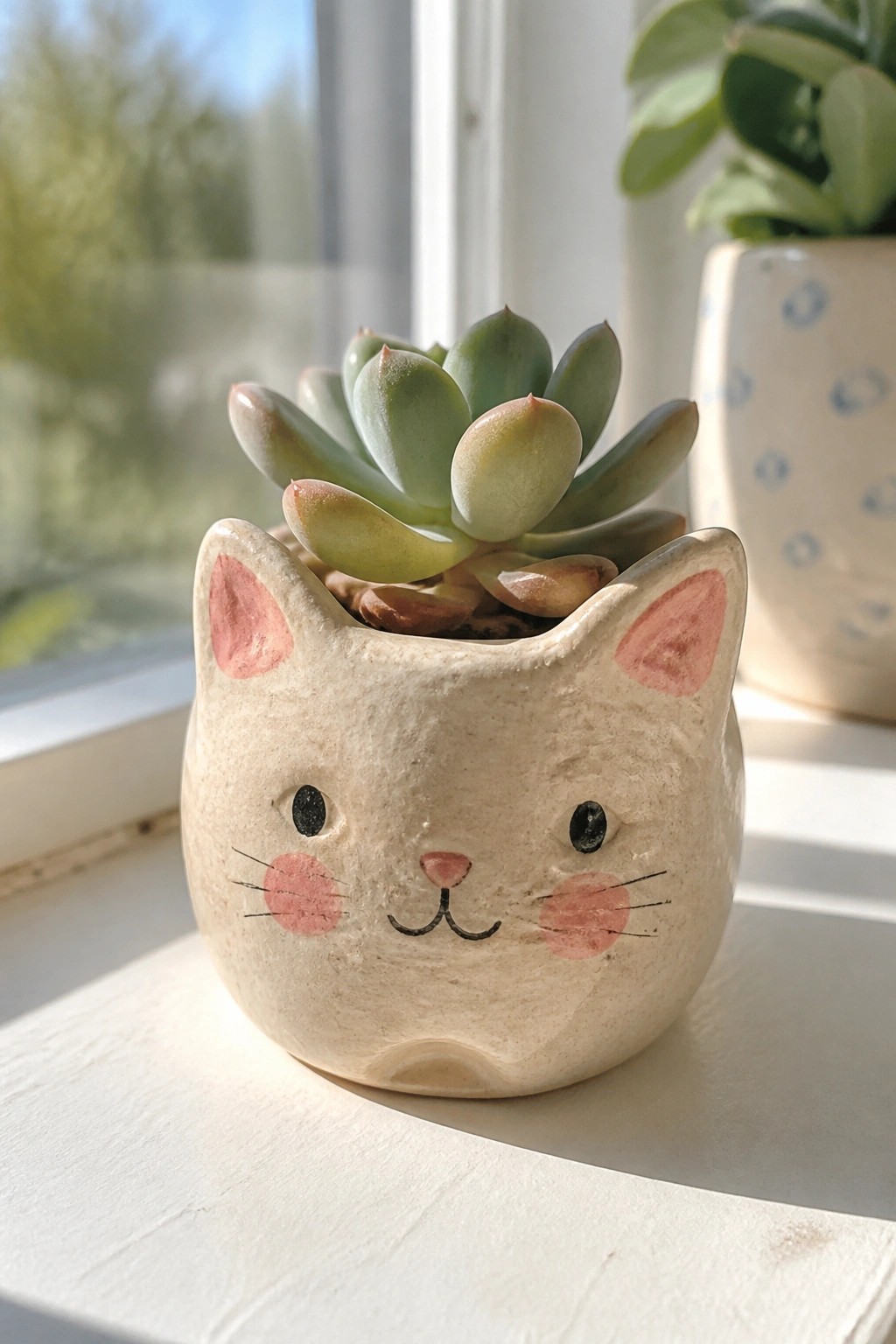
A small clay pot shaped like a cat head gives a simple way to display one or two succulents. The form is built by pinching or coiling the walls into a rounded bowl, then adding two ear shapes at the rim. The face uses basic painted marks for eyes, nose, and whiskers rather than added clay pieces, which keeps the build straightforward.
What makes this idea useful is that the same head shape can be made larger for a bigger plant or changed to another animal with different ear angles. The painted face keeps the project beginner friendly because it avoids carving or sculpting fine details. A piece like this works especially well on a narrow windowsill or desk where space is tight, and the cat theme makes it easy to match to a specific gift recipient.
Finger-Pressed Texture Bowl
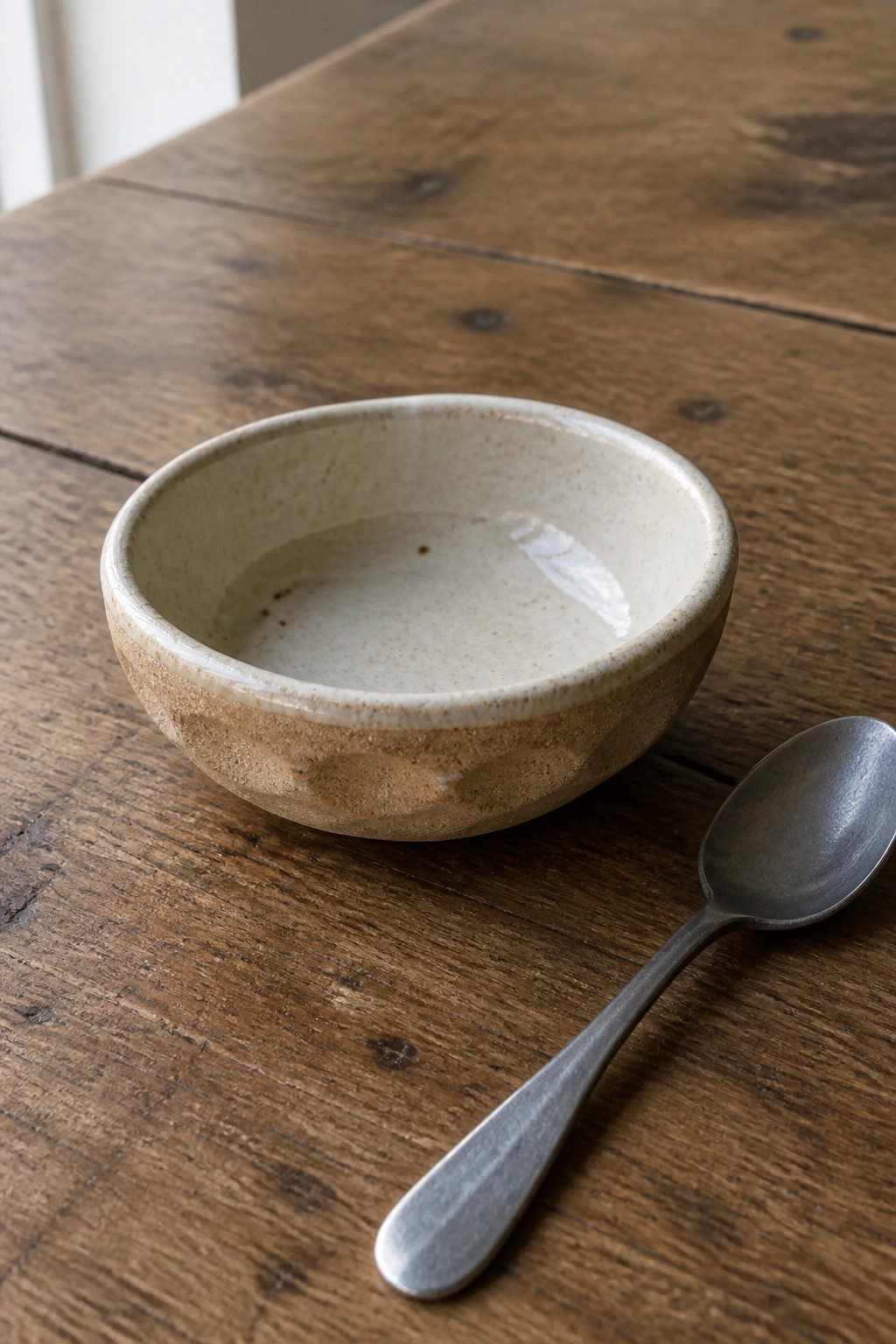
A small handbuilt bowl like this starts as a simple pinch pot that you shape by pressing your fingers into the clay walls. The outside keeps a natural clay surface with visible dimples from the forming process, while the inside gets a light speckled glaze that makes it smooth and easy to clean. This approach gives you a functional bowl without needing a wheel or complex tools.
What makes this idea useful is how the texture does most of the visual work on its own. You can adapt the same shape into a set of four or five matching dishes for salt, spices, or small snacks in the kitchen. The compact size means it takes little clay and dries quickly, so you can finish and fire a whole batch in one go. For a gift, try making several in different glaze colors to keep the form consistent while changing the look.
Leaf-Shaped Ceramic Dish
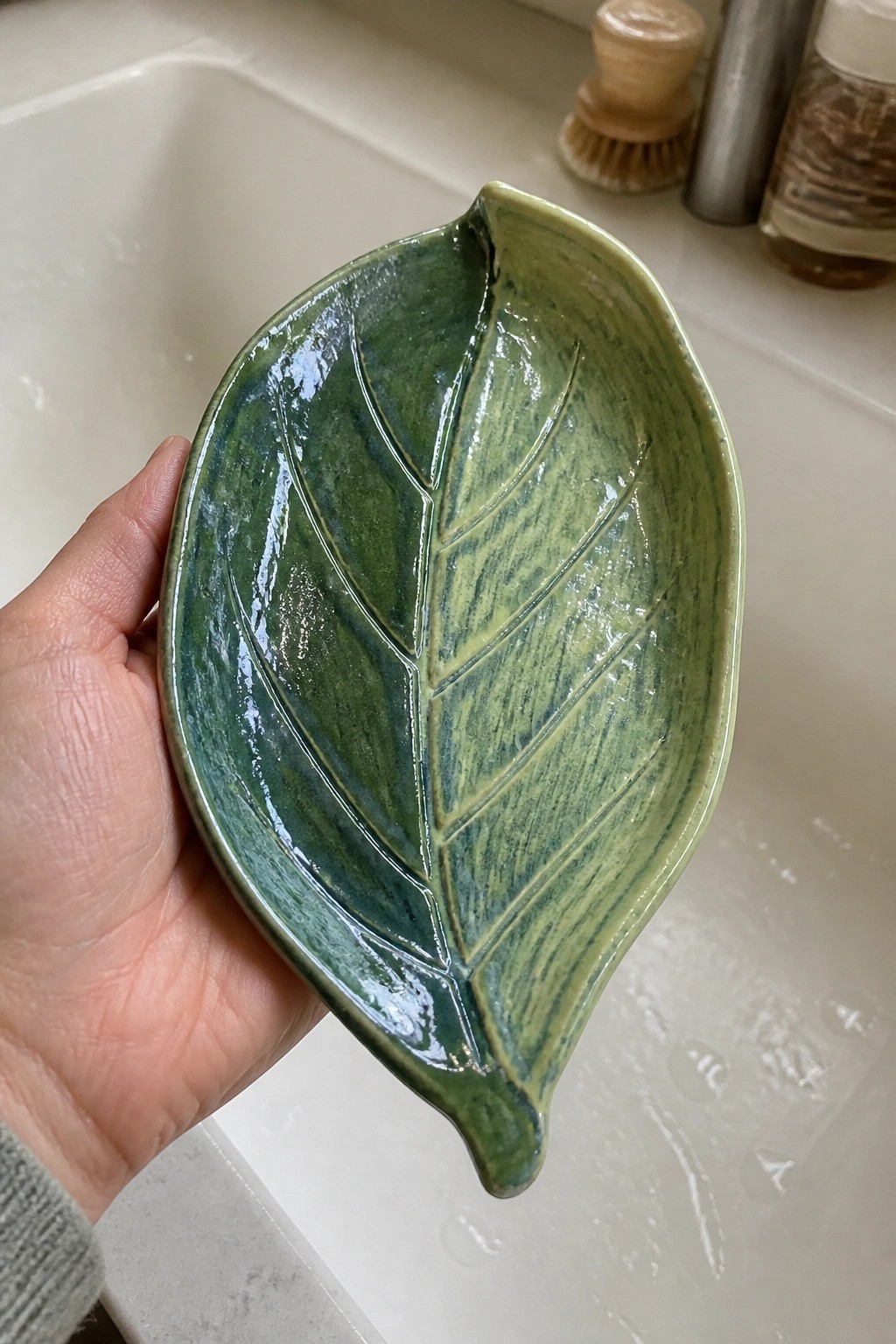
A leaf-shaped ceramic dish works as a small tray for holding soap, jewelry, or loose items around the house. The form comes from rolling out a slab, cutting a pointed oval, and adding vein lines that give it structure and texture. Layered green glazes create depth across the surface while keeping the piece simple enough for a first project. It fits the small tray or holder category that beginners can finish in a few steps.
What makes this idea useful is how the natural outline already supplies both shape and decoration. You could make a few in different sizes for bathroom soap or desk catch-alls, or swap the glaze for blues if you want it to match kitchen tiles. The same leaf cut can be pinched into a shallow bowl or left flatter for a ring rest. A piece like this stands out in searches because the form is easy to recognize and adapt without extra tools.
Hanging Floral Tile Wall Hanging
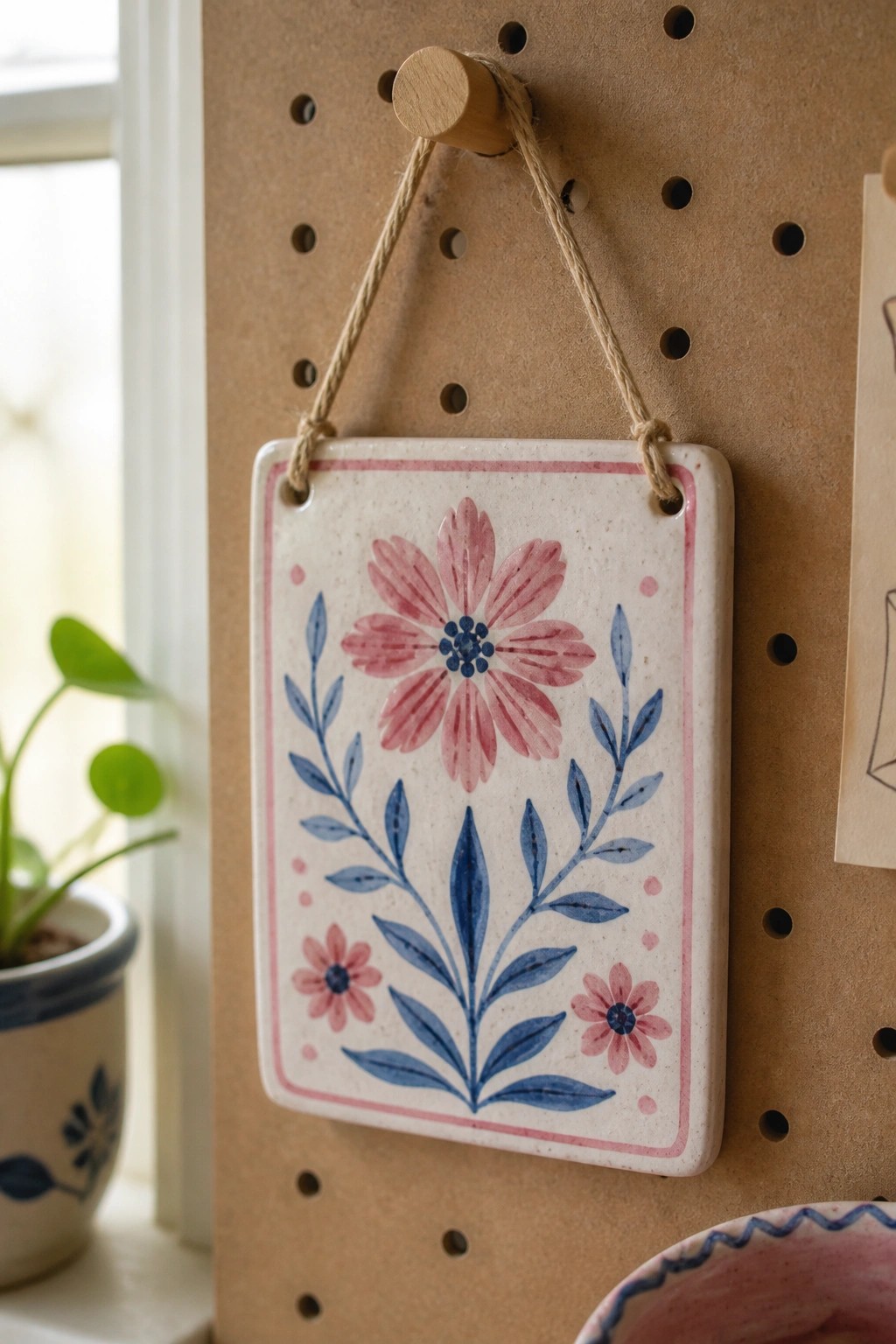
A flat rectangular tile slab works well here as a simple wall hanging. The design uses a central large flower with smaller blooms and leafy stems painted in pink and blue, plus a thin border and scattered dots for balance. The two holes at the top let you thread cord or wire for easy hanging without needing extra hardware. This approach keeps the project to basic slab building and underglaze painting, which stays accessible for first attempts.
What makes this idea useful is how the flat shape fits into small spaces like a kitchen wall or shelf edge. You can swap the flower colors or simplify the leaves to match your own style or existing dishes. For a gift, the same tile size works if you add initials or a date on the back before firing. The painted detail stands out on a plain pegboard or hook, so the piece photographs clearly for sharing.
Small Handbuilt Ring Dish
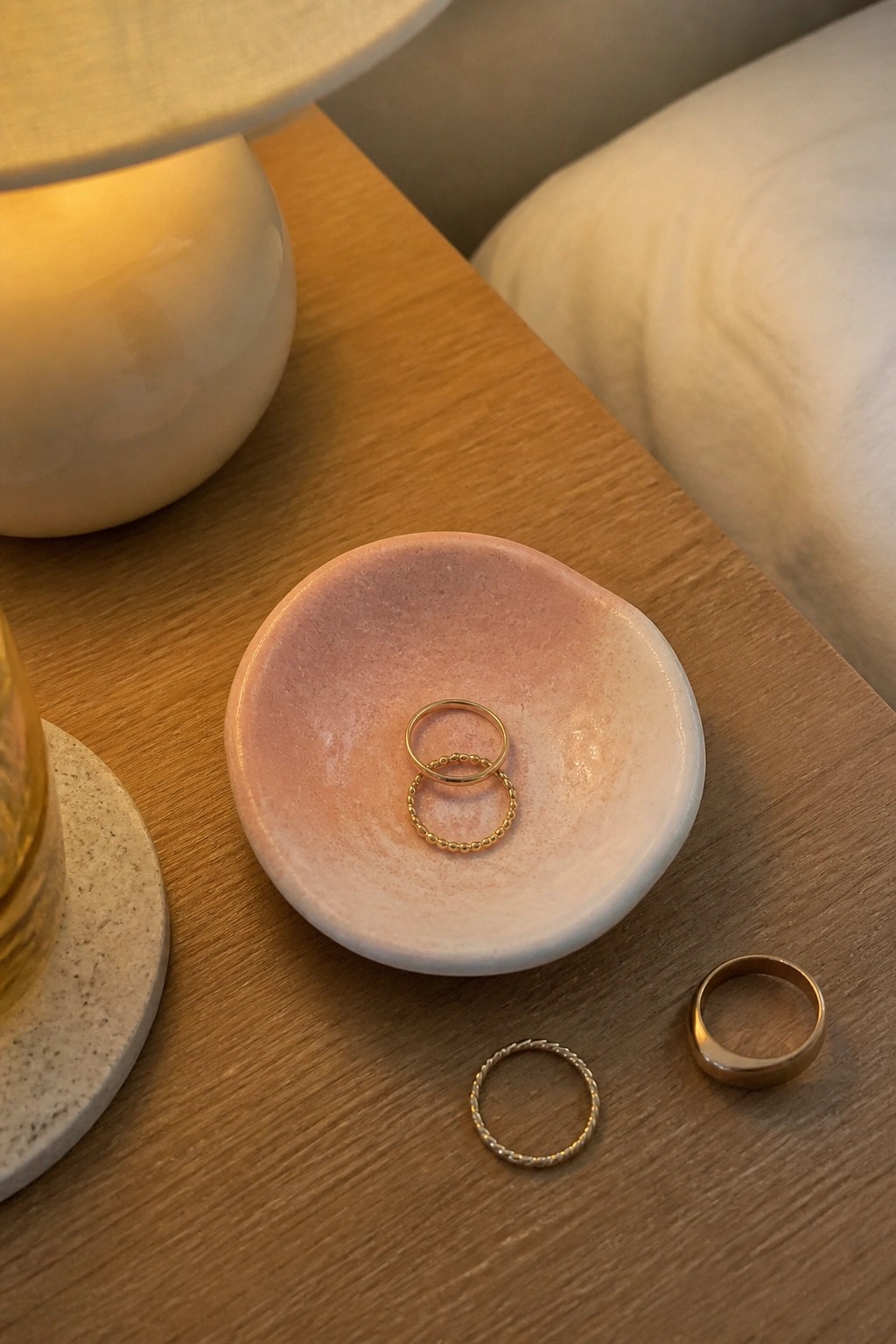
A small pinched or slab-built clay dish makes an effective ring holder when shaped into an organic, shallow bowl with a soft rim. The pinkish glaze that fades to white at the edges gives the surface a simple color shift without extra decoration, and the compact size keeps it practical for holding just a few rings at once. This project falls into the ring dish category and stays straightforward for new builders since the form relies on basic shaping rather than precise symmetry or attachments.
What makes this idea useful is how the low profile and rounded edges let it sit neatly on a bedside table or dresser without taking much space. You could swap the glaze for a solid matte color or add a shallow foot underneath to change the look while keeping the same size. The same dish shape works just as well as a small soap rest in a bathroom or a holder for loose change near the door. Scaling the rim a bit wider turns the idea into a quick key tray without adding new steps.
Citrus Sectioned Snack Dish
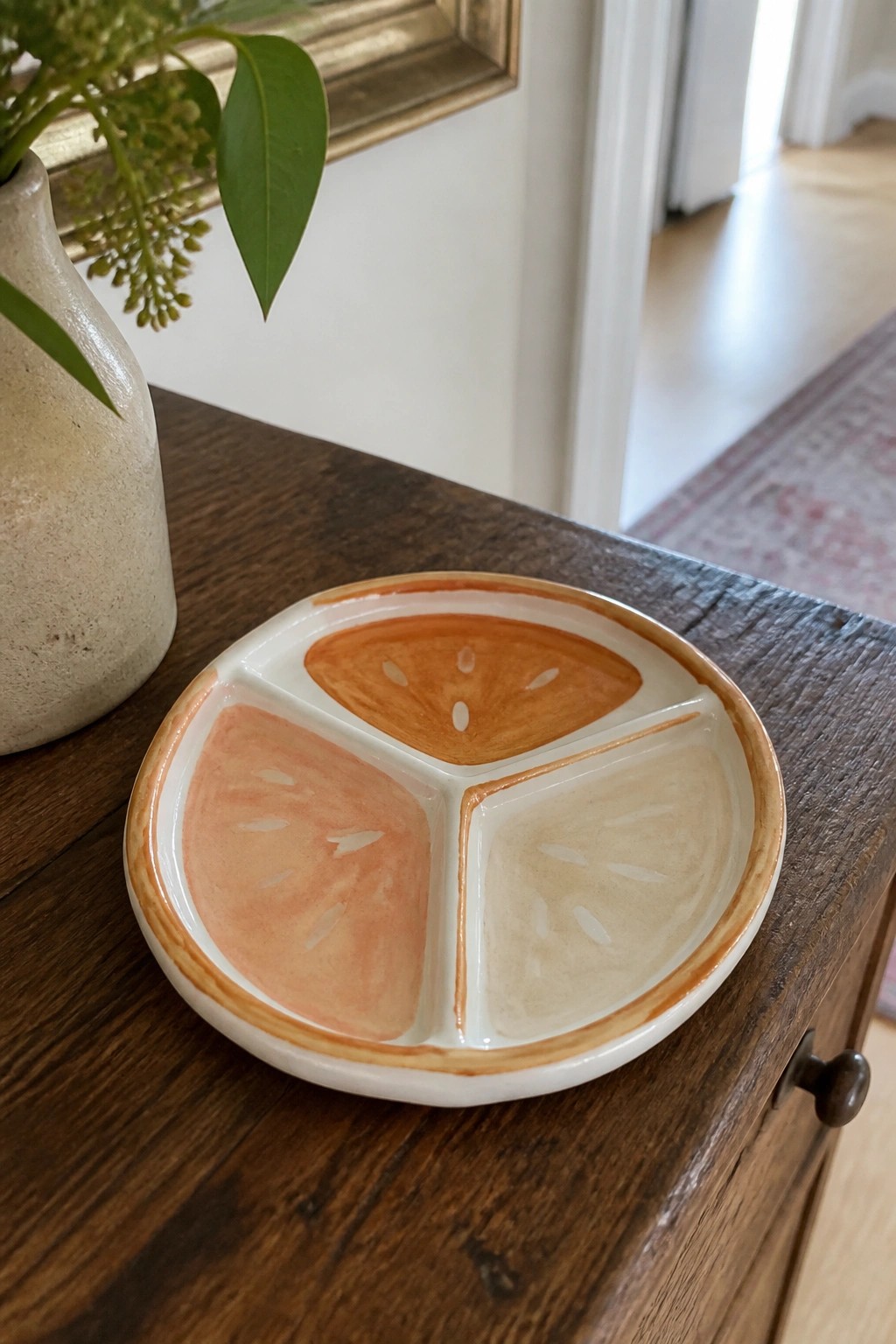
A handbuilt divided dish with three compartments works well as a small serving tray for snacks or dips. Each section uses simple painted shapes in warm orange and peach tones with white dashes to suggest citrus slices, creating clear visual separation between the parts. The round overall form keeps the piece compact while the color blocking highlights the divisions without extra sculpting.
What makes this idea useful is how the sections let you serve multiple items on one plate without mixing flavors. You could adapt the painted citrus motif to other simple shapes like leaves or stripes, or switch to solid glazes for faster results. This kind of piece fits on a kitchen counter for olives or on a desk for small snacks, and the small scale makes it easy to try as a first multi-part project.
Tealight Holder Bowl

A small pinched or coiled bowl makes an effective tealight holder when finished with a speckled turquoise glaze over a darker clay body. The low, rounded walls keep the flame contained while the glossy surface catches and softens the light. This project stays simple because it uses one basic form that needs only a smooth interior and a stable base.
What makes this idea useful is how the same shape works on a nightstand, bathroom shelf, or dining table without taking up space. You can swap the glaze for matte black or earthy brown to match different rooms, or add a shallow foot to lift it slightly. For a gift, repeat the form in two or three sizes and vary the glaze color on each. The small scale also means it fires quickly and uses little clay, so it is easy to test new glaze combinations.
Small Hedgehog Clay Figurine
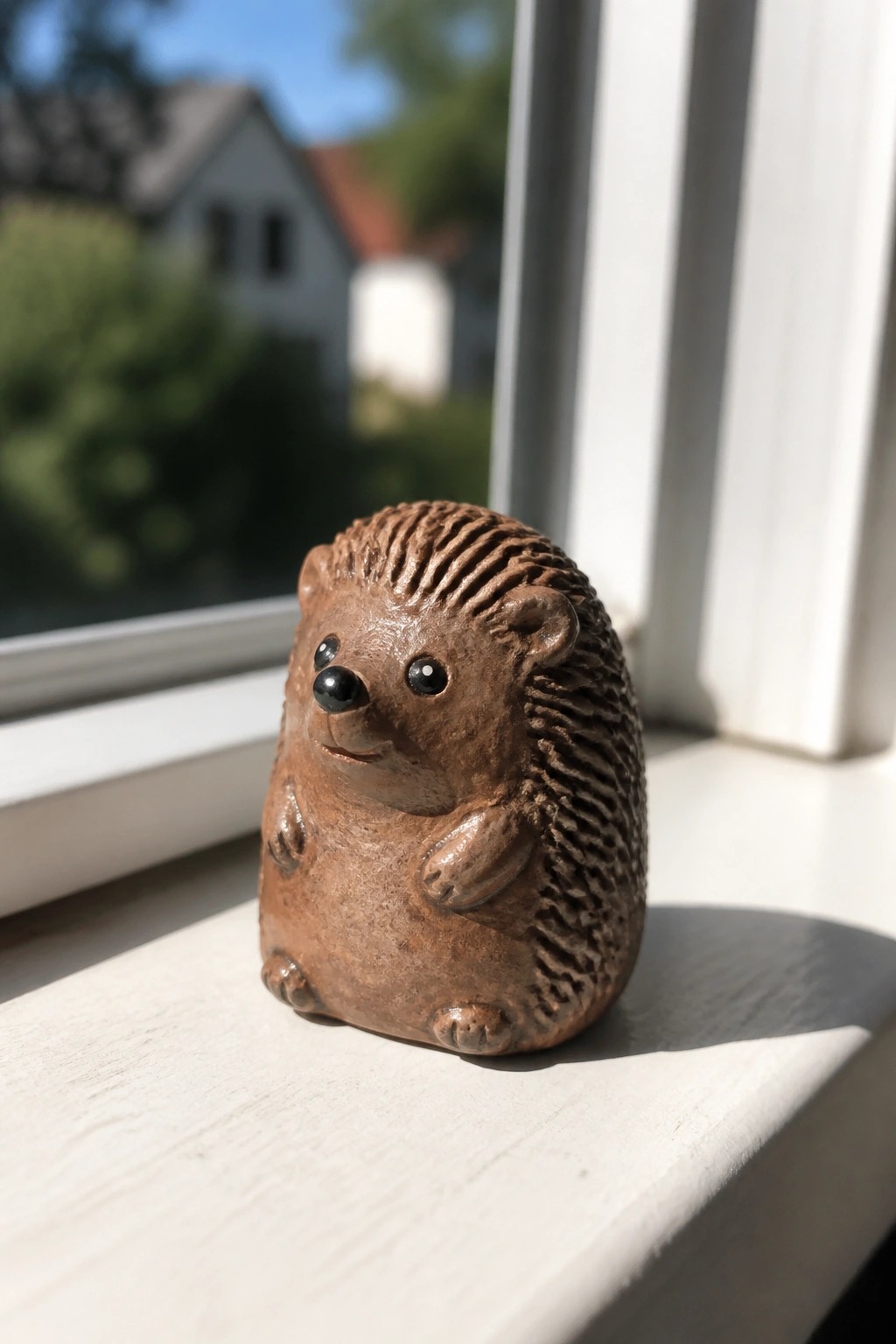
A hedgehog figurine is a straightforward sculpting project that starts with a basic pinched body and added details for the head, legs, and spines. The rounded form and scored texture on the back create a recognizable animal shape without needing advanced carving tools. An earthy brown finish keeps the focus on the handmade form rather than surface decoration, making it a simple decor object for shelves or windowsills.
What makes this idea useful is the small scale, which means it uses little clay and fires quickly in a kiln. You can adapt the same body shape and texture technique to other animals like a fox or rabbit by changing the ears and snout. In a gift setting, this kind of piece stands out on Pinterest because the compact size photographs cleanly against neutral backgrounds. For a first project, it also doubles as practice for building stable forms that sit flat without extra supports.
Small Salt Cellars for Everyday Use
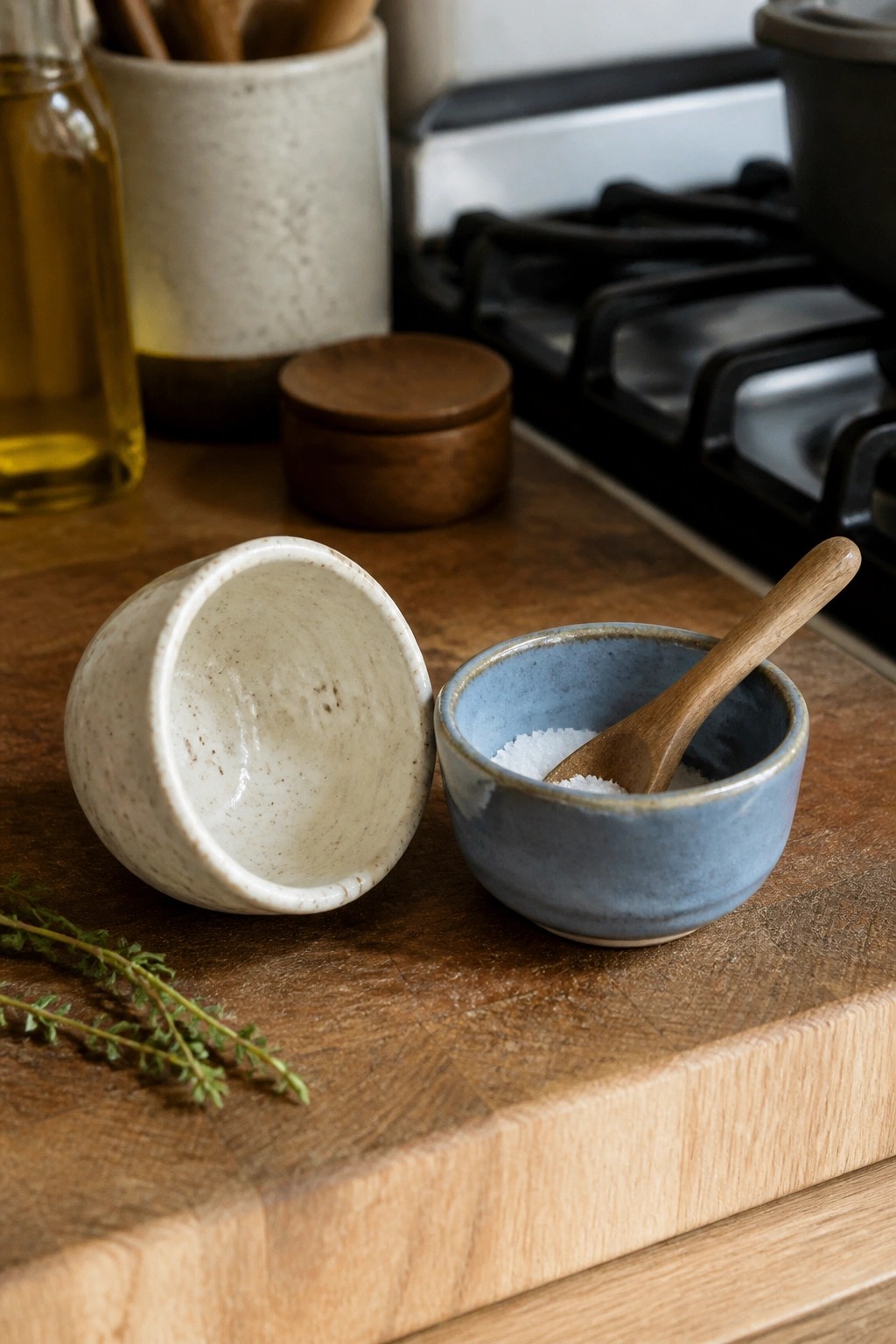
These small, rounded bowls make practical salt cellars or spice holders. The open shape with a gentle curve at the rim lets you pinch or scoop easily, while the choice of a speckled off-white glaze or a soft blue one keeps them simple and functional on the counter. Handbuilt versions like these sit low and stable, so they stay put during cooking without tipping.
The small scale makes this easy to adapt into a matching set for different seasonings. You can keep the same form but change the glaze color on each one, or add a simple wooden lid to one for keeping moisture out. In a kitchen, this kind of piece works right next to the stove or on the table, and the same basic shape can be widened slightly to hold herbs or narrowed for a single-person salt dish.
Three-Compartment Toothbrush Holder
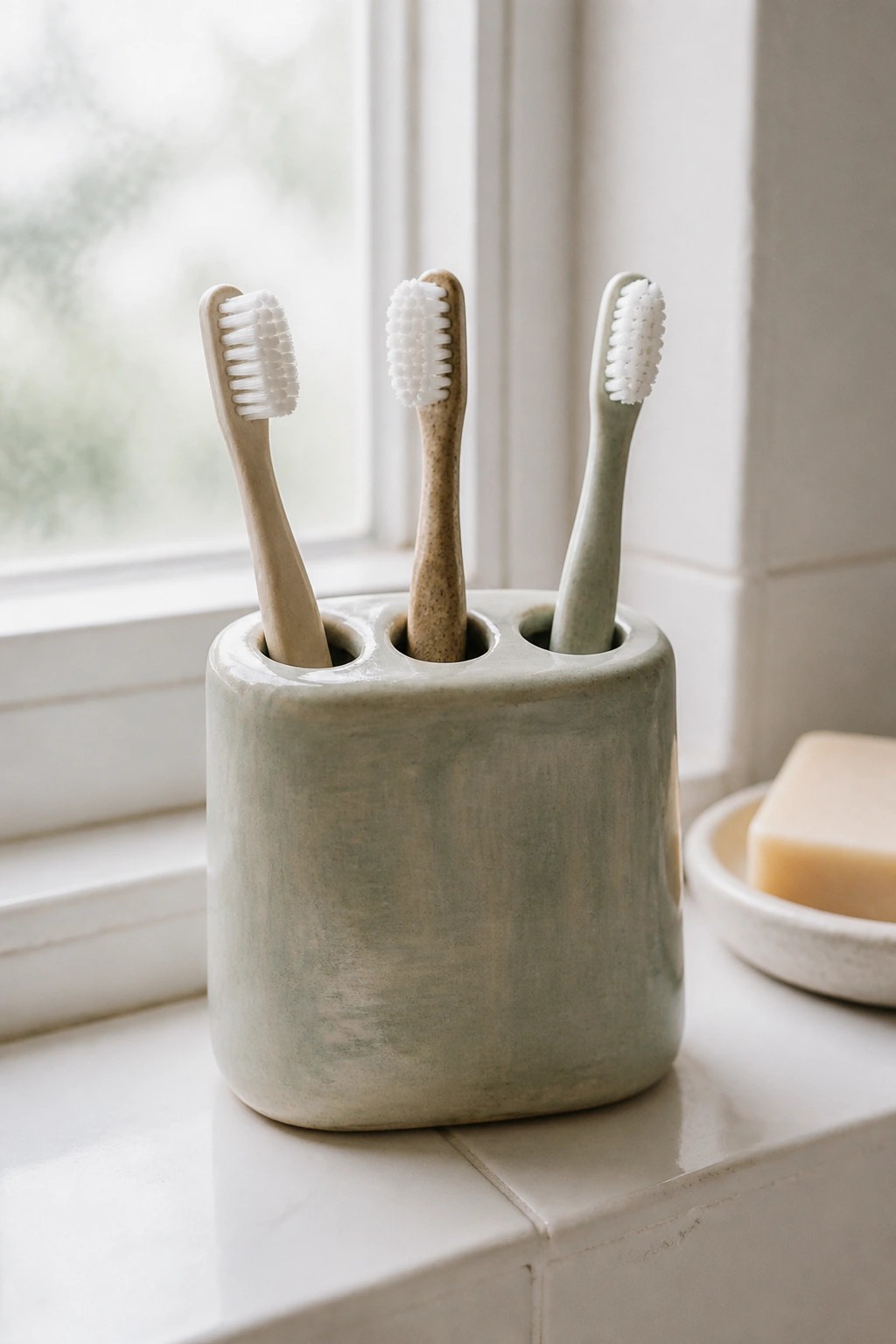
A handbuilt ceramic toothbrush holder with three separate openings keeps brushes upright and separated on a bathroom counter. The simple cylindrical form with rounded edges makes it stable and easy to shape from a single slab or coil. A light green speckled glaze covers the surface and gives the piece a soft, matte finish that hides minor imperfections from first attempts.
What makes this idea useful is how the same base shape can be adjusted for two or four toothbrushes without changing the overall build. The small scale fits narrow ledges or windowsills where larger organizers won’t work. You could rework the idea into a shorter version for kids’ brushes or add a shallow tray area on one side for a bar of soap. In a bathroom, this kind of holder keeps daily items contained while staying quick to make from basic clay.
Handbuilt Sponge Holder with Drainage Holes

A rectangular clay holder built to keep a kitchen sponge upright works well on the edge of a sink. The form is a low open box with a row of small holes along one side that let water drain out instead of pooling. A smooth glazed interior contrasts with the rougher outer surface, which helps the piece stay stable and easy to wipe down. This project falls into the kitchen item category and stays compact enough to form from a single slab.
What makes this idea useful is how the side holes solve the soggy sponge problem without adding extra parts. You can adapt the same shape into a shorter version for a bathroom or stretch it longer to hold two sponges. In a kitchen, this kind of piece fits right on the counter lip and takes up little room. The small scale makes it simple to rework with different hole spacing or a textured stamp on the front.
Notched Yarn Bowl for Knitting and Crochet

A yarn bowl is a simple ceramic form made to hold a ball of yarn while you work. The rim has a cut notch that guides the strand outward, and a small side hole adds an extra feed option or lets you park a needle. The rounded shape keeps the yarn from rolling off surfaces, and the matte, speckled glaze gives it a straightforward studio look that matches other everyday pottery.
What makes this idea useful is how the notch does most of the work without extra parts. You can place it on a table, lap, or basket edge during a project, and the same shape adapts easily if you widen the notch for thicker yarn or add a second slot for color changes. In a craft room it keeps supplies contained without looking like storage, and the compact size means you can make several in one afternoon for gifts or to sell. The form also translates well to a smaller version for embroidery floss or a taller one for bulky fibers.
Slim Handbuilt Bud Vase
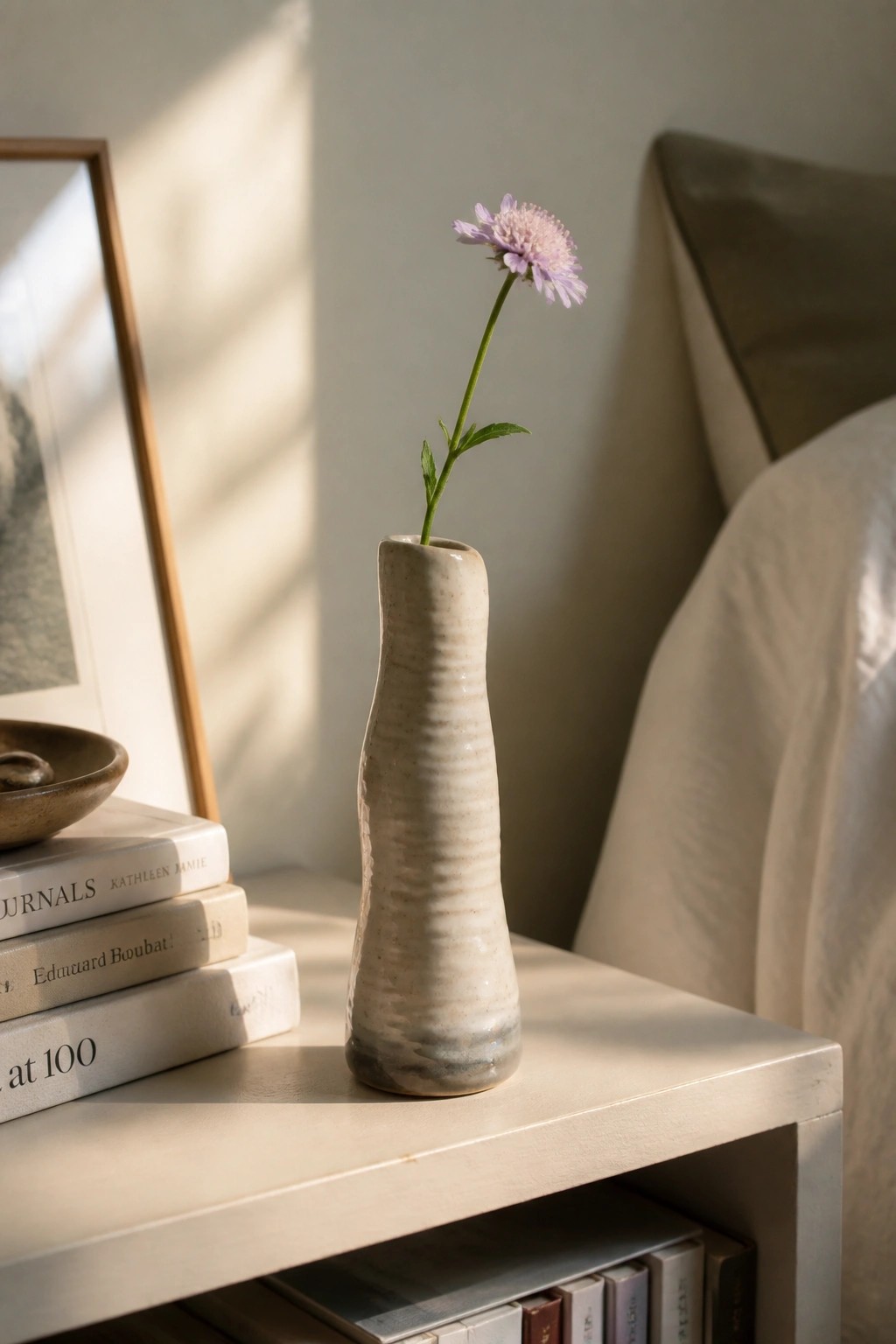
A handbuilt bud vase with a tall tapered shape holds a single flower stem without needing extra support. The form narrows at the top and widens gently toward the base, with horizontal ridges left from the building process. A neutral matte glaze covers the surface and keeps the piece simple. This project falls into the small vase or holder category and uses basic handbuilding steps.
What makes this idea useful is how little space it takes on a shelf or nightstand while still looking complete. You can shorten the overall height or change the curve of the sides to fit whatever flowers you have on hand. The same shape works as a desk pencil cup or a small herb cutting holder if you widen the opening a bit. The clean profile shows up clearly in photos, which helps when saving project ideas for later.
Hanging Wall Pocket with Glazed Interior
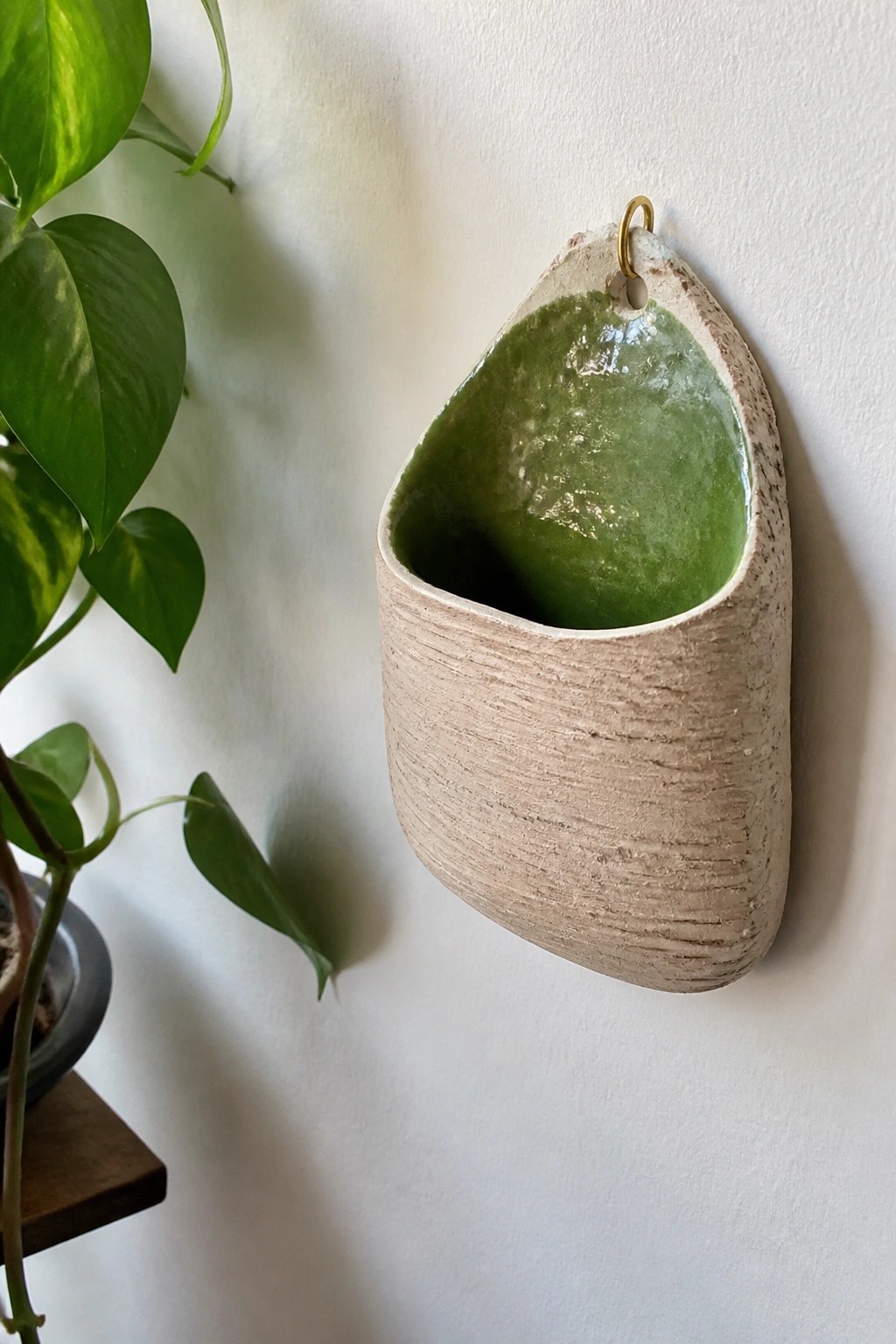
A handbuilt wall pocket made from clay offers a compact way to display small plants or cuttings without using shelf space. The form is shaped like a soft pouch with a narrow top opening and wider base, allowing it to hold water or soil while hanging from a simple metal loop. The exterior keeps a raw, textured surface that shows the clay’s natural tone, while the interior uses a glossy green glaze to create a waterproof basin. This contrast makes the piece both functional and visually clear as a holder.
What makes this idea useful is how easily the shape fits into tight spots like bathrooms or narrow hallways. You can adapt it by widening the opening for more plants or switching the glaze color to match different rooms. The hanging style also works well as a gift because it needs only a small nail or hook to install. For another version, the same pocket form could be made shorter to hold keys or bathroom items instead of greenery.
Small Dish With Concentric Blue Rings

A shallow handbuilt dish with concentric blue rings offers a simple painted project that stays focused on basic form and line work. The rings are applied over a light base glaze so the blue shows up clearly without needing perfect edges or additional layers. This approach works for any small round dish shape and keeps the surface smooth for easy cleaning. The result sits in the dipping dish or small bowl category and requires only basic glazing skills.
What makes this idea useful is how the circle pattern can be widened, narrowed, or limited to just two rings for a different look. The small size makes it practical for soy sauce at the table or as a catch-all for rings and keys. You could adapt the same shape into a slightly deeper bowl or swap the blue for another color to match existing dishes. For a first project, the painted rings give a clear focal point without extra sculpting.
Clay Incense Holder With Swirled Clay
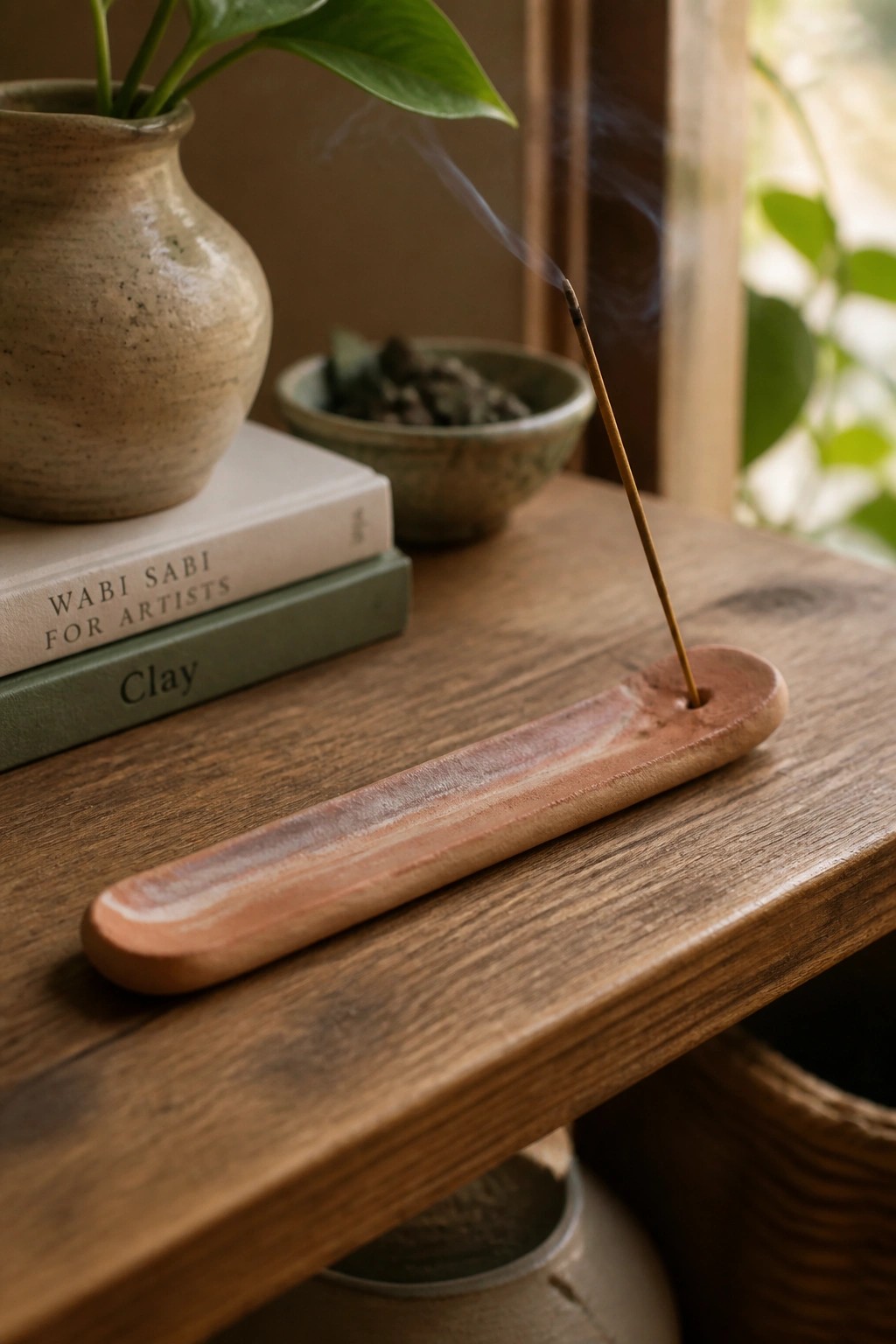
A narrow clay slab with one end rounded and a hole punched through it creates a basic incense holder. The surface comes from mixing two clay colors before shaping, which produces the streaked pattern without any added decoration. The elongated form keeps the stick stable while the flat body rests directly on a surface.
What makes this idea useful is how little clay and space it needs. You can shorten the length for a desk version or widen it slightly to hold a few cones instead of a stick. The same mixed-clay approach works on other small holders like ring dishes or soap rests, and the finished piece fits on a shelf without taking much room.
Leaf Impression Hanging Ornament
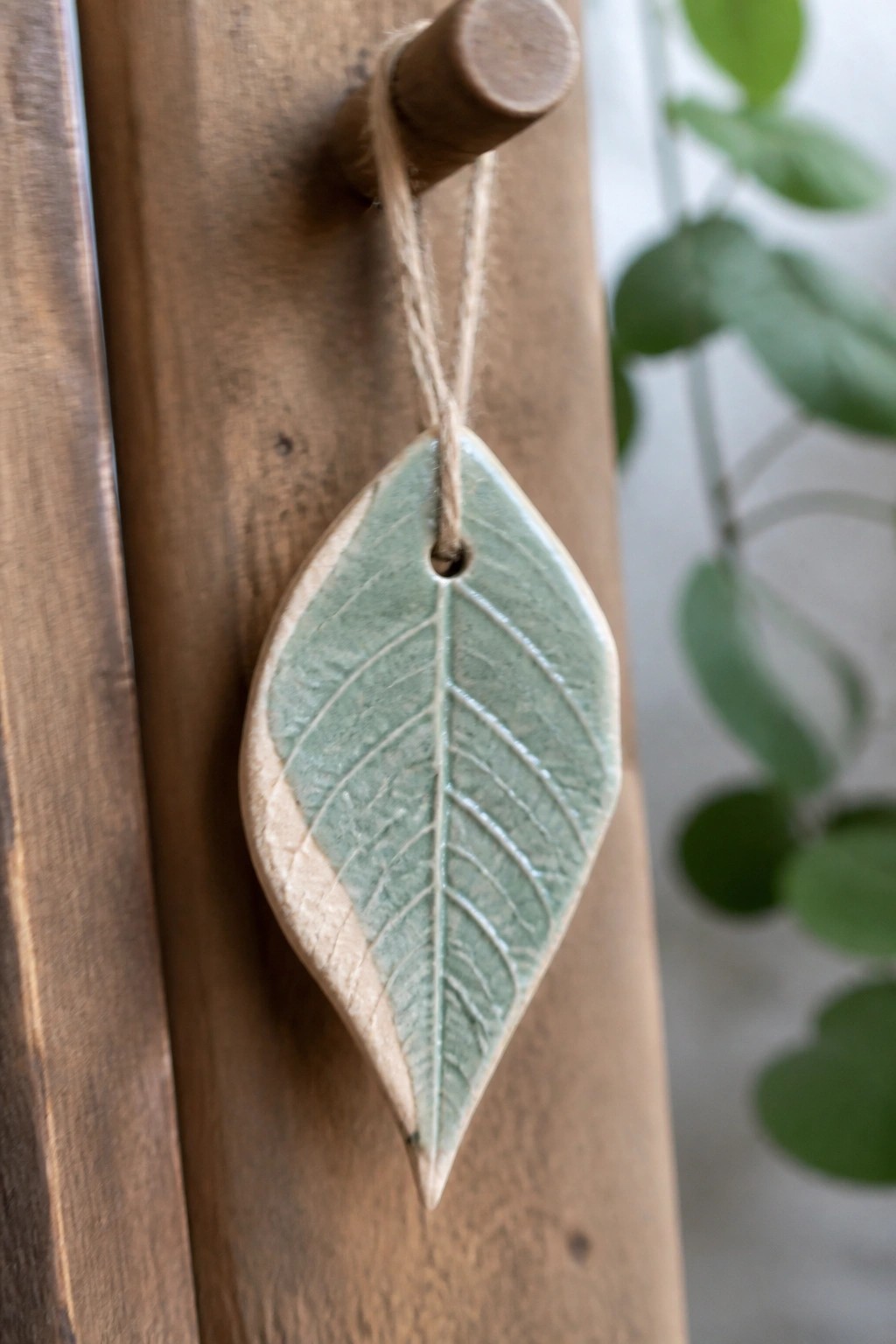
A leaf-shaped clay ornament makes a simple hanging decor piece for first-time builders. The form uses a pressed leaf to create raised vein lines across the surface, paired with a green glaze that covers the center while leaving the edges in the natural clay color. A small hole near the top lets it hang from twine or string. This approach fits the decor object category and keeps the project limited to basic shaping and one glaze application.
What makes this idea useful is how the same leaf impression can be repeated on different sizes or with other glaze colors to build a set. It works especially well as a lightweight accent on a peg, near a plant, or strung into a short garland. For a gift, something like this can be reworked into keychain tags or fridge magnets by changing the hanging method. The small scale keeps material use low and lets you test new leaf shapes without committing to a larger form.
Scalloped Rim Candle Holder
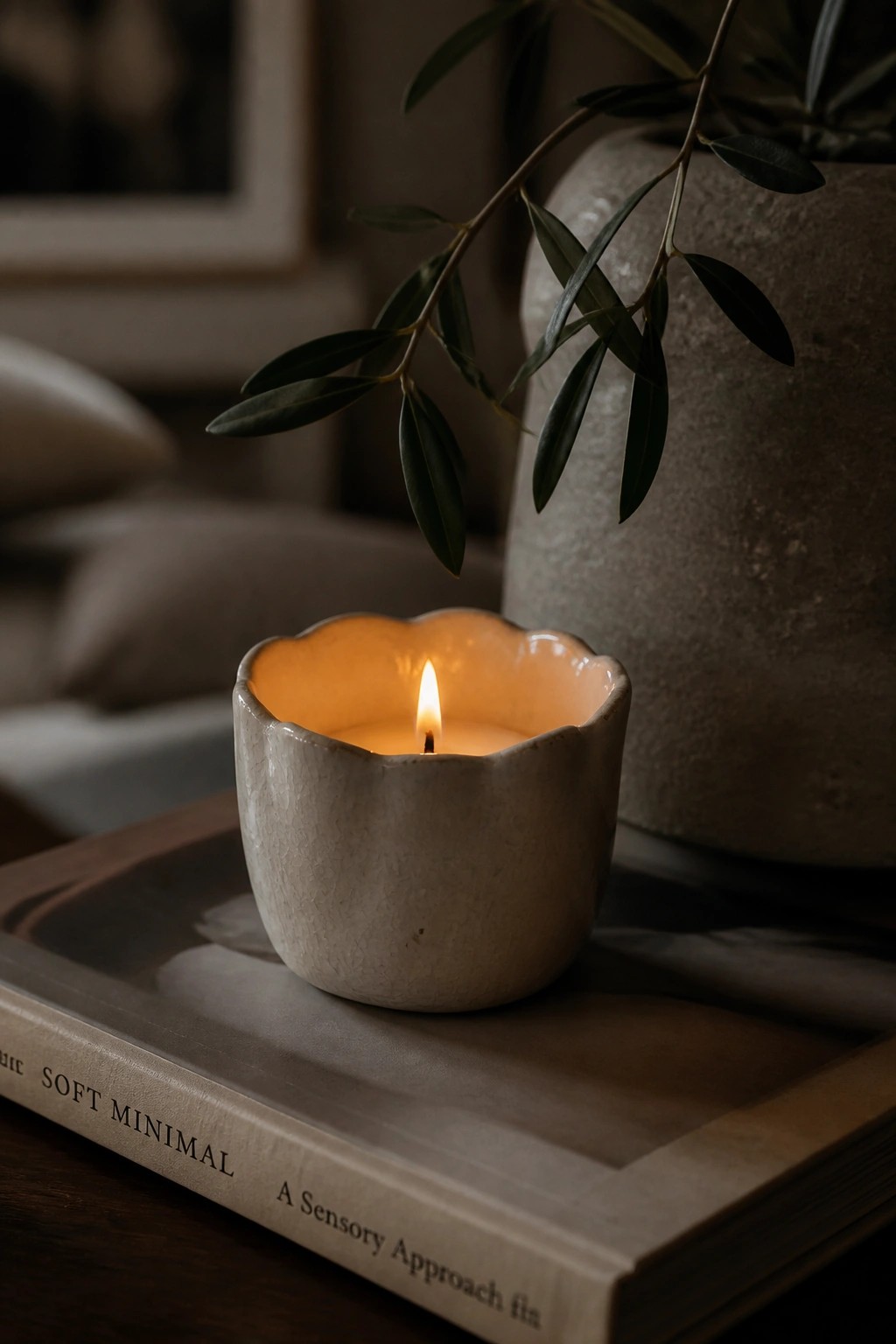
A small handbuilt clay vessel with an uneven scalloped rim serves as a candle holder. The matte, lightly textured surface in a neutral tone lets the flame provide the main visual focus while the rim adds simple shape variation. This fits the candle piece category and stays small enough to form quickly from a basic slab or pinch base.
What makes this idea useful is how the rim shape creates interest without extra tools or carving. It works especially well on a tray, shelf, or book stack as a low-key accent and can be adapted into a ring dish or tiny catch-all by flattening the base. The same edge treatment could be repeated on a slightly wider form for a set of matching holders or scaled down further for desk use.
Handbuilt Two-Tone Creamer
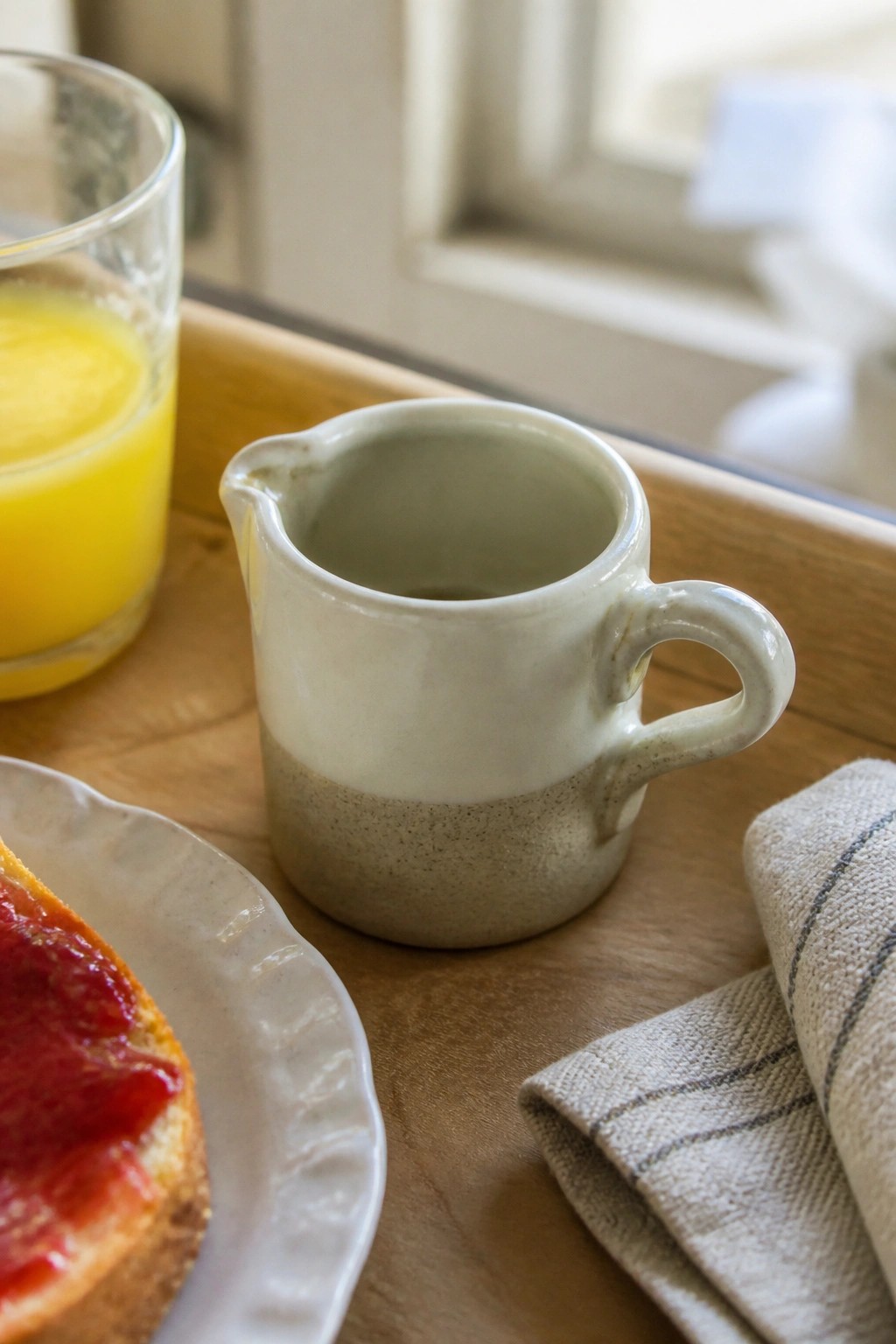
A small handbuilt pitcher like this serves as a cream or milk server for the table. The compact body features a short spout and a simple looped handle, keeping the overall form easy to shape by hand. The two-tone surface treatment leaves the upper half smooth and light while the lower section shows a speckled finish that adds subtle texture without extra carving.
What makes this idea useful is how well the size fits on a breakfast tray or beside a coffee setup. You could rework the same proportions into a sugar bowl by dropping the spout or stretch it taller for a small milk jug. The divided glaze treatment keeps the project simple while still giving the piece a finished look that photographs clearly for sharing.
Organic Two-Well Ceramic Tray

This project is a small handbuilt tray shaped like a rounded stone with two shallow wells divided by a soft curved ridge. The form stays simple and irregular so the piece sits flat without needing a perfectly round or square outline. A mottled glaze in blue-green and brown tones covers the surface and pools slightly in the wells to highlight the division. The result is a compact holder that works for rings, earrings, or small amounts of salt or spices.
The small scale makes this easy to adapt into a soap dish by widening one well or into a desk tray for paper clips by stretching the overall shape. It fits well on a bathroom counter or nightstand where the two sections keep items separated without taking much space. You can change the glaze to a single solid color if you want the focus on the form rather than the surface pattern. The organic outline stands out in photos because it avoids straight lines and perfect symmetry.
Small Lidded Jar
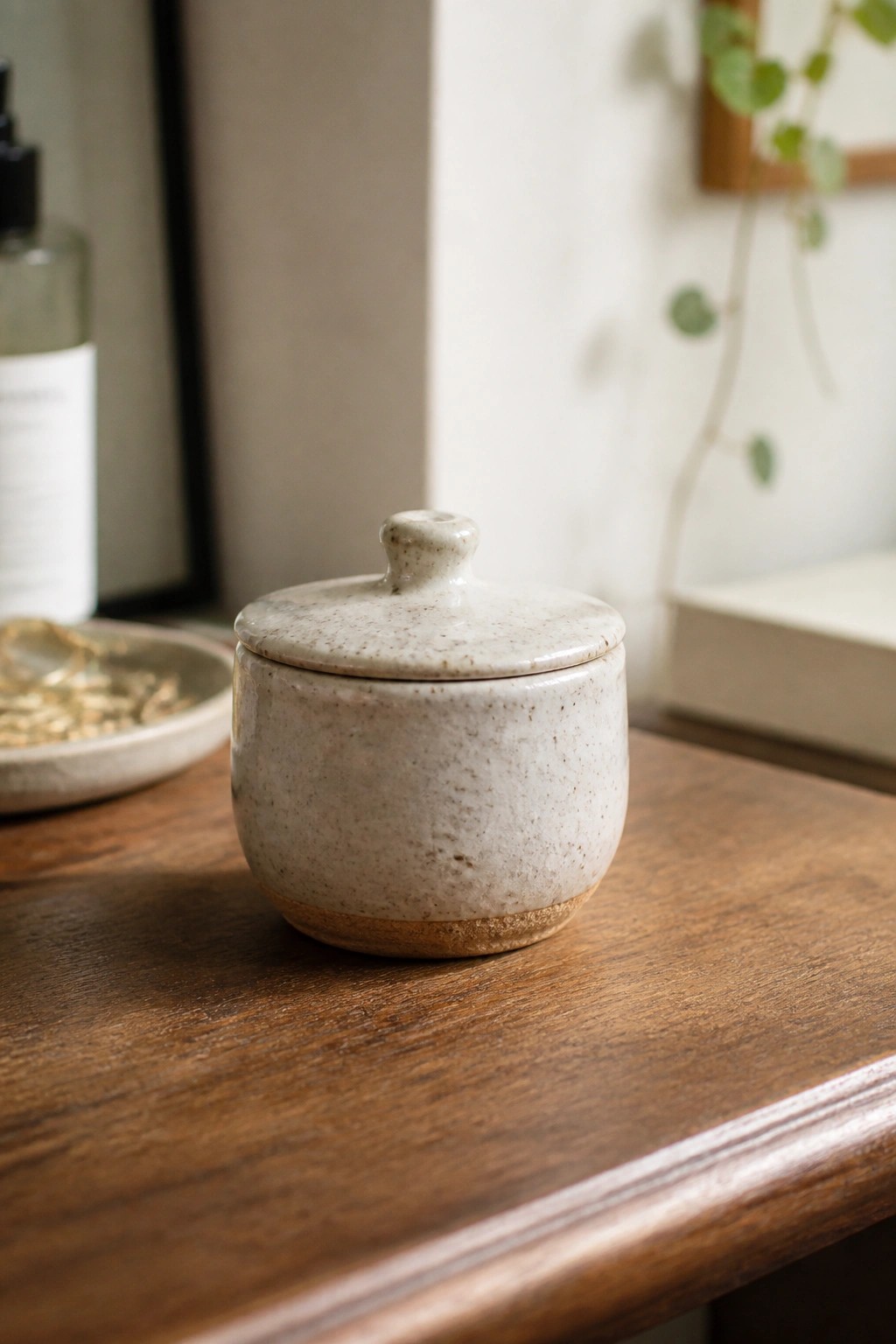
A small lidded jar works well as a container for salt, sugar, loose tea, or small bathroom items like cotton balls. The rounded body, fitted lid, and simple knob handle keep the form basic while still functional. The speckled surface and exposed clay base add texture without added decoration, which keeps the focus on the shape itself. This falls into the kitchen or bathroom storage category and stays simple enough for handbuilding.
What makes this idea useful is how easily the same shape adapts to different storage needs by changing the size or lid fit. You could make a set of three in graduated heights for a shelf or shorten the body to turn it into a ring dish. In a kitchen it keeps small items off the counter without taking much space, and the lid fit is a skill that transfers to other covered forms later. For Pinterest, clean shapes like this photograph well in neutral tones and get saved for practical home use.
Ceramic Hand Ring Holder
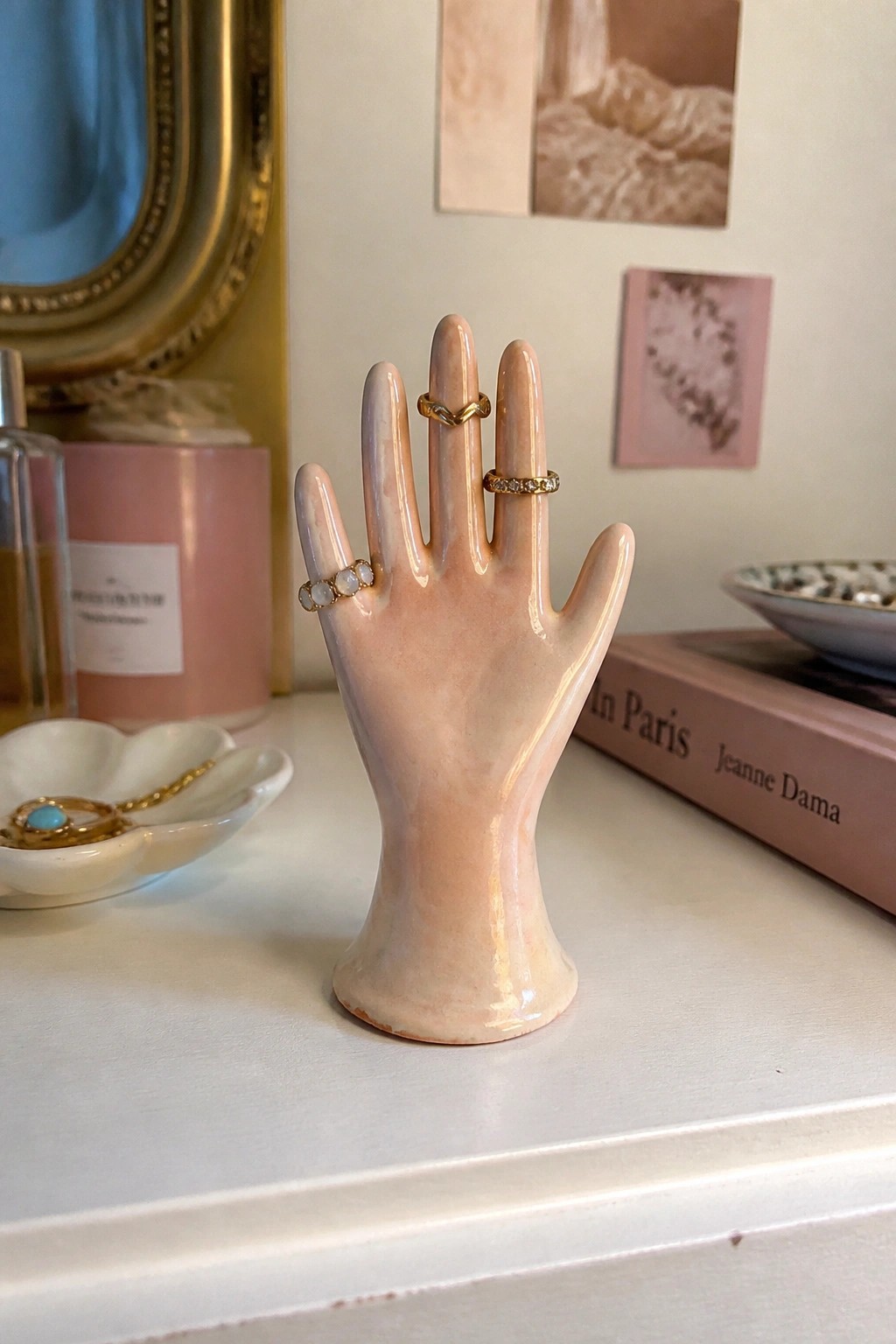
A hand-shaped clay form works as a ring holder by using the fingers to keep multiple rings separate and easy to grab. The piece is built as a single solid shape with a narrow wrist base that lets it stand upright on a flat surface. A glossy peach glaze covers the entire form and gives the sculpted fingers a smooth, finished surface without extra decoration.
What makes this idea useful is the way the spread fingers create natural slots for different ring sizes. You can adapt it by shortening some fingers, widening the base for better balance, or switching to a matte glaze for a softer look. A piece like this works especially well on a dresser or bathroom counter where you need quick access to rings without a full tray. The compact size also makes it simple to test the same shape in a few different colors or clay bodies.
Leaf-Shaped Soap Dish
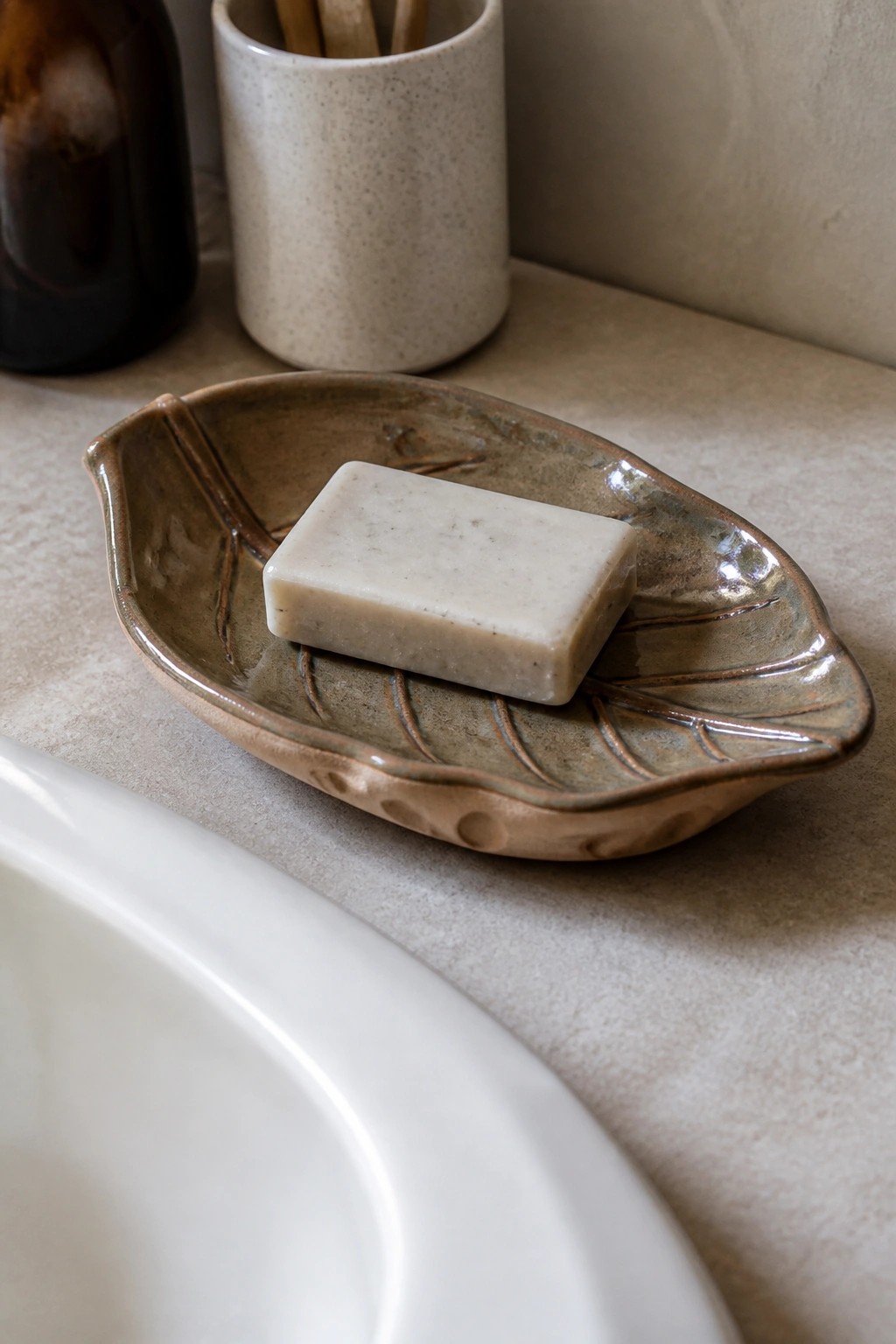
A leaf-shaped soap dish gives you a simple bathroom tray that keeps a bar of soap from sitting in water. The form uses a flat oval base with slightly raised edges and impressed lines that suggest leaf veins, which helps contain moisture while adding texture. An earthy glaze with subtle variation in tone makes the piece blend easily with other handmade ceramics on a countertop.
What makes this idea useful is how the leaf shape turns a basic slab into a functional bathroom item without extra parts. You could adapt the same outline for a small ring holder by shrinking the scale or add a shallow well in the center for a tea light. The impressed lines stay straightforward to make with a pointed tool, and the overall form works well as a quick project that still looks intentional on a sink ledge.
Frequently Asked Questions
What basic tools and materials do I need to get started with these handbuilt projects?
You will need a few key items to begin successfully. Start with a package of suitable clay such as earthenware or stoneware, a rolling pin or slab roller for flattening clay, a set of basic hand tools like a wire cutter, wooden rib, and needle tool, along with a work surface covered in canvas or plastic. Many projects also benefit from simple household items like cookie cutters or textured fabrics for decoration. Avoid expensive equipment since these projects focus on handbuilding techniques that require no pottery wheel.
How can I prevent my clay pieces from cracking during the drying process?
To minimize cracking, wedge your clay thoroughly before use to remove air bubbles and ensure even consistency. Build your projects in stages rather than rushing large sections at once, and cover them loosely with plastic when not working to slow drying. Turn pieces periodically so all sides dry evenly, and aim for a controlled environment away from direct heat or drafts. If cracks appear early, score and slip the area to repair it before it dries completely.
Are these projects suitable if I do not have access to a kiln for firing?
Several projects can use air dry clay as an alternative to traditional firing methods, allowing you to complete and seal finished pieces with acrylic paints or varnish. For standard clay pieces, check with local community centers, schools, or pottery studios that offer firing services on a fee basis. Always confirm the clay type matches the available firing temperature to avoid damage.
What are some easy ways to add personal designs or textures to the basic project shapes?
Once you master the core forms, experiment with simple surface techniques such as pressing leaves, lace, or stamps into the clay for patterns. You can also carve lines with a needle tool, attach small coils or slabs for raised details, or apply colored slips before drying. These additions keep projects beginner friendly while allowing creativity without advanced skills.
How long should I expect to spend on each project from start to finish?
Most of the 24 projects can be built in one to three hours of active work time, though this varies with project size and your pace. After building, allow one to two weeks for complete drying before any firing or finishing steps. Plan extra time for glazing if you choose to add color, and remember that rushing the drying phase often leads to issues later.

Pottery Path is my cozy corner of the internet where I share clay ideas, pottery inspiration, and simple projects you can recreate at home. I love exploring everything from air dry clay to handbuilt pottery to cute minis that brighten your day. My goal is to make clay crafting feel easy, fun, and welcoming for anyone who wants to try it.
You will find beginner friendly tutorials, creative pottery painting ideas, and lots of warm inspiration for slow and happy crafting. If you enjoy hands on creativity, this space will feel like home.