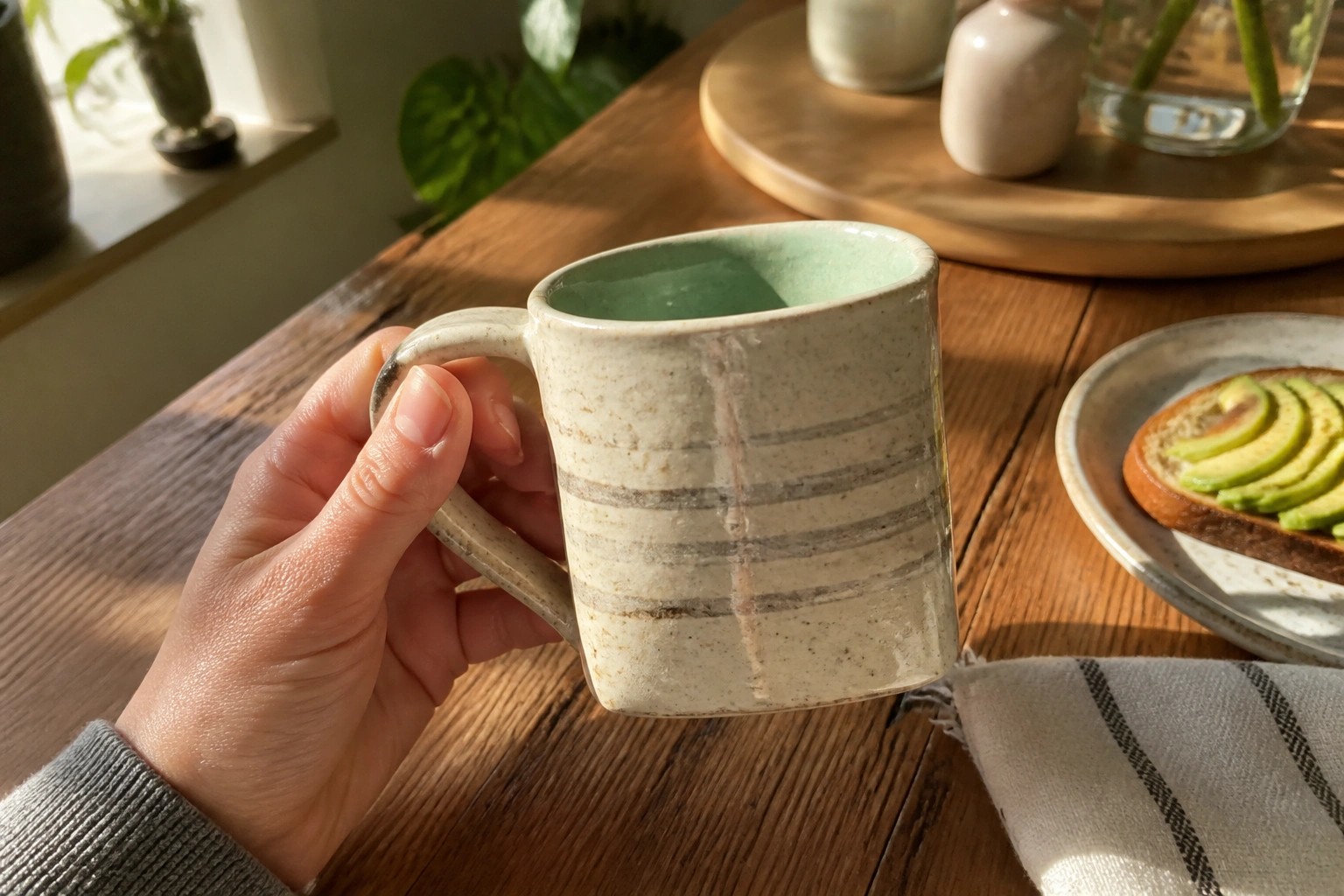
I’ve been working with slab pottery for a while now and it’s one of the easiest ways to start if you don’t have a lot of tools.
Handbuilding with slabs lets you create flat pieces that you can shape into all kinds of things.
I put together some simple ideas that use basic techniques anyone can try at home.
These projects are meant for beginners and focus on everyday items you might actually use.
I hope they give you a good starting point without feeling overwhelming.
Striped Slab Mug
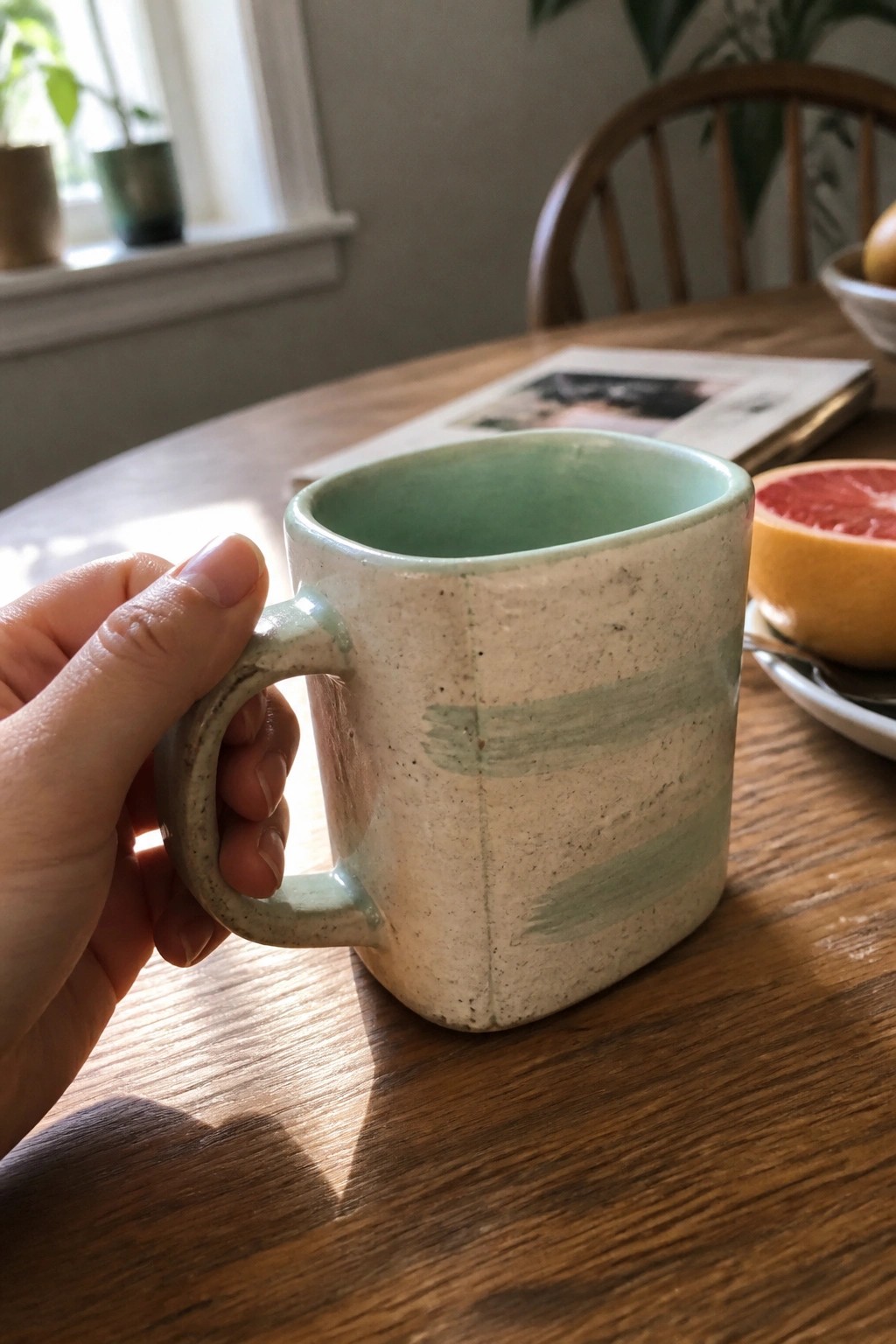
A slab mug starts with flat sheets of clay rolled out and joined along the edges to form a cylinder, then finished with a simple attached handle. Horizontal bands of green glaze brushed across the surface give the piece its main visual detail while the speckled clay body provides contrast. The interior rim also gets a coat of the same glaze, tying the look together without extra steps.
What makes this idea useful is how the stripe pattern can be changed by switching glaze colors or brush sizes to match different kitchen styles. This size works well for daily coffee or tea and fits easily on a shelf or table. You could adapt the same slab method to make a taller travel mug or shorten it into a small creamer. The straightforward construction keeps the focus on the surface pattern, which stands out in photos for project boards.
Square Slab Planter with Painted Daisies
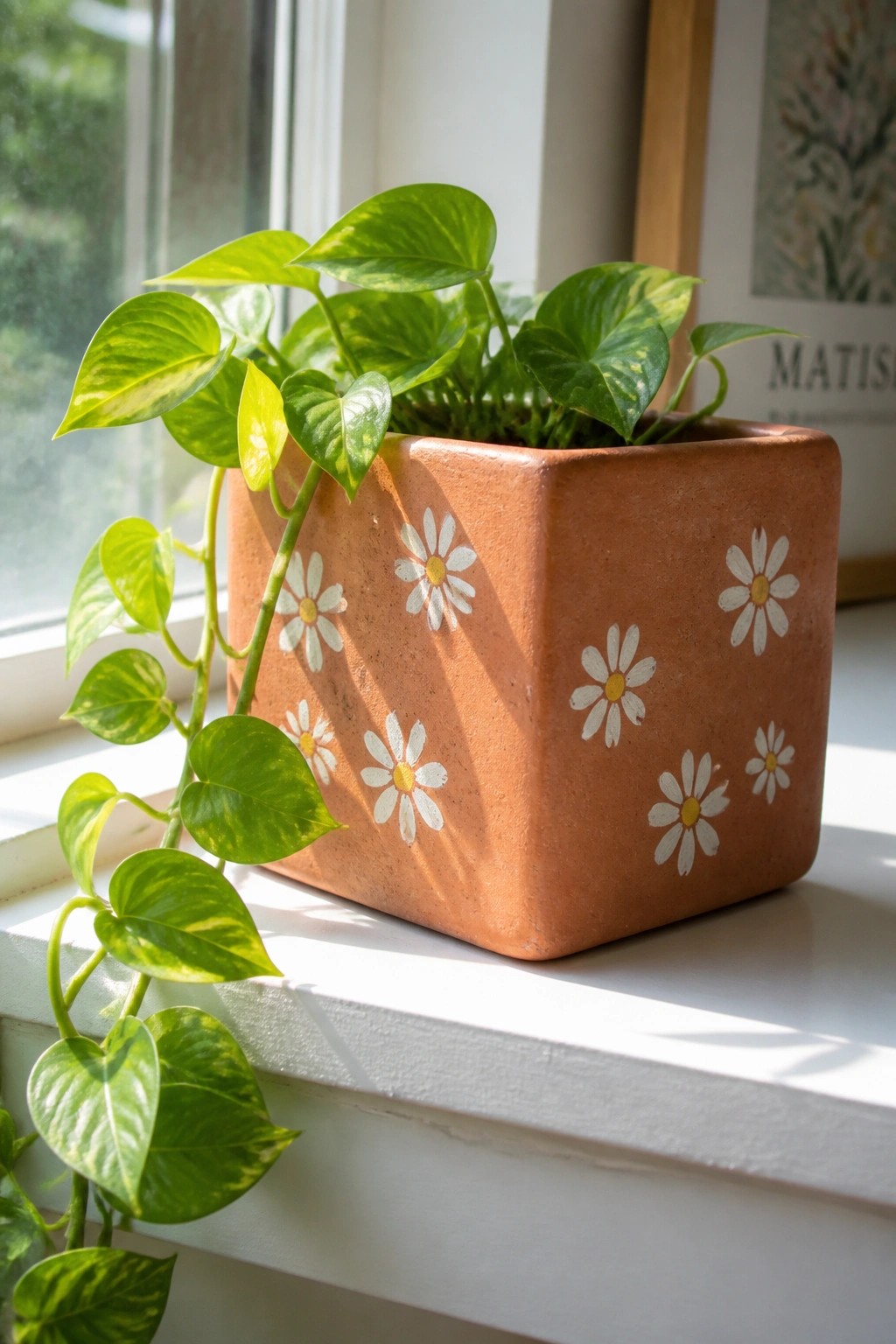
A square slab-built planter in terracotta clay gives a clean, flat-sided form that holds small houseplants without much bulk. White daisy shapes with yellow centers painted across the sides create a simple repeating pattern that stands out against the matte surface. This keeps the project focused on basic construction and surface painting rather than added texture or sculpting.
What makes this idea useful is that the square shape sits flat on a shelf or windowsill with good stability. You can swap the daisy motif for other simple painted designs or adjust the base color to fit different plant types. For a beginner project, this works well as a first try at slab building because the sides stay straightforward while the paint adds the main detail. The same form could be scaled up slightly for a larger plant or shortened into a shallow tray.
Leaf Embossed Slab Tray
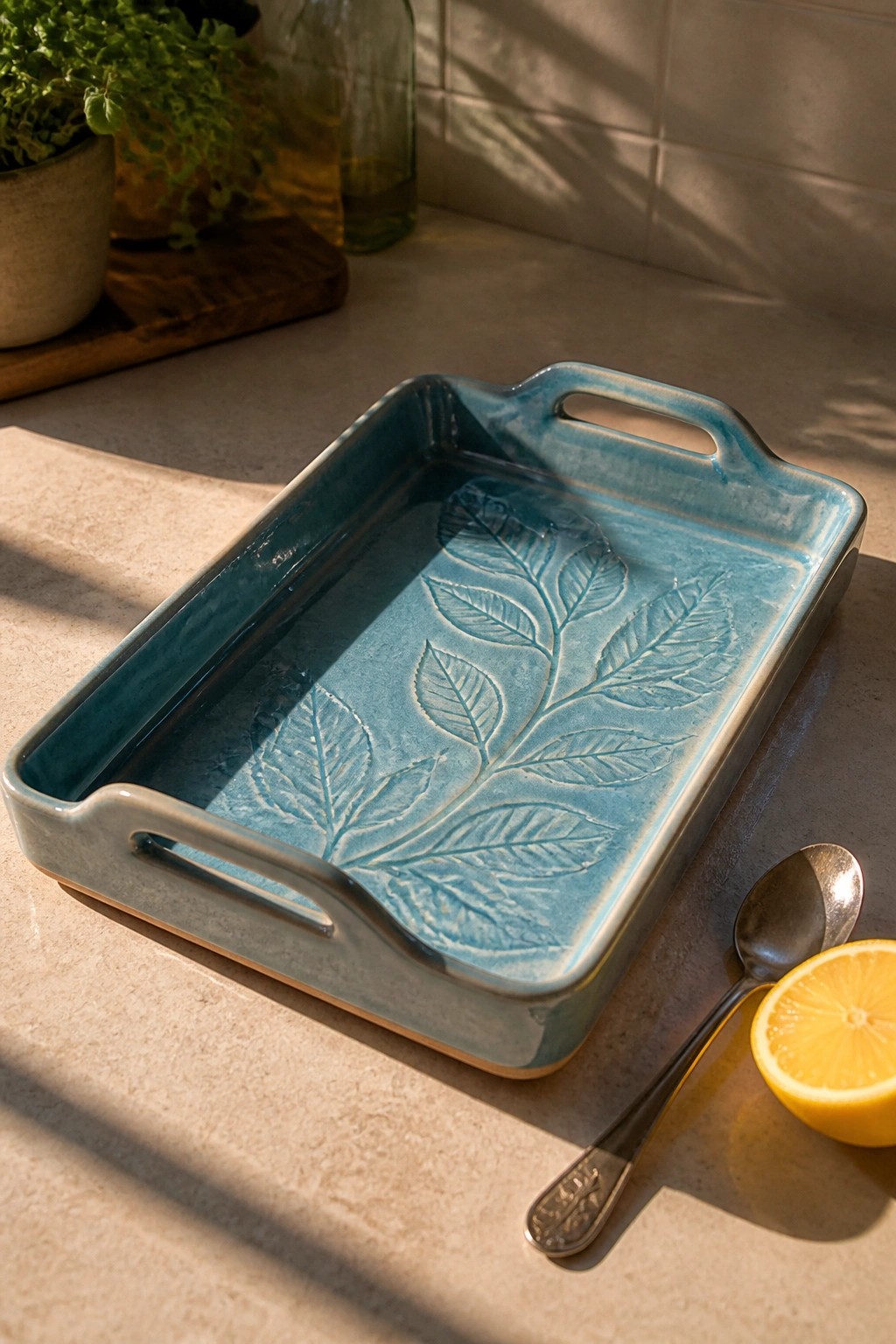
A rectangular tray built from clay slabs makes a practical kitchen piece for serving or holding small items. The interior base holds pressed leaves that create raised impressions, which catch the blue glaze and add texture without extra tools. Short handles on opposite sides keep the form simple to lift and move. This project relies on basic slab rolling and natural textures to turn a flat shape into a finished object.
What makes this idea useful is how the leaf impressions give the tray visual weight while staying easy to repeat with different foliage. You could swap in herbs or ferns for new patterns or scale the same slabs down into a smaller version for jewelry or soap. The shape adapts well to a countertop or table where the handles keep it functional rather than purely decorative. The same method works if you want to try a different glaze color or add a foot ring underneath.
Strawberry Slab Spoon Rest
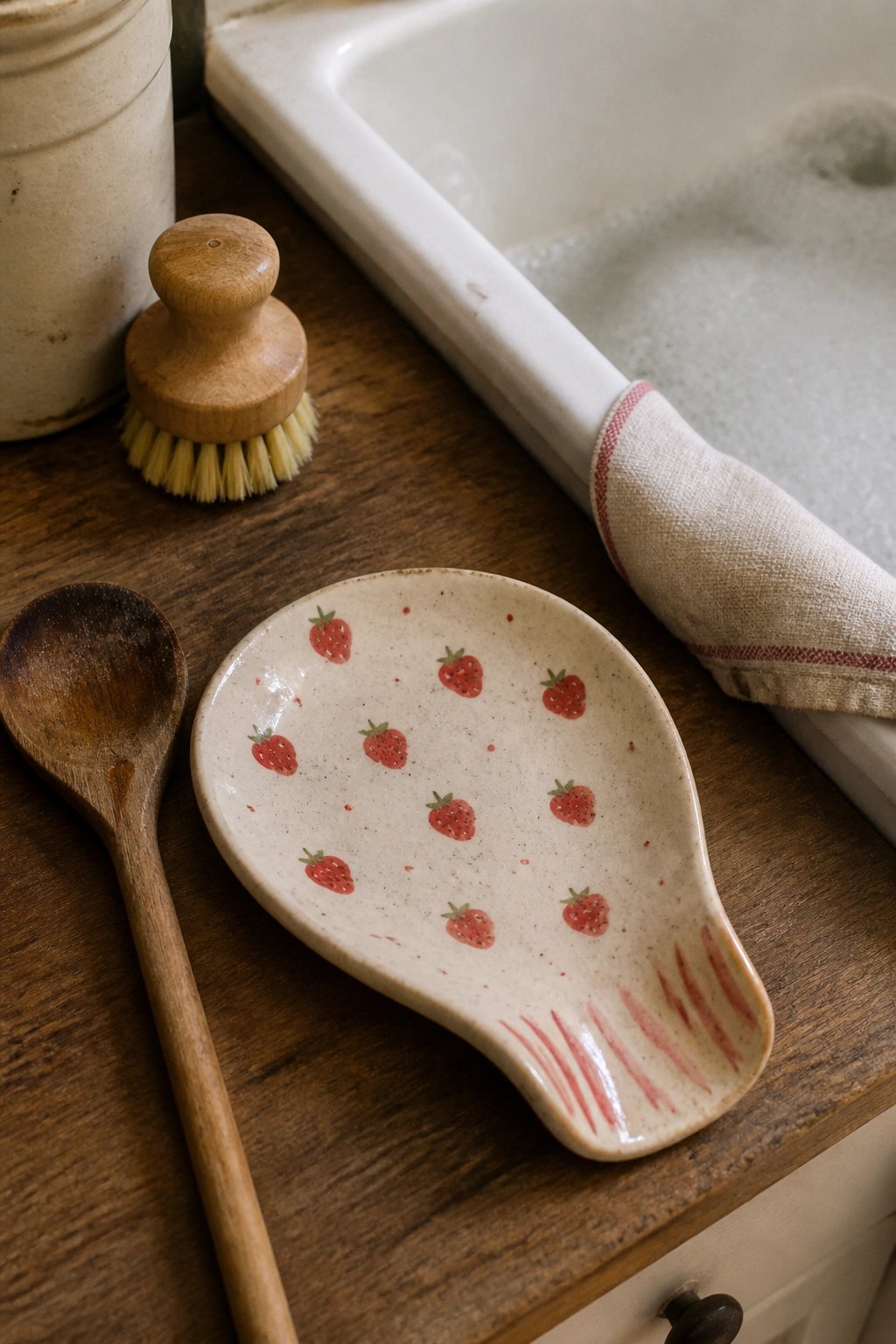
A slab-built spoon rest gives you a simple kitchen item that keeps counters clean while cooking. Cut a flat piece of clay into a tapered oval shape, then gently curve one end upward so it cradles a spoon handle. Add small stamped or painted strawberries across the surface and finish with a clear glaze to keep the design visible and food-safe.
What makes this idea useful is how the elongated shape naturally supports spoons without tipping. You can change the fruit motif to leaves or simple lines to match different kitchens, or scale the form down slightly to make a matching butter dish or soap holder. The project uses only basic handbuilding steps and a small amount of clay, so it works well as a quick weekend piece or an easy gift.
Pressed Botanical Slab Wall Plaque
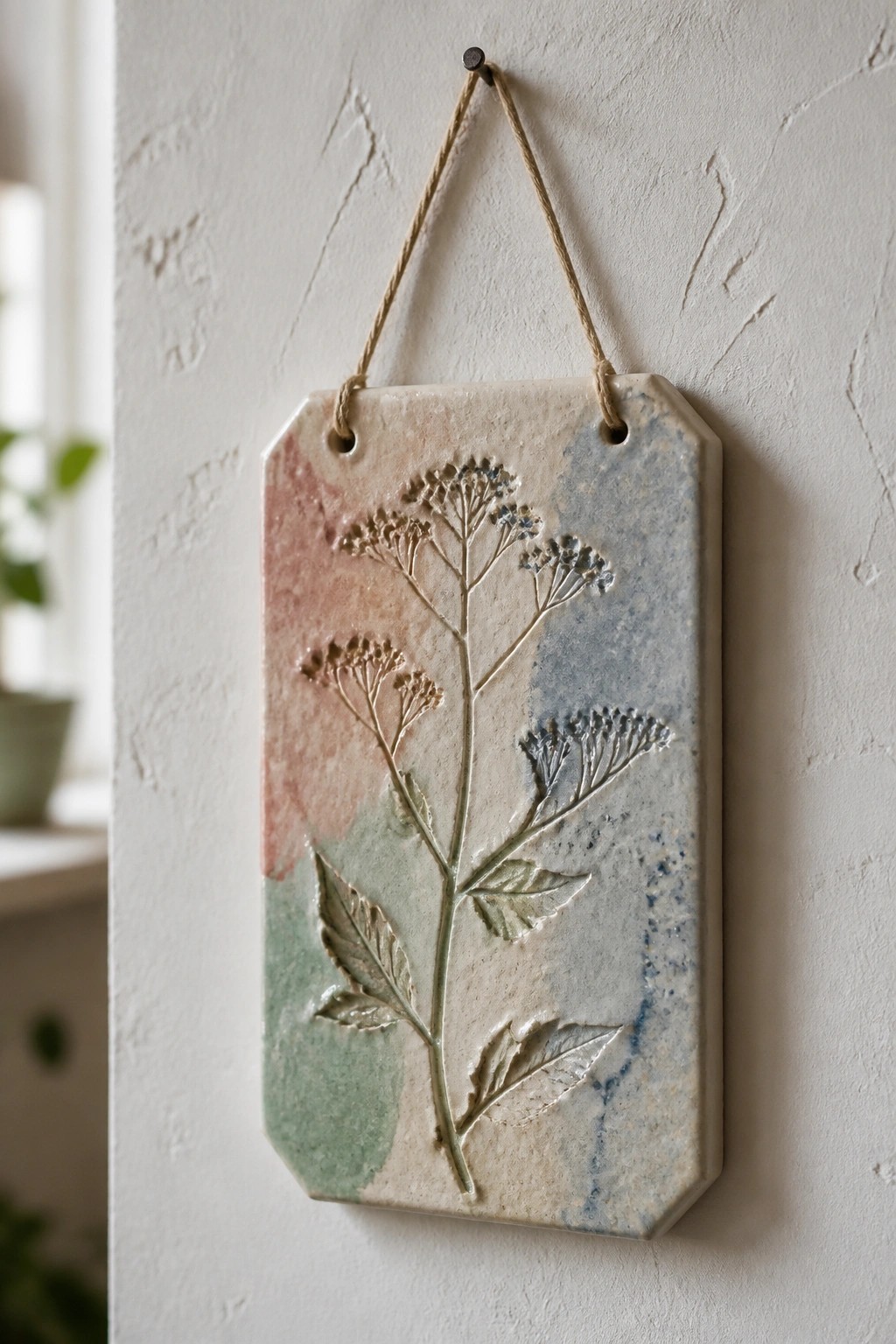
A flat rectangular slab serves as the base for this wall plaque, with a full plant stem, leaves, and flower heads pressed directly into the clay to create raised impressions. Soft sections of pink, green, and blue glaze are applied across the surface to accent the details while leaving much of the natural clay visible. Two holes drilled near the top allow cord to be threaded through for hanging. This keeps the project focused on basic slab construction and surface decoration rather than complex shaping.
What makes this idea useful is how the slab can be cut to any size before the plant is pressed in, so you can make a larger version for a living room wall or a smaller one for a bathroom or entryway. The same impression technique works with different leaves or flowers depending on the season, and the divided glaze areas make it simple to test color combinations on one piece. This kind of plaque stands out on Pinterest because the botanical detail reads clearly even in small thumbnails.
Flower Shaped Ring Dish
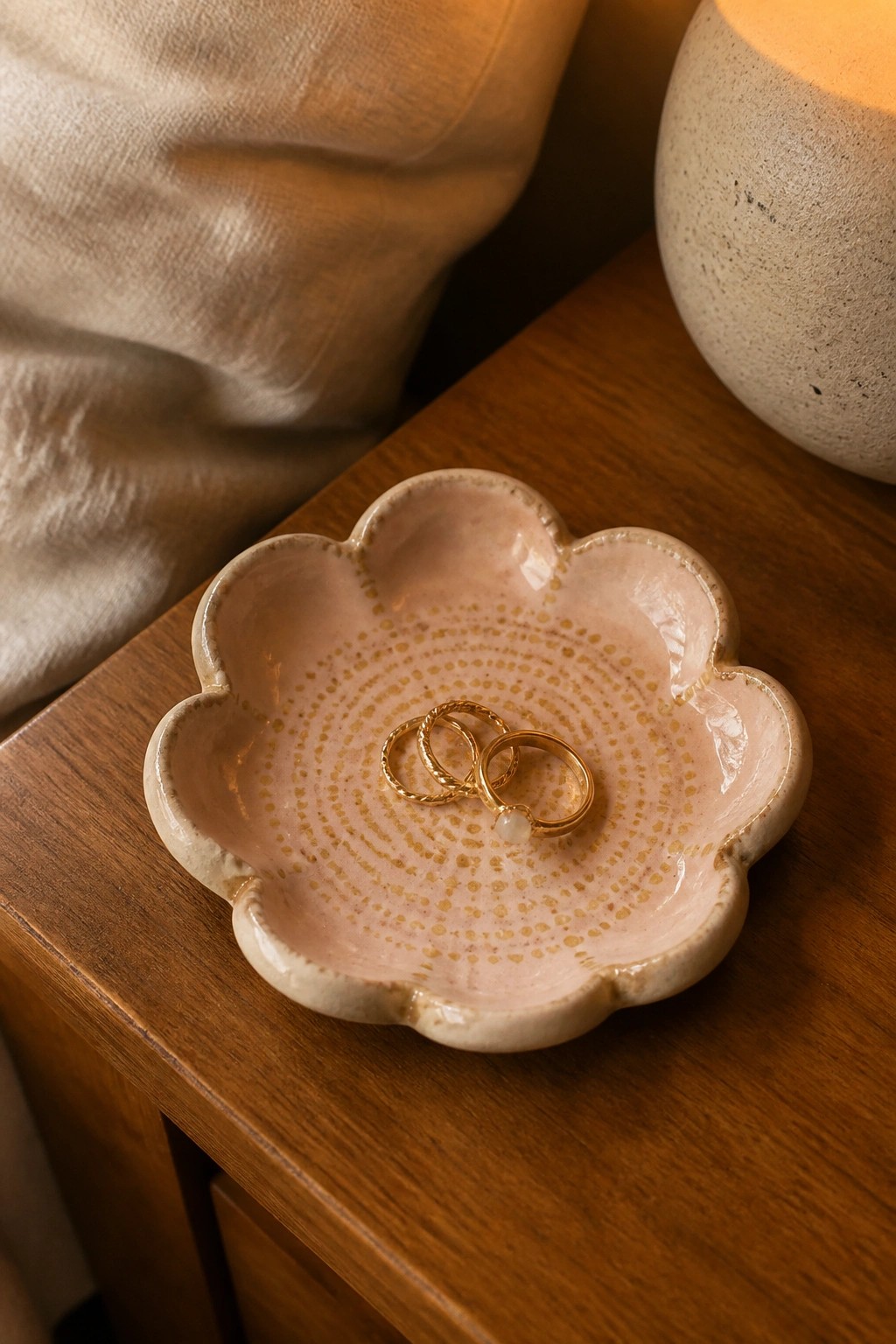
A flower shaped ring dish starts with a simple slab rolled out and cut into a circle, then the edges get pinched and shaped into rounded petals. The scalloped outline creates a shallow well that keeps small items contained while the dotted texture under the glaze gives the surface some variation without extra tools. This approach keeps the project quick since it relies on one piece of clay and basic forming rather than added feet or handles.
What makes this idea useful is how well the small scale fits on a dresser or bedside table for rings and earrings. You can adapt the petal count or make the dish slightly deeper to turn it into a holder for loose change or hair ties. The same cut-and-shape method works for a matching soap rest in a bathroom by widening the center area. A piece like this stands out on Pinterest when the glaze color contrasts with the speckled pattern inside.
Slab-Built Rectangular Incense Holder
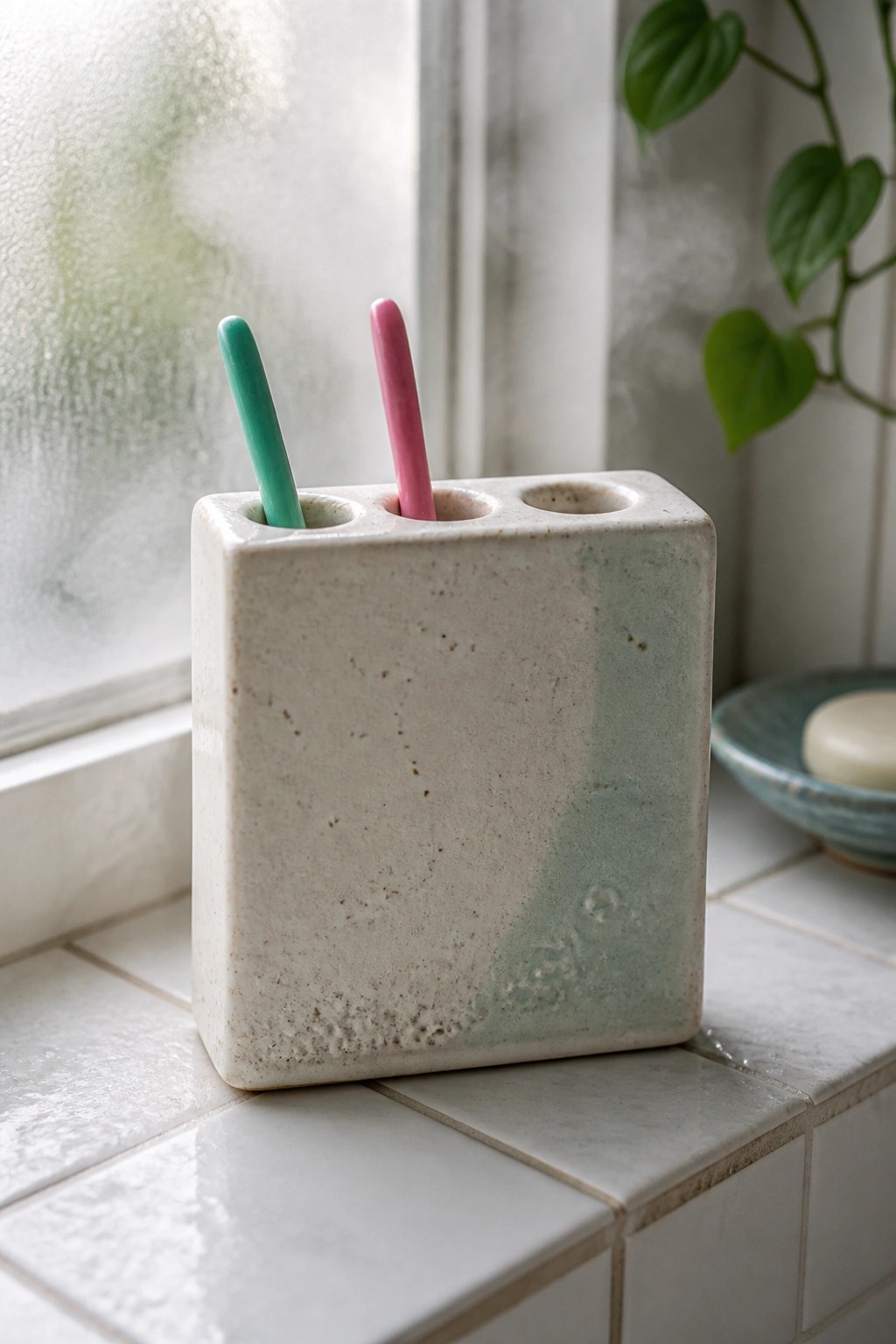
A rectangular block formed from a thick slab of clay makes a sturdy base for an incense holder. Three holes cut straight down through the top let you burn sticks upright without tipping. The matte speckled surface and soft blue-green wash on one side keep the look simple while still showing off the clay texture.
What makes this idea useful is how the same slab shape can be adjusted for more or fewer holes depending on what you want to hold. The small footprint works on a bathroom counter, desk, or windowsill where space is limited. You could easily adapt the size for paintbrushes, small tools, or even a few makeup brushes by changing the hole diameter.
Round Slab Tealight Holder
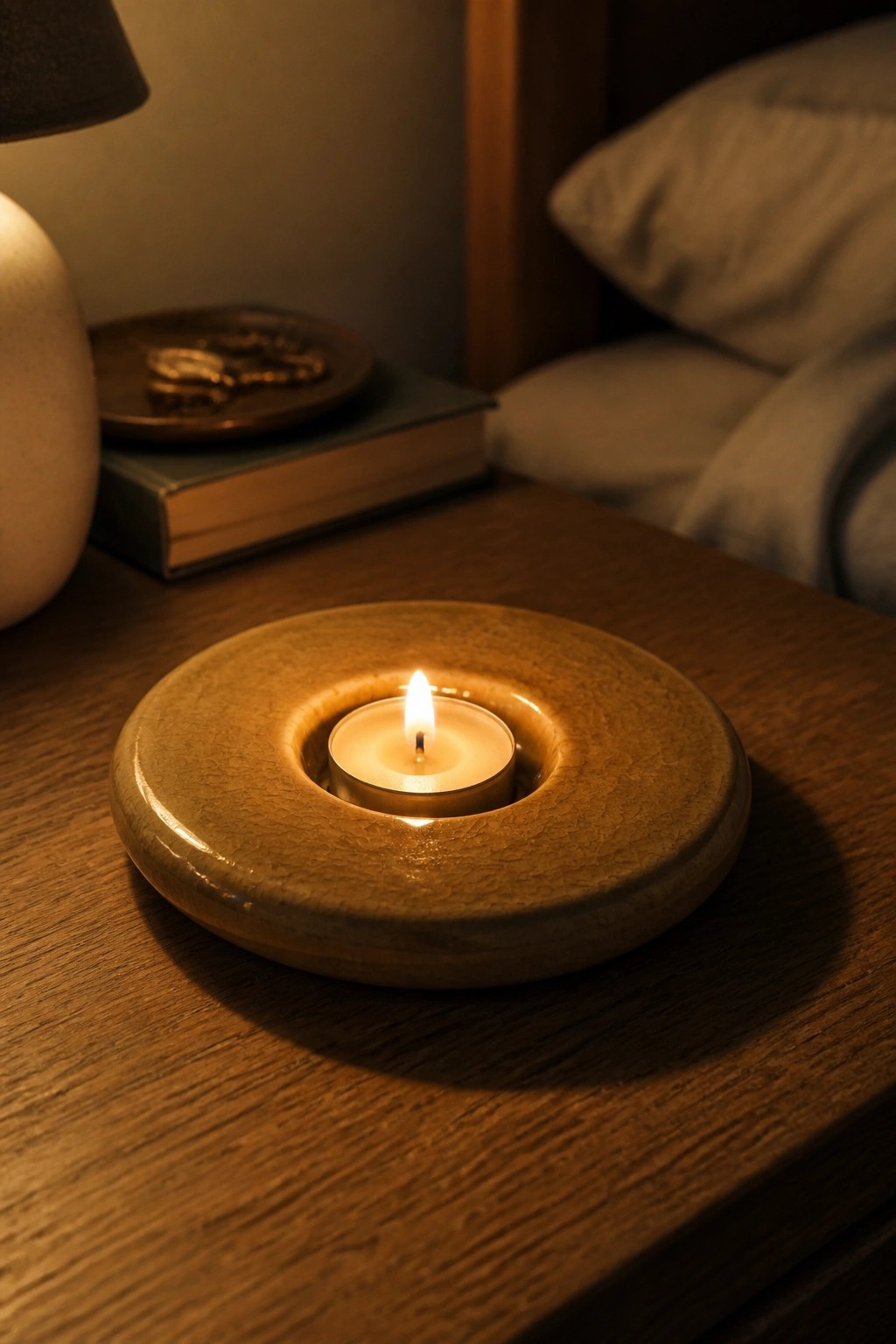
A round slab candle holder is a flat clay dish with a shallow center well sized for a standard tealight. Roll out a thick slab, cut a circle, then press a smaller form into the middle to create the recess while leaving a raised outer rim. The crackled earthy glaze catches light from the flame and gives the surface subtle variation without extra decoration.
What makes this idea useful is how little clay and time it requires while still producing something functional for a bedside table or bathroom shelf. The same slab method works for a wider version that holds two or three candles, or you can shrink it into a tiny ring dish by skipping the central well. For a gift, stamp a simple border pattern before the clay dries so the piece feels finished without added complexity.
Slab-Built Cylinder Vase with Simple Dot Decoration
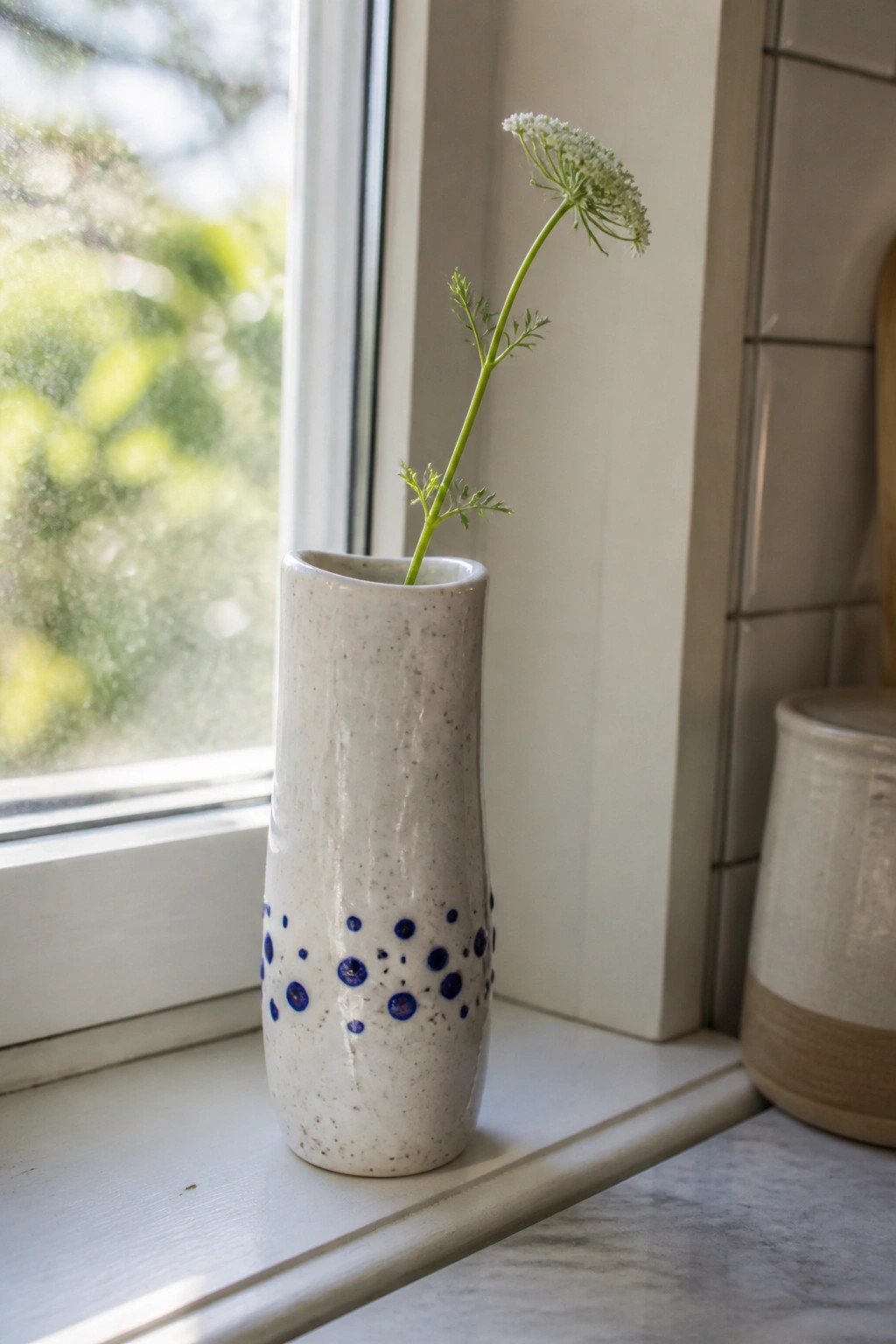
A tall narrow vase formed from a rolled slab gives you a clean upright shape that works well for single stems or small wildflower bunches. The rim stays slightly uneven after pinching it inward, which helps the piece look finished without extra trimming. An all-over speckled white glaze keeps the surface light while a loose row of blue dots near the base adds color without needing precise placement or extra layers.
What makes this idea useful is that the same cylinder can be made shorter for a desk or wider for a few more stems by changing the slab size before joining. The dot pattern is quick to repeat on other forms like small trays or cups if you want a matching set. It fits on a narrow windowsill or bathroom shelf where bigger pieces would crowd the space. You could swap the blue for underglaze pencil lines or leave the lower section plain to test different surface treatments on the same base shape.
Simple Slab Soap Dish with Drainage Grooves
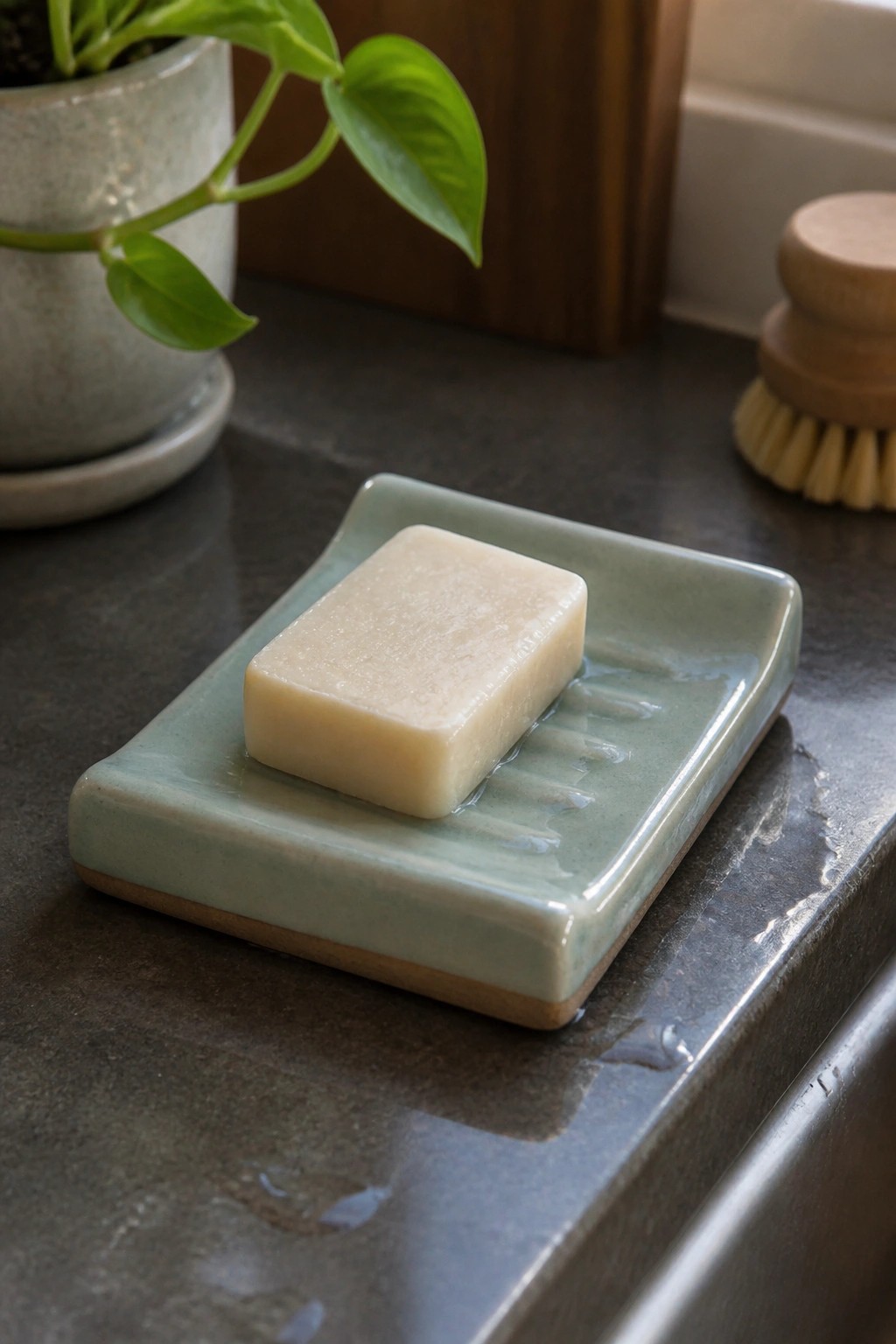
A flat rectangular slab forms the base of this soap dish, with the edges gently raised to contain water. Shallow grooves pressed into the surface allow excess moisture to run off the bar instead of pooling underneath. The light green glaze covers the top and sides while the unglazed foot keeps the piece stable on wet counters.
What makes this idea useful is how the drainage detail turns a basic tray into something that actually helps soap last longer. The same slab can be cut smaller for a ring dish or lengthened into a toothbrush holder tray. In a bathroom it fits neatly on the edge of a sink without taking up much space, and the plain shape leaves room to test different glaze colors or add a simple stamp on one corner.
Leaf-Shaped Ring Dish
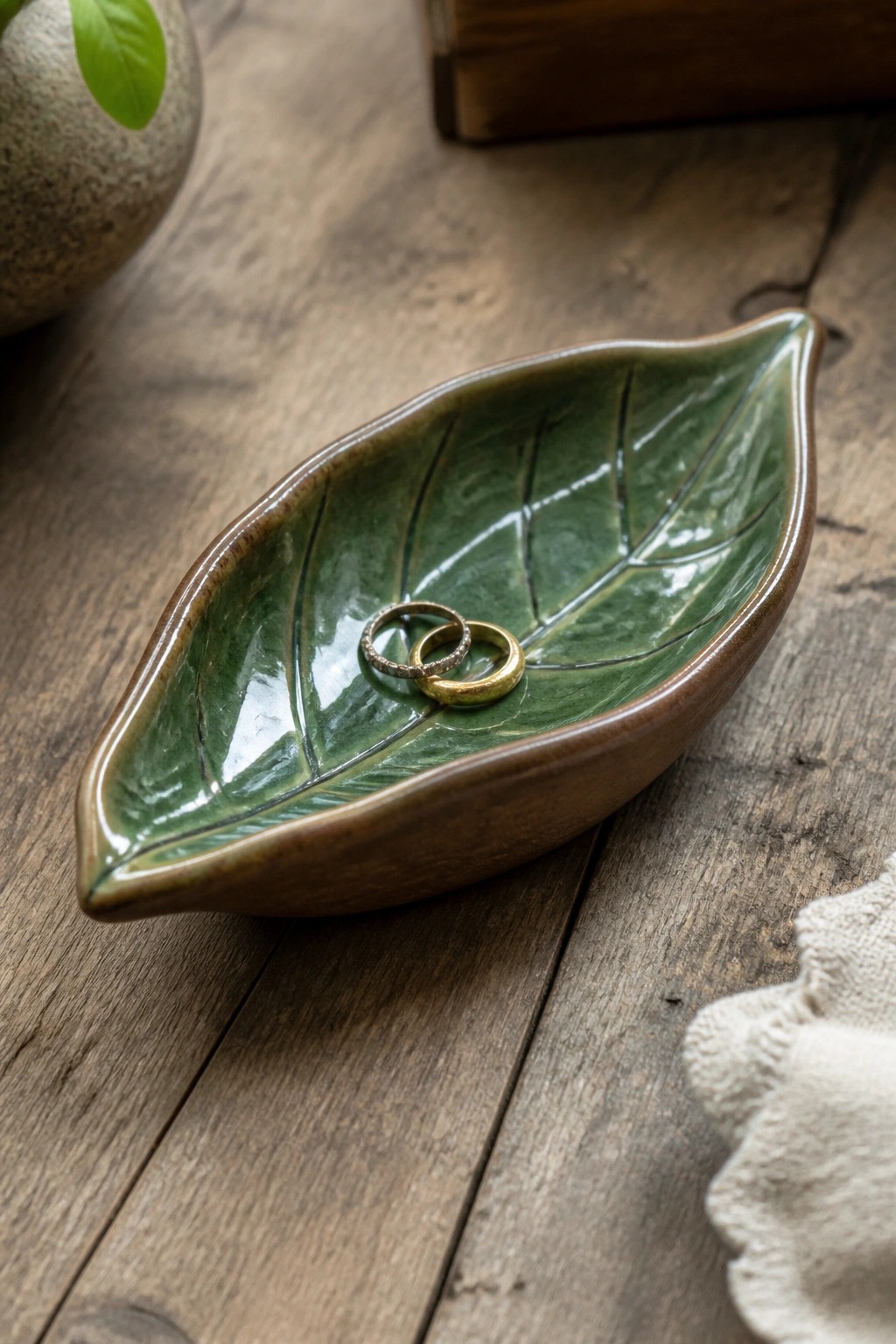
A leaf-shaped ring dish gives you a compact tray for jewelry or small items. Cut a pointed oval from a clay slab, taper one end to suggest a stem, and press leaf veins into the surface for texture. A green glaze with a brown rim edge keeps the focus on the natural shape while making the details stand out. This style works as a simple ring dish or small catch-all.
What makes this idea useful is how the leaf outline turns a plain slab into a finished piece with almost no extra construction. It sits easily on a dresser or bathroom counter and keeps rings from getting lost. You could swap the glaze for a matte finish, shorten the stem, or enlarge the form slightly to hold keys instead. The vein texture comes from pressing actual leaves into the clay, so the same slab method adapts quickly to other small trays.
Divided Slab Dish for Seasonings
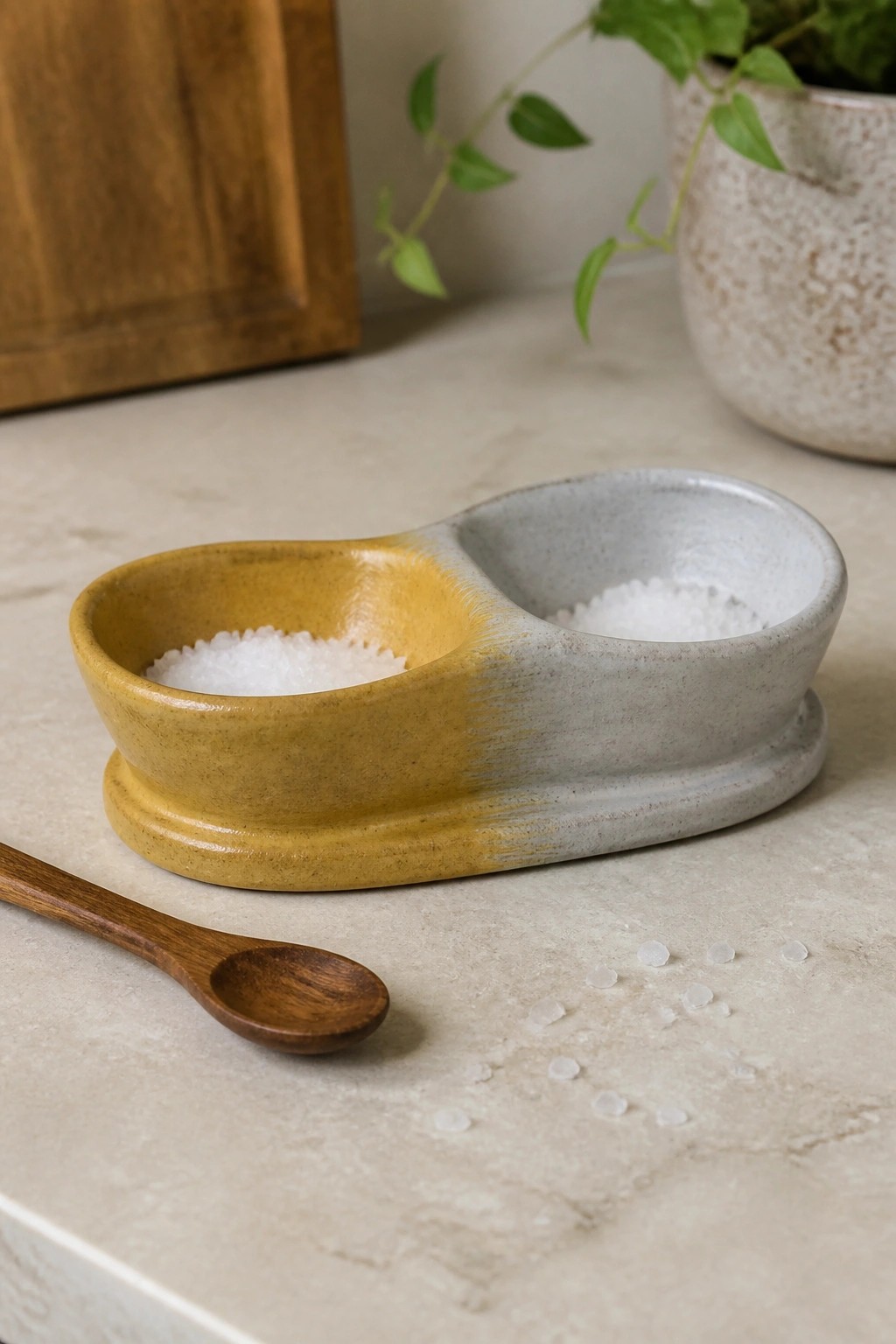
A divided dish built from two slab-rolled bowls joined side by side creates separate sections for salt and another seasoning. The form sits on a low slab base that keeps both compartments stable, and the two-tone glaze treatment makes each section read as its own space without extra carving. This shape works well as a kitchen counter piece because the connected bowls keep small amounts of dry ingredients together while still allowing easy spoon access.
What makes this idea useful is that the same joined-bowl layout can be scaled down for a single-person salt and pepper set or widened for a larger table server. The flat base and simple oval outline are quick to cut from one slab, so you can change the proportions without new templates. In a kitchen it keeps everyday seasonings off the counter in one compact spot, and the two-color approach can be swapped for any glaze pair you already have on hand.
Yarn Bowl with a Marbled Notch for Guiding Yarn

A yarn bowl made from handbuilt clay gives knitters and crocheters a simple place to keep a ball of yarn from rolling away. The rim includes a rounded notch that holds the working strand in place while you work. Slab construction makes it straightforward to shape the bowl and cut the notch cleanly before firing. The marbled glaze mixes soft pink, blue, and cream streaks across the surface without covering the form.
What makes this idea useful is how the notch turns an ordinary bowl into a working tool that sits neatly beside you. You can adapt the same slab method with a smaller diameter for embroidery thread or a wider base for thicker yarns. The marbled surface also works well if you swap in different color combinations to match a project bag or room. This type of piece shows up clearly on Pinterest because the notch and glaze pattern read quickly in a thumbnail.
Slab Incense Tray from a Rolled Clay Slab
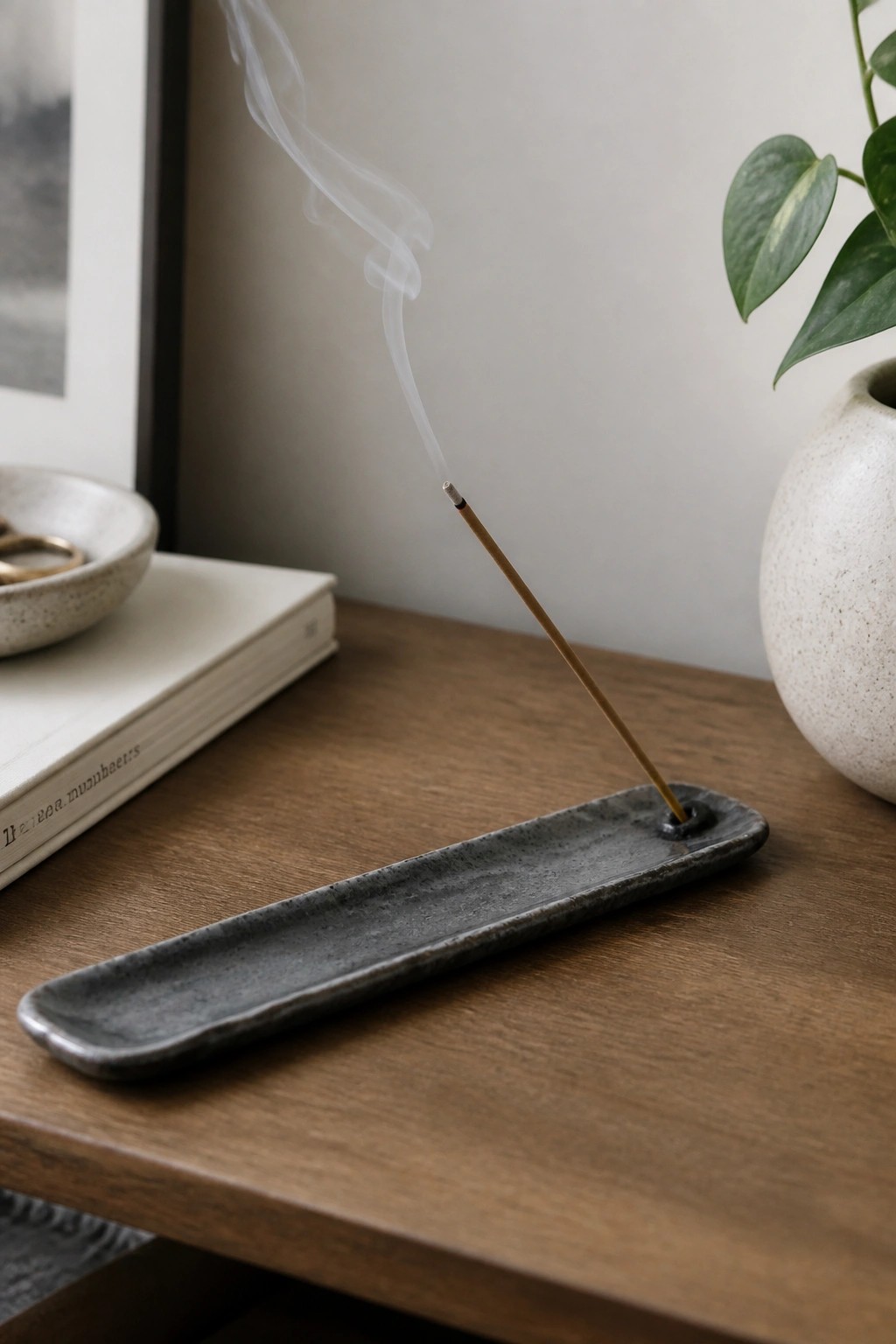
A long rectangular tray built from a flat clay slab makes a straightforward incense holder. The shape includes a small hole near one end to keep the stick in place while the rest of the surface catches falling ash. A dark matte glaze keeps the focus on the clean lines and simple form. This approach turns basic slab work into a dedicated holder that sits flat on a table or shelf.
What makes this idea useful is the easy adjustment of length and width to match different stick sizes or even hold two at once. The same slab construction could be shortened for a desk version or widened into a multi-stick tray. In a bathroom or reading nook, the narrow profile takes up little space while giving incense a stable spot. Adding a shallow groove along the center before drying would help guide ash without extra tools.
Slab-Built Rectangular Utensil Holder
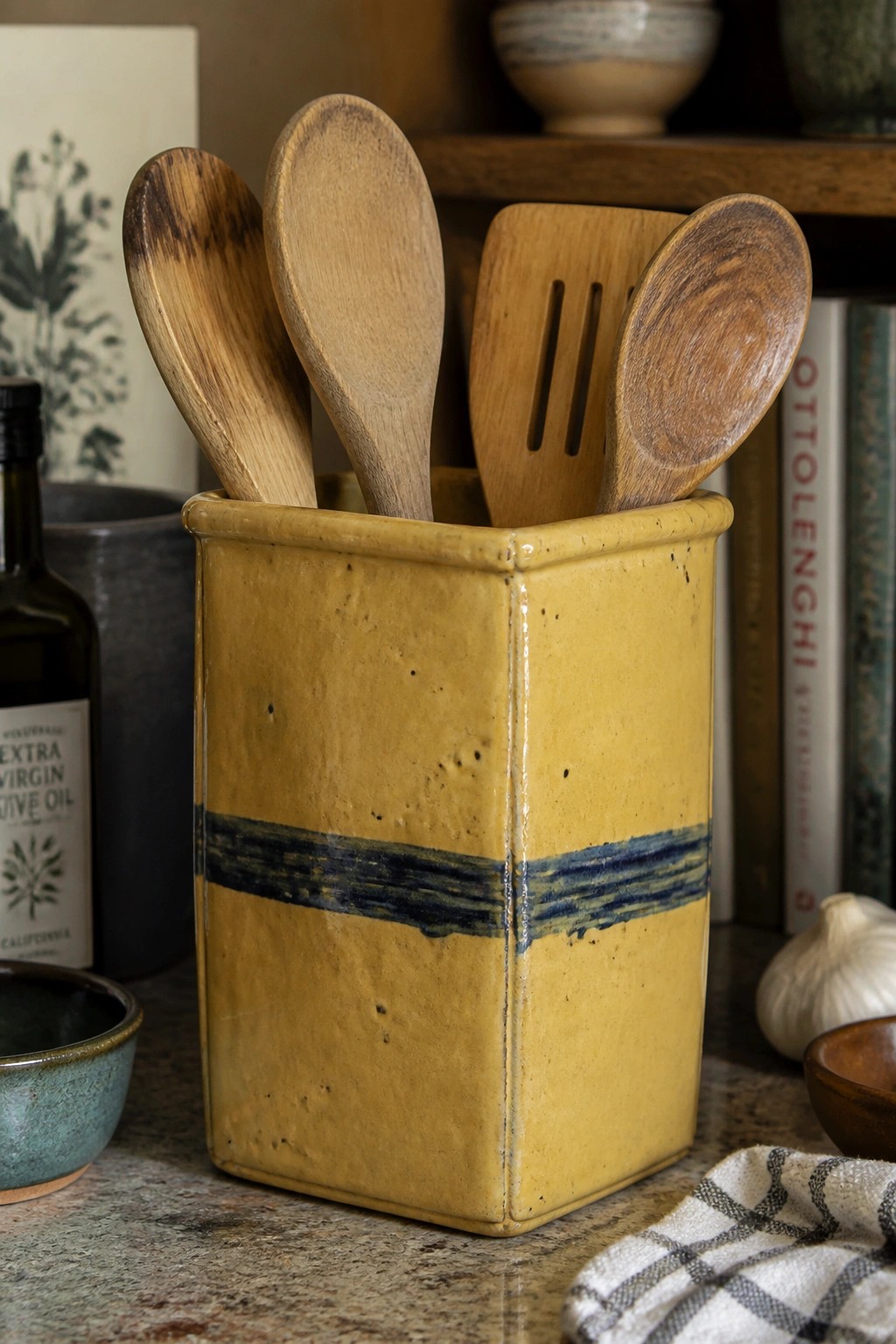
A rectangular container built from clay slabs makes a practical kitchen utensil holder. Form the four sides and base from flat pieces, join the seams, and add a solid glaze such as yellow with a single band of contrasting blue across the middle. The upright walls and open top keep wooden spoons, spatulas, and other tools within easy reach on a counter. This shape stays stable and uses simple handbuilding steps without needing a wheel.
What makes this idea useful is how quickly the same slab method scales up or down for different tools or even pencils on a desk. The single stripe requires only basic slip or underglaze application, so you can finish the surface fast while still getting a clear design. In a kitchen it keeps everyday items organized and pairs easily with other handmade dishes or bowls. You could remove the band for a plain look, repeat it in another color, or adjust the height to create a shorter tray version instead.
Cat-Shaped Planter
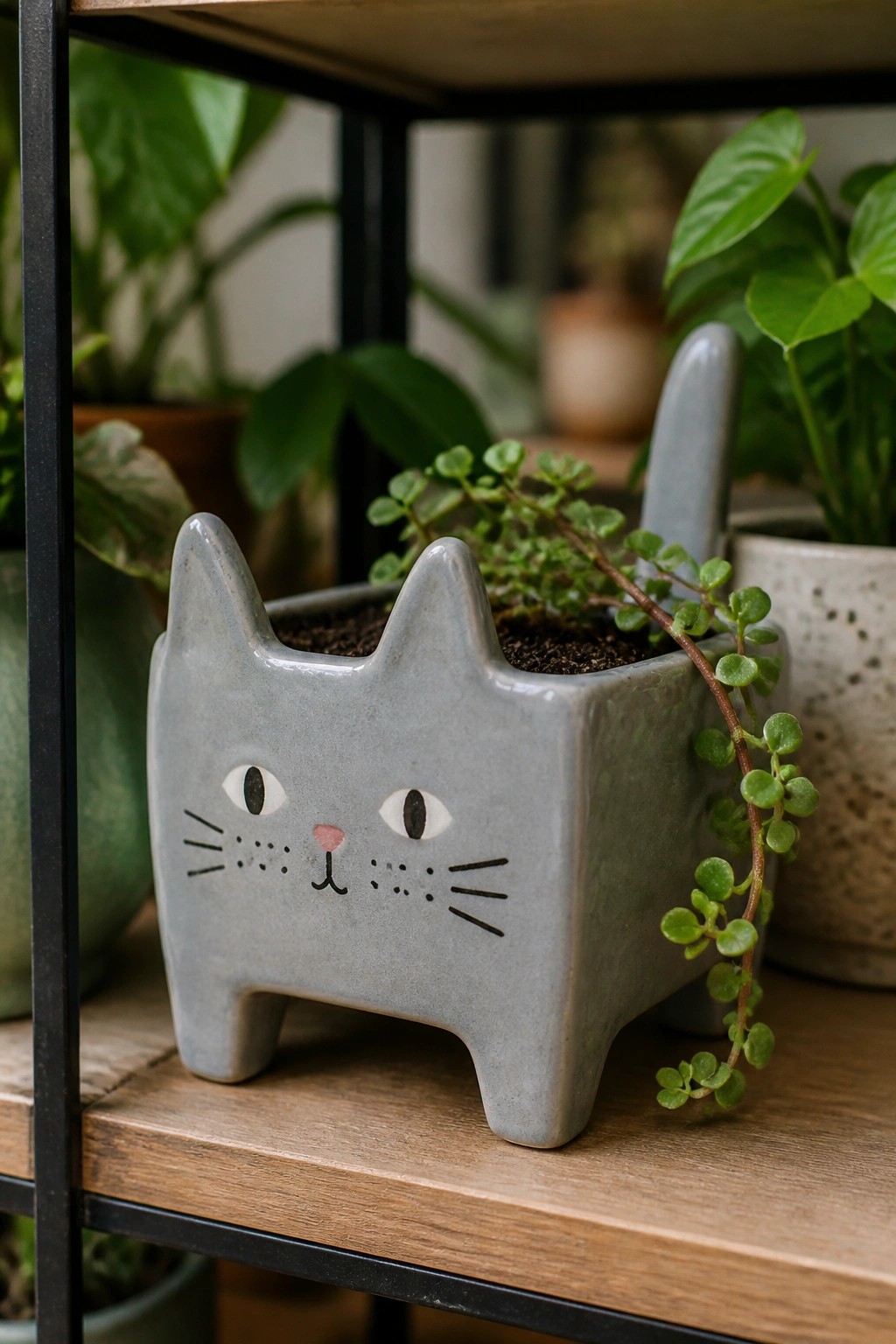
A cat-shaped planter is built from a simple rectangular slab form with added ears, legs, and a tail to create the animal shape. Painted details like eyes, whiskers, and a nose on the front turn the pot into a clear cat without complex sculpting. The matte gray surface keeps attention on the form while giving the plant room to trail over one side. This fits the small planter category and works for any beginner who can roll slabs and join pieces.
What makes this idea useful is how easily the same boxy body can be turned into other animals by swapping the ears and tail. The compact size fits well on shelves or windowsills where a regular pot would look plain. You could leave off the face paint for a cleaner version or add underglaze color before the final firing. For a gift, something like this stands out because it needs only basic handbuilding steps yet gives a finished result that holds a real plant.
Slab-Built Hanging Plant Pocket
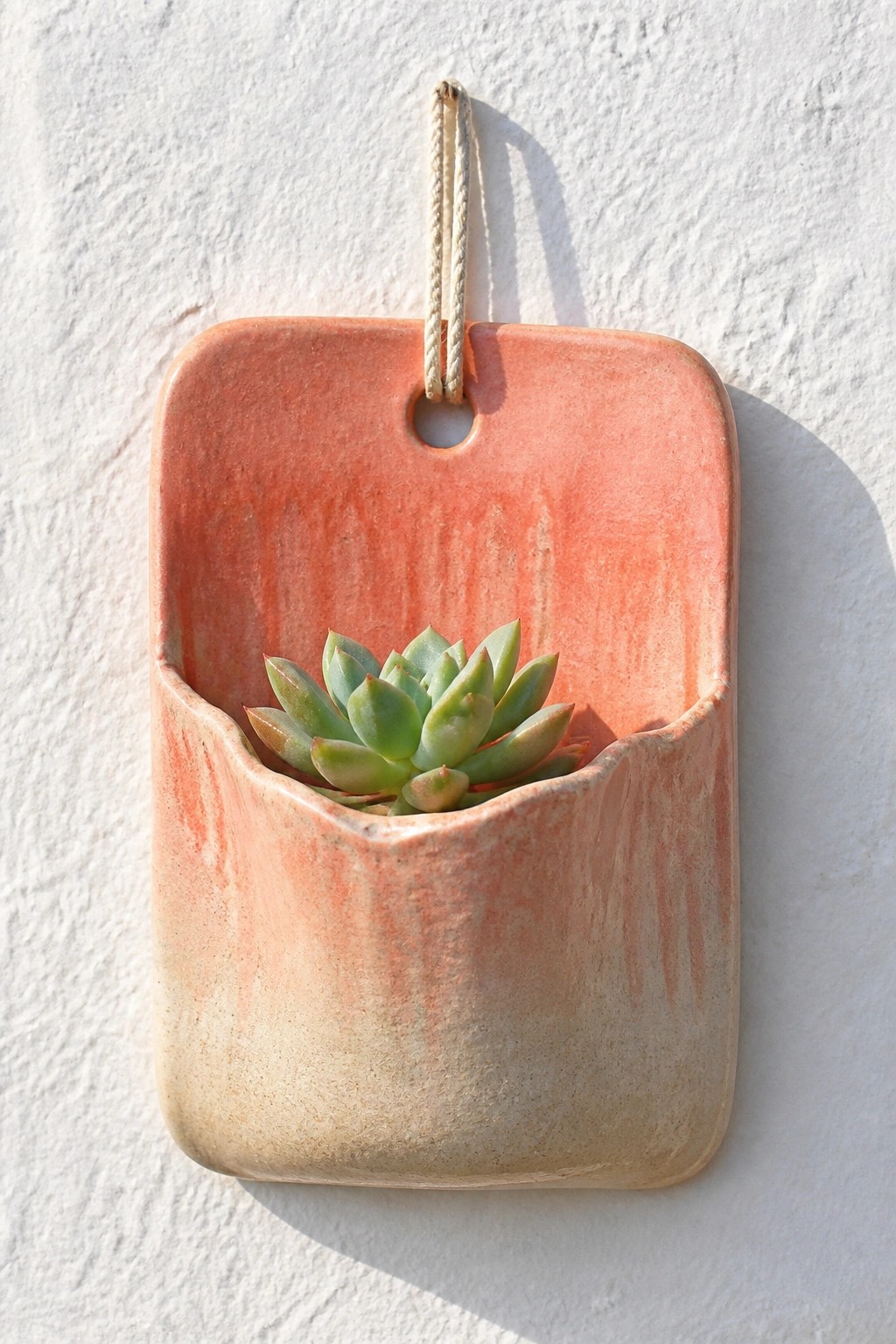
A flat slab of clay can be shaped into a simple pouch with an open top and a hole punched near the upper edge for hanging. The form stays shallow enough to sit flat against a wall while still holding a small plant or succulent. A cord or rope through the hole turns the piece into a hanging planter without extra hardware.
What makes this idea useful is how little clay and space it needs compared to a full pot. You can change the width or depth to fit different plants or switch the cord for a metal hook if you want something more permanent. The same pouch shape works as a small wall holder for mail or keys if you leave out the drainage. Multiple versions in matching glazes can line up neatly on one wall without taking up shelf room.
Painted Square Coasters
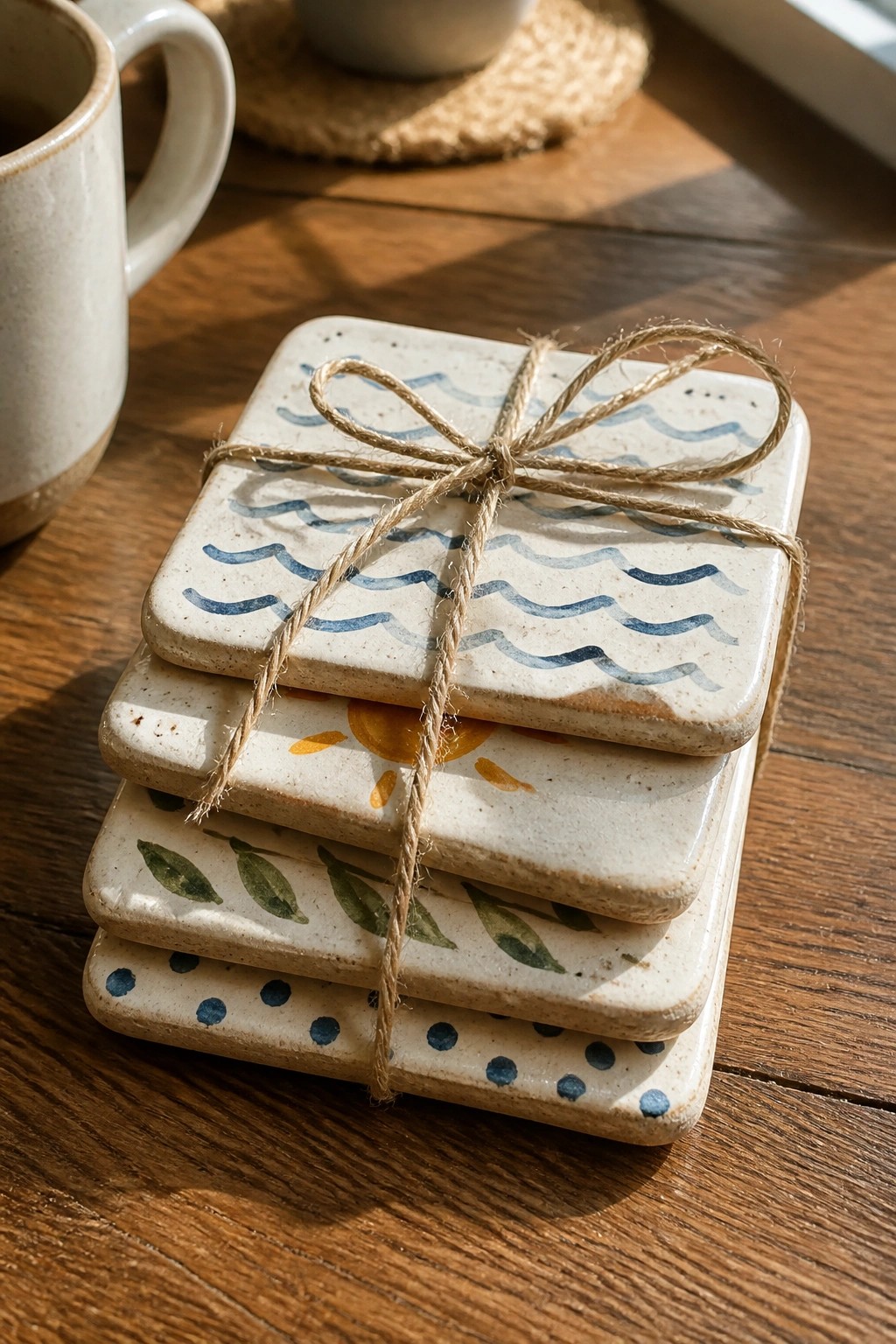
Square coasters formed from flat clay slabs offer a straightforward way to practice even cutting and basic surface decoration. Each piece carries a simple painted motif such as waves, a sun, leaves, or dots applied over a light speckled glaze. The uniform size and neutral background keep the focus on the hand-painted details while still allowing the clay texture to show through. This produces a usable set of drink rests that can be made in one batch.
What makes this idea useful is how quickly the same slab template can yield four or six matching pieces with different motifs. The compact square shape fits easily on side tables or desks and protects surfaces without taking up much space. You can swap the painted designs for any simple pattern or color scheme to match a room or gift theme. The finished stack also travels well if you want to give a small set as a present.
Heart Shaped Hanging Ornament
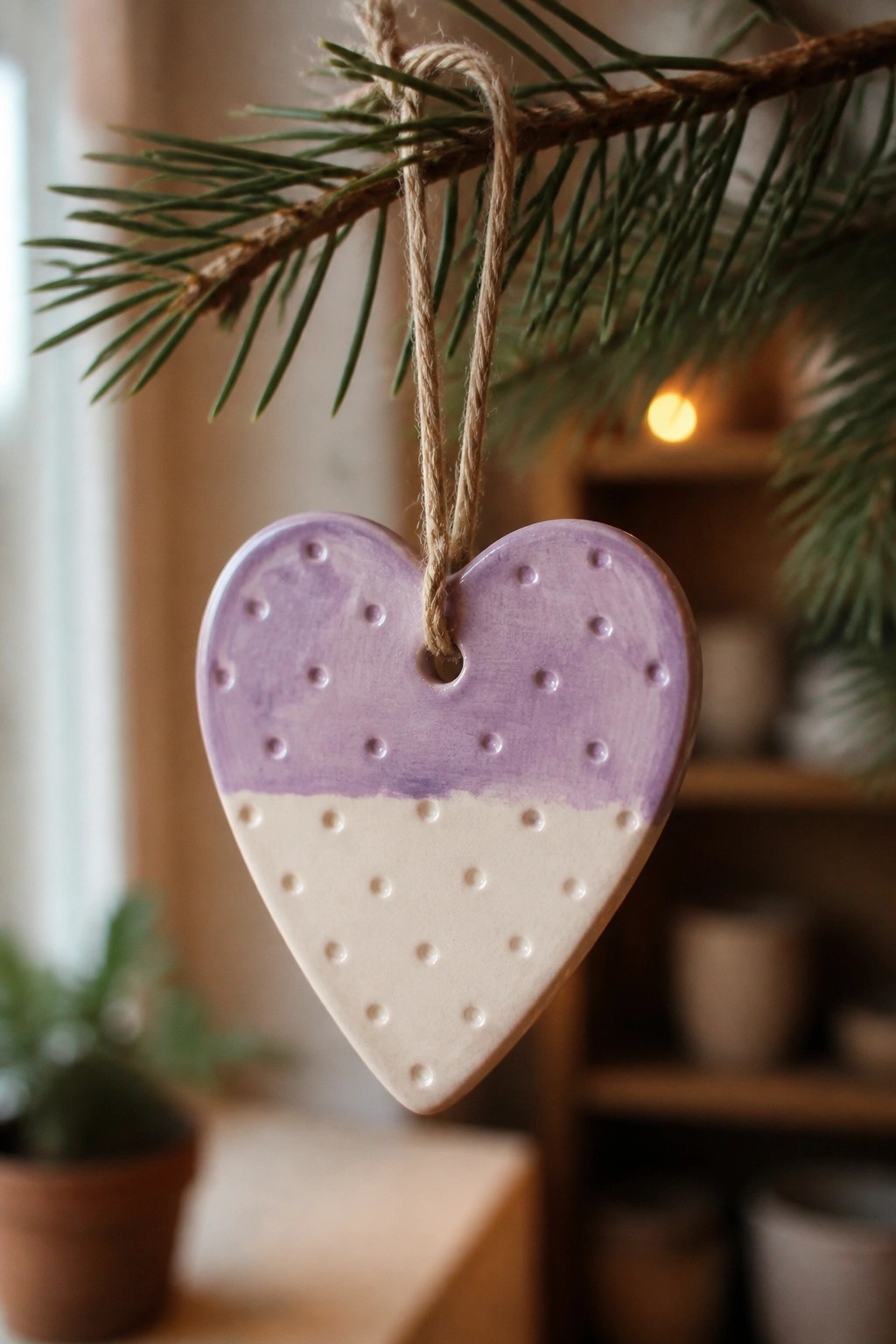
A heart shaped ornament cut from a flat slab of clay makes a straightforward hanging decoration. Cut the heart form, pierce a hole near the top for string or twine, then add rows of small dots with a tool or stamp before applying glaze. The two tone glaze split keeps the upper half in purple and the lower half in white, which shows off the dotted texture without extra steps.
What makes this idea useful is how quickly you can repeat the shape from a single slab for multiple pieces. Swap the glaze colors to match different seasons or use it as a gift tag instead of a tree ornament. The small scale keeps drying and firing times short, and the same heart outline could become a wall tile or key holder by skipping the hole and adding a flat back.
Frequently Asked Questions
What tools are best for beginners starting with slab pottery projects? Basic tools include a rolling pin for creating even slabs, a sharp knife or clay cutter for shaping, a rib tool for smoothing surfaces, and a canvas or mat to prevent sticking. Start with these before investing in more specialized items, and always keep a bowl of water nearby for slip to join pieces securely.
How thick should slabs be to avoid cracking in simple handbuilding ideas? Aim for slabs between one quarter and one half inch thick for most beginner projects. Roll the clay evenly and let it firm up slightly before cutting shapes. This thickness provides enough strength for structures like trays or boxes while reducing the risk of warping or cracks during drying.
What steps help prevent warping when drying slab pottery pieces? Dry pieces slowly by covering them loosely with plastic for the first day or two, then gradually expose them to air. Place them on a flat surface and rotate occasionally. Avoid direct sunlight or heat sources, and score and slip all joins well to maintain even moisture levels across the form.
Can air dry clay work for these handbuilding techniques instead of kiln fired clay? Yes, air dry clay suits many simple slab ideas like coasters or decorative plaques if you lack kiln access. It requires no firing but may be less durable long term. Seal finished pieces with a waterproof varnish after full drying, and build with thinner slabs to speed up the process without issues.
How can beginners add texture or decoration to slab pottery without advanced skills? Press everyday items like leaves, lace, or stamps into the clay while it is soft. Use underglazes or slips in basic patterns before firing, or carve gentle lines with a toothpick. These methods enhance the 19 ideas easily and let you personalize each project with minimal supplies.

Pottery Path is my cozy corner of the internet where I share clay ideas, pottery inspiration, and simple projects you can recreate at home. I love exploring everything from air dry clay to handbuilt pottery to cute minis that brighten your day. My goal is to make clay crafting feel easy, fun, and welcoming for anyone who wants to try it.
You will find beginner friendly tutorials, creative pottery painting ideas, and lots of warm inspiration for slow and happy crafting. If you enjoy hands on creativity, this space will feel like home.