
I’ve tried wood firing a few times and the results always surprise me in a quiet way.
The smoke and heat leave these soft patterns on the surface that I find really appealing for everyday pieces.
Vases seem to benefit the most from this method since the organic marks stand out nicely against simple shapes.
Here are some approaches I’ve come across or tried myself for getting those effects.
They focus on the basics rather than anything too complicated.
Bulbous Vase with Narrow Neck for Dried Stems
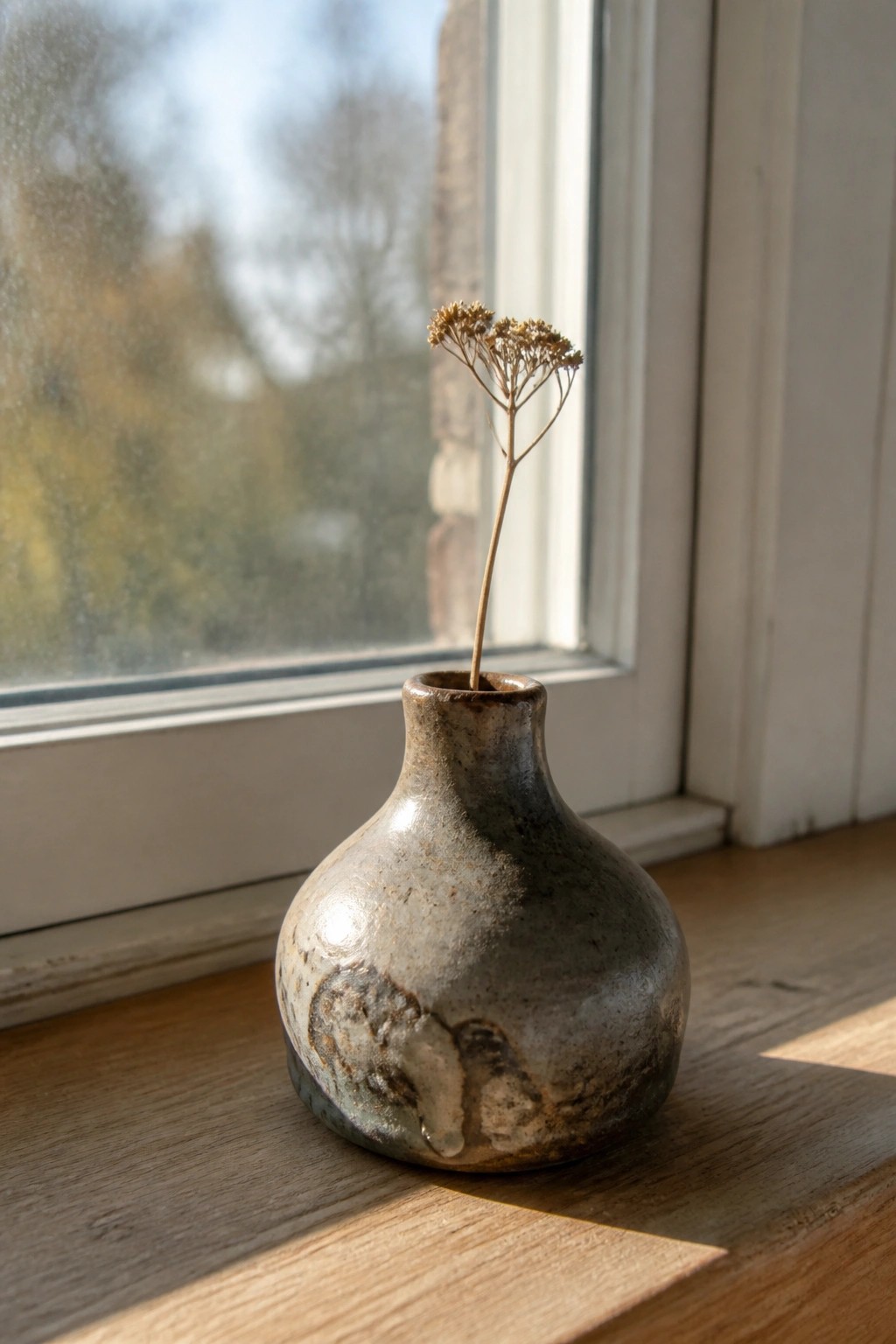
A small rounded vase with a tapered neck holds single dried stems or light clusters upright without tipping. The compact bulb shape keeps the piece stable on flat surfaces while the opening stays narrow enough to support thin stems. An uneven matte glaze in gray and brown tones creates subtle surface variation that reads as natural rather than applied.
This shape works especially well on windowsills or narrow ledges where larger pieces would crowd the space. You can adapt the proportions for taller versions or shorten the neck to make a wider opening for small bunches. The same form translates easily into a bud vase set or a simple holder for test tubes. It stands out in rustic collections because the glaze lets the clay show through without extra carving or painting.
Bottle Vase with Running Drip Glaze
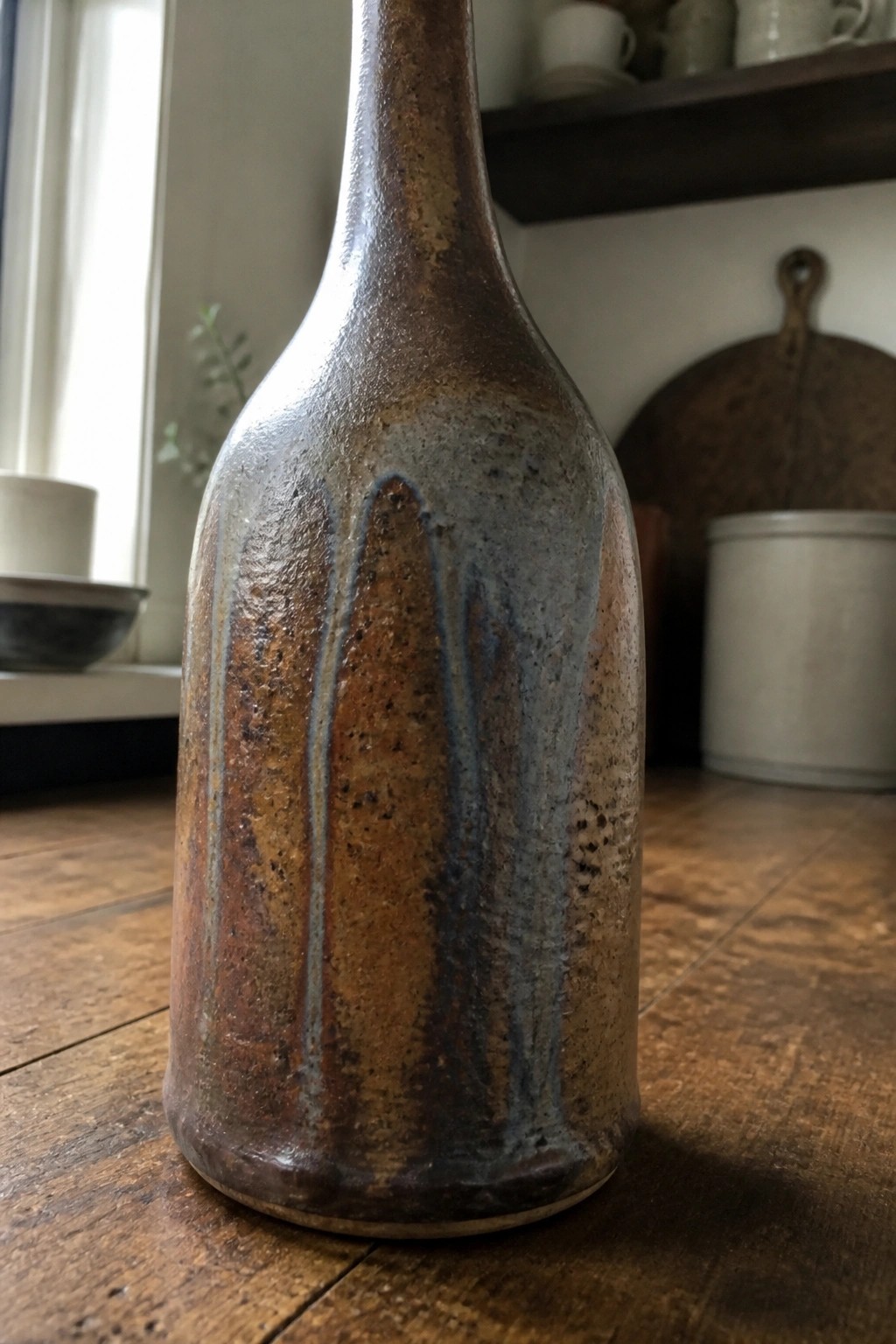
A tall narrow-neck bottle vase shows how a simple form can highlight glaze movement. The surface uses overlapping brown and blue tones that run downward in vertical streaks, leaving a speckled matte texture where the glaze thinned out. This category of vase relies on the natural flow of the glaze during firing rather than added carving or painting.
What makes this idea useful is how the elongated shape works on a mantel or narrow shelf without taking up much space. You could adapt the same drip effect by varying glaze thickness on test tiles before applying it to the full piece, or shorten the neck slightly for a more stable table version. In a kitchen or entryway, the earthy color mix pairs easily with wood and stone without competing for attention.
Two-Handled Vase with Natural Dark Banding
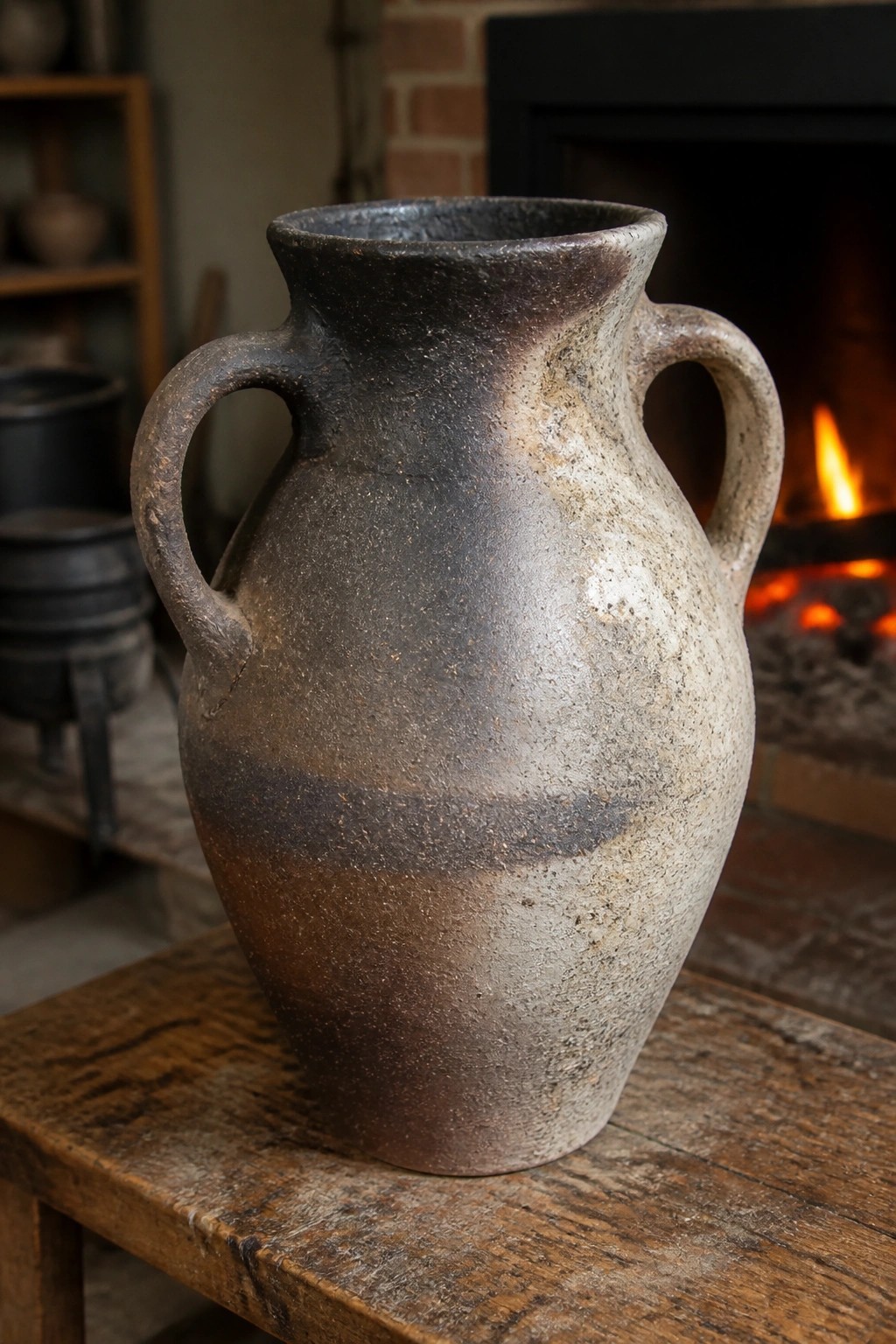
A two-handled vase with a rounded body and slightly flared neck creates a balanced form that sits well on a table or shelf. The surface uses uneven dark bands and a rough, speckled finish to highlight natural firing effects rather than smooth glaze. Simple looped handles attached at the shoulder give it a practical grip without adding extra decoration. This approach fits the category of rustic decor vases that rely on clay color and firing variation for visual interest.
What makes this idea useful is the way the handles and broad belly support both flower arrangements and empty display. You could scale the same shape down for a smaller jug or stretch it taller for a floor piece while keeping the same surface treatment. The dark banding works especially well when you let ash or reduction firing do the work instead of trying to paint precise lines. For Pinterest, the combination of handles and raw texture gives the image enough contrast to stand out in a feed of simpler forms.
Large Floor Vase with Mottled Wood-Fired Finish
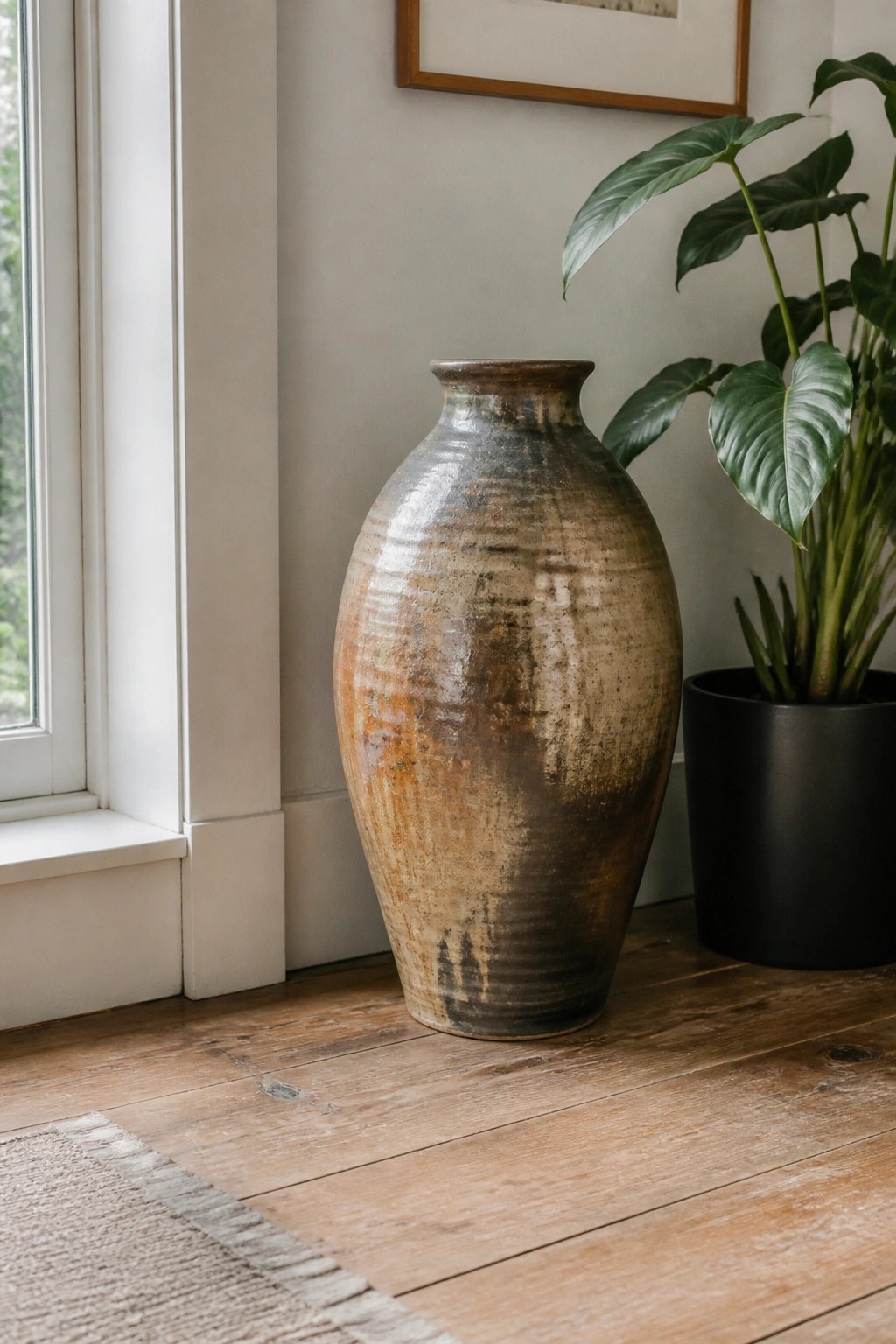
A tall ceramic vase with a wide rounded body and short neck relies on wood-fired effects to create streaked brown, gray, and orange tones across the surface. The glaze moves and pools during firing to leave visible ash marks and color shifts that follow the form. This approach keeps the design simple while letting the natural surface variations carry the visual interest.
What makes this idea useful is the way the tall shape works as a standalone piece in an entryway or living room corner. You can scale the same proportions down for a medium table vase or shift the neck narrower to hold single stems. The uneven firing marks also translate well if you want to test similar effects on a slab-built or thrown form without adding extra decoration.
Bulbous Vase with Natural Gradient Surface
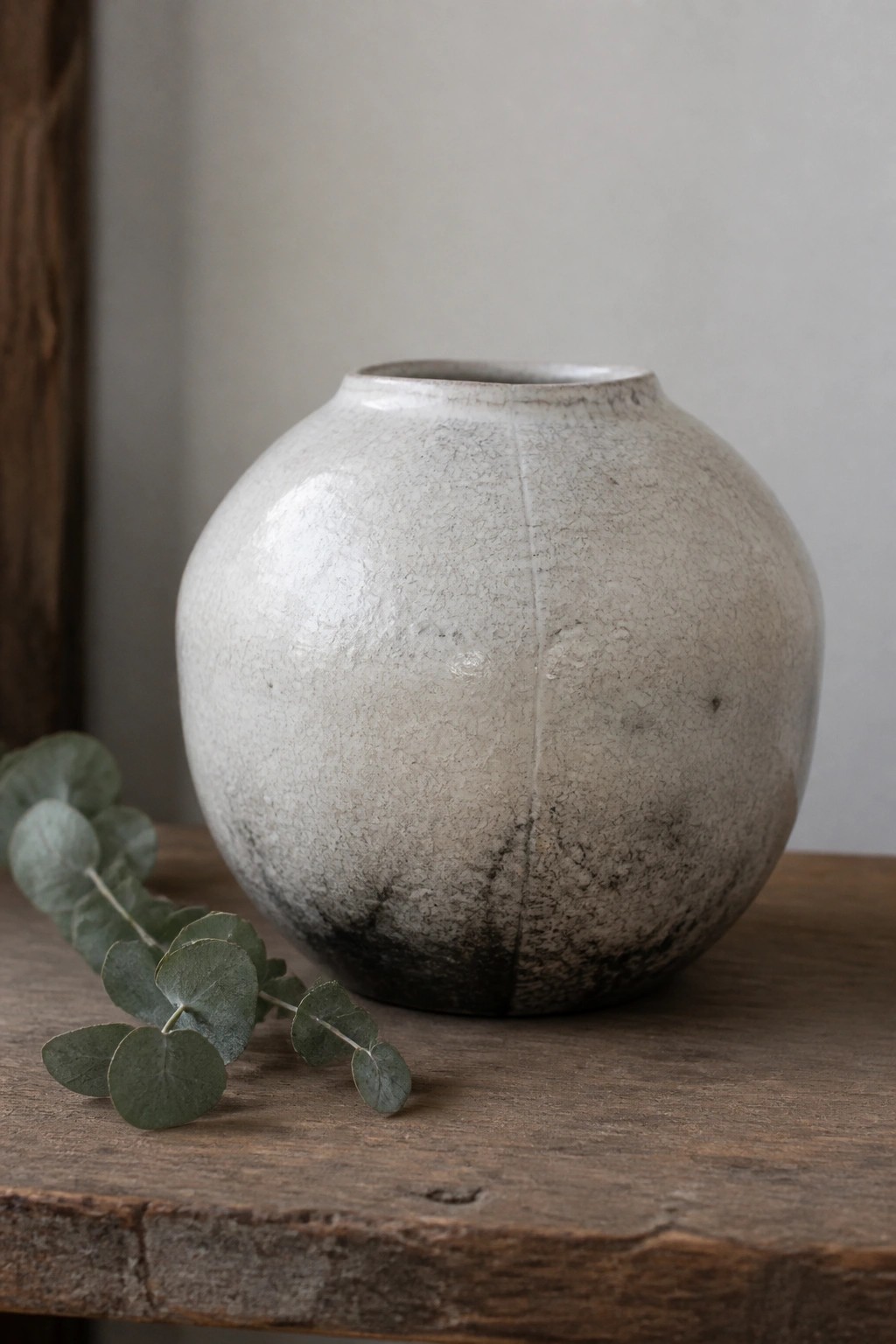
A rounded vase form lets the surface treatment take center stage. The shape stays smooth and simple while the finish shifts from light at the top through a crackled middle zone into a darker base. This approach fits the wood-fired or ash-effect category where the firing itself builds the color and texture instead of added decoration.
The compact round shape works on a mantel, shelf, or side table without crowding the space. You can recreate the gradient by controlling how much ash or slip lands on different parts of the pot during a firing. The same idea translates easily to smaller jars or taller cylinders if you want to test the surface effect on other forms first.
Double-Gourd Vase with Mottled Natural Glaze
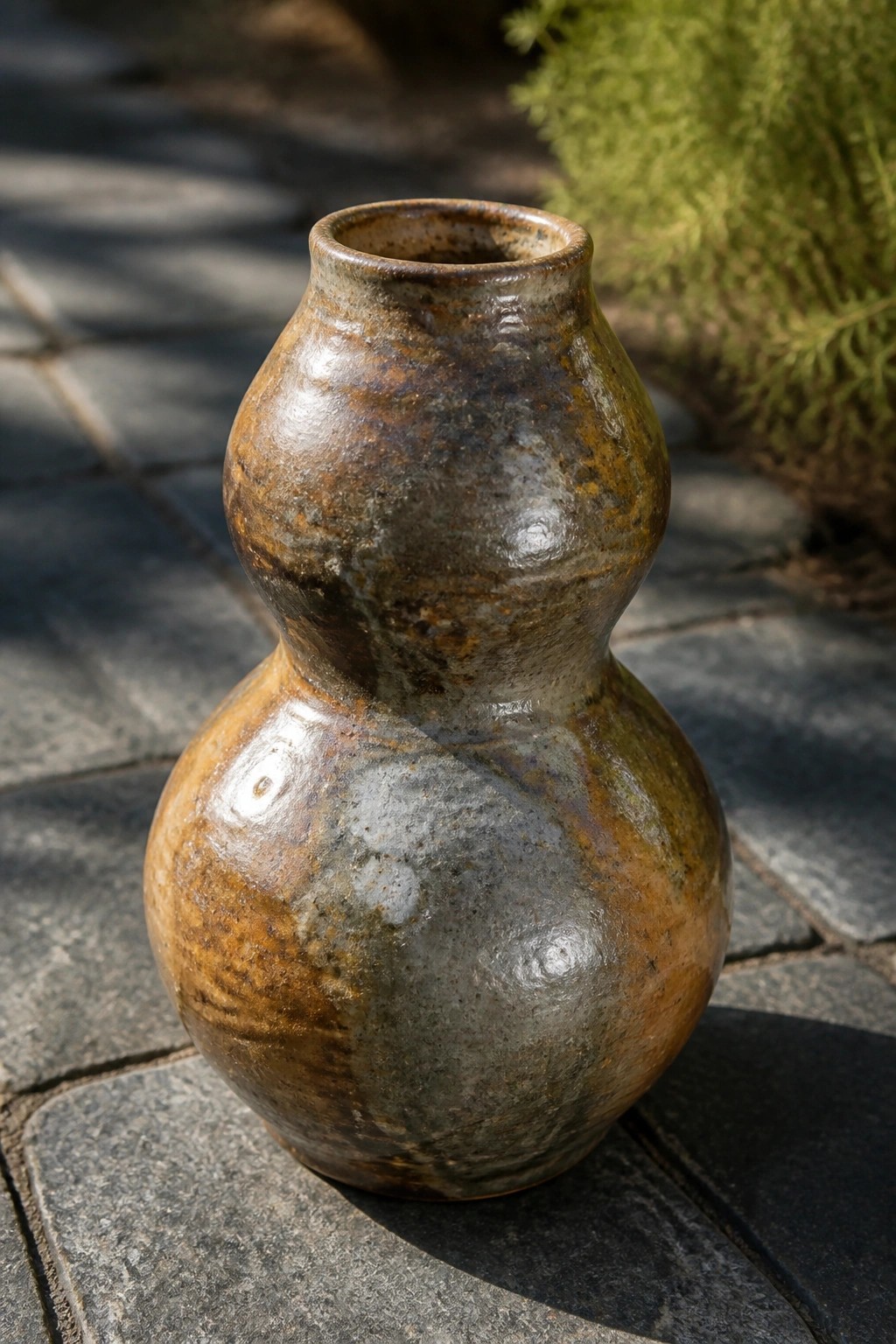
A double-gourd vase uses two stacked bulb shapes to create height and balance without added details. The narrow neck sits on the upper bulb, which then narrows again before meeting the larger lower bulb. The surface carries an uneven mix of brown, gray, and green tones that shift across the form, giving the piece its main visual interest through the glaze alone.
What makes this idea useful is how the stacked shape supports both dried stems and a single branch without tipping. You can adjust the proportions to make the lower bulb smaller for a more compact version that fits on a windowsill or shelf. The same mottled surface effect works on other forms like a simple cylinder or a low bowl if you want to repeat the look across a set. This shape also photographs cleanly for Pinterest because the curves stand out even in simple lighting.
Tall Vase with Wavy Rim and Mottled Glaze
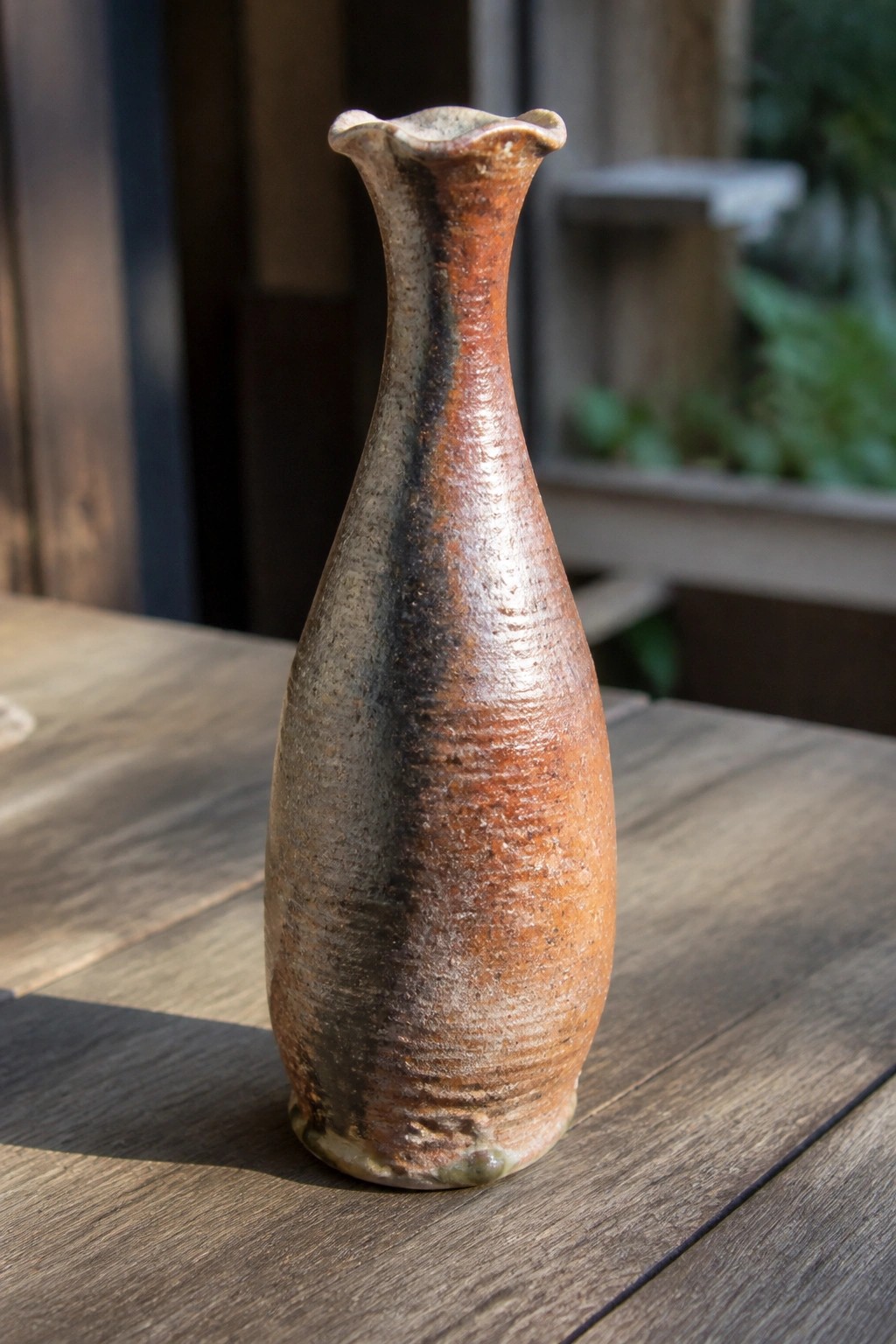
A wheel-thrown vase with a tall tapered body and narrow base lets the surface treatment take center stage. The uneven wavy rim breaks up the vertical lines and gives the piece a softer silhouette. The running brown and gray tones across the body show how a single glaze can produce varied color shifts on its own. This shape works as a straightforward vase project where the focus stays on form and natural surface variation rather than added details.
The narrow footprint makes it simple to fit on a mantel or windowsill without crowding other objects. You can repeat the wavy rim on smaller bud vases or adjust the taper for a wider version that holds more stems. Matching the same glaze range on a few different shapes creates an easy set for gifting. The clean lines paired with active color shifts also perform well in photos for idea boards.
Fluted Vase with Dripping Ash Glaze
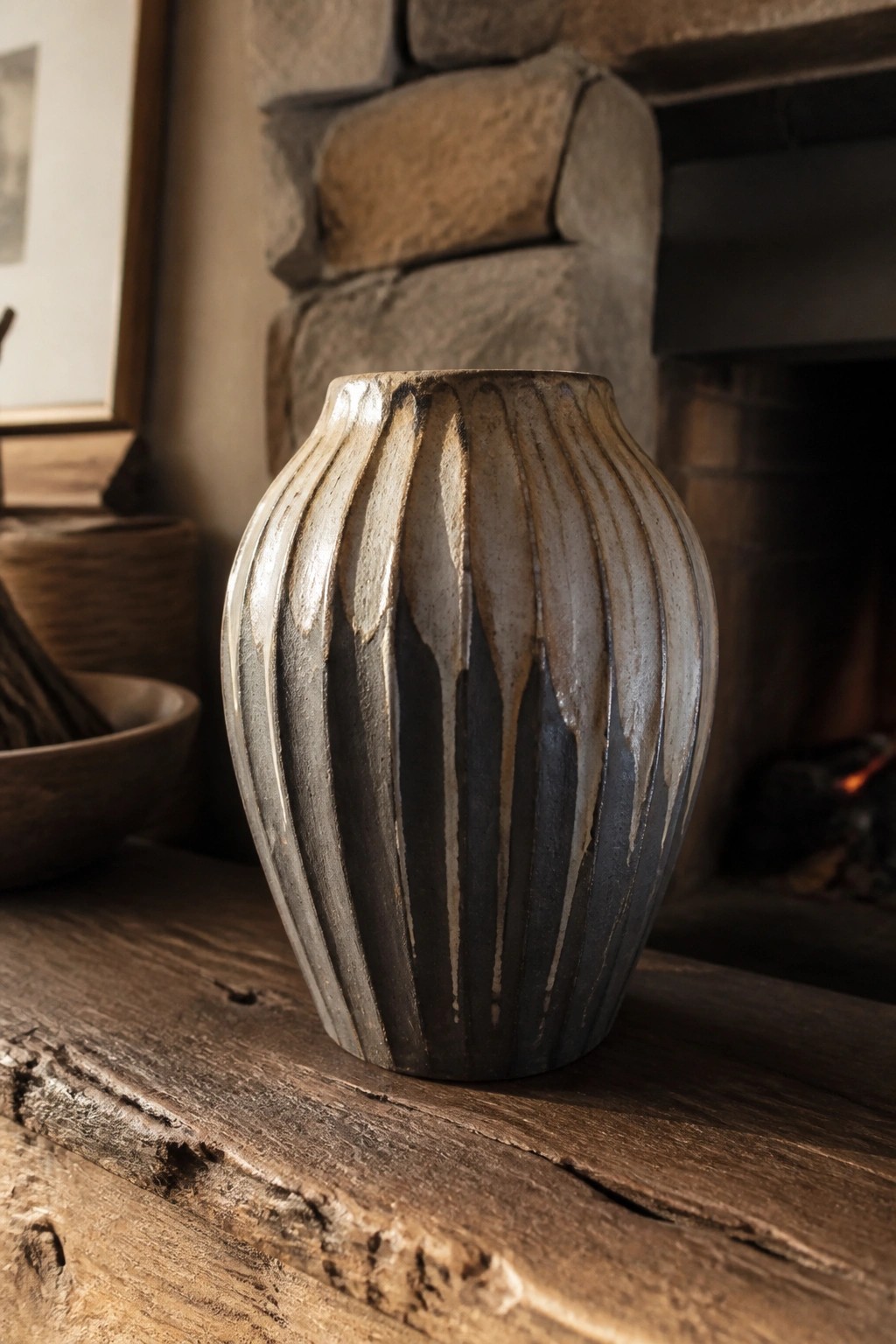
A vase formed with evenly spaced vertical ridges gives the surface a strong linear texture that guides the glaze downward in long, irregular drips. The glaze itself moves through several muted tones of gray, brown, and cream, creating a layered look that emphasizes the ridges without added decoration. This combination turns a simple wheel-thrown shape into a vase that highlights natural surface movement rather than precise patterns.
The ridges do most of the visual work by catching and directing the glaze into those vertical streaks, so the same idea can be scaled down for cups or jars without changing the forming technique. A piece like this works especially well on a shelf or mantel where light can pick up the texture and the range of glaze tones. You could adapt the fluting on a wider planter by spacing the ridges farther apart and letting a single ash-style glaze run more freely.
Rectangular Vase with Horizontal Ridge Texture
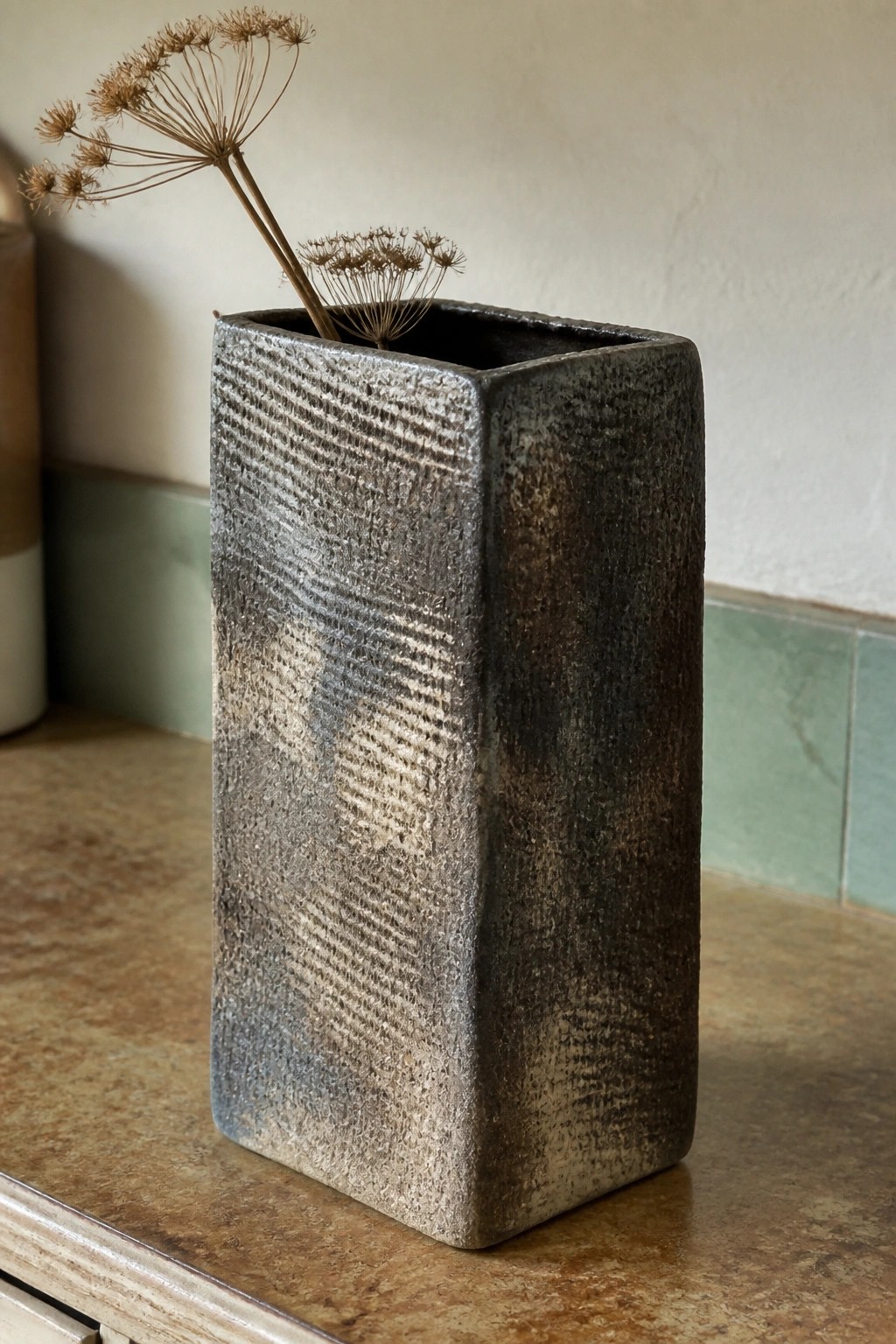
A tall rectangular vase formed from slabs gives a clean outline that contrasts with the rough horizontal ridges pressed into the surface. These ridges run across the front and sides to create shifting light and shadow that emphasize the form without extra decoration. A mottled natural surface in dark gray and brown tones keeps the focus on the clay and texture rather than a uniform glaze. This kind of vase works as a straightforward project for anyone wanting to explore surface effects on a simple geometric shape.
The shape does a lot of the work here because the flat sides stay stable on a shelf or table while the ridges add interest from every angle. You can recreate the texture by dragging a rib or comb across the clay before joining the slabs. This vase suits an entry table or mantel when filled with dried stems or a single branch. The same ridge pattern can be scaled down for a set of smaller bud vases or applied to a round form if you want to test the idea on a different profile.
Paired Vases with Mottled Natural Glaze Effects
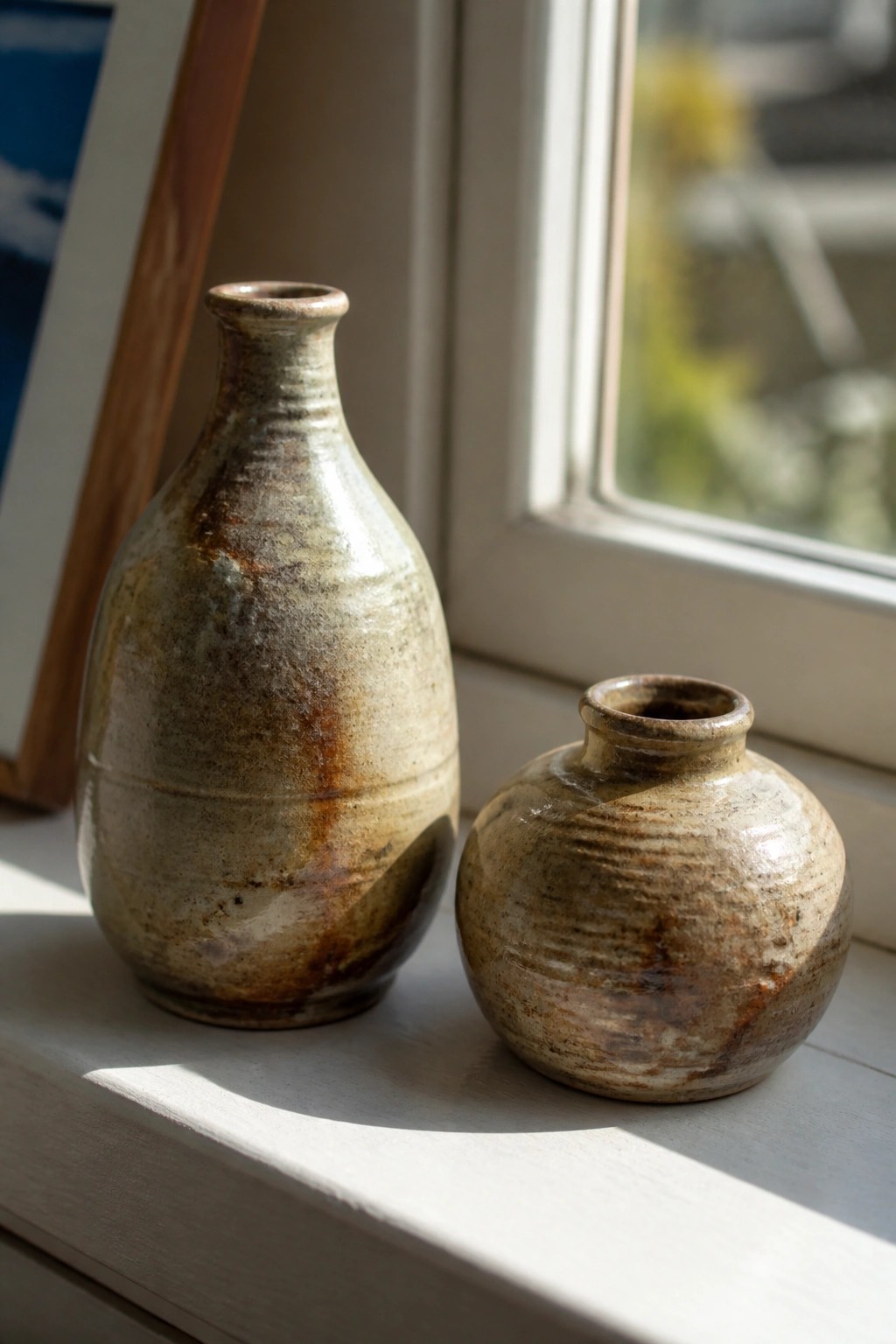
These two vases use straightforward thrown shapes to let the surface do the work. A taller bottle form sits next to a lower, rounded one, both finished with the same uneven, earthy glaze that shifts from gray to brown in patches. The narrow necks and soft curves keep the focus on the color variations and texture rather than added decoration.
What makes this idea useful is how the two sizes create visual interest without needing extra detail. You could throw the same pair in different heights or test one glaze across several simple forms to see how the results change. The compact scale makes them practical for testing new surface treatments or placing on a narrow ledge where a larger piece would not fit.
Bulbous Vase with Natural Glaze Runs
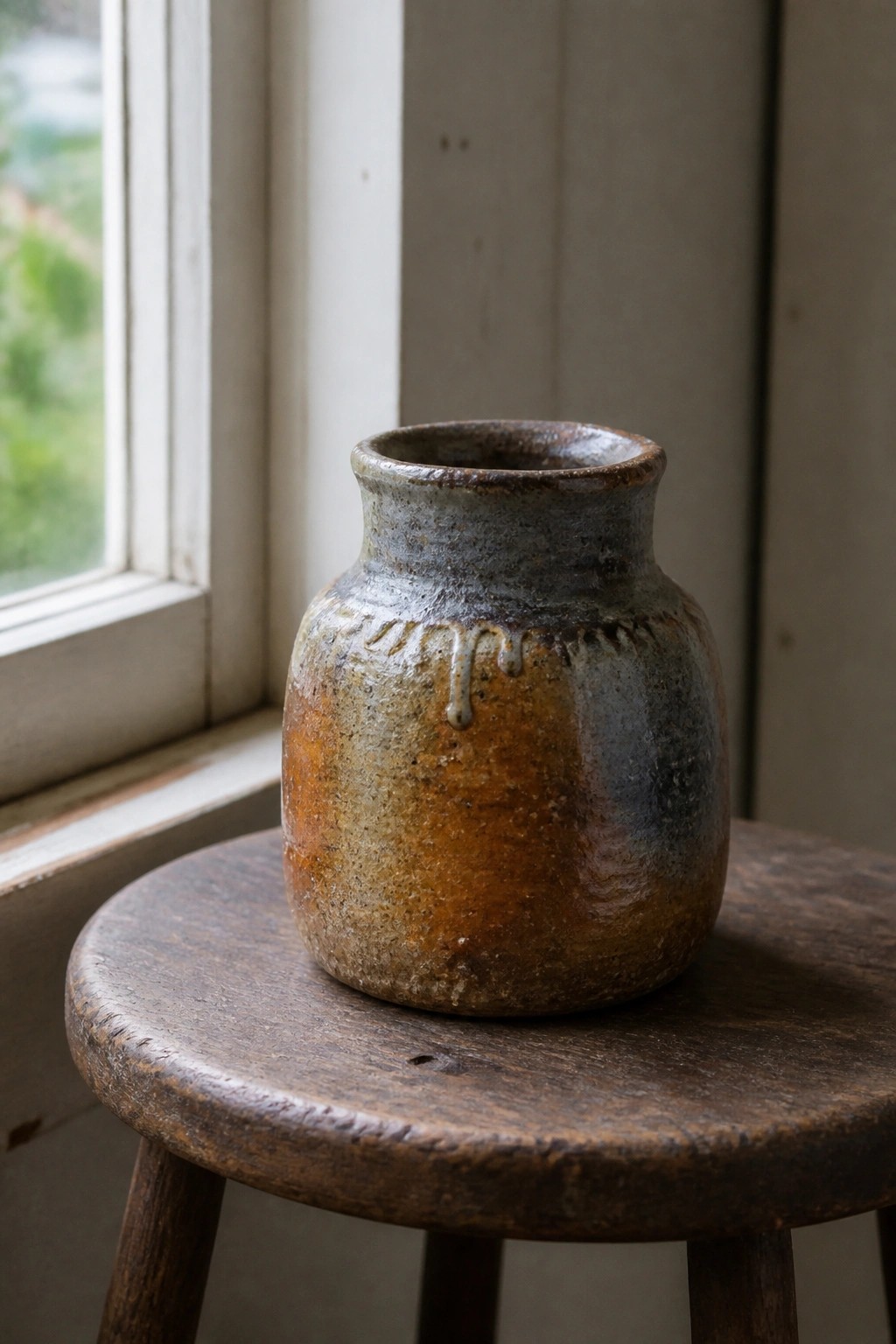
This is a compact ceramic vase with a rounded body that narrows into a short neck and wide rim. Multiple layers of earthy glazes in brown, orange, and gray create flowing drips and patchy coverage across the surface. The horizontal texture lines near the shoulder come from the forming process and help break up the glaze movement.
A piece like this works especially well as a small accent on a shelf or table where a single stem or dried bunch can sit without overwhelming the space. The rounded form is straightforward to throw or hand-build, so you can scale it up for larger arrangements or shorten it into a cup shape. Try overlapping similar glaze tones on your next batch to get comparable drip patterns without extra carving or painting. The muted color shifts photograph cleanly for boards focused on wood-fired or ash-glaze results.
Asymmetric Glaze Vase with Exposed Clay Body
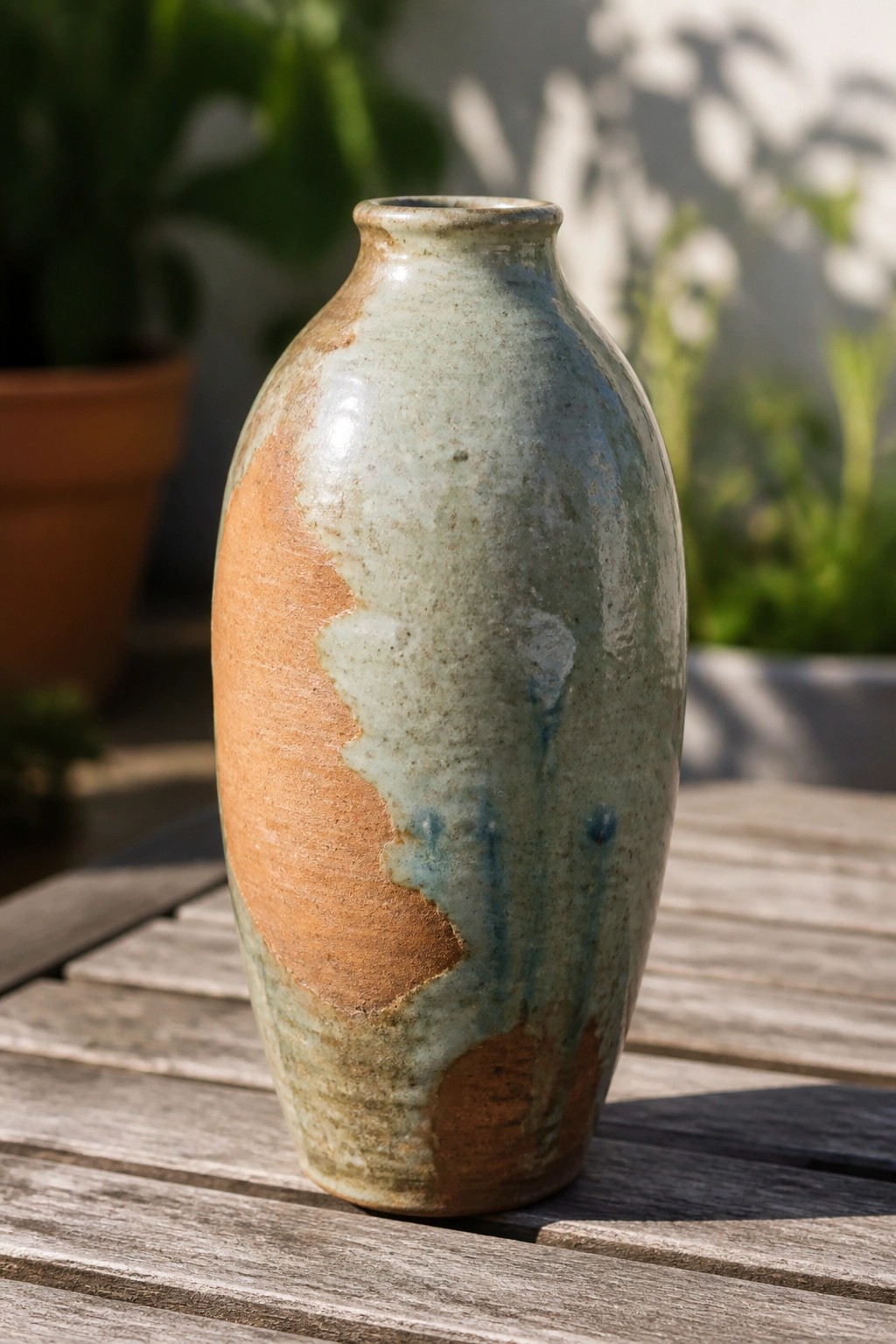
A tall oval vase shows how leaving large areas of the clay body unglazed creates strong contrast between warm terracotta and cooler green glaze. The glaze is applied unevenly so it breaks and drips in places, letting the raw clay show through in irregular patches. This produces a natural surface effect that relies on the clay color and simple glaze movement rather than added decoration.
The shape works well as a single accent piece on a shelf or side table where the height draws the eye. You could rework the same partial-glaze idea on a shorter cylinder or a wider belly shape to suit different spaces. The exposed clay sections make it easy to match with other earthy tones in a room, and the overall form stays simple enough to try with basic dipping or brushing techniques.
Carved Leaves on a Speckled Bulbous Vase
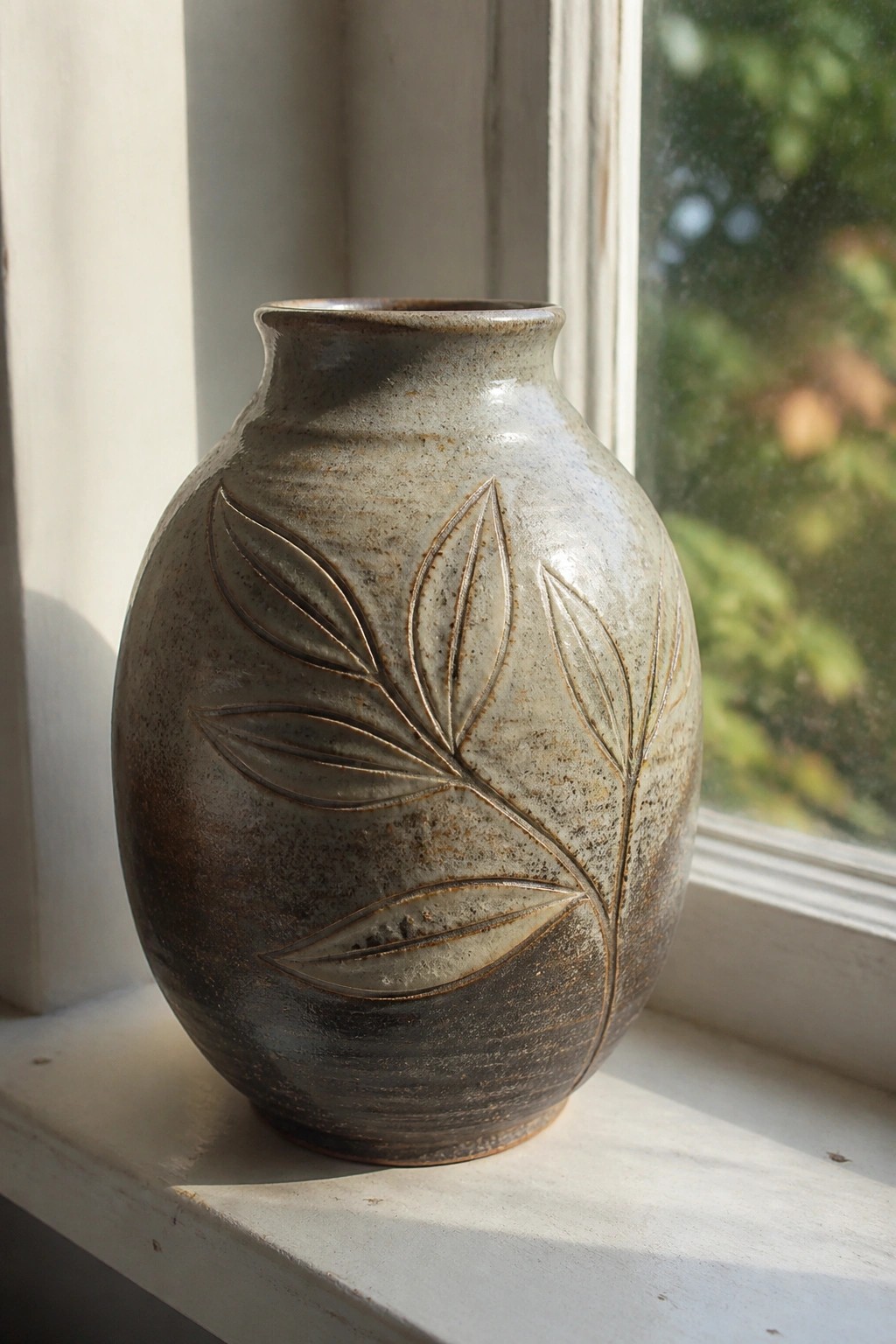
A rounded vase with a tapered neck uses incised leaf shapes to break up the surface. The leaves are cut with clean outlines and some inner detail lines that follow the form of the clay. The speckled glaze in muted grays and browns sits in the recessed areas, giving the carving extra contrast without extra color. This keeps the vase simple while adding a clear natural motif.
What makes this idea useful is how the carving works with the existing curve of the pot instead of fighting it. The shape fits a windowsill or side table where a single stem can sit without tipping. You could repeat the same leaf layout on a taller cylinder or shrink it for a small bud vase. The same incisions could also be spaced farther apart on a wider bowl to change the scale of the pattern.
Tall Cylinder Vase with Pinched Rim and Thumb Indent
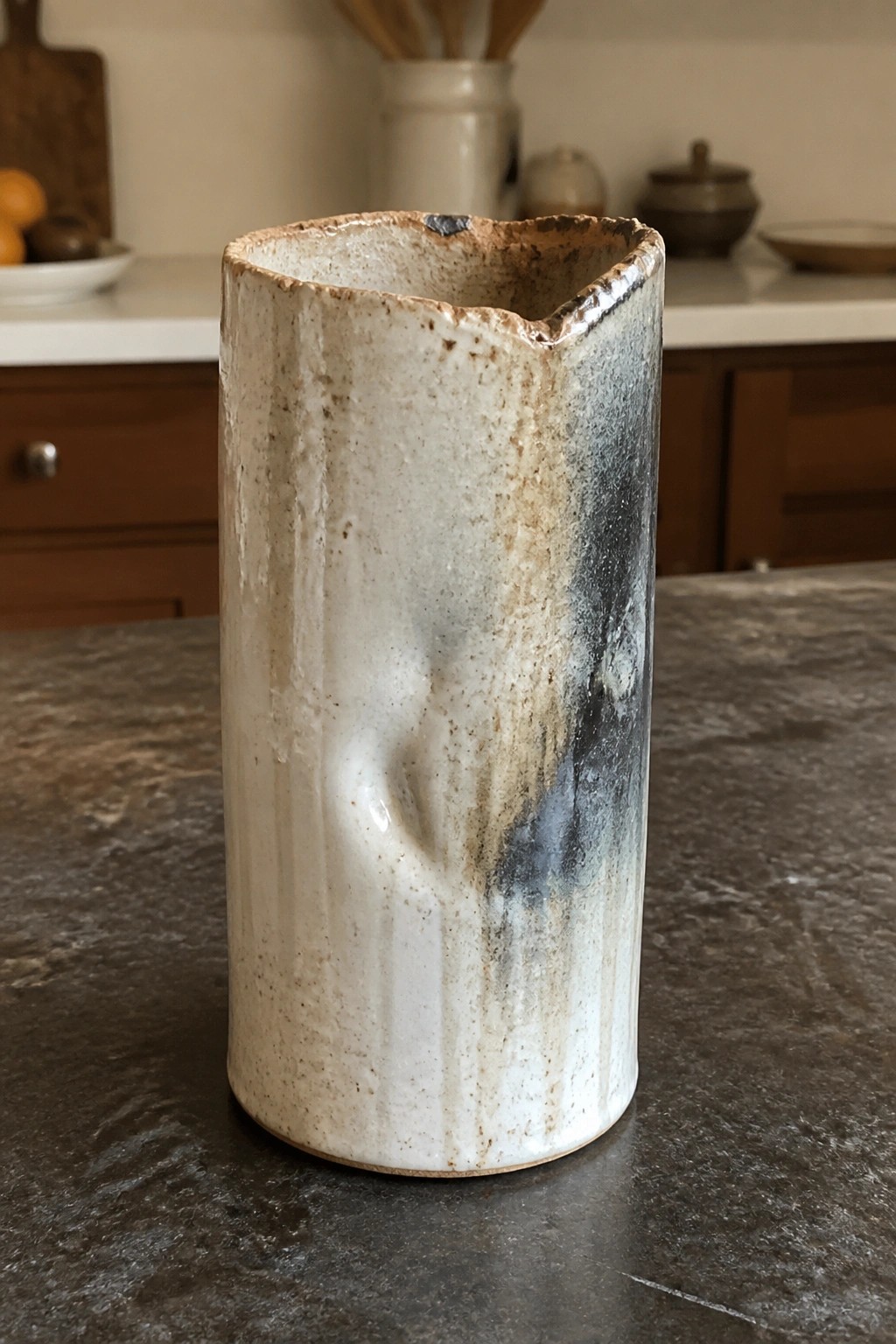
A tall cylindrical vase with an uneven, pinched rim creates an organic opening that draws attention without added decoration. The single thumb indent pressed into the side adds a subtle sculpted detail that breaks up the smooth form while keeping the surface simple. Natural color shifts from off-white to dark gray with speckled texture give the piece its main visual interest through surface variation rather than pattern or carving.
What makes this idea useful is how the narrow tall shape works for a single stem or small bunch of flowers without taking up much table space. You can repeat the thumb indent in a line or cluster to change the rhythm, or move the pinch to one side of the rim for an asymmetrical look. The same surface treatment and rim style translate easily to a shorter tumbler or a lidded jar if you want to build a matching set. In a kitchen or dining area the muted tones sit comfortably against wood and stone without competing with other objects.
Ribbed Vase for Glaze Variation
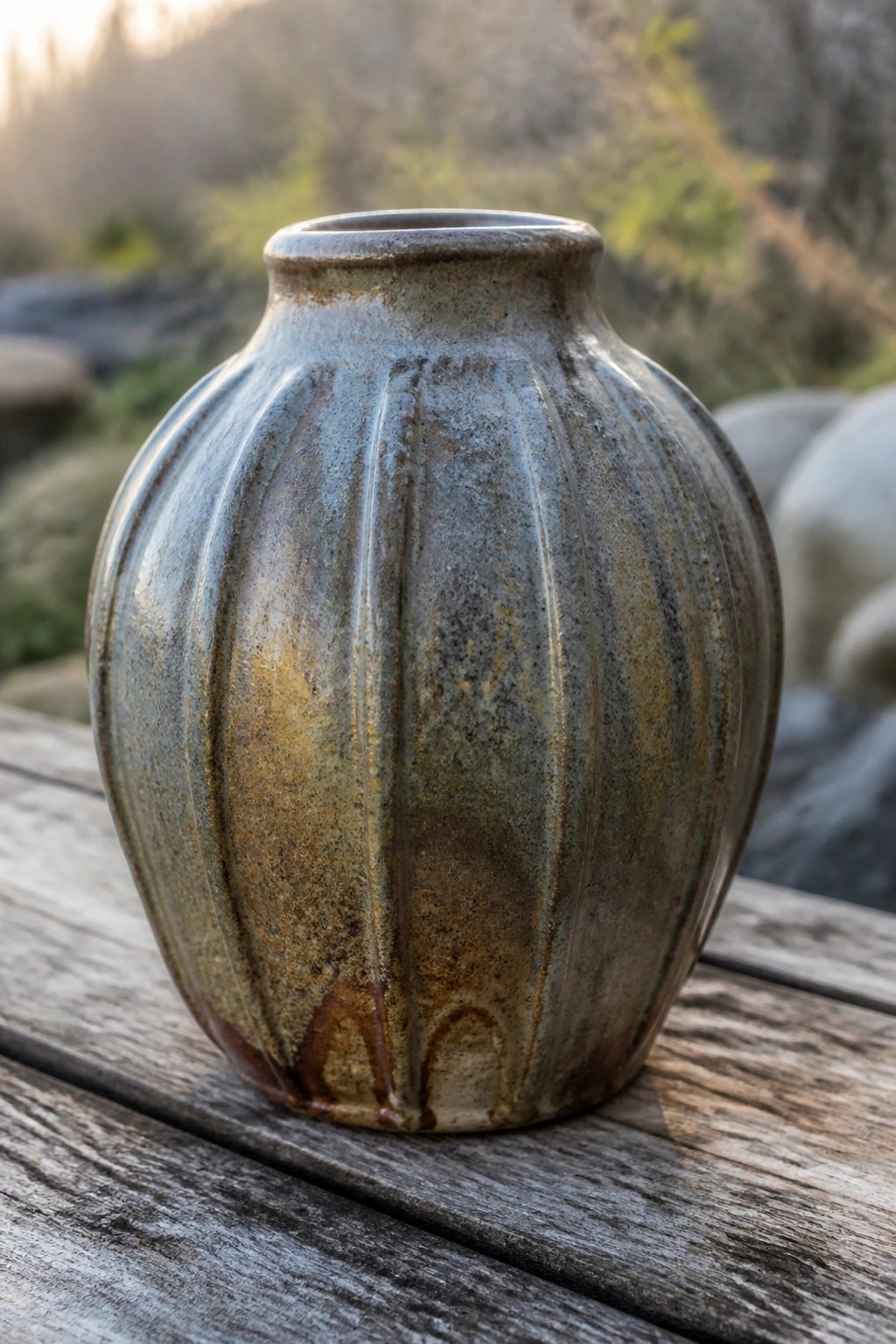
A wheel-thrown vase with vertical ridges running down the body lets glaze pool in the grooves while leaving the raised areas thinner and lighter in color. The rounded form narrows into a short neck, creating a simple shape that still shows off surface movement from ash or wood-fired glazes. This style pairs the texture directly with the firing process so the natural color shifts become the main feature instead of added decoration.
The ribbed surface gives you a clear way to test how a glaze behaves across different thicknesses in one piece. You can repeat the same ridges on a taller cylinder for a different proportion or shrink the form for a set of smaller vases. In a room with changing light the raised lines catch highlights and make the color shifts easier to notice, which also helps when you photograph the work for reference later.
Ash Drip Glaze Over Textured Bottle Vase
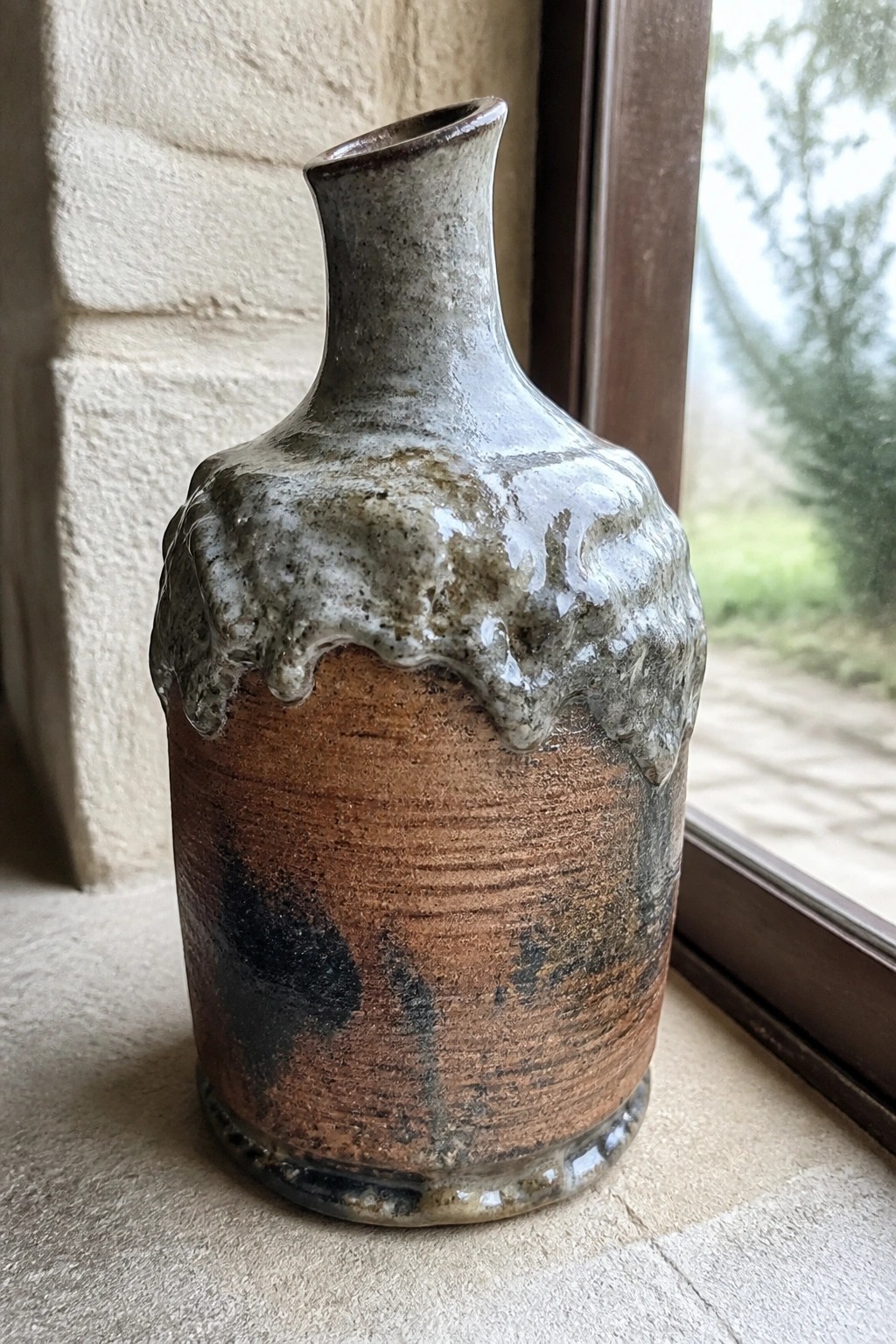
A bottle-shaped vase combines a narrow neck with a full rounded body to show off a thick gray glaze that melts and drips down from the rim. The lower two-thirds keep a matte brown surface marked with horizontal ridges that catch light and create contrast with the glossy drips above. This approach relies on simple form and surface contrast rather than added decoration, fitting the category of rustic wood-fired style vases.
What makes this idea useful is how the drip effect highlights the shoulder without extra tools or carving. The shape works well as a single accent on a shelf or grouped with other earth-toned pieces in an entryway. You could adapt the same glaze contrast to a shorter pitcher or a set of small bud vases by adjusting the application area. The textured lower body also helps minor throwing marks blend in, so the result still looks intentional even on early attempts.
Hanging Wall Pocket Vase with Gradient Surface
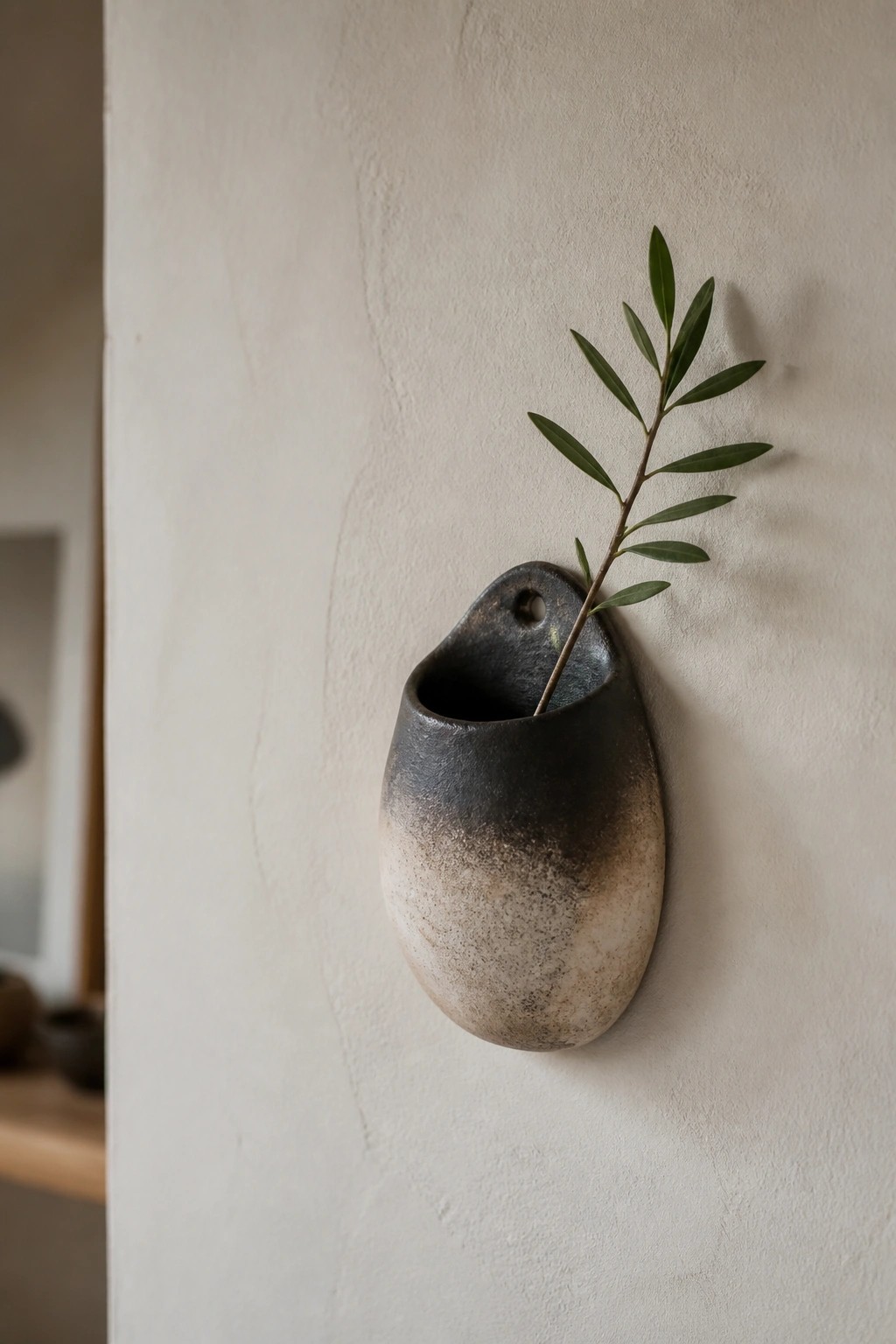
A wall-mounted clay pocket vase gives a simple way to display single stems or small branches without needing a flat surface. The form is a rounded pouch that narrows toward the bottom, with a hole punched near the upper rim so it hangs flat against the wall. The surface moves from a darker upper area into a lighter lower half, which emphasizes the handmade contour and creates natural visual interest through the material itself.
What makes this idea useful is how little space it occupies while still holding fresh or dried stems upright. The compact size works well in hallways, above a workspace, or grouped with other small pieces on a larger wall. You could rework the same shape at a slightly larger scale for bigger branches or make several with different hanging hole positions to create an easy row display. For plant styling, the tapered bottom helps keep arrangements from tipping forward.
Wheel-Thrown Vase with Horizontal Ridges
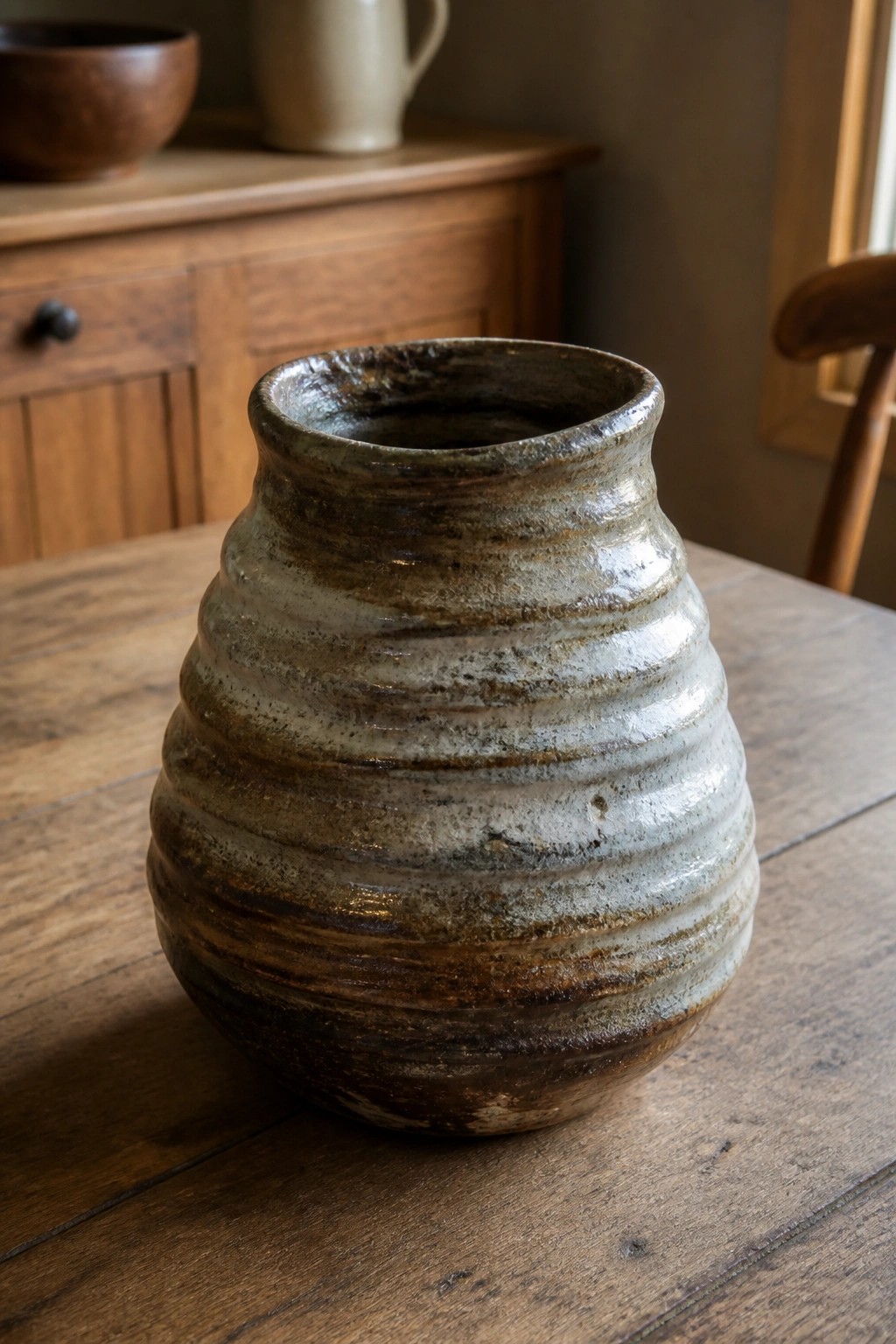
A wheel-thrown vase with a rounded belly and short neck uses visible throwing lines to create horizontal ridges around the form. These ridges catch and break up the glaze as it moves during firing, producing streaks and variations in brown, gray, and cream tones. The approach relies on the clay surface itself rather than added decoration to generate the final look.
The shape works well on a shelf or table where the ridges can catch light and show off the glaze movement. You can adapt the same form by changing the rim width or scaling it down for smaller arrangements. A piece like this stands out in a collection because the texture gives the surface interest without extra carving or painting.
Tall Vase with Natural Wood-Fire Gradient
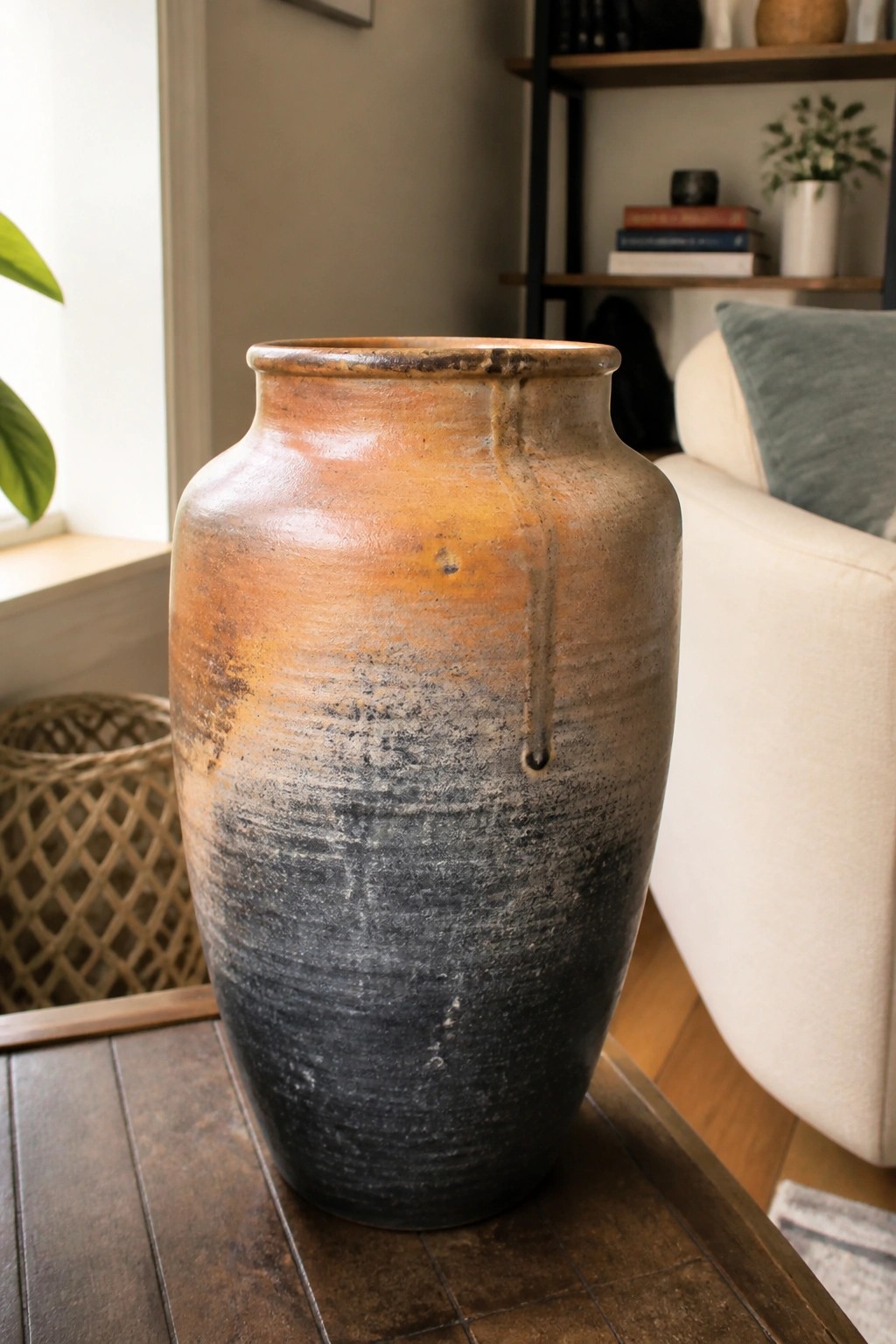
A large ceramic vase like this relies on wood firing to produce its own surface pattern, shifting from dark charcoal gray at the base to warmer orange and brown tones higher up. The uneven texture and faint drip marks come from ash landing during the long firing, rather than from any applied glaze design. This creates a simple but striking vase that shows the full height of the form through color changes alone.
What makes this idea useful is how the tall shape gives the firing effects room to develop without extra carving or painting. You could scale the same approach down to a medium table vase or try it on a narrower neck shape for variety. In an entryway or corner spot, the size works well for holding branches or standing alone as a room accent. The same firing results could also be tested on a group of three vases in different widths to create a matching set.
Frequently Asked Questions
What kind of clay works best for developing natural surface effects in wood-fired vases? Stoneware or porcelain bodies with iron or other fluxing materials respond well to wood ash during firing. These clays help create varied colors, flashing, and subtle textures as the ash melts and interacts with the surface at high temperatures.
How should I prepare vases before loading them into a wood kiln for rustic results? Apply slips, light washes, or leave some areas bare to encourage ash deposits and kiln atmosphere effects. Position pieces to allow flame paths and ash to flow naturally across the forms, and use wads or supports that leave interesting marks without damaging the work.
Can similar natural surface effects be achieved without a traditional wood kiln? Some potters experiment with soda or salt additions in gas kilns or use wood ash glazes in electric firings, but the unpredictable flame patterns and heavy ash buildup typical of wood firing are harder to replicate exactly. Small test firings help determine what is possible in your setup.
What care is needed to maintain wood-fired vases over time? Dust them gently with a soft cloth and avoid prolonged contact with water if the interior is unglazed, as many rustic surfaces remain slightly porous. For flower arrangements, insert a glass liner or use dried botanicals to preserve the natural finish.
Where can I source or learn to create pieces inspired by these 19 ideas? Connect with local wood-firing potters through ceramics guilds or workshops, or explore online communities focused on atmospheric firing techniques. Hands-on classes provide the best way to experiment with ash effects, stacking methods, and surface treatments before trying your own series of vases.

Pottery Path is my cozy corner of the internet where I share clay ideas, pottery inspiration, and simple projects you can recreate at home. I love exploring everything from air dry clay to handbuilt pottery to cute minis that brighten your day. My goal is to make clay crafting feel easy, fun, and welcoming for anyone who wants to try it.
You will find beginner friendly tutorials, creative pottery painting ideas, and lots of warm inspiration for slow and happy crafting. If you enjoy hands on creativity, this space will feel like home.