
I’ve been making pottery for a few years and often find shapes to try in the plants around my yard or the birds I see on walks.
Botanical and wildlife forms seem to suit clay because they have natural curves and textures that are not too hard to capture.
I have sketched out quite a few of these over time and tested some in small batches at my studio.
A few have become favorites that I repeat when I need a simple project.
Here are twenty ideas that stay close to those subjects.
Sleeping Fox Ceramic Planter
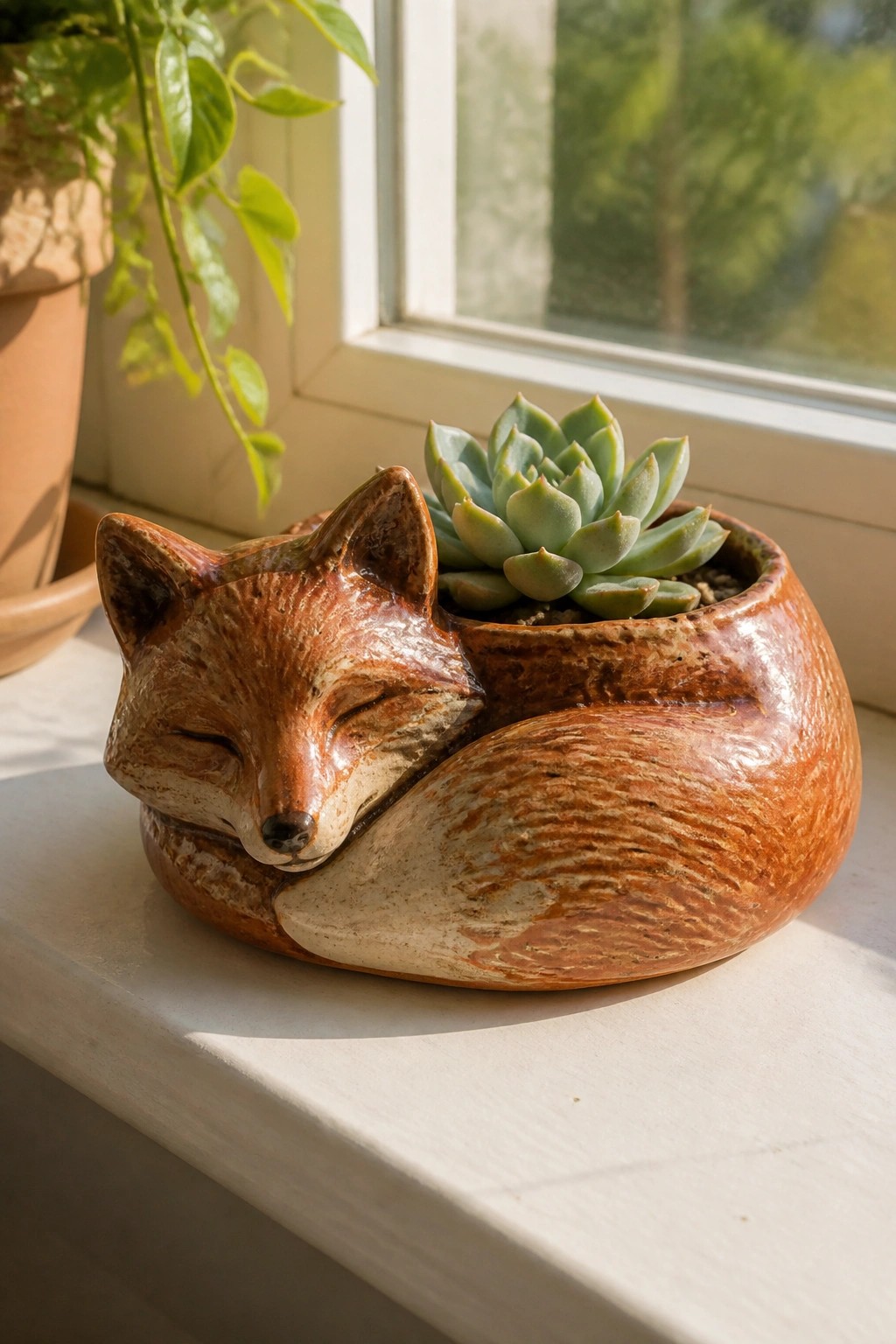
A ceramic planter formed as a curled sleeping fox creates a compact bowl for small succulents or houseplants. The fox body is sculpted in a tight circle with the head resting on the tail, leaving an open cavity along the back where soil and a plant fit directly into the form. Brown and cream glazes with a glossy surface bring out the carved fur texture and ear details while keeping the piece clearly handmade. This approach turns a wildlife subject into a functional planter that needs no separate base or stand.
What makes this idea useful is the way the curled animal shape controls the overall size and keeps the planter stable on a flat surface. The same layout could be reworked for other small animals by adjusting the head angle and tail position while keeping the back cavity. It works especially well for windowsill or desk use because the low profile fits tight spots without blocking light. For a gift the finished piece combines a living plant with a sculptural object that stands out on its own.
Impressed Fern Vase
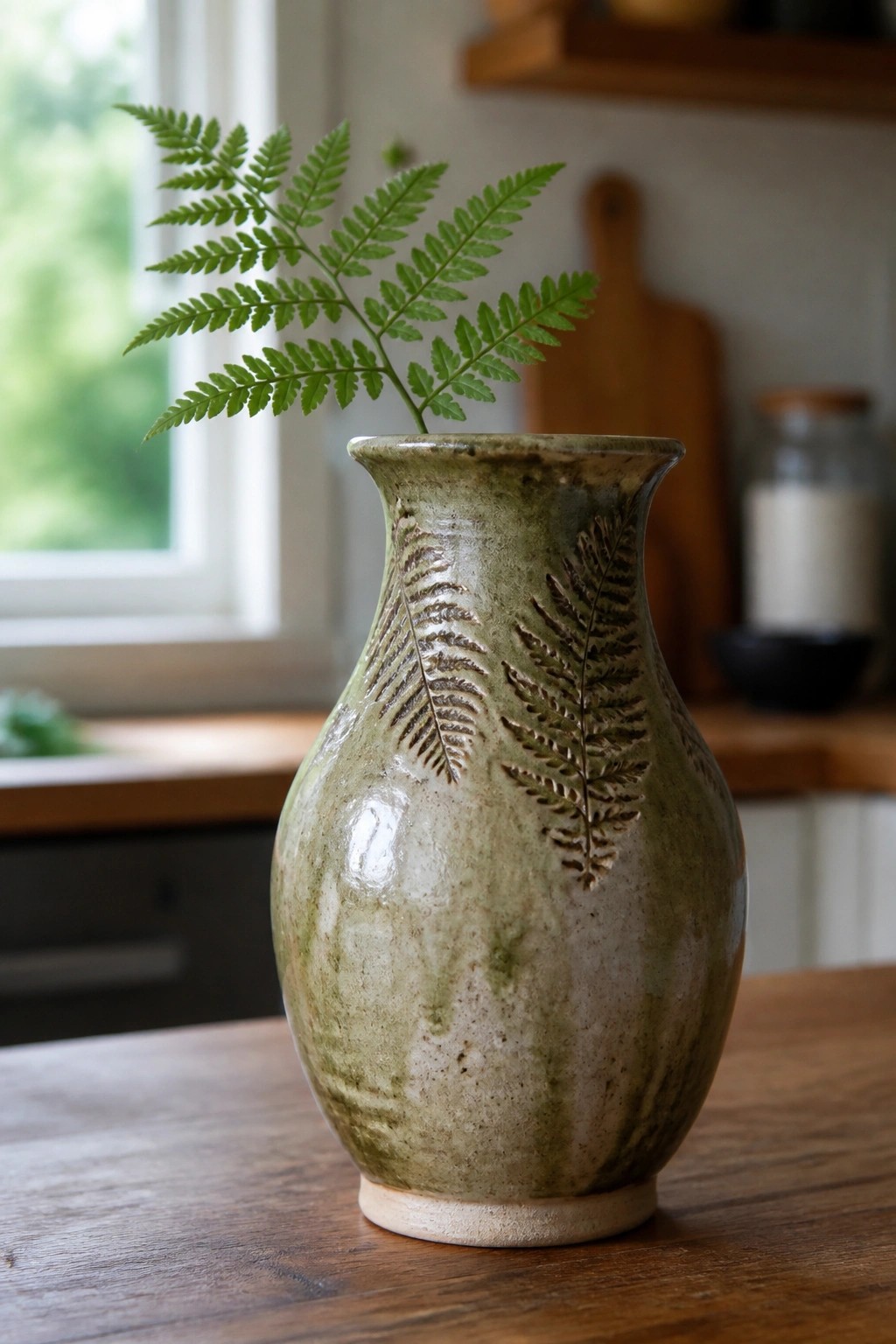
A ceramic vase with a rounded body and slightly flared rim serves as a simple vessel for single stems or small foliage. The main feature comes from pressing real fern leaves into the clay surface before glazing, which leaves behind detailed textures that show through the mottled green finish. This turns a basic vase form into a botanical project that highlights natural patterns rather than added paint or carving.
What makes this idea useful is how the imprint technique works with any leaves you have on hand and requires no special tools beyond the clay itself. The shape fits easily on a windowsill or dining table where you want to display fresh cuttings. You could scale the same leaf impressions down for bud vases or apply them to the outside of a low bowl for a different use. The result photographs cleanly for sharing because the contrast between the texture and glaze reads well in natural light.
Ceramic Owl on Branch Figurine
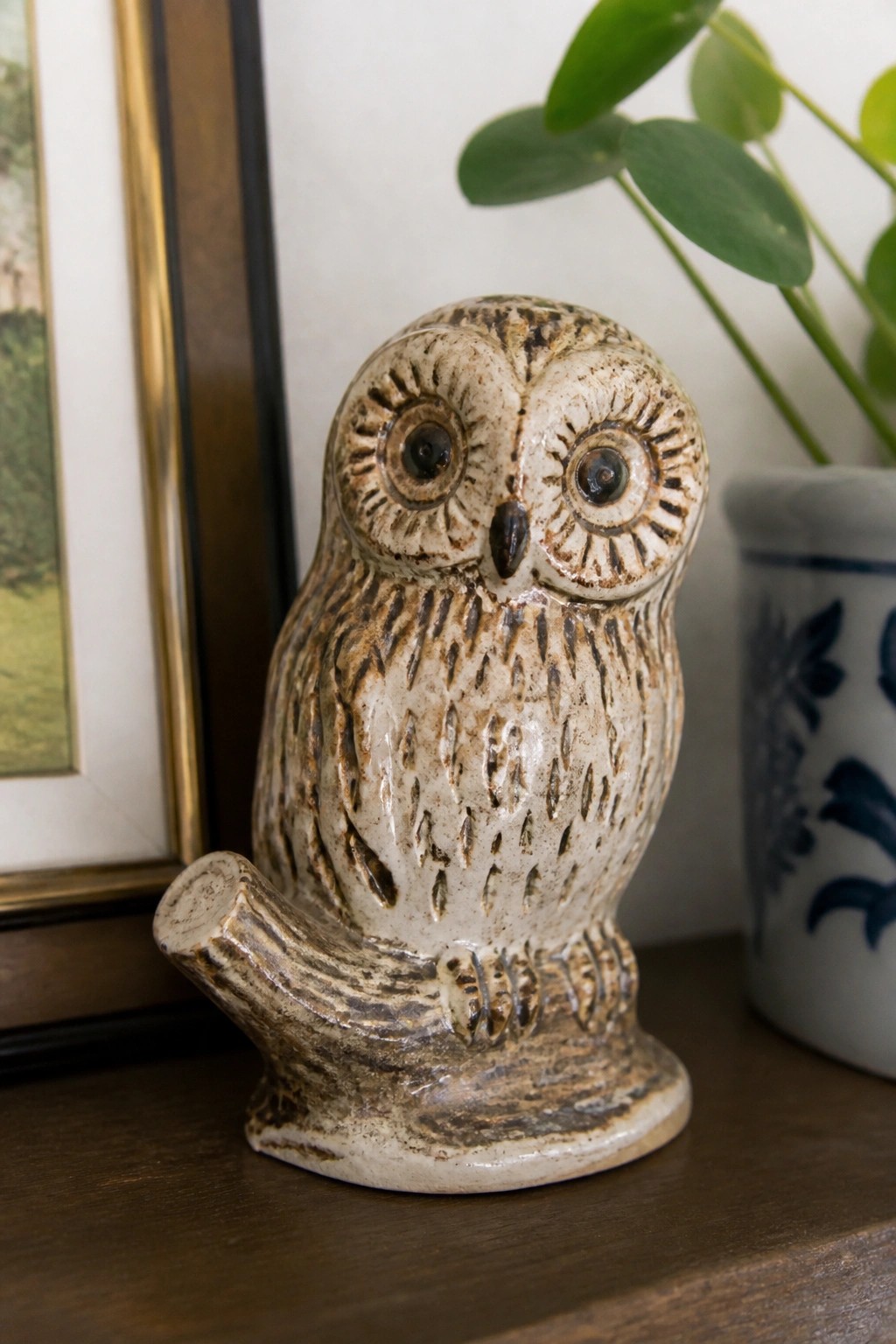
A small ceramic owl figurine makes a straightforward wildlife sculpture project. The owl perches on a short branch base with carved feather lines running down its body and around the large eyes. A single mottled glaze in off-white and brown tones covers the piece and settles into the texture to define the details. This keeps the idea simple while still producing a clear, recognizable animal form that works as shelf or desk decor.
The compact size and branch base let the piece sit stably on narrow surfaces without extra support. You can adapt the same shape by swapping the owl for another bird or shortening the branch into a small stand for rings or keys. Carved lines do most of the visual work, so the idea stays workable even if you use only one glaze. A figurine like this photographs cleanly for Pinterest when placed beside plants or framed prints because the silhouette reads well at small sizes.
Leaf Bowl with Snail Accent
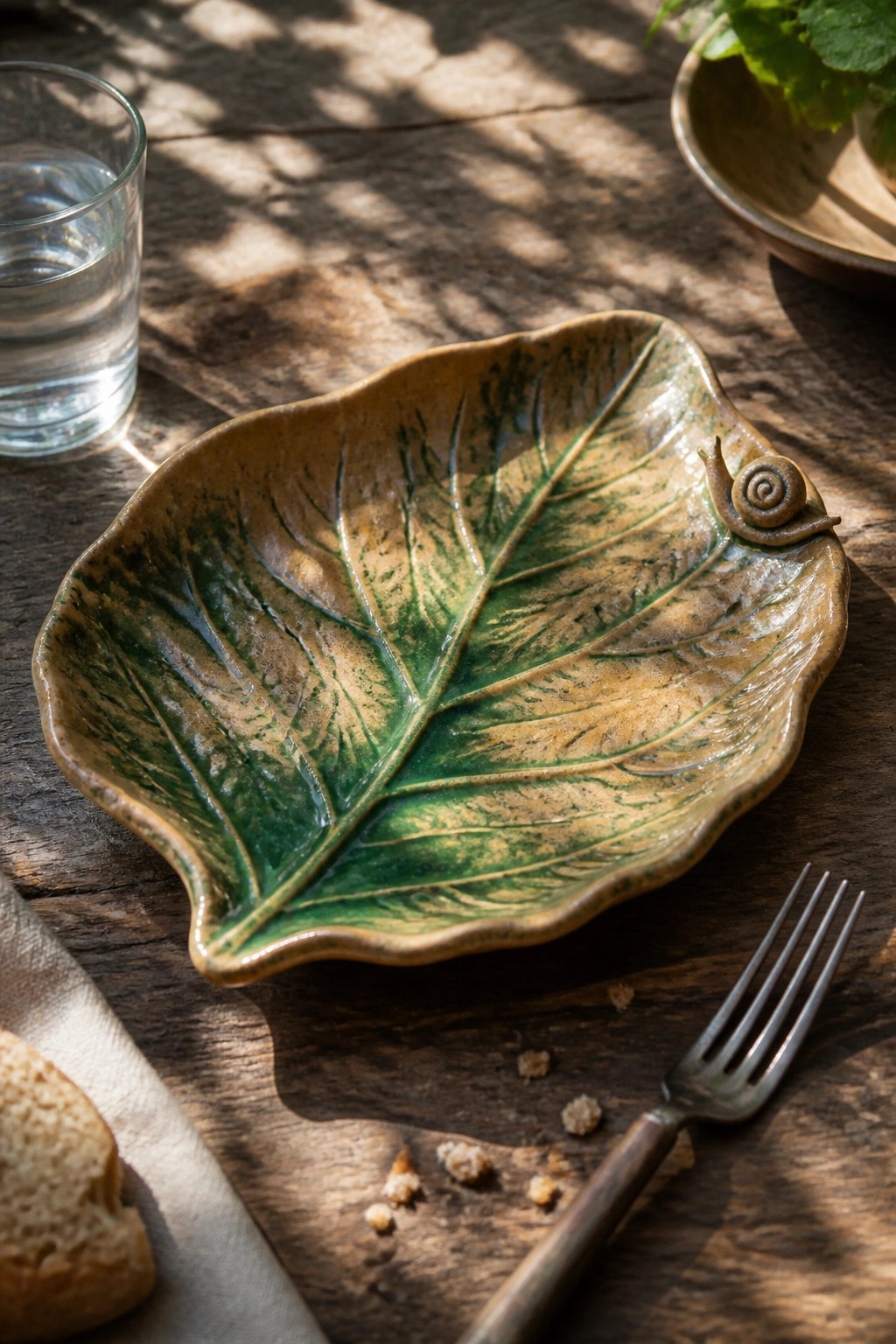
A leaf-shaped ceramic bowl makes a simple yet effective project by turning a basic dish form into a botanical piece. The design relies on impressed or carved veins to create the leaf surface and a small sculpted snail placed on the rim as the wildlife element. Green and brown glazes follow the vein patterns to emphasize texture without extra painting. This approach fits the botanical and wildlife category while keeping the object usable as a small serving dish or catchall.
What makes this idea useful is how the leaf shape itself does most of the design work once the veins are added. You could adapt it by swapping the snail for a different insect or using a different leaf type to create a matching set. In a kitchen this kind of bowl holds bread, snacks, or small produce while staying compact enough for everyday use. The same idea scales down easily into a ring dish or expands into a larger platter if you want to change the function.
Mushroom-Shaped Tea Light Holders
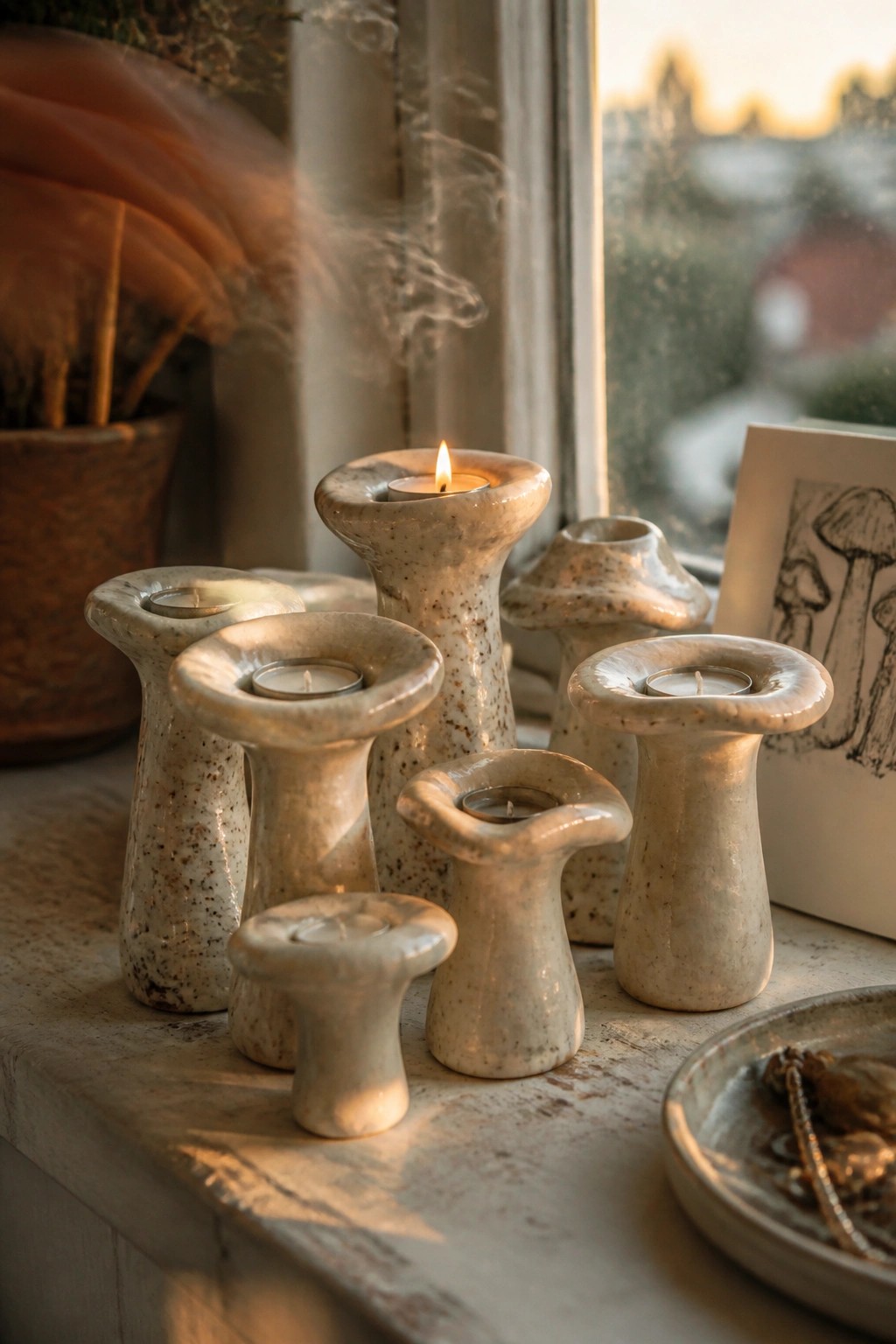
These ceramic candle holders are formed as stylized mushrooms with wide, irregular caps that cradle small tea lights. The hand-built shapes use a pinched or slab construction to create organic stems and slightly folded edges on the tops, finished in a speckled matte glaze that gives a stone-like surface. The design works as a simple decor object that fits botanical or wildlife themes without needing complex sculpting.
What makes this idea useful is how the mushroom form already provides a natural cavity for the candle, so you do not need to add separate dishes. The small scale lets you make a set quickly for a shelf or windowsill display near plants. You could adapt the same shapes into ring dishes or tiny planters by changing the cap depth or scaling the stem taller. For a gift, a cluster of three or four in different sizes stands out on Pinterest because the organic outline reads clearly even in a simple photo.
Ceramic Flower Ring Dish with Bee Accent
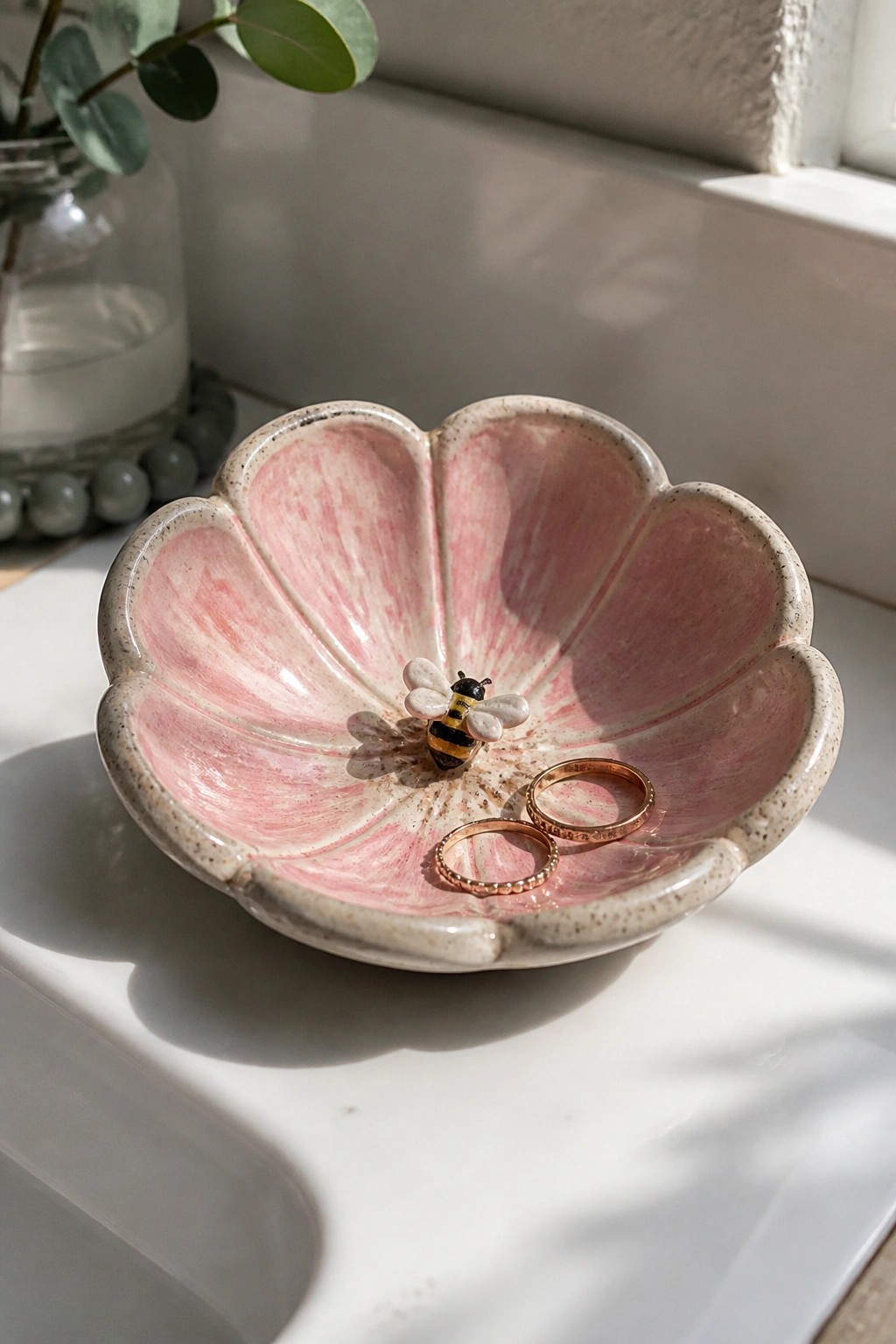
A small flower-shaped ceramic bowl works well as a ring dish when the petals create a shallow, open form that keeps items visible and easy to reach. The bee is sculpted directly onto the surface as a raised detail rather than added later, and the pink glaze with uneven streaks and speckles helps the shape read as a bloom without extra painting. This approach fits into the category of small functional trays that combine a simple thrown or hand-built form with one focused sculptural element.
The small overall size makes the piece easy to fit on a dresser or bathroom counter without taking up space. You can adapt the same idea by swapping the bee for a different insect or leaf and adjusting the glaze color to match other pieces in a set. For gifts, the ring-dish format is quick to produce in multiples once you have a mold or template for the flower shape. The painted streaks on the petals also give you room to experiment with brushwork without needing advanced carving skills.
Painted Pond Scene on a Ceramic Bowl
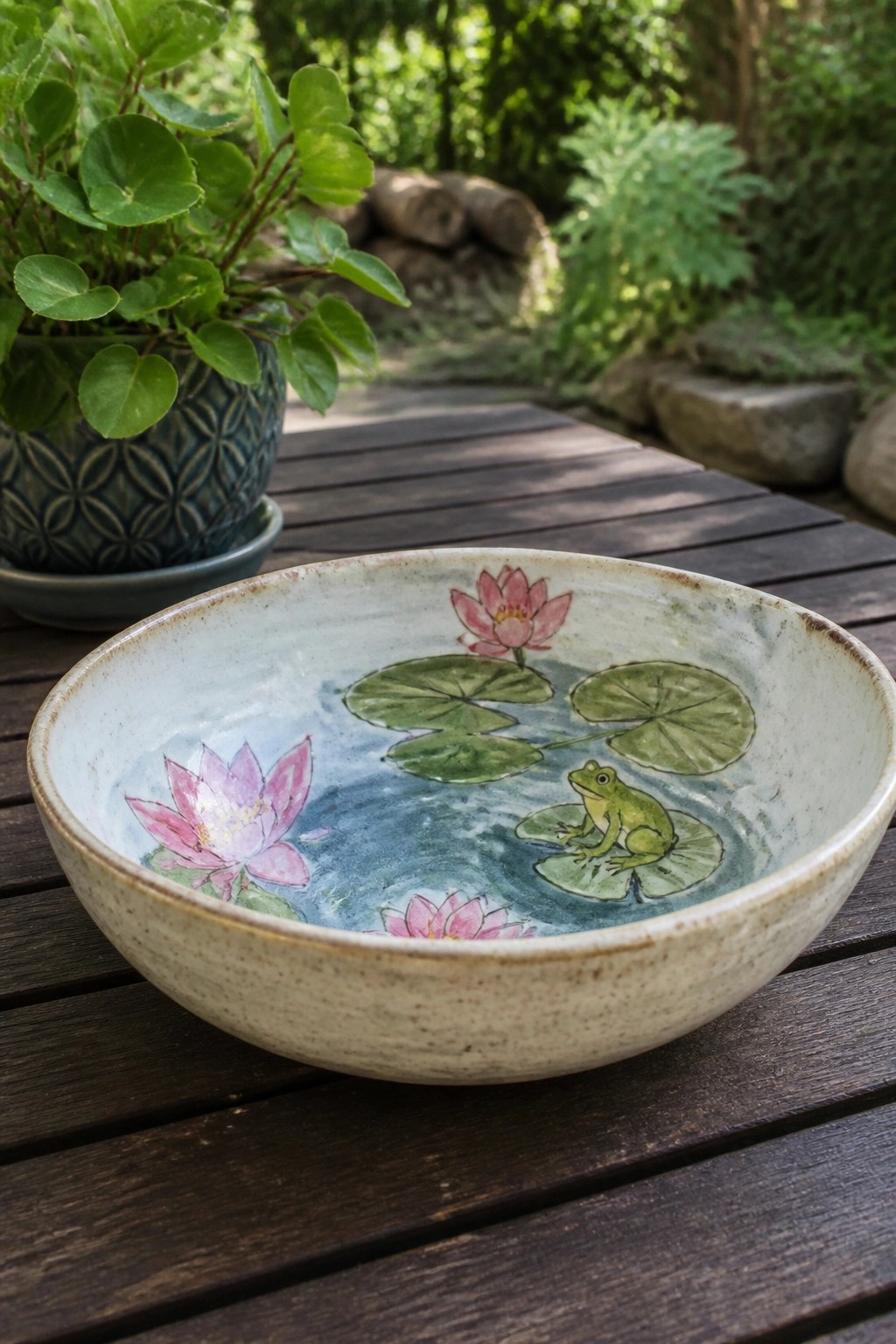
A ceramic bowl with a painted pond scene works well as a botanical and wildlife project because the round interior gives a natural frame for the full composition. The design places pink lotus flowers around the edges, green lily pads across the surface, and a small green frog resting on one pad to create a complete habitat view. Blue water washes add depth while the simple painted details keep the focus on the wildlife elements rather than texture or relief. This approach fits the idea category of a painted decor bowl that combines plants and animals in one piece.
What makes this idea useful is the way the bowl shape lets you arrange the pond layout without extra sculpting. You can adapt the same frog and lily pad motifs to a shallow tray or plate if you want a flatter surface for keys or small items. The frog serves as the main focal point, so shifting its position or adding a second one gives an easy way to personalize the design. For garden decor this type of bowl sits nicely on an outdoor table where the painted water and plants echo real plants nearby.
Hummingbird and Trumpet Vine Relief Plaque
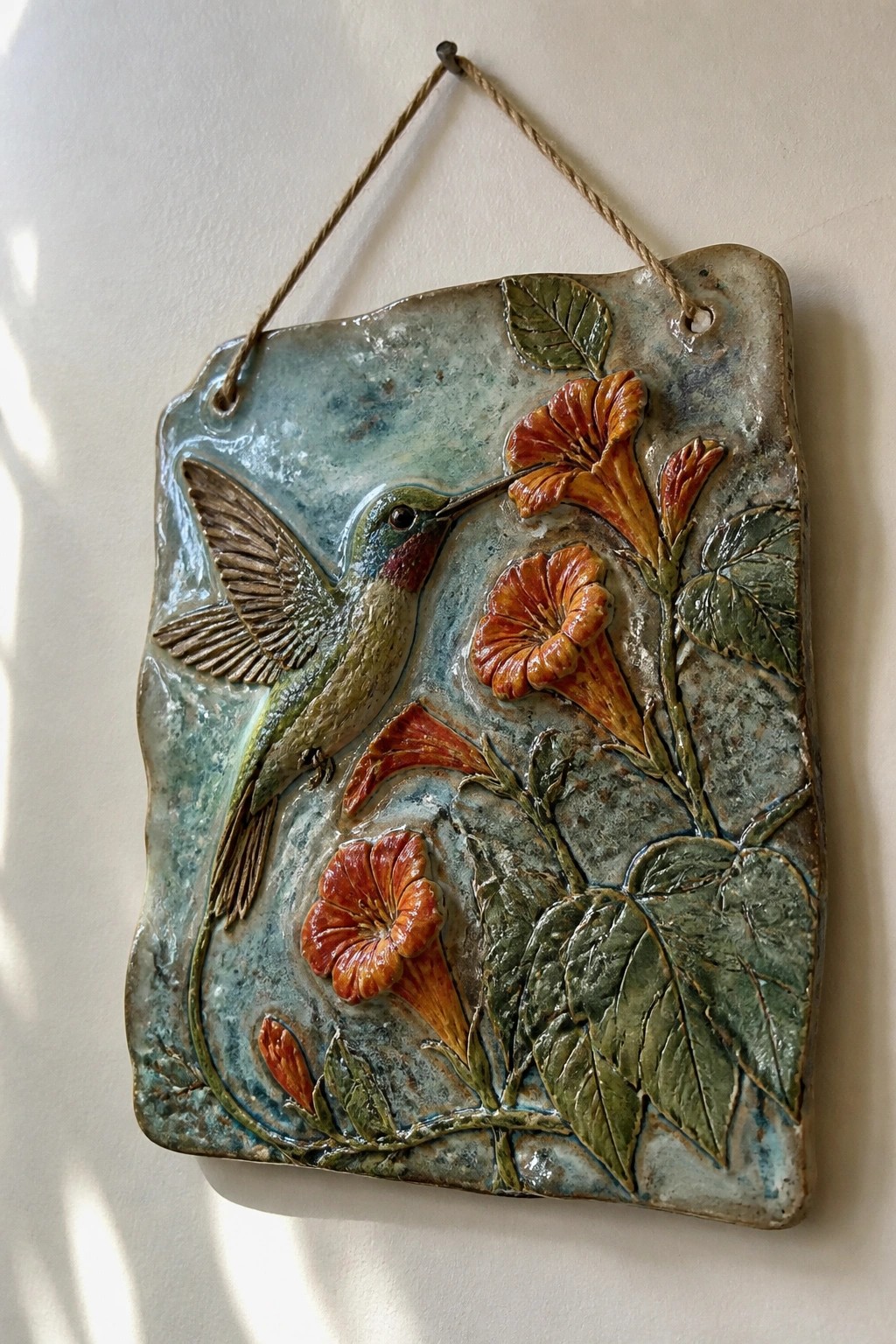
A flat ceramic slab with raised hummingbird and trumpet vine details creates an effective wall sculpture that combines wildlife and botanical subjects. The hummingbird is formed in low relief with outstretched wings, positioned next to several open orange flowers and layered leaves on a rectangular tile. Colored glazes separate the bird’s body from the blooms and the mottled background, while the irregular slab edges keep the piece from looking too formal. This type of project works as a straightforward decor object that hangs with cord or wire through drilled holes.
What makes this idea useful is the simple slab format that needs only basic rolling and shaping before adding the sculpted elements. You can adapt the same layout to other flower and bird pairs or reduce the size to make a set of smaller tiles for a larger arrangement. In a living room or entryway this shape hangs easily without taking up shelf space. The relief approach also transfers to a square tile if you want to frame it or mount it in a group.
Acorn Mug with Coiled Tendril Handle
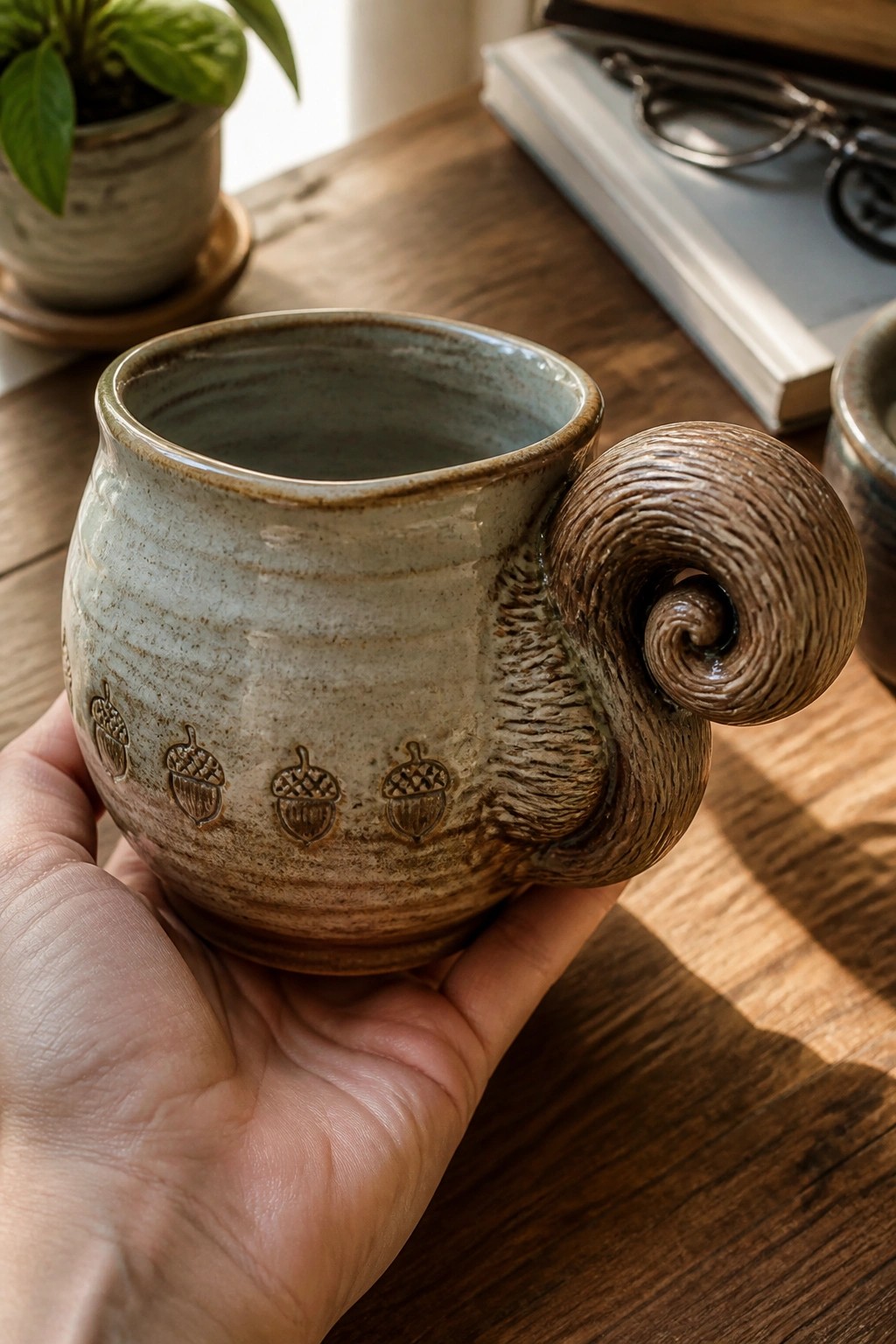
A ceramic mug with a large coiled handle and a band of stamped acorns gives a simple drinking vessel a clear botanical and wildlife reference. The handle is built as a thick spiral that curls outward, while the acorns are pressed in a repeating row around the body. The matte, speckled glaze keeps the focus on the sculpted and impressed details rather than bright color. This approach fits the mug category while adding functional grip through the handle shape.
What makes this idea useful is how the handle detail turns a basic cylinder into something that stands out on a desk or shelf without losing everyday use. You could swap the acorn stamps for other small motifs like leaves or seed pods, or scale the spiral down for a smaller cup. In a kitchen, this kind of piece works especially well as a gift when paired with a bag of coffee or tea. The same handle technique could be adapted to a pitcher or small vase if you want to repeat the form across a set.
Hedgehog Ceramic Salt Holder
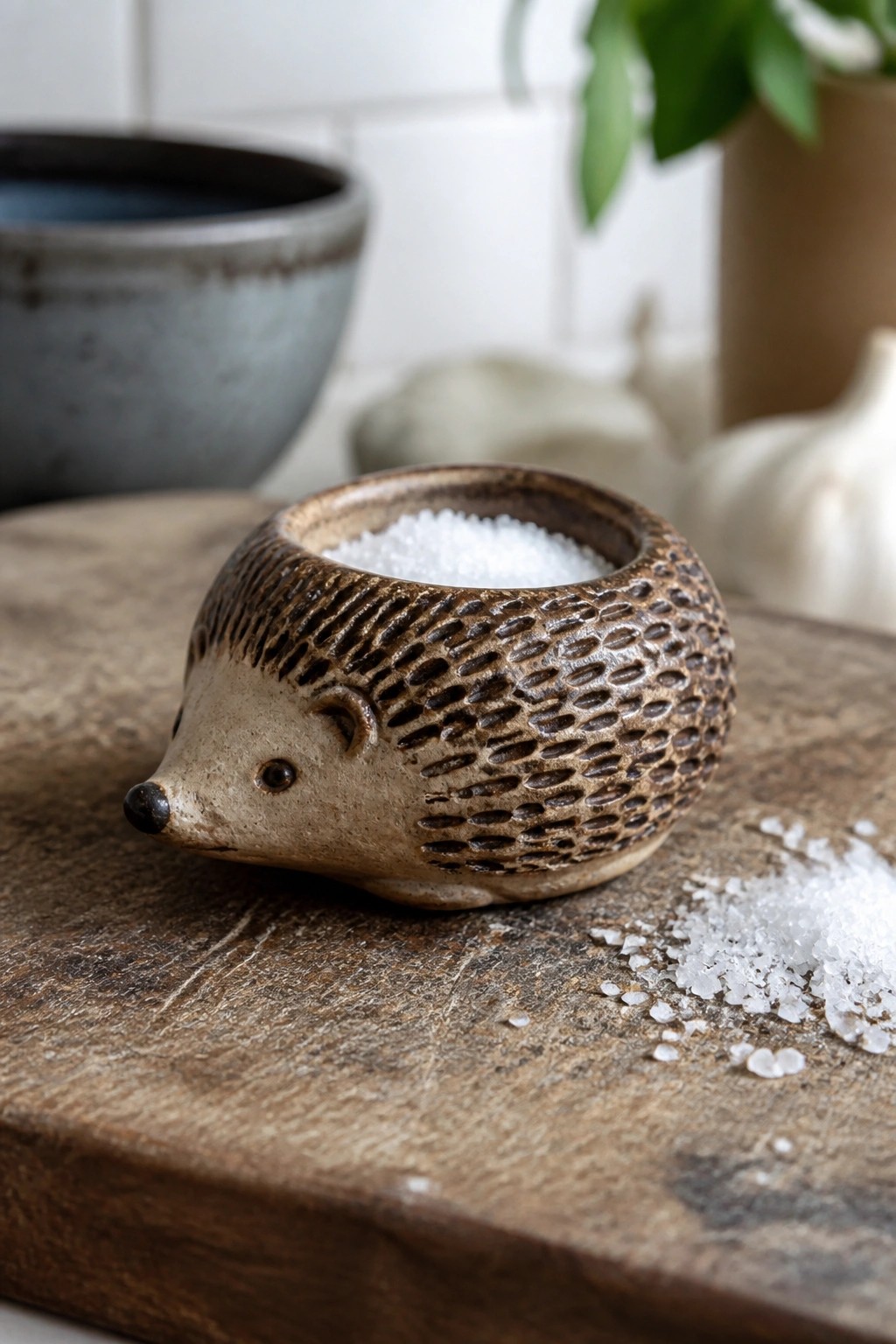
A small ceramic hedgehog can be sculpted into a functional dish by shaping the back as an open bowl while keeping the head and body intact. The quills are formed as raised rows that create a natural texture across the surface, and a simple brown glaze brings out the details without overpowering the form. This approach turns a wildlife subject into a compact holder that works for salt, spices, or other small kitchen items.
What makes this idea useful is the way the low, rounded shape sits stably on a counter or table without taking much space. You could scale the same hedgehog body down for a ring dish or widen the opening slightly to hold a tea light. The textured back adds interest on its own, so the piece reads clearly even in a simple glaze. In a kitchen, this kind of holder keeps everyday items visible while adding a single sculptural accent that feels different from plain bowls.
Leaf-Shaped Wall Pocket for Air Plants
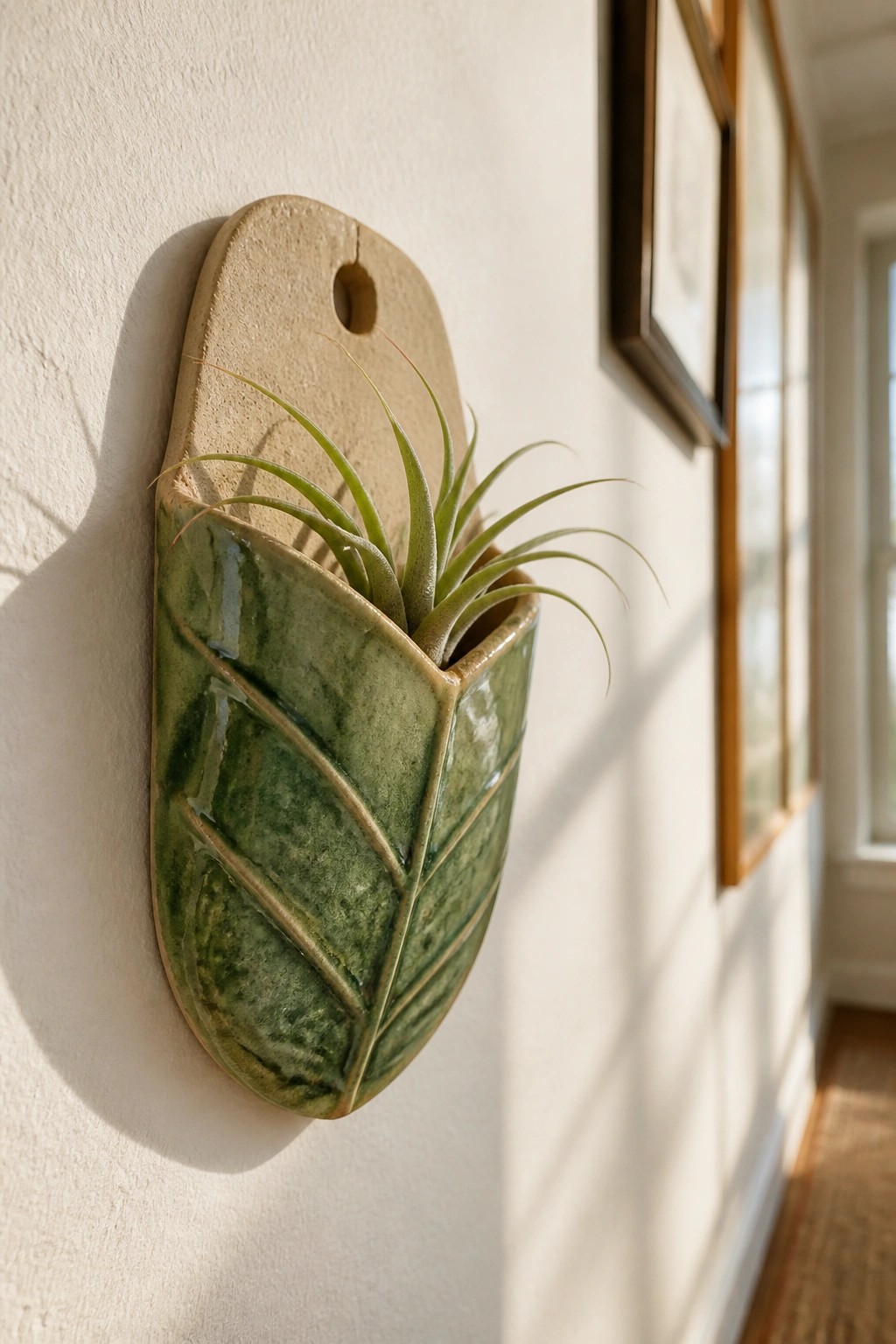
A wall-mounted ceramic pocket formed as a single large leaf serves as a holder for air plants. The piece combines a flat unglazed backing slab with a hanging hole and a sculpted leaf section that creates the actual pocket. Veins are pressed or carved into the clay before glazing, and the green glaze pools in the recesses to emphasize the leaf structure while the rim stays functional for holding the plant. This approach falls into the category of botanical wall planters or small hanging holders.
What makes this idea useful is how the leaf itself becomes the container, so no separate frame or mount is needed. It fits well in bathrooms or bright hallways where air plants can get indirect light without taking shelf space. The same pocket shape could be simplified by using fewer veins or scaled down for multiple smaller versions on one board. For a gift, something like this works as a ready-to-hang starter for someone who wants a low-maintenance plant display.
Mushroom Spoon Rest with Painted Ladybug
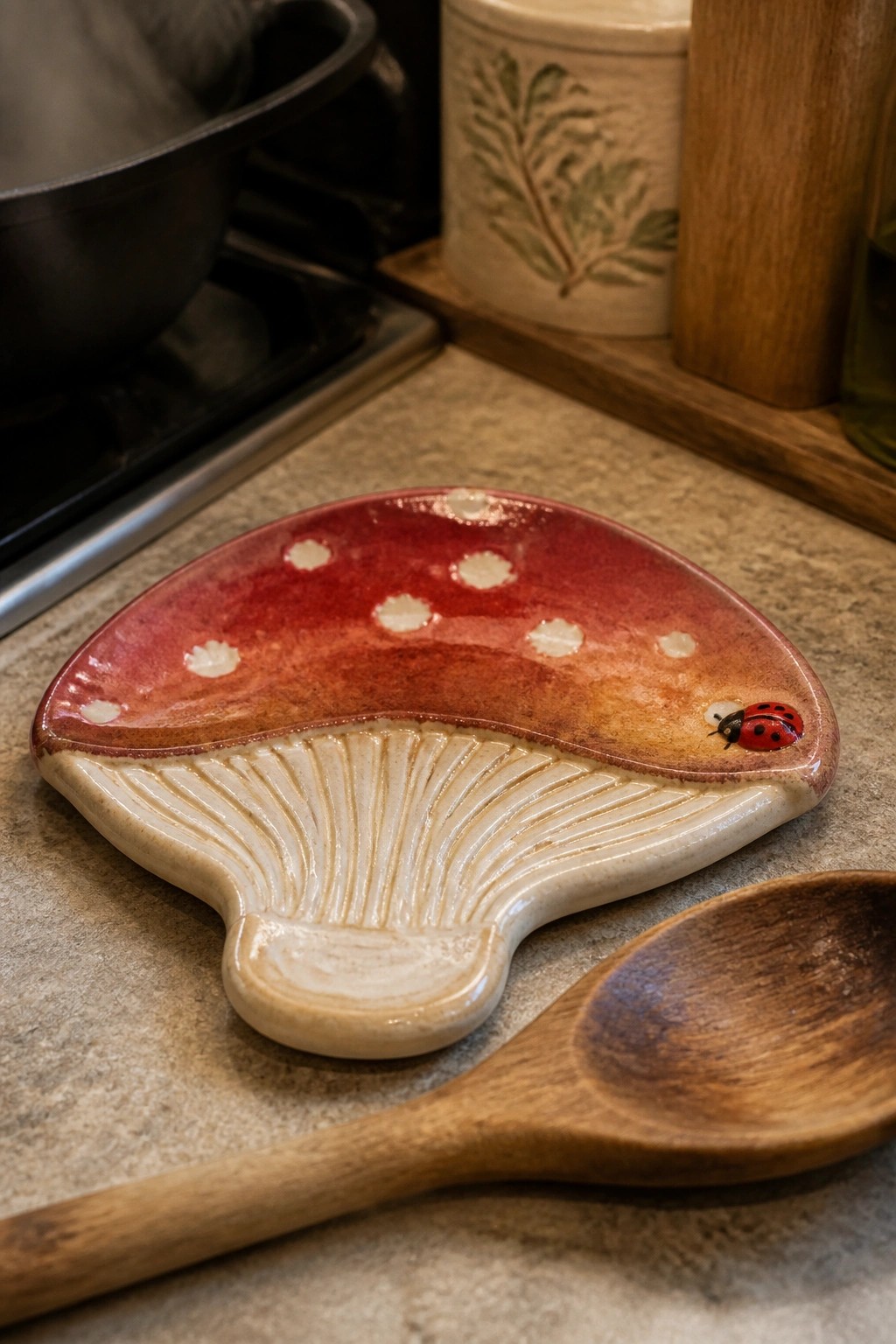
A mushroom-shaped spoon rest works as a compact kitchen item that combines a functional flat surface with sculpted underside details. The red cap section uses white dots for contrast while the beige lower half shows raised gill lines that give the form clear structure. A small ladybug accent painted near the edge adds a wildlife element that stays secondary to the overall shape. This type of project sits in the kitchen ceramics category and keeps spoons from touching countertops during cooking.
What makes this idea useful is the wide, stable base that actually holds utensils without tipping. You could rework the same mushroom form into a smaller ring dish or a soap holder by adjusting the depth and removing the handle area. The painted ladybug gives an easy spot to add color without needing complex glazing, so the piece stands out on a plain counter. For a gift, the same shape and motif could be simplified to just the cap and spots if you want a faster build.
Sculpted Whale Toothbrush Holder with Seaweed Relief
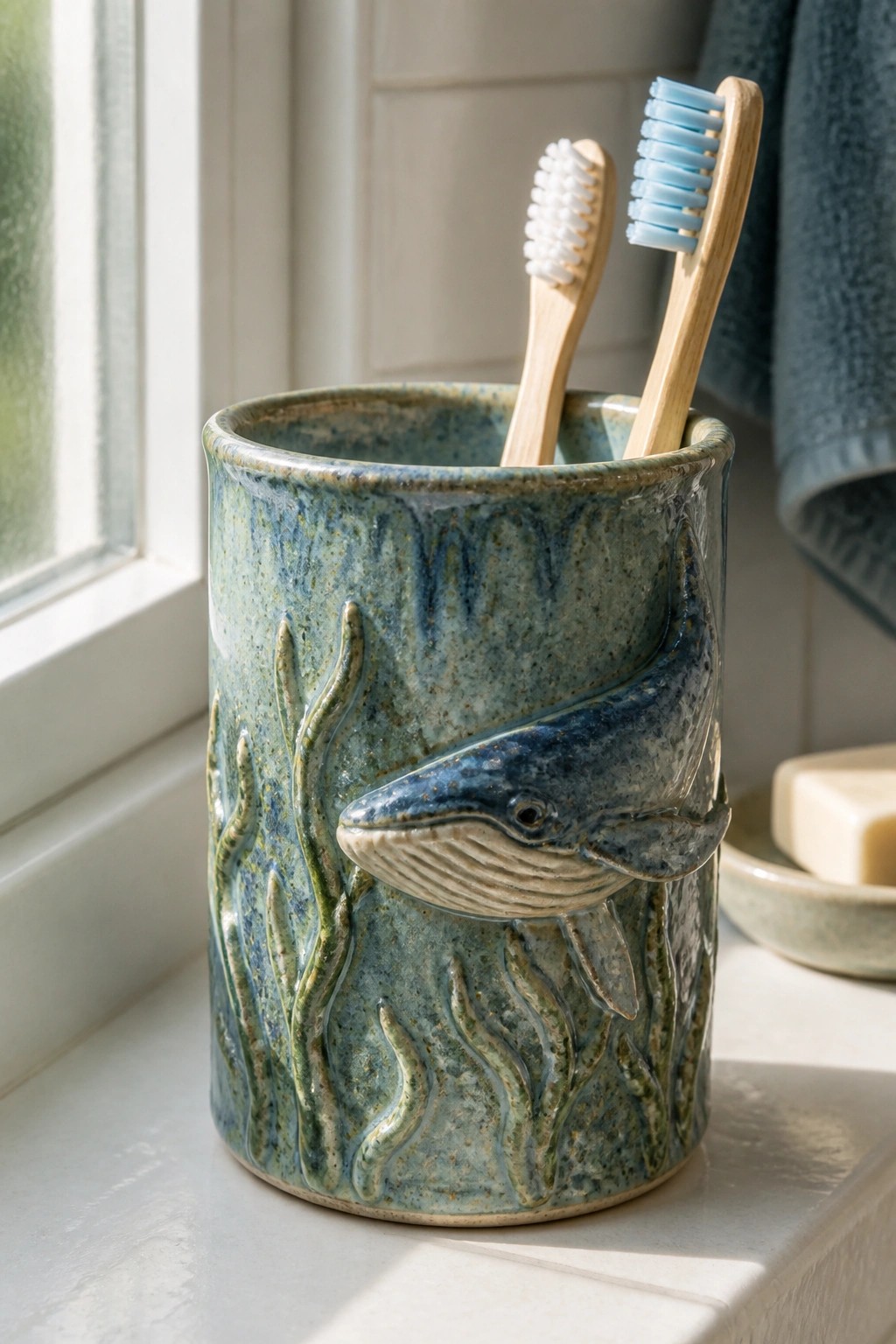
A cylindrical ceramic toothbrush holder uses a raised whale sculpture on the front and textured seaweed forms wrapping around the sides to create a bathroom storage piece. The whale is built in relief so parts of the body and fins extend beyond the cylinder wall, while the surrounding textures add depth without covering the whole surface. Blue and green glazes are applied to blend the sculpted elements into a single underwater theme.
What makes this idea useful is that the basic cylinder form is easy to throw or handbuild, leaving room to focus effort on the added sculpture. You could adapt the same whale and seaweed approach to a soap dish or a small cup for cotton swabs. The raised details make the piece easy to recognize in photos, which helps it stand out when shared as a finished project.
Bird-Guided Yarn Bowl with Cutout Leaves
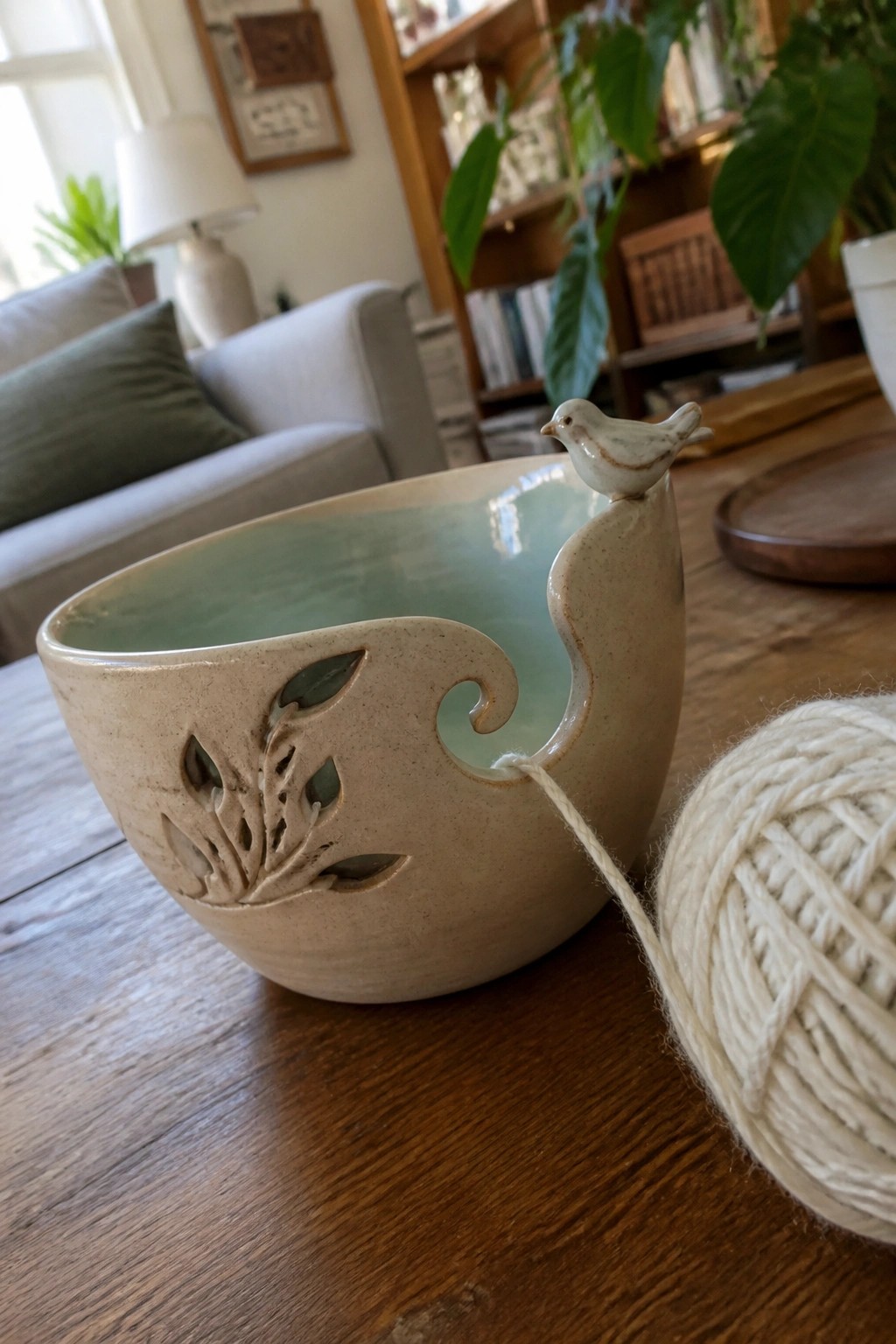
A ceramic yarn bowl combines a functional shape with a small wildlife sculpture by placing a perched bird right at the yarn exit point. The rim includes a curved opening that lets the strand pull smoothly while the bird acts as a natural stopper and guide. Leaf forms cut through the side wall add light botanical detail that works with the bird without crowding the surface. The matte speckled exterior and pale green interior keep the piece simple enough that the sculpted elements stay the main focus.
What makes this idea useful is how the bird turns an everyday craft tool into a small sculpture that still solves a practical problem. The same rim and slot layout can be adapted by changing the bird to another animal or replacing the leaves with different plant shapes to fit a new theme. This style of bowl works well on a coffee table or craft shelf where yarn needs to stay contained but easy to reach. For a simpler version, the bird can be scaled down or the cutouts reduced so the form stays quick to build while keeping the wildlife detail.
Fern Frond Incense Holder
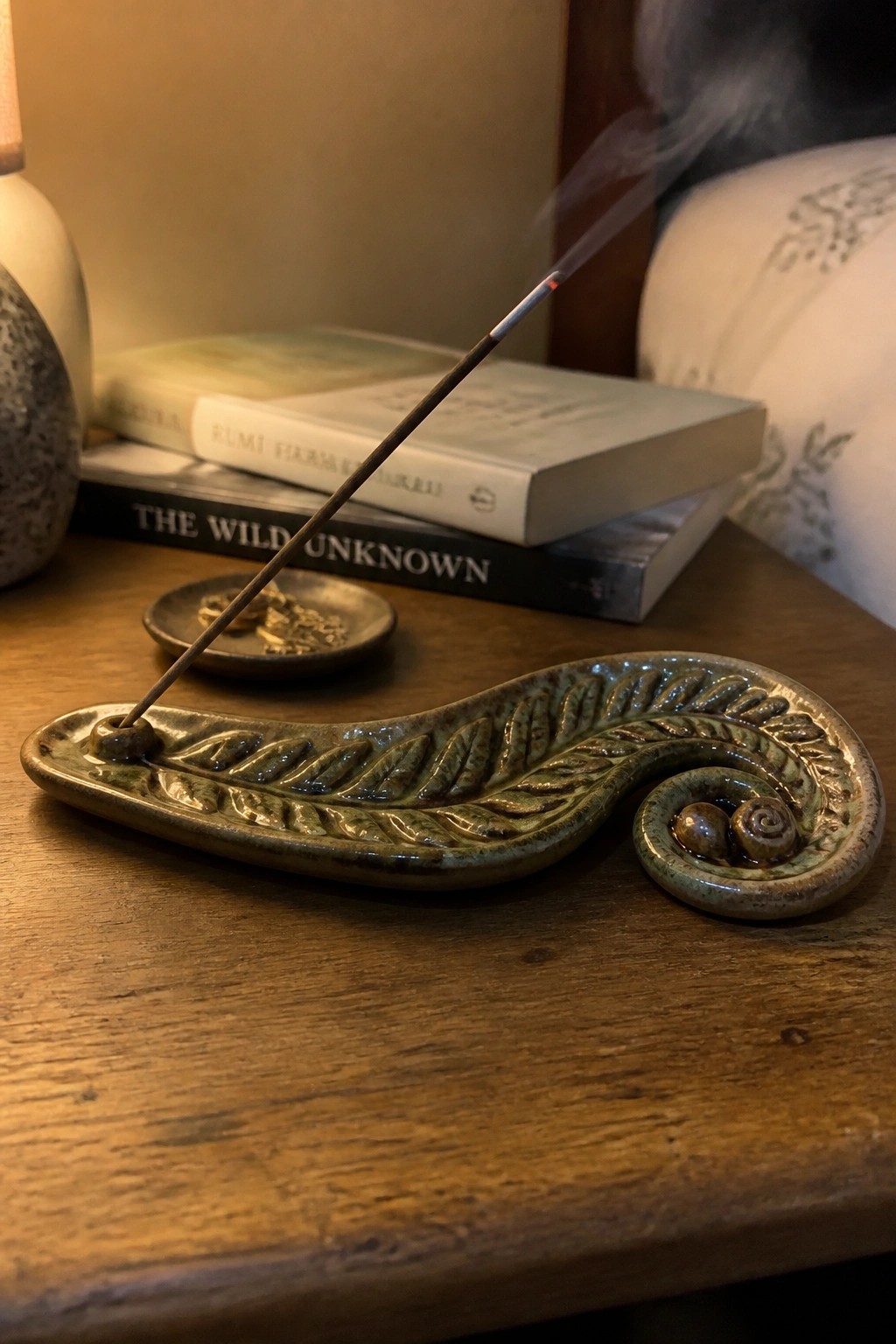
A ceramic incense holder formed as a long, curling fern frond gives a clear botanical shape to a simple stick holder. The piece uses a narrow tray body with raised leaf veins running its length and a tight spiral at one end that catches falling ash. An earthy green glaze with brown accents brings out the sculpted details without overpowering the leaf pattern. This approach turns a standard functional object into a small botanical sculpture that still serves its purpose.
What makes this idea useful is the way the frond shape naturally directs the stick while the coil end handles ash collection. You could scale the same leaf carving down for a ring dish or stretch it into a longer tray for multiple sticks. In a bedroom or desk setup the narrow profile keeps it from crowding other items. For another version, swap the fern for a different leaf type or simplify the veins to make the form faster to repeat.
Leaf-Shaped Ceramic Ring Dishes
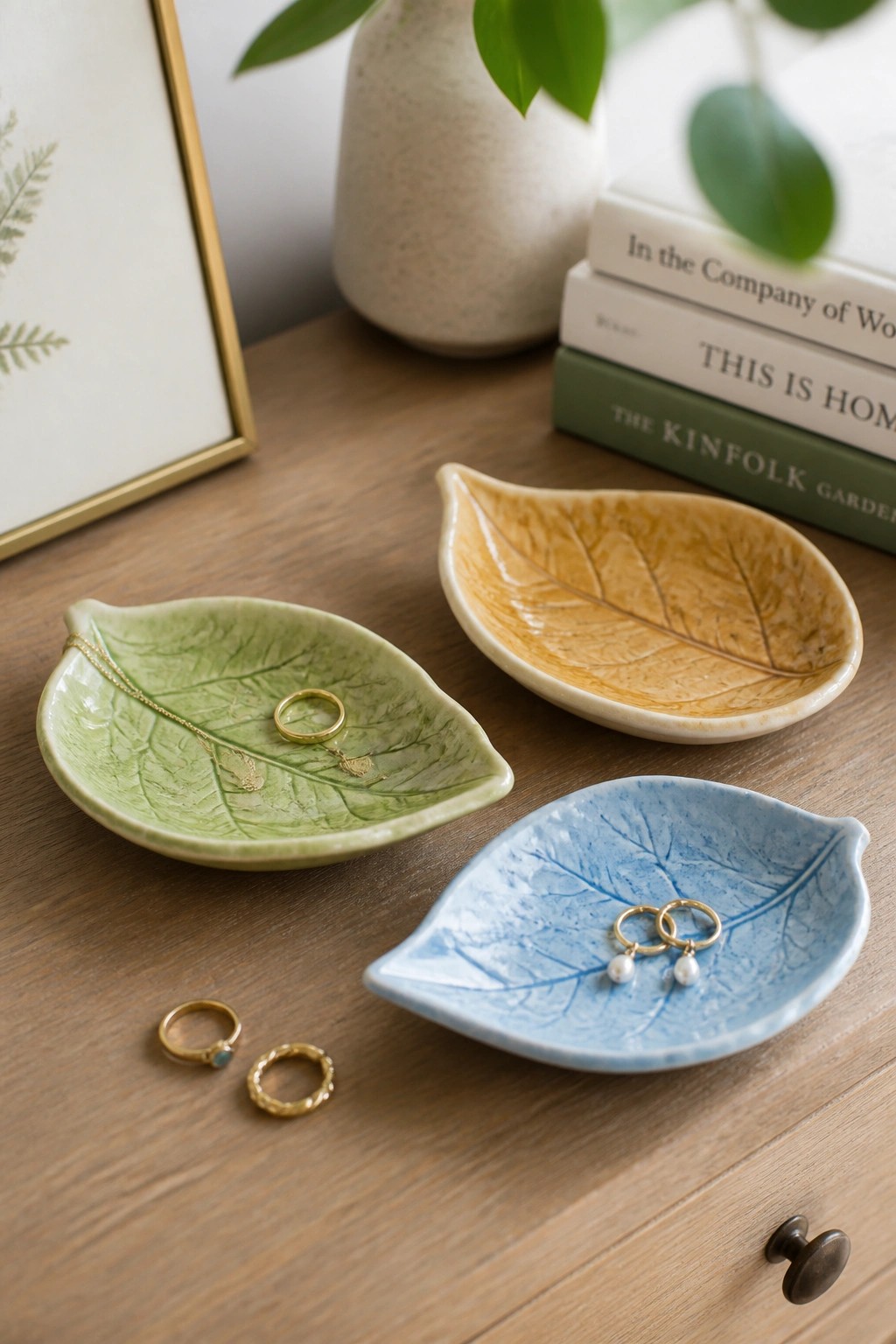
Ceramic leaf dishes work as small ring holders or jewelry trays. The molded leaf outline with pressed vein texture creates a shallow bowl shape that keeps items from sliding around. Glazes in green, blue, and warm yellow pick up the surface details and give each dish a different seasonal look. This idea fits the ring dish category and stays simple enough to repeat in different sizes or colors.
The shape does a lot of the work here because the natural leaf curve already forms a usable tray without extra carving. You can press real leaves into clay slabs for the texture or use a mold to speed up production. In a bedroom or entryway, these hold daily jewelry or keys without taking much space. The same leaf form can be adapted into soap dishes or small catchalls by adjusting the depth and glaze.
Bird Form Ceramic Vase
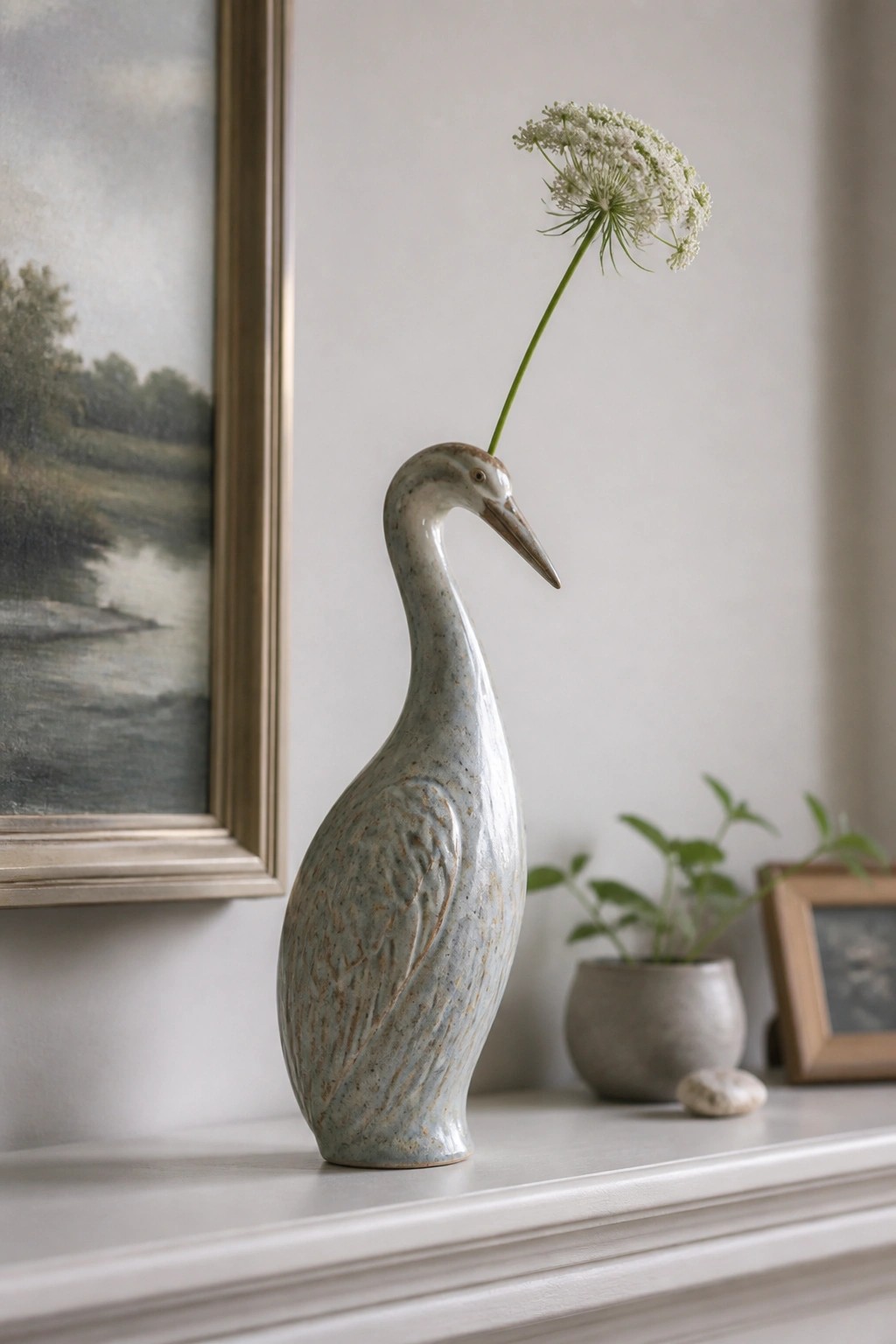
A tall ceramic vase shaped like a standing wading bird creates both a sculpture and a functional holder for flowers. The form tapers from a rounded base up through a long neck, with carved feather lines on the body and a simple open top that accepts a single stem. A soft blue-gray glaze with brown speckling highlights the texture while keeping the overall look natural and understated. This fits the category of a decorative vase that doubles as wildlife-inspired art.
The narrow neck and upright posture make it easy to place on a mantel or shelf without taking much space. You could adapt the same bird shape into smaller bud vases or shorten the neck to create a different proportion. The carved feather texture works well with simple glazing and could be replaced with stamping or light carving if you want a quicker version. A piece like this stands out in photos because the silhouette reads clearly even from a distance.
Lotus Soap Dish with Perched Frog
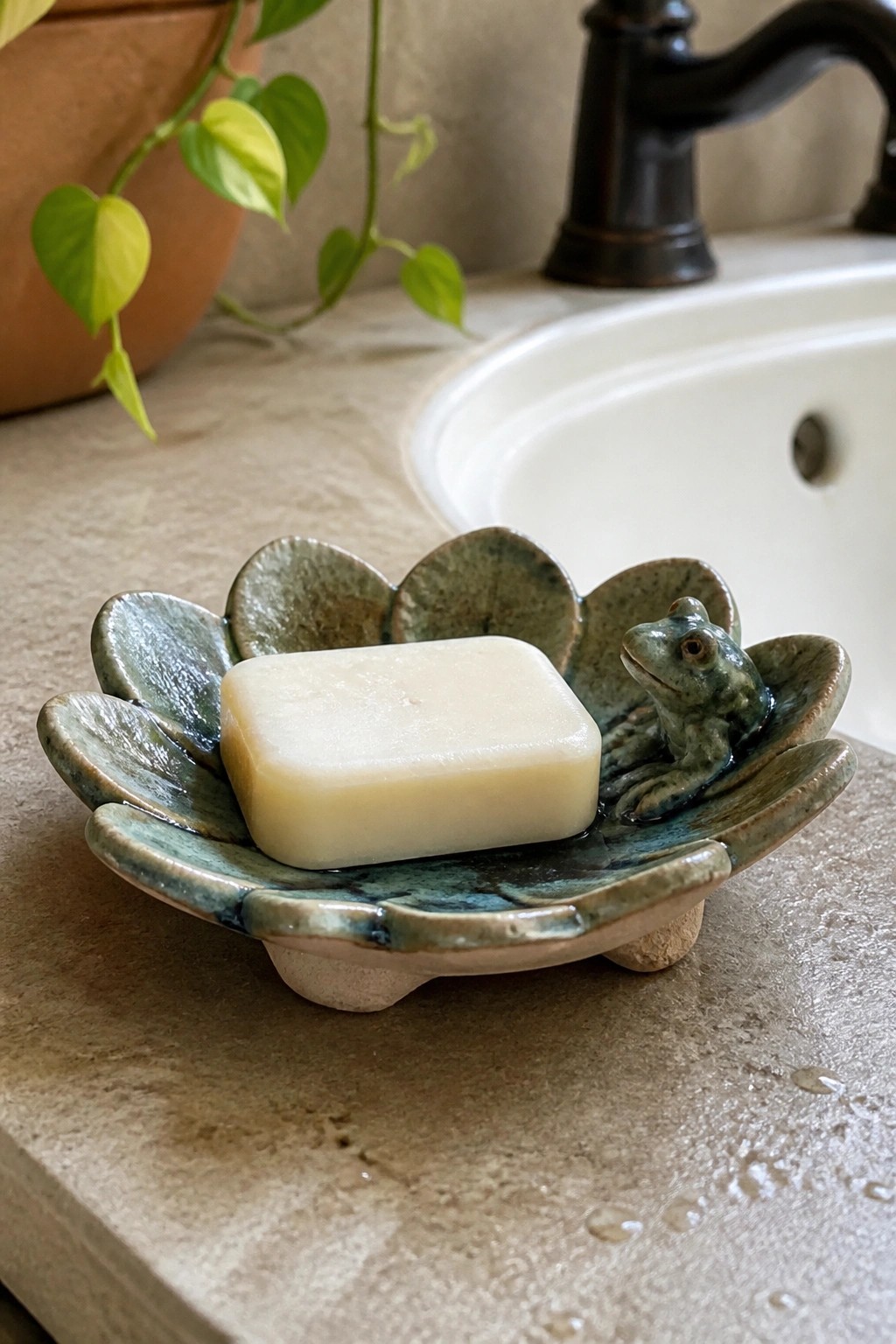
A ceramic soap dish shaped like an open lotus flower works well as a bathroom holder when the petals form a shallow, curved tray and a small sculpted frog sits along one edge. The design keeps the soap centered and slightly elevated so water drains away from the bar. Green and blue glazes on the petals give the piece a water-and-plant look that fits naturally with sinks and counters.
What makes this idea useful is the way the frog detail turns a basic tray into something more specific without adding extra parts. The small overall size fits standard bathroom ledges and can be adapted by swapping the frog for a turtle or leaf motif or by simplifying the petals into a rounder shape. For a gift, the same form works in different glaze colors to match various tile or countertop styles. The concept also translates easily to a ring dish or small trinket tray if the center is kept flat.
Ceramic Multi-Tube Flower Frog Tray
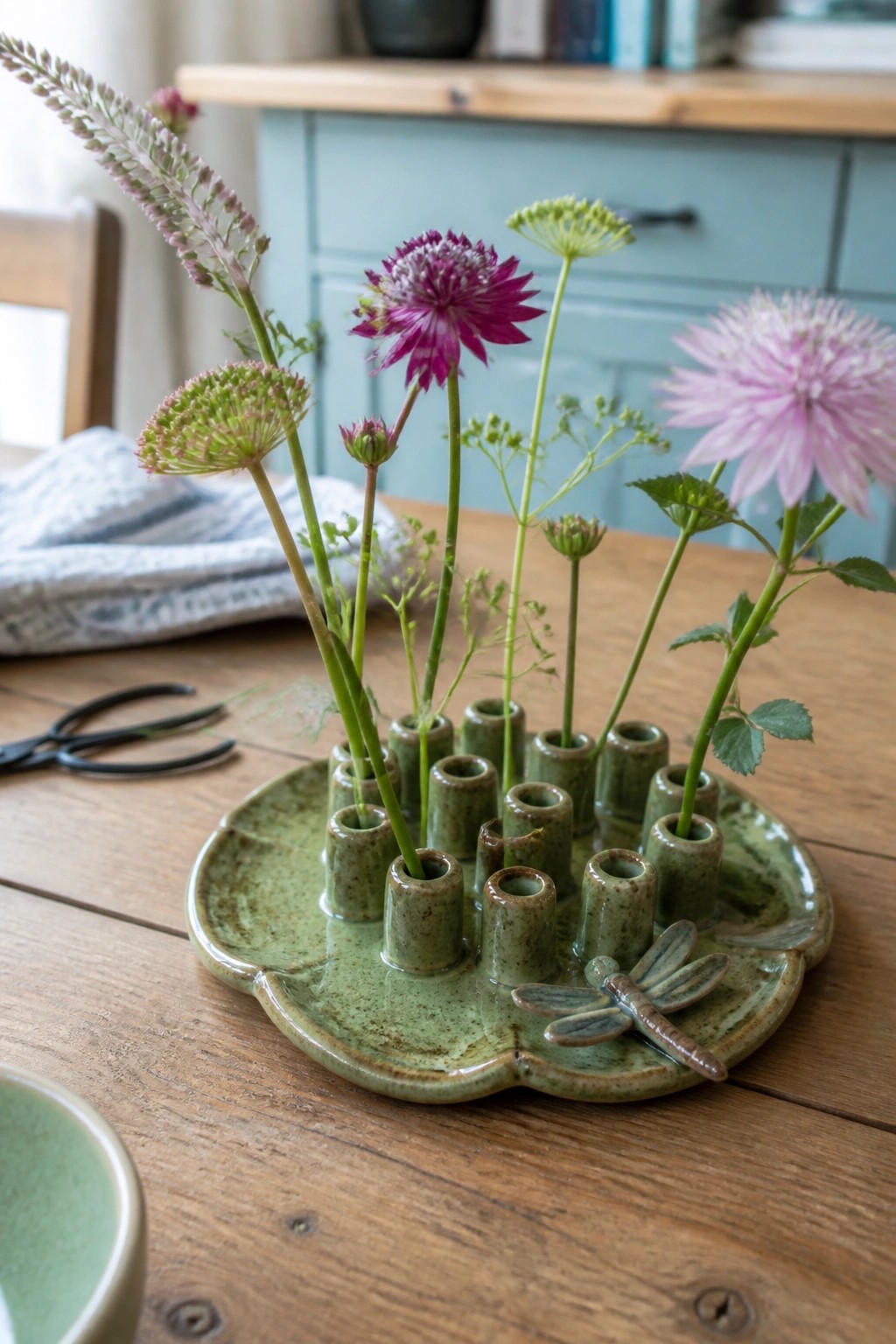
A ceramic flower frog built as a shallow tray with a group of short cylindrical tubes lets you arrange cut stems one by one without floral foam. Each tube keeps an individual stem upright and spaced out, which works especially well for loose, natural-looking bouquets. The earthy green glaze and simple dragonfly detail on the rim give the piece a garden feel that pairs directly with the flowers it holds. This falls into the decor object category and stays functional as a reusable holder rather than a single-use vase.
What makes this idea useful is that the separate tubes let you swap out flowers as they wilt without disturbing the rest of the arrangement. You could scale the tray down for a desk version or widen the base to hold more stems for a dining table. The dragonfly adds a small focal point, so try pressing a leaf or insect stamp into the clay edge before the final firing to keep the same effect. In a kitchen or entryway this kind of holder stands out on Pinterest when shown with whatever is blooming that week instead of a formal bouquet.
Tree Branch Wall Hook with Birds

A ceramic wall hook built as a tree branch combines a functional hanger with small sculpted birds and leaves. Three birds perch along the branch, and the lower stem curves into the hook itself. The natural branch shape keeps the piece compact while giving the birds a logical place to sit. This type of project falls into the decorative holder category.
What makes this idea useful is that the branch form already provides both structure and decoration in one piece. You could simplify it to two birds or change the leaf details to fit a different wall color. In an entryway or mudroom, the hook holds bags or coats while the birds add a clear wildlife element. The same branch layout could be reworked into a smaller key holder or lengthened for multiple hooks.
Frequently Asked Questions
What materials work best for creating these ceramic sculptures?
Start with a mid-range stoneware or porcelain clay that holds fine details without cracking during drying. For botanical elements like leaves or flowers, use a flexible clay body that supports thin slabs, and add grog for strength in larger wildlife forms. Tools such as wire loops, texture mats, and small carving knives help capture veins in petals or scales on animals. Always test your clay with sample firings to match your kiln setup.
How can I add realistic textures to wildlife subjects like fur or feathers?
Build up layers with slip trailing for raised details, then press in natural items like real feathers or leaves for impressions before they dry. For fur, apply thin coils and smooth them selectively with a damp brush to create direction and depth. Glaze with matte underglazes in multiple tones, then add highlights with a dry brush technique after the first firing. Practice on test tiles to match the natural patterns you observed in reference photos.
Are these sculpture ideas suitable for beginners or do they require advanced skills?
Many of the botanical ideas, such as simple stacked leaf forms or basic bird silhouettes, work well for beginners using hand-building methods like pinching or coiling. More complex wildlife pieces involving multiple attached parts benefit from intermediate experience with scoring and slipping joints. Scale down ambitious designs first, and focus on one subject at a time to build confidence. Online tutorials on basic ceramic construction can bridge any gaps quickly.
How do I display finished pieces to highlight their botanical and wildlife details?
Place smaller sculptures on wooden bases or floating shelves with good lighting from above to cast soft shadows that emphasize textures. For larger works, consider wall mounts with hidden brackets that keep the piece balanced. Group related items, such as a flower with an insect, in a natural arrangement on a tabletop. Avoid direct sunlight to prevent color fading in glazes, and dust gently with a soft brush to preserve fine details over time.
What common challenges arise when firing these detailed sculptures and how can I avoid them?
Thin botanical elements often warp or crack if dried too quickly, so cover pieces with plastic and dry them slowly over several days. Wildlife sculptures with protruding parts need extra support with kiln posts during firing to prevent slumping. Use cone 6 glazes formulated for your clay to avoid bubbling on textured surfaces, and always run a test firing with similar shapes first. Proper ventilation in your workspace also reduces risks from clay dust.

Pottery Path is my cozy corner of the internet where I share clay ideas, pottery inspiration, and simple projects you can recreate at home. I love exploring everything from air dry clay to handbuilt pottery to cute minis that brighten your day. My goal is to make clay crafting feel easy, fun, and welcoming for anyone who wants to try it.
You will find beginner friendly tutorials, creative pottery painting ideas, and lots of warm inspiration for slow and happy crafting. If you enjoy hands on creativity, this space will feel like home.