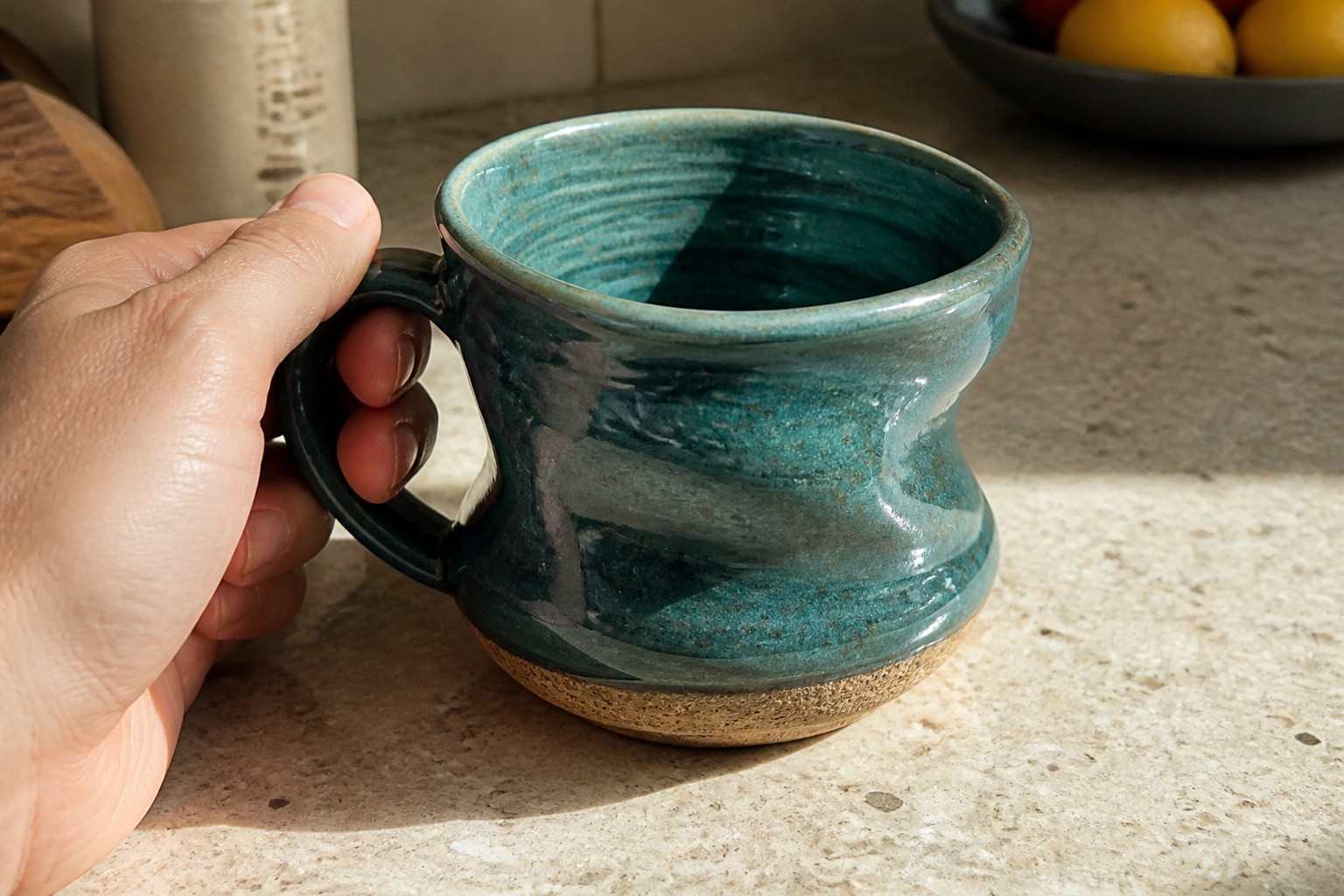
I’ve spent a lot of time on my wheel lately and noticed that the usual bowls and cylinders start to feel repetitive after a while.
I tried a few different approaches in my own studio to move past those basics without making things overly complex.
Some of the shapes I landed on came from small adjustments to how I pulled the clay or finished the rim.
They still feel practical but add a bit more interest to what I make.
Here are the ones that turned out best for me.
Altered Wheel-Thrown Mugs with Carved Indents
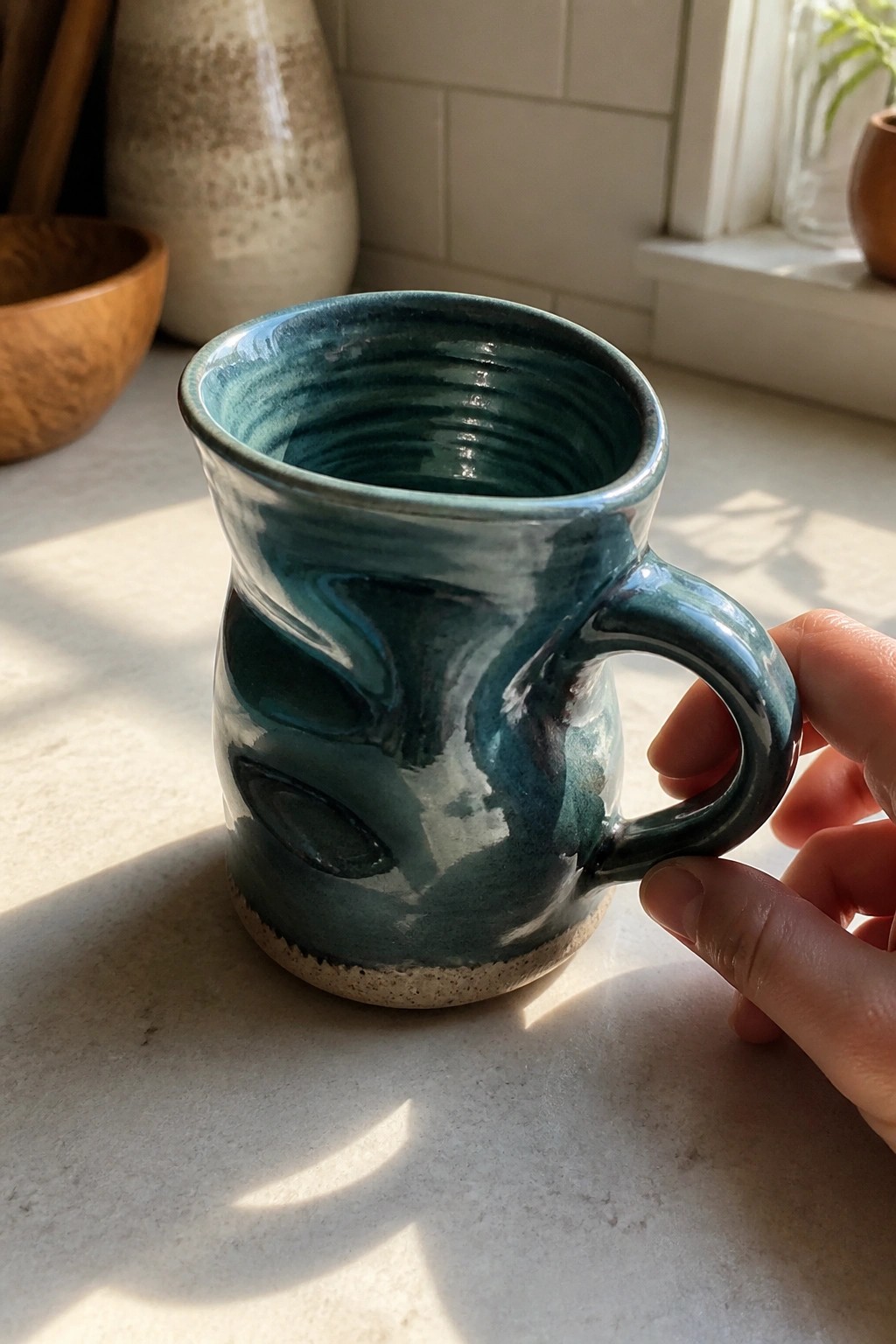
A wheel-thrown mug can be altered after throwing by gently pinching and pushing the walls to create soft waves and an uneven profile. The teal glaze pools in the low areas and thins over the raised sections, which makes the altered shape more visible. Small oval impressions pressed into the clay before glazing add another layer of texture without overpowering the form. This approach turns a standard mug into a bolder shape while keeping it functional for daily use.
The shape does a lot of the work here because the irregular profile catches light and shadow in ways a straight cylinder cannot. You could repeat the same pinching and carving steps on a smaller cup or a taller tumbler for variety. The glaze works well on any mid-range stoneware, so it is easy to test on your next batch of mugs. For a gift, this kind of piece stands out on a shelf or in a photo because the form reads as intentional rather than basic.
Ruffled Rim Bowls with Vertical Glaze Stripes
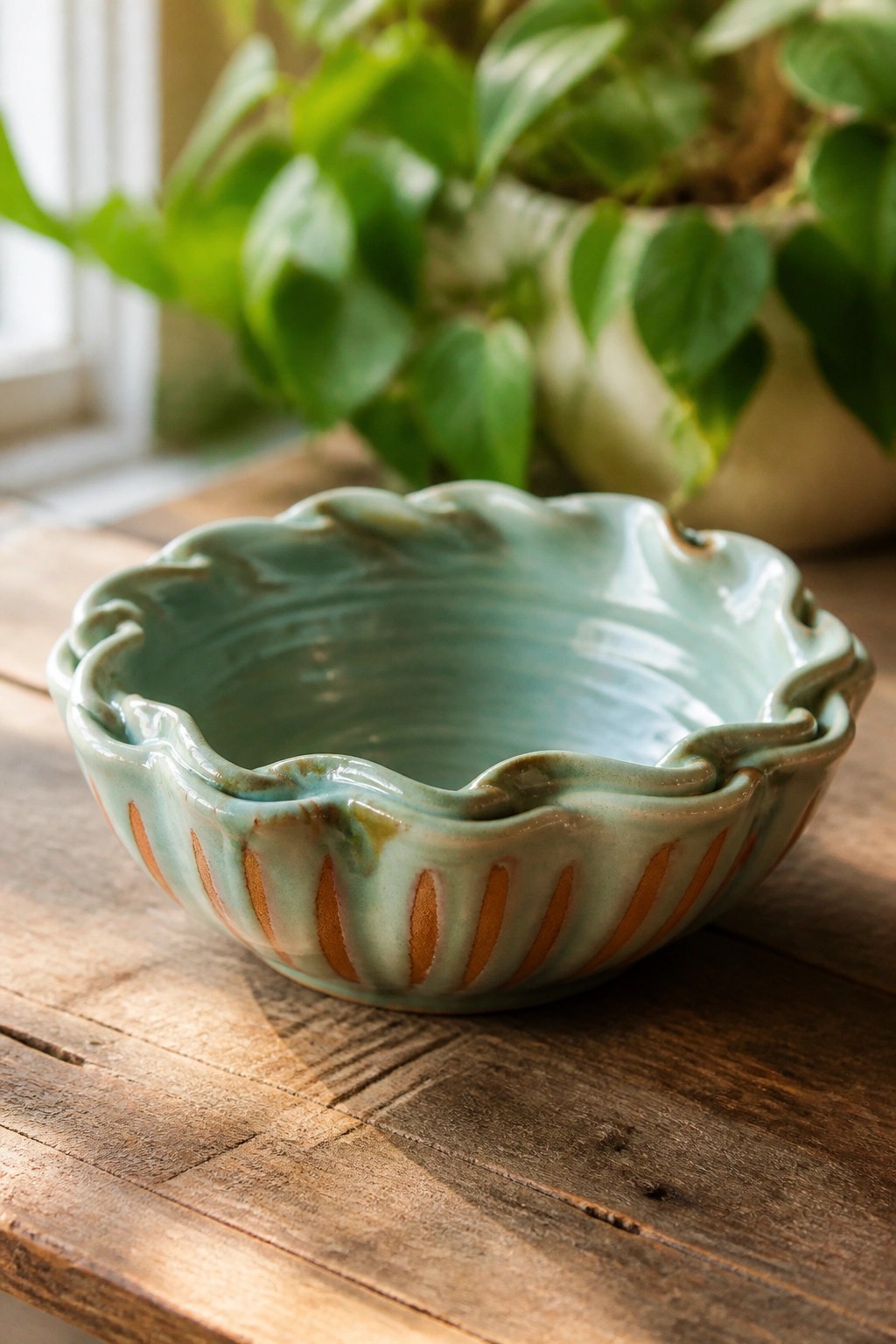
A wheel-thrown bowl becomes more distinctive when the rim is pinched and pulled into irregular waves while the clay is still soft. The turquoise glaze covers most of the surface, with orange vertical stripes applied along the exterior to create contrast against the wavy edge. This approach keeps the focus on the form and simple surface treatment rather than added texture or carving.
What makes this idea useful is how the rim shaping adds visual weight without extra tools. The striped pattern can be adapted by spacing the lines differently or extending them higher on taller forms like vases. In a kitchen or on an open shelf, this bowl works for holding small items or serving as a standalone piece. The same rim technique could be applied to plates or shallow trays for a matching set.
Faceted Vase with a Pinched Asymmetric Rim
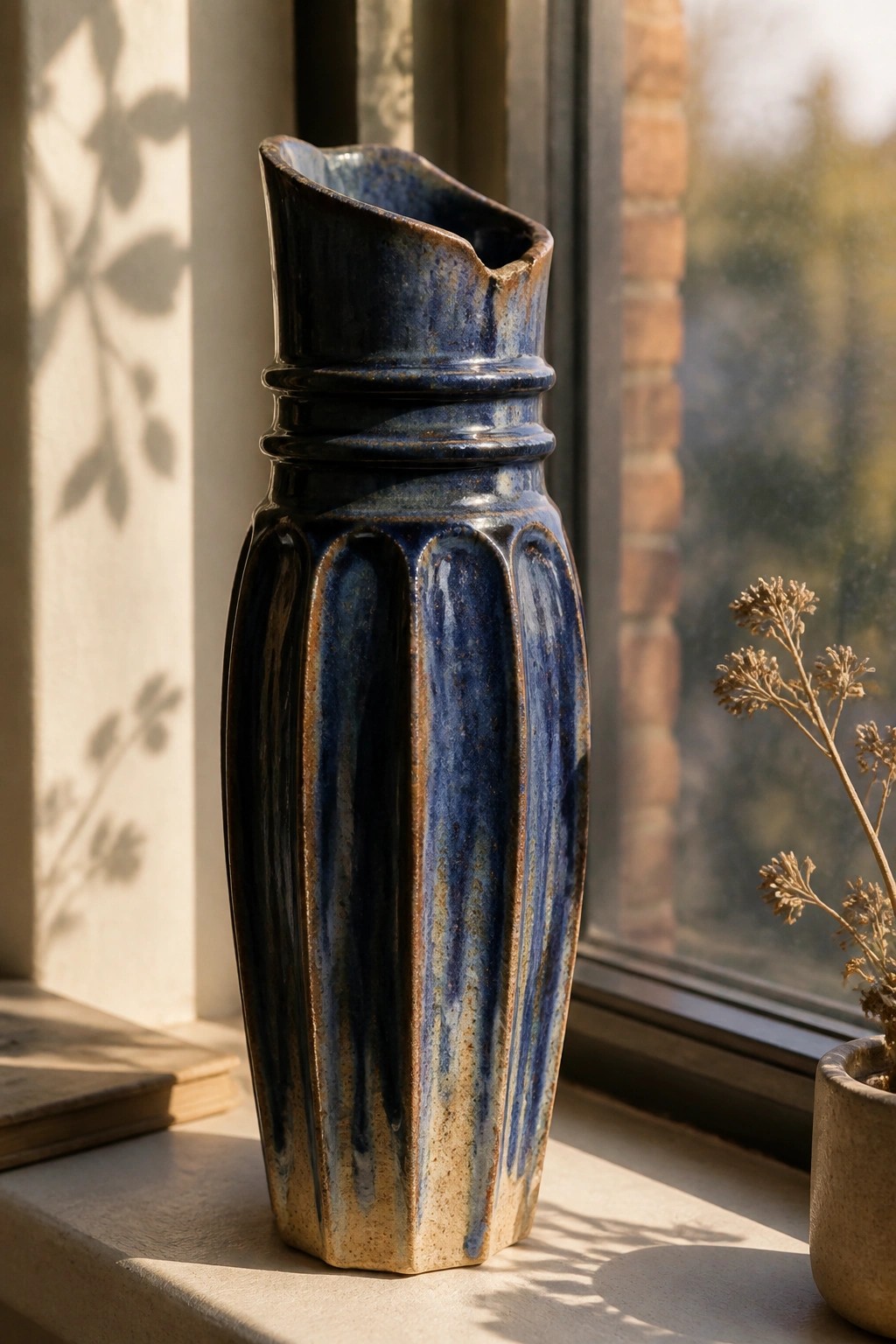
A wheel-thrown cylinder gets turned into something more structured by cutting vertical facets down the body after the clay firms up. Two raised rings mark the transition to the neck, while the rim is pulled and folded into an uneven opening that tilts to one side. The blue glaze pools in the grooves and drips down the facets, making the angles more visible. This combination keeps the piece functional as a vase while giving it a sharper profile than a plain round form.
What makes this idea useful is that the facets do most of the visual work once the basic shape is thrown. You can repeat the same vertical cuts on a shorter, wider cylinder to make a utensil holder or a small planter. The pinched rim adds interest without extra pieces, so the form stays simple to throw and finish. In a grouping of vessels, this shape stands out because the flat planes catch light differently than rounded surfaces.
Windowed Bowl with Perched Bird Detail
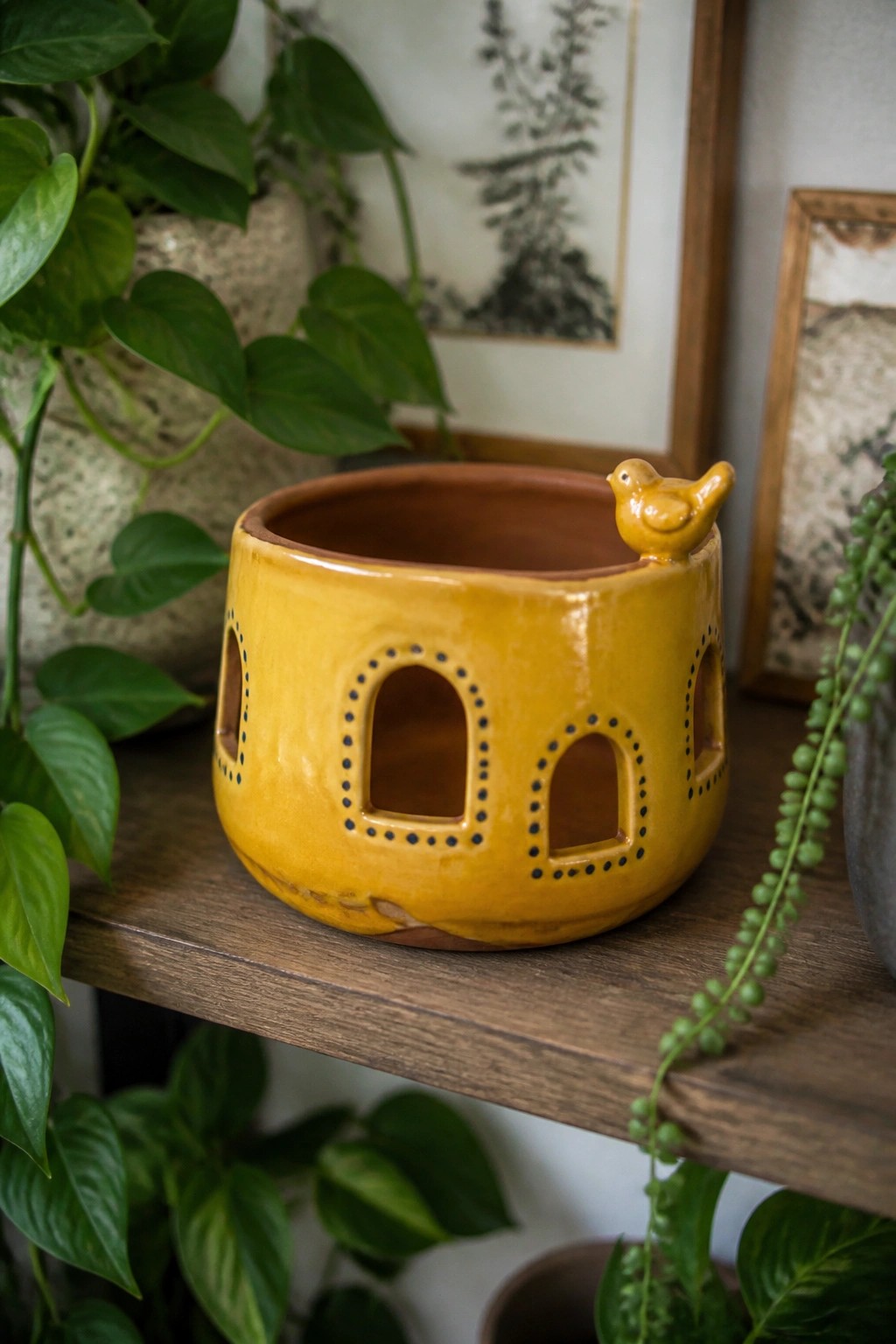
A wheel-thrown bowl gets turned into a decorative holder by cutting several arched openings around the sides and finishing each one with a ring of small dots. The bright yellow glaze covers the exterior while the rim stays unglazed at the top edge, and a small sculpted bird rests directly on that rim. This approach keeps the form simple but adds built-in interest through the cutouts and the single added detail.
What makes this idea useful is how the cutouts let light through if the piece is used near a window or with a small light inside. The same shape could be made taller for a candle sleeve or shortened into a catch-all tray by adjusting the height before trimming. Adding just one small sculpted element like the bird keeps the focus on the main form instead of crowding it with extra decoration, and the solid glaze color makes the piece easy to match with other items already on a shelf.
Swirling Vortex Oblong Tray
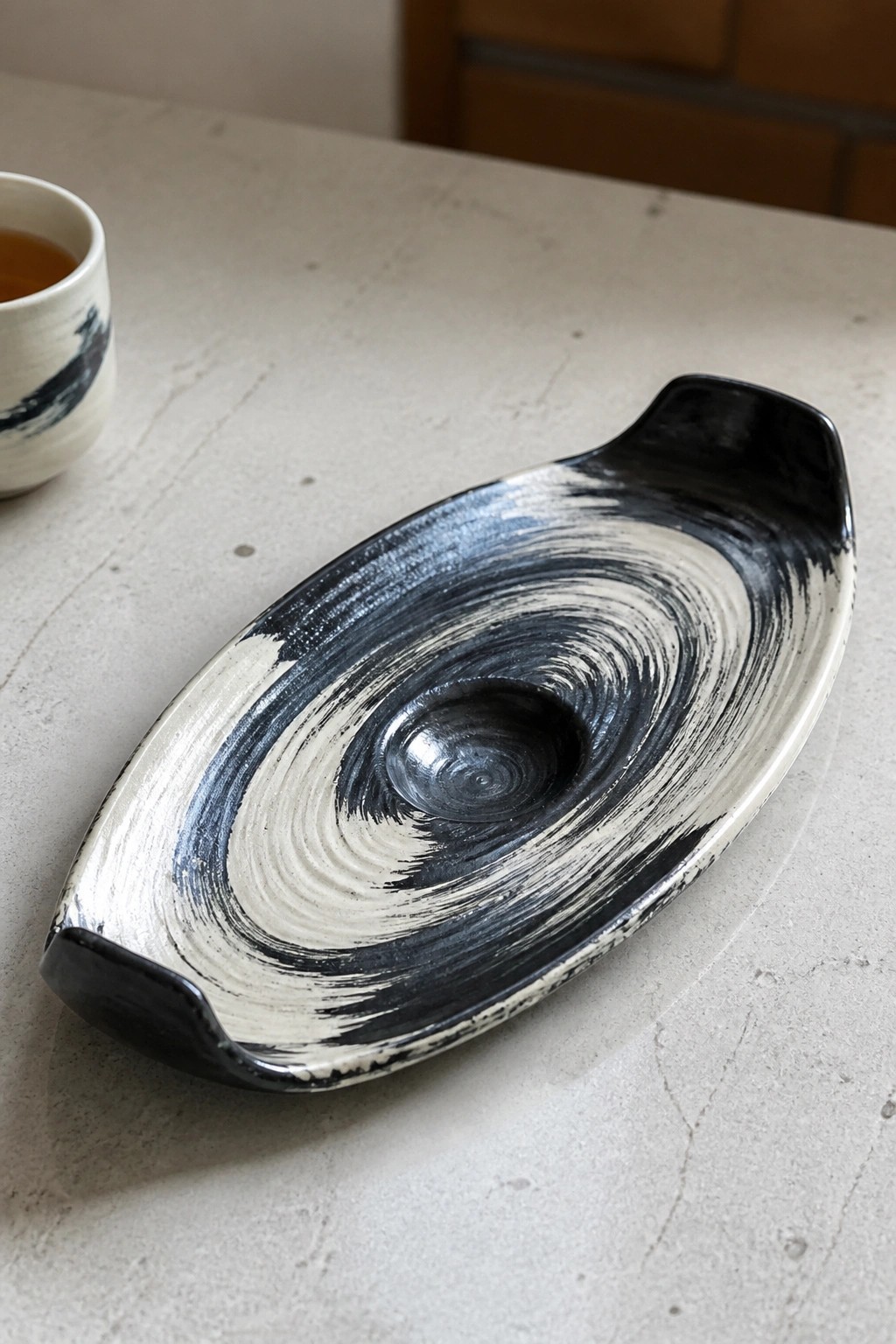
An elongated ceramic tray with a shallow central well gives a wheel-thrown piece more presence than a standard round plate. The surface carries bold, concentric black and white brushstrokes that spiral tightly toward the middle, turning the length of the form into a single focal point. This combination of an extended oval shape and high-contrast glazing keeps the design simple while making it stand out on a table or shelf.
The shape does a lot of the work here because the narrow length fits neatly across a table setting for snacks or small shared plates. You could adapt the swirl by switching to two other strong colors or shrinking the whole piece into a desk tray for keys and cards. The same wheel base also works as a sushi server if you deepen the well slightly or as a decorative catchall by keeping the well shallow.
Lantern Cylinder with Mixed Geometric Cutouts
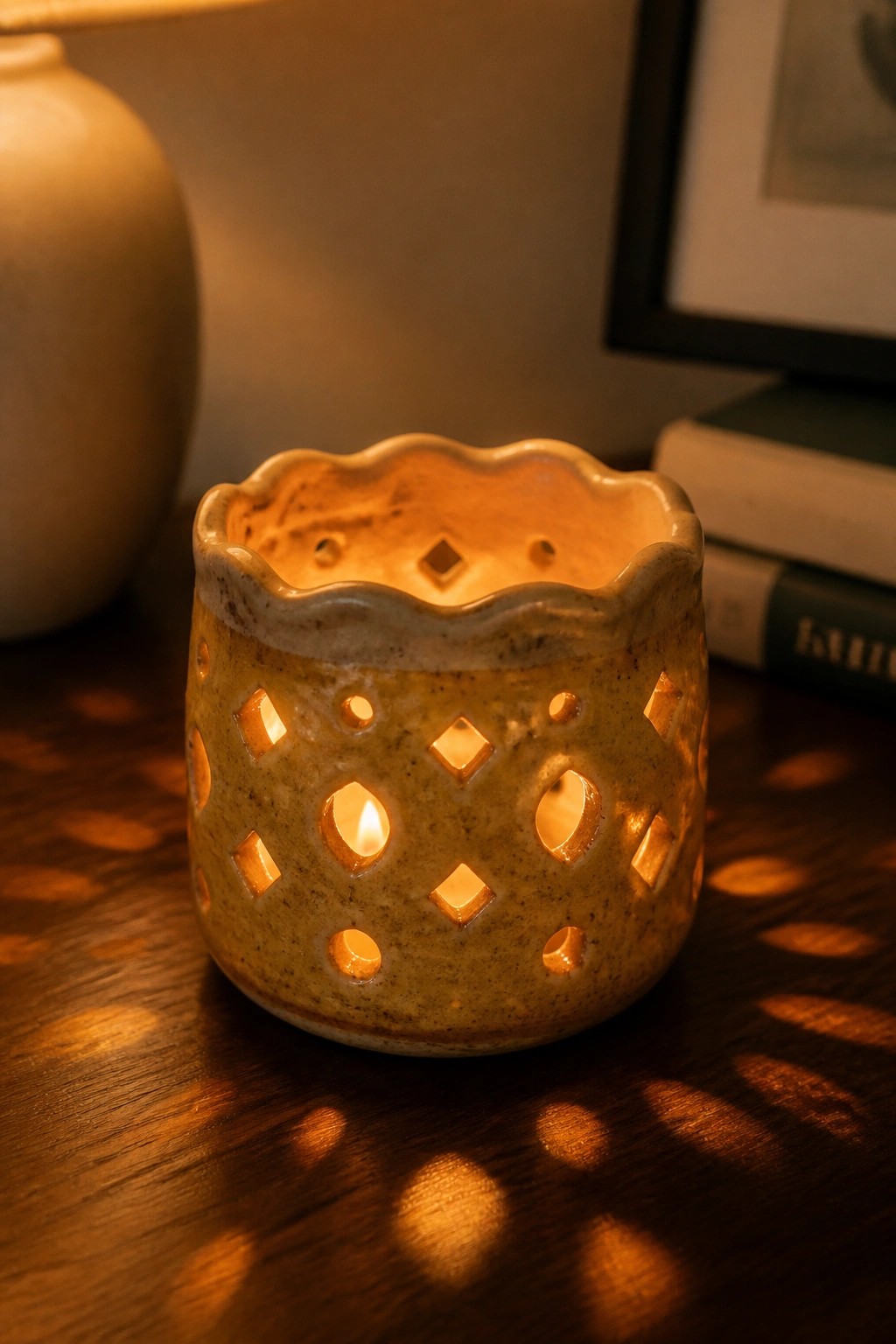
A wheel-thrown cylinder works as a candle lantern once you cut a mix of diamond, oval, and circle openings through the walls and finish the rim with a wavy edge. The openings let light pass through in distinct patterns that show up on the table surface below. A warm yellow glaze with visible speckles keeps the surface textured and simple while still allowing the cutouts to stand out. This approach takes a basic thrown shape and turns it into a light-diffusing piece without adding handles or extra parts.
What makes this idea useful is how the cutout layout can be adjusted for different sizes or room needs. Use the same cylinder base for a smaller votive version on a desk or try repeating just one shape for faster production. The form also works as a small planter sleeve if you leave the bottom closed and skip the candle. On Pinterest this stands out because the light patterns give an immediate visual result that photographs clearly.
Gradient Glaze Wheel-Thrown Pitcher
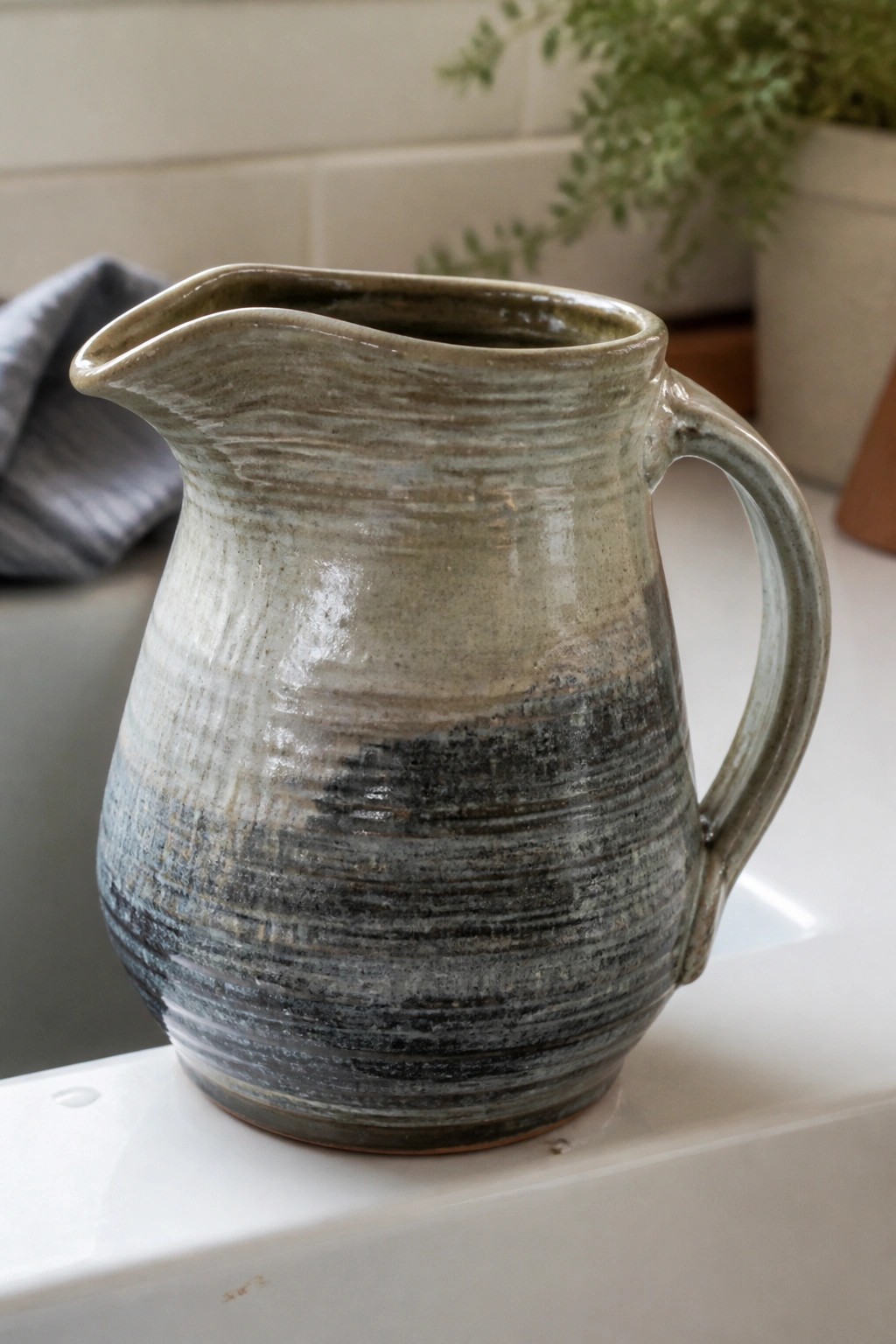
A wheel-thrown pitcher gives you a functional pouring vessel that still shows off the clay’s surface. The form has a rounded body that narrows at the base, a pulled handle, and a shaped spout for easy serving. Throwing lines remain visible across the surface, and the glaze moves from light beige through mid-tones into a darker charcoal band near the bottom. This fits the category of kitchen serving pieces that can also sit out as everyday tableware.
What makes this idea useful is the way the glaze fade adds depth without extra decoration steps. A piece like this works especially well on a kitchen counter or dining table for water, iced tea, or even as a casual vase. You could rework the same shape into a smaller creamer by reducing the overall height and spout size, or keep the proportions and swap the glaze colors to match other dishes you already use. The horizontal texture from the wheel also helps it photograph clearly for project sharing.
Long Oval Spoon Rest with Built-In Well
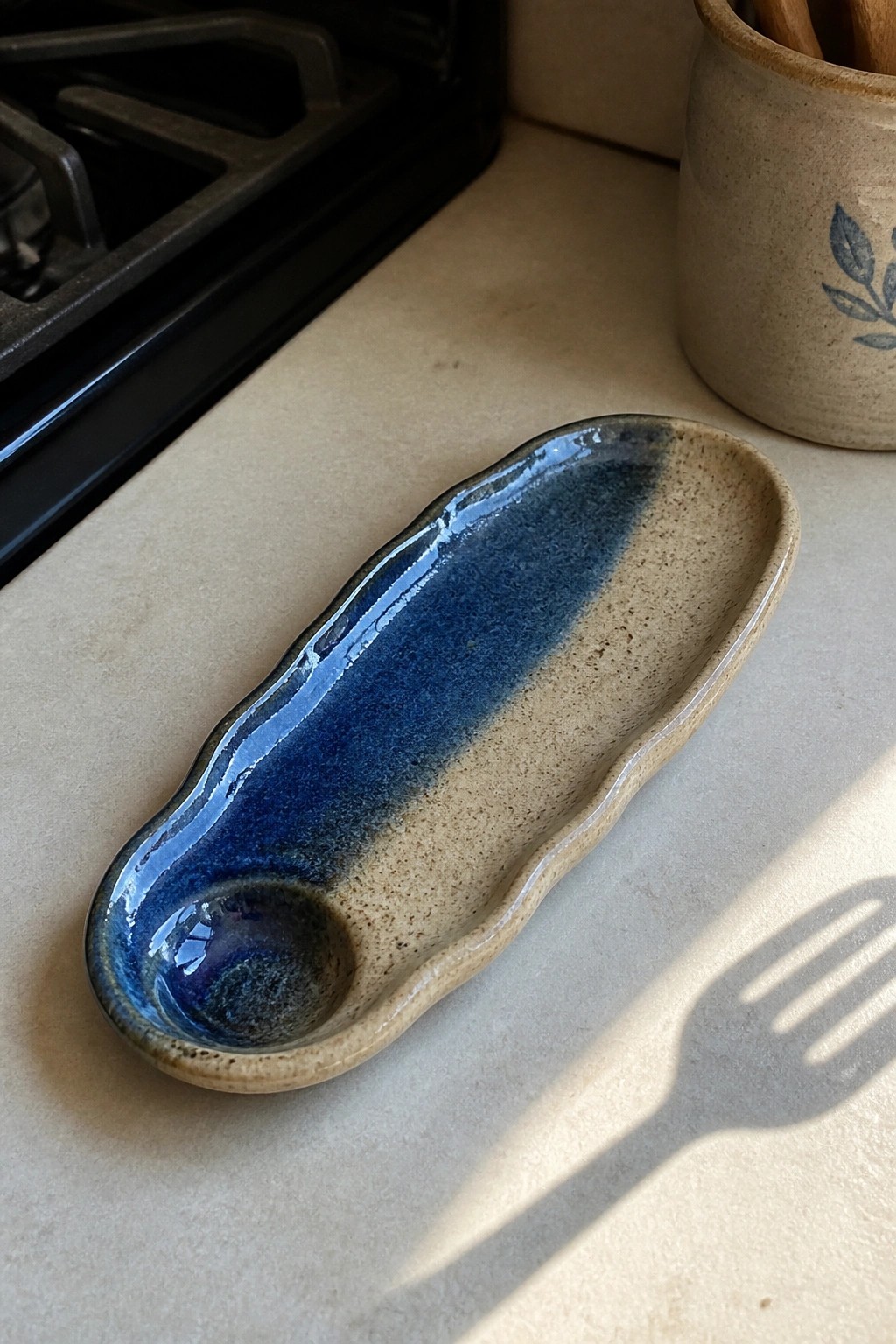
This wheel-thrown piece is an elongated oval tray that functions as a spoon rest, with a small circular well formed at one end to hold drips from cooking utensils. The form stays narrow and slightly irregular along the edges, while the glaze shifts from deep blue to the natural speckled clay body, creating a clear visual break without added decoration. It fits the kitchen item category and moves beyond basic round or square rests by using length and the integrated well to handle real cooking tasks.
The shape does a lot of the work here by keeping the piece compact on a stovetop or counter while still offering a stable resting spot. You could rework the same proportions into a longer version for two spoons or shorten it into a small chopstick holder. In a kitchen, this kind of piece stays practical because the well prevents messes and the narrow profile slides easily between other tools. The glaze fade idea also carries over to other wheel pieces like narrow trays or shallow dip dishes.
Wheel-Thrown Ring Dishes in Soft Glazes
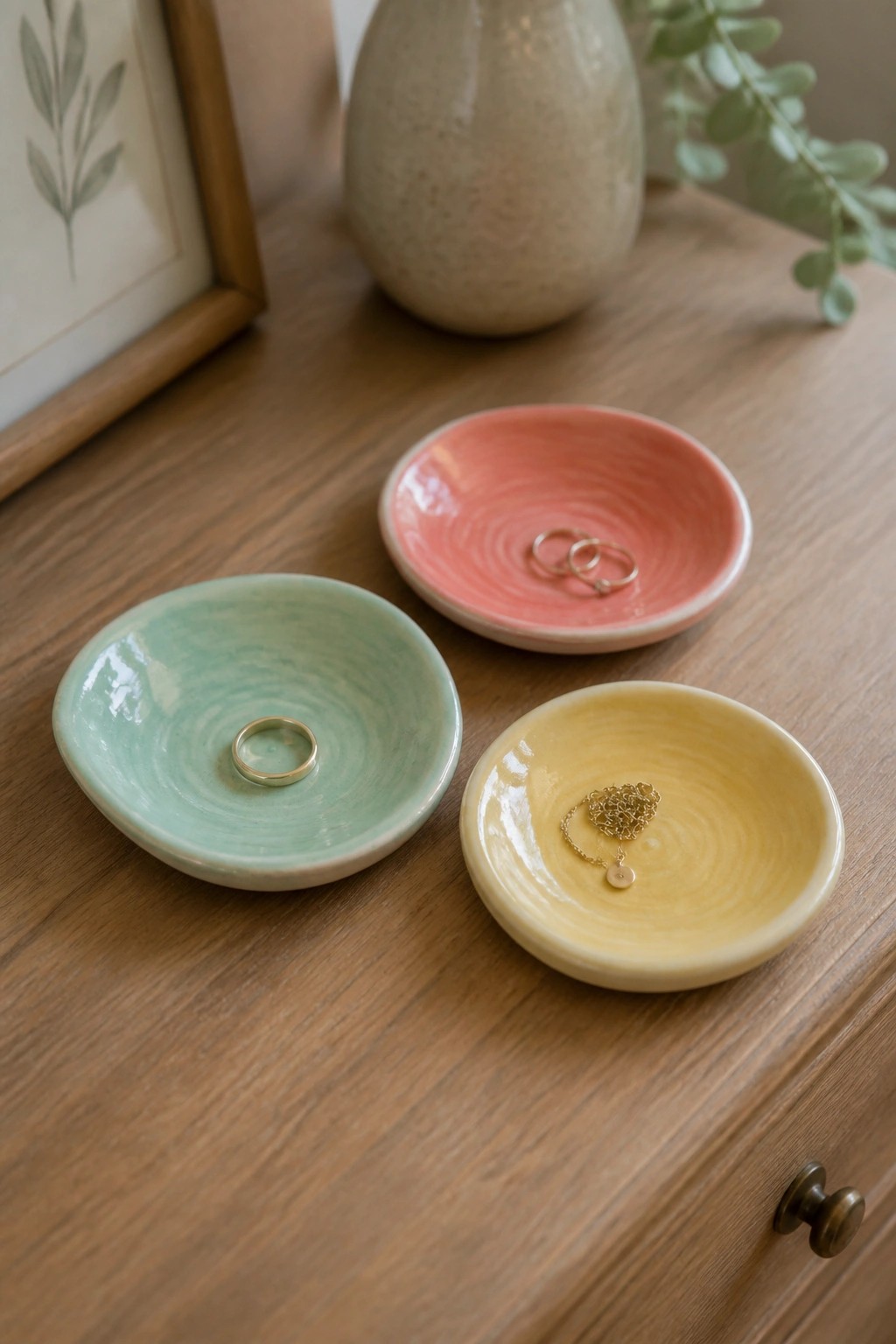
Ring dishes formed on the wheel create a low, wide profile that holds rings and small chains without sliding around. The shallow depth keeps the pieces visible and easy to grab while the wheel marks show through the glaze for subtle texture. Pastel glazes in different colors let you make a set that matches a dresser or bathroom counter. These stay small enough to group or place one at a time wherever daily jewelry comes off.
What makes this idea useful is the straightforward shape that works for more than just rings. You can widen the rim slightly to hold keys by the door or keep the same size and change the glaze colors for a desk version that catches loose change. The small scale means they fire quickly and take up little shelf space during drying, so you can test new glaze combinations without committing to larger pieces. A single set like this also photographs well for sharing finished work.
Overlapping Abstract Faces on a Round Plate
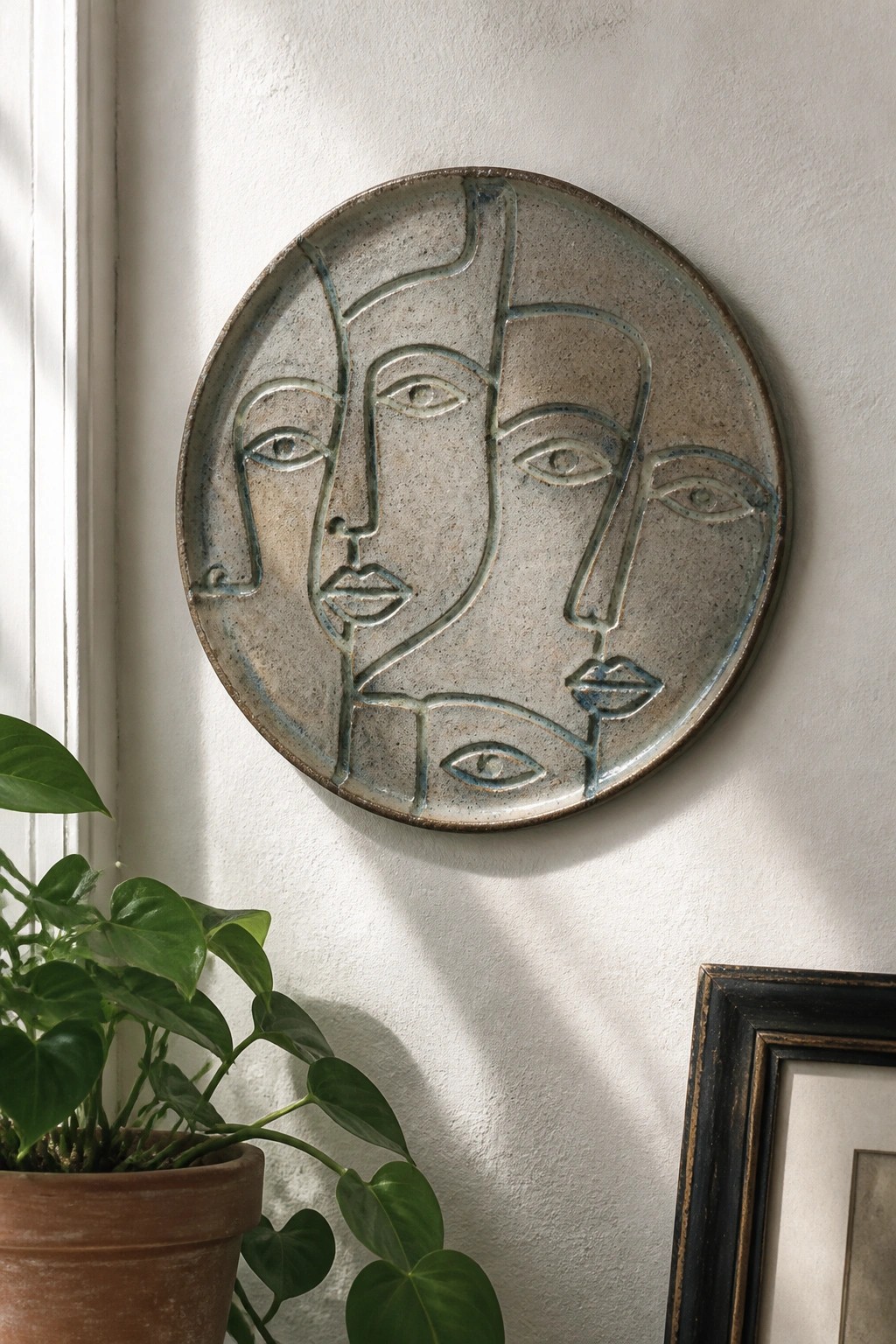
A wheel-thrown round plate becomes a wall piece when three stylized faces are carved into the surface using simple incised lines. The faces overlap and share space across the form, with eyes, noses, and mouths defined through relief rather than added clay. A speckled matte glaze with faint blue accents along the lines keeps the surface quiet while still showing the carved details. This turns a standard plate shape into a sculptural decor object by focusing on multiple faces instead of a single central motif.
What makes this idea useful is how the round format gives you room to layer several faces without crowding the surface. You can adapt the carving to a smaller plate for a set or move the same line style onto a shallow tray. The muted glaze works well because it lets the relief stand out from across a room, making the piece easy to place in a hallway or above a console. For another version, try the faces on a square slab or a low bowl to shift the overall shape while keeping the relief approach.
Multi-Slot Ceramic Toothbrush Holder
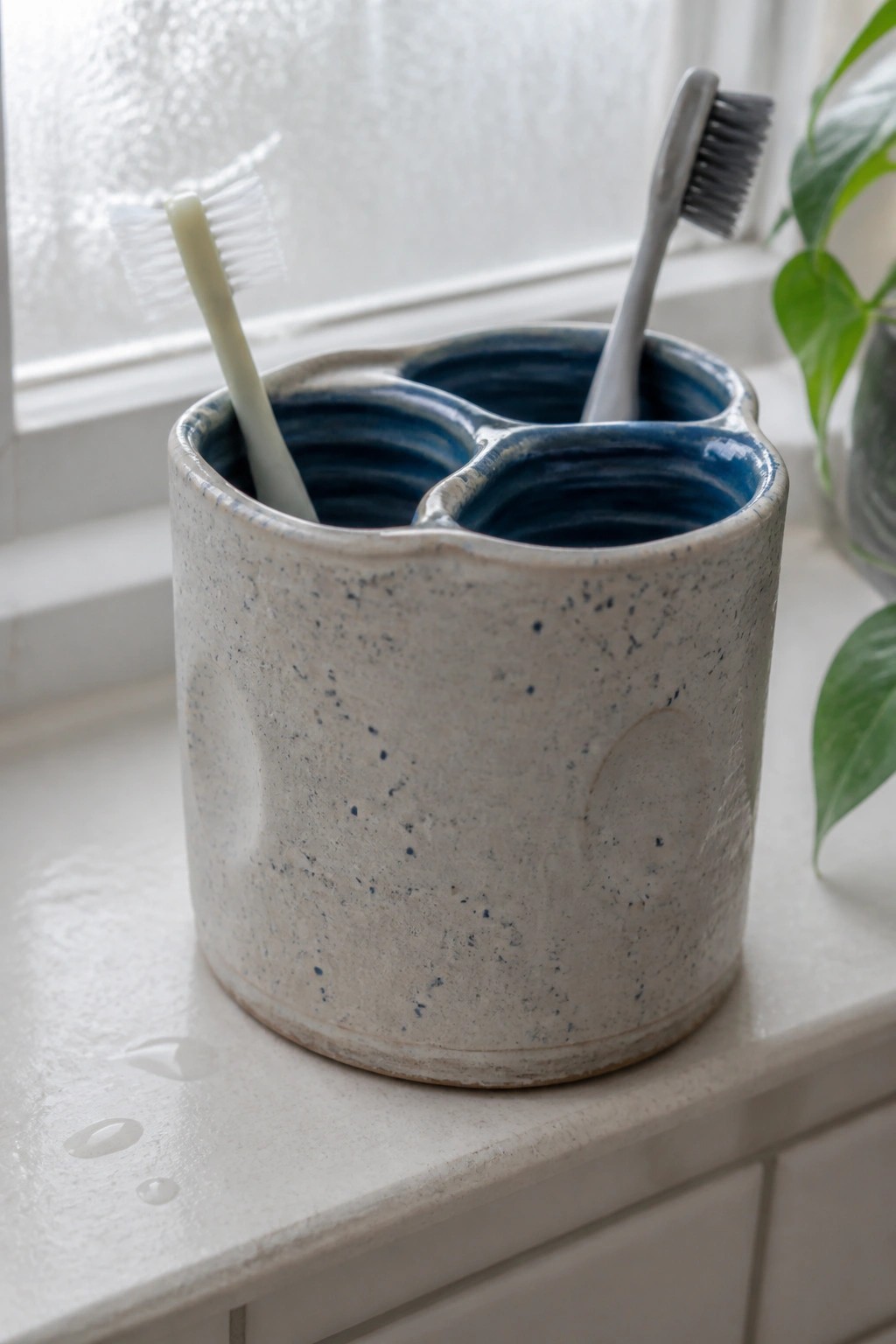
A divided ceramic holder like this turns a simple cylinder into a bathroom organizer with three separate compartments. The wheel-thrown form has pinched walls that create rounded sections inside one outer shape, allowing multiple toothbrushes to stand upright without touching. The speckled clay exterior stays neutral while the interior gets a solid blue glaze that highlights the divisions and makes cleaning easier.
What makes this idea useful is how the same base shape can be adjusted for different numbers of compartments depending on household size. You could add an extra division or shrink the overall diameter to fit a smaller sink area. The same construction works for holding makeup brushes, paintbrushes, or kitchen tools if you change the scale. It stands out on Pinterest because the divided interior is clear at a glance while the outside still reads as one clean form.
Yarn Bowl with a Flower-Shaped Cutout
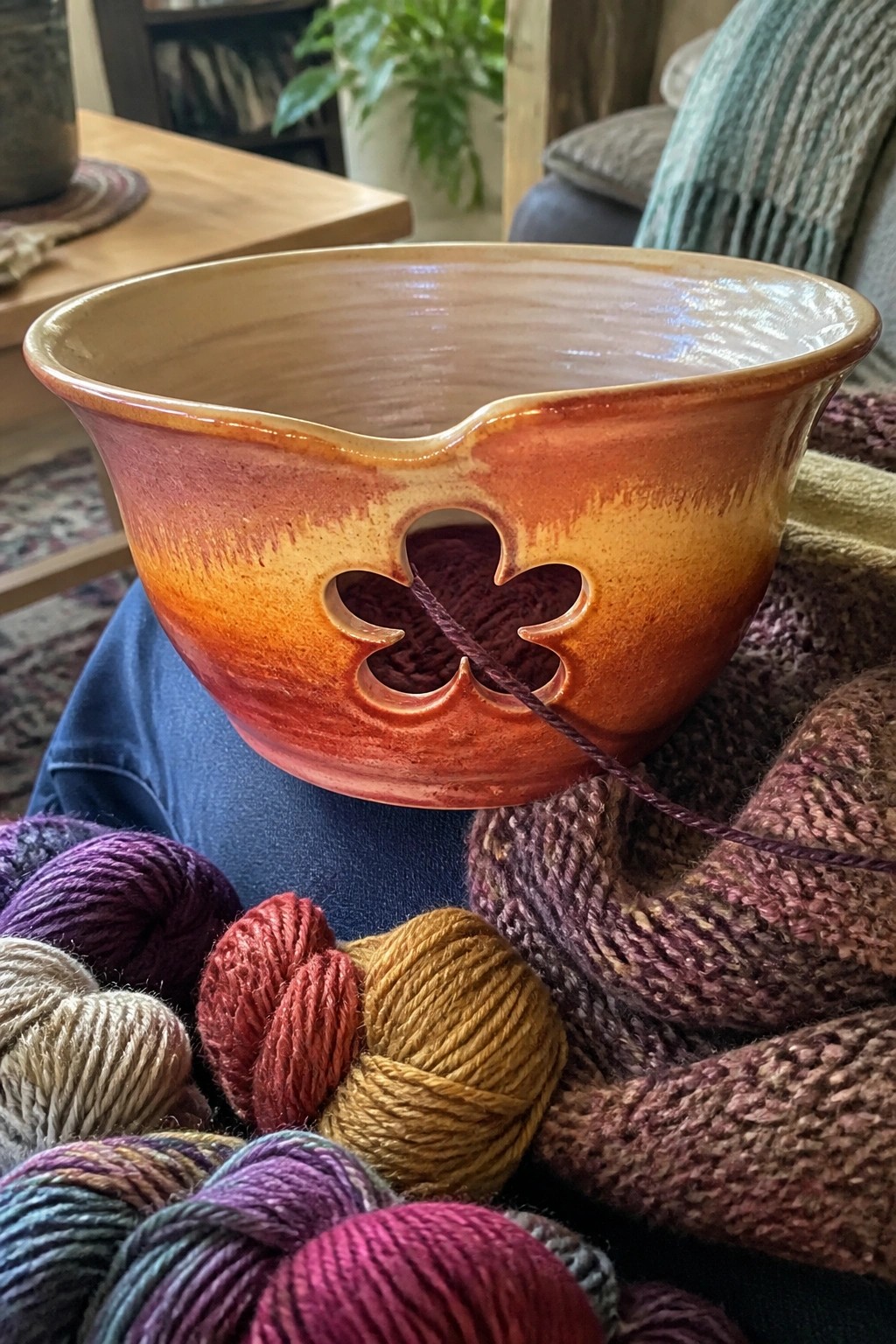
A wheel-thrown yarn bowl uses a large opening cut into the side to hold and guide yarn as it unwinds. The cutout is shaped like a four-petaled flower so the strand stays in place without slipping out, while the rest of the bowl keeps the ball contained. A flowing orange-to-red glaze covers the surface and emphasizes the rim and edges of the opening. This fits the functional holder category for craft supplies.
What makes this idea useful is that the cutout prevents yarn from rolling away during knitting or crocheting. You could scale the same opening down for a smaller bowl that holds embroidery floss or thin cord. The shape also works as a desktop holder for washi tape or ribbon if you swap the yarn for another material. In a craft room this stands out on Pinterest because the functional detail is easy to spot in photos.
Glazed Pinch Bowls for Salt and Spices
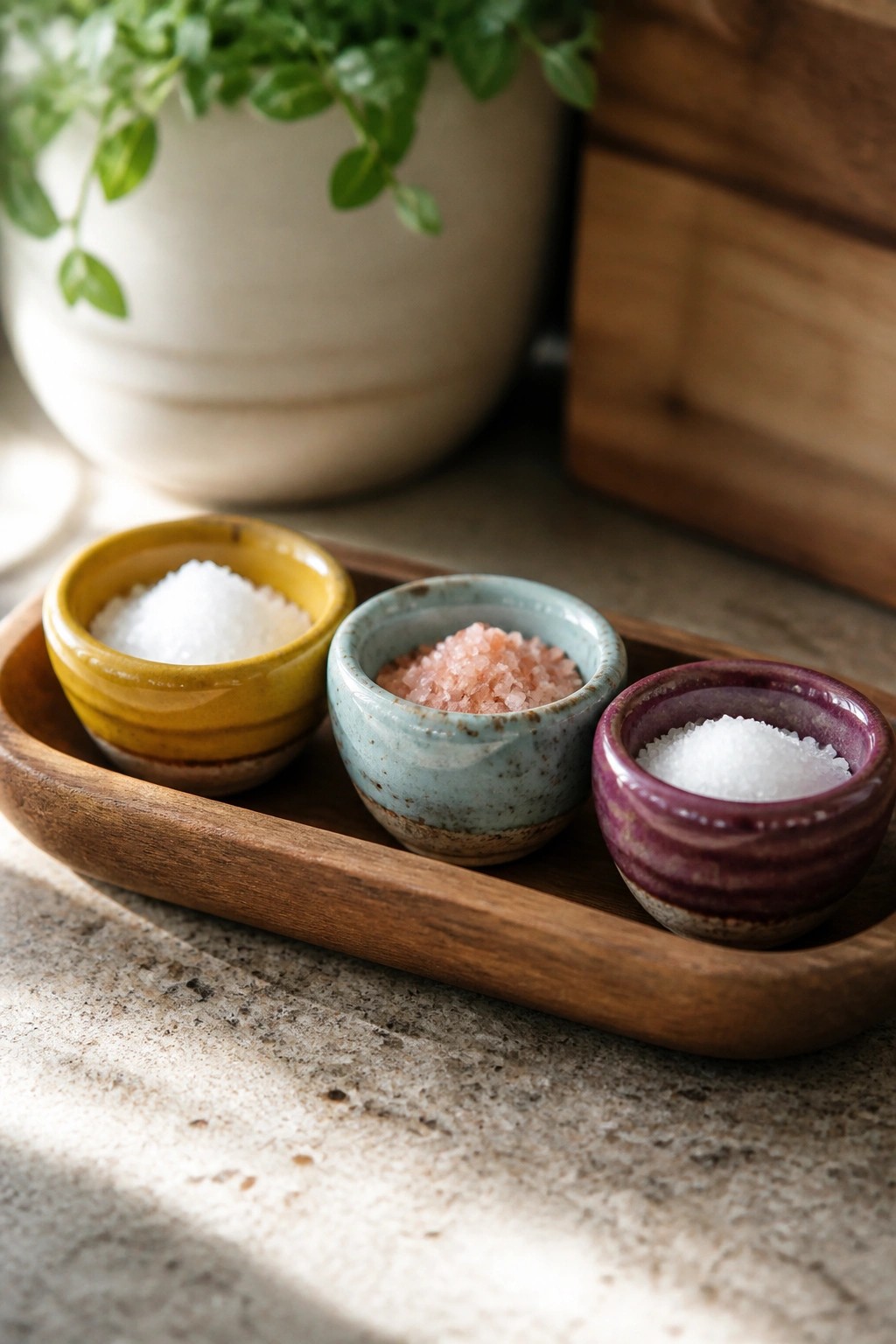
These small wheel-thrown bowls function as salt cellars or individual spice dishes. Each one carries a single solid glaze in a different color while keeping the same compact rounded shape and slightly thickened rim. The set gains its visual strength from the contrast between the glazes rather than from added texture or carving. The approach fits the kitchen item category and turns ordinary small bowls into a coordinated collection.
What makes this idea useful is how the small size lets you test several glaze colors without committing to large pieces. You can adapt the same form for other uses such as nut bowls, herb dishes, or small sauce servers. Placing the finished bowls on a simple wooden tray keeps them together and ready for the table or countertop. The grouped look also photographs cleanly for sharing, which helps the project stand out when people search for salt cellar ideas.
Curled Fox Planter
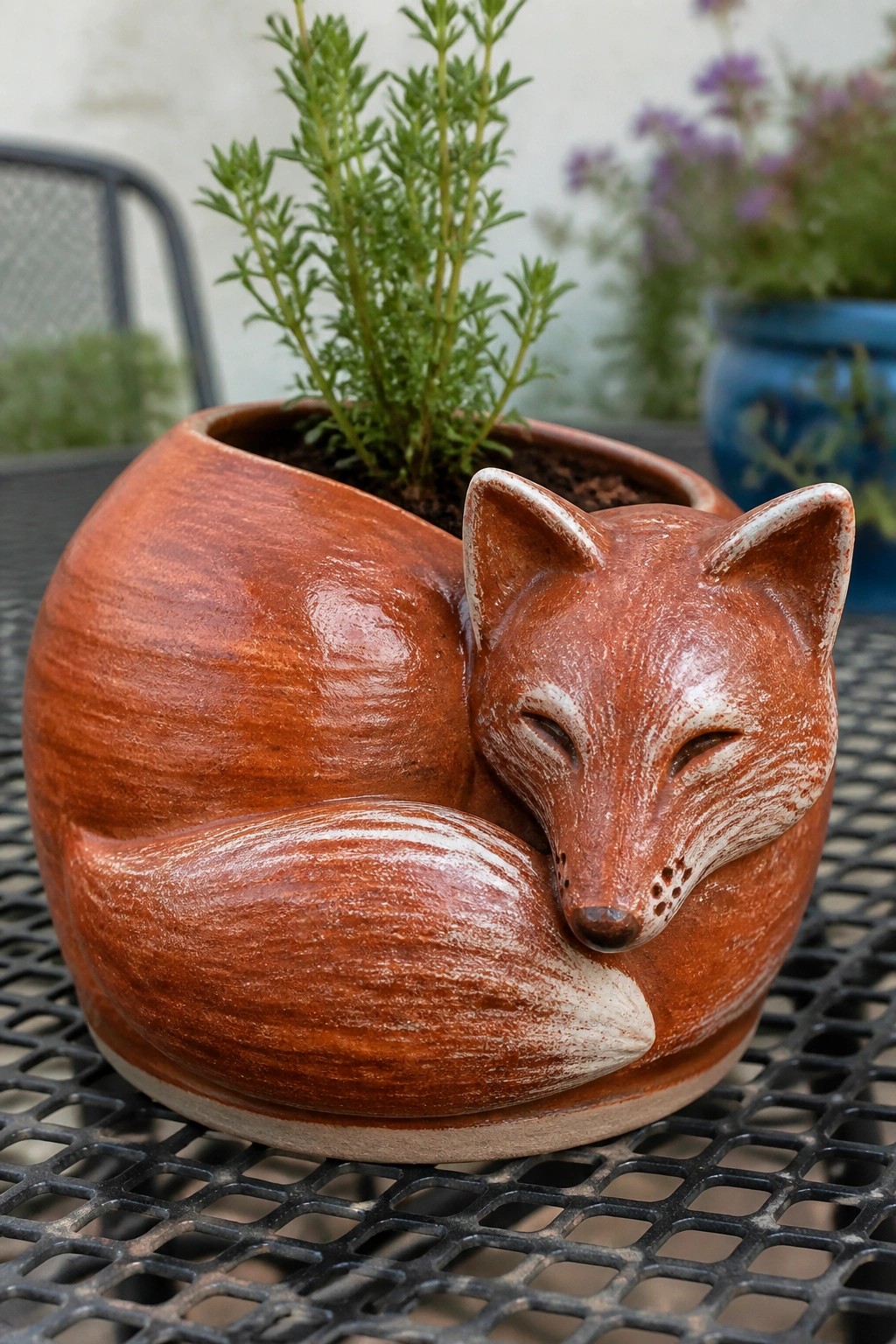
A curled fox planter uses the animal’s body as the main vessel, with the back left open to hold soil and a small plant. The head, ears, and tail are sculpted as part of the same form so the piece reads as a single animal rather than a pot with decoration added later. Terracotta clay with lighter slip on the face and tail keeps the surface simple while still showing the fox details clearly. This approach fits the sculptural planter category where the shape itself does most of the visual work.
What makes this idea useful is how the compact oval body stays stable on a table or shelf while still giving the plant enough room to grow. The same curled pose can be reworked for a cat or rabbit by swapping only the ears and muzzle, which keeps the project manageable on the wheel or with hand-building. For small spaces this shape works well because it doubles as both a plant holder and a decorative object without needing extra stands or trays. The two-tone slip finish is easy to adapt if you want to try different clay colors or skip the details entirely for a smoother version.
Openwork Lattice Cup
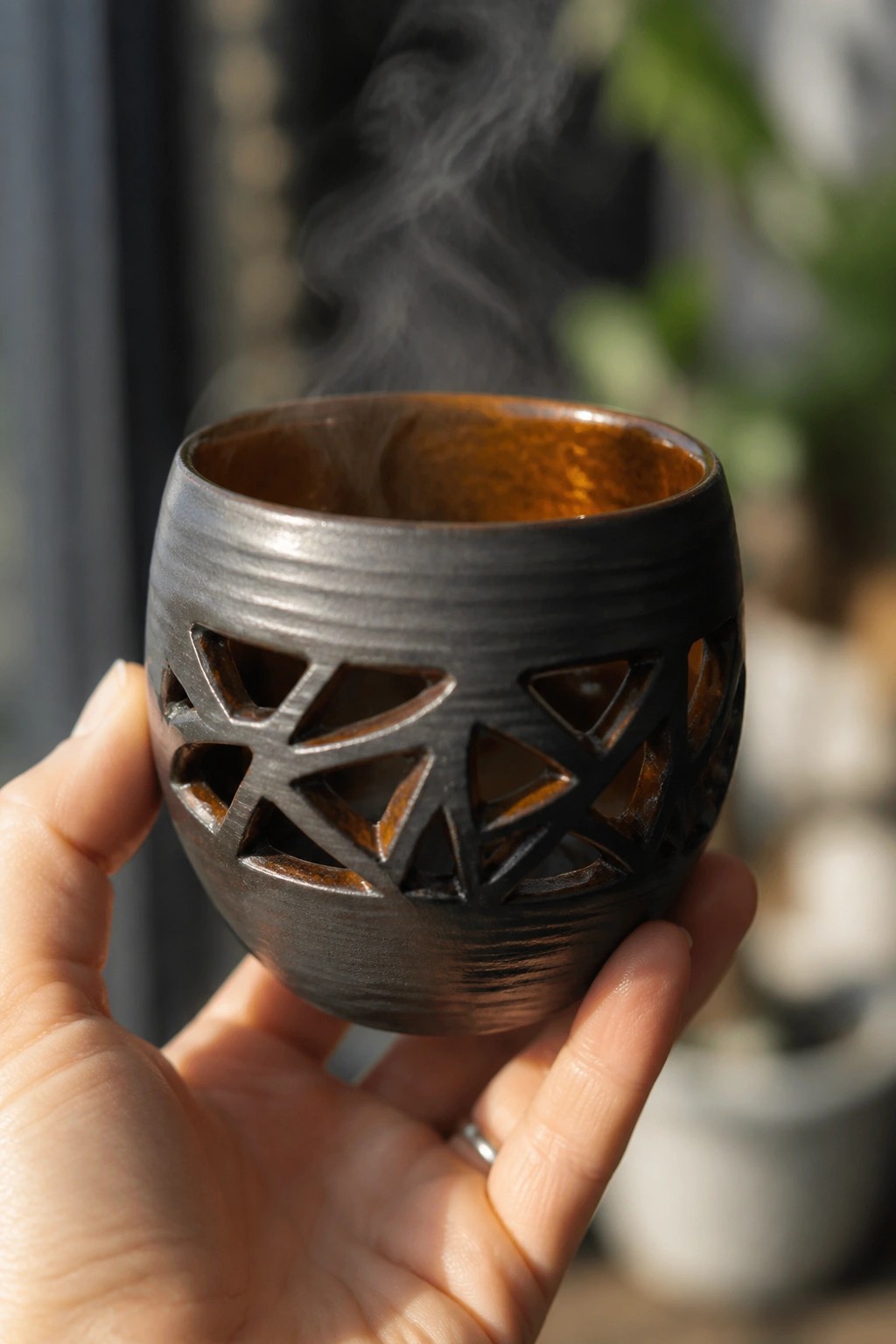
A small wheel-thrown cup gains its main impact from a band of geometric cutouts that run around the middle. The triangular and diamond shapes are carved through the wall so the warmer brown interior glaze shows through against the dark exterior. This keeps the form functional as a drinking vessel or small holder while the negative space creates the pattern.
What makes this idea useful is how the cutouts do most of the visual work once the basic shape is formed. You can repeat the same lattice on a slightly taller mug or shrink the pattern for a small planter. The compact size also makes it easy to photograph for sharing and gives you room to experiment with different cutout spacing on future pieces.
Twisted Pedestal Bowl with Scalloped Rim
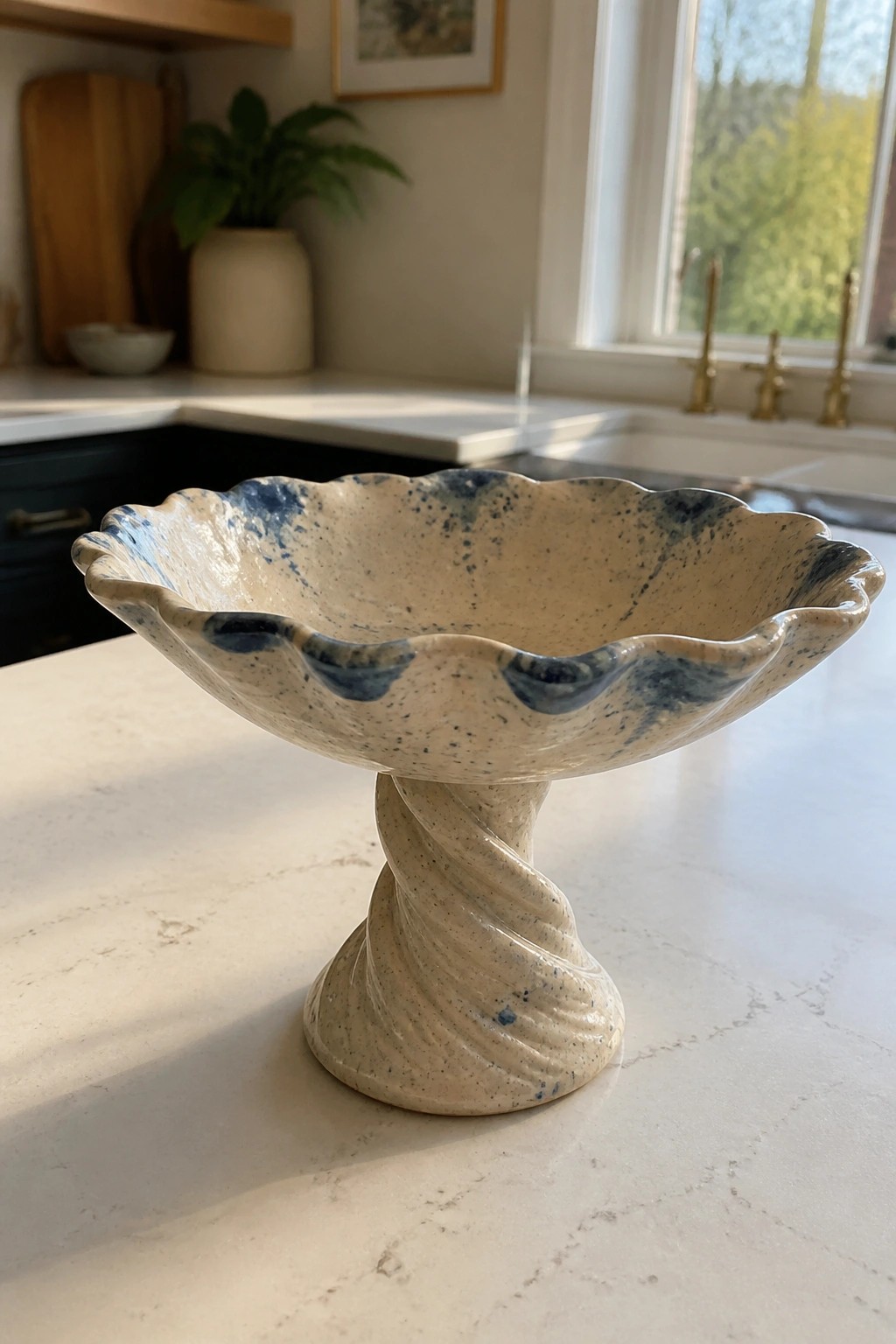
A wheel-thrown ceramic bowl with a wide, irregular rim rests on a sculpted pedestal base that twists upward from a solid foot. The cream clay shows blue speckles and drips concentrated along the ruffled edge, creating contrast without covering the entire surface. This approach pairs a functional wide bowl shape with a tall, sculptural stem that lifts the piece off the table. It falls into the category of decorative serving or display bowls meant for kitchen or dining use.
What makes this idea useful is the twisted stem, which adds height and turns an ordinary bowl into something that stands out on a counter or shelf. The same base technique could be scaled down for smaller ring dishes or adapted with a straight stem for a cleaner look. In a kitchen this shape keeps fruit or snacks visible while taking up less surface space than a flat bowl. The speckled glaze treatment also works on trays or vases if you want to repeat the surface pattern across a set.
Gradient Glazed Nesting Bowls
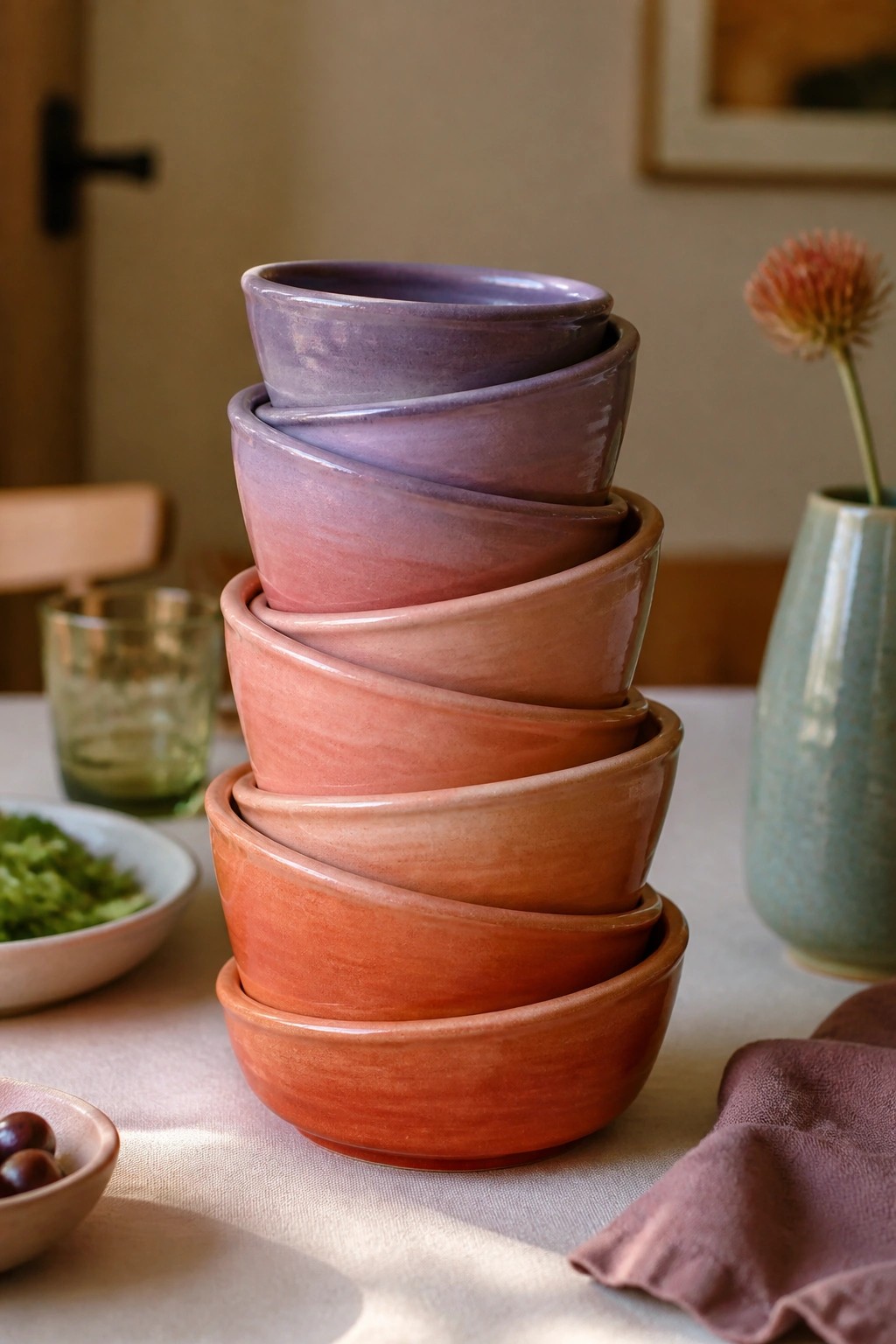
A set of wheel-thrown ceramic bowls finished with a smooth glaze gradient from soft purple down to deep terracotta forms a compact nested stack. Each bowl sits slightly offset inside the next, so the color shift stays visible while the forms remain functional. The idea relies on a single glaze blend applied across multiple sizes rather than added surface details or altered shapes.
What makes this idea useful is that the same gradient can be repeated on bowls of different depths to create a full matching set for kitchen storage or serving. You can swap the purple-to-orange range for any two colors that blend cleanly on the wheel. The nested shape keeps the collection compact on a shelf, and the color change gives the stack enough visual weight to work as a display piece when not in use. The approach also transfers easily to plates or small serving dishes if you want to expand the set later.
Frequently Asked Questions
Q1: How can beginners attempt these advanced wheel pottery ideas safely? Start with smaller batches of clay and practice centering thoroughly before attempting any extensions or alterations. Use a slower wheel speed and support the form with your hands or simple bats to avoid wobbles. Build skills gradually by trying one new element at a time rather than combining multiple bold features in a single session.
Q2: What clay bodies are suitable for bold non-basic shapes? Stoneware or porcelain with added grog provides better structure for tall or protruding elements. These clays resist cracking during drying and hold their form well under the stress of wheel throwing. Test small samples first to see how your chosen clay responds to drying and firing conditions.
Q3: How do I maintain balance and stability in asymmetrical pottery forms? Throw the base centered and thick enough to support off-center additions. Use a needle tool to score and attach coils or slabs for balance points. Allow partial drying between stages so the piece firms up without becoming too rigid to adjust.
Q4: Which glazing techniques enhance the bold features of these designs? Apply underglazes with brushes to highlight curves and edges before a clear overglaze. Experiment with wax resist on specific areas to create contrast and depth. Fire in oxidation for vibrant colors or reduction for more earthy tones depending on the clay type.
Q5: Where can I find more inspiration after exploring these 18 ideas? Join online pottery forums or local studio groups to share work and see variations from other makers. Attend workshops focused on wheel throwing or review books on contemporary ceramics for fresh approaches to form and surface.

Pottery Path is my cozy corner of the internet where I share clay ideas, pottery inspiration, and simple projects you can recreate at home. I love exploring everything from air dry clay to handbuilt pottery to cute minis that brighten your day. My goal is to make clay crafting feel easy, fun, and welcoming for anyone who wants to try it.
You will find beginner friendly tutorials, creative pottery painting ideas, and lots of warm inspiration for slow and happy crafting. If you enjoy hands on creativity, this space will feel like home.