I like making pottery that does not try too hard.
Simple mugs with clean lines have become my go to in the studio.
They work well with my morning coffee and do not distract from the shape.
I have put together some designs that show this approach.
Maybe one of them will inspire your next project.
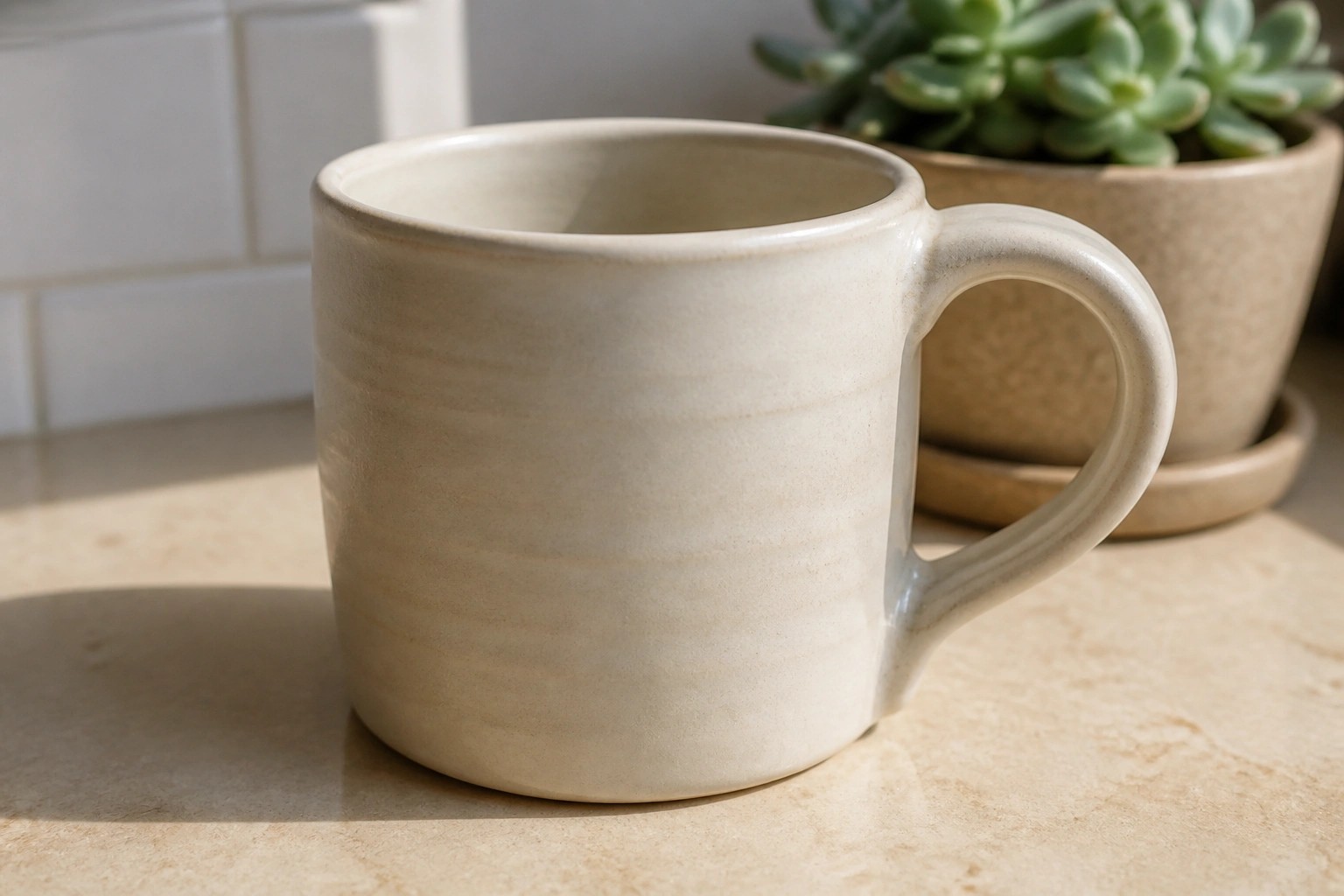
Wheel-Thrown Mug with Horizontal Thrown Lines

A wheel-thrown mug can use the natural ridges created during throwing as its only surface detail. The rounded body stays simple while the spaced lines add subtle texture across the form. An off-white matte glaze keeps the focus on the shape and the thrown marks rather than color or decoration.
This kind of mug works well for daily use because the size and handle shape feel comfortable to hold. You could adapt the idea by spacing the ridges farther apart on a taller form or smoothing out the bottom third for contrast. In a kitchen it pairs easily with other plain ceramics without competing for attention. The same approach translates to a small bowl by keeping the same rim and glaze treatment.
Small Mug with Visible Throwing Lines
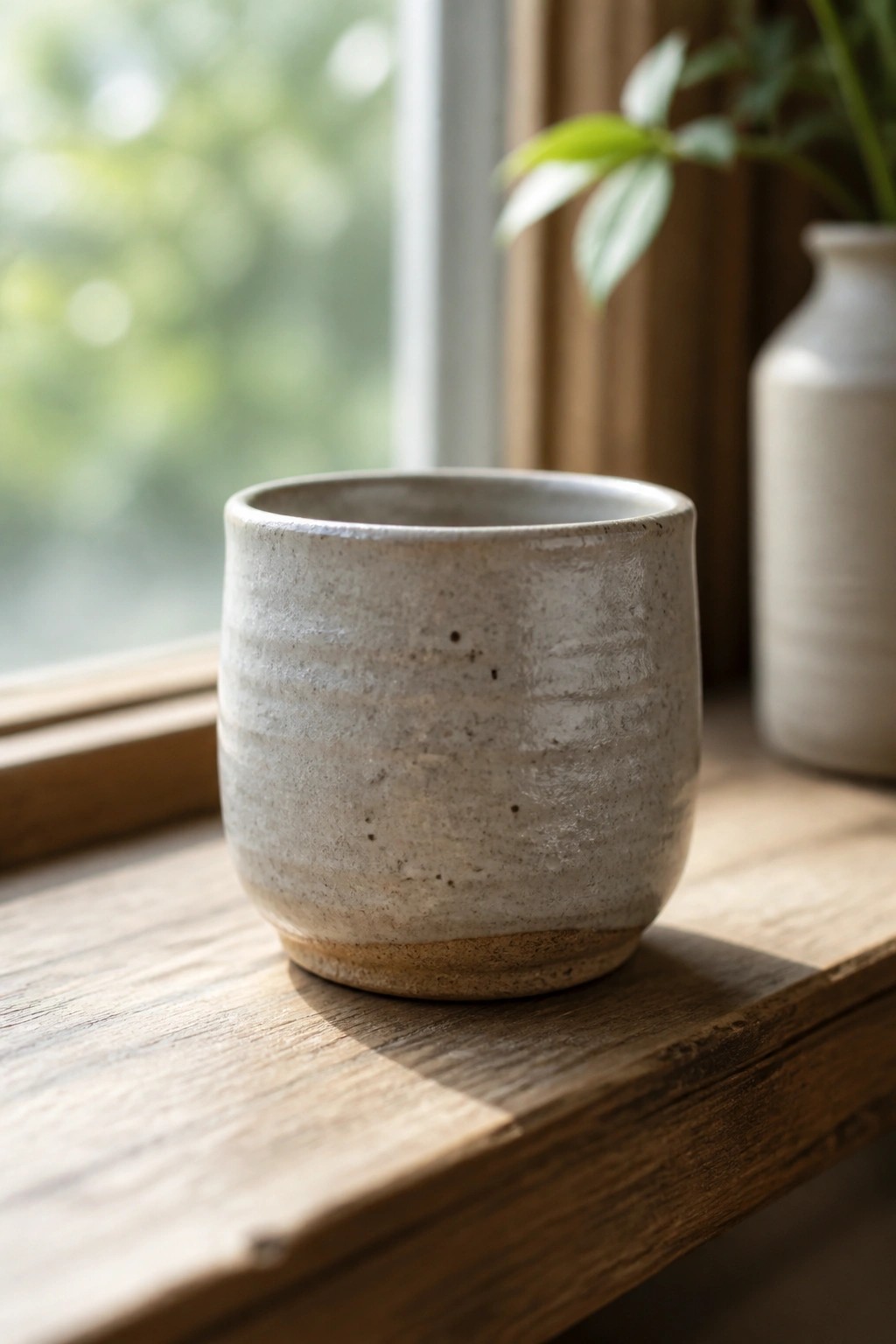
A wheel-thrown mug keeps a simple cylinder shape and leaves the horizontal ridges from throwing visible on the surface. The matte glaze sits unevenly so the texture shows through instead of covering it completely, and the base stays slightly darker where the clay meets the wood. This approach works as a basic mug idea that relies on the making process rather than added decoration.
The shape does a lot of the work here because the straight sides and modest height make it easy to stack or store in small kitchens. You can repeat the same throwing lines on a taller version for a travel mug or shrink the diameter for an espresso cup without changing the surface treatment. The neutral tone also pairs with other plain ceramics on open shelving, so the piece fits into an existing collection instead of standing out on its own.
Two-Tone Mug with Textured Body and Light Rim

A small handmade ceramic mug works well with a dark, heavily textured lower section paired against a smooth light rim. The contrast keeps the form simple while the rough surface adds visual interest without extra carving or patterns. This approach fits the minimalist category because the design relies on glaze placement and clay texture rather than added details.
The shape does a lot of the work here because the compact size and wide handle make it practical for espresso or small servings of coffee. You can adapt the idea by switching the dark glaze for another matte color or letting the textured section reach higher up the sides. In a kitchen, this kind of mug pairs easily with plain plates and looks good in photos for Pinterest boards focused on neutral ceramics. The same two-tone method could be used on a slightly larger drinking vessel if you want to scale it up.
Cork-Lidded Cylinder Mug with Side Handle
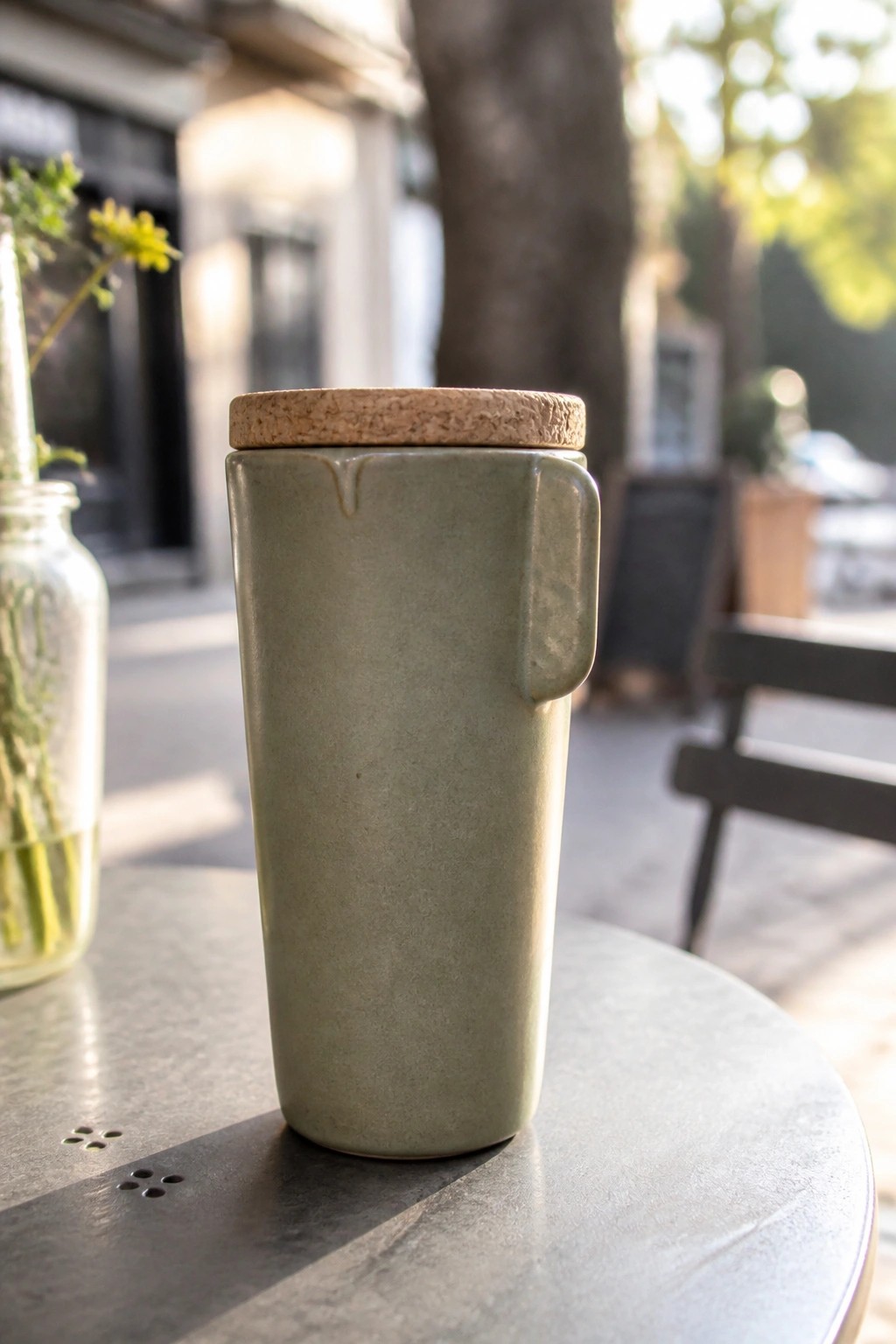
A tall cylindrical mug in clay uses a fitted cork lid, a small pour lip at the rim, and a low sculpted handle on one side. The matte sage green glaze covers the form evenly and gives the surface a soft, non-reflective finish. This keeps the shape clean while the lid and handle add everyday function without extra decoration.
What makes this idea useful is how the lid turns the mug into a covered container that works for both drinks and small storage. The straight cylinder form takes up little table space and would suit a desk or kitchen counter. You could drop the lid entirely to make a simpler open mug or change the handle shape while keeping the same proportions and glaze.
Two-Tone Terracotta Mugs
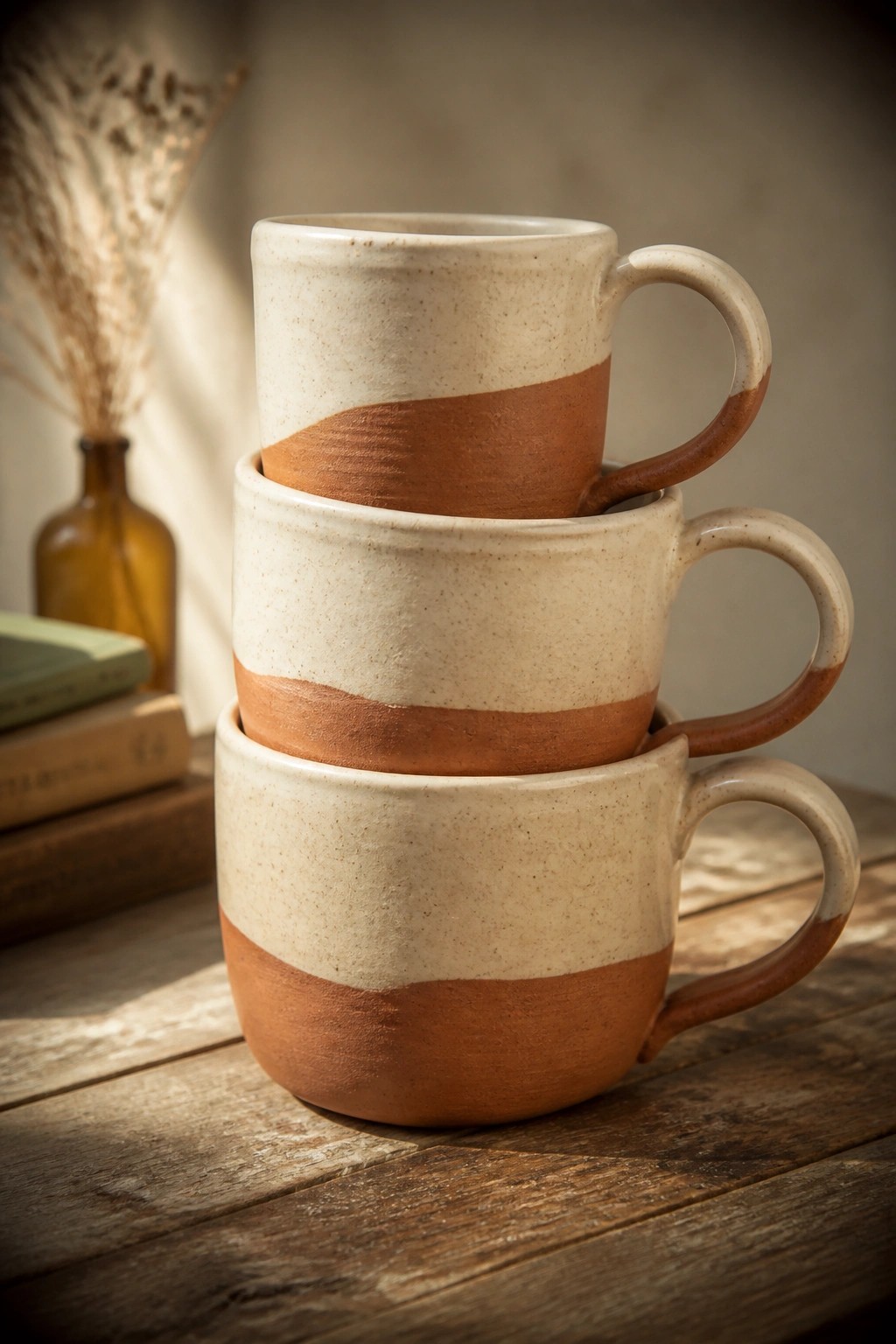
These mugs feature a simple two-tone treatment where the lower half receives a terracotta slip or underglaze while the upper half stays the natural speckled clay body. The division line stays mostly horizontal but carries a slight curve that follows the form without adding extra decoration. The result is a clean, stacked set that still shows the handmade surface texture.
What makes this idea useful is how the color split can be shifted higher or lower to change the visual weight on different mug sizes. The same approach works for making matching sets that store neatly on open shelves or in cabinets. You could keep the lower band narrower on smaller cups or run it straight across for a more graphic look on the next batch.
Rounded Speckled Mug with Matte Neutral Glaze

A handmade ceramic mug with a low, rounded body and a thick, easy-to-grip handle works well when the surface stays plain. The idea uses a matte glaze in a soft neutral tone that shows faint speckling from the clay body itself. This keeps the form simple while the subtle texture gives the surface just enough interest without any carved lines or painted motifs. The slightly irregular rim and generous curve at the base make the mug feel balanced in the hand.
What makes this idea useful is how the rounded profile and handle placement work for daily use without needing extra details. You could adapt the same shape in a taller version for bigger drinks or switch to a different clay that changes the speckle density. In a kitchen or on a desk, the neutral finish pairs easily with other plain dishes. The clean silhouette also photographs well for flat lays, which helps it stand out when shared online.
Segmented Cylinder Mug with Horizontal Ridges
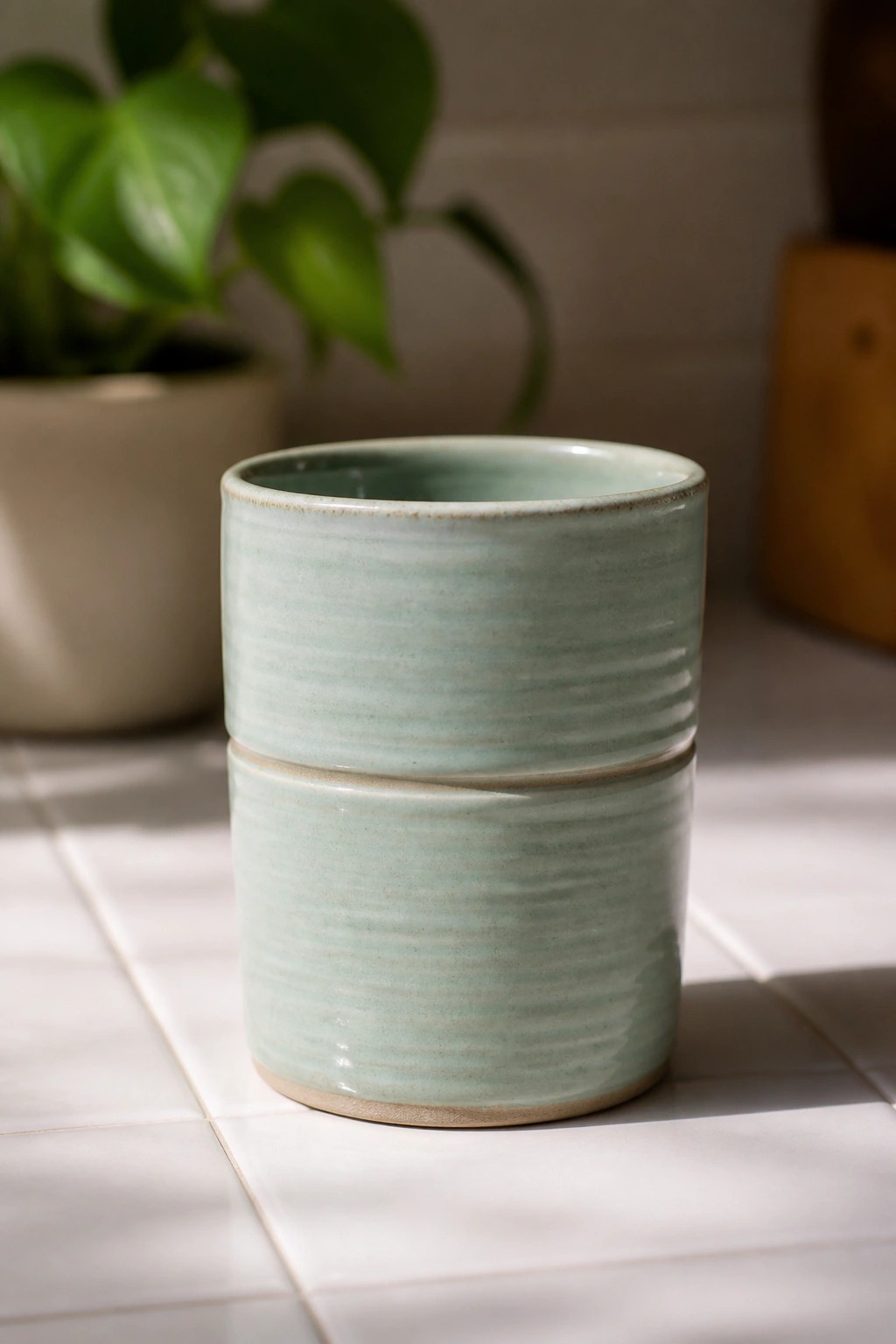
A wheel-thrown ceramic mug in a simple cylindrical form features a clear horizontal division around the middle that creates two stacked sections. The soft mint glaze sits over the natural throwing ridges, keeping the surface minimal while adding subtle texture through the clay itself. This approach belongs to the category of handle-less mugs that emphasize clean shape and restrained surface detail over added decoration or color patterns.
The shape does a lot of the work here by letting the ridge serve as both a visual break and a practical grip point. You could adapt the same form by using a matte glaze on the lower half and a glossy one above to change the look without extra carving. In a kitchen or on a desk, this size stays compact for daily drinks or small storage while still reading as intentional rather than plain. The design would translate easily to a taller version for a toothbrush holder or a shorter one for a ring dish.
Rounded Mug with a Single Base Dot
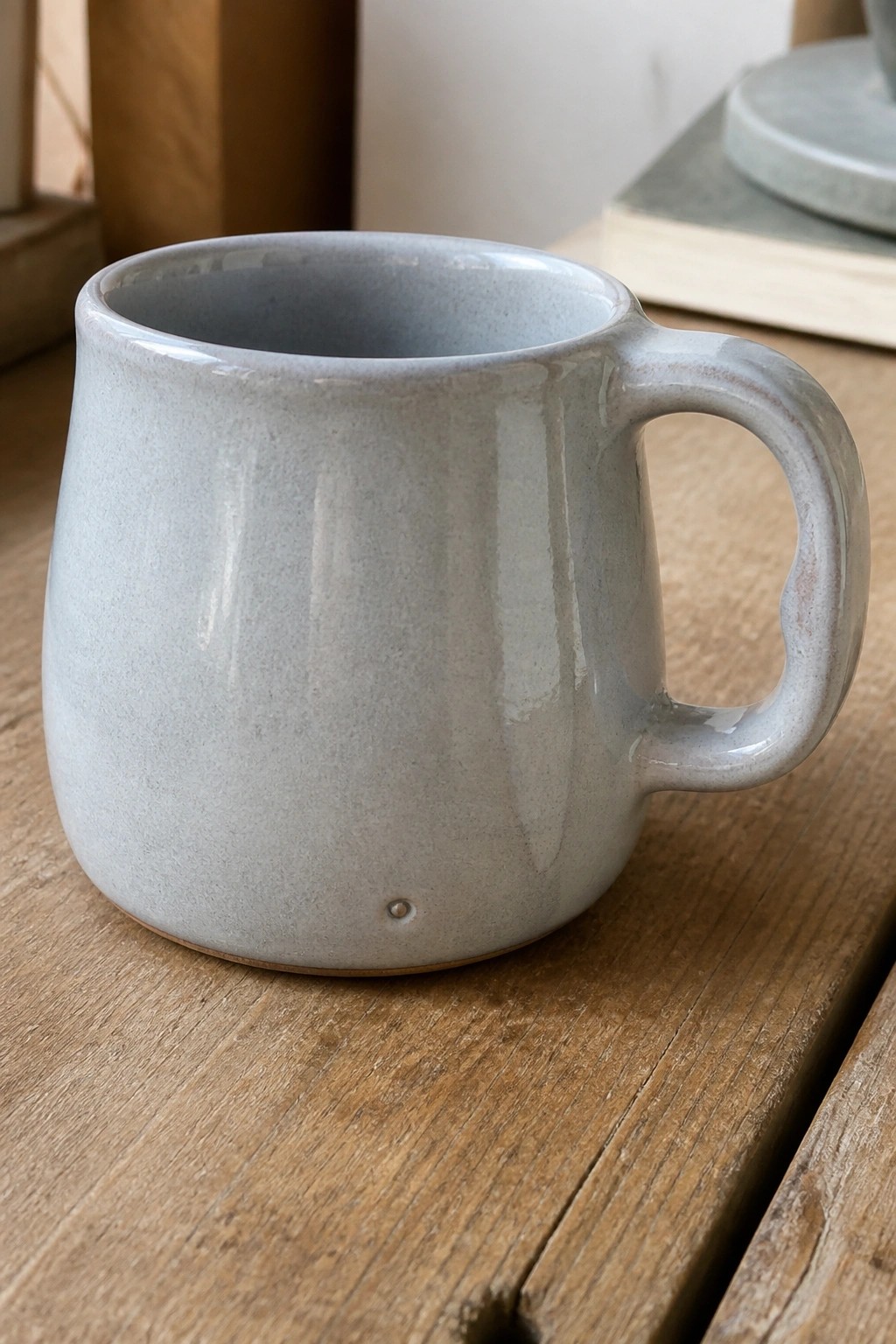
A handmade ceramic mug with a softly rounded body and tapered profile keeps the overall form simple and balanced. The light gray glaze sits evenly across the surface with just enough variation to show the clay underneath. A single small dot impressed near the base provides the only surface detail, keeping the design firmly in the minimalist mug category. This approach works because the shape carries the visual weight while the dot prevents the surface from feeling completely blank.
What makes this idea useful is how the rounded form feels comfortable to hold and fits standard cup sizes for daily use. You could adapt the same shape with a different neutral glaze or move the dot placement slightly higher for a fresh variation. In a kitchen or on an open shelf, this mug blends with other plain ceramics while the tiny mark gives it a quiet point of difference. The same dot detail could transfer easily to a small bowl or a matching creamer.
Two-Tone Mug with Exposed Clay Base
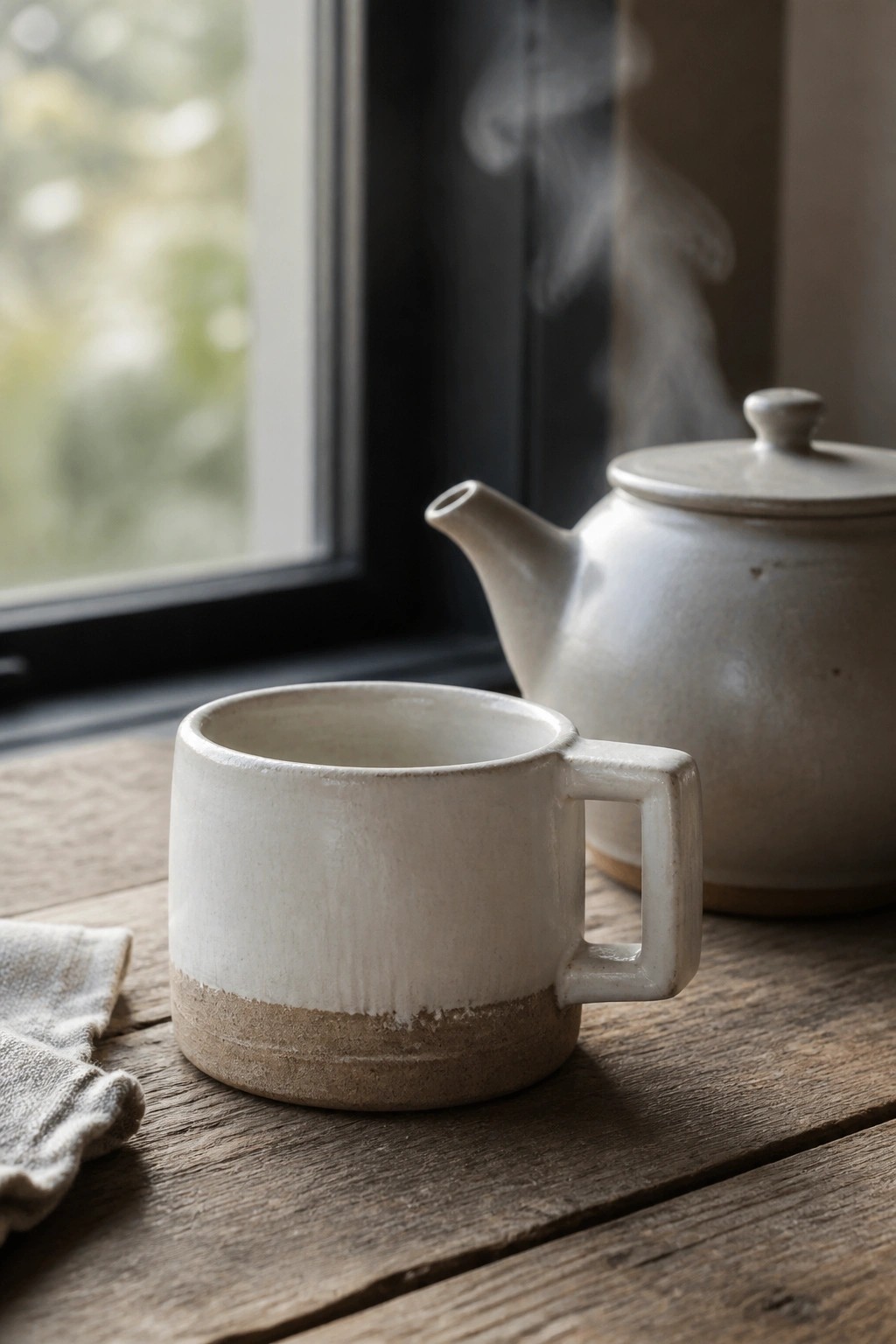
A handmade ceramic mug in a simple cylinder shape works well here because the upper half is covered in a matte white glaze while the lower section stays in its natural clay color. The squared handle keeps the overall form clean and easy to grip. This approach uses the contrast between glazed and unglazed surfaces as the main detail instead of added decoration or patterns.
What makes this idea useful is how the two-tone split can be adjusted by changing where the glaze stops. The same shape works for everyday coffee or tea without feeling fussy. You could rework the idea into a smaller espresso cup or a slightly taller tea mug by keeping the exposed base and simple handle. In a kitchen, the natural clay section also helps hide minor wear over time.
Tapered Mug with Incised Base Lines
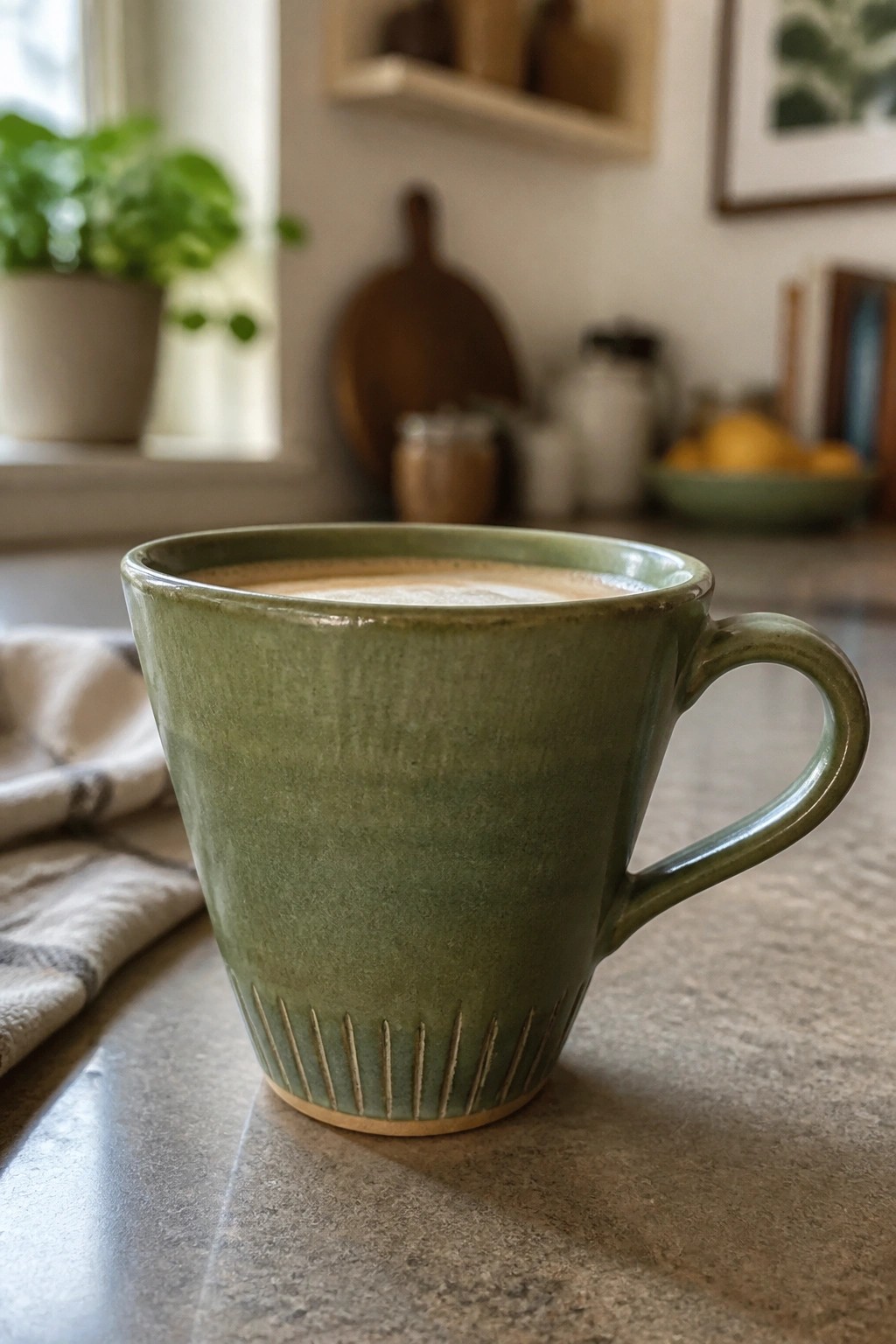
A tapered ceramic mug uses a simple wheel-thrown form that narrows slightly toward the foot before flaring at the rim. Vertical incisions cut into the lower third add a clean geometric detail without breaking the smooth surface above. The single matte green glaze unifies the piece while letting the base lines catch light and shadow for subtle contrast. This fits the minimalist mug category by limiting decoration to one small area.
What makes this idea useful is how the base incisions can be adjusted in spacing or depth to suit different mug sizes. The shape works well for daily drinks because the taper fits comfortably in the hand and the detail keeps the form from feeling plain. You could repeat the same lines on a shorter tumbler or switch to a matte white glaze for a lighter look. For Pinterest, the focused base texture stands out in a feed of otherwise plain mugs.
Terracotta Mug with Circular Handle
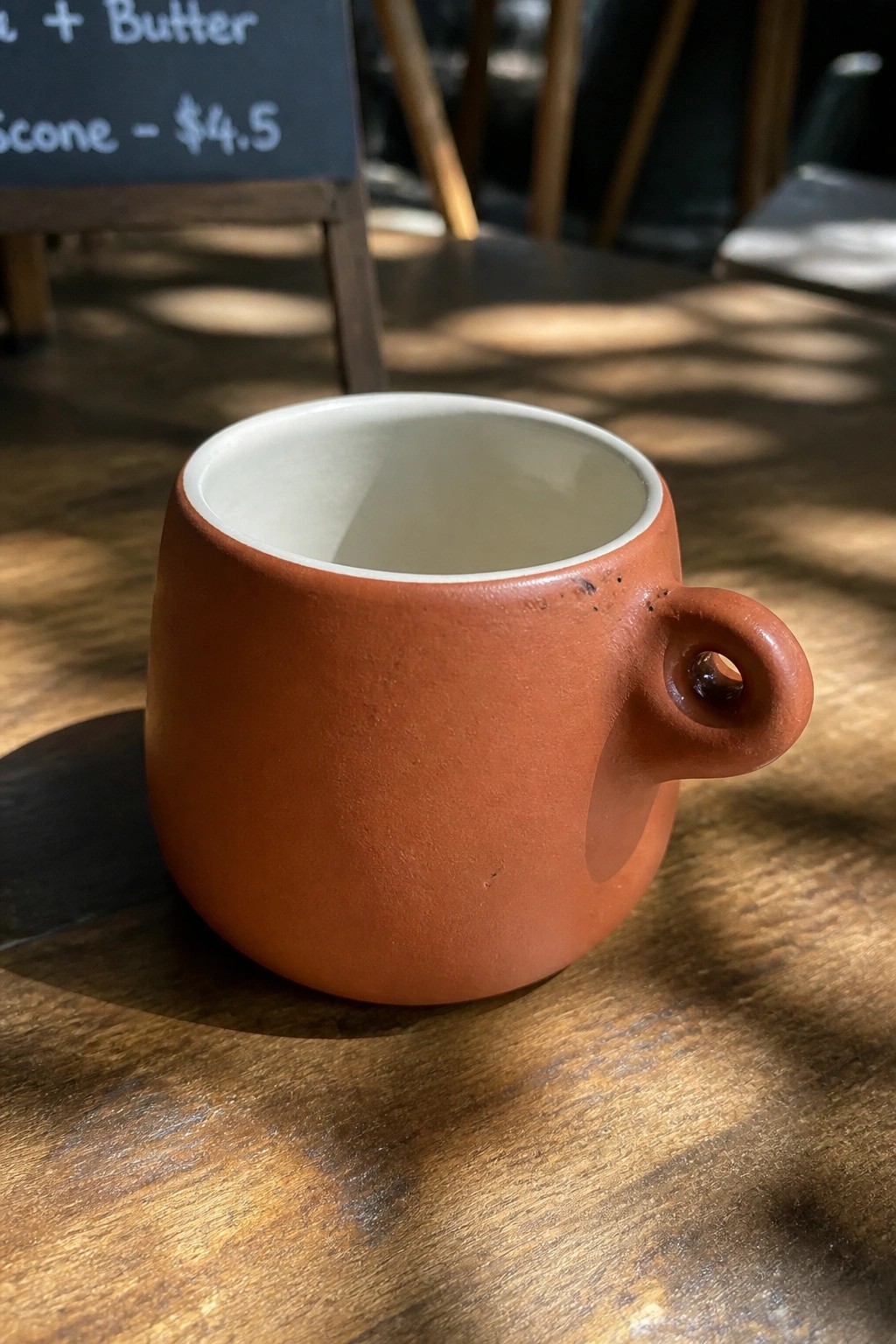
A small ceramic mug formed from red clay uses a rounded, slightly irregular body paired with a simple loop handle that creates an open circle. The exterior keeps the raw clay color while the interior is coated in a plain white glaze to create a clean contrast. This design fits the minimalist mug category by relying on basic form and limited surface treatment rather than added decoration.
What makes this idea useful is the compact scale that works for espresso, tea, or small portions without taking much shelf space. The open handle detail can be adapted by varying the loop size or trying it on a slightly taller shape for a different mug style. In a kitchen this piece blends with neutral dishware and translates easily to other small forms like a creamer or match holder.
Small Spouted Cup with Thrown Texture
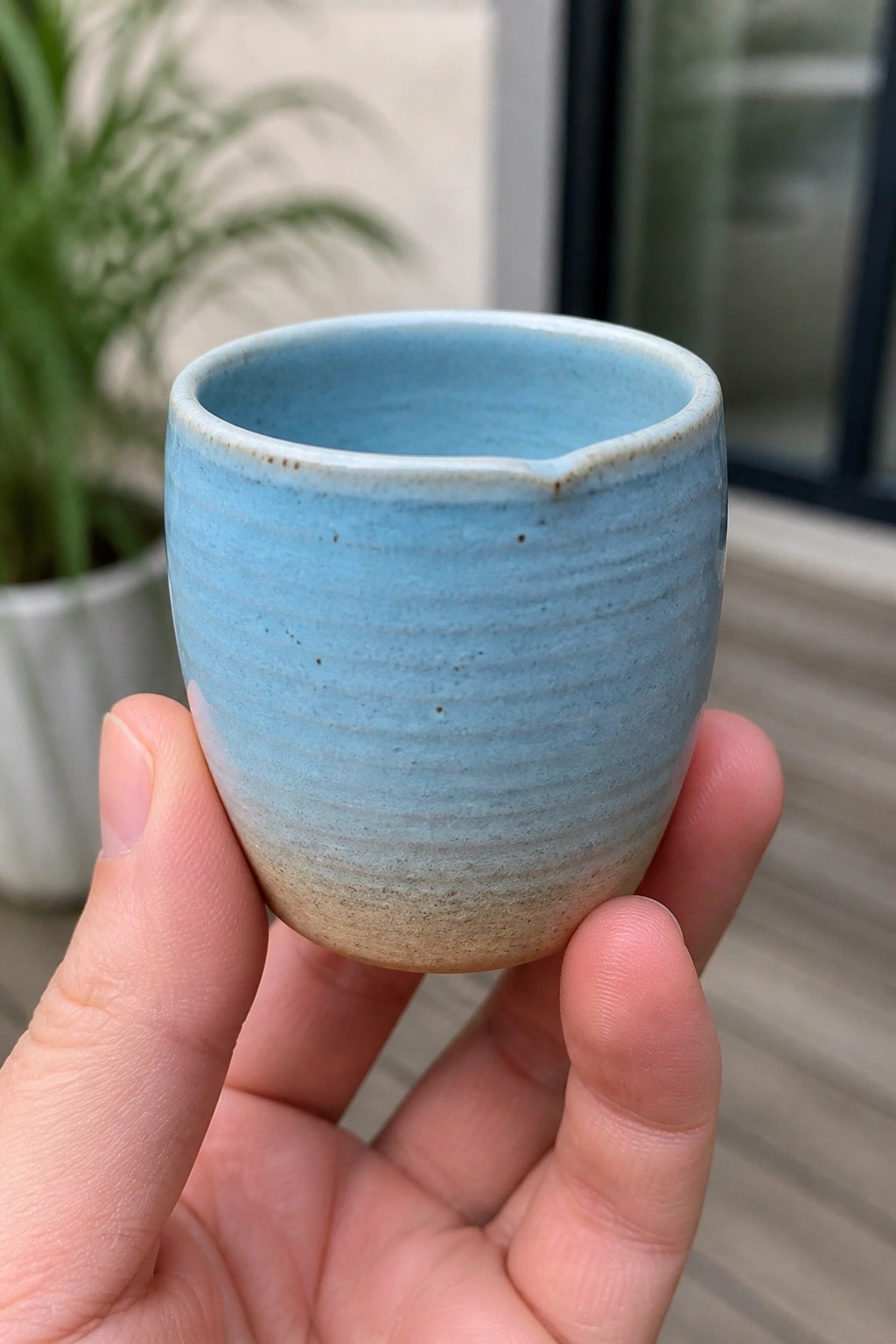
A small wheel-thrown cup with a simple pouring spout offers a clean way to add function without extra parts. The horizontal ridges left from throwing give the surface its only decoration, while the soft blue glaze stops short of the base to leave the clay visible. This keeps the form compact and easy to hold, making it work as a single-serve vessel rather than a full mug.
The spout turns the cup into something useful for cream, milk, or small pours at the table. You could repeat the same shape in different glaze colors or skip the spout to make a plain tumbler. The small size also means it takes up little kiln space, so it is a practical piece to test new clay bodies or glazes.
Two-Tone Split Glaze Mug
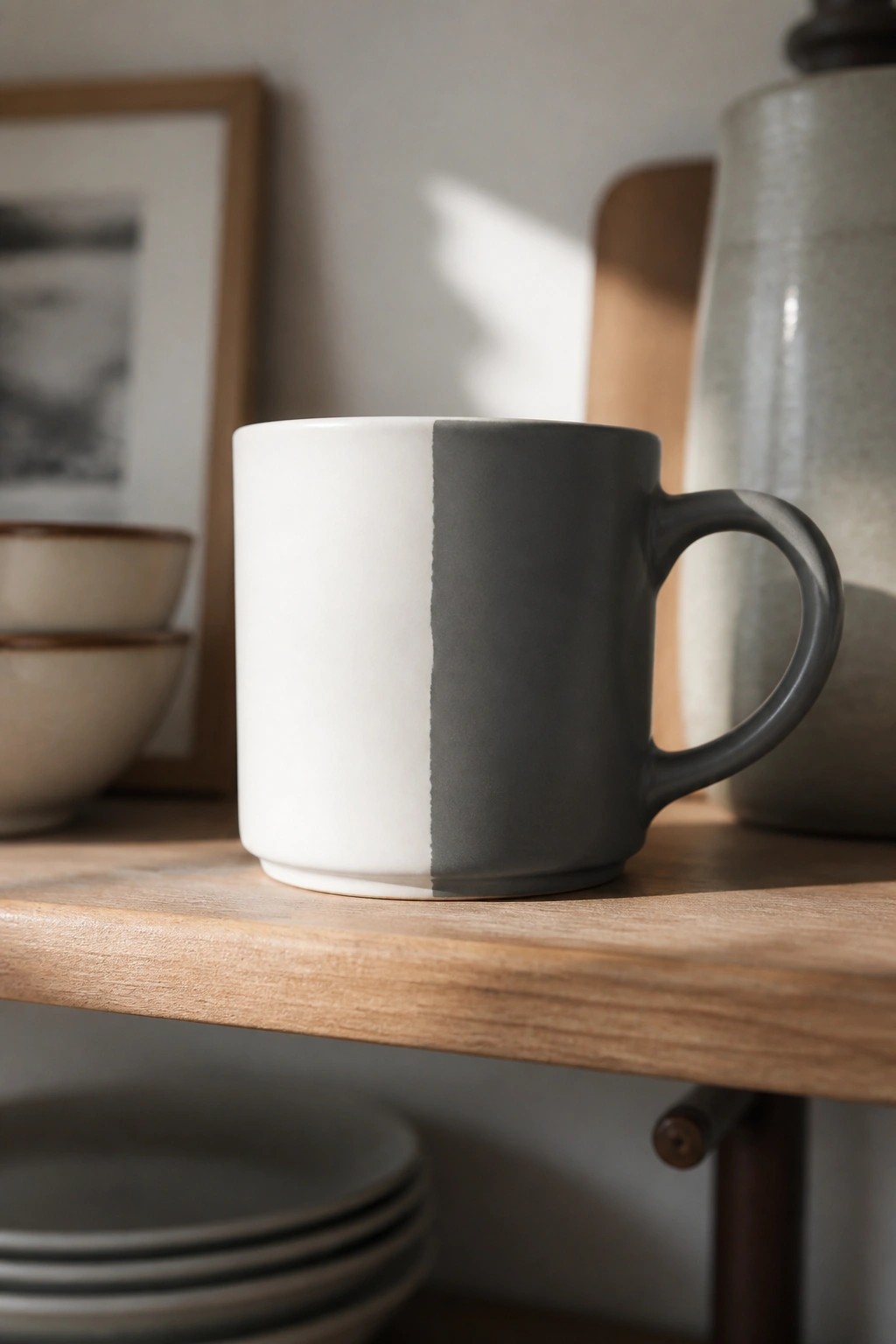
A wheel-thrown mug finished with a vertical split glaze, one side left in white and the other coated in a solid dark gray. The straight division runs from rim to foot, keeping the surface flat and the shape unchanged. This kind of design uses only color placement to create interest on an otherwise plain cylinder.
What makes this idea useful is how simple the masking step is when glazing, so you can test different color pairs without changing the form. It works especially well on open shelves where the contrast shows up from across the room. The same split can be rotated to a horizontal band or repeated on a small pitcher to build a quick set.
Speckled Neutral Mug with Simple Rim
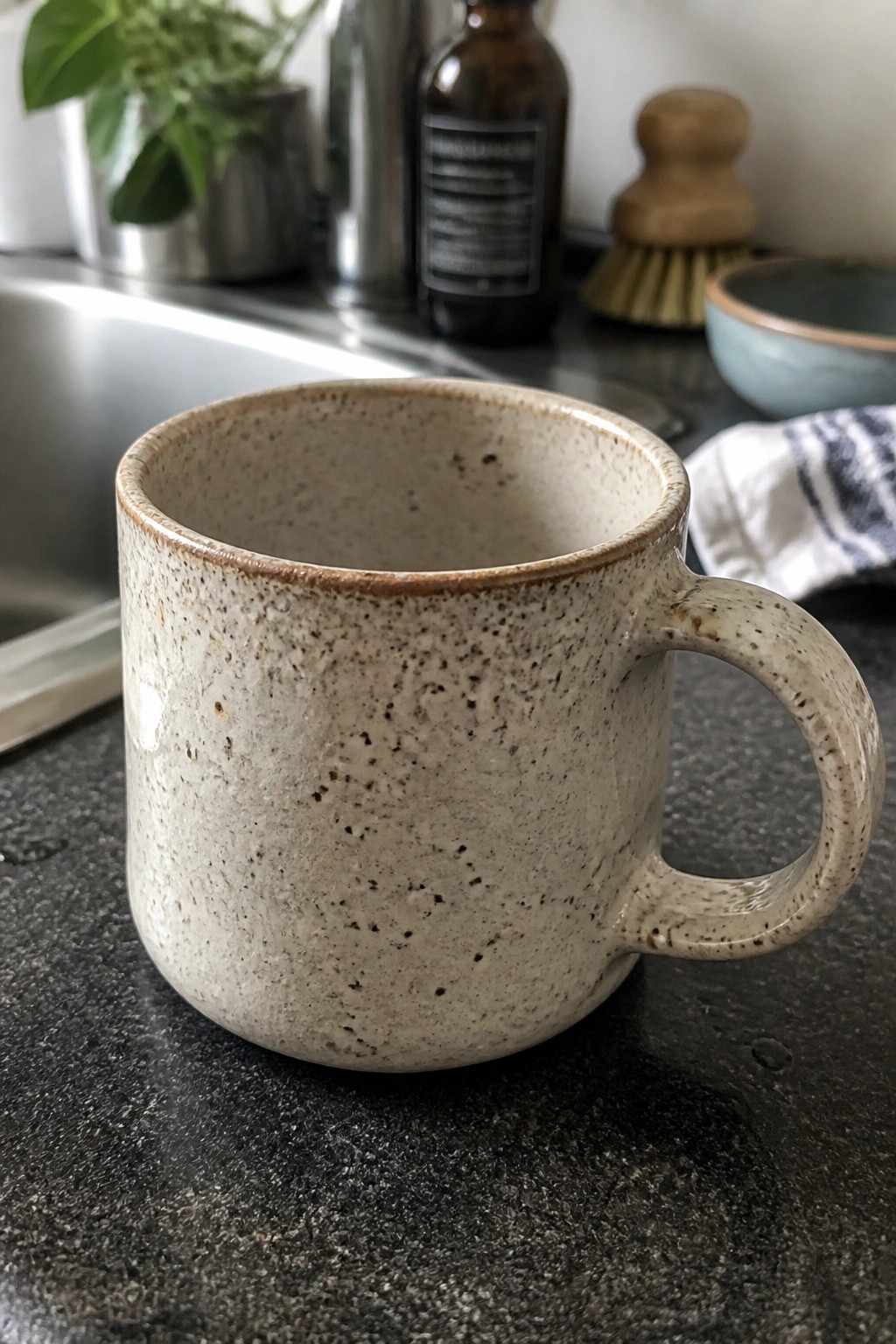
A handmade ceramic mug in a basic cylindrical form keeps the focus on clean lines and minimal surface detail. The speckled off-white glaze creates subtle texture across the body while a narrow brown rim adds a single point of contrast. This approach fits squarely into minimalist mug designs that rely on material and form rather than added patterns or handles with complex curves.
The shape works especially well for daily kitchen use because it stacks easily and feels balanced in the hand. You can adapt the speckled effect by testing different clay bodies or commercial additives on your next batch of mugs. In a neutral kitchen it blends with other plain ceramics yet still registers as intentional because of the texture. The same idea scales down easily into smaller cups or can be repeated across a set for a cohesive look on open shelving.
Minimalist Mug with a Subtle Rim Notch

A handmade ceramic mug in a simple cylinder shape keeps the focus on clean proportions and light surface texture. The speckled matte glaze shows natural clay tones without added decoration, while a small notch in the rim creates a quiet detail that can help with pouring. This approach fits the category of everyday mugs that rely on form and restrained surface treatment rather than pattern or color.
What makes this idea useful is how the basic cylinder and single rim detail translate easily to different sizes or clay colors. The notch works especially well on a standard drinking mug because it adds function without complicating the wheel-thrown form. You could adapt the same idea to a larger soup mug or a shorter coffee cup by changing height and wall thickness while keeping the rim treatment as the only accent.
Matte Glazed Mug with Exposed Clay Foot
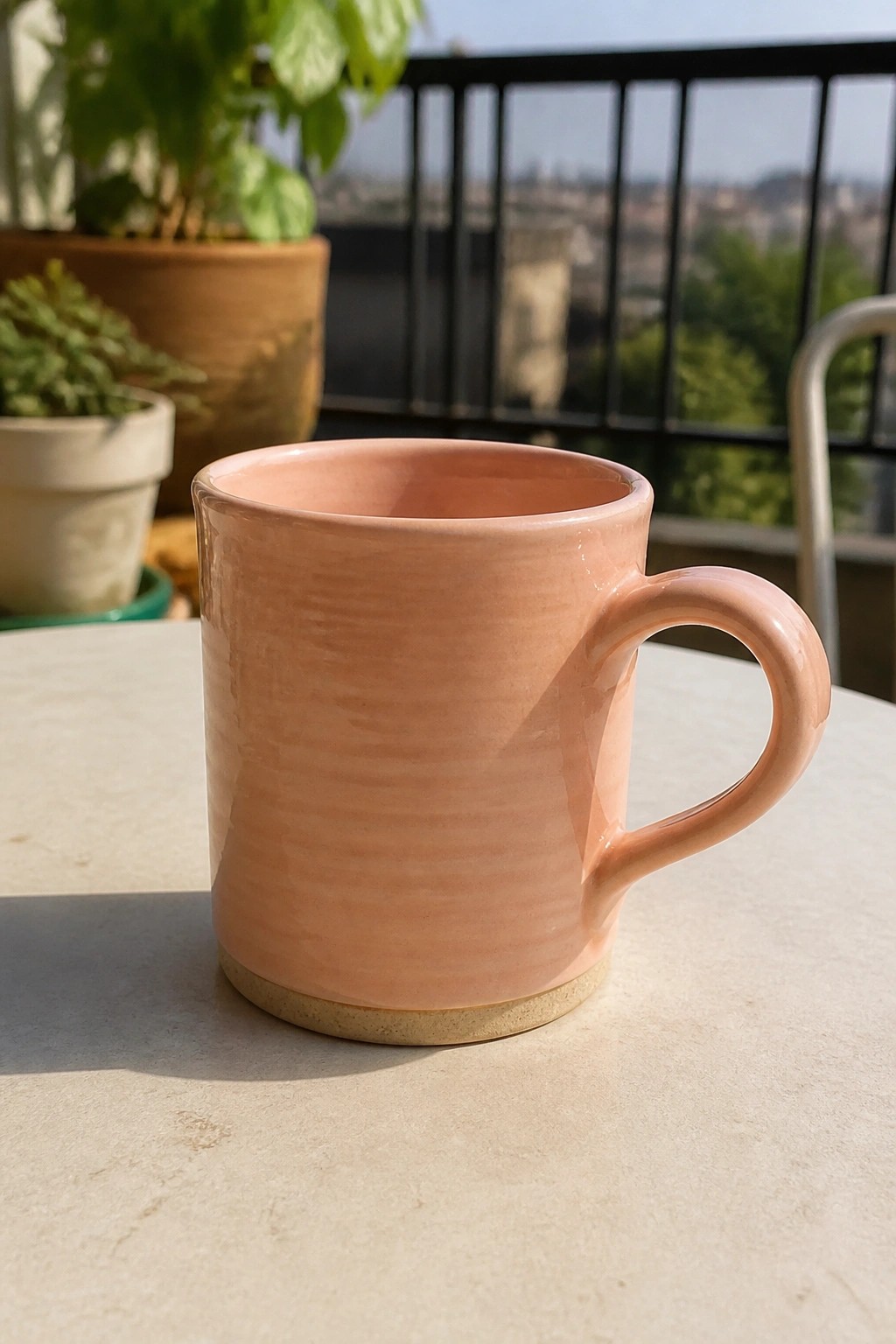
A wheel-thrown mug in this style uses a simple cylindrical form that tapers gently toward the base. The matte glaze in a warm peach tone covers the main body while leaving the foot unglazed to reveal the natural clay. Subtle horizontal ridges from the throwing process remain visible under the glaze and add quiet surface interest without added decoration. This keeps the design minimal and highlights the handmade shape.
The shape does a lot of the work here since the proportions feel balanced for daily use and the handle sits at a comfortable angle. You could adapt the same idea by switching to a different matte glaze color or making a shorter version for espresso. In a kitchen cabinet or on an open shelf the unglazed foot gives it a grounded look that pairs with other plain ceramics. This approach shows up well in photos because the limited palette and clean lines keep the focus on the form.
Neutral Mug with Subtle Incised Bands

A handmade ceramic mug in a simple cylindrical shape uses a warm off-white glaze to keep the surface quiet. Two thin horizontal lines carved near the rim provide the only surface detail and create a clean break in the otherwise plain form. The slightly textured finish helps the glaze catch light softly without adding shine or pattern. This kind of design stays firmly in the minimalist category by letting the mug’s shape and restrained markings do the work.
The shape does a lot of the work here because the wide base and sturdy handle make the mug practical for everyday coffee or tea. You could adapt the same two lines on a taller tumbler or a small pouring jug by moving them lower or spacing them farther apart. In a kitchen this mug blends easily with other neutral pieces on open shelves while the lines give it enough definition to photograph well for Pinterest. For a first attempt at surface detail, the narrow grooves are straightforward to add with a basic tool before glazing.
Speckled Mug in a Soft Yellow-Green Glaze
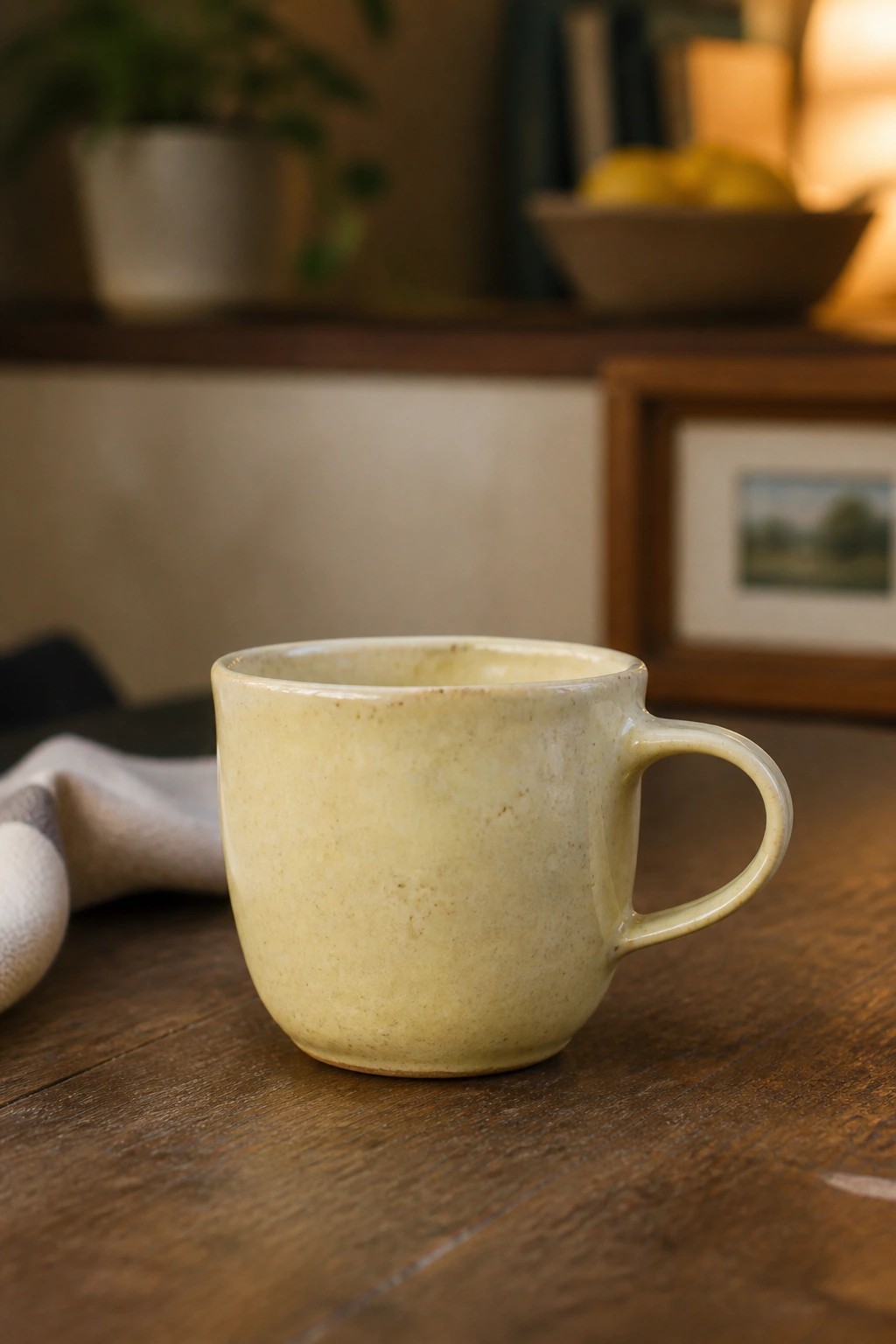
A handmade ceramic mug with gently rounded walls and a simple pulled handle. The pale yellow-green glaze sits matte with tiny dark specks scattered across the surface, giving quiet texture while keeping the overall form clean. This approach works well for minimalist mug designs because the color stays calm and the surface detail comes from the clay rather than added decoration. The slightly organic rim and handle curve keep it from looking too perfect.
What makes this idea useful is how the muted tone pairs with both light and dark table settings without competing. You could rework the same shape in other soft earth tones or stretch it taller for a different capacity. The speckled effect needs no extra painting, so it stays straightforward to repeat on a wheel or with slabs. In a kitchen this kind of mug holds up for daily use while still looking intentional on open shelving.
Frequently Asked Questions
What clay types work best for achieving simple forms in minimalist pottery mugs?
Stoneware or porcelain clays are ideal because they offer smooth consistency and hold clean shapes well during throwing or hand building. Start with a mid fire stoneware for durability in daily use, and wedge it thoroughly to remove air pockets. This helps maintain the minimalist aesthetic without unwanted cracks or textures appearing after firing.
How do I create clean surface details without adding extra decorations?
Focus on precise trimming and smoothing techniques right after the mug is leather hard. Use a metal rib tool to gently scrape the surface while it rotates on the wheel, followed by a damp sponge for a final polish. Avoid any stamps or carvings, and let the natural clay color or a single matte glaze provide the subtle finish that defines these designs.
Which minimalist mug shapes are most beginner friendly to replicate at home?
Cylinder or slightly tapered forms are easiest since they require fewer adjustments on the wheel. Begin by centering a small amount of clay and pulling up walls evenly to about 4 inches tall. Practice with basic templates to keep proportions simple, then refine the foot and rim for balance without complex curves.
What glazes complement clean surface details on minimalist pottery?
Matte or satin glazes in neutral tones like white, gray, or soft beige work well because they highlight form rather than distract from it. Apply one thin layer with a brush or dip method, and wipe away any drips immediately. Test on sample tiles first to ensure the glaze does not run or create unintended speckles during firing.
How should I care for these mugs to preserve their simple appearance over time?
Hand wash with mild soap and avoid abrasive scrubbers that could scratch the surface. Dry them completely before stacking to prevent moisture related marks. For long term storage, keep them away from extreme temperature changes, which helps maintain the clean lines and unglazed or lightly glazed areas without chipping.

Pottery Path is my cozy corner of the internet where I share clay ideas, pottery inspiration, and simple projects you can recreate at home. I love exploring everything from air dry clay to handbuilt pottery to cute minis that brighten your day. My goal is to make clay crafting feel easy, fun, and welcoming for anyone who wants to try it.
You will find beginner friendly tutorials, creative pottery painting ideas, and lots of warm inspiration for slow and happy crafting. If you enjoy hands on creativity, this space will feel like home.