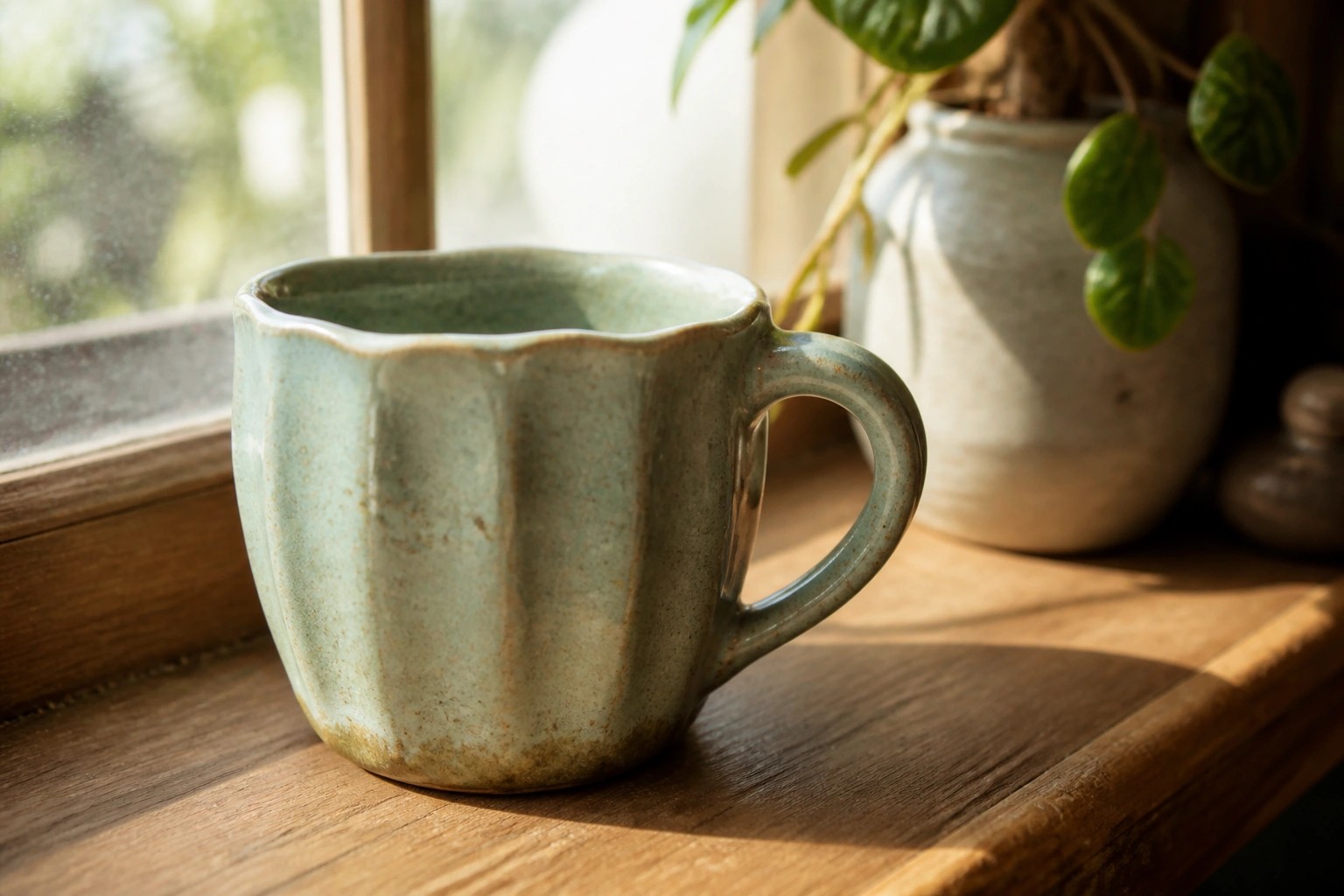
I have been making pottery mugs for a while now and I often find myself trying out different shapes just to see how they turn out.
Some forms feel nicer in the hand while others look better sitting on a shelf with the rest of my pieces.
I started keeping track of the ones that seemed to give my collections a bit more variety without being too complicated to throw.
These twenty shapes are ones I have tried or seen in other studios and thought were worth noting.
They are not all going to work for everyone but they show there is more than one way to make a simple mug.
Fluted Ribbed Mug
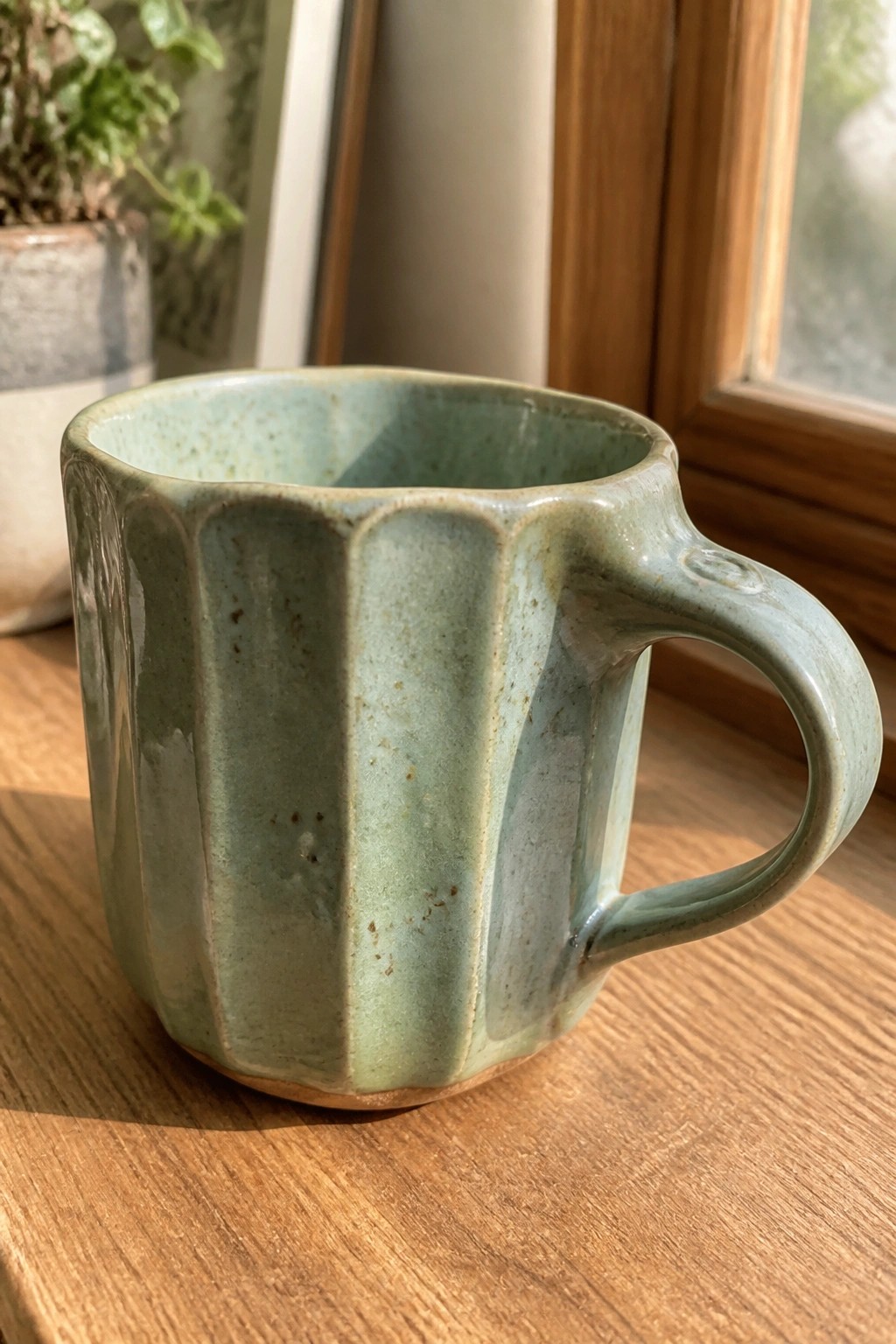
A handmade ceramic mug shaped with vertical flutes around the body creates built-in texture through simple form rather than added surface details. The ribs run from the base up toward the rim, allowing glaze to settle in the grooves and produce natural variation in tone. This shape turns an ordinary mug into a more distinctive piece while keeping it fully functional for daily use.
The shape does a lot of the work here because the flutes catch light and shadow from any angle, making the mug photograph well for online sharing. You could adapt the same rib pattern to a shorter tumbler or a taller travel mug by adjusting the depth of the grooves. In a kitchen or on a desk, this style stands out next to smooth mugs without requiring extra glazing techniques.
Mug with Organic Side Indentation

A handmade ceramic mug works well when the body is thrown or handbuilt into a rounded, slightly flattened form and then pressed inward on one side to create a visible indent. This sculptural detail adds depth and a tactile quality without requiring extra tools or complex attachments. The dark matte glaze highlights the curve while leaving the lower edge and foot in a lighter clay tone for contrast.
The shape does a lot of the work here because the indent turns an otherwise simple mug into something distinct that still functions normally for coffee or tea. Try pressing the clay at different angles or depths during the leather-hard stage to change the look without altering the overall size. A piece like this fits easily into a kitchen cabinet or on a desk and can be scaled down for smaller cups or adapted into a small pouring vessel by adjusting the rim. The same indent technique could be applied to a bowl or vase to create a matching set.
Tapered Mug with Flared Rim
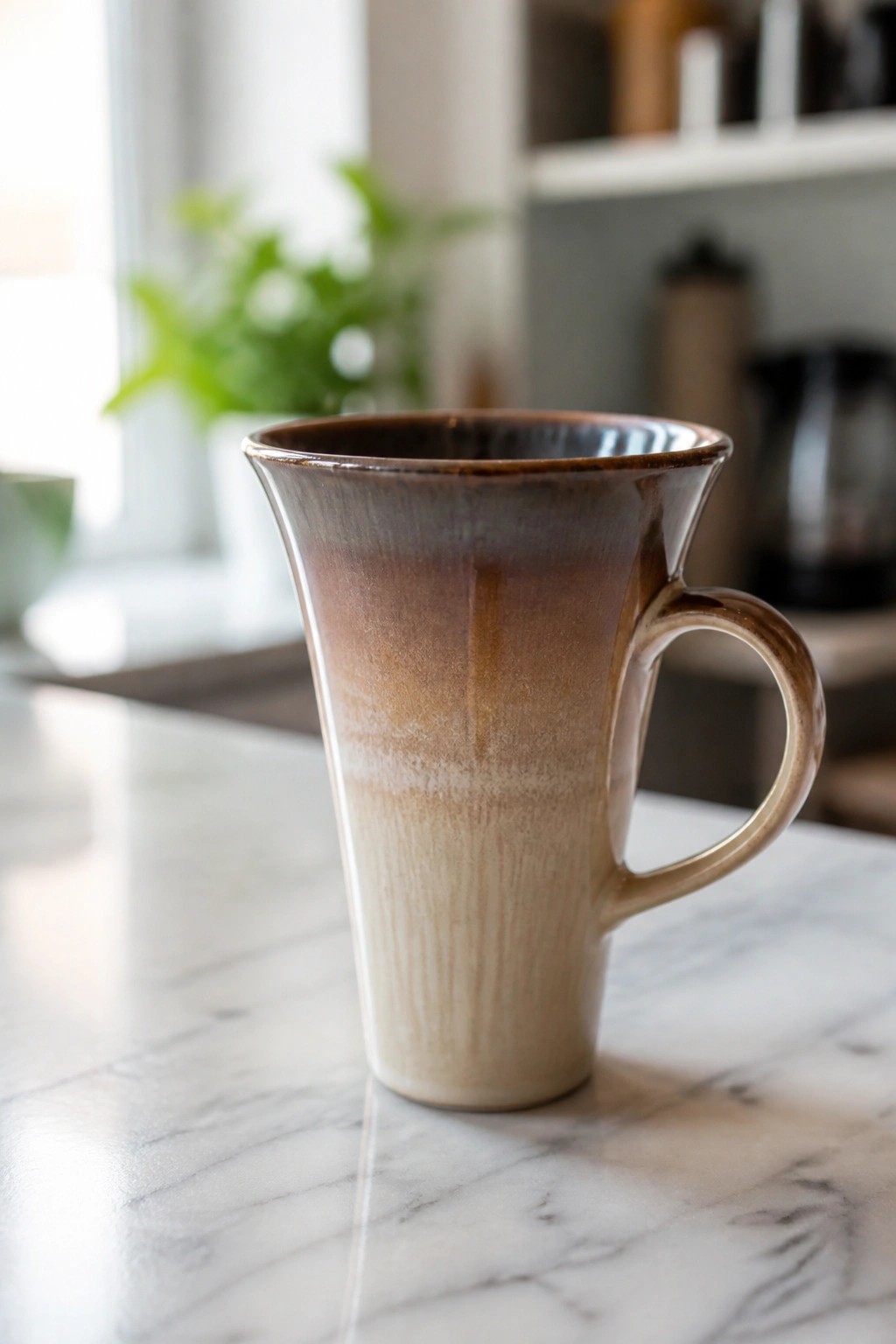
A tall ceramic mug shaped with a wide flared opening and a gradual taper down to a narrower base creates a simple but striking form. The design uses a horizontal gradient glaze that moves from dark brown at the rim through medium tones into a light beige at the bottom, letting the surface texture show through in subtle vertical streaks. This approach keeps the focus on the silhouette and color shift rather than added carving or patterns.
What makes this idea useful is how the wide mouth works well for drinks that benefit from a bit of surface area, such as coffee or herbal tea. The same taper can be adjusted by shortening the height or changing the flare angle to suit different hand sizes. In a kitchen, this shape sits nicely on open shelves where the glaze transition catches light. You could rework the gradient into other colors or apply it to a smaller espresso version for variety.
Faceted Geometric Mug

A faceted mug uses flat planes cut into the clay to form a many-sided shape instead of a smooth curve. Each plane meets at crisp angles, and the deep green glaze settles into the edges to make the geometry stand out. The handle follows the same faceted style so the whole piece stays consistent. This approach turns a simple drinking vessel into a clear geometric object that still functions as a mug.
What makes this idea useful is how the faceted form gives a basic mug a distinct profile without adding extra parts. You can adapt it by reducing the number of sides for a quicker build or by switching the glaze color to match different kitchen styles. The shape works well for daily coffee or tea and also stands out in photos for collections or gifts. The same faceting can be tried on small bowls or pitchers to create a set that feels connected.
Bulbous Mug with Painted Floral Vines

A rounded ceramic mug with a gently swelling body and sturdy pulled handle gives the form a comfortable weight in the hand. The surface carries a loose arrangement of blue flowers and scrolling vines alongside ochre leaves that follow the curve of the clay without filling every space. An off-white base glaze keeps the painted lines clear while the slight texture from the making process shows through.
What makes this idea useful is how the rounded profile supports both drinking and display without needing extra details. You can scale the same shape down for smaller cups or stretch it taller for a tumbler while keeping the vine layout as a guide. The painted elements also adapt well if you swap the brown leaves for another accent color or simplify the flowers into basic outlines. In a kitchen or on open shelving this size sits nicely alongside other mugs without dominating the space.
Speckled Mug with Contrasting Clay Base

A basic cylindrical mug gains character through a speckled off-white glaze that covers most of the surface while leaving the lower section in raw clay. The dark flecks create a scattered pattern that breaks up the smooth form without requiring carving or added details. This approach belongs to the category of textured everyday mugs where glaze variation supplies the visual interest.
What makes this idea useful is that the speckled effect can be adjusted by changing the amount of dark granular material mixed into the glaze. The shape fits daily kitchen use and stacks reasonably well for storage. You can rework the same idea by keeping the speckles only on the top two-thirds and extending the raw clay section higher for a different balance.
Pedestal Base Mug

A handmade ceramic mug with a wide rounded body that narrows into a short pedestal foot gives this shape its main character. The foot creates a lifted, balanced profile that sets the mug apart from standard flat-bottom designs while keeping it stable on a surface. A simple pulled handle completes the form without competing with the silhouette. The glossy brown glaze with slight color shifts adds depth without extra decoration.
The shape works especially well for everyday drinking mugs because the pedestal makes the piece easier to pick up and move. You can adapt the idea by changing the height of the foot or adjusting how wide the bowl sits above it to suit different cup sizes. This style also translates easily to smaller espresso cups or larger soup mugs if you want to repeat the form across a set. On a shelf or table the lifted base helps the mug read as more intentional than a basic cylinder.
Mug Featuring a Sculpted Leaf Handle

A handmade ceramic mug works well here because the body stays simple while the handle becomes the main feature. The handle is formed as a large leaf with raised veins that catch the light and give it dimension. A soft green glaze covers the whole piece and helps the leaf detail stand out without extra painting.
The shape does a lot of the work here because the leaf handle turns an ordinary mug into something worth noticing in a collection. This idea adapts easily by changing the leaf style or trying a different plant motif like a fern or vine. It fits nicely on a kitchen shelf or as a small gift that feels personal but does not require advanced techniques. The same handle concept could be scaled down for a small pitcher or used on a matching bowl set.
Stackable Cylinder Mugs
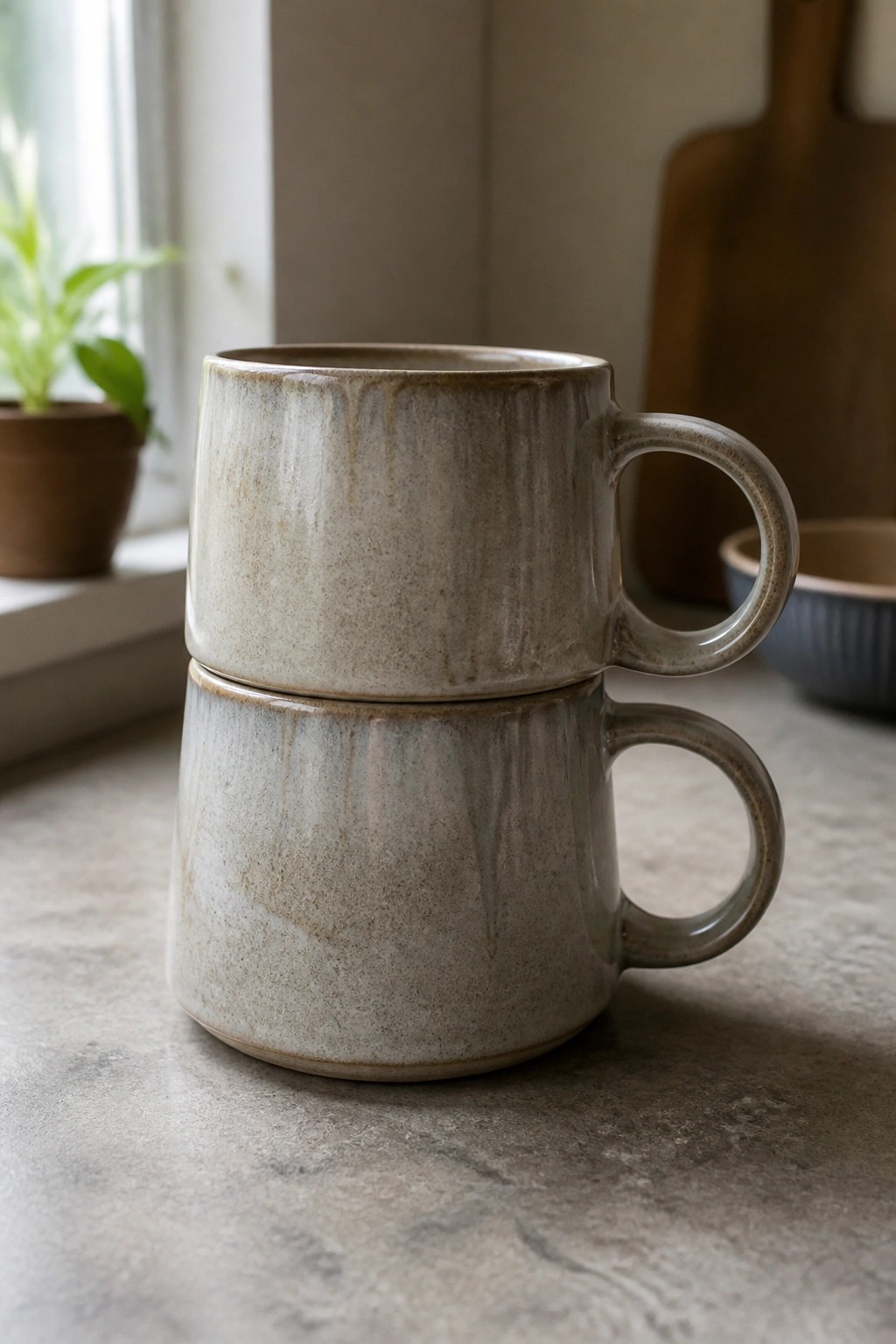
Cylindrical mugs with straight walls are easy to stack because the flat base of one sits securely inside the rim of the one below. The speckled glaze with soft vertical drips adds surface variation without changing the simple form. Loop handles stay clear of the stack so multiple mugs can sit neatly together on a shelf or in a cabinet. This shape works as a practical mug idea that solves storage while keeping a clean profile.
What makes this idea useful is the straight-sided form that lets you build a set without extra space between pieces. You can adjust the height for different drink sizes or repeat the same glaze on bowls to create matching sets. In a kitchen with limited counter space, these stack cleanly on open shelves and still read as a deliberate collection. The same cylinder can be shortened into a small creamer or lengthened into a travel mug with only minor changes to the handle placement.
Mug with Raised Dimple Texture

A handmade ceramic mug uses a heavily textured surface where small raised circles are formed directly in the clay before glazing. The speckled glaze in warm beige, orange, and brown tones settles into the depressions, emphasizing the irregular pattern without added paint or carving. This fits the category of surface-textured mugs that gain their character from the clay manipulation itself rather than from shape changes or applied decoration.
What makes this idea useful is how the raised dots create a natural grip for everyday handling. You can adapt the same dimpling method to different sizes by spacing the circles farther apart on larger forms or tighter on smaller cups. In a kitchen, the earthy speckled finish helps the mug blend with other rustic pottery while still reading as handmade. The approach also translates easily to matching bowls or pitchers using the same clay texture.
Ridged Cylinder Mug with Blue Interior

A handmade ceramic mug in a straight cylinder shape uses horizontal ridges pressed into the exterior for texture. The matte off-white surface keeps the outside simple while a light blue glaze covers the smooth interior and rim. This contrast highlights the form without adding handles or extra details.
The ridges give the mug a better grip and make it stand out in a group of plain cups. You can adapt the same shape by changing ridge spacing or trying a different interior color to match existing dishes. It works well as a daily coffee cup or a small desk holder, and the straightforward cylinder is easy to throw in batches for gifts or collections.
Lidded Mug with Cork Sleeve

A straight-sided ceramic mug uses a fitted lid with a rounded knob to create a closed drinking vessel. The dark blue glaze shows subtle streaking and speckling across the surface, while a wide cork band wraps the middle of the body to add grip and a change in texture. This approach turns a basic cylinder into a practical mug shape that works for hot drinks kept covered.
The cork band lets the same mug form serve both indoor and outdoor use without extra parts. You can adapt the idea by making a shorter version for espresso or by swapping the lid knob for a flatter handle on a larger soup cup. The lidded shape keeps contents warmer on a desk or during short travel, and the added sleeve gives the piece a distinct look that photographs clearly for project boards.
Scalloped Rim Mug with Matching Saucer

A handmade mug shaped with a repeating scalloped rim creates a soft, undulating edge that gives the form more visual weight than a plain cylinder. The light speckled glaze covers the entire piece and its saucer in the same muted green tone, keeping the focus on the rim detail rather than surface decoration. This shape fits the mug category well because the wavy edge stays functional for drinking while making the profile distinct from standard wheel-thrown cups.
The shape does a lot of the work here by turning a basic mug into something that reads as intentional without extra carving or handles. In a kitchen, this kind of piece pairs easily with other simple dishware and can be made in sets by repeating the same rim tool across different sizes. The matching saucer adds a practical serving element that also protects surfaces from drips. For a gift, the same scalloped edge can be applied to a small creamer or sugar bowl to build a quick matching set.
Cat Face Mug with Paw Handle

A ceramic mug can be shaped with a rounded body and two small ears added at the rim to suggest a cat face. Painted or carved details for eyes, nose, and whiskers finish the front, while the handle is formed and marked to look like a cat paw with pads. This keeps the piece fully functional as a drinking mug while using simple sculpting to create the animal theme.
What makes this idea useful is how the paw handle can be swapped for other animal versions without changing the mug body. The compact size fits well on a kitchen shelf or desk and works as a quick gift for pet lovers. You could skip the sculpted ears and use only surface details if you prefer wheel-thrown forms. The clear handle motif helps the design show up clearly in photos for sharing.
Mosaic Tile Grid Mug

A ceramic mug gains structure from small square tiles in varied glazes arranged in a loose grid over the exterior. The tiles sit directly on the speckled clay body and use a limited palette of blues, greens, and browns to create contrast without covering the whole surface. This keeps the mug functional while adding a clear repeating pattern that reads as intentional rather than random.
What makes this idea useful is how the grid can be scaled up or down depending on the mug size you throw. The same layout works for a set of four if you repeat the color order or shift it slightly for variety. You could also carry the square motif onto a matching spoon rest or small tray using leftover tile pieces.
Organic Asymmetrical Mug

A wheel-thrown or handbuilt mug can be altered after throwing to create an asymmetrical body with an undulating rim. Pushing or pinching the walls produces a slightly flattened profile and uneven opening while keeping the form functional as a drinking vessel. The earthy terracotta glaze and visible horizontal texture lines emphasize the handmade surface without adding extra decoration.
What makes this idea useful is that the shape change requires only simple hand manipulation after the wheel or slab stage. You could apply the same pushing technique to create matching smaller cups or taller tumblers in a set. The irregular silhouette works especially well on open kitchen shelves where the varying edges create more visual contrast than uniform rounds. For a gift, this approach gives a single mug more presence without needing complex carving or multiple glaze layers.
Mug with Twisted Rope Handle
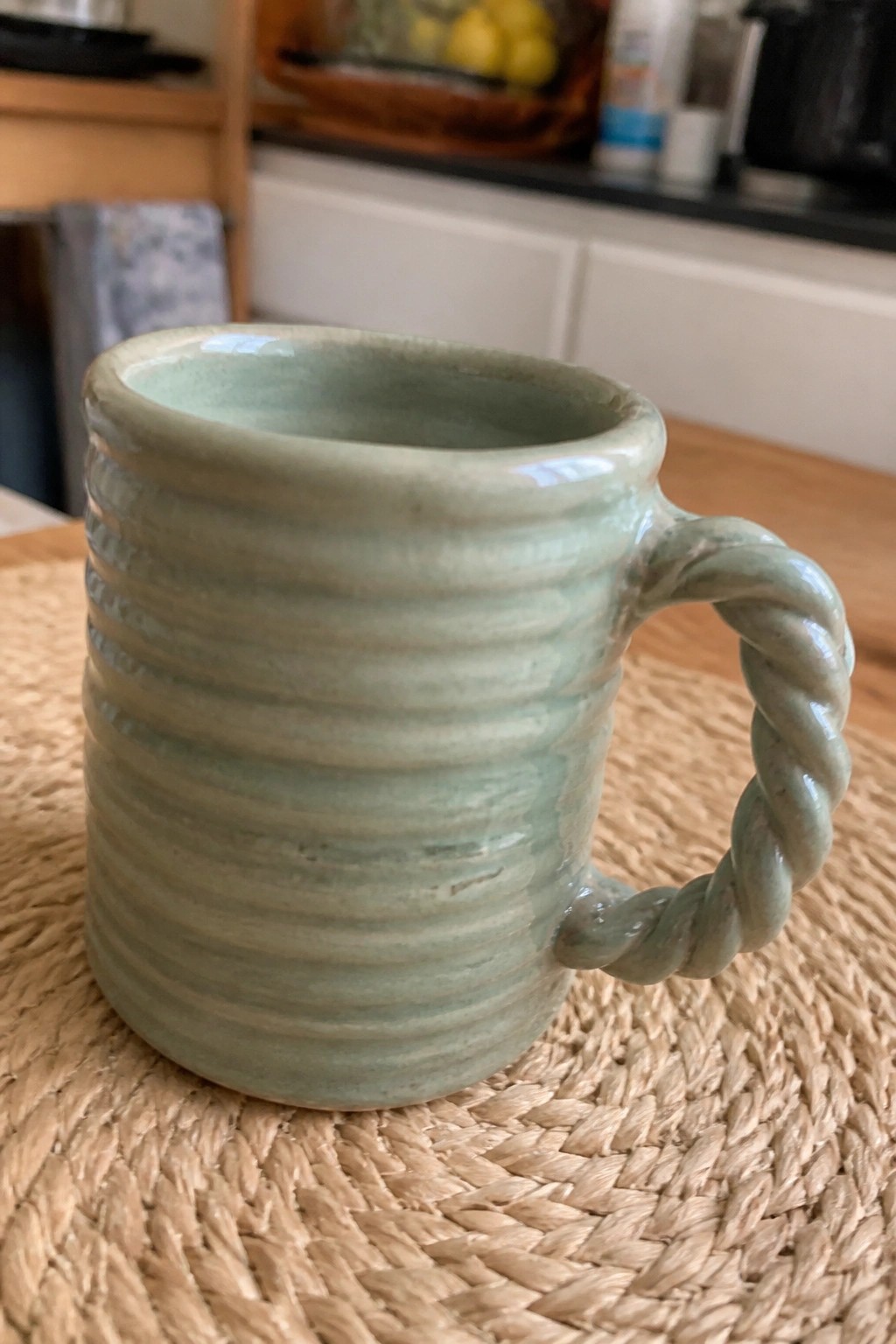
A mug formed with even horizontal ridges down the body and finished with a thick twisted handle creates a clear focal point through simple sculptural contrast. The handle is built to resemble coiled rope or braid, giving the piece a distinct silhouette that reads as intentional rather than plain. A single soft green glaze covers the ridges and handle evenly, letting the texture catch light without competing colors or patterns.
What makes this idea useful is how the twisted handle can be scaled up or down depending on the mug size you want to make. The ridged surface pairs easily with other kitchen pieces like matching sugar bowls or small pitchers that use the same coil detail. For a gift, you could swap the glaze for a matte finish or shorten the twist so the handle feels less bulky in daily use. The shape also photographs cleanly on its own, which helps when sharing finished work online.
Dimpled Hammered Mug

A standard wheel-thrown mug gains its character from a repeating pattern of rounded dimples pressed across the exterior. The dark brown glaze pools slightly inside each indentation, creating contrast between the raised edges and recessed spots while the lower section stays unglazed. This texture-focused approach keeps the overall form simple and functional while shifting attention to the surface treatment.
What makes this idea useful is that the dimple pattern can be added with a basic stamp or tool on any cylinder before trimming. The same texture adapts easily to taller travel mugs or shorter soup bowls by adjusting height and wall thickness. In a kitchen or on a desk, the tactile surface gives a clear grip point without needing added handles or ridges.
Abstract Brushstroke Mug

A ceramic mug with a rounded body and easy-grip handle gains interest from a cluster of blue brushstrokes applied around the lower half. The strokes vary in thickness and direction to suggest foliage, with a few dotted lines added for movement. Keeping the upper portion plain white lets the blue design remain the focus while preserving a clean drinking rim.
What makes this idea useful is that the low placement of the motif works on mugs of many sizes without interfering with the handle or lip. The painted detail can be simplified to fewer strokes or expanded into a fuller pattern depending on the maker’s preference. In a kitchen or on a desk, this style of mug stands out in a collection because the design reads clearly from a distance yet stays understated. For a gift, the same shape can be repeated with different brush colors to create a coordinated set.
Carved Mountain Landscape Mug

A wheel-thrown ceramic mug with a continuous relief scene of mountains and pine trees wrapped around the exterior. The design uses raised and recessed areas to show layered peaks, evergreen silhouettes on one side, and a simple circular form above the range. A single speckled blue-green glaze covers the surface and settles into the carved lines to make the landscape stand out.
What makes this idea useful is how the relief carving turns a basic cylinder into a textured piece without extra colors. The shape holds up well for daily coffee or tea use while the nature scene works in a kitchen or desk setting. You could adapt the same approach by changing the trees to cacti or swapping the mountains for rolling hills to match a different location. The integrated pattern also photographs clearly for sharing, which helps it gain attention in mug collections.
Frequently Asked Questions
What factors should I consider when selecting a pottery mug shape for everyday use? Focus on handle comfort for a secure grip, a balanced lip for easy sipping, and a stable base to prevent tipping. Shapes with wider bottoms often feel more secure on tables, while ergonomic curves reduce finger fatigue during extended use.
How can unique mug shapes enhance the aesthetic of a handmade pottery collection? They create visual variety through different silhouettes and proportions, allowing you to mix smooth curves with angular forms for dynamic displays. Pairing complementary colors and textures across pieces helps unify the collection while highlighting individual character.
Are there practical tips for cleaning and maintaining mugs with unusual shapes? Hand wash items with intricate details using a soft sponge to reach crevices without scratching surfaces. Dry them upright to avoid water pooling in odd angles, and store them separately if shapes do not stack evenly to minimize chipping risks.
Which mug shapes work best for different beverages such as espresso or loose leaf tea? Narrow cylindrical forms help retain heat for espresso, while broader bowl shapes allow room for tea leaves to expand and release flavors fully. Consider adding a slight flare at the rim for better aroma appreciation during drinking.
How do I start building a collection of these unique pottery mugs without overspending? Visit local craft fairs or online marketplaces focused on independent makers to find affordable options. Prioritize versatile sizes that fit your routines and select a few standout shapes to mix with simpler pieces for balanced growth over time.

Pottery Path is my cozy corner of the internet where I share clay ideas, pottery inspiration, and simple projects you can recreate at home. I love exploring everything from air dry clay to handbuilt pottery to cute minis that brighten your day. My goal is to make clay crafting feel easy, fun, and welcoming for anyone who wants to try it.
You will find beginner friendly tutorials, creative pottery painting ideas, and lots of warm inspiration for slow and happy crafting. If you enjoy hands on creativity, this space will feel like home.