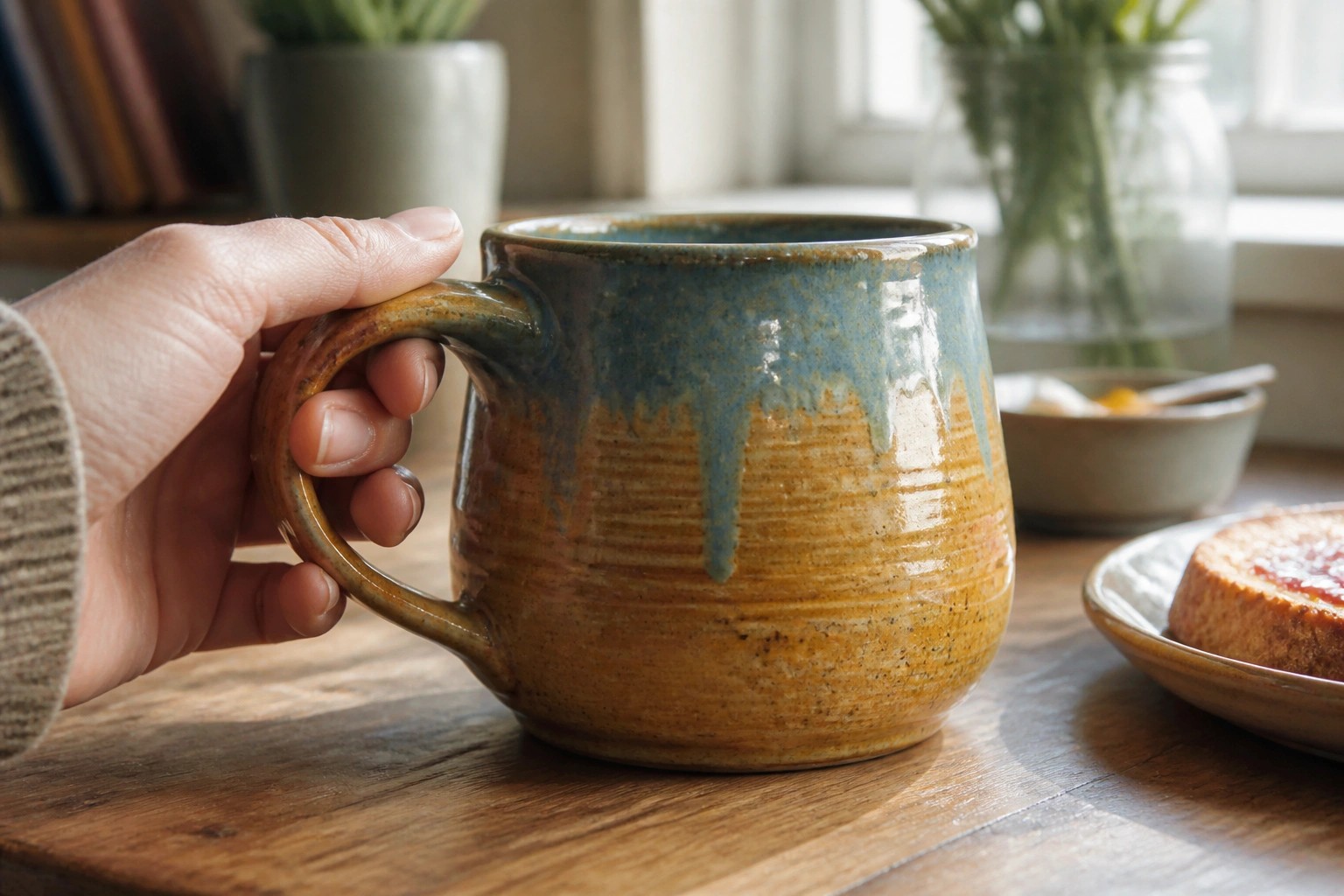
I’ve been playing around with different glazes on my pottery pieces lately.
Some combinations turn out better than others especially on bowls and mugs.
I wanted to share a few ideas that have worked well for me on vases and other handmade items.
These glazes can add nice color and texture without too much fuss.
It’s interesting to see what happens when you try them on different shapes.
Dripping Blue-Green Glaze on a Textured Mug
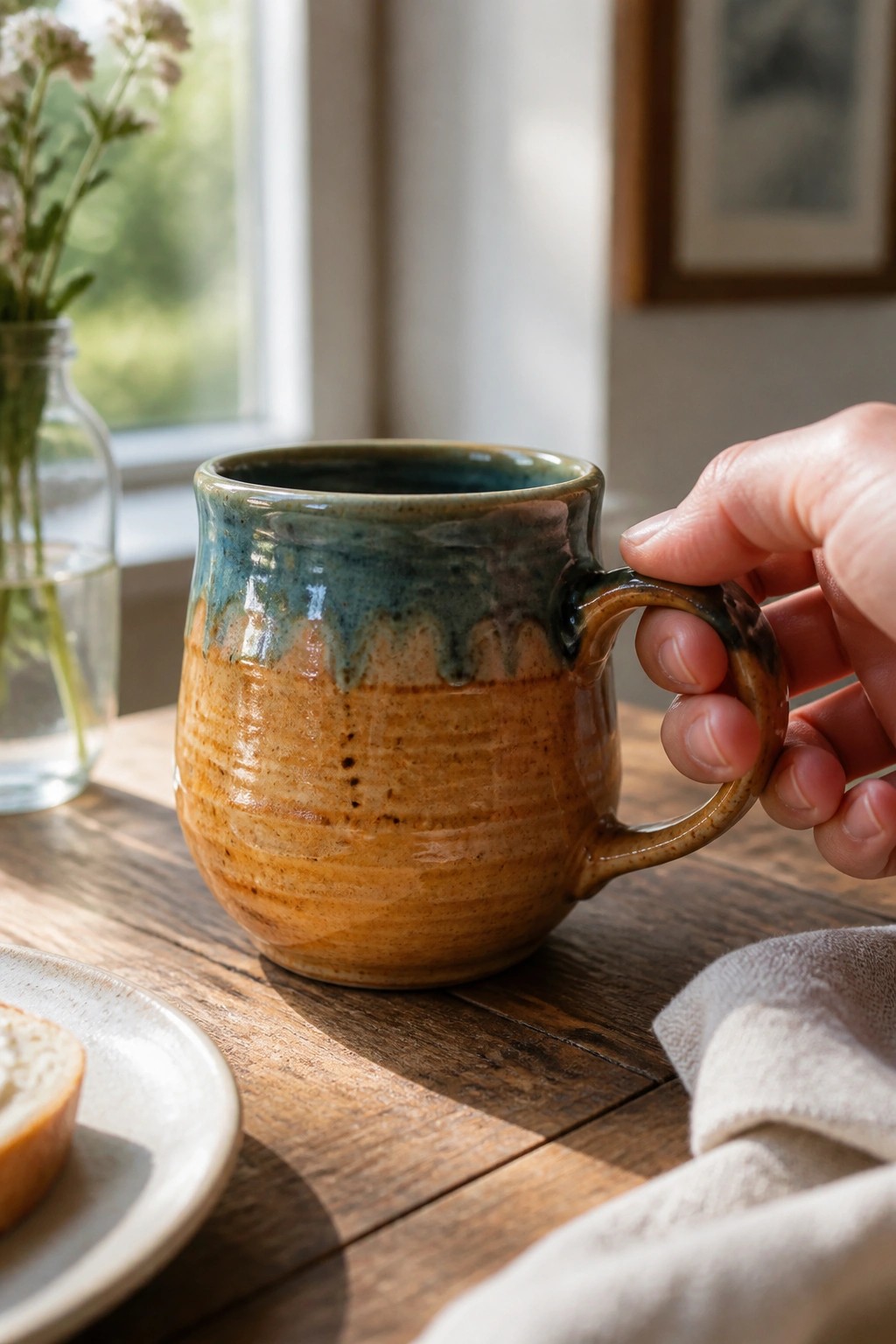
A wheel-thrown mug combines a blue-green glaze on the upper half that drips downward with a warm brown lower section marked by horizontal ridges. The glaze stops short of the base, leaving the earthy clay exposed and creating a clear division between the two surfaces. This glaze layout works because the drips follow the mug’s curves naturally and emphasize the transition between the two colors without added patterns or carving.
What makes this idea useful is that the drip technique can be repeated on other mugs using different top colors while keeping the brown base consistent for a set. The size and handle shape suit everyday drinking or coffee station use, and the same glaze split could be applied to a small pitcher or vase for matching pieces. The ridges catch the glaze in places, which adds variation you can control by adjusting how thickly you apply the top layer.
Blue Gradient Bowl with Radial Strokes
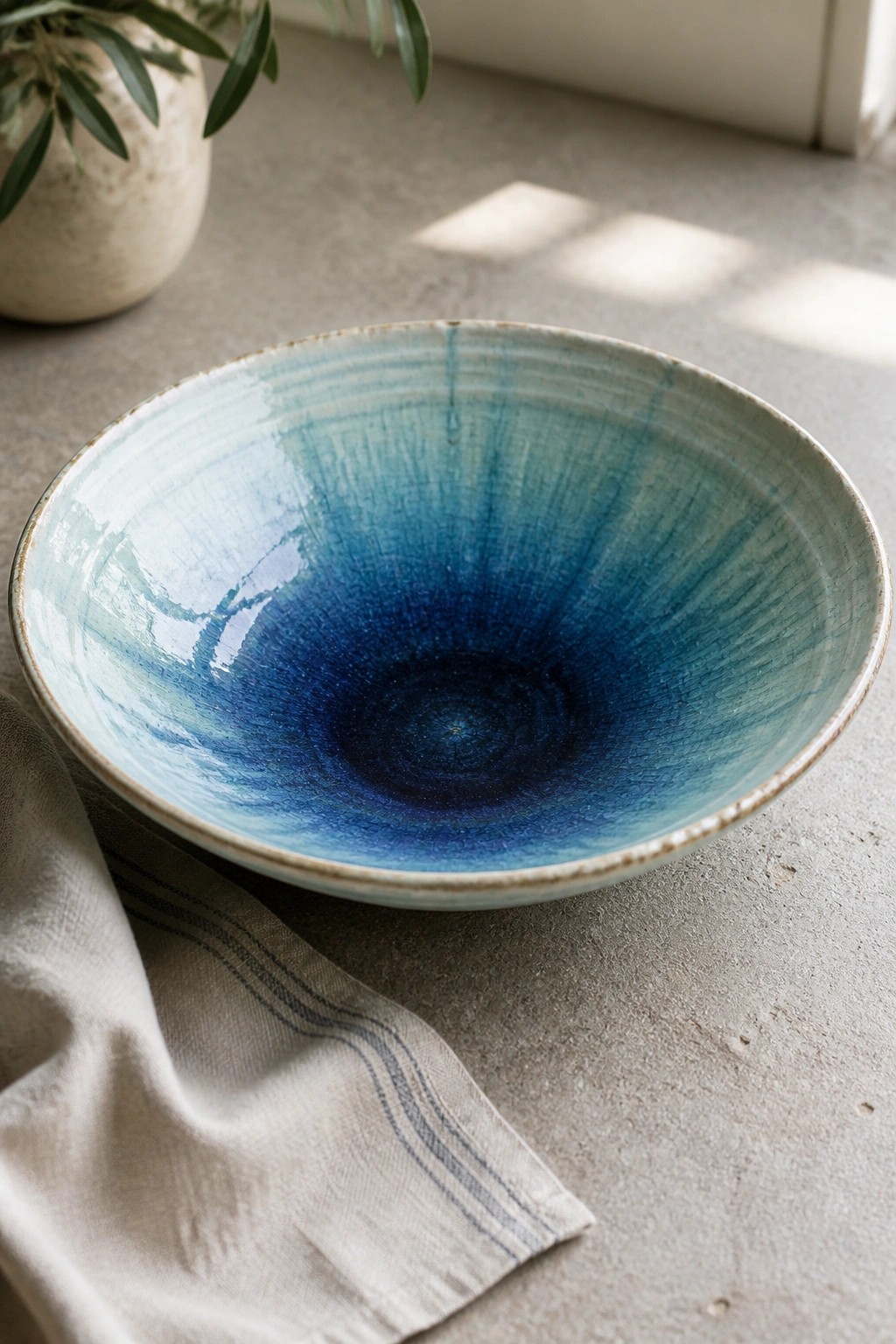
A wide ceramic bowl uses a single blue glaze family to create depth through a gradual shift from pale turquoise at the rim to a dark navy center. The application shows clear brush strokes that radiate outward, giving the surface texture and movement without added patterns or carvings. This keeps the design simple while letting the glaze do the main visual work on a rounded, open form.
What makes this idea useful is how the color transition highlights the bowl’s shape and makes it stand out on a table or open shelf. You can adapt the same gradient by limiting the darker tones to the bottom third on smaller bowls or by using fewer strokes for a cleaner look. In a kitchen the wide rim leaves room for the lighter shades to show up clearly, and the same glaze approach transfers easily to plates or deeper serving dishes if you want to match a set.
Speckled Green Glaze on a Tall Vase
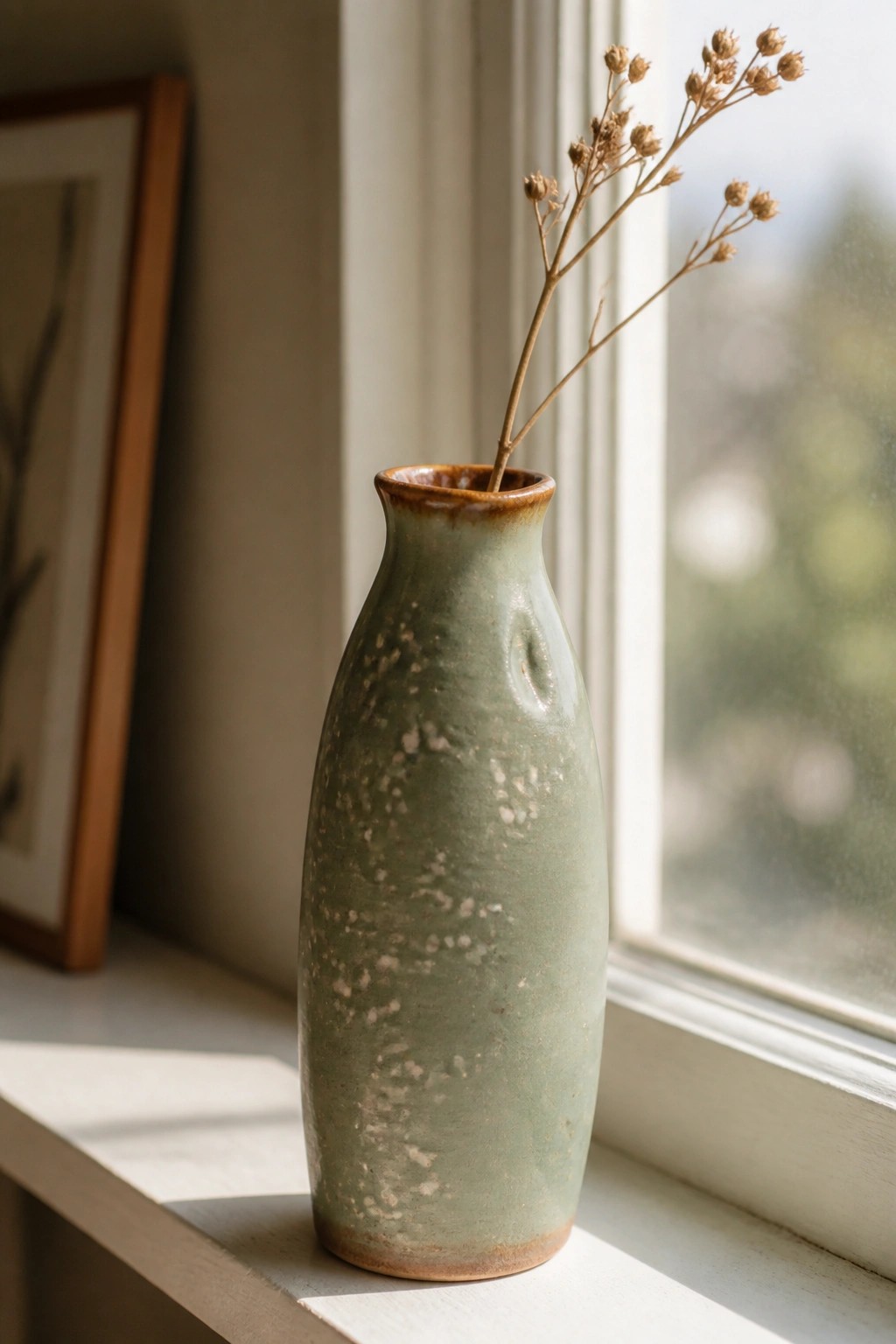
A slender bottle-shaped vase finished in a mottled sage green glaze that breaks into white speckles across the surface. The rim and foot pick up a warm brown from the clay body or a separate wash, giving a simple contrast that highlights the form. This glaze treatment suits vases because the texture and color variation create visual interest on a plain shape without added carving or painting.
What makes this idea useful is how the narrow profile works for single stems or dried branches without taking up much space. You could apply the same glaze to shorter bud vases or try it on a wider cylinder for a different proportion. The speckled effect shows up clearly in photos, which helps when sharing the piece online. For a gift, this shape and finish pair easily with simple dried flowers and need no extra wrapping.
Speckled Pink Cat Planter
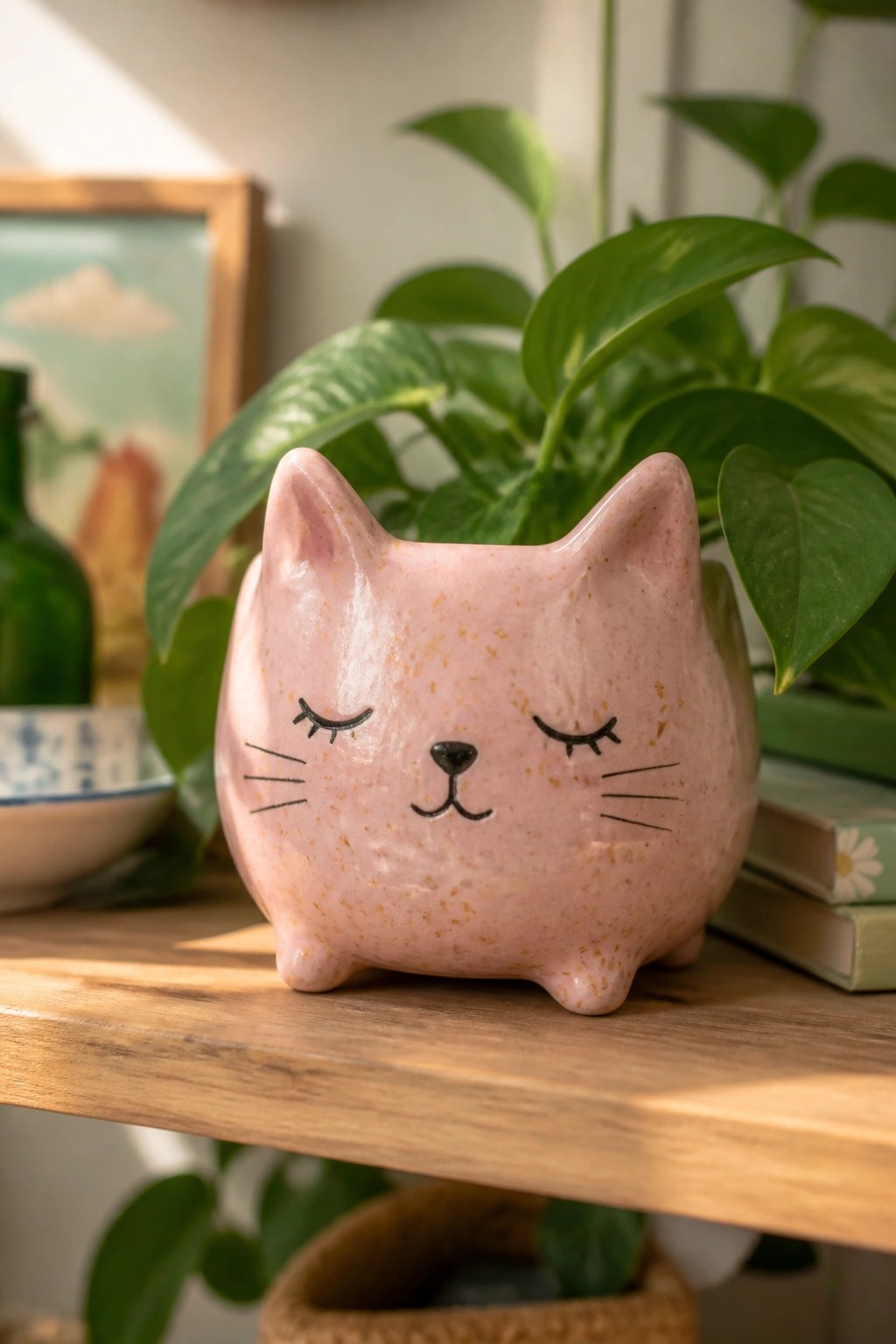
A small cat-shaped planter gives a simple way to turn a basic pot into something more distinctive. The rounded body with molded ears and feet creates a clear animal form, while a pink base glaze with fine speckles adds texture without overpowering the shape. Painted details such as closed eyes, whiskers, and a nose are applied directly on the glazed surface to keep the face readable. This approach works as a planter idea when you want the object to hold a small plant while still reading clearly as a cat.
The compact scale lets it sit on a narrow shelf or desk without taking much space. You can adapt the same form by changing the glaze color or simplifying the face to just eyes and whiskers for quicker painting. Grouping several animal planters in different colors also makes an easy display for plant corners. For a gift this style stands out because the shape itself does most of the work once the basic form is made.
Rectangular Catch-All Tray with Reactive Glaze
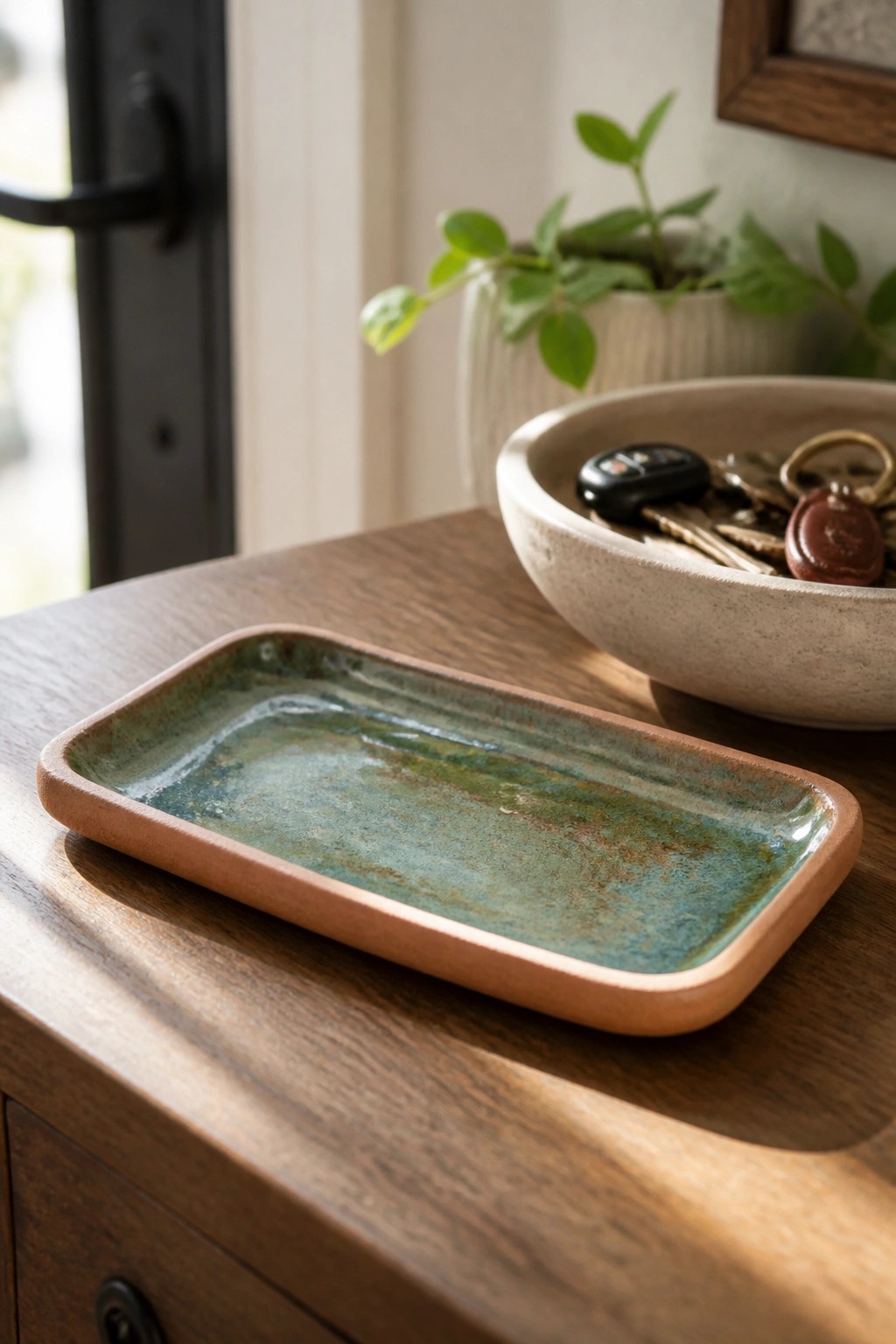
A small rectangular ceramic tray serves as a simple catch-all for keys, coins, or small accessories. The idea centers on a low, flat form with slightly raised edges and a reactive glaze that creates streaks of blue-green across the interior. The clay rim is left in its natural tone, which frames the glaze without adding extra steps. This approach fits the tray category for functional pieces that stay compact and easy to place.
What makes this idea useful is how the rectangular shape holds items flat while staying narrow enough for a nightstand or entry table. You could rework the same glaze on a square version for a desk or stretch it into a longer tray for mail. The low profile also means it stacks well if you want to make several at once. For a gift, this kind of piece adapts easily by changing the glaze color to match a room.
Multi-Compartment Glazed Tea Light Holder
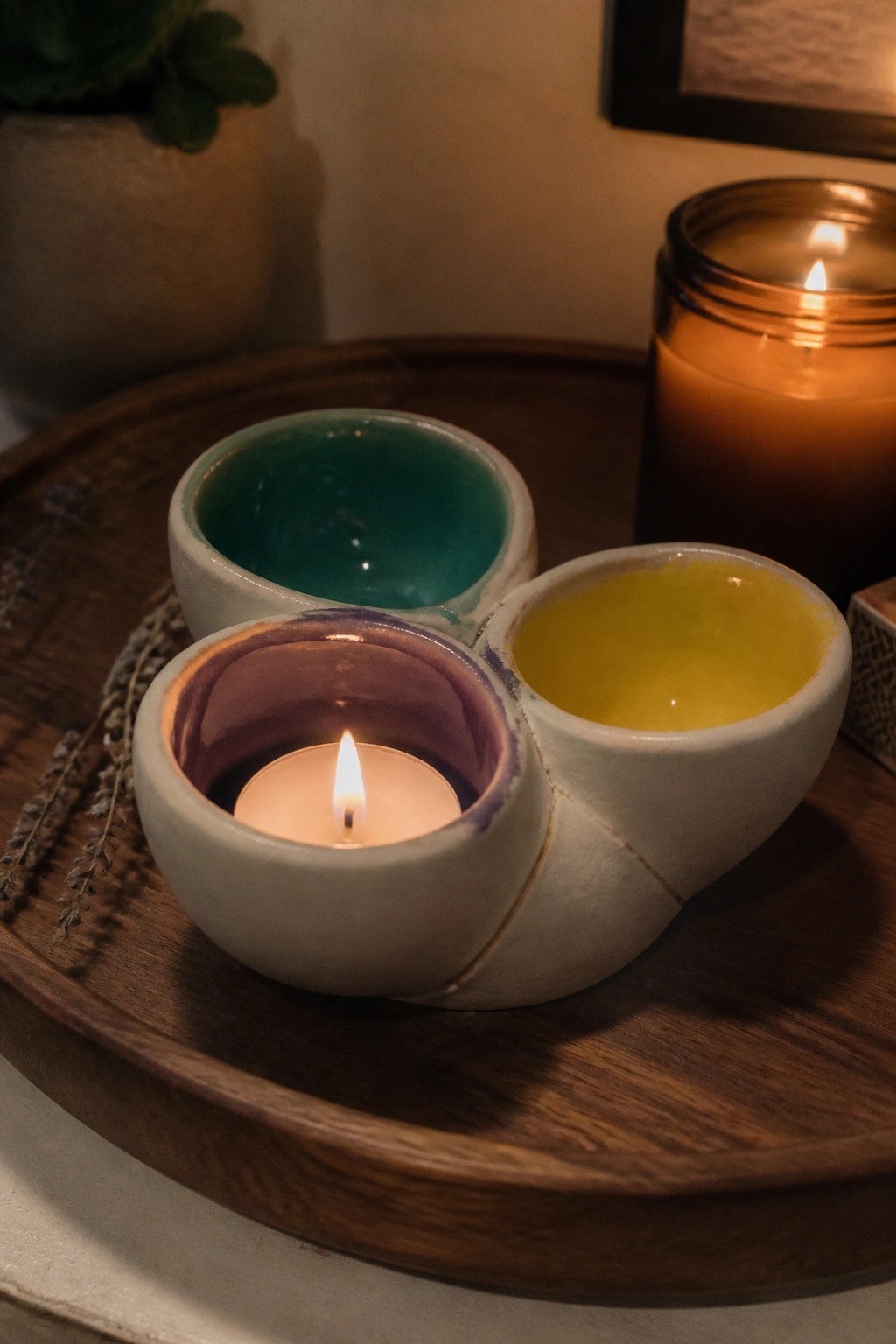
A set of three small bowls joined at the base creates this connected ceramic holder. Each compartment gets its own glaze color, with one section sized to fit a standard tea light while the others stay open. The white clay body and simple rounded forms keep the focus on the contrast between the teal, yellow, and purple glazes. This approach works as a candle piece that can sit on a tray or shelf without needing extra hardware.
The shape does a lot of the work here because the fused bowls stay stable on their own. You can adapt the same layout for small succulents, loose change, or incense cones by changing the depth of one compartment. Different glaze colors make it easy to match existing room colors or create quick gifts without extra painting steps. The compact size also photographs well for sharing finished work.
Curved Ceramic Spoon Rest with Blue Leaf Motifs
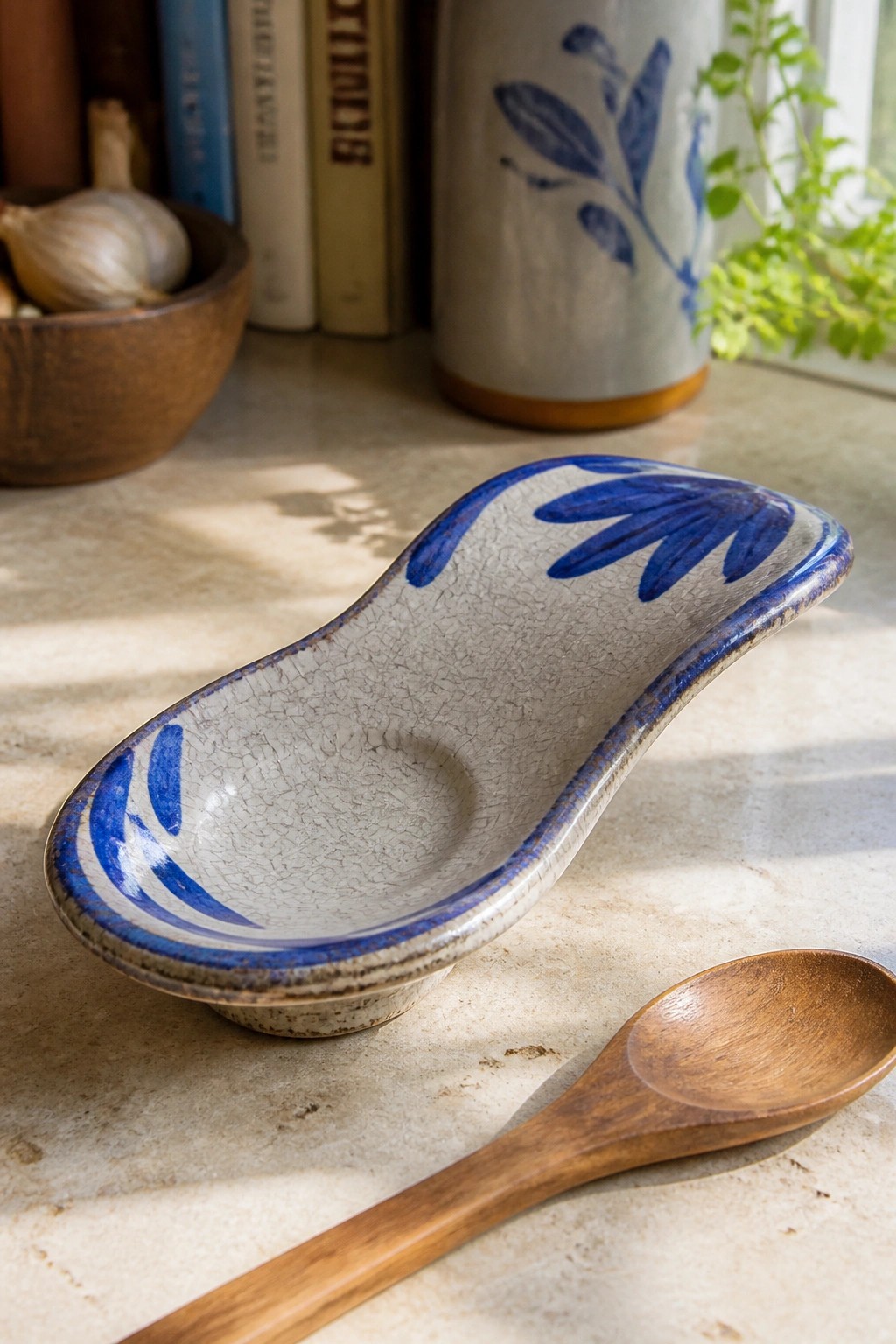
A spoon rest made from clay gives cooks a simple place to set utensils without marking the counter. This version takes an elongated, slightly curved shape that holds a spoon lengthwise and includes a shallow well at one end. Blue brushwork forms loose leaf shapes along the rim over a crackled white glaze, keeping the decoration minimal while the form stays functional.
The shape does a lot of the work here because the length and gentle curve keep the piece stable next to a stove. You could repeat the same leaf motif on a matching butter dish or shorten the form into a small condiment bowl. In a kitchen this kind of piece stays useful daily and photographs cleanly for recipe content or shared boards. The painted detail also transfers easily to other small kitchen items like a garlic keeper or oil pourer.
Scalloped Shell Ring Dish with Pink Glaze
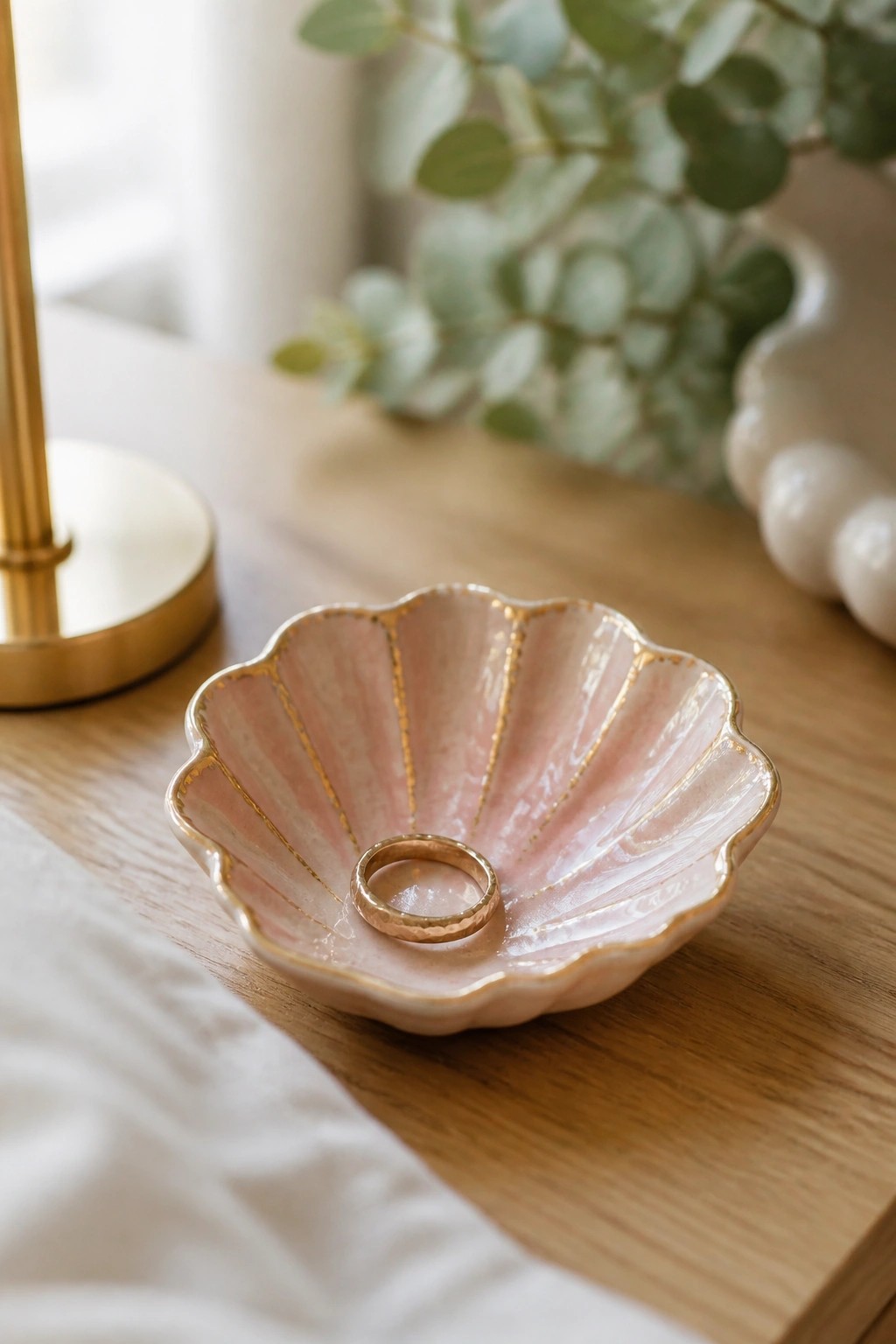
A small ceramic ring dish shaped like a shell gives you a compact holder for jewelry or small items. The ridged interior and scalloped rim create natural lines that guide the eye toward the center, while the pink glaze with subtle white streaks and gold trim along the edges keeps the surface simple but finished. This approach works as a ring dish because the form stays shallow and stable without needing extra details.
The small scale makes this easy to adapt for a nightstand or vanity where space is limited. You could repeat the shell shape in a different glaze color or remove the gold accents to match a plain bathroom setup. For a gift, something like this stands out because it combines storage with a clear shape that feels intentional. The same idea could be reworked into a small soap rest or a holder for loose change by adjusting the depth slightly.
Two-Tone Dip Glaze on a Small Pitcher
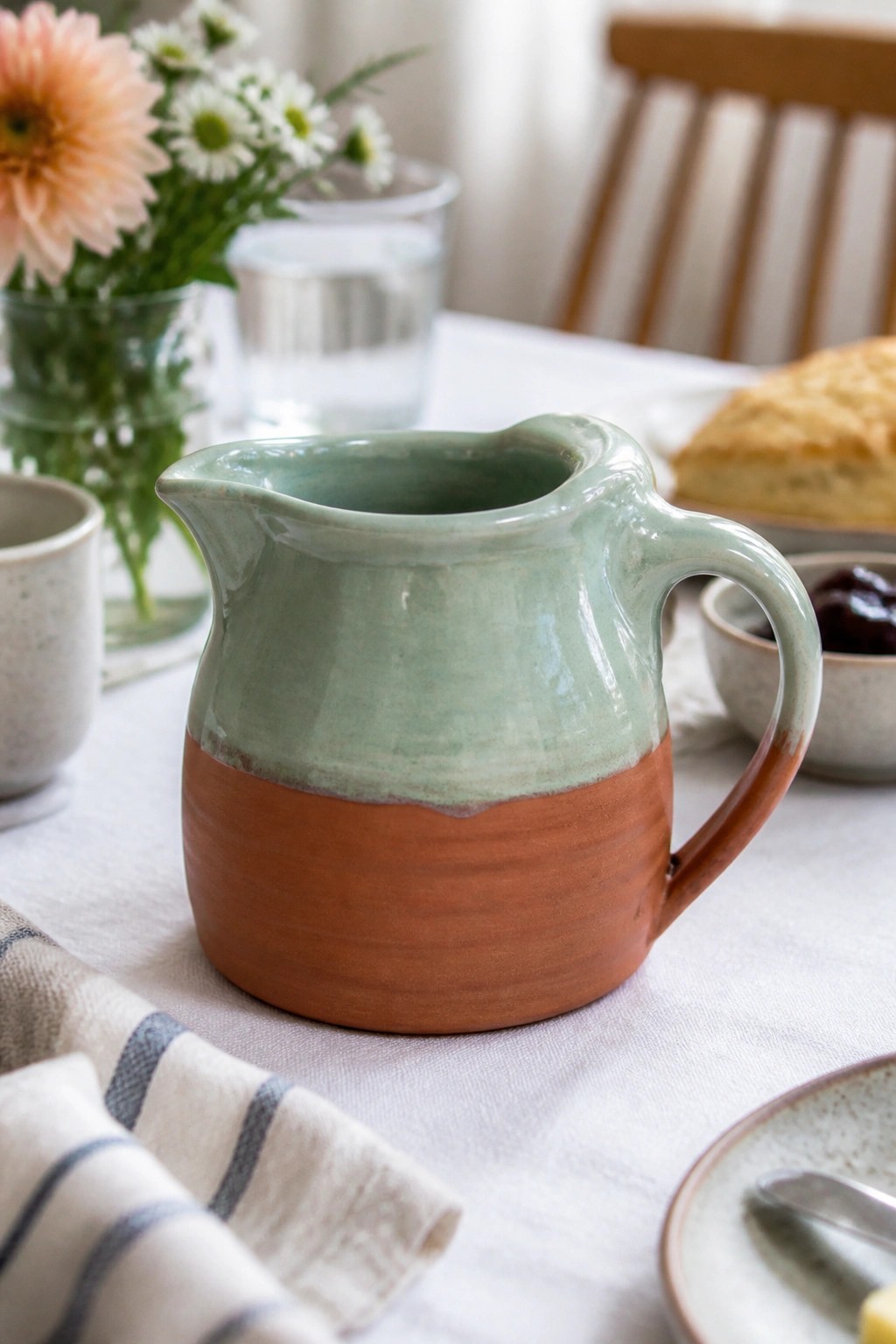
A small ceramic pitcher works well with a simple dip glaze that leaves the upper half in a soft green and the lower half in a warm terracotta. The straight color break emphasizes the rounded shape and makes the form easy to read at a glance. The handle and spout stay functional while the glaze contrast draws attention to the overall profile without added decoration.
What makes this idea useful is how the same split can be repeated on mugs or small vases by adjusting how far the second glaze covers the piece. In a kitchen or on a dining table the colors stay practical and hide minor marks from daily use. You could swap the green for another mid-range tone or change the terracotta to a darker brown to match different dinnerware sets. The approach also translates quickly to wheel-thrown or hand-built forms without extra tools.
Polka Dot Ceramic Toothbrush Holder
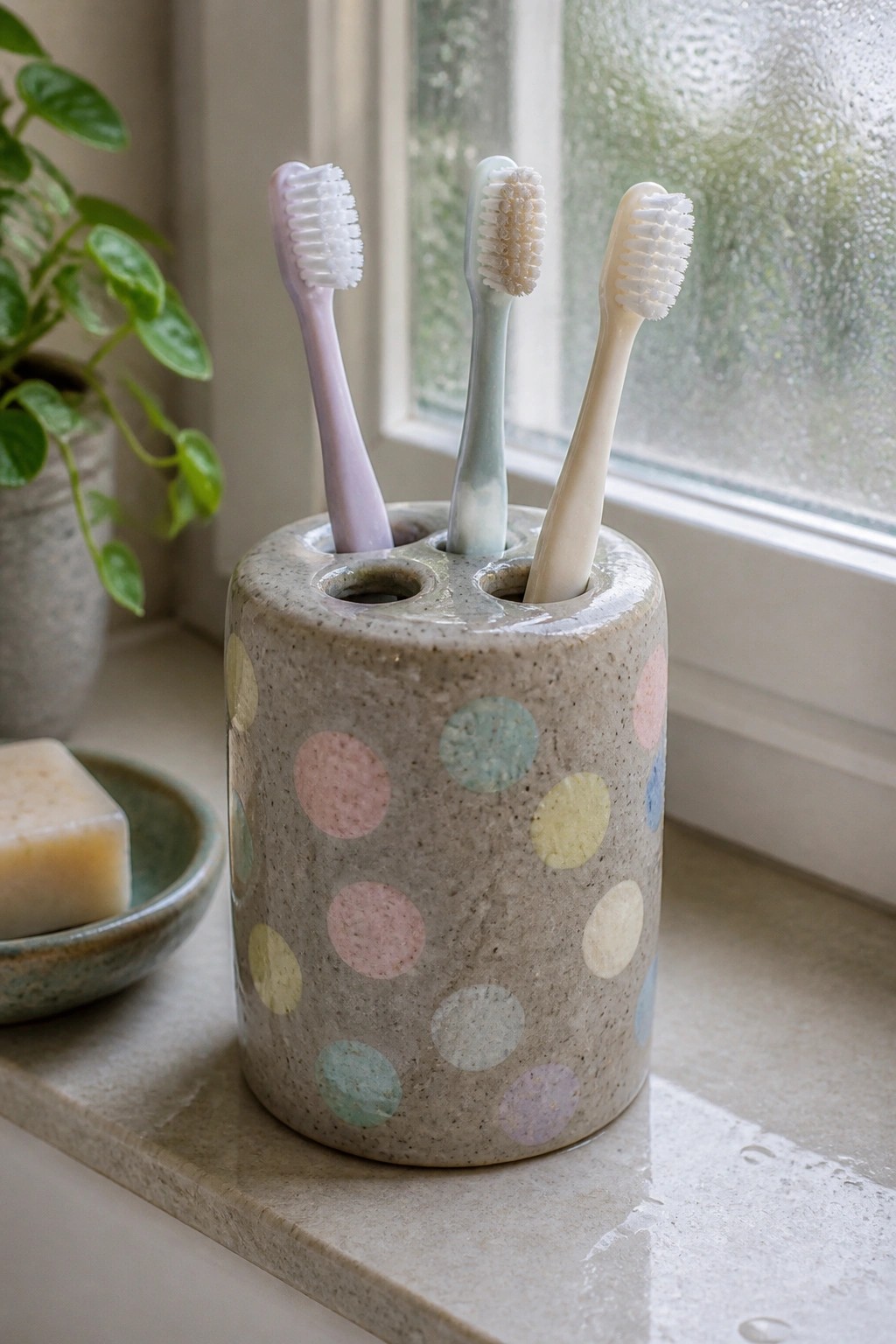
A cylindrical ceramic holder with four drilled openings makes a practical bathroom item for keeping toothbrushes upright and separated. The speckled clay surface carries a simple pattern of scattered pastel dots in pink, yellow, blue, and green that adds color without crowding the form. This approach turns a basic slab-built or wheel-thrown shape into a functional piece that handles daily moisture and fits on a counter or ledge.
What makes this idea useful is how the multiple holes solve a common sink clutter problem while the dot pattern stays easy to paint by hand. You can adapt the same cylinder by changing the dot colors to match tiles or by adding fewer holes for a single-person bathroom. The shape also works for desk organizers or small plant propagation tubes if you adjust the height and opening sizes. For a gift, the holder needs only basic glazing and a clear coat to stay durable near water.
Contrasting Orange Interior on a Dark Salt Bowl
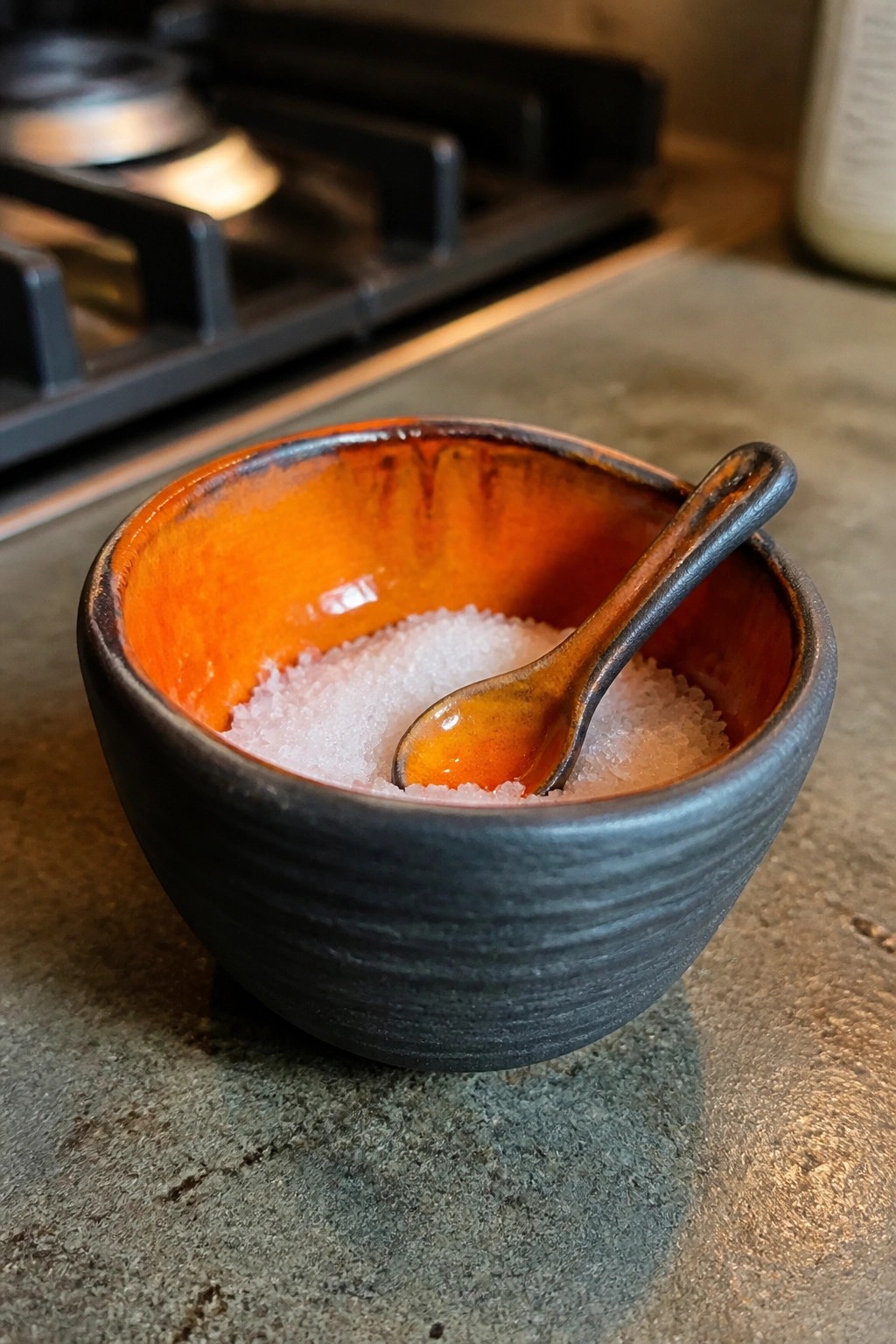
A small pinch bowl with a matte dark exterior and a glossy orange interior glaze makes a practical salt cellar or spice holder. The bright inner color creates contrast against both the dark rim and the white contents, so the bowl stays easy to spot on a counter. This glaze approach keeps the outside understated while making the usable surface the focal point.
What makes this idea useful is how the color split helps the bowl function as both storage and serving piece without extra decoration. You could scale the same exterior-interior combo down for individual dipping bowls or up for a larger sugar container. In a kitchen it stays simple to clean and quick to make in batches. The small size also means you can test new glaze colors without committing to a full set of dishes.
Swirled Glaze on a Small Lidded Jar
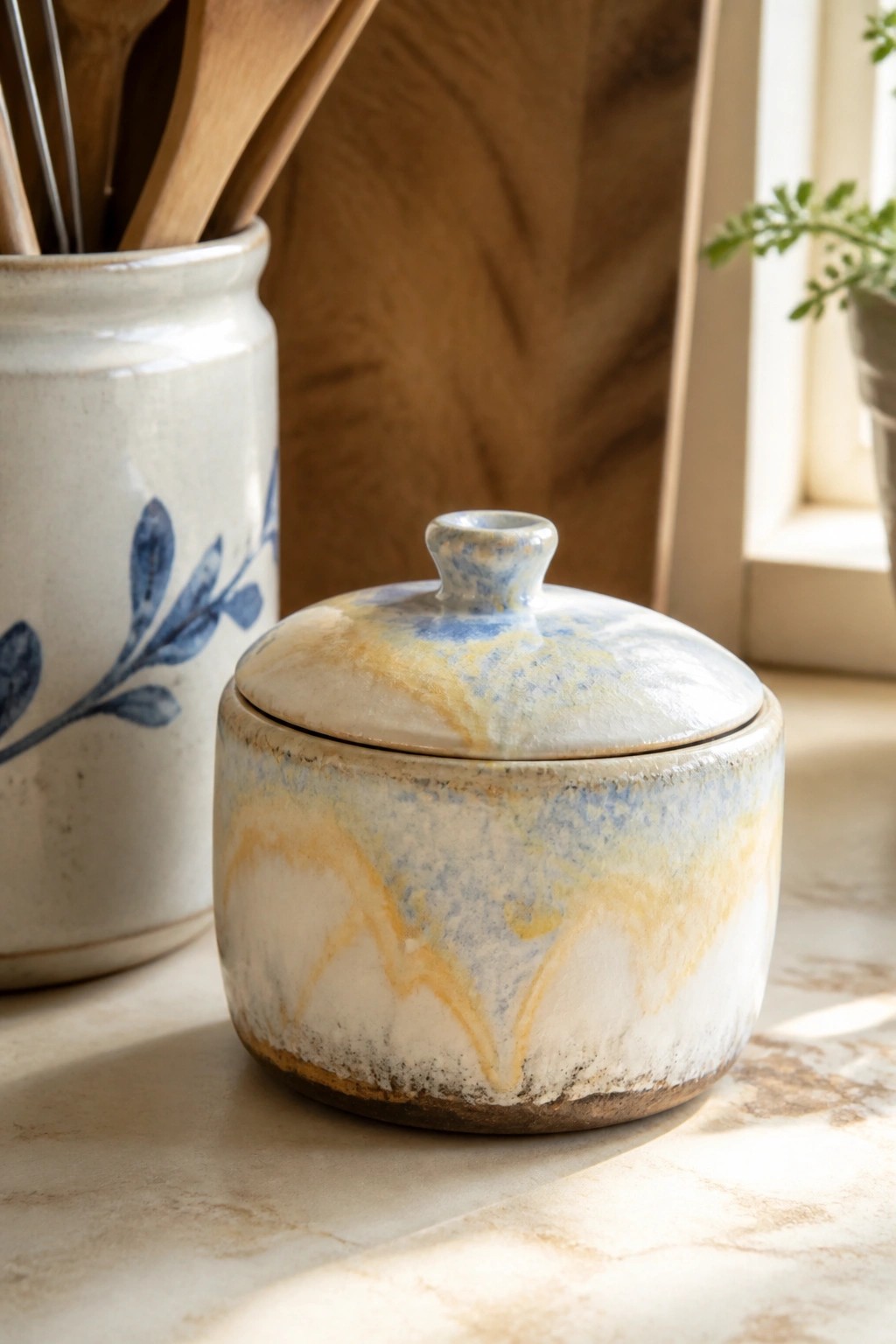
A small lidded jar takes on more interest when covered with a flowing glaze that mixes white, blue, and pale yellow in soft waves. The glaze moves during firing to form irregular patterns that follow the curve of the body and lid. This style works best on a compact, rounded form that lets the colors blend without needing extra surface detail.
The small scale makes it simple to test a new glaze batch without using much clay. You can repeat the same flowing effect on a matching set of open bowls or a taller canister for coffee or tea. In the kitchen the piece keeps small items like salt or sugar within reach while the varied glaze colors catch light on a countertop or shelf.
Raised Floral Wall Plaques with Layered Glaze
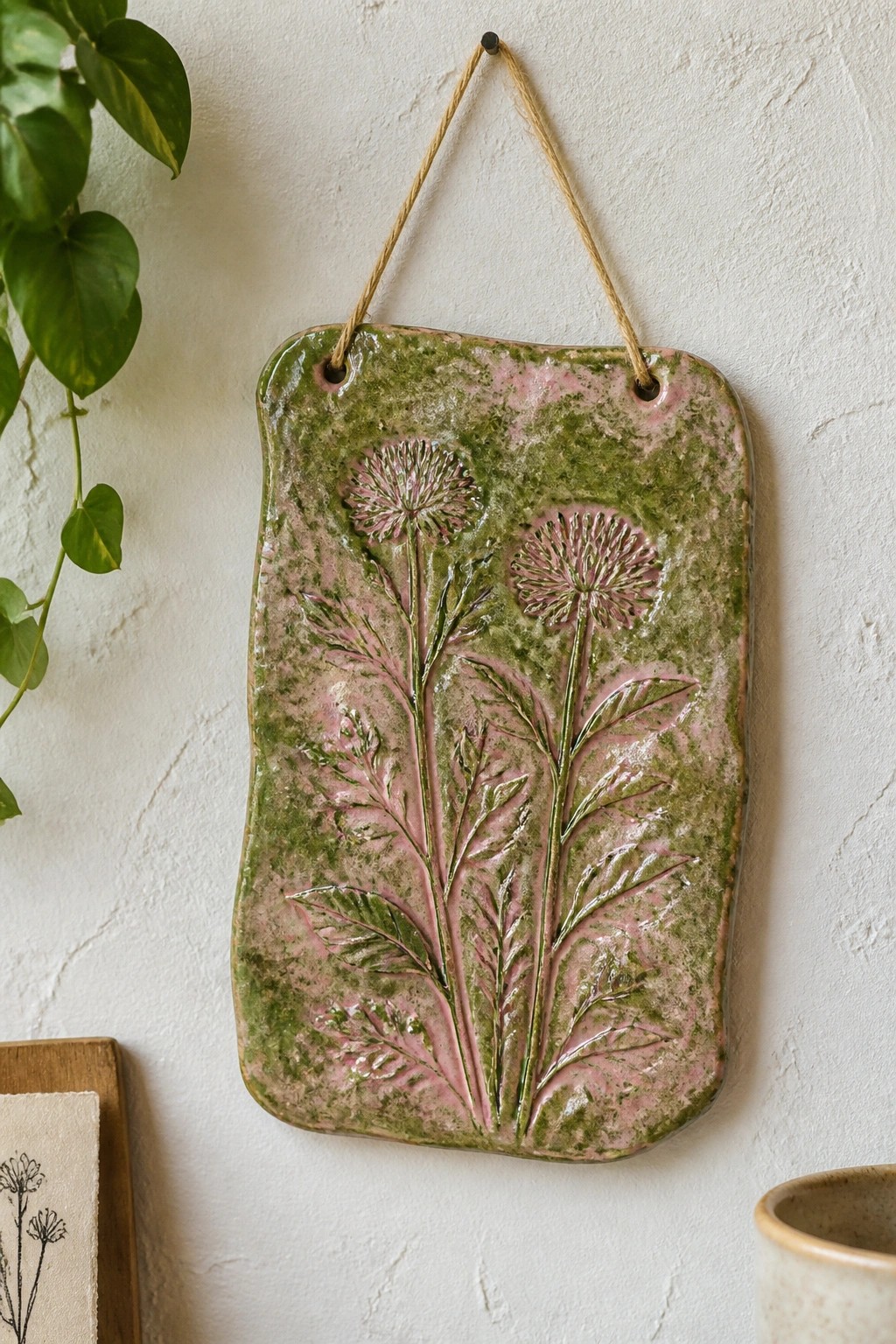
A rectangular ceramic wall plaque works well when you want a botanical motif without making a full vessel. The design uses a slab form with pressed or carved flower and leaf details that stand out once the glaze settles into the recesses. A green overglaze applied over a pink base creates contrast along the raised edges and gives the surface a mottled, aged look that highlights the texture. This approach fits the category of simple decorative wall pieces that can hang from cord or wire.
What makes this idea useful is how easily the rectangular shape scales to different sizes for different rooms. You could repeat the same pressed flower design on a set of smaller tiles to create a grid on the wall or shorten the slab into a wider tray shape for keys or jewelry. The two-tone glaze effect works on other forms too, such as the side of a tall vase or the lid of a lidded jar, so the same color combination does not have to stay on flat work. The clear relief also photographs cleanly, which helps when sharing the finished piece online.
Ceramic Yarn Bowl with Spiral Side Opening
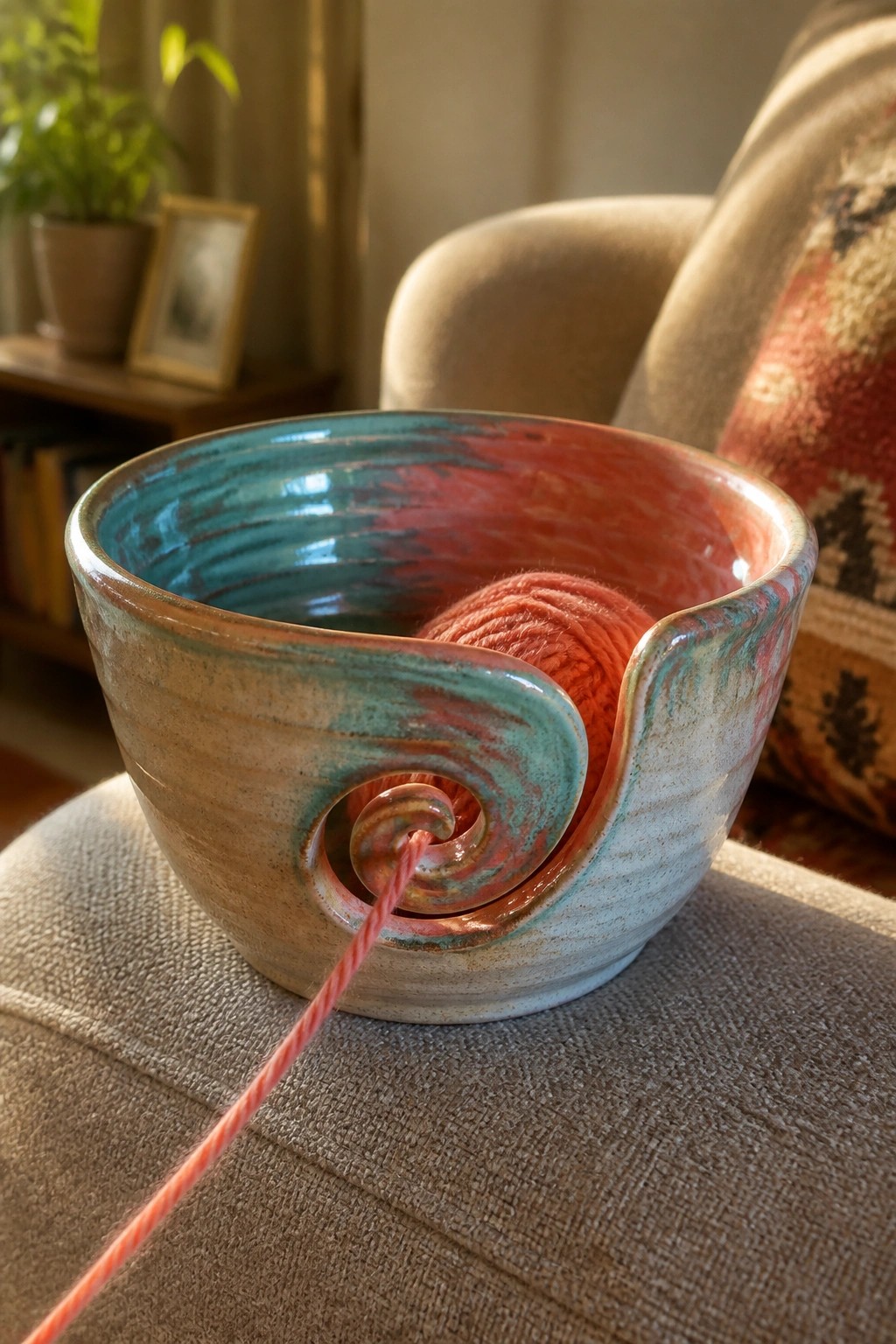
A yarn bowl made from ceramics keeps a ball of yarn contained while allowing the strand to feed out through a side opening. The spiral cutout on the rim creates a smooth path that prevents tangling during knitting or crocheting. Streaked glazes in teal and reddish tones cover the surface, giving the bowl a fluid look that highlights the handmade shape.
What makes this idea useful is how the cutout combines function with a simple decorative element. You can adjust the spiral width to match thicker or thinner yarns, or shorten the overall form to fit smaller balls for portable projects. In a craft space, this bowl holds yarn steady on a table or lap without rolling away. The same side opening approach could be reworked into a smaller version for embroidery thread or charging cables.
Bright Green Sponge Dish with Drainage Slots
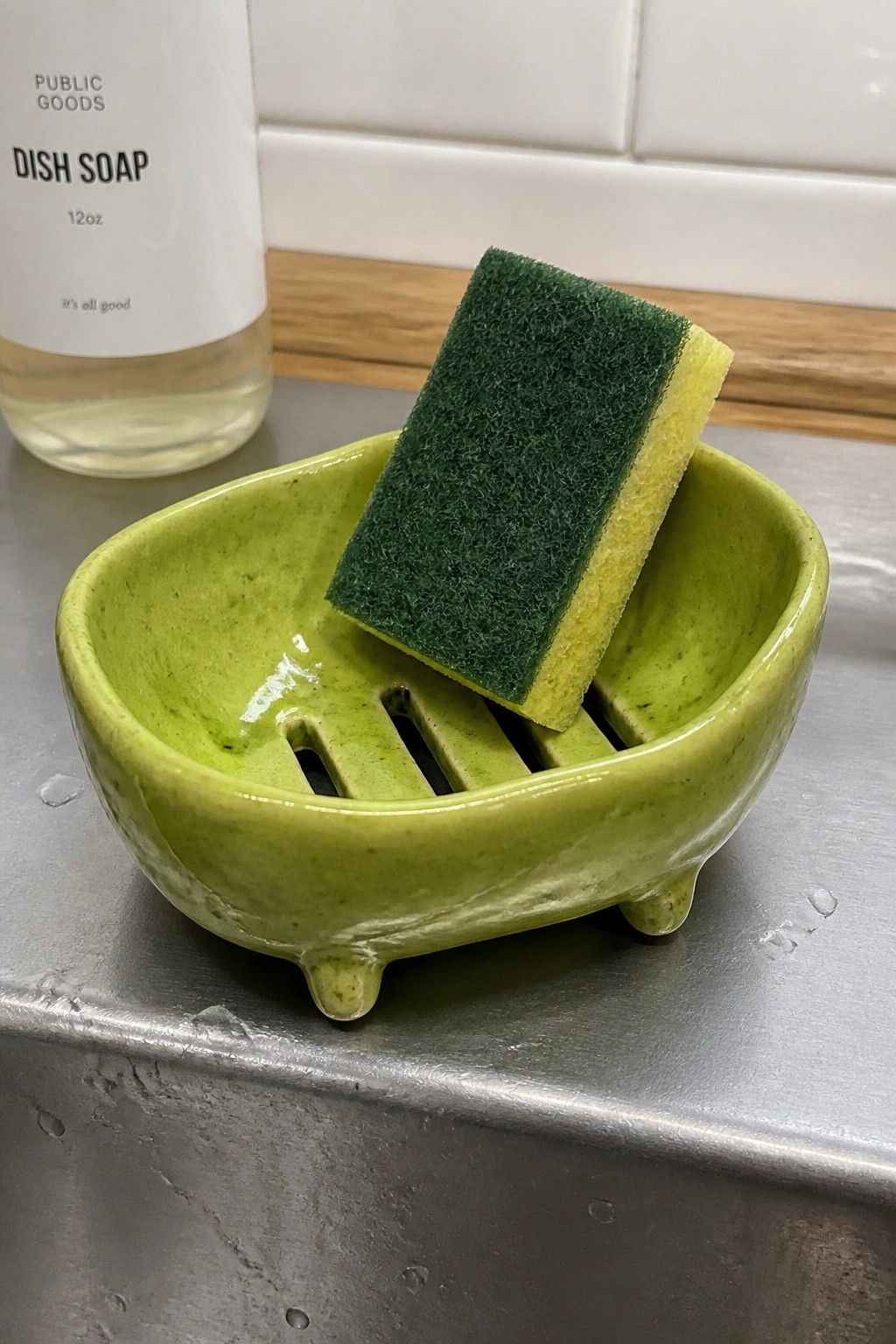
A small ceramic dish shaped as a sponge holder uses a footed base and interior ridges to keep a sponge elevated and allow water to drain through the slots. The solid lime green glaze covers the entire form, creating a unified look that highlights the handmade contours without extra decoration. This kitchen item fits the category of functional countertop pieces that combine utility with a simple glazed surface.
What makes this idea useful is how the drainage slots directly address a sink-side problem without needing extra parts. You can adapt the same shape for a bar soap dish by widening the ridges or make a smaller version for a bathroom. The single glaze color keeps the focus on the form and works well if you want to batch out several in different shades. In a kitchen, this kind of piece stays out on the counter without looking cluttered.
Painted Clay Fox Figurine
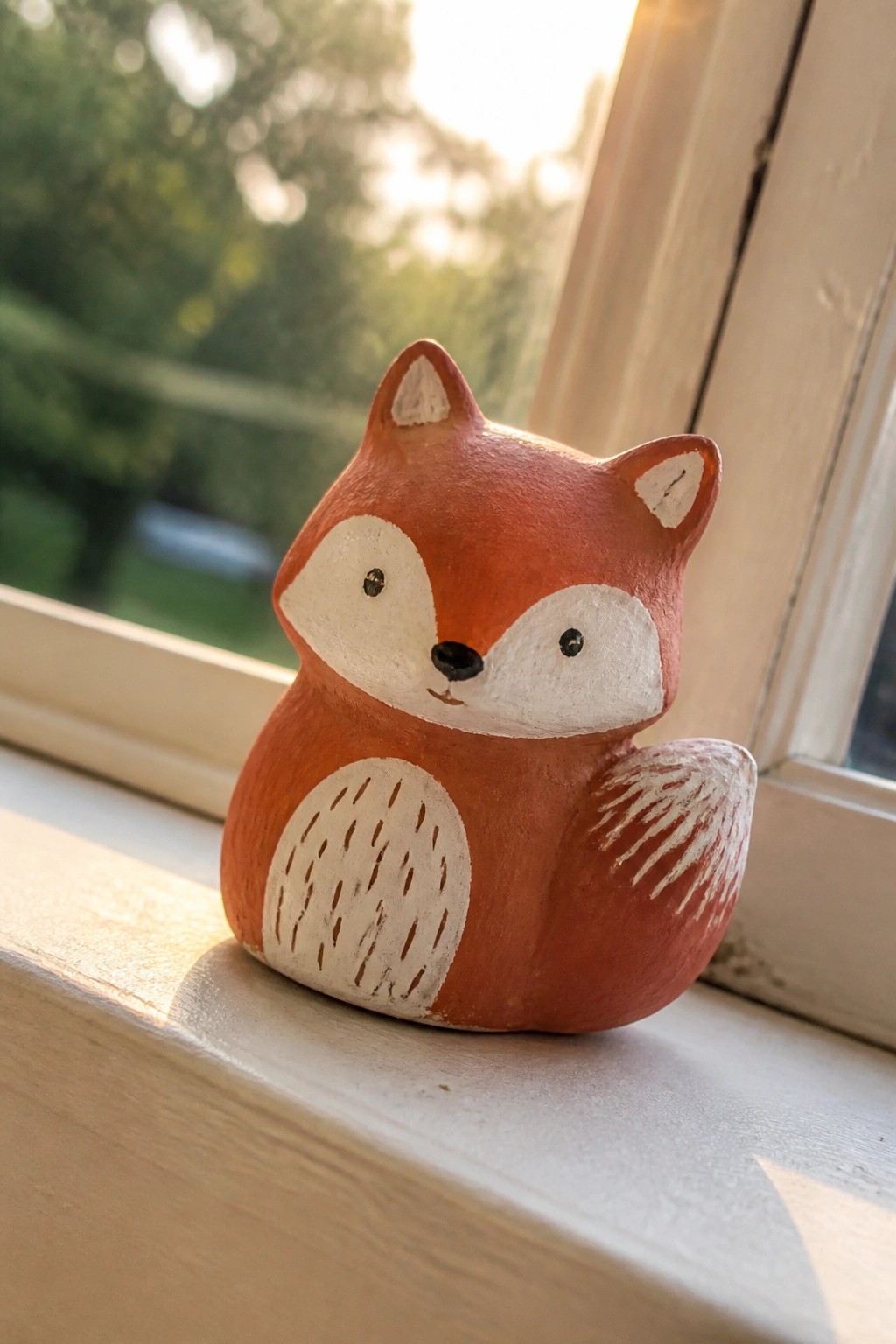
A small fox figurine formed from clay serves as a compact decor piece. The rounded body and upright ears provide a basic shape that gets finished with an orange base coat and white painted areas on the face, chest, and tail. Simple black dots mark the eyes and nose, while short brush strokes add texture to the tail. This style works as a standalone decor object that combines basic sculpting with surface painting.
The small size lets you place it on a shelf, desk, or windowsill without crowding the space. You could repeat the same painting method on other animal shapes or switch the colors to match different rooms. For a gift, making a few in varying sizes keeps the project quick while giving you options to group them together. The painted detail stands out in photos, which helps if you share the work online.
Green Glazed Butter Dish with Domed Lid
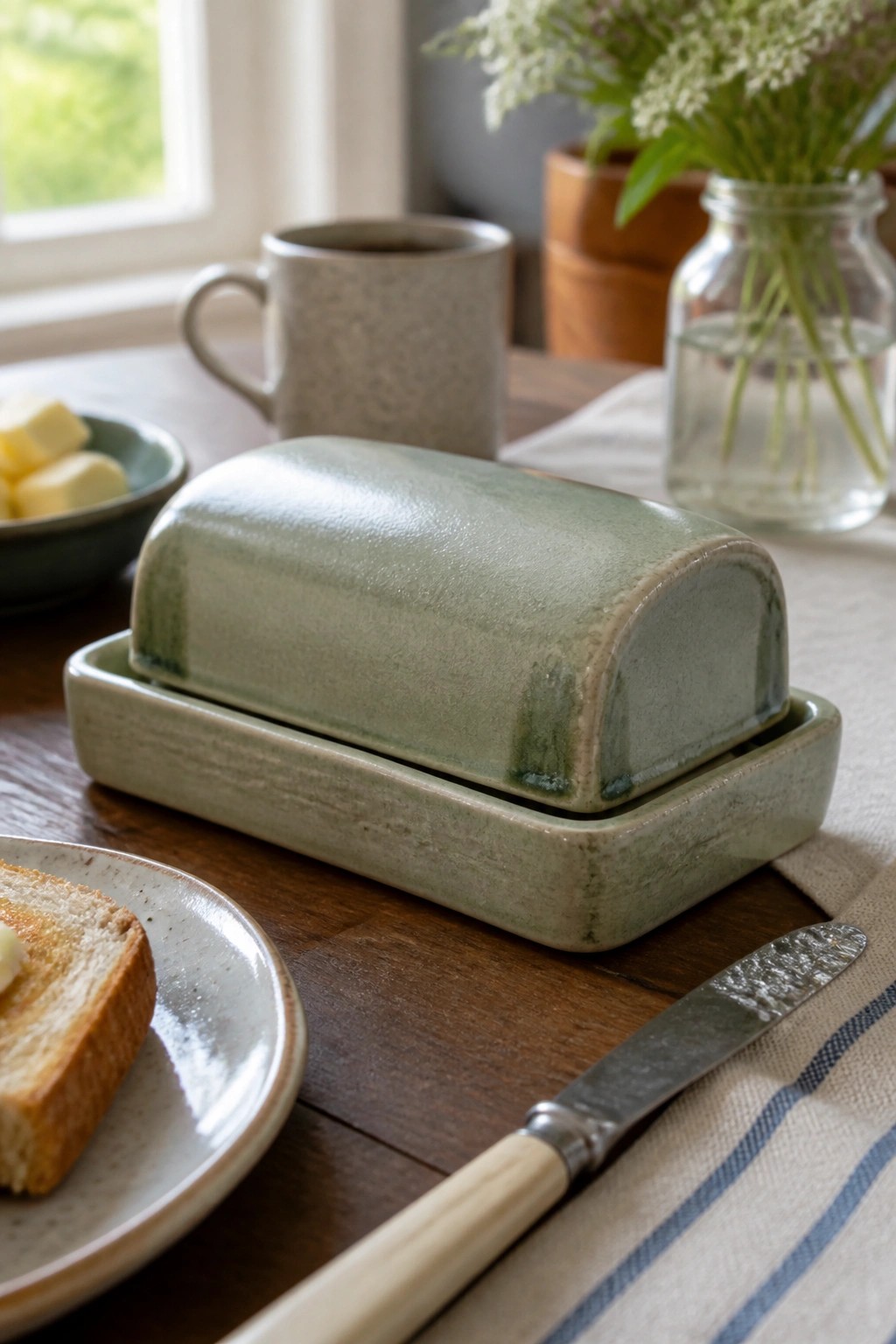
A rectangular ceramic butter dish with a domed lid and matching tray base works well as a kitchen item for storing and serving butter. The soft green glaze shows slight tonal shifts and a matte finish that keeps the surface from looking too uniform. The simple curved lid and low tray edges create a contained shape that stays stable on a table.
What makes this idea useful is how the domed lid and tray can be resized for different butter portions or even small cheeses. The same form adapts easily to other glaze colors that match existing dishes or dinnerware sets. In a kitchen this kind of piece replaces plastic wrap and stays ready for daily use. The compact scale also makes it simple to repeat as a set of two or three for gifts.
Mixed Floral Bowls on Speckled Clay
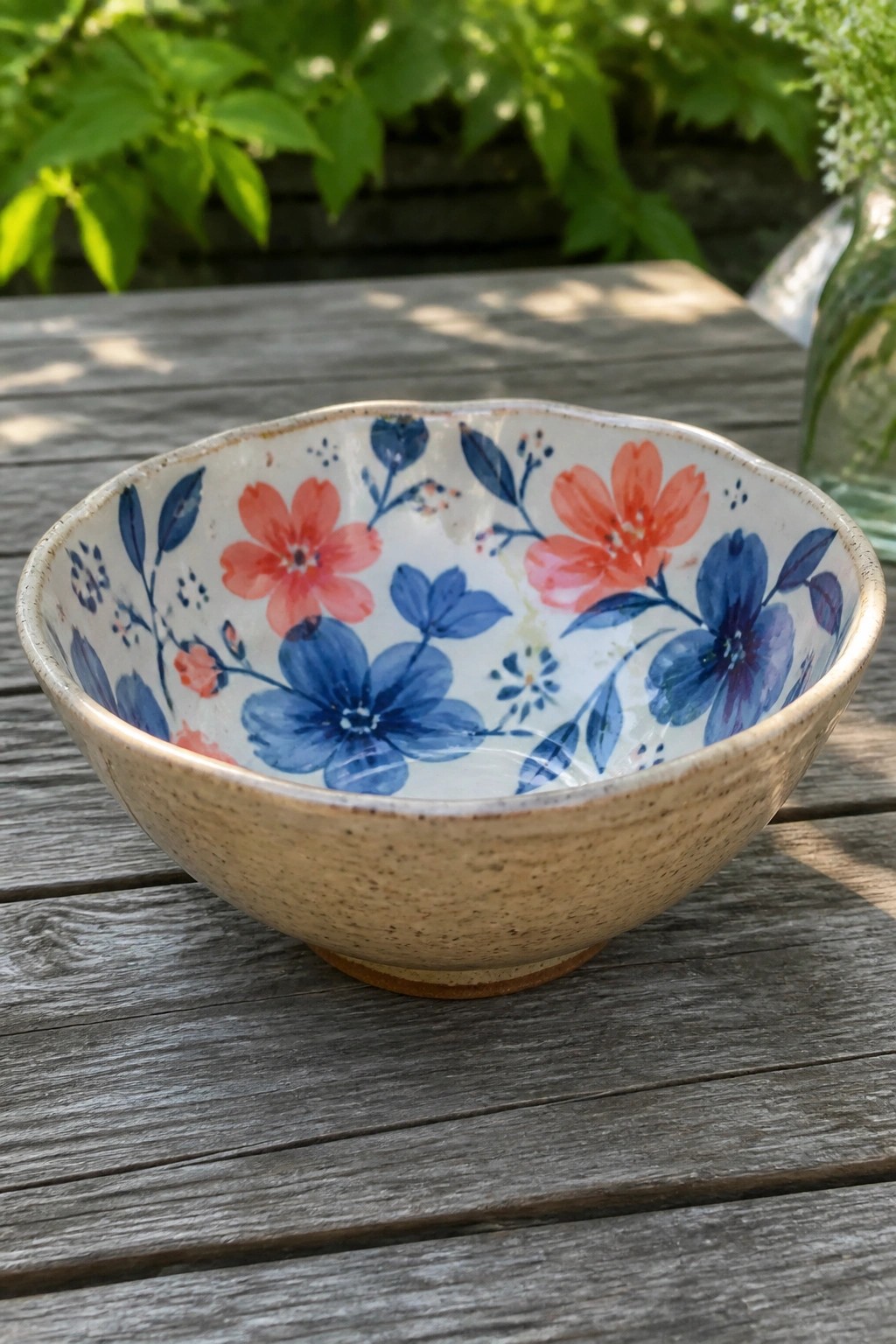
A bowl like this uses a speckled clay body with a painted interior of blue and coral flowers scattered among simple leaves. The design places the blooms at different angles so the pattern feels loose rather than rigid. The neutral outside surface keeps attention on the color mix inside while the soft rim shape reinforces the handmade quality. This approach works as a straightforward way to add painted detail to a standard bowl form.
What makes this idea useful is how the two-color floral layout can be repeated across plates or small serving dishes for a set. The scale of the flowers fits the curve of a bowl without needing tight precision. In a kitchen this shape holds snacks or sides while the painted surface stays visible on a table. You could simplify the motif to just leaves if you want a faster version for everyday use.
Ribbed Oval Soap Dish in Turquoise Glaze
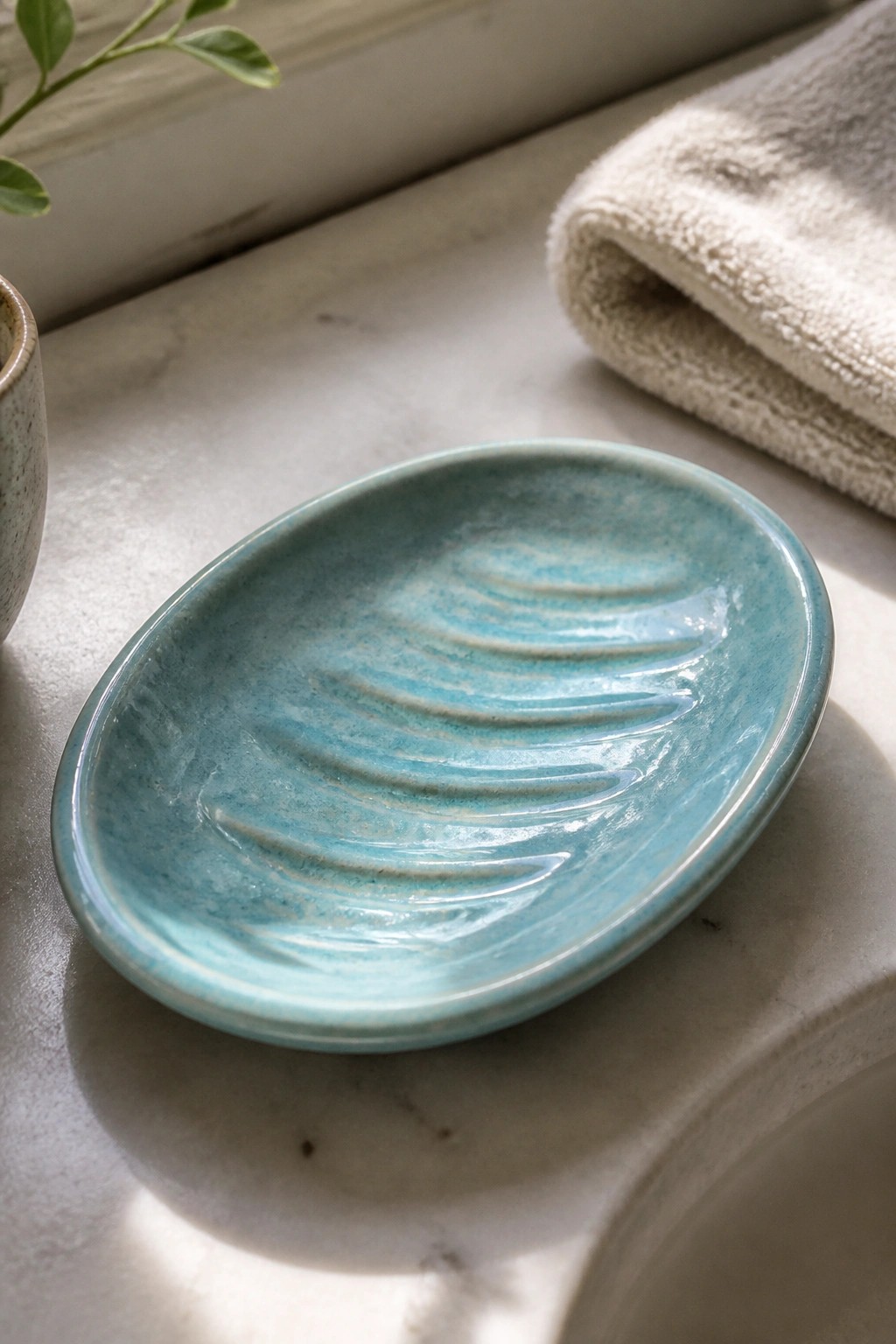
A small oval ceramic dish with a series of raised ridges across the bottom works well as a soap dish. The turquoise glaze pools slightly in the grooves to emphasize the texture and helps water drain away from the bar. This bathroom item stays compact enough to sit on a sink ledge or shelf without taking up much space.
What makes this idea useful is that the ridges handle both function and pattern in one step. You could repeat the same oval form and rib details to make a ring dish or small trinket tray by switching to a matte glaze or a different color. The shape fits easily into a bathroom setup next to towels or a plant and scales down well if you want to produce several at once for gifts.
Striped Glaze Cruets for Kitchen Use
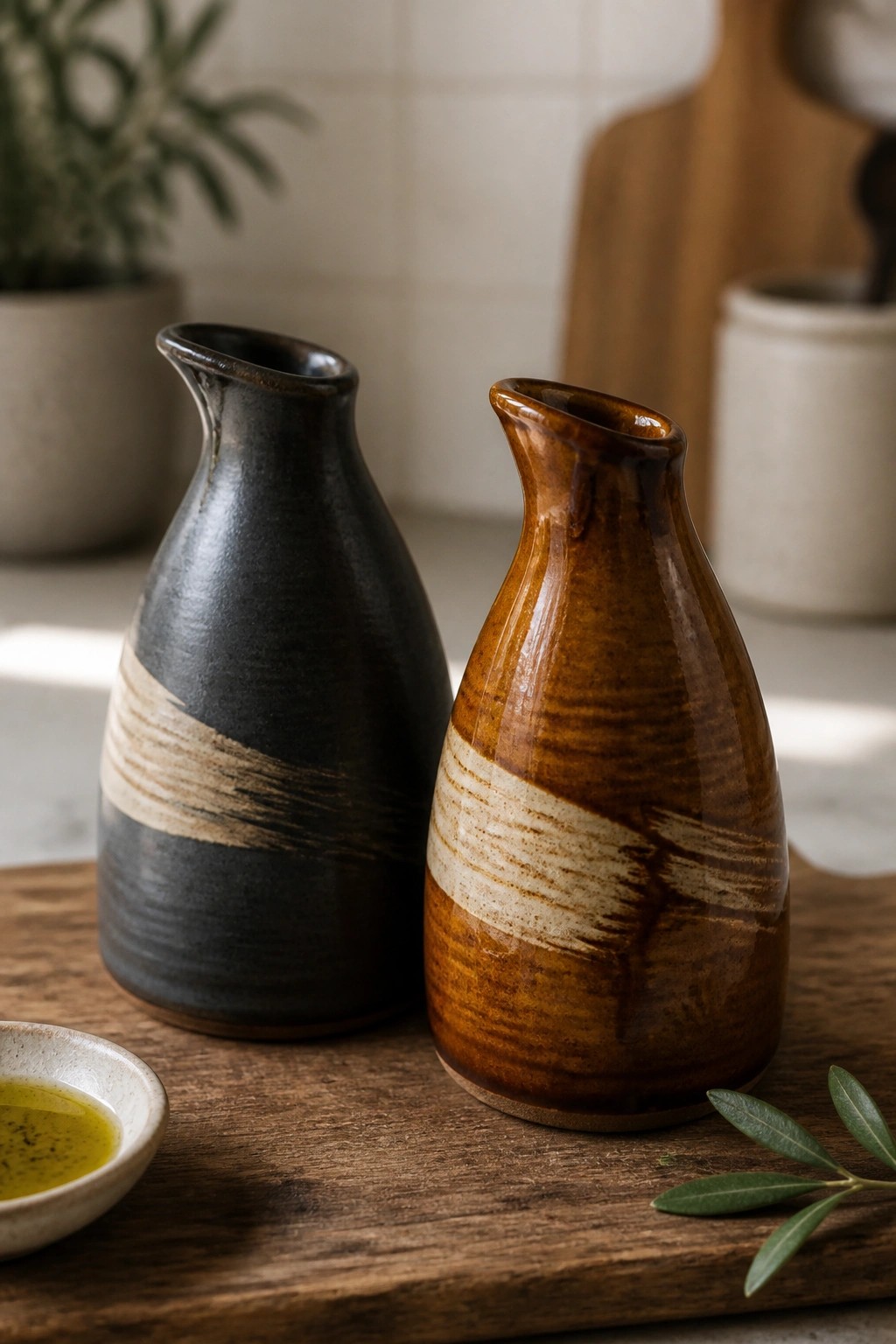
Small ceramic vessels like these use a single brushed stripe of lighter slip or glaze across a dark or amber base to create contrast on a compact form. The tapered shape with a pinched rim gives a functional pouring lip while keeping the overall size suitable for countertop storage. This approach fits the kitchen item category and works because the stripe adds movement without requiring multiple layers or intricate carving.
What makes this idea useful is that the same stripe technique can be repeated across a matching set for oil, vinegar, or syrup. The shape pours cleanly and fits easily on open shelves or a tray, so it serves both daily use and display. You could simplify the stripe to a single vertical brushstroke or scale the vessel down further for spice shakers if you want to adapt it for a different purpose.
Two-Tone Band Glaze on a Utensil Holder
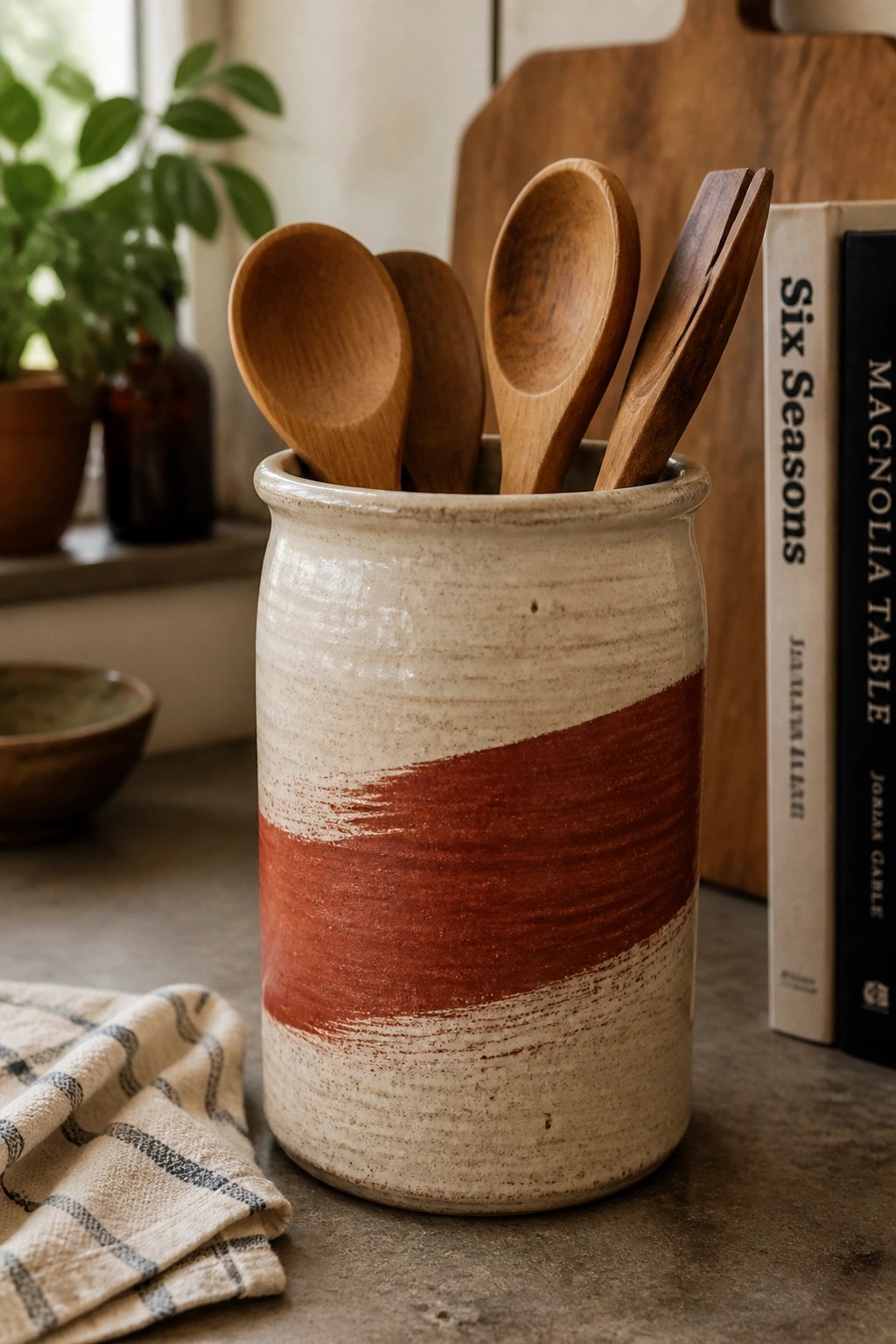
A cylindrical ceramic holder finished with a wide horizontal band of reddish-brown glaze over a light cream base creates a simple but clear focal point. The shape stays plain so the color division does the main visual work, and the slightly textured surface keeps the glaze from looking too flat. This approach fits the kitchen item category and turns a basic cylinder into something that can sit out on a counter without extra decoration.
The shape does a lot of the work here because the straight sides make the band easy to paint evenly. In a kitchen this kind of holder keeps wooden spoons and spatulas within reach while taking up little counter space. You could change the band width, flip the colors, or shrink the whole form to make a smaller version for a desk or bathroom. The same glaze layout would also translate to a taller vase or a low bowl if you want to repeat the idea across different pieces.
Hanging Bowl with Gradient Glaze
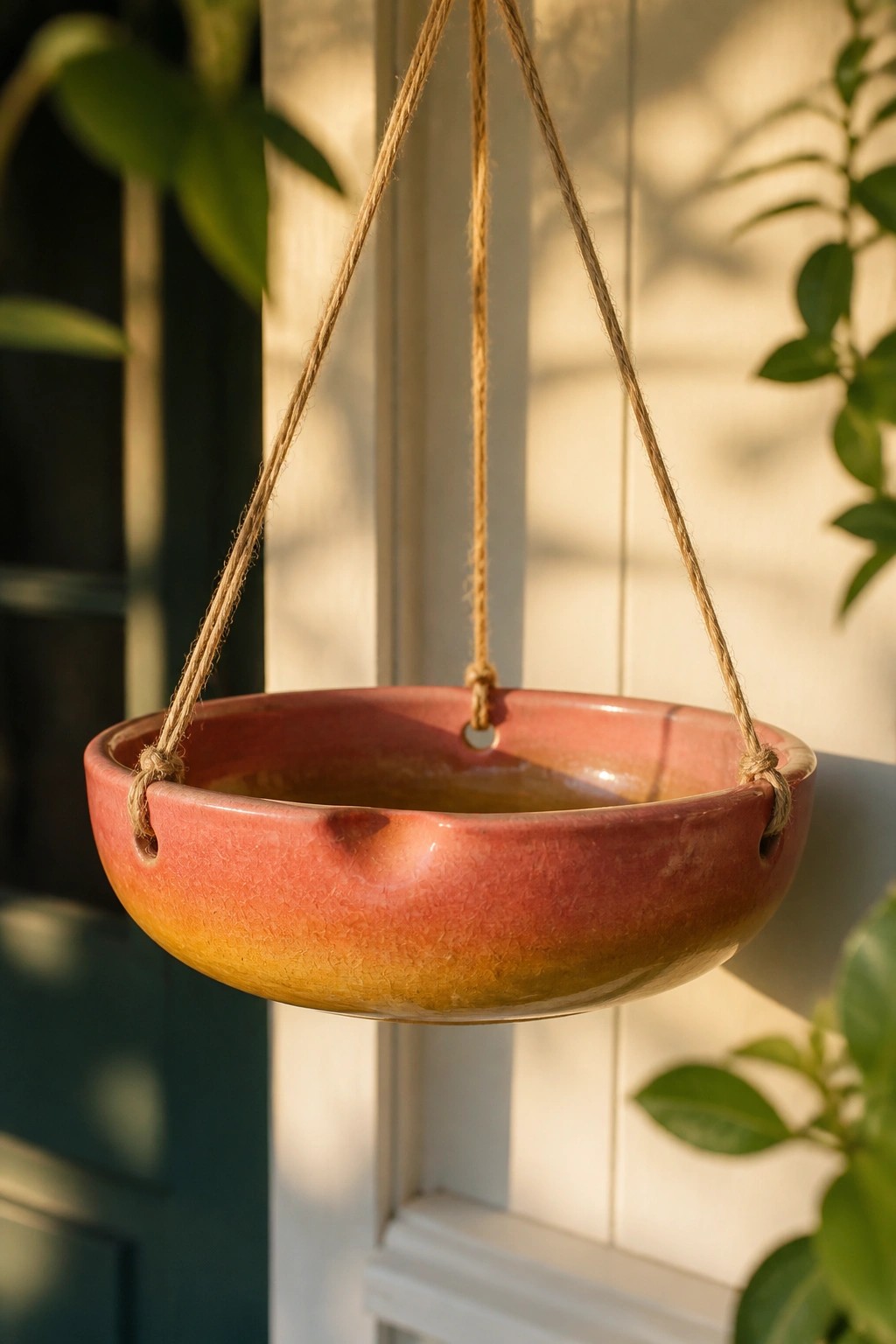
A shallow ceramic bowl with three holes drilled near the rim works as a hanging planter or decorative piece. Thick cords or rope thread through the holes to suspend it from above. The glaze shifts from pink at the top to yellow-orange at the bottom, creating a smooth color blend across the curved surface. The glossy finish highlights the form without extra decoration.
What makes this idea useful is the simple hanging method that turns an ordinary bowl into a space-saving planter. The gradient glaze can be recreated with two or three colors blended during application, and the same shape works for succulents or small herbs on a porch or windowsill. You could scale the bowl down for a bathroom or adapt the holes to fit different cord styles for a cleaner look. The color transition also photographs well for sharing project results.
Frequently Asked Questions
1. Which glaze ideas from the list are food safe for bowls and mugs? Many of the suggested glazes can be made food safe if you select recipes without lead or other toxic ingredients and fire them to the proper cone. Always test finished pieces with a home lead test kit and confirm they meet local safety standards before using them for serving food or drinks. Clear glazes over colorful underglazes often provide a reliable food-safe surface on functional ware.
2. How do I match these glaze ideas to the right clay body for vases and handmade pieces? Choose glazes that have a similar coefficient of expansion to your clay to avoid cracking. For example, stoneware clays pair well with mid-range glazes around cone 6 while porcelain works best with smoother high-fire options. Test small tiles of your clay with sample glazes before applying them to larger forms like vases.
3. What firing temperature should I use for the best color results with these pottery glazes? Most of the beautiful effects shown develop at cone 5 to cone 10. Lower temperatures around cone 04 can produce brighter colors but may be less durable while higher temperatures create richer depth and better melting. Keep a firing log and adjust hold times at peak temperature to control gloss and crystal formation on your pieces.
4. How can beginners apply these glazes evenly on curved surfaces like mugs and bowls? Start with three thin coats using a soft brush and let each layer dry fully between applications. Rotate the piece slowly while brushing to avoid drips and use a spray bottle for light misting on hard-to-reach areas. Practice on test bowls first and wipe the foot clean before firing to prevent sticking to kiln shelves.
5. What steps help these glazes last longer on everyday handmade pottery? Hand wash pieces with mild soap and avoid sudden temperature changes from hot to cold. Store mugs and bowls away from direct sunlight to prevent color fading over time. For vases, dust gently with a soft cloth rather than immersing them in water if they are not sealed on the interior.

Pottery Path is my cozy corner of the internet where I share clay ideas, pottery inspiration, and simple projects you can recreate at home. I love exploring everything from air dry clay to handbuilt pottery to cute minis that brighten your day. My goal is to make clay crafting feel easy, fun, and welcoming for anyone who wants to try it.
You will find beginner friendly tutorials, creative pottery painting ideas, and lots of warm inspiration for slow and happy crafting. If you enjoy hands on creativity, this space will feel like home.