Ever wondered how you can effortlessly trim those hard-to-reach branches in your backyard? Picture this: You’re staring at those pesky limbs dangling just out of reach. Frustrating, right? That’s where a pole pruner swoops in to save the day! But how exactly does this nifty tool work its magic? In this article, we’ll unravel the mystery behind the pole pruner and show you how it can revolutionize your pruning game.
What is a Pole Pruner?
A pole pruner is a gardening tool designed to help you trim branches that are difficult to reach with conventional tools. It consists of a long pole with a cutting blade or saw attached to the end.
Using a pole pruner allows you to safely prune tall trees without having to climb a ladder or use a chainsaw. It’s especially handy for maintaining tree health and removing dead or overhanging branches.
Key components of a pole pruner include the pole, cutting head, rope, and cutting blade. The pole is usually made of lightweight materials like aluminum to reduce fatigue during use.
Safety tip: Always ensure the cutting head is sharp and in good condition to make clean cuts.
Recommended Products

Sharp Mn Steel Blade for Fast & Clean Cuts: This pole saw uses a sharp three-sided edge with a double-sided barb design to grip branches securely and cut smoothly from multiple angles. The Mn steel blade is durable, rust-resistant, and lightweight, delivering fast, clean cuts. This is a manual pole saw with detachable pole sections for adjustable reach, not pruner, not a telescoping pole; it is neither electric nor battery-powered.

2-in-1 Flexibility – Handheld or Pole Saw in Seconds: Cut low or reach high—SEESII’s 2-in-1 cordless chainsaw transforms instantly from a handheld saw into a pole saw. Tackle ground-level trimming or overhead branches without switching tools. One powerful solution that saves space, time, and effort
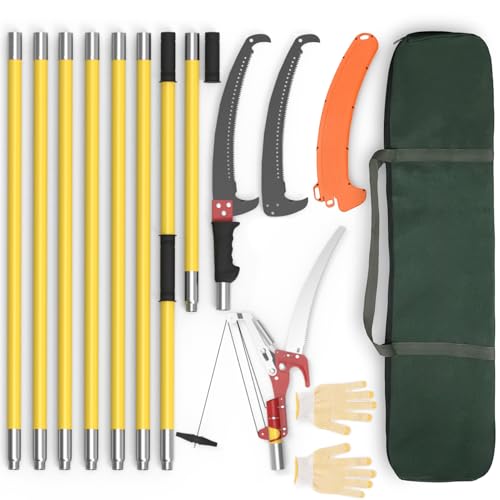
Package Includes: Our pole saw and pruner set contains 7 long poles, 1 head with saw, 1 pruner head, 1 spare saw with sheath, and a carry bag. Its extandabe range is about 7.3 to 27 ft (2.24 m to 8.24 m).
Components of a Pole Pruner
Have you ever wondered about the inner workings of a pole pruner? Let’s dive into the key components that make this tool an indispensable companion for your gardening needs.
- Pole: The long pole of a pole pruner allows you to reach high branches without the use of a ladder. Ensure it’s sturdy and extends to the desired length for optimal reach.
- Cutting Head: At the end of the pole, you’ll find the cutting head, which holds the cutting blade or saw. It’s vital for precise and clean cuts, so keep it well-maintained.
- Rope: This component is what operates the cutting mechanism in many pole pruners. Understanding how to control the rope effectively ensures efficient pruning.
- Cutting Blade: The blade is the business end of the pole pruner. It should be sharp for effortless cutting and promoting tree health.
Exploring the nitty-gritty of these elements will enhance your understanding of how a pole pruner seamlessly works its magic in keeping your trees in top shape.
Types of Pole Pruners
When it comes to pole pruners, there are a few different types available, each with their unique features and benefits. Here’s a quick overview to help you choose the right one for your needs:
- Manual Pole Pruners:
- Operated by hand power, these pruners are great for light trimming and pruning tasks.
- Ideal for small to medium-sized branches.
- Provide more control over cutting precision.
- Pole Saw Pruners:
- Equipped with a saw blade attached to the cutting head for cutting through thicker branches.
- Suited for medium to large branches that are difficult to reach with manual tools.
- Efficient for cutting through tough wood.
- Telescopic Pole Pruners:
- Feature an adjustable telescopic pole for reaching different heights without the need for a ladder.
- Perfect for varying tree heights in your garden or orchard.
- Allow for easy storage due to their collapsible design.
- Powered Pole Pruners:
- Run on electricity or battery, offering more cutting power for thicker branches.
- Suited for heavy-duty pruning tasks and professional use.
- Save time and effort with less manual labor.
Choosing the right type of pole pruner depends on the size of your trees, the frequency of pruning, and your overall comfort with manual or powered tools. Each type has its strengths, so consider your specific needs before making a decision.
Remember to prioritize safety when using any type of pole pruner. Always follow the manufacturer’s instructions, wear protective gear, and be mindful of your surroundings to ensure a successful pruning experience.
Recommended Products

2-in-1 Pole Saw & Cordless Mini Chainsaw– One Tool for Every Cutting Job: Easily switch between a handheld mini chainsaw and a battery powered pole saw. Compatible with 6-inch and 8-inch guide bars, this cordless electric chainsaw is perfect for tree pruning, branch trimming, firewood cutting, and garden maintenance—saving space and cost by replacing multiple tools

4-in-1 Pole Saw & Pruner Combo:This cordless pole saw set includes an extendable high reach pole, 10-inch electric chainsaw, and pruning shear attachment. Easily switch between pole chainsaw and tree pruner modes for trimming high branches, shrubs, bushes, and garden trees
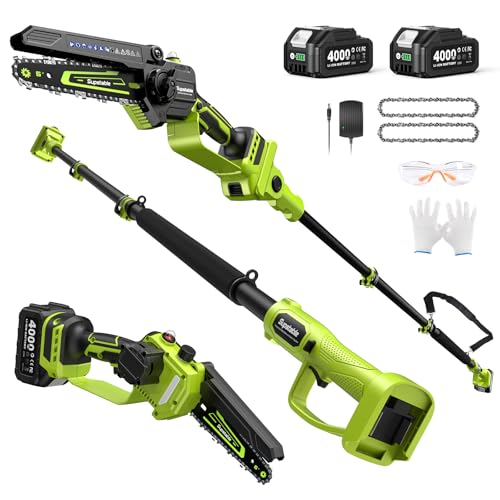
2-in-1 Cordless Chainsaw & Pole Saw – One Tool, More Versatility: The 6-inch guide bar works as a handheld mini chainsaw or mounts easily onto the telescopic pole as a cordless pole saw. One lightweight electric chainsaw handles tree pruning, branch trimming, firewood cutting, and everyday garden maintenance—no need to switch between multiple tools
How Does a Pole Pruner Work?
To operate a pole pruner, you first secure your grip on the tool. Next, position the cutting end towards the branch you want to trim. Activate the cutting mechanism using the pull cord or button, depending on the type of pole pruner you have. The blade swiftly cuts through the branch when you apply downward pressure on the tool.
For manual pole pruners, your effort drives the cutting action, allowing you to have precise control over the cut. Pole saw pruners utilize a saw blade that moves back and forth to saw through thicker branches. Telescopic pole pruners extend to reach higher branches by adjusting the pole’s length without needing a ladder. Powered pole pruners harness electricity or gas to provide additional cutting power for more substantial tasks.
Remember to observe safety precautions when using a pole pruner. Always wear protective gear like gloves and goggles. Ensure the cutting area is clear of obstacles and bystanders. Regularly maintain your pole pruner by sharpening blades and keeping it clean for optimal performance.
Whether you’re a seasoned gardener or a beginner exploring the world of tree care, understanding how a pole pruner operates equips you with the knowledge to efficiently maintain your trees and shrubs.
Recommended Products

Safe And Efficient - The Karveden telescoping extension pole saws can reach up to 20FT. You can easily trim tall, difficult to reach branches. You can quickly adjust the length of the pole as needed without climbing a ladder. Pruning trees and shrubs will be easier and safer than ever before. It is designed for pruning high branches, but can also be used as a handheld saw to prune low branches, shrubs and logs.
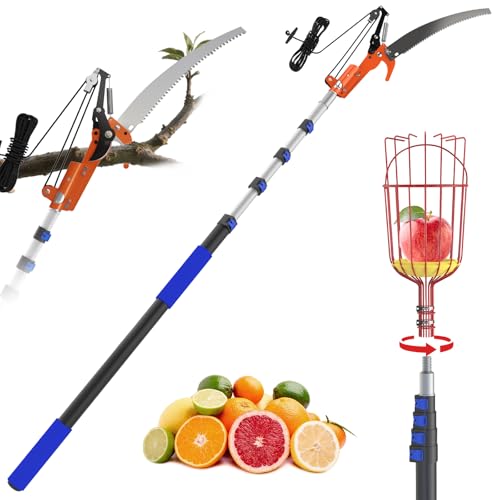
2-in-1 Extendable Tree Pruner & Pole Saw - This pole saws for tree trimming combines a 13.8" sharp steel blade and scissors for all your tree trimming needs. The manual pole saw features sharpened teeth made of high-quality carbon steel, delivering high cutting power while being lightweight. A non-stick coating ensures smooth, efficient branch trimming, saving you time and effort. Perfect for cutting trees, bamboo, PVC pipes, and more.

Extra-Long Adjustable Reach: Our tree trimmers is engineered with a telescoping design, offering an extensive adjustable range that extends from 5 to 20 feet. This length allows you to effortlessly access and trim high branches in trees with our pole saws for tree trimming, eliminating the need for a ladder and ensuring your safety while working at elevated heights. Whether it's a towering oak or a tall palm, our tree pruner gives you the flexibility to reach every branch with ease
Tips for Using a Pole Pruner Safely
When operating a pole pruner, safety should always be your top priority. Here are some essential tips to ensure a safe pruning experience:
- Inspect the Area: Before you start, check the area around the tree for any obstacles or hazards that might interfere with your pruning.
- Wear Protective Gear: Make sure to wear the proper protective gear, including gloves, goggles, and a helmet to safeguard yourself from any potential injuries.
- Maintain Balance: While using a pole pruner, ensure that you maintain your balance by positioning your feet firmly on the ground and keeping a stable stance.
- Mind the Weather: Avoid using a pole pruner during windy or stormy conditions, as it can make the pruning process more dangerous.
- Plan Your Cuts: Always plan your cuts carefully, focusing on branches that are within your reach and avoiding overreaching to prevent accidents.
- Keep the Pruner Clean: Regularly clean and maintain your pole pruner to ensure its optimal performance and longevity.
Remember, following these safety tips will not only protect you but also help you make the most out of your pole pruning experience.
Conclusion
You’ve now explored the world of pole pruners, understanding their various types and how they operate. Remember, safety is key when using these tools. By following the safety tips provided, you can ensure a smooth and efficient pruning process. Whether you’re a seasoned gardener or just starting out, these guidelines will help you maintain your trees and shrubs effectively. Happy pruning!
Frequently Asked Questions
What are the different types of pole pruners mentioned in the article?
In the article, the different types of pole pruners discussed are manual pole pruners, pole saws, telescopic pole pruners, and powered pole pruners. Each type is suited for various branch sizes and accessibility levels.
How do pole pruners work?
Pole pruners work by extending the user’s reach to trim branches that are high or hard to reach. Depending on the type, they may have a manual or powered cutting mechanism that allows for efficient and accurate pruning.
What are some safety measures emphasized when using a pole pruner?
Safety measures highlighted when using a pole pruner include wearing protective gear such as gloves, goggles, and a helmet, ensuring proper tool maintenance, and being cautious of overhead obstacles.
What safety tips are provided in the new section of the article?
The new section provides safety tips like inspecting the surroundings for hazards, wearing appropriate protective gear, maintaining balance while operating the pole pruner, considering weather conditions, planning cuts meticulously, and keeping the pruner clean for optimal performance.

I’ve always been drawn to trees.As a kid, I spent most of my free time outside, climbing, exploring, and trying to figure out the names of the trees around me.That early curiosity eventually led me to study arboriculture and horticulture at Michigan State.Later, I completed a degree in forestry at the University of Michigan.
I’ve been working in tree care and education ever since.These days, I enjoy helping people learn more about the trees in their own backyards.How they grow, how to care for them, and why they matter.You don’t need to be an expert to appreciate trees.A little curiosity goes a long way.