Pros and cons of a regular saw
When it comes to the regular saw, here are some pros and cons to consider:
- Pros:
- Versatile tool suitable for a wide range of cutting tasks.
- Can make precise cuts in wood, plastic, and metal.
- Available in various sizes and designs to suit different needs.
- Cons:
- Requires physical effort to operate, especially with tough materials.
- Limited in cutting capacity compared to pruner saws.
- May not be ideal for jobs that require intricate or fine cutting.
Pros and cons of a pruner saw
- Pros:
- Easier to Use: Operates with less physical effort compared to a regular saw.
- Ideal for Small Cuts: Great for small branches and intricate cutting tasks.
- Safer: Less risk of accidents due to the design and operation method.
- Cons:
- Limited Cutting Capacity: Not suitable for larger or thicker materials.
- Less Versatile: Primarily designed for specific pruning tasks, may not be as versatile as a regular saw.
- Specialized Use: While great for pruning, may not be ideal for general cutting needs.
| Pros | Cons |
|---|---|
| Easier to Use | Limited Cutting Capacity |
| Ideal for Small Cuts | Less Versatile |
| Safer | Specialized Use |
Recommended Products

The razor tooth design cuts twice as fast as conventional saw blades as it cuts on the pull and push strokes

10FT POLE TREE PRUNER WITH SAW FUNCTION: Designed primarily for high branch trimming with pull-rope pruning shears, while the integrated saw provides an additional cutting option when needed. This manual tree pruner combines pruning and sawing functions in one long-reach tool for routine tree care in yards, gardens, and orchards.

【Extendable Pole Saw for Tree Trimming】 Pole saw designed for trimming high branches without climbing. Adjustable length from 2.7 ft to 10.8 ft allows you to reach overhead limbs safely and efficiently, making it ideal for yard maintenance, tree trimming, and outdoor cutting tasks.
Factors to consider when choosing between a regular saw and a pruner saw
When deciding between a regular saw or a pruner saw, there are several important factors to keep in mind:
- Task at Hand:
- Assess the type of cutting tasks you will predominantly be working on.
- Size of Materials:
- Consider the size of branches or materials you will be cutting.
- Frequency of Use:
- Evaluate how often you will be using the saw.
- Physical Effort:
- Think about the level of physical exertion you are comfortable with.
In real-world scenarios, imagine needing to trim small branches frequently in your garden. A pruner saw might be more convenient due to its lightweight design and ease of handling.
On the other hand, if you anticipate working on larger projects or cutting through thicker materials more regularly, a regular saw‘s versatility and higher cutting capacity might be better suited to your needs.
Consider these factors carefully before making your decision to ensure that you choose the right saw for your specific requirements.
Recommended Products

Sharp Mn Steel Blade for Fast & Clean Cuts: This pole saw uses a sharp three-sided edge with a double-sided barb design to grip branches securely and cut smoothly from multiple angles. The Mn steel blade is durable, rust-resistant, and lightweight, delivering fast, clean cuts. This is a manual pole saw with detachable pole sections for adjustable reach, not pruner, not a telescoping pole; it is neither electric nor battery-powered.

TONYINGO All-in-One Pole Saw, Tree Trimmer & Pruner for High Branches: Our extendable manual pole saw functions as a complete branch cutter, tree trimmer, and pruner in one tool. The 5–20 FT adjustable pole reaches up to 26 FT overhead, letting you safely trim tall branches without climbing ladders

VERSATILE 2-IN-1 DESIGN: These pole saws for tree trimming combine a pruning saw for larger branches with a pull-rope tree pruner for smaller branches and twigs, giving homeowners one tool for routine garden and yard maintenance
Best uses for a regular saw
If you find yourself working on larger projects with thicker materials, a regular saw might be your best companion. Here are some best uses for a regular saw:
- Construction Projects: When tackling tasks like building a deck, a regular saw’s power and efficiency can help you get the job done.
- Home Renovations: Updating your kitchen or bathroom often involves cutting through dense materials where a regular saw shines.
- Furniture Making: Crafting your own furniture pieces requires cutting precise angles and shapes, making a regular saw an essential tool.
- Woodworking: For intricate woodwork and detailed cuts, a regular saw provides the necessary control.
- DIY Repairs: From fixing a broken fence to repairing a wooden gate, a regular saw offers versatility for various repair projects.
Remember, for these tasks that demand strength and precision, a regular saw is likely the ideal choice.
Best uses for a pruner saw
When it comes to the Best uses for a pruner saw, its specialty lies in tasks that require a more delicate touch and precision. Here are some key situations where a pruner saw truly shines:
- Pruning Trees and Shrubs: For trimming branches and shaping bushes with accuracy.
- Gardening Work: Ideal for cutting stems, trimming leaves, and pruning small plants in your garden.
- Landscaping Projects: Perfect for fine-tuning and detail work in landscaping designs.
- Harvesting Fruits: Great for harvesting fruit from your trees or garden.
- Bonsai Tree Care: Essential tool for pruning bonsai trees with precision.
Remember, a pruner saw’s strength is in its finesse and accuracy in small-scale cutting tasks.
Recommended Products
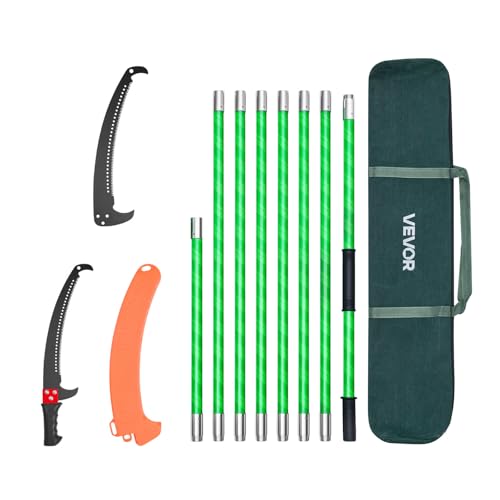
Easily Trim High Branches: Equipped with 8 adjustable sections, this manual pole saw extends up to 27ft, allowing ladder-free trimming of high branches. It is ideal for pruning dead or low-hanging branches, maintaining your yard or garden. Note: The shortest rod to connect saw blade

2-In-1 for Versatile Tree Cutting: This 2-in-1 pole pruner with saw combines sharp pruning shears for smaller branches and a durable saw blade for thicker limbs, making it a practical tree pruning tool for various cutting needs. Designed as a manual pole saw and pruner combination, it allows you to trim twigs and branches efficiently while reaching higher tree limbs from the ground, reducing tool changes and improving overall pruning efficiency.

Durable SK-5 steel blade for efficient cutting during camping survival bushcraft landscaping and general yard work
Conclusion
You’ve learned about the unique strengths of a pruner saw when it comes to precise and delicate cutting tasks. From pruning trees and shrubs to tending to your garden or harvesting fruits, a pruner saw shines in its finesse and accuracy for small-scale projects. Consider adding a pruner saw to your toolkit for those moments when attention to detail is key. Happy pruning!
Frequently Asked Questions
What are the best uses for a pruner saw?
A pruner saw is ideal for tasks requiring precision and finesse. It excels in pruning trees and shrubs, gardening, landscaping projects, fruit harvesting, and bonsai tree care due to its accuracy in small-scale cutting tasks.
Is a pruner saw suitable for heavy-duty cutting jobs?
No, a pruner saw is not designed for heavy-duty cutting jobs. It is best utilized for precise and delicate cutting tasks in gardening, landscaping, and tree care activities.
How should I maintain and store my pruner saw?
To ensure longevity, clean the blade after each use, oil moving parts regularly, and store the pruner saw in a dry place to prevent rust. Sharpen the blade when needed and replace any damaged parts promptly.

I’ve always been drawn to trees.As a kid, I spent most of my free time outside, climbing, exploring, and trying to figure out the names of the trees around me.That early curiosity eventually led me to study arboriculture and horticulture at Michigan State.Later, I completed a degree in forestry at the University of Michigan.
I’ve been working in tree care and education ever since.These days, I enjoy helping people learn more about the trees in their own backyards.How they grow, how to care for them, and why they matter.You don’t need to be an expert to appreciate trees.A little curiosity goes a long way.