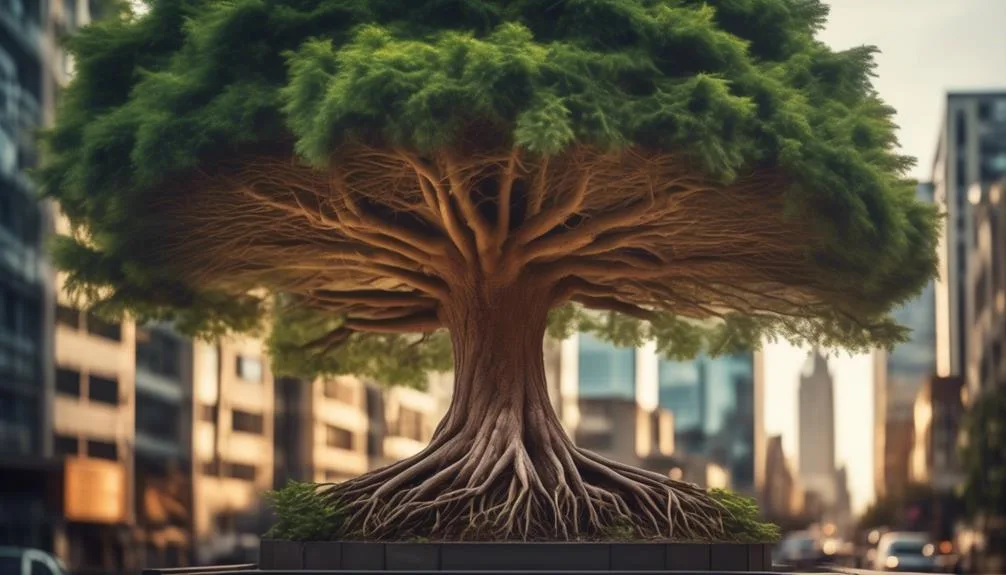
Can cedar trees thrive in urban environments? As cities expand, the challenges for these trees become more apparent. Understanding the adaptability of cedar trees and the potential benefits they bring to urban spaces is crucial.
Exploring strategies for care and community engagement, the journey of cedar trees in urban settings is fascinating. The possibilities may surprise you.
Urban Challenges for Cedar Trees
Urban pollution and poor soil quality present significant challenges for cedar trees in urban environments. Air pollution, including high levels of ozone and particulate matter, can damage the foliage and hinder the trees' ability to photosynthesize effectively. Additionally, urban soil often lacks essential nutrients and suffers from compaction, limiting water and oxygen availability to the tree roots.
To mitigate these obstacles and ensure the health and longevity of cedar trees, proper soil management is crucial. Implementing soil aeration techniques, such as vertical mulching or radial trenching, can improve soil structure and enhance root growth. Furthermore, regular soil testing and amendment with organic matter and essential nutrients can help create a more hospitable environment for cedar trees in urban settings.
Adaptability of Cedar Trees
Facing urban challenges such as pollution and poor soil quality, cedar trees demonstrate remarkable adaptability in their ability to thrive and overcome adverse environmental conditions. Cedar trees have evolved to adapt to various ecosystems, and their resilience allows them to withstand urban stressors. Their adaptability enables them to not only survive but also contribute significantly to the urban ecosystem. Take a look at the table below to understand the impact of cedar trees on the urban environment.
| Adaptability | Ecosystem Impact |
|---|---|
| Tolerance to pollution | Improves air quality |
| Ability to grow in poor soil | Prevents soil erosion |
| Resistance to urban stressors | Provides habitat for wildlife |
| Efficient water usage | Contributes to urban biodiversity |
The adaptability of cedar trees plays a crucial role in enhancing the urban environment, making them valuable assets in urban landscapes.
Benefits of Cedar Trees in Cities
Thriving amidst the hustle and bustle of city life, cedar trees offer a multitude of benefits that enhance the urban environment. These majestic trees play a crucial role in air purification, helping to combat pollution by filtering out harmful particulates and toxins, thereby improving the overall air quality.
In addition to their environmental impact, cedar trees contribute to stress reduction in urban dwellers. The soothing aroma and serene presence of these trees create a calming effect, providing a natural escape from the frenetic pace of city life. Research has shown that exposure to green spaces, such as those provided by cedar trees, can significantly lower stress levels and improve overall well-being.
Strategies for Cedar Tree Care
To ensure the continued well-being and vitality of cedar trees in urban environments, implementing effective strategies for their care is essential.
When it comes to pruning techniques, it's crucial to regularly remove dead or diseased branches to promote healthy growth and prevent potential hazards. Proper pruning also ensures that the trees maintain an attractive and balanced shape.
Additionally, monitoring and maintaining soil quality is vital for cedar tree care. Urban environments can often have compacted or poor-quality soil, so it's important to regularly assess the soil condition and provide necessary amendments such as organic matter or fertilizers to support the tree's growth.
Community Engagement for Cedar Trees
Engage your local community in the care and preservation of cedar trees to foster a sense of environmental stewardship and collective responsibility.
Public awareness plays a crucial role in nurturing community engagement. Organize workshops, seminars, and informational sessions to educate residents about the significance of cedar trees in urban environments.
Encourage active participation in tree planting initiatives to enhance the green cover within the community. Collaborate with local schools, environmental organizations, and civic groups to create awareness programs targeting different age groups.
Utilize social media platforms and community newsletters to share updates, progress, and opportunities for involvement.
Conclusion
In nurturing cedar trees within urban landscapes, we embrace resilience and reap the benefits of a greener, healthier environment.
Let's continue to care for these adaptable trees, fostering a harmonious coexistence in our cities.

My interest in trees started when I first saw the giant sequoias in Yosemite.I was a teenager then, and I remember thinking, “I need to learn more about this.”That moment stuck with me.A few years later, I went on to study forestry at Michigan Tech.
Since graduating, I’ve worked in a mix of hands-on tree care and community education.I’ve spent over ten years helping people understand how to plant, maintain, and protect the trees in their neighborhoods.I don’t see trees as just part of the landscape.They are living things that make a real difference in our daily lives.